LP_468x60
on-the-record-468x60-white

“What fresh hell,” the PM said, channeling us all as we stare down the threat of this omicron variant interrupting another holiday season.

“What fresh hell,” say I, as I prepare to write my annual year-end “hot or not” and prediction columns.

Here’s the first: my little annual tradition (defined, from my collegiate days, as “anything two men of college recall happening more than twice”) of who’s up, who’s down, and who really bothered me this year.

Justin Trudeau: Hot

The PM’s act might be wearing thin on a significant segment of the population, but his gamble to call an unnecessary election paid off, giving him his third straight win, and second straight almost-a-majority-but-not-quite mandate. He seems a bit disengaged, but his handling of COVID-19 has been a solid “good enough”, and whether he tries to keep governing for the long term or is into legacy mode, no one can deny he might be a bit greyer, but it’s still working for him.

Erin O’Toole: Not

He lost, when his job was to win. He also seems blithely unaware that he lost. I heard him speak, introducing former PM Brian Mulroney at the Churchill Society. It was unfair — the Tory grandee outclassed him in a way that was almost, inadvertently, mean.

Chrystia Freeland: Not

Count me as one Liberal not sold on her as heir apparent. She is losing the opening round of her tussle with Conservative rabble rouser Pierre Polievre. He might be over the top, and generally wrong on the economics, but he has a message about the cost of living most normal people can relate to, and even cheer on. Freeland, meanwhile, seems kind of annoyed that she has to explain why she is right, and others are wrong. Lecturing isn’t leading.

Pierre Polievre: Hot

See above.

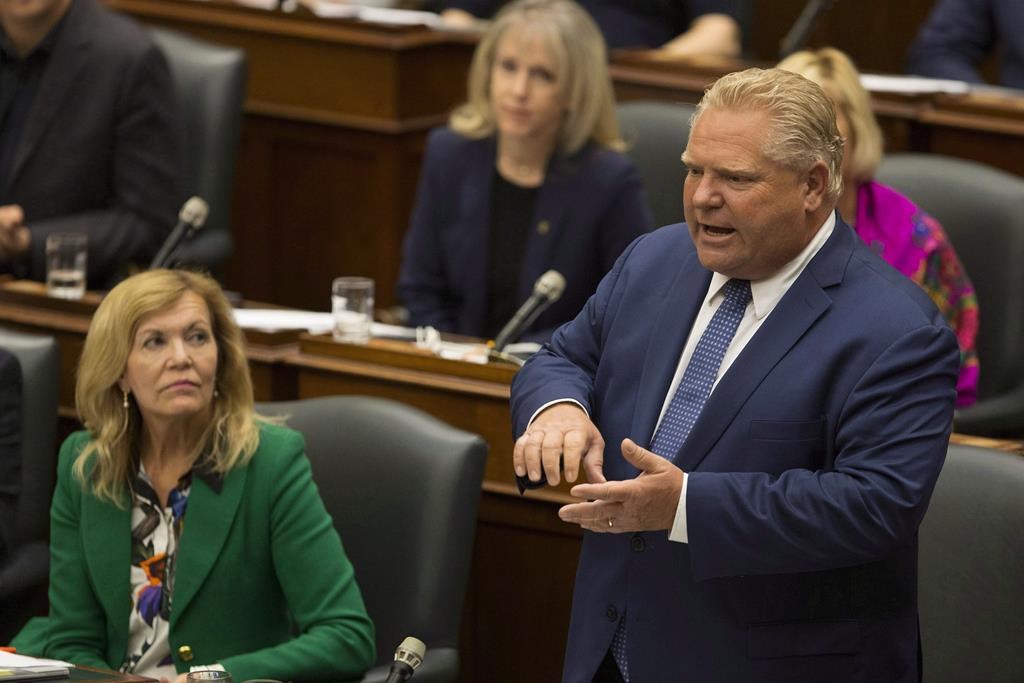
Doug Ford: Hot

Love him or hate him or really hate him, the vast majority of Ontarians think he’s done OK this past year. It’s been far from perfect, but his heart is seemingly in the right place, and he gets things right, even if it’s on the third try. He also has a real message about housing affordability and traffic congestion. If he could fix his government’s seeming disdain for kids’ education and future, he’d be cruising to reelection. As it stands, he likely will win reelection next June, thanks in no small part to the utter lack of any spark in his two main opposition parties (see below).

Andrea Horwath & Steven Del Duca: Not

The two opposition leaders in Ontario are either invisible and being outflanked by the Tories on labour rights and housing affordability, or unexciting and without a seat. Rather than taking the fight to the Tories, the NDP and Liberal leaders seem to be shadow boxing each other for who comes in second, fighting over a downtown progressive vote at the expense of the suburbs, and trailing a Premier they despise in all key leadership metrics, from caring to competence. It’s not good. Neither oppo leader seems to have a message other than reacting to what Ford does. If they split the vote, as seems likely today, Ford will run up the middle. His opponents may be the best assets he has.

Rachel Notley: Hot

Meanwhile, in Alberta, the former Premier shows all opposition leaders how it’s done. She’s kicking Jason Kenney’s butt, and has a clear contrast message, clear leadership qualities and seems ready to govern if given the chance. Her only problem? The election isn’t tomorrow.

The Curse of Politics: Hot

The best political podcast in Canada — David Herle, Jenni Byrne, Scott Reid and a lot of swearing, Marvel comics references and old war stories — continues to delight, inform and make jogging or car drives more enjoyable. If you’re not listening, you should be.

John Tory: Hot

Calm, competent, kind, shows up to everything, cheerleads the city — the guy has grown on me, and the majority of his voters. If he runs for a third term, he’d win, and cement a legacy as Toronto’s longest-serving mayor. If he doesn’t, there’s no real heir apparent to step into the big shoes he’d leave. I hope he runs again.

Anita Anand: Hot

She’s the cabinet MVP, and the woman who got us all vaxxed, and she’s already righting the ship at DND.

Agree, disagree? Let me know…after the holidays.

The views, opinions and positions expressed by columnists and contributors are the author’s alone. They do not inherently or expressly reflect the views, opinions and/or positions of our publication.


The ‘phoney’ election campaign starts in Ontario

Ontario’s main parties have launched their first advertising wave in the run up to the 2022 provincial election.

Lots of sound and fury on radio, tv and digital media platforms… but signifying exactly what?

Conventional political wisdom suggests that, apart from partisans,  most Ontarians [ more than 60%] are unlikely to be paying any attention at all to these messages. This is particularly relevant when citizens are still recovering from the message carpet bombing of the federal campaign.

So what justifies two parties flush with fundraising dollars and facing imminent legislative constraints limiting what can be spent in the lead up to the election call to launch such a flurry of activity.

There are legitimate rationale for seeking to frame the provincial race this far in advance of the fixed election date but they rest in seeking to address different political challenges.

Like its federal counterpart, the key to the Ontario election will be all about voter splits.

Government and NDP are seeking to define Liberal leader Steven Del Duca in the public mind as Wynne’s ‘right hand man’  before he can successfully establish his own desired mark. A proven strategy. Federal Conservatives tried to label Justin Trudeau as not ready for prime time; his predecessor Michael Ignatieff was effectively attacked ‘as not coming back for you’.

Del Duca, who candidly admits to a charisma deficit, had been preoccupied with internal Liberal rebuilding:  successfully paying off the massive provincial party debt from the last election, revitalizing the party organization and recruiting a solid candidate base with 50% women and 30 candidates under 30 years of age. As critical as these tasks are in the run up to the election, they had done little to define his ‘invisible’ public persona which also suffered from not being an elected member in the Legislature.

This past weekend’s Annual General Meeting allowed Del Duca an opportunity to use a policy focus to begin this next phase, given that virtual meetings severely constrain the volunteer excitement generated by in person gatherings.

His efforts to frame himself as a ‘positive’ leader willing to acknowledge policies from other parties puts him in stark contradistinction to the early approach taken by the other leaders. Combined with his focus on reestablishing the voters’ trust, the strategy serves as a step to inoculate himself from likely attacks about his reputation for hard nosed politics.

Both approaches also appear likely to appeal in any future minority government scenario.

Andrea Horwath’s attacks against Del Duca reflect the NDP’s ongoing political preoccupations. Entering her fourth election as leader, her critics repeat the view that she has not been able to convert personal popularity into electoral success; most recently, in 2018, she failed to overtake the Conservatives when the Liberal support had collapsed and the Conservatives were led by an unpopular leader.

In short, the NDP attacks show they are worrying about securing their Opposition flanks against a Liberal revival as much as securing a victory against the Ford government.

In the context of Ontario’s federal vote, both the provincial Conservatives and the NDP’s preoccupations with a Liberal rejuvenation have some merit. The Liberal base in Ontario’s biggest urban areas held fast, with vote splits defeating determined efforts by both federal parties in an otherwise favourable election cycle for them.

The latest Leger Post Media provincial poll taken October 8 to 10 reconfirm a similar reality. While the PC’s lead with 35% , the Liberals have overtaken the NDP for second, recovering to early May levels. The NDP sit some 10% behind the first place Ford Government.

Some strategists are content to argue that the flurry of advertising is an investment in buoying the spirits of the PC and NDP partisan base licking their wounds after the federal defeat.

The PCs have likely banked their biggest campaign promise, a tax cut, for release closer to the election. In an early summer 2021 study, the FAO flagged that future Ontario revenue forecast in the budget is lower than the government’s economic outlook, suggesting possible unannounced tax cuts in the future.

The Ford government has also laid the ground work for not balancing the budget any time soon, thereby alleviating the need to explain where proposed spending cuts would be made.

Another explanation for the flurry of activity is that the parties are test driving their election messaging, trying to determine what will stick. Both Premier Ford and Opposition Leader Horwath have laid out a number of policy areas, from Highway 413 to long term care, with which they wish to be identified.

The PCs effort to position Mr. Ford’s government as willing to respond positively- the ‘yes’ party- leaves them open to two lines of attack.

The first criticism is that Mr Ford’s government is willing to satisfy large interest groups at others’ expense. Following revelations MLSE helped the government get its Covid QR  app working [a worthy initiative in its own right], there have been unproven allegation that a quid pro quo was offered to benefit large sporting venues at the expense of smaller businesses.

A second challenge to the PC ‘yes man’ strategy is that it may remind voters of unprincipled people who will agree to virtually anything to curry favour. This type of criticism has been hurled before at Premier Ford during his management of the COVID crisis and carries worrisome political baggage.

With more than 8 months to go, this phoney war will soon pass.

From my perspective, the first campaign investments should be in the constituency ground game- identifying voters, recruiting local volunteer base, and building electoral infrastructure in winnable ridings. The recent federal campaign showed the value of such a ‘vote efficiency’ focus in the latest Liberal victory.

The views, opinions and positions expressed by columnists and contributors are the author’s alone. They do not inherently or expressly reflect the views, opinions and/or positions of our publication.