LP_468x60
on-the-record-468x60-white

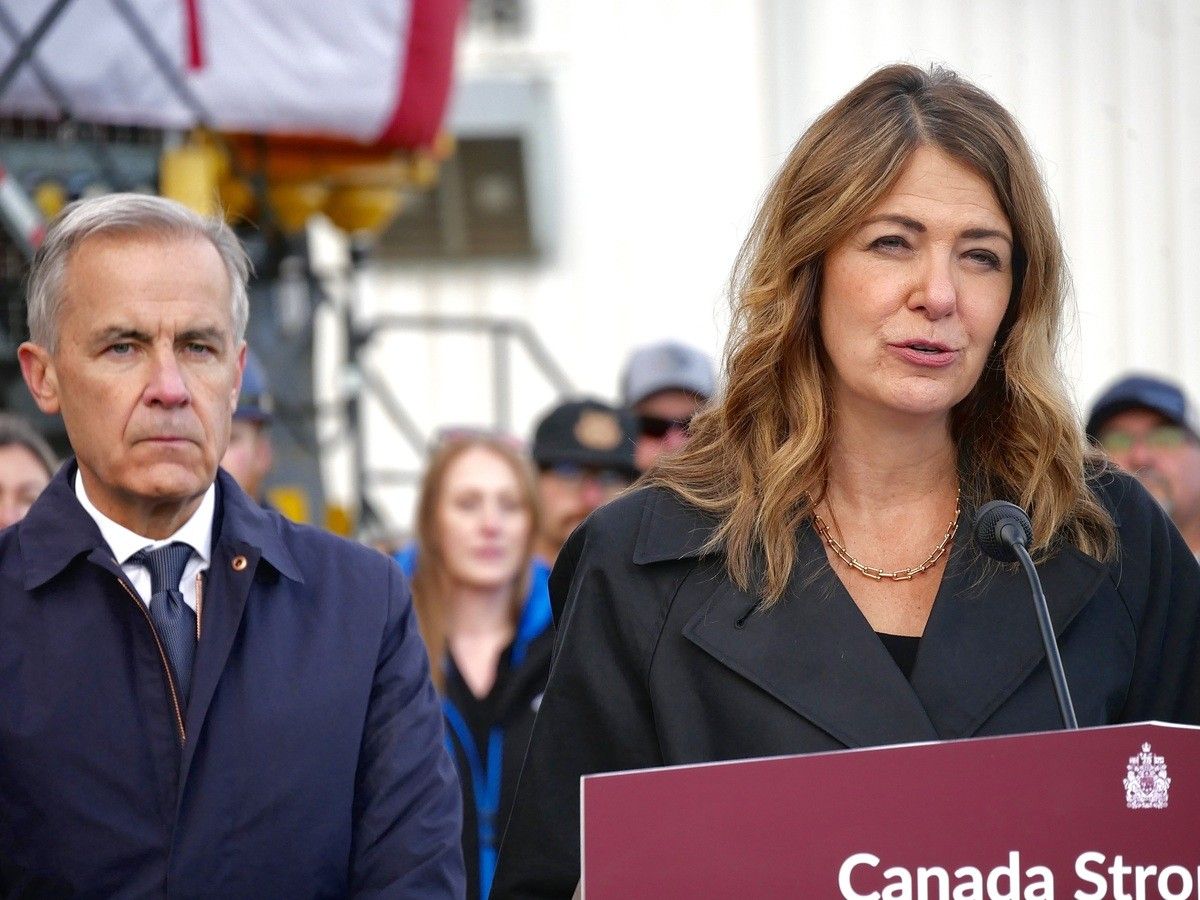
Mark Carney talking to workers at an Ontario Line construction site.

An economist has put Canadian job losses from the new U.S. tariffs at an estimated 87,200.

Trevor Tombe, a professor of economics at the University of Calgary, estimated in an analysis published by The Hub that the tariffs put a little over 87,000 Canadian jobs at risk. He said in an email to National Post that his model produces 87,200, and that he does not want to portray false precision in a number carrying that much uncertainty: “87K is no different than 90K.”

The analysis said losses on that scale would push the national unemployment rate from 6.4 per cent to 6.8. What happens to the rate depends on what the workers who lose those jobs decide to do, Tombe wrote, because the rate counts only people who are working or looking for work. “If they exit the labour force, then they’re no longer in the denominator either so the unemployment may not change. If they search for other work, then the unemployment would increase. We can’t know.”

The tariffs took effect Saturday, hours after Prime Minister Mark Carney suspended trade talks with Washington. Carney said in a statement they cover roughly $28 billion in Canadian goods, and that Canada will match them dollar-for-dollar.

About 52,000 of the jobs Tombe counted are connected to exporters hit directly. The other 35,000 jobs are linked to the suppliers and service firms that sell to the exporters, which is why the losses reach provinces the tariffs barely touch.

Ontario would take the largest hit at roughly 36,000 jobs, Tombe estimated, followed by 18,000 in Quebec, 11,000 in British Columbia and 9,000 in Alberta. Transportation and warehousing would take the largest hit of any sector once those indirect effects are counted, with trucking a significant share as trade volumes fall.

Nine thousand jobs is about 0.3 per cent of Alberta’s labour force, Tombe wrote. The province went into the tariffs with an unemployment rate of 7.0 per cent in July, the second highest among the provinces and tied with New Brunswick, according to Statistics Canada .

Carney said Saturday Canada’s countermeasures take effect on Sept. 8, the Tuesday after Labour Day, and will be concentrated in steel, dairy, appliances, agricultural equipment, pulp and paper and electronics. They will also cover goods already hit by earlier American tariffs.

Direct losses land in agriculture, electronics, textiles, furniture and plastics, Tombe wrote in his jobs analysis. The estimate rests on an assumption he calls overly simplistic, that a 50 per cent tariff produces a 50 per cent drop in sales.

He wrote that imports of the U.S. goods Canada tariffed last year fell roughly in line with those tariffs, and that assuming the same one-for-one relationship here is not a bad approach. “What the actual effect is depends on factors that are not currently knowable, especially how long the tariffs last.”

Tombe wrote that nothing in his numbers changed when the tariffs went live. “They were always forward looking estimates, and the uncertainty remains as high now as before.”

Our website is the place for the latest breaking news, exclusive scoops, longreads and provocative commentary. Please bookmark nationalpost.com and sign up for our daily newsletter, Posted, here.


A truck passes over the Peace Bridge from Buffalo, N.Y., into Canada, in Fort Erie, Ont., on Aug, 18, 2026.

Across the country and even across political lines, most Canadians say that ditching trade talks with the United States was the right move for the Carney government to make, according to new polling by Angus Reid .

In a poll that was conducted over the weekend, nearly 1,500 Canadian adults were asked: “Overall, based on what you have seen, read or heard so far, do you think Canada did the right thing or the wrong thing by refusing the terms being offered and ending negotiations without a trade agreement ?”

More than three-quarters (76 per cent) chose “Right thing – Canada needed to stand its ground rather than accept a bad deal” as their response. Only 13 per cent went with “Wrong thing – Canada should have made the compromises necessary to reach a deal.” The other 11 per cent weren’t certain or couldn’t say.

There is also strong backing for the dollar-for-dollar retaliatory tariffs that have been threatened against the U.S. but not yet implemented, pending a Sept. 8 deadline. More than three in five Canadians (62 per cent) called the idea of counter-tariffs “about right under the circumstance.”

Support for walking away from the table was strong across the country, though a little more so in the east, where 84 per cent of Atlantic Canadians and 85 per cent of Quebecers said it was the right thing to do. Alberta and Saskatchewan had the lowest “right thing” numbers at 67 and 65 per cent, respectively. Those provinces also had a slightly higher percentage in the “don’t know” column, at 16 per cent.

There was more divide among respondents of different political stripes, but even there a majority were in favour of ditching the talks. Among those who voted Conservative in the last federal election, 53 per cent said it was the right move, and 30 per cent were against, with the rest undecided.

Those who voted for other parties were even more in favour, with 97 per cent of Liberal voters, 85 per cent of NDP supporters and 89 per cent of those who voted Bloc Quebecois in favour. French speakers were also more likely to say it was the right move, with 86 per cent versus 74 per cent of English speakers.

 Data from Angus Reid shows Canadians’ concerns regarding the aftermath of the collapse of trade talks.

However, fears of the aftermath of the decision were also top-of-mind among many Canadians. One quarter of respondents said they were concerned for their own job security, while another 13 per cent said they were very concerned.

More broadly, 89 per cent of respondents said they were concerned or very concerned about the cost of goods and services in Canada moving forward. A similar number, 87 per cent, said they were concerned or very concerned about the Canadian economy as a whole, while 78 per cent said said they feared for their own province’s economy.

Personal investments and savings was a concern for 63 per cent of those polled, while almost half (49 per cent) said they worried about the impact on their household income.

The survey also found a mix of pessimism and resolve among Canadians. Asked “How confident are you that Canada and the United States will eventually be able to reach a new trade agreement?” almost half (48 per cent) were not confident, while just 39 per cent were confident or very confident.

But on the question “Which of these better describes how you feel about Canada facing a prolonged trade conflict with the United States?” a majority (59 per cent) chose the reply: “This will be difficult, but Canada can weather the storm and adapt.” Only 35 per cent picked: “This is a very serious situation that could cause lasting damage to Canada.”

And when asked if they thought the trade war would make Canada weaker or stronger over the long term, a strong majority of 64 per cent said stronger, with only 26 per cent choosing weaker, and the other 10 per cent uncertain.

The poll is considered to carry a margin of error of plus or minus two percentage points, 19 times out of 20.

Our website is the place for the latest breaking news, exclusive scoops, longreads and provocative commentary. Please bookmark nationalpost.com and sign up for our newsletters here.



Conservative Party of Canada leader Pierre Poilievre speaks during a news conference at the National Press Theatre in Ottawa, Canada on June 25, 2026.

Conservative Leader Pierre Poilievre is calling on Prime Minister Mark Carney to reconvene Parliament, so that MPs can scrutinize the failed U.S. trade deal and the government’s response to the fallout.

In a letter to Carney dated Sunday and shared on social media Monday morning, Poilievre wrote: “Canadians elect Parliament to defend their interest and decide the hard questions. Those questions can no longer wait.”

He added that the official opposition has a duty to hold the government to account and asked the PM to “reconvene Parliament without delay” so that his party can fulfill this duty.

Poilievre also called for the government to release the details of trade negotiations, to allow Canadians to “judge what options are on the table”. He added that the public deserves to know how Carney’s trade and economic policies could affect the cost of groceries, gas and other items.

“In a crisis that defines the future of our people and our country, Conservatives are ready to return to Parliament, to act with the urgency our people demand, and to put Canada first,” the letter concluded.

Carney suspended trade talks with the U.S. late on Friday, citing unfair last-minute demands and accusing the U.S. administration of introducing measures that would restrict Canada’s ability to do deals with other countries.

Speaking at a press conference on Saturday morning, the PM said he had walked away from a “bad deal” and that Canada is now “at war” after being “attacked” by the steep tariffs.

As a result of the collapsed negotiations, 50 per cent tariffs came into effect at midnight on Saturday, impacting $28 billion worth of Canadian goods. In response, Carney has pledged dollar-for-dollar counter tariffs that will hit the U.S. starting Sept. 8.

On Monday, Trump threatened to impose a 50 per-cent tariff on Canadian autos , trucks and auto parts from Jan 1., in the latest escalation in the trade war.

Poilievre asked how the PM plans to protect the auto, steel, aluminum and lumber industries that are threatened by tariffs, noting that Canada has the lowest growth and second-highest employment in the G7. “Parliament must enact real tax and regulatory reform and reduction to jolt our economy back to life,” he added.

The government announced in a statement on Friday that it would introduce “additional measures to support Canadian workers and businesses” affected by the U.S. tariffs.

The Conservative leader also pointed to the Gordie Howe Bridge deal in his call for more transparency around trade negotiations with the U.S. He said Canadians were initially told debts incurred to build the bridge would be fully repaid before negotiations with Washington began, writing: “That was false, but the truth only became public when we saw the deal.”

Poilievre added: “Parliament’s duty is to hold government accountable. That job has never been more pressing.”

And the Conservative leader is not the only opposition member who is asking questions about what was on the table during Canada’s trade negotiations with the U.S.

On Sunday, MP Shuvaloy Majumdar shared a letter sent to Canada-U.S. Trade Minister Dominic LeBlanc reiterating that the official opposition supports the decision not to sign an unacceptable agreement, but that Canadians shouldn’t be kept in the dark about the negotiations.

“If there was a draft text of any agreement that both governments have seen, please release it,” the Conservative shadow minister for Canada-U.S. relations wrote. “The U.S. administration has seen it. Your government has seen it. Canadians deserve to see it.”

Elsewhere, Conservative MP Jamil Jivani previously told National Post that he feels Carney’s dollar-for-dollar tariff response is an “overreaction” that will “accelerate conflict.”

South of the border, U.S. politicians have expressed concerns about the impact of Canada’s retaliatory tariffs on American families.

Abdul El-Sayed, currently running for Senate in Michigan, accused Trump of “escalating a trade war with Canada for his own vanity. “Even before this new round, Canadian tariffs were costing Michigan families an additional $3,200 a year,” he said on X . “It’s going to get much worse.”

New York Governor Kathy Hochul offered a more concise assessment, writing on X : “Needlessly picking fights with our allies and raising prices here at home. That’s Trump’s economic policy in a nutshell.”

Meanwhile, U.S. Trade Representative Jamieson Greer has blamed Canada for the breakdown in negotiations.

“Despite the U.S. offer to Canada to receive the best treatment of any major exporter to our market, new demands and walk backs of other commitments by Canada have upended the careful balance reached in the past days,” he said in a statement posted on social media on Friday night.

On Saturday morning, Greer said no new talks were scheduled and that the U.S. was moving ahead with plans to “respond to Canadian retaliation.”

Our website is the place for the latest breaking news, exclusive scoops, longreads and provocative commentary. Please bookmark nationalpost.com and sign up for our politics newsletter, First Reading, here.


U.S. President Donald Trump stands during the National Anthem at the start of the NTT INDYCAR Series on August 23, 2026 in Washington, DC.

OTTAWA – U.S. President Donald Trump threatened to impose a 50 per-cent tariff on Canadian autos, trucks and auto parts on Monday, the latest escalation in the trade war between Canada and the U.S., after trade talks collapsed late last Friday.

“On January First, 2027, Tariffs on all Cars, Trucks, both large and small, Automotive Parts, and Steel, will be increased to 50%,” said Trump, in a post on Truth Social. “Build in the U.S. and there are ZERO TARIFFS. Canada will be treated like a State no longer!”

The current tariff rate on Canadian autos sits at 25 per cent.

The president added that Canada is one of the most “entitled” countries to deal with in terms of trade.

“On Trade, and in other ways, also, they are among the worst Nations in the World to deal with,” said Trump. “They feel entitled, and yet, WE DON’T NEED CANADA, THEY NEED US!”

Canada and the U.S. were close to a potential trade agreement on Friday, with negotiators seeking relief for Canadian steel, aluminum, autos and lumber from Section 232 tariffs, and the avoidance of Section 338 tariffs on $29 billion worth of Canadian goods.

However, Prime Minister Mark Carney suspended trade talks late Friday evening, citing several last-minute demands from the U.S. that made a deal untenable for Canada.

Specifically, Carney pointed to Canadian trucks not receiving the same tariff relief treatment as Canadian autos, language in the deal around restricting Canada’s ability to make trade deals with other countries, and “efforts to restrict our protections of our language, our culture, and in effect, our sovereignty” as some of the reasons for why Canada did not sign the deal.

On Monday, United States Trade Representative Jamieson Greer disputed Carney’s claim that U.S. negotiators were trying to curtail protections on the French language, calling it a “funny fake story.”

“I like the Québécois and I like that they speak French,” said Greer, during an interview on CNBC. “What we don’t like is a situation, where Canada, the federal government, forces American tech companies to take their earnings and give a percentage of their earnings to their competitors in Canada.”

Greer attributed the collapse in talks to Canada ultimately wanting more than what his administration was willing to give, noting that the proposed agreement included halving U.S. tariffs on Canadian steel and aluminum, reducing tariffs on Canadian autos and tariff relief on Canadian softwood lumber. The USTR said it was the best market access to the U.S. compared to any other country in the world.

“They simply they wanted more,” said Greer. “I don’t know if it was political for them, it certainly doesn’t make economic sense, but perhaps for political reasons, they have some byelections coming up.”

The 50 per-cent tariffs under Section 338 of the Trade Act of 1930 came into effect at midnight on Friday, following the collapse of trade talks. The prime minister has promised to match those tariffs “dollar for dollar” with retaliatory measures set to take effect Sept. 8.

The federal government is expected to announce details on Canada’s retaliatory tariffs in the coming days.

Monday morning, Bloc Québécois Leader Yves-François Blanchet said he backed Carney’s decision to pull out of negotiations after the “broadside” from the U.S. against Canada.

Speaking from Montreal, Blanchet called on the government to re-invest every single dollar collected as part of tariffs on U.S. goods to support impacted industries. He also proposed the Liberals set up financial aid programs for impacted companies, including something resembling the COVID-era wage subsidy program.

He also said Ottawa needs to reinstate programs previously killed as part of concessions to the U.S., such as the three per cent Digital Sales Tax on domestic and foreign web giants.

“We must suspend the billions of dollars of financial aid to oil companies. Let’s not forget that the majority of shareholders of Western oil companies are American,” Blanchet added.

On Monday, Conservative Leader Pierre Poilievre has asked prime minister to recall Parliament to discuss the collapsed deal, and to make the details of the proposed agreement public.

“Canadians must see it to judge what options are on the table,” wrote Poilievre, in a letter addressed to Carney.

More to come.

National Post

Our website is the place for the latest breaking news, exclusive scoops, longreads and provocative commentary. Please bookmark nationalpost.com and sign up for our newsletters here.


Kids are gambling on sports and casino games in social groups, at home and even while at school, according to parents who spoke with National Post.

Kath says she and her husband tried their best to resist, but finally did something they never imagined would be part of the parenting experience.

The Toronto woman used her own credentials to set up an account for her 16-year-old son on a government-regulated gambling app, allowing him to skirt rules that ban anyone under 19 using the sites.

“He would bug us and for the longest time we said ‘Absolutely not. It’s illegal and blah blah blah,” recalls Kath, who asked that her full name not be published. But “every single kid is betting, like everybody … Eventually, I was just worn down … Eventually he used my ID — which I’m not proud of — and opened an account.”

As surprising as her decision might be to many parents, it seems far from unique.

Two other parents told the National Post they too facilitated their own minor children’s online gambling and said many families are doing the same. Harley Redlick, a lawyer and responsible-gambling activist, said he’s heard from numerous parents who have opened accounts for their teenage kids, often citing an “epidemic” of Internet betting among adolescents they feel is hard to resist.

Kids are gambling on sports and casino games in social groups, at home and even while at school, they say.

Ontario’s decision to legalize commercial gambling apps — a policy mirrored by Alberta last month — has always been controversial , with over $100 billion bet in the last year and spikes in gambling addiction, gambling-related bankruptcies and possibly even gambling-linked suicides

But officials have insisted that at least young people would be kept off the sites, thanks to strict rules that require players to upload government-issued identification and photographs to register accounts.

Interviews with parents, a teenage gambler and gambling experts suggest the safeguard is having less impact than might be expected.

“I would say every single one of my son’s (high school) friends has an account,” said Kath.

The hard data about the prevalence of underage betting is limited, even as the market grows by leaps and bounds. The Ontario Student Drug Use and Health Survey concluded that 12.4 per cent of the male high school students and three per cent of females had gambled online in 2023, but that was just a year after the province set up its commercial gambling program — and the overall volume of bets placed since then has exploded .

“It’s definitely widespread,” says David, a father who set up a betting account for his sons, then shut it down when he saw some concerning behaviour. “And it’s a problem because you’re getting kids … addicted to a behaviour that has real-life consequences as they get older.”

Like the other parents interviewed — all of them professionals in the Toronto area — David asked that his full name not be published, partly because he knew that what he did was illegal.

Robin, a third parent, said her son’s private school brought in a gambling counsellor to address the students because of concerns about widespread betting. Even during that assembly, she heard, teenagers were on their phones gambling.

“My son knows kids who have lost thousands of dollars,” she said. “One kid won $6,000 on slots at (school) lunch.”

Redlick, who teaches a professional-development course on gaming law at the Law Society of Ontario and is executive director of the Canadian Addiction Recovery Association, said he has sympathy for parents, especially given that marketing for Internet betting inundates sports broadcasts and other media. Ontario did ban sports celebrities from those ads, but it still allows them to appear in so-called “responsible-gaming” spots that are produced by the same companies and present the topic in a generally upbeat way, he noted. Redlick cited a BetWay commercial featuring Vladimir Guerrero Jr., the Toronto Blue Jays superstar.

“It seems like the government has offloaded this to the families and parents,” he said about underage gambling. “It’s giving lip service to responsible gambling.”

Yet it’s not always a conscious decision by parents to let their teenagers use the apps. Some kids anxious to open accounts will borrow IDs without permission and even take pictures of their parents to upload, claiming they’re for some legitimate use like “Christmas photos,” said Redlick.

And the guardrails the sites have put in place are not totally foolproof, suggests a recent prosecution by the Alcohol and Gaming Commission of Ontario. The regulator fined Betty Gaming Ltd. $120,000 for “failures” that let at least nine people under 19 years old create accounts, deposit money and gamble and another 14 set up accounts without depositing money.

The age restriction is “one of the most basic and important safeguards” in Ontario’s regulated system, said AGCO CEO Karin Schnarr about the case. Like Alberta’s new initiative, Ontario’s policy licences gambling companies to set up sites and advertise.

It is illegal to facilitate access to underage online gambling in Ontario, confirmed Ontario Provincial Police spokeswoman Tracey Mellersh. But the force has yet to lay any charges, preferring a harm-reduction, education-based approach, warning parents and guardians about the law and the risks of young people betting, she said.

Meanwhile, unregulated gambling apps also operate online, often making little or no attempt to bar minors. The Ontario Provincial Police charged one person in 2024 in a scheme involving a site called TopBets, after several underage teenagers in Orillia, Ont., were allegedly lured into gambling, then threatened with violence when they racked up debts.

Similar to the other parents, Kath said her son made the case that his friends were already doing it. It seems to be a highly social activity, groups of boys gathering to bet on a sports event or casino games, she said.

Kath likened her approach to that of parents who let underage children consume alcohol under their supervision rather than take a hard, no-drinking line, knowing the kids will imbibe regardless. What’s more, she says her son Matt is a highly disciplined boy and accomplished athlete whom she knew would not become addicted.

In fact, Matt, now 17, said in an interview that he eventually realized “this is not good for me” and deleted the app on his phone. But he’ll still get together with friends and contribute to a group bet on someone else’s account.

“I have very, very, very few friends who have actually made money (on gambling apps),” he said. “I know many people who are down by a significant amount of money.”

He said he knows of people who “have gambled during school and have won big and … also lost.”

David said he agreed to set up an account for his teenage sons and provided a deposit of $50. But then he noticed they were making a string of small, $2 bets in what looked like compulsive behaviour, and decided to put an end to it.

“Kids are not going into personal bankruptcy,” David said. “It’s feeding this addictive personality.”

Robin said her husband was dead-set against allowing their son to gamble online, but they eventually compromised by letting him use an app on her phone, which she loaded with $35.

As well as being a serious sports fan, the boy is a numbers whiz and thought he’d outwit the site, she said. But he soon discovered a time-worn truth about gambling — the odds are tilted squarely against the players. He’s since given up on online betting, but makes thousands of dollars trading sports and other cards, said Robin.

Mina Hazar, who runs a youth gambling awareness program for the YMCA, said she doesn’t want to judge parents who set up gambling accounts for their children, but suggested they consider the long-term consequences – such as the risk of developing a gambling addiction.

And, she said, “something they do not know is that actually it’s a crime.”

Matthew Young of the GREO gambling research organization said the undeveloped brains of kids that age are rich soil for growing addictions. Simply trying to monitor their Internet gambling — which looks no different than any other activity on a smartphone — might not work.

“I get the sentiment of these parents – this idea that ‘I’d rather my kids drink in my basement because they’re going to do it anyway,’ ” he said. “(But) online gambling is very, very easy to hide. … How do you keep an eye on it is the question?”

Our website is the place for the latest breaking news, exclusive scoops, longreads and provocative commentary. Please bookmark nationalpost.com and sign up for our daily newsletter, Posted, here.


“If there was a draft text of any agreement that both governments have seen, please release it,” Conservative MP Shuvaloy Majumdar wrote in a letter to Canada-U.S. Trade Minister Dominic LeBlanc, right.

The Conservatives are calling on the federal government to lay out the full details of the proposed trade agreement with the U.S. that collapsed on Friday, arguing Canadians and Parliament deserve to know what was on offer that led to Canadian officials walking away from negotiations.

In a letter sent to Canada-U.S. Trade Minister Dominic LeBlanc on Sunday and shared to social media, MP Shuvaloy Majumar reiterated Conservative Leader Pierre Poilievre’s position that the official opposition supports the federal government’s decision to not sign an unacceptable agreement. But he said that support does not mean Canadians should stay in the dark about the negotiations.

“If there was a draft text of any agreement that both governments have seen, please release it,” the Conservative shadow minister for Canada-U.S. relations wrote. “The U.S. administration has seen. Your government has seen it. Canadians deserve to see it.

“We are here to help and fight for a good result for Canadians. But we expect the Prime Minister to be transparent and open with Canadians about what the President offered and/or threatened in these talks.”

The letter comes after Canada and the United States failed to reach a trade deal before a new round of 50 per cent U.S. tariffs on approximately $29 billion in Canadian imports were enacted on Saturday.

Prime Minister Mark Carney said the U.S. introduced measures in the final hours that were unacceptable to Canada, including conditions that would limit the ability to negotiate trade with nations other than the U.S. and others that would “restrict our protections of our language, our culture, and in effect, our sovereignty.”

“In short, they asked too much and offered too little,” Carney said at a Saturday press conference.

U.S. officials have said otherwise, with U.S. Trade Representative Jameson Greer telling the New York Times Canada was offered reduced tariffs on steel, aluminum and autos and the elimination of a 10 percent tariff on softwood lumber.

Majumdar said he was not asking the government to reveal “negotiating secrets” or anything the Trump administration doesn’t already know.

“Rather, we are asking for information that both the U.S. administration and your own government would already know, because both were involved in the back and forth. This information will allow all Canadians to debate and discuss the way forward as a country.”

 Conservative Member of Parliament Shuvaloy Majumdar speaks during Question Period in the House of Commons on Parliament Hill in Ottawa April 16, 2026.

He also accused the Liberal government of previously providing incomplete or inaccurate information about the trade dispute.

He highlighted Carney’s statements about the financing of the Gordie Howe International Bridge, saying Canadians were initially told debts incurred to build the bridge would be fully repaid before negotiations with Washington began. Majumdar said that claim proved false once the relevant agreement became public.

He also criticized Carney’s handling of Canadian counter-tariffs and his public comments about Trump’s threats to make Canada the 51st state.

Majumdar also cited Carney’s promise to secure a trade “win” with Trump, arguing that the outcome has fallen well short of that goal.

“There have been no wins. U.S. tariffs on Canada are far higher than when the Prime Minister took office.”

With the latest tariffs in force, Majumdar says the public needs to know why the apparent progress toward a deal collapsed.

“As we move forward, it is critical that we maintain the trust and unity of our people with transparency on the efforts you have made to date, and about the circumstances of these negotiations that are so important for Canada,” he concluded.

Our website is the place for the latest breaking news, exclusive scoops, longreads and provocative commentary. Please bookmark nationalpost.com and sign up for our newsletters here.
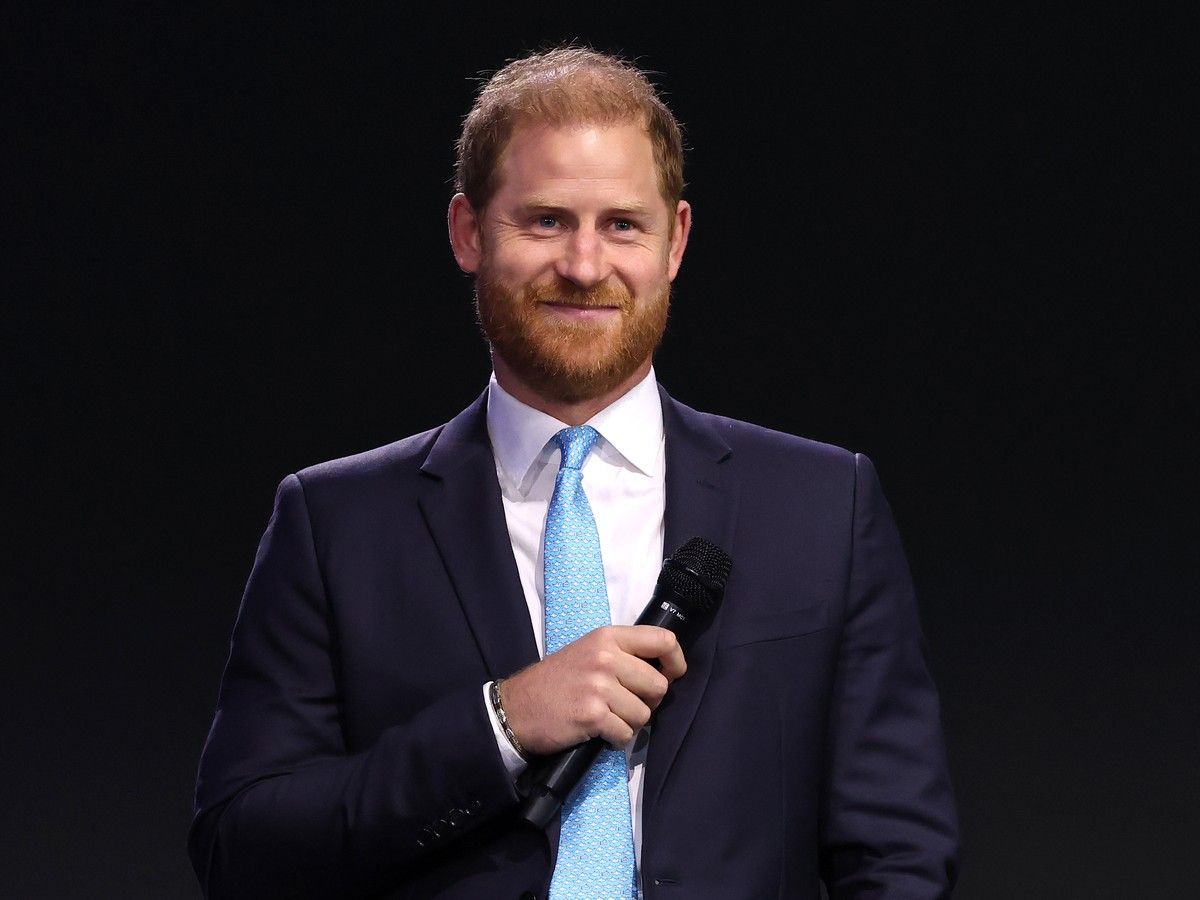

U.S. politicians are criticizing the Trump administration's escalating trade war against Canada and warning of its impact in their states.

U.S. political leaders, including at least one Republican, are warning that President Donald Trump’s escalating trade feud with Canada will raise costs for U.S. families and businesses, while damaging a longstanding relationship with the nation’s closest ally.

The widespread criticism comes after Canada pulled out of trade talks late Friday night and promised 50 per cent U.S. tariffs on CA$20 billion in Canadian imports kicked in on Saturday.

Prime Minister Mark Carney said Saturday that Canada would enact dollar-for-dollar retaliatory tariffs on Sept. 8, the Tuesday after Labour Day.

As happened during the Trump administration’s initial trade hostilities in 2025, the dispute has become a major political issue in states that rely heavily on trade with Canada.

“Canada is NOT the 51st state. Trump owes our friends and neighbors an apology for nearly 2 years of his boorish insults and jeers, ” Democratic Washington State Senator Patty Murray wrote on X , calling Canada the state’s largest trading partner.

According to the Washington Council on International Trade , 29 per cent of all imports between April 2025 and this March — approximately $21 billion in goods — came from Canada.

Michigan Governor Gretchen Whitmer also warned that her state is “uniquely impacted” by what she called Washington Republicans’ “ongoing, chaotic tariff wars with Canada.”

“These tariffs act as a tax hike on Michigan families and businesses by raising prices at the grocery store and the gas pump,” she posted on X.

Her Michigan democratic ally, Congresswoman Haley Stevens, said the new tariffs would make life more expensive for residents of a state linked to Canada for centuries as “partners, allies and close friends.”

“You don’t rob your neighbor,” she said in an X post . “This trade war must end so we can get our economy back on track. I will keep pushing to block Donald Trump’s tariff regime and keep fighting to lower costs for Michiganders.”

The border state took in about $55.5 billion in Canadian goods last year — 80 per cent from Ontario — while sending about $28.8 back across, most of it over the Ambassador Bridge between Detroit and Windsor, per the Canadian Chamber of Commerce.

Abdul El-Sayed, currently running for Senate in Michigan, accused Trump of “escalating a trade war with Canada for his own vanity.

“Even before this new round, Canadian tariffs were costing Michigan families an additional $3,200 a year,” he said on X . “It’s going to get much worse.”

New York Governor Kathy Hochul offered a more concise assessment.

“Needlessly picking fights with our allies and raising prices here at home,” she wrote on X . “That’s Trump’s economic policy in a nutshell.”

Senate Democratic Leader Chuck Schumer of New York said the new tariffs were yet another burden on Americans already facing high costs.

“Trump’s chaotic trade wars are bleeding the American people dry, and now he’s coming back for more,” he posted to X . “This nonsense with Canada should have never gone into effect. It must end now.”

Minnesota Democratic Senator Amy Klobuchar said on X that the tariffs will lead to “higher costs for small businesses, farmers and all Minnesota families.”

“Canada is Minnesota’s #1 trading partner,” the candidate for governor to replace Tim Walz wrote. “Minnesotans are paying for Trump’s chaos.”

Minnesota imports more than $19 billion worth of products from Canada annually, more than two-thirds of which is energy from crude oil, natural gas and electricity, as reported by CBS.

Maine Governor Janet Mills also warned of higher costs and uncertainty, saying Trump’s latest escalation “would further strain our bond with our closest trading partner.”

“Maine has had enough of this unending trade whiplash,” she wrote on X.

Maine Republican Senator Susan Collins said the repeated swings in U.S.-Canada trade policy were already creating problems for businesses in her state.

She said Maine imports about US$2 billion in non-petroleum products from Canada each year and that businesses, farmers and lobster fishers had expressed concerns about tariffs, limited domestic supply chains and possible Canadian retaliation.

“If the Administration proceeds with these tariffs, they will increase costs for Maine families, as most businesses will have no choice but to pass on the tariffs to their customers through higher prices,” she shared on X.

Urging both sides to resume negotiations towards “a fair agreement,” she said the Trump administration should consider the effects of tariffs on Maine businesses, communities and families.

The criticism wasn’t limited to border states.

Virginia Governor Abigail Spanberger said Canada is Virginia’s No. 1 export destination and warned that the new tariffs would hurt families, farmers, producers, foresters and businesses “in a matter of days.”

“We have seen time and time again how President Trump’s careless, chaotic tariff policies have direct consequences for Virginians,” she posted on X . “They raise prices and destabilize relationships that our producers and businesses rely on.”

Colorado Democratic Senator Brittany Peterson acknowledged Canada’s decision to impose retaliatory tariffs while warning about the consequences of the trade war.

“It’s hard to imagine the long-term consequences to critical industries in both our countries due to this incompetent and unhinged president,” she wrote on X.

California Governor Gavin Newsom was decidedly more blunt.

“Our closest ally. Our critical trade partner. And Trump is hitting Canada with 50% tariffs,” he wrote. “What the actual f— are we doing?”

Trump, meanwhile, had been quiet on the subject until early Sunday morning when he posted about Canada on his Truth Social platform.

“Canada wants the benefits of being a State, without being one!!! They have also charged our great farmers, for many years, massive amounts of Tariffs. No more!!!”

Our website is the place for the latest breaking news, exclusive scoops, longreads and provocative commentary. Please bookmark nationalpost.com and sign up for our daily newsletter, Posted, here.


An Air Canada Airbus A321XLR aircraft during a preview event in Dorval, Quebec on June 3, 2026. The next-generation aircraft will debut with a new cabin design.

Canada’s airlines are in a race to provide an improved economy flying experience, promising cushy upgrades in an environment that has become notorious for its frustrations.

However, it may be prudent for the economy traveller not to be quickly seduced by the promised upgrades.

“It isn’t about restoring pleasure to economy, it’s about premiumization,” says John Gradek, aviation industry specialist and lecturer at McGill University. The upgrades are more likely to attract premium and loyalty flyers, he suggests.

Recent upgrade announcements have come from Air Canada, WestJet, Air Transat and Porter Airlines covering a range of items such as seating, headrests, USB ports, screens, tray tables and phone/tablet holders.

However, says Gradek, the airlines are “not making flying more pleasurable, so much as turning pleasure into a product line … the mass leisure traveller still chooses on price and schedule. A sharper screen won’t change that.”

They have “worked out that the money is at the front of the plane, and in getting economy passengers to pay up — premium economy, preferred seats, extra legroom. Premium economy is the fastest-growing cabin in the business, and the industry is quietly splitting into a buy-up premium tier and a stripped-down basic one.”

That means, says Gradek, that the “genuinely substantial moves are all up front.” For example, he points to Air Canada putting lie-flat seats on the new Airbus A321XLR, a long-range, narrow-body jet. That and its Signature Plus suites on the 787 “are real, industry-notable steps,” he says.

On the other hand, he suggests that WestJet’s recently announced “transformation” is mostly about bringing the former Swoop and Sunwing airline planes up to a normal WestJet cabin, premium seats included.

“What the person in economy actually gets is a refresh, not a revolution,” says Gradek. That includes, he notes, bigger 4K screens, USB-C power, tablet holders, nicer lighting and lighter seats.

“All welcome, all overdue, but that’s table stakes in 2026, not a leap,” he insists.

Moreover, Gradek points out that the one thing that “ defines economy comfort, the pitch and width of the seat, isn’t moving.” The pitch is the distance from a specific point on one airplane seat and the same point on the seat in front or behind. It provides a sense of a passenger’s personal space, legroom and overall comfort.

For example, Gradek says, while Porter’s new seats “are genuinely nice and about 30 per cent lighter , the legroom is exactly what it was.”

Meanwhile, he chalks up Air Transat’s recent upgrade announcement as really being “an aircraft-delivery announcement, the A321XLR arriving in 2027, wearing a comfort headline.”

Air Canada and Air Transat are both taking receipt of the Airbus A321XLR. And both focus, as a result, on the ability to launch new international routes and improve their present offerings.

In its recent announcement, Air Transat suggests upgraded economy cabin lighting will reduce the effects of jet lag and there will be 50 per cent reduced noise. One of its claims is that the cabins will have a “palette of over 16 million colours that adjusts to night and day in real time, enhancing relaxation.”

Otherwise, Air Transat says “spacious seating” will come with a backrest and four-way headrest. And economy flyers will get the “largest-in-category” 25.7-cm personal touch screens, as well as 110-volt sockets, USB-A ports and bathrooms with a changing table.

Air Canada upgrades across all its cabins promise new ergonomic seats with built-in tablet holders, larger 4K OLED screens and Bluetooth audio available, USB-C and AC power outlets. Air Canada Premium Economy cabins will include new extended privacy wings for added comfort.

Otherwise, Air Canada is adding new premium bedding and amenities for customers on international flights (with variations for different classes).

WestJet says it aircraft that “previously operated with an all-economy layout will now feature thoughtful design elements and modern amenities.” Its Premium, Extended Comfort and Economy cabins have been upgraded with free Wi-Fi, a headrest with four-way adjustment, phone/tablet holders, updated charging ports and coat hooks.

Porter promises customized new seats with redesigned seat and back cushions, updated tray tables and phone/tablet holders.

When it comes to comparing Canadian airline travel with European and Asian airlines, Gradek says Canada is falling behind and “the gap is widening, not closing.”

He states that the best airlines based in Asia and the Persian Gulf, including Singapore, ANA, Cathay, Qatar, Emirates, “remain the global benchmark on both the seat and the service. But the European majors have pulled away too.”

He points to Lufthansa’s new Allegris cabins and Air France’s redesigned business class as a “genuine step up in both the hardware and the service, and that is the standard now.”

And while Air Canada made meaningful upgrades, they’re “nowhere near that level,” states Gradek. “Its new business product is better than what it replaced, (but) not a match for what Lufthansa or Air France are now putting in the air.”

However, he does point out that Canada “still shows well … against Europe’s short-haul economy, which has gone tight and no-frills even at the flag carriers. So, we are better than a cramped intra-Europe hop, but a clear step behind the European mainlines on the premium long-haul product, and further behind the best of Asia again.”

Ultimately, he says, while these upgrades “narrow the technology gap — the screens and the plugs — they don’t close the one that matters, which is the seat and the service.”

Our website is the place for the latest breaking news, exclusive scoops, longreads and provocative commentary. Please bookmark nationalpost.com and sign up for our daily newsletter, Posted, here.


Keith Wilson at the May 25, 2026 Calgary event called A Debate Over Canada: Jason Kenney vs. Keith Wilson. The event was organized by the Artistotle Foundation for Public Policy.

Alberta’s independence referendum is now just two months away, with nothing less than the future of the country at stake, so I wanted to check back in with one of the more thoughtful separatist leaders.

I remain one of those flag-waving, Canada-first Albertans who intends to vote Option 1 on Oct. 19 — that Alberta should remain a province of Canada. Yet because of voices like Keith Wilson’s, who advocates Option 2 (that the Alberta government commence the legal process required under the Constitution to hold a binding referendum on secession), I am far from complacent about the outcome.

Polls continue to show separatists in the minority, but their campaign is organized, professionally executed, and focused on converting the undecided.

Wilson is co-founder of the grassroots “Let Alberta Decide” campaign, a registered third-party advertiser with a $607,000 spending limit. He says the group has raised approximately $425,000 so far, with an average donation around $100.

He describes a digital-first operation that is heavily invested in AI-driven targeting, delivering distinct messages to different groups: the middle-aged couple earning $400,000, the 22-year-old struggling with rent and car insurance, and the 30-year-old single mother of two.

“We’ve had digital campaigns before,” he notes with evident satisfaction, “but we’ve never been able to combine digital campaigns and a political question with AI.” He presents this as a genuine novelty for a separation vote — and as a broader experiment. And unlike the party-driven referendums that have defined Quebec’s sovereignty debates, this Alberta effort is intentionally outside formal party structures.

“It’s an interesting experiment,” he says, “as to whether or not a major political decision can be effected outside of party structures.”

Wilson is also the principal author of a nearly finished blueprint produced by the self-appointed Alberta Transition Council. The document aims to map the practical logistics of separation — finance, foreign affairs, defence, citizenship, borders and the continuity of everyday services for citizens and businesses.

Coincidentally, or by design, this blueprint is expected to enter the public domain around the same time as the Jack Mintz-led expert report commissioned by the Alberta government and prepared by the University of Calgary’s School of Public Policy, which will examine the potential economic and fiscal impacts of leaving Canada.

Wilson remains one of the more civil and level-headed voices in the independence camp. In May we discussed, lawyer to lawyer, the provincial duty to consult First Nations before advancing a separation process; I continue to check in as the referendum approaches.

He acknowledges the “wild west” nature of a grassroots effort. Message discipline is impossible. Internal disputes — over a draft constitution for an independent Alberta (Wilson says he has not seen it) and occasional racist outbursts at rallies — are simply the price of openness.

“Just let people do their own thing,” he shrugs, “because you’re not gonna be able to control it.” When someone truly crosses a line, renounce and distance yourself. And, he adds, anti-collusion rules further force the various campaigns to operate in silos.

He is equally sanguine about voter turnout predictions. The Oct. 19 vote is a standalone referendum on a Monday, a week after the Thanksgiving long weekend. Content voters, he believes, will stay home.

Contentment breeds apathy; economic frustration will do the opposite. Between now and Oct. 19, he expects Ottawa’s “economic mismanagement” and “ideological obsession” to keep the affordability crisis front of mind and to drive pro-independence voters to the polls.

That economic argument has taken on new colour this week. Even as Canada and the United States’ late push to finalize a trade agreement was collapsing — triggering a new round of steep U.S. tariffs— Wilson had already reframed the negotiations around Alberta’s contribution.

“Alberta’s energy produced Canada’s bargaining power,” he posted mid-week. President Donald Trump had publicly hinted the long-cancelled Keystone XL pipeline “may be awoken from the grave” as part of the talks, a signal Wilson reads as further evidence of his core claim: Ottawa’s leverage in these negotiations is drawn heavily from Alberta’s resources.

He rejects any notion of trading “one master in Ottawa for a new master in Washington.” Alberta, he insists, possesses the resources, skilled workforce, entrepreneurial culture and negotiating power — including with a British Columbia that would become continentally landlocked — to stand alone as a sovereign country.

“I think the weakness is Canada, not Alberta,” he asserts, “vis-a-vis the United States.”

He bullishly predicts a majority for Option 2 and is equally clear that no result will cause him to abandon the cause. “If we do not achieve it this time, then the case will continue to be made and Albertans will have another opportunity to decide in the future.”

I remain unconvinced that pro-secession voters will secure a majority this fall. What is most striking, and unnerving, is the pervasive sense of inevitability in Wilson’s tone.

He frames the current moment as the natural evolution of Alberta politics — the same fracturing of the conservative side of the spectrum that produced successive long-running dynasties (the United Farmers of Alberta, Social Credit, the Progressive Conservatives) and is now generating a period of upheaval.

Demographics have shifted: rural population share has declined while urban centres have grown, creating what he calls a “dangerous political chess board” for Premier Danielle Smith. The greater risk, in his assessment, is not that Smith is removed as UCP leader, but that the party finds itself reduced to a minority or pushed into opposition by October 2027.

“If the premier ignores or provokes the independence supporters within her party, they’re not going away,” he warns. Those voters will leave for an existing right-wing alternative or a newly formed one, splitting the conservative vote and raising the real possibility of another NDP government — a repeat of the Wildrose-Progressive Conservative fracture that delivered Rachel Notley’s victory.

Wilson believes Alberta can do better outside Confederation. I continue to believe the country we already have is worth defending. The conversation between those two convictions will be tested, in concrete and consequential terms, on Oct. 19.

National Post

Our website is the place for the latest breaking news, exclusive scoops, longreads and provocative commentary. Please bookmark nationalpost.com and sign up for our newsletters here.
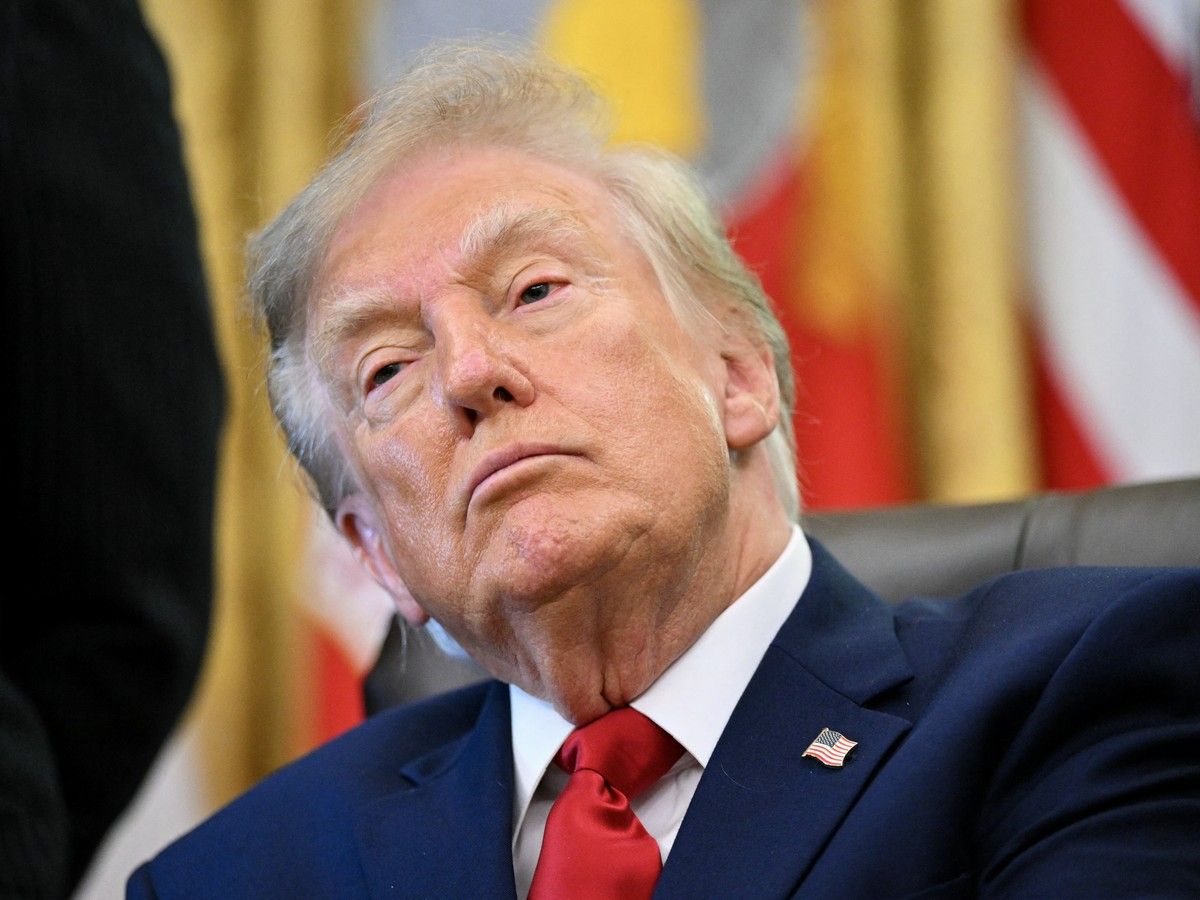

Conservative MP Jamil Jivani participates in a panel discussion at the Canada Strong and Free Network conference in Ottawa on Friday, May 8, 2026.

OTTAWA — Outspoken Ontario Conservative MP Jamil Jivani says that Prime Minister Mark Carney is erring in trying to “accelerate conflict” with the U.S., after cross-border trade talks broke down late Friday night.

Jivani told National Post that Carney struck the wrong tone in a fiery missive , sent just before the midnight deadline, vowing to match imminent 50 per cent tariffs on some Canadian goods “dollar for dollar.”

“It’s one thing for (Carney) to come to Canadians and say, ‘look, we’re not able to sign a trade deal today.’ It’s another thing for him to go back to this, you know, anti-American sentiment where, essentially, he’s arguing that this relationship is not as consequential as many people believe it is,” said Jivani.

Jivani said that Carney’s announcement of matching dollar-for-dollar tariffs was an “overreaction” that reflected his broader lack of a long-term, strategic focus on Canada’s relationship with its southern neighbour and biggest customer.

“We can’t lose sight of the fact that it didn’t have to play out this way,” said Jivani. “And maybe this is why trying to figure out these complicated, nuanced things in a matter of hours instead of weeks is a bad idea.”

Jivani said that Carney and his negotiating team made the critical mistake of not getting serious about making a new trade deal with the U.S. until U.S. President Donald Trump raised the threat of 50 per cent Section 338 tariffs last month.

“This has been months and months, in my view, of setting the stage for this to fail … At the end of the day, I think we have to hold the prime minister accountable for not putting his best foot forward,” said Jivani.

Jivani, a close friend and former classmate of U.S. Vice President JD Vance, added that the Carney government “actively tried to discourage” he and other stakeholders with high-level U.S. contacts from trying to assist trade negotiations.

The MP, who represents the Ontario riding of Bowmanville—Oshawa North, said in a social media post shortly after midnight that it was a “solemn moment for hundreds of thousands families across Canada” that Carney and Ontario Premier Doug Ford deserved much of the blame for.

“Make no mistake. Since the beginning, in their public communications, Liberal politicians like Mark Carney and Doug Ford have put their political self-interests ahead of Canadian workers,” wrote Jivani in the lengthy post.

Jivani admitted that the post came at an emotional moment for him but said he stood behind his criticisms of the two leaders.

“It is fair to say that Mark Carney and Doug Ford are very similar, especially insofar as their political brands seem to really be built as a reaction to the United States,” said Jivani.

He said he hadn’t had a chance to read a statement on the trade impasse put out by Conservative Leader Pierre Poilievre on Saturday morning and didn’t reply to a follow up message about the statement.

Jivani’s name made the rounds ahead of the Friday night deadline, after comments made by Vance at a Republican fundraiser were reported by The Canadian Press.

Vance told Republican donors that Jivani has been a “pretty effective advocate” for Canada, despite his lowly position as a “random MP.” He added that Poilievre had been a “non-entity” in trade negotiations.

He also revealed that he and Vance will once again be in the same fantasy football league once the NFL’s regular season gets underway in September.

National Post
rmohamed@postmedia.com

Our website is the place for the latest breaking news, exclusive scoops, longreads and provocative commentary. Please bookmark nationalpost.com and sign up for our daily newsletter, Posted, here.