LP_468x60
on-the-record-468x60-white

Canadian Prime Minister Mark Carney with Toronto Mayor Olivia Chow during a housing announcement at a construction site in Scarborough, Ontario on Wednesday, August 5, 2026.

OTTAWA — Prime Minister Mark Carney will hold a press conference on Saturday morning after suspending trade talks with U.S. President Donald Trump and announcing steep retaliatory tariffs.

Just minutes before a midnight deadline on Friday night, Carney said that Canada was withdrawing from the talks because “last-minute changes” to the agreement made by the U.S. “were unfair, uneconomic, and called into question the reliability of any deal.”

Canada and the U.S. were engaged in negotiations to reach a deal that would avert new 50 per cent tariffs on $29 billion-worth of Canadian goods. Now, those levies will come into effect and Carney has pledged to match them dollar-for-dollar on U.S. goods.

The government also announced on Friday that it would introduce “additional measures to support Canadian workers and businesses” affected by the U.S. tariffs.

Carney will also hold a cabinet meeting at 12:15 p.m. and a meeting with provincial premiers at 1:30 p.m. on Saturday, according to his itinerary .

After the two sides broke off talks, the Americans blamed Canada for the breakdown in negotiations.

“Despite the U.S. offer to Canada to receive the best treatment of any major exporter to our market, new demands and walk backs of other commitments by Canada have upended the careful balance reached in the past days,” said U.S. Trade Representative Jamieson Greer, in a statement posted on social media on Friday night.

Carney will hold a press conference in Ottawa at 11 a.m. on Saturday.

More to come.

National Post

Our website is the place for the latest breaking news, exclusive scoops, longreads and provocative commentary. Please bookmark nationalpost.com and sign up for our daily newsletter, Posted, here.


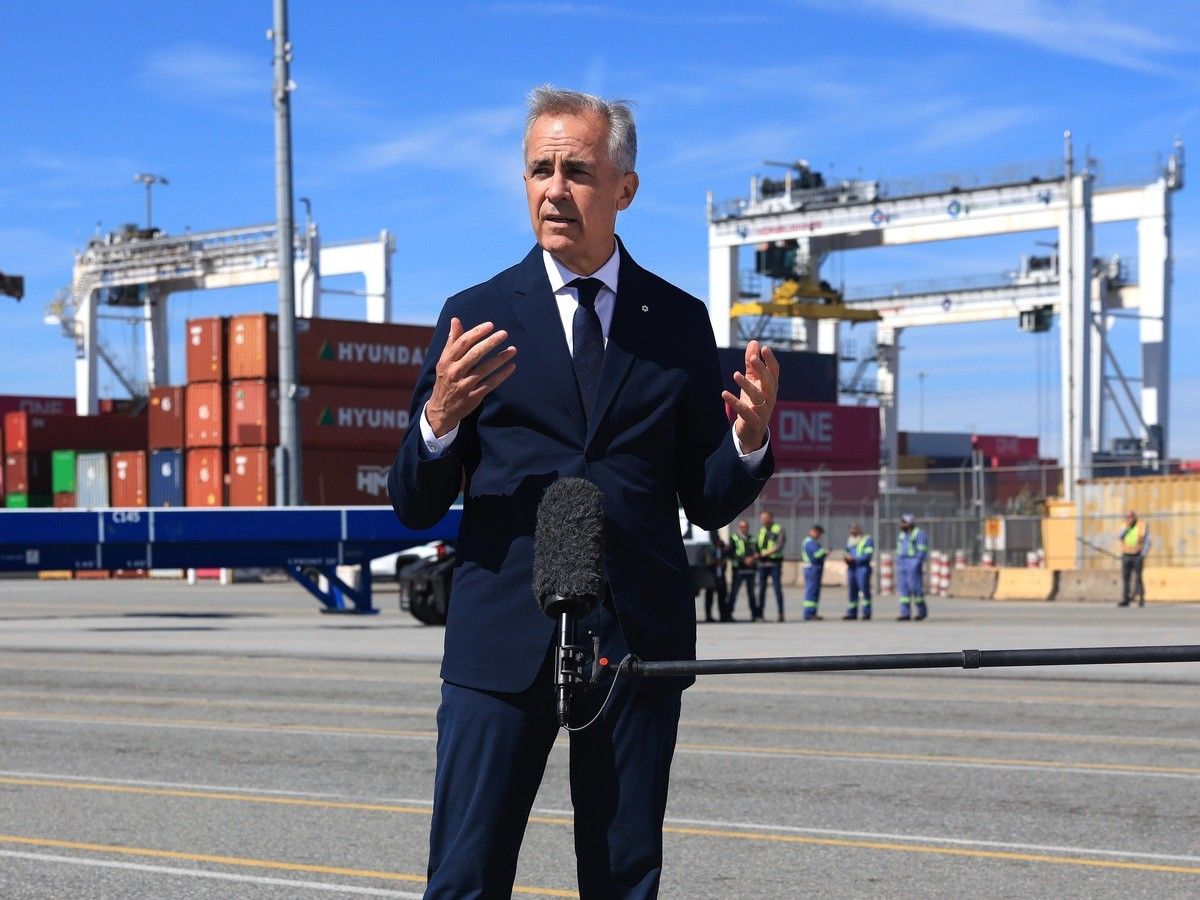
Prime Minister Mark Carney during a press conference on Thursday.

Over the past 18 months, Canada’s new government has focused on building our strength at home, diversifying our partnerships abroad, and striking a fair deal with the United States.

Our objectives in our trade negotiations have been to:

  • Preserve tariff-free access to the U.S. for the vast majority of Canadian business;
  • Provide greater stability to our trade relationship;
  • Significantly reduce U.S. tariffs on our key strategic industries, so that Canadian businesses in these sectors would have the best access of any in the world;
  • Protect our small and medium-sized businesses – the lifeblood of our economy – including by removing the imminent threat of new tariffs; and
  • Maintain our flexibility, independence, and sovereignty so we can keep building the Canada we want.

We have recognized from the beginning that America has changed, and that we will not return to our old relationship. Our government understood, before many, that America is altering all its trade relationships. Putting tariffs on its closest allies and charging for access to its vast market.

We have worked in that context. To strike a fair deal that would provide the best access to the U.S. market and greater certainty to Canadian businesses and workers. Throughout, our goal has been to secure the best deal for Canadians, never a deal at any price or on any deadline.

In recent weeks, we made important progress toward improving Canada’s position as having the best deal in the world with the U.S.

However, that progress has not been enough to meet our objectives for Canadians. As a result, this evening, I have decided to suspend trade negotiations with the U.S. and have directed Canada’s negotiators to return to Ottawa. They have worked hard, in good faith, to defend the interests of Canadians throughout these negotiations up until the very last minute. However, last-minute changes in the U.S. proposed terms were unfair, uneconomic, and called into question the reliability of any deal.

At midnight tonight, the U.S. intends to impose a 50% tariff on roughly $28 billion of Canadian goods. Canada will match those tariffs dollar for dollar to protect our workers and businesses.

In the coming days, the government will introduce additional measures to support Canadian workers and businesses, building on the nearly $25 billion in support provided over the past 18 months.

These actions complement Canada’s core economic strategy. From day one, we have been focused on building our strength at home and diversifying our partnerships abroad.

That strategy is working. We are advancing nearly $500 billion in major infrastructure projects. In parallel, we are unlocking new export markets for Canadian businesses. Our existing free trade deals already provide Canada with preferential access to 1.5 billion consumers, and we are on track to double that market access by the end of this year.

Canadian economic growth is accelerating, and we are on course to have the second-fastest growth in the G7 over the next two years. Our economy is creating jobs at four times the rate of the United States. Our exports to non-U.S. markets are on track to double over the next decade. Foreign direct investment in Canada is at its highest level in two decades, running at twice the rate of our nearest G7 competitor. Canada now ranks as the most attractive country in the world for infrastructure investment.

Canada has what the world wants. And we will not allow any nation to determine our future. We will set our own course to keep building Canada strong for all.

Our website is the place for the latest breaking news, exclusive scoops, longreads and provocative commentary. Please bookmark nationalpost.com and sign up for our daily newsletter, Posted, here.


A Muskoka noise bylaw is about how closely Canada wants to police the audible expression of the Canadian summer dream, of what it means to be at the cottage, whether to make the noise, or to resent it.

A marina on Lake Muskoka thrums with activity on a recent summer morning.

A major sportswear retailer is pouring Aperol spritzes for ladies in yoga wear at a popup brand event. At the docks, a salesman is waiting to hand over a half-million-dollar wakeboarding boat to the customer who has bought it sight unseen, with its custom Italian sound system.

“If you hate your neighbours,” he says to the oglers, “these are the speakers for you.”

Noise is a big deal these days in Muskoka, eastern Canada’s most stereotypically Canadian holiday spot. Big, exuberant, luxurious, expensive, brash noise, from speakers and boat motors, construction work and dock parties.

A new local noise bylaw, the first in a generation, is in the final stages of development, approved in principle but awaiting some final tweaks. It is causing tension.

The cottagers lobby wants clarity that tourist venues cannot simply play music outside for all their private cottage neighbours to hear from 7 a.m. to 11 p.m. seven days a week. The construction community still hopes to make a change allowing crews to start deliveries and waste removal at 6 a.m. weekdays.

But these are trifling details. There is more at stake. A noise bylaw in Muskoka is not like a noise bylaw most anywhere else, because a Muskoka noise bylaw is not only about how to handle complaints about excessive construction or party noise.

A Muskoka noise bylaw is about how closely Canada wants to police the audible expression of the Canadian summer dream, of what it means to be at the cottage, whether to make the noise, or to resent it.

It also reflects a long-running clash of cultures in Muskoka, between flashy developers and old-timey cottagers, between the millionaires of Lake Muskoka and the billionaires of Lake Joseph, between canoes and float planes.

So there are diverse opinions about noise, nuisance and neighbours.

Besides, a township can only do so much. It does not regulate planes, or boats, or trains or cars. It does not even regulate construction with this bylaw, really.

What it can regulate is noise that causes a nuisance, and there is the big problem. Who’s to say?

“It was a quieter place,” Peter Kelley, mayor of Muskoka Lakes Township, said of Muskoka 20 years ago, when the current bylaw was adopted in the aftermath of a messy legal feud between two lakeside nightclubs.

A lot has since changed about Muskoka’s nature and character, he said. Tourist accommodation has shifted from large resort hotels to short term rentals. New private residential and commercial development is booming, the largest economic engine the township has.

“We can’t pretend it’s not important to us, it is,” Kelley said.

“That often has competing interests,” he said. “Noise affects everybody differently,” and construction noise especially “can be offensive” if you’re up for a weekend of lakeside peace and quiet. “We are blessed to be here, but it shouldn’t be at the detriment of someone else’s ability to enjoy the place.”

Kelley said the noise consultation process has been “detailed and thoughtful,” and the new bylaw strikes a workable balance. If passed, he said it will be a welcome update, more easily enforced and explained. Noise is the number one complaint in the summer months, and the numbers are rising.

From January to June this year, Musoka Lakes bylaw officers opened 21 investigations, compared to six in the same period last year, seven the year before that, and three the year before that. Whole-year statistics including high summer show a similar steady increase.

Alyxandra Brown, executive director of Our Muskoka Stakeholders Association, a construction and real estate advocacy group, said she has met with township officials and is “hopeful” that last minute changes will be made to allow site preparation at 6 a.m., and for “waste removal” and “deliveries” to be removed from the definition of “construction” to allow them to take place before 7 a.m.

“This is not about increasing noise. It’s about ensuring the bylaw reflects the realities of how projects operate in Muskoka. Early morning logistics help keep projects on schedule, coordinate trades efficiently and reduce delays and congestion,” Our Muskoka said in its submissions to the township.

Brown said Muskoka has changed, and so have “community expectations,” and her members “are committed to being good neighbours,” with “community-minded etiquette (that) extends beyond compliance with a bylaw.”

“We understand that noise can affect residents’ enjoyment of their properties, and we believe thoughtful, reasonable noise regulation plays an important role in maintaining the quality of life that makes Muskoka special,” she said. “At the same time, construction is essential to supporting our communities and our residents. It provides housing, maintains and improves existing properties, sustains local businesses, and creates employment opportunities. Effective noise regulations should therefore strike an appropriate balance.”

 The Gravenhurst, Ont., waterfront, on a sleepy afternoon.

Ken Pearce, president of the Muskoka Lakes Association, an advocacy group of cottagers, said in his submissions that the proposed bylaw is misleading about outdoor speakers and fails to distinguish between ambient music and prohibited noise.

“We suggest it cannot be the intention that tourist entertainment operations be permitted to generate music using outside speakers which is clearly audible by neighbouring properties between the hours of 7:00 a.m. and 11:00 p.m. seven days per week,” wrote Pearce.

He suggested these operations be banned from emitting noise that can be heard from neighbouring properties in the daytime, and from using outdoor speakers at all after 11 p.m.

Diana Piquette, chair of Safe Quiet Lakes, has picked up a recent mood shift among cottagers. This group, which advocates against boating noise and excessive wakes, has conducted biannual surveys of thousands of Muskoka cottagers to track their concerns about safety and disturbances as their experience of cottage life changes.

“The cottage experience is a very unique thing in that it’s multigenerational,” said Piquette, also a vice president of the Federation of Ontario Cottage Associations.

In the first two surveys, respondents wanted education and awareness campaigns to discourage irresponsible boating. But in the last five years, over two surveys, there has been a growing sense that “it’s not enough,” she said. “So we want advocacy, legislative change and enforcement.”

Much of that is beyond the jurisdiction of the Township of Muskoka Lakes, and so Piquette’s advocacy is instead toward Transport Canada. A new Decibel Coalition aims to rally support around Ontario and the rest of Canada for federal legislative change, with noise as the headline issue.

But some of those cottagers’ concerns are about plain old nuisance noise. Enter the municipal bylaw officers.

The new bylaw offers some examples of “nuisance noise,” which appear to be from a repeated template, as they also appear in bylaws for Georgian Bay, a similar neighbouring district where short-term holiday rentals are a major annoyance for more perennial residents.

They include the operation of any sound system, and also “continuous yelling, shouting, hooting, whistling, singing or other similar sounds made by a Person.”

The “hooting” is a revealing curiosity here. Mayor Kelley wasn’t even aware it was in there. He’s a lawyer, and it’s not really a lawyer’s word. It’s ambiguous. You can hoot in exultation, but you can also “give a hoot,” or more commonly not. “Hoot” is a double-meaning, mirrored sort of word, and it helps illuminate this carnival world of quasi-wilderness luxury, Muskoka, where people who give a hoot about hooting have successfully got it banned, at least part of the time.

Noise itself is trickier to define, not just for lawmakers.

In the bylaw, nuisance noise is “any sound or vibration that may be disruptive, excessive, obnoxious, repetitive or otherwise offensive to the senses and that may be of such volume and/ or nature that it is likely to disturb and/or interfere with the comfortable enjoyment of life or property.”

But noise itself? The proposed new bylaw defines it as “any sound or vibration,” but that’s not quite right. Some vibrations, for example, are not noise. The old bylaw defines “noise” as “a sound prohibited by this bylaw,” which isn’t much help.

 Port Carling, Ont., in July 24, 2023.

Among anthropologists, dirt is sometimes defined as “matter out of place,” and sometimes contrasted with the good, clean mud of the field, where it belongs, as a way to show how we think about what makes something “dirty.”

Noise is like that. It is sound out of place. Noise is dirty sound.

When the tree falls in the forest and no one hears it, it makes a sound, but it is not noisy. On this view, to be noisy, someone has to be bothered. Someone has to want to put that sound back in its place.

It takes a slightly zen attitude to accept it, but sometimes middle period Bon Jovi blaring through Italian speakers over an outboard motor on a sunny day on Lake Muskoka really is only “sound.” Sometimes it is as natural to its place as the dawn chorus of songbirds and the warbled vespers of the loon, or indeed to the beeping clatter of new cottage construction, and it only becomes annoying “noise” if it passes too close to a dock, dragging a huge wake and a gleeful Torontonian on waterskis.

Noise is sound that annoys, and unless you are there to be annoyed, you won’t be, and it will not be noise, it will just be sound.

It’s no wonder people disagree.

Muskoka has had legal trouble with noise regulation before.

The current bylaw was passed in 2005 after the earlier one was quashed by a judge of Ontario’s Superior Court, having been in force only a couple of years.

A restaurant and nightclub called The Landing burned down in 2002. It was in Port Carling, Ont., the village at the hub of the three big regional lakes: Muskoka, Joseph and Rosseau.

The owners moved to rebuild, and wanted to confirm that bylaw officers would permit them to play music until late in the night. So they installed special doors and insulation to limit noise, and consulted with the township.

The problem was that a competing nightclub on Lake Muskoka, the Kee to Bala, had a unique exemption under a section of the old bylaw meant to preserve local historical cultural traditions “forming part of the character of Muskoka.”

The Kee to Bala’s tradition was described in the bylaw as providing “entertainment dancing and music to Muskoka from 1st of May through to October 31st, plus New Years Eve,” with a “80,000 watt professional sound system,” a headline act that plays from 11 p.m. to 1:30 a.m., and alcohol service.

As traditions go, it was pretty typical, generic even, and arguably the same thing The Landing wanted to do.

So when the new Landing was up and running, and playing music beyond 11 p.m., just like the Kee to Bala was, bylaw officers started issuing fines, but only to The Landing. The bylaw included no criteria for how the The Landing might apply for a similar exemption, nor how such an application would be considered. A judge found this discriminatory, and quashed the entire bylaw.

So the present bylaw was forged in this conflict, and written on the fly in response to a culture clash over cottage traditions in Muskoka Lakes.

The same is true today as they prepare a new one, trying to avoid the mistakes of the past, and to keep things quiet for the future.

Our website is the place for the latest breaking news, exclusive scoops, longreads and provocative commentary. Please bookmark nationalpost.com and sign up for our daily newsletter, Posted, here.


The owner of a small Canadian business that imports electric golf carts from China says his company is now in jeopardy because the federal government has billed him for more than $178,000 after placing his three-wheeled buggies in the same import category as electric vehicles (EVs).

OTTAWA — The owner of a small Canadian business that imports electric golf carts from China says his company is now in jeopardy because the federal government has billed him for more than $178,000 after placing his three-wheeled buggies in the same import category as electric vehicles (EVs).

Joseph McLuckie, who founded JPSMGolf in 2006 in his Toronto basement, said Friday that he has exhausted his appeals with Canada Border Services Agency (CBSA) after the federal department confirmed its ruling that his company’s golf carts are considered sport vehicles because they “are conveyances used by the golfer to get their bag and associated accessories across the golf course during play.”

The re-classification was made during a 17-month window when Canada was applying a surtax of 100 per cent on Chinese-made EVs, part of a trade war with China that was calmed earlier this year. The company, which has six employees, had previously and has since been paying 6.1 per cent surtax on its Chinese-made imports.

Instead, he was informed that his shipment of “Formula” trolleys from about a year earlier was now subject to a surtax of $169,882.35, plus GST of $8,494.12. The bill has since grown by more than $4,500 because of interest charges as he tries to fight the ruling.

McLuckie said his business doesn’t have the money to cover that bill. “If I have to pay (this bill), I’m screwed.”

In the May 14 letter from Juliana Leung, a senior officer of trade compliance with CBSA, quotes from two dictionaries that define a vehicle as “a machine that commonly has wheels and an engine, that is used for transporting goods or people.”

The letter from CBSA, obtained by National Post, concludes that its review of the matter found that no error was made and that the department correctly ruled that the golf trolleys should be classified as EVs and hit with a 100 per cent import tax. “Undoubtedly, the golf trolleys under review meet the definition of motor vehicle, as they employ an electric motor for propulsion, and are used to transport goods.”

The Formula models, whose price tags range from $1,299 to $2,499, are one of five brands sold by JPSMGolf. Not to be confused with four-wheeled golf vehicles, the electric Formula devices travel alongside their owner and are just large enough to carry a golf bag.

Leung couldn’t be reached for comment Friday.

Karine Martel, a CBSA spokesperson, said the department couldn’t comment on specific company cases, nor does it have the authority to deviate from the wording of surtax rules. Requests for remission, she said, are handled by the Department of Finance in consultation with other pertinent departments.

McLuckie said that request has already been made.

Phone calls and emails on Friday were not returned by the Department of Finance, MP Juanita Nathan, who represents McLuckie’s federal riding, or the office of Public Safety Minister Gary Anandasangaree, who is responsible for CBSA.

JPSMGolf, which sells its imported goods only in Canada, has sold about 25,000 units over the last two decades, amassing about $33-million in total sales.

The 100-per-cent surtax on Chinese-made EVs was implemented in 2024 by the Justin Trudeau government in a bid to protect the Canadian auto industry. It was in line with similar policies by the United States and some other western countries.

That surtax was cancelled earlier this year after the Carney government reached a deal with Beijing to allow 49,000 Chinese EVs (about 3 per cent of the Canadian market) into the Canadian market at a tariff rate of 6.1 per cent. In exchange, China agreed to drop its tariffs on Canadian seafood and some key agricultural products.

The U.S. maintains heavy tariffs on Chinese vehicles and the Trump administration and a bipartisan group of U.S. lawmakers have taken efforts to block the vehicles from even driving into the country.

National Post

Our website is the place for the latest breaking news, exclusive scoops, longreads and provocative commentary. Please bookmark nationalpost.com and sign up for our daily newsletter, Posted, here.


Montreal Mayor Soraya Martinez Ferrada joined by Projet Montréal city councillor Ericka Alneus, left, while making statement about racism in the police force in Montreal North. On Monday, Projet Montréal is bringing a motion asking the city to cut institutional ties with Israel.

Several leaders among Montreal’s legal and medical communities are condemning an anti-Israel motion to be voted upon by city council next week.

Brought by the opposition Projet Montréal party, the motion’s aim is to “recognize and denounce the apartheid regime in Palestine and the genocide being perpetrated there.”

An open letter from almost 50 Montreal lawyers on Thursday states that the motion “goes far beyond an expression of solidarity with Palestinian civilians. It asks Montréal … to declare that a ‘genocide’ is under way,” while asking the city to suspend ties with the Israeli government. The lawyers question whether the proposed measure falls within the powers conferred on the city by the provincial legislature, noting that city councils do not determine international law.

Despite this, they say, “the consequences of this conflict are already being felt here. In 2025, Jewish people were the target of approximately 71 per cent of police-reported hate crimes in Canada motivated by religion. Jewish schools in Montréal have been shot at, Jewish people have been assaulted, synagogues have been attacked, and antisemitism has manifested itself in academic and professional settings through intimidation, threats and exclusion.”

Therefore, the letter suggests, “Montréal can acknowledge the suffering of Palestinian and Israeli civilians, call for respect for international law, and recognize Hamas’s responsibility and the realities Israel has faced since October 7. It does not need to enshrine legally contested allegations in a resolution or lay the groundwork for an institutional, economic or cultural boycott that exceeds its powers and threatens rights protected by our Charter.”

Lior Bibas, president of the Association of Jewish Doctors of Quebec has published an opinion letter about the motion in the Journal de Montréal .

“As president of the Association des Médecins Juifs du Québec (AMJQ), I strongly oppose this deeply divisive motion, likely to have very real consequences here. The Montreal City Council is neither the place to define foreign policy, nor the place where to decide complex issues of international law. Such a motion could weaken social cohesion and establish a logic of institutional break-up that goes far beyond the city hall.”

Businessman Harley Finkelstein shared his objections Friday in an X post. The Shopify president said he is “speaking up because this motion is dangerous for Montreal, and my reason has nothing to do with which side of that war you are on.”

He recounts how his family arrived in Montreal in 1956 as refugees, when the city gave them “safety, dignity and the chance to build. That promise has drawn generations of immigrants here from every corner of the world. I am not going to debate a war on the other side of the world, and that is exactly the point. A municipal government has no jurisdiction over foreign policy. Cities do not end wars.

“This city has been a safe haven for my family and so many others, and it must remain one for everyone.”

In a Thursday X post, a spokesperson for Bnair Brith Canada, Samuel Paola, wrote that it “continues to advocate against the so-called anti-Apartheid motion being proposed by Projet Montreal. The motion is a one-sided invective that unduly targets Israel. It is unacceptable for this unreasonable and irresponsible motion to be passed while Canada is experiencing a national crisis of antisemitism.”

These advocacy efforts run parallel to an op-ed published on Friday in the Montreal Gazette by Eta Yudin, senior vice-president (Quebec) at the Centre for Israel and Jewish Affairs and Yair Szlak, president and CEO at Federation CJA.

They wrote it “is appalling to see the official opposition at city council, for the second time in a few months, try to preserve political capital by calling on Montreal to cut ties with Israel.”

They continue: “The motion is perplexing, as it offers no solutions and fails to advance any debate. Worse, it adds fuel to the fire and risks jeopardizing the safety of the Jewish community. And thousands of Montrealers spoke out against this motion in June.”

Meanwhile, more than 700 artists and workers from Quebec’s cultural community are supporting the Projet Montréal motion, reports Le Devoir .

They are expressing their “full support” for the motion, framed as solidarity with the Palestinian people. This group refers to itself as the Anti-Apartheid Club of Quebec Artists and is calling on Montreal officials to vote in favour.

Over the years, states Le Devoir, city council has passed several resolutions about international issues, such as human rights violations in Iran, Haiti and Rwanda. And after Montrealers condemned the Russian invasion of Ukraine in 2022, Russian diplomats were no longer invited to municipal events. Projet Montréal and the artists’ group are now calling for an end to invitations to Israeli diplomats.

Our website is the place for the latest breaking news, exclusive scoops, longreads and provocative commentary. Please bookmark nationalpost.com and sign up for our daily newsletter, Posted, here.


Former prime minister Justin Trudeau answers questions from journalists in Ottawa on Friday, Aug. 21, 2026.

OTTAWA — Former Prime Minister Justin Trudeau said Canadians must stay “strong and united” in order for the federal government to get a good deal with the United States.

Trudeau, who has largely stayed out of policy debates since exiting politics in January 2025, spoke briefly to media after attending the inauguration of the Canada’s first 2SLGBTQI+ National Monument near Parliament Hill.

When asked to comment on the ongoing trade negotiations with the U.S., Trudeau said the only reason he was able to get a “good deal” when renegotiating NAFTA with U.S. President Donald Trump in 2018 was Canadians’ unity.

“I had the opportunity and the challenge a number of years ago of renegotiating NAFTA, and the reason we got to a good deal was because Canadians were strong, Canadians were united,” Trudeau said.

“I see Canadians right across the country strong and united again about standing up for our country and our values. And I know that’s going to help the government get to the right place,” he added.

Trudeau was prime minister when Canada renegotiated the NAFTA free-trade deal with the U.S. and Mexico in 2018, during Trump’s first presidency. The new deal was rebranded CUSMA. The Trump administration has since described the deal the president negotiated at the time as a “bad deal”.

Canada and the U.S. are currently in what appear to be the final throes of weeks of intense negotiations to reach a deal that would help avert new 50 per cent tariffs on $29 billion-worth of Canadian goods.

Those tariffs were initially set to kick in at 12:01 a.m. on Wednesday, but Trump extended the deadline until midnight Friday Aug. 21 while negotiators got closer and closer to a deal.

“Our farmers are going to be thrilled; our manufacturers are going to be thrilled,” Trump said, during a press conference in Washington on Wednesday. “And basically, we have no tariffs going into Canada anymore.”

Very little information has trickled out from the Canadian side on the state of the negotiations, or even what Canada is willing to concede to Trump in exchange for preventing new tariffs and relief on existing ones.

Canada-U.S. Trade Minister Dominic LeBlanc and Chief Trade Negotiator Janice Charette held a new round of meetings with their American counterparts on Friday. The day before, LeBlanc told reporters both sides were “very close” to a deal.

On Thursday afternoon, Carney and LeBlanc briefed provincial leaders on some details of the agreement to date. Following the meeting, multiple premiers confirmed that Carney had asked them to be ready to return U.S. alcohol on provincial liquor store shelves as a concession to Trump.

“I wouldn’t say that he was begging us, but what is a step before begging?,” Kinew told reporters of Carney’s ask on booze.

“The deal will not be right for me, I expect,” he added. “But it’s not about me, it’s about team Canada.”

National Post

Our website is the place for the latest breaking news, exclusive scoops, longreads and provocative commentary. Please bookmark nationalpost.com and sign up for our politics newsletter, First Reading, here.


This comes after a recent report from the Canadian Institute for Health Information revealed that hundreds of thousands of sick and injured Canadians are spending 48 hours or longer in swamped emergency departments.

A new national survey has found that 63 per cent of Canadians describe health care in their province as being in a state of crisis, while 55 per cent believe the system has gotten worse over the past five years.

The research, which was conducted by Abacus Data and commissioned by the Canadian Health Coalition, also noted that these concerns cross political lines, with a majority of Conservative (58 per cent) and NDP (54 per cent) supporters believing the system has become worse. Nearly half of Liberal supporters (49 per cent) share the same opinion.

Overall, 91 per cent of Canadians are concerned about public health care. And a separate survey, conducted by ResearchCo , looked into the possible reasons why.

In this survey, 31 per cent of Canadians say a shortage of doctors and nurses is the biggest problem facing the health care system, while 28 per cent cite long wait times.

Bureaucracy and poor management is third on the list of concerns (12 per cent), followed by inadequate resources and facilities (11 per cent).

This comes after a recent report from the Canadian Institute for Health Information revealed that hundreds of thousands of sick and injured Canadians are spending 48 hours or longer in swamped emergency departments .

The report illustrated intensifying wait times in short-staffed hospitals, with data showing that in 2024-25, 7.7 per cent of emergency visits (1.2 million) involved someone leaving without being assessed by a doctor, while one in 10, or 180,000 people, spent two days or more in emergency before they were moved to a ward bed or the operating room.

In the ResearchCo survey, 20 per cent feel Canada’s health care system has so much wrong with it that it needs to be completely rebuilt. However, the same proportion believe Canada’s health care system works well and only minor changes are needed to make it work better.

And 70 per cent feel “very confident” or “moderately confident” that Canada’s health care system would be there to provide the help and assistance that they would need if they faced an unexpected medical condition or disease.

The two surveys also measured Canadians’ opinions about private health care. The Abacus Data research found that the frustration with Canada’s health care system does not translate into broad support for private payment, with 85 percent believing that universal health care based on need rather than income is a core Canadian value.

When asked to choose among different approaches, 49 per cent say medically necessary health care should remain publicly funded and available based on need at no cost to the patient, while only 11 per cent favour allowing Canadians to purchase private insurance to access medically necessary services outside the public system.

Abacus Data notes that these findings suggest Canadians “have lost confidence in how well the system is performing but have not lost faith in the basic model itself.”

Similarly, the ResearchCo survey found that 49 per cent reject the notion that health care in Canada would be better if it were run by the private sector, while 37 per cent expressed support.

Meanwhile, Abacus Data also looked at public perceptions of Alberta’s Bill 11 , which allows some physicians to split time between the public and private systems.

While 71 per cent of Canadians outside the province had not heard of the legislation, the majority (53 per cent) opposed it after they were informed of the details.

Among the main concerns are higher costs for patients (85 per cent), unequal access based on income (83 per cent), the cost of private insurance (83 per cent), and the possibility that expanding private care will make public wait times worse (81 per cent).

Abacus Data CEO David Coletto said of the survey results: “Canadians want shorter waits, more workers and better access. But most remain resistant to a system in which someone’s income, insurance coverage or ability to pay plays a larger role in determining how quickly they receive medically necessary care.”

The Abacus Data survey was conducted from July 9 to 20, 2026 and involved a combined sample of 3,000 Canadian adults. The ResearchCo survey was conducted from August 5 to August 7, 2026, among 1,001 adults in Canada.

Our website is the place for the latest breaking news, exclusive scoops, longreads and provocative commentary. Please bookmark nationalpost.com and sign up for our daily newsletter, Posted, here.


Federation CJA & CIJA organized a rally in Montreal.

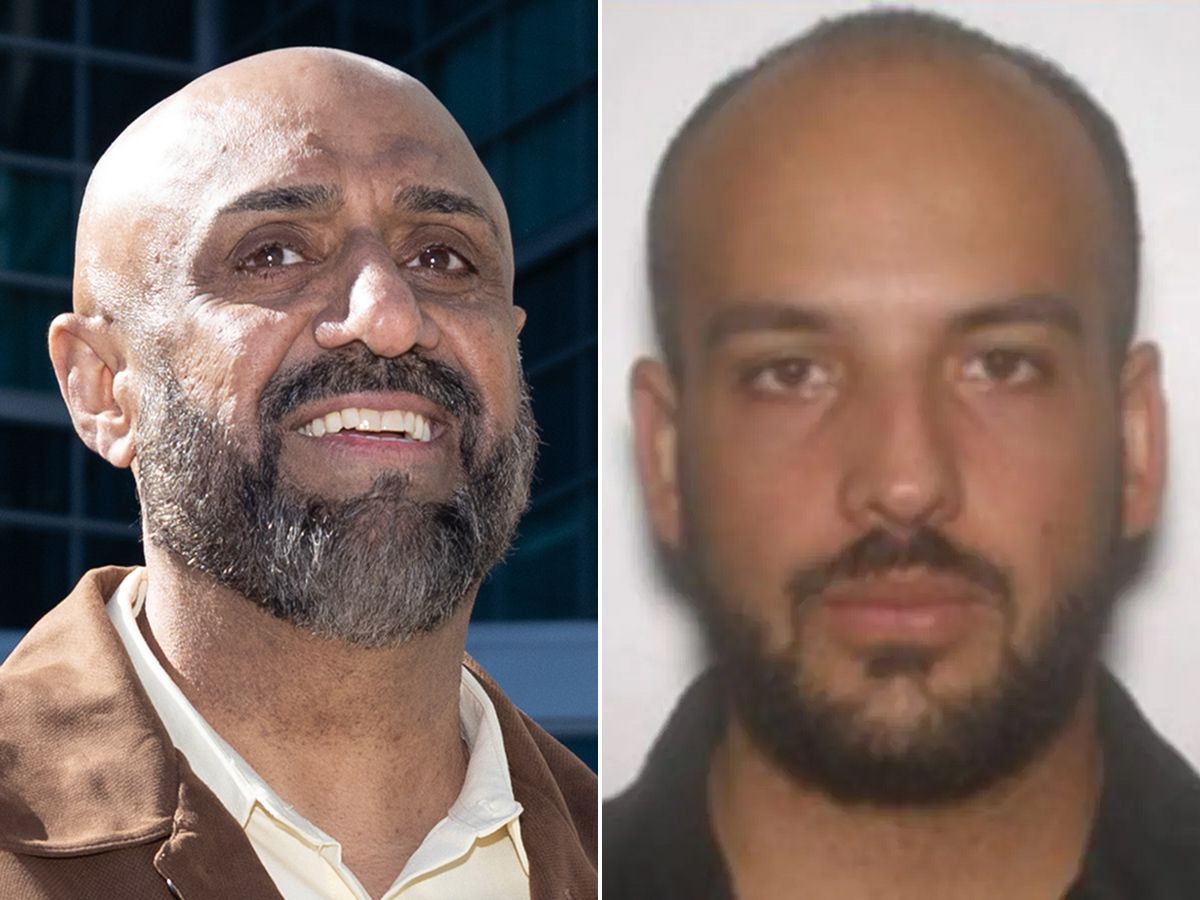
U.S. prosecutors say a member of Kata’ib Hezbollah told an undercover officer that his people were behind recent shootings at a Toronto synagogue and the U.S. consulate. The pro-Iran Shia militia based in Iraq is not on Canada’s list of terrorist entities.

The Centre for Israel and Jewish Affairs and the Canadian Families of Victims of October 7 want it added, along with Palestine Action Canada and Masar Badil, in a campaign launching Friday on the International Day of Remembrance of and Tribute to the Victims of Terrorism.

None of the three is on the list, which Public Safety Canada last updated July 28.

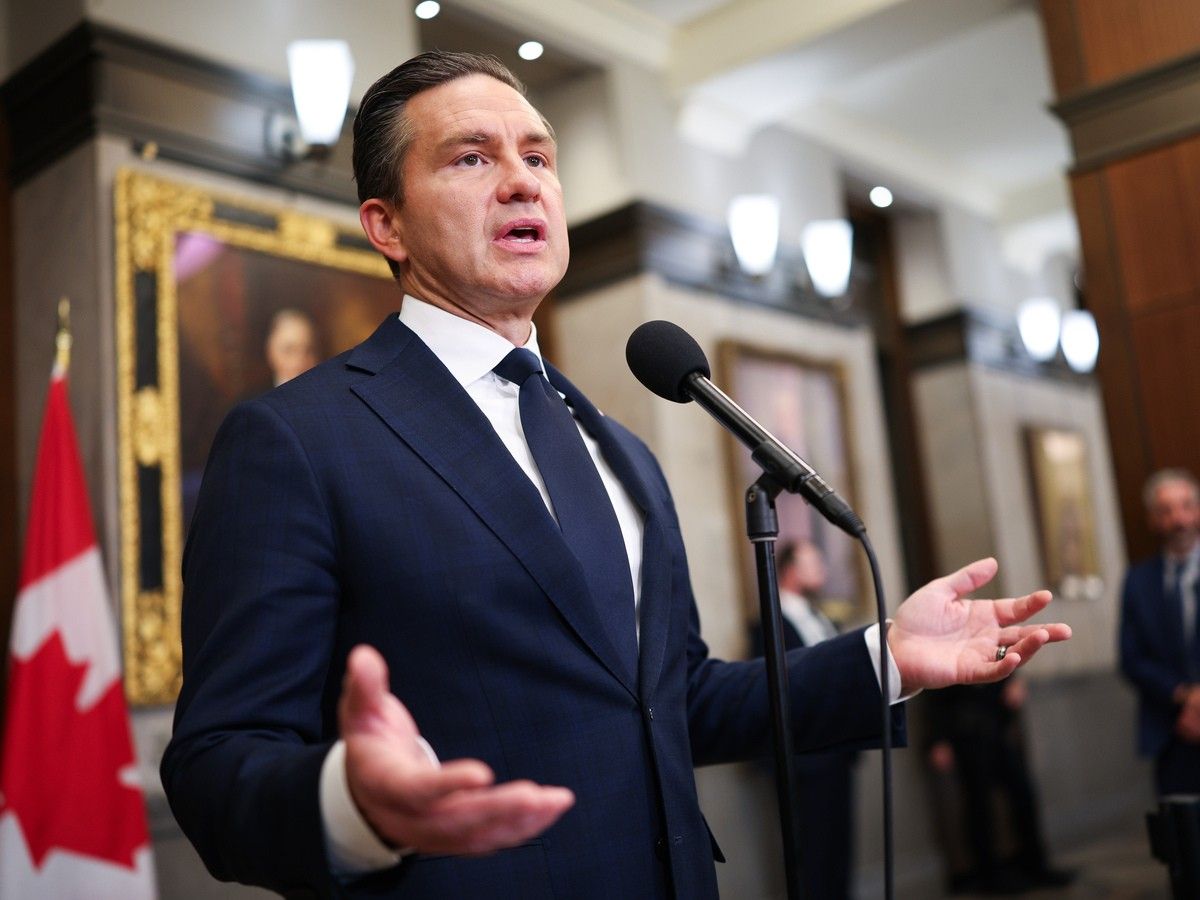
One of the requests is already before the public safety minister after Conservative Leader Pierre Poilievre wrote to Gary Anandasangaree on Aug. 2 asking him to recommend that Kata’ib Hezbollah be listed immediately. “Yet it is still not listed as a terrorist entity in Canada,” Poilievre wrote.

Listing is a Governor in Council decision, made on the public safety minister’s recommendation. Once a group is on the list, banks must freeze its money and it becomes a crime to knowingly handle its property, fund it, recruit for it or travel to join it.

Jacqui Rivers Vital, whose daughter Adi was killed in the Oct. 7, 2023, attacks, said that Canadians need to realize that eight of their fellow citizens were among the dead.

“Terrorism doesn’t end when an attack is over,” she said in a news release. “It leaves families forever changed and ripples through entire communities long after the headlines have disappeared.”

Noah Shack, chief executive of CIJA, said in an interview that the campaign is meant to galvanize Canadians and press Ottawa to ensure terrorists and their proxies “find no safe haven here in Canada.”

“We’re seeing a convergence of terrorism, criminal actors here in Canada, a rise of hate-motivated attacks, foreign entities contracting out shootings and potentially arson attacks as well,” he said. “It’s not only individuals who are targeted in acts of terror, it’s our way of life as Canadians that’s under threat.”

The campaign describes Kata’ib Hezbollah as having claimed responsibility for attacks in Canada. It cites a Global News report that Mohammad Baqer Saad Dawood Al-Saadi, arrested in May for allegedly directing attacks in Europe, told an undercover officer that his people were behind the Toronto synagogue and consulate shootings earlier this year.

A federal threat assessment obtained by Global News under the Access to Information Act said a group called Harakat Ashab al-Yamin al-Islamiyya had claimed responsibility for attacks in Europe, including an arson at a London synagogue. U.S. prosecutors allege that group is a front for Kata’ib Hezbollah.

Canadian authorities have not publicly linked the Toronto shootings to Iran, Global News reported.

CIJA and the Canadian Families of Victims of October 7 say Palestine Action Canada has targeted strategic industries and that its counterpart in the United Kingdom was designated a terrorist organization there. Britain proscribed Palestine Action in July 2025 and a London court ruled that ban unlawful in February.

They describe the third target of their campaign, Masar Badil, as acting on behalf of Samidoun, which Canada listed as a terrorist entity in October 2024.

The campaign also asks Ottawa to criminalize the wilful promotion of terrorism and to make membership in a listed entity an offence, following the U.K. framework. It asks for more resources for police and intelligence agencies, and for enforcement of existing listings, including the deportation of Islamic Revolutionary Guard Corps officials living in Canada. Canada listed the IRGC in June 2024.

The Integrated Threat Assessment Centre warned in March that a violent extremist attack on Canada’s Jewish community was a “realistic possibility” over the following six months, according to a report obtained by The Globe and Mail . A second assessment, dated April 2, said it was a realistic possibility that Iran had directed or enabled criminal violence in Canada, Global News reported.

Toronto police charged a man last month with participating in or contributing to the activities of a terrorist group. Ahmad Hassan Hajahmad, 33, is alleged to have used amplification devices at two demonstrations in 2024 to make public statements that “advocated for the detestation and harm against” members of the Israeli and Jewish communities, police said.

A joint investigation with the RCMP’s Integrated National Security Enforcement Team gathered evidence supporting an allegation that Hajahmad acted for the benefit of and in association with Hamas. He was arrested July 21 and a publication ban limits further detail.

Shack said anti-Israel demonstrations in Canada have featured calls for Jews to be deported and shouts of support for banned terrorist organizations.

“These are not just protests, this is open-air radicalization, and we need to take it very seriously,” he said.

“Canadians have been targeted all around the world by terror and their memories demand action.”

Our website is the place for the latest breaking news, exclusive scoops, longreads and provocative commentary. Please bookmark nationalpost.com and sign up for our daily newsletter, Posted, here.


Clockwise from left, Ilya Sutskever, University of Toronto (OpenAI); Garrett Camp, University of Calgary (Uber); Chris Olah, University of Toronto (Anthropic); Jeff Skoll, University of Toronto (eBay); and Elon Musk, Queen’s University (SpaceX).

Canada’s tech industry is warning that the country continues to lose its best and brightest entrepreneurs to the U.S., an issue that has taken on new urgency as tariff threats have prompted Ottawa to try to diversify away from the U.S. economy.

This week, various tech entrepreneurs, politicians and economists began to weigh in on data that show just how big the problem has become. According to recent figures, there are at least 517 U.S.-based tech firms with Canadian founders — or, entrepreneurs who were educated in Canada but later left for the U.S. — that have together raised more than US$400 billion.

“The numbers make it clear that Canada’s founders and entrepreneurs are leaving in droves — and they are taking the future value they will generate with them,” said Lucy Hargreaves, co-founder of the business advocacy group Build Canada, who issued a call to action in the form of a LinkedIn essay that triggered an online conversation about the trend.

The data also show the pace of innovators leaving Canada for the U.S. has more than doubled since 2023, as U.S. tech giants have gone on a hiring spree to feed their AI ambitions. Before then, just over 20 founders had left for the U.S. per year, according to the data. In 2023, that figure leapt to 60 people, and to 93 people in 2024.

Of those founders, 88 per cent were educated at Canadian universities, including the University of Waterloo, University of Toronto and McGill University. Among the most prominent Canadian entrepreneurs to decamp to the U.S. are OpenAI co-founder Ilya Sutskever, who attended University of Toronto, and Uber founder Garrett Camp, who grew up in Calgary. Others include SpaceX’s Elon Musk, who still retains Canadian citizenship, Anthropic’s Chris Olah and eBay’s Jeff Skoll.

Canada has for decades struggled to stop its most innovative people and ideas from moving to the U.S., where entrepreneurs can take advantage of the country’s much larger capital investment pool and generally more pro-business policies. In a May 2026 blog post, Waterloo, Ont.-based tech investor Jesse Rodgers — drawing from the Dominion List, a database of U.S.-based companies with founders who were born or educated in Canada — crunched the latest numbers showing how many founders had left for U.S. cities.

The figures in that post began to resurface this week, as numerous Canadian voices began to weigh in on social media. Conservative Leader Pierre Poilievre sought to place the blame for Canada’s loss of talent to the U.S. on Prime Minister Mark Carney, saying he is “driving entrepreneurs out of Canada with taxes, red tape, and inflation” while simultaneously giving “handouts, bailouts, and carveouts to the club of corporate insiders.”

On LinkedIn and X, Hargreaves called the issue a “five alarm fire,” saying it threatens to undermine Canada’s future economic growth at a time when the country is grappling with a systemic productivity crisis.

“Not only is it a ‘today’ problem,” she said in an interview, “but this is a leak in one of our most valuable resources, and the compounding effects over time, I think, can be incredibly devastating for the Canadian economy.”

That’s become all the more relevant in the wake of U.S. President Donald Trump’s trade war with Canada, which has seen Carney seek to pivot toward new markets in Asia and Europe.

“We talk a lot about positioning, we talk a lot about sovereignty, about making ourselves stronger internally,” Hargreaves said. “If the U.S. is raising walls and raising tariffs and doing more and more to put America first, I think the smartest response for Canada is to make Canada the obvious place for the next 517 founders to stay and build here.”

Observers are aligned on their belief that Canada is losing strategic talent and ideas to the U.S., but are in less agreement over the reasons why.

Many point to the massive pool of investors that are available to entrepreneurs just south of the border, particularly in hubs like New York and Silicon Valley.

Others say Canada lacks pro-business policies that can make up for the country’s lack of scale compared to the U.S. Hargreaves said more generous capital gains taxes or reduced income taxes on top earners could go some way toward keeping entrepreneurs, but she said that properly addressing the problem would require a much broader response.

Perhaps the leading reason why Canadian entrepreneurs move to the U.S. is simply so that they can be around other successful people, said Andre Charoo, managing partner at San Francisco-based venture capital fund Maple VC. While Canada has its share of homegrown success stories, he said, it simply doesn’t have the density of people who are striving to build the next $1-billion company.

“We produce some of the most ambitious people in the world … but ambitious people want to be around other ambitious people,” Charoo said.

Charoo, who helped launch Uber’s Canadian division, was educated at the University of Toronto, but moved to California in the early 2000s to take advantage of the opportunities there.

He’s far from alone According to the data drawn from the Dominion List, 287 of the 517 companies that Canadian and Canadian-educated founders have started in the U.S. are based in San Francisco. New York hosts the next most companies at 61.

Our website is the place for the latest breaking news, exclusive scoops, longreads and provocative commentary. Please bookmark nationalpost.com and sign up for our daily newsletter, Posted, here.


Minister responsible for Canada-U.S. Trade Dominic LeBlanc arrives at the Office of the Prime Minister and Privy Council in Ottawa on Wednesday, Aug. 19, 2026.

OTTAWA — Manitoba Premier Wab Kinew expressed his dislike on Thursday for the current interim trade deal being finalized by Canadian and American negotiators, but acknowledged the need for the federal government to get an agreement.

“The deal will not be right for me, I expect,” said Kinew, during a press conference in Winnipeg. “But it’s not about me, it’s about team Canada.”

The premier said there will be tariffs in the deal, but he was waiting on the exact details.

The premiers were briefed about the state of negotiations by Prime Minister Mark Carney and Canada-U.S. Trade Minister Dominic LeBlanc on Wednesday after U.S. President Donald Trump hit pause on tariffs set to hit $29 billion worth of Canadian goods, citing a tentative trade deal with Canada.

In that meeting, Carney asked the premiers to put U.S. alcohol back on their shelves and end the moratorium in the provinces. Nova Scotia Premier Tim Houston told reporters he was willing to end the ban in his province, if an agreement is reached.

Kinew said he thinks Canada should fight a “weak” Trump and argued Canadian consumers should not buy U.S. alcohol products, even if they are returned to provincial shelves.

“What I would say to Canadians is leave it there,” said Kinew. “If we put the booze back on the shelves, don’t buy it.”

The premier said he also reserves the right to take U.S. booze off the shelf again, given the unpredictability of Trump’s trade policy.

Ontario Premier Doug Ford’s office made no comment on the prime minister’s request. Meanwhile, Quebec Premier Christine Fréchette said she will make a decision on the return of U.S. alcohol after an analysis on the impact the potential deal will have on Quebec’s economy.

LeBlanc and Chief Trade Negotiator Janice Charette were in Washington on Thursday, meeting with United States Trade Representative Jamieson Greer to finalize the agreement. They were joined by the prime minister’s chief of staff Marc-André Blanchard and Canada’s Ambassador to the United States Mark Wiseman.

After that meeting, LeBlanc told reporters that his team was “very close” to a deal.

“We continue to make progress, and we’re going to stay here and do the work that’s necessary until we get to that point,” he said.

Foreign Affairs Minister Anita Anand was also in Washington on Thursday, meeting with her counterpart United States Secretary of State Marco Rubio.

Carney spoke with Mexican President Claudia Sheinbaum by phone on Thursday, where they discussed the recent developments on North American trade.

“They underscored the importance of renewing the Canada-United States-Mexico Agreement (CUSMA) as soon as possible to provide greater certainty for North American businesses and workers,” a readout from the prime minister’s office said. “The leaders discussed the progress between Canada and Mexico on cross-border trade.”

National Post

Our website is the place for the latest breaking news, exclusive scoops, longreads and provocative commentary. Please bookmark nationalpost.com and sign up for our newsletters here.