LP_468x60
on-the-record-468x60-white

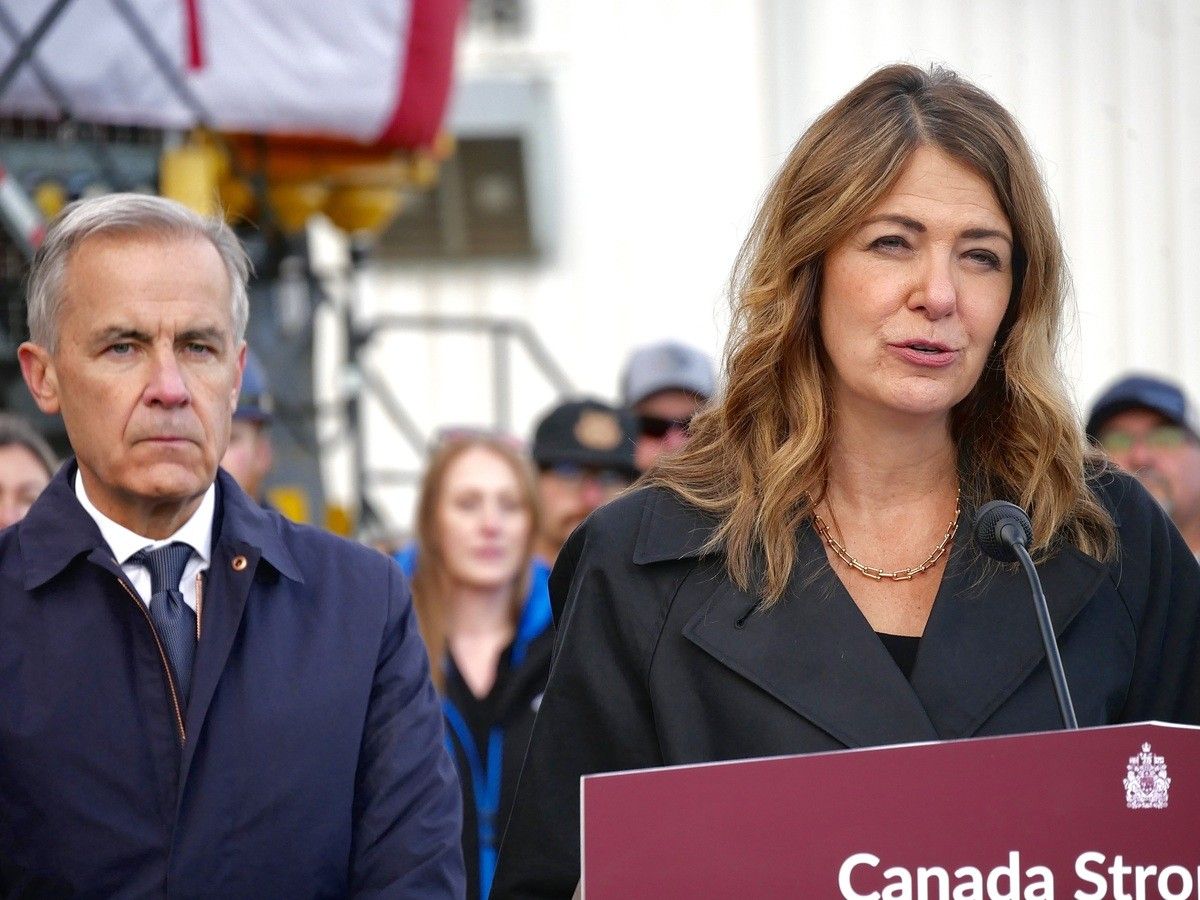
Industry Minister Mélanie Joly speaks during a press conference at Ideal Roofing Company Limited Manufacturers in Ottawa on Tuesday, Aug. 25, 2026.

WASHINGTON, D.C. — Ottawa and Washington have been engaged in a rhetorical tit-for-tat over tariffs since talks broke down and the U.S. imposed Section 338 duties on hundreds of Canadian imports over the weekend.

Prime Minister Mark Carney explained why he pulled his team back and promised retaliatory tariffs , while President Donald Trump posted to social media several times, threatening Canada with even higher auto tariffs and denying he made any demands that meddled with French culture .

On Tuesday morning, Carney’s team showed its hand on the retaliatory tariffs it promised, revealing the list of products to be hit with duties starting September 8. The plan is to apply 50 per cent tariffs on steel and aluminum imports from the U.S., as well as furniture, clothing, milk, plywood, paper, honey, doors and windows, smartphones, and perfumes, among others. Additional products will face 25 per cent tariffs, including carpets and textiles, cheese, large kitchen appliances, and seafood.

So will the retaliation be enough to get Washington’s attention in a way that focuses the U.S. administration on sealing a deal or should Canada go even further?

 Canadian Prime Minister Mark Carney (L) speaks about the trade dispute with the United States at the Davie Shipyard in Levis, Quebec, Canada on August 24, 2026.

“Right now, the (U.S.) tariffs affect a narrow set of products, and I would imagine that the Canadian retaliation would also start off affecting a narrow set of American products relative to everything that the U.S. exports to Canada,” said Alfredo Carrillo Obregon, a trade policy analyst at the Cato Institute in Washington, before the Canadian list was revealed.

“Over time, you continue escalating, and then you’re really going to touch on products that are important for consumers and important for businesses on both sides of the border.”

Ottawa said its list was crafted to protect the “domestic market share for Canadian companies,” rather than to target politically sensitive products in U.S. battleground states ahead of the midterm elections this November.

This makes sense, according to Graeme Thompson, senior analyst with Eurasia Group’s Global Macro team, because Canada-imposed tariffs will cost Canadians.

“Tariffs are a tax. It’s as simple as that,” said Thompson. “If you put a tariff on a good that you are importing, it is more expensive for consumers. Full stop.”

 Canada on August 25, 2026, announced counter-tariffs on US goods ranging between 15 percent and 50 per cent, intensifying the trade war between the historically close allies.

That said, Canada’s retaliatory list — intentionally or not — is still likely to have a disproportionate political effect in battleground states with large steel, auto, appliance, agricultural, paper, food-processing or consumer-goods sectors. Michigan and Ohio come to mind for steel and autos, while North Carolina and Georgia could also feel the effect owing to their furniture and appliance markets. Iowa, Wisconsin, and Minnesota, meanwhile, are vulnerable through their dairy, agricultural, and food-processing sectors.

Before the list dropped, Thompson reasoned that Canada would try to identify products that were of particular importance to swing districts in the U.S. House and swing states in the U.S. Senate, noting “that’s been Canada’s approach in the past,” he said.

But can pressure ahead of the midterms move the needle much?

Thompson and his colleagues at Eurasia Group expect the Dems to win the House with a moderate majority, but the Senate will be a closer call. To win there, he said, “the Democrats have to maintain four of the seats that they currently hold that are up for re-election and flip four from the Republicans.”

Inu Manak, senior fellow at the Peterson Institute for International Economics, said targeting U.S. midterm battlegrounds could create political pressure on the Trump administration, but it could also risk a bigger backlash.

 Ontario Premier Doug Ford speaks to members of the media in Hamilton about the ongoing trade concerns with the United States on Monday.

“If you go the midterm route, you might infuriate Trump even further,” she said, noting that another option could be to target states that do the most trade with Canada. That approach, she warned, “might infuriate your closest trading partners further.”

Manak said she sees little prospect of a deal before the midterms and suggested that Canada could gain leverage afterward if Republicans suffer significant losses and Trump becomes more eager to demonstrate that he can still conclude deals. But she also cautioned that even a future Democratic president would not necessarily restore the Obama-era approach to free trade.

“Even President Biden, while he was trying to strike a more positive tone with allies and did a lot to repair the relationship, he still maintained a lot of Trump’s tariffs,” she said.

Thompson also sees little hope for change on the U.S. trade file, whatever the congressional makeup.

“I don’t think it changes much from a policy or procedural point of view because so much of this is driven out of the White House and by executive powers that Congress has essentially delegated,” he said.

“We’re not past peak tariff and peak protectionism by a long shot.”

 U.S. President Donald Trump, left, speaks as U.S. Commerce Secretary Howard Lutnick looks on during an event in the Oval Office of the White House on Aug. 6, in Washington, D.C.

Still, a Democrat-controlled House, Thompson noted, “would be very likely to want to push on cost-of-living issues” which could be useful in encouraging the president to lower some tariffs.

Both Obregon and Andrew Hale, fellow at Washington’s Advancing American Freedom, pointed to the legal route as they expect the 338 tariffs could be challenged in U.S. courts.

“These 338 tariffs are totally invalid, and the courts will get rid of them and refunds will be paid with interest to the Americans that pay these tariffs,” said Hale.

“Customs and Border Protection will also spend taxpayer dollars processing these refunds,” he added, pointing to the waste of time and money.

But Hale does not see a reason for Canada to wait on lawsuits or political dominoes to fall — and he questioned waiting until September 8 for retaliation. The retaliatory tariffs, after all, could be much broader and take effect immediately.

“Canada has the economic arsenal to respond to the Trump administration’s latest round of bullying,” he said, pointing out that Trump’s omission of potash, critical minerals, and energy from the “unlawful 338 tariffs” was telling.

“The administration knows the U.S. needs goods from Canada,” he said, noting how the U.S. gets 80 per cent of its potash for fertilizer from Saskatchewan and U.S. industry benefits from the Canadian heavy crude oil that comes down to the U.S. for refinement.

“If Canada were to stop exporting energy to the United States, most of New England would cease to operate. New England and other parts of the U.S. purchase hydroelectric power from Canada,” he said.

 U.S. President Donald Trump speaks with Canadian Prime Minister Mark Carney at a working lunch with leaders of G7 and the Middle East, on June 16, 2026 in Evian-les-Bains, France.

So should Ottawa go full-tilt on tariffing or blocking energy and electricity exports to the United States? Would being aggressive now help strengthen Ottawa’s hand to get a deal back on track?

Manak doesn’t think Carney will go this route and said it would be a “pretty severe action” if he did.

While Ontario Premier Doug Ford has mentioned energy tariffs as an option, Manak was mindful of the domestic political calculus for Carney.

“A lot of those energy exports are coming from Alberta, and I would imagine that Carney does not want to create more tension between the federal government and Alberta at this moment when there is a separation vote (looming).”

Instead, she believes Carney will tread carefully on energy matters while keeping it in his toolkit.

“It’s something that he could certainly keep in his back pocket. You don’t really have to put punitive measures on for there to be leverage,” she said. “You just have to threaten to use them.”

National Post

Our website is the place for the latest breaking news, exclusive scoops, longreads and provocative commentary. Please bookmark nationalpost.com and sign up for our newsletters here.



A Toronto Police cruiser. Police say they are investigating reports of an antisemitic speech on Sunday.

The Toronto Police Service says its hate crimes unit is investigating an incident that occurred Sunday in Toronto, when a man with a megaphone was recorded allegedly making antisemitic comments near Bathurst Street and Sheppard Avenue West, a predominantly Jewish neighbourhood in the north of the city.

Videos shared on social media show the man speaking through a megaphone and wearing a keffiyeh around his neck.

The language, including talk of Jews eating children on “Epstein island” and of “black magic and horrible things,” drew a stark response from Jason Kenney, former Conservative MP and premier of Alberta from 2019 to 2022.

“This kook sounds like a Sacha Baron Cohen parody,” he wrote on social media, above a post showing one of the videos. “But sadly, he is all too real. An avatar of the Islamist-left coalition that is fuelling out of control antisemitism, particularly at our universities and colleges. Cut funding for these colleges if he is not fired immediately.”

Social media posts have claimed that the individual is an instructor at three Ontario schools: University of Niagara Falls, Georgian College in Barrie and Conestoga College in Kitchener.

National Post has reached out to the schools. A representative from Conestoga said the individual was not an employee there. The other two schools have not yet responded, and National Post cannot confirm if he is their employee.

Kenney added that police should, “charge him with inciting hatred under the Criminal Code. Revoke his visa if he is not a citizen. And hold the college administrators who hired this lunatic to account. No more BS from politicians that ‘antisemitism has no place in Canada.’ It has a large and dangerous place, including in many of our public institutions.”

A joint statement was issued Monday by the Centre for Israel and Jewish Affairs, B’nai Brith Canada and the Canadian Friends of Simon Weisenthal Center, saying: “What happened at Bathurst and Sheppard this weekend was blatant antisemitism.”

It adds: “An individual who is reportedly a university instructor stood in a Jewish neighbourhood and repeated some of the oldest and most vile lies and conspiracy theories about Jews…. These are antisemitic blood libels that have been used for centuries to justify hatred and violence against Jews.”

In a 74-second clip, apparently reading from his cellphone, a man says: “The British colonizers have planted this cancerous, false Zionist state of Israel in the Palestine and right in the heart of the Muslim countries, and right in the heart of Islam.”

“This is not coincidence,” he continues. “These Zionists have never had a country of their own, because of their mischief. They are the most kicked-out people in the world, for making black magic and horrible things.”

He goes on: “We can see the corruption crystal-clear in the Epstein island, where they have seduced leaders from all around the world, including Trump. They have raped and killed and ate children at the same time. They have done the unimaginable to blackmail them and control them.”

He concludes: “That’s why you can see, now, a guy like Trump, who causes genocide in Gaza, kidnaps the president of Venezuela, kills the supreme leader of Iran, Ayatollah Ali Khamenei, may God sanctify his soul, and stays on the throne. It is because of them, the terrorist Zionists.”

In another clip, the man addresses “those Israelis on the other side of the street,” telling them their passports will expire soon and be useless, and adding: “Your mischief will cause your annihilation, and it is coming soon, and as it is prophesied it will be from the north, from the resistance in Lebanon.”

“We have seen how anti-Israel hate is being used to legitimize hostility toward Jewish Canadians, with increasingly dangerous consequences,” says the joint statement from Jewish groups. “When this behaviour is allowed to continue without meaningful consequences, the message is that targeting Jews in this way is acceptable. It is not.”

The statement calls for Toronto Police to investigate the incident and lay charges where necessary. “There must be consequences for those who repeatedly use public demonstrations as cover to spread hatred, incitement and target Toronto’s Jewish community. Allowing this behaviour to go unchecked is to normalize antisemitism as an everyday feature of life in this city.”

Toronto Police responded on social media to say they are investigating.

”The Hate Crime Unit is investigating comments made by a demonstrator in the Bathurst Street and Sheppard Avenue West area over the weekend,” police told National Post in an email. “We are asking anyone who witnessed the incident or has additional information to contact police.”


U.S. President Donald Trump leaves the stage after speaking at a campaign rally with U.S. Sen. Darline Graham on August 21, 2026 in Myrtle Beach, South Carolina.

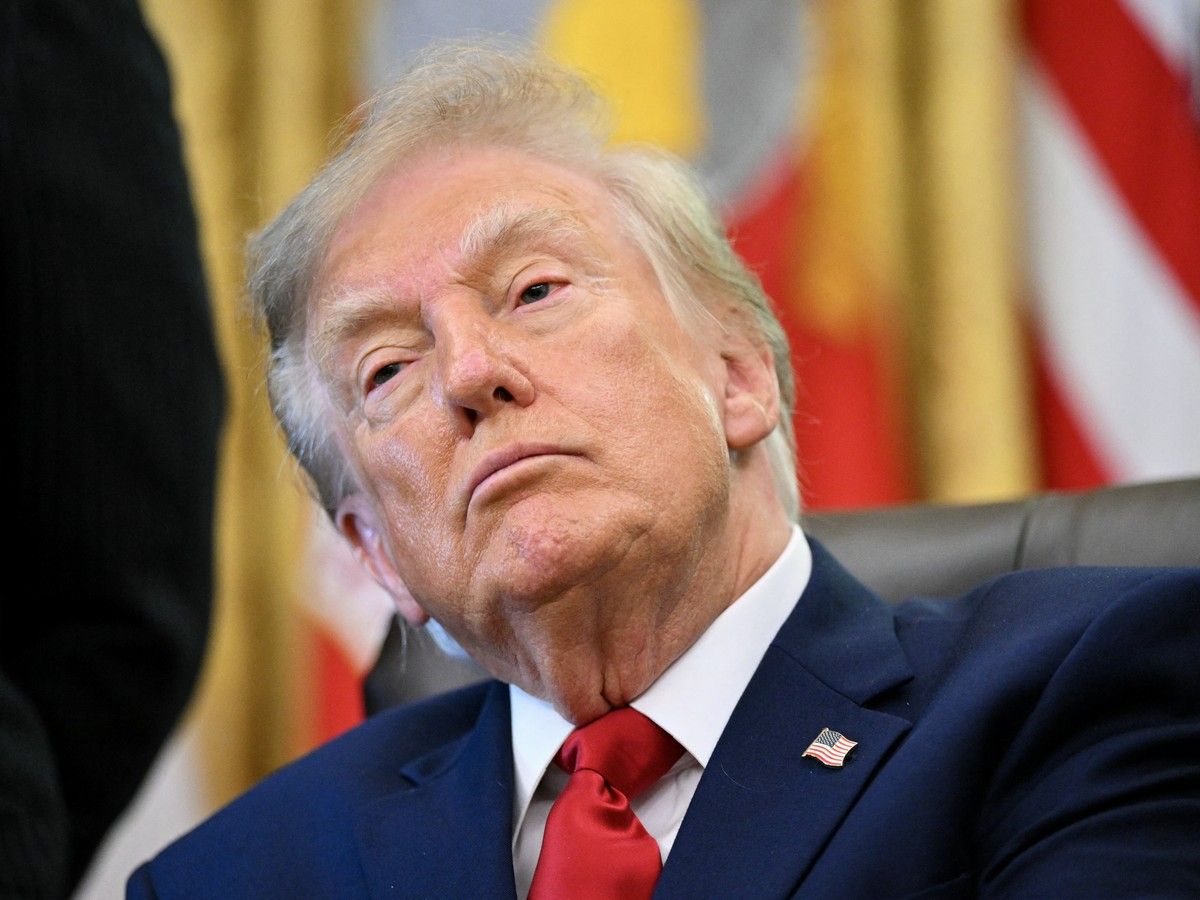
U.S. President Donald Trump has accused Prime Minister Mark Carney of lying about the terms of the failed trade deal with Canada in a Tuesday social media post.

On Truth Social , Trump wrote: “I would never interfere with Canadians speaking French! In fact, I have never even thought of doing such a stupid thing.”

He went on: “This lie was made up by a weak and ineffective Prime Minister in an attempt to gain political support, which he has totally lost, from the people of Quebec.”

The U.S. president concluded the post by writing: “I love French Canadians!”

His comments come after Carney said on Monday that the French language was seen as an “irritant” by Americans during trade deal negotiations, but stressed that “here in Canada, these are rights.”

The PM made the comments at a news conference in Levis, Quebec, alongside Quebec Premier Christine Fréchette.

“For Americans, French language, Francophone culture, Canadian culture, these are irritants,” he said in French. “Here in Quebec, here in Canada, these are rights. So there is an enormous gap between our perspective and the U.S. perspective.”

Carney had also touched on the issue on Saturday, when he said he had walked away from a deal that included “threats to French language and culture.”

On Monday, U.S. Trade Representative Jamieson Greer called the accusations “a funny, fake story,” and said the disagreement was over Canada “forc(ing) American tech companies to take their earnings and give a percentage to their competitors in Canada.”

Canada’s laws protecting the French language include Bill 109, passed in Quebec last December, which compels streaming platforms to prioritize French-language content, and the Online Streaming Act, which became law in 2023 and requires such platforms to invest in and promote Canadian content.

 Canadian Prime Minister Mark Carney speaks about the trade dispute with the United States at the Davie Shipyard in Levis, Quebec, Canada on August 24, 2026.

The Globe and Mail reported on Monday that U.S. negotiators had demanded Canada drop requirements for American streaming companies to promote Canadian content, including French language content, citing a senior government source.

The report says Canada rejected the demand, which was one of the reasons Carney’s team walked away from negotiations.

The PM concluded his comments on the topic on Monday by saying: “The French language, the French culture is not a funny fact. It is a right.”

Meanwhile, Trump’s Truth Social post about the matter comes amid a series of attacks on Canada from the U.S. president, including a claim that the U.S. is giving “serious consideration” to changing the name of Lake Ontario to Lake America .

Also on Tuesday morning, the U.S. president penned posts claiming that Canada has been “ripping off” the U.S. “for decades,” with accusations including 400 per cent tariffs on farmers and driving “many wonderful U.S. companies out of business.”

“I deal with many countries, and Canada is easily the most difficult and unreasonable,” Trump added.

In a separate post, he claimed the U.S. has lost “60 billion dollars a year” to Canada over the last 10 years.

These latest comments echo those made by U.S. Vice President JD Vance on Monday , in which he accused Canada of “unfair” trade practices and vowed the U.S. will “fight back” after trade negotiations fell apart last week.

Speaking during an appearance at a manufacturing company in Maine, Vance criticized Canada’s supply management around dairy products and said: “Canada and China have been the two worst countries when it comes to trade policy anywhere in the world.”

He also referred to Canada as a “state” — echoing Trump’s “51st state” rhetoric — though he said the comment was a “Freudian slip.”

 U.S. Vice President JD Vance delivers remarks at CompoTech, a defense technology and advanced manufacturing company, in Brewer, Maine on August 24, 2026.

Tensions between Canada and the U.S. escalated after the trade deal between Canada and the U.S. collapsed last week. Carney walked away from negotiations on Friday , citing unfair last-minute demands and accusing the U.S. administration of introducing measures that would restrict Canada’s ability to do deals with other countries.

Speaking at a press conference on Saturday morning, the PM said that Canada is now “at war” after being “attacked” by Trump’s steep tariffs.

As a result of the collapsed negotiations, 50 per cent tariffs came into effect at midnight on Saturday, impacting $28 billion worth of Canadian goods. In response, the federal government has announced dollar-for-dollar counter tariffs that will hit the U.S. starting Sept. 8.

On Monday, Trump threatened to impose a 50 per cent tariff on Canadian autos , trucks and auto parts from Jan. 1.

Our website is the place for the latest breaking news, exclusive scoops, longreads and provocative commentary. Please bookmark nationalpost.com and sign up for our daily newsletter, Posted, here.


Canadian Prime Minister Mark Carney greets workers as he arrives for a news conference at Davie Shipyard in Levis, Quebec, Canada on August 24, 2026.

OTTAWA — The federal government announced it will match tariffs dollar for dollar on U.S. products on Tuesday, marking a tit-for-tat escalation in the trade conflict with Canada’s largest trading partner.

Canada will impose 15, 25, and 50 per cent tariffs on products drawn from those targeted by U.S. Section 338 and Section 232 tariffs, effective Sept. 8. The counter-tariffs are expected to cover $27.6 billion worth of imports from the U.S.

The matching on Section 232 tariffs also means Canadian tariffs on U.S. steel and aluminum will increase from 25 to 50 per cent.

The counter-tariffs are in response to the latest round of U.S. levies under Section 338 of the Trade Act of 1930, that came into effect on Saturday following the suspension of trade talks between Canada and the U.S.

Carney said several last-minute additions to a tentative agreement made a deal with the U.S. untenable, adding that it would require a change in “attitude” on the Americans’ part to get Canada back to the negotiating table.

The Section 338 tariffs subjects $28 billion worth of Canadian goods ranging from hockey sticks to dairy products to a 50-per-cent levy.

The list of U.S. products now subject to counter-tariffs include fish, cheese, beauty products, plywood, paper products and clothing.

Speaking at a technical briefing, federal government officials said the goal of the counter-tariffs is to level the playing field for Canadian industries and businesses subject to U.S. tariffs.

On Tuesday, the federal government also announced a $7.5 billion in additional funding to help businesses and workers weather the impacts of the latest round of American levies.

This includes $1.5 billion to stand up a Regional Tariff Response Initiative for medium and small businesses under the existing Strategic Response Fund, which will be administered through the regional development agencies. An additional $500 million will be provided to the Business Development Bank of Canada to provide more interest-free loans to affected businesses, particularly in the forestry, steel and aluminum sectors.

Nearly $3.5 billion will go towards expanding employment insurance programs for workers and employers impacted by tariffs.

On Tuesday morning, Canada-U.S. Trade Minister Dominic LeBlanc said the government still wants to make a deal with the U.S.

“Our preference was to find a deal that benefits both countries, we still believe that’s possible, but in the meantime we’re not waiting by the phone. We’re going to do the work that’s necessary to protect our own economy,” said LeBlanc, on the CNBC show Squawk Box.

More to come.

National Post

Our website is the place for the latest breaking news, exclusive scoops, longreads and provocative commentary. Please bookmark nationalpost.com and sign up for our newsletters here.


U.S. President Donald Trump stands during the National Anthem at the start of the NTT INDYCAR Series on August 23, 2026 in Washington, DC.

U.S. President Donald Trump says his administration is giving “serious consideration” to changing the name of Lake Ontario to Lake America .

In a Truth Social post on Tuesday morning, the president wrote, “The United States is giving serious consideration to changing the name of Lake Ontario to Lake America in that we don’t expect to doing much business with Ontario any longer. Thank you for your attention to this matter! President DONALD J. TRUMP.”

The president’s comments come as the trade deal between the two countries collapsed. Tensions further escalated after Doug Ford told Trump to “kiss my ass” on Monday during a conference in Hamilton after Trump said he would bring 50 per cent tariffs on Canadian automobiles and auto parts. Trump, on the other hand, called the Ontario premier a “flunky” in a social media post.

Our website is the place for the latest breaking news, exclusive scoops, longreads and provocative commentary. Please bookmark nationalpost.com and sign up for our daily newsletter, Posted, here.


U.S. President Donald Trump (C) speaks as U.S. Commerce Secretary Howard Lutnick looks on during an event in the Oval Office of the White House on August 06, 2026 in Washington, DC.

OTTAWA — Prime Minister Mark Carney told Canadians that he ended trade talks with the Americans because the gap between the two countries was simply “too wide in recent days” to strike a deal.

In reality, however, sources say, it was really just one late-to-the-party American negotiator, U.S. Commerce Secretary Howard Lutnick, who scuppered the talks with a series of last-minute demands on Canada.

Those new demands, which reportedly included the U.S. gaining control over which other countries Canada would be permitted to do business with, left the Canadian side with the impression that it had little choice but to walk away.

“It’s almost like they tried to derail the negotiations,” said one Canadian government source.

Carney also hinted in his press conference on Saturday at “differences” among the various characters in the Trump administration that came to light when negotiators got down to the finer details of the deal.

“In these last few days, we were drilling down on specific issues where that might have papered over the differences in the administration, if there were indeed differences,” said Carney.

A few days after the talks fell apart, Canadians may be asking: Who is Howard Lutnick?

To understand how he became a cabinet minister for U.S. President Donald Trump, it’s noteworthy how much of Lutnick’s biography, and even personality, overlaps with his boss, almost certainly more than anybody else in that cabinet.

Like Trump, Lutnick is a New Yorker, born to a Jewish family on Long Island in 1961, who went on to become a Manhattan billionaire. Public sources, such as Forbes, have pegged Lutnick’s net worth at more than US$7 billion.

Despite losing both his parents before he finished college, Lutnick finished an economics degree in 1983 from Haverford College, a private liberal arts institution in Haverford, Penn that was founded by Quakers in 1833 but didn’t start accepting women in 1980.

But the key step in Lutnick’s path to extreme prosperity occurred later that year when he was hired by financial services giant Cantor Fitzgerald. Lutnick, who was mentored by the company’s founder, B. Gerald Cantor, rose quickly and became the firm’s chief executive seven years later.

In 1995, Lutnick went to court over control of the company against his mentor’s wife Iris, as Cantor faced health problems. In legal documents, Lutnick claimed that Cantor no longer had the mental abilities to make decisions for the company.

When Cantor died a year later, Lutnick assumed control of the company and led a period of growth until the Sept. 11, 2001 terrorist attacks. Cantor Fitzgerald, with its headquarters in the north tower of the World Trade Centre, lost 658 employees, including Lutnick’s brother Gary. Lutnick was scheduled to be in the office on the morning of the attacks, but had taken one of his four kids to kindergarten.

Lutnick’s post-9/11 TV interviews raised his profile, but he received criticisms from some of the families of Cantor Fitzgerald victims when he refused to continue paying any part of their salaries after their deaths. The company later distributed payments to the families.

Like Trump, Lutnick’s past suggests that his attachments to policy, and candidates, are flexible, perhaps even flimsy. A self-described social liberal and fiscal conservative, the cabinet minister who spearheads Trump’s tariff policy was a vocal opponent of tariffs just a decade ago.

He also used to support some Democratic candidates, including Hillary Clinton’s bid for the presidency in 2016 against Trump. Four years later, he was fundraising for Trump’s re-election bid. Last year, after meeting with Robert F. Kennedy Jr., Lutnick said he believed that vaccines cause autism.

After building a massive crypto business within Cantor, Lutnick then helped position his sons Kyle and Brandon to the top of the firm when he entered Trump’s cabinet. The sons were taking full advantage of the crypto boom at around the same time the Trump family was building its own crypto company, World Liberty Financial.

Like Trump, Lutnick also had a close relationship with deceased pedophile Jeffrey Epstein. Lutnick was his next-door neighbour but said last year that he had vowed in 2005 never to be in the same room again with “that disgusting person.” It was then revealed earlier this year in the newly released Epstein Files that Lutnick had had frequent contact with Epstein for many years afterward, including at least one visit to Epstein’s private island. Lutnick, who has been accused of no wrongdoing associated with the Epstein investigation, later told Congress that he had visited the island briefly with his family in 2012.

His style is said to be Trump-like too.

Government sources also say that Lutnick, like Trump, but in contrast to U.S. Trade Representative Jamieson Greer, leaves little doubt when he’s entered a room. His negotiation style is also boisterous, even emotional, sources say, more than methodical.

“I think that Lutnick has a similar character and a similar way of dealing with things as Trump,” said one Canadian government source.

A Washington source described Lutnick as a “bully” who doesn’t have the patience to work through complicated matters such as trade talks.

National Post

Our website is the place for the latest breaking news, exclusive scoops, longreads and provocative commentary. Please bookmark nationalpost.com and sign up for our daily newsletter, Posted, here.


U.S. President Donald Trump (C) speaks as U.S. Commerce Secretary Howard Lutnick looks on during an event in the Oval Office of the White House on August 06, 2026 in Washington, DC.

OTTAWA — Prime Minister Mark Carney told Canadians that he ended trade talks with the Americans because the gap between the two countries was simply “too wide in recent days” to strike a deal.

In reality, however, sources say, it was really just one late-to-the-party American negotiator, U.S. Commerce Secretary Howard Lutnick, who scuppered the talks with a series of last-minute demands on Canada.

Those new demands, which reportedly included the U.S. gaining control over which other countries Canada would be permitted to do business with, left the Canadian side with the impression that it had little choice but to walk away.

“It’s almost like they tried to derail the negotiations,” said one Canadian government source.

Carney also hinted in his press conference on Saturday at “differences” among the various characters in the Trump administration that came to light when negotiators got down to the finer details of the deal.

“In these last few days, we were drilling down on specific issues where that might have papered over the differences in the administration, if there were indeed differences,” said Carney.

A few days after the talks fell apart, Canadians may be asking: Who is Howard Lutnick?

To understand how he became a cabinet minister for U.S. President Donald Trump, it’s noteworthy how much of Lutnick’s biography, and even personality, overlaps with his boss, almost certainly more than anybody else in that cabinet.

Like Trump, Lutnick is a New Yorker, born to a Jewish family on Long Island in 1961, who went on to become a Manhattan billionaire. Public sources, such as Forbes, have pegged Lutnick’s net worth at more than US$7 billion.

Despite losing both his parents before he finished college, Lutnick finished an economics degree in 1983 from Haverford College, a private liberal arts institution in Haverford, Penn that was founded by Quakers in 1833 but didn’t start accepting women in 1980.

But the key step in Lutnick’s path to extreme prosperity occurred later that year when he was hired by financial services giant Cantor Fitzgerald. Lutnick, who was mentored by the company’s founder, B. Gerald Cantor, rose quickly and became the firm’s chief executive seven years later.

In 1995, Lutnick went to court over control of the company against his mentor’s wife Iris, as Cantor faced health problems. In legal documents, Lutnick claimed that Cantor no longer had the mental abilities to make decisions for the company.

When Cantor died a year later, Lutnick assumed control of the company and led a period of growth until the Sept. 11, 2001 terrorist attacks. Cantor Fitzgerald, with its headquarters in the north tower of the World Trade Centre, lost 658 employees, including Lutnick’s brother Gary. Lutnick was scheduled to be in the office on the morning of the attacks, but had taken one of his four kids to kindergarten.

Lutnick’s post-9/11 TV interviews raised his profile, but he received criticisms from some of the families of Cantor Fitzgerald victims when he refused to continue paying any part of their salaries after their deaths. The company later distributed payments to the families.

Like Trump, Lutnick’s past suggests that his attachments to policy, and candidates, are flexible, perhaps even flimsy. A self-described social liberal and fiscal conservative, the cabinet minister who spearheads Trump’s tariff policy was a vocal opponent of tariffs just a decade ago.

He also used to support some Democratic candidates, including Hillary Clinton’s bid for the presidency in 2016 against Trump. Four years later, he was fundraising for Trump’s re-election bid. Last year, after meeting with Robert F. Kennedy Jr., Lutnick said he believed that vaccines cause autism.

After building a massive crypto business within Cantor, Lutnick then helped position his sons Kyle and Brandon to the top of the firm when he entered Trump’s cabinet. The sons were taking full advantage of the crypto boom at around the same time the Trump family was building its own crypto company, World Liberty Financial.

Like Trump, Lutnick also had a close relationship with deceased pedophile Jeffrey Epstein. Lutnick was his next-door neighbour but said last year that he had vowed in 2005 never to be in the same room again with “that disgusting person.” It was then revealed earlier this year in the newly released Epstein Files that Lutnick had had frequent contact with Epstein for many years afterward, including at least one visit to Epstein’s private island. Lutnick, who has been accused of no wrongdoing associated with the Epstein investigation, later told Congress that he had visited the island briefly with his family in 2012.

His style is said to be Trump-like too.

Government sources also say that Lutnick, like Trump, but in contrast to U.S. Trade Representative Jamieson Greer, leaves little doubt when he’s entered a room. His negotiation style is also boisterous, even emotional, sources say, more than methodical.

“I think that Lutnick has a similar character and a similar way of dealing with things as Trump,” said one Canadian government source.

A Washington source described Lutnick as a “bully” who doesn’t have the patience to work through complicated matters such as trade talks.

National Post

Our website is the place for the latest breaking news, exclusive scoops, longreads and provocative commentary. Please bookmark nationalpost.com and sign up for our daily newsletter, Posted, here.


U.S. Vice President JD Vance delivers remarks at CompoTech, a defense technology and advanced manufacturing company, in Brewer, Maine on August 24, 2026.

U.S. Vice President JD Vance has accused Canada of “unfair” trade practices and vows the U.S. will “fight back” after trade negotiations fell apart last week.

Vance made the comments in a question-and-answer session following a speech he gave at a manufacturing company in Brewer, Maine, on Monday. When asked about tariff negotiations, Vance said that “Canada and China have been the two worst countries when it comes to trade policy anywhere in the world.”

While he said he expected this from China, given the country is the U.S.’s “biggest economic competitor,” the U.S. vice president said he did not expect Canada to apply tariffs to Maine and other northern states.

“They apply ridiculous tariffs and other non-tariff duties on Maine products coming into Canada, and they don’t expect Maine or anybody else to fight back,” he said.

“We’re sick of that. We are actually going to fight back against unfair trade practices, whether it’s coming from China or Canada.”

Giving an example of these “unfair” practices, Vance said: “If you buy dairy, cheese, butter, milk that comes from Canada into Maine, you probably are buying a product that has zero per cent tariffs on it…but if a Maine farmer sends dairy products into Canada, they could be paying as much as a 250 per cent tariff.”

High Canadian tariffs on dairy only apply if the agreed tariff-rate quotas on U.S. imports under CUSMA are reached or exceeded. Last year, Global News reported that U.S. dairy imports to Canada were yet to go over their quotas for these tariffs to come into effect, despite Canada being the second-highest importer of U.S. dairy products in 2025 .

Vance added that “(Canada) treat(s) Chinese goods more fairly” than goods coming from Maine and, when trade negotiators asked Canada to “stop it,” Vance claimed Canada “came in with a bunch of unreasonable demands.”

Vance concluded by saying: “We need to send a message loud and clear to the Prime Minister of Canada: Stop taking advantage of the people of Maine. Stop taking advantage of America. It’s over.”

Vance also referred to Canada as a “state” — echoing Trump’s “51st state” rhetoric — though he said the comment was a “Freudian slip.” He also said Canada “would get invaded by a foreign country were it not for the protection provided” by the U.S.

His comments come shortly after U.S. President Donald Trump threatened new 50 per cent tariffs on Canadian autos and trucks, starting Jan. 1.

In a post on Truth Social on Monday, the U.S. President wrote: “On January First, 2027, Tariffs on all Cars, Trucks, both large and small, Automotive Parts, and Steel, will be increased to 50%.”

He added, “Canada will be treated like a State no longer!” and called it one of the most “entitled” countries to deal with in terms of trade.

Canada and the U.S. were close to a potential trade agreement on Friday, but Prime Minister Mark Carney walked away from negotiations , citing unfair last-minute demands and accusing the U.S. administration of introducing measures that would restrict Canada’s ability to do deals with other countries.

Speaking at a press conference on Saturday morning, the PM said that Canada is now “at war” after being “attacked” by Trump’s steep tariffs.

As a result of the collapsed negotiations, 50 per cent tariffs came into effect at midnight on Saturday, impacting $28 billion worth of Canadian goods. In response, Carney has pledged dollar-for-dollar counter-tariffs that will hit the U.S. starting Sept. 8.

Our website is the place for the latest breaking news, exclusive scoops, longreads and provocative commentary. Please bookmark nationalpost.com and sign up for our newsletters here.

Prime Minister Mark Carney speaks to the media during a press conference at the Rio Tinto aluminum smelter in Saguenay, Que., on Aug. 6, 2026.

The trade war between Canada and United States is news, and not just within our two countries. Here’s what the world is saying.

Why did the deal fall apart?

According to analysis by Bloomberg , the U.S.-Canada trade talks collapsed over a range of issues where the text of a potential deal was at odds with what Canada believed it had agreed to.

Quoting Mark Wiseman, Canada’s ambassador to the U.S., the news agency said it wasn’t a single issue that led talks to collapse late Friday, but a variety of things.

Wiseman used the metaphor of a handshake deal to buy a house — only for the would-be buyer to learn that appliances weren’t included, the furnace had no warranty, and neither the garage nor the yard were on the same property.

“As we drilled down, what we discovered was that what our understanding of what had been agreed to was quite different from what was showing up in the documents,” he told Bloomberg.

“When that kind of happens once or twice, it’s kind of understandable, but when it happens consistently, and every interpretation is the most negative interpretation,” then it “got to a point” where they walked away.

What did the U.S. side say?

U.S. Trade Representative Jamieson Greer blamed Canada for walking away. He told the New York Times that the deal would have offered Canada tariff reductions in steel, aluminum, automobiles and lumber, specifically cutting the “majority” of Canadian steel exports to a 25 per cent tariff up to a quota, with anything above that remaining at 50 per cent.

He added the U.S. would have lowered the aluminum tariff to 25 per cent without a quota and would have cut the tariff on passenger vehicles, suspended more recent tariffs on the same, and eliminated a lumber tariff. Wiseman told Bloomberg that was “broadly accurate.”

What has the prime minister said?

In remark on Monday, Prime Minister Mark Carney alluded to the shifting rationale for tariffs from the U.S. side, “from fentanyl to taxes on U.S. tech giants, to certification of U.S. aircraft, to the sharing of tolls of a bridge that Canada built and paid for, to our dairy policy, to provincial decisions not to sell American alcohol during a trade war, to a television advertisement that quoted Ronald Reagan, to smoke from wildfires, while they threatened our communities.”

He referred to the latest U.S. tariffs as being “designed to hurt us and divide us,” adding: “They’re a miscalculation … because Canadians will always take care of each other. We know we’re stronger together.”

Asked for specifics that scuttled the deal, Carney offered up three.

First, he said, America suddenly wanted to limit tariff relief in the auto industry to cars only, and not medium and heavy trucks, which would have hurt Ford and GM production in Canada. “That precision was a change,” he said.

“The U.S. introduced, in the last hours, efforts to restrict our ability to have other trade deals,” he added. “We’re the partner of choice in many respects for countries around the world, and the Americans wanted to restrict that. They had language that they wanted to restrict. Unacceptable.”

The third had to do with online discoverability of French-language media “as well as subsidies and support for our culture and the French language, and even the information displayed on Canadian products,” Carney said in French. “It was never acceptable — unacceptable from start to finish. The Americans kept trying, but we said no. It’s simple. Fundamentally, it’s simple. That was never on the table for Canada, for my government, or for Canadians.”

What are other countries saying?

Britain’s Guardian newspaper ran its analysis under the headline “The lesson from Canada’s collapsed trade talks with the U.S.: negotiation may be futile,” adding: “Breakdown shows Washington now prioritizes its own interests over any semblance of shared economic ground.”

Australia’s Sydney Morning Herald , under the headline “At war,” noted: “The trade war’s new phase comes as Australia faces fresh U.S. tariffs of 12.5 per cent, imposed after the U.S. determined that Australia did not have sufficient measures against imports made using forced labour.”

It quoted Edward Alden, a senior fellow at Australia’s Council on Foreign Relations, as saying he admired Canada’s willingness to stand up to the U.S. But he warned it was a mistake to walk away from the negotiations.

“Look at the Japan or EU deals,” he said. “They made vast promises to Trump that will never be delivered. He has the attention span of a gnat. Do a deal and let him forget Canada again.”

DD India , a state-owned Indian news channel, interviewed former diplomat Mohan Kumar, who suggested that U.S. Secretary of Commerce Howard Lutnick had added last-minute details that were the reason for the collapse. “The Canadians came to the conclusion that if you yield now, there will be more and more demands made.”

He added that other countries are watching this situation closely, “because they too will be forced to negotiate with the U.S. sooner or later, so they are looking at the tactics, the strategy employed by Canada … to find out whether they can emulate some of these tactics.”

He added: “That is what other countries are searching for.” He also noted: “The Americans also will be aware of the fact that making demands and changing these demands constantly is not going help matters when it comes to signing trade deals.”

What has Donald Trump said?

The U.S. president has said little since the talks collapsed, but he did post on social media early Sunday that Canada “wants the benefits of being a State, without being one.”

One of his cabinet officials, Transportation Secretary Sean Duffy, told Fox News that Canada is “foolish” to think it can win a trade war with the U.S. But Mike Pence, Trump’s vice-president in his first term, criticized the U.S. moves.

“American businesses and American consumers pay American tariffs,” Mike Pence said on CNN’s State of the Union. “The last thing we need right now, as our economy is getting back on its feet, is a trade war with Canada.”

He said his own advice would be: “Drive a hard bargain, but let’s pursue free trade with free nations, most especially our trading partners to the north.”

Our website is the place for the latest breaking news, exclusive scoops, longreads and provocative commentary. Please bookmark nationalpost.com and sign up for our newsletters here.

U.S. President Donald Trump speaks with Canadian Prime Minister Mark Carney at a working lunch with leaders of G7 and the Middle East, on June 16, 2026 in Evian-les-Bains, France.

WASHINGTON, D.C. — What a difference a few days make. Rather than cutting the deal U.S. President Donald Trump hailed early last week, the United States and Canada entered an escalating tariff conflict over the weekend that threatens to become a full-blown trade war.

Prime Minister Mark Carney pulled his negotiating team back from Washington late Friday and has threatened dollar-for-dollar retaliatory tariffs in response to the newly imposed 50 per cent Section 338 tariffs Washington placed on about $28 billion worth of Canadian exports to the U.S. on Saturday.

The relationship “is worse than it has been at any point in my lifetime, and I think you you’re digging out your history books to go back to the period before the First World War when things between Canada and the United States were so rocky and tense and characterized by what you have to call a trade war of this magnitude,” said Graeme Thompson, a senior analyst with the Eurasia Group.

Since the talks broke down, both sides have pointed fingers over last-minute demands and surprises. Trump has since posted on social media about Canada being unfair toward the United States, and on Monday, he threatened to raise U.S. tariffs on imported cars, trucks, auto parts and steel from Canada to 50 per cent, starting in January 2027.

“Canada has been ripping off the United States of America for years. Their ridiculously high tariffs on our Farmers and farm products has made life impossible for these great American Patriots, and has long created a 60 Billion Dollar Deficit between our two Countries. Not sustainable, and NOT ANYMORE!” he posted with the tariff threat.

That threat comes with a long runway, as the proposed duties would not hit for more than four months, leaving time for a possible return to the negotiating table.

Thompson said that offered a little room for optimism.

“One thing that is hopeful for de-escalation is that the president has been relatively constrained, for as far as it goes for him, in his public comments,” he said. “And the threat of 50 per cent tariffs out four-and-a-half months from now is by far not the worst reaction that Canada might have got from this administration.”

For now, Ottawa and Washington appear headed toward further escalation. But could there still be an off-ramp? Can both sides get back to the negotiation table before the 338 tariffs do too much damage — or before Canada’s retaliatory duties or Trump’s January tariffs take hold?

Some trade watchers see a narrow, but rapidly closing, window for de-escalation.

“I think there is a window, particularly now, between now and Sept. 8, when the Canadian countertariffs are scheduled to come into effect,” said Wendy Cutler, senior VP at Asia Society Policy Institute and a former trade negotiator at the Office of the U.S. Trade Representative.

“I think this is the window, if we’re going to find an off-ramp, [when] it will be the easiest.”

Thompson said selecting Sept. 8 may have been intended to leave “time for cooler heads to prevail.” But it also gives Canada time to be strategic and to design a retaliation list around goods that are politically important in key swing districts.

“I think the other reason is that Canada is going to do its due diligence on which sectors might be targeted by those new retaliatory tariffs, and will try to identify products that are of particular importance to swing districts in the U.S. House and swing states in the U.S. Senate, which may be in play in the midterm elections.”

He noted that Ottawa would likely favour products for which Canadians have easy alternatives, such as U.S. alcohol.

“That’s been Canada’s approach in the past,” he said.

As for the likelihood of finding an off-ramp, however, he said, “I think the challenge is that this government in Washington does not want to compromise on its vision of tariffs and its restructuring of the U.S. economy in ways that we now know and understand.”

“That is their right, but it means that it will be very difficult for Canada to accept some of the conditions that would be necessary for a deal to be reached …”

But Canadian retaliation is likely to invite a further U.S. response, making any eventual settlement more difficult.

“Once Canada puts in counter tariffs, I think the U.S. will respond quickly with its own set of escalatory measures. And once you get into that escalation spiral, it just gets harder and harder to reverse the direction,” warned Cutler.

Cutler said a plausible off-ramp could begin with a narrower deal, stripping out issues that accumulated in the final days of negotiation.

“I think what happened was, over time, more and more issues were added,” she said. “Maybe if they went back to the bare bones of what the U.S. tariff threat was, and given that Canada, through these negotiations, did agree, it seems to address U.S. concerns there, I think a scaled-back deal would be one way to look at this.”

She also suggested both sides could delay their tariffs for 90 days, giving negotiators more time to try again.

Thompson said that kind of deal would likely require back-channel talks before a leader-level intervention. While a call between Trump and Carney could help, he said it would be more productive if trusted intermediaries had already established a basis for an agreement.

“Something has got to be done behind the scenes and quietly rather than out in public, because both sides publicly have an incentive to escalate,” Thompson said.

Cutler seemed to agree, noting that both governments may need trusted emissaries working alongside their trade teams — as Jared Kushner did with then-U.S. trade representative Robert Lighthizer during the final phase of the original CUSMA talks.

“Both sides should pick emissaries that have the president’s and prime minister’s trust to work with the trade ministers to try and get some kind of deal over the finish line,” she suggested.

Cutler said she sees little evidence now of the political will required for a resolution.

“I’m not sensing that right now,” she said. “But … as each day goes by, I’m hoping cooler heads will prevail because this is a lose-lose outcome for U.S. and Canadian businesses and consumers, and our overall relationship of two neighbours that have been historically very close.”

National Post

Our website is the place for the latest breaking news, exclusive scoops, longreads and provocative commentary. Please bookmark nationalpost.com and sign up for our newsletters here.