LP_468x60
on-the-record-468x60-white

Air Canada says Jack Daniel's Tennessee Whiskey is only available in business class.

While provincial and federal ministers this week revived pleas for the nation’s citizens to “buy Canadian” in the fallout of torpedoed Canada-U.S. trade talks, the country’s largest airline is offering business class passengers American bourbon.

As reported by Global News , a subsequently removed social media post Monday claimed Jack Daniel’s Tennessee Whiskey was being served to those seated in business class during an Air Canada flight out of Montreal.

Air Canada told National Post in a statement that, “As a global airline transporting international customers including to and from the U.S, Air Canada carries a range of onboard products that reflects our customer preferences.”

At least one Canadian wine is featured on every international flight, “and we’ve made a deliberate shift toward Canadian spirits and Canadian producers,” Air Canada said. “In addition to the range of Canadian products we proudly feature, we also carry some internationally recognized products that are particularly important to our global customer base, including U.S. bourbon, which is available in Business (Signature) Class only.”

In a statement to National Post, Porter Airlines said it “emphasizes partnering with high-quality Canadian brands whenever possible,” such as Jackson Triggs wine from Niagara and Alberta-based Tumbler & Rocks cocktails, but that no American alcohol is served on board.

Porter has flights to destinations in Canada, the U.S., Mexico, Costa Rica and the Caribbean.

Most provinces removed American liquor from government-run shelves last year in retaliation to the first batch of Trump-imposed tariffs on Canadian goods.

 A worker removes bottles of American-made Jack Daniel’s whiskey from a shelf at a liquor store in Toronto after the Ontario government ordered a ban on sales of U.S. booze in retaliation for the Trump administration’s tariffs.

Prime Minister Mark Carney asked provinces to restock American alcohol when a trade agreement appeared near last week. But Ontario Premier Doug Ford has said he has no plans to instruct Liquor Control Board of Ontario outlets to do so anytime soon. While wholesale customers like grocery and convenience stores, bars and restaurants are no longer able to place orders for U.S. products, “it is at their discretion to sell existing inventory,” the LCBO notes on its website, explaining why the boycott is for “the good of Ontario. The good of Canada.”

Some online commentators said Air Canada’s decision to keep a stock of U.S. bourbon on board seems “a bit tone deaf ” given the escalating trade war. Why not buy into the boycott strategy, others asked.

Air Canada is under federal and not provincial jurisdiction, said Charles-Étienne Beaudry, a teaching professor of political science at the University of Ottawa and author of the independently published book, Radio Trump: How he won the first time.

“This private company does not buy its alcohol at the liquor store. It buys directly from global distributors like Diageo, moving the product via carriers directly into warehouses located on airport grounds,” and all under federal jurisdiction under the federal Customs Act, Beaudry said in an email.

“There is a ‘duty-free’ loophole in this: for international flights, Air Canada pays no taxes or tariffs on the alcohol in the airport warehouse,” Beaudry said. It only applies for in-Canada flights. “The situation is the same for Porter, WestJet, Flair, etc.”

It could be “commercially very costly” for Air Canada to boycott U.S. alcohol, he said.

On the other hand, the airline could choose to apply the boycott on flights inside Canada only, he said. “It would be showing some efforts to participate in the Canadian trade struggle.”

Alternatively, “the federal government can amend the Customs Act to ban U.S. alcohol in all air transportation.”

WestJet and Air Transat did not respond to a request for comment before deadline.

National Post

Our website is the place for the latest breaking news, exclusive scoops, longreads and provocative commentary. Please bookmark nationalpost.com and sign up for our newsletters here.



In this photo illustration, ZYN nicotine cases and pouches are seen on a table on January 29, 2024.

OTTAWA — A nicotine users’ rights group is calling on Ottawa to loosen restrictions on nicotine pouches, after uncovering a booming illicit market in a cross-country road trip.

Members of Rights 4 Vapers purchased 148 illegal nicotine products from 42 retailers during a nine-day summer tour of five provinces, starting in Montreal and ending in Edmonton.

Founder Maria Papaioannoy said this haul would have been much bigger if the group didn’t exhaust its budget.

“We saw thousands of illegal products available,” said Papaioannoy.

Papaioannou said the Liberal government has fueled a massive black market for nicotine pouches by approving only one brand, Zonnic, for use in Canada and restricting its sale to behind-the-counter at pharmacies. The government also limited potency to 4 mg or less and prohibited flavours other than mint and menthol.

A 2024 ministerial order regulating nicotine pouches sought to keep them out of the hands of young people.

Papaioannoy says the opposite has happened.

“They created a poorly thought-out, reactive regulation that was based entirely on fear. And how has it worked out for them? They’ve created one of the largest black markets in the country with pouches (and) all safer nicotine products.”

Papaioannoy says she was struck by the number of youth-targeted nicotine products she saw, including those with candy-style flavours such as gummy bear, Skittles and cotton candy.

The illicit pouches, several of which were obviously counterfeit, came in concentrations as high as 50 mgs.

Papaioannoy, 53, had an especially eye-opening experience when a retailer in Saskatchewan declined to sell her barely hidden contraband pouches.

“I could clearly see them behind the curtain,” said Papaioannoy.

She then sent in her videographer, who was 30, and he had no trouble buying illegal nicotine pouches from the same retailer.

“Even though they wouldn’t sell to me, the younger guy was able to buy stuff there left right and centre,” said Papaioannoy.

“It’s almost like the illicit market is the opposite of the legal mark: the older you are, the harder it is to get them,” said Papaioannoy.

Papaioannoy also noticed that pharmacies were a lot harder to find than convenience stores and vape shops in the rural and remote areas she travelled through. She said this disparity means fewer safe nicotine options for some Canadians than others.

“We’re saying to these places, you can sell cigarettes, you can sell booze but you can’t sell people harm reduction products,” said Papaioannoy.

“People across Canada use nicotine pouches to help them quit or reduce smoking,” said Papaioannoy. “These need to be available anywhere people buy cigarettes or other nicotine products.”

Popular nicotine pouches like Zyn have become a political flashpoint in recent years . The Conservative party promised during last year’s election to “free the Zyn” by legalizing the sale of nicotine pouches at stores.

Ontario MP Jamil Jivani has been an especially visible advocate of loosening restrictions, notably signing Zyn cannisters during a recent tour of college campuses.

Papaioannoy says she’s ambivalent about the culture war framing that Jivani and other prominent conservatives have given nicotine pouches.

“I just wish that when (Jivani) is autographing the Zyn tins, he says, ‘you know what, these are illegal products, but here’s what you can do to speak up to government,’ said Papaioannoy.

Jivani’s office could not be reached for comment.

David Clement, policy director at the Consumer Choice Centre, said that Health Canada should follow the lead of the U.S. Food and Drug Administration in approving a reasonable variety of adult-focused nicotine pouches .

“I think the FDA has struck the right balance of permitting a wide range of flavours and concentrations, but also flavours that don’t fall into the category of obviously being attractive to young people, because that’s a serious consideration,” said Clement.

Health Canada denies that the 2024 ministerial order has contributed to the growth of the black market for nicotine pouches.

“To date, there is no evidence that the 2024 place‑of‑sale restrictions have contributed to increased illicit market activity or diversion of authorized products. Current illicit sales appear to be driven primarily by unauthorized products approved as recreational items in other jurisdictions and by illegal cross‑border importation,” said Health Canada spokesperson Karine LeBlanc in a statement.

National Post
rmohamed@postmedia.com

Our website is the place for the latest breaking news, exclusive scoops, longreads and provocative commentary. Please bookmark nationalpost.com and sign up for our daily newsletter, Posted, here.


Dominic LeBlanc, Canada's minister in charge of US-Canada trade, leaves the Office of the United States Trade Representative (USTR) in Washington, DC, on August 21, 2026.

OTTAWA – Canada’s former chief trade negotiator Steve Verheul doesn’t expect formal negotiations on the review of the Canada-United States-Mexico-Agreement (CUSMA) between Canada and the U.S. to happen anytime soon, following the collapse of trade talks between the two countries last week.

“I think that the discussions between Canada and the U.S. on the CUSMA review have now been put into some question,” said Verheul, who now serves as a principal at GT and Company, during a webcast hosted by BMO Capital Markets on Wednesday.

Verheul said the expectation coming out of negotiations for an interim deal on Section 338 and Section 232 tariffs between the two countries, would be a commitment for both parties to enter the formal process of reviewing the North American trade pact.

“I expect at some point we will get back to that kind of discussion, but I don’t think it will happen anytime soon,” he added.

Verheul was the chief negotiator who led Canada’s role in the creation of CUSMA. The trade pact is now subject to annual reviews, after the U.S. decided in July not to renew it for another 16 years.

Mexico and the U.S. just completed the third formal bilateral negotiation round under the joint review of CUSMA last month in Mexico City. On Monday, Mexican President Claudia Sheinbaum said she was optimistic that Mexico and the U.S. could reach a deal on Section 232 tariffs.

The collapse of negotiations between Canada the U.S. last Friday has led to a tit-for-tat escalation in the trade conflict between the two countries.

The U.S. has applied 50 per-cent tariffs under the Smoot-Hawley Tariff Act on nearly $28 billion worth of Canadian goods. In return, Canada has applied retaliatory tariffs ranging from 15 to 50 per cent on $27.6 billion worth of U.S. imports, effective Sept. 8. Canada has also doubled tariffs on U.S. steel and aluminum.

U.S. President Donald Trump has also threatened to double tariffs to 50 per cent on Canadian autos and trucks and put a levy on auto parts, effective Jan. 1.

After weeks of negotiations for interim agreement, Prime Minister Mark Carney said ultimately several last-minute demands from the U.S. side led to his government having to walk away from the agreement that was offered.

Carney said those demands included Canadian trucks not receiving the same tariff relief treatment as Canadian autos, language in the deal around restricting Canada’s ability to make trade deals with other countries, and “efforts to restrict our protections of our language, our culture, and in effect, our sovereignty.”

On Wednesday, Verheul cited those reasons for the breakdown in talks as well, adding that U.S. negotiators also wanted Canada to match U.S. tariffs on steel and aluminum from other countries and would not include aluminum-containing products as part of the reduction in tariffs.

When asked what it would take to get back to the negotiating table, Verheul said he expects Trump’s tariff policy to become progressively more unpopular domestically.

Verheul noted the U.S. business community is virtually unanimous in its support for the extension of the North American trade pact, and the American public is not in favour of tariffs. He also said manufacturing starts and jobs are down in the U.S.

“I think those kinds of pressures will come to bear, and I hope sooner rather than later,” he said.

National Post

Our website is the place for the latest breaking news, exclusive scoops, longreads and provocative commentary. Please bookmark nationalpost.com and sign up for our newsletters here.
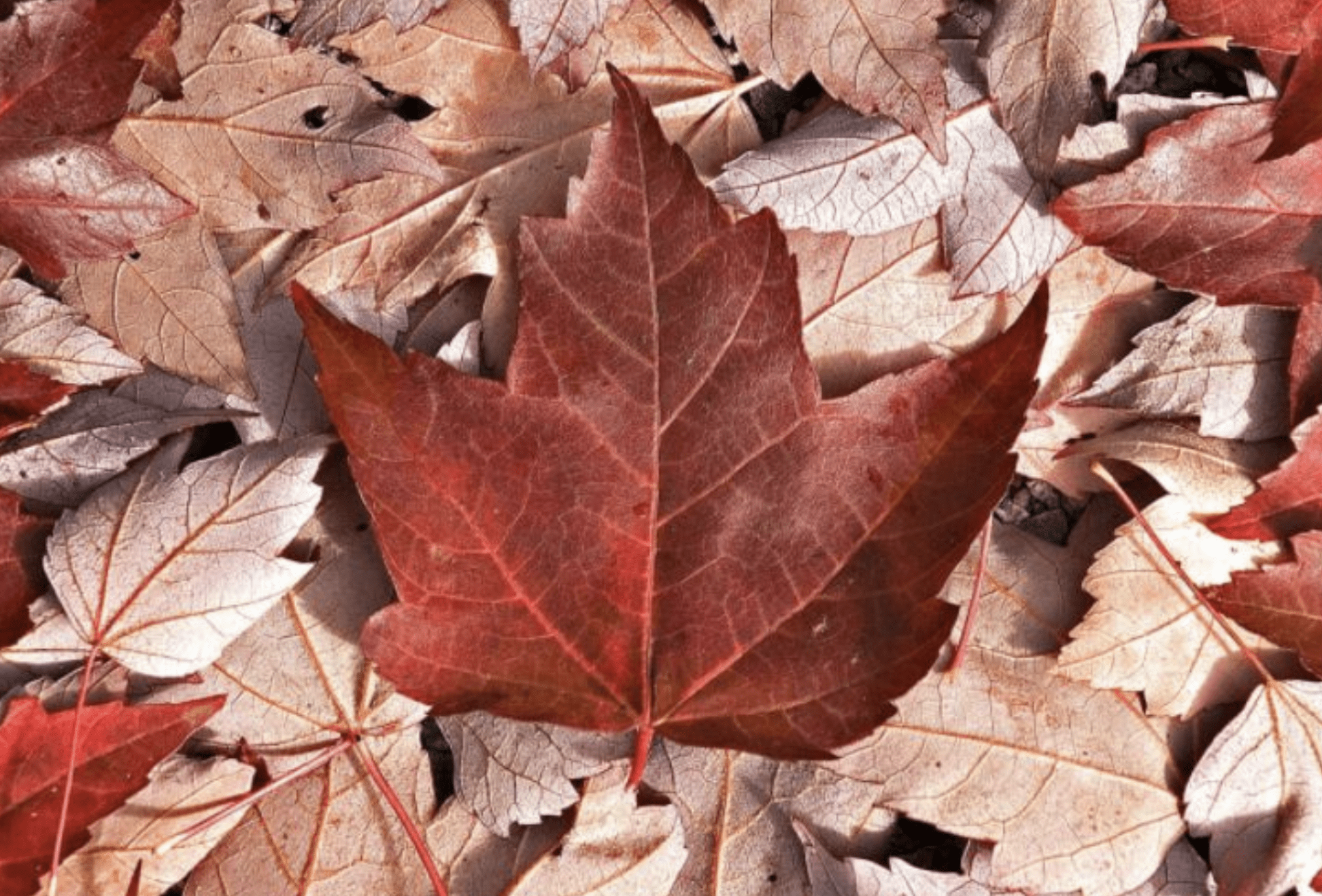

Ontario Premier Doug Ford speaks at an affordable housing event in Vaughan, Ont., on Aug. 26, 2026.

Ontario Premier Doug Ford has thrown his support behind Prime Minister Mark Carney’s retaliatory tariffs against the U.S., as tensions between Canada and the Trump administration continue to escalate.

Speaking at a media conference in Vaughan, Ont., on Wednesday, Ford said Carney had done the “right thing” by walking away from a deal with the U.S., and that the PM has his “full support in standing up for our country” by introducing retaliatory tariffs. He added that Canada is “going to fight like we’ve never fought before against President Trump.”

Ford also stood by his previous suggestions that he would consider cutting off the electricity and critical minerals that Ontario ships south as part of retaliation against the U.S.

“Everything’s on the table,” he said, but stressed that any such move would require a coordinated approach across Canada.

“I’m not the only province that ships electricity down to the U.S.,” he said. “We need a Team Canada approach, and I’d be happy within the provinces to lead that approach.”

Ford also addressed a memorandum letter he sent to Ontario board chairs encouraging them to support local companies instead of American businesses, saying: “It drives me crazy when I hear someone’s buying something off the U.S.”

Canada is “in a war” the premier said, and “when you’re at war, you protect your own … You don’t go down to the U.S. and buy a product.”

Ford has been vocal in his combative stance against the U.S. and its president in recent days. On Monday, he told Toronto radio station Newstalk 1010 that Trump could “kiss my ass” and said Canada should use “every tool in our toolbox to go after President Trump.”

Trump responded with a post on Truth Social in which he called Ford “flunky” and compared him unfavourably to his late brother, former Toronto mayor Rob Ford.

Later that day, while speaking at a press conference in Hamilton, Ford refused to back away from his blunt language, saying that he had “plenty of real estate” on his behind for Trump to find a place to kiss.

When asked about Trump’s criticism, Ford said: “I’ve dealt with guys like that my whole life,” before directing a blunt message to the U.S. president: “You’re a loser.”

He also said: “I have more courage, more brains in my baby toe than he has in his whole body.”

Ford’s comments came shortly after Trump posted on social media that he would bring 50 per cent tariffs against Canadian automobiles and auto parts in January.

However, Ford said at Wednesday’s news conference that things have since “simmered down” between himself and Trump, adding that “it was a heated day for both him and I.”

But the Ontario premier rejected the suggestion that his comments against Trump had gone “too far.”

“Not at all,” he said. “Those words resonated. I usually don’t use those words, but when your country’s under attack and your province is under attack … this guy’s just nothing but a bully.”

The trade deal between Canada and the U.S. collapsed last week after Carney walked away from negotiations on Friday , citing unfair last-minute demands and accusing the U.S. administration of introducing measures that would restrict Canada’s ability to do deals with other countries.

Speaking at a press conference on Saturday morning, the PM said that Canada is now “at war” after being “attacked” by Trump’s steep tariffs.

As a result of the collapsed negotiations, 50 per cent tariffs came into effect at midnight on Saturday, impacting $28 billion worth of Canadian goods. In response, the federal government has retaliated with dollar-for-dollar counter-tariffs that will hit the U.S. starting Sept. 8.

Our website is the place for the latest breaking news, exclusive scoops, longreads and provocative commentary. Please bookmark nationalpost.com and sign up for our politics newsletter, First Reading, here.


A windblown, empty municipal road during winter.

Australia is the country most often named as best able to ride out a global catastrophe. Canada is on the other side of the ledger.

Florian Ulrich Jehn is the lead author of the first review to map which places on Earth would hold up best in a global catastrophe, published Aug. 23 in the journal Global Challenges .

The paper defines a global catastrophic risk as the death of a significant share of humanity, most commonly at least 10 per cent of the world’s population within months to years. It reviews 152 documents rather than modelling anything new.

The authors sorted those threats three ways with the first being sunlight reduction scenarios. That is the review’s term for anything that suddenly blocks out the sun, whether a nuclear war, a large volcanic eruption or an asteroid strike.

Another is infrastructure loss, usually a long blackout caused by a solar storm, a cyberattack or an electromagnetic pulse from a nuclear weapon detonated at high altitude. The third is a pandemic severe enough to cause mass casualties.

“In many nuclear winter scenarios agriculture ceases almost completely in Canada,” Jehn said in an email to National Post.

Canada is strong on biological threats and mediocre on infrastructure collapse, he wrote, and “probably near the worst among wealthy democracies for abrupt sunlight reduction scenarios.”

Australia is the only country directly named as resilient across all three categories in the research the authors reviewed. New Zealand and Japan were the only others with evidence in all three.

On nuclear winter, the review lists Canada among the countries identified as particularly at risk, along with the United States, Russia, China, Central Europe and Eastern Europe. High latitude regions in the Northern Hemisphere would take the most cooling, the paper said.

Jehn put it in terms of where the country starts. Canada is so far north that it begins from a lower base temperature, he wrote, and the temperature effects get stronger the further from the equator a place sits.

Canada does better on the second category. Geomagnetic storms do not hit everywhere equally, and the zones with the highest likelihood of damage take in Canada, Ireland, the United States, the United Kingdom, northern Germany, the Baltics, New Zealand, Tasmania, Russia and Scandinavia.

Canada is one of three countries the review named as having hardened its grid against those storms, along with the United States and Sweden. Past storms drove that investment, Jehn wrote. “I think other countries can likely learn from Canada how it worked on adapting to the threat of geomagnetic storms.”

He attached limits to the grid work. An electromagnetic pulse or a large cyberattack could still take out the grid, he wrote, and Canada trades enough that it would struggle if trade stopped. He is not familiar enough with Canadian industry to make a solid assessment, he wrote.

The third category is where Canada is named as capable. It is among the countries with the highest scores on the Global Health Security Index, a measure of a country’s ability to prevent, detect and respond to disease outbreaks.

“Canada only has one border to cover, it has a good health system and is a rich and stable democracy,” Jehn wrote.

The individual placements make the picture look worse than it is, he wrote. Most countries that came up in the research carry vulnerabilities across several of the risks, and “with the exception of being so far North, Canada is not a negative outlier in comparison with many other countries.”

Very few countries are less vulnerable, Jehn wrote, and the authors did not look at every country systematically. The review does not rank countries, and the paper said a ranking is not possible.

The authors flagged a limit in their own work. Australia and New Zealand come up often in resilience research, but much of it comes from a small group focused on those two countries, and other countries “might also have a relatively high resilience, but nobody has gotten around to studying them yet,” the paper said.

More research into Canada specifically would most likely pay off on infrastructure, Jehn wrote, which is also the least studied part of the field.

“A country cannot suddenly become an island or relocate to the Southern Hemisphere,” the paper said. Most of what determines resilience is how a society is built and how well it prepared, and the two factors the authors found both changeable by policy and free of trade-offs were governance quality and decentralization.

Democratic backsliding, rising inequality and concentrated supply chains are all moving the other way, the paper said. Prevention is always better than resilience, but some catastrophes cannot be prevented and, when they happen, “the difference between societies that have invested in the factors identified here and those that have not will be measured in lives.”

Research goes where researchers expect to find something new, Jehn wrote. “No amount of research will make Canada be a good place in a nuclear winter.”


Minister of Finance and National Revenue François-Philippe Champagne speaks during a press conference at Ideal Roofing Company Limited Manufacturers in Ottawa on Tuesday, Aug. 25, 2026. Canada announced countermeasures and support for workers and businesses in response to United State's tariffs.

Following the collapse of trade talks between Canada and the U.S. last week, the federal government has released a long list of U.S.-made products that will be subject to counter-tariffs of between 15 and 50 per cent, effective Sept. 8.

The counter-tariffs are expected to cover $27.6 billion worth of imports from the U.S. and come after Trump’s latest 50 per cent levies on Canadian goods came into effect on Saturday.

Here are the largest categories of products affected by the new tariffs, and the companies expected to be hit hardest.

Iron, steel and aluminum products

The federal government will impose 50 per cent tariffs on iron, steel and aluminum products such as wires, bars and rods, as well as parts for bridges, scaffolding and railway or tramway track construction. The 50 per cent levy will also apply to nails, needles, screws, bolts and nuts made with iron, steel or aluminum.

Meanwhile, 25 per cent tariffs will apply to radiators, sinks and baths, and large kitchen appliances made with iron or steel, such as stoves, refrigerators, freezers, washing machines and dryers.

Canadians could feel this impact when purchasing appliances made by companies such as Whirlpool (which also owns KitchenAid and other appliance brands), which already announced a 10 per cent price hike in April — its largest in a decade — and a separate 4 per cent price increase in July owing to industry decline.

Whirlpool, which makes about 80 per cent of what it sells in the U.S., said that its performance had been disrupted by the Supreme Court’s decision to strike down Trump’s emergency tariffs in February.

Machinery and agricultural equipment

Air conditioning machines will be subject to 25 per cent tariffs, while 50 per cent tariffs will apply to forklift trucks and other lifting, handling, loading or unloading machinery, as well as lawnmowers and harvesting machinery — including their parts.

The Wall Street Journal notes that John Deere, which is the world’s largest manufacturer of agricultural equipment, along with other manufacturers that produce farming equipment throughout the Midwest, will be most impacted by these tariffs.

Hand tools

A 25 per cent tariff will apply to some hand tools from Sept. 8, including pipe cutters, livestock branding irons and vices and clamps — both for toolmakers and for the surgical, dental and veterinary fields.

Knives including table cutlery, as well as spoons, forks, ladles and tongs will also be subject to this levy, which will likely impact companies such as Cutco, which is the largest manufacturer of kitchen cutlery in North America and makes its knives at a factory in New York.

Paper products

Paper for writing or printing, alongside envelopes, tablecloths and serviettes, will be subject to a 50 per cent tariff, as well as products like account books, note books, order books, receipt books and letter pads. Paper plates and cups will also be affected.

Elsewhere, a 25 per cent tariff will apply to toilet paper, paperboard and facial tissue. This means Canadians might see toilet paper prices soar, as the likes of Procter & Gamble (which owns Charmin and Bounty) are affected by new tariffs.

P&G said last year that it would hike prices, with CEO Jon Moeller citing “tariffs, inflation, interest rates, political and social divisiveness” as factors deflating consumer spending on its products, according to CNN .

Fish and seafood

Live fish, as well as fresh, chilled and frozen fish and fish parts imported from the U.S. will have 25 per cent tariffs applied, as well as fish that has been smoked, dried, salted or in brine.

This tariff also applies to crustaceans including lobster, crab and shrimp, as well as molluscs including oysters, scallops and mussels.

Maine Senator Angus King has said the trade war could “devastate” the state’s lobster industry , because almost half of Maine’s fall lobster catch goes to Canada for processing.

Home furnishings

Tariffs of 50 per cent will be applied to tableware, kitchenware, seats and other furniture made of wood or metal. Chandeliers and plastic floor, wall or ceiling coverings will also be subject to 50 per cent tariffs, while carpets and other textile floor coverings will have a 25 per cent tariff applied, along with mountings and fittings for furniture, doors, staircases, windows and blinds.

Vehicles and parts

Parts of railway or tramway locomotives, motor cars and motor vehicles (for transporting both people and goods), along with trailers will be subject to 25 per cent tariffs.

According to the Wall Street Journal , Harley-Davidson is particularly exposed to the impacts of Canada’s retaliatory tariffs, having sold 6,400 motorcycles in Canada last year — about 5 per cent of its worldwide total.

Meanwhile, General Motors, which owns Chevrolet and Cadillac among others, has already felt the impact of tariffs, with core profit falling 32 per cent in the second quarter of 2025, following the 25 per cent tariffs that arrived that spring, according to the Globe and Mail .

Food products

Some milk and cream products as well as whey, natural honey, molasses and malt extract products in the form of mixes or doughs for baking will have 50 per cent tariffs applied.

Elsewhere, a variety of cheese and curd products including cheddar, camembert, brie, gouda, mozzarella and more will be subject to 25 per cent tariffs.

Beauty products

Lip and eye makeup and skincare as well as perfume, sunscreen, suntan, manicure and pedicure preparations and haircare products imported from the U.S. will all be subject to 50 per cent tariffs.

This is another area where consumer goods company P&G will take a hit, as the owner of skincare brand Olay and haircare brands Pantene, Herbal Essence and Head & Shoulders.

Other products

Elsewhere, a variety of clothing items from dresses, trousers and T-shirts to pullovers, coats and protective suits will have a 50 per cent tariff applied from September.

And smartphones, telephone sets projectors, and video game consoles are among the electronics subject to 50 per cent tariffs.

Our website is the place for the latest breaking news, exclusive scoops, longreads and provocative commentary. Please bookmark nationalpost.com and sign up for our politics newsletter, First Reading, here.


Group of men and women in a collage.

A company that sells the ability to identify a stranger from a photograph left more than nine million files unsecured online, a researcher found.

ClarityCheck sells reverse image searches. A user uploads a photo and the site returns names, social profiles and where else the image appears online. Canadian visitors are quoted $1.69 for a seven-day trial and $38.99 every 28 days after that.

The company also sells lookups on phone numbers, email addresses, vehicle identification numbers, names and businesses. Its homepage says it can “identify unknown callers, verify online contacts, check photos, and decode vehicles using publicly available data from trusted sources.”

Cybersecurity researcher Jeremiah Fowler found 9,042,977 image files in unsecured cloud storage belonging to the company, in folders labelled faces and profiles. The images included adults, teenagers and children, he wrote in a report published by ExpressVPN.

The site is offered in more than 20 languages and prices its trial separately for the United States, Britain, the European Union, Australia and Canada. How many of the images were Canadian is unknown.

The people in those folders are not the customers. They are the people being looked up. ClarityCheck’s image search page says the subject of a search will never be notified, and the company will pull a phone number or an email address from its results on request. It has no equivalent for a photograph.

“If you’re trying to find out who a person is, you might not have authorization or permission, so people might not know that their image had been dumped into this database that was public,” Fowler told Wired magazine.

A scammer holding those images could identify someone, build a fake profile and approach their friends and family as that person, his report said. A face cannot be reset the way a password can. ClarityCheck’s about page says its services “must not be used to stalk, harass, dox, or monitor any person.”

Fowler found the storage in early April, he said in an email to National Post. Most of the ClarityCheck addresses he tried bounced, and messages he sent through the company’s customer support did not reach the right people, he wrote. Public access was not restricted until July, after Wired contacted the company.

A ClarityCheck spokesperson told Wired access “required knowledge of a specific, unindexed URL that was not discoverable through ordinary use of the ClarityCheck service or a general web search.” The company said the files included duplicates, resized copies and non-image data rather than nine million unique images.

Fowler wrote that he did not see duplicate, cropped or resized images in the sample he reviewed, though he was not claiming they were absent. The storage URL appeared in code on ClarityCheck’s own website, Wired reported.

Teresa Scassa, the Canada Research Chair in Information Law and Policy at the University of Ottawa, said Canadian law puts a duty on companies to protect the personal information they hold. “I don’t think that that would qualify as meeting that duty or that obligation,” she said.

The company is registered in Delaware. Its reverse image search page tells Canadian visitors it handles personal information under the Personal Information Protection and Electronic Documents Act, Canada’s private sector privacy law. It points them to the opt-out in its terms, which works by sending a one-time code to the number or address being removed.

Scassa said the law reaches the company regardless, and that it keeps separate privacy policies for American, British and European users. “All that’s required for PIPEDA to apply is for there to be that real and substantial connection,” she said.

The only control on an upload is a box the user ticks confirming they own the image or appear in it. Canada’s privacy commissioner examined that model in 2024. It found Pornhub’s owner, Aylo, could not rely on uploaders to confirm consent, even though Aylo checked government identification against a live face scan.

Scassa said the comparison holds, with a caveat. Intimate images are far more sensitive than a photograph, she said, so ClarityCheck’s position is less serious than Aylo’s. “I still don’t think it’s adequate consent. They should have something more than that.”

A Canadian who suspects their face is in there can ask the company what it holds on them, and it has to answer, Scassa said. Finding out would likely mean handing over a fresh photograph to search against. If the company has something, they can ask for it to be deleted, and Bill C-36, tabled in June, would make that right clearer, she said.

Beyond that the privacy commissioner can investigate and issue findings, Scassa said, but they are not binding, and any Federal Court order would have to be enforced through an American court.

Fowler’s report quotes ClarityCheck’s terms setting a 14-day retention period for uploaded images. The terms now say seven days and carry a July 28 update. It appears the company edited them after his disclosure, Fowler wrote.

ClarityCheck’s FAQ says it does not provide facial recognition. Marketing copy on the same page describes face recognition and facial recognition search. A Wired reporter who uploaded their own face was shown the phrases scanning facial landmarks and mapping unique face geometry.

ClarityCheck did not answer questions from National Post by deadline. Five replies came back from customer support on Friday, each signed with a different first name, saying the questions had been routed to the responsible team.

The company said in an email over the weekend that the questions reached its escalations team late on Friday and would need input from its legal, engineering and product teams. It asked until Aug. 28 for written answers. The Office of the Privacy Commissioner did not respond.

Fowler wrote that he saw nothing in the images showing where they came from. He did not report the exposure to a Canadian regulator because the company is registered in the United States.

The one way to find out runs through the company itself. “You won’t know if you’re in the database until you get in the database,” Scassa said.

Our website is the place for the latest breaking news, exclusive scoops, longreads and provocative commentary. Please bookmark nationalpost.com and sign up for our newsletters here.


Robotic dog known as a quadruped, being remote controlled at a conference in Saskatoon.

Chinese robot dogs on sale in Canada still cannot do much without a person driving them. Security researchers have found flaws that could let someone else take control.

In Beijing this week, organizers say more than 2,000 humanoid robots are competing in running, table tennis and soccer at the second World Humanoid Robot Games , inside the oval built for the 2022 Winter Olympics.

The displays show real capability, said Jason Peng, an assistant professor of computing science at Simon Fraser University. But the software running each robot is trained for one narrow task, he told National Post in an email. A machine built to dance or play table tennis can do little else.

The machine on sale here is the Unitree Go2, built by a Chinese company that makes both four-legged robots, which the field calls quadrupeds, and two-legged humanoids. An Alberta dealer markets them for fire and rescue crews. In Canada, they start at around $6,000.

Michiel van de Panne has worked with four-legged and humanoid robots for years at the University of British Columbia, where he is a professor emeritus of computer science. Humanoid robots once ran anywhere from $200,000 to a million dollars, he said, and the price of the hardware has plummeted over the past three to 10 years.

The hardware is no longer the hard part, van de Panne said. The software is.

“If someone gives you 100,000 quadrupeds or 100,000 humanoids, okay, now what are they actually good for so far,” van de Panne said. The short-term uses tend to be entertainment, he told National Post in an interview, and the machines are a novelty.

A robot can do a backflip because the move is the same every time, Peng wrote, and software trained to do it can do almost nothing else. Folding a shirt is harder, because the robot has to adjust to how the shirt sits each time.

 A humanoid robot from the Chinese company Unitree does a flip as it performs at the company’s display on the opening day of the World Robot Conference on Aug. 19, 2026 in Beijing, China.

The one real job emerging for these machines is search and rescue. A robot steered by joystick can be sent into a burning building a firefighter cannot access, feeding back live video, van de Panne said. He co-supervises a PhD student at ETH Zurich working on exactly that. A person driving the robot can finish tasks no robot can do alone.

Drone Dynamics , an Alberta company that sells Unitree robots in Canada, lists 14 products and runs a page marketing them to fire and rescue services. Most listings read sold out or special order. Peng said he believes research labs at SFU, UBC, the University of Toronto and Université de Montréal run Unitree machines.

On July 28, the U.S. Federal Communications Commission banned new foreign-made robots from the American market unless the Department of War clears them one by one, after security agencies found the machines posed risks to supply chains and critical infrastructure. Models already approved can still be sold. Canada has no equivalent measure.

A report published in March by Andreas Makris and a group of security researchers found an earlier Unitree robot dog shipped with a hidden connection to an outside network that owners were never told about. The University of Waterloo was among the institutions whose connections appeared in the data, alongside MIT, Princeton and Carnegie Mellon. The education version of that robot, sold at about $8,500, was marketed to universities.

Olivier Laflamme , a Quebec security researcher, bought a Go2 and spent months taking it apart. He and a collaborator published two flaws this year that could give an attacker full control of the robot, one through the network it sits on and one through the phone app that controls it.

 People look at a remote-controlled Go2 robot by Unitree Robotics while visiting the Unitree Robotics Embodied Intelligence Experience Center in the Jing’an district in Shanghai on Aug. 19, 2026.

Makris and his colleagues found another way in. Setting these robots up on Wi-Fi is done over Bluetooth, and that step accepts whatever text it is given without checking, so commands can be smuggled in through the password field. The encryption protecting the exchange uses a single key, hardcoded and identical on every machine Unitree ships. Anyone who knows it and stands within Bluetooth range gets full control. The flaw covers the company’s humanoids and its robot dogs, including the model sold in Canada.

The known flaws are patched in current firmware, Makris said in an email. But a buyer cannot tell which version ships in the box, he wrote, and updating is left to the owner.

Unitree said in a September 2025 statement that its robots are offline by default. If an owner connects one, the company said, basic information such as the serial number and health status may be sent to servers in Singapore or to local servers in the owner’s country, similar to how a smartphone works. There are many exaggerated rumours online, it said.

Makris and his colleagues documented the opposite in their September paper, with the humanoid they tested sending data every few minutes to servers they identified as sitting on Chinese infrastructure.

None of the researchers is calling for a ban, and they rated the security on the machine they tested more mature than the industry average. Unitree has patched what they reported and now runs a program inviting researchers to submit flaws , though Makris wrote it did not exist when his team was trying to reach the company.

The problem is not unique to robots, van de Panne said. The same risk exists with cars, computers and Wi-Fi routers, he said, and the attack surface grows with anything connected to the internet.

Public Safety Canada referred questions to Innovation, Science and Economic Development Canada, which did not respond by deadline. Unitree did not respond to a request for comment.

Van de Panne suspects it will prove harder than people expect. He compared it to self-driving cars, where full autonomy has been a year away for 10 years running.


The Great Lakes mostly have anglicized Indigenous names — Ontario, Huron, Michigan and Erie — and one anglicized French name, Superior. But if U.S. President Donald Trump follows through on his latest threat amid the trade war, the smallest of those lakes could soon have an anglicized Italian name instead, “Lake America,” named directly for the United States of America, which in turn takes its name from Amerigo Vespucci, the 16th century Italian explorer. “The United States is giving serious consideration to changing the name of Lake Ontario to Lake America in that we don’t expect to doing much business with Ontario any longer,” Trump posted on Truth Social on Tuesday. The National Post explains the diplomatic and legal boundaries of Great Lakes nomenclature, and why they won’t do much to stop a determined president.

Can Trump do this?

Well, yes. He’s the president, and as such can make executive orders regarding the naming practices of federally regulated entities in the United States, such as the Coast Guard, and, more to the point, the U.S. Board on Geographic Names, and its Domestic Names Committee, which is part of the Department of the Interior. Trump has done this sort of thing before, as in Executive Order 14172, known as “Restoring Names That Honor American Greatness,” which was passed on the day of his second inauguration last year.

That’s the one that ordered the Gulf of Mexico be referred to as Gulf of America, and indeed Google Maps today lists it as “Gulf of Mexico (Gulf of America).” It also officially renamed Denali, the mountain in Alaska, as Mount McKinley. However, it is contrary to treaties and agreements the United States claims to abide by.

Are there multilateral reasons he should not do this?

Indeed there are. At the United Nations (headquartered in New York City, the settlement originally known as New Amsterdam), the Group of Experts on Geographical Names (UNGEGN) “supports the national and international standardization of geographical names… (by) promoting the use of standardized geographical names.” So right off the bat, unilaterally changing the name of Lake Ontario to Lake America would not only put state authorities of New York in a quandary over whether to follow the federal lead, it would also raise a standardization problem between Canada and the U.S. In a conference report from 1972, this United Nations group contemplates the problem of competing names arising when countries do not share a language, and that if they “do not succeed in agreeing on a common name form, it should be a general rule of international cartography that the name forms of each of the languages in question should be accepted.” It says nothing, however, about deliberate renaming of shared lakes as an act of economic belligerence.

What about bilateral reasons he should not do this?

There are those, too. In Appendix C to the 2016 version of “principles, policies and procedures” for the U.S. Board on Geographic Names, “Treatment of Names of Geographical Features Shared by the United States and Canada,” it says “the coordination in the naming of geographic entities on or across the United States-Canada boundary is of mutual benefit to the names authorities in both countries, and to mapping and surveying agencies.” It also says retaining existing names “is highly desirable,” and that if a change is proposed for “strong specific reasons,” it should be “considered by the appropriate names authorities in both countries.”

Supposing he does it anyway. Do other countries have to use names imposed like this?

No. There are plenty of similar international examples. The French call the English Channel “La Manche.” More controversially, various countries have various names for the contested Spratly Islands in the South China Sea. Canada and the United States have more than a century of peaceful cooperation on sharing the Great Lakes under the 1909 Boundary Waters Treaty, under the terms of which the countries created the International Joint Commission to manage the Great Lakes, whatever they are called.

Our website is the place for the latest breaking news, exclusive scoops, longreads and provocative commentary. Please bookmark nationalpost.com and sign up for our daily newsletter, Posted, here.


Minister of Finance and National Revenue François-Philippe Champagne speaks during a press conference at Ideal Roofing Company Limited Manufacturers in Ottawa on Tuesday, Aug. 25, 2026. Canada announced countermeasures and support for workers and businesses in response to United State's tariffs.

It’s Tuesday, Aug. 25. Here are the top stories we’re following today.

Canada retaliates with dollar-for-dollar counter-tariffs on U.S. products

U.S. imports that will be hit with 15, 25 and 50 per cent tariffs effective Sept. 8, include dishwashers, refrigerators, video game consoles, fish, cheese, beauty products, plywood, paper products and clothing. Ottawa also announced $7.5 billion in additional funding to help businesses and workers weather the impacts of the latest round of American levies. Read the story.

 U.S. President Donald Trump leaves the stage after speaking at a campaign rally with U.S. Sen. Darline Graham on Aug. 21, 2026 in Myrtle Beach, South Carolina.

Trump claims Carney lied about trade deal terms, says he ‘loves French Canadians’

On Truth Social, the U.S. president pushed back against the prime minister’s claim that the U.S. viewed the French language as an “irritant” during trade deal negotiations, saying he’d “never even thought of doing such a stupid thing.” Instead, Donald Trump accused Mark Carney of lying about it to bolster his political support in Quebec. The prime minister didn’t respond on Tuesday, but Mélanie Joly did. Read the story.

 Canada on Tuesday, announced counter-tariffs on U.S. goods ranging between 15 percent and 50 per cent, intensifying the trade war between the historically close allies.

Tasha Kheiriddin: The end of free trade is here

“We were treated badly, and the prime minister was right to say enough is enough,” writes Kheiriddin. “You don’t turn on an ally whose people have fought and died alongside you, whose cheap oil has powered your industry for 100 years, and whose people have cultivated ties of friendship with you for generations.” Read the column.

 Pro-Palestinian demonstrators gather outside Montreal City Hall on Aug. 24, 2026.

Terry Newman: Israel-haters lose their minds as Montreal passes watered-down motion

One pushed my camera, which I was holding up in front of me for my protection, with her hand,” Newman wrote of exiting Montreal City Hall after a vote on a motion for the city to declare Israel a genocidal apartheid state and cut ties with the city. The motion passed only after having these elements removed and pro-Palestinian protesters outside were less than pleased. “Walking away, we heard them shouting, ‘You can’t hide, we charge you with genocide.’” Read the column.

 A Toronto Police cruiser. Police say they are investigating reports of an antisemitic speech on Sunday.

Videos show man with megaphone claiming Jews use ‘black magic’ at rally in Toronto

Wearing a keffiyeh around his neck, the unidentified man stood at the intersection of Bathurst and Sheppard, a predominantly Jewish neighbourhood, where he spoke about Jews eating children on “Epstein Island” and of “black magic and horrible things.” On social media, former Conservative MP and Alberta premier Jason Kenney called the man “an avatar of the Islamist-left coalition that is fuelling out of control antisemitism.” Read the story.

Our website is the place for the latest breaking news, exclusive scoops, longreads and provocative commentary. Please bookmark nationalpost.com and sign up for our newsletters here.