LP_468x60
on-the-record-468x60-white

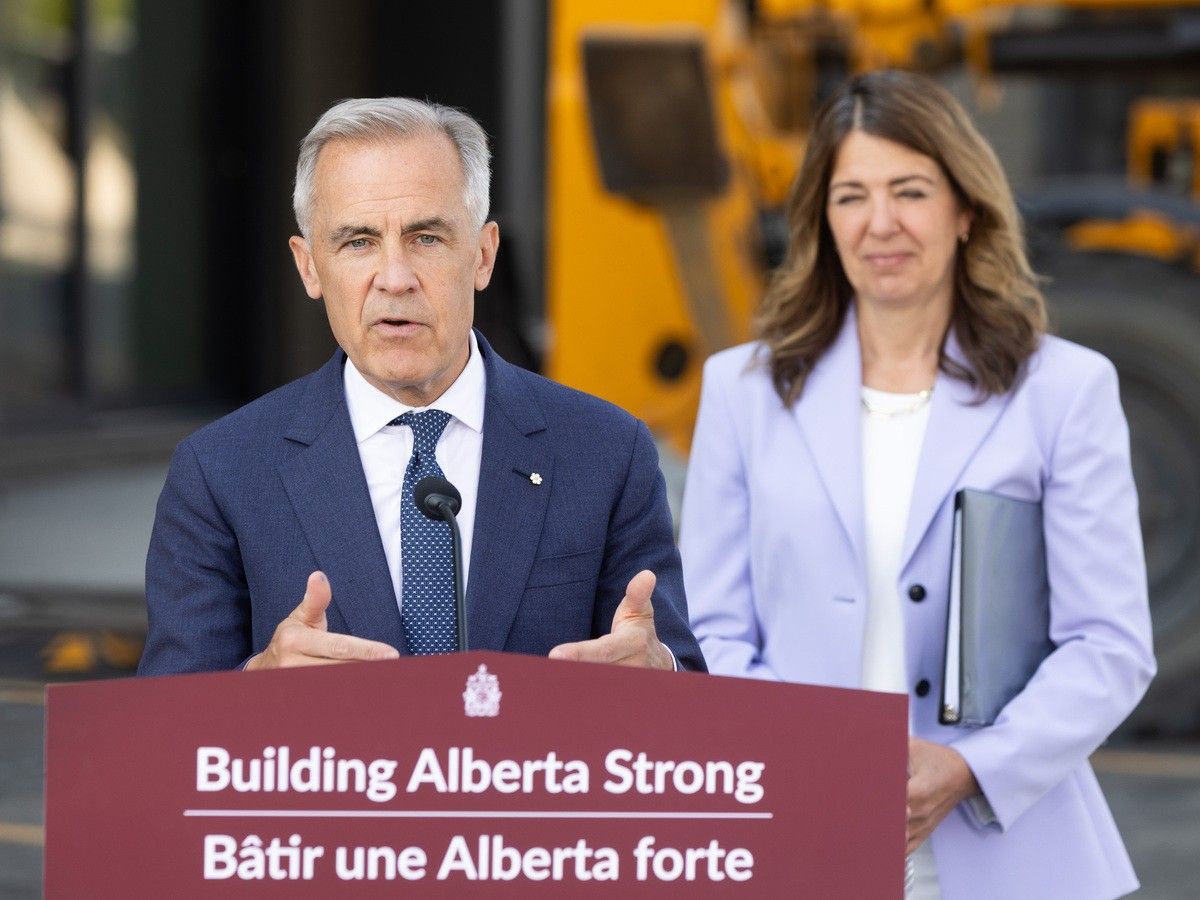
Prime Minister Mark Carney was in Red Deer, north of Calgary on Wednesday, July 29, 2026 to join Premier Danielle Smith and Red Deer Mayor Cindy Jefferies at a new housing project.

OTTAWA — Prime Minister Mark Carney is tempering talk of cutting off oil exports to the U.S. to retaliate against tariffs.

Carney told reporters in Red Deer, Alta., on Wednesday that turning off the oil taps could threaten Canada’s global image as a dependable energy provider.

“Being a reliable supplier is important… So when you’re a supplier of a key commodity, key service, you’ve got to think really hard about not supplying,” said Carney.

Carney said there were plenty of “other things,” outside of curtailing oil shipments, Canada could do to respond to the U.S. trade provocations.

The prime minister was flanked by Alberta Premier Danielle Smith, who nodded in agreement as he emphasized the importance of Canadian oil being seen globally as a reliable export.

Carney’s comments come as looming 50 per cent U.S. tariffs on a range of Canadian goods have sparked new calls for Canada to hit back by curtailing the flow of the roughly 4.3 million barrels of oil per day it sends across the border.

The White House said in a statement last week that the tariffs, set to start on Aug. 19, were in response to Canadian trade actions, including provinces boycotting U.S. alcohol, Canadian tariffs on U.S. autos, and restrictions on dairy imports.

Ontario Premier Doug Ford said last week that Canada should cut off exports of oil, electricity and potash to the U.S. to make Americans “feel the pain.”

Ford’s idea was quickly shot down by Smith, who said that export restrictions on oil and potash were “not going to happen.” Saskatchewan Premier Scott Moe, whose province is Canada’s sole potash producer, also dismissed Ford’s comments.

Carney suggested he agreed with Smith and Moe on export restrictions, but wouldn’t totally rule out using Canadian energy as a bargaining chip in trade negotiations with the U.S.

“I’m not going to be drawn on what we’re going to do,” said Carney when asked about whether energy would be a part of future retaliatory measures.

Tim McMillan, a partner at Garrison Strategies and former head of the Canadian Association of Petroleum Producers, said that Carney’s words of restraint sent a positive signal to the oil and gas industry.

“(Carney’s) comments about being a reliable supplier, as something that he values, were very good to hear. I think we can infer from them that he may not be picking up on Premier Ford’s desire to see those commodities used as a weapon,” said McMillan.

McMillan added that the industrial carbon tax is already a de facto oil and gas export tax.

Ford first suggested restrictions on oil and potash exports last year, in response to U.S. President Donald Trump’s first round of tariffs, but met immediate resistance from Smith and Moe.

When the Trudeau government briefly floated the idea of putting an export tax on oil shipments to the U.S., in early 2025, Smith refused to sign a joint federal-provincial statement voicing solidarity against the Trump administration’s tariffs.

National Post
rmohamed@postmedia.com

Our website is the place for the latest breaking news, exclusive scoops, longreads and provocative commentary. Please bookmark nationalpost.com and sign up for our daily newsletter, Posted, here.


Square One Shopping Centre, where a Peel police officer left her gun.

A Peel Regional Police constable has been found guilty of misconduct and fined 15 days’ pay after leaving her loaded gun and other equipment in a change room at Square One Shopping Centre in Mississauga, just outside Toronto. She was subsequently arrested for unsafe storage of a firearm under section 86(2) of the Criminal Code of Canada.

According to an agreed statement of facts released by Peel Police, Cst. Zahra Yusufzay was working in plain clothes on Dec. 16, 2024, when she went to the Mango clothing store in Square One Shopping Centre on her lunch break. Entering the change room to try on pants for work, she removed her duty belt, which contained her firearm, an additional loaded magazine and handcuffs.

While she was in the change room, Yusufzay got a phone call from another officer asking her to do a translation by phone. She left the change room and went to her car to do the translation there, leaving her belt behind.

“The equipment was then discovered by a Mango store employee, who reported it to Square One mall security, who in turn notified (Peel Regional Police),” the statement reads. “PRP paid duty officers at Square One attended the Mango location. They treated the firearm as a potential public safety risk, rendered it safe, and secured the equipment.”

A police supervisor was notified and arrived at the mall to pick up the equipment. By this time, Yusufzay had realized she’d left it behind and phoned the store and the mall security before returning to the mall.

“She was reunited with her equipment by the PRP on-scene supervisor,” the statement reads, adding: “She was very apologetic.”

PRP Internal Affairs was notified of the incident, and the following March, Yusufzay was arrested by a member of that department for unsafe storage of a firearm. She was not detained.

“In leaving her police-issued use of force equipment, including a loaded firearm, unattended in a public area, it is alleged that Cst. Yusufzay conducted herself in a manner that undermined, or is likely to undermine, public trust in policing, contrary to section 10 of the prescribed Code of Conduct,” the statement notes.

Yusufzay accepted responsibility and is deemed to have pleaded guilty to violating the Code of Conduct. “Cst. Yusufzay is directed to forfeit fifteen days or 120 hours,” the statement says.

Our website is the place for the latest breaking news, exclusive scoops, longreads and provocative commentary. Please bookmark nationalpost.com and sign up for our newsletters here.


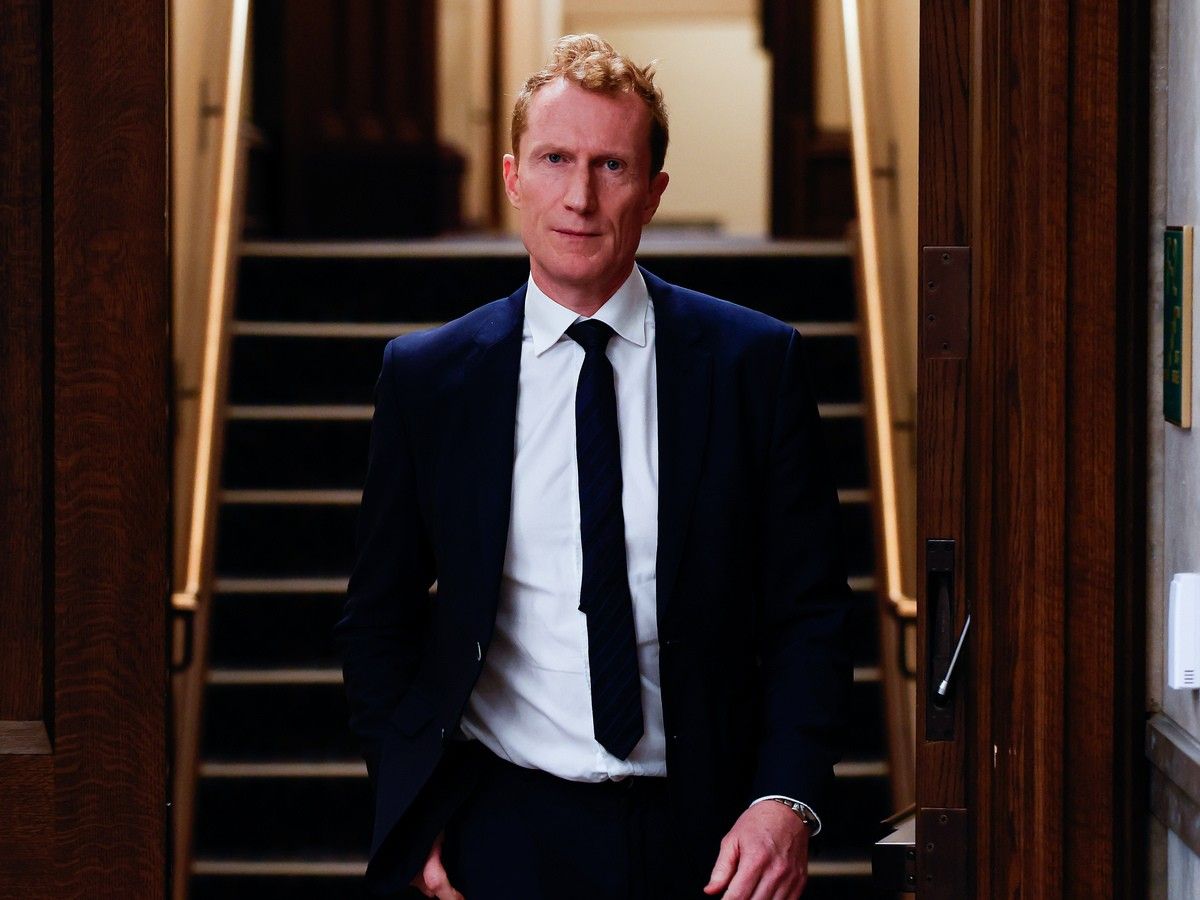
Minister of Canadian Identity and Culture and Minister responsible for Official Languages Marc Miller at the foyer of the House of Commons at the West Block on Parliament Hill in Ottawa on Tuesday, June 16, 2026.

OTTAWA — The Liberal government is planning to direct its broadcasting and telecommunications regulator to “eliminate” the five per cent base contribution requirements for large U.S. streamers that has been tied up in court.

Recent correspondence from the Federal Court of Appeal, first revealed by The Wire Report , shed some light on the government’s intentions more than a month after it ordered the CRTC to review its recent decision to triple online streamers’ contribution from five to 15 per cent to fund Canadian content relative to their annual revenues.

“We are instructed to inform the Court that the Government’s intention is to eliminate the base contribution requirement on streaming services and to provide government funding to replace those contributions,” wrote Michael H. Morris, senior general counsel for the attorney general of Canada, in a letter dated July 17.

Morris adds that he expects the directive to be published for consultation in the Canada Gazette in the coming weeks and will provide the court with any developments that may impact the status of the ongoing litigation about the Online Streaming Act.

Canadian Identity and Culture Minister Marc Miller’s spokesperson confirmed the news, adding that the directive to eliminate base contribution requirements would be for those that are “outside the audiovisual sector to the broader cultural ecosystems.”

“At the same time, platforms will still be required to reinvest a percentage of their revenues in Canadian and Indigenous content,” press secretary Hermine Landry said.

Miller’s director of communications Alisson Lévesque explained that while the five per cent base contribution will indeed be eliminated, the Canadian programming expenditure (CPE) requirements — aimed at supporting the production of Canadian and Indigenous content — will still apply to online streaming services.

It is however unclear how the CPE contributions will be affected by the elimination of the five per cent base requirement or if the legal challenge is still moving ahead.

For Tania Kontoyanni, president of l’Union des artistes which represents over 13,000 members of the cultural sector in Quebec, the elimination of a base contribution from large streamers to fund Canadian content is simply “catastrophic.”

“I’m saying this without exaggeration: this is the worst news of the year,” she said.

Kontoyanni said she is “extremely discouraged” that the federal government is coming to this conclusion after years of effort to support the Canadian cultural sector. She is also not reassured by the government’s intentions which, in her view, signal that large streamers could fund Canadian content at their discretion.

“What we’re realizing today is that it is once again taxpayers who will have to pay for this — and those who make billions in profits won’t,” she said.

Hélène Messier, Francophone Co-Chair of the Coalition for the Diversity of Cultural Expressions, said the government will have to permanently guarantee the funding that the cultural sector had every reason to expect under the base contribution requirement, which her organization estimates at no less than $200 million annually.

“Simply replacing the amounts currently at stake will not be enough; this funding must also grow in step with the revenues of online streaming services. Without such a commitment, funding for the audiovisual and music sectors would gradually erode, even as the value generated by these platforms continues to increase,” she said.

Messier said this directive also raises “serious concerns” about whether the objectives of the Online Streaming Act will be achieved. She said the government must not lose sight of its goal, which is ensuring equitable participation by all players in Canada’s broadcasting system.

The Online Streaming Act, which came into force in 2023, made significant changes to the Broadcasting Act which, among other things, obliges large streaming services to invest a portion of their annual revenues in Canadian and Indigenous content.

In 2024, the CRTC required them to pay a base contribution of five per cent of their annual revenues in Canada which led to Apple, Amazon, Spotify and the Motion Picture Association-Canada, which represents the largest American studios, challenging the order in federal court. It is that contribution that is now about to be eliminated.

In May, the CRTC announced that online streamers would have to pay a contribution of 15 per cent of their annual Canadian revenues towards Canadian and Indigenous content which included the pre-existing five per cent base contribution. The government asked the regulator to review that decision for affordability reasons.

Miller said last month the ongoing litigation in federal court had frozen the funds that were intended to support the cultural sector, and that is why the federal government was stepping in to help with an extra $600 million to help the cultural sector.

“The reality is while we’re waiting for that money to come out — hundreds of millions of which are frozen in litigation — the industry is suffering,” he said.

The decision to ask the CRTC to review its decision was however seen by critics as a concession to the United States, which have identified the Online Streaming Act as a trade irritant. But U.S. Trade Representative Jamieson Greer said earlier this month that Canada doesn’t “really get credit for doing something bad and then undoing it.”

During an unrelated press conference in Alberta on Wednesday, Prime Minister Mark Carney was asked whether the choice to scrap the five per cent base contribution was another trade concession to try to get to a new trade deal with Washington at a time when it is threatening new tariffs.

“Not at all,” he said in French. “The federal government is relentlessly focused on affordability and the (prospect of a) sharp increase in fees for streamers was not acceptable in this situation, even if we’ve made progress.”

Carney said the government will make its policy known more clearly in the next few weeks.

“So, this is not news.”

National Post
calevesque@postmedia.com

Our website is the place for the latest breaking news, exclusive scoops, longreads and provocative commentary. Please bookmark nationalpost.com and sign up for our politics newsletter, First Reading, here.


Emailed wedding invitations are the practical option in our increasingly digital world, but wedding planners have seen a push for paper invitations, which are more traditional and formal.

While planning a wedding, there is no shortage of decisions a couple has to make before their big day. From choosing the venue to picking vendors and setting the menu, nearly every aspect of the planning process involves selecting from an array of options.

I know this because I’m planning my own wedding. Fortunately, I’ve managed to avoid decision paralysis on most occasions. But one decision that had me wavering back and forth was choosing between sending digital or paper invitations.

Paper or digital?

On the one hand, in our increasingly digitalized world, sending electronic invitations felt practical. Everyone spends so much time on their phones or computers, so why not send the invite via the internet? On the other hand, paper invites are traditional and feel more personal. For a formal event like a wedding, an invite arriving in a mailbox, rather than an inbox, feels more apt.

Wedding expert Alison McGill describes the wedding invitation as the “front door” of your celebration. Couples can customize invitations to reflect their personal style, and they can serve as a teaser for the wedding’s theme.

“(It) invites your guests into your wedding world and what it could look like and what they can expect, and it really sets the tone for that,” McGill said. “It’s an important piece.”

Choosing your mode of invitation, however, is a personal decision and can depend on priorities. If the goal is to keep wedding costs down, digital invitations are more budget-friendly. Or, if a couple is eco-conscious, they may opt for an electronic option. But if a couple wants a tangible keepsake, print invitations could be the way to go.

Lexy Scala, a Toronto-based wedding planner and founder of Lexy Scala Events, says it’s a matter of personal preference, but she advises that if you’re planning a highly formal affair — think black-tie attire — a paper invitation is more appropriate.

“It just implies a level of formality and traditional elements that I think you want to be doing if you’re asking your guests to show up in a ball gown,” Scala said. “Whereas I think an evite is totally appropriate for more of a cocktail-style wedding or something a little bit more modern or not as traditional.”

Despite our reliance on devices, McGill has observed an uptick in couples opting for printed invitations. She attributes it to the broader movement that has seen many people return to analog and tactile hobbies, like crochet and knitting.

Vintage weddings

“We’re in this moment of real nostalgia just generally in life, but particularly with weddings,” McGill said. “We’re in this very throwback moment with lots of details with weddings. So vintage wedding dresses and vintage wedding decor are so big.”

Scala agreed that she’s seen a huge push for analog and nostalgic elements lately, including couples employing film photography or bringing ‘90s-era camcorders to record their special day.

“Invitations and paper products and tangible things you can hold and keep in a box forever, they’re kind of the same mindset,” Scala said.

If a couple is still torn between which mode of invitation to use, there are hybrid options.

For example, a couple can order a small number of paper invitations for close family and friends, and keep one for themselves as a memory from the day. Meanwhile, they can send digital invitations to guests who won’t savour the piece of paper. Scala said some stationers refer to it as a keepsake suite.

“It can be a good solution for some people,” she said. “I don’t see it a ton, but it does exist.”

However, if a couple does opt for traditional mailed paper invitations, Scala said in this day and age, the mode for guests to RSVP should be digital, such as through a QR code or a link to a custom wedding website. Manually tracking responses can be a headache for the couple, not to mention the additional postage costs. Requiring a response via mail is also an unnecessary hassle for guests.

“Asking people to walk down to their mailbox and fill out a form, that’s so not of this time,” Scala said.

So, what kind of wedding invitations did I ultimately decide on?

Hybrid invites

I opted for a hybrid approach. I sent digital save-the-dates to guests so they could easily reserve the date in their calendars, which I assumed were linked to their phones or computers. But I ordered paper invitations. I opted for a simple design and utilized an online printing service — plus I took advantage of a discount code! — to stay within a budget I was comfortable with. It was more costly to go the traditional route, but I, too, couldn’t resist the pull of nostalgia and sentimentality.

Our website is the place for the latest breaking news, exclusive scoops, longreads and provocative commentary. Please bookmark nationalpost.com and sign up for our daily newsletter, Posted, here.


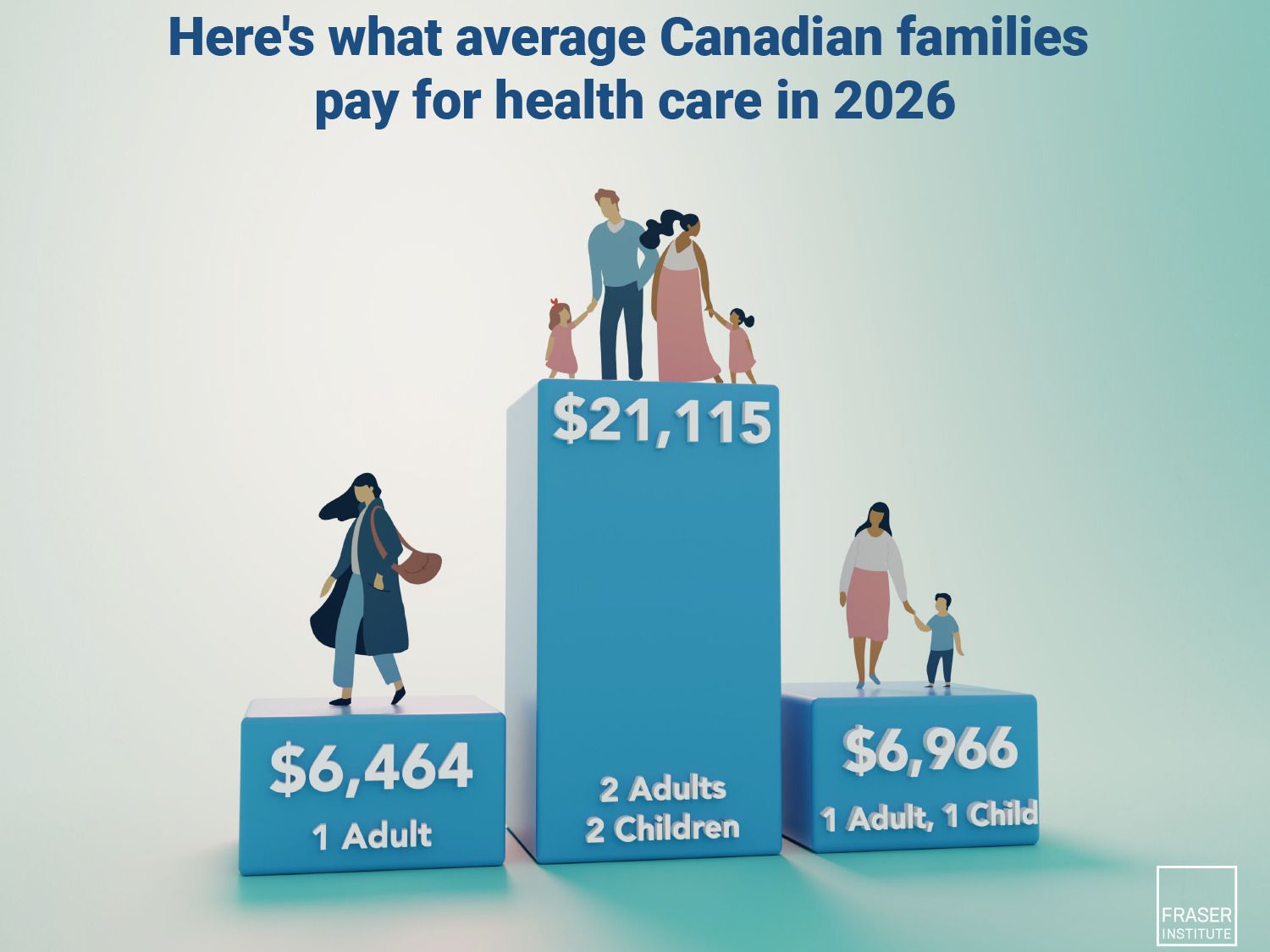
An infographic from the Fraser Institute illustrates how much various people pay toward health care through taxes.

The cost of public health care insurance has skyrocketed in this century, outpacing growth in the cost of food, shelter and even wages, according to a new report from the Fraser Institute. It notes that a typical family of four will pay more than $21,000 for public health care insurance this year, more than twice the amount as in 1997, the first year for which data is available.

“Canadians pay a substantial amount of money for public health care through a variety of taxes, even if we don’t pay directly for medical services,” said Nadeem Esmail, the group’s director of health policy and co-author of the report , titled The Price of Public Health Care Insurance, 2026.

Or as the report puts it: “Health care in Canada is not ‘free.’” But because there is no “dedicated” health insurance tax, it’s difficult for people to calculate the true cost they pay towards the public health care system.

 A patient is wheeled on a stretcher into Montreal’s Royal Victoria Hospital’s emergency room.

“The purpose of this research bulletin is to help individual Canadians and their families better understand how much health care actually costs them personally so they can determine whether they are receiving good value for their tax dollars,” it says.

Crunching the numbers, the report notes that last year $261.1 billion in tax dollars were spent on publicly funded health care. Dividing that figure by the number of Canadians gives a figure of about $6,269 per person in 2025.

“However, Canadians do not pay equal amounts of tax each year,” the report notes, given that children pay no tax, and higher-income earners pay more than others.

Taking tax rates into account, the study estimates that a typical Canadian family of two parents and two children, with an average household income of $202,885, will pay $21,115 for public health care insurance this year. Couples without dependent children will pay almost as much, an estimated $19,225.

Single Canadians meanwhile are expected to pay $6,464 for public health care insurance, and single parents with one child will pay $6,966.

 A chart from the Fraser Institute report shows the rising costs of public health care insurance against other costs.

In absolute terms, the average health-care tax burden in 1997 was $3,412, and it has risen to an estimated $12,924 for the coming year. That’s an increase of 278.8 per cent, or almost quadruple the cost over a 30-year period. But in the same time period, the Consumer Price Index rose by just 85.1 per cent, average wages grew by 160.1 per cent, the cost of shelter rose 180.2 per cent, and food by 123.5 per cent.

Even taking inflation into account, the cost of public health care has almost doubled for a couple with no children (rising 97.1 per cent since 1997) and has more than doubled for all other groups, rising from between 118 per cent and 131 per cent depending on the makeup of the family.

The report also divided Canadians into income “deciles,” with each group representing 10 per cent of the population. At the lowest end, the 10 per cent of Canadian families with the lowest incomes are expected to pay an average of $637 for public health care insurance in 2026. Those in the highest income group will pay roughly 100 times more, or $66,350.

 A chart from the report shows income and health care costs among ten income levels.

“The large gap between the growth rate of income and that of public health care insurance between 1997 and 2026 provides an important insight into the impact of changes in the cost of health care for Canadian individuals and families,” the report concludes. “Our hope is that these figures will enable Canadians to more clearly understand just how much they pay for public health care insurance, and how that amount is changing.”

“Understanding how much Canadians actually pay for health care, and how much that amount has increased over time, is an important first step for taxpayers to assess the value and performance of the government health-care system,” Esmail said.

Our website is the place for the latest breaking news, exclusive scoops, longreads and provocative commentary. Please bookmark nationalpost.com and sign up for our daily newsletter, Posted, here.

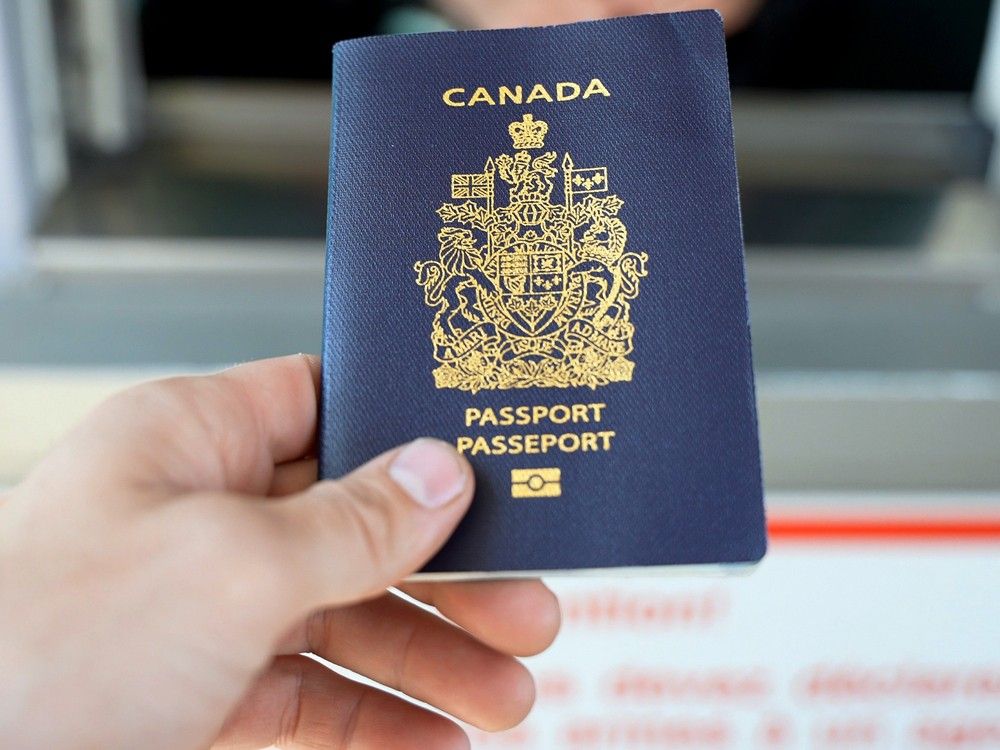
Canadians can now complete their passport renewal application online by submitting their documents, passport photo and payment digitally via the IRCC portal.

The Canadian government has announced that online passport renewal is now available to all eligible adult Canadians in Canada.

The rollout follows a pilot program introduced in December 2024, which previously limited online passport renewals to a maximum of 2,000 applications per day. With the trial now complete, that daily cap has been removed.

Announcing the expansion on Tuesday, immigration minister Lena Diab said: “Expanding online renewal gives eligible Canadians a simpler, more convenient way to renew their passports, without unnecessary barriers or delays. This is part of the Government of Canada’s ongoing work to modernize passport services and deliver public services that are responsive to the needs of Canadians today.”

The change builds on other recent improvements to passport services, including an online application status tracker and a guarantee that applications will be processed within 30 business days or the passport is free. Both of these measures also apply to online renewal applications.

Here’s everything to know about renewing your Canadian passport online.

Who is eligible to renew their passport online?

Online renewals are currently only available for Canadians whose home and mailing address are in Canada. Canadians applying for their passport outside Canada can do so by mail or by visiting a Government of Canada office abroad.

The online renewal process is also limited to Canadians whose passport is set to expire within six months or has already expired.

Currently, only adult Canadians are eligible, but Diab said she hasn’t ruled out the possibility of further expanding the online application system to include children under 16 and Canadians applying abroad in the future.

How can Canadians renew their passport online?

Canadians can complete their passport renewal application online by submitting their documents, passport photo and payment digitally via the IRCC portal .

Applicants can submit copies of supporting documents instead of mailing in the original versions or visiting a Service Canada Centre.

IRCC notes that all passport applications require commercially taken photos that have been taken no more than six months before the date an application is submitted. The government provides more information on passport photo requirements on its website .

What are the requirements for renewing a passport online?

The requirements for the online passport renewal service are slightly different from those for applications submitted in person or by mail.

Here is the full list of requirements for renewing a passport online:

  • You’re applying to renew your own passport.
  • Your home and mailing address are in Canada, and you’ll be there to receive your passport.
  • Your passport will expire in the next 6 months or is expired right now.
  • You don’t need a passport for the next 20 business days, plus mailing time.
  • You’ll use the same name, date of birth, place of birth and gender identifier on your new passport as on your current passport.
  • Your current passport isn’t damaged, seized or surrendered
  • You’re not reporting a lost or stolen passport as found. If you found your passport after it was lost or stolen, you are not eligible to renew online and need to return it to IRCC.
  • You don’t have any observations in your current passport. Observations are notes some people have on a separate page of their passport to explain special circumstances, e.g. a name that was too long to be printed in full.

How much does it cost to renew a passport online?

The cost of renewing a passport online is the same as completing the process in person.

A five-year adult passport costs $122.50, a 10-year adult passport costs $163.50, and a child passport (age 0 to 15) costs $58.50.

Canadian passport fees increased in March this year for the first time since 2013, and are now subject to the Services Fees Act (SFA), a law that requires fee decreases or increases to be based on inflation.

As a result, passport fees rose by 2.7 per cent earlier this year.

How long does a passport renewal take?

Online renewals follow the same 20-business-day service standard as renewals submitted in person or by mail, and include real-time status updates so Canadians can track their passport application as it’s being processed. If a passport renewal takes more than 30 days, applicants will receive a full refund.

IRCC notes that Canadians who need a passport sooner than 20 days must apply in person at a Service Canada Centre or a passport office that offers the 10-business-day, express or urgent service.

Do I have to renew my passport online?

No, in-person and mail-in services will continue to be available for Canadians who choose or need them.

Our website is the place for the latest breaking news, exclusive scoops, longreads and provocative commentary. Please bookmark nationalpost.com and sign up for our daily newsletter, Posted, here.


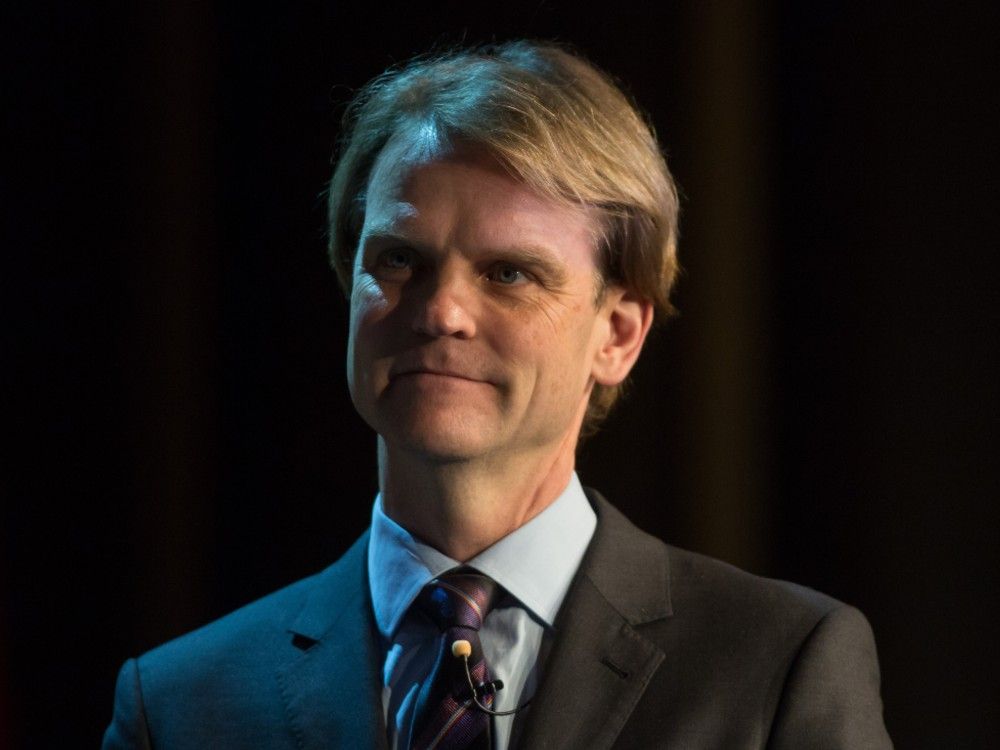
Chris Alexander, seen here during the Conservative Party of Canada leadership debate in 2017, has joined the race to become Toronto's next mayor.

The race to become Toronto’s next mayor is welcoming a late and potentially game-breaking candidate in former Conservative federal cabinet minister and long-time diplomat Chris Alexander.

The 57-year-old, once Canada’s ambassador to Afghanistan (2003-2005) and an immigration minister under former Prime Minister Stephen Harper, had been rumoured to be considering a run and informally launched his bid with a campaign website on Tuesday night.

“I’m running because Toronto has been standing still for three years,” it reads.

“A city with this much talent, strength and potential should not be under-performing. We need to work together to make Toronto better — the best it can be.”

Alexander formally registered his candidacy this morning at City Hall, making him the 33rd person seeking the mayor’s job.

While the field is crowded, polling indicates that, until now, the electorate has focused on two candidates — incumbent Mayor Olivia Chow and Beaches–East-York Councillor Brad Bradford seeking to usurp her.

A poll conducted last week and released after Alexander’s announcement showed Chow leading by eight points among decided and leaning voters.

“Among all voters, Chow is at 39 per cent, Bradford is at 33 per cent, someone else is at eight per cent, and 20 per cent are undecided,” according to a Liaison Strategies Toronto Pulse survey of 1,000 Torontonians between July 24-26.

 Toronto city councillor Brad Bradford, left, and Toronto Mayor Olivia Chow.

Before hitting New City Hall on Wednesday, Alexander visited NewsTalk 1010 and said he entered the race because he feels his experience can help the GTA tackle its “big, complex problems.”

“Ontario and Canada are trying to adapt to new circumstances. We need someone who can help Toronto adapt,” he said.

Priorities listed on his website include increasing housing supply for young Canadians and immigrants, easing congestion, improving public safety, containing municipal costs and bolstering the city’s competitiveness as a place to invest and create jobs.

His platform also pitches a “well-designed network of protected curb-separated bike lanes,” which he told NewsTalk is a “pro-commuter move.”

“Put bike lanes in streets where there’s enough road, where there isn’t car traffic that’s going to overwhelm them and make things dangerous,” he said, likening the idea to bike-friendly Copenhagen’s latest best practices.

“We have enough space in the city to have safe bike lanes that don’t disrupt traffic.”

Asked about Alexander at an unrelated press conference Wednesday, Chow said she’s focused on city matters now and will turn her attention to the election after Labour Day, as reported by CP24.

Bradford’s campaign spokesperson, in a statement to National Post, said: “Anyone can put their name on a ballot.”

Two days before it had been formalized, ABC Toronto, a not-for-profit political advocacy group, posited that Alexander’s could end up playing spoiler in Chow vs. Bradford.

“This isn’t a three-way race. It’s a gift to Olivia Chow,” they posted to X on Monday.

Alexander dismissed the suggestion on NewsTalk.

“Votes are not artifacts to be moved around on a board by strategists,” he said. “Votes need to be earned.”

A Torontonian born in 1968, Alexander attended Oriole Park Public School and University of Toronto Schools before completing higher learning at McGill and Balliol College in Oxford.

He then embarked on an 18-year diplomatic career starting with a six-year posting at the Canadian embassy in Russia where he witnessed the global superpower “experiment with democracy and a market economy, as well as the reality of corruption, financial crisis and two bloody wars in Chechnya,” according to the campaign website.

He also met Russian President Vladimir Putin when the former KGB agent was the deputy mayor of St. Petersburg and, likely due to Alexander’s fluency in Russian, he later served as the world leader’s liaison officer at the 2002 G8 summit in Alberta. (As evidenced by his posts on X, nowadays he staunchly opposes Russia’s illegal war on Ukraine.)

He was appointed the Canadian Ambassador to Afghanistan a year later, a role he held until 2005, after which he became a deputy special representative of the United Nations Secretary-General for Afghanistan for four years, returning to Canada in 2009.

He unseated federal Liberal MP Mark Holland to capture the Ajax—Pickering riding in 2011, became parliamentary secretary for national defence for two years and was named immigration minister in 2003.

Alexander faced criticism in 2015 over his department’s handling of the Syrian refugee crisis and he ultimately bore the brunt of public anger over the heartbreaking photograph of a three-year-old Syrian boy who drowned trying to cross to Europe in a human smuggler’s boat. After it emerged that the boy’s family had wanted to come to Canada, Alexander suspended his re-election campaign and returned to Ottawa to deal with the fallout.

A month later, he came under fire after announcing an RCMP tipline to report “barbaric cultural practices” against girls and women.

Speaking to reporters outside council chambers on Monday, Bradford said “like a lot of Torontonians,” he’d never heard of Alexander and had to look him up. Upon learning of the tipline, which he called “deeply hurtful,” he said that anyone who harbours such views is “unfit” for the mayor’s office.

Alexander failed to win-relection in 2015 and finished a distant 11th to Andrew Scheer in the 2017 race for Conservative Party of Canada leader.

Since then, he’s been an executive, strategic advisor and corporate director in Toronto, lived in Kenya for a time and returned to Canada in 2022.

In 2024, he accused Postmedia defence journalist David Pugliese of being a longtime Russian spy using documents that a forensic analysis later revealed to be bad forgeries.

He’s married to Yale-educated Dutch national Hedvig Christine Alexander — a former officer in Denmark’s Army Reserve who worked with the UN in Kabul during Alexander’s time as ambassador in Afghanistan. They have three children: Selma, Elisabeth and Julius, all under 18.

Our website is the place for the latest breaking news, exclusive scoops, longreads and provocative commentary. Please bookmark nationalpost.com and sign up for our newsletters here.


Harley Finkelstein was confronted by an anti-Israel protester at a tech startup conference in Montreal on Wednesday. It's the second such incident at the annual event.

“What happened at @startupfest yesterday was antisemitism. Pure & simple,” says Shopify president Harley Finkelstein.

Anti-Israel political activist and writer Yves Engler confronted Finkelstein during a session at Montreal’s Startupfest on Wednesday. The businessman said it was the third time in two years he has been aggressively challenged in public for his support of Israel.

“Disguised under a thin veil of advocacy, and everyone in the room saw right through it. I was on stage with Georges St-Pierre talking about entrepreneurship. Not politics,” Finkelstein said on X.

“A man burst in screaming horrible accusations at me anyway … My parents were in the front row. I’ll never forget their faces. When the target is always the Jew and never the topic, it’s not advocacy. It’s hate,” wrote Finkelstein. He says Engler was “booed” and the crowd cheered when he was escorted out.

Finkelstein was in the middle of a conference chat with former Ultimate Fighting Championship fighter Georges St-Pierre about global ambition, overcoming anxiety and the similarities between entrepreneurship and elite fighting.

A protester came up to the side of the stage, filmed Finkelstein and asked why he supported the “genocide in Gaza,” reports Betakit , a news site for Canadian technology startups.

Finkelstein is reported as having responded: “Sir, we’re talking about entrepreneurship in Canada, and celebrating an amazing athlete, (Georges St-Pierre), and these amazing entrepreneurs, and you’re embarrassing yourself.”

In a Wednesday Instagram post , Engler self-identified as the protester who confronted Finkelstein.

He alleged that Finkelstein “squirmed when questioned about his financial & ideological support for genocidal Jewish supremacy. Former UFC champion George Saint Pierre also looked visibly uncomfortable today when I challenged him to stand up for Palestinians.”

It’s the third time Finkelstein has had to cope with in-person protests related to his support of Israel, reports Betakit. Other than Tuesday’s incident, that includes a 2024 live podcast with Indigo CEO Heather Reisman and DAVIDsTEA founder David Segal at a previous Startupfest. Protesters also interrupted his remarks at the opening of Finkelstein Chabad Jewish Centre in Ottawa.

Shopify and Finkelstein have also been targeted by a social media boycott campaign. Finkelstein has been outspoken in his support of Israel and argued in a guest article in National Post that protests target him due to his Jewish identity rather than his politics. Speaking about opening the Finkelstein Chabad Jewish Centre he said protesters started chanting when he began to speak; “They accused me of horrific things happening half a world away. They tried to drown out the celebration and only stopped when I stepped off the stage … What is excused as advocacy now routinely crosses into harassment, disruption and outright antisemitism, playing out openly from places like the Eaton Centre to university campuses across the country.”

Engler attempted to run for the federal NDP leadership, launching a campaign in late 2025, but the party deemed him ineligible , while alleging that he had harassed and intimidated elected officials. This past March, his NDP membership was terminated .

Our website is the place for the latest breaking news, exclusive scoops, longreads and provocative commentary. Please bookmark nationalpost.com and sign up for our daily newsletter, Posted, here.


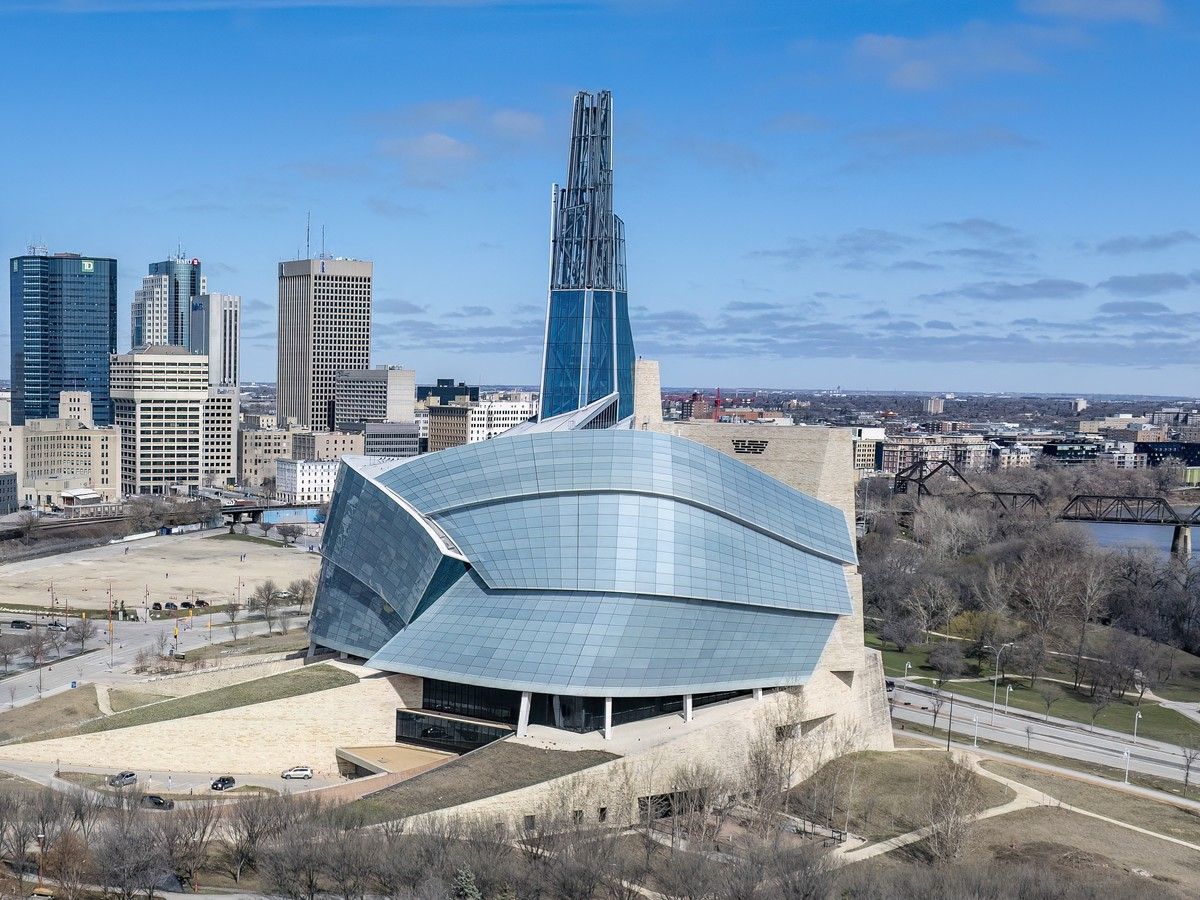
The Canadian Museum for Human Rights in Winnipeg.

Marc Miller, federal minister for Canadian identity and culture, refused to weigh in on an evolving controversy surrounding the upcoming “Nakba” exhibit at the Canadian Museum of Human Rights, under Conservative questioning in the House of Commons on Tuesday afternoon.

The exhibit, which is to be permanent at the Winnipeg museum, focuses on the experiences of Palestinians during the 1948 Arab-Israeli war and the creation of the state of Israel.

Conservative MP Michael Chong asked Miller about emails showing senior museum officials met with the Palestinian representative to Canada, Mona Abuamara, regarding the exhibit. The emails showed she attempted to get involved and was updated on its progress.

Miller declined to say whether such discussions were appropriate. Instead, he insisted that “it is not the place of the minister, or anyone in this house, to dictate museum policy, and what is curated, and what is not.”

Canada’s national museums operate as independent Crown corporations, under the jurisdiction of Miller’s department.

As previously reported by National Post , internal emails show that senior museum officials had a face-to-face discussion with Abuamara.

The visit stemmed from an email exchange in late 2024. On Dec. 5 of that year, Ramsey Zeid, the president of the Canadian Palestinian Association of Manitoba who has been a member of the Palestinian Content Advisory Network for the exhibit, emailed Matthew Cutler, the museum’s vice-president of exhibitions, as well as Isha Khan, the museum’s CEO.

Zeid said Abuamara would be visiting the museum on Dec. 11, 2024, for a tour and wished to meet with staff “to discuss” the exhibit.

Cutler responded: “Thanks for this invitation — we’re always glad to have the ambassador visit, and I know many of our team will be at the event on the 11th.”

He went on to say that he would “ensure (he or a senior colleague) is able to speak with Mona during her visit about our work around sharing Palestinian human rights stories through the museum, including the exhibit.”

This co-ordination arose amid repeated complaints from Jewish organizations about inadequate consultation and a lack of historical balance in the exhibit.

According to the United Nations , “Nakba” means “catastrophe” in Arabic and “refers to the mass displacement and dispossession of Palestinians during the 1948 Arab-Israeli war … In November 1947, the UN General Assembly passed a resolution partitioning Palestine into two states, one Jewish and one Arab … The Arab world rejected the plan, arguing that it was unfair and violated the UN Charter.”

In response to the announcement of the exhibit, the vice-president of the Centre for Israel and Jewish Affairs in Manitoba and Saskatchewan, Gustavo Zentner, said in a CIJA statement emailed to National Post at that time. in November 2025: “The Canadian Museum for Human Rights has rightly earned an international reputation for its rigorous consultation processes that bring together subject-matter experts, affected communities, and individuals with lived experience to fulfill its mandate to ‘contribute to the collective memory and sense of identity of all Canadians’.”

When the CIJA learned about the museum’s intention to profile the experiences of refugees from the 1948 Arab–Israeli War, it engaged with the Museum’s leadership, said Zentner. “We offered to convene leading experts to help ensure that any exhibit presents a balanced, fact-based, and comprehensive narrative, one that reflects the experiences of all refugees, including the more than 850,000 Jews forcibly displaced from long-established communities across the Middle East and North Africa.”

The Jewish community was not consulted, he added.

The exhibit was also the subject of criticism by one of the museum’s founders in late 2025.

Winnipeg lawyer, businessman and trustee at the Asper Foundation, David Asper, said: “The Museum has allowed itself to become the tool, or dupe, of only one side of the story and thereby betrays its duty as a national institution to provide a common and inclusive meeting and educational space on the matter of human rights.” His family led the museum’s founding in 2014.

Our website is the place for the latest breaking news, exclusive scoops, longreads and provocative commentary. Please bookmark nationalpost.com and sign up for our daily newsletter, Posted, here.


This Sunday will mark the 57th annual United Jewish Appeal of Greater Toronto

With tight security and support from Jewish allies, including First Nations groups, another massive turnout is expected for the 57th annual Walk with Israel this Sunday in Toronto.

“We are expecting more allies this year than ever before, which is pretty remarkable,” says Sara Lefton, chief development officer with United Jewish Appeal of Greater Toronto, who called it an “opportunity for the Toronto Jewish community, and our allies to come together to show support for the people of Israel.”

With the Jewish community “feeling increasingly targeted and isolated in Canada,” says Lefton, but also “a proud part of Canadian society … there are many people who are seeking out the kind of comfort and strength that will come from an event like this, not just from walking with other Jews, but, again, walking with so many allies.”

Last year, 56,000 people participated in the annual walk, she says, adding that “registration is in line with what we saw last year, and so we’re expecting similar numbers.”

Lefton attributes this to “many people in Canada recognizing, more and more, the shared threats that we face as Canadians, that we all have to stand together in these really challenging times.”

 A portion of the participants at the 2024 United Jewish Appeal of Greater Toronto’s “Walk with Israel” in 2024. (Photo credit: United Jewish Appeal)

She notes that this year’s walk has a record high corporate sponsorship, reflective of how many businesses, “Jewish and non-Jewish,” have stepped up to show support for the Jewish community. Meanwhile, the peer-to-peer fundraising numbers are showing well, too, as the UJA looks to raise more than $700,000 from individuals.

“This really does mark an important moment for the Jewish community in Toronto and our annual calendar,” says Lefton. “And in these really, really challenging times when there is so much hatred directed towards the Jewish community. In all parts of our society, this day really represents an opportunity to show strength and to feel proud for our children, proud to be Jewish, proud to be Torontonians.”

For more details about the walk and how to participate, she directs people to the walk website.

This year’s Walk will begin at the Temple Sinai Congregation and travel north on Bathurst Street. Then end at UJA’s Sherman Campus for the Walk Festival, a gathering with food, activities, and entertainment.

A full police presence will be evident at this year’s walk, according to Toronto Police Service Deputy Chief Frank Barredo. In a press conference on Friday, he said the police role “is straightforward, to help ensure that everyone attending can do so safely, and that anyone exercising their right to protest does so lawfully.”

Barredo said the police have been planning for the walk in close coordination with organizers and neighbouring police services. “There will be a significant police presence in the area. supported by officers from York, Durham, Peel, and the Ontario Provincial Police. Members of the public can expect to see officers on foot, bicycles, and horseback, at the walk and throughout the surrounding neighbourhoods.”

He said this deployment is designed to support public safety and allow police to respond quickly to any incidents or concerns.

He noted “lawful protest is a fundamental right in Canada, and Toronto police remain committed to protecting that right. At the same time, no one should be subjected to intimidation, harassment, threats, hate-motivated criminal acts or other criminal behaviour. Any suspected hate speech or hateful signage will be investigated.”

He recounted charges laid last week for signage that promoted willful antisemitic hatred, adding that this Sunday, “charges will be laid when the evidence supports them.”

Barredo expects some people will attend with the intention of protesting the event, but police have “a plan in place to deal with that.” The “police liaison team” keeps in regular contact with many regular protest groups “to inform them about what will and what will not be tolerated,” he said, adding that up to 150 protesters are expected.

Given the “blurry line between what is peaceful expression and what is crossed over into something that is hatefully criminal,” Barredo said that there will be inconspicuous hate crime experts on the ground.

 Toronto Police expect up to 150 protesters at this Sunday’s UJA “Walk with Israel.” A substantial police presence will be in evidence, says the TPS. This photo shows a scene from the 2024 walk. (Photo credit: Ari Blaff/ National Post)

He also spoke about the proximity last year of “a gauntlet of hate, if you will,” along one portion of the walk. “We had police officers there. There was a separation. But the very fact that people, families walking by, might hear things that are offensive, was really distasteful, and something that we’re hoping to reduce, if not eliminate completely, this year.”

Lefton spoke about that incident, too.

“We’ve heard from police that they have a new way of stepping up security to make sure that protesters will not be as close to walkers, but you can imagine for our children in the community and for community members, it’s a pretty horrific thing to come out to celebrate your identity. and to be yelled at and screamed at, and as you’re walking through your own city.”

Among the allies marching on Sunday will be approximately 30 Indigenous representatives from First Nations, Métis, and Inuit communities. That will include several former and current Chiefs, Grand Chiefs, and leaders present.

For some, it will be their first time attending the march, says Martin Bernholtz, who will be walking with his grandson and the Indigenous leaders.

Bernholz is the chairman of Canadian Friends of Hebrew University and has a board member, Harvey Ezno, who is a former grand chief, one of the founders of the Indigenous Embassy Jerusalem movement, and visited Israel several times with former prime minister Stephen Harper.

Indigenous Embassy Jerusalem is a platform for indigenous peoples that enables them to show their solidarity with Israel and the Jewish people.

“Their involvement shows a lot of harmony between the Jewish community and the indigenous communities around the world in a time where we are fighting a lot of antisemitism,” says Bernholz. There is “a sense of collegiality” between the two communities, he says.

Among the Indigenous leaders expected on Sunday are Grand Chief David Harper, Cree Manitoba, Grand Chief Wallace Mckay, OjiCree Ontario, Chief Reggie Neeposh, Cree, Quebec, Gela Naqica, Inuit, Nuvuvut, Mary Faus, OjiCree, Northern Ontario, Conrad Flett, CreeTribal Trails TV, and Dr. Sheree Trotter, Maori, NZ.

Our website is the place for the latest breaking news, exclusive scoops, longreads and provocative commentary. Please bookmark nationalpost.com and sign up for our daily newsletter, Posted, here.