

LP_468x60
on-the-record-468x60-white

Si Woo Kim of South Korea follows his shot on the 13th hole during the first round of the Rocket Classic 2026 at Detroit Golf Club on Thursday.

A PGA player driving to meet a fellow tour golfer for dinner ended up accidentally driving into Canada from Detroit earlier this week.

On Tuesday evening, American golfer Michael Kim invited his South Korean counterpart Si Woo Kim (no relation) to dinner at a “solid Korean BBQ restaurant” that he frequents when visiting Detroit. The two are in the city for this week’s Rocket Classic at the Detroit Golf Club.

“I put it into Google Maps — it’s close to my hotel, like 1.5 miles, so I thought it was for sure that one,” Si Woo told CBS Golf on Wednesday, a day after Michael shared the story on X.

It wasn’t.

The restaurant Michael recommended was Daebak Korean BBQ, which is almost 20 miles northwest of downtown Detroit in the suburb of Southfield.

Si Woo, however, obtained directions to Daebak Jib Restaurant in downtown Windsor and without a second look — or his passport — set off for his destination. (Daebak translates to jackpot or big hit in Korean, but is also used an exclamation like awesome or amazing.)

“I follow the instructions and somehow make a turn; there’s a toll gate, like $9 I had to pay to go through. I’m like, ‘Why is it so expensive’ and then as soon as I get into the tunnel …’Oh, this is Canada,’” the world’s No. 18-ranked golfer recounted, referring to the tunnel beneath the Detroit River connecting the two cities.

In Michael’s telling, it was too late to turn back when Si Woo realized his error, so he explained his case to a U.S. border agent and was told not to worry because it “happens all the time.” Regardless, he still had to go through the tunnel and talk to officials in Canada.

On the Canadian side, Si Woo “was freaking out,” but did his best through nervous, broken English to explain that he’s in Detroit for a golf tournament.

He told Michael that as many as eight Canada Border Service Agency officers surrounded his car at one point. They searched his tournament courtesy car, asked him if he had any drugs or weapons, and eventually sent him on his way.

During their questioning, one of them asked if he would win this Sunday, to which Si Woo said he replied: “If you let me through.”

As for dinner, Michael said they did connect on the U.S. side, albeit 90 minutes later than anticipated.

“Never a dull moment with Si Woo,” Michael wrote. “Thanks for the content, my guy.”

Our website is the place for the latest breaking news, exclusive scoops, longreads and provocative commentary. Please bookmark nationalpost.com and sign up for our daily newsletter, Posted, here.
Raj Grewal in November 2017.

Former Liberal MP and lawyer Raj Grewal allegedly told lenders he’d only pay back money he owed them if they avoided complaining to Ontario’s legal regulator or the police about his allegedly fraudulent actions, according to the Law Society of Ontario.

The accusation is contained in written legal arguments the Law Society recently filed in a bid to have Grewal’s licence suspended and to prevent “a significant risk of harm to the public.”

The lawyer also tried to persuade a client to take part in a “convoluted false narrative” to dodge a Law Society complaint after he placed a $15-million mortgage on the person’s property without his knowledge, the Society’s “factum” claims.

The separate Law Society Tribunal will consider the suspension request at a hearing on Aug. 14.

If the allegations are true, it suggests the former member of Parliament for Brampton East knew there might well be questions about the legality of his behaviour as he navigated a series of complex real-estate and trust-fund transactions.

In fact, both the Law Society and Peel Regional Police are now investigating Grewal and his colleague Davinder Khattra, whose licence to practice law was suspended by the society earlier this month. Grewal sold the RSG Law firm he founded to Khattra in 2024.

The factum alleges that Grewal “has participated in, facilitated or failed to prevent mortgage fraud,” misled clients, lenders and other lawyers about money he held in trust, misappropriated client funds and provided fake title insurance to lenders.

Amanda Ross, the lawyer representing him before the Law Society, said she could not comment while the case is ongoing.

The Law Society’s actions come as Grewal, Khattra, RSG Law, colleagues and family have faced a flood of lawsuits in recent months from lenders, clients and others alleging similar misconduct.

None of the charges have been proven in court. Grewal’s lawyers in the civil cases have said he denies all wrongdoing and that the legal action is a result of the type of “falling out” they say is common in commercial transactions. They also have said the 40-year-old has had “very limited” involvement in RSG Law’s day-to-day operations since he sold the firm to Khattra, 29, a lawyer only since 2021. Grewal is trying to resolve the litigation in a way that is fair to all, his lawyers said.

Regardless of who, if anyone, is at fault, the scope of the alleged real estate fraud and misappropriation is unprecedented in recent memory, says a private investigator looking into many of the cases.

Brian King, head of King International Advisory Group, has been working for clients who provide title insurance, which covers losses suffered by lenders and property owners from mortgage fraud, identity theft and the like. He said his clients are on the hook for millions of dollars in payouts related to the cases, while in total about $100 million is in dispute.

“I’ve been in this business for a long time … and we’ve never seen anything like it,” King said Wednesday. “It’s the most horrible thing…. I’m just shaking my head.”

The affair has even had a major impact at the province’s land titles office, responsible for keeping track of property ownership and mortgages and protecting property rights.

The Law Society factum says an official of the office told the regulator earlier this month the agency had frozen over 100 properties in connection with allegations that Khattra had registered fraudulent discharges of mortgages, as well as related court orders against Khattra, Grewal and others.

Lenders in those cases “reported that they were given false assurances of repayment and they were threatened that if they reported the matter to police or cooperated with the Law Society, they would not receive funds,” the factum alleges.

But it’s not the first time Grewal has been dogged by financial controversy. He resigned as an MP in 2018 after admitting to losing millions of dollars while gambling at a casino in Quebec. He was charged by RCMP – and cautioned by the Law Society – over loans he obtained to cover those debts, but a judge acquitted him in 2023, saying the Crown had failed to prove he’d used his influence with the Liberal government to obtain loans. Grewal says friends and family helped cover his losses.

He went on to build a private legal practice and appears to have remained immersed in Liberal Party politics.

In February 2025, individuals named Raj Grewal and Davinder Khattra both attended a small, $1,750-dollar-a-plate fundraising dinner in Mississauga for Mark Carney as the future prime minister ran for the Liberal leadership, according to Elections Canada documents. The agency lists a Rajvinder Grewal at the same postal code as having donated $3,446 to the party in 2025 and $1,572 in 2024.

And later in 2025, Liberal MP Iqwinder Gaheer of the Mississauga-Malton riding nominated Grewal’s wife, lawyer Shikha Kasal, for a King Charles III Coronation medal, among 30,000 Canadians who received the honour.

The many lawsuits filed in recent months allege that Khattra, Grewal and RSG Law misappropriated millions in trust funds, took out mortgages on clients’ properties without their authorization and deleted mortgages from title records without paying them off.

Judges have frozen the RSG Law trust fund and ordered assets belonging to Grewal and others seized as the cases proceed.

The Law Society factum says Grewal himself is the target of six complaints to the regulator.

In one case, RSG Law allegedly took out a $15-million mortgage on a client’s property without his permission, knowledge or real signature. Though the transaction was handled by Khattra, the firm obtained the loan with the help of ID cards and a passport that Grewal had obtained from owner Navdeep Singh in another case, the factum charges.

The society says it has a recording of a conversation in which Grewal claims to Singh the unauthorized mortgage was to “speed up” an eviction at the property.

Grewal “asked Mr. Singh to help him avoid a Law Society complaint by engaging in a convoluted false narrative,” the factum alleges. “Mr. Singh refused to participate in the Lawyer’s scheme.”

The lawyer eventually paid back the $9.2 million of the mortgage the lender had already advanced.

In another case, Grewal was supposed to use $1.9 million he held in trust to pay off lenders. He still has not and Billa Matharu, the lender who complained to the Law Society, discovered that the mortgage had never been secured as promised against six properties — one of them apparently owned by Grewal and one by Khattra. The lender also found that the title insurance Grewal provided was fraudulent, the factum alleges.

The lender “told the Law Society’s investigator that (Grewal) had promised to repay the funds in weekly installments if Mr. Matharu agreed not to cooperate with or respond to the Law Society.”

The Law Society investigation is ongoing and the factum provides no details about three of the complaints, saying only that they “concern allegations (Grewal) has defrauded clients of approximately $17.3 million.”

Meanwhile, Grewal has applied to the Tribunal to force the Law Society to disclose some of the evidence against him that it has yet to hand over.

His factum backing up that motion provides a hint of his defence against the regulator.

A central issue at the upcoming suspension hearing will be the strength of the evidence “purporting” that Grewal knew about and was involved along with others in the alleged fraud, says the written argument filed by Ross, his lawyer.

There are “meaningful distinctions” between actively taking part in fraud and merely being “made a dupe or failing to report the conduct of another lawyer,” says the document.

Our website is the place for the latest breaking news, exclusive scoops, longreads and provocative commentary. Please bookmark nationalpost.com and sign up for our daily newsletter, Posted, here.
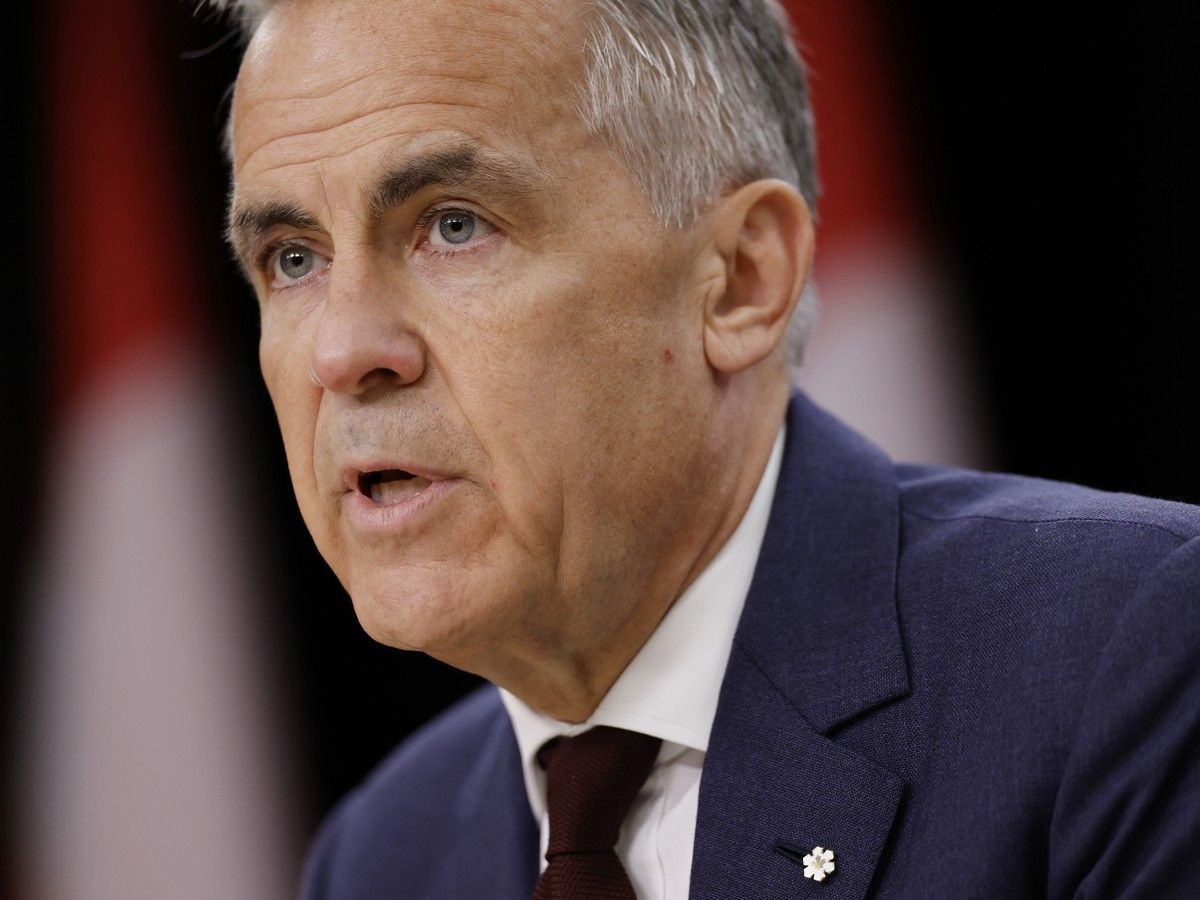

In total, federal bonuses have cost taxpayers about $2 billion since 2015, according to Canadian Taxpayers Federation.

Government executives were paid $201.5 million in bonuses in 2025 despite “barely pass(ing) their own test,” according to Canadian Taxpayers Federation.

The advocacy group obtained access to information records that showed the government handed out multiple bonuses, including a “bilingual bonus,” a “performance award” and “at risk pay,” among others, last year.

Most government executives take bonuses every year, and Public Services and Procurement Canada confirmed to CTF that roughly 88 per cent took one last year. This is despite the government’s own data showing that federal departments met just 54 per cent of their performance targets in 2024-25. The remaining targets were either not met, are to be achieved in the future, or data is not available.

“Bonuses are for when you go above and beyond, so why are most government executives taking bonuses every year when their departments can barely pass their own test?” said Franco Terrazzano, CTF Federal Director, in the report .

“Prime Minister Mark Carney needs to end Ottawa’s entitlement culture because federal executives shouldn’t automatically get a bonus.”

An access to information request revealed that, in 2025, 15,898 of 18,041 executive employees received a bonus or other form of performance incentive, while 142,269 of 414,525 non-executive employees received one.

According to the records obtained by CTF, the $201.5 million in bonuses last year included 6,902 employees receiving a “bilingual bonus allowance” at a cost of $4 million, 9,173 employees receiving “at risk pay,” totalling $172 million, and 1,618 employees receiving a “performance award,” costing $24 million.

In total, federal bonuses have cost taxpayers about $2 billion since 2015, according to CTF.

Meanwhile, government data on departmental results shows that departments have not met or exceeded 55 per cent of targets since 2020 (the earliest year data is available for).

That said, the percentage of targets met has consistently improved over the years. In 202-21, 45 per cent of targets were met, and that figure has steadily climbed to reach 54 per cent last year.

The latest CTF report comes after it was revealed that Canada Post handed out $30.8 million in management bonuses in 2025, despite losing $1.57 billion that year.

The Crown corporation’s president and CEO, Doug Ettinger, defended the “at risk” bonus program during an appearance before a standing committee last month, saying that Canada Post has “cut a lot of costs on the management side. We’ve taken out more than 10 per cent from our management and executive.”

Elsewhere, Alto high-speed rail executives received more than $2 million in bonuses last year, despite construction yet to begin on a high-speed rail link along the Toronto-Quebec City corridor. The federal Crown corporation was created to oversee Ottawa’s high-speed rail project and is a wholly owned subsidiary of VIA Rail.

In June, a Parliamentary Budget Officer report projected that the federal bureaucracy’s costs would increase by more than $10 billion next year.

The report detailed that personnel expenses are expected to cost $69.2 billion in 2025-26, and will increase to $79.4 billion in 2026-27. By 2030, the report predicted personnel expenses reach $86 billion.

Our website is the place for the latest breaking news, exclusive scoops, longreads and provocative commentary. Please bookmark nationalpost.com and sign up for our daily newsletter, Posted, here.


WestJet cabin crew from across Alberta stand outside the WestJet offices in Calgary on July 14, 2026.

A WestJet flight attendant strike at the peak of travel and tourist season is one step closer after the union representing the 4,400 workers issued its 72-hour strike notice early Thursday morning.

Canadian Union of Public Employees 8125 said in a news release that the two sides are “still too far apart on some key issues.”

“We have been clear about what needs to change, and we have worked hard to reach a fair deal,” said Alia Hussain, the local’s president.

“There’s still time to avoid a strike. We will continue to bargain around the clock until this is resolved.”

The union’s key issue is the unpaid duties performed by flight attendants before aircraft take off — boarding, deplaning, delays and safety checks, among others — which the union has said amount to 35 hours per month.

But WestJet has explained that cabin crew salaries are based on a model called credit hours, which pays a higher rate for the duration of the flight to account for preparation before departure. As a result, staff are only paid for when they’re flying.

In response to the strike notice, the airline served its own 72-hour lockout notice, and said it too remains committed to resolving the labour impasse.

“We greatly value the work and contributions of our cabin crew, and it is our responsibility to ensure the integrity of our network and to minimize the risk of stranding our guests, crew and aircraft,” WestJet CEO Alexis von Hoensbroech said in a statement.

 WestJet CEO Alexis von Hoensbroech at the company’s offices in Calgary.

The notices won’t affect ongoing airline operations or indicate that a strike will begin, but if no agreement is reached, the flight attendants will be in a legal position for labour action as of Sunday at 12:01 a.m.

Last week, WestJet began allowing passengers scheduled to travel between July 30 and Aug. 4 to make a one-time change or cancellation at no cost.

The policy also applies to flights booked through WestJet Vacations, Sunwing Vacations and Vacances WestJet Québec, although Sunwing notes that if the new booking costs more, the difference must be paid. For a lower price, the difference will be refunded in a travel voucher.

It’s expected that without a deal, WestJet will begin to cancel flights starting Friday in anticipation of a weekend shutdown.

The union also asked Ottawa to respect the collective bargaining process and let the parties reach an agreement without government intervention.

When Air Canada flight attendants hit the picket lines for three days last August, Minister of Jobs Patty Hajdu invoked section 107 of the Canada Labour Code to impose binding arbitration. The Canada Industrial Relations Board then declared the strike unlawful and issued a return-to-work order that flight attendants defied for three days until an agreement was reached.

 Air Canada flight attendants and supporters during a strike at Montreal-Pierre Elliott Trudeau International Airport in Montreal on Aug. 18, 2025.

On Wednesday, Hajdu told reporters in Montreal that the “talks are progressing.”

“Obviously, I have to leave it to the parties to characterize those talks, but they are very, very well supported by the Federal Mediation Service and we’re hopeful that they reach a negotiated agreement,” she said, per Global News.

Opposition MPs are also calling on the Liberal government not to step in as they did with Air Canada and criticize their use of the provision within the labour code.

Conservative party labour critic Kyle Seeback accused the Liberals of repeatedly “weaponizing” section 107.

“Every time they do it, they take away a worker’s right to strike and fight for better wages and better working conditions, which we support, given how expensive and difficult it is to make ends meet these days,” he told iPolitics.

NDP MPs Don Davies and Leah Gazan, in a letter sent to Hajdu, called the Air Canada intervention “clear contempt for workers’ fundamental rights” and said it “must not be repeated.”

“Having followed every step necessary to ensure their strike is legal and legitimate, CUPE cabin crew workers should not have to fear that government will intervene on behalf of WestJet to force them back to work,” they wrote.

A majority of Canadians (53 per cent) agree that Hajdu and her department shouldn’t get involved, even in the event of travel disruptions, according to polling by Abacus Data.

The union-commissioned survey of 1,500 people July 17-19 found that 27 per cent said Ottawa should take action and 20 per cent had no view on the subject.

A majority (56 per cent) of people who voted for the Liberals last year and WestJet customers (57 per cent) also want the flight attendant’s right to strike respected, two groups Abacus noted could matter politically and commercially.

“That suggests any decision to legislate an end to a strike before negotiations have been exhausted would carry meaningful political risk while offering relatively little public support as we learned when Air Canada’s flight attendants went on strike last summer,” they wrote.

The survey also found that close to two-thirds of Canadians (64 per cent) side with the flight attendants, while only 11 per cent stand with the airline and 25 per cent don’t back either side.

Respondents also “overwhelmingly agree” (84 per cent) that flight attendants deserve to be compensated for non-flight time work. Just nine per cent disagreed and seven per cent didn’t know. Other bargaining requests around wages and scheduling were also seen as “reasonable” but a plurality.

Abacus’ margin of error for a comparable probability-based random sample of the same size is +/- 2.5 per cent, 19 times out of 20.

Our website is the place for the latest breaking news, exclusive scoops, longreads and provocative commentary. Please bookmark nationalpost.com and sign up for our newsletters here.


A Newfoundland butcher has been convicted of theft and eight counts of fraud for giving himself and others heavy discounts on meat.

A Newfoundland judge has convicted a butcher with theft and eight counts of fraud for putting deep discounts on meat for himself, his friends and fellow employees.

Between March and May of last year, Jins Joseph was caught on surveillance cameras multiple times changing stickers on beef so it was labelled as cheaper cuts and giving himself and others 50 per cent discounts that weren’t warranted. One fraud expert testified Joseph’s actions over the course of 27 weeks starting in November 2024 cost the Dominion Store in Corner Brook where he worked about $2,700.

“I conclude that Mr. Joseph was purposely mislabelling meat in order to reduce his and other’s price of purchase. This had nothing to do with unsaleable meat. It was a scam designed to benefit Mr. Joseph and others financially by fraudulently lowering the price of the meat they were purchasing,” Provincial Court Judge Wayne Gorman wrote in a recent decision.

Dominion assigned Markus Penney, an asset protection expert, to investigate after fielding an internal complaint about Joseph.

Using surveillance cameras, Penney watched Joseph change labels on stew meat, instead calling it ground beef.

“Mr. Penney testified that stewing beef is ‘significantly’ more expensive than ground beef,” Gorman said in his July 24 decision.

Joseph handed the deeply discounted packages to fellow employees and also bought them himself, said the decision.

“Matthew Corbin, who has been employed at the Dominion Store for eighteen years, nine in the meat department, testified that employees are not allowed to place incorrect labels on meat being packaged,” it said.

“He also testified that ground beef is the least expensive meat that can be purchased at the store.”

One surveillance video showed Joseph cutting up a roast that he took from the store’s shelf, repackaging it, putting on a new label and handing the meat to another employee to buy.

“A receipt for this transaction was entered as an exhibit. It indicates that a package of ‘ground beef’ was purchased in the amount of $10.52. Mr. Penney testified that roast is significantly more expensive than ground beef. Mr. Penney indicated that the cost of the roast would have been $40 to $50.”

Another video shows Joseph repackaging stewing beef and applying a new label before buying it.

“The receipt indicates that a package of ‘ground beef’ was purchased in the amount of $6.63, with a discount of $1.04,” said the decision, which notes Penney testified that the meat would normally cost between $20 and $30.

Joseph also took four rib steaks out of their packaging, repackaged them in two packs, re-labelled them, and walked them to the self-checkout.

“He places a ‘fifty percent off’ sticker on one of the packages. He pays for only that one.”

An April 2, 2025, video shows Joseph retrieving a large piece of meat from the freezer, then packaging and labelling it, said the decision.

“He then returns to the counter and places a fifty percent discount sticker on the packaged meat.”

A supervisor approved the discount and Joseph bought the meat, described as ground beef on the receipt.

“The cost is $25.98, minus the fifty percent discount of $12.99. Mr. Penny testified that this was not ground beef. He described it as a ‘premium cut’ that would be cut into steaks or a roast.”

The best before date on the package was April 4, said the decision. “Mr. Penny testified that because this was ‘fresh meat,’ it would not have been subject to a fifty percent reduction.”

Joseph was caught on camera taking a couple of jars of seafood sauce and placing them on the scale in the meat department, then printing off labels.

“He then places those labels on four packages of ground beef he retrieved from the freezer,” said the decision, which notes the receipt indicates he got them for half price, even though there was no 50 per cent off sticker on the hamburger.

He later placed the discounted meat that he’d paid for in a box on top of four other packages of beef, said the decision.

“The recording shows Mr. Joseph turning off the lights in the meat department and leaving the store with the box of meat. He walks past the cash register area and does not pay for the meat on the bottom of the box.”

Joseph was interviewed after the internal probe wrapped up by Mitchell Rose, manager of Dominion’s security systems on a province-wide basis.

“Mr. Rose testified that during the interview, Mr. Joseph indicated that he was taking items from the store without paying for them, reducing the price of items and purchasing those items for a lesser price. Mr. Rose testified that Mr. Joseph also said that he was doing this for himself and others. Mr. Rose testified that Mr. Joseph indicated that this activity began around November of 2024 and that he was stealing approximately $100 of meat per week. Based upon it starting in November of 2024, Mr. Rose concluded that it was ongoing for approximately twenty-seven weeks, thereby causing a loss of approximately $2,700 to the Dominion Store in Corner Brook.”

Joseph explained that “he felt disrespected by Dominion, who were not giving him enough shifts or paying him sufficiently,” Rose testified.

Joseph testified that he was born in India and came to Canada for school.

Joseph complained that “the store had cut back his hours in order to ‘force him out.’ He indicated that he was told that the store wanted to have him deported because of the ‘evidence’ he had.”

The judge didn’t believe Joseph’s claim “that the store was involved in several nefarious meat operations, which he described as causing a ‘public health hazard,’ including selling unsaleable meat to local restaurants and takeouts for a significantly reduced price.”

Joseph testified that he knew the store was full of hidden cameras and “that he had no intent to deceive anyone or to steal anything.”

He “conceded that he knew that what he was doing was against store policy, but claimed that he had permission to do so,” said the decision.

The judge wasn’t convinced.

“The combination of Mr. Penney’s evidence, the video recordings, and the receipts, establishes beyond a reasonable doubt that Mr. Joseph participated fully in an ongoing program of repackaging meat with false price stickers that resulted in the price of the meat being significantly reduced,” Gorman said.

“Mr. Joseph was not taking the meat out of the garbage or from some area in which meat that had passed its best before date was stored. He was getting it from the store’s freezer and off the store’s shelves. This meat was available for sale and that meat, which was price manipulated by Mr. Joseph, did not have a sale stamp on it before Mr. Joseph reduced its price. In other words, the store had not decided that the meat was unsaleable.”

Our website is the place for the latest breaking news, exclusive scoops, longreads and provocative commentary. Please bookmark nationalpost.com and sign up for our daily newsletter, Posted, here.


Any good cocktail menu should have some non-alcohol offerings, too, says Ryan Ringer, co-owner and bartender at Grey Tige in Toronto.

Walk into a Toronto bar on a Friday night and some of the drinks in people’s hands have no alcohol in them at all. The customers holding them are not sober, just pacing themselves.

The industry calls it ‘zebra striping’, alternating alcoholic and non-alcoholic drinks during a night out. In Canada it has grown into a $223-million business, and the people driving it are mostly still drinkers.

Low- and non-alcoholic beverage sales climbed from $171 million in 2023 to $200 million in 2024 and $223 million last year, according to NielsenIQ . About 20 per cent of Canadian households bought them over the past year.

Ryan Ringer has been bartending since 1998. He sees the trend from behind the bar at Grey Tiger, a Toronto cocktail bar he co-owns that opened in 2015 with a menu section called the Path of Temperance.

What is zebra-striping?

“People will come in and they’ll have an alcoholic drink, but then maybe between alcoholic drinks, they’ll have a non-alcoholic,” Ringer said. “I think it’s less about people drinking less. It’s more about moderation. It’s more about people really thinking twice about where they’re spending their money and what kind of experiences they want to have.”

“A lot of people are like, I’m tired of the hangovers,” he said. The four drinks on the Path of Temperance — the Crown Spritz, the Finest Timeline, the Sky Reset and Love in the Shadows — all cost $15 versus alcoholic cocktails that start at $18 and climb to $26.

 On the menu at Grey Tiger is The Finest Timeline, a non-alcohol cocktail made with black rice aperitif, chili lime cucumber shrub, ginger beer and mint bitters. (PHOTO BY BECKY IP)

Ringer makes his own non-alcoholic ingredients rather than buying them, and builds the drinks to come as close to a cocktail as he can. “We really want people to be like, are you sure there’s no alcohol in this?” he said.

In Ontario, non-alcoholic beer and cider sales grew 14 per cent over the year ending in November, and de-alcoholized wine grew 126 per cent, the LCBO reported, adding that large national brands are launching new styles this year.

Molson Coors is one of them, Michelle Ramos, senior director of global brands at Molson Coors Canada, said in an email. Its lineup runs to Coors Edge, Molson Excel and Heineken 0.0, which is its largest non-alcoholic brand and grew by double digits in June.

The category once served people who did not drink, Ramos wrote, and now many want both.

Alcohol pullback

Non-alchohol drinks are filling a gap. Alcohol sales fell to $25.8 billion in the year ending March 31, 2025, down 1.6 per cent even as prices rose, according to Statistics Canada.

The average Canadian of legal drinking age now buys about eight standard drinks a week, down from 9.7 a decade ago.

That pullback has been building for years, said Rod Phillips, a history professor at Carleton University who studies alcohol. Younger people are leading it, he said, in the same way they gave up smoking first, proving more risk-averse than older generations.

“That’s a kind of a recognition I think on the part of a lot of young people that you don’t need to drink alcohol to have fun,” Phillips said. “Younger people are just more aware of the health dangers and they’re acting on it.”

Yet the trend toward zero alcohol may already be peaking. Low- and non-alcoholic sales grew 17 per cent in 2024, then another 12 per cent last year, but are up only four per cent so far in 2026, according to NielsenIQ.

A sober bar?

The fully sober bar is still rare in Canada. One of the few is Spilt in Edmonton, a mocktail bar whose co-founder, JoAnne Pearce, told Global News it was the first of its kind in Alberta.

Chris Elliott, chief economist at Restaurants Canada, is not sure a bar with only non-alcoholic drinks will ever be common, though the drinks themselves are spreading fast. “Most restaurants are adding this to the menu,” he said. “It’s something that we have seen.”

For Ringer the argument over the menu is already settled. “Now it’s like, oh, we couldn’t have a menu without the path of temperance,” he said. “Like any good cocktail menu should have a solid non-alcoholic offering.”

Our website is the place for the latest breaking news, exclusive scoops, longreads and provocative commentary. Please bookmark nationalpost.com and sign up for our daily newsletter, Posted, here.


A Canadian and American flag fly along the border at the Detroit River in Windsor.

Awareness of the latest U.S. tariff threat is high among Canadians, according to a new Leger poll, but only 50 per cent support some level of tariff response.

Overall, 68 per cent of poll respondents are following Canada–U.S. trade developments closely, the new data suggest. More men (77 per cent) are doing so than women (59 per cent). Meanwhile, Canadians 55 and over are more engaged in the tariff news (79 per cent) than younger Canadians, 18-34 (59 per cent).

The poll results state that 80 per cent of respondents had heard about U.S. President Donald Trump’s most recent tariff announcement of a new 50 per cent tariff on certain goods imported from Canada. Looking to age demographics, those 55 and over were most aware (89 per cent). Among respondents 35-54, that number was 76 per cent, with those 18-34 less so, at 70 per cent.

“Economic issues, generally, and tariffs, more specifically, aren’t particularly sexy or eye-catching topics,” says Andrew Enns, executive vice-president of Leger’s Central Canada operations, “but what is different is they are associated with a very attention-getting individual — Donald Trump.”

Enns told National Post in an email on Wednesday afternoon that “we seem to have a few very high-profile instances where the U.S. administration has been publicly embroiled with Canada.” He pointed to the U.S. legislators blaming Canada for the wildfire smoke south of the border, along with the saga over the Gordie Howe Bridge.

“These issues put U.S. relations at the forefront for people, so as an extension, news around tariffs gets noticed.”

The tariffs are perceived widely to be an economic threat, according to the poll. Approximately three-quarters of respondents (76 per cent) consider them a serious threat to the Canadian economy. That includes 31 per cent who view them as “very serious” and 45 per cent as “somewhat serious.”

This perception of the tariffs as threatening was consistent across the country — highest in British Columbia (83 per cent).

Canadian confidence in Prime Minister Mark Carney’s leadership to achieve the best possible outcome with the U.S. is mixed, but moderately positive. A small majority of respondents (53 per cent) expressed high confidence in Carney’s ability to achieve the best possible outcome. That compares with 38 per cent who expressed low confidence and 9 per cent who were uncertain. Confidence in Carney is highest in Atlantic Canada (64 per cent) and among respondents aged 55 and older (58 per cent).

Leger found that greater awareness of American tariffs against Canada is linked to higher confidence and lower uncertainty with regard to Carney’s ability. Among respondents following the issue closely, 60 per cent expressed high confidence in Carney, compared with 39 per cent of respondents who have not been following the tariff news closely.

The data shows older Canadians, age 55 and over, are more likely to be following trade developments closely, noted Enns. “While we did not have a ballot question in this poll, you can look at any recent federal ballot polls and they will show older 55-plus voters are decidedly supporting Mark Carney and the Liberals these days,” he wrote.

“Our June poll had this voter demographic at 57 per cent supporting Liberal, compared to 47 per cent among 18-34. I infer from that that because those following trade development closely are older, they therefore are likely to also be supporters of Carney and still have faith he will deliver.”

Looking to how the Canadian government should respond to the newest tariff threat, a preference for Ottawa to impose tariffs on select U.S. goods scored highest among all respondents (29 per cent). Just behind that, 25 per cent favoured focusing on negotiations without imposing additional tariffs. A further 21 per cent preferred matching retaliatory tariffs even if this extends the trade dispute, while 11 per cent favoured compromise in order to end the dispute. Finally, 13 per cent responded that they didn’t know how Ottawa should proceed.

Most respondents indicated that they expect modified rather than fully implemented tariffs. Forty per cent expect some tariffs to be taking effect while others are reduced, delayed or cancelled. Only 16 per cent expect full implementation, while 27 per cent think the tariffs will not proceed.

This online survey of 1,516 Canadians 18 or older was conducted on July 25 to 27, 2026. For comparison purposes, a probability sample of this size yields a margin of error no greater than ±2.5 per cent (19 times out of 20).

Our website is the place for the latest breaking news, exclusive scoops, longreads and provocative commentary. Please bookmark nationalpost.com and sign up for our daily newsletter, Posted, here.

U.S. President Donald Trump steps off of Air Force One at Joint Base Andrews, Maryland, on July 27, 2026.

WASHINGTON, D.C. — Canadian-made hockey sticks, liquor and cement share one unfortunate fate: they are among more than 500 products targeted by the White House with 50 per cent duties under Section 338 of the Tariff Act of 1930. The duties are set to go into effect — unless President Donald Trump changes his mind — on August 19.

Last week, U.S. Trade Representative Jamieson Greer announced that the Trump administration plans to impose these duties in response to “​​Canada’s discriminatory treatment of U.S. commerce,” ranging from automotive retaliatory tariffs to provincial bans on U.S. liquor sales. The threatened tariffs also apply to products that normally qualify for preferential treatment under the Canada-United States-Mexico Agreement (CUSMA).

“The U.S. does not feel constrained by the letter of the law contained in USMCA,” said Clark Packard, research fellow for Cato’s Herbert A. Stiefel Center for Trade Policy Studies.

“The U.S.’s word is … no longer good,” he added.

Trade watchers and industry leaders say the tariffs are all about U.S. leverage for CUSMA negotiations — with the U.S. seeking a lifting of U.S. alcohol sales bans and an end to the Canadian dairy supply management system, among other things — but they hesitate to predict whether Trump will follow through.

“Is it just more TACO, Trump Always Chickens Out? Or is it just a threat to get the Canadians to do what he wants them to — to accept unfavourable terms? I don’t know,” said Andrew Hale, fellow at Washington-based Advancing American Freedom. “It could be that, or he could be serious.”

Packard also expressed caution.

“My overall perception is that a lot of this stuff is just posturing, and the U.S. will ultimately back down,” he said, but noted that they may still go ahead.

Still, many experts say the 338 tariffs are illegal.

​“They’ll be challenged in the courts and defeated,” said Hale, who believes the U.S. administration is simply rebuilding its IEEPA tariff wall through other means.

Packard agreed and said 338 has effectively been superseded by Section 301.

“A legal challenge is going to happen,” he said. “I think it’s more likely to succeed than Section 301 litigation.”

Both he and Hale point to the role the statute assigns to the International Trade Commission (ITC) to continuously monitor global trade for unfair practices and advise the White House accordingly. The fact that the ITC did not make any recommendations in this case, they say, makes it legally vulnerable.

But customs lawyer Carrie Owens, partner at international law firm Kelley Drye in Washington, is more cautious.

“It does not state the president can only act after an ITC report or recommendation.” Instead, the ITC role here is “more in an advisory capacity,” she added.

Whatever happens in legal terms, the tariffs will have a very negative impact on the five per cent of Canadian exports affected.

“It is massively disruptive to the industries targeted,” said Hale.

Packard said the selection of the products appeared “haphazard,” but he and Hale noted that the hockey sticks were being targeted because they’re quintessentially Canadian.

“Hockey sticks … is kind of a dig at some national pride,” said Packard, noting that “hockey stick exports matter a hell of a lot more to Canada than hockey stick imports do to the United States.”

Joey Walsh, founder and CEO of Hockey Stick Man, a hockey equipment retailer, sees the tariffs against hockey sticks as a tool for provoking Canadians.

​​”When threatening hockey sticks, you’re doing it calculated for political purposes to enrage Canadians … but the administration must know that consumer recreational products are not something that’s really manufactured in either country.”

Roustan Hockey Ltd is the only manufacturer of Canadian hockey sticks, and owner W. Graeme Roustan said the company makes roughly 500,000 sticks per year, with about 30 per cent sent to the United States.

Trying to ship months’ worth of exports to the U.S. before August 19, like Canadian exporters did last year ahead of “Liberation Day,” is impossible because his company works with long lead times.

“We don’t have inventory. We don’t build sticks and put them on a shelf,” he said. “It’s all by the order. These are custom orders … and it’s a three-month process.”

The Canadian cement industry, meanwhile, has been notably quiet since Greer’s announcement. Dan Valin from the Cement Association of Canada said his organization’s members were assessing the situation but did not have a public comment at this time.

But since the value of the cement the United States imported from Canada in 2023 was just over $442 million, the tariffs are likely to impact a lot of sales — and potentially, U.S. housing costs.

“Targeting a major cement supplier… I do think that… could end up raising costs for U.S. builders,” said Packard, who noted that the U.S. could easily take unilateral steps to lower housing prices, starting with the elimination of softwood lumber duties and steel tariffs.

“Americans are paying extra for (these inputs) because of some stupid tariff. And now you’re adding cement. The Trump administration talks a lot about affordability, but it’s taking steps that are totally contrary to that.”

Of the three sectors, the most vulnerable may be Canadian alcohol.

Cal Bricker, president and CEO of Spirits Canada, the trade association of the distilled spirits industry, said the 338s pose a serious threat because Canadian spirits exports are highly exposed to the U.S. market, with about half of their production going south of the border.

“We produce about $2 billion worth of spirits in Canada, and a billion of it is sold in the U.S.,” he said.

He sees the tariff move as connected to broader retaliation and trade grievances — namely the provincial alcohol bans.

Canadian liquor companies, he said, are focusing on reviewing their supply chains while remaining “hopeful for some kind of a deal” before the August 19 deadline.

When pressed about the legality of the 338s and possible lawsuits, he said he feared the legal challenges may not stop the damage quickly enough.

“They may get challenged legally, and they may lose, but you lose a lot of time,” he said.

Packard also mentioned that tariffs may lead to new supply chain decisions that could be hard to reverse later.

With 85 per cent of the value of alcohol exports coming out of Ontario, Bricker noted that the impact would extend beyond distillers and to the whole supply chain, including grain growers and other upstream suppliers.

“We’re a pawn in a larger game,” he said.

“How much more of this kind of thing can we withstand?”

National Post

Our website is the place for the latest breaking news, exclusive scoops, longreads and provocative commentary. Please bookmark nationalpost.com and sign up for our newsletters here.


Mourners attend the memorial held for the victims of a shooting at Bondi Beach in Sydney on Dec. 21, 2025.

Antisemitic attacks have reached their deadliest level in more than thirty years, according to an annual report on antisemitism in major Jewish diaspora regions around the world.

In 2025, a combined twenty people were murdered in antisemitic attacks: in Australia, the United Kingdom and the United States. A record number — since the 1994 bombing of the Argentine Israelite Mutual Association, when 84 people were killed.

On May 21, 2025, a gunman killed two young employees of Israel’s U.S. embassy outside the Capital Jewish Museum in Washington, D.C. The next month, an 82-year-old woman was killed in Boulder, Colo., when Molotov cocktails were thrown at a group of people demonstrating in support of Israeli hostages. Two people were killed in an attack on a synagogue in Manchester, U.K., on Oct. 2, during the Jewish holiday of Yom Kippur. On Dec. 14, two gunmen killed 15 people at a Hanukkah event at Bondi Beach in Sydney, Australia.

While no Canadians were killed in antisemitic attacks last year, Jews were targeted in 71 per cent of religious hate crimes in the country, according to recent data from Statistics Canada.

“Canada remains one intelligence failure away from a mass casualty event, and that is something the Jewish community is keenly aware” of, said the Centre for Israel and Jewish Affairs, in the Canadian portion of the 52-page report that was published on Wednesday. It was the second annual report from the J7 Large Communities’ Task Force Against Antisemitism, representing the seven largest Jewish diaspora countries: Argentina, Australia, Canada, France, Germany, the U.K. and U.S.

“We are grateful to our police and security agencies for disrupting at least four ISIS-inspired terror plots since October 7, 2023. But it should not take a Bondi Beach on Canadian soil before leaders at every level respond with the urgency this threat demands,” CIJA CEO Noah Shack told National Post.

The J7 Annual Report on Antisemitism for 2025 documented more than 23,000 Jew-hatred incidents across its member regions, which comprise more than nine-tenths of the Jewish diaspora.

The report notes “the deadly reality of antisemitism that Jewish communities worldwide confront at levels unprecedented since World War Two,” adding that the “picture that emerges from this report is both sobering and urgent.”

Every J7 country’s antisemitic incidents remain dramatically above pre-October 7 levels. Australia saw the sharpest rise of antisemitic incidents since 2021 (+270 per cent), followed by Germany (+215 per cent), the United States (+131 per cent), and France (+124 per cent).

Germany has the highest rate per Jewish capita: nearly 70 incidents per 1,000 Jewish residents in 2025 – about five times Australia’s rate, six times the U.K.’s rate, and nearly 70 times the rate in the United States.

Canada’s levels dropped 16 per cent to 788 incidents (about two reported incidents per thousand Jewish residents) from 943 incidents the year before. However, antisemitic incidents were still 50 per cent higher than 2022.

Between 2022 and 2025, J7 countries recorded a combined total of more than 91,000 antisemitic incidents.

“Extremists are targeting Jews in every aspect of society, from Jewish camps to allies who stand against hate. Activists across the country are working to push Jewish presence out of public life — from unsuccessful attempts to exclude Jews from participating in Pride celebrations, to the deliberate targeting, harassment, and violence against our community members at schools, summer camps, community centers, in our workplaces and in unions,” CIJA says in the report.

Campuses harbour a “persistent toxic environment” and public school classrooms can be “hostile” with “inadequate institutional responses,” the advocacy group wrote.

 On May 21, 2025, a gunman killed two young employees of Israel’s U.S. embassy outside the Capital Jewish Museum in Washington, D.C. The next month, an 82-year-old woman was killed in Boulder, Colo., when Molotov cocktails were thrown at a group of people demonstrating in support of Israeli hostages. Two people were killed in an attack on a synagogue in Manchester, U.K., on Oct. 2, during the Jewish holiday of Yom Kippur.

A point of action CIJA is calling for is a new criminal offence to punish the willful promotion, or glorification, of terrorism, and “consistent enforcement of Canada’s existing laws.”

“Canada has made important progress by investing in community security and strengthening hate laws. Those are important steps. While we strengthen our defence, we also need to go on the offence against violent extremism. That means getting tough on terrorism, deepening intelligence partnerships with our allies, giving police and security agencies the resources they need, and confronting the extremists who radicalize and incite violence here at home,” Shack told the Post.

CIJA contends that “hate‑motivated criminals” most often are released on bail, or never charged.

The J7 as a whole urges legislators and police agencies to shift toward proactive measures that safeguard Jewish communities, before incidents take place, rather than responding only after harm has occurred. It also calls for tightening legislative gaps that currently permit antisemitic rhetoric — particularly when framed as anti-Zionism — to evade accountability.

The report found that anti-Zionism or anti-Israel activism were used as a “vehicle for antisemitic expression” in a sizable numbers of incidents: 48 per cent in the U.K., 45 per cent in the U.S. and 23 per cent in Germany. “More than 53 per cent of all incidents referenced Israel, Gaza, the war or October 7,” the report states.

The Task Force is also pressing technology platforms to enhance their oversight of hateful content, improve transparency and to address evolving risks.

“Antisemitism in our seven countries is no longer a surge; it is our new normal,” said the J7 Large Communities’ Task Force Against Antisemitism in a joint statement. “Governments must stop reacting after Jews are attacked and start acting before, with real security funding, stronger laws and social media platforms that enforce their own rules.”

Our website is the place for the latest breaking news, exclusive scoops, longreads and provocative commentary. Please bookmark nationalpost.com and sign up for our daily newsletter, Posted, here.


Conservative MP Melissa Lantsman speaks in the House of Commons on June 18, 2026.

OTTAWA — Liberal MPs voted to adjourn a committee meeting on Wednesday without voting on a Conservative motion to look into the details of the new revenue-sharing agreement struck between the United States and Canada on the Gordie Howe International Bridge.

The motion stems from what the Conservatives view as contradictory statements made by Prime Minister Mark Carney about the details of the deal, which would see net revenue from the bridge tolls split with the U.S.

“The fact that these statements were contradictory, the fact that…the minister responsible for infrastructure has told media that he will not be releasing fiscal impacts from this side deal arrangement with the Trump administration on revenue raises a whole host of questions,” said Conservative MP Dan Albas, during a meeting of the House of Commons Standing Committee on Government Operations and Estimates.

According to agreement-in-principle released last week, Canada will give the U.S. 50 per cent of net revenues for the first 15 years of the bridge’s life, after recovering operating costs. The U.S. share will go into a United States-Canada Economic Development Fund, which will be controlled by the U.S. government. The agreement would run alongside the original agreement struck between Michigan and Canada, which says the splitting of total toll revenue will only come after Canada repays its debt for constructing the bridge.

The new agreement comes as U.S. President Donald Trump blocked the opening of the bridge in June, on the basis that the original deal was unfair to the U.S.

Carney had originally told CTV News on July 12 at the Calgary Stampede that the split in net revenue with the U.S. would come after accounting for debt-servicing costs on Canada’s financing for the bridge. Canada fully financed the construction of the bridge that connects Windsor, Ont., to Detroit, at a cost of $6.4 billion.

However, missing from the text of the agreement which was released 10 days after the federal government announced the deal, is any reference to Canada recouping debt-servicing costs, which had been an issue of conflicting comments from Canadian and American officials.

Speaking to reporters in Charlottetown last week, Carney said he could have ‘explained better’ the terms of the U.S. bridge deal.

“Could I have explained it better on a Sunday morning at Stampede? Yeah, with a cowboy hat on,” he said. “Yes, I could have explained it better.”

Wednesday’s motion called for the all drafts of the agreement to be released by the Department of the Housing, Communities and Infrastructure Canada within two weeks; to have Canada-U.S. Trade Minister Dominic LeBlanc, Finance Minister François-Philippe Champagne and Housing and Infrastructure Minister Gregor Robertson appear at committee and testify for two hours each; direct the office of the Parliamentary Budget Officer to look into the fiscal impact of the new agreement and to call on the prime minister to incorporate “transparency, accuracy, openness and honesty” around communications on the Canada-U.S. relationship.

Opposition MPs took issue with Carney’s explanation for the confusion, arguing that wearing a cowboy hat should not have an impact on the accuracy of one’s statements.

“Just because you wear a cowboy hat is not an excuse to not tell the exact honest truth,” said Conservative MP Chris Lewis. “It’s not an excuse to forget something.”

Liberal MPs talked about the economic and trade benefits of opening the bridge and argued they could not a support a motion that does not include a discussion of those topics. Conservative deputy leader Melissa Lantsman then amended the motion to include witnesses from the business community to discuss the impact of the bridge deal.

“I am confused that the Conservative opposition is trying to celebrate the opening of the bridge, yet critiquing the opening of the bridge at the same time,” said Liberal MP Vince Gasparro. “So to conclude, Chair, I do not support this motion.”

Liberal MP Pauline Rochefort admitted that she was initially “confused” by the terms of the agreement.

“But for me, the confusion disappeared completely once I recognized that there were two separate agreements that worked together,” she told the committee. “The first agreement, the 2012 Canada-Michigan Crossing Agreement, which remains fully enforced, remains fully enforced, and I think that’s an important point that’s been made that deserves to be repeated.”

Bloc Québécois MP Marie-Hélène Gaudreau said she is still unclear from this agreement what impact it will have on Canada’s ability to pay down its debt on the bridge. She also said the federal government should not operate like a private enterprise and is still accountable to the Canadian taxpayer.

At a press conference in Red Deer, Alta. on Wednesday, Carney defended the deal with the U.S. to open the bridge.

Carney took issue with a reporter’s question about what Canada has received in return for concessions to the U.S. on the bridge deal, saying that the new funds going south of the border amounted to less than five per cent of the cost of the bridge.

“Put that in perspective, that’s being pragmatic and moving forward. And now we’ve got a bridge that’s open,” said Carney.

National Post

Our website is the place for the latest breaking news, exclusive scoops, longreads and provocative commentary. Please bookmark nationalpost.com and sign up for our newsletters here.