LP_468x60
on-the-record-468x60-white

Security footage released by Toronto Police shows a suspect vehicle driving away from the U.S. Consulate on University on July 27.

Toronto Police have made two arrests in connection with shots that were fired at the U.S. Consulate in Toronto last week. One of the suspects is a 15-year-old boy.

Police say it’s another case of guns-for-hire in the city, and the second attack on the consulate this year after a shooting on March 10.

The most recent shooting took place on Monday, July 27 at about 4:46 a.m. outside the building on University Avenue. An officer stationed outside the consulate heard a gunshot and then saw a white Honda Accord fleeing southbound on University.

Police pursued the suspect vehicle onto the Don Valley Parkway but had to give up in the interest of public safety. The vehicle, which had been stolen that day, was later located abandoned in the city’s east end.

Officers at the scene found evidence of gunfire and damage to the stone façade above the building’s front entrance. Security personnel were inside at the time but no injuries were reported.

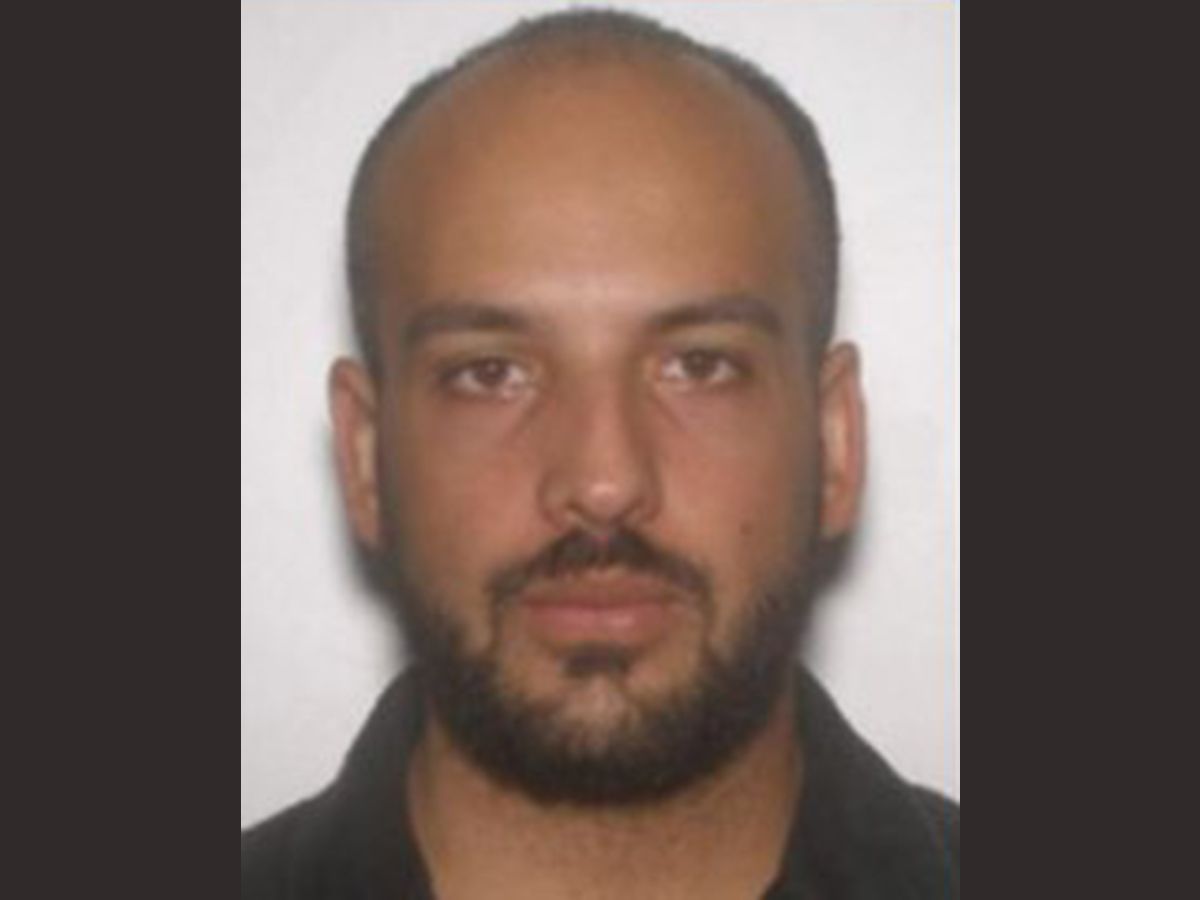
The first arrest came last Saturday, Aug. 1. Police arrested and charged Xen-Ul-Abdeen Syed, aged 19, with 15 counts, including possession of stolen property, possession of a loaded prohibited or restricted firearm, discharge of that weapon and dangerous operation of a motor vehicle.

A second suspect who cannot be named because he is 15 years old was arrested Wednesday morning and faces 17 charges, including the ones Syed is facing.

“We also believe that the modus operandi in this investigation is consistent with what we saw in the previous U.S. Consulate shooting, and that is criminals for hire,” said Police Chief Myron Demkiw in a press conference Thursday. “We believe that these two individuals were offered payment to carry out this attack through encrypted messaging apps.”

He was unable to say who offered the payment, however. “That remains a key focus of our investigation … to identify those directing, organizing and financing these attacks. What we know is that criminals are exploiting encrypted technology to recruit young people and coordinate serious criminal acts.”

Asked about the size of the network behind the attack, Chief Supt. Joe Matthews said there were “in the Toronto area … dozens at the lower level that are actually taking the contracts, and I think as you go up the pyramid there are fewer and fewer at each level.” He added: “We look at this scheme as being at three levels.”

Matthews declined to reveal what payments had been offered, but said: “For what these two people are now facing in potential jail time and how it’s going to impact their future — it’s not nearly enough.”

In a statement, Demkiw lauded the work of front-line officers and investigators, but added: “This investigation also highlights broader issues we continue to face … We continue to see too many people accused of serious offences breaching court-ordered conditions. We need meaningful deterrence, we need the tools to investigate those orchestrating these crimes, and we need the justice system to keep pace with the evolving threats to public safety.”

In a separate but related incident, police allege the two suspects visited a gas station in Scarborough several days before the shooting, filling a red jerry can with gasoline before going to a residential street near Queen Street West and Mississauga Road in Caledon, where they poured gasoline on a vehicle in a driveway and lit it on fire.

The suspects then fled the area, and no injuries were reported. Both suspects are also facing charges of arson.

The Toronto Police Integrated Gun and Gang Task Force was in charge of the investigation, supported by the Counter-Terrorism Security Unit. The RCMP and the Integrated National Security Enforcement Team are engaged in a parallel investigation, treating the event as a national security incident.

Our website is the place for the latest breaking news, exclusive scoops, longreads and provocative commentary. Please bookmark nationalpost.com and sign up for our newsletters here.



Police in Florida have charged a Canadian woman after allegedly finding 12 fake IDs in her possession during a traffic stop.

A Canadian woman arrested in Florida last week wasn’t lying when she told deputies that she didn’t have her ID on her. But Bryce Haileigh Swanson was less forthcoming about the 12 fake IDs police allegedly found in her trunk, ones they said she admitted using to get jobs at strip clubs throughout the U.S.

The 28-year-old from an undisclosed address in Canada was charged with the fraudulent use of personal information (over $5,000) of 10 but less than 20 victims, giving a false name to deputies who stopped her car in Tampa and not having a valid driver’s licence.

As a result of overstaying her visa, Swanson is being held on an Immigration and Customs Enforcement (ICE) detainer at a county jail, according to court records obtained by National Post.

Her traffic stop and arrest last Wednesday night were captured in bodycam footage shared on social media by the Hillsborough County Sheriff’s Office.

The officer tells Swanson that he’s pulled her over because her taillights aren’t on and the light over her licence plate is also out.

“It’s completely dark back there,” he notes, asking if she has her licence.

“I don’t. Honestly, my boyfriend is supposed to meet me over there and he’s supposed to come get the car from me,” she replies.

The officer clarifies that she does possess a licence, and she confirms it’s not with her and that the vehicle was rented by her boyfriend.

The roughly 90-second clip cuts ahead to Swanson saying she has a New York State licence and providing a false name of Brianna Valenzuela.

The arresting officer, in his affidavit, said the name provided was linked to a traffic offence-related warrant in Miami-Dade County, but he couldn’t verify the woman’s identity as supplied.

The video cuts ahead again to her saying she lives in New York, but is staying at an Airbnb while visiting friends in Florida.

The officer interjects with, “Okay, so you don’t have a New York ID at all?

“No,” she replies.

The clip cuts ahead again to Swanson being asked to step out of the car as the officer says her “story is not making a lot of sense.”

“You say you live in New York currently, right,” he asks, drawing her agreement, “so how do you have no ID from New York?”

“I’ve never had a driver’s license or anything,” she replies and confirms she has nothing in the vehicle with her name on it.

The next cut shows more officers standing next to her open trunk, thumbing through the ID cards and placing her under arrest.

Of the dozen cards, 11 were Pennsylvania driver’s licences, one was from Georgia and all of them “contained the same photograph of the defendant, but each with different names and birthdays associated with them,” according to the affidavit.

It was only after being detained that Swanson gave police her real identity, which was later confirmed via photograph on her passport. After being read her rights, police allege she admitted to overstaying her visa, “and had been using various fraudulent driver’s licences to gain employment at various strip clubs around the country. She has also never possessed a valid driver’s license.”

Records indicate Swansonn is being held at the Orient Road Jail. Should ICE drop the detainer, she will have to remain in Hillsborough County after release from custody on a bond set at US$17,000.

National Post has contacted Global Affairs Canada for more information.

Our website is the place for the latest breaking news, exclusive scoops, longreads and provocative commentary. Please bookmark nationalpost.com and sign up for our daily newsletter, Posted, here.


The US Capitol, Washington Monument and Lincoln Memorial are seen through haze caused by wildfire smoke from Canada from the Netherlands Carillon in Arlington, Virginia on July 17, 2026.

WASHINGTON, D.C. — Hundreds of wildfires are burning across North America, putting communities, buildings, and firefighters at risk.

With blazes in Washington state, Oregon, Idaho, Montana, California, Utah, and in Canada, especially in British Columbia, Ontario , and the Northwest Territories, there have been plenty of headlines about the devastation.

Last month, smoke from Canadian boreal forest fires poured into the United States, triggering air quality alerts for more than 120 million Americans. Influencers and media outlets shared dramatic footage and discussed the air quality in cities like New York and Chicago as smog blanketed their regions.

Four Republican lawmakers accused Canada of failing to do enough to prevent wildfire smoke from hitting the United States, claiming that “continued inaction” was “unacceptable.”

President Donald Trump also expressed frustration.

“The United States is being unnecessarily invaded by filthy, polluted, and unhealthy air,” he said, claiming it was “willful negligence” and that Canada is “not properly maintaining” its forests. Trump threatened to impose new levies over it, and his administration has since introduced new tariffs against Canada, citing retaliatory tariffs and forced labour practices — not wildfires — in doing so.

But Trump said on Sunday that he now has a finalized plan to punish Canada for the smoke. He refused to share details, simply saying, “you’ll find out.”

Forest management experts say Trump is oversimplifying a much more complicated problem.

The U.S. and Canada have forests that are different in structure, but both now face many of the same fire pressures, says Lori Daniels, a professor of forest and conservation sciences at the University of British Columbia.

Canada’s forests are mostly public lands managed by provinces and territories, while the U.S. has far more private forestland and a fragmented federal-state system. Both countries, Daniels explained, use the same broad suppression tools, but Canada has a scale problem: it has far more forest, fewer people, and remote boreal areas where lightning-started fires can be nearly impossible to reach.

Robert Bonnie, co-founder of Sage Agronomics and the former under secretary for Farm Production and Conservation at the U.S. Department of Agriculture, likened forest management and wildfire to a debt that has grown over time. “There are ways that we’re having to pay that debt: We’re getting bigger fires, more extreme fires, a lot of smoke.”

“If we want to pay down the debt, we have to invest in restoration,” he said, referring to the need to thin smaller trees, use prescribed fires, reintroduce fire where appropriate, and manage stands so they’re more resilient and less likely to carry crown fires.

John Bailey, an associate forestry professor at Oregon State University, says thinning and prescribed burns are fundamentally about fuel management, which means reducing ladder and surface fuels so fires are less likely to climb into the crowns of trees, where they often burn catastrophically.

“Thinning and prescribed burning helps us with some particularly problematic components of that fuel equation,” he said.

He says the U.S. has known of this need for decades but has been slow to do it at the needed pace and scale, largely because of budgets, a lack of commercial markets for small-diameter wood (clearing them brings no profit), local and state smoke rules, liability concerns, and not having enough trained professionals.

So, instead of doing what’s needed, he said, “the fuels have just continued to accumulate.”

Daniels said both countries need to move away from the postwar mindset of fire suppression and commercial-timber forestry where possible, and toward management that reflects today’s hotter, drier conditions.

“In Canada, temperatures have increased by more than one degree Celsius, and in the north, where those fires are having huge consequences, many of those areas have warmed more than two degrees Celsius,” she said.

Those areas have also experienced multi-year droughts, while forests grew denser after Indigenous burning practices were banned and suppression became the dominant policy, Daniels noted.

Even doing everything right won’t stop fires, she explained.

“Doing those improvements isn’t going to stop wildfires,” she said. “We are going to be living with more and more fire on our landscape.”

Bonnie also noted that the old ways won’t be enough.

“Even if Canada was doing everything right with climate change, there are things that are going to burn hotter and more aggressively than they used to,” he said.

Jonathan Boucher, researcher at the Canadian Forest Service, agrees that thinning trees, adding fuel breaks, conducting prescribed burning, and setting up defensible spaces near communities can help, but they cannot stop every fire.

“I don’t think the problem is forest management. I think the problem is climate.”

Bonnie also made it clear that Trump’s comments were not just wrong, but counterproductive.

The U.S. has underinvested in fire prevention and restoration, Bonnie said, and Trump has made the problem worse by cutting Forest Service capacity and resources.

Meanwhile, climate change is making forests drier faster, worsening fires, and forcing new management approaches.

“If you’re going to complain about your neighbors, then maybe you shouldn’t be part of the problem that’s causing climate change and making this problem worse,” he said.

“Our agencies work together. We’re going to throw smoke your way. You’re going to throw smoke our way. Let’s work together to make sure we can restore our forests in a way that we can contain this problem going forward.”

National Post

Our website is the place for the latest breaking news, exclusive scoops, longreads and provocative commentary. Please bookmark nationalpost.com and sign up for our newsletters here.


Prime Minister Mark Carney and Alberta Premier Danielle Smith announce the submission of the West Coast Pipeline Project, which would run along the existing Trans Mountain corridor, in Calgary on Thursday, July 2, 2026.

Most Canadians say the federal government should hold on to ownership of the Trans Mountain pipeline corridor, according to a new poll.

Data from the Angus Reid Institute found that 54 per cent of Canadians surveyed believe Ottawa should remain as owner of the Trans Mountain Expansion Project (TMX), which runs from Edmonton to the Westridge Marine Terminal in Burnaby, B.C. This is compared to 23 per cent who would sell to the private sector to recoup taxpayer funds.

Support for government ownership was highest in Atlantic Canada, at 62 per cent, and lowest in Quebec, at 44 per cent. When split by federal vote, all groups expressed majority support for Ottawa keeping TMX, with past Liberal voters most enthusiastic at 65 per cent, while 50 per cent of past Conservative voters also agreed, as well as 52 per cent of NDP voters.

The research foundation adds that long-term ownership by Ottawa has been made more palatable by Canadians’ broader attitudes toward public infrastructure ownership, with more than half (56 per cent) of survey respondents saying it is appropriate for governments to invest in or own pipelines. In comparison, 21 per cent said they should be owned and operated exclusively by the private sector.

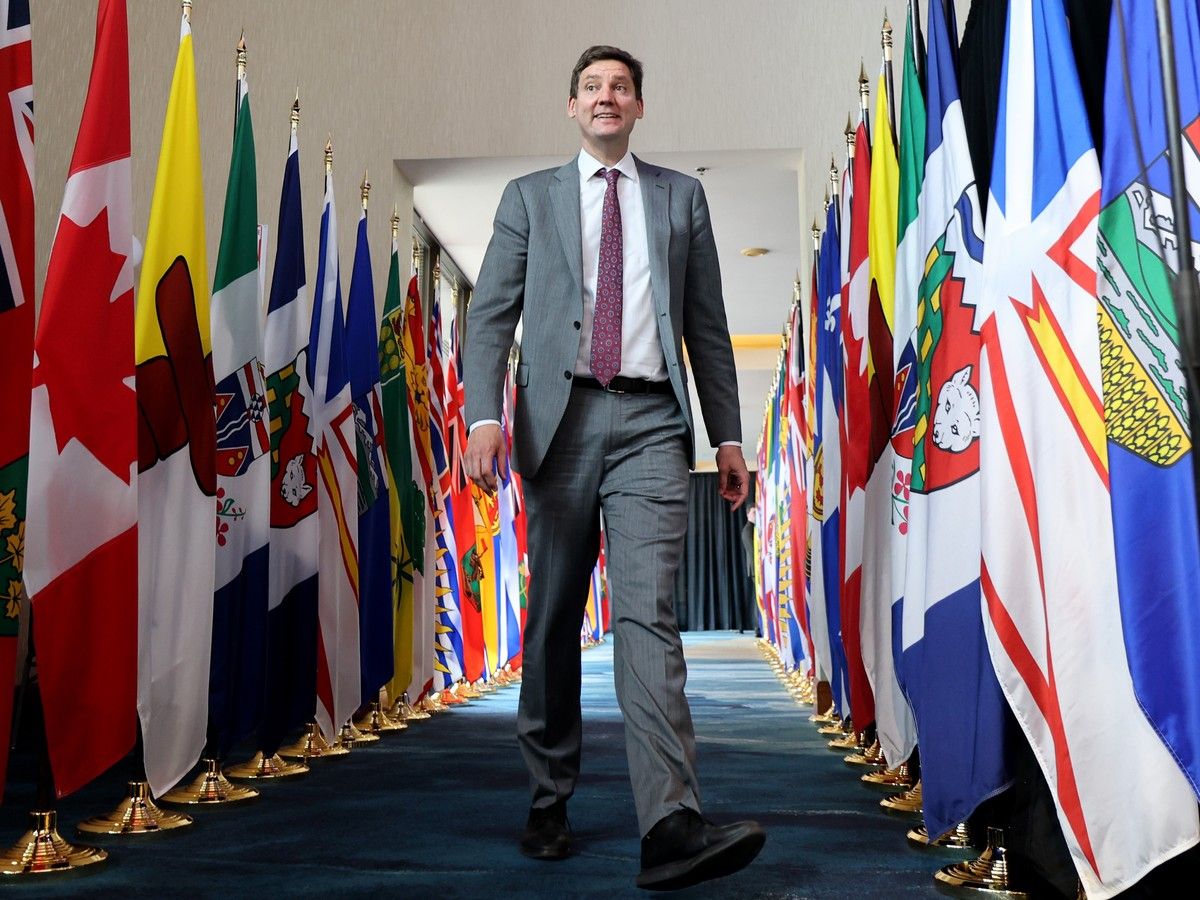
 B.C. Premier David Eby, left, and Prime Minister Mark Carney at a news conference in Vancouver regarding a pipeline deal, on July 2, 2026.

There is a notable shift in attitude on this point among past Conservative voters, with Angus Reid Institute polling from 2019 finding that 85 per cent of Conservative supporters said the economy should be left more to the free market. In contrast, half of CPC voters today say there’s a role for government ownership in pipeline infrastructure, with sovereignty amid U.S. President Donald Trump’s second term cited as a key factor.

This, the Angus Reid Institute says, partly explains an upward shift in the proportion of Canadians who say the federal government made the right decision when it purchased Trans Mountain for more than $4.5 billion in 2018. This figure now sits at 42 per cent, up from 34 per cent in February 2025 and 37 per cent in 2018.

That’s despite the project having cost the federal government more than $34 billion to complete — nearly five times as much as the original $7.4 billion forecast.

The survey findings come as the future ownership of the pipeline is being debated, with Trans Mountain and Canada Development Investment Corp. (CDEV) leadership recently arguing there is a case for Ottawa to remain a long-term owner .

At a Canadian Club Toronto luncheon in May, CDEV president and CEO Elizabeth Wademan said the pipeline “has incredible value,” adding, “There’s absolutely a case to be a long-term holder … I personally would love to see it owned by Canadians.”

 An oil tanker loads at the Westridge Marine Terminal, the ocean terminus of the expanded Trans Mountain pipeline in Burnaby.

Trans Mountain Corp., which owns and operates the pipeline, is a subsidiary of CDEV, which manages investments on behalf of the Canadian government and answers to the finance minister.

Previously, the federal government said it doesn’t intend to be the long-term owner and would eventually sell the pipeline to the private sector, Indigenous groups or a combination of the two.

Elsewhere, the Angus Reid Institute previously found that 63 per cent of Canadians support the pipeline from Alberta to B.C. , which would run along the existing Trans Mountain corridor, with economic arguments proving to be the most persuasive.

For example, 55 per cent of respondents said they support the pipeline because it helps Canada sell oil to markets outside the U.S., while 51 per cent cited the general importance of oil to the economy and 45 per cent were persuaded by the creation of jobs and economic growth.

On the other end of the scale, however, 41 per cent of respondents, including half of respondents in Quebec, felt the most persuasive argument against the pipeline was that Canada should be investing in renewable energy instead.

Meanwhile, 34 per cent said the economic benefits may not be concentrated enough to justify the project, and 30 per cent pointed to environmental and oil spill risk.

Support for the pipeline proposal was highest in Alberta, at 76 per cent, and lowest in Quebec, at 50 per cent.

The latest Angus Reid Institute Survey was conducted online from July 10–14, 2026, among a randomized, representative sample of 2,649 Canadian adults. It carries a margin of error of +/– two percentage points, 19 times out of 20.

Our website is the place for the latest breaking news, exclusive scoops, longreads and provocative commentary. Please bookmark nationalpost.com and sign up for our daily newsletter, Posted, here.


Ana Paula Kitterhing De Sousa was fatally stabbed by her ex-boyfriend, Michael Calvo, in her home in 2023.

Ana Paula Kitterhing De Sousa never missed a text message from her daughter.

But when Raquel Almeida Margulies texted a habitual “sweet dreams, mama,” at 10:28 p.m. on Oct. 15, 2023, the text was left curiously unanswered.

At 9:25 a.m. the next day, Raquel began to worry. “Ola, mama,” she texted again. No response.

The reason came later that morning when two Toronto police officers appeared at Margulies’ door. They asked her if she knew Ana Paula De Sousa.

“And then I knew,” says Margulies.

The night before, De Sousa had been stabbed to death by her ex-boyfriend, Michael Calvo.

Yet he would never face a criminal trial.

Two years after the killing, while Calvo was in custody awaiting trial, two psychiatrists determined that he had been suffering from a schizoaffective and opioid use disorder when he stabbed De Sousa 26 times.

As a result, Calvo was declared “Not Criminally Responsible” (NCR) by a court in October 2025.

“Not Criminally Responsible” is a finding that the accused has committed the crime but cannot bear criminal responsibility for it because they were unable to appreciate the wrongness of their actions due to mental illness. Killings that are found to be “NCR” make up an average of about three per cent of all homicides annually in Canada, data compiled by the Investigative Journalism Bureau shows.

De Sousa’s case is among 159 killings between 2018 and 2025 in which the perpetrator was determined to be NCR.

The IJB’s analysis of these cases reveals three major themes: repeated failures by the health-care system to act in the face of persistent red flags before the killings took place; the conspicuous role of cannabis as a unique driver of the mental-health crises that result in fatal violence; and the disproportionate targeting of women — especially mothers — who are killed after making repeated pleas to health-care workers to help their mentally ill child.

In about one-quarter of cases — 42 out of 159 — the perpetrator had been seen by a health-care worker about their mental health in the month before the killing. Fourteen of the killings happened within hours of that health-care intervention.

In 56 out of the 159 cases in the IJB’s database, cannabis was identified as a contributing factor to the onset or deterioration of the accused’s psychosis — a brain condition that renders the individual unable to understand what is real — according to the IJB’s analysis of court and review board transcripts.

The data shows women and girls are almost twice as likely to be victims in NCR killings as they are to be among homicide victims in general. They account for 46 per cent of the 159 victims in the IJB database, compared to 25 per cent (on average) of all homicide victims, according to Statistics Canada.

The data also highlights disturbing patterns in the time between the accused’s last contact with a health-care professional and when the killing took place.

NCR a controversial finding

The assessment to determine if a person can be found Not Criminally Responsible evaluates the accused’s mental state at the time of the crime.

It can be requested by the Crown, the defence or ordered directly by a judge, and is conducted by a forensic psychiatrist. It can take place ahead of trial or following a criminal conviction.

If the NCR assessment concludes that serious mental illness rendered the accused incapable of understanding the nature and wrongfulness of their actions, the defence argues an NCR finding should be made. The submissions are then legally tested in court, and the final decision to find someone NCR rests with the court.

If the NCR assessment was requested by the defence, the Crown can, and often does, retain its own forensic psychiatrist to conduct a second assessment.

In many cases, the IJB has found, the submissions for an NCR finding are made jointly by the Crown and the defence.

If the court finds an accused to be NCR, the person does not go to prison but instead is put in the care of a forensic mental health hospital, a secure facility that treats individuals with serious mental illnesses who have come into contact with the criminal justice system.

Each year, the patient’s status is reviewed by a provincial review board, which consists of hospital staff, attorneys, psychiatrists and a representative of the Attorney General. The review board evaluates their privileges and possible risk to the public. In many cases, they may be held in treatment for years. In many other cases, the person is eventually released.

Sometimes there are oversight conditions attached to this release. In other cases, there are no conditions for mandatory follow-up on release. This is known as an absolute discharge.

Some families of victims have expressed frustration with the systemic failures leading to the killing of their loved ones, and criticized what they feel is a lack of transparency around how NCR verdicts are reached and the inability to hear all the evidence in court.

In June, British Columbia Premier David Eby said the NCR system “is not working” and “re-victimizes the family that was affected,” after a man found NCR for the killing of his children in 2008 received a conditional discharge earlier this year.

Many experts who work inside forensic medical systems say that the issues around NCR findings are complex.

“Essentially every time that somebody is found NCR, that’s a failure of the civil mental health system because these people are known and they’ve fallen through the cracks,” says Dr. Patrick Baillie, a psychologist in an outpatient forensic program (Recovery Alberta) in Calgary.

“It’s unfortunately quite common” that individuals who are later found NCR have had “very recent contact” with the mental-health care system before they offend, says Richard Schneider, a clinical psychologist and a judge at the Ontario Court of Justice.

Schneider presided over Toronto’s Mental Health Court — a criminal court dedicated to those with serious mental health illnesses who are facing criminal charges — for many years.

He gives the health system a grade of C- on its ability to spot the red flags that could indicate a mentally ill person might pose a physical threat to others.

The IJB found one family attempting to hold the civil system to account in a $2.5-million lawsuit.

Melissa Duff-Shore had at least seven interactions with the Waterloo, Ont., mobile crisis team in the three weeks before she killed her 22-year-old daughter, Kayla Duff-Foley in 2020, according to the statement of defence filed by the Waterloo branch of the Canadian Mental Health Association (CMHA WW), named in the lawsuit.

Duff-Shore was declared NCR in May 2024.

Her mother and surviving daughter are now suing the police and CMHA WW, alleging the systems “showed a callous disregard and complete lack of care for the safety of the late Kayla Duff-Foley.”

They allege police and emergency responders had “talked Melissa Duff-Shore out of leaving her home despite her verbalized homicidal ideation … despite her repeated pleas for help,” the statement reads.

The statement of defence filed by the CMHA WW denies these allegations or “that there was any breach of duty, want of care or negligence on its part.” The mobile crisis team has contacted Melissa’s pharmacy to request a list of her medications a day before the killing, the statement of defence reads.

In response to the IJB’s questions about what protocols the CMHA WW relied on when responding to Duff-Shore’s pleas for help, organization spokesperson Megan Brandy declined comment, citing privacy and the fact that the matter is before the courts.

Duff-Shore’s mother and surviving daughter declined comment. Melissa Duff-Shore, contacted through her defence lawyer, did not respond to a request for comment. The Waterloo Regional Police Services did not respond to questions.

One 2015 study found that for someone who has gone through the forensic medical system after being found NCR, the likelihood of reoffending is dramatically lower than for offenders in the correctional system.

The study also says that an “NCR verdict does not mean the individual gets an ‘easy ride.’ In fact, quite the contrary as many NCR individuals actually spend more time in a mental health hospital than they would have spent in jail if convicted of a crime,” it concludes.

Fifteen people in the IJB’s database who were found NCR for a killing had been previously found NCR for other non-fatal crimes, such as assault, uttering threats and failing to comply with a court undertaking.

One of those was 20-year-old Josué-Nathan Weizineau . In 2020, Weizineau shot and killed his father while on a hunting trip, just a few months after receiving three separate NCR verdicts for acts of violence against several people, including pointing a firearm at a person.

It is unclear what, if any, conditions stemming from previous NCR findings Weizineau was under at the time of killing his father.

Weizineau was found NCR for his father’s killing in June 2022. He declined to comment on his NCR finding or his current condition.

Red flags missed

Twenty-five killings in the IJB database happened on the same day as a mental-health intervention.

Eleven of those involved police who conducted a wellness check or received a call about the accused’s behaviour.

Emily Appleyard called police for a wellness check for her boyfriend, Andywele Mullings , on the day he attacked her.

Mullings had been exhibiting paranoid delusions for weeks. He had recently spent a night in jail and was telling family and coworkers that Appleyard was trying to kill him.

The police found Mullings “not making sense,” “rambling” and sounding “possessed,” according to court records.

Nevertheless, they declined to apprehend him under the Mental Health Act, which gives police the power to take someone into custody without a warrant if they have a reasonable belief that a person has a mental disorder and presents a risk of imminent harm to themselves or others.

But the police did get Mullings to agree to go to a Vancouver emergency room, where a nurse determined that he needed “rapid medical attention” from a psychiatrist.

However, instead of getting care, Mullings was allowed to walk out of the ER at Vancouver Coastal Health Lions Gate Hospital.

One hour later, he returned to the home he and Appleyard shared and, within three minutes, had attacked Appleyard with a hammer.

She died of her injuries days later.

Mullings was charged with second-degree murder, but was never criminally convicted. A court found him NCR in 2023, concluding he had suffered from untreated schizophreniform disorder at the time he killed Appleyard.

The IJB did not receive a response to questions from Mullings’ lawyers, or from Lions Gate Hospital.

 An hour after Andywele Mullings walked out of the ER at Vancouver Coastal Health Lions Gate Hospital, he attacked his girlfriend with a hammer.

One of the conundrums facing health-care workers is that most people presenting to emergency rooms for mental-health issues don’t, in fact, go on to commit violence, says forensic psychiatrist Michael Seto of The Royal Ottawa Health Care Group. “It’s really hard to predict those super rare events.”

Still, he sees “opportunities for early intervention.”

“In a frontline situation, there is some key information that we should get that is really helpful in terms of identifying when we need to hold on to somebody, or when we need to be more actively intervening,” Seto says.

That includes identifying any history of violent altercations, substance misuse and paranoid delusions directed at specific people, such as caregivers.

“We do have valid methods for assessing risk of violence, but all of those require having adequate information and the time to do it properly,” says Seto.

“I don’t know about you, but my doctor visits are 10 minutes long. They’re not going to have the training or the information or the capacity to be able to do some kind of effective screening.”

 Dr. Michael Seto of The Royal in Ottawa: “We do have valid methods for assessing risk of violence, but all of those require having adequate information and the time to do it properly.”

The role of cannabis

Since 2018, prolonged cannabis use has been cited as a factor in the onset or deterioration of psychosis in 35 per cent of NCR killings: 56 out of 159 cases.

All but two of these 56 accused were male — most of them under 35 years old.

In 15 of the cases the IJB reviewed, substance use was cited by expert psychiatrists as the primary trigger for psychosis, which led to the fatal violence. Cannabis was usually paired with other substances, most frequently alcohol and cocaine.

A 2024 study from the International Journal of Drug Policy shows a two-to three-fold increase in the relative risk for psychosis among users of cannabis.

It also states that Canada’s legalization of cannabis came “without sufficient consideration of the potential impact on vulnerable persons such as youth and those with serious forms of mental illness.”

In addition, current forms of cannabis are more potent than in the past, experts say. The Canadian Medical Association Journal says the potency of cannabis has “roughly quintupled in the past two decades, from around four per cent in the 2000s to more than 20 per cent in most legal dried cannabis in Canada by 2023.”

It also notes that high-potency, regular cannabis use has been linked to a higher risk of psychosis, and that this can increase the risk of schizophrenia.

Thomas Hamp says he used cannabis from the time it was legalized in 2018 until two days before he stabbed his girlfriend, Emily Sanche, in the chest with a kitchen knife in February 2022.

Hamp was charged with second-degree murder, but was later assessed by a psychiatrist, who concluded that he was on the schizophrenia spectrum and had a cannabis use disorder.

Hamp was found NCR for Sanche’s killing in 2025.

In an interview with the IJB from the Saskatchewan North Battleford Hospital where he is being held and treated, Hamp described how during his relationship with Sanche he was using daily high-potency cannabis with up to 22 per cent THC content from a dispensary.

Months before he killed Sanche, Hamp says, he began having paranoid delusions about secret police he believed were watching them, court records say.

Over four months, there were multiple ER visits and psychiatric appointments during which Hamp says he “downplayed the seriousness” of his delusions and told doctors he was taking his medications, “which was a lie.”

He says the doctors never raised concerns about his cannabis use, but Sanche, court records show, believed that it was contributing to Hamp’s mental health symptoms.

Days before killing Sanche, Hamp claimed in court he had quit cannabis, but his symptoms continued, the documents state.

Sanche made a final call to the Saskatoon Crisis Intervention Service on Feb. 19, 2022.

Just hours after the call with the crisis line concluded, Hamp stabbed Sanche in the apartment they shared.

Sanche died from her wounds on March 16, 2022.

Hamp has his next annual appearance before a review board in late fall 2026, according to his family.

 “The evidence is that (cannabis) makes it more likely you’re going to develop psychosis,” says researcher Michelle West.

Most people aren’t aware of the increased risk of psychosis among cannabis users, says Michelle West, a University of Colorado researcher and clinician specializing in psychosis in young people.

In more than 40 per cent of the cases where drug use had an impact on the accused’s symptoms, the person started using at or before the age of 15.

West says she has treated children as young as 11. Some already have symptoms of psychosis.

“The evidence is that (cannabis) makes it more likely you’re going to develop psychosis, that it will develop at an earlier age and that you’ll have a worse course of illness and that it will be a barrier to treatment engagement,” West says.

Women as main targets

For months before her mother’s killing, Raquel Almeida Margulies had watched her “best friend,” Ana Paula Kitterhing De Sousa, navigate the drug addiction and aggressive behaviour of her boyfriend, Michael Calvo.

De Sousa was fearful but also felt responsible for Calvo as one of his few close relationships, Margulies said in an interview.

Margulies says Calvo called and messaged her mother incessantly, verbally abusing her and acting erratically while taking drugs.

De Sousa eventually ended her relationship with Calvo, but he continued to contact her.

On Oct. 15, 2024 Calvo called De Sousa several times while Margulies was visiting her mother.

When De Sousa finally answered, Margulies says she could hear Calvo screaming and swearing at her mother until she hung up.

“I looked at my mum and said, ‘Mama, promise me you’re not going to see him anymore.’ She said, ‘I promise,’” says Margulies.

“I left her house at 6:30 p.m. that day. My understanding is that he called and said ‘I’m going to kill myself unless I see you.’ By 10 p.m., she was dead.”

Calvo’s lawyer told the IJB, “Mr. Calvo does not accept the characterization of events (set out by reporters) nor does he wish to provide any further comment or be interviewed.”

Experts say mothers, wives and girlfriends often are forced into the position of advocating for loved ones in mental-health crises, placing them at a heightened risk of being targeted in domestic violence.

 Raquel Almeida Margulies fears what may happen in future if Michael Calvo, found NCR in the killing of her mother, is ever released.

The IJB database reveals women and girls account for 46 per cent of victims of homicides committed by people later found not criminally responsible — 73 out of 159. This is almost double the percentage they make up among homicide victims overall.

In 52 out of the 87 cases in which the IJB was able to identify the last person who sought medical help for the accused, that person was a woman.

“We know that in health and other contexts, women frankly aren’t listened to in the same way. It’s frustrating,” says Seto, who consults on NCR cases.

Mothers are especially at risk of being killed by their sons in NCR homicides.

Matricides make up 32 of the 73 female killings in the IJB’s database — the single largest victim demographic for NCR killings overall.

Kevin Webster killed his mother, Moirin, with an axe in her Gibsons, B.C. home where he temporarily resided in December 2020.

More than two years later, a B.C. court found Webster was in the midst of paranoid delusions when he killed his mother. He was declared NCR.

Court documents detail years of failed treatment attempts for Webster’s schizophrenia that forced his mother into the dangerous position of being his caregiver.

In 2019, Webster was admitted to hospital at least seven times for mental health reasons.

Then, three weeks before killing his mother, Webster was involuntarily admitted to a psychiatric ward for six days. He was then released into Moirin’s care.

In the 48 hours before the killing, Webster sought mental health help three times at an emergency room.

“He was unwilling to say why he was there and left without seeing a doctor,” court records state.

Webster’s lawyer did not respond to requests for comment.

During Webster’s NCR hearing, a forensic psychiatrist described Moirin as her son’s “strongest advocate.”

The court heard an extract from a February 2019 letter Moirin had written to her son’s then-community care team, voicing her “greatest concern” that Webster might harm himself or a member of his family when in the throes of his delusions.

“It would not only be tragic, but would be another blow to the stigma and fear associated with poor mental health, schizophrenia most of all,” reads her letter.

“God (forbid) that anyone … should come to any kind of harm.”

‘Revolving door’

Among dozens of failed mental-health interventions captured in the IJB database are hospitalizations that occurred prior to the killing. In these cases, the accused relapsed into psychosis shortly after release from hospital.

Mitchell Arnott stabbed and killed both of his parents, Wayne and Louise, just five days after being released from the psychiatric wing of the Montreal General Hospital.

He had been there for two months after he assaulted his former intimate partner, an act for which he had been found NCR. Before that, Arnott had also been accused of stabbing his former roommate; breach of a bail condition; and a 2021 assault charge involving his father, according to court documents.

“I begged the doctor, explaining that my brother wasn’t ready to be released, but they discharged him anyway,” said Wayne and Louise’s daughter in a victim impact statement.

She described almost a decade of her family being trapped in a “revolving door phenomenon” with hospitals, police and courts.

Over eight years, she watched Arnott being sent to hospital for treatment, then being released after a brief period of lucidity, only to stop taking his medication and be re-admitted. “Over the years, I lost count of the hospitalizations where a doctor promised a different outcome,” reads her statement.

Arnott was also found NCR for the killings of his parents in January 2025.

Contacted through his lawyers and the forensic hospital where he is currently being held and treated, he declined to comment.

As with all individuals whose cases are put under the management of the review board, it is unclear when Arnott will be released.

According to one 2021 study which analyzed all NCR outcomes, including for non-fatal crimes, NCR patients are less likely to be released from detention or supervision compared to offenders convicted in the correctional system.

“Results showed that, on average, NCRMD (not criminally responsible on account of mental disorder) accused received detention dispositions more frequently and had longer periods of detention and supervision than convicted offenders,” the study said.

But Baillie, the psychologist in Calgary, says that in the case of violent offences, he believes absolute discharges should not be permitted.

 Dr. Patrick Baillie says those declared NCR who have committed violent offences need proper supervision and support if released.

“In an environment without adequate community support services, it’s either a hospital or nothing and in the nothing cases, you end up with somebody who may be acutely ill who is not being supported,” says Baillie.

A better system, he added, would ensure that even after discharge, “you’re meeting with your psychiatrist regularly and making sure that your medications or other treatment are still effective for you.”

‘Misogyny is misogyny’

The devastation of the NCR decision in her mother’s killing continues to haunt Raquel Almeida Margulies, who says she was blindsided by the outcome.

“I would have loved our shot in court. I would have loved to hear the case, hear all of the evidence,” she says, while adding she believes that “people deserve help” and safe rehabilitation where possible.

But, in her mother’s case, she believes “there’s a pattern that stems beyond any clinical diagnosis, in my opinion.

“Misogyny is misogyny whether or not you are schizophrenic.”

It’s a question many critics have about the NCR system: Can you be sure someone isn’t responsible for their actions and not using mental health as an excuse to avoid jail?

“It’s not easy to convincingly feign psychosis,” says Dr. Sandy Simpson, a senior scientist at the Centre for Addiction and Mental Health (CAMH) in Toronto.

“It’s easy to say ‘Oh, I’m hearing voices and the voices made me do it.’ But those voices come in a context,” he says, adding that assessing a person in multiple ways over a period of time, as well as cross-checking with other information helps test whether their claims have the ring of truth.

“It is possible and very occasionally it (malingering) occurs, but it is very rare.”

Simpson says he doesn’t overall see an upside to someone lying to be declared NCR for any crime because the lie can become a significant barrier to ever being released.

“Occasionally you do get people who say, ‘Well, actually that never happened … I only made it up to get in here,’” he says.

“But that creates an impossible dilemma for the treating staff. So, what do I (the doctor) do? Do I believe the person who’s telling me now ‘I lied back then,’ or how do I tell if they are not lying now? There is no easy way out of that.”

Calvo’s Ontario Review Board documents state that upon arrival at the forensic hospital following Calvo’s NCR finding, he “has shown no symptoms of depression or psychosis … hallucinations, paranoia or delusions of reference, has not required seclusion, and has not been involved in any incidents of violence or aggression.”

They also note, however, that Calvo is in the “early days” of his treatment and that he is accomplished at “masking symptoms and appearing more well than he is.”

In June 2026, eight months after the NCR finding was made, Margulies received a call from the RCMP telling her Calvo had been granted day passes to leave the forensic hospital where he is currently being treated.

Margulies has no idea when Calvo might be fully released, but worries that sometime in future she “could be at my mom’s favourite restaurant and he could be having a beer beside me.”

The handling of the case has left her questioning the justice system.

“There’s this idea that good overcomes evil. When bad things happen, there are consequences. I feel like that very foundational understanding of things was just ripped away from me,” says Margulies.

“I feel like I’m existing in this world of trying to feel safe.”

— With files from Dori Seeman.

The Investigative Journalism Bureau (IJB) at the University of Toronto’s Dalla Lana School of Public Health is a collaborative investigative newsroom supported by Postmedia that partners with academics, researchers and journalists while training the next generation of investigative reporters.


The A. Grenville and William Davis Superior Court of Justice in Brampton, Ont.

An Ontario man who pimped out an 18-year-old and then later impregnated her was recently sentenced to one additional day in jail on top of what he’d already served.

Hamed Khogyani, 47, pled guilty in Ontario’s Superior Court of Justice to procuring her to offer sexual services between April 2015 and March 2018, and obtaining a material benefit knowing it was a crime.

Khogyani had spent 271 days behind bars before his sentencing. But the judge credited him with having served 557 days of pre-trial custody, noting Khogyani was on house arrest bail for 596 days before his sentencing and also spent time in harsh conditions at a Milton, Ont., jail.

“He served 44 days of his sentence in lockdown at the Maplehurst Detention Centre. He was also triple bunked for 49 days. He is entitled to mitigation of his sentence for that fact. The terrible conditions of incarceration which persist at that institution are all too well known in this jurisdiction,” Justice Michael Derstine wrote in a recent decision.

The court heard Khogyani convinced the woman to work for him in the sex trade in 2015, when she was 18 and he was 38.

“The two engaged in a sexual activity,” and she eventually agreed to work for Khogyani, said the decision, which notes they began living together in Richmond Hill.

She was already working in the sex trade before they met, said the judge, “and he took advantage of her youth and drug addiction to perpetrate the crimes for which he has pled guilty.”

She “worked out of the Homewood Suites in Vaughan and other hotels in the area,” said the decision.

Khogyani would drive her to the hotels or pay for her Uber and supply her with drugs.

She “provided money earned through the sex trade to Khogyani,” said the decision.

When she didn’t want to prostitute herself, Khogyani “would influence her to continue working in order to earn more money,” said the decision, which notes she continued using drugs and alcohol.

Khogyani took photos of her “that were used in sex trade ads,” said the decision.

She “eventually became pregnant with Khogyani’s child,” it said.

While pregnant, she moved into Khogyani’s family home.

He “influenced (her) to continue to work in the sex trade while she was pregnant and after giving birth to their child by convincing her that they needed the money for their family,” said the decision.

They argued, and she eventually left the relationship.

“It is agreed that during the two-year period she worked in the sex trade for Khogyani, she earned at least $20,000 and turned over that money to him.”

When the woman met Khogyani, she “was in a very vulnerable place in her life,” said the decision.

“She felt like she had few options and from the beginning she believed what he was telling her. With the benefit of hindsight, she can see how his manipulation started almost immediately. He would criticize her appearance sending her videos and the like for her to improve her appearance. He made her feel as if she was never good enough.”

Khogyani’s comments “created years of insecurity and self-doubt,” said the decision.

“By the time she left him she could barely go grocery shopping without having an anxiety attack. She constantly heard his voice in her head criticizing her and making her doubt herself. He played a significant role in her addiction by providing substance and encouraging their use and normalizing that lifestyle throughout their relationship. She has a strained relationship with the daughter she bore to the accused and tragically her daughter reproaches her for having her father be in custody.”

The age gap between the woman and her daughter is similar to the one between her and Khogyani, she testified.

“As a mother, I cannot imagine pursuing someone that young. It has made me realize even more clearly how predatory his behaviour was. I was young and vulnerable and this allowed me to be manipulated, isolated, and exploited for his own benefit,” the woman said.

She asserted that the damage Khogyani caused can’t be measured by the years she spent with him.

“It includes the years of treatment, the loss of confidence, the trauma, the anxiety, the impact on my parenting, the damage to my relationship with my daughter, and the lasting effects on my daughter and family,” she said. “While I am proud of how far I have come, I should never have had to fight so hard to recover from the harm he caused.”

She asked that the sentence imposed on Khogyani “reflect the seriousness of the harm caused and the lifelong consequences that continue to affect me and my family.”

The Crown argued he should be sentenced to three to four years behind bars, less credit for time served. Khogyani’s lawyer “asserts that given the time he has served and the mitigation from aspects of his time in custody and on bail, he has served sufficient time and ought to be released,” Derstine said in his July 17 decision.

Khogyani’s lawyer said his client turned his life around after his daughter was born in 2017. He was working as an assistant operations manager at a housekeeping company when he was incarcerated in October 2025.

The judge sided with the defence, pointing out that Khogyani has had sole custody of his daughter since 2020, and helps to care for his elderly parents.

Khogyani was born in Saudi Arabia. He moved to Canada with his family when he was 17. His parents both live in Mississauga and have significant health issues. The father is 91 years old, and has dementia and heart disease, requiring full-time supervision and care, while the mother has Parkinson’s disease, heart disease and has suffered from strokes.

“Despite those issues his mother is currently acting as the primary caregiver for both her husband and the nine year old daughter of the relationship between he and the victim,” the judge said.

It isn’t “necessary to incarcerate him further,” said the judge, adding that the “principle of restraint” played a role in his decision.

“I therefore sentence him to one day in custody.”

Before Khogyani was incarcerated, he was “residing with his parents and was contributing significantly to their care,” said the decision. “His departure has put the family under enormous strain as his mother has had to take up the reins even in the context of her poor health. The loss of income that he was earlier providing was also difficult for his parents.”

His daughter “has not been doing well since” Khogyani has been in custody, said the decision.

“The principal at her public school swore an affidavit indicating among other things that her separation from her father appears to have exacerbated her pre-existing issues. She reports that the accused was present and actively engaged in the raising of his child and participated actively in her life at school.”

Khogyani expressed “his sincere remorse” and accepted “full responsibility for the actions that led to his convictions,” said the decision.

“He asserted that he deeply regrets the decisions that he made and accepts responsibility for his participation and the consequences which have followed.”

He described “raising their child and how this has been the most important responsibility of his life,” said the judge. “He spoke of the fact that over the last 10 years he has worked to live a responsible and law-abiding life. I accept that he was being sincere and remorseful for his actions.”

This is “an unusual case” in that Khogyani and the woman “lived together and had a child together and were in many respects in a committed relationship during the currency of most of the crimes to which he has pled guilty,” Derstine said. “The defence asserts that this places him on the lower end of the continuum of severity because their relationship was not purely commercial and not purely exploitive. The difficulty I have with this submission is that encouraging someone with whom you are an intimate partner relationship to continue to sell sexual services for money has elements of a breach of trust which sit uncomfortably with a mitigating aspect for sentencing.”

On the flip side, they were “in a committed relationship and it appears that a substantial amount of the money that was earned went into paying common expenses in that relationship,” said the judge. “This was not a situation where the perpetrator was buying luxury goods while his victim worked in squalor and hotel rooms. The victim in this case did perform work in hotel rooms but for much of her time stayed in a house with the offender.”

There’s no indication Khogyani “used violence against the victim and no indication that he confined her,” said the judge. “He did persuade her to work when she did not want to but persuasion, even if morally odious, is not the same as confinement. He persuaded her to work while she was pregnant, and I take this as an aggravating feature.”

“Fundamentally, given the passage of time of some nine years since the date of the offence and his pro social life since then, combined with the very real need of his parents and child to see him no longer in custody, considering his guilty plea, his remorse, his lack of criminal record, and his support in the community, I find that it’s not necessary for him to serve further time in custody to fulfil the goals of sentencing,” Derstine said.

Our website is the place for the latest breaking news, exclusive scoops, longreads and provocative commentary. Please bookmark nationalpost.com and sign up for our daily newsletter, Posted, here.


President Donald Trump welcomes Canadian Prime Minister Mark Carney outside the White House.

Mark Carney’s teleprompter quit during a housing announcement in Toronto on Wednesday, and the prime minister used the pause to take a shot at Donald Trump.

“I would like to inform you that the teleprompter has ceased to function,” Carney said. “Unlike a certain world leader, I do not view this as a conspiracy.” The crowd laughed.

Carney did not name Trump, however, last September, the U.S. president’s teleprompter failed during his address to the United Nations General Assembly , and he said afterward that he had been sabotaged.

Trump listed three problems from that visit. An escalator he and first lady Melania Trump had stepped onto stopped, the teleprompter went out and he said the sound was off. He told the assembly that whoever was running the prompter was “in big trouble,” then read from paper until it came back on.

He later called it “triple sabotage” in a post on Truth Social , demanded an investigation and said those responsible should be arrested. Stéphane Dujarric, spokesman for the UN secretary-general, said in a statement that a videographer from the U.S. delegation, moving backwards up the escalator ahead of the couple, may have set off a safety mechanism that brought it to a stop.

The Toronto event was a housing announcement with Mayor Olivia Chow. Carney also faced questions on the 50 per cent U.S. tariff set to hit a range of Canadian goods on Aug. 19 and said he is “very involved” in the negotiations.

Trump was in Las Vegas later the same day, speaking about tax cuts ahead of November’s midterm elections. He turned to tariffs and ran through countries he said had used them against the U.S., among them China, Japan, South Korea, Germany and Canada.

“I love the people, but they’re nasty,” Trump said of Canada. His remarks came after Carney’s, but there was no indication he had heard the prime minister’s joke.

Carney had tried the joke before. At a Greater Vancouver Board of Trade event in May, he started a teleprompter line about a conspiracy theory and stopped short of telling it.

“Happens, it happens,” he said, laughing, The Hill reported . “I’m not going to go into the — I’m not going to say who I — you know what, there’s a teleprompter joke I could tell about a conspiracy theory, but I think I, it’s probably not….”

On Wednesday, he finished it.

Our website is the place for the latest breaking news, exclusive scoops, longreads and provocative commentary. Please bookmark nationalpost.com and sign up for our daily newsletter, Posted, here.


A man surveys the damage done to the Nöam Restaurant on Décarie Blvd. in Montreal in a suspected arson attack, on Saturday, Aug. 1, 2026. (John Kenney/Montreal Gazette)

The owners of Nöam, a kosher restaurant in Montreal that was extensively damaged by fire in the early hours of Saturday morning, are urging the public not to jump to the conclusion that it was an act of antisemitism.

Montreal police are investigating the fire as a suspected arson and have not yet publicly established a motive, said co-owners Ynon Cohen and Meir Azerad in a statement emailed to National Post.

“We understand why people were so quick to frame this as an open and shut case of antisemitism, but we at Nöam are actively fighting the urge to declare certainty before all the facts are known,” the restaurant’s manager, Tzvi Harrison, told National Post in an email on Wednesday. “We are trying to be guided by truth rather than fear … We know people are scared and feel the inarguable tear in the social fabric of the Montreal Jewish community, but until we know that this is a case of antisemitism, we continue to urge everyone to follow the facts.”

While Nöam is proudly Jewish-owned and kosher, say Cohen and Azerad in their statement, it was created as a welcoming space for the entire Montreal community.

“Nöam was never simply a restaurant,” Cohen says. “It became a place where families celebrated birthdays, couples went on dates, friends gathered, and people from every background sat together around the same table. It was a community place, a place filled with warmth, laughter and life.”

Harrison says that the community “came in droves Saturday, immediately from synagogue and after Shabbat ended, sharing their condolences and wishing us the best. (And) since Sunday morning we’ve received thousands of messages. Many … wanted to see what they could do to help. Businesses reached out to us offering their properties free of charge so we can potentially do a popup if we wanted. And we received calls from people around the world who had never heard of Nöam.”

Cohen and Azerad have established a GoFundMe page to help rebuild the business. “While insurance may help with some of the losses, it cannot replace years of hard work, nor can it fully cover the immense cost of rebuilding a business from the ground up,” they say on the page.

“Someone from the community started a GoFundMe for us, so we hopped on that and have seen tremendous support,” says Harrison. By the end of Wednesday almost $42,000 of the sought-after $250,000 had been raised.

“Regarding where the funds will be going, the place is completely gutted,” notes Harrison. “We have repairs, staff salaries, appliances, bills, etc., that insurance alone cannot cover entirely. For example, we redid the entire pipe system on Friday, less than 24 hours before the arsonist set fire to it.”

Nöam has been in contact with the police and awaits further updates, says Harrison. “Thankfully, businesses and homes nearby have come forward with footage that is being analyzed as we speak.”

Meanwhile, Cohen and Azerad are asking the public and media to “respect the integrity of the police investigation and to refrain from spreading unverified information.”

Our website is the place for the latest breaking news, exclusive scoops, longreads and provocative commentary. Please bookmark nationalpost.com and sign up for our daily newsletter, Posted, here.


Prime Minister Mark Carney during a housing announcement at a construction site in Scarborough, Ontario on Wednesday, August 5, 2026.

OTTAWA — Prime Minister Mark Carney said he is “very involved” in negotiations with the U.S., as a new 50 per-cent U.S. tariff is set to hit a host of Canadian goods in just two weeks.

“We’re in the middle of negotiations, and Minister Leblanc, Janice Charette, who’s our chief negotiator, are in Washington as Ambassador Wiseman, obviously there, in a series of meetings related to this,” said Carney, during a press conference in Toronto on Wednesday. “I’m very involved in this as well, and we’ll see.”

Carney said the Canadian negotiating team remains focused on providing some relief for Canada’s strategic sectors that currently face Section 232 tariffs, which include aluminum, steel, autos, pharmaceuticals and lumber.

When a reporter during Wednesday’s press conference asked why autos have not been a focus in current trade discussions with the U.S., Carney dismissed the premise of the question.

“You don’t know that,” he replied. “I know what’s being discussed, I’m part of those discussions.”

Carney later said autos were “very much” at the core of negotiations with the U.S.

Earlier this month, the U.S. administration announced it plans to use Section 338 of the Tariff Act of 1930 to impose a 50 per-cent levy on Canadian goods, set to take effect on Aug. 19. The new tariffs will not apply to potash, energy, fish, or other goods already facing separate sector-specific tariffs. The Section 338 tariffs will also apply to CUSMA-compliant goods.

The U.S. has cited Canada’s dairy quotas, U.S. alcohol bans in some provinces, and tariff quotas on American autos as the reasons for its latest trade action. The list of Canadian products affected by the tariff range from cement, clothing, sports equipment to alcohol products.

In response, Carney said he and the president agreed to “intensify” trade discussions. Carney has also not ruled out retaliation, should the Section 338 levies come into effect. Canada’s premiers have floated several ideas, including leveraging potash, energy and critical minerals exports to the U.S.

Carney ruled out cutting oil exports to retaliate against U.S. tariffs during a press conference with Alberta Premier Danielle Smith in Red Deer, Alta., last week.

In French, the prime minister also talked about maintaining a hard line, should an agreement not be reached with the Americans.

Canada-U.S. Trade Minister Dominic LeBlanc and Chief Trade Negotiator Janice Charette met with United States Trade Representative Jamieson Greer last week in Washington and are again in the U.S. capital this week.

LeBlanc and Charette met with the National Association of Manufacturers’ President and CEO, Jay Timmons, on Tuesday. They also met with Republican Senators Kevin Cramer and Bill Hagerty on Wednesday.

The new tariffs are expected to hit five per cent of Canadian exports to the U.S., the equivalent of $29 billion in trade.

National Post

Our website is the place for the latest breaking news, exclusive scoops, longreads and provocative commentary. Please bookmark nationalpost.com and sign up for our newsletters here.


Federal Court of Canada sign hangs above the door frame inside the Supreme Court of Canada building in Ottawa on Wednesday, Feb. 18, 2026.

OTTAWA — A Federal Court judge cancelled an “unreasonable” order to release an accused murderer and international fugitive with alleged ties to India’s infamous Bishnoi gang pending the end of his immigration legal process.

In a stern decision issued Monday, Federal Court judge Phuong T.V. Ngo slapped down a decision by the Immigration and Refugee Board of Canada ordering the release of Karamveer Singh on certain conditions while he fights a deportation order against him.

Ngo found that the release decision failed to account for many serious concerns with the provenance of over $100,000 in bonds for his release by his two sisters. She also noted that the conditions for Singh’s release did not assuage ongoing concerns that he is both a flight risk and a “danger to the Canadian public.”

“The Decision does not provide reasons that justify the sisters’ credibility, and thus, their suitability as bondspersons and ability to exert any control over their brother. Without sufficient reasons, the Court cannot conclude that there was an analysis sufficiently robust to ensure that the public will not be exposed to any material risk of harm,” wrote Ngo.

Ngo’s ruling makes it clear that Singh’s proceeding isn’t your run-of-the-mill deportation case. In immigration court, Singh has denied all the allegations of wrongdoing against him.

Singh fled India in 2019 while released on bail after he was charged with murder, a charge he denied and claims is linked to political persecution. “(Singh) was charged with murder in India and absconded bail, leaving the country before trial. He is an international fugitive of justice,” reads Ngo’s decision.

He is also allegedly a member of the Bishnoi gang, a transnational criminal organization listed as a terrorist entity by Ottawa last fall due to its links to a slew of violent crimes in Canada in recent years.

In fact, U.S. FBI documents presented by the federal government in court go as far as suggesting Lawrence Bishnoi personally tasked Singh with “taking care of his brother in the U.S.,” according to a separate Federal Court decision on Singh’s case in July. The documents were first reported by CBC last month.

The FBI documents also suggest that Singh allegedly ordered a shooting and arson at the Victoria-area residence of popular Punjabi musician AP Dhillon in September 2024.

“This evidence… also notes that the FBI received information that Mr. Singh financed a jewelry store in Brampton owned by (his brother-in-law Gurdeep Singh) Dhaliwal and linked to the Bishnoi Gang’s operations,” reads the July Federal Court decision, which is also referenced by Ngo.

According to court records, after spending some time in the U.S. and Mexico, Singh entered Canada by foot between ports of entry in Quebec in January 2025 and made a refugee claim. But his request was quickly denied after it was discovered that he had already made such a claim in the United States.

The federal government began deportation proceedings against him, which are ongoing. Then on April 2, 2026, he was detained by border agents for removal because he was deemed both a flight risk and a danger to the public. Over the next month, the border agency would report that he had failed to report his criminal charges in India and the fact he was an international fugitive, as well as his alleged links to the Bishnoi gang.

“Mr. Singh vigorously denies these allegations and describes his interactions with members of the Bishnoi gang as merely ‘social contacts’ — rather than membership — that he regrets ‘heavily’,” reads a previous court decision in Singh’s case.

Then in June, a member of the Immigration and Refugee Board (IRB) agreed to release Singh from detention on certain conditions, including a $100,000 bond posted by one of his sisters and her husband Gurdeep Singh Dhaliwal. But CBSA said it was never able to appropriately trace the source of the funds being used for the cash bond and refused it.

So in July, another IRB member looked at Singh’s release plan as well as a renewed plan by Singh’s bondspeople to put up a $110,000 bond — including $10,000 in cash — and watch him while on house arrest.

Again, the IRB member granted Singh’s release despite there being many contradictions in the bondspeople’s testimonies and Singh remaining a flight risk and threat to the Canadian public, Ngo wrote. So, the Federal Court judge deemed the second IRB release order as “unreasonable” and quashed it.

Neither Singh’s lawyer nor a spokesperson for Public Safety Canada responded immediately to a request for comment.

The RCMP has said that the Bishnoi gang operates clandestinely in Canada, conducting violent crimes on behalf of the Government of India. The Bishnoi gang is led by infamous Indian gangster Lawrence Bishnoi, who operates a network of violent criminals from Indian prison.

Lawrence Bishnoi gained notoriety back in May 2022, when the gang allegedly murdered prominent Punjabi singer and rapper Sidhu Moosewala in Punjab. Police said Bishnoi’s colleague, Goldy Brar, allegedly orchestrated Moosewala’s killing from Canada.

The Bishnoi group has also claimed responsibility for attacks on the homes of two prominent Punjabi singers, AP Dhillon and Gippy Grewal, in B.C., over the past two years.

National Post

Our website is the place for the latest breaking news, exclusive scoops, longreads and provocative commentary. Please bookmark nationalpost.com and sign up for our daily newsletter, Posted, here.