LP_468x60
on-the-record-468x60-white

Polling aggregator 338 Canada projects Federal NDP leader Jagmeet Singh has only a four per cent chance of being re-elected.
(Photo by Jason Payne/ PNG)
(For story by Sarah Grochowski) [PNG Merlin Archive]

Neither the NDP nor the Green Party of Canada are expected to form government after April 28, and now it’s forecast that respective leaders Jagmeet Singh and Elizabeth May are in danger of losing their B.C. seats to a Liberal and a Conservative.

In Singh’s riding of Burnaby—South, poll aggregator

338Canada

projects Liberal candidate Wade Wei Lin Chang to win with 38 per cent of the vote. Singh is forecast to finish third with 29 per cent behind the Conservatives’ James Yan, who clocks in at 32.

The margin of error for each projection is eight percentage points.

When first elected for Burnaby South in 2019, Singh

took almost 38 per cent

of the vote. He increased it to 40 per cent in 2021, per Elections Canada.

At the time of prime minister Justin Trudeau’s resignation, 338Canada’s data gave him just over a 70 per cent chance of reclaiming his seat. In the following weeks, his odds fell and the likelihood of a Conservative win improved, only for both to be significantly overtaken by the Liberals once Mark Carney won the leadership.

If Thursday had been election day, Singh had a four per cent chance of being re-elected while Chang’s odds of turning the historically orange seat red were 81 per cent, per 338Canada.

Why Jagmeet Singh lost his cool during the French-language debate

Former NDP leader Thomas Mulcair said this week that Singh should surrender leadership if the party lose official party status.

Before the election was called, the party held 24 seats in the House, but polls since Trudeau’s departure show support dwindling much like Singh’s own fortunes. An election held on Thursday would yield just eight seats,

338Canada

projects. Twelve seats are required to maintain status.

“He’s got to ensure he gets it,” Mulcair said during

a CTV panel segment.

“I think he’s serene in his understanding of what it might mean for him, and I’m not getting any indication that he’s intent of fighting to stay on.”

Singh has been pointedly asked about his future during campaign stops.

In Winnipeg on Thursday morning

, when it was put to him that his leadership is on the line, Singh replied, “What’s on the line in this election are working people and everyday families. That’s what I’m focused on.”

On Wednesday, during

a campaign stop in Edmonton

to pitch the party’s national rent control program, Singh was asked by reporters what kind of metric he’s looking for to justify staying on as leader.

“I’m never going to stop fighting for these people. I’m never going to back down,” he replied in an answer more focused on the rent issue of the day.

It was the same

a day earlier in Vancouver

, where he insisted his only focus is the remaining campaign ahead and not what happens after.

Burnaby Central was established following the 2022 federal electoral boundaries redistribution, making it a new riding for 2025. And while it still consists of much of Singh’s original riding, it now encompasses parts of what were once Burnaby North—Seymour and New Westminster—Burnaby.

Since 2015, the latter has been held by New Democrat Peter Julian, who is now seeking re-election in New Westminster-Burnaby-Maillardville.

338Canada

gives him a 49 per cent chance of winning, but he’s in a dog fight with the Liberals’ Jake Sawatzky (45 per cent).

Burnaby North—Seymour, meanwhile, has been a Liberal seat occupied by Terry Beech since 2015, but never without stiff NDP competition at the polls.

Beech wants to go back to Ottawa, and

338Canada

gives him 99 per cent chance to win.

May not ready to retire

Meanwhile, across the Strait of Georgia in Saanich—Gulf Islands, May is trailing Conservative candidate Cathie Ounsted as the campaign winds down.

As of Thursday, the long-time Green leader and member of parliament is deadlocked at 34 per cent with her Tory opponent, with respective margins of error of eight and seven percentage points, per

338Canada

. Liberal David Beckham is not far behind with a projected 24 per cent.

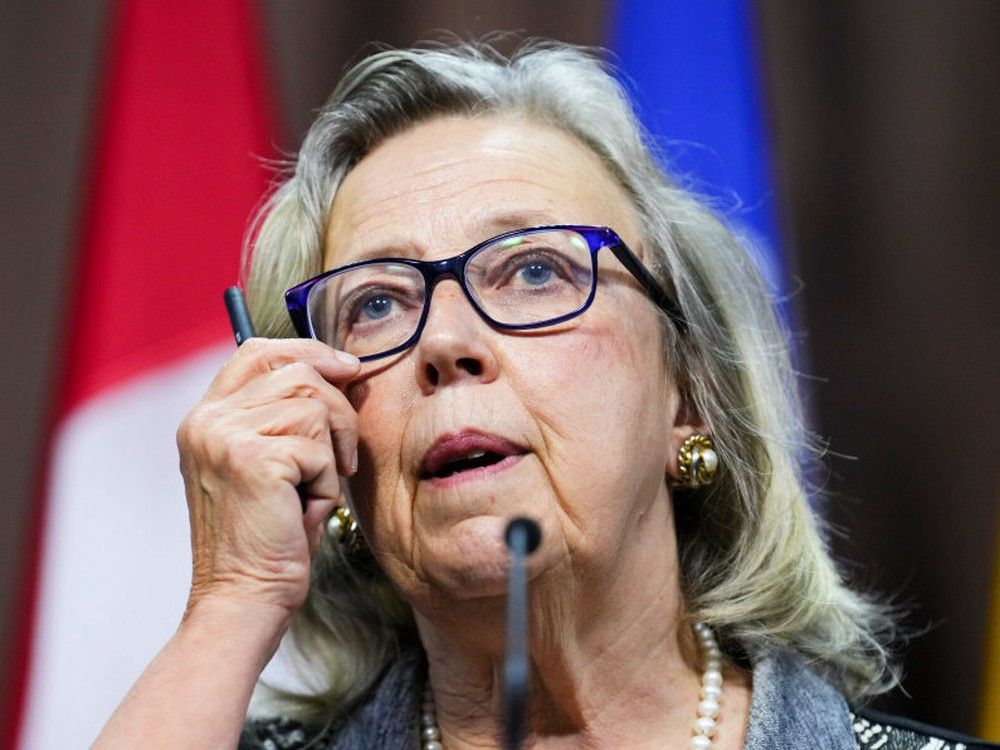
 Green Party Leader Elizabeth May is battling Conservative Cathie Ounsted to retain her Saanich—Gulf Islands seat in the House of Commons.

Ounsted has a 52 per cent chance of winning an election held on Thursday, according to 338Canada. May stands at 48.

“There are many things I want to accomplish before I decide I’m going to retire, and I want to keep working,” she told

The Tyee

last week.

The coastal riding has been May’s since 2011 when she became the first Green MP elected to the House by defeating Gary Lunn, who’d held the seat since 1997 for the Reform Party, the Canadian Alliance and then the Conservatives under prime minister Stephen Harper.

May went on to collect more than 54 per cent of the ballots in 2015, having won every poll in the riding, and just under 50 in 2019. Her margin of victory shrank in the 2021 election when she secured the win with only 37.6 per cent in the face of stiff competition from the Liberal and Conservative representatives.

In an interview with the

Times Colonist

this week, May noted that the riding has historically been some shade of Conservative, so the challenge doesn’t surprise her.

“They have a base here and they turn out their supporters. And right now, it’s a two-way race between the Conservative and me. So it doesn’t feel all that different.”

Our website is the place for the latest breaking news, exclusive scoops, longreads and provocative commentary. Please bookmark nationalpost.com and sign up for our daily newsletter, Posted, here.


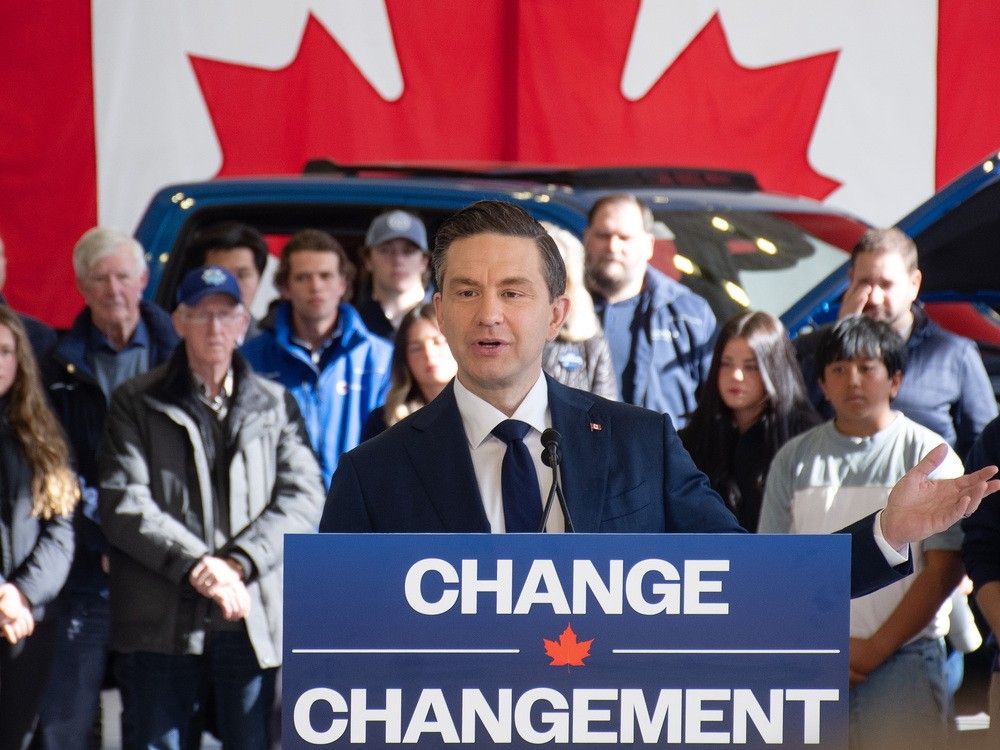
Conservative leader Pierre Poilievre speaks at a press conference at a Halifax car dealership on Thursday, April 24, 2025.

OTTAWA — Conservative Leader Pierre Poilievre says he’ll do away with the Liberal electric vehicle mandate if he becomes prime minister after Monday’s election.

Poilievre said at

a Thursday event

at a Halifax car dealership that the state has no place in the garages of Canadians.

“Conservatives will put (Canadians) back in the drivers seat for a change. You will decide what’s good for you and your family,” Poilievre told supporters.

“Let me be clear, I have nothing against electric cars. If you want one, buy one. Free choice,” he added.

Under the Liberal plan, sales of gasoline and diesel-powered cars will be gradually phased out over the next decade, with a target of 100 per cent zero emission car sales by 2035.

Poilievre said that the time to act is now, with the plan starting with 2026 model-year vehicles.

“Dealerships like this one across Canada have no idea how they’re going to meet these timelines,” said Poilievre.

Poilievre said that the Liberal mandate was effectively a $20,000 per car tax on gas and diesel-powered vehicles, which would go from the pockets of Canadian taxpayers to foreign automakers like Tesla.

Under the Liberal regulations

, car companies may generate one credit for each $20,000 invested in clean, and sell credits to other companies for the equivalent value.

The credits cannot be used after model year 2030.

Brian Kingston, the head of the Canadian Vehicle Manufacturers’ Association was quick to applaud Poilievre’s announcement.

“Mandating EV sales when the auto industry is under attack from US tariffs is putting the puck in our own net. Scrapping the mandate is a smart policy and urgently needed,” wrote Kingston on social media.

Poilievre also said on Thursday that he’d keep billions in Liberal subsidies for domestic EV and battery plants, promising to honour all deals that have already been signed.

“(Conservatives) will continue to support… the commitments the government has made because we don’t believe in tearing up agreements, we believe in supporting Canadian jobs right here in Canada,” said Poilievre.

National Post
rmohamed@postmedia.com

Get more deep-dive National Post political coverage and analysis in your inbox with the Political Hack newsletter, where Ottawa bureau chief Stuart Thomson and political analyst Tasha Kheiriddin get at what’s really going on behind the scenes on Parliament Hill every Wednesday and Friday, exclusively for subscribers. Sign up here.

Our website is the place for the latest breaking news, exclusive scoops, longreads and provocative commentary. Please bookmark nationalpost.com and sign up for our daily newsletter, Posted, here.


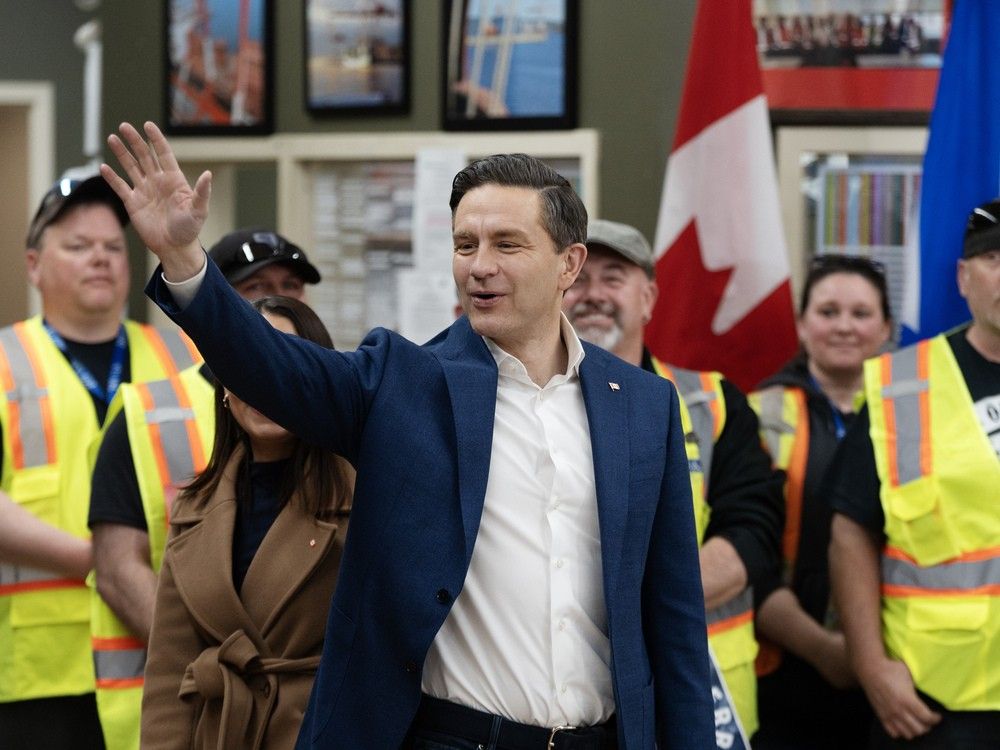
Conservative Leader Pierre Poilievre waves during a campaign stop speaking to the International Longshoremen's Association in Halifax on Wednesday, April 23, 2024.

Parliamentary bureau chief Stuart Thomson talks to reporter Christopher Nardi about why bettors might be putting money on the Conservative party, despite national polls showing the party several points behind the Liberals.

A recent

Postmedia-Leger poll last week found

that the Liberals are hanging onto the lead in the federal election with 43 per cent of support nationally, five points ahead of the Conservatives who are at 38 per cent support.

But the sports betting site FanDuel, which only operates in Ontario and carries odds for political events, says that 70 per cent of the bets placed on the winner of the federal election are on the Conservative party, with only 28 per cent of bettors wagering on the Liberals. The company says that more than 80 per cent of the bets on the Conservatives were placed after March 25, when the election was underway and the Liberals were pulling away as favourites.

Canadians go to the polls on April 28.

National Post

Get more deep-dive National Post political coverage and analysis in your inbox with the Political Hack newsletter, where Ottawa bureau chief Stuart Thomson and political analyst Tasha Kheiriddin get at what’s really going on behind the scenes on Parliament Hill every Wednesday and Friday, exclusively for subscribers. Sign up here.

Our website is the place for the latest breaking news, exclusive scoops, longreads and provocative commentary. Please bookmark nationalpost.com and sign up for our daily newsletter, Posted, here.


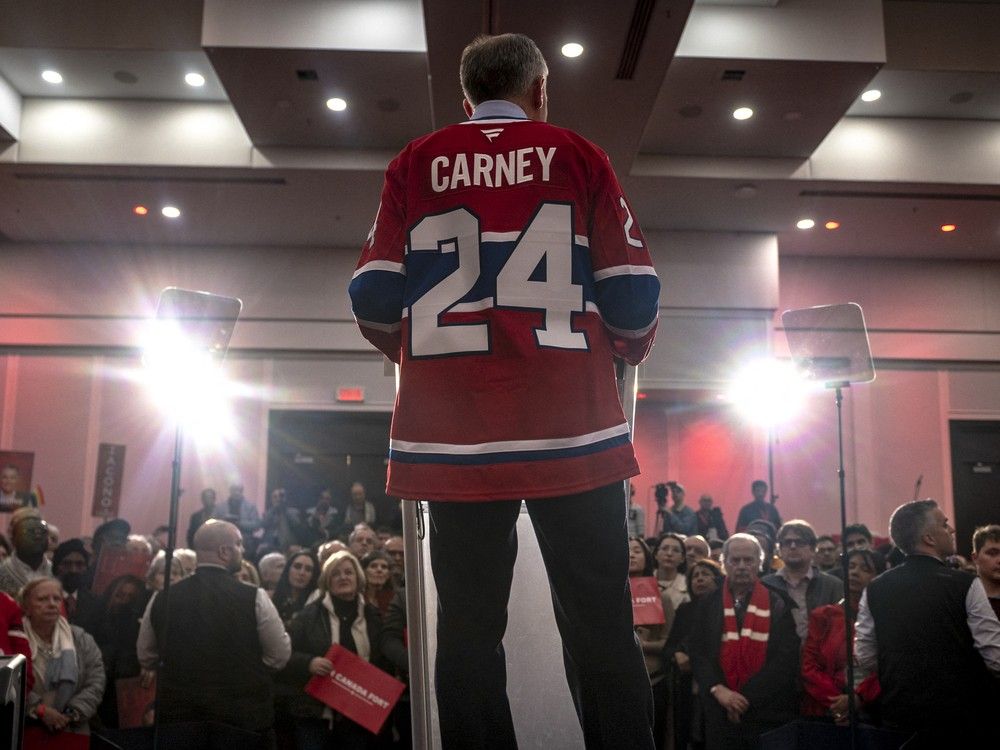
Liberal Leader Mark Carney, wearing a personalized Montreal Canadiens hockey team jersey, speaks during a campaign rally in Laval, Quebec, Canada, on April 22, 2025.

OTTAWA — With election day on Monday fast approaching, political parties are looking for their last chance to advertise their cause.

Luckily for them, they can do it on one of the biggest stages in Canada: the Stanley Cup playoffs. And it also comes at a moment when interest in hockey is peaking.

This year’s Stanley Cup playoffs features five out of the seven Canadian teams, which is the most since 2004. It’s also coming on the heels of the Four Nations Faceoff tournament, which saw heightened national attention due to U.S. President Donald Trump’s tariffs and rhetoric about Canada.

On top of that, last year’s Game 7 of the Stanley Cup Finals between the Edmonton Oilers and the Florida Panthers was the most-watched broadcast in Rogers Sportsnet’s history.

Now, political campaigns are taking advantage of this increased viewership.

“There are only two things that cause people to watch live television in numbers anymore,” said Mitch Heimpel, who was an advisor to former Conservative leader Erin O’Toole campaign and is an avid hockey-watcher. “One is big live news events and the other is live sports.”

“There were some echoes in these ads of the 2015 campaign when the Blue Jays were in the playoffs in October, where there were political ads laced throughout commercial breaks,” Heimpel continued.

The battle of Ontario, which pits the Ottawa Senators against the Toronto Maple Leafs, is particularly crucial for advertising campaigns, as Ontario is home to many of the key battleground ridings parties are looking to win.

The Conservatives have aimed ads at an older audience, as they try to pry those voters away from Liberal Leader Mark Carney. One of the ads features two older men golfing and discussing why they will be voting for the Conservatives. The video has also gone viral over social media, amassing over 4.6 million views on X.

“The two guys in that ad are not empathetic characters in a political ad for anybody under the age of 60,” Heimpel said.

The Liberal have notably excelled in the polls among older generations.

According to Nanos’ election tracking

, 53 per cent of people polled aged 55 and over preferred Carney’s Liberals, while only 33 per cent preferred the Conservatives.

“The polling has demonstrated that the boomers are generally more in play and susceptible to arguments about the United States and Trump’s impact on the economy,” Heimpel said. “Those boomer men who have typically been dialed-in Conservative voters are, for the first time in years, the subject of competition in this election.”

Additionally, the Conservatives have released an ad featuring former prime minister Stephen Harper directly endorsing Pierre Poilievre.

“The two men running to lead us both once worked for me, and my choice unequivocally is Pierre Poilievre,” Harper says in the ad.

“We’re talking about a group of voters that responds to authority very well,” Heimpel said. “They see Stephen Harper as a sign of solid fiscal management, and probably a saner time in the country’s politics.”

Heimpel says that this ad was especially meant for the Senators-Maple Leafs game.

“Those boomer men in Ontario probably voted for Stephen Harper three times, at least.”

The Liberals and NDP are also airing advertisements during the playoffs, though taking opposite approaches. The NDP has released ads about health care and other policies, while the Liberal ads have placed their leader front and centre.

“The Liberal ad is very Mark Carney-focused,” Heimpel said. “It tells you that as a brand, Carney is polling ahead of the party.”

The election advertising blackout occurs this Sunday, the day before the election. Every Canadian team is guaranteed to still be competing by Saturday, which means that the parties will have the opportunity to use the playoff ad breaks right until the end of the campaign period.

Heimpel says that he is interested to see if the parties create new promotional material before the blackout, even if this seems unlikely.

“The one thing that has changed though over the years is that the turnaround time (for producing ads) is shortening,” Heimpel said. “So we could see closing ads on Saturday night.”

National Post

Get more deep-dive National Post political coverage and analysis in your inbox with the Political Hack newsletter, where Ottawa bureau chief Stuart Thomson and political analyst Tasha Kheiriddin get at what’s really going on behind the scenes on Parliament Hill every Wednesday and Friday, exclusively for subscribers. Sign up here.

Our website is the place for the latest breaking news, exclusive scoops, longreads and provocative commentary. Please bookmark nationalpost.com and sign up for our daily newsletter, Posted, here.


Mind blanking is a common, daily life phenomenon linked to changes in states of arousal, the researchers report.

The human mind really can go blank during consciousness, according to a new review that challenges the assumption people experience a constant flow of thoughts when awake.

Instead, there are moments when the human mind seems empty of any content, and people seemingly aren’t thinking of anything at all.

“Mind blanking” is a newly explored and distinct mental state that isn’t the same as a lapse of attention or a wandering mind, the research team writes. People aren’t thinking about something else.

Instead, “our minds go ‘nowhere’ because they seem to lack content.”

Mind blanking is a common, daily life phenomenon linked to changes in states of arousal, the researchers report, and tends to occur towards the end of long and demanding attention tasks like exams, when people are sleep deprived or after an intense workout. Meaning that, “when the brain is in a high- or low-arousal state, a mind blank is more likely to occur.”

In experiments with healthy volunteers, the brain shows signs of “deactivation” and an increase in sleep-like slow brain waves during a reported mind blank. Heart rates and pupil sizes decrease. A part of the brain appears asleep, “which may represent a state of ‘local sleep’ rather than outright sleep,” the researchers write.

The experience has been described as a “lack of conscious awareness,” they noted, during which “the individual is not focally aware of any stimuli, either internal or external,” a particularly dangerous state if it occurs during high-risk, inopportune moments, like driving.

It may be the result of glitches in memory, language or attention. In experiments, people report feeling sleepier, and more sluggish, and they make more errors on attention tasks moments before their minds go “nowhere.”

While some people never report mind blanking, adults and children with ADHD (attention deficient hyperactivity disorder) report the experience more frequently than “neurotypical people,” the researchers said.

“Mind going blank” is also one of the core symptoms of generalized anxiety disorder. It’s also related to strokes, seizures, traumatic brain injuries and an “ultra-rare” sleep disorder (Kleine-Levin syndrome) that affects primarily teenage boys and that causes them to sleep up to 20 hours a day.

“The experience of a ‘blank mind’ is as intimate and direct as that of bearing thoughts,” the team of neuroscientists and philosophers write.

It’s not entirely clear what these “blanks” represent, they said. However, “We sought to better understand mind blanking by parsing through 80 relevant research articles — including some of our own in which we recorded participants’ brain activity when they were reporting that they were ‘thinking of nothing,’” Athena Demertzi, of the University of Liege, Belgium, said in a press release.

If scientists can better understand what’s happening in the brain, and if people could learn how to deliberately, instead of randomly, not think about anything, it could be an interesting strategy for dealing with anxiety, negative thoughts or other unpleasant emotions, lead author Thomas Andrillon, a cognitive neuroscientist at the Paris Brain Institute, said in an interview with National Post.

“It could represent a tool we could use to be more relaxed and improve our wellbeing.”

People assume Descartes’ Cogito, ergo sum goes both ways, Andrillon said: “‘I think, therefore I am’ and ‘I am, therefore I think.’

“We challenge the latter by showing that people can be conscious without thinking about something in particular.”

“Most of the time, by definition, mind blanking will go unnoticed, since there is no content associated with it,” Andrillon added. “We didn’t realize there was a blank.

“But sometimes, there are moments in your everyday life where we can introspect a bit about our own stream of thoughts and we can notice that there has been a gap,” like when people walk into a room and can’t quite remember how they got there, or why they’re even there. “It’s pretty frequent in everyday life,” Andrillon said.

There’s no “definitive guidance” on how to reliably measure mind blanking, the researchers write. But their review found that mind blanking is associated with specific changes in brain dynamics during “no-thinking” moments.

In his own experiments, Andrillon has tracked, via EEG and special MRI imaging, the brain activity of healthy volunteers performing different tasks.

When people are interrupted randomly and asked the contents of their thoughts — “what are you thinking?” — mind blanking is typically reported five to 20 per cent of the time.

The researchers have to rely on people’s subjective experience. “Obviously, we need to trust what they are telling us,” Andrillon said. “But it doesn’t look like these mind blanking reports are completely random — they have a specific behavioural and physiological signature” different from what they see when people report another mind state, like that they were thinking about something else, and not the task.

Brain rhythms tend to slow when people mind blank, similiar to the brain changes that occur just before the onset of sleep, again because of lower arousal. That suggests there are moments during the day “where parts of the brain start showing signs of sleeping, resulting in gaps and moments of mind blanking,” Andrillon said.

The research supports their hypothesis that mind blanking is the first step toward falling asleep, he said.

It also fits with his own ongoing research that found mind blanking more than tripled among healthy volunteers who were sleep deprived for 24 hours.

But the opposite can also be true: people who are very aroused, like after intense physical exercise, tend to report more blanking, suggesting that the phenomenon occurs “every time we go away from the sweet spot of optimal levels of arousal,” Andrillon said.

The experience of mind blanking comes in varying degrees, from a complete gap to a sensation of feeling time passing, he said. From a practical perspective, asking people how frequently they experience the phenomenon could be a helpful way for doctors to judge people’s level of daytime attention and vigilance, he said.

The review, “Where is my mind? A neurocognitive investigation of mind blanking,” is published this week in the Cell Press journal, Trends in Cognitive Sciences.

National Post  


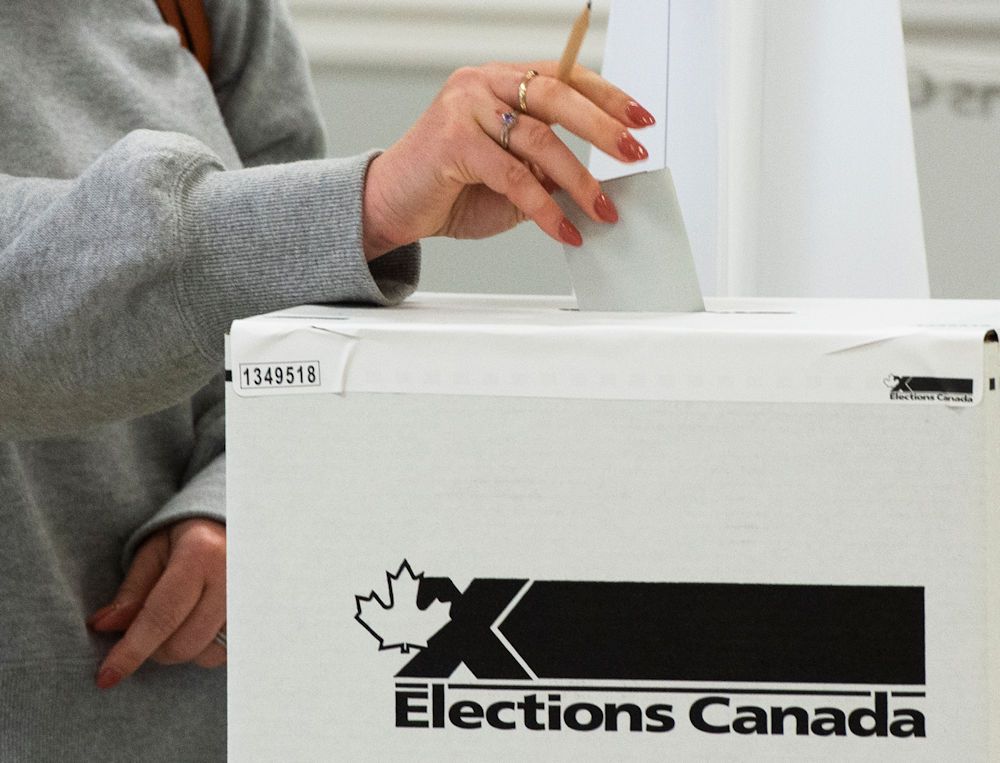
A voter casts a ballot.

First Reading is a Canadian politics newsletter that throughout the 2025 election will be a daily digest of campaign goings-on, all curated by the National Post’s own Tristin Hopper. To get an early version sent directly to your inbox, sign up here.

TOP STORY

Although record-breaking turnout for advance voting is being interpreted by some as a point in the Conservatives’ favour, it could just be a reflection of the fact that Canadians like to vote early now.

At least, that was the warning contained in a Wednesday online post by Angelo Isidorou, executive director of the B.C. Conservative Party.

“The reality is that Canadian voters are normalizing to voting early,” he wrote, warning fellow conservatives against getting too excited about the “mirage” of advance voting.

Over four days of advance voting on the Easter weekend, a record 7.3 million Canadians cast their ballots. This represents a 25 per cent increase over the advance voting turnout of the 2021 election.

Voter turnout may end up being the singular factor that decides whether the 2025 election is a Liberal or Conservative victory.

The Conservatives are strongest among younger voters, a demographic that is notorious for voter apathy. In the 2021 election, just 47 per cent of voters under 24 cast a ballot, as compared to 75 per cent among voters over 65.

Although the Tories have spent the entire election struggling to keep up in national polls, it’s an entirely different story among young voters.  

One of the more dramatic illustrations of this trend was an Abacus Data survey from last week showing that voters under 30 were the strongest single age demographic for the Tories. Respondents aged 18 to 29 supported the Conservatives at a rate of 42 per cent, against just 35 per cent for the Liberals.

Among voters over 60, by contrast, the Liberals held a commanding 14-point lead (49 per cent Liberal, 34 per cent Conservative).  

Thus, if youth participation ticks upwards by just a few percentage points as compared to prior elections, it would represent a critical net gain for the Conservatives.

“Every percentage point of HIGHER voter turnout benefits the (Conservative Party),” reads a recent X post by conservative strategist Nick Kouvalis. The more young people who show up, the more it dilutes the ”potency of 65+ year old voters,” who are disproportionately in the tank for the Liberals.

Conservatives placing their faith in voter turnout could also take comfort in a lengthy track record of heightened voter participation correlating with the defeat of an incumbent government.  

That was certainly the case in 2015, when the Liberals first entered office on their own tide of youth votes: The 68.3 per cent turnout in that election was the highest since 1993.

The two Canadian elections that have witnessed the highest-ever rates of voter turnout (1958 and 1984) also happen to be the ones which saw record-breaking landslides for the Progressive Conservatives.

But Isidorou has some experience in being mislead by advance voting numbers, and is warning that they may not indicate a turnaround in voter turnout.  

B.C.’s October provincial election similarly saw record turnout to advance polls. On the first day of advance voting, there were 171,381 ballots cast, shattering the prior record of 126,491.

At the time, B.C. Conservatives interpreted the advance polling turnout as the early signs of a “blue wave.” “We thought we were looking at a historic result,” said Isidorou.

But the B.C. Conservatives ended up being wrong on two counts: The B.C. election resulted in a majority government for the B.C. NDP, and the final voter turnout wasn’t even all that high.

The election saw 58.5 per cent of registered voters cast a ballot. As recently as 2017, voter turnout had been as high as 61.2 per cent.

All that had really changed is that British Columbians were voting earlier, which Isidorou chalked up to “convenience” and “partisanship.” “Hyper partisanship has made it such that everyone knows where their vote is going from day one, so no point waiting,” he wrote.

Isidorou predicted that the 2025 election is still likely to yield high voter turnout, “but I caution extrapolating early voting into election day because we faced the identical mirage in BC.”

LET’S POLL

It looks like at least two party leaders are poised to lose their seat on Monday. Projections by the website 338Canada show that the B.C. riding of Burnaby South is now leaning Liberal, while Saanich-Gulf Islands is leaning Conservative. Those would be the ridings of NDP Leader Jagmeet Singh and Green Party Leader Elizabeth May, respectively.

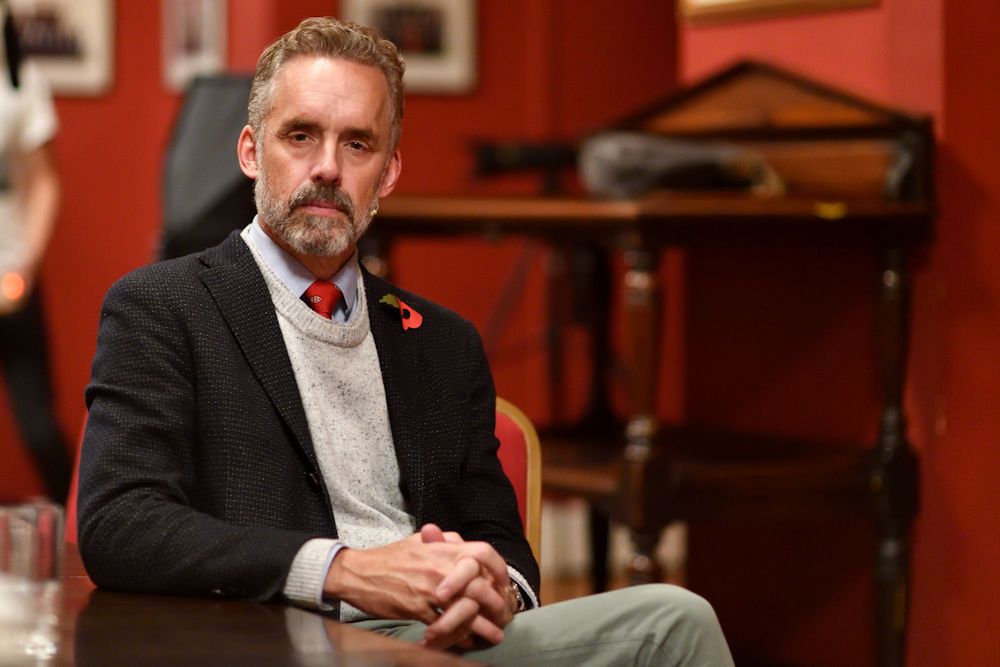
 Canadian psychologist Jordan Peterson’s large public profile in the U.S. means that his recent take on the Canadian election is probably the only analysis of the race that most Americans will receive. In a recent interview with podcaster Joe Rogan, he said he expected the Liberals to win, that this represented a path of “severe pain” for Canada, and that U.S. President Donald Trump’s annexation threats were largely to blame for the turnaround in Liberal fortunes. “(Trump’s) going to pay for that, because once Carney is elected, Trump will not have a more seasoned enemy in the West,” he said.

POLICY CORNER

It probably got the least attention of anything in the Conservative platform, but at the bottom of the party’s promises in regards to public safety, they included a pledge to “defend women’s safety by repealing Commissioner’s Directive 100.” The directive refers to a Trudeau government order under which male offenders can transfer to women’s facilities by completing a form self-identifying as female. Prior to the directive, such transfers were only allowed if an inmate had undergone sex reassignment surgeries.

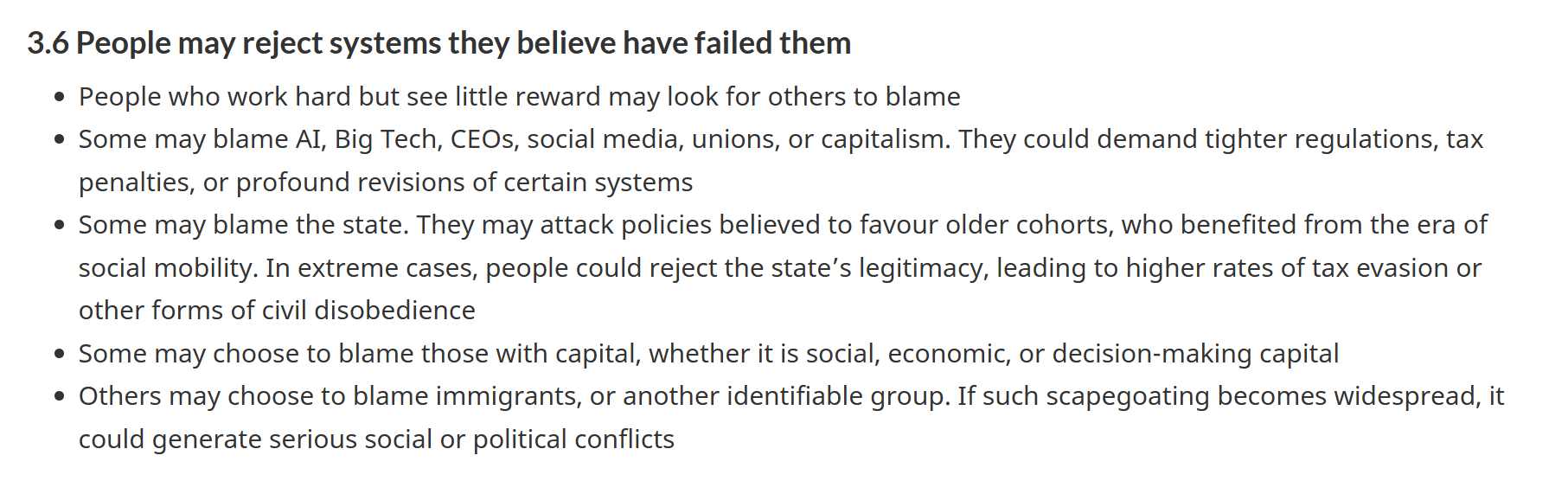
 An excerpt from the Policy Horizons Canada document that is now making rounds online, often as an argument of why not to vote Liberal. Published by a branch of Employment and Social Development Canada in January, it sets out a nightmare scenario of what might await Canada if social mobility continues along its current course.

Get all of these insights and more into your inbox by signing up for the First Reading newsletter here.


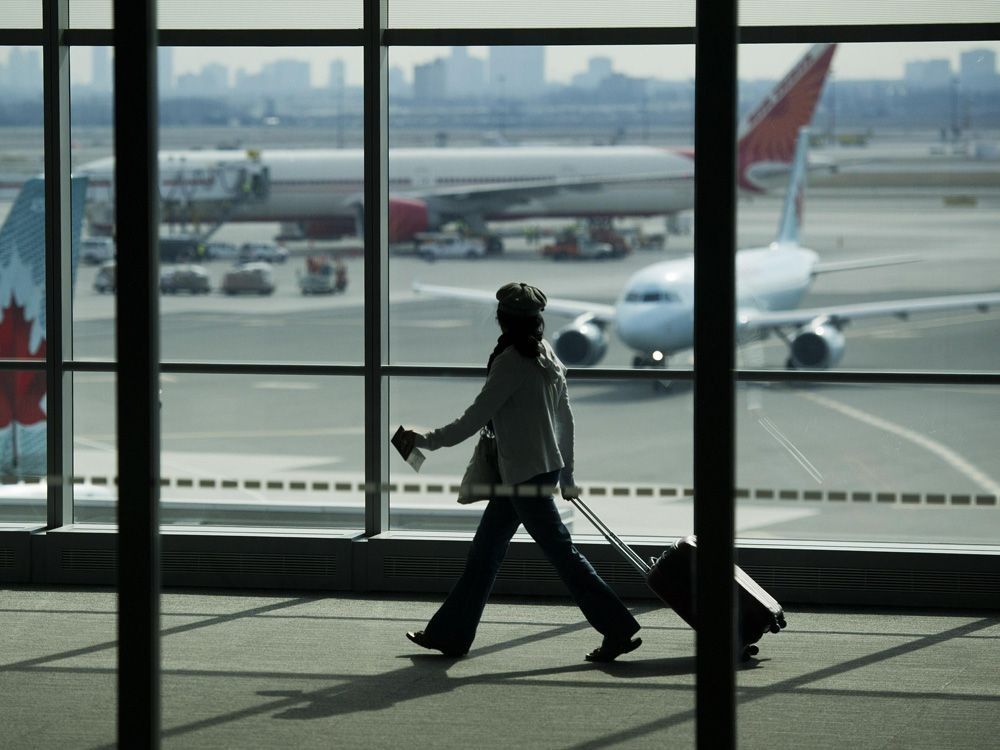
A traveller passes Air Canada planes at Pearson International Airport in Toronto, Ont.

Police are investigating after an officer was involved in a shooting at Toronto Pearson Airport on Thursday morning.

The incident occurred at Terminal 1 of the airport, according to Peel Regional Police. They confirmed in a post on X that an adult male was shot and the police officer is uninjured.

“This is an isolated incident and there are no known threats to public safety,” the post said. “Expect delays at the Terminal.”

Witnesses

told CTV News

they heard what they believed to be “several gunshots outside Terminal 1 by pillar 14 and 15.”

According to The Canadian Press, paramedics said they were called to the airport just before 7 a.m. They confirmed that no one was transported to hospital, but they would not confirm whether anyone had died, per the news outlet.

Passengers and vehicles “

are being rerouted to enter and exit through T1 arrivals,” the airport’s X account said in a post at 8:30 a.m. ET.

In an emailed statement to National Post, Special Investigations Unit (SIU) spokesperson Kristy Denette confirmed there “has been a police-involved shooting.”

“SIU investigators are being dispatched,” said Denette.

Just after 7:30 a.m. ET, Ontario Provincial Police posted on X to say that roads were closed on “Highway 409 to Terminal 1 Departures” in Mississauga. “Please avoid the area,” the post said.

A bus route that goes to Pearson resumed its regular service near Kipling Station, the Toronto Transit Commission said

in a post on X

at 8:45 a.m. ET. Due to police activity, the 900 Airport Express took a temporary detour, utilizing Terminal 3.

Photos and videos on social media of the surrounding areas showed cars lined up and a heavy police presence. In one video, police vehicles can be seen with sirens blocking off travellers from entering the area.

A photo posted on X by a user named John Fowler shows cars traffic at the terminal.


Our website is the place for the latest breaking news, exclusive scoops, longreads and provocative commentary. Please bookmark nationalpost.com and sign up for our daily newsletter, Posted, here.


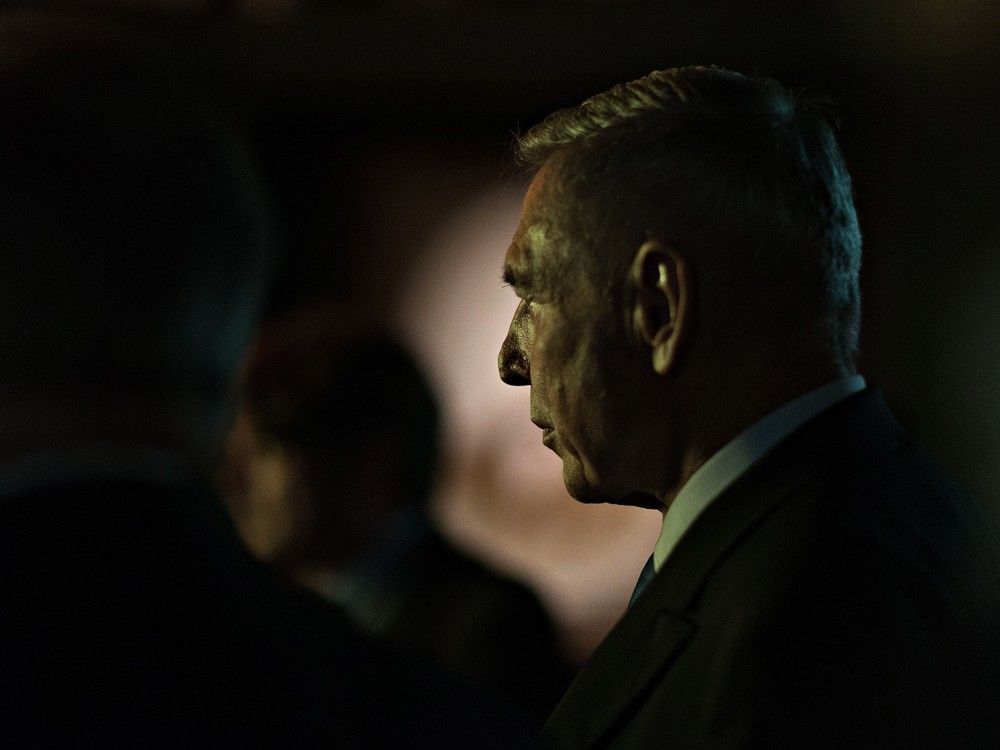
Peter Brabeck-Letmathe, chairman of Nestlé, looks on during a 150th anniversary event in Vevey, Switzerland, on June 2, 2016. Photographer: Michele Limina/Bloomberg

Austrian businessman Peter Brabeck-Letmathe has been named interim chairman of the

World Economic Forum

, replacing Klaus Schwab, who is under investigation for allegations of financial and ethical misconduct.

Brabeck-Letmathe, 80, is known for

leadership in the global food

and business sectors, spending his career at

Nestlé

. While there he was interviewed for a 2005 documentary, “

We Feed the World

,” and his comments about water use provoked considerable controversy.

Despite later clarifications, skepticism about Brabeck-Letmathe continues to linger, fitting within broader criticism levelled at attendees of the WEF, which meets annually in Davos, Switzerland. H

igh-profile politicians, executives, financiers, and policymakers participate in the exclusive event, which focuses on global issues that affect a wide range of people.

Here’s what we know about the new head of the WEF.

What is Brabeck-Letmathe known for?

Brabeck-Letmathe spent his

entire career at Nestlé

, beginning in 1968 as a salesman in Austria, rising through the ranks, and moving to various leadership roles in Latin America. By the late 1980s, he was transferred to Nestlé’s headquarters in Switzerland as Senior Vice President, later becoming Executive Vice President in 1992 with responsibility for strategic business units, sales, marketing, and communications.

He was appointed CEO of Nestlé in 1997, later becoming Vice Chairman in 2001 and

Chairman of the Board

in 2005. Under his leadership,

Nestlé expanded its global footprint

, turning the company into a leading force in the food industry. He stepped down as CEO in 2008 but remained Chairman until 2017, when he became Chairman Emeritus.

Other than at Nestlé, Brabeck-Letmathe has held prominent positions such as vice chairman of the Foundation Board of the World Economic Forum, board memberships with Roche, Credit Suisse, L’Oréal, Exxon Mobil, and Salt Mobile SA, founder and chairman of the 2030 Water Resources Group, a public-private partnership within the World Bank.

What’s wrong with his eye in the photo circulating online?

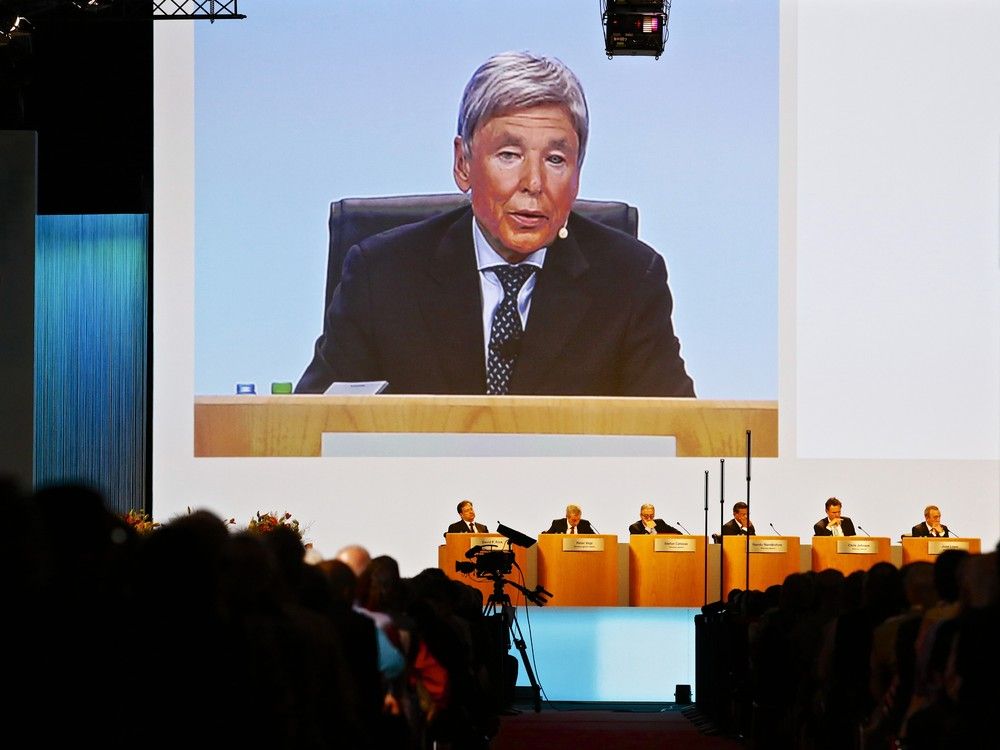
A photo of Brabeck-Letmathe that seems to date back to 2014 has been circulating online. The photo depicts him as appearing to suffer from eye trouble.

The photo was used with a Reuters News Agency

article

, from the 2014 Nestlé annual general meeting, reporting that he was undergoing “

a curable illness and would need periodic medical treatment over the next six months.” Specific details were not provided by Brabeck-Letmathe or Nestlé.

 Peter Brabeck-Letmathe, chairman of Nestle SA, broadcast on a giant screen while speaking to shareholders during the company’s annual general meeting in Lausanne, Switzerland in April 2014. Photographer: Gianluca Colla/Bloomberg ***

Since his appointment as interim Chairman, it has been used in online criticisms of his reputation. (Notably, recent photos of him show no sign of any eye trouble, for example

this one

, which accompanies his WEF profile.)

Why is Brabeck-Letmathe controversial?

The controversy that enveloped him

stems from remarks

he made in the 2005 documentary “We Feed the World.” He described the idea that water is a public right as “extreme” and argued that water should be treated as a foodstuff with a market value. He suggested that putting a price on water would make people more conscious of its value, but also stated that specific measures should be taken to ensure access for those who cannot afford it.

These

comments sparked backlash

from activists, NGOs, and the public. Critics accused Brabeck-Letmathe and Nestlé of seeking to profit from a basic human necessity, and memes and negative commentary proliferated online. The controversy was further inflamed by

Nestlé’s global bottled water operations

, which were criticized for extracting water from communities and contributing to water scarcity.

Brabeck-Letmathe and Nestlé later clarified that

he does believe access to water

for drinking and sanitation is a human right, aligning with the United Nations’ stance. He emphasized that his comments were intended to address overconsumption in wealthy regions, not to deny basic access to water.

“To say that I have said water is not a human right is the biggest lie I have heard. I have been fighting for water as a human right for hydration and hygiene since the beginning but I have always said this is 1.5 per cent of the water that we are using,” he told a Guardian reporter in January 2014. 

However, these clarifications did little to quell skepticism among activists and some segments of the public, who remained wary of

corporate involvement in water management

.

In 2016, satirical publication

The Beaverton

took aim at Brabeck-Letmathe in its Aug. 31 edition, writing: “

In a statement from Nestlé

head

quarters, Chairman Peter Brabeck-Letmathe has accused the general public of discriminatory behaviour towards the corporation’s acts of pure 

evil

.” 

Does he have a Canadian connection?

Another notable controversy occurred when the

University of Alberta awarded Brabeck-Letmathe an honorary degree

in recognition of his work on water resource management. The decision prompted protests from students and activists, who argued that Nestlé’s water bottling practices and advocacy for water commodification were incompatible with the principles of public access to water.

The

university defended its decision

, claiming Brabeck-Letmathe’s work promoted water stewardship. However, administrators acknowledged significant backlash. Organizations like the

Council of Canadians

called for boycotts of Nestlé products, especially after incidents where Nestlé outbid communities for local water sources, further fuelling public outrage.

Our website is the place for the latest breaking news, exclusive scoops, longreads and provocative commentary. Please bookmark nationalpost.com and sign up for our daily newsletter, Posted, here.


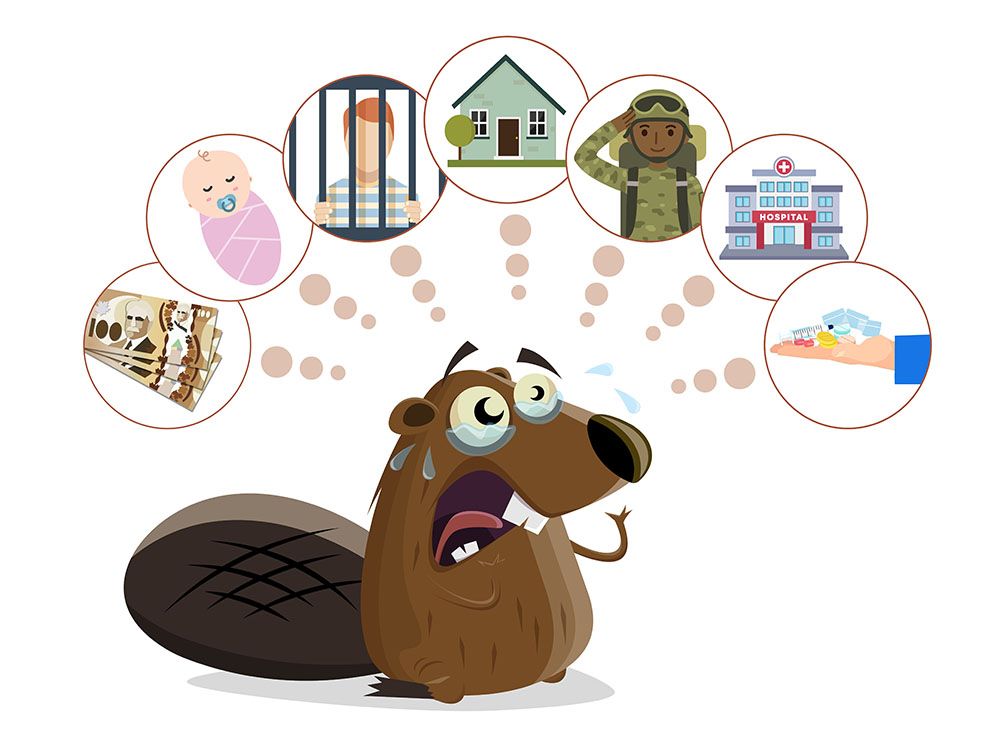
Throughout the 2025 campaign, the Conservatives have frequently referred to what they call the “Lost Liberal Decade,” a reference to the fact that Canada has lagged dramatically on virtually every available indicator since the Liberals first came to power in 2015.

In sum, the economy is worse, crime is worse, public services are worse, affordability is worse — and there’s a whole galaxy of niche indicators, such as firearms incidents, refugee backlogs, even life expectancy, that are worse than they’ve ever been.

Below, a quick guide to the fact that, whatever you think of the Liberals, the last decade has really not been great for Canada.

Crime is up everywhere, and for everything

In the year the Liberals took office, 604 people were murdered across Canada. This was already a slight uptick from the year before, when murder rates

hit a low

not seen since the mid-1960s.

Just seven years later, in 2022, homicides would hit a high of 874. In raw numbers, that’s 270 more murdered Canadians.

But even when accounting for population growth, there are way more murders happening now than in 2015. The homicide rate in that year was 1.71 murders per 100,000 people. As of 2023, the most recent year for which Statistics Canada has released data, it was 1.94.

Put another way, if Canada had stuck to the homicide rates of 2015, we’d have had 94 fewer murders in 2023, 216 fewer murders in 2022, and about 150 fewer murders in 2021.

And it’s a similar story when it comes to virtually every other category of crime. Statistics Canada maintains a “crime severity index” that attempts to aggregate the raw amount of criminality each year in Canada. The index bottoms out just before the Liberals came to power in 2015, and

has been on the upswing ever since

.

Unfortunately, this is particularly true when it comes to violent crime. For one thing, the number of guns being turned on people each year in Canada has never been higher.

In 2015, for every 100,000 Canadians, there were 28.6 incidents of firearm-related violent crime. By 2022, the last full year for which data is available, this had surged to 36.7 incidents — nearly a 30-per-cent increase in just seven years.

In tandem with the spiking crime, prisons are increasingly empty

The Correctional Service of Canada

publishes annual statistics

on incarceration rates, and a noticeable trend begins to emerge starting in 2015: The prison population begins to plummet.

On the eve of the Liberals coming to power, the incarceration rate in the federal prison system was 53.6 prisoners per 100,000, a rate that had stayed relatively consistent throughout the early 2010s. Starting in 2015, it begins a steady plunge until reaching 40.1 out of 100,000.

The trend is even more dramatic in provincial and territorial prisons. The Liberals took charge of a country that had 85.5 prisoners per 100,000 in provincial jails. As of last count, this was down to 71.6, and has briefly dipped as low as 61.6.

These trends can partially be explained by population growth: As the rate of overall Canadians has surged, Canada’s incarcerated population has represented an ever-smaller share of the total.

But the scale of the decrease shows that crime has indeed gone up in tandem with Canada emptying its prisons. Some prisons, such as B.C.’s Okanagan Correctional Centre, are

almost entirely empty

. In 2023, it was only at 20 per cent capacity, housing 167 prisoners out of a total capacity of 800.

Asylum claims are absolutely through the roof

In 2015, there were 16,058

asylum claimants

in Canada, foreign nationals who requested entry to the country as refugees and were waiting for their claims to be adjudicated.

As of January, Canada had 272,440 pending asylum claims, an increase of about 1,700 per cent. In just the month of January, Canada received almost as many new refugee claims as the entire backlog in 2015.

In that month alone, Canada took in

10,365 asylum seekers

, an average of 14 per hour — and that was a slow month. The Immigration and Refugee Board reported that it was their lowest rate of new refugee claimants since the fall of 2023.

Every single day under the Liberals, housing prices have gotten $43 more unaffordable

One of the Liberals’ most-touted campaign pledges in 2015 was to make housing more affordable. “Liberals will invest in the middle class and those working hard to join it by making it easier to find an affordable place to call home,” read

a press release from the time

.

At the time, the average house in Canada

cost about $430,000

. Adjusting to 2025 dollars, that’s $557,000.

As of February, the benchmark price

was $713,700

. Over the last decade of Liberal governance, the average Canadian house has risen in price by about $16,000 per year. In other words, for every single day since the Liberals were elected in 2015, the average home has gotten $43 more unaffordable every 24 hours.

Health-care wait times are twice as bad

In 2015, it wasn’t a semi-regular occurrence for patients to die in the waiting rooms of Canadian hospitals. By 2023, a single hospital in Montreal

yielded two such incidents

over the course of a single weekend.

The Fraser Institute has been compiling reports of health-care wait times since the 1990s. The situation wasn’t great in 2015, but now it’s catastrophic.

In 2015, the

median wait time for surgery

was 18.3 weeks. By 2024,

it was 30 weeks

.

The result is thousands more Canadians dying due to an inability to obtain timely treatment. In 2015, Ontario counted 2,281 people who died while on a waiting list for medically necessary procedure. By 2023-24, that had risen to a

total of 15,474

.

If the economy had stuck to 2015 trends, we’d all be $4,200 richer

For much of Canada’s history, the average Canadian worker earned about the same as the average U.S. worker. Canada started to fall behind in the 1980s, and the trend accelerated over the last 10 years.

The usually cited metric for worker productivity is per capita GDP — each Canadian’s average share of the total economy.

In 2015, Canadian per capita GDP

was the equivalent of US$43,594.20

, according to the World Bank. This represented 76.4 per cent of American per capita GDP at the time.

Over the last 10 years, Canadian per capita GDP has stayed almost completely stagnant: It was the equivalent of US$44,468.70 as of 2023.

The Americans, however, have all gotten richer. The average Canadian’s share of GDP now represents just 67.5 per cent of the U.S. equivalent, as of 2023 numbers.

In 2023, University of Calgary economist Trevor Tombe calculated that if the Canadian economy had simply kept pace with the U.S., we’d

all be earning

an extra $5,500 per year.

Statistics Canada has found much the same. In a May 2024 report, the agency reported that if the Canadian economy had stuck to 2015 trends, the average Canadian would be $4,200 richer per year. That’s enough money to

cancel out basically every Liberal subsidy, bursary and benefit

of the last decade.

Every developed nation except us has gotten richer

Last month, Tombe also

tallied up the last decade of per capita GDP growth

of every country in the OECD, an organization that effectively comprises the world’s developed nations.

Of 42 countries, Canada was at rock bottom. The only country with worse GDP growth was the tiny European nation of Luxembourg.

The average Pole has seen their share of the national economy surge by 40.1 per cent over the past 10 years. The average Korean has seen it rise by 23.8 per cent, the average American by 18.2 per cent.

But in Canada, that figure was just 1.4 per cent. Not only has Canada’s economy been almost entirely stagnant since 2015, but it’s been stagnant even as the rest of the world gets richer.

Debt has increased $4.10 per person, per day, for 10 years

The Liberals took charge of a country with total sovereign debt

of $612.3 billion

. Adjusting to 2025 dollars, that’s about $800 billion.

As of the end of 2024,

it’s now $1.4 trillion

. In real dollars, that’s an extra $600 billion in sovereign debt. Put another way, that’s an extra $15,000 owing for every man, woman and child in Canada.

For every single day of Liberal governance since 2015, that works out to an average of $4.10 in new debt for every citizen. So, if you’re part of a family of five, your household’s share of the Liberal debt accumulation has worked out to $20.50 per day, every day, since 2015.

The eye-watering budget deficits incurred during the COVID-19 pandemic have played a part, but the Liberals have dramatically swelled government spending everywhere all at once.

As one example, the federal public service employed 257,034 people in 2015. By 2024,

that was up to 367,772

— an increase of about 43 per cent.

Military recruitment has dropped off a cliff

It’s not news that Canada has a threadbare military. Armoured personnel carriers held together with bungee cords have been a reality since the 1990s.

But the Canadian Armed Forces of 2015 were exponentially more capable than they are now.

Recruitment has plummeted to historical lows, to the point where the military has dropped its medical standards to accept recruits with previously disqualifying conditions such as asthma or ADHD.

Just before the Liberals took power, internal estimates were that the military

was about 900 members short

of being at full strength. That shortage has

now surged to 16,000

.

The recruitment crisis is so acute that up to half of the ships, aircraft and vehicles in Canadian military fleets cannot be used because there is no one around to fix them. As one example, as of last count, only 45.7 per cent of the Royal Canadian Navy fleet was considered “serviceable to meet training and readiness requirements in support of concurrent operations.”

Immigration intake has been wildly high

When the Liberals took power, the population of Canada was about 35.8 million. As of this writing, it’s 41.6 million. That’s 5.8 million new people over the course of 10 years, or 580,000 new Canadians per year.

For context, the population of

all four Atlantic provinces

is just 2.6 million. The population of Alberta is five million. The population of the entire Halifax metropolitan area is 530,000, not even a year’s worth of new immigrants.

Canada has been a high-immigration country throughout its history, but the rate of sustained population growth seen under the Liberals is unlike anything witnessed in the last 100 years.

It also helps to explain why shortages of everything from housing to doctors have become so acute, so quickly. In that same 10-year period, the number of housing starts recorded by the Canadian Mortgage and Housing Corporation was just 2.3 million, with more than half of that being taken up by apartment units.

Going all the way back to the 19

th

century, Canada has typically had a population that is about 10 per cent of the United States’ — a ratio that has stayed constant, given that both countries have maintained similar growth rates.

That’s no longer the case. Since 2015, the U.S. has grown by about six per cent. Canada has grown by 16.2 per cent.

The birthrate has cratered

Canada now has one of the lowest birthrates on the planet. As of 2023, it had dropped to 1.26 children per woman, a rate matched only by four other “lowest low” countries: South Korea, Spain, Italy and Japan.

When the Liberals came to power in 2015, the birthrate was unsustainably low at 1.6 children per woman, but not catastrophically so.

As to why birthrates are plummeting more deeply in Canada than almost anywhere else, one answer seems to be affordability. Multiple surveys have revealed that young Canadians

want to have more children

, but they can’t afford to.

Life expectancy has gone down

These last figures may be the most stark — we are dying sooner.

When the Liberals took power, Canadian life expectancy at birth was 81.9 years. As of last count, in 2023,

it was 81.5

That’s not a huge decline, but it’s basically the first time anything like this has happened. For at least the last 100 years, Canadian lifespans have been getting longer with each passing calendar year (except for the COVID pandemic years).

As to why the trend has ground to a halt during the last 10 years, one explanation is that tens of thousands of Canadians are dying from drug overdoses.

In the year the Liberals took power in 2015,

2,176 Canadians died of drug overdoses

— an average of six per day. According to the most recent tally by Health Canada, 21 Canadians now die each day of drug overdoses.



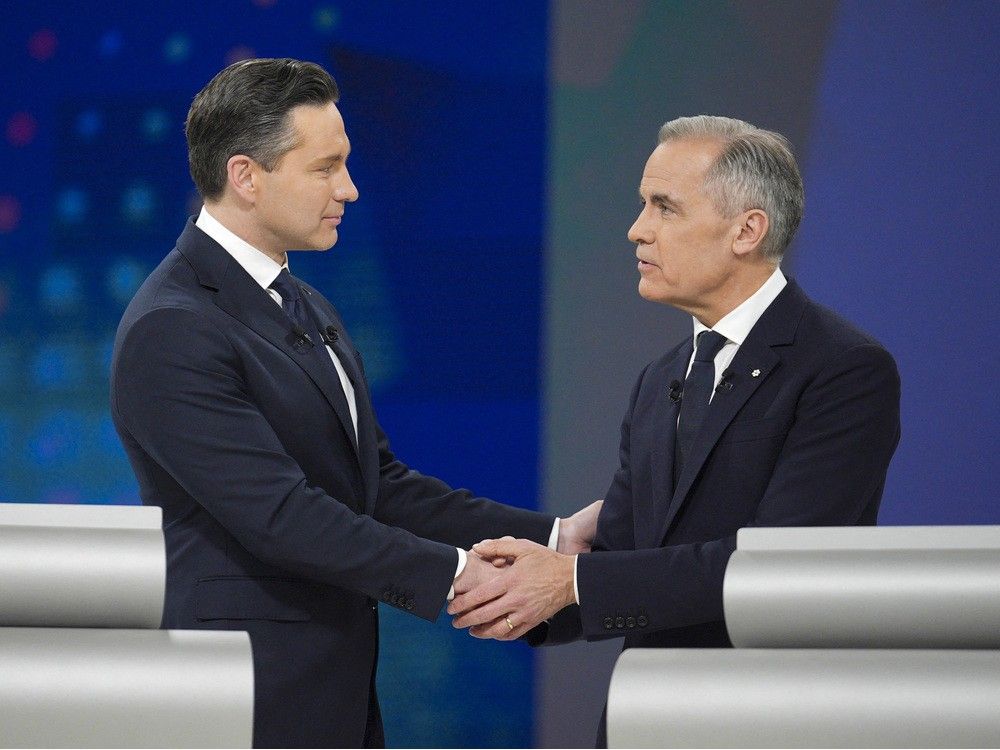
Conservative Party Leader Pierre Poilievre and Liberal Party Leader Mark Carney shake hands following the English federal leaders debate in Montreal, on April 17, 2025.

OTTAWA — Partisan divides trump regional ones among Canadians,

according to a new survey

from Leger Marketing and the Association of Canadian Studies.

Two-thirds of Canadians said they viewed relations between Liberal and Conservative supporters as either somewhat or very bad, with responses holding steady across all regions of the country.

This was significantly higher than the proportion who said the same of either Quebec-Canada or Alberta-Canada relations (33 per cent and 25 per cent, respectively).

The heat of the federal election campaign could be widening the partisan divide, said Jack Jedwab, the president and CEO of the Association for Canadian Studies.

“(People) are getting the impression from the coverage of the campaign that the parties are at each other’s throats,” said Jedwab.

Just under two in 10 respondents said that they thought Liberal-Conservative relations were either somewhat or very good.

This ranged from a low of 15 per cent in B.C. to a high of 21 per cent in Ontario.

Jedwab added that the “two-horse race” dynamic of this campaign, with the NDP, Bloc Québécois and Green Party struggling to gain any traction whatsoever, could be contributing to the polarization.

“This is the first time in a long time we’ve seen the top two parties get almost all of the media coverage, that could be contributing to the sort of ‘us-versus-them’ framing people are picking up on,” said Jedwab.

Respondents aged 55 and older had the dimmest view of Liberal-Conservative relations, with seven in 10 saying they were bad or very bad. Sixty-three per cent of 35 to 54 year-olds and 59 per cent of those under 35 said the same.

Jedwab said that one encouraging trend is that there’s little evidence that so-called “culture wars” issues like guns, abortion and multiculturalism are driving the division, has been the case in the U.S. in recent years.

“There’s more overlap and far less polarization when it comes to the issues themselves,” said Jedwab.

The Liberal and Conservative campaigns both recently released big-spending platforms, each promising to add more than $100 billion to the national debt over the next four years.

The platforms also include similar tax cuts for working Canadians and home buyers, as well as similar supports for Canadian workers affected by U.S. tariffs.

Conservative Leader Pierre Poilievre has said

he won’t pass any laws

restricting access to abortion if he becomes prime minister.

Jedwab said that this convergence isn’t surprising as the perceived uptick in ill-will between Liberals and Conservatives doesn’t change the fundamentals of campaign strategy in Canada.

“We’ve historically been governed from the centre-left or centre-right, not from ideological extremes,” said Jedwab.

He added that much of where Liberal-Conservative relations go from here will depend on whether the NDP and Bloc rebound from what’s almost certain to be a disappointing election result.

“People do tend to dig in their heels a bit more in a two-party system and start to see partisanship as more a part of their identity.”

The poll also found that Albertans and Quebecers, respectively, had a sunnier view of their provinces’ relations with the rest of Canada than respondents in other provinces.

Sixty-five per cent of Quebecers said Quebec-Canada relations were either somewhat or very good, versus 53 per cent of all respondents.

For Albertans, this spread was 56 per cent to 51 per cent.

Jedwab says that this disconnect stemmed, in part, from the national visibility of sovereigntist figures like Bloc Leader Yves-François Blanchet and

Reform party founder Preston Manning.

“Both (Blanchet and Manning) like to give the impression they are speaking for most Albertans and Quebecers, respectively, when in effect they’re speaking for an important minority that are most aggrieved.”

The survey was taken between April 17 and 19, using a sample of 1,603 adults recruited from a Leger-founded panel. Online polls are not considered representative samples and thus don’t carry a margin of error. However, the poll document provides an estimated margin, for comparison purposes, of plus or minus 2.5 percentage points, 19 times out of 20.

National Post

rmohamed@postmedia.com

Get more deep-dive National Post political coverage and analysis in your inbox with the Political Hack newsletter, where Ottawa bureau chief Stuart Thomson and political analyst Tasha Kheiriddin get at what’s really going on behind the scenes on Parliament Hill every Wednesday and Friday, exclusively for subscribers. Sign up here.