LP_468x60
on-the-record-468x60-white

Leo XIV's childhood home at 212 E. 141st Place in Dolton, Ill.

The childhood home of Pope Leo XIV in Dolton, a community just outside the city limits of Chicago, was up for sale last week. Asking price: US$199,000. Though heaven knows that amount might go up now that its former occupant is famous.

The

New York Post is reporting

that the current owner of the house — a modest,1,200-square-foot brick split-level at 212 E. 141st Place in Dolton, Ill. — has taken it off the market and plans to relist it at a higher price, or perhaps turn it into a museum or shrine.

“It’s like a winning lottery ticket. What are the chances?” realtor Steve Budzik said of the owner’s decision. (To answer that rhetorical question, given the number of eligible cardinals in the recent conclave: one in 133.)

NBC reports

that Robert Francis Prevost (Leo’s pre-papal name) was born on Sept. 14, 1955, at what was then called Mercy Hospital in Chicago, and that his parents — dad was a Navy vet turned school superintendent, mom a librarian with a master’s degree in education — had purchased the home in 1949.

It can be viewed on the

realty site Redfin

, which describes it as an “immaculately rehabbed single family home.”

The site says the home features three bedrooms, two baths, a recessed-lighting living room, a formal dining room and a jacuzzi tub. The kitchen has a breakfast bar, custom white cabinetry, granite countertops and stainless steel appliances. The finished basement includes a laundry room “and extra space for your imagination.” Images at

realtor.com

show a living room fireplace and a sturdy chimney.

Redfin notes that the last time the house sold was just a year ago, for US$66,000. Prior to the papal election, it had been on the market this time for more than 100 days.

Budzik confessed to the Post that the owner “is excited and just kinda in shock right now,” adding: “It’s been quite interesting the last 24 hours.”

The property is about a kilometre away from Lincoln Elementary and Lincoln Junior High, and a 40-minute drive south of Pope John Paul II Catholic School.

Our website is the place for the latest breaking news, exclusive scoops, longreads and provocative commentary. Please bookmark nationalpost.com and sign up for our newsletters here.


A Rabbi walks toward the Bais Chaya Mushka Girls Elementary School in Toronto’s North York, which was shot at for a third time, on Friday, Dec. 20, 2024.

New data released this week by the Toronto Police Service shows that reported hate crimes in the city rose 19 per cent in 2024 over the previous year. It also found that the Jewish community, while representing less than four per cent of Toronto’s population, was the target of 40 per cent of reported incidents.

“We are the leading target of hate motivated crimes by a very very large margin,” Jaime Kirzner-Roberts, senior director of policy and advocacy at the

Friends of Simon Wiesenthal Center (FSWC)

, told National Post. “And that’s in absolute numbers. In per capita it becomes even more shocking because we are actually a very small part of the population.”

The 443 hate crimes reported to police in 2024 represents the third year in a row that numbers have increased, up from 372 reports the previous year, and 246 in 2023. Numbers had remained relatively flat from 2014 through 2019, with about 140 reports per year, before starting to rise.

Almost half (46 per cent) of reported hate crimes were linked to religion, with a further 24 per cent based on race, and the remainder divided among sexual orientation (14 per cent), ethnicity (12 per cent) and gender identity (4 per cent).

Police figures show

that hate crimes against Jews made up the largest single group, with 177 reported incidents in 2024. This compared to 79 incidents related to sexual orientation, and 76 aimed at the Black community. Hate crimes against Muslims were down slightly from the previous years (28 compared to 33), while those against Asians had risen to 56 from 31 in the previous year.

“The report is confirming what the entire Jewish community already knows, which is that hate incidents targeting our community are increasing dramatically,” Kirzner-Roberts said. “If it hasn’t happened to us we know somebody that it has happened to.”

“Mischief occurrences” made up most of the hate crimes levelled at Jews, with 148 reported incidents, and anti-Jewish mischief related hate crimes made up a third of all hate crimes in 2024. Other types of hate crimes, including assault, uttering threats and criminal harassment, were more likely to be reported in connection with sexual orientation.

Despite its innocuous name, “mischief” covers graffiti and vandalism, and can include carving or spray-painting neo-Nazi imagery on a building or cemetery. “Many offences are committed without a victim present, few or no witnesses, and little forensic or digital evidence,” the police report notes, adding: “This is particularly true of mischief offences.”

This would explain why, while charges for hate crimes were up 81 per cent in 2024 to 115, the vast majority of those charges were for assaults and threats, with only 10 linked to mischief offences.

Kirzner-Roberts said the problem of low rates of arrests and charges goes beyond mischief offences and beyond Toronto’s borders.

“At the federal level, hate crimes are one of the least likely reported crimes to lead to charges, and among the least likely crimes for police to be able to identify the suspect. This is another piece of where the system is failing.”

She added: “It is illegal to disguise oneself by wearing a mask while commuting a crime, but police have been hesitant to lay these kind of charges in the post-COVID era. This law needs to be strengthened, clarified and enforced. If one is involved in political activities on the street then one needs to be accountable and identifiable for that. We would like to see courage in our political leadership to make that case clearly.”

The highest number of hate crimes reported were in

52 division

(67 crimes) and

32 division

(78). The first of those regions is bordered by Bayview, Steeles, Lawrence and Caledonia, and is home to a high concentration of Toronto’s Jewish population. The second runs between Yonge and Spadina, from Bloor to the lake, and includes the Toronto Islands.

“The police have been a fantastic partner to the Jewish community over the last 18 months where we’ve seen this horrific escalation,” Kirzner-Roberts said. “They continue to show in every way their dedication to protecting Toronto’s Jewish community and deterring hate-motivated crimes.”

She added: “It’s not the police that need to make changes, it’s lawmakers that need to make changes. I’m hoping that these statistics will be a wakeup call to our leaders at the municipal level, at the provincial level and the federal level to finally put this issue on the priority list.”

The FSWC is working with Toronto Police on the development of a mandatory training module that educates service members on Judaism and antisemitism, the impact of antisemitism on the Jewish community, and the importance of allyship.

It is also advocating for education on antisemitism to be prioritized across sectors where such hate is surging, particularly with the Toronto Transit Commission and its special constables. The police report noted an increase of hate motivated occurrences on public transit in 2024, with an 88 per cent increase to 95 occurrences in 2024 from 50 the previous year. Mischief-related occurrences on transit more than doubled, and assaults increased by almost a third.

The report will be formally released at a pubic meeting on May 14. It will be livestreamed at

youtube.com/live/zcBoknNUpjs

.

Our website is the place for the latest breaking news, exclusive scoops, longreads and provocative commentary. Please bookmark nationalpost.com and sign up for our daily newsletter, Posted, here.



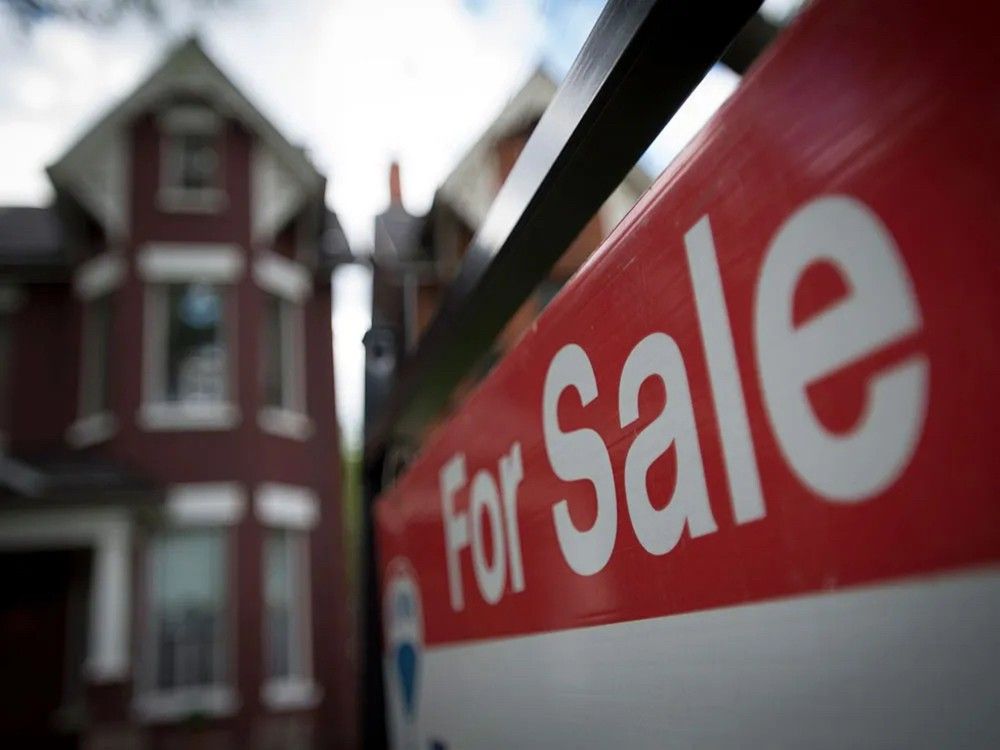
The trade war with the U.S. has caused housing markets across Canada to plummet.

The ongoing trade war between the U.S. and Canada has cooled Canadian housing markets significantly. Anxiety over tariff uncertainty and a looming threat of recession have led to notable shifts in market activity and home prices across the country, according to a recently released

special report on housing from RBC

.

Home resales have dropped sharply, with March 2025 marking the third consecutive monthly decline. Nationally, resales were down an estimated 4 per cent from February and 15 per cent from December. In major markets like Toronto, resales in March were the lowest since 1998, dropping more than 30 per cent since the U.S. began its trade overhaul. In Vancouver, home resales have fallen 23 per cent year-to-date, says RBC.

The trade war has made potential buyers more reluctant due to concern about job security and the broader economy. Many are choosing to wait out the uncertainty, rather than make the significant financial commitment to buy a home.

Buyer uncertainty met with increased listings

Despite that shift,

new listings have increased

. Toronto’s listings are up 8.1 per cent, while sales in that market have dropped 23.3 per cent. This imbalance has led to increasing inventory and more competition among sellers.

This has

shifted bargaining power to buyers

, putting downward pressure on prices.

In Toronto, the composite MLS Home Price Index fell by $35,000 (-3.2 per cent) over three months, with further declines expected. Vancouver’s benchmark price has also slipped for three straight months and is now 0.6 per cent below its level from a year ago. Nationally, prices are expected to continue softening, especially in Ontario and British Columbia, according to

BNN Bloomberg

.

Downturn worse in trade-sensitive markets

The regions in Canada most vulnerable to the trade war’s effects on housing are those with economies heavily tied to cross-border trade, especially sectors targeted by U.S. tariffs.

The impact is most pronounced in southern Ontario, such as the cities of Toronto, Hamilton, Kitchener-Waterloo, Cambridge, Windsor, Brantford, Guelph, St. Catharines and Niagara Falls. The

economies of these cities

are deeply integrated with the U.S. via the automotive, steel, and manufacturing industries.

The

most intense retreats in housing activity and prices

have been there, with Toronto experiencing its weakest sales in decades and other cities like Hamilton and Kitchener-Waterloo seeing notable price declines and surging inventories.

Market drops across the country

As Canada’s least affordable market,

Vancouver is highly sensitive

to economic reverberations. The trade war has led to a significant drop in home resales (down 23 per cent year-to-date) and falling prices, with buyers gaining bargaining power due to increased supply.

Calgary

is a major energy and beef exporter, making it highly exposed to U.S. tariffs on these commodities. The city has seen a significant rise in listings and a drop in sales, with prices flattening and market balance shifting as a result of weaker demand.

Saint John is particularly vulnerable due to its dependence on crude oil exports, primarily from the Irving Oil Refinery. Tariffs on energy exports could have a severe local economic impact, translating into weaker housing demand.

The

Quebec cities

of Saguenay, Trois-Rivières, Drummondville are major exporters of aluminum and forestry products, both targeted by U.S. tariffs. Any slowdown in these industries could reduce jobs and housing demand.

Job security confidence falling

Confidence in

job security in Canada

has dropped to its lowest level since the early pandemic, with only 44.9 per cent of Canadians expressing confidence in their job stability as of April 2025. Nearly 30% are unsure about their job security, a sharp increase in just two months.

This uncertainty is causing many would-be buyers to hesitate or postpone major financial commitments like home purchases.

According to a

recent BMO survey

, 74% of Canadians are concerned about a possible recession, and only 14 per cent of those planning to buy a home intending to do so in 2025, with many deferring to 2026 or later. More than half feel homeownership is less attainable than a year ago, and two-thirds are less confident they will ever own a home.

Private sector workers

are more affected by job security concerns than public sector employees, who generally feel more secure and may be more willing to buy homes. Newcomers and renters, facing higher perceived risks of job loss, are particularly likely to delay or forgo home purchases.

Our website is the place for the latest breaking news, exclusive scoops, longreads and provocative commentary. Please bookmark nationalpost.com and sign up for our daily newsletter, Posted, here.


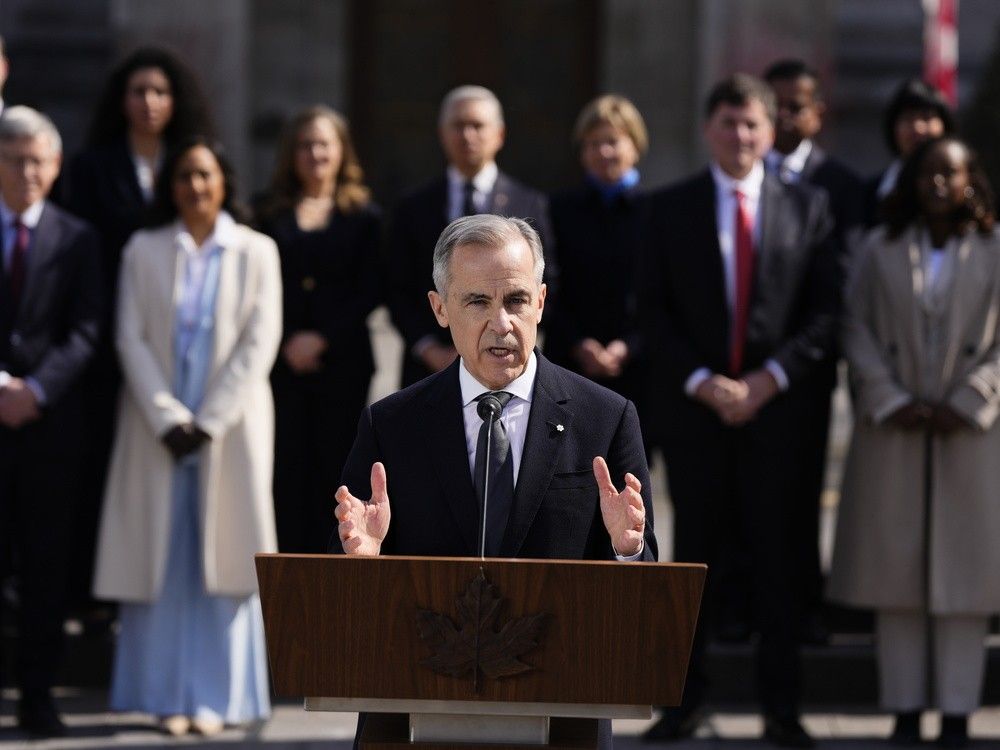
Prime Minister Mark Carney holds a press conference as members of his cabinet look on following a swearing in ceremony at Rideau Hall in Ottawa on Friday, March 14, 2025.

OTTAWA — Prime Minister Mark Carney will unveil his first post-election cabinet on Tuesday, according to the Governor General’s office.

The unveiling is set to take place at 10:30 a.m. ET at Rideau Hall.

Carney said last week that he planned to maintain a small, efficient cabinet.

“I’m very intrigued by the possibility of keeping this lean,” he told reporters.

He also said plans to return to predecessor Justin Trudeau’s gender parity rule that maintains an equal number of men and women in cabinet.

Carney put together a

transitional cabinet of 24 ministers

in March, less than two weeks before calling a snap election that yielded a third straight Liberal minority government.

He cut

more than a dozen positions

from Trudeau’s final cabinet, including posts for labour, gender equality and seniors.

The maiden cabinet consisted of 13 men and 11 women.

Carney’s new team is expected to be slightly larger than the transitional cabinet.

The prime minister has been mum about whether senior figures from his first cabinet, such as Finance Minister François-Philippe Champagne, will stay in their roles.

“Did he ask you to ask that question?” Carney joked with a reporter when asked whether Champagne would remain as finance minister.

Trade Minister Dominic LeBlanc and Foreign Affairs Minister Mélanie Joly traveled with Carney this week on his visit to Washington, D.C., to meet U.S. President Donald Trump.

More to come.

National Post

rmohamed@postmedia.com

Get more deep-dive National Post political coverage and analysis in your inbox with the Political Hack newsletter, where Ottawa bureau chief Stuart Thomson and political analyst Tasha Kheiriddin get at what’s really going on behind the scenes on Parliament Hill every Wednesday and Friday, exclusively for subscribers. Sign up here.

Our website is the place for the latest breaking news, exclusive scoops, longreads and provocative commentary. Please bookmark nationalpost.com and sign up for our daily newsletter, Posted, here.


A cat is shown in a moving box.

A New York man has been charged with animal cruelty after nearly 100 cats — dozens of which were dead — were found in his home last weekend.

The 75-year-old man was arrested on May 6 after detectives from the Suffolk County Society for the Prevention of Cruelty to Animals (SPCA) arrived at his residence in Bohemia, a Long Island community. He faces 18 misdemeanour counts of cruelty to animals and animal neglect, according to Chief of the Suffolk SPCA Roy Gross.

Authorities received a complaint “of dozens of cats living in poor, squalid conditions as well as many deceased cats in a freezer,” according to

a Facebook post

by the SPCA.

When detectives arrived at the property on May 3, they found the man with the animals that he allegedly neglected while they were in his care. The man and the cats were living amongst “wet urine, smeared feces, grime, and filth covering the floors, walls, and stairs.”

“The overpowering foul odours of feces, rot, grime, and ammonia were so severe” that the SPCA requested a hazmat team and backup from the fire department. After conducting an evaluation of the air and structure, fire mashals found high readings of ammonia gas inside the home. The residence was deemed unfit for human occupancy.

In the freezer, detectives from the SPCA “found multiple wrapped items” that contained more than twenty deceased kittens.

The New York Post reported

that the man lived in the home with his late wife for 30 years, but she died a few weeks ago. A neighbour told the publication that cats were attracted to the residence because the pair would put out food. Gross told the N.Y. Post that if convicted, the man would be added to a registry preventing him from owning a pet for five years.

On Saturday and Sunday, teams worked to trap 61 cats, some of which were pregnant. They were taken to the Islip Town Animal Shelter and received veterinary care.

“Many cats presented with medical conditions including upper respiratory infections, urine scalding, eye disease, dental disease, missing teeth, and ear discharge; three cats were in such severe physical condition they required humane euthanasia,” per the SPCA.

In a post on Facebook on Wednesday, vice president of the Long Island Cat/Kitten Solution John Debacker shared a photo of one of the cats rescued from the home in Bohemia. He said that twelve of the cats would be transferred to rescues on Thursday.

Inside the mobile SPCA trailer where some of the Bohemia cats are being housed, 12 of them are being transferred to rescues tomorrow! Woot woot! 🙂

Posted by John Debacker on Thursday, May 8, 2025

All of the cats will eventually be put up for adoption through the shelter once they are medically stable.

The accused is due to be arraigned in Suffolk County First District Court on May 23 at 9 a.m. ET.

Our website is the place for the latest breaking news, exclusive scoops, longreads and provocative commentary. Please bookmark nationalpost.com and sign up for our daily newsletter, Posted, here.


Mélanie Joly and supporters during the Liberal party’s election night event at the Societe des arts technologiques in Montreal on Monday, April 28, 2025.

In an interview this week

with the BBC

, Foreign Affairs Minister Mélanie Joly told the British news service that Canada has been “over reliant on the U.S. for too long,” adding: “We are the most European of all non-European countries. That’s why we want to be closer to Europe.”

It’s not the first time the phrase has cropped up in Canadian political circles, especially in connection with the recent trade war between Canada and the U.S.

Just days after being sworn in as prime minister, Carney made his first trip in that role to Europe, meeting with French President Emmanuel Macron and

telling him

: “I want to ensure that France and the whole of Europe works enthusiastically with Canada, the most European of non-European countries, determined like you to maintain the most positive possible relations with the United States.”

He added: “Canada is a reliable, trustworthy and strong partner of France, which shares our values and lives them through action during this age of economic and geopolitical crises.”

Carney had said after his swearing-in the previous Friday that Canada was built on a “bedrock of three peoples: Indigenous, French and British.”

The concept of “most European” is evocative but vague: What does it mean to be the most European of non-European countries?

At its simplest, the similarities are architectural. A recent

Business Insider article

from a writer who visited both Quebec and Europe puts it bluntly: “The streets and buildings of Quebec City felt similar to places I visited in Europe.”

A second article on

travel to Montreal

was headlined: “

I visited the city that’s been nicknamed the ‘Paris of North America.’ It really feels like a charming slice of Europe in Canada.”

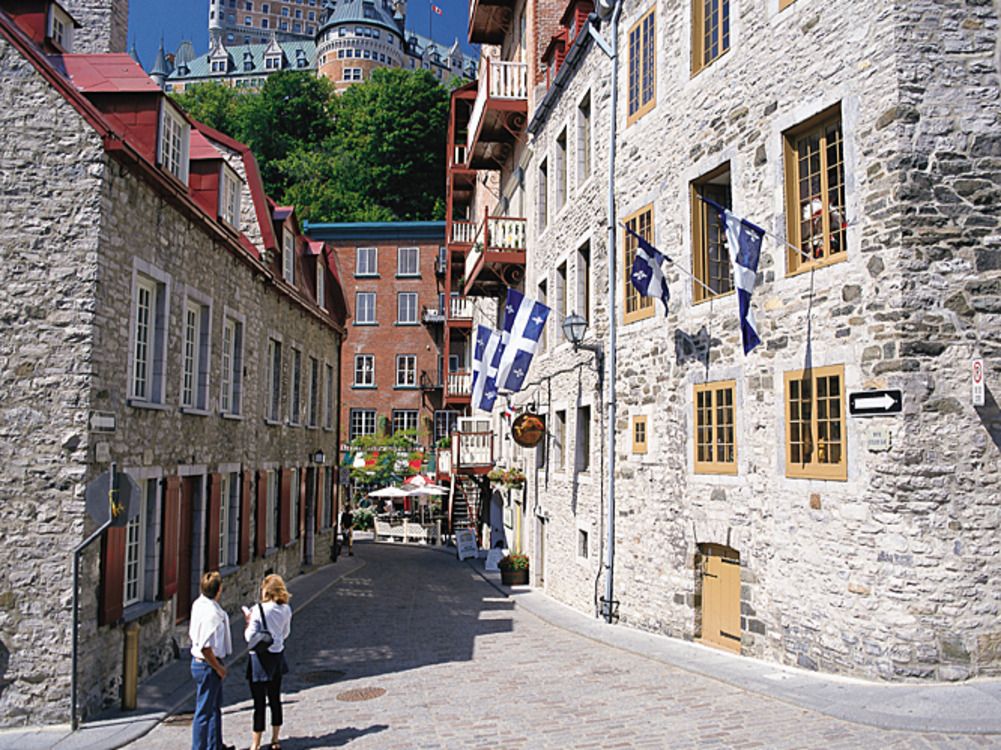
 A glimpse of typical architecture around Place Royale in Old Quebec City.

And it’s true: As two of North America’s oldest cities — Quebec City was founded in 1608 and Montreal in 1642, more than a century before Toronto and over 200 years before Vancouver — these locations preserve many of the same physical details that make old European cities feel the way they do.

But the comparisons run deeper, and go back much further than the latest government’s pronouncements.

Ten years ago,

the CBC reached out

to academics outside Canada who teach courses about Canada — “Canadianists,” they’re called — to see what their students were being taught about our country.

One Dutch educator said: “Many of my non-Canadianist friends refer to Canada as ‘the European version of America.’ Canada resembles Europe the way it wishes it had stayed: full of natural beauty.”

Ten years before that,

Gwendolyn Owens

, a Baltimore expat living in Montreal, was writing about a Canadian “culture and mentality that melds together Europe and the United States,” referring to our more European-style health care system and describing our multicultural makeup as “a kind of union of many nations, not unlike the new European Union or a small United Nations.”

Timothy Sayle, an associate professor in the department of history at the University of Toronto, says recent comments by Carney and others can be interpreted in two ways.

First is at face value. “There are some basic historical and cultural connections here,” he said. “It wasn’t that long ago that Canadians stopped being British subjects, and the King of England is also the King of Canada. That’s very present in our governance but also in our culture.”

 King Charles III holds an audience with Prime Minister Mark Carney at Buckingham Palace on March 17, 2025, in London.

He added that Canada’s bilingual nature, its connections between Quebec and France, and its social and health programs, which run closer to European models than American ones, all push Canada closer to Europe, comparatively speaking.

“But there’s also a political argument that these leaders are making, in that Canadian governments have often worked closely with European partners in international affairs, partially because Canadian and European governments sometimes see the world through the same lens, that the same international frameworks and cooperation is the best way to deal with the world.”

Finally, there may be a sense in which Carney and Joly were also talking directly to Canadians. Sayle noted an address given by

Secretary of State for External Affairs
Louis St. Laurent in 1947

, the year before he became prime minister. He called liberty “

an inheritance from both our French and English backgrounds, and through these parent states it has come to us from the whole rich culture of western Europe.”

Sayle explained: “Sometimes Canadian leaders find it useful to talk about Europe as a way of hinting at national unity goals in Canada. I’m not sure if the leaders have that in mind right now, but it’s an interesting twist on it.”

David Soberman, a professor and the

Canadian National Chair of the Rotman School of Management, said one audience for whom such remarks were not intended is the rest of the world.

“I would say they’re trying to set us up against the United States in this case,” he said. “I don’t think it’s designed as something to say we’re more European than the Australians. I’ve spent time in Australia and New Zealand as well, and they’re pretty European.”

But he agreed the message has a takeaway for Canadians as well.

“To make us feel a little bit less stressed out, if you will,” he said. “We are different from the United States, and we’re good with that, but we also have friends in Europe that can empathize with the sorts of things that are important to us.”

Carney also met with King Charles III during his trip to Europe, and has invited the King to formally open parliament on May 27, the first time Canada’s monarch has done so since Queen Elizabeth II in her jubilee year of 1977.

Joly told the BBC that the King’s visit was another “clear signal” of Canada’s sovereignty.

“That’s pretty important,” Soberman said. “He’s a European monarch, and here he is coming to deliver what’s one of the most important statements that occurs in the Canadian Parliament every year. That’s a pretty strong link.”

Our website is the place for the latest breaking news, exclusive scoops, longreads and provocative commentary. Please bookmark nationalpost.com and sign up for our daily newsletter, Posted, here.


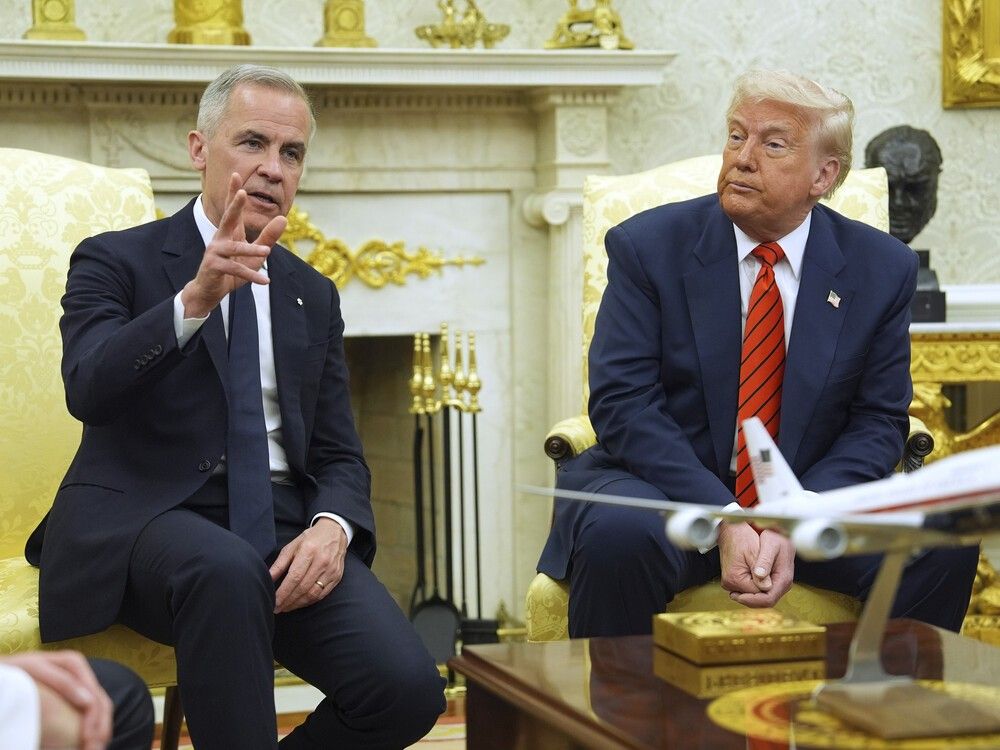
U.S. President Donald Trump meets with Prime Minister Mark Carney in the Oval Office of the White House, Tuesday, May 6, 2025, in Washington.

OTTAWA — As Canada looks for ways to see U.S. tariffs lifted, the country’s ambassador to Canada suggested the recent trade announcement with the United Kingdom could be a “template.”

“I think this will kind of be a template for how we go around the world,” U.S. Ambassador to Canada Pete Hoekstra told National Post.

Hoekstra made his comments as Trump was announcing on Thursday he had reached a deal with U.K. Prime Minister Keir Starmer.

The announcement, which has not yet been finalized into an agreement and with more

details yet to come

, would see the U.S. slash the rate of tariffs applied to its automobiles and zero them out on steel and aluminum products, in exchange for more U.K. market access for products such as American beef.

Trump teased that he would soon be announcing a deal — the first he has reached since unleashing tariffs on countries around the world — while Prime Minister Mark Carney was seated next to him in the Oval Office during their first official meeting earlier this week.

Canadian political and business leaders have celebrated the visit as a success, saying Carney hit reset on what had become a strained relationship between the president and his predecessor, former prime minister Justin Trudeau.

During the meeting, the president made it clear there was nothing Carney could say that would convince him to lift tariffs on Canada. Carney also agreed, saying “this is a bigger discussion.”

Citing the president’s comments, Hoekstra suggested Trump is interested in a different type of deal.

“Is there an agreement that can be had that increases prosperity, safety and security for both countries— absolutely.”

Besides tariffs and trade, Carney travelled to Washington to talk security.

While details of the U.S.’s deal with the U.K. remain unknown, Hoekstra said it covers the same issues Canada is dealing with and checks the same boxes.

In terms of next steps, the ambassador says the U.S. and Canada need to keep talking, as Carney and Trump showed this week.

“They showed each other a tremendous amount of respect, and most importantly, they listened to each other,” said Hoekstra, who was among officials who attended their meetings.

“The president clearly listened to what the prime minister had to say, and the prime minister clearly listened to what the president had to say. They got a feel for who each one was. They created as much as you can in two hours, the beginning of a relationship that I think can be positive, that will go after tariffs,” he says.

Trump and Carney also discussed the issue of fentanyl, as well as military and security commitments, he added.

“There’s some work to do, but it’s not like the there’s this huge chasm that we have to overcome. I think we can get there relatively quickly, but the president’s very busy right now.”

Canada remains a priority, the ambassador said, and pointed to the fact the meeting took place within a matter of days and not weeks or months after Carney’s election. Senior members of the Trump administration were in attendance, he said, including Vice-President JD Vance, Commerce Secretary Howard Lutnick, Secretary of State Marco Rubio as well as Jamieson Greer, his trade representative, and Susie Wiles, Trump’s chief of staff.

“The president had everybody in the room that needed to be there,” Hoekstra said. “I would look at that and say, ‘Wow, it’s clear the president sees Canada as a priority’.”

One issue that Hoekstra said he raised with the president’s team which he sees as being a part of negotiations would be on Canada’s digital services tax, with first payments from digital giants due next month.

While the Liberals introduced the three per cent tax to ensure tech giants pay tax on revenue earned from Canadian users, the ambassador called it a “significant tax” which “is targeted specifically at American companies.”

Former U.S. President Joe Biden’s administration also took issue with the tax. Despite Trump’s stated concerns about the digital services tax, it does not appear the deal struck with the U.K. touches its own version of the policy.

When it comes to the free trade agreement between the U.S., Canada and Mexico, which is due for review next year, Hoekstra says the president is evaluating different “concepts” that include having a three-way deal or two-way deal between Mexico and Canada, saying no decision has yet been made.

“Is it still USMCA? Is it USA-Canada?” the ambassador said. “These are the things that will be talked about in the coming days and weeks.”

Trump and Carney are next set to meet when the president attends the G7 in Kananaskis next month.

— With additional reporting from The Associated Press

National Post

staylor@postmedia.com

Get more deep-dive National Post political coverage and analysis in your inbox with the Political Hack newsletter, where Ottawa bureau chief Stuart Thomson and political analyst Tasha Kheiriddin get at what’s really going on behind the scenes on Parliament Hill every Wednesday and Friday, exclusively for subscribers. Sign up here.

Our website is the place for the latest breaking news, exclusive scoops, longreads and provocative commentary. Please bookmark nationalpost.com and sign up for our politics newsletter, First Reading, here.


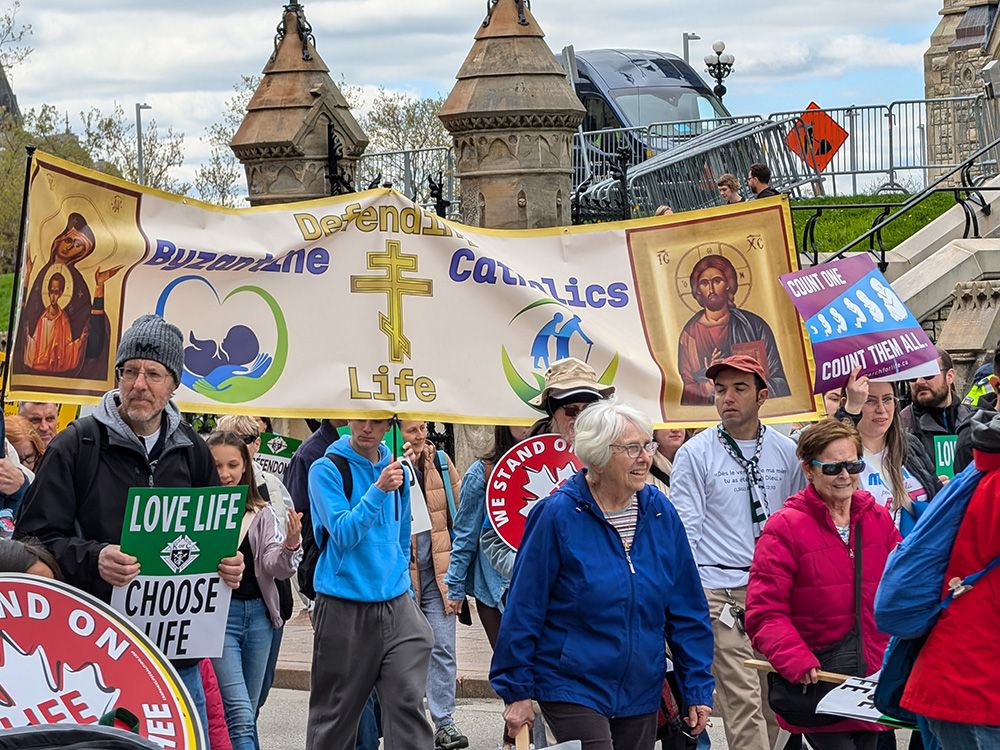
Thousands of pro-life demonstrators gathered on Parliament Hill on Thursday to make their voices heard on abortion and MAID.

OTTAWA — Thousands of pro-life demonstrators gathered on Parliament Hill on Thursday to make their voices heard on abortion and MAID — and to take shots at political leaders on both sides of the spectrum.

While this year’s rally theme was “Protection at Conception,” another theme emerged: the recent federal election.

While according to the CLC, the number of pro-life MPs increased to 42, many of the organization’s members expressed disappointment about the election results.

“While (Prime Minister) Mark Carney throws up elbows, we defend the innocents,” said Jeff Gunnarson, the CLC’s national president, at the rally.

Criticism of Carney was constant throughout the event, with speakers taking aim at him and his party.

“Prime Minister Mark Carney presents a direct threat to every pre-born human being,” said Josie Luetke, the CLC’s director of education and advocacy, at a pre-rally press conference on Wednesday. “He is rejecting human equality and is repeating past mistakes of the party.”

Still, CLC members made a point that they are still willing to find some areas of agreement with Carney.

“Mr. Carney, will you at least meet us on the periphery by pledging a Born Alive Infant Protection Act to mandate the provision of life-saving neo-natal care and medical assistance for babies who survive abortion and prosecutions for medical staff who violate the law,” said Jack Fonseca, the CLC’s director of political operations, on Wednesday.

Pierre Poilievre was also put on the hot seat at the march.

“I would encourage you to denounce the corrupt practice of appointing Conservative candidates without a nomination vote by the party’s grassroots members,” Fonseca said. “In the 2025 election cycle, you allowed the cancellation of at least 110 nomination contests in favour of appointing your preferred candidates.

“This is one of the reasons you lost this federal election.”

Additionally, pro-choice demonstrators went to the hill as part of the “Rally for Choice.” In a statement about the rally, Defend Choice, the organization running the counterprotests, said that they were there to remind everyone that “choice is not up for debate.”

The National March for Life has become an annual tradition, with the Campaign Life Coalition holding the rally annually for 28 years. The event is held in early May, to mark the anniversary of the day abortion was decriminalized in Canada on May 14, 1969.

National Post

Get more deep-dive National Post political coverage and analysis in your inbox with the Political Hack newsletter, where Ottawa bureau chief Stuart Thomson and political analyst Tasha Kheiriddin get at what’s really going on behind the scenes on Parliament Hill every Wednesday and Friday, exclusively for subscribers. Sign up here.

Our website is the place for the latest breaking news, exclusive scoops, longreads and provocative commentary. Please bookmark nationalpost.com and sign up for our daily newsletter, Posted, here.

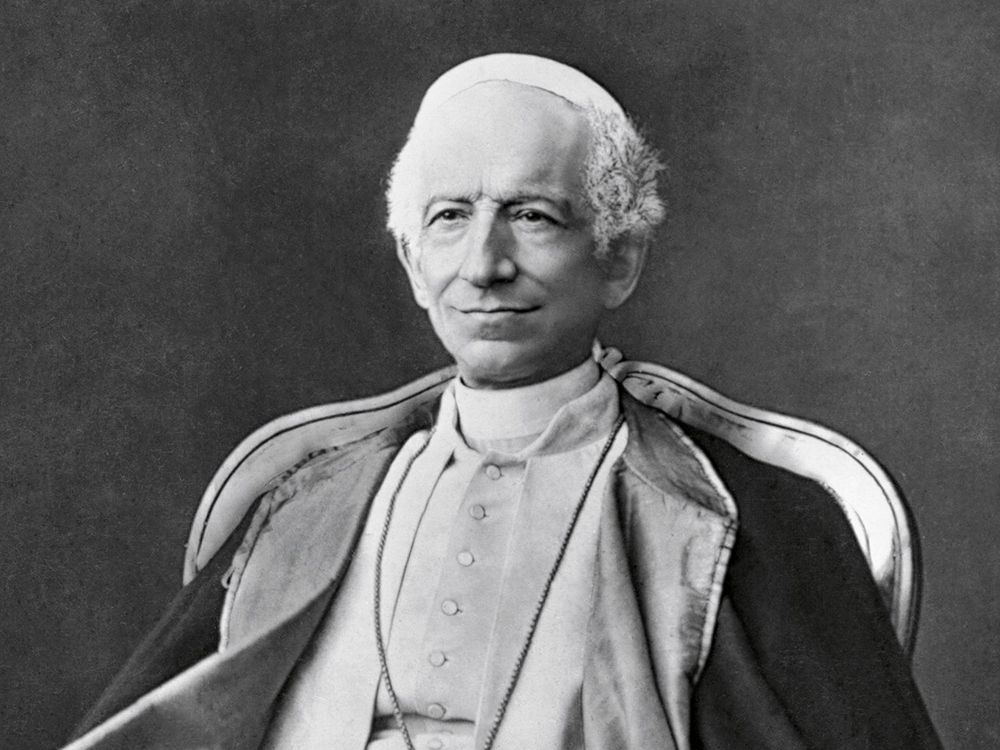
Pope Leo XIII, who served from 1878 to 1903, had an immense influence on the Catholic Church and the world.

In 2013, when Argentinian Jorge Mario Bergoglio became pope he chose the name Francis, a tribute to one of the most popular saints in the history of Christendom.

St. Francis of Assisi, who lived in the 13th century, was loved because of his deep devotion to the poor. Indeed, Pope Francis showed a great love for the most marginalized of this world, especially the millions of migrants who are the poorest of the world.

So what does the name Pope Leo XIV possibly indicate for this new papacy?

Pope Leo XIII, who served from 1878 to 1903, has not been declared a saint, but his influence on the Church and the world was immense. He, too, showed a great concern for working people everywhere who slaved away for a mere pittance and had little time for family or even to worship God. They were in many ways the dross of the Industrial Revolution, who, along with poor pay, were subject to the illnesses and diseases spewed out by factories.

If his new name is something to go by, we might expect our new Pope to also show great concern for those who labour under the dark cloud of exploitation.

On May 15, 1891, Leo promulgated the encyclical Rerum Novarum, which translates to “Of New Things.” For Catholics, and any observer of the plight of labour, the encyclical was considered — and still is — a landmark document on worker rights.

Last month, Fr. Joe Connelly wrote a beautiful essay on the Catholic website Guardian Angels in praise of Rerum Novarum, a document that was not just relevant to conditions in the late 19th century but to many parts of the world today.

“During an era marked by the rise of capitalism and the exploitation of labor, Pope Leo XIII boldly defended the rights of workers and the sanctity of the family,” he wrote.

“Rerum Novarum emphasized the importance of just wages, decent working conditions, and the rights of laborers to organize for their mutual benefit. Rejecting the extremes of unchecked capitalism and socialism, the encyclical called for a balanced approach that respects both the rights of workers and the principles of private property.”

He notes that the encyclical underscored the Catholic principle of “subsidiarity,” which reminded smaller groups in society to address social needs.

“Rather than relying solely on the state, the encyclical emphasizes the responsibilities of families, local entities, and voluntary associations in caring for the vulnerable and promoting the common good. This principle remains as relevant today as it was in Pope Leo XIII’s time, guiding Catholics in their efforts to foster solidarity and build thriving societies.”

The encyclical urged the owners of capital to give their workers decent pay, shorter workdays and workweeks, so that those who laboured would have time to spend with families and in worship.

Pope Leo XIII also told workers that they had the right to form unions in order to become a collective force in dealing with management.

At the heart of Catholic social teaching, of which Rerum Novarum is likely the greatest document, the emphasis is on moral values and the dignity of the human person.

In 2011, when I was the religion reporter for the National Post, I interviewed Thomas E. Woods, a conservative Catholic and libertarian, and author of How the Catholic Church Built Western Civilization.

Many at the time of Pope Leo XIII, and even today, thought the encyclical smacked of socialism. Woods said that was never the case: “The Church is categorically opposed to socialism. Leo XIII said the right of private property is sacred and inviolable. Those are his words. That’s totally incompatible with socialism.”

Rather, Woods said, Pope Leo XIII was reminding Catholics and others that they have a responsibility to those around them.

“We’ve come to look to the state for so many aspects of life, we just instinctively think that anything that is important is something the state has to do,” Woods said. “Benedict XVI and John Paul II have both said the welfare state can have an enervating effect on people and communities because it leads us to think that we have no responsibility toward other people because the state will take care of it. That’s not good for anybody’s soul.”

Charles Lewis was the National Post’s religion reporter from 2007 to 2013. He is also this year’s recipient of the Archbishop Adam Exner Award, given by the (Canadian) Catholic Civil Rights League for “Catholic Excellence in Public Life.”

Our website is the place for the latest breaking news, exclusive scoops, longreads and provocative commentary. Please bookmark nationalpost.com and sign up for our daily newsletter, Posted, here.

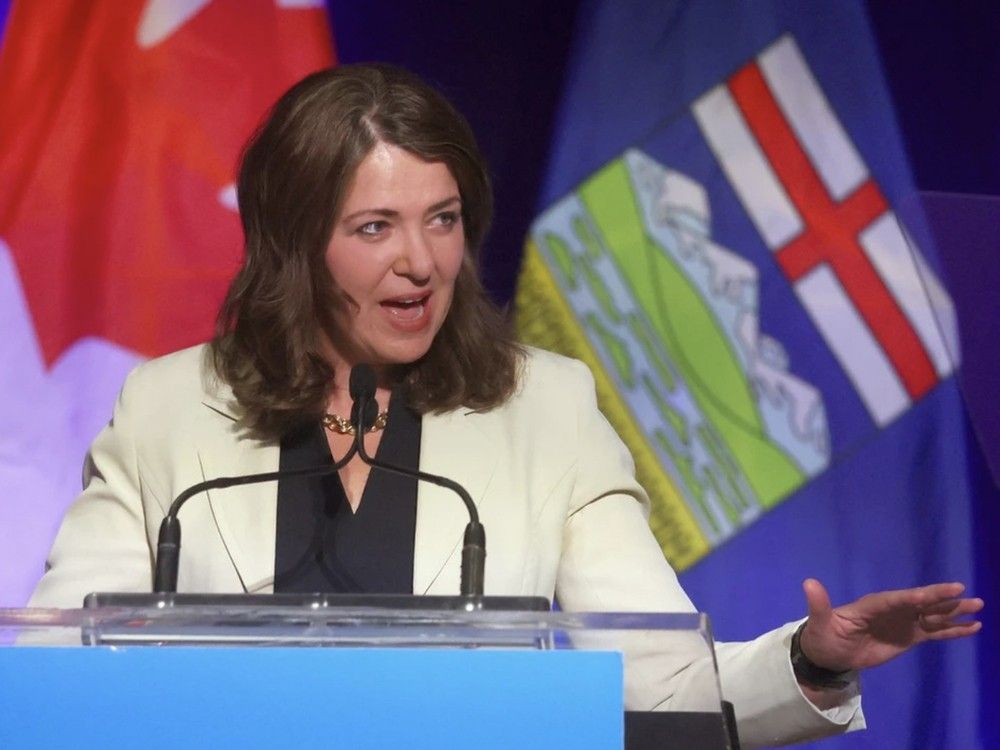
Premier Danielle Smith addressing the Calgary Chamber of Commerce in June.

OTTAWA — Alberta Premier Danielle Smith is putting a new twist on an old debate over equalization, saying that the federal program should be re-tooled to prioritize the smaller provincial economies like those in Atlantic Canada.

At least one Atlantic province, Newfoundland and Labrador, agrees that it’s getting shortchanged under the program’s current rules.

“(E)

qualization is intended to ensure … fairness for all citizens. Currently, this fairness is not achieved for Newfoundland and Labrador,” Greg Gill, a spokesperson for Newfoundland’s Liberal government told the National Post on Thursday.

Smith said in a livestreamed address on Monday that it was time for the ‘big four’ provinces of Ontario, Quebec, Alberta and British Columbia to fend for themselves, and stop siphoning equalization dollars from smaller provincial economies like those in Atlantic Canada.

“We have no issue with Alberta continuing to subsidize smaller provinces with their needs, but there is no excuse for such large and powerful economies… to be subsidizing one another,” said Smith.

“That was never the intent of equalization, and it needs to end.”

Newfoundland’s government likewise says the program shortchanges its residents in a number of ways, including by failing to account for the cost of delivering services in the far-flung, sparsely populated province.

“(We) service… more than 500 communities across a large, geographically dispersed, and aging population connected by almost 10,000 kilometres of roads,” wrote Gill.

Gill also said the current equalization formula punishes Newfoundland for developing offshore oil and other natural resources. He did not say explicitly that Newfoundland agree with Smith that the four biggest provincial economies should stop subsidizing one another through the equalization program.

Newfoundland

filed a court challenge

against the program in June 2024, arguing it doesn’t fulfill its constitutional purpose in its current form.

Smith said

in a March statement

to the federal party leaders that Alberta “is no longer agreeable to subsidizing other large provinces who are fully capable of funding themselves.”

Sixty-two per cent of Albertans

voted in a 2021 referendum

to petition Ottawa to remove equalization from the Constitution, after the question was put forward by

a panel on constitutional issues

launched by Smith’s predecessor Jason Kenney.

Quebec and Ontario will take in a combined $14.15 billion of

$26.17 billion earmarked for equalization

payments in 2025-26, with Quebec alone getting half the total pot ($13.57 billion).

Smith called on Monday for Alberta to receive

federal transfers and equalization payments

on the same per capita basis as the other three large provinces.

Alberta hasn’t received equalization payments since the mid-1960s but still gets annual federal health and social transfer payments.

It will get $8.6 billion in major federal transfers in 2025-26, or $1,695 per person.

This is $1,464 less per person than Quebec, $33 less than Ontario and the same as B.C

.

Trevor Tombe, a professor of economics at the University of Calgary, said that size can be misleading in discussions of economic redistribution.

“China is a much bigger economy than Canada, but is the average Chinese person better off than the average Canadian?” said Tombe.

Tombe pointed out that the three Maritime provinces of Nova Scotia, New Brunswick and Prince Edward Island will be paid out on a higher per-capita basis than Quebec.

He conceded that there are “legitimate concerns” that arise when have-not provinces deliberately make economically suboptimal choices, such as putting in place bans on resource development.

“One question we’ll have to grapple with is should we have a program that provides larger payments to provinces that make decisions that hurt their own economy?” said Tombe.

Tombe noted that equalization payments have helped Quebec keep its

electricity prices artificially low

, hampering innovation and growth in the province’s energy sector.

He also noted that the no-strings-attached payments can inflame interprovincial tensions when have-not provinces appear to spend frivolously.

Ontario, for example, is set to receive $546 million in equalization payments this year,

after spending roughly $3 billion

on pre-election rebate cheques for residents.

National Post

rmohamed@postmedia.com

Get more deep-dive National Post political coverage and analysis in your inbox with the Political Hack newsletter, where Ottawa bureau chief Stuart Thomson and political analyst Tasha Kheiriddin get at what’s really going on behind the scenes on Parliament Hill every Wednesday and Friday, exclusively for subscribers. Sign up here.

Our website is the place for the latest breaking news, exclusive scoops, longreads and provocative commentary. Please bookmark nationalpost.com and sign up for our daily newsletter, Posted, here.