LP_468x60
on-the-record-468x60-white

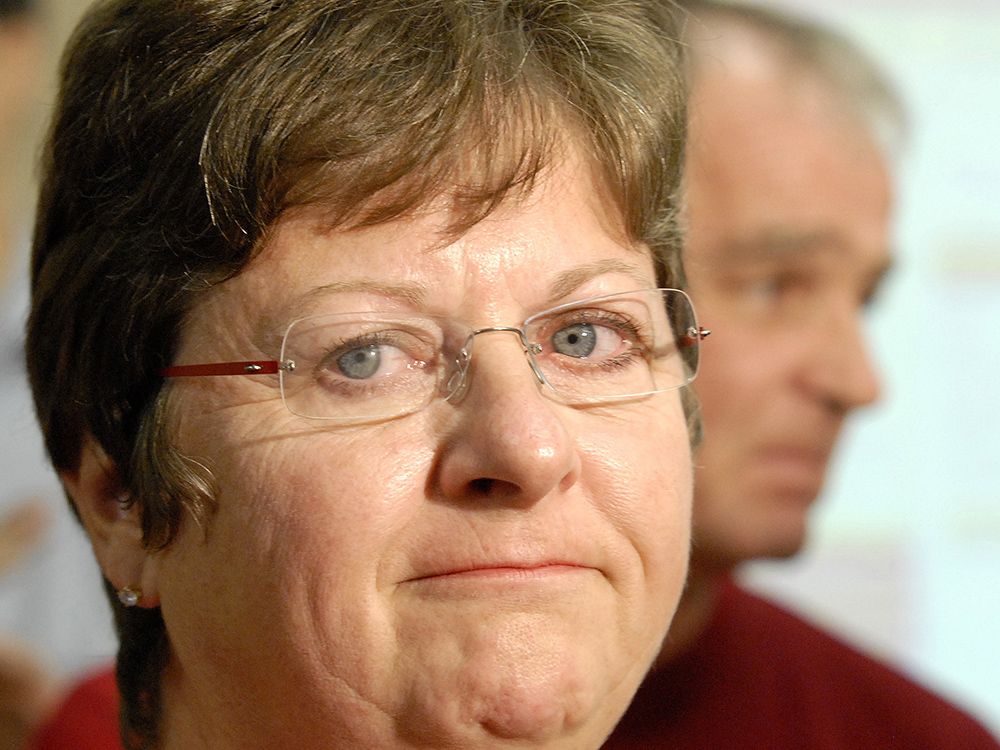
Tatiana Auguste, Liberal victor for Terrebonne in the 2025 federal election.

A recount of votes in the Quebec riding of Terrebonne has

flipped that seat

from the Bloc Québécois to the Liberals, and brought the governing Liberty party to 170 MPs in the House of Commons, just two shy of a majority. Here’s what to know about Tatiana Auguste, Canada’s newest MP.

How close was the vote?

As close as they come. Auguste was initially reported to have won the riding by 35 votes after the April 28 election, but three days later the post-election validation process showed that incumbent Nathalie Sinclair-Desgagné of the Bloc Québécois was ahead by 44 votes.

That narrow victory then triggered a judicial recount, which began Thursday and was completed Saturday. It gave Auguste 23,352 votes against Sinclair-Desgagne’s 23,351, a difference of just one ballot.

Who is Tatiana Auguste?

Auguste’s

candidacy website

says she was born in Port-au-Prince, Haiti, and has lived in Canada since 2008. She grew up in Montreal, where she attended elementary and secondary school and graduated with an International Baccalaureate. She went on to study economics at Concordia University focusing on investment strategies in underrepresented communities.

The site notes that she has served as vice-president on the board of directors of

Télévision Communautaire de Frontenac

and is currently a volunteer there. TCF is a community TV station in Montreal offering French programming that includes public affairs, cultural, social and leisure shows, documentaries and youth programs.

Tatiana is also vice-president of the

Conseil jeunesse de Montréal-Nord

, a citizen participation group focused on people aged 12 to 30. She also served as a political attaché to Emmanuel Dubourg, Liberal MP from the Quebec riding of Bourassa from 2013 to 2025. He did not seek re-election this year.

What is her history in the House?

None; this is Auguste’s first time running and her first victory in an election. She is also one of

four incoming Liberal MPs

— the others are Jake Sawatzky in B.C., and Amandeep Sodhi and Fares Al Soud in Ontario — who were born in the early 2000s.

How does she feel about the narrow victory?

“I’ve been on an emotional roller coaster, but I’m really happy,”

she told the CBC

.

On the narrowness of the result, she said: “It certainly shows a bit of division. But I work for everyone, whether they voted for me or not. I’m ready to do the work to rally them to Terrebonne’s cause.”

She also congratulated her rival, Sinclair-Desgagné, on a close race, and said she understands her defeat. “Having experienced it a week ago, I found it heartbreaking for her.”

National Post has reached out to Sinclair-Desgagné for comment.

With files from Canadian Press

Our website is the place for the latest breaking news, exclusive scoops, longreads and provocative commentary. Please bookmark nationalpost.com and sign up for our politics newsletter, First Reading, here.


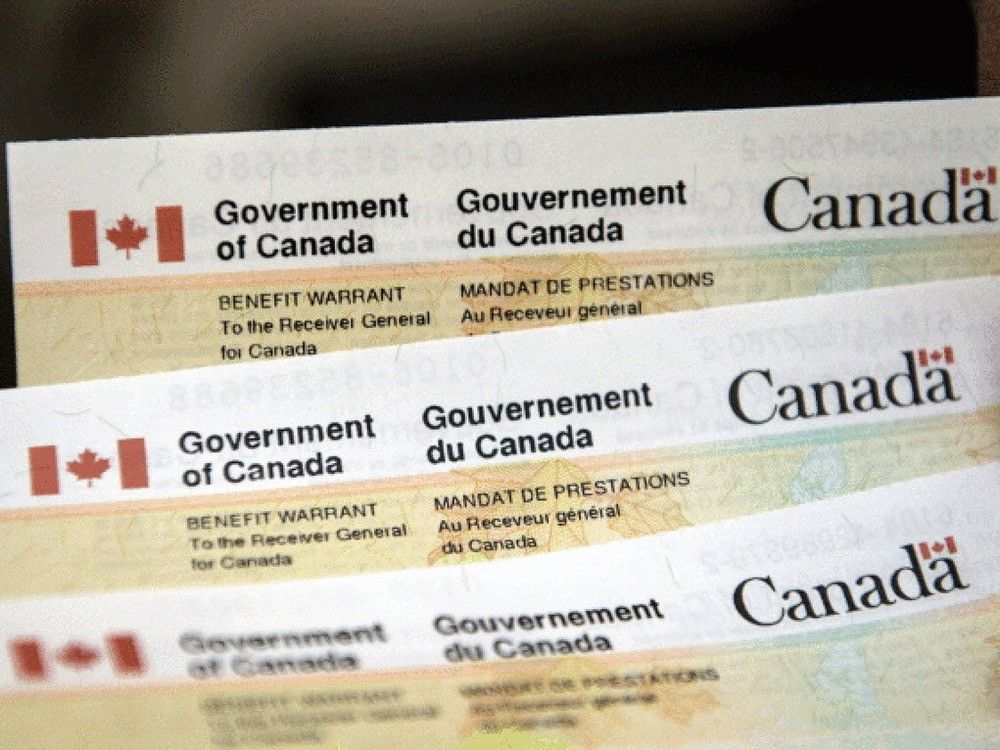
The Canada Revenue Agency (CRA) is searching for the owners of 160 cheques each worth over $100,000 as part of a massive stash of more than 10 million uncashed cheques waiting to be claimed.

OTTAWA — If only they’d signed up for direct deposit.

The Canada Revenue Agency (CRA) is searching for the owners of 160 cheques each worth over $100,000 as part of a massive stash of more than 10 million uncashed cheques waiting to be claimed.

As of late April, the CRA was sitting on a total of $1.7 billion payments that it once unsuccessfully tried to send to their rightful owners going back nearly three decades, according to data compiled by the agency for National Post.

“Each year, the Canada Revenue Agency issues millions of payments in the form of refunds and benefits. These are issued either by direct deposit or by cheque,” CRA spokesperson Nina Ioussoupova wrote to National Post.

“Over time, some payments remain uncashed for a variety of reasons such as the recipient misplacing the cheque or moving without updating their address.”

The vast majority of the 10.2 million uncashed cheques are worth less than $1,000. But there are still nearly 190,000 individual payments worth between $1,000 and $100,000 sitting in the CRA’s metaphorical coffers waiting to be claimed by their rightful owner.

And then there are 160 cheques worth at least $100,000 — or a solid down payment on a house anywhere outside of Vancouver, Toronto or Montreal — still looking for their rightful owner.

“Cheques can date back as far as 1998 and, because government-issued cheques never expire or stale date, the CRA can reissue a payment once requested by the taxpayer,” Ioussoupova wrote.

To access the online tool to see if you’re one of 160 Canadians sitting on a home down payment, visit CRA’s website and look for the agency’s “My Account” service. Once logged in, click on the “Uncashed Cheques” link towards the bottom of the right side column on the “Overview” page.

Any unpaid amounts that have sat dormant for more than six months will be listed on that page, as well as the necessary forms to claim your money.

For years after 2020, the year the tax agency launched the online uncashed cheques, the balance of uncashed payments grew steadily.

The first year, the agency had just over $1 billion in uncashed cheques linked to long-standing benefit programs such as GST/HST reimbursements, the Canada Child Benefit or even income tax refunds.

By April 2021, the total had grown at a rate of $500,000 daily for one year to hit roughly $1.2 billion in unclaimed payments.

The amount hit a record high by April 30, 2024, with an estimated 10.3 million uncashed cheques valued at a staggering $1.8 billion waiting to be claimed, according to CRA.

For the first time since 2020, the total amount of unclaimed payments dropped slightly in the last year. The CRA’s unclaimed balances stands at roughly $1.7 billion over 10.2 million uncashed cheques.

“Since the initiative was launched, Canadians have reclaimed approximately 4,500,000 uncashed cheques valued at $1.6B as of March 2025,” Ioussoupova wrote.

After claiming any uncashed cheques, taxpayers should sign up for direct deposit to ensure they don’t miss out on any further payments.

In the meantime, the money from the unclaimed cheques doesn’t simply sit in an account waiting to be paid. Instead, it goes back into the government’s general coffers to be used elsewhere until a taxpayer cashes their cheque.

National Post

cnardi@postmedia.com

Get more deep-dive National Post political coverage and analysis in your inbox with the Political Hack newsletter, where Ottawa bureau chief Stuart Thomson and political analyst Tasha Kheiriddin get at what’s really going on behind the scenes on Parliament Hill every Wednesday and Friday, exclusively for subscribers. Sign up here.

Our website is the place for the latest breaking news, exclusive scoops, longreads and provocative commentary. Please bookmark nationalpost.com and sign up for our politics newsletter, First Reading, here.


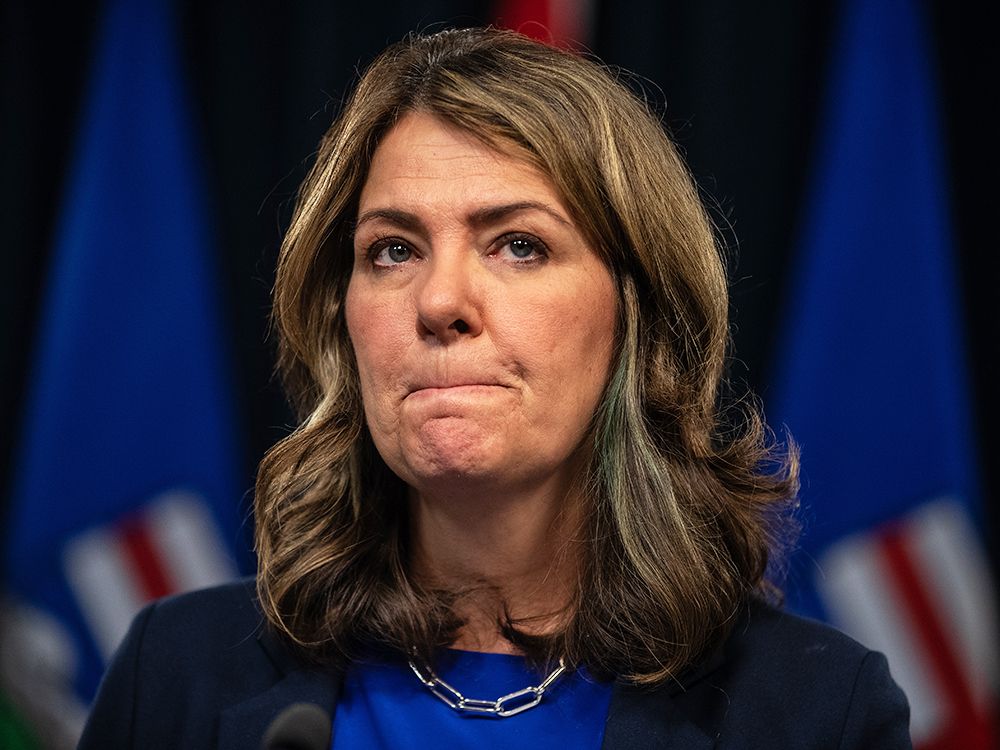
The federal Liberals are looking to wind down Alberta's energy industry, Premier Danielle Smith says. “We are not going to do that,” she asserts.

“Albertans feel an existential threat from Ottawa,” says Alberta Premier Danielle Smith. “I think the rest of the country may feel an existential threat from Donald Trump. Alberta feels the same thing — but the existential threat, it’s from Ottawa.”

Nanos Research polls published one week after the federal election indicate nearly 30 per cent of Alberta residents support separation from Canada.

“The polls I’m seeing now,” Smith reports in a recent conversation, “suggest 30 to 40 per cent. That’s the highest I’ve ever seen.”

The premier agrees the surging numbers could reflect the possibility Albertans believe secession is a more viable option, particularly given U.S. President Donald Trump’s willingness to lend legitimacy to a unilateral declaration of separation by a Canadian province. Or, she suggests, it’s “just an indication of how mad people are at the treatment they’ve had for the past 10 years and the despair they’re feeling that it might continue.”

Perhaps even more worrisome, the same Nanos Research poll points to a generational divide. Younger Albertans are less likely than their parents or grandparents to believe being part of Canada would be better for Alberta’s economy. Alberta is a young province — the youngest in Canada — and Smith knows she’s got a job to do, to convince young people that Alberta, Canada is a place where you can realize your dreams.

The “Alberta’s Calling” campaign launched a month before Smith became premier “worked like gangbusters,” she exclaims. “We’re attracting young minds and the best and brightest.” But, after the federal election outcome, some of these young people haven’t hidden the fact they aren’t happy with their seniors chewing up resources and making decisions they don’t agree with.

“There was a TikTok phenomenon of young people doing videos,” Smith acknowledges, “saying, ‘I understand, mom and dad or grandma and grandpa, Canada is very good for you. You have a good life, good job, good income, good retirement. But I don’t have that same future, so think about me when you’re voting.’”

Setting the course for prosperity for future generations is a priority for Smith, and she doesn’t hide her annoyance with the suggestion, by some, that Alberta is already the wealthiest province: Why aren’t we happy with our lot?

“We don’t just say, ‘I guess we have wealth, so let’s just start figuring out how to wind it down. Let’s have an emissions cap so we can figure out how to wind down two million barrels of production. Let’s figure out how to wind down the development of our industry because we’re not allowed to build more electricity. Let’s just not be aspirational and have data centres because we’re not going to be able to have them come on stream anyway,’” the premier says, with obvious sarcasm.

That’s what the future looks like, she cautions, under Liberal policies. It’s not just a matter of standing still; it’s a matter of winding things down. “We are not going to do that as a province,” she concludes, in an even voice.

As Alberta’s premier, Smith sees it as her job to take the secessionist threat seriously. At the same time, she recognizes her job is to try to make sure support for separation from Canada doesn’t gather steam. To that end, Smith notes, she’s obliged to work with Prime Minister Mark Carney and has been very clear: “We’ve heard a lot of talk for a lot of years, a lot of talk during the election. But there’s going to be some concrete actions that will need to be taken if (Carney) wants to make sure that it doesn’t tip over and become a majority.”

She sees Pierre Poilievre as an ally in this work; she’s delighted the Conservative leader is going to be running for a federal seat in the province of Alberta and delighted, she says, “he’s going to be able to hear the same feedback that I get every single day, about the frustration with Ottawa.”

Smith’s hell-bent to convince Canada’s new prime minister of the need for a workable process to get pipelines and economic corridors built, to support the growth of the energy industry. “It’s not even that young people are necessarily going to work in oil, in gas,” she explains, “they might work in carbon capture, and they might work in geothermal, and they might work in the nuclear industry, and they might want to see natural gas power plants fuel AIs.” But the development of the energy sector fuels everything else, and over the next six months, she hopes to see a breakthrough with this new prime minister.

Most of the nation-building projects individually tabled by Canada’s premiers require collaboration, across provinces and regions. Smith’s looking forward to conversations with her peers at the upcoming Western premiers conference, to be hosted in Yellowknife in a couple of weeks. “I think there’s an opportunity, a huge opportunity,” she enthuses, “for B.C. and Alberta to work together.” And she’s already pitched Carney on the idea of the Port of Prince Rupert, connected to an economic corridor, as a gateway to Asian markets for a range of Canadian exports. “But we’d have to end the tanker ban,” she quips, “and we’d have to have a commitment that we’re going to develop that corridor.”

“The question will be,” she adds, “can we act on it in a reasonable period of time, or are we going to stay with the cumbersome process that has no end in sight, like we have right now? That is really the challenge for the private sector.”

Smith understands what’s at stake. In the U.K., former prime minister David Cameron opened the door to the Brexit referendum as a way to placate or remove the irritant of U.K. citizens complaining about being shackled to bureaucratic EU decisions made in faraway Brussels. Momentum built, the Brexit vote narrowly won, and shortly afterwards, Cameron resigned.

But Smith assures me, she’s not lying awake at night worrying about that potential outcome. “I trust the people of Alberta,” she says with conviction. “I think that they know what issues to put forward, and when they have an open debate, they’ll come up with the right answers.”

Our website is the place for the latest breaking news, exclusive scoops, longreads and provocative commentary. Please bookmark nationalpost.com and sign up for our newsletters here.



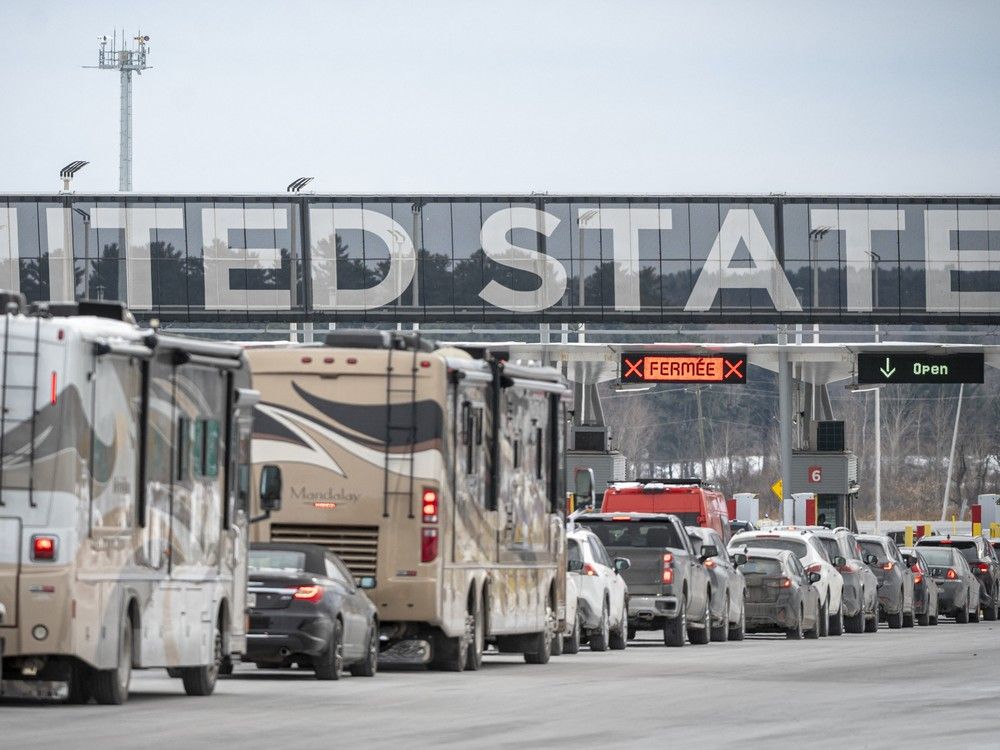
Cars wait in line to enter the United States at a border crossing at the Canada-U.S. border in Blackpool, Quebec, Canada, on February 2, 2025.

People exiting the United States by vehicle could be photographed at the border crossings,

WIRED reported on Friday.

No timeline was provided for when this system comes into effect.

The photographs taken at the border crossings will be matched to commuters’ travel documents such as passports, green cards and visas to verify identity. When implemented, the system will impact outbound lanes going to Canada and Mexico.

This will be an expansion to the agency’s existing practice, spokesperson for the U.S. Customs and Border Protection (CBP), Jessica Turner told WIRED. CBP already takes photos of people entering the U.S. and matches it with their respective travel documents.

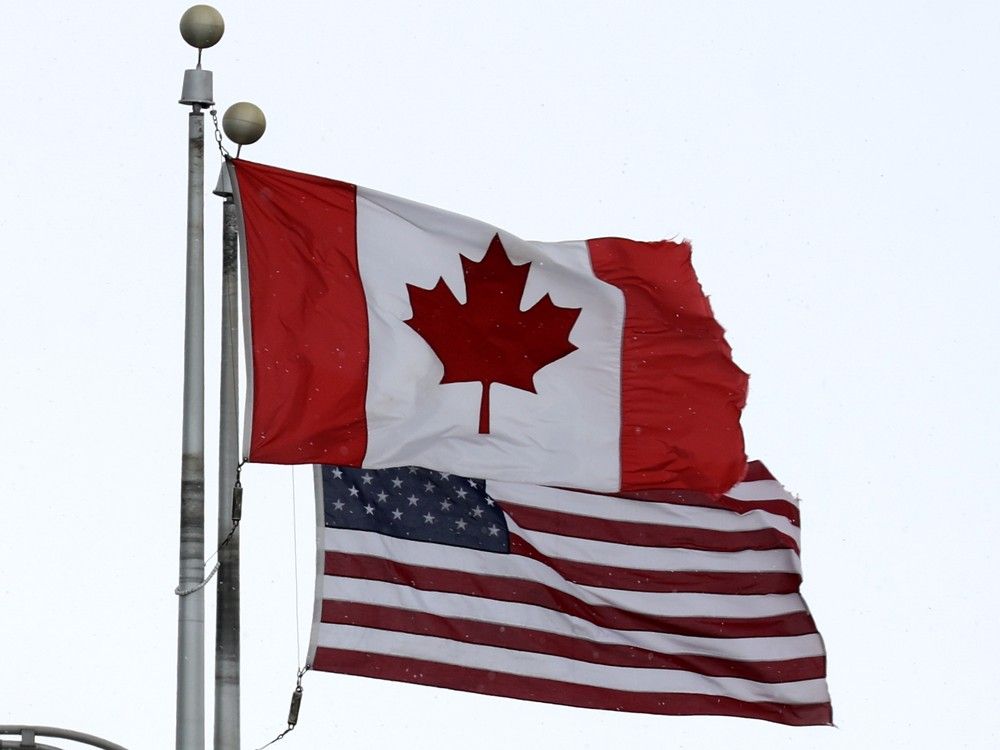
 A Canadian flag flies next to the American one at the Lewiston-Queenston border crossing bridge on Feb. 04, 2025 in Niagara Falls, Canada.

“Although we are still working on how we would handle outbound vehicle lanes, we will ultimately expand to this area,” Turner tells WIRED.

The Verge reports

CBP collects biometric data (photograph, finger prints etc) of travellers exiting from 57 U.S. airports. But the border protection agency reportedly has no program monitoring people leaving the U.S. by a vehicle.

The goal of an outbound system, Turner told the publication, would be to “biometrically confirm departure from the U.S.”

Canadians already wary of travelling to the U.S.

Earlier this week, some drivers returning to Canada reported additional checkpoints at B.C.-Canada border that

CBP told National Post

was a regular inspection.

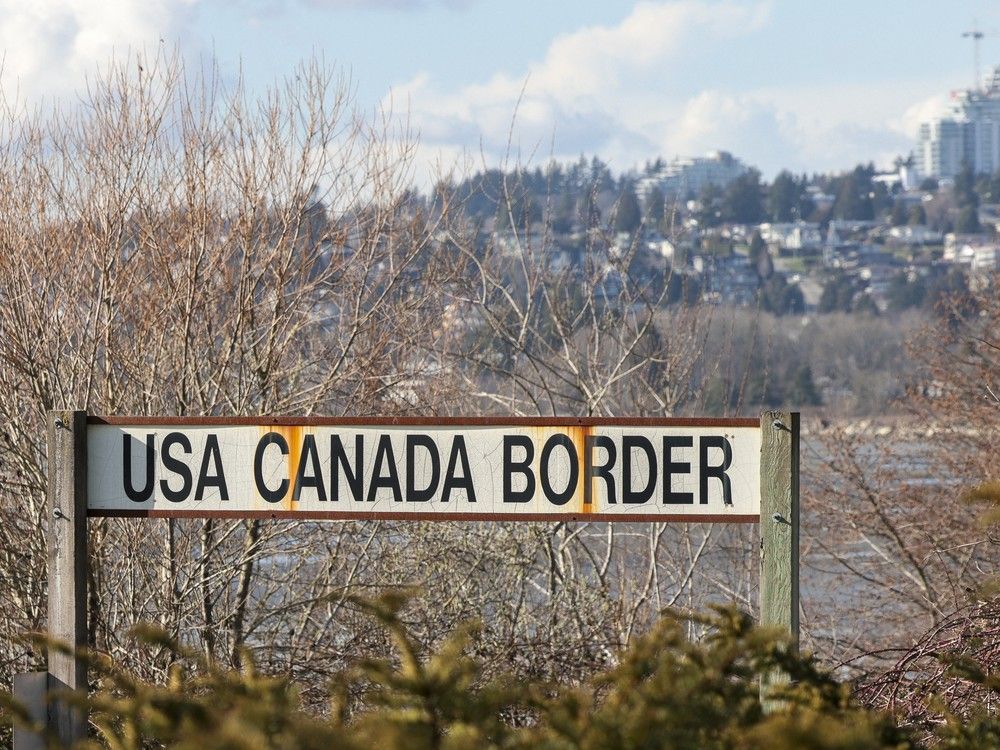
 A sign for the US-Canada border is pictured at the Peace Arch border crossing in Blaine, Washington, on March 5, 2025.

“As part of its national security mission U.S. Customs and Border Protection routinely conducts inspections on outbound traffic. These inspections are a vital tool in apprehending wanted individuals as well as in seizing a variety of contraband – which ultimately makes our communities safer,” CBP told National Post on Tuesday.

Although the checkpoint was shortly taken down, one B.C. resident told Global News that the searches on other vehicles made her “very uncomfortable.”

“I don’t want to call it a blockade but… they were stopping people and I held up our Nexus cards and the U.S. customs agent waved us through but as I passed, because our windows are down, he said, ‘Let’s stop and check the next one,’” Leslie, who wanted to be identified by her first name, told

Global News

.

The sentiment mirrors a majority of Canadians who said

travelling to the U.S. could be unsafe and unwelcome

, as seen in the findings of a

recent poll by Leger

conducted for the Association for Canadian Studies (ACS).

The survey evaluated responses from 1,626 across Canada from May 1 and May 3. Out of which, majority (52 per cent) said it is no longer safe for all Canadians travelling to the U.S. Slightly more (54 per cent) said they don’t feel welcome anymore.

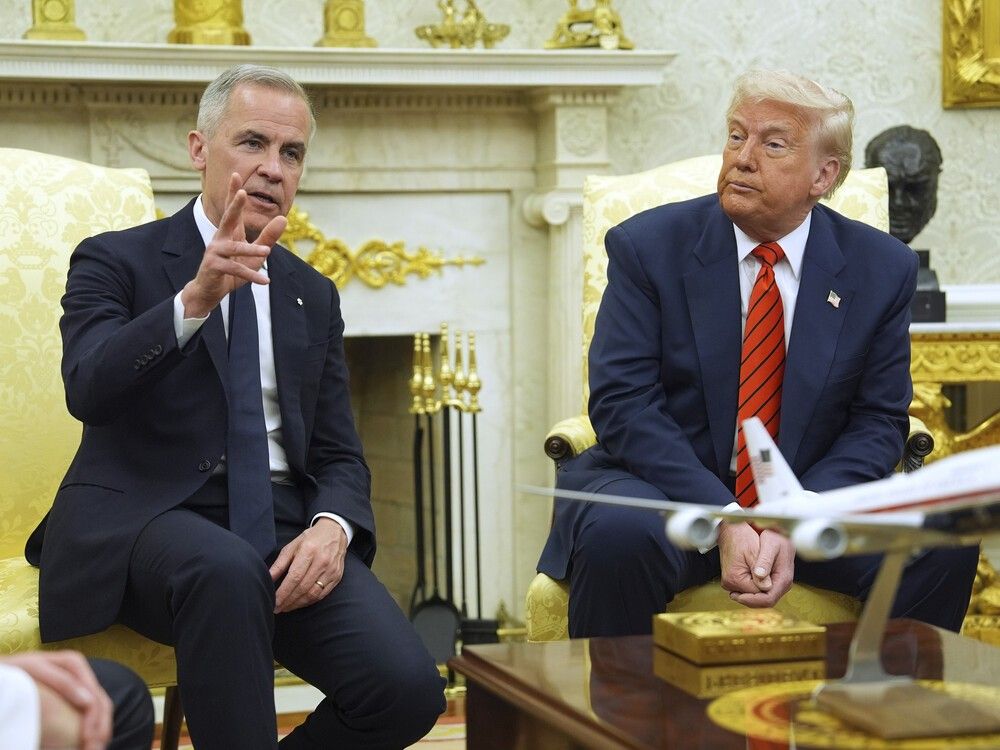
 U.S. President Donald Trump meets with Prime Minister Mark Carney in the Oval Office of the White House, Tuesday, May 6, 2025, in Washington.

“If Canadians have serious concerns about this, it has ramifications for our ongoing travel and interaction with Americans and with the United States,” president and CEO of the ACS, Jack Jedwab told National Post. “It’s something that needs to be addressed and it’s something that Mr. Carney needs to help Mr. Trump understand.”

Our website is the place for the latest breaking news, exclusive scoops, longreads and provocative commentary. Please bookmark nationalpost.com and sign up for our daily newsletter, Posted, here.


Beef prices are on the rise in Canada, while pork producers are coping with depressed prices, according to a new reports on grocery costs by Statistics Canada. (Jim Wells/Postmedia)

Amid the general upward trend in Canadian grocery prices, meat shopping in Canada has become more challenging.

However, while the price of most beef products has risen, pork prices have dropped, according to the latest

Statistics Canada report

on monthly average prices for selected food products.

Retail

beef prices have risen

an average of 10-12 per cent in early 2025, with further moderate increases expected throughout the year.

Causes of rising beef prices

This is based on several interconnected factors. First is the

restricted supply of beef cattle

. Drought in western Canada and the U.S. has reduced cattle herds, leading to a smaller supply of beef and higher prices.

Drought has also driven up the

cost of feed grains

such as corn and barley, which are among the principal costs in cattle production. That contrasts with 

feed costs for hogs

(corn and barley), which are expected to remain below average in 2025. That’s good for pork producers as it will support improved margins for hog farmers.

Meanwhile, international demand for Canadian beef, especially in Asia, has been robust, keeping domestic prices high.

In contrast, pork prices in Canada are falling.

Tariffs hurting pork producers

The

threat of U.S. tariffs

loom for Canadian pork exports. If tariffs take effect, Canadian

pork exports to the U.S. could decline sharply,

forcing more pork into the domestic market and pushing prices further down. Retail price-estimates

suggest a 2 per cent decline

in retail pork prices if U.S. tariffs are enacted.

Meanwhile, exports to markets like Japan, Mexico, and South Korea are growing, but the loss of the Chinese market due to Canada’s tariff battle with China has also increased the risk of domestic oversupply. In March, China imposed a 100 per cent tariff on canola oil, oil cakes and pea imports, and a 25 per cent duty on Canadian aquatic products and pork.

Decreased pork consumption

Meanwhile, Canadian pork producers have been coping with decreased domestic consumption — a decline of about 12 per cent year-over-year in 2024. Consumers shifted to other proteins when pork prices were higher.

Pork farmers are also coping with recent research that indicates

beef consumers are less likely to reduce beef purchase

and switch to pork, even when beef prices rise. The research shows even substantial price hikes in beef result in only modest increases in demand for pork or chicken.

Conversely,

many pork buyers will reduce consumption

or switch to alternatives if pork prices rise, especially in lower-income or more price-sensitive demographics.

Here are some of the price changes in beef and pork noted by StatsCan:

Beef stewing cuts

2024: $16.68/kg, 2025: $19.33/kg

Beef striploin cuts

2024: $27.59/kg, 2025: $35/kg

Beef top sirloin cuts

2024: $18.57/kg, 2025: $22.06/kg

Beef rib cuts

2024: $23.80/kg, 2025: $39.01/kg

Ground beef

2024: $11.72/kg, 2025: $13.85/kg

Pork loin cuts

2024: $9.53/kg, 2025: $8.72/kg

Pork rib cuts

2024: $9.57/kg, 2025: $8.35/kg

Pork shoulder cuts

2024: $9.01/kg, 2025: $7.23/kg

Pork wieners

2024: $4.13/400 g, 2025: $4.07/400 g

Our website is the place for the latest breaking news, exclusive scoops, longreads and provocative commentary. Please bookmark nationalpost.com and sign up for our daily newsletter, Posted, here.


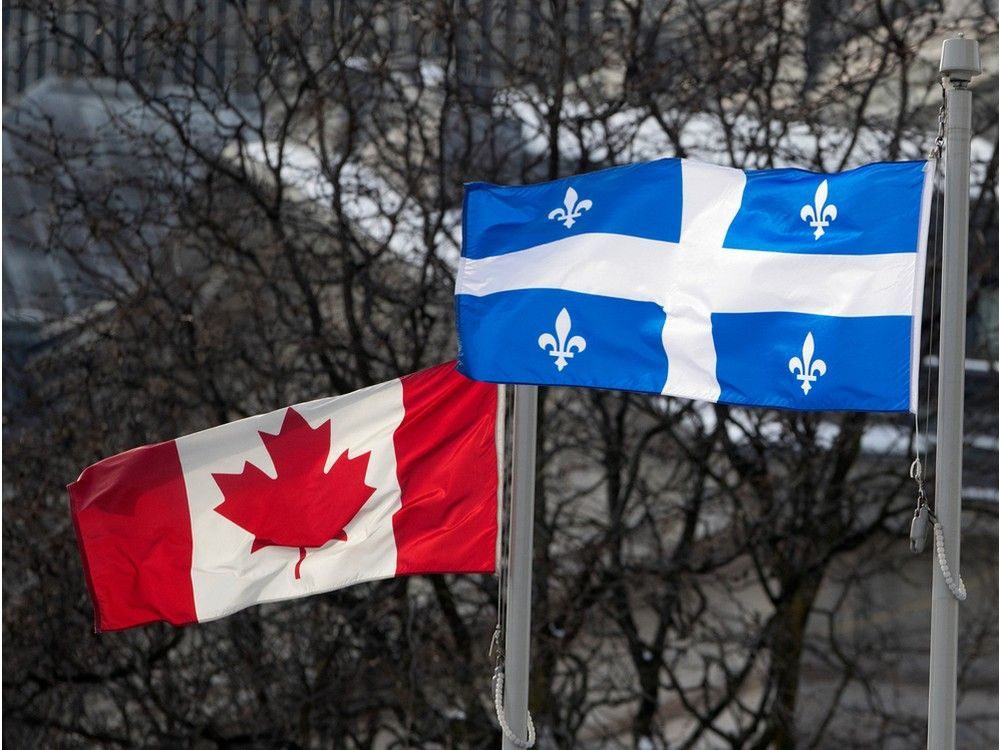
The flags of Quebec and Canada are shown on flagpoles.

A new poll reveals that more than 80 per cent of Quebec residents say that they’re part of the Canadian nation.

The findings showed that despite the rhetoric by political leaders in the province that push for separatism, the majority of residents may not feel that way, according to the poll. Bloc Québécois leader Yves-François Blanchet

called Canada an “artificial country

with very little meaning,” in April, ahead of the federal election. This week,

Parti Québécois leader Paul St-Pierre Plamondon showed support for Alberta Premier Danielle Smith

, who dangled the possibility of a referendum before the federal government to leverage demands. St-Pierre Plamondon called the move a “striking gesture” for the “autonomy and defence of her own province.”

The Association for Canadian Studies poll was conducted by Leger on May 1 to May 3. Leger asked Quebec residents, who believe that to be a nation means that members share a common culture, language and history, if they are part of the Canadian nation. Around 82 per cent agreed that they are.

Other Canadians, who also held the same definition of what it means to be a nation, were asked whether they agreed that Quebecers are part of the Canadian nation. Nearly the same amount, 83 per cent, agreed.

Meanwhile, the poll found that roughly 72 per cent of Bloc Québécois voters said Quebecers are part of the Canadian nation. This is compared to the 90 per cent of Liberal voters in Quebec who agreed, 78 per cent of Conservative voters, and 83 per cent of NDP voters.

“I was surprised at the extent to which a clear majority of Bloc Québécois voters agreed that the Quebecers were part of the Canadian nation,” said president and CEO of the Association for Canadian Studies and Metropolis Institute Jack Jedwab in an emailed statement to National Post. “It speaks to the degree to which Quebecers and other Canadians don’t make the distinctions politicians and academics insist (on making) between nations and countries.”

He continued: “Too often some politicians and academics appear to be blurring the distinction between nation and country to support a political objective.”

The federal election seemed to spark the question of separatism in other provinces as well.

Albertans have rallied recently

to show their support for separatism, and in another Leger poll, more than half of Canadians said that

Alberta separation should be taken seriously

. In mid-April,

a survey showed

that residents of Saskatchewan wanted to leave Canada the most, compared to other provinces, if Liberals won the election.

However, the findings from the new Leger poll suggest that Quebecers may now be more willing to turn away from separatism. This could be due to increased tensions between the U.S. and Canada since President Donald Trump took office. There has been a push among Canadians

to buy local goods

and to

travel within in the country

.

One Quebec resident and longtime Bloc Québécois supporter, Lucie Nucciaroni,

told CBC News

ahead of the federal election that although she was a a Quebec sovereigntist, “preserving Canada’s sovereignty is even more important.”

“We can’t live like Americans. Quebec needs Canada and Canada needs Quebec,” she said.

The responses to the poll came from 1,626 respondents in Canada. A margin of error cannot be associated with a non-probability sample in a panel survey for comparison purposes. A probability sample of 1626 respondents would have a margin of error of plus or minus 2.5 per cent, 19 times out of 20.

Our website is the place for the latest breaking news, exclusive scoops, longreads and provocative commentary. Please bookmark nationalpost.com and sign up for our daily newsletter, Posted, here.


OTTAWA — For some politicians, the grief takes time to set in.

For former London West MP Sue Barnes, however, the sense of loss after being defeated in her 2008 re-election bid landed like a thud.

Barnes, like other MPs, had been living a life of too many people to see, too many things to read, too many events to attend, too few hours in the day. But there was no shortage of purpose.

That’s the way it had been pretty much for 15 years in Parliament for the first woman elected to represent any riding in her southwestern Ontario city. And then, after a few hours of ballot counting, it was all gone.

“It hit me immediately,” she recalled this week.

Barnes compared the grief of her electoral loss, in tone, but certainly not in degree, with the recent loss of her husband John, who died in January 2024 after a long battle with Parkinson’s disease. She had spent much of her post-political life, especially the last five years, as his primary caregiver.

Barnes and the extensive club of former MPs got a new set of members last week when Canadian voters kicked dozens of their representatives to the curb.

According to an initial tally by former Nova Scotia MP Francis LeBlanc, an active member of the Canadian Association of Former Parliamentarians, the recent election saw 46 MPs lose their seats. Another 65 chose not to run again.

“This was a big wave,” said LeBlanc, in reference to the turnover of 111 former MPs from Canada’s 343 ridings.

It’s the natural cycle of political life. It’s part of the job and part of a healthy democracy.

But for those who lose their jobs, it still hurts. And this latest batch of defeated federal representatives will follow the patterns of the past: Some will grieve for a period and then move on to do other things. For others, it won’t be at all easy.

“It’s the only job in the world where you get publicly hired and publicly fired,” said Bryon Wilfert, a former Liberal MP who represented Richmond Hill outside of Toronto for 14 years. “For some (the loss) doesn’t sink in for months.”

Former Liberal cabinet minister Mark Holland was among those who struggled severely, descending after his 2011 loss into a dark enough place that he attempted suicide. Speaking to a Parliamentary committee in 2022, Holland said he had devoted almost his entire life to politics, had let too many other things in his life slide, and then woke up after seven years as an MP following defeat “in a desperate spot.”

“I was told that I was toxic,” he said during an emotional speech to the Procedure and House Affairs Committee. “The Conservatives hated me. No organization would hire me. My marriage failed. My space with my children was not in a good place and most particularly my passion — the thing I believed so ardently in … the purpose of my life — was in ashes at my feet.”

Holland returned to the House of Commons in 2015, and later served as minister of health before deciding not to run in this most recent election.

But his is not the only tale of caution. And it’s not just federal politicians who face post-election challenges.

 Former Liberal MP Sue Barnes, with her husband John, already grieving the loss of her London West riding on election night, Oct. 14, 2008.

Lorenzo Berardinetti, a former Toronto city councillor and Ontario MPP with a 30-year career in politics, faced a series of challenges in the immediate years after losing in the 2018 provincial election: difficulty finding work, a divorce, a brain seizure and the rising cost of housing.

By 2023, he was living in a homeless shelter in Ajax, Ont., where he stayed for more than a year. “I never thought this would have happened to me,” he was quoted as saying earlier this year, “but it happened.”

Thanks to a former political staffer at Toronto City Hall and Queen’s Park who started an online fundraising campaign, Berardinetti found shelter.

Not all former MPs, of course, face the severe challenges faced by Holland or Berardinetti. LeBlanc said it’s impossible to quantify the number struggling with serious problems but warns that it’s a “significant minority.”

Michael Browning, an Ottawa psychotherapist who has treated MPs in the past, said losing an election is similar to any other major professional setback, except it’s often more severe emotionally because of the huge sacrifices involved. Another important factor, he added, is that unlike many other professional defeats, such as losing a bid for promotion, there’s no existing job to fall back on.

“There’s no consolation prize,” said Browning, the director of The Whitestone Clinic.

Alain Therrien, the MP for the Quebec riding of La Prairie-Atateken for more than five years until last week, said it’s a bit easier to deal with an election loss when you’ve been through it before.

“It’s tough, that’s for sure,” he said. “But for me, it’s my fourth time, so I’m starting to get used to it.”

Therrien, the Bloc Quebecois’ House Leader in the most recent parliament, said elected officials must try to remember that the jobs are always temporary.

“(The voters) have the right to say ‘we would like to have someone other than you.’ We must accept it.”

Therrien said he isn’t sure what he’ll do next, but he hasn’t ruled out a return to teaching. Another run for public office is also possible.

Wilfert, the former Toronto-area MP, has been busy since leaving Parliament but he understands the grief. Former MPs, he said, have to transition from somebody whose time and attention are in high demand to possibly struggling to find work. Many find themselves struggling emotionally after the shock of a loss, with alcohol problems often entering the picture.

“Some are stunned,” said Wilfert, who compared an election loss to a relationship breakup. “This is going to be quite a shock.”

 Former Bloc Québécois MP Alain Therrien in the House of Commons. “It’s tough, that’s for sure. But for me, it’s my fourth time, so I’m starting to get used to it,” he says of his loss in last month’s election.

For Wilfert, like Barnes, the grief was almost immediate, hitting him as he was taking down campaign signs the day after the loss. “You feel like the roof fell in.”

That’s why Wilfert, LeBlanc and about 20 other former MPs involved in the Canadian Association of Former Parliamentarians will attempt in the coming days to contact each of the recently defeated MPs to extend a hand, show support and help prevent any roofs from falling in.

The non-profit, non-partisan organization’s official mandate is to gather former MPs and Senators to support global democracy. But it also offers a feeling of comradery that may help former MPs transition to their next chapters.

“There’s life after Parliament,” said Wilfert.

National Post,

with additional reporting from Antoine Trepanier

Get more deep-dive National Post political coverage and analysis in your inbox with the Political Hack newsletter, where Ottawa bureau chief Stuart Thomson and political analyst Tasha Kheiriddin get at what’s really going on behind the scenes on Parliament Hill every Wednesday and Friday, exclusively for subscribers. Sign up here.

Our website is the place for the latest breaking news, exclusive scoops, longreads and provocative commentary. Please bookmark nationalpost.com and sign up for our daily newsletter, Posted, here.


Douglas Murray, pictured at Kibbutz Nir Oz, Israel, in November 2023, delves into the aftermath of the October 7 attacks in Death Cults: Israel and the Future of Civilization.

Bestselling author of eight books, including The War on The West and The Madness of Crowds, Douglas Murray has just released On Democracies and Death Cults: Israel and the Future of Civilization.

In it, he paints a detailed picture of the minutes, and hours, of the devastation wrought in the Gaza envelope during the massacres of October 7, 2023, as well as the hours, days and months afterwards; the heroism of Israelis who defied orders, and fended off Hamas on their own; the weaponry IDF soldiers discovered in civilian Gazan homes; and the exclusive harrowing accounts of the massacre’s survivors. As one of the first outside observers inside Gaza, he recounts the “pitiful sight” and the “utterly avoidable devastation” triggered by the Hamas-led attacks.

Murray takes a microscope to the question of how modern Jew-hatred has reached unprecedented levels since wartime Europe. That includes the global campus demonstrations that sprung up almost immediately, which he describes as “revolutionary cosplay,” their message communicated with “bludgeoning” — subsequently thanked by a Hamas leader as the “great student flood.” He follows the blood-soaked international money trail that has made Hamas leaders billionaires, and details the global web of Jihad supporters — the “death cults” — as an imminent danger not just to Israel, but to civilization.

Dave Gordon interviews Murray, a columnist for the New York Post and The Free Press, who has for decades filed stories from Middle East war zones, frequently appears on major broadcast channels, and recently had a much-discussed, tension-filled appearance on the Joe Rogan podcast.

What compelled you to write the book?

DM:

Three things. One, was I wanted to get down as accurate an overview as possible, of what happened on October 7 in Israel, by collecting first hand testimony, and much more. The second thing was to give a firsthand account of the Israeli response to October 7, the war, and just get as much as possible up close, an account accurately and truthfully, in an era where much is written a lot about it untruthfully.

And thirdly, to look at this question which haunted me throughout the last 18 months and indeed many years before, which was: why so much of the world finds it so hard to decide which side to be on, in a fight between a democracy like Israel, and a death cult like Hamas?

After October 7, Western democracies doubled down on a two-state solution. Why?

DM

: I think that much of Western policy making has just ended up in the realm of magical thinking in recent years. Put aside whether or not they deserve one, but there’s this completely magical belief that the Palestinians have to get another state, and it will right some great historical wrong. This thinking goes, it would cause an outburst of peace and growth, not just in the Middle East, but in the wider world.

I think they mucked up in Gaza so badly, by now it’s clear that another Palestinian state would just be another terrorist proxy state, another Iranian front state, and that it would have done nothing to improve the lives of anyone in the region or the wider world.

The two state solution paradigm has failed completely since 1948, when Arabs rejected having a state, and rejected ever since, and they only ever responded with violence.

Is this a case where Western leaders don’t want to say the conflict is about jihadism, lest they be seen as Islamophobic?

DM

: Yeah, very weak and dangerous world leaders will quite often try to give themselves some kind of collateral in the human rights bank, by saying how important a two state solution is, and how important another state for the Palestinian people is.

My belief, as I explained the book, is that the “death cult” has the ideology that seeks a downfall, not just of Israel, but of all Western democracies. The triumph of jihadism. The people who think they’re buying themselves time by wittering on about a two state solution are, at best, in denial.

In the book, you mentioned that you spent time in Israeli prisons, face-to-face with Hamas terrorists. What that was like?

DM:

It was to meet, and see for myself, the people who carried out the atrocities and invaded Israel in order to slaughter, rape, kidnap and seek death.

What I really wanted to confront was this question of what this unbelievable evil actually is. And one of the things I say in the book is that I think that we’ve stripped ourselves of the language of evil in the West. In popular culture we speak like: There’s no such thing as evil, we haven’t understood it properly yet, people are misunderstood, or people had a bad childhood, or much more.

But when you stare into evil, what they did on October 7, we need to use this term evil because that’s exactly what it is. People not just engaging in evil actions, but rejoicing positively high on them. Now that is an evil we have seen in the West, in sometimes profound glimpses.

Things like 9/11, the Manchester arena bombing in 2017 (that took 23 lives), Pulse nightclub attack in 2016 (that took 49 lives), the Bataclan massacre in Paris (which took 138 lives.) We’ve seen it, but we’ve tried to turn our eyes away from it, and I wanted to focus the reader on the reality of it.

 If there were a large number of protests across Canada calling for lynching of black people or Indigenous people, “all of the strength of government and civil society would condemn the people doing that,” Douglas Murray says.

I’m sure you’ve heard people say that Israel’s PR war has fallen considerably short since the war began. Do you agree? And what could it do differently?

DM

: I tend entirely to disagree. I think Israeli communications has explanation of the actions, of the ideas, much better in this conflict than any previous conflict involving Israel that I’ve covered.

Twenty years ago, getting information out of the Israelis was getting blood out of stone. In this conflict, access to media and information is pretty much real time, and a lot better.

That’s different from whether or not the world wants to accurately report what is happening.

This morning, I opened the BBC website, as I do most mornings, among other media. And you know, despite all the other things going on in the world, there’s story number two about Israel, which is a story which has really no immediate news relevance, and almost always there will be misreporting, deliberate and malicious reporting of Israel’s actions, and deliberately skewed or under-reporting, of the actions of Hamas and their governments of Gaza.

You can criticize Israeli communication strategies as much as you want. But it’s extremely hard to communicate things accurately when most of the world’s media will gleefully report Hamas claims as if they are true and interrogate and misrepresent any actions of the IDF as if they are lying.

This is obviously a big challenge for Israel. The war for public opinion is extremely important. But it’s not as important as the immediate aims of the war, which are the release of the Israeli hostages and the destruction of Hamas.

Maybe if somebody compiled a list of the top 20 thinkers like yourself and a list of the top 20 resources to go to for information about Israel, and hand delivered it to our friends at certain media, and said, “it’s clear that you don’t have this information on hand, now you do. Now there’s no excuses.”

DM:

I’m very fond of the quote of Jonathan Swift, the great Irish-born satirist who said “it is not possible to reason somebody out of the position they were not reasoned into.” And for many people, the Israeli-Hamas war is not something that they feel about because of reason.

I think that’s the same with what I warn about, in On Democracies and Death Cults. I warn about the magical thinking, as well as the bigoted thinking in the West that originates not from reason, but out of anti-reason and out of senses of bigotry and prejudice, ignorance and much more.

That doesn’t mean I’m fatalistic. I think that there’s a lot of good that can be done by actually reasoning people out of positions that they were reasoned into, or would be reasoned into. And I think that’s a very important thing to do. I don’t give up on that. But I think a lot of people in Canadian society and elsewhere in the West, are simply swimming in lumps of bigotry that they may not understand.

I am very keen to bring across, people should notice the order in which the enemies of Israel have their targets. It really isn’t the case that they simply hate Israel. They always hate Israel first, and everyone else in the West next. I can’t think of a society in history that would have tolerated that before now.

That idea of Western society being at risk — do people know what that really means? Would it be more accurate to say they want to kill off liberal values, like a “liberalicide”?

DM:

Yeah, yeah.

People should notice that. For instance, when I’ve been in Canada in the last couple of years, I noticed that the anti-Israel protesters will fly the Palestinian flag, the flag of Hamas or Hezbollah, and various other death cults. They will never fly the Canadian flag.

By comparison when, for instance, last year I spoke at an event for Christians, Jews, Hindus, progressive Muslims and others, which was supportive of Israel, we finished the evening by singing Hatikva and O Canada.

I challenge anyone who thinks that they know what they’re playing with in the “anti” circles, check whether or not any of the Palestinian or Hamas supporters and the anti-Israeli bigots in Canada ever sing O Canada.

They believe that the destruction of a country of 9 million people is possible. But they also want the destruction of the rest of our societies in the West.

Whether or not we continue to fail to identify that, will have huge repercussions, not just on Israel, but Canada, America, and the rest of the West as well.

You’ve embedded yourself in the IDF extensively. How would you answer a critic who’d say you were only getting the Israeli side of the war?

DM:

Well, I’m not only seeing that. I mean, there’s a lot in the book about the Palestinian perspective, and Hamas perspective, and I’ve spent a lot of time with their leadership. But when it comes to embedding, you tend to, in a conflict zone, have to choose a side you embed with.

Some journalists from outside the region have had permission from Hamas to go into Gaza, but it’s extremely limiting, and with my own views of Hamas, they would not welcome me warmly.

When somebody does occasionally raise this question, I’m always struck by the fact that when I’m in Ukraine reporting, as I have done in the last few years, I’ve embedded with Ukrainian armed forces. What I find interesting is that nobody says to me, “why didn’t you hop over the line and embed with the Russian army as well?”

There’s a sort of inbuilt presumption that, unlike reporting from Ukraine, if you report from Israel and Gaza, you are uniquely prone to not reporting the other side. I think that’s flat out wrong. And by the way, in the book, there’s plenty of criticism of the failures of Israeli military and intelligence in the run up to, and obviously on the day of, October the seventh. The book by no means avoids criticism of Israeli failures.

In light of October 7 should there be accountability for the Israeli officials who signed off on the 2005 Gaza disengagement?

DM:

Well, I always think people should be held to account for failures, but they almost never are. It’s unlikely that George W. Bush and members of his government are going to be made to take responsibility for forcing elections on Gaza in the wake of disengagement, when so many people, including in Israel, warned that this would lead to only one thing, which is electing Hamas. One of the reasons there hasn’t been an election in the Palestinian areas of Judea and Samaria in 19 years is precisely because no one wants Hamas elected.

This engagement question is incredibly sore and difficult, because it was obviously the decision of Ariel Sharon. And he was strongly encouraged by the Americans and others in the West, including the sort of know-nothings who go on about the “two state solution” again.

Gazans could have made a lot of it. But as usual, they couldn’t resist deciding that the annihilation of their neighbours was more important than the creation of a state themselves. They prioritized the destruction of Israel over the creation of a viable entity in Gaza.

With rising Jew-hatred, what might be the tipping point for Jewish North Americans?

DM:

It’s extremely hard to say, because everybody has their own early warning system in their heads, in their hearts. All I would say is that many Jews in the West have felt the first time in their lives, the re-eruption of hatred of Jews.

And by the way, nowhere more so than in Canada. To my mind, Canada has disgraced itself in the last 18 months by showing that that anti-Jewish hatred is permissible and is tolerable in a way which hatred of no other group would be.

I would submit that if there were a large number of protests across Canada calling for lynching of black people or Indigenous people or gay people or anything else, that all of the strength of government and civil society would condemn the people doing that. Swiftly, too.

This is the great shame of Canada, that synagogue after synagogue and Jewish school after Jewish school across Canada should have been attacked, fire bombed, shot at. Canada’s politicians, if they care about Canada’s view in the world, should address this. But of course, seems that they’re doing the classic thing of feeding the crocodile.

So what would Prime Minister Carney have to say and do, in your view, to show that he’s truly on Israel’s side?

DM

: First of all, he wouldn’t do the pathetic signalling of talking about a two state solution and revealing, once again, that he knows nothing about the region.

The fact that he did that so early was very telling. He simply wants to feed the crocodile in the hope it’ll eat him last. What he reveals is he knows nothing of what has happened in the region, in particular, in the aftermath of October 7.

What he should do is to make it clear that in a fight between a democracy and a death cult, Canada will be on the side of the democracy. And if thousands of Canadians had been massacred in one day in their homes, and hundreds more taken hostage and held in a terrorist entity next door to Canada, I would like to think that the world sympathies would be with our friends in Canada, and not with the terrorist group who did that to them. But it seems that many Canadian politicians and others would in that situation, expect people to side with the terrorists. I think anyone who does that is showing not only they’re an ignoramus, but they have no moral compass at all.

Why should people pick up the book?

DM:

 October 7 was one of the most appalling atrocities of our lifetime, and it’s a warning for people in the West, not just to stare into the face of evil and to understand evil, but to understand the reality of what we could all find someday.

It’s also about what is happening in our own societies in the West, the threat to it, and the opportunity we still currently live in to avoid those threats.

In the end, the book is optimistic. I say, towards the end of the book, I saw a society that after the seventh of October, rose back, and showed that life is a thing worth fighting for, and that in the face of the death cults like Hamas, those of us who value life can win.

This interview was edited for brevity

Our website is the place for the latest breaking news, exclusive scoops, longreads and provocative commentary. Please bookmark nationalpost.com and sign up for our newsletters here.


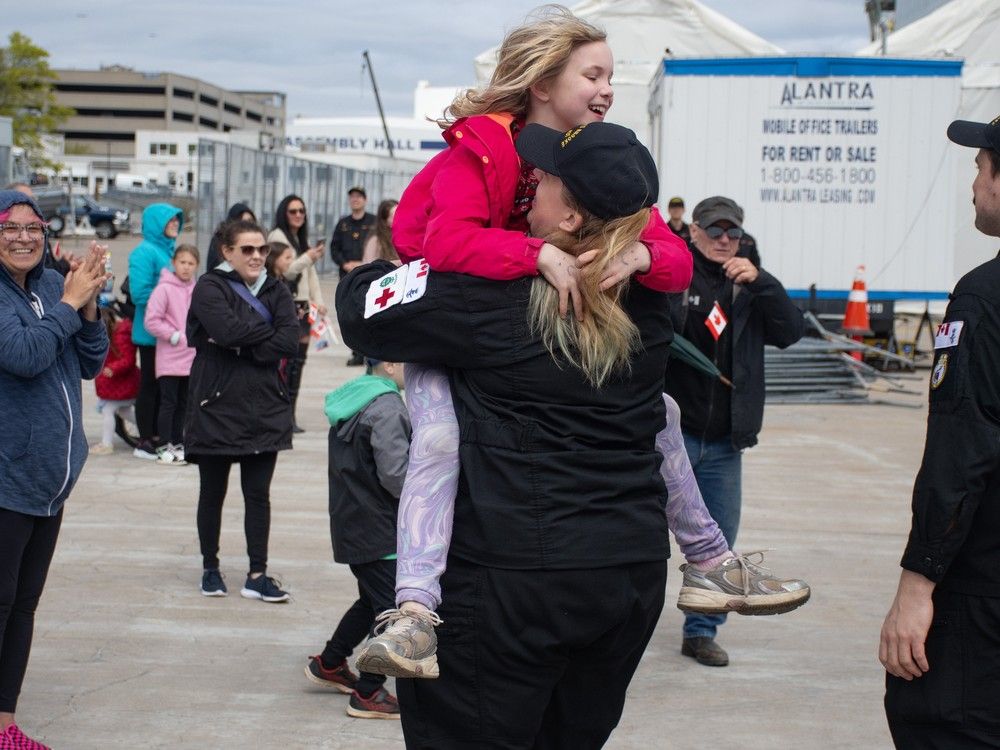
Ruby Osborne, 9, jumps into her mom, Master Corporal Bailey Osborne's arms, after HMCS Margaret Brooke arrived back in Halifax on Friday, May 9, 2025.

The Royal Canadian Navy returned to Halifax Friday from a deployment to Antarctica with tales of spotting exotic wildlife and samples that could lead to a greater understanding of climate change.

HMCS Margaret Brooke’s four-month voyage took the Arctic and offshore patrol ship to South America and beyond, logging close to 25,000 nautical miles, or 46,300 kilometres.

“It’s been just such an amazing experience to visit an area of the world where less than one per cent of the world’s population has visited,” said Cmdr. Teri Share, the skipper of Margaret Brooke.

The Arctic and offshore patrol vessel was the navy’s first ship to be north of the Arctic Circle and south of the Antarctic Circle all within the same year.

“Not only were we able to do all this amazing work with science in the south, within Antartica, but the relationships that we built with Latin American countries on the way south and north was just phenomenal,” Share said. “It’s in an area where the RCN hasn’t been able to really operate in the last couple of decades. So, it’s been amazing to be able to help build those relationships again.”

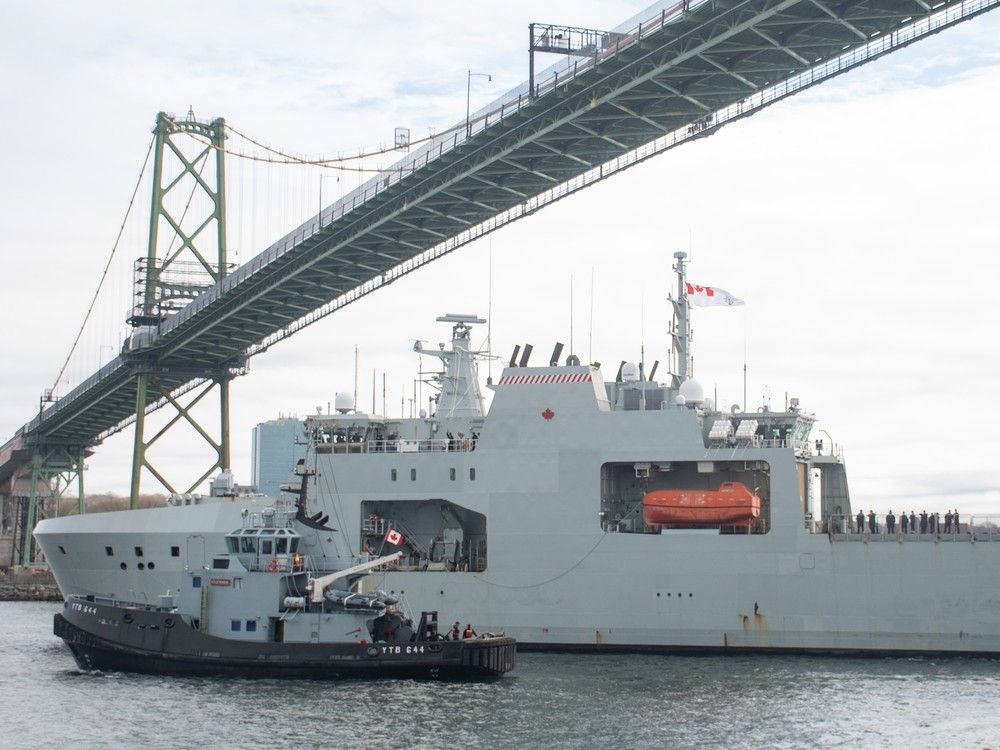
 HMCS Margaret Brooke passes under the MacKay Bridge as it arrives back in Halifax on Friday, May 9, 2025.

The ship, crewed by 83 people, carried both sailors and scientists.

“We traveled to the South Shetland Islands and then along the Antarctic Peninsula collecting a lot of sea floor data and water column data to understand the effect of climate change on retreating glaciers,” said Alex Normandeau, a research scientist from Natural Resources Canada who made the trip with Margaret Brooke.

He was one of 15 federal government and university scientists aboard.

 Commander Teri Share answers questions from reporters after HMCS Margaret Brooke arrived back in Halifax on Friday, May 9, 2025.

One of their tasks was to learn more about how glaciers are retreating.

“Some of the things we were looking at (are) where glaciers were positioned, for example, 50 or 100 years ago and how fast that retreat happened, and to do that we collect some sediment cores to go back in time,” Normandeau said.

Scientists plan to start analyzing those samples at the Bedford Institute of Oceanography next week.

“When we open those cores and look at the different layers that we see in there, that’s when we’ll have a better story to tell about climate change,” said the marine geologist.

“We hope to learn about the rate of glacier retreat related to climate change over the years and how that has evolved through time. So, has it been increasing over the last 10 years or the last 20 years?”

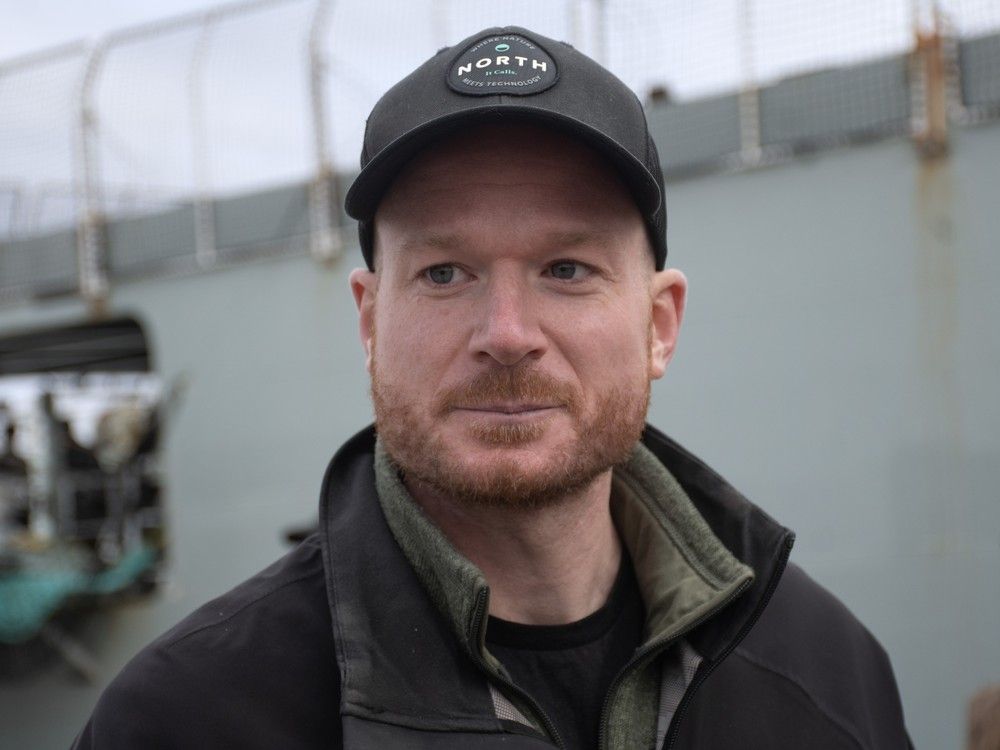
 Alex Normandeau, a research scientist with Natural Resources Canada, answers questions from reporters after HMCS Margaret Brooke arrived back in Halifax on Friday, May 9, 2025.

The crew spotted “massive amounts of wildlife” during the voyage including three or four different types of penguins in Antarctica, said the ship’s captain.

“One actually hopped in one of our small boats and ended up spending a little time in there,” Share said. “They’re everywhere down there; they’re beautiful.”

They also spotted several different types of whales, seals and sea birds.

Percy the Penguin signing up for the Naval Experience Program aboard HMCS Margaret Brooke.

Video courtesy of Chris Landry

Posted by Royal Canadian Navy Today and Yesterday on Thursday, March 13, 2025

The Antarctic looks like Canada’s Western Arctic, with mountains and glaciers, Share said. “So, we felt like home almost at some points.”

The trip aboard Margaret Brooke “was the first large-scale expedition for science like this,” Normandeau said.

“This was really showing how we can work with the navy,” he said. “It also shows that we can do that type of work in other environments, like the Arctic, in the future from these vessels.”

Margaret Brooke steamed through half-metre thick ice in Antarctica. “Now this crew can say we have some pretty significant experience doing ice breaking,” Share said.

Her ship also navigated amongst icebergs. “That’s another check in the box for us.”

It didn’t take long for the sailors in uniform to get used to having scientists aboard in civvies, Share said. “Within a couple of days, I think we were a well-oiled machine.”

The deployment took Margaret Brooke first to the Caribbean, then South America, where federal government scientists came aboard in Punta Arenas, Chile, for the voyage south of the Antarctic Circle to the northern tip of Antarctica.

During the scientific portion of the trip, “we had every single small boat on the ship out … collecting samples,” Share said. “We had uncrewed surface vessels. We had scientists ashore. We just did everything and anything to support them, and that’s all things that we can help do in the north as well.”

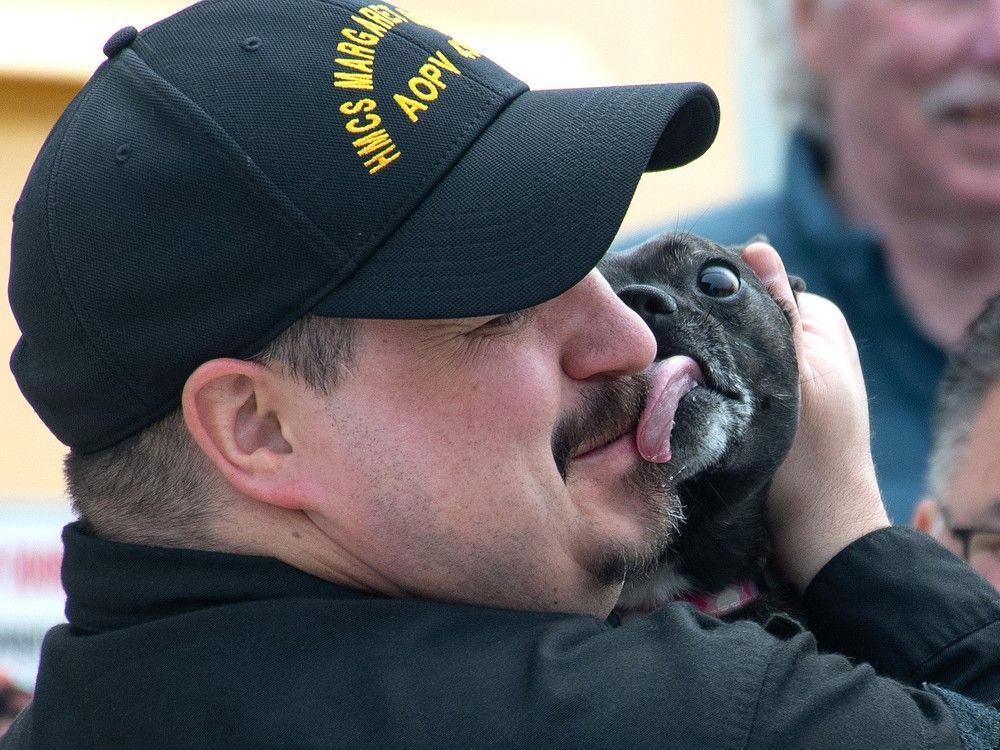
 Petty Officer Second Class Anthony MacKeigan gets welcomed home by his dog Darla after HMCS Margaret Brooke arrived back in Halifax on Friday, May 9, 2025.

To reach Antarctica, they had to cross the notoriously rough Drake Passage, which connects the Atlantic and Pacific oceans between Cape Horn and the South Shetland Islands.

The trip south “was very calm seas,” Share said.

The return trip wasn’t so pleasant, with the Margaret Brooke battling six-metre waves as it headed back north.

“We ended up getting a bit of an experience on the way back home,” Share said.

“But … these ships are meant for the North Atlantic, they’re meant for the Arctic, they’re meant for our weather up here. So, it’s nothing that we couldn’t handle … Not too many people got sick.”

The ship performed “amazingly,” she said.

“We really didn’t have any major technical difficulties that impacted our mission at all,” Share said. “So, this definitely has proven that we are incredibly versatile with this platform to operate in a very warm climate in and around the equator for a little bit, and all the way down into polar regions and back up.”

HMCS MARGARET BROOKE hoisting their battle ensign while entering Halifax after a historic deployment to Antarctica. The ship reached the farthest south a RCN ship has ever deployed, proving their versatility and value to the RCN and Canada. Bravo Zulu!

Posted by Royal Canadian Navy Today and Yesterday on Friday, May 9, 2025

Our website is the place for the latest breaking news, exclusive scoops, longreads and provocative commentary. Please bookmark nationalpost.com and sign up for our daily newsletter, Posted, here.


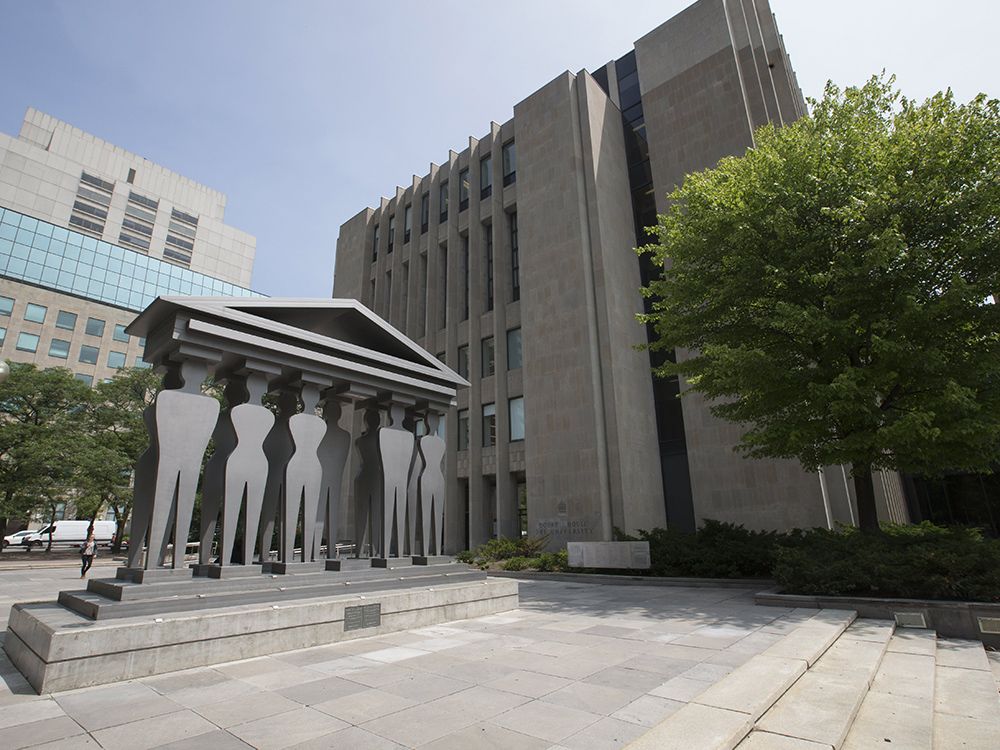
An Ontario Superior Court of Justice courthouse in Toronto.

A Toronto judge who suspects a lawyer used artificial intelligence such as ChatGPT to create a legal document full of unreal cases and “hallucinations” has ordered the lawyer to explain why she should not be cited for “contempt in the face of the court.”

The order for lawyer Jisuh Lee to appear for a “show cause hearing” where she could be cited for contempt follows a recent court hearing

in which Lee was allegedly caught

presenting cases that do not exist as precedents for her arguments.

Lee appeared before Ontario Superior Court Judge Fred Myers to argue a motion from her own factum — dated April 25 and signed with the usual formality, “all of which is respectfully submitted” — that included links to non-existent cases, alleged misreadings of real cases, and what the judge suspected were “possibly artificial intelligence hallucinations.”

Some of these alleged shortcomings of the factum came up in court, but the lawyer plugged on with her submissions, referring the judge via links to off-topic cases such as one about commercial real estate, another about a wrongful dismissal, and also to webpages that return a “404 Error – Page not found.”

The awkward scene went down a few days ago in a Toronto courtroom where Lee was appearing on behalf of her client Hanna Ko to argue a motion in a complicated estate and family law matter involving a deceased man, two women with claims to be his spouse, and his two children.

Lee cited various precedent cases to support her arguments, but when the judge asked to see a copy, she was unable to give him one from her papers, so the judge looked them up online himself, sometimes finding they did not seem to exist in any legal database, or were irrelevant, or did not show what Lee argued. Lee’s factum, for example, cited a case as a precedent for when a court removed an estate trustee. “In fact, the opposite is true. The court did not remove the estate trustees,” Judge Myers wrote, after reading it.

Faced with this confusion, Myers asked Lee if her factum was prepared by artificial intelligence. She said her office “does not usually do so but that she would have to check with her clerk,” the judge wrote.

The judge said he thought he had an idea of what was really going on, however, and wrote so in

his reasons

, noting that Lee has not offered any explanation in the few days since the hearing.

“It appears that Ms. Lee’s factum may have been created by AI and that before filing the factum and relying on it in court, she might not have checked to make sure the cases were real or supported the propositions of law which she submitted to the court in writing and then again orally,” he wrote.

He then listed the duties of a lawyer to the court, their clients, and the justice system, including faithful representation, not to fabricate case precedents, to use technology for research “competently,” to review material she signs, and not to mislead the court.

“It should go without saying that it is the lawyer’s duty to read cases before submitting them to a court as precedential authorities. At its barest minimum, it is the lawyer’s duty not to submit case authorities that do not exist or that stand for the opposite of the lawyer’s submission,” the judge wrote.

“Ms. Lee may have committed grave breaches of her duties that may amount to contempt in the face of the court,” he wrote.

Myers noted that the alleged contempt does not involve his own actions or a personal insult to the court, so he decided he would handle the matter himself. He ordered Lee to appear for what is known as a show cause hearing, to have the opportunity to explain why he should not cite her for contempt. He noted she is entitled to the presumption of innocence.

That hearing is scheduled for next week.

“I am not open to discussing it,” Lee said when reached by National Post. “I’m not prepared to talk about it right now because it’s an open matter.”

She declined to say whether she prepared the factum herself, whether she used AI, or whether she has submitted AI material in other cases.

Lee is the managing partner at ML Lawyers, which has an office in midtown Toronto. Her name Jisuh Lee is listed by the Law Society of Ontario as an assumed name, and her listing is under the name Mary Hyun-Sook Lee. She has no history of regulatory action by the law society.

Our website is the place for the latest breaking news, exclusive scoops, longreads and provocative commentary. Please bookmark nationalpost.com and sign up for our daily newsletter, Posted, here.