LP_468x60
on-the-record-468x60-white

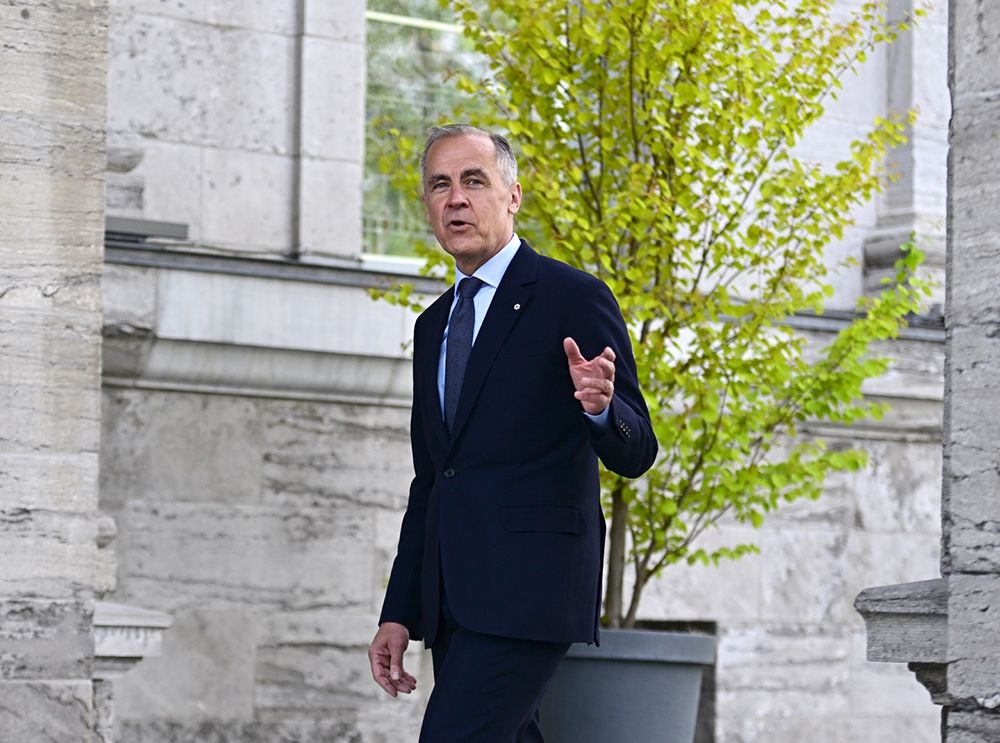
Mark Carney arrives at Rideau Hall.

Prime Minister Mark Carney is revealing his new cabinet at a swearing-in ceremony at Rideau Hall that started at about 10:45 a.m. ET. The inner circle includes many new faces, and just 28 ministers. “Canada’s new Ministry is built to deliver the change Canadians want and deserve,” Carney said in a statement. “Everyone is expected and empowered to show leadership – to bring new ideas, a clear focus, and decisive action to their work.”Carney also announced 10 secretaries of state. Here’s the full list of Carney’s new team.

Live coverage of the swearing-in ceremony for Mark Carney’s new cabinet

Mark Carney’s new cabinet has 28 ministers:

• Shafqat Ali, President of the Treasury Board

• Rebecca Alty, Minister of Crown-Indigenous Relations

• Anita Anand, Minister of Foreign Affairs

• Gary Anandasangaree, Minister of Public Safety

• Rebecca Chartrand, Minister of Northern and Arctic Affairs and Minister responsible for the Canadian Northern Economic Development Agency

• François-Philippe Champagne, Minister of Finance and National Revenue

• Julie Dabrusin, Minister of Environment and Climate Change

• Sean Fraser, Minister of Justice and Attorney General of Canada and Minister responsible for the Atlantic Canada Opportunities Agency

• Chrystia Freeland, Minister of Transport and Internal Trade

• Steven Guilbeault, Minister of Canadian Identity and Culture and Minister responsible for Official Languages

• Mandy Gull-Masty, Minister of Indigenous Services

• Patty Hajdu, Minister of Jobs and Families and Minister responsible for the Federal Economic Development Agency for Northern Ontario

• Tim Hodgson, Minister of Energy and Natural Resources

• Mélanie Joly, Minister of Industry and Minister responsible for Canada Economic Development for Quebec Regions

• Dominic LeBlanc, President of the King’s Privy Council for Canada and Minister responsible for Canada-U.S. Trade, Intergovernmental Affairs and One Canadian Economy

• Joël Lightbound, Minister of Government Transformation, Public Works and Procurement

• Heath MacDonald, Minister of Agriculture and Agri-Food

• Steven MacKinnon, Leader of the Government in the House of Commons

• David J. McGuinty, Minister of National Defence

• Jill McKnight, Minister of Veterans Affairs and Associate Minister of National Defence

• Lena Metlege Diab, Minister of Immigration, Refugees and Citizenship

• Marjorie Michel, Minister of Health

• Eleanor Olszewski, Minister of Emergency Management and Community Resilience and Minister responsible for Prairies Economic Development Canada

• Gregor Robertson, Minister of Housing and Infrastructure and Minister responsible for Pacific Economic Development Canada

• Maninder Sidhu, Minister of International Trade

• Evan Solomon, Minister of Artificial Intelligence and Digital Innovation and Minister responsible for the Federal Economic Development Agency for Southern Ontario

• Joanne Thompson, Minister of Fisheries

• Rechie Valdez, Minister of Women and Gender Equality and Secretary of State (Small Business and Tourism)

Carney announced 10 secretaries of state:

• Buckley Belanger, Secretary of State (Rural Development)

• Stephen Fuhr, Secretary of State (Defence Procurement)

• Anna Gainey, Secretary of State (Children and Youth)

• Wayne Long, Secretary of State (Canada Revenue Agency and Financial Institutions)

• Stephanie McLean, Secretary of State (Seniors)

• Nathalie Provost, Secretary of State (Nature)

• Ruby Sahota, Secretary of State (Combatting Crime)

• Randeep Sarai, Secretary of State (International Development)

• Adam van Koeverden, Secretary of State (Sport)

• John Zerucelli, Secretary of State (Labour)

Our website is the place for the latest breaking news, exclusive scoops, longreads and provocative commentary. Please bookmark nationalpost.com and sign up for our politics newsletter, First Reading, here.
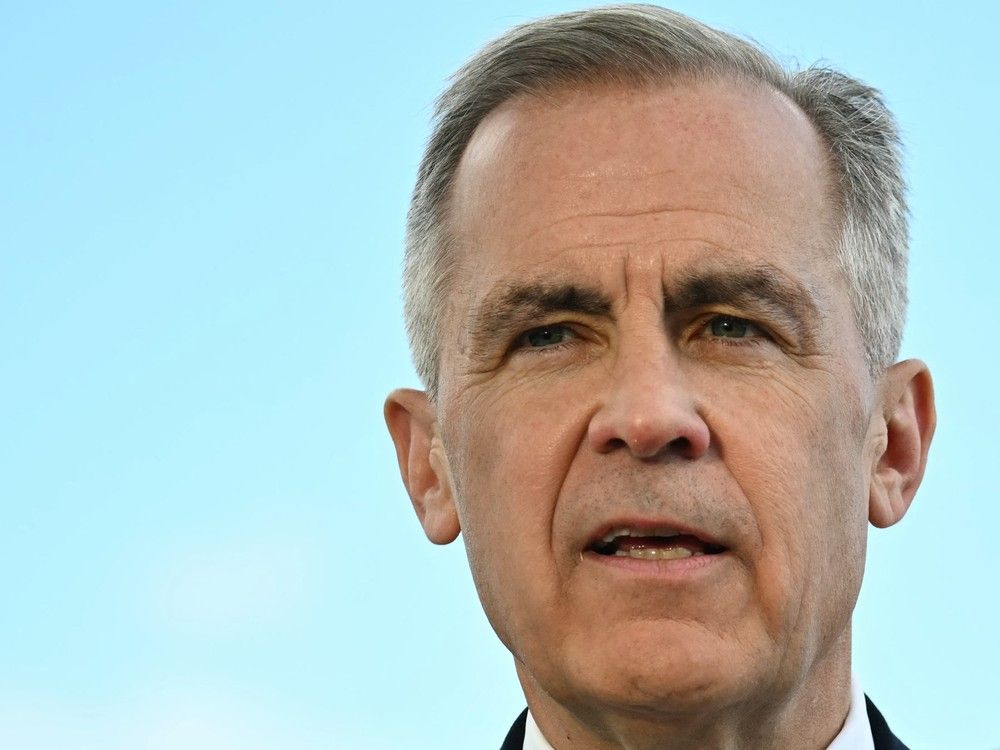

Prime Minister Mark Carney will unveil his new cabinet at Rideau Hall on Tuesday.

OTTAWA —

Prime Minister Mark Carney

will unveil a “small, focused” cabinet of less than 30 ministers at Rideau Hall on Tuesday, with half of the team being people who

have never been sworn in as ministers

. The cabinet will also include 10 secretaries of state, who will be members of the Privy Council and will be responsible for key issues within a federal department. Liberal

insiders told National Post

that Carney will be trying to balance his desire to make a clean break from the tenure of former prime minister Justin Trudeau with his need for experienced ministers during the trade war with the United States.

Follow along for live updates from the swearing-in ceremony that begins at 10:30 a.m. on Tuesday morning.

National Post

Get more deep-dive National Post political coverage and analysis in your inbox with the Political Hack newsletter, where Ottawa bureau chief Stuart Thomson and political analyst Tasha Kheiriddin get at what’s really going on behind the scenes on Parliament Hill every Wednesday and Friday, exclusively for subscribers.
Sign up here
.

Our website is the place for the latest breaking news, exclusive scoops, longreads and provocative commentary. Please bookmark nationalpost.com and sign up for our politics newsletter, First Reading, here.

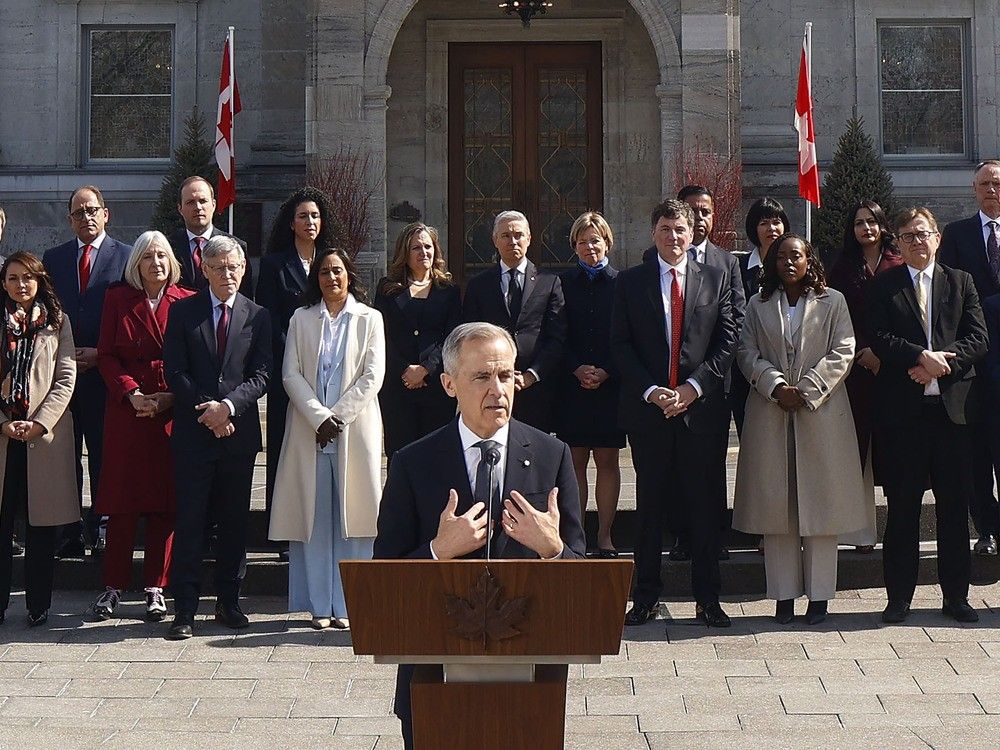
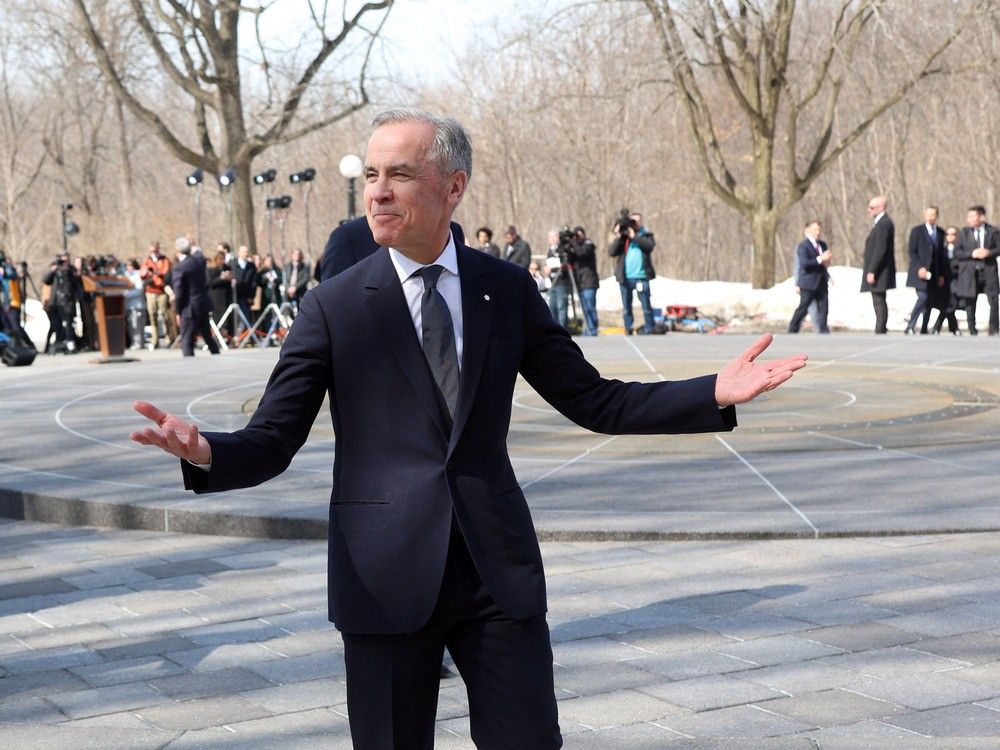
Prime Minister Mark Carney (R) and his cabinet ministers walk back to Rideau Hall after a news conference on March 14, 2025 in Ottawa.

OTTAWA — Justice Minister Gary Anandasangaree will move to the public safety department and Natural Resources Minister Jonathan Wilkinson will no longer be a minister as Prime Minister Mark Carney tries to make a clean break with the past with his new cabinet.

Carney is expected to unveil a team full of fresh faces and a series of new “junior minister” positions on Tuesday.

Wilkinson announced he would not be in the new cabinet on social media on Tuesday morning before the swearing-in ceremony.

“Today, I do not stand among those being sworn in as members of Canada’s new cabinet. Though my tenure as a Minister of the Crown comes to an end, the privilege of serving this country over the past seven years remains one of the greatest honours of my life,”

wrote Wilkinson

.

Carney will assemble a “small, focused” cabinet of less than 30 ministers and up to 10 secretaries of state, said

a source within the Prime Minister’s Office

. It’s one of the ways Carney will try to distance himself from the unpopular tenure of his predecessor, former prime minister Justin Trudeau.

The secretaries of state will be members of the Privy Council and will be responsible for key issues and priorities within a federal department, added the source, but will only be invited to cabinet meetings when decisions associated with their responsibilities arise.

The swearing-in ceremony will begin at 10:30 a.m.

More to come.

National Post

Get more deep-dive National Post political coverage and analysis in your inbox with the Political Hack newsletter, where Ottawa bureau chief Stuart Thomson and political analyst Tasha Kheiriddin get at what’s really going on behind the scenes on Parliament Hill every Wednesday and Friday, exclusively for subscribers. Sign up here.

Our website is the place for the latest breaking news, exclusive scoops, longreads and provocative commentary. Please bookmark nationalpost.com and sign up for our daily newsletter, Posted, here.


The sign outside a McDonald's restaurant is shown in Pittsburgh, June 25, 2019.

A McDonald’s restaurant in Virginia has banned customers under the age of 21 years old from eating inside, due to student violence.

Local media reported on Sunday about the new policy after

a sign posted on the door read

: “Due to repeated incidents of student violence, the location is temporarily closed for dine-in service to anyone under 21 years of age.”

The Fairfax County McDonald’s is located near a high school in the Franconia neighbourhood,

7News reported last week

. One customer, Robert Hancasky, told the publication that he has frequented the restaurant for breakfast every morning and that the issue has been “manifesting probably over 10 years.”

He said high school students “routinely trash the bathrooms, start fights in dining area, and generally provide an unpleasant experience for everyone.”

“The fighting is a problem and they’re pretty brazen. The management tries to step in and these kids are pretty violent. And let’s be honest, they’re young adults. They’re just trying to stop the violence because it’s not fair to any other customer who comes in for a sandwich, a hard-working person, and they got to put up with a bunch of idiots,” he said.

In

a video shared with news outlet NBC4

, students are fighting and screaming inside the McDonald’s.

“These kids are off the chain. They have no respect, no discipline,” one customer, who identified herself as Stacey, told NBC4. “And it seem like how they acting, their parents are allowing them to act.”

She said when she visited the location to eat with her grandchildren, some students were smoking and drinking and swearing.

In 2023,

according to Fox5

, two teens discharged a gun in the bathroom of the McDonald’s. There were no injuries. Officers later charged one teen with carrying a concealed weapon and possession of a firearm on school property. Another teen was charged with carrying a concealed weapon, brandishing, and reckless charge of a firearm, Fox5 reported.

Now, in order to enter the premises from Monday to Friday, customers have to ring a doorbell. An employee can then permit a person to enter. Meanwhile,

Fox8 reported

, drive-thru and mobile ordering options are still available for all ages.

McDonald’s responded with a statement, shared with NBC4.

“We love being part of the Edison community and we value each and every customer. We’ve enhanced our Franconia Road McDonald’s security measures in an effort to promote a safe environment for our customers and staff. This policy was developed in partnership with local school officials with oversight from local law enforcement. This serves as a temporary fix as we work towards a long-term solution for all,” the statement said.

“We thank our community for its support, understanding and patience.”

Fairfax County Public Schools (FCPS) said in a statement to 7News that “students who leave campus during the school day without a parent check-out will receive an unexcused absence.”

“FCPS encourages families to talk to their students about appropriate conduct, including in the community,” the statement said.

Our website is the place for the latest breaking news, exclusive scoops, longreads and provocative commentary. Please bookmark nationalpost.com and sign up for our daily newsletter, Posted, here.


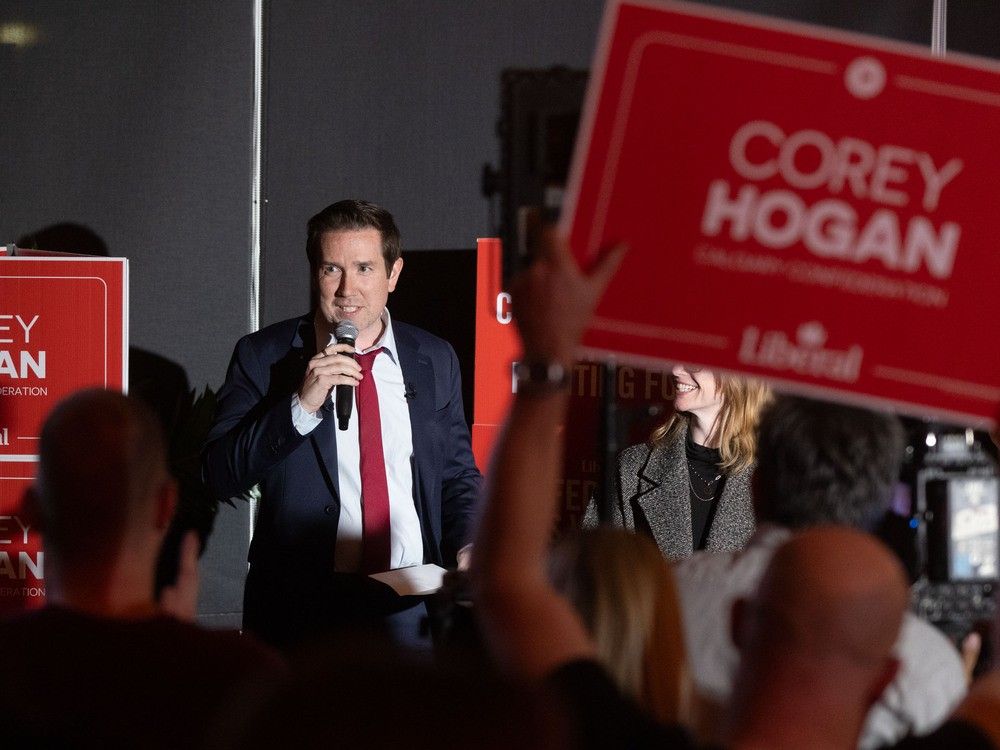
Corey Hogan, Liberal candidate for Calgary Confederation, gives a speech at a gathering of supporters on Monday, April 28, 2025.

OTTAWA — Rookie Liberal MP Corey Hogan says he’s ready to speak up for the “No” side, in the event of a referendum on Albertan independence next year.

Hogan, who narrowly won the

riding of Calgary Confederation

in April’s federal election, told the National Post that he won’t sit on the sidelines in the coming debate over Alberta’s future in Canada.

“Try to stop me from being a spokesperson for this country,” said Hogan.

“One of the main reasons I ran is I wanted to be both a strong Alberta voice and a strong pro-Canadian voice.”

Hogan didn’t shy away from the coming national unity crisis as a candidate,

adopting the cheeky slogan

“Confederation is worth fighting for” — a phrase designed to send a clear message to those fanning the flames of Alberta separatism.

Hogan believes that the pro-Canada message helped him edge out Conservative opponent, ex-provincial cabinet minister Jeremy Nixon.

“One of the reasons I was elected… is because of this moment we’re in,” said Hogan.

“The main thing I heard on the doors was Donald Trump, Canada’s existence, all of that… residents said over and over that they wanted someone who would fight for this country, and that’s what I’m going to give them.”

He also said that Nixon’s association with Premier Danielle Smith, whose cabinet he sat in from 2022 to 2023, may have cost him votes.

“Alberta separatism is an issue that divides Conservatives in a way that doesn’t divide Liberals,” said Hogan.

Smith also

generated unwanted national headlines

for the Conservatives in the campaign’s early going, after saying in a U.S. radio interview that she was pressing the Trump administration to put tariffs “on pause” while Canadians chose their next government.

Hogan said it will be vital in the coming months to confront separatist arguments head on, after Smith

dramatically lowered the bar

for triggering a referendum on the province’s independence.

He wrote in

a recent blog post

that there is little reason to believe that Alberta would have a better go of building pipelines to tidewater as a sovereign state that can enter into international treaties,

as Smith herself has claimed in the past

.

“(Treaties) guarantee rights of access but they do not guarantee the right to build infrastructure across another country’s territory,” wrote Hogan.

 An election sign for Corey Hogan.

Yuan Yi Zhu, a Canadian-born professor of international law at the University of Leiden, says he agrees with Hogan, pointing to the plain language of the United Nations’ law of the sea.

“The relevant section says that landlocked and transit countries may, by agreement, define pipelines as a means of transport to the sea… it doesn’t say that they have to,” said Zhu.

“This is one of those rare issues in international law that’s actually pretty straightforward.”

Hogan fully accepts that the Liberals have a long way to go to build up credibility in Alberta, after failing to grow their seat count in the province.

He adds that one silver lining is that Ottawa-Alberta relations have nowhere to go but up from their dismal state under former prime minister Justin Trudeau.

“Anybody who’s ever worked at a job where the boss has changed, can see that sometimes what happened was largely driven by the former boss,” said Hogan.

Hogan said that he’s interested to see how Alberta and the other western provinces are represented in Prime Minister Mark Carney’s first post-election cabinet, set to be announced Tuesday.

National Post

rmohamed@postmedia.com

Get more deep-dive National Post political coverage and analysis in your inbox with the Political Hack newsletter, where Ottawa bureau chief Stuart Thomson and political analyst Tasha Kheiriddin get at what’s really going on behind the scenes on Parliament Hill every Wednesday and Friday, exclusively for subscribers. Sign up here.

Our website is the place for the latest breaking news, exclusive scoops, longreads and provocative commentary. Please bookmark nationalpost.com and sign up for our daily newsletter, Posted, here.


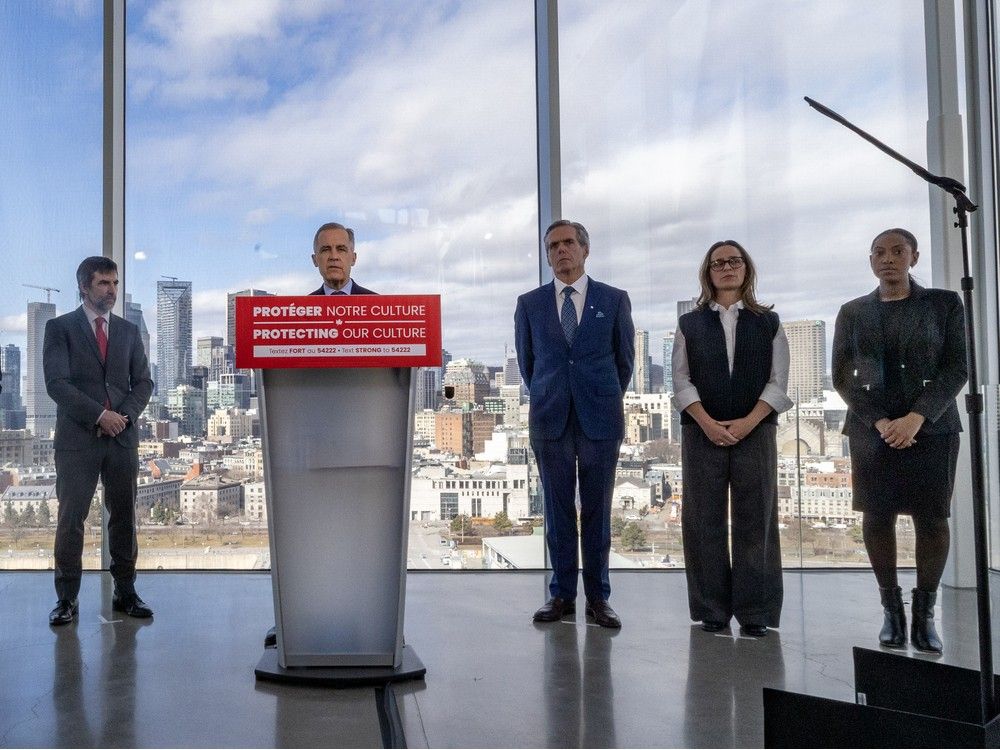
Liberal leader Mark Carney appeared with Quebec candidates , from left, Steven Guilbeault, Glenn O'Farrell, Anna Gainey and Tatiana Auguste at an announcement pledging his party's support for CBC/Radio Canada in Montreal on April 4, 2025.

OTTAWA — When Elections Canada certified the Liberals’ victory by a single vote in the Quebec riding of Terrebonne, senior party officials were stunned.

“This wasn’t in our forecast. We didn’t think she would win,” admitted a Liberal source about the party’s candidate,

Tatiana Auguste, the 24-year-old who thought she had lost the constituency.

Auguste was initially declared the winner on election night, but she later lost the riding to Bloc Québécois incumbent Nathalie Sinclair Desgagné, who attended her party’s first caucus meeting last week, before winning it again by a single vote after a judicial recount.

“I’ve been on an emotional roller coaster, but I’m really happy,” Auguste said in multiple media interviews. But for Quebec Liberal organizers, her victory showed how much the big red Liberal machine has outperformed in the province.

In the end, the Liberals won 44 of the 78 ridings, double the Bloc’s 22 seats in the House of Commons. Before the recount in Windsor—Tecumseh—Lakeshore and Terra Nova—Les Péninsules and Milton East—Halton Hills South, Terrebonne, and numerous surprise victories in Quebec, brought the Liberals to 170 seats, two short of a majority.

Terrebonne hadn’t voted Liberal in 45 years. The same goes for Trois-Rivières. The last time the Liberals won Abitibi—Baie-James—Nunavik—Eeyou was in 2000, and they had never won Beauport—Limoilou in Quebec City since its creation in 2004.

They won all four of them.

“It’s surprising. Absolutely… I’ve always been skeptical because these are often ridings that have promised the Liberals but often failed to deliver,” said Jeremy Ghio, a former advisor to minister Mélanie Joly and a strategist at Tact Conseil.

“These have always been regions in which the Liberals had high expectations and ultimately suffered disappointment at the end of the campaign,” he added.

Ghio and many Quebec Liberal sources believe Prime Minister Mark Carney will have to give significant roles to the province’s representatives and bring fresh Quebec faces at the cabinet table.

For instance, people suggested to the prime minister’s entourage that Mandy Gull-Masty, who was recently the Grand Chief of the Grand Council of the Crees/Cree Nation Government before winning Abitibi—Baie-James—Nunavik—Eeyou, should be named in cabinet.

“Without her, we wouldn’t have won Abitibi, it’s that simple,” a source told National Post.

Ghio believes it is time for the prime minister to appoint longtime Quebec MP Joël Lightbound to Cabinet after his resounding majority in Louis-Hébert.

“You need a minister in Quebec City. And it’s time for Lightbound to join the cabinet. He worked his riding. He broke rank during the Trudeau years. He is not associated with Trudeau,” said Ghio.

During the campaign, the Liberal team deployed key ministers like Mélanie Joly, François-Philippe Champagne, and Steven Guilbeault in more than ten ridings where the party thought it had a chance of success.

As the campaign progressed and fears of U.S. President Donald Trump crystallized, ridings like Trois-Rivières were no longer just a fantasy. They became targets and a necessity to help the Liberals secure a majority.

Another riding outside Montreal, Repentigny, was also in the Liberals’ sights, but they lost to former Greenpeace activist and Bloc Québécois candidate Patrick Bonin, who won a majority of 2,000 votes.

“We shook thousands of hands, and I think a strong base of Bloc electors stayed home and voted for us,” said Bonin as he was entering his first caucus meeting on Parliament hill, last week.

Yet her predecessor, Monique Pauzé, won the 2021 election with a majority of 14,000 votes and was first elected in 2015, when the party only had 10 candidates elected to the House of Commons.

Repentigny has already been represented by the NDP after the historic orange wave of 2011, but the riding is a Bloc stronghold, as is Terrebonne, where Sinclair-Desgagné won by more than 6,000 votes in 2021.

The Bloc Québécois’s new House leader, Christine Normandin, called the campaign “atypical” and felt on the ground that the Liberals gained ground every time they used Trump as a pawn.

“What we heard on the ground is that if people hesitated it was really out of fear and certainly not a disavowal of the work we did because we heard very very very clearly that the work of the Bloc Québécois is appreciated,” she said.

Some of his colleagues seemed irritated by the Liberal gains in their strongholds. During the campaign, they argued that Bloc candidates were winning local debates and that the Liberals were often absent or ignorant of local issues.

Today, some in the Bloc are talking about a “borrowed seat” in Terrebonne, but also in other ridings north of Montreal where the Liberals have made gains.

“We can never take an election for granted, even if the polls initially show us winning. Our job is really to make sure we give everything we have in the election campaign, and this time was no exception,” Normandin said.

National Post

atrepanier@postmedia.com

Get more deep-dive National Post political coverage and analysis in your inbox with the Political Hack newsletter, where Ottawa bureau chief Stuart Thomson and political analyst Tasha Kheiriddin get at what’s really going on behind the scenes on Parliament Hill every Wednesday and Friday, exclusively for subscribers. Sign up here.

Our website is the place for the latest breaking news, exclusive scoops, longreads and provocative commentary. Please bookmark nationalpost.com and sign up for our newsletters here.


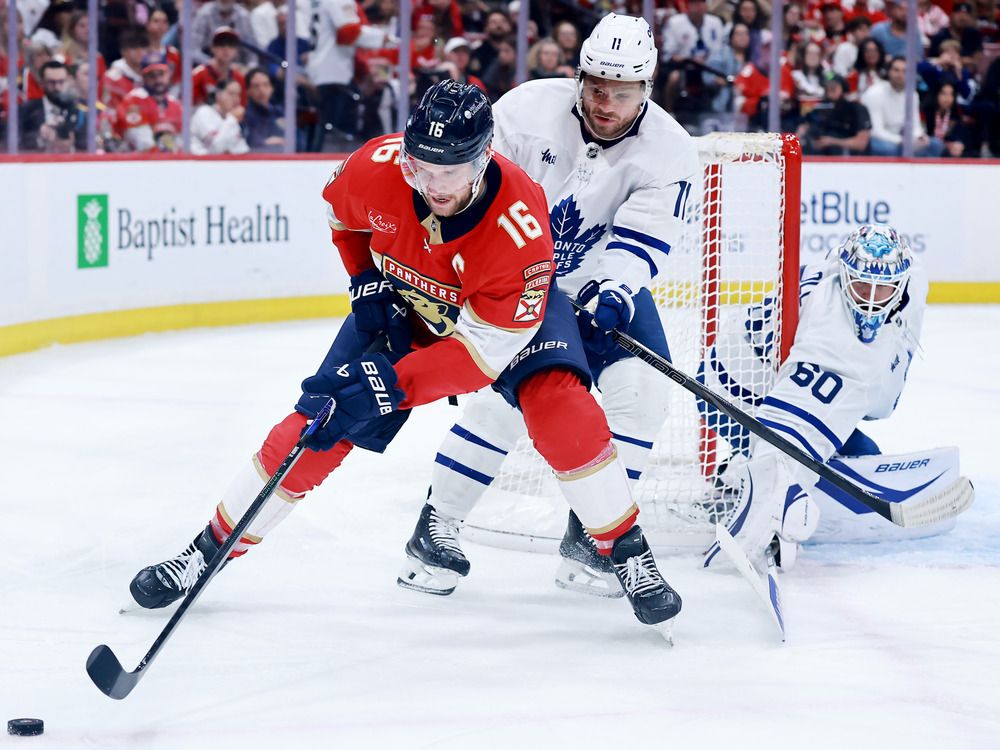
Aleksander Barkov of the Florida Panthers and Max Domi of the Toronto Maple Leafs fight for possession of the puck during the second period in Game Four of the Second Round of the 2025 Stanley Cup Playoffs at Amerant Bank Arena on May 11, 2025 in Sunrise, Fla.

Toronto Maple Leafs forward Max Domi

has been fined $5,000

for boarding Florida Panthers centre Aleksander Barkov in the closing seconds of Game 4 in the second-round series in Florida on Sunday, the National Hockey League’s Department of Player Safety has announced.

Domi’s hit on Barkov came with just eight seconds left to play in the third period. Domi was also assessed a major penalty for boarding. The Panthers had just about completed what would be a 2-0 win, their second in a row on home ice, tying the series at two games apiece. Game 5 is set for Wednesday in Toronto.

Domi’s move set off a fight amid several other players that led to 10-minute misconducts for Toronto forward Bobby McMann, Florida defenceman Aaron Ekblad and Florida forward Brad Marchand. Barkov was not injured on the play, head coach Paul Maurice said.

The fine is the maximum allowable under the Collective Bargaining Agreement. The money goes to the

Players’ Emergency Assistance Fund

, which was set up in 1996 to assist NHL players and their families with mental health, substance abuse or other issues. The league might also have decided to issue a suspension, but

chose not to

.

Domi signed a one-year, $3-million contract with the Leafs in the summer of 2023. The next year, he signed a four-year, $15-million

extension

with the team. As a percentage of salary, a $5,000 fine would be equivalent to about $132 for someone making $100,000 a year.

Florida centre Sam Bennett

told Sportsnet

that he thought Domi’s hit wasn’t out of line, noting: “It’s been a physical series, so I expect more of that.”

Meanwhile, Toronto head coach


Craig Berube compared the action to another play earlier in the same game, telling the broadcaster: “To me, the (Dmitry) Kulikov hit on (Mitch) Marner was 10 times worse.”

That elbow-to-the-head move did not result in a penalty or fine.

Our website is the place for the latest breaking news, exclusive scoops, longreads and provocative commentary. Please bookmark nationalpost.com and sign up for our newsletters here.


Prime Minister Mark Carney after his swearing in ceremony at Rideau Hall in Ottawa on Friday.

OTTAWA — Prime Minister Mark Carney will be at Rideau Hall on Tuesday to unveil the team he promised would “do things previously thought impossible at speeds we haven’t seen in generations.”

Carney will be presenting a “small, focused” cabinet of less than 30 ministers and up to 10 secretaries of state, with half of the entire team being “fresh faces,” meaning that they have never been sworn in as ministers, said a source within the Prime Minister’s Office.

The secretaries of state will be members of the Privy Council and will be responsible for key issues and priorities within a federal department, added the source, but will only be invited to cabinet meetings when decisions associated with their responsibilities arise.

Liberal insiders think Carney will be marking a clear contrast to former prime minister Justin Trudeau’s “sunny ways” by ditching the pomp and circumstance associated with a big cabinet reveal and will instead present a team solely focused on implementing his ambitious agenda.

That means finding the right balance between the current, more experienced ministers, such as Dominic LeBlanc, Mélanie Joly and François-Philippe Champagne, and the dozens of new MPs elected under the Liberal banner who were hopeful of being named to cabinet.

Among the names to watch for are Tim Hodgson, who worked with Carney at the Bank of Canada and at Goldman Sachs, Carlos Leitao, a former Quebec finance minister who delivered a surplus in the province, and former Vancouver mayor Gregor Robertson.

But factoring in regional representation of all parts of the country and respecting gender balance might have caused some disappointment for many hopefuls.

“This might be one of the more complicated cabinets to put together, especially because one of Mark Carney’s biggest challenges is he has to make sure that this does not look like a Justin Trudeau cabinet,” said Laura D’Angelo, a vice president at Enterprise Canada.

“He has to make it very clear that he is a new prime minister with a new government.”

Marci Surkes, chief strategy officer and managing director at Compass Rose, agreed that Carney needs to create as much distance as possible between himself and Trudeau, and said the fact that he will be tapping as many rookies in cabinet “makes good sense.”

“I assume he will be also maintaining experienced cabinet ministers in some of the senior portfolios, particularly those who have served as interlocutors with the U.S. administration,” said Surkes, who was a senior adviser to Justin Trudeau until 2022.

A secretary of state is not a term that is typically used in Canada, but that position is common in the United Kingdom where secretaries of state are considered to be senior ministers of the Crown and make up most of the positions in cabinet.

The Paul Martin and Stephen Harper governments commonly appointed ministers of state, which were considered junior cabinet ministers, but Trudeau ceased that practice in 2015.

Carlene Variyan, associate vice-president at Summa Strategies, said Trudeau had decided to forgo the junior cabinet roles — which come with a smaller salary and staff budget — to elevate roles such as minister for the status of women as a full cabinet position.

“In that era, because it’s 2015 and everything, he really thought that it was pretty hypocritical to have a minister for the status of women who wasn’t paid as much as the other ministers,” she said.

Surkes said it should not be seen as “slight” to be named secretary or minister of state.

“It is, in fact, a recognition that ministers have varying degrees of responsibilities handed to them, and not all of the individuals selected for the ministry need to be present for every decision-making moment,” she explained.

Variyan, who had senior roles in the Liberal government, said she cannot help but remark on how Carney’s approach and thinking around assembling his cabinet in 2025 “could not be more different” than Trudeau’s conditions after his majority win in 2015.

“I think Carney and his team are responding to the moment that the country finds itself in, and what Canadians are looking for, which is stability and a leader who could demonstrate a calm hand that can guide the country through all of this,” said the former Liberal staffer.

Already, D’Angelo said Carney’s first official press conference at the head of a re-elected Liberal government gave a clear indication of his tone and style.

“It was much more like a chair of a board… He did not mince words. He didn’t spend time with slogans or flowery language or over-explaining things. He was telling us very clearly what was going to happen, what he was going to do, and what the priorities were.”

Carney has laid out his packed agenda, which includes strengthening relations with trading partners in Europe and Asia, building millions of new housing units, turning Canada into an “energy superpower” and lifting all federal barriers to internal trade by July 1.

Jonathan Kalles, a former adviser to Trudeau who is now vice president, Quebec, at McMillan Vantage, said he expects to see a more “decisive executive” under Carney.

“Mark Carney is very well-known for hearing everybody out, really wanting input from everybody,” he said. “But then when he makes a decision… he expects it to be implemented quickly, and he’s going to be frustrated when it’s not, if it’s not.”

Carney also has the advantage of having served as a senior bureaucrat in the Department of Finance before he was appointed as governor of the Bank of Canada, noted Kalles.

“That means somebody who not only knows how the system works, from a general perspective, but also understands how to actually implement things, where the roadblocks are, and how to get past them,” he explained.

“He’ll have short runway to get key things done, like any government does, and then hope, they don’t get bogged down. That’s the nature of the beast.”

National Post

calevesque@postmedia.com

Get more deep-dive National Post political coverage and analysis in your inbox with the Political Hack newsletter, where Ottawa bureau chief Stuart Thomson and political analyst Tasha Kheiriddin get at what’s really going on behind the scenes on Parliament Hill every Wednesday and Friday, exclusively for subscribers. Sign up here.

Our website is the place for the latest breaking news, exclusive scoops, longreads and provocative commentary. Please bookmark nationalpost.com and sign up for our newsletters here.


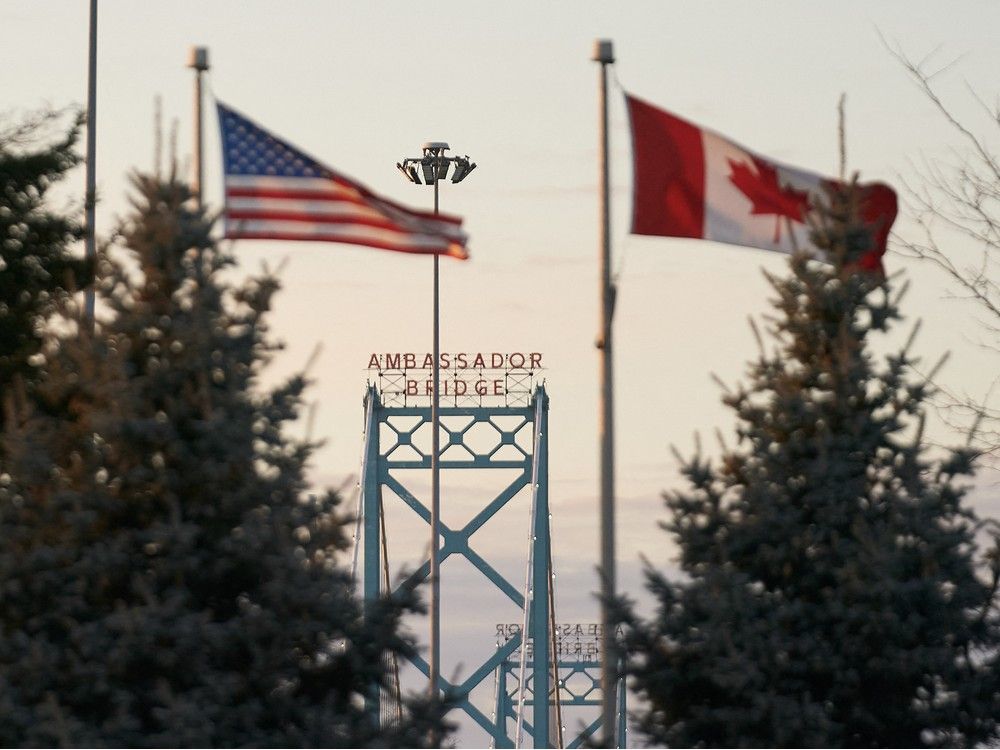
Canadian and American flags fly on the Canadian side of the Ambassador Bridge in Windsor, Ontario, on March 8, 2025.

Most Americans who drove to Canada in April came for Good Friday on Easter weekend, according to

preliminary data from Statistics Canada

released on Monday. But overall, fewer Americans travelled to Canada by air and by automobile this April compared to last year.

Traffic data indicated that there was a daily average of 13,300 U.S.-resident arrivals by air on April 17 to April 18, which was Good Friday, this year. That was 27.6 per cent higher than the average for other Thursday-Friday periods of the month, according to Statistics Canada.

By vehicle, the highest number of American travellers coming to Canada was on April 18 — at 51,400 U.S. residents. That was an increase of 23.4 per cent compared to other Fridays in April.

Overall, the number of non-resident arrivals to Canada by air was in decline, at 632,600 travellers, down from 1.2 per cent year over year since 2019. Of those, U.S. residents made up 289,300 travellers — down by 5.5 per cent since last April.

By vehicle, there were 820,700 American travellers who came to Canada this April, a decline by 10.7 per cent from the same month last year. This was the third consecutive month of year-over-year declines for such travellers since 2019.

In total, there were 4.5 million travellers (Canadian residents and non-residents combined) who returned to Canada last month, down by 15.2 per cent compared to last April. It was the third consecutive month of such year-over-year declines.

Fewer Canadians on return trips from U.S. in April

There were also fewer Canadians returning home from the U.S. last month compared to April 2024 — likely due to fewer Canadians being in the U.S. in the first place. The decline is in line with the rising tension between the two countries. Canadians have been

avoiding travel to its northern neighbour

amid an ongoing trade war and heated rhetoric from U.S. President Donald Trump.

This trend has been supported by other data showing the

decrease in Canadian border crossings to the U.S. in February

, and data from U.S. Customs and Border Protection released in April indicating that

Canadians travelling to the U.S. hit its lowest rate since COVID

.

There were 582,700 Canadian residents who returned from the U.S. on a plane this April, down by 19.9 per cent from the same month last year. There was also a decrease in Canadian residents returning home from the U.S. by vehicle. In April 2025, there were 1.2 million such Canadians, a “steep decline” by 35.2 per cent from last year.

April marked the fourth consecutive month of year-over-year declines since 2019 for Canadians returning from the U.S. by vehicle, according to Statistics Canada.

Last month, most Canadians travelling by vehicle returned on Easter Monday, which was April 21. There were 72,900 Canadian residents who made the trip — 90.2 per cent higher than the average for other Mondays that month.

Our website is the place for the latest breaking news, exclusive scoops, longreads and provocative commentary. Please bookmark nationalpost.com and sign up for our daily newsletter, Posted, here.


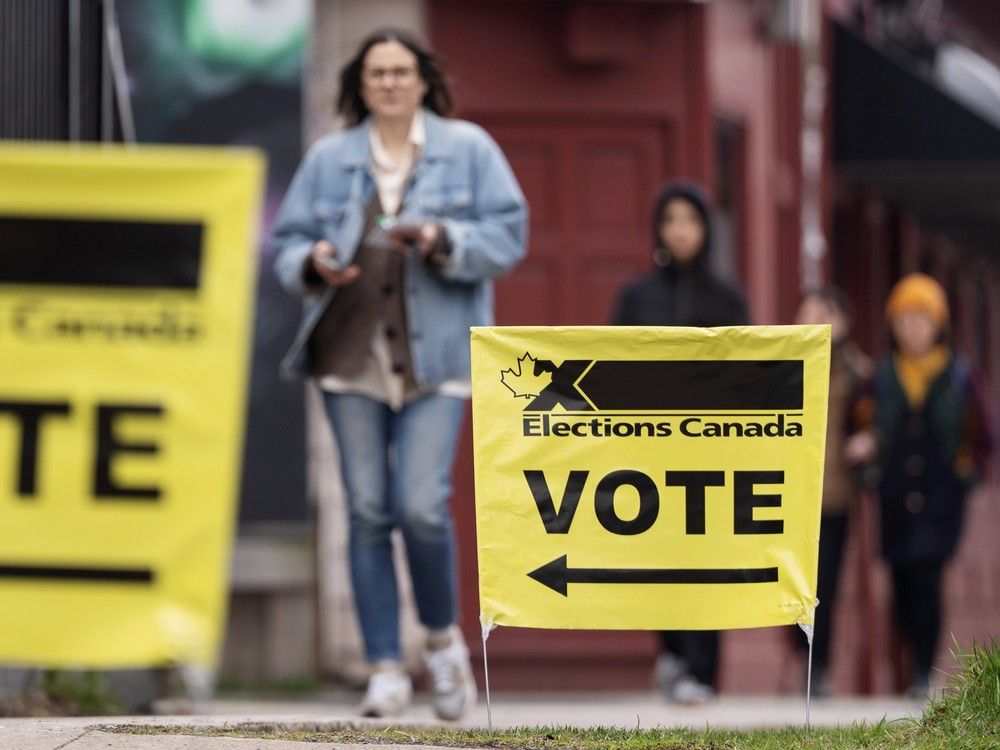
Regardless of the outcome in the remaining judicial recounts of federal election results, the Liberals won't be able to achieve a majority government on results alone.

An Elections Canada judicial recount flipped a riding back to the Liberals over the weekend, but the results of three more recounts yet to be completed won’t give Prime Minister Mark Carney and his party the 172 seats needed for a majority government.

In fact, the Liberals could lose two seats to the Conservative Party of Canada and drop to 168 members of parliament if the count doesn’t go their way.

However, there’s also a chance they could end up one shy at 171.

Here’s what you need to know:

What is a judicial recount, and why are they called?

Per the Canada Elections Act

, a judicial recount is a formal re-examination and recounting of all accepted ballots in the presence of a superior court judge from the province or territory in question, usually from within the riding itself.

The process also involves a second look at rejected ballots — those cast by registered voters but were improperly marked — and any which candidates or officials dispute to determine if they should have been accepted. Invalid ballots — those that were found in the wrong box or weren’t issued by Elections Canada, for example — are not included.

In addition to the judge and the returning officer, attendees include a recount team consisting of a handler, a recorder, and one scrutineer from each candidate (if desired); all candidates, their legal representation and up to two other representatives; and legal counsel for the Chief Electoral Officer.

The result, once certified by the judge, becomes final.

The returning officer for a federal electoral district is required to request a judicial recount when the margin of victory is less than one one-thousandth of all votes cast (0.001 per cent of the vote).

Such was the case in the Quebec riding of Terrebonne, which Liberal candidate Tatiane Auguste won by a single vote after

a judicial recount was completed on Saturday.

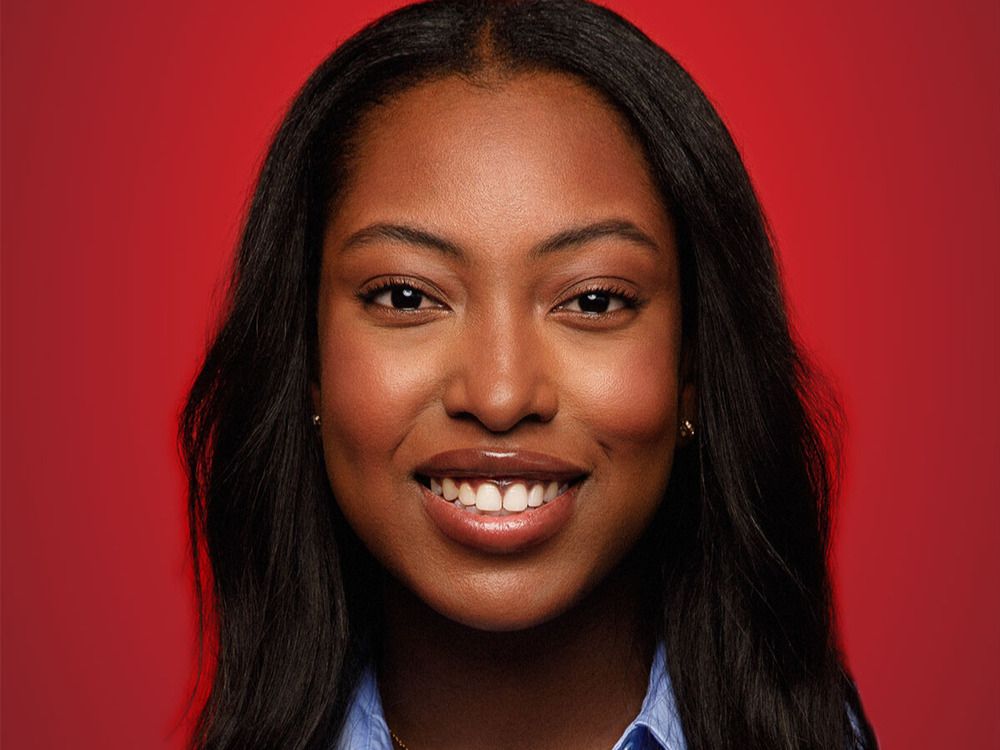
 Tatiana Auguste, Liberal victor for Terrebonne in the 2025 federal election.

Preliminary results on election night awarded the 24-year-old with the victory, but she ended up falling 44 votes short of Bloc Québécois candidate Nathalie Sinclair-Desgagne once results were validated, thereby necessitating the recount that began Thursday morning.

The riding had 840 rejected ballots, and of the 74 votes added to the total after the recount, 56 went to Auguste to secure the win and get the Liberals to their current standing of 170 seats.

A candidate or an elector may also request a judicial recount within four days of the results being validated via a signed affidavit explaining the errors or irregularities that warrant a recount.

Liberal incumbent Irek Kusmierczyk has done just that in the Ontario riding of Windsor—Tecumseh—Lakeshore, where he is seven votes shy of triggering an automatic recount.

How close are the three remaining judicial recounts?

Even narrower margins than Terrebonne separate the current Liberal winners from their Conservative opponents in two of the three remaining recounts.

The process began Monday morning for Newfoundland’s Terra Nova—The Peninsulars, which newcomer and former CBC journalist Anthony Germain is clinging to by a mere 12 votes ahead of Tory hopeful Jonathan Rowe.

Before the Terrebonne recount, theirs was the closest race in all 343 ridings this election and had 597 rejected ballots.

A recount for Ontario’s Milton East—Halton Hills South starts Tuesday in Milton.

Preliminary election night results awarded the riding to the Conservative’s Parm Gill by almost 300 votes, but became a win by 29 ballots for Liberal Kristina Tesser Derksen after results were validated. Rejected ballots numbered 412.

Liberals were just 611 votes from a majority government. Here’s how

The last recount won’t begin until Tuesday, May 20 — six days before Parliament is set to re-open — and was granted after Kusmierczyk successfully argued that some of the 537 rejected ballots in Windsor-Tecumseh-Lakeshore should have been considered because the voter’s intention was clear.

According to the

Windsor Star

,

one example cited by lawyer Jeff Hewitt was a ballot marked with an X for
Kusmierczyk
, but also had the words ‘Irek did a good job’ in the margins.

Preliminary figures had the CPC’s Kathy Borrelli finishing 233 ballots ahead, but Kusmierczyk said Elections Canada later found four errors in howWin polling stations reported their final tallies, which reduced the margin to 77, leaving him seven shy of hitting the 0.1 per cent need to trigger the recount.

“We knew from the very beginning that we had questions, and we knew… there were ballots that had been rejected wrongly, and those numbers were adding up,” he told reporters outside the courthouse last week.

He said he was “feeling confident” about his chances.

How likely are one or more of these seats to flip on a recount?

Based on past elections in recent history, it’s statistically unlikely, but not at all impossible, that a result could be overturned once a recount is complete.

Before Terrebonne, the most recent occurred in 2011 when Conservative incumbent Bernard Genereux lost Montmagny—L’Islet—Kamouraska—Rivière-du-Loup to the NDP’s Francois Lapointe by nine votes on judicial recount, one of three that year.

Six recounts were needed after the 2008 election, and the only one that bore a different result was in Quebec’s Brossard—La Prairie, where incumbent and initially reported victor Marcel Lussier wound up losing his seat to the Liberals’ Alexandra Mendès.

Should recounts result in Germain and Tesser Derksen retaining victories and Kusmierczyk reclaiming his seat in recounts, the Liberals will land on 171 seats in the house, a scenario in which a single floor-crossing MP could drastically alter the balance of power. Crossing the floor is the parliamentary process whereby an MP abandons the party under whose banner they were elected to sit in the House in favour of another party.

It doesn’t happen often, but there are a few notable ones in the past quarter century. In 2021, the Green Party’s Jenica Atwin bolted for the Liberals

after a public disagreement with party leader Annamie Paul about the Israel-Hamas war. 

In the days following the 2006 election, returning Vancouver Kingsway MP David Emerson left the Liberals to take a cabinet post in Stephen Harper’s minority government.

A floor crossing has never created a majority government, but it has helped bolster a minority. When Belinda Stronach jumped ship from the Tories to become a minister in then-prime minister Paul Martin’s cabinet in 2006, it saved the Liberals from losing a confidence vote on the budget and fallout from the Quebec sponsorship scandal.


Our website is the place for the latest breaking news, exclusive scoops, longreads and provocative commentary. Please bookmark nationalpost.com and sign up for our daily newsletter, Posted, here.