LP_468x60
on-the-record-468x60-white

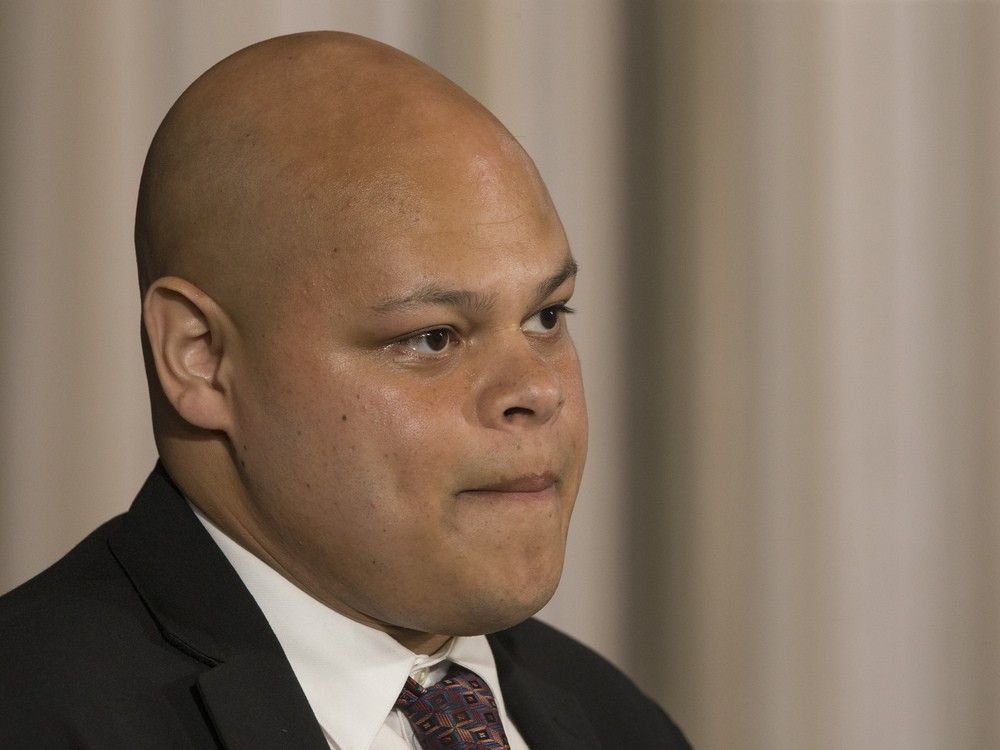
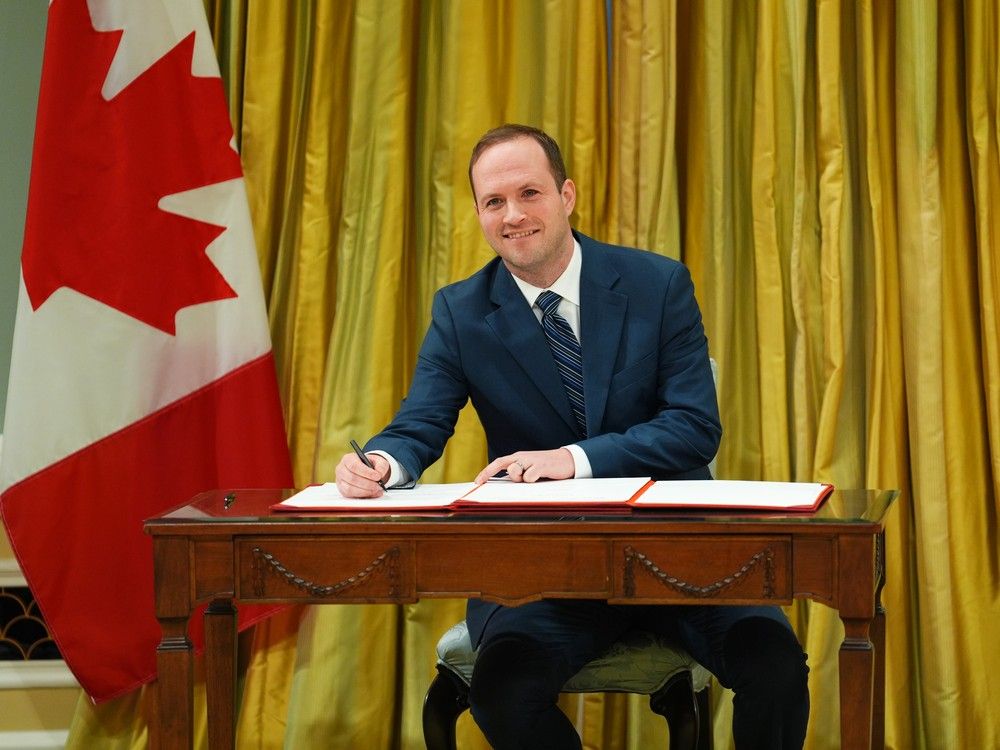
Conservative MP Jamil Jivani.

OTTAWA

— A Conservative MP is calling on the federal
government to dedicate a full cabinet position to the issue of labour, saying Prime Minister Mark Carney must pay more than “lip service” to workers in his region affected by General Motors’ planned shift cuts. 

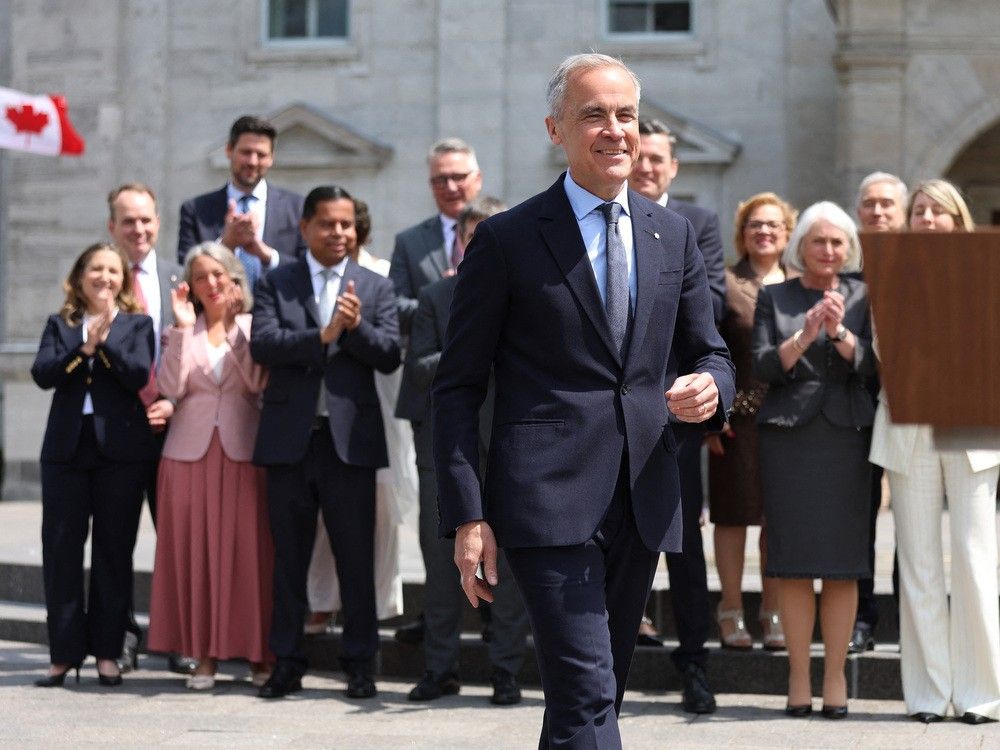
Jamil Jivani, the recently reelected MP for Bowmanville—Oshawa North, released a letter through his office on Wednesday, the day after Carney unveiled his new cabinet.

Of the 38 cabinet positions, ten were designated as secretaries of state who will not attend every cabinet meeting and are assigned to specific issues.

Labour was one of the issues designated to one of these more junior positions. Former prime minister Justin Trudeau’s government had labour as a full cabinet position.

On Tuesday, Carney named John Zerucelli, the newly elected Liberal MP for Etobicoke North, as a secretary of state to labour.

In his public letter, Jivani argues that unions and businesses in his region of Durham, which forms part of the Greater Toronto Area, are “facing serious economic challenges” after General Motors’ announced it would be cutting back on shifts at its Oshawa plant this fall, with rotating layoffs starting this June, according to the local union.

The local union has warned that hundreds of jobs remain at risk.

“With these local economic factors in mind, it is no surprise that many Canadians are concerned by Prime Minister Mark Carney’s decision to exclude a Minister of Labour from the newly unveiled federal Liberal cabinet and relegate the labour portfolio to a junior position in government,” Jivani said.

He points to comments made by the Canadian director of LiUNA, which represents more than 160,000 union members in fields like construction.

Joseph Mancinelli said on X that Carney’s decision to exclude a labour minister from his cabinet was a “slap in the face to our members.”

“If the Canadian government wants respect from labourers, perhaps let’s start with a Minister of Labour if cabinet,” Mancinelli wrote.

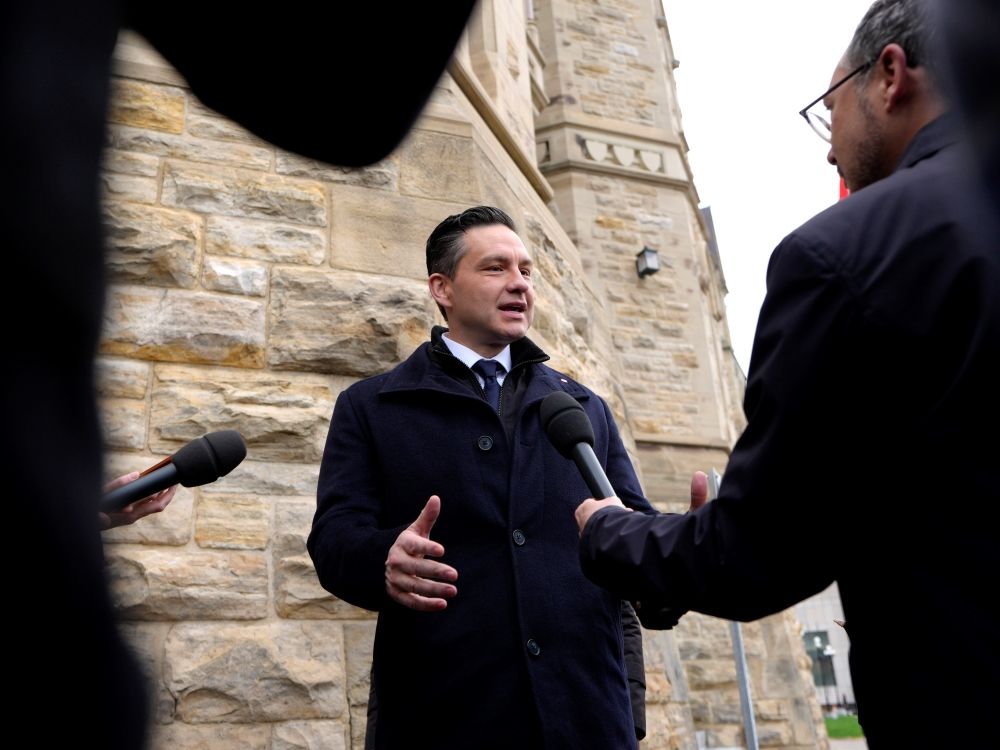
Conservative Leader Pierre Poilievre has focused his party on building support among workers and union members, with Conservatives receiving at least 12 union endorsements in the April 28 federal election and capturing seats in areas affected by U.S. tariffs like southern Ontario

Poilievre, who lost his own seat in Parliament and now plans to run in a byelection in rural Alberta, has said Conservatives are prepared to work with the minority Liberals in certain areas, such as when it comes to negotiating with the U.S. “if the government does a good job.”

He nonetheless slammed Carney’s cabinet as being similar to ones prepared by Trudeau, with numerous Trudeau-era ministers in top positions.

In his letter on Wednesday, Jivani said that “Carney must more than pay lip service to the concerns of Durham Region’s labour unions, businesses, and industry leaders.”

He calls on the federal government to take several steps, including reinstating labour as a cabinet position and looking for ways the federal government can help maintain General Motors’ production and and incentivizing consumers to buy more Canadian-made vehicles.

“Canadians are hopeful that Prime Minister Carney will negotiate a deal with Canada’s auto sector’s best interests in mind,” Jivani wrote.

“In the meantime, I am asking for appropriate actions to be taken to mitigate the economic damage of the current economic instability.”

Heading into the government’s first cabinet meeting, newly appointed Industry Minister Melanie Joly said she has already been in contact with the CEOs of General Motors, Ford and Stellantis to discuss the trade war with U.S. President Donald Trump by the end of the week.

The president has hit countries, including Canada, with tariffs on auto-parts and vehicles, save for ones compliant with the free trade agreement between Canada, the U.S. and Mexico. Canada is also subject to 25 per cent U.S. tariffs on steel and aluminum.

“My message to the workers in the auto-sector is we’re there for you. We know that there’s anxiety, we know you’re concerned about losing shifts, we know your concerns about losing your jobs and we will always fight for your jobs.”

NDP MP Leah Gazan also took issue with Carney not naming a labour minister to his cabinet, calling on his to do so in a letter released Tuesday.

She accused the prime minister of embracing a non-inclusionary and anti-labour stance in his cabinet appointments.”

National Post

staylor@postmedia.com

Get more deep-dive National Post political coverage and analysis in your inbox with the Political Hack newsletter, where Ottawa bureau chief Stuart Thomson and political analyst Tasha Kheiriddin get at what’s really going on behind the scenes on Parliament Hill every Wednesday and Friday, exclusively for subscribers. Sign up here.

Our website is the place for the latest breaking news, exclusive scoops, longreads and provocative commentary. Please bookmark nationalpost.com and sign up for our politics newsletter, First Reading, here.


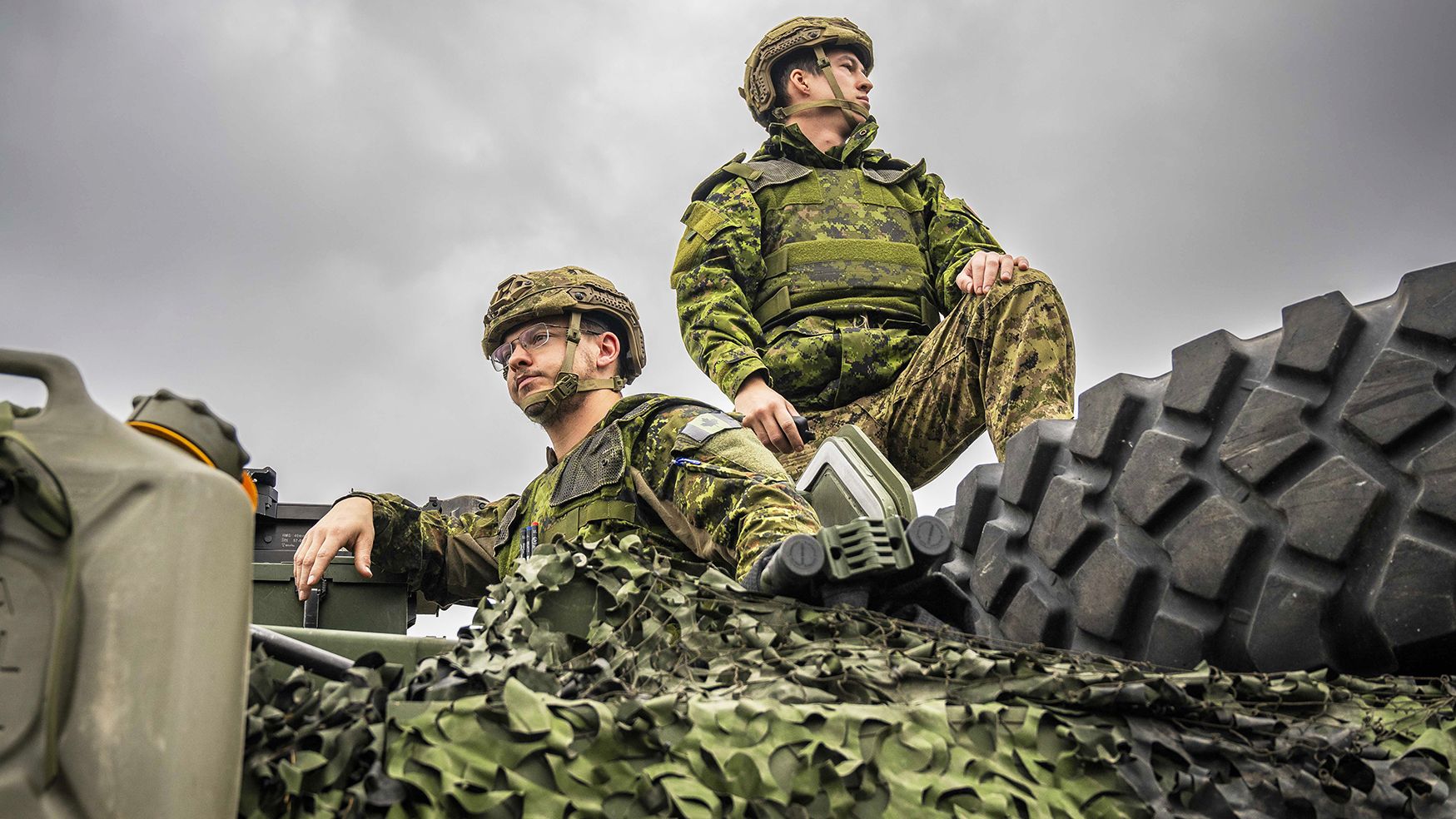
Reconnaissance Squadron of Multinational Brigade Latvia prepares to commence EXERCISE RESOLUTE WARRIOR, at Military Base Adaži, on 03 November 2024.

Credit: Multinational Brigade Imagery Technician

~

L’escadron de reconnaissance de la Brigade multinationale en Lettonie se prépare à prendre part à l’exercice RESOLUTE WARRIOR, à la base militaire Adaži, le 3 novembre 2024

Photo : Technicien en imagerie de la Brigade multinationale

The Alaskan Air Identification Zone extends 150 miles from U.S. territorial airspace and into Canada’s airspace in the North. It begins where sovereign airspace ends but is a defined stretch of international airspace that requires the ready identification of all aircraft in the interest of security.

On two consecutive days in February, two Russian Tupolev bombers accompanied by two Sukhoi Su-35 fighters flew into the zone. On both days, Feb. 18 and Feb. 19, they were intercepted by F-35 fighters, a Boeing E-3 Sentry early warning and control aircraft, and a KC-135 Stratotanker for aerial refuelling. All American aircraft.

On April 15, Russian aircraft

flew into the zone again

and were detected and tracked. According to the North American Aerospace Defence Command (Norad), this is a regular occurrence.

Last July, a joint sail between Russians and Chinese went into the Bering Sea, a body of water in the north that divides the Eurasia continent and North America. They stayed in international waters.

And there was the infamous case of the Chinese spy balloon that floated over Canada and the United States from Jan. 28 to Feb. 4, 2023, before being shot down by a U.S. Air Force F-22 Raptor fighter jet over the Atlantic near the coast of South Carolina.

Canada has come to rely on the U.S. military to help defend us. “We’re protecting Canada,” said U.S. President Donald Trump in his recent meeting with Prime Minister Mark Carney in the Oval Office. While

Trump has dismissed

the notion of using the U.S. military to realize his dream of making Canada the 51st state, that doesn’t mean he’s content providing Canada with what he calls “free military.”

“Should we not be able to defend ourselves?” asks Michel Maisonneuve, a retired Canadian Army lieutenant-general who has served as assistant deputy chief of defence staff, and chief of staff of NATO’s Allied Command.

“Should we not be able to go up north and patrol our north correctly with submarines that actually work? Should we not be able to go destroy a balloon that China sent up by ourselves? Should we not have forward deployed bases up in our north so that we can deploy troops and aircraft and equipment up there?”

Decades of insufficient funding, painfully slow procurement and declining numbers of troops have resulted in what some have described as Canada’s “boutique” military — capable of niche operations and deployments, but not much more.

At a time of increased tensions globally and closer to home, National Post talked to several current and former military commanders, as well as military observers, about the neglected state of Canada’s military, and what they say is needed to boost the nation’s defences and security.

“We are in a really sad state; we are unarmed and undefended right now,” said Maisonneuve. “The personnel situation is horrible. The equipment situation is horrible. The training situation is horrible. When you put all these things together, that means readiness.”

That’s a far cry from the past, when Canada was viewed as a “fireproof house,” safe from flammable materials. “I just don’t think it is fireproof anymore,” said Lt.-Gen. Steve Boivin, who heads Canadian Joint Operations Command, which is responsible for the planning, execution, support and overall command of deployed military at home and abroad.

“And I think Canadians are more and more aware of this.”

Trickle of dollars

Funding, or the lack of it, is a large part of the crisis in Canada’s military. NATO allies agreed just over a decade back to work toward spending the equivalent of two per cent of their GDP on defence. Canada has consistently fallen short of that mark.

NATO figures suggest Canada spent just 1.37 per cent of its GDP on defence in 2024. The Liberals have said they expect to reach two per cent by 2030 “at the latest.”

In his meeting with Trump, Carney promised a much greater focus on defence and security and putting Canada’s full weight into NATO, as well as securing the Arctic.

“Two per cent was the absolute minimum we should be spending. Nations are going to need to get to three per cent,” Maisonneuve said of NATO commitments.

Britain’s recent announcement that it will increase defence spending to 2.5 per cent of its GDP gives Boivin hope that Canada, as promised, will also hike military spending. “We’ve got a number of capability gaps that we need to fill,” said Boivin.

Procurement is one of them. Canada’s military has trouble buying equipment at a time when this expertise is crucial. Russia’s invasion of Ukraine, tensions between China and the United States, the ongoing conflict in the Middle East, as well as cyberattacks and disinformation should be shaking Canada out of its complacency.

“This is not a time to sit around and say, ‘Gee, I don’t know,’” said Ken Hansen, a military analyst and former Canadian naval commander. “You want people who can think outside the box, who can be active agents looking for opportunity. And unfortunately, I think the Canadian military is a very classically conservative bureaucracy … They’re not prepared to open their bathrobe.”

Speeding up military procurement is a matter of political will, said Vincent Rigby, a former top intelligence adviser to former prime minister Justin Trudeau, who spent 14 years with Canada’s Department of National Defence. Ottawa has to decide, “this is in the interest of national security, and we’ve got to move fast,” Rigby said.

Slow procurement has been an issue for the Canadian military for decades, Rigby said. “Military procurement is, by definition, a slow process. It’s cumbersome, it has a lot of steps, a lot of due diligence. So it’s all understandable. But for many, many years in Canada, there has been … a tendency to spread the benefits of procurement across the country in terms of regional benefits. I think there’s been a proclivity for made-in-Canada solutions to try to Canadianize a lot of our platforms as much as we possibly can.”

What’s needed is more “off-the-shelf procurement,” Rigby said. As examples, he pointed to F-35 fighters (now under review), P-8 Poseidon maritime patrol and reconnaissance aircraft and Reaper combat drones, which are considered a crucial asset for modern militaries. “Stuff that we can get quickly, we can get into the battle space, (and get it) operational as soon as we possibly can.”

The U.S. problem

In mid-March, in a response to Trump’s tariff threats, Canada announced it was reviewing its $19-billion order for 88 F-35 stealth fighter jets. Canada signed the deal with U.S. defence giant Lockheed Martin in 2023 after years of delay, and put down money for the first 16 jets, due to be delivered next year. While Canada would take the 16 jets, the military would look at alternatives elsewhere for fighter jets.

“That’s a big, big, big decision if we decide we are going to cancel that contract,” Rigby said. Not only will that raise serious questions about the interoperability of the fleet of fighter jets, but also about possible reciprocity on the part of the U.S.

“Don’t forget, a lot of Canadian businesses do some serious defence co-operation with American firms, Bombardier at the top of the list. Is the Trump government going to turn around and start hitting Canadian companies? The (F-35) is one of the best fighter aircraft in the world, and so we’re not going to get necessarily the best aircraft if we go with Rafale (France) or the Gripen (Sweden) or the Eurofighter (Germany, Italy, Spain, U.K.).”

Canada needs to take the long view, Rigby cautioned. “We have to be really, really careful and we have to have contingency plans, and in a pinch, we may have to look elsewhere. But four or five years down the line, who knows where we’re going to be?

“Trump will come and go,” Rigby continued. “Who knows what we’ll get after Trump? But we’ll still be sharing the same continent with these guys. And we have a responsibility to protect the continent, to work with the U.S. on overseas operations. Don’t forget Norad here at home. We have to think about that.”

Canada has been in talks to join the European Union’s new defence initiative that would offer an alternative to buying U.S. military kit, while also boosting military industry at home. The New York Times

reported

the move would allow Canada to take part in building European fighter jets and other military equipment at its own industrial facilities, as well as “offer the country a new market at a time when its relationship with the United States has become frayed.”

“It’s very well-suited to the day and age that we’re in right now,” Hansen said. “It sends the signal that we are not going to take this lying down, and that there are alternatives. There are ways that we aren’t under the American thumb.”

Reinventing military procurement

Canada’s Department of National Defence has a tough time spending the dollars it is allocated by the government because of diminished management expertise in military procurement. According to defence analyst David Perry, who heads the Canadian Global Affairs Institute, the Canadian Armed Forces (CAF) returns between hundreds of millions and over a billion dollars annually to central treasury.

“We can’t spend the money because we don’t have enough people. We don’t have enough people managing the projects,” said Paul Mitchell, a professor at the Canadian Forces College in Toronto.

Canada’s military needs to undo a lot of the damage done to the organization by a credo enforced starting 20 years ago that “every service person is a soldier first” and should be able to pass the combat fitness exams, Hansen said. “The military, finally, after many years, is walking away from that and using people where they can fit and perform adequately.”

Defence cutbacks often targeted headquarters staff, including those employed in industrial estimating and contract program management. Now, the military is paying for it in terms of procurement experts. “We need hundreds of them,” Hansen said.

He suggested the Canadian military should copy the American tactic of placing officers in fellowship appointments with large companies to learn more about procurement.

Their job: “Learn everything you can, stick your nose in everywhere, go around and meet people, buy a lot of coffee, go to dinners and lunches.” When U.S. officers — usually majors and lieutenant-colonels — return from those placements, “they get plunked into an industrial procurement program,” Hansen said.

Lessons from Ukraine: Mass matters

Russia’s invasion of Ukraine is a stark reminder that a 21st-century war remains casualty-intensive — that mass matters. “You still need troops on the ground,” said Rigby.

And Canada has a very small military. By the end of last year, the Canadian Armed Forces had 64,461 regular force members and about 23,177 reservists. It hopes to reach 71,500 regular force members, and 30,000 reservists by 2032 to ease the current shortfall of about 13,862 people.

In the years before Ukraine, the Canadian military was focused on counterterrorism and counter-insurgency. “It wasn’t like the old days of the Cold War when we were prepared to go across and defend against the Soviet hordes coming across,” said Maisonneuve.

“We’re relearning some of that stuff,” he said, pointing out that the Canadian-led brigade in Latvia worked last fall on how to mount a defence against the Russians.

The number of Canadians in uniform went into free fall during the pandemic, said Mitchell. “We stopped recruiting. We stopped bringing people in because you couldn’t do the training.”

Sex scandals involving some of the military’s top brass, and a rotating door of chiefs of defence, didn’t help.

“The public image of the Canadian Forces went from very high coming out of Afghanistan, to very low, and that obviously had an impact on recruiting where people said, ‘I’m not sure that I want to belong to an organization that seems to be in such chaos at the moment,’” said Mitchell.

A

recent survey

of more than 24,000 post-secondary students from across the country shows less than one per cent of them (188) ranked the Canadian Armed Forces as their No. 1 preferred employer after graduation, and just over three per cent (829) identified the organization as among their top five choices.

“If it’s a major regional war that Canada gets involved in, then maybe you’d be looking at conscription and that would beef up the size of your force,” said Rigby. “We’ve seen what the Russians have resorted to in terms of keeping their numbers up, and the Ukrainians as well.”

The same radical thinking applies to Canada’s supply of military equipment and munitions. The three-year-old Russia-Ukraine war “raises questions about our defence industrial base and our need to be able to not rely exclusively on allies,” Rigby said.

Made-in-Canada warships

Recent tensions with the United States haven’t stopped Canada from buying U.S. military equipment altogether.

Three new River-Class warships Canada recently announced it is buying will be equipped with the “latest and greatest version” of an American long-range antiballistic missile system known as Aegis, Hansen said.

In March, Ottawa pegged the cost to build and deliver the first three of 15 ships at $22.2 billion. The River-Class destroyers will be built by Irving Shipbuilding Inc.

“This new ship has whetted the navy’s appetite for capabilities they’ve never had before — the ability to shoot down ballistic missiles and engage in ballistic missile defence in an active way. That’s a big new capability and that ship is going to be a beast,” Hansen said. “I wonder if it’s even going to fit in our (Halifax) dockyard.”

Critics have warned that Americans can control the systems, which allow for “collaborative engagement.” That means any ship in a multinational task group could employ the weapons on the Canadian vessel to target an incoming threat.

“If it is the only source of what is assessed to be a critically important technology, then you really haven’t got much choice,” Hansen said.

Next wave of fighter jets

Critics have also raised fears that if Canada goes ahead with buying a full fleet of 88 F-35s from Lockheed Martin, the U.S. would have full control over the upgrades and software improvements needed to keep the warplanes running.

Carney has said Canada is eyeing alternatives to the F-35. The “fifth-generation” stealth aircraft, equipped with advanced avionics and sensors, is touted by Lockheed Martin as the “most lethal, survivable and connected fighter jet in the world.”

Dassault’s Rafale fighter jet, the Eurofighter Typhoon — developed by a consortium including Airbus, BAE Systems and Leonardo — as well as Saab’s Gripen were all in competition for Canada’s business before the F-35s made the final cut.

Whatever replaces Canada’s aging CF-18 fleet must be able to operate in all weather conditions, engage in a wide range of air-to-air and air-to-surface missions, and be interoperable with coalition partners.

“The Swedes say that you could do all of that with the Gripen,” Hansen said, noting the aircraft was the runner-up in the competition that eventually settled on the F-35 in 2023.

Nova Scotia’s IMP Group was part of a consortium bidding to put together and maintain Saab’s Gripen fighter jets at the company’s massive hangar near Halifax Stanfield International Airport.

“I think stealth warplanes (like the F-35) are going to be a temporary phenomenon, and that you really shouldn’t be spending everything all at once to get a technology that, in the fullness of time, will turn out to be either obsolescent or flat-out obsolete,” Hansen said.

Drone warfare

In a world first, a Ukrainian seaborne drone reportedly

destroyed a Russian fighter jet

at the beginning of May. The 5.5-metre drone fired a surface-to-air missile at the $50-million jet, causing it to catch fire and crash. Unmanned drones have come to define modern warfare.

Canada’s military needs to redirect intelligence gathering into “technology areas that have probably not been explored very much in the past, like the use of drones and paper gliders that carry bombs,” said Hansen.

The Ukrainians have built a cardboard plane that has a wingspan of about a metre, “with a little wee engine in front of it, and it carries a five-pound bomb,” Hansen said. “Because they’re built out of cardboard and glue, the Russian radar can’t detect them.”

When it gets within range of its target, it shuts the engine off and may even eject the propeller blade because those could reflect Russian radar signals.

“It glides down to the target and explodes,” Hansen said. “They’re painted a very light tan colour with a little bit of blue on the underside — very difficult to see.”

Those have proved very effective, he said. “A five-pound bomb, if it flew into your office, would ruin everything in it.”

Ukraine is now employing drones that can be controlled with electro-optic fibres “about the thickness of a human hair,” and have a range of four or five miles, said the former naval commander. “It can’t be jammed electronically.” The drones “can scoot around enemy defences and whomp them in the rear.”

Ukraine’s small marine drones can hide in the clutter that radar returns when it’s examining things at the wave-top levels, explained Mitchell, the professor.

“These things can get really close in before they’re noticed, and then by the time they’re noticed, it’s really hard to turn a self-defence weapon on to them.”

That’s how the less-resourced Ukrainians have been able to drive off the Russian navy, Mitchell said. “The maritime drones have been real game-changers.” The sunk cost is low, and the personnel costs are minimal, he said. “The effectiveness of these things is rather high.”

There has also been an evolution of weapons systems that can be mounted on military vehicles to defend against drone attacks, Hansen said, noting Germany produces one that is armed with twin 30-mm cannons.

“On top of the turret of this thing is a rotating radar dish (that can detect incoming drones),” he said. “It’s a lot like a naval gun on a land vehicle, and they’re very effective at shooting down drones.”

The Ukrainians have modified their Neptune anti-ship missile — its original version sank the Russian Black Sea Fleet flagship Moskva in April 2022 — and fired it recently against Russian oil refineries.

“It has a range of 1,000 kilometres,” Hansen said. “It is flying to co-ordinates that cannot be jammed. It has to be shot down. And good luck with that, because it flies at about 900 miles an hour.”

Drone technology and weapons to counter them are something “we can’t afford not to learn,” Boivin said. The brigade now in Latvia has some weapons aimed at countering the threat from incoming drones by jamming their sensors or shooting them down, said the commander.

“We’ve got some that are still to be delivered in order to give us the capabilities to address threats from unmanned aerial systems.”

Last summer, Canada awarded three “Diamond in the rough”

cash prizes

to companies making equipment to detect and defeat such threats. Vancouver’s AIM Defence took home the million-dollar first prize. Sherbrooke, Que.’s DARIT Technologies, and Toronto’s Prandtl Dynamics tied for second place in the contest — dubbed a Sandbox event at Alberta’s CFB Suffield — that featured 15 outfits from five countries demonstrating and testing their counter-drone technologies.

Under the ice

“We need subs,” said Boivin. “We need to be able to operate and get a full maritime domain awareness and capability.”

Submarines are especially useful when an enemy is using drones and air threats to keep surface fleets away from their shores.

“That’s when a submarine comes in really, really handy, to be able to close in to those very dangerous areas,” Mitchell said. “We need to have that capability in Canada if we’re going to project force overseas, even if it’s only to provide a proper training environment for our surface fleet.”

Submarines that can conduct under-ice operations will also play a role in Canada’s security. “I think we need 12. Whether the navy can actually man 12 submarines is a big question. They certainly can’t do it right now,” Mitchell said.

And he still sees a need for icebreakers to protect Canada’s Arctic. “We’ve got to be able to control those waters ourselves and icebreakers are what we need to do that.”

The federal government has announced plans to construct two new Arctic icebreakers for the Canadian Coast Guard. The first contract, worth $3.2 billion, went to Vancouver-headquartered Seaspan. The second icebreaker will be built in Levis by Quebec shipbuilder Davie as part of a $3.3-billion deal.

Securing the North

Where the polar ice caps once provided physical protection, the region is now opening to the world as it warms, notes Canada’s

Arctic Foreign Policy.

“In the coming decades, the Arctic Ocean will become a vital shipping route between Europe and Asia, while vast stores of natural resources become increasingly accessible. This growing access is already enticing nations to the region, heightening security challenges and geopolitical competition,” the policy reads.

“I think that you’re going to see us doubling down on the Arctic,” Boivin said.

Carney recently announced Canada is working with Australia to build a $6-billion early-warning radar system to cover airspace from the U.S. border to the Arctic. And in

his recent meeting with Trump

in the Oval Office, the prime minister promised a “much greater focus on defence and security, securing the Arctic and developing the Arctic.”

Boivin is concerned with the increased friction playing out over the Arctic between Russian and American aircraft, as well as our own. “This is why we’re completely revamping how we approach Operation Nanook,” he said, referring to a defence exercise the Canadian military carries out as often as five times a year to develop more expertise in the challenging environment.

The CAF is “taking it from a sovereignty operation to an all-domain operation where we’re going to bring in land, aerospace, maritime, cyber and space capabilities on a near-permanent basis,” Boivin said.

The idea is “to detect, deter and, if required, defend,” he said, noting the U.S. and other allies have expressed an interest in participating in the Nanook operation.

Readiness

There’s no question that facing future security challenges means the modernization of Canada’s military supply, to not only fill the gaps of military kit, but also support the equipment Canada does have.

“We don’t have enough people, we don’t have enough kit, we don’t have enough spares. So everything goes on the first bolt and then there’s nothing left over,” said Mitchell. “There’s very little resilience in the system right now.”

And that leaves Canada running a “boutique military,” the professor said.

Maintenance problems plague military equipment that includes submarines, aircraft and the army’s rolling stock. “I have never seen it as bad as it is now,” said Maisonneuve. Lots of Canadian military equipment “is parked by the fence right now because there are not enough spare parts to fix them.”

Boivin worries about the declining rate of military equipment that is supposed to be ready for training and operations. Key naval fleets that are serviceable to meet training and readiness requirements in support of concurrent operations dropped below 50 per cent in 2022-2023, as did key army fleets. Serviceability rates for air force fleets increased slightly but were also way off target.

“The reality is I’m privileged as a commander that the serviceability rate of the equipment that the services give me to employ on operations is high,” said Boivin. His concern is about the equipment left back in Canada for training the brigades at home.

“I believe we’re always going to be in a position where there are some challenges,” said the commander.

“We’ve got quality people. We simply need to give them quality equipment, train them properly, and I’m very confident that we’ll do well in the operating environment.

“Every day we’ve got dedicated Canadian Armed Forces members that are delivering crazy good effects for the country on all of the operations that we have,” Boivin said, pointing to the successful helicopter rescue recently of 20 sailors from a ship grounded off Newfoundland as an example.

“I don’t think we’re a broken military,” the commander said.


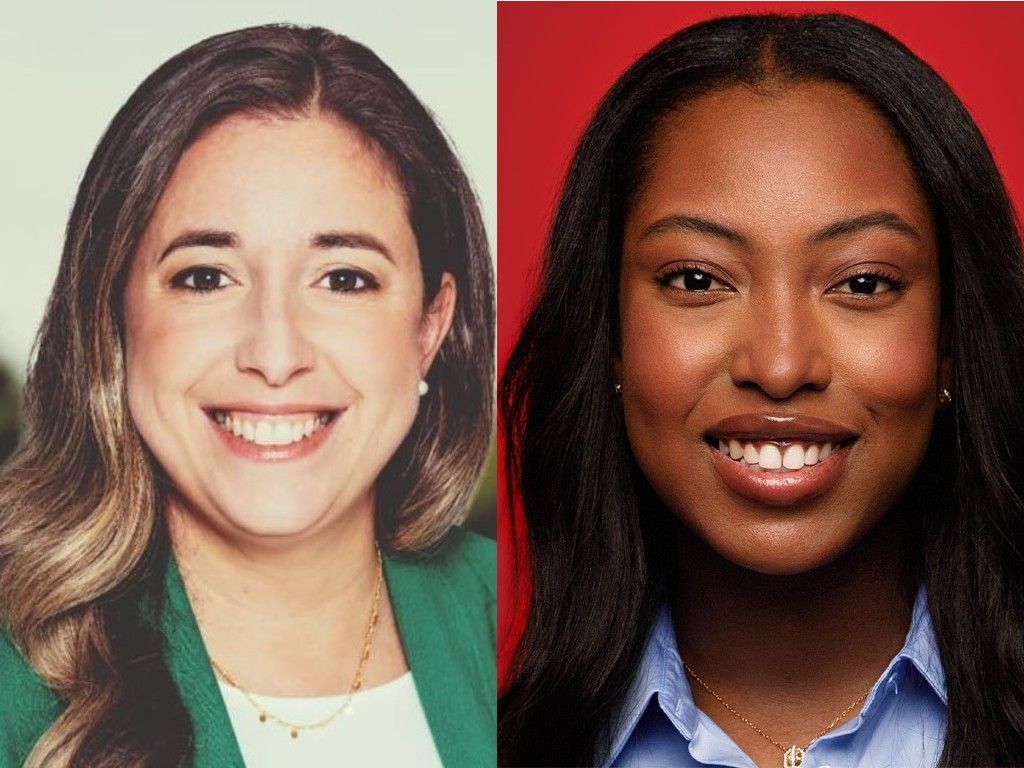
Bloc Québécois incumbent Nathalie Sinclair-Desgagné, left,  and Liberal candidate Tatiana Auguste could be tied for the riding of Terrebonne.

Depending on what happens over the coming days, the voters in a Quebec riding thought to be decided by a single vote could be headed back to the polls as a result of a tie.

Two days after a judicial recount certified Liberal candidate Tatiana Auguste as having barely defeated Bloc Québécois incumbent Nathalie Sinclair-Desgagné,

Noovo Info

and

CBC

reported that a mail-in ballot sent before Elections Canada’s deadline was returned to the sender on May 2, four days after the election.

And it turns out Emmanuelle Bossé is a Bloc supporter.

In an email to National Post, the independent agency confirmed an “error with the return address printed on this elector’s return envelope. Specifically, part of the postal code was wrong.”

Bossé told Noovo she would have voted in person had she known ahead of time.

What happens now will likely depend on what Elections Canada decides and, as of Tuesday, they “are still working to gather all the facts.”

Under the

Canada Elections Act

, in the event of a tie following a judicial recount, the Chief Electoral Officer shall, through a report or via two MPs or two candidates who have been declared elected, promptly notify the House of Commons, “that, as no candidate was declared elected in the electoral district because of the equality of votes, a by-election will be conducted.”

Whether Bossé’s lost but otherwise legitimate vote will be counted as part of the judicial recount remains to be seen. It’s not immediately clear in this situation if it’s under the purview of the courts or the Chief Electoral Officer.

Should the vote not be counted, and Sinclair-Desgagné wishes to challenge the validity of the vote to potentially force a byelection, she or an elector can formally contest the result via the courts.

“In a contested election proceeding, a judge determines … whether there were any irregularities, fraud, or corrupt or illegal practices that affected the result of the election,” Elections Canada explains.

The judge will then determine whether or not to annul the result, thereby forcing a byelection.

According to the agency, no contested result has resulted in annulment in Canadian electoral history.

National Post contacted both candidates and parties, with only the Liberals responding and deferring to Elections Canada for questions surrounding the results and the recount.

During his first press conference with a new cabinet, Prime Minister Mark Carney was asked about a potential byelection in Terrebonne.

“First of all, I think it’s better to win by one vote than to lose by one vote,” Carney began in response.

He said wouldn’t “make any judgment” on the now-complete judicial recount and deferred to Elections Canada on the next steps.

“Should it be done again? Well, that’s up to Elections Canada to decide.”

Meanwhile, two of the three remaining judicial recounts are now underway.

What is a judicial recount and could it leave Liberals with a majority government?

On Monday in Newfoundland, a provincial superior court judge began overseeing a recount in Terra Nova—The Peninsulars, currently held by Liberal candidate Anthony Germain by just 12 ballots over the Conservative Jonathan Rowe.

Tuesday in Ontario, a recount began for Milton East—Halton Hills South, where Liberal Kristina Tesser Derksen is ahead of the Conservative Party of Canada’s Parm Gill by 29 votes.

The last recount won’t begin until Tuesday, May 20 in Windsor—Tecumseh—Lakeshore where incumbent Liberal Irek Kusmierczyk fell 77 votes short of his Conservative counterpart Kathy Borrelli.

The results of the recounts will be published on Elections Canada’s website once complete.

Our website is the place for the latest breaking news, exclusive scoops, longreads and provocative commentary. Please bookmark nationalpost.com and sign up for our daily newsletter, Posted, here.


Minister of Housing, Infrastructure and Communities Nathaniel Erskine-Smith signs a document during a cabinet swearing-in ceremony at Rideau Hall in Ottawa, on Friday, Dec.20, 2024.

Liberal MP Nate Erskine-Smith said it’s “impossible not to feel disrespected” after he was

left out of Prime Minister Mark Carney’s cabinet

announcement Tuesday.

“The way it played out doesn’t sit right,” he wrote in a statement posted to X. “But I’m mostly disappointed that my team and I won’t have the chance to build on all we accomplished with only a short runway.”

Erskine-Smith was appointed housing minister in former prime minister

Justin Trudeau’s last cabinet

, which was announced in December 2024. When Carney took over as Liberal leader and prime minister in March, he

kept Erskine-Smith in housing

. But on Tuesday, he was replaced by former Vancouver mayor Gregor Robertson, and did not receive another portfolio.

Erskine-Smith’s statement drew some criticism. Being in cabinet “is a privilege, not an entitlement,” Sharan Kaur, the former deputy chief of staff for Bill Morneau, reminded the MP in a post on social media platform X.

In January 2024, Erskine-Smith said he planned to leave federal politics and would not run in the next election. But after he was named to Trudeau’s cabinet he said he had decided to run again. In 2023, he ran for the Ontario Liberal leadership but lost to Bonnie Crombie.

Erskine-Smith is known for being an outspoken MP and has even voted against his own party. He said he will be “returning to Parliament with a renewed sense of freedom.”

Read the full text of his statement:

Congratulations to new and old colleagues who were sworn in today. This moment calls for a capable team ready to get to work quickly.

It’s nice to see a number of colleagues receive overdue recognition and I’m hopeful we’ll see a lot accomplished in the coming months.

I ran again because of the opportunity to make an even bigger difference around the cabinet table and to help fix the housing crisis. I’m not back in any role, unfortunately, so it may not surprise you to learn that it’s been a strange day on my end.

It’s impossible not to feel disrespected and the way it played out doesn’t sit right. But I’m mostly disappointed that my team and I won’t have the chance to build on all we accomplished with only a short runway.

Our ambitious housing plan is bigger than one person, of course. I wish the new minister well and hope we’ll see fast action to unleash the market, double down on building community housing, address chronic homelessness, and treat housing as a home first (and investment 2nd).

You never know what the future holds. But for now, I’ll be working hard for my neighbours here in Beaches—East York, restarting the

#uncommonspod

, and returning to Parliament with a renewed sense of freedom.

Thanks to everyone who I’ve had the luck to work with in the housing and infrastructure role. Thanks to everyone who has had my back and reached out with kind words. Thanks to Justin Trudeau for the opportunity to make a bigger difference.

Also I went for a run today and this was my view, so life’s still good.


Conservative Leader Pierre Poilievre speaks to journalists as he arrives on Parliament Hill for a meeting of the Conservative caucus following the federal election, in Ottawa, on Tuesday, May 6, 2025.

OTTAWA — Conservative Leader Pierre Poilievre said on Tuesday he’s personally opposed to Alberta independence, but understands why the result of April’s election has left some Albertans questioning the province’s future in Canada.

“Albertans have a lot of legitimate grievances, let’s be blunt,” Poilievre, who grew up in Calgary, told reporters in Ottawa.

Poilievre said that a decade of Liberal attacks on Alberta’s oil and gas sector have brought tensions to a boiling point, especially with Albertans still contributing disproportionately to

federal programs like equalization

.

“I think the message to… the Liberal government is you can’t tell Alberta to just pay up and shut up.”

The Liberals secured their fourth-straight mandate in April’s election, despite winning

just two of Alberta’s 37 seats

and 28 per cent of the province’s popular vote.

Poilievre, who lost his Ottawa-area seat in the election, will be standing for byelection in the southern Alberta riding of Battle River—Crowfoot.

He’ll need to tread carefully around the topic,

with one recent poll

showing that a majority of right-leaning Albertans would vote ‘yes’ in a referendum to leave Canada.

Poilievre said that he hopes to help bridge the divide between Ottawa and Alberta in the months to come.

“I will be a unifier who works to bring all Albertans to a place where they feel that they are respected and honoured in our wonderful country,” said Poilievre.

National Post

rmohamed@postmedia.com

Get more deep-dive National Post political coverage and analysis in your inbox with the Political Hack newsletter, where Ottawa bureau chief Stuart Thomson and political analyst Tasha Kheiriddin get at what’s really going on behind the scenes on Parliament Hill every Wednesday and Friday, exclusively for subscribers. Sign up here.

Our website is the place for the latest breaking news, exclusive scoops, longreads and provocative commentary. Please bookmark nationalpost.com and sign up for our daily newsletter, Posted, here.


Canadian Prime Minister Mark Carney arrives for a news conference following a swearing-in ceremony for members of the Canadian ministry at Rideau Hall in Ottawa, Ontario, Canada, May 13, 2025.

OTTAWA — Alberta Premier Danielle Smith didn’t hide her dismay at Prime Minister Mark Carney’s choice of Toronto-area MP Julie Dabrusin as his new environment minister on Tuesday.

“I am very concerned the prime minister has appointed what appears to be yet another anti-oil and gas environment minister,” said Smith in a statement on Carney’s cabinet picks.

“Not only is (Dabrusin) a self-proclaimed architect of the designation of plastics as toxic, but she is a staunch advocate against oil sands expansion (and) proponent of phasing out oil and gas(.)”

Smith also said she was put off

by Dabrusin’s close ties

to

longtime thorn in her side

Steven Guilbeault, to whom Dabrusin

served as a parliamentary secretary

for four years.

The premier’s chief of staff, Rob Anderson, was even more blunt in his reaction to Dabrusin’s appointment.

“Fire… meet gas,” wrote

Anderson on social media

.

Dabrusin

publicly spoke out against

a major Alberta oil sands mining project in 2020, saying she had “a lot of concerns” about the project’s impact on the surrounding areas.

Carney’s promotion of Dabrusin to Guilbeault’s old job keeps Ottawa and Alberta

on a collision course

over Liberal net-zero climate policies.

Smith has warned Carney repeatedly that he’ll need to scrap several of these policies — including the federal cap on oil and gas emissions and federal clean electricity regulations — if he wants to avoid an unprecedented national unity crisis in the coming months.

On Monday, Smith announced that

she was indefinitely freezing

Alberta’s industrial carbon price at $95 per tonne, setting up a clash with the Carney Liberals over their escalating federal carbon price.

Just one Alberta MP, Edmontonian Eleanor Olszewski, was named to Carney’s 28-member cabinet.

Rookie Calgary Liberal MP Corey Hogan was snubbed of either a cabinet or secretarial post.

The reaction to Carney’s new cabinet in Alberta wasn’t all negative, as some in the province’s business community said they were encouraged by the appointment of ex-banker Tim Hodgson as energy minister.

“Tim (Hodgson) has real life experience with Alberta’s energy sector… he’s seen firsthand the challenging policy environment that the federal government has put in place for the past ten years,” said Business Council of Alberta President Adam Legge.

Hodgson was previously an executive with Calgary-based oil sands producer MEG Energy.

Calgary-based energy analyst Heather Exner-Pirot agrees that Hodgson’s appointment is good news for Alberta’s energy sector.

“I don’t think there’s anyone else in the entire Liberal caucus who could’ve given as much cause for optimism as Hodgson,” said Exner-Pirot.

National Post

rmohamed@postmedia.com

Get more deep-dive National Post political coverage and analysis in your inbox with the Political Hack newsletter, where Ottawa bureau chief Stuart Thomson and political analyst Tasha Kheiriddin get at what’s really going on behind the scenes on Parliament Hill every Wednesday and Friday, exclusively for subscribers. Sign up here.

Our website is the place for the latest breaking news, exclusive scoops, longreads and provocative commentary. Please bookmark nationalpost.com and sign up for our daily newsletter, Posted, here.


RCMP are asking the public for help finding Lilly Sullivan, age 6, left, and Jack Sullivan, age 4. The two children were last seen  on the morning of Friday May 2 in Lansdowne Station, Pictou County. - RCMP

Mounties have fielded more than 180 tips from the public about two young children reported missing 11 days ago from their home in rural northeastern Nova Scotia.

The disappearance of Lilly and Jack Sullivan from their trailer home in Lansdowne Station, Pictou County, that they shared with their mother, stepfather and the couple’s baby prompted a massive search in the wooded area around Gairloch Road.

“We’re exploring all avenues in this missing persons investigation,” Staff Sgt. Curtis MacKinnon said Tuesday in a news release. “We have officers from multiple disciplines dedicated to finding Lilly and Jack, including highly trained RCMP major crime and forensic investigators.”

Of the tips from the public, “officers have so far identified 35 people for formal interviews as part of the investigation, including community members and those closest to the children,” said the police.

It notes the RCMP’s Underwater Recovery Team scoured bodies of water around Landsdowne Station on May 8 and 9, but “didn’t uncover any evidence.”

Mounties “continue to work day and night on this file,” MacKinnon said. “Like all Nova Scotians, we want answers, and we want to know what happened to these children.”

Mounties first got the call on May 2 at 10 a.m. that Lilly, 6, and Jack, 4, were missing.

“They were believed to have wandered away from their home on Gairloch (Road). A multi-agency search and missing persons investigation began immediately,” said the RCMP news release.

The search, which involved hundreds of trained volunteers, was scaled back to specific areas on May 7. It covered 5.5 square kilometres of heavily wooded, rural terrain.

 Daniel Martell, who identifies as the stepfather of Lily and Jack Sullivan, speaks with reporters following an announcement last week that the search for the missing Pictou County children was being scaled back.Ryan Taplin – The Chronicle Herald

Daniel Robert Martell, who identifies as the children’s stepfather, told The Chronicle Herald last week that he and the children’s mother, Malehya Brooks-Murray, last heard Jack and Lily on the morning of Friday, May 2, as they lay in bed with their baby.

“The sun was already up and Lily came into the (bedroom),” said Martell.

“She had a pink shirt on. We could hear Jackie in the kitchen. A few minutes later we didn’t hear them so I went out to check. The sliding door was closed. Their boots were gone.”

Martell is not Jack and Lily’s father. He’s been Brooks-Murray’s partner for three years, though after the children disappeared she reportedly left him and the county with their baby and is staying with family.

Martell has said the children have undiagnosed autism and it is not like them to wander far.

Martell said when they noticed the two children were missing May 2, he immediately jumped in the car and searched neighbouring roads, looking in culverts. By the time he returned home, the RCMP were there, having been called by the children’s mother.

Martell said last Wednesday that he had been working with Northeast Nova Major Crime, had provided the RCMP with his cellphone and had agreed to take a lie detector test.

The RCMP have previously said there is no evidence the children were abducted.

On the weekend after they vanished, Brooks-Murray told CTV that Jack and Lilly are not typically the type of children who would go outside on their own.

“I just want to remain hopeful, but there’s always in a mother’s mind, you’re always thinking the worst,” Brooks-Murray said at the time.

Anyone with information on the whereabouts of Lilly and Jack is asked to contact Pictou County District RCMP at 902-485-4333. To remain anonymous, contact Nova Scotia Crime Stoppers, toll-free, at 1-800-222-TIPS (8477), submit a secure web tip at www.crimestoppers.ns.ca, or use the P3 Tips app.

Our website is the place for the latest breaking news, exclusive scoops, longreads and provocative commentary. Please bookmark nationalpost.com and sign up for our daily newsletter, Posted, here.


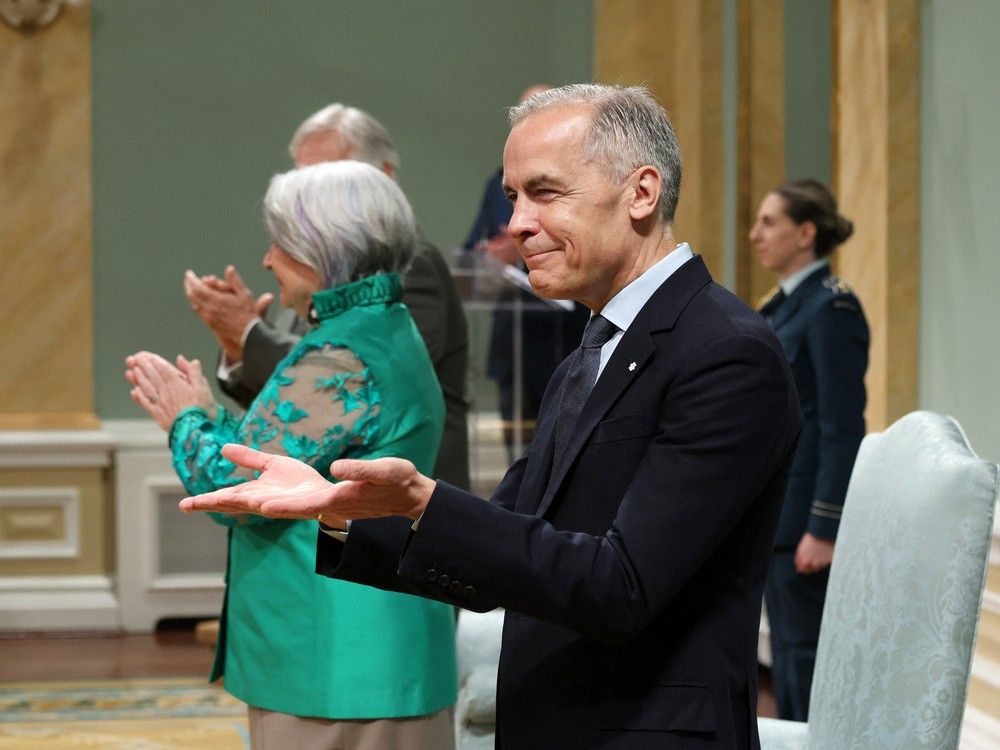
Canadian Prime Minister Mark Carney attends a swearing-in ceremony for members of the Canadian ministry at Rideau Hall in Ottawa, Ontario, Canada, May 13, 2025.

OTTAWA

— Prime Minister Mark Carney’s new cabinet includes many new faces and several notable names who have been left out, including several Trudeau-era cabinet ministers. 

Here’s a look at the winners and losers in Carney’s first cabinet since the April federal election.

Winners: Sean Fraser and Anita Anand 

Two ministers have returned who only months ago called it quits, only to change their mind and seek reelection once the Liberals’ fortunes started improving under Carney and U.S. President Donald Trump’s trade war captured Canadians’ attention.

Anita Anand, who former prime minister Justin Trudeau first named to cabinet after she was first elected in 2019 and who served as the minister for procurement, national defence, the treasury board and internal trade, will become Carney’s minster of foreign affairs.

Former foreign affairs minister Melanie Joly, who has served in that file since 2021, will assume the industry file.

Sean Fraser will return as Canada’s justice minister and attorney general. It marks the latest big file he has been trusted with by a prime minister, after Trudeau previously named him to immigration and housing.

He will have another large file on his plate, as Carney has pledged to make Criminal Code changes to toughen bail access for those charged in car thefts, home invasions, human trafficking and smuggling.

Losers: Family and academic career

When Fraser, who was first elected in 2015 and entered cabinet in 2021, announced back in December he would not be seeking reelection, he cited his desire to be a father who spent more time with his children.

Three months later, Fraser pointed

to the ongoing Canada-U.S. trade war

, saying he wanted to show his children there are some fights worth fighting.

Anand had said she intended to return to her academic career when she announced in January she would not stand for reelection and was not seeking Liberal party leadership.

In explaining her return, she also pointed to the trade war and the need to remove interprovincial trade barriers, which was a file she had been working on.

Winner: Tim Hodgson 

The rookie member of Parliament for the Greater Toronto Area riding of Markham-Thornhill, Tim Hodgson, will begin his career in Parliament as a cabinet minister in charge of energy and natural resources.

It comes at a particularly important time, as more provinces are warming to energy projects like pipelines getting built in order to lessen Canada’s economic dependence on the U.S.

Hodgson’s name was among the new members rumoured to be entering cabinet, given he last served as the chair of Hydro One and CEO at

Goldman Sachs Canada.

He also previously served as a special advisor to Carney, when he was governor of the Bank of Canada. 

Losers: Jonathan Wilkinson and Carlos Leitão

Hodgson takes over at energy and natural resources from Jonathan Wilkinson, who had served in cabinet since 2019, first as environment minister and then later at natural resources.

Carney will be hoping that Hodgson can soothe relations between Ottawa and Western premiers like Alberta Premier Danielle Smith and Saskatchewan Premier Scott Moe, who have been highly critical of Trudeau’s energy policies.

Carlos Leitão was another name circulating as a potential cabinet pick for Carney, given he had served as Quebec’s finance minister. However, that turned out not to be the case.

Leitão will now join Charles Sousa, a former Ontario finance minister, as backbench Liberal MPs.

Winner: Chrystia Freeland 

Chrystia Freeland will remain in cabinet, despite her previous ties to Trudeau, which she severed back in December when she resigned as finance minister, setting off a series of events that led to his resignation weeks later.

Freeland, who placed a distant second to Carney in the Liberal leadership contest, will remain at transport and internal trade, which he named her to shortly after his win.

Carney has said tearing down interprovincial trade barriers is a top priority for his government.

Losers: Karina Gould, Marc Miller

Karina Gould, who also ran against Carney in the Liberal leadership race and was a prominent face of Trudeau’s government, did not find herself back in cabinet.

The same goes for Marc Miller, who had last served as Trudeau’s immigration minister when the government announced it was making dramatic cuts to immigration levels.

Miller had also served as minister for Indigenous services and Crown-Indigenous relations. He is also a personal friend of the former prime minister.

Winner: Francois-Philippe Champagne

Francois-Philippe Champagne will remain as finance minister, the most senior role of any government.

He will have to deliver the Carney government’s first budget once the House of Commons returns later this month.

Carney had named Champagne, who was last at industry, to the role back in March. When recently asked by reporters whether he intended on keeping Champagne in the role, Carney jokingly asked if that question came from him.

Losers: Bill Blair

While Trudeau veterans like Champagne, Joly and Dominic LeBlanc were kept in cabinet, Bill Blair was a notable name who was not.

Blair, first elected in 2015, had served as the minister of national defence before the election.

That role will now be filled by David McGuinty, who previously oversaw public safety. Gary Anandasangaree has been named as as public safety minister, moving over from justice.

National defence has become a more critical file since Trump’s election, as the president has named Canada’s military spending as one of his main irritants.

Carney has also said he wants to work with the Trump administration on both security and trade.

Winners: Wayne Long

Long is one of the new faces from the Liberal backbenches to enter cabinet as a secretary of state for Canada Revenue Agency and Financial Institutions.

The New Brunswick MP was the first person in the Liberal caucus to publicly call for Trudeau to resign last year, after the party lost a longtime seat in a Toronto byelection, which it recaptured in the recent federal election.

Losers: Kody Blois, Ali Ehassi, Nate Erskine-Smith and Rachel Bendayan

Kody Blois, Ali Ehassi and Rachel Bendayan were promoted when Carney named his first cabinet in March, but were left out this time around.

Former Vancouver mayor Gregor Robertson who was successfully elected in Vancouver Fraserview–South Burnaby will take over housing from Nate Erskine-Smith, who was one of the last new faces Trudeau named to his cabinet back in December.

National Post
staylor@postmedia.com
Get more deep-dive National Post political coverage and analysis in your inbox with the Political Hack newsletter, where Ottawa bureau chief Stuart Thomson and political analyst Tasha Kheiriddin get at what’s really going on behind the scenes on Parliament Hill every Wednesday and Friday, exclusively for subscribers. Sign up here.

Our website is the place for the latest breaking news, exclusive scoops, longreads and provocative commentary. Please bookmark nationalpost.com and sign up for our politics newsletter, First Reading, here.


Canadian Prime Minister Mark Carney attends a swearing-in ceremony for members of the Canadian ministry at Rideau Hall in Ottawa, Ontario, Canada, May 13, 2025.

OTTAWA

— Prime Minister Mark Carney’s new cabinet includes many new faces and several notable names who have been left out, including several Trudeau-era cabinet ministers. 

Here’s a look at the winners and losers in Carney’s first cabinet since the April federal election.

Winners: Sean Fraser and Anita Anand 

Two ministers have returned who only months ago called it quits, only to change their mind and seek reelection once the Liberals’ fortunes started improving under Carney and U.S. President Donald Trump’s trade war captured Canadians’ attention.

Anita Anand, who former prime minister Justin Trudeau first named to cabinet after she was first elected in 2019 and who served as the minister for procurement, national defence, the treasury board and internal trade, will become Carney’s minster of foreign affairs.

Former foreign affairs minister Melanie Joly, who has served in that file since 2021, will assume the industry file.

Sean Fraser will return as Canada’s justice minister and attorney general. It marks the latest big file he has been trusted with by a prime minister, after Trudeau previously named him to immigration and housing.

He will have another large file on his plate, as Carney has pledged to make Criminal Code changes to toughen bail access for those charged in car thefts, home invasions, human trafficking and smuggling.

Losers: Family and academic career

When Fraser, who was first elected in 2015 and entered cabinet in 2021, announced back in December he would not be seeking reelection, he cited his desire to be a father who spent more time with his children.

Three months later, Fraser pointed

to the ongoing Canada-U.S. trade war

, saying he wanted to show his children there are some fights worth fighting.

Anand had said she intended to return to her academic career when she announced in January she would not stand for reelection and was not seeking Liberal party leadership.

In explaining her return, she also pointed to the trade war and the need to remove interprovincial trade barriers, which was a file she had been working on.

Winner: Tim Hodgson 

The rookie member of Parliament for the Greater Toronto Area riding of Markham-Thornhill, Tim Hodgson, will begin his career in Parliament as a cabinet minister in charge of energy and natural resources.

It comes at a particularly important time, as more provinces are warming to energy projects like pipelines getting built in order to lessen Canada’s economic dependence on the U.S.

Hodgson’s name was among the new members rumoured to be entering cabinet, given he last served as the chair of Hydro One and CEO at

Goldman Sachs Canada.

He also previously served as a special advisor to Carney, when he was governor of the Bank of Canada. 

Losers: Jonathan Wilkinson and Carlos Leitão

Hodgson takes over at energy and natural resources from Jonathan Wilkinson, who had served in cabinet since 2019, first as environment minister and then later at natural resources.

Carney will be hoping that Hodgson can soothe relations between Ottawa and Western premiers like Alberta Premier Danielle Smith and Saskatchewan Premier Scott Moe, who have been highly critical of Trudeau’s energy policies.

Carlos Leitão was another name circulating as a potential cabinet pick for Carney, given he had served as Quebec’s finance minister. However, that turned out not to be the case.

Leitão will now join Charles Sousa, a former Ontario finance minister, as backbench Liberal MPs.

Winner: Chrystia Freeland 

Chrystia Freeland will remain in cabinet, despite her previous ties to Trudeau, which she severed back in December when she resigned as finance minister, setting off a series of events that led to his resignation weeks later.

Freeland, who placed a distant second to Carney in the Liberal leadership contest, will remain at transport and internal trade, which he named her to shortly after his win.

Carney has said tearing down interprovincial trade barriers is a top priority for his government.

Losers: Karina Gould, Marc Miller

Karina Gould, who also ran against Carney in the Liberal leadership race and was a prominent face of Trudeau’s government, did not find herself back in cabinet.

The same goes for Marc Miller, who had last served as Trudeau’s immigration minister when the government announced it was making dramatic cuts to immigration levels.

Miller had also served as minister for Indigenous services and Crown-Indigenous relations. He is also a personal friend of the former prime minister.

Winner: Francois-Philippe Champagne

Francois-Philippe Champagne will remain as finance minister, the most senior role of any government.

He will have to deliver the Carney government’s first budget once the House of Commons returns later this month.

Carney had named Champagne, who was last at industry, to the role back in March. When recently asked by reporters whether he intended on keeping Champagne in the role, Carney jokingly asked if that question came from him.

Losers: Bill Blair

While Trudeau veterans like Champagne, Joly and Dominic LeBlanc were kept in cabinet, Bill Blair was a notable name who was not.

Blair, first elected in 2015, had served as the minister of national defence before the election.

That role will now be filled by David McGuinty, who previously oversaw public safety. Gary Anandasangaree has been named as as public safety minister, moving over from justice.

National defence has become a more critical file since Trump’s election, as the president has named Canada’s military spending as one of his main irritants.

Carney has also said he wants to work with the Trump administration on both security and trade.

Winners: Wayne Long

Long is one of the new faces from the Liberal backbenches to enter cabinet as a secretary of state for Canada Revenue Agency and Financial Institutions.

The New Brunswick MP was the first person in the Liberal caucus to publicly call for Trudeau to resign last year, after the party lost a longtime seat in a Toronto byelection, which it recaptured in the recent federal election.

Losers: Kody Blois, Ali Ehassi, Nate Erskine-Smith and Rachel Bendayan

Kody Blois, Ali Ehassi and Rachel Bendayan were promoted when Carney named his first cabinet in March, but were left out this time around.

Former Vancouver mayor Gregor Robertson who was successfully elected in Vancouver Fraserview–South Burnaby will take over housing from Nate Erskine-Smith, who was one of the last new faces Trudeau named to his cabinet back in December.

National Post
staylor@postmedia.com
Get more deep-dive National Post political coverage and analysis in your inbox with the Political Hack newsletter, where Ottawa bureau chief Stuart Thomson and political analyst Tasha Kheiriddin get at what’s really going on behind the scenes on Parliament Hill every Wednesday and Friday, exclusively for subscribers. Sign up here.

Our website is the place for the latest breaking news, exclusive scoops, longreads and provocative commentary. Please bookmark nationalpost.com and sign up for our politics newsletter, First Reading, here.


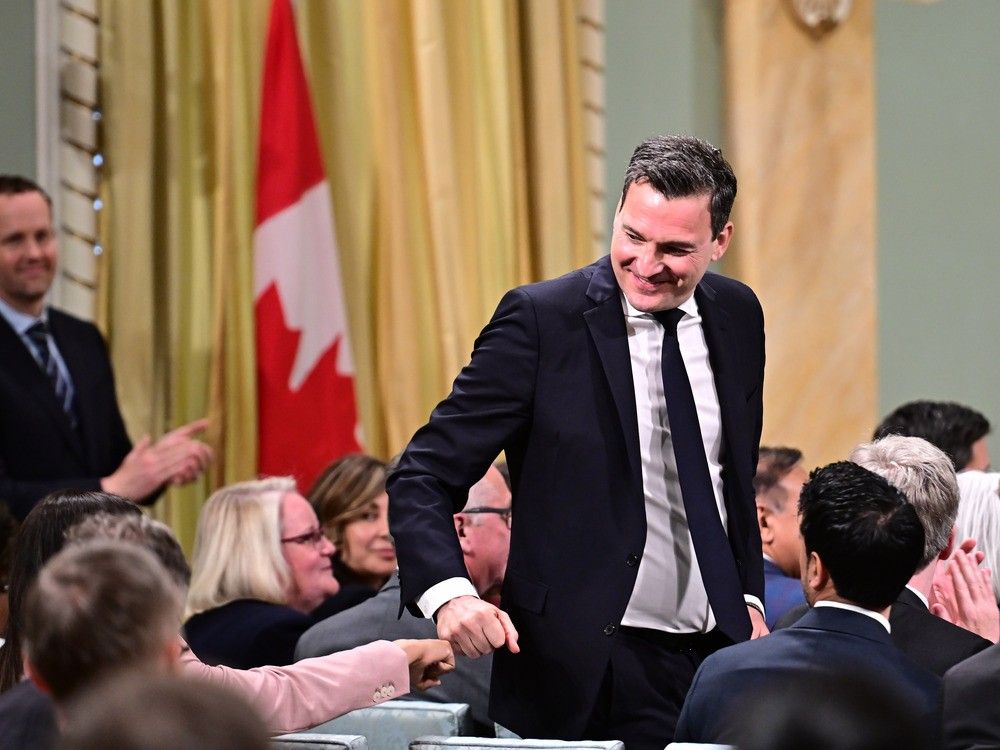
Evan Solomon fist bumps a guest as he heads to be sworn in as Minister of Artificial Intelligence and Digital Innovation and Minister responsible for the Federal Economic Development Agency for Southern Ontario during a cabinet swearing-in ceremony at Rideau Hall in Ottawa on Tuesday, May 13, 2025.

OTTAWA — Prime Minister Mark Carney has created Canada’s first cabinet post specifically responsible for artificial intelligence and digital innovation, a signal that improving Canada’s technological performance will be a key plank in the long-term plan to boost the sluggish economy.

As part of his comparatively slim cabinet of 29, Carney appointed rookie MP Evan Solomon to the new post for all things digital and AI. The former journalist, who will also be responsible for the regional economic development agency for southern Ontario, will face a range of thorny challenges.

While the specific mandates for the various cabinet ministers have not yet been released, Solomon’s to-do list will likely include at least three key items: re-igniting Canada’s technology sector, ushering in updated framework policies to deal with a wide range of digital issues, including finding the tricky balance between economic growth and security and privacy concerns, and improving the federal government’s own efforts to make better use of digital technology.

Many of these responsibilities have typically fallen under the minister responsible for industry or, more recently, innovation, science and economic development. Cabinet veteran Mélanie Joly is Carney’s new industry minister, moving from foreign affairs, and will likely also play a major role in digital and innovation issues.

A generation earlier, the federal government was seen as an international leader in shifting to the online world but that evolution has slowed in recent years, according to tech industry officials.

“There’s no question that we’re going in the wrong direction,” said Janice Horn, federal account leader with EY’s government and public sector operation.

In the most recent United Nations e-government development index, widely seen as the most comprehensive scorecard of its kind, Canada fell to 47th place globally in 2024, from third in 2010.

Viet Vu, manager of economic research at the Dais, said Solomon, Joly and others in government face three significant challenges in turning the tide: attracting top AI talent to work in government when the market for their services is very strong; the need to build an internal digital culture that is user-focused; and do better at enabling digital access for Canadians.

While the federal government did well in providing online access to high-volume services during the recent pandemic, Vu said, the government should do better in offering government decisions and applications online and making logins and authentication easier and more secure.

“We have not kept pace,” said Vu.

Finding the right balance in the fast-changing world of digital policy is another tough obstacle. On one hand, Solomon will want to promote economic growth and allow Canadians the online services they crave. On the other, governments are also responsible for dealing with security and privacy concerns, online hate and various tricky China-related matters, including how aggressively to deal with services such as the popular TikTok app.

Solomon, a former television program host, is also expected to be responsible for getting the Canadian government back on a stronger path in its own use of technology and innovation, or e-government as it’s often called.

A report last year from Canada’s Auditor General noted that two-thirds of the IT systems within federal departments were in poor health, including some that provide Canadians with services such as employment insurance.

According to a 2023 report from the Dais, an economic think tank within Toronto Metropolitan University, less than one-quarter of federal government services are available online end-to-end, while a meagre 61 per cent of them meet the government’s own digital services standards.

National Post

Get more deep-dive National Post political coverage and analysis in your inbox with the Political Hack newsletter, where Ottawa bureau chief Stuart Thomson and political analyst Tasha Kheiriddin get at what’s really going on behind the scenes on Parliament Hill every Wednesday and Friday, exclusively for subscribers. Sign up here.

Our website is the place for the latest breaking news, exclusive scoops, longreads and provocative commentary. Please bookmark nationalpost.com and sign up for our daily newsletter, Posted, here.