LP_468x60
on-the-record-468x60-white

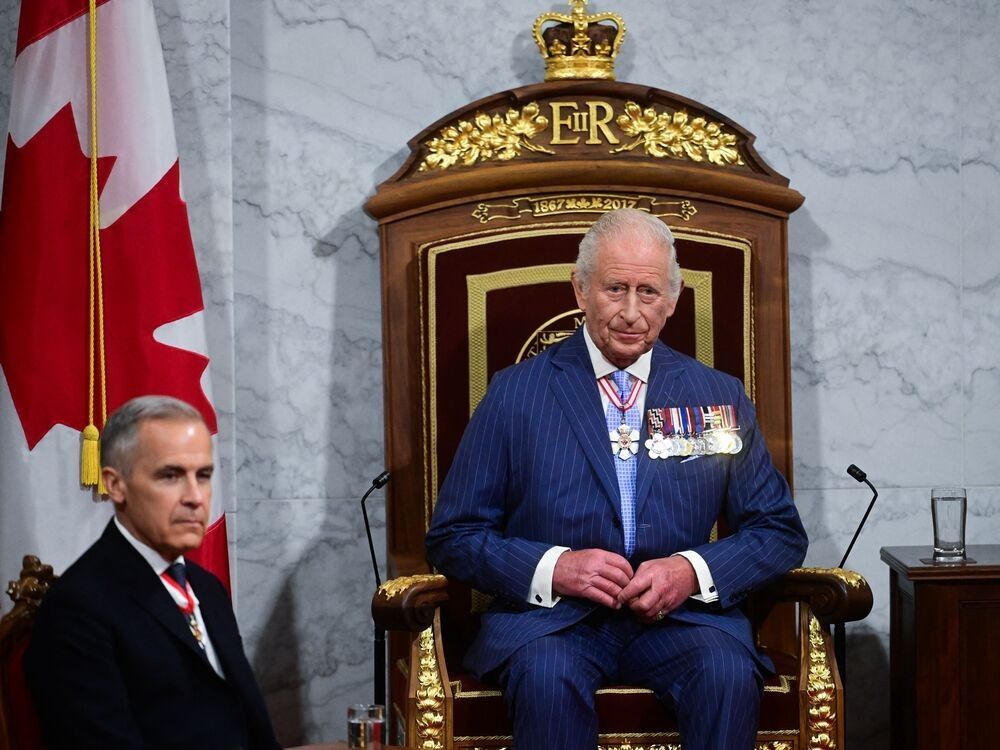
King Charles III arrives at the Senate to open the 45th Parliament of Canada to deliver the Speech from the Throne on Tuesday, May 27.

OTTAWA — When Rushad Thomas heard earlier this month about the upcoming royal visit to Ottawa, there was no debate about whether an eight-hour road trip was in the works.

Sporting a ball cap with a maple leaf logo, a watch with Queen Elizabeth II’s image on the face and a phone screen with the image of King Charles III, the Hyattsville, Md., resident explained while waiting this week for a glimpse of the royal couple that he’s a big fan of all things Canada and the Crown.

The self-described monarchist and his partner, Terence Hayden, even have a photo of the King and Queen hanging in the foyer of their apartment.

“I love Canada and the monarchy,” said Thomas, even though he has no familial connection to either Canada or the United Kingdom.

Thomas said he even follows Canadian news and heard about the royal visit while watching Prime Minister Mark Carney’s first press conference after the federal election in April.

“Nothing royal gets past me,” he joked.

Carney and others in the federal government hope that Thomas isn’t the only American who hears about this week’s royal visit.

The whirlwind visit to Ottawa by King Charles and Queen Camilla was designed to send a signal to U.S. President Donald Trump and others in Washington, D.C., that Canada is a sovereign country and, as Carney and many other Canadian politicians have said in recent months, not for sale. King Charles was invited to deliver Tuesday’s speech from the throne, but also provided a clear reminder and symbol that Canada has its own history and political culture.

The couple’s two-day visit was their first since King Charles assumed the throne following the death of his mother, Queen Elizabeth II, in September 2022. The visit also marked the first time a monarch has read the speech From the throne in the Canadian Parliament, instead of the Governor General, since 1977.

Trump has upset and helped unite Canadians as he threatened his northern neighbour with frequent references to annexation and debilitating trade tariffs.

Thomas said he likes to follow Canadian news as a respite from all the “nonsense” going on these days in his own country.

Many of the thousands who lined downtown Ottawa’s barricaded streets Monday and Tuesday for a glimpse of the Royal Couple also appreciated their effort in crossing the Atlantic to send a message of solidarity with Canada at a much-needed time.

“It’s sad. It doesn’t make any sense,” said Ottawa resident Lee Winchester, a member of the Royal Canadian signal corps and a veteran with both United Nations and North Atlantic Treaty Organization (NATO) forces, of the recent threats against Canada. “It’s destroyed a good relationship.”

While one of the key tenets of the monarchy is staying out of politics, the Royal Family has had centuries to practice the delicate balance of staying pertinent by sending timely signals, while officially staying out of politics. The royal couple’s visit to Ottawa, at an important time for an important and loyal member of the British Commonwealth, was a classic example of the former.

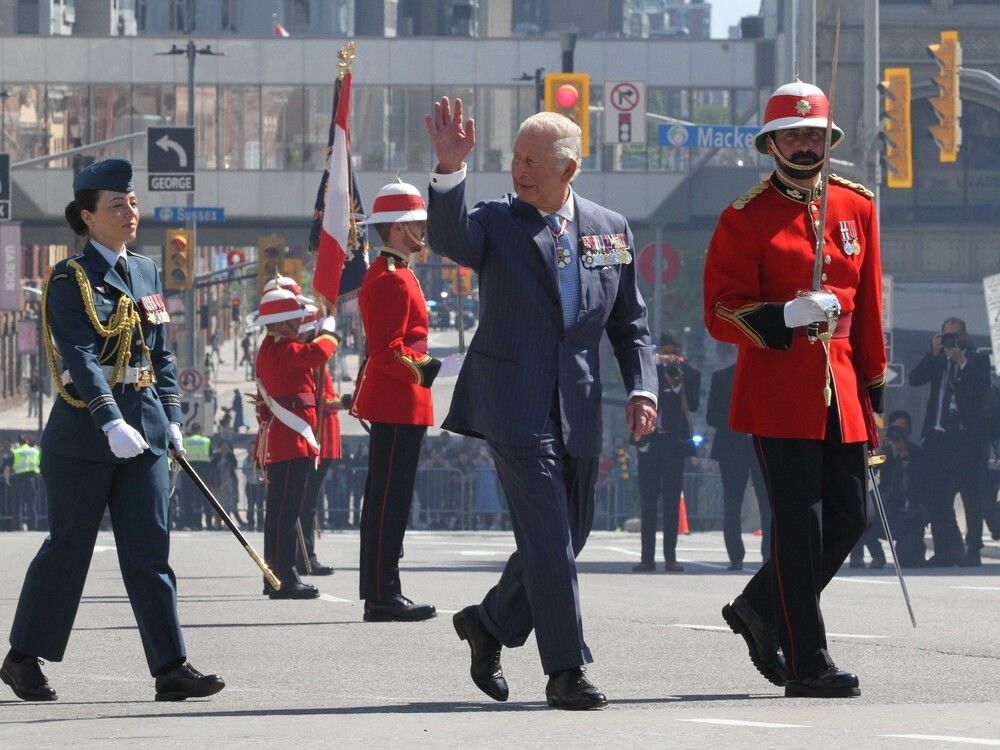
Prior to Tuesday’s throne speech, the monarchs travelled to the Senate in Canada’s State Landau, drawn by horses of the Royal Canadian Mounted Police. Upon arrival, the couple received full military honours, including a royal salute, a 100-person guard of honour from the 3rd Battalion of the Royal Canadian Regiment and an inspection of the guard. They later took part in a wreath-laying ceremony at the National War Memorial.

While most onlookers were clearly Royal Family supporters, not all were.

As the carriage carrying the royal couple and the governor general travelled in front of Parliament Hill toward the Senate building, the crowd erupted in cheers or chants of “God save the King.”

 King Charles and Queen Camilla were greeted by fans as they made their way to the Senate of Canada on Tuesday morning where the King officially opened Parliament.

But the loudest sounds came from the boos from the crowd when a small group of anti-government Freedom Convoy holdovers carrying a trifecta of flags representing “Trump 2024,” “U.S. Truckers” and the Canadian flag upside-down walked by.

“It was so satisfying to hear,” one nearby attendee said of the boos after the small group of protesters had passed.

“We get booed a lot, so we’re used to it,” the flagbearer — who is seen near-daily in front of the Prime Minister’s Office holding various anti-government and conspiratorial signs — later told National Post.

Ottawa resident Katie admitted that she pulled her daughters out of school to attend the historic visit. “I’m a college teacher, so I have the flexibility to do this and I can sort of make it a lesson as well,” said the English literature teacher.

Her daughter Frances, 11, said the King’s health was top of mind when asked why she wanted to be in the crowd.

“I heard he had cancer and it’s really important to see him because he might not be here for too much longer,” she explained. “We never got to see Queen Elizabeth in person and that was really sad.”

Asked if they were more excited at the prospect of seeing the King or the Queen, Frances and her sisters Emma and Agnes pointed to the King. “He’s on the dollar,” they explained.

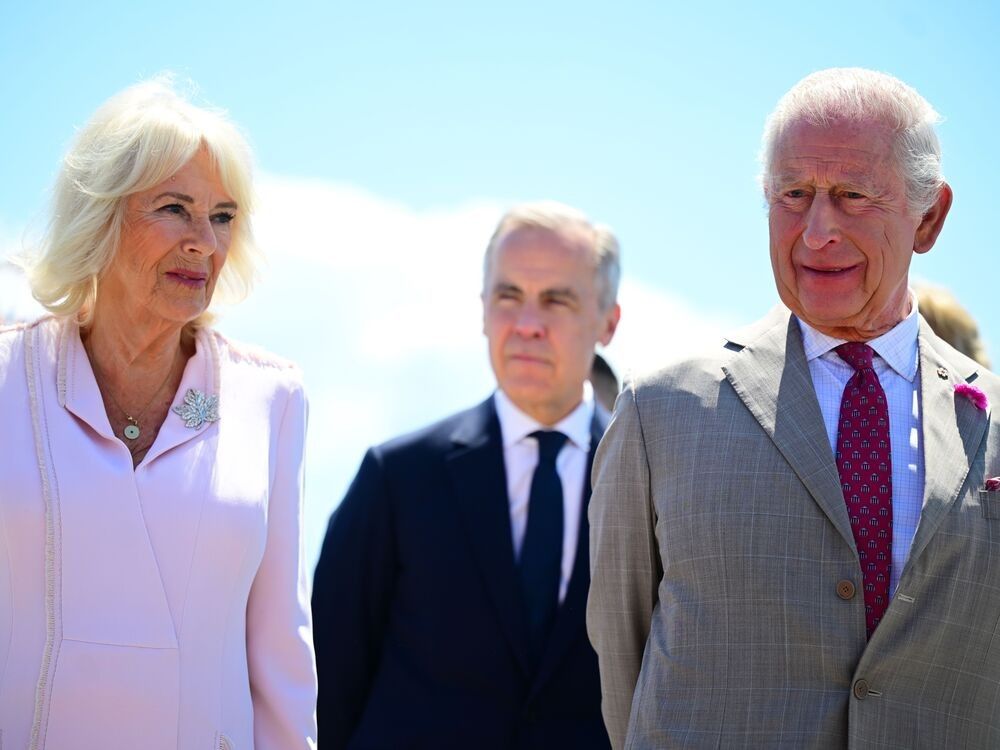
On Monday, the first day of the trip, the Royals were welcomed at the Ottawa airport by Prime Minister Mark Carney, Gov. Gen. Mary Simon and Indigenous leaders. They then travelled to Lansdowne Park to browse a farmers’ market and drop the ceremonial puck at a road hockey game, before moving on to the Governor General’s residence for a ceremonial tree-planting.

Kimberly Campbell, a resident of Perth, Ont., said it was “unbelievable” that she was among the few in the Lansdowne Park crowd to get a chance to speak to the Royals.

Her mother, Gwen Campbell, also from Perth, said she’s been following the Royal Family all of her life. “I’ve been waiting a long time for this.”

Kyle White, co-owner of Milkhouse Farm Dairy in Smiths Falls, Ont., one of the dozen or so vendors who agreed to set up a special Monday farmers’ market for the royal visit, said he was viewing the event as a “promotional day” but was also conscious of the importance of the event.

“It’s going to be something that we can talk about at dinner parties for a long time,” said White.

When asked what he would do if one of the Royals wanted to make a purchase but only had British currency on hand, White joked that he would try to provide a “reasonable exchange rate.”

National Post, with files from Christopher Nardi

Get more deep-dive National Post political coverage and analysis in your inbox with the Political Hack newsletter, where Ottawa bureau chief Stuart Thomson and political analyst Tasha Kheiriddin get at what’s really going on behind the scenes on Parliament Hill every Wednesday and Friday, exclusively for subscribers. Sign up here.

Our website is the place for the latest breaking news, exclusive scoops, longreads and provocative commentary. Please bookmark nationalpost.com and sign up for our daily newsletter, Posted, here.


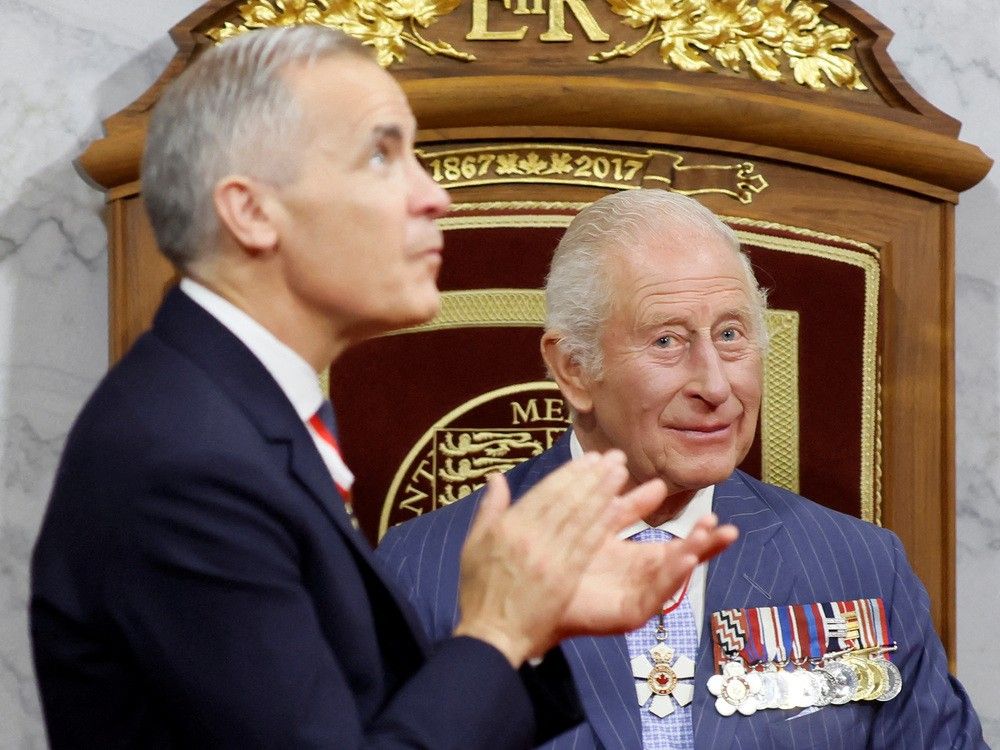
Prime Minister Mark Carney claps after King Charles III delivers the speech from the throne during the opening of the first session of the 45th Parliament in Ottawa on May 27.

There has rarely been such keen attention by Canadians to the presentation of a parliamentary speech. The anticipation and interest in Tuesday’s speech from the throne in Ottawa by King Charles III were sparked by the more meaningful and tangible symbolism, if not importance, of Canada’s status as a nation while its sovereignty is assailed by U.S. President Donald Trump.

While the unusual speech by King Charles III made Tuesday’s parliamentary session more interesting to Canadians, the timing of the occasion also made Canada more interesting to the rest of the world.

The words and symbolism of the King’s speech seemed to rise to the grandiosity of the occasion, drawing a standing ovation from the gathered officials after declaring in his closing: “As the anthem reminds us: The True North is indeed strong and free.”

That was, likely, calculated to be the sound bite from the speech and, indeed, it quickly became the headline for coverage of the event, in Canada and around the world.

In that, it marks a success for the speech on the global stage against the backdrop for the well-crafted event, a conclusion reached by three specialists asked by National Post to analyze and dissect the speech, even if the entirety of the presentation — from its pageantry and symbolism to delivery and message — wasn’t unanimously embraced.

THE BACKGROUND

There is an odd duality to any speech from the throne. It is largely written by the government, in this case under Prime Minister Mark Carney, to outline priorities in Parliament, but introductory remarks can be written by the King, or his office, or, more usually, the monarch’s representative in Canada, the Governor General, who typically delivers it.

The distinction of where one ends and the other begins in Tuesday’s 2,500-word speech was somewhat muted by all of it being voiced by Charles and a sense of the monarch’s comfort in reading it.

“Not a single word of that speech was accidental. Every single word was chosen deliberately,” said Justin Vovk, a royal historian with McMaster University. “It’s important to remember that Charles would also have told Carney and the cabinet if he was uncomfortable saying those words. So that’s the other side of the coin, the fact that Charles was comfortable making those statements.”

The unusual situation of the monarch, the official head of state of Canada as well as the United Kingdom, travelling to Canada to deliver the speech seems tied to the annexations threat to Canada’s sovereignty from Trump, and many were looking for some defiance from Charles.

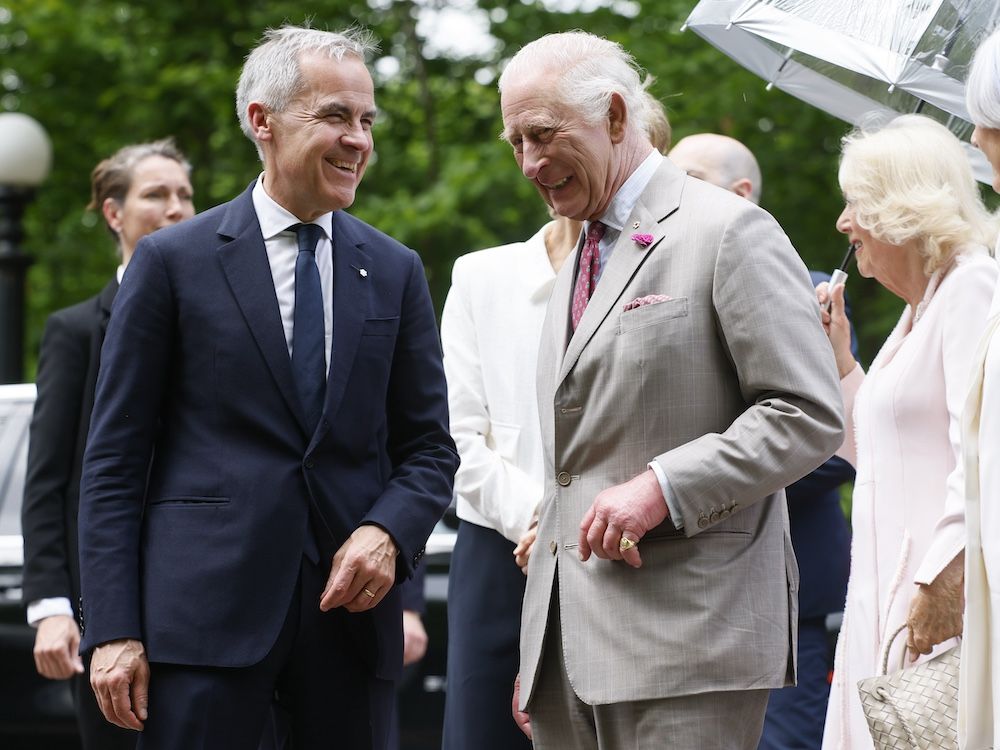
 Britain’s King Charles III and Queen Camilla speak with Canadian Prime Minister Mark Carney during the opening of the first session of the 45th Parliament of Canada at the Senate of Canada in Ottawa on May 27, 2025.

THE PAGEANTRY

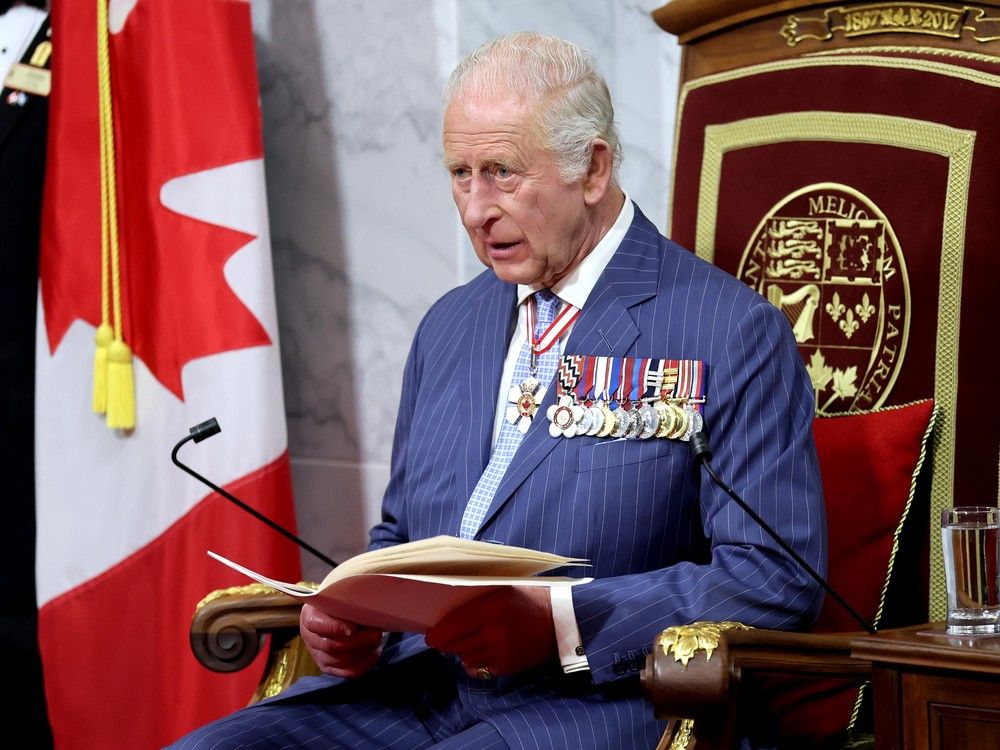
As a piece of theatre, the traditions of the monarchy usually deliver rich pageantry in formal settings, and this didn’t disappoint. Wearing a formal pinstripe suit bearing a dense row of medals, leading with his Canadian insignias, Charles sat on a throne carved during his mother’s reign, beside Queen Camilla, and flanked by two large Canadian flags.

“My jaw hit the floor because he is wearing a pinstripe suit and not an admiral’s uniform,” said Vovk. When Charles opened the British Parliament he wore the uniform of the British navy, and Vovk thought he might wear an admiral’s uniform of the Canadian navy.

“It was the right move to wear civilian clothing because I think if he would have worn the military uniform that would have been perceived as being too militaristic. He’s our constitutional defender, he’s not the embodiment of our military defence.”

It made for a great show, said Arthur Milnes, a public historian and former speechwriter under Stephen Harper.

 Former Prime Minister of Canada Justin Trudeau and Former Prime Minister of Canada Stephen Harper converse ahead of an appearance by King Charles III and Queen Camilla for the State Opening of Parliament in Ottawa.

“Even Donald Trump, with all his supposed money, can’t buy what we just saw — that took 1,000 years of history and a hundred years of Canadian history. That’s the magic of monarchy and that’s what we just saw.”

At Charles’s feet, almost literally, sat Carney, and a throng of parliamentarians, former prime ministers, Indigenous leaders, Supreme Court judges and special guests crammed inside the chamber and outside at the door.

Robert Danisch, a University of Waterloo professor who studies political communication and persuasion said that arrangement was poor: “I thought Mark Carney looked quite small and like he was supplicating himself to the king. I don’t think that was a good visual for a new prime minister.”

The proceedings reflected the now-strange traditions that stem from the sometimes-bloody development of the monarchy and democratic parliamentary traditions inherited from the British.

 King Charles III opens the 45th Parliament of Canada by delivering the Speech from the Throne during an official visit to Canada on May 27 in Ottawa, Ontario.

THE DELIVERY

Charles’ voice was strong, his enunciation clear.

“His delivery was excellent in the sense that this is a man who’s 76 plus he’s suffering and in treatment for cancer,” said Milnes. Danisch said the delivery was clear but a bit boring and flat.

Charles spoke alternatively in English and French. His French was good.

The speech also specifically praised the French contribution, always a thorny part of the monarch’s relationship with Quebec, saying: “The French language and the Quebec culture are at the heart of the Canadian identity. They define the country that Canadians and I love so much.”

THE SPEECH

The words should matter the most, although when the King rolls into town, that might be debated. The speech itself reflected the awkward hybrid of the government’s messaging to the voters and the high-minded ideals espoused, at least nominally, by the sovereign.

“Both play important roles,” said Milnes.

In this iteration, though, a significant consideration seemed to be aimed at an audience of one, namely Trump.

There were subjects that might not have been emphasized by the King in such a formal speech had they not been key planks in Trump’s complaints about Canada: cracking down on fentanyl, enhancing border security, increased policing, a check on immigration.

The speech emphasized Canada’s war record and sacrifices, naming some of the famous wartime battle honours of Canadian forces, and concluding: “At those places, and many others, forever etched into our memories, Canadians fought and died alongside our closest allies.”

Said Milnes: “That’s quite a message to send to the Pentagon and to Washington, that we’re no shrinking violets. We need no lessons on that.”

The speech also made much of the importance of Canada’s First Nations and reconciliation.

But there were also clear misses, said Danisch.

Charles, in the speech said: “The Crown has for so long been a symbol of unity for Canada… As it should, it stands proudly as a symbol of Canada today.”

Danisch said that seems an outdated notion. “The last sentence in that is a problem. If it were true, the King should have explained how the Crown is a symbol of Canada today, and he chose not to do that. And that is rhetorical work that I think is really important. I don’t think a lot of young people are going to listen to this speech and think, ‘Oh yes, the crown is a symbol of Canada,’” he said.

 King Charles and Queen Camilla were greeted by thousands of fans as they made their way to the Senate Tuesday morning where the King officially opened Parliament. Governor General Mary Simon and her husband Whit Fraser joined the royal couple in the open carriage.

Danisch said Charles also pulled punches when addressing the challenge to Canada from the White House.

It seemed the speech was going to address the issue head on.

“The system of open global trade that, while not perfect, has helped to deliver prosperity for Canadians for decades, is changing. Canada’s relationships with partners are also changing. We must be clear-eyed: the world is a more dangerous and uncertain place than at any point since the Second World War. Canada is facing challenges that are unprecedented in our lifetimes,” Charles said.

But then concludes the thought with: “Yet this moment is also an incredible opportunity. An opportunity for renewal.”

Danisch said the redirection was alarming.

“Whoa. Let’s slow down. What are the changes, can you name them? He doesn’t name them, and clearly it makes the monarchy and Canada seem at the whim of historical forces that we can’t even identify. We’re just living in a world that’s changing. How is that going to resonate with Canadians? I’m not sure it will.”

THE SOUND BITE

One of the best lines was saved for the end: “The True North is indeed strong and free.”

“With these speeches, in contemporary times, the sound bite is more important than the entirety of the speech,” said Danisch. “That will be the sound bite and the sound bite and the repetition of that sound bite is the most important thing of a speech like this. It is good to see that the king was willing to say that.”

Vovk: “That’s the perfect line of Canadian nationalism that I think is always now going to be associated with this visit.”

Milnes: “What a message. I just felt as a Canadian, you know, by the time the King finished, I felt all charged up. I felt stirrings of a national mission and vision.”

THE IMPACT

Vovk: “I was very impressed with the speech, and I thought it hit all the right notes without stepping on anybody’s toes. Dare I say it might even have appeased Donald Trump?”

Danisch: “What a swing and a miss by both Mark Carney and the King. I think I understand. My takeaway was that he was going for a certain kind of symbolism that is demonstrating the difference between the U.S. and Canada and using the symbolism of the king to do that work. But I don’t think it was a very effective speech. I thought it was kind of boring. He didn’t speak to Canadian values effectively, and I don’t think he gave a good story of what’s happening now.”

Milnes: “Here we are, through the King, being challenged to seize the moment. Sometimes, as Canadians we are our own worst enemies. We’ve made a national sport of running down our country and our institutions and not being proud of ourselves. Well, this is going to be quite a shot in the arm for Canadian nationalism because sometimes we only accept our value and greatness as a nation when we hear it from others.”

• Email: ahumphreys@postmedia.com | X:

 Britain’s King Charles III reads his speech from the throne to open the first session of the 45th Parliament of Canada in Ottawa.

Read the full text of the speech from the throne

Honourable Senators, members of the House of Commons,

It is with a sense of deep pride and pleasure that my wife and I join you here today, as we witness Canadians coming together in a renewed sense of national pride, unity, and hope.

I would like to acknowledge that we are gathered on the unceded territory of the Algonquin Anishinaabeg people. This land acknowledgement is a recognition of shared history as a nation. While continuing to deepen my own understanding, it is my great hope that in each of your communities, and collectively as a country, a path is found toward truth and reconciliation, in both word and deed.

This is my 20th visit to Canada, spread over the course of more than half a century, and my first as Sovereign. As I have said before, “Every time I come to Canada a little more of Canada seeps into my bloodstream – and from there straight to my heart.”

I have always had the greatest admiration for Canada’s unique identity, which is recognized across the world for bravery and sacrifice in defence of national values, and for the diversity and kindness of Canadians.

To the First Nations, Inuit, and Métis Peoples – you have welcomed my family and myself to your traditional lands with great warmth and hospitality, for which I am humbly grateful.

This year, we mark the 80th anniversary of V-E Day and V-J Day. On Juno Beach, at Dieppe, on the Somme, at Beaumont-Hamel, at Ypres, and on Vimy Ridge. At those places, and many others, forever etched into our memories, Canadians fought and died alongside our closest allies.

Today, I see representatives from every part of Canada – from St. John’s, Newfoundland and Labrador, to Victoria, British Columbia, and Arviat, Nunavut. I see the guardians of the fundamental rights and freedoms guaranteed in the Canadian Charter and, as King, I thank you for your service to your fellow Canadians, across the length and breadth of this vast and great nation.

You speak for your communities, representing an incredible richness of cultures, languages, and perspectives. We owe it to this generation, and those who succeed us, to think and act for the greater good of all. While the world faces unprecedented challenges, generating uncertainties across the continents with regards to peace and stability, economics, and climate change, your communities have the skills and determination to bring a wealth of solutions.

By fostering collaboration and engaging in respectful, constructive debates, you will ensure this Government is capable of bold and fair action to support Canadians.

It has been nearly 70 years since the Sovereign first opened Parliament. In the time since, Canada has dramatically changed: repatriating its Constitution, achieving full independence, and witnessing immense growth. Canada has embraced its British, French, and Indigenous roots, and become a bold, ambitious, innovative country that is bilingual, truly multicultural, and committed to reconciliation.

The Crown has for so long been a symbol of unity for Canada. It also represents stability and continuity from the past to the present. As it should, it stands proudly as a symbol of Canada today, in all her richness and dynamism.

 King Charles III opens the 45th Parliament of Canada by delivering the Speech from the Throne during an official visit to Canada on May 27 in Ottawa, Ontario.

Opening

When my dear late mother, Queen Elizabeth II, opened a new Canadian Parliament in 1957, the Second World War remained a fresh, painful memory. The Cold War was intensifying. Freedom and democracy were under threat. Canada was emerging as a growing economic power and a force for peace in the world. In the decades since, history has been punctuated by epoch-making events: the Vietnam War, the fall of the Berlin Wall, and the start of the War on Terror. Today, Canada faces another critical moment.

Democracy, pluralism, the rule of law, self-determination, and freedom are values which Canadians hold dear, and ones which the Government is determined to protect.

The system of open global trade that, while not perfect, has helped to deliver prosperity for Canadians for decades, is changing. Canada’s relationships with partners are also changing.

We must be clear-eyed: the world is a more dangerous and uncertain place than at any point since the Second World War. Canada is facing challenges that are unprecedented in our lifetimes.

Many Canadians are feeling anxious and worried about the drastically changing world around them.

Fundamental change is always unsettling. Yet this moment is also an incredible opportunity. An opportunity for renewal. An opportunity to think big and to act bigger. An opportunity for Canada to embark on the largest transformation of its economy since the Second World War. A confident Canada, which has welcomed new Canadians, including from some of the most tragic global conflict zones, can seize this opportunity by recognising that all Canadians can give themselves far more than any foreign power on any continent can ever take away. And that by staying true to Canadian values, Canada can build new alliances and a new economy that serves all Canadians.

Building new relationships with the United States and the world

The Prime Minister and the President of the United States, for example, have begun defining a new economic and security relationship between Canada and the U.S., rooted in mutual respect and founded on common interests, to deliver transformational benefits for both sovereign nations.

In parallel, the Government is working to strengthen its relationships with reliable trading partners and allies around the world, recognizing that Canada has what the world needs and the values the world respects.

Canada is ready to build a coalition of like-minded countries that share its values, that believe in international co-operation and the free and open exchange of goods, services, and ideas.

In this new, fast-evolving world, Canada is ready to lead. This will be demonstrated in June, when Canada convenes the G7 Summit.

Building a more affordable Canada

The Government is guided by its conviction that the economy is only truly strong when it serves everyone.

Many Canadians are struggling to get ahead. The Government is responding, reducing middle-class taxes

and saving two-income families up to $840 a year. It will cut the GST on homes at or under $1 million for first-time homebuyers, delivering savings of up to $50,000. And it will lower the GST on homes between $1 million and $1.5 million.

The Government will protect the programs that are already saving families thousands of dollars every year. These include child care and pharmacare. In addition to these, the Government has recently expanded the Canadian Dental Care Plan to cover about eight million Canadians, saving the average person more than $800 per year.

 King Charles III gives the Speech from the Throne as Queen Camilla and Prime Minister of Canada Mark Carney look on.

Building a stronger Canada

The Government’s overarching goal – its core mission – is to build the strongest economy in the G7. That starts with creating one Canadian economy out of thirteen. Internal barriers to trade and labour mobility cost Canada as much as $200 billion each year. The Government will introduce legislation to remove all remaining federal barriers to internal trade and labour mobility by Canada Day.

Numerous premiers have already taken vital steps to break down provincial and territorial barriers to trade. Together, we will build on that progress to deliver free trade across the nation by Canada Day. This is critical to unlocking Canada’s full economic potential, but it’s not enough.

To build Canada strong, the Government is working closely with provinces, territories, and Indigenous Peoples to identify and catalyse projects of national significance. Projects that will connect Canada, that will deepen Canada’s ties with the world, and that will create high-paying jobs for generations.

Given the pace of change and the scale of opportunities, speed is of the essence. Through the creation of a new Major Federal Project Office, the time needed to approve a project will be reduced from five years to two; all while upholding Canada’s world-leading environmental standards and its constitutional obligations to Indigenous Peoples.

The Government will also strike co-operation agreements with every interested province and territory within six months to realize its goal of “one project, one review.”

When Canadians come together, Canada builds things that last.

By removing these barriers that have held back our economy, we will unleash a new era of growth that will ensure we don’t just survive ongoing trade wars, but emerge from them stronger than ever. It will enable Canada to become the world’s leading energy superpower in both clean and conventional energy. To build an industrial strategy that will make Canada more globally competitive, while fighting climate change. To build hundreds of thousands of good careers in the skilled trades. And to

build Canada into the world’s leading hub for science and innovation.

Critically, the Government will undertake a series of measures to help double the rate of home building while creating an entirely new housing industry – using Canadian technology, Canadian skilled workers, and Canadian lumber.

The Government will introduce measures to deliver affordable homes by creating Build Canada Homes. This mission-driven organization will act to accelerate the development of new affordable housing. It will invest in the growth of the prefabricated and modular housing industry.

And it will provide significant financing to affordable home builders. The Government will make the housing market work better, including by cutting municipal development charges in half for all multi-unit housing. The Government will drive supply up to bring housing costs down.

Building a safer and more secure Canada

To be truly strong, Canada must be secure. To that end, the Government will introduce legislation to enhance security at Canada’s borders. Law enforcement and intelligence agencies will have new tools to stop the flow of fentanyl and its precursors. The Canada Border Services Agency will be given new powers to examine goods destined for export, to prevent the transport of illegal and stolen products,

including cars.

The Government will protect Canada’s sovereignty by rebuilding, rearming, and reinvesting in the Canadian Armed Forces. It will boost Canada’s defence industry by joining ReArm Europe, to invest in transatlantic security with Canada’s European partners. And it will invest to strengthen its presence in the North, which is an integral part of Canada, as this region faces new threats.

The Government will discharge its duty to protect Canadians and their sovereign rights, from wherever

challenges may come at home or abroad. To keep communities safe, the Government will hire 1,000 more

RCMP personnel. It will change firearms licensing and strengthen enforcement of yellow and red flag laws.

Weapons licences for those convicted of intimate partner violence and those subject to protection orders will be revoked. Through the deployment of scanners, drones and helicopters, additional personnel, and K-9 teams, the Government will stem the tide of illegal guns and drugs across the border.

It will take these steps while protecting the rights of lawabiding gun owners and Indigenous Peoples’ longstanding hunting traditions.

The Government will bring a renewed focus on car theft and home invasions by toughening the Criminal Code to make bail harder to get for repeat offenders charged with committing these crimes, along with human trafficking and drug smuggling.

 Britain’s Queen Camilla looks on as Britain’s King Charles III delivers the Speech from the Throne during the opening the first session of the 45th Parliament of Canada at the Senate of Canada in Ottawa on May 27, 2025.

Building a united Canada

During this time of great change, Canadians are uniting behind what makes Canada unique. The French language and the Quebec culture are at the heart of the Canadian identity. They define the country that Canadians and I love so much. Canada is a country that respects and celebrates its official languages and Indigenous languages. The Government is determined to protect the institutions that bring these cultures and this identity to the world, like CBC/Radio-Canada. It will protect the people who give us access to fresh, healthy, and quality food: agricultural producers. And it will protect supply management.

Nature is core to Canada’s identity. In 2022, Canada convened COP15 in Montréal, which concluded with

196 countries striking a historic agreement to protect 30 percent of their lands and 30 percent of waters by 2030. To this end, the Government will protect more of Canada’s nature than ever before through the creation of new national parks, national urban parks, marine protected areas, and other conservation initiatives.

The Government will always protect the rights and freedoms that the Charter guarantees for every Canadian.

The Government will be a reliable partner to Indigenous Peoples, upholding its fundamental commitment to advancing reconciliation. Central to this commitment is the creation of long-term wealth and prosperity with Indigenous Peoples. For that reason, the Government will double the Indigenous Loan Guarantee Program from $5 billion to $10 billion – enabling more Indigenous communities to become owners of major projects. As Canada moves forward with nation-building projects, the Government will always be firmly guided by the principle of free, prior, and informed consent.

Canada’s immigration system has long been a source of pride for Canadians and of dynamism for the economy. The Government is dedicated to rebuilding the trust of Canadians in immigration by restoring balance to the system.

The Government will cap the total number of temporary foreign workers and international students to less than five percent of Canada’s population by 2027. By doing this, the Government will attract the best talent in the world to build our economy, while sending a clear message to Canadians working abroad that there is no better time to come home.

Building Canada Strong by spending less and investing more

In all of its actions, the Government will be guided by a new fiscal discipline: spend less so Canadians can invest more.

Day-to-day government spending – the government’s operating budget – has been growing by nine percent every year. The Government will introduce measures to bring it below two percent.

Transfers to provinces, territories, or individuals will be maintained. The Government will balance its operating budget over the next three years by cutting waste, capping the public service, ending duplication, and deploying technology to improve public sector productivity.

In parallel, the Government will take a series of measures to catalyse new investment to create better jobs and higher incomes for Canadians. The scale of the Government’s initiative will match the challenges of our times and the ambitions of Canadians.

 Canada’s Prime Minister Mark Carney claps after Britain’s King Charles III delivered the Speech from the Throne during the opening the first session of the 45th Parliament of Canada at the Senate of Canada in Ottawa on May 27, 2025.

Conclusion

Honourable Senators, Members of the House of Commons,

When my dear late mother addressed your predecessors seven decades ago, she said that in that age, and against the backdrop of international affairs, no nation could live unto itself. It is a source of great pride that, in the following decades, Canada has continued to set an example to the world in her conduct and values, as a force for good.

I wish to express to you and to the people of Canada my heartfelt gratitude, and that of my wife, for the warmth of the welcome which we have received.

As the anthem reminds us: The True North is indeed strong and free!

Members of the House of Commons, you will be asked Conclusion to appropriate the funds to carry out the services and expenditures authorized by Parliament.

May you honour the profound trust bestowed upon you by Canadians, and may God bless and guide you in all your duties.

Our website is the place for the latest breaking news, exclusive scoops, longreads and provocative commentary. Please bookmark nationalpost.com and sign up for our politics newsletter, First Reading, here.



A judge has sentenced a senior citizen in New Brunswick to house arrest for using his truck to run down and maim a young man after teens rang his doorbell while playing a game of what’s known as “Nicky Nicky Nine Door.”

The Crown recommended Howard Joseph Cunningham should get two years in jail and a three-year driving prohibition for pulling a U-turn in Chatham, a neighbourhood in Mirimachi, on March 23, 2023, and running over Theodore Curran, then failing to stop at the scene. But Cunningham’s lawyer successfully argued in the Court of King’s Bench for a conditional sentence.

“I accept in this matter that there was no planning or deliberation of this act by Mr. Cunningham. He was provoked by a silly, but perhaps annoying game of ‘Nicky Nicky Nine Door,’” Justice Stephen J. Doucet wrote in a recent decision.

“In the end however, Mr. Cunningham’s response was grossly excessive and disproportionate in the circumstances.”

Cunningham, who was 70 at the time, got in his truck and went looking for the culprits who called him to his door as part of the childhood prank.

“The accused drove in search of the group of boys who had played ‘Nicky Nicky Nine Door,’ which is the practice of knocking on a door or ringing a doorbell and running away, on his property,” said the judge. “When he spotted them walking the snow-covered streets of downtown Chatham, he pulled a U-turn, entered the street to which Theodore Curran was walking, increased his speed, and hit him — head-on. Theodore Curran was seriously injured.”

Cunningham pleaded guilty to aggravated assault by maiming, and failing to stop his truck at the scene. Both charges carry a maximum penalty of 14 years in prison.

“At the time of the offences, the victim, Theodore Curran had just turned 18-years old,” Doucet wrote in his decision dated May 21.

Cunningham’s lawyer recommended that running the teen down and leaving the scene warrants a conditional sentence of 18 to 24 months.

In a victim impact statement, Curran “describes the initial trauma of this incident and how the emotional and physical pain has lingered. He has trouble sleeping, and difficulty leaving his bed. He explains his physical injuries, (including) broken bones and facial wounds; more particularly a broken ankle, cracked pelvis, split lip and cracked teeth, and that his dental injuries remain unresolved. He wonders why Mr. Cunningham did not stop.”

Cunningham is now 72.

“Despite being in his retirement years, he is employed, and lives with his partner of many years in Chatham,” said the judge. “They take care of their great-granddaughter on weekends.”

Cunningham told the author of his pre-sentence report that he’s had “prior issues with alcoholism and drug use, but has since overcome these problems,” said the decision. “These issues were not present at the time of the incident.”

Cunningham takes medications for high blood pressure and high cholesterol, said the decision. “Mr. Cunningham experiences night cramps, back pain and acid reflux. As well, he was diagnosed with gout, four to six months ago, which causes him severe pain in his feet resulting in an inability to walk at times.”

He has a prior conviction from 1985 for assault causing bodily harm “which is quite dated and not a relevant factor,” Doucet said. “I view Mr. Cunningham in these circumstances more as a first-time offender.”

Cunningham “expressed regret and contrition for his actions,” said the judge. “Probation services acknowledged that a community-based sentence with services could be accommodated and adapted to respond to Mr. Cunningham’s needs as well as the community’s needs.”

Mitigating factors in the case, according to the Crown, include Cunningham’s guilty plea, his expression of remorse and limited criminal record, said the decision. “The (defence) added to the mitigating factors, by highlighting that Mr. Cunningham’s regret and remorse are sincere, he has the support of his spouse, he is seriously committed to rehabilitation, and the (risks) of reoffending are low.”

Aggravating factors, according to the Crown, include the “serious injuries suffered by Mr. Curran, the victim’s young age, he had just turned 18, the deliberateness of the accused’s actions and lack of concern for the victim following the assault.”

His “brutal, senseless and violent act was likely to cause serious bodily injuries,” Doucet said, noting that if Cunningham “had been acting reasonably,” he should have foreseen that.

“In my view Mr. Cunningham knew of, or was willfully blind to, the risk of inflicting serious bodily injuries. Furthermore, Mr. Cunningham knew he had struck Mr. Curran but failed to stop or call for help and left. It is this which is objectively the most blameworthy.”

Cunningham went to the police station after the collision, said the judge, “but left as there was no answer, however he did not return to the scene of the incident.”

Curran sentenced Cunningham to two years less a day of house arrest. He must stay home for the first 18 months, with exceptions including work and medical appointments. The remainder of his sentence involves a nightly curfew and a three-year driving prohibition.

“A conditional sentence can be used in cases that call for denunciation and deterrence because, although a conditional sentence is served in the community and thus is more effective than incarceration at achieving goals such as rehabilitation, it ‘is also a punitive sanction capable of achieving the objectives of denunciation and deterrence,’” said the judge.

Our website is the place for the latest breaking news, exclusive scoops, longreads and provocative commentary. Please bookmark nationalpost.com and sign up for our daily newsletter, Posted, here.


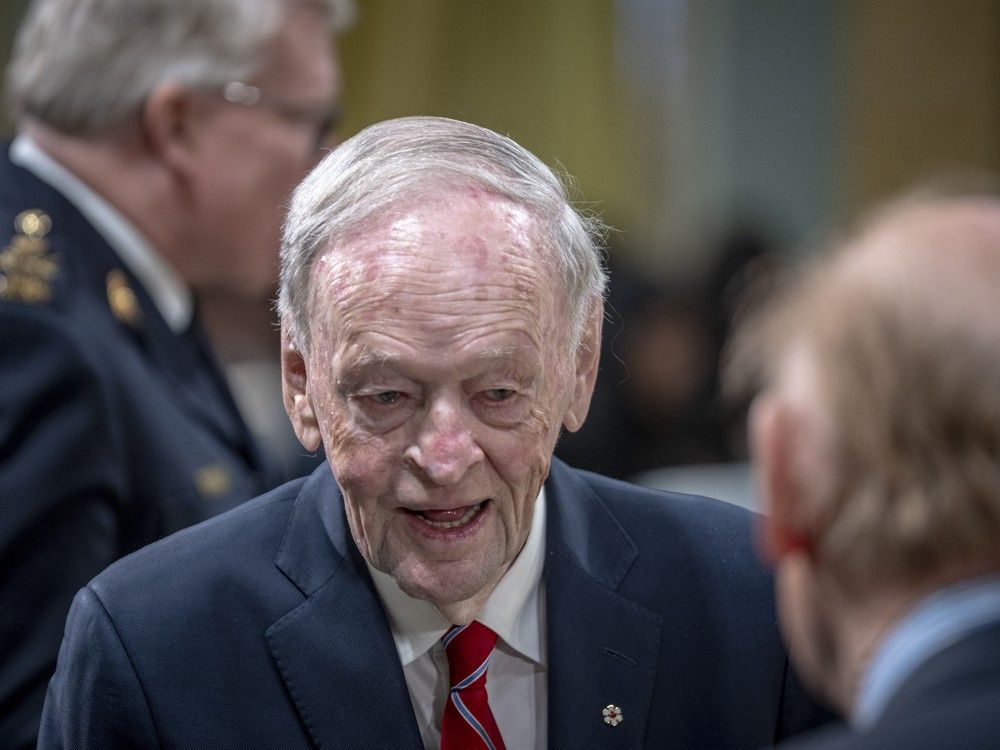
Former prime minister Jean Chretien arrives to Rideau Hall for his cabinet's swearing-in ceremony on May 13, 2025, in Ottawa.

OTTAWA — Former prime minister Jean Chrétien was conspicuously absent from

the highly-anticipated King Charles III address

in Ottawa on Tuesday because the 91-year-old was admitted to the hospital for a minor heart surgery.

“Yesterday, former Prime Minister Jean Chrétien was admitted to the Ottawa Civic hospital after feeling unwell. He has since been transferred to the Ottawa Heart Institute, where he received a stent,” wrote Bruce Hartley, Chrétien’s spokesperson, in a statement.

Endovascular stent surgery is a minimally invasive procedure to treat blockages and aneurysms in arteries. According to the Ottawa Heart Institute, a stent is a “small metal mesh tube” implanted in a narrowed part of the artery to prevent it from blocking again.

Hartley added: “Mr. Chrétien is recovering well and is expected to return home very soon to pursue his normal activities.”

Chrétien was expected to attend the King’s address in the Senate along with other former prime ministers — Justin Trudeau, Stephen Harper and Kim Campbell. In fact, Chrétien was reportedly set to walk in with Harper before Chrétien was hospitalized.

“The operation was not planned, but necessary,” said a source close to the matter.

Chrétien

told the Hill Times for his 90th birthday

that he has no plans to retire, and he wants to “die standing” like King Charles’ late mother, Queen Elizabeth II, did.

Only weeks ago, the former prime minister was out campaigning for the Liberal party in Ontario, Quebec and the Atlantic provinces. He predicted that

the incumbent government would win a majority.

In the end, Liberals are three seats short of the coveted majority.

Chrétien remarked at the time that Canadians had never been so united in his opinion because of U.S. President Donald Trump’s threats to Canada and joked that he wanted to propose Trump for the Order of Canada for services rendered to the country.

Chrétien was also very complimentary of Prime Minister Mark Carney, saying that “he’s done well for somebody who is in politics for the first time.”

Two weeks ago, Chrétien also attended the cabinet swearing-in ceremony at Rideau Hall.

— With files from Christopher Nardi.

National Post

Get more deep-dive National Post political coverage and analysis in your inbox with the Political Hack newsletter, where Ottawa bureau chief Stuart Thomson and political analyst Tasha Kheiriddin get at what’s really going on behind the scenes on Parliament Hill every Wednesday and Friday, exclusively for subscribers. Sign up here.

Our website is the place for the latest breaking news, exclusive scoops, longreads and provocative commentary. Please bookmark nationalpost.com and sign up for our politics newsletter, First Reading, here.


A view of former Prime Minister of Canada Justin Trudeau's Adidas shoes as he arrives ahead of the Speech from the Throne by King Charles on May 27, 2025 in Ottawa.

Former prime minister, Justin Trudeau made an appearance for today’s Speech from the Throne by King Charles, entering the Senate chamber accompanied by his mother, Margaret Trudeau, and wearing an unusual choice of footwear.

They were Adidas sneakers, the Gazelle model, in blue and orange.

It may be rare to see them in Parliament, especially with a classic blue suit, but sneakers have crossed over into popular culture from sport, reaching wide appeal. It seems the low-profile trainer has

never gone out of style

. In early 2024,

British Vogue

placed the Gazelle among the “fashion trainer” phenomenon — an “obsession” that wasn’t fading anytime soon.

While the former PM may be a little late to be sporting Gazelles, his fashion choice certainly got noticed on X.

One user equated the attendance of Trudeau’s shoes to King Charles’ appearance in Parliament today.

Another user, Emily Ferguson, offered: “Retirement runners perhaps..?”

The U.K’s

Daily Mail

newspaper reported “outrage” over Trudeau’s sartorial choice and quoted social media users who were less than amused (comments including profanity were blurred out).

Here in Canada, Dimitris Soudas, former director of communications for former prime minister Stephen Harper, simply posted: “

I don’t know what to say.”

Harper was also among the guests in attendance today, seated to the right of Trudeau and his mother.

 Former Prime Minister of Canada Justin Trudeau and Former Prime Minister of Canada Stephen Harper converse ahead of an appearance by King Charles III and Queen Camilla for the opening of parliament in Ottawa.

Before the King and Queen arrived and even afterwards, as the Royal couple mixed with the crowd of dignitaries on the Senate floor prior to the speech — among them present and former Governors General, Supreme Court justices, provincial premiers and Indigenous leaders — the two former political adversaries engaged in a lengthy conversation.

Trudeau was highly animated, gesturing with both hands.

The content of their chat is not known, but both men smiled widely and appeared friendly.


A new poll found that 83 per cent of Canadians are 'indifferent' about King Charles III's throne speech to open parliament.

There has been much ballyhoo about this week’s Royal visit and, more importantly, King Charles III’s throne speech, heralded by many as a defining moment in Canada’s constitutional history that reinforces our sovereignty.

However,

an Angus Reid Institute online poll

last week discovered that Canadians are largely indifferent about the monarch’s speech to open Canada’s 45th Parliament. Asked if they were excited or didn’t care, 83 per cent of respondents chose the latter.

Throne speech full text: Read what King Charles III said about Canada’s sovereignty

Regionally, more people were chuffed about the King’s speech in Ontario (21 per cent) and Atlantic Canada (20 per cent) while Quebecers, unsurprisingly, were the least excited (10 per cent).

Even though Canadians would appear to be largely uninterested in the goings-on in Ottawa, 37 per cent see the first speech delivered by a monarch since Queen Elizabeth II in 1977 as a “good thing” (37 per cent) and not a “bad thing” (23 per cent).

But even among that positive cohort, 58 per cent conceded indifference to what would occur in the Canadian Senate on Tuesday.

 Britain’s King Charles III and Queen Camilla speak with Canadian Prime Minister Mark Carney during the opening of the first session of the 45th Parliament of Canada at the Senate of Canada in Ottawa on May 27, 2025.

“It should be noted, however, that a plurality (40 per cent) say they ‘aren’t sure’ quite what to make of the whole endeavour,” Angus Reid reported.

Broken down by sex and age group, women in the 55-plus demographic led the way in judging it to be good (45 per cent), followed by their male counterparts, who, along with men aged 35-54, led the way in deeming it bad (32 per cent).

Meanwhile, a majority (62 per cent) of 18- to 34-year-old women were unsure or couldn’t say one way or another.

The poll of 1,685 adults between May 20 and 23 also probed them on their views of the sovereign and the monarchy’s relationship to Canada now and in the future, noting that views “have been steadily declining over time.”

King Charles praises Canada’s ‘renewed sense of national pride’ in throne speech

The King’s own favourability has changed little in the years since his coronation, currently sitting at 29 per cent, though his unfavourability has declined from 54 per cent in April 2022 to 43 per cent in this round of polling.

Data also suggest that despite Charles being King of both Canada and the U.K., only 19 per cent view him as such and more women than men, across all age groups, regard him as solely British royalty.

Angus Reid also explored the King’s favourability and Canada’s future as a constitutional monarchy through a political lens and found that more Liberals than Conservatives had a positive opinion (39 per cent to 28 per cent) and think Canada’s connection to the Crown should be maintained “for generations to come” (39 per cent to 30 per cent).

“Under Carney, Liberal support for Canada’s system of constitutional monarchy has rebounded,” the firm wrote, highlighting the prime minister’s recent trip to Buckingham Palace where he extended the official invite.

 King Charles and Prime Minister Mark Carney during an official two-day visit to Canada on May 26, 2025, in Ottawa. (Photo by Blair Gable – Pool/Getty Images)

Political affiliations aside, more Canadians (40 per cent) disagree with maintaining the status quo than don’t (30 per cent), while a quarter were on the fence.

Save for a brief bump upon the late Queen’s passing and her son’s coronation, support for a long-term constitutional monarchy has been continually declining since 2000, when it sat at 46 per cent. In 1978, according to Environics, support was gauged at 55 per cent.

As an online poll, there is no margin of error.


King Charles III, with Prime Minister Mark Carney, left, prepares for the opening of the first session of the 45th Parliament of Canada at the Senate of Canada in Ottawa on May 27.

King Charles III delivered the Speech from the Throne on May 27 to open the first session of the 45th Parliament of Canada. Read the full text in English, below. (Some portions were delivered in French)

Honourable Senators, members of the House of Commons,

It is with a sense of deep pride and pleasure that my wife and I join you here today, as we witness Canadians coming together in a renewed sense of national pride, unity, and hope.

I would like to acknowledge that we are gathered on the unceded territory of the Algonquin Anishinaabeg people. This land acknowledgement is a recognition of shared history as a nation. While continuing to deepen my own understanding, it is my great hope that in each of your communities, and collectively as a country, a path is found toward truth and reconciliation, in both word and deed.

This is my 20th visit to Canada, spread over the course of more than half a century, and my first as Sovereign. As I have said before, “Every time I come to Canada a little more of Canada seeps into my bloodstream – and from there straight to my heart.”

I have always had the greatest admiration for Canada’s unique identity, which is recognized across the world for bravery and sacrifice in defence of national values, and for the diversity and kindness of Canadians.

To the First Nations, Inuit, and Métis Peoples – you have welcomed my family and myself to your traditional lands with great warmth and hospitality, for which I am humbly grateful.

This year, we mark the 80th anniversary of V-E Day and V-J Day. On Juno Beach, at Dieppe, on the Somme, at Beaumont-Hamel, at Ypres, and on Vimy Ridge. At those places, and many others, forever etched into our memories, Canadians fought and died alongside our closest allies.

Today, I see representatives from every part of Canada – from St. John’s, Newfoundland and Labrador, to Victoria, British Columbia, and Arviat, Nunavut. I see the guardians of the fundamental rights and freedoms guaranteed in the Canadian Charter and, as King, I thank you for your service to your fellow Canadians, across the length and breadth of this vast and great nation.

You speak for your communities, representing an incredible richness of cultures, languages, and perspectives. We owe it to this generation, and those who succeed us, to think and act for the greater good of all. While the world faces unprecedented challenges, generating uncertainties across the continents with regards to peace and stability, economics, and climate change, your communities have the skills and determination to bring a wealth of solutions.

By fostering collaboration and engaging in respectful, constructive debates, you will ensure this Government is capable of bold and fair action to support Canadians.

It has been nearly 70 years since the Sovereign first opened Parliament. In the time since, Canada has dramatically changed: repatriating its Constitution, achieving full independence, and witnessing immense growth. Canada has embraced its British, French, and Indigenous roots, and become a bold, ambitious, innovative country that is bilingual, truly multicultural, and committed to reconciliation.

The Crown has for so long been a symbol of unity for Canada. It also represents stability and continuity from the past to the present. As it should, it stands proudly as a symbol of Canada today, in all her richness and dynamism.

Opening

When my dear late mother, Queen Elizabeth II, opened a new Canadian Parliament in 1957, the Second World War remained a fresh, painful memory. The Cold War was intensifying. Freedom and democracy were under threat. Canada was emerging as a growing economic power and a force for peace in the world. In the decades since, history has been punctuated by epoch-making events: the Vietnam War, the fall of the Berlin Wall, and the start of the War on Terror. Today, Canada faces another critical moment.

Democracy, pluralism, the rule of law, self-determination, and freedom are values which Canadians hold dear, and ones which the Government is determined to protect.

The system of open global trade that, while not perfect, has helped to deliver prosperity for Canadians for decades, is changing. Canada’s relationships with partners are also changing.

We must be clear-eyed: the world is a more dangerous and uncertain place than at any point since the Second World War. Canada is facing challenges that are unprecedented in our lifetimes.

Many Canadians are feeling anxious and worried about the drastically changing world around them.

Fundamental change is always unsettling. Yet this moment is also an incredible opportunity. An opportunity for renewal. An opportunity to think big and to act bigger. An opportunity for Canada to embark on the largest transformation of its economy since the Second World War. A confident Canada, which has welcomed new Canadians, including from some of the most tragic global conflict zones, can seize this opportunity by recognising that all Canadians can give themselves far more than any foreign power on any continent can ever take away. And that by staying true to Canadian values, Canada can build new alliances and a new economy that serves all Canadians.

Building new relationships with the United States and the world

The Prime Minister and the President of the United States, for example, have begun defining a new economic and security relationship between Canada and the U.S., rooted in mutual respect and founded on common interests, to deliver transformational benefits for both sovereign nations.

In parallel, the Government is working to strengthen its relationships with reliable trading partners and allies around the world, recognizing that Canada has what the world needs and the values the world respects.

Canada is ready to build a coalition of like-minded countries that share its values, that believe in international co-operation and the free and open exchange of goods, services, and ideas.

In this new, fast-evolving world, Canada is ready to lead. This will be demonstrated in June, when Canada convenes the G7 Summit.

Building a more affordable Canada

The Government is guided by its conviction that the economy is only truly strong when it serves everyone.

Many Canadians are struggling to get ahead. The Government is responding, reducing middle-class taxes

and saving two-income families up to $840 a year. It will cut the GST on homes at or under $1 million for first-time homebuyers, delivering savings of up to $50,000. And it will lower the GST on homes between $1 million and $1.5 million.

The Government will protect the programs that are already saving families thousands of dollars every year. These include child care and pharmacare. In addition to these, the Government has recently expanded the Canadian Dental Care Plan to cover about eight million Canadians, saving the average person more than $800 per year.

Building a stronger Canada

The Government’s overarching goal – its core mission – is to build the strongest economy in the G7. That starts with creating one Canadian economy out of thirteen. Internal barriers to trade and labour mobility cost Canada as much as $200 billion each year. The Government will introduce legislation to remove all remaining federal barriers to internal trade and labour mobility by Canada Day.

Numerous premiers have already taken vital steps to break down provincial and territorial barriers to trade. Together, we will build on that progress to deliver free trade across the nation by Canada Day. This is critical to unlocking Canada’s full economic potential, but it’s not enough.

To build Canada strong, the Government is working closely with provinces, territories, and Indigenous Peoples to identify and catalyse projects of national significance. Projects that will connect Canada, that will deepen Canada’s ties with the world, and that will create high-paying jobs for generations.

Given the pace of change and the scale of opportunities, speed is of the essence. Through the creation of a new Major Federal Project Office, the time needed to approve a project will be reduced from five years to two; all while upholding Canada’s world-leading environmental standards and its constitutional obligations to Indigenous Peoples.

The Government will also strike co-operation agreements with every interested province and territory within six months to realize its goal of “one project, one review.”

When Canadians come together, Canada builds things that last.

By removing these barriers that have held back our economy, we will unleash a new era of growth that will ensure we don’t just survive ongoing trade wars, but emerge from them stronger than ever. It will enable Canada to become the world’s leading energy superpower in both clean and conventional energy. To build an industrial strategy that will make Canada more globally competitive, while fighting climate change. To build hundreds of thousands of good careers in the skilled trades. And to

build Canada into the world’s leading hub for science and innovation.

Critically, the Government will undertake a series of measures to help double the rate of home building while creating an entirely new housing industry – using Canadian technology, Canadian skilled workers, and Canadian lumber.

The Government will introduce measures to deliver affordable homes by creating Build Canada Homes. This mission-driven organization will act to accelerate the development of new affordable housing. It will invest in the growth of the prefabricated and modular housing industry.

And it will provide significant financing to affordable home builders. The Government will make the housing market work better, including by cutting municipal development charges in half for all multi-unit housing. The Government will drive supply up to bring housing costs down.

Building a safer and more secure Canada

To be truly strong, Canada must be secure. To that end, the Government will introduce legislation to enhance security at Canada’s borders. Law enforcement and intelligence agencies will have new tools to stop the flow of fentanyl and its precursors. The Canada Border Services Agency will be given new powers to examine goods destined for export, to prevent the transport of illegal and stolen products,

including cars.

The Government will protect Canada’s sovereignty by rebuilding, rearming, and reinvesting in the Canadian Armed Forces. It will boost Canada’s defence industry by joining ReArm Europe, to invest in transatlantic security with Canada’s European partners. And it will invest to strengthen its presence in the North, which is an integral part of Canada, as this region faces new threats.

The Government will discharge its duty to protect Canadians and their sovereign rights, from wherever

challenges may come at home or abroad. To keep communities safe, the Government will hire 1,000 more

RCMP personnel. It will change firearms licensing and strengthen enforcement of yellow and red flag laws.

Weapons licences for those convicted of intimate partner violence and those subject to protection orders will be revoked. Through the deployment of scanners, drones and helicopters, additional personnel, and K-9 teams, the Government will stem the tide of illegal guns and drugs across the border.

It will take these steps while protecting the rights of lawabiding gun owners and Indigenous Peoples’ longstanding hunting traditions.

The Government will bring a renewed focus on car theft and home invasions by toughening the Criminal Code to make bail harder to get for repeat offenders charged with committing these crimes, along with human trafficking and drug smuggling.

Building a united Canada

During this time of great change, Canadians are uniting behind what makes Canada unique. The French language and the Quebec culture are at the heart of the Canadian identity. They define the country that Canadians and I love so much. Canada is a country that respects and celebrates its official languages and Indigenous languages. The Government is determined to protect the institutions that bring these cultures and this identity to the world, like CBC/Radio-Canada. It will protect the people who give us access to fresh, healthy, and quality food: agricultural producers. And it will protect supply management.

Nature is core to Canada’s identity. In 2022, Canada convened COP15 in Montréal, which concluded with

196 countries striking a historic agreement to protect 30 percent of their lands and 30 percent of waters by 2030. To this end, the Government will protect more of Canada’s nature than ever before through the creation of new national parks, national urban parks, marine protected areas, and other conservation initiatives.

Building a united Canada

The Government will always protect the rights and freedoms that the Charter guarantees for every Canadian.

The Government will be a reliable partner to Indigenous Peoples, upholding its fundamental commitment to advancing reconciliation. Central to this commitment is the creation of long-term wealth and prosperity with Indigenous Peoples. For that reason, the Government will double the Indigenous Loan Guarantee Program from $5 billion to $10 billion – enabling more Indigenous communities to become owners of major projects. As Canada moves forward with nation-building projects, the Government will always be firmly guided by the principle of free, prior, and informed consent.

Canada’s immigration system has long been a source of pride for Canadians and of dynamism for the economy. The Government is dedicated to rebuilding the trust of Canadians in immigration by restoring balance to the system.

The Government will cap the total number of temporary foreign workers and international students to less than five percent of Canada’s population by 2027. By doing this, the Government will attract the best talent in the world to build our economy, while sending a clear message to Canadians working abroad that there is no better time to come home.

Building Canada Strong by spending less and investing more

In all of its actions, the Government will be guided by a new fiscal discipline: spend less so Canadians can invest more.

Day-to-day government spending – the government’s operating budget – has been growing by nine percent every year. The Government will introduce measures to bring it below two percent.

Transfers to provinces, territories, or individuals will be maintained. The Government will balance its operating budget over the next three years by cutting waste, capping the public service, ending duplication, and deploying technology to improve public sector productivity.

In parallel, the Government will take a series of measures to catalyse new investment to create better jobs and higher incomes for Canadians. The scale of the Government’s initiative will match the challenges of our times and the ambitions of Canadians.

Conclusion

Honourable Senators, Members of the House of Commons,

When my dear late mother addressed your predecessors seven decades ago, she said that in that age, and against the backdrop of international affairs, no nation could live unto itself. It is a source of great pride that, in the following decades, Canada has continued to set an example to the world in her conduct and values, as a force for good.

I wish to express to you and to the people of Canada my heartfelt gratitude, and that of my wife, for the warmth of the welcome which we have received.

As the anthem reminds us: The True North is indeed strong and free!

Members of the House of Commons, you will be asked Conclusion to appropriate the funds to carry out the services and expenditures authorized by Parliament.

May you honour the profound trust bestowed upon you by Canadians, and may God bless and guide you in all your duties.

Our website is the place for the latest breaking news, exclusive scoops, longreads and provocative commentary. Please bookmark nationalpost.com and sign up for our politics newsletter, First Reading, here.

King Charles lll and Queen Camilla with Prime Minister Mark Carney upon their arrival at Ottawa Airport during an official visit to Canada on May 26, 2025 in Ottawa, Canada.

King Charles and Queen Camilla will head to Parliament Hill in a horse-drawn carriage this morning. King Charles will deliver the throne speech to mark the opening of Parliament. It’s the first time a Canadian monarch has done so since Queen Elizabeth opened Parliament in 1977. After the speech, the royal couple will visit the the Tomb of the Unknown Soldier and then head back to the United Kingdom, after spending just about 24 hours in Canada. King Charles and Queen Camilla

arrived in Ottawa on Monday

and spent the afternoon at a local farmers market before planting a tree and then holding private audiences with Prime Minister Mark Carney, Gov. Gen. Mary Simon and Indigenous leaders. It’s the couple’s first visit to Canada since Charles became King.

Follow National Post’s live coverage of events today. Can’t see the liveblog? View it on nationalpost.com.

King Charles and Queen Camilla’s itinerary for Tuesday:

9:50 a.m. — Departure for the Senate of Canada building (open to the public)

The Royal couple will travel to Parliament Hill in style, riding in a horse-drawn carriage. It will be the first time the black, box-drawn carriage is used by the RCMP, according to CTV. It was built in the 1800s but fell into disrepair. A Quebec man found it in St. Isidore, Que., and restored it before donating it to the RCMP Musical Ride, CTV reports.

The carriage will travel along Wellington Street from the Bank of Canada to the Senate of Canada Building in Canada’s State Landau, escorted by 20 horses of the Royal Canadian Mounted Police Musical Ride.

10:15 a.m. — Arrival at the Senate of Canada building (open to the public)

After he arrives at the Senate of Canada building, The King will receive full military honours, including a Royal salute, a 100-person guard of honour from the 3rd Battalion of the Royal Canadian Regiment, an inspection of the guard and the band, and a 21-gun salute, according to a government other of Canada website.

11 a.m. — Speech from the Throne

King Charles will open the 45th Parliament of Canada and deliver the Speech from the Throne. The Throne speech opens every new session of Parliament and introduces the federal government’s goals. The Senate and the House of Commons cannot conduct public business until the throne speech is delivered, usually by the Governor General, the representative of Canada’s monarch.

11:55 a.m. – Wreath laying at the National War Memorial (open to the public)

King Charles and Queen Camilla will mark the 25th anniversary of the Tomb of the Unknown Soldier. The tomb is located at the National War Memorial and “serves as a focal point for national commemoration, honouring the more than 116,000 Canadians who have given their lives in service to their country,” according to a government of Canada website. King Charles will lay a wreath and Queen Camilla will lay a bouquet of flowers and the couple will pay their respects to Canadians who died in war.

After visiting the tomb, dignitaries and a departure guard will bid the couple farewell, to cap off just under 24 hours in Canada. The couple will head for the airport to return back to the United Kingdom.


Dominic LeBlanc, left, says he has

As the minister responsible for Canada-U.S. Trade, intergovernmental affairs and Prime Minister Mark Carney’s “One Canadian Economy” portfolio, Dominic LeBlanc will face many obstacles in the days and weeks ahead.

But the veteran Liberal minister is no stranger to a challenge, having overcome a rare form of non-Hodgkin’s lymphoma more than five years ago thanks to a stem cell donation from Germany.

LeBlanc reflected on his battle over the weekend, sharing a memory of visiting with his donor, Jonathan Kehl, on social media.

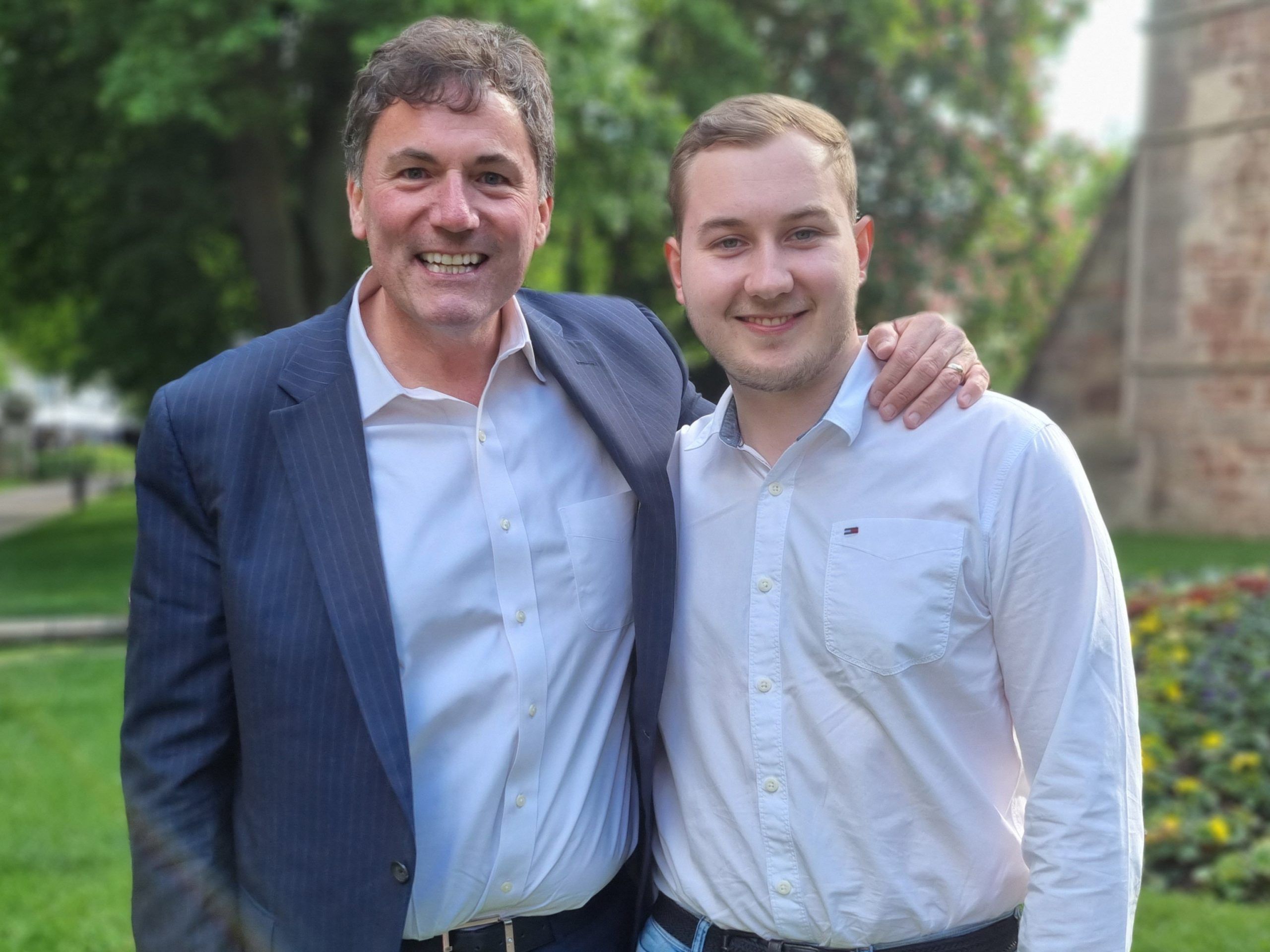
“Two years ago, Jonathan, the brave young man who saved my life, welcomed Jolene (Richard) and me to his family’s home town in Germany, Bad Hersefeld,” he posted along with two photos of himself and his wife with the now 26-year-old and his family members.

“I will cherish this moment and remember his kindness, and that of his family, forever.”

Two years ago, Jonathan, the brave young man who saved my life, welcomed Jolene and me to his family’s home town in…

Posted by Dominic LeBlanc on Sunday, May 25, 2025

LeBlanc ‘was as yellow as a lemon … and had lost a lot of weight’

In April 2019, while overseeing intergovernmental affairs, northern affairs and internal trade under then-prime minister Justin Trudeau, a 51-year-old LeBlanc, feeling particularly unwell, was informed by Moncton doctors he had a “lethal form” of non-Hodgkin’s lymphoma.

His only chance at survival: “very aggressive” chemotherapies and a stem cell donation via an allogeneic transplant — obtaining healthy stem cells from a donor who is not identical to the recipient.

In an interview with

DKMS

, the German-based international blood science organization that ultimately paired him with Kehl, LeBlanc said it took doctors a few weeks to figure out the “right recipe of chemotherapy” to get his cancer into remission before referring him to Montreal’s Maisonneuve-Rosemont Hospital, a facility renowned for its expertise in hematology and stem cell transplants.

“He was as yellow as a lemon because of the liver failure and had lost a lot of weight,” Dr. Sylvie Lachance, who oversaw his care, told

Reader’s Digest Canada

in 2023.

 Maisonneuve-Rosemont Hospital in Montreal is a leading Canadian facility for stem cell transplants.

But LeBlanc, who’d announced he’d

won a battle with leukemia the year prior

, was optimistic and said doctors were, too, reminding him that even if his younger sister, Genevieve

,

 was not a match, the DKMS’s global registry of potential bone marrow donors offered added hope.

His sister’s blood ended up being incompatible, but a perfect match showed up through the database several weeks later, and the anonymous donor agreed to the procedure.

International rules prohibit doctors from divulging the identity of the donor to the recipient for two years, but LeBlanc wondered if his potential saviour might be based in Germany, “just because they had said that so many Germans are in the database, and the German people are so generous when they’re asked to donate.”

On the other side of the Atlantic, a 20-year-old Kehl, who’d registered as a donor while still in high school two years earlier, was living with his parents in the Hesse state town of Bad Hersfeld when he was told he was a perfect match with a Canadian man.

“I could have said no, but I agreed,” Kehl told Reader’s Digest. “I wanted to save a life! It was a really emotional moment for me, and for my family, who encouraged me to donate.”

In early September, he travelled to Frankfurt to have his stem cells collected, after which they were flown to Montreal, where LeBlanc awaited, having just finished a final round of chemotherapy to prepare his body for the transplant.

“So you’re obviously not feeling a great deal of energy. All my hair had fallen out. I probably lost 35 pounds,” he said to DKMS. “But the doctors were very positive. They said I was ready to receive the transplant. And I’ll never forget when the nurse comes in to the hospital room and shows you the bag of stem cells, it was maybe half a litre in a bag that had a whole series of stickers of different barcodes on it.”

The procedure itself took just two hours to introduce the 570,000,000 stem cells into his bloodstream, followed by a waiting period to see if new blood cells regenerated.

“I was afraid it hadn’t worked until Dr. Lachance came into my room with a smile and told me the neutrophils — the white blood cells — had materialized,” LeBlanc said to Reader’s Digest.

After several weeks of isolation to protect and rebuild a severely weakened immune system, during which he was elected for the seventh straight time as the member of parliament for Beauséjour in the federal election, LeBlanc was discharged in November.

He returned to Parliament in January.

 Former prime minister Justin Trudeau and Dominic LeBlanc share a moment during the swearing-in ceremony following the 2021 federal election.

Blood brothers: ‘This young man saved my life’

LeBlanc said he first filled out the form to learn his donor’s identity about a year after the transplant, and he got an email with Kehl’s name and date of birth in October 2021.

“What struck me on the information I got is that he was born in 1999,” LeBlanc said to DKMS. “I didn’t imagine that the donor would have just been 20 years old when he donated the stem cells.”

His team quickly obtained Kehl’s contact information so LeBlanc could send him a personal message of thanks. He even contacted Stéphane Dion, the Canadian ambassador to Germany, to find out which translation agency they use for official correspondence. Kehl responded in English, which he told Leblanc he’d been studying since childhood.

COVID-19’s Omicron wave delayed an in-person meeting, but the pair chatted on Zoom just before Christmas and agreed to get together when travel rules allowed.

That meeting happened the following September when Kehl visited Canada as LeBlanc’s special guest.

“This young man saved my life,” LeBlanc said, introducing Kehl in Ottawa, where the young German also met Trudeau and conducted media interviews before the pair went to Montreal and then to New Brunswick for two days of salmon fishing.

Kehl returned the favour in May 2023, inviting LeBlanc and Richard to Bad Hersfeld to meet his family.

“He and I have a special bond,” LeBlanc wrote on Twitter at the time. “Indeed, we have the exact same blood and immune system. Because three and a half years ago, he answered the call to donate some of his stem cells to a man whom he knew was very sick, but whose identity was not known to him at the time.”

For his part, Kehl told Reader’s Digest that should LeBlanc require more stem cells, he’s ready to donate again.

“I consider Mr. LeBlanc to be my genetic twin,” he said.

Our website is the place for the latest breaking news, exclusive scoops, longreads and provocative commentary. Please bookmark nationalpost.com and sign up for our daily newsletter, Posted, here.


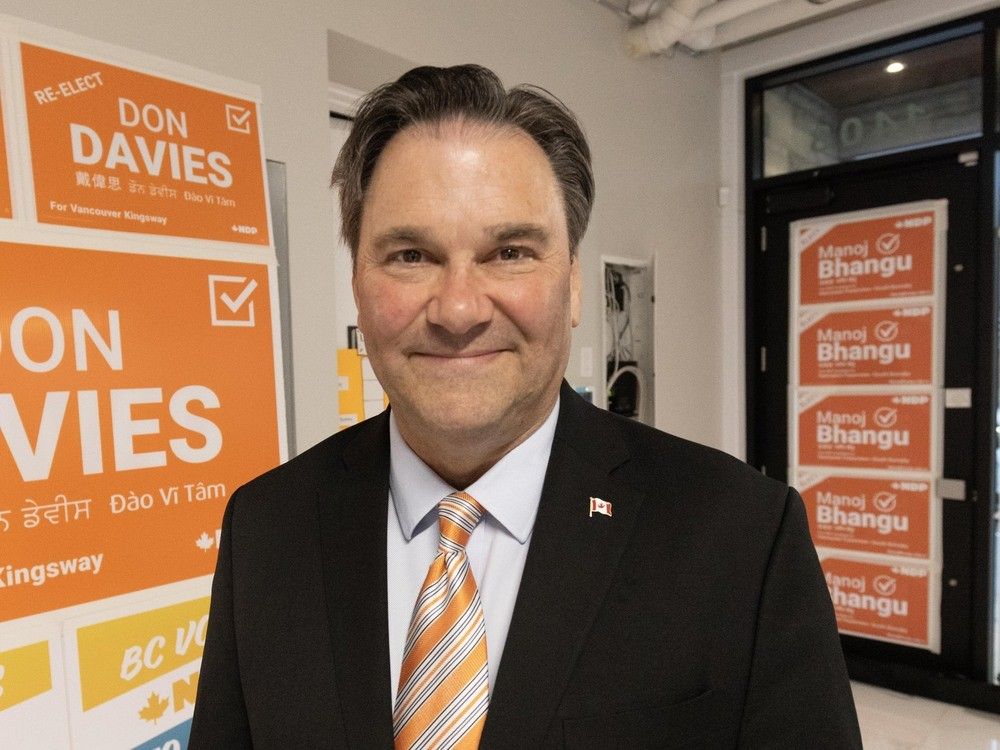
Don Davies at NDP offices in Vancouver, B.C., April 28, 2025.

OTTAWA

— The interim leader of the federal NDP says that while the door may be shut to the party being granted official status in the House of Commons, he hopes other parties will grant it resources. 

Don Davies says that while he has not spoken to Prime Minister Mark Carney, federal New Democrats are having “fruitful discussions” and looking to see what is possible through the Board of Internal Economy, which manages the House of Commons’ resources.

“We’ve already made some progress,” Davies told reporters on Monday.

“For instance, we have access to the lobby. We kept our offices.”

These “little privileges,” as Davies puts it, are what the federal party now considers as wins after a general election, where the party was reduced to a mere seven seats, down from its previous 24.

It was the worst showing the federal party has had in a Canadian election. The last time it lost official party status was in 1993, when the NDP came away with only nine seats.

Besides reeling from the political blow that voters dealt the party, which saw Jagmeet Singh, its former leader, resign after placing third in his riding, the fact that New Democrats are returning to Parliament with only seven seats means it has lost many of the resources afforded to parties based on the size of their caucus.

Losing official party status means NDP MPs will be limited in how often they can ask the governing Liberals a question in the House of Commons, and will not automatically be reserved a place on parliamentary committees, where legislation flows before it is passed in the House of Commons.

While Davies said on Monday that it was “possible” for the governing Liberals to relax some of the rules around what constitutes official party status, as has been done at the provincial level across different legislatures, House Leader Steven McKinnon appeared cold to the idea.

“The law requires 12 members,” he told reporters earlier on Monday

Davies said the NDP is now looking to see what may be decided by the Board of Internal Economy, which has not yet been struck.

Even if no NDP MP ends up on that governing committee, it nonetheless has the power to dole out resources, said Davies.

“One of the arguments I’ve made is we’re a national party.”

“We had 1.2 million Canadians vote for us, and it’s important that we have the tools we need to function and discharge that responsibility.”

Given that the Liberals are operating in a minority Parliament with 169 members, Davies said the government will need to work with others, which is where the seven NDP MPs come in.

Prime Minister Mark Carney has already stated he has no plans to pursue a formal arrangement with the federal New Democrats, as his predecessor, former prime minister Justin Trudeau, did in March 2022, which saw the Liberals adopt some of the NDP’s priorities in exchange for the New Democrats passing government legislation.

The introduction of a national dental care program was one of the products of that deal, as was the beginnings of a universal pharmacare program.

Singh announced in September 2024 that the NDP was leaving the deal, which many of their MPs welcomed, given Trudeau’s increasing unpopularity.

During the recent federal election, Singh defended his decision not to trigger an election last fall, at one point saying that he could not

 “stomach the idea” of Conservative Leader Pierre Poilievre, who was then riding high in public opinion polls, potentially forming a majority government. 

The Conservatives’ nearly 20-point lead over the Liberals collapsed once the election got underway, as Carney replaced Trudeau as Liberal leader and Canadians’ minds had turned to the economic and sovereignty threats posed by U.S. President Donald Trump.

Several weeks into the campaign, the New Democrats shifted their message to acknowledge the likelihood of the Liberals winning and asked voters to elect as many NDP MPs as possible.

The party has not yet announced details for its upcoming leadership race or plans to pursue a campaign review.

In Parliament, Davies said the NDP would focus its attention on affordability issues, such as affordable housing, as well as health care, and providing support for workers hurt by Trump’s trade war.

National Post
Get more deep-dive National Post political coverage and analysis in your inbox with the Political Hack newsletter, where Ottawa bureau chief Stuart Thomson and political analyst Tasha Kheiriddin get at what’s really going on behind the scenes on Parliament Hill every Wednesday and Friday, exclusively for subscribers. Sign up here.

Our website is the place for the latest breaking news, exclusive scoops, longreads and provocative commentary. Please bookmark nationalpost.com and sign up for our daily newsletter, Posted, here.