LP_468x60
on-the-record-468x60-white

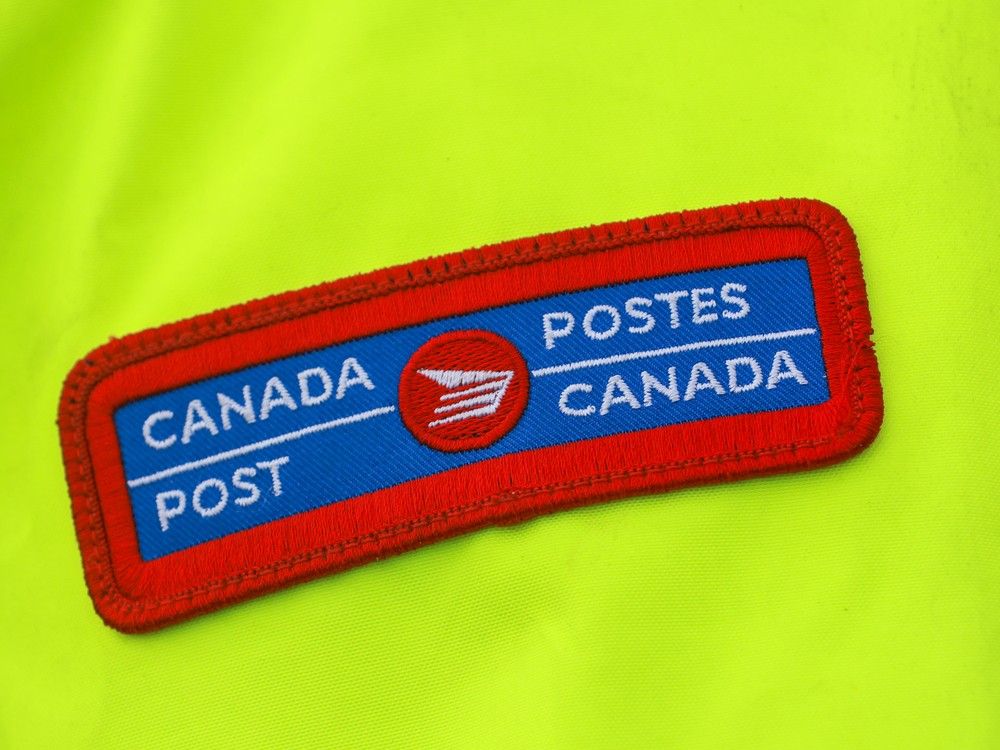
A shoulder patch on a striking Canada Post worker was photographed during a rally outside a northeast Calgary Canada Post sorting facility on Saturday December 14, 2024.

As negotiations continue between the Canadian Union of Postal Workers (CUPW) and the Canada Post, the corporation revealed its operating loss for 2024 was nearly $1.3 billion.

“Outdated operating, regulatory and policy constraints are limiting our ability to adapt to the changing needs of the country. At the same time, letter mail continues to decline and competition has rapidly intensified in e-commerce delivery,” which has pushed it to “a crisis point,”

according to the report

.

Canada Post called its financial situation “unsustainable” and said the future of the national postal system was at risk.

The 2024 annual report was released on Wednesday, the same day Canada Post presented

“final offers” to CUPW’s bargaining units

, Urban Postal Operation and the Rural and Suburban Mail Carriers. The two parties have been negotiating since before last November, when

Canada Post employees went on strike for 32 days

. They were ordered back to work by the Canada Industrial Relations Board at the request of then minister of labour Steven MacKinnon. The collective agreements for both units were then extended to May 22.

Canada Post, union disagree over taking ‘five-minute wash-up time.’ Here’s what it is

With little progress made in talks with the Crown Corporation since December, the union gave notice of a strike with a May 23 deadline. However, rather than a full-on strike, the union decided to implement

a nationwide overtime ban

, calling on its members to refuse to work more than eight hours a day or forty hours a week.

After receiving strike notice on May 19, Canada Post said it “recorded

more than $3 billion in losses before tax

” since 2018. In early 2025, the government announced repayable funding of up to $1.034 billion for Canada Post to prevent insolvency.

This week, Canada Post’s annual report showed it was at an $841 million loss before tax. The corporation indicated that the November 2024 strike, which lasted until Dec. 17, had a major impact and “contributed $208 million to the company’s loss,” with revenue falling “much more” than costs during that period.

Parcels revenue declined by $683 million “due to the strike and intense competition” in 2024, according to Canada Post. There were 56 million fewer pieces in 2024 compared to the previous year, it said.

“Many customers who turned to other carriers for their shipments (during last year’s strike) have not yet returned to Canada Post – and that’s expected to have a financial impact well into 2025 and beyond,” said Canada Post in a news release on Wednesday.

The company also said it has been impacted by the decline in letter mail, which has been steadily trending downward for 20 years. In 2006, Canada Post delivered 5.5 billion letters. Last year, it delivered two billion. The delivery costs are rising as the amount of new addresses increases, making it “unsustainable” to continue delivering fewer letters to more addresses. The corporation said its focus will shift to parcel delivery, as e-commerce continues to grow.

However, this pivot is in direct conflict with the collective agreements it has with CUPW, which “contain pages and pages of requirements and restrictions that were added decades ago” when Canada Post was “focused on delivering a large and steady stream of mail,” it said.

The corporation clarified: “It’s our outdated delivery model and workplace rules – not our employees – that hold us back.”
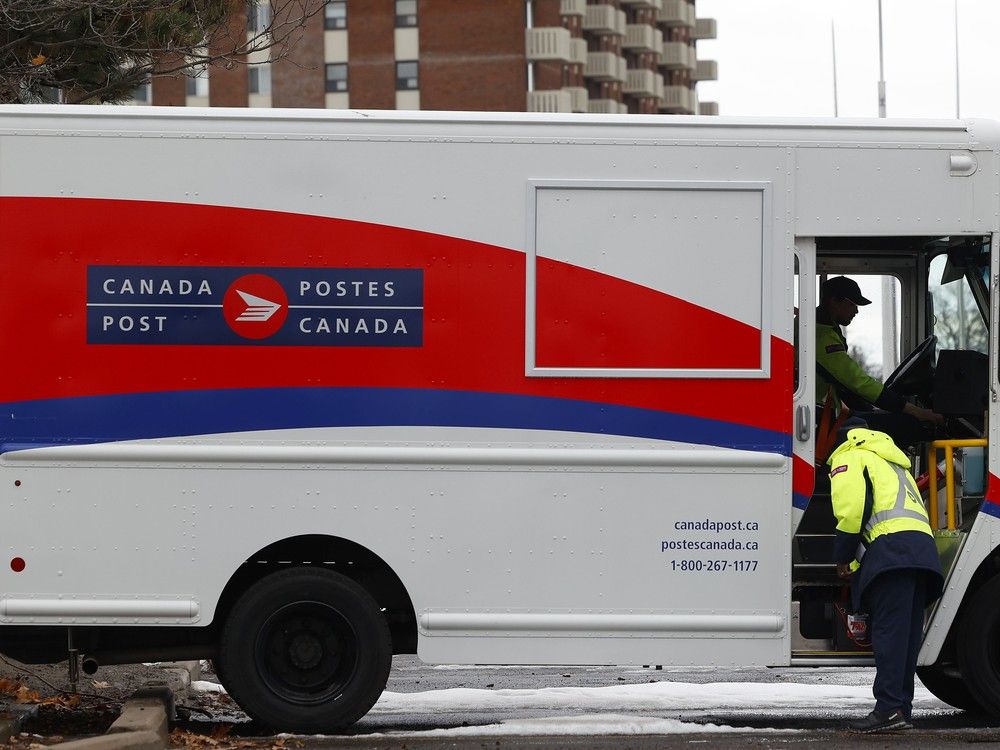
 Canada Post employees work on getting a truck started to start work in Ottawa.

The union’s national president Jan Simpson reacted to the annual report in

a news release

later on Wednesday. She said that the Canada Post’s report left out “many important details that don’t support its own message.”

She said the report doesn’t address its “failure to raise stamp rates before 2025, even though every other major postal operator raised rates significantly between 2018-2023.” It also doesn’t include how much of the losses since 2018 resulted from costs related to the COVID pandemic, she said.

The union maintains that the “best way to right the Corporation’s finances is by negotiating ratifiable collective agreements that will help grow parcel volumes, expand services and secure Canada Post’s position as the important public service provider that it is.”

The union said in a separate

news release on Wednesday

that it had received Canada Post’s latest offers.

“There are almost no changes from what the Employer

put forward on May 21

,” when the corporation presented offers after receiving strike notice, the union said.

The union called out the corporation for refusing to budge on contentious issues, such as part-time staffing and weekend delivery, as well as load-levelling (spreading out the processing and delivery of mail) and dynamic routing (optimizing delivery routes).

“These have been the most challenging issues on the table this round, and now, Canada Post insists that they must be in the next collective agreements,” per the union.

The latest offers did not provide improvements on the current wage proposal — a cumulative increase of nearly 14 per cent over four years — or include changes to the short-term disability program “that would have helped both parties,” the union said.

CUPW concluded: “Canada Post says this was its final offer. But this fight is far from over.”

While negotiations continue, the overtime ban remains in effect.

Our website is the place for the latest breaking news, exclusive scoops, longreads and provocative commentary. Please bookmark nationalpost.com and sign up for our daily newsletter, Posted, here.

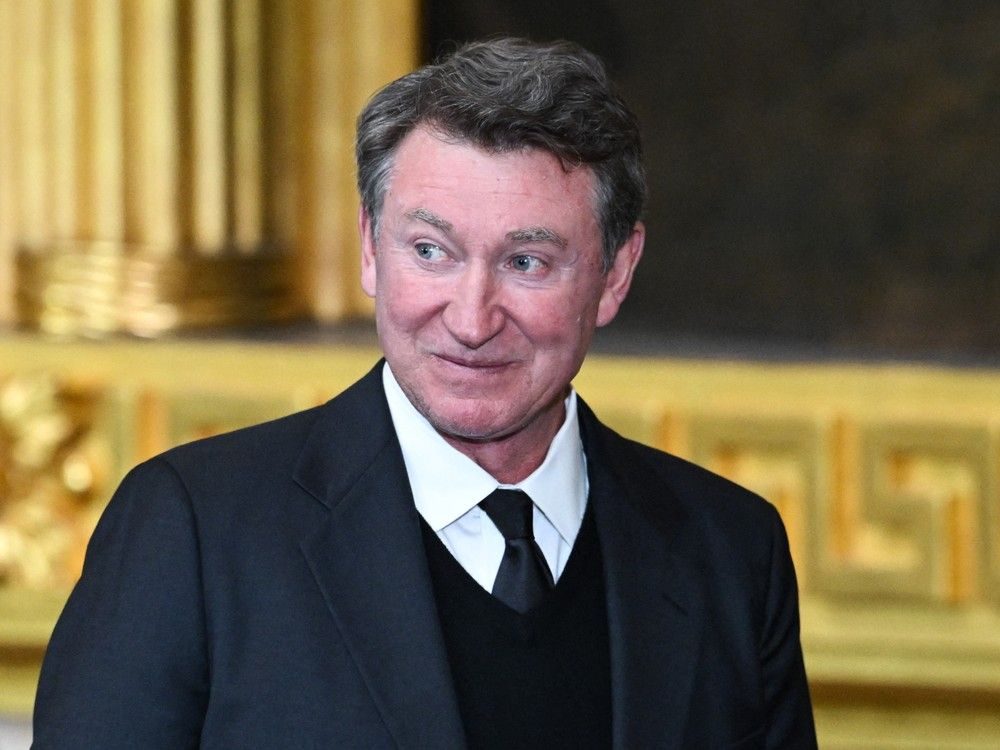
In a interview on the New Heights podcast with Jason and Travis Kelce, Wayne Gretzky predicted a Stanley Cup Finals rematch between the Edmonton Oilers and the Florida Panthers.

Wayne Gretzky didn’t predict an outcome for this year’s Stanley Cup Finals, but the former Edmonton Oilers and hockey’s all-time Great One does expect his former club will be there in a rematch with the defending champion Florida Panthers.

Appearing on the

New Heights podcast

with brothers and pro footballers Jason and Travis Kelce, Gretzky said the Oilers “learned a great lesson” in the relatively young, but talent-loaded team’s first Cup final.

“They’ll be a little bit different, a little bit more prepared, and some of the things won’t be surprises off the ice,” he noted.

Gretzky also pointed out that Edmonton will have home-ice advantage in the series — giving them the last line change after a stoppage in play, faceoff circle advantage, and Game 7 in front of boisterous fans on home ice.

“In the playoffs, (Games) four to seven is a big difference,” Gretzky explained.

‘I don’t think I’m your worst problem here’: Inside the thoughts of Wayne Gretzky

The interview was recorded before McDavid and the Oilers defeated the Dallas Stars 4-1 Tuesday night in Edmonton to take a 3-1 lead in the Western Conference final, a series Gretzky predicted will need seven games to decide. Game 5 is tonight in Dallas.

The Panthers punched their ticket to the final, their third straight trip, by knocking off the Carolina Hurricanes in Game 5 Wednesday night.

Gretzky, dressed in a black sweater from Drake’s October’s Very Own brand featuring his signature No. 99, spoke to the siblings from what appeared to be a St. Louis Blues facility. In 2021, Gretzky and his wife, Janet, a native of St. Louis,

bought a house in the Missouri city

to be closer to her mother.

Casual sports fans may forget that he played 18 games for the Blues after a trade from the Los Angeles Kings in 1996, but friction with head coach Mike Keenan led to the legend bolting for the New York Rangers in the offseason.

The conversation never once strayed into politics or the many critical things U.S. President Donald Trump, one of Gretzky’s close acquaintances, has publicly said about Travis Kelce’s partner, music megastar Taylor Swift. Most recently, the president posted on Truth Social, “Has anyone noticed that, since I said ‘I HATE TAYLOR SWIFT,” she’s no longer ‘HOT?’”

Instead, the roughly 45-minute chat was all about hockey and sports in general. Here’s what else No. 99 and the all-star football siblings talked about.

On the records

When he retired in 1999, Gretzky held a mind-boggling 61 official NHL records, and more than a quarter century later, he still holds or shares 55.

Washington Capitals star Alexander Ovechkin claimed one of those, a record once thought unbreakable, when he notched his 895th career regular-season goal in April to surpass Gretzky.

 After Alex Ovechkin, right, set a new NHL goal-scoring record on Sunday, Wayne Gretzky, left, reminded him that he’d received a free Rolls-Royce when he broke Gordie Howe’s record in 1994.

Gretzky continued to be abundantly gracious about passing the greatest goal scorer mantle to the Russian phenom and recounted a personal story from 1989 when he surpassed Gordie Howe’s career points record.

The night before, Gretzky said he told his father, the late Walter Gretzky, that he was feeling “kind of embarrassed” about taking the record from someone he idolized as a player, given the different eras of the game they played in.

“And I’ll never forget my dad saying, ‘Listen, you just have the same dignity and respect that Gordie Howe has for you because he’s truly happy for you, so when somebody breaks your record, you be as classy as Gordie Howe.’”

“I remember I looked at my dad and I said, ‘Can I just enjoy it for a little bit?’”

As for his remaining records, Gretzky told the Kelces the one he cherishes most and “is going to be the hardest to break” is the 50 goals he scored in 39 games in the 1981-82 campaign, his third season. He finished the year with 92, another record widely expected to stand the test of time.

Walter warms up

Gretzky mentioned his father a few times during the interview and revealed that the backyard rink made for him and his brothers each winter wasn’t meant to be a training ground for hockey greatness.

As a toddler, Gretzky said he started skating on a frozen river behind his grandparents’ barn, and by the time he was four, his dad would take him to outdoor rinks where young Wayne would skate tirelessly.

“One day he was so cold that he decided, ‘Look, I’m going to build a rink in the backyard and I can sit in the kitchen and drink my hot tea.’”

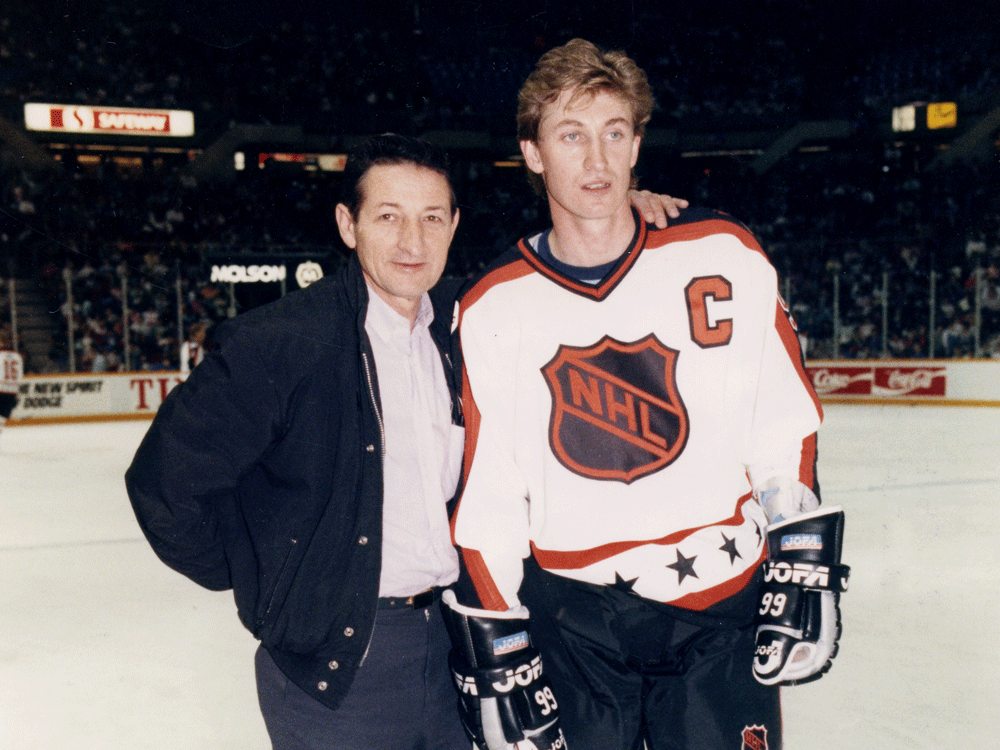
 Walter Gretzky with son Wayne at the NHL all-star game in 1989.

So every December, Gretzky said his father would spend hours building a six- or seven-inch ice sheet that would last all winter. An added bonus: he was always left with a healthy green lawn come summer.

What’s up, Doc?

Already with one of the most iconic nicknames in professional sports history — The Great One — it’s easy to forget that Gretzky was briefly bestowed with a different title: the White Tornado.

During his minor hockey days, Gretzky, wearing white gloves, dominated a Quebec City tournament with speed and scoring prowess, leading someone in French media to dub him le Tornade Blanche.

“My dad hated that one. He hated The Great One,” Gretzky admitted.

His personal favourite, however, is Doc, in recognition of his honorary doctorate from the University of Alberta, awarded in 2000.

Gretzky told the Kelces he asked friends to call him Doc because people also did so for Dr. Jerry Buss, the late former owner of the Los Angeles Lakers. In reality, Buss was a legitimate doctoral recipient, having completed a Ph.D in physical chemistry at the University of Southern California before becoming a real estate magnate and an NBA franchise owner.

“My kids even call me Doc,” Gretzky said.

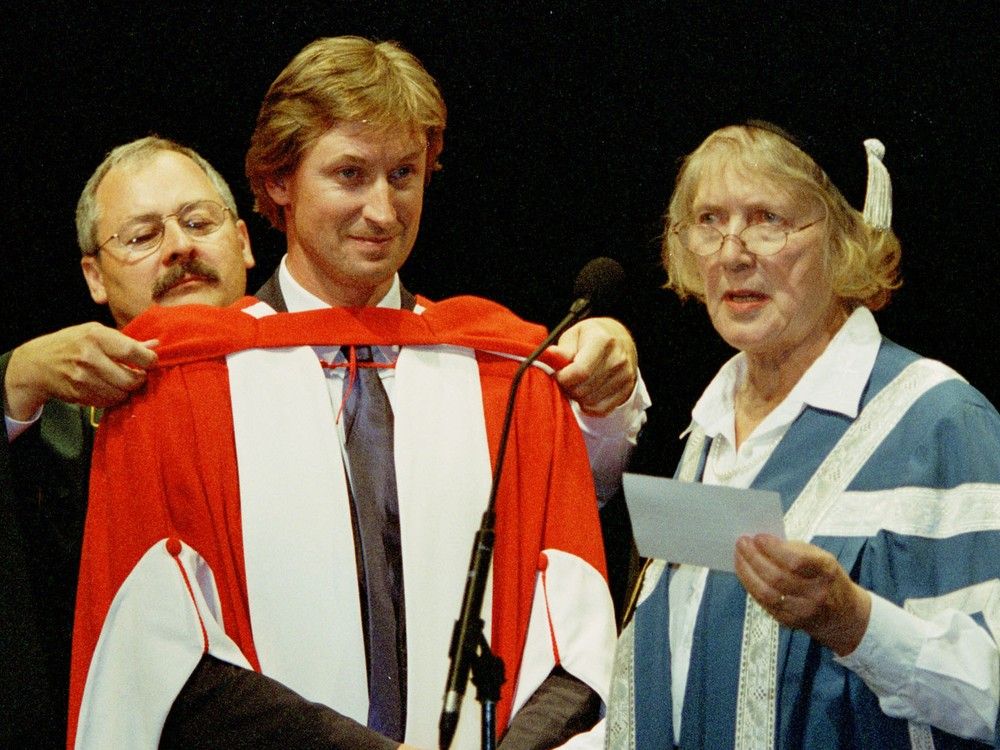
 Wayne Gretzky received an honorary doctorate from the University of Alberta in 2000.

He offered a different version of how he earned the name five years ago on

TNT’s The Steam Room.

He recounted being on a plane when one of the flight attendants asked if there was a doctor on board to help attend to a passenger with anxiety, prompting him to hit the call button.

“She goes, ‘Really?’ And I go, ‘Yeah, I’m an honorary doctor.’ She goes, ‘That’s not funny,’ and I said, ‘Well, my goodness, I wouldn’t have said it if I thought the guy was really in trouble.”

Doc was applied, he said, after he told friends on the golf course.

Our website is the place for the latest breaking news, exclusive scoops, longreads and provocative commentary. Please bookmark nationalpost.com and sign up for our daily newsletter, Posted, here.

Lt.-Col Jordan Herzberg of the Israeli Defense Forces reserves in Mount Tsifya, Israel, near the border with Kfar Kila, Lebanon.

Mount Tsifya, Israel  — From an observation post overlooking the breathtakingly beautiful mountains on Israel’s border with Lebanon, Lt.-Col Jordan Herzberg points to a scarred hillside where a town used to be.

Lebanon’s Kfar Kila was badly thumped during an Israeli offensive against Hezbollah, and further reduced to rubble by construction contractors engaged by Israel to largely wipe it from the Earth; it is now essentially a few roads with intermittent piles of rocks and vague outlines of what used to be houses.

Herzberg said the Israel Defense Forces (IDF) found what were essentially “fake homes” there, filled with missiles and soldiers’ rations and uniforms. It was the same story in settlements all along the Lebanese border, including in Christian towns that were essentially occupied by Hezbollah.

The destruction done to southern Lebanon by the IDF’s assault on Hezbollah last fall is devastatingly clear, but Herzberg wants a group of visiting Canadian journalists to understand the Israeli message: the war was not with Lebanon but with the terror group that had effectively colonized Kfar Kila and much of southern Lebanon.

“We have no issue with the Lebanese people. We have issues with Hezbollah. They are our enemy,” he said.

The Montreal-born Herzberg has the unique seriousness of purpose of an Israeli soldier proud of the Jewish state army’s capacity for killing its enemies. He looks like an accountant who runs marathons but speaks with the swagger of a warrior, sometimes against his country’s own leadership. The army was embarrassed by October 7, and is determined not to be caught flat-footed again.

“This is the strongest we’ve ever been,” he said.

Today, he is a tour guide but he is also an IDF reservist, which means he’s spent most of the past 18 months on active duty; he had spent the previous day in a nearby corner of Syria and was to return there the following day.

 Photo of Kfar Kila, a southern Lebanon town largely levelled by Israeli Defense Forces. Photo taken May 20, 2025.

Israel learned quickly from its inattention early on October 7, taking no chances in the north; two hours after Hamas invaded the south, the army sent troops to the north to counter any threat from the better-armed Hezbollah. Israel has since spent the last 19 months ensuring it is defanged.

Herzberg said Hamas are bunch of pikers who got lucky — he calls them “a junior varsity team” while Hezbollah is “a professional sports team.” But by hesitating when Hamas acted, Hezbollah lost the opportunity to seize an advantage. They sent their first rockets into northern Israel on Oct. 8, 2023, sparking a back-and-forth and a full-scale Israeli invasion of southern Lebanon. 

But Hezbollah is now 80 per cent routed, pushed back via a November ceasefire to the other side of the Litani River, some 27 kilometres from the Israel border, and seemingly unable to mount a threat anymore. Its leadership is decimated, its military capacity largely neutered.

“They’re not defeated, but they’re crushed,” said Herzberg.

Israel is still mopping up as it moves freely in southern Lebanon, though many of the 60,000 Israelis who had been evacuated from the north for more than a year have finally returned. Still, this can feel like an active war zone; a plume of smoke went up from the Lebanese side while we were there. 

Our tour was sponsored and organized by the Exigent Foundation, founded by Toronto entrepreneur Larry Maher to advocate for the Israeli perspective. In northern Israel, it took us to a Druze Arab town and a Muslim Bedouin village, as well as an Israeli kibbutz.

“This is an Israeli village. Pro-Israel,” said a Bedouin leader in Arab al-Aramshe, where more than a dozen people were injured in a Hezbollah attack on a community centre in April 2024. 

The first rocket hit the centre’s glass roof, the second hit a car; a drone arrived 30 minutes later, the timing intended to inflict maximum damage on first responders. The Bedouin spokesman asked to remain anonymous as we stood below what was the glass roof, debris and pockmarks and twisted metal all around.

The Israelis we spoke to said the Lebanese government, such as it is, is thrilled with what Israel has done to take that country’s south back from Hezbollah, even if it’s not saying so publicly. It wasn’t clear if the Israeli government had intelligence to that effect, or if it was merely an assumption, given that the recently elected reformist president of Lebanon has been freeing the government of Hezbollah’s influence. But Herzberg and others talked about a future with a Lebanese government they could do business with, once Hezbollah is fully out of the picture.

“Lebanon is a kidnapped country, it’s like a beaten spouse,” Herzberg said.

 Yaki Shalom, head of the security team for Kibbutz Hanita, stands in the community’s outdoor amphitheatre and near its direct border with Lebanon.

Just metres from the Lebanon border, i
n Kibbutz Hanita — established by Zionists a decade before modern Israel was born — we meet Yaki Shalom, head of the community’s security team, who tells us they grow bananas and avocados here. Standing in the community’s outdoor amphitheatre, he tells us there were three Hezbollah attempts to infiltrate Hanita last fall, all pushed back by the IDF. And then there were the constant rocket attacks.

We stand in the rubble of a house hit by a Hezbollah rocket, and then head to a nearby machine gun post on the concrete border fence. Shells from automatic weapons still litter the post.

Hanita was abandoned for months, but Shalom said 60 per cent of the population has come back, led by teenagers who wanted to return to their school and friends. But families with younger children have not come back; the kindergarten is still closed.

I
srael’s war with Hezbollah has taken a toll on Hanita and much of northern Israel. Still, these Jewish, Druze and Bedouin places stand, damaged but determined, as towns like Kila on the other side of the border do not. 

“We are here. (Hezbollah) are not here. So I guess they made a mistake,” said Shalom. 

Our website is the place for the latest breaking news, exclusive scoops, longreads and provocative commentary. Please bookmark nationalpost.com and sign up for our newsletters here.


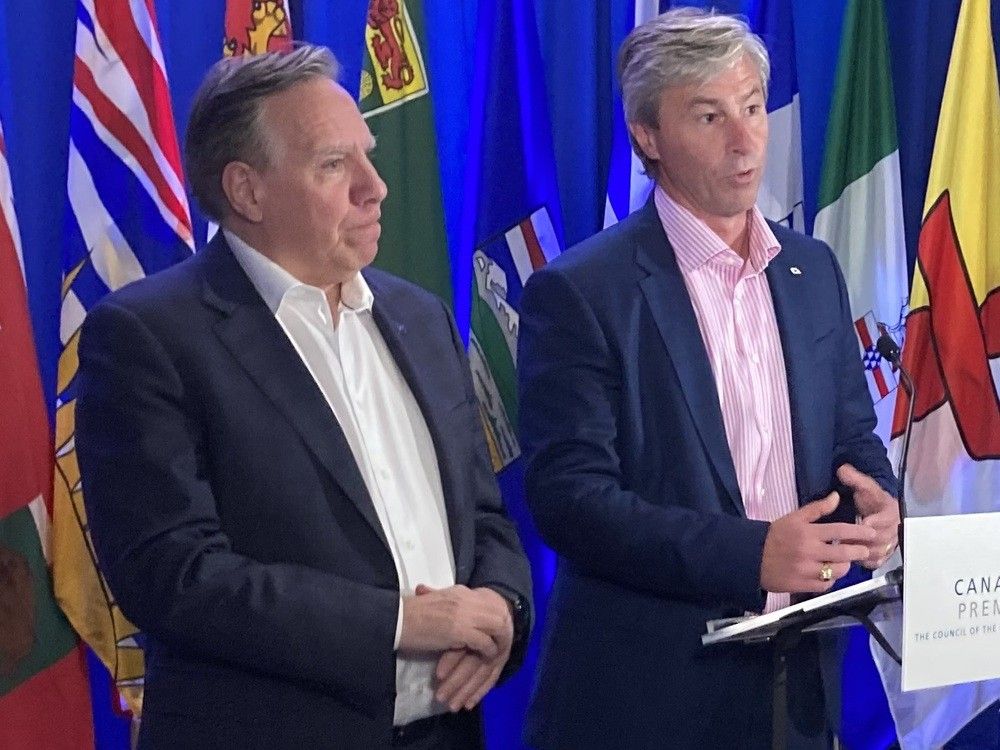
Quebec Premier François Legault and Nova Scotia Premier Tim Houston speak at The Council of the Federation in Halifax.

OTTAWA – The Quebec government could boost the Canadian economy by approximately $69.9 billion if it removes trade barriers with the rest of the country, a think tank in the province estimates.

According to a new study by the Montreal Economic Institute (MEI), the signing of an agreement between Quebec and Ontario alone would increase Canada’s GDP by approximately $32.2 billion.

“Premier François Legault should follow Nova Scotia Premier Tim Houston’s approach and adopt mutual recognition laws with the rest of the country,” said Trevor Tombe, a professor of economics at the University of Calgary and senior fellow at the MEI.

Nova Scotia legislature recently adopted the Free Trade and Mobility Within Canada Act, or Bill 36, that will ease interprovincial commerce with provinces that reciprocate.

The province will accept, without testing or additional fees, any product approved for use in the other province, even if it does not meet local standards. The law also applies to licensed services and professionals.

Ontario, New Brunswick and Prince Edward Island have also joined the party, with measures to reciprocate Nova Scotia and increase trade.

“It’s one of the surest and lowest-cost ways for provincial governments to unleash Canadian productivity growth,” said Tombe.

So far, all these measures are leading the way to internal free trade zones with the potential to boost the country’s economy substantially, according to MEI.

For example, Ontario and Nova Scotia alone could boost the Canadian economy by nearly $4.1 billion.

However, all eyes are on Quebec’s next move because of its numerous regulations.

The office of Quebec’s Minister Delegate for the Economy Christopher Skeete told National Post that the government intends on introducing a bill “very soon.”

“We should welcome the provinces’ willingness to reduce interprovincial trade barriers. Quebec is working on its own, and we welcome the bills from other provinces,” said the minister’s spokesperson Léa Fortin in a text message.

In the past, Skeete has said that Quebec “is ambitiously committed to improving the local business environment.” But when it comes to reciprocal measures with Nova Scotia and other provinces, it’s not clear if the province is ready to make that step.

In fact, Quebec’s members of the National Assembly (MNA) don’t seem too excited with the notion of “one Canadian economy instead of 13” proposed by Prime Minister Mark Carney.

In April, a motion opposing such project was adopted unanimously by the parties at the National Assembly.

The motion reaffirmed Quebec’s right “to protect its own interests, particularly economic, cultural, and linguistic, based on its distinct priorities and social values, while working to reduce barriers to interprovincial trade.”

The prime minister’s Quebec lieutenant Steven Guilbeault was present during the first meeting between Carney and Premier François Legault and said Wednesday that during that conversation, both sides “were on the same wavelength, in that the more we are able to remove barriers like that, the more beneficial it will be for trade in Quebec and Canada.”

The study by MEI comes as Internal trade Minister Chrystia Freeland is set to meet with her provincial counterparts on Thursday and Monday. Minister Skeete will attend the meetings and is said to be ready to present new measures on internal trade Friday.

Quebec is participating in negotiations to conclude a mutual recognition agreement applicable to all consumer goods, except for food, beverages and tobacco.

The province has already announced that the Société des alcools du Québec (the province’s liquor board) will provide greater visibility to Canadian and Quebec products and is also committed to improving trade through a direct-to-consumer sales system.

Quebec also dropped five exceptions under the Canadian Free Trade Agreement and is looking to do more.

“Minister Freeland is encouraged by the great progress provinces have made, with many reaching agreements and introducing legislation, so that residents, businesses, and workers in these provinces will have better access to goods, services, and a larger market,” said Laura Scaffidi who is the minister’s spokesperson.

Tombe believes that “the growing momentum to eliminate internal barriers to trade in Canada is promising,” but Quebec and the country would be “much more prosperous” if the province were to join the interprovincial free trade zone.

National Post
atrepanier@postmedia.com

Get more deep-dive National Post political coverage and analysis in your inbox with the Political Hack newsletter, where Ottawa bureau chief Stuart Thomson and political analyst Tasha Kheiriddin get at what’s really going on behind the scenes on Parliament Hill every Wednesday and Friday, exclusively for subscribers Sign up here.

Our website is the place for the latest breaking news, exclusive scoops, longreads and provocative commentary. Please bookmark nationalpost.com and sign up for our newsletters here.


Canada's Summer McIntosh poses with her four swimming medals won at the 2024 Summer Olympics in Paris. The three gold medals were for the 200m Butterfly, the 200m Individual Medley and the 400m Individual Medley and the one silver was for the 400m Freestyle.

Canadian swimmer Summer McIntosh has announced plans to move to Austin, Texas to train with Bob Bowman, former coach for Olympic superstar Michael Phelps, CBC reports.

His coaching expertise and experience with multi-event swimmers

will help her achieve her own ambitious goals, most notably to win five individual gold medals at the 2028 Los Angeles Olympics, she told CBC Sports.

McIntosh

won three Olympic gold medals

, as well as a silver, at the 2024 Paris Games.

Where will she train with Bowman?

She

plans to move to Austin

after the 2025 World Aquatics Championships in July to join Bowman’s professional training group, regarded as one of the best in the world and including other top swimmers.

McIntosh says she values the

individualized and intense training approach

Bowman offers, which she feels aligns with her needs as a high-performance athlete competing in multiple events.

Where is she training now?

Before her move, McIntosh will

continue training under French Olympic coach

Fred Vergnoux, who has helped her develop a strong aerobic foundation and competitive mindset.

Why Bowman?

Bowman guided Phelps to a record 23 Olympic gold medals and has also

coached other elite swimmers

such as Regan Smith, and Simone Manuel and Léon Marchand, who won four gold medals in Paris. All of them have achieved world-class results under his guidance.

Bowman specializes in preparing swimmers who compete in multiple events, managing complex training regimens that balance volume, intensity, and recovery. This can be valuable for athletes aiming to win several medals during a single Games.

He is known for tailoring his training plans to each athlete’s specific needs, strengths and goals.

What is so special about Bowman’s training?

Bowman emphasizes building trust and understanding with his athletes, supporting not just their physical development but also their mental resilience — an essential factor for Olympic success.

Bowman

breaks down big goals into daily, weekly, monthly and yearly plans

with clearly defined outcomes. He encourages athletes to write down their targets and visualize success, believing that vivid mental rehearsal is a powerful tool for achieving goals.

Rather than fixating on medals or external results, Bowman teaches athletes to concentrate on perfecting their performance and hitting personal benchmarks. This

reduces pressure and helps maintain consistency

under stress. He teaches athletes to focus on their own race and performance, not on competitors or outcomes, to

avoid choking under Olympic-level pressure

.

He emphasizes the importance of

daily routines and habits

, believing that champions produce predictable performances even in unpredictable environments.

Bowman uses

mental imagery extensively

, asking swimmers to visualize every detail of their races — the feel of the water, the sounds, and the execution of each stroke — to prepare for high-pressure situations.

He deliberately introduces challenges and discomfort in training, so athletes learn to perform when things go wrong — like Phelps did when he won a race in Beijing, even though his goggles had filled with water.

What will the benefit be of training at the University of Texas in Austin?

Training in

Bowman’s professional group

will means daily exposure to some of the world’s best swimmers.

His

program at the University of Texas

is designed to foster excellence, utilizing the best resources, facilities and staff to help athletes reach their full potential.

Our website is the place for the latest breaking news, exclusive scoops, longreads and provocative commentary. Please bookmark nationalpost.com and sign up for our daily newsletter, Posted, here.

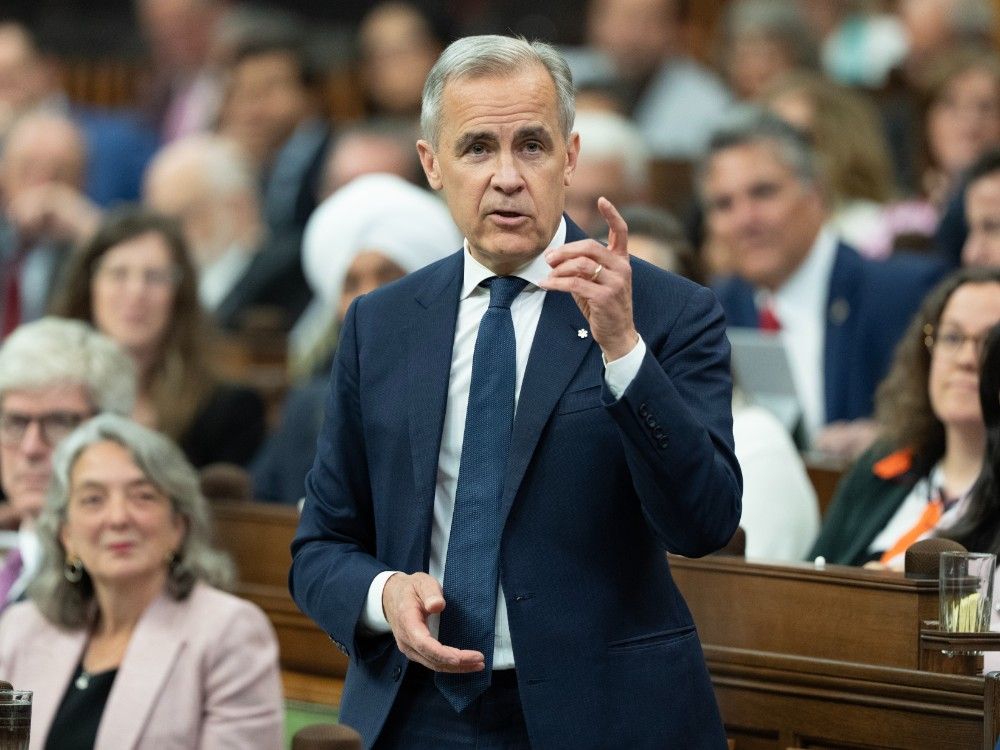
Prime Minister Mark Carney responds to a question during Question Period, Wednesday, May 28, 2025 in Ottawa.

OTTAWA — Prime Minister Mark Carney was pressed on his government’s decision to punt the budget until the fall and his promise to make Canada an “energy superpower” during his first question period on Wednesday.

Interim Conservative Leader Andrew Scheer started by welcoming Carney to his first official question period and reminded him “this is where we provide rigorous scrutiny on every word he says and every dollar he spends on behalf of Canadians.”

“Now, let’s talk about those words and dollars,” he said.

Scheer went on to enumerate how he believes Canadians are still suffering from the consequences of Liberal policies — pointing to increased household debt and food bank usage — and asked how a man who promised to act at “great speed” won’t table a budget right away.

Finance Minister François-Philippe Champagne said two weeks ago there would be

no federal budget in the spring

, but a fall economic statement instead. Days later, Carney announced his government would present a budget during the fall session instead.

“If he’s the man with the plan and the guy you hire in a crisis, why won’t he table a budget before he goes on summer vacation?” Scheer asked.

Carney shot back by saying that Scheer was probably “very busy” and “did not have a chance to study closely the 100-day plan” of Conservative Leader Pierre Poilievre which made no mention of tabling a budget in that timeframe.

“They must be really afraid to come clean with Canadians if they’re going to punt it off into the fall,” retorted Scheer.

Scheer went on to question Carney on his “claim that somehow the Liberals have changed” and said he had “a chance to prove it to Canadians.” “If he’s serious, will he tell Canadians that pipelines are part of his values by repealing Bill C-69?”

Ottawa’s impact assessment act, also dubbed the “no pipelines bill” by its critics, came into force in 2019 and has been a hot-button issue ever since.

Carney insisted that his “new government” would act immediately to grow the economy, support “nation-building projects” and work with provinces to build them.

The Conservative opposition went on to question many of his ministers on pipelines and housing — with a particular focus on rookie ministers Tim Hodgson and Gregor Robertson.

The prime minister’s office confirmed earlier this week that Carney would not be pursuing his predecessor Justin Trudeau’s tradition of answering all questions put to the government by the opposition in the House of Commons every Wednesday.

His office said he would only be answering questions in the opening round of questions, as he did on Wednesday.

Trudeau started the tradition of the “prime minister’s question period” — a common practice in the United Kingdom — in 2017 to improve accountability within the chamber. It was a way for all parties to take turns questioning directly the prime minister.

Despite being a fan of British traditions, Carney promised a “true cabinet government” with ministers “expected and empowered to show leadership” on their files.

Conservative MP Gérard Deltell said he did not mind Carney breaking tradition with Trudeau on the prime minister’s question period and favours substance over form.

“It’s not the number of answers that you give, it’s the kind of answers that you give that is most important,” Deltell told reporters as he headed to his weekly caucus on Wednesday morning. “If there are some clear responses, that will be interesting. We will see.”

Deltell added that Carney has had some “difficulties with the truth” — pointing to comments hinting that U.S. President Donald Trump had not raised the “51st state” in their first call. It turns out that

Trump did, admitted Carney during the campaign

.

Liberal MPs said prior to the first question period of the spring session that they were hoping for more decorum and less heckling from the opposition benches.

“Let’s hope for some collegiality, let’s hope for some demonstration that we are all in this together and we are all working for Canadians,” said Karina Gould, who served as government House leader in the last Parliament.

“I would like to see the Conservatives start with an attempt at cooperation. We certainly had a very rocky end to the last Parliament,” she said.

James Maloney, who was recently chosen as the Liberals’ caucus chair, said he was “curious” to see if the tone in the chamber will be different or more of the same.

“I would like to see more respect for Parliament, I’d like to see more respect for the members in the House, and I’d like to see that people have a sense of renewal because we just had an election. We’ve got a new government,” he said.

“We’ve got a lot to do and I’d like to see people get out to work.”

Poilievre, who was speaking outside of the chamber because he is not an MP, announced before question period his party would support the government’s initiative to implement a middle-class tax cut, cut the GST on new homes and scrap the consumer carbon tax.

“As I said a few weeks ago, I’m encouraging the Liberals to steal my ideas, because we have the best ideas,” he said.

“We’re here for the right reasons — not for our egos. It’s to get things done, to make people’s lives better,” he added.

Poilievre hinted it is with a little twinge of sorrow that he will be watching his party hold the government accountable, from the sidelines, for the first time in more than two decades.

“I’d love to be in there. It’s a great place,” he said.

Poilievre said he would “work hard” to earn the opportunity to sit in the House again. A byelection in a rural Alberta riding is expected to be called as soon as the Conservative MP steps down, which means that the Conservative leader will likely be back in his seat in the fall.

National Post

calevesque@postmedia.com

Get more deep-dive National Post political coverage and analysis in your inbox with the Political Hack newsletter, where Ottawa bureau chief Stuart Thomson and political analyst Tasha Kheiriddin get at what’s really going on behind the scenes on Parliament Hill every Wednesday and Friday, exclusively for subscribers. Sign up here.

Our website is the place for the latest breaking news, exclusive scoops, longreads and provocative commentary. Please bookmark nationalpost.com and sign up for our newsletters here.


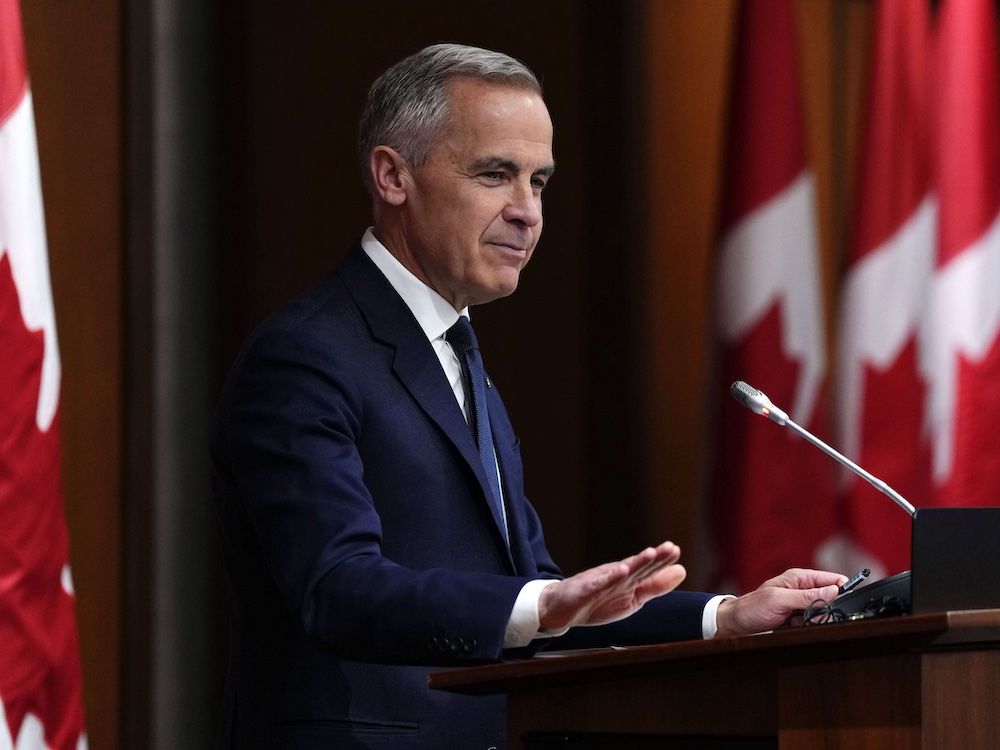
Prime Minister Mark Carney makes remarks at a meeting of the Liberal caucus, on Parliament Hill in Ottawa, on Sunday, May 25, 2025.

OTTAWA — A group of Indigenous leaders are calling on Prime Minister Mark Carney to showcase the game-changing potential of Canadian liquified natural gas (LNG) at the upcoming G7 leaders’ summit in Kananaskis, Alta.

“(W)e would ask (you) to have a clear and positive message about the global energy security and emissions reduction role of LNG at the (summit) and in the communique to follow,”

reads an open letter

to Carney signed by the heads of five pro-development Indigenous organizations, all based in Western Canada.

The letter stressed that building out Canada’s LNG export capacity will be critical to raising living standards in Indigenous communities.

“For our Nations, (LNG) represents freedom from boil-water advisories and from the energy poverty experienced in many of our communities,” read the letter.

Indigenous Resource Network head John Desjarlais, who helped write the letter, says it reflects a growing desire among Indigenous Canadians to be involved with major projects that will shape their future.

“(I)ndigenous people are starting to stand up and say we are very interested in advancing reconciliation and self-determination through economic development. And involvement in resource development is one of the greatest drivers of facilitating that self-determination,” said Desjarlais.

The letter also said that the mid-June summit will give Carney a “crucial” opportunity to reverse predecessor Justin Trudeau’s pessimistic tone on Canadian LNG exports.

“(W)e look to you to strike a balance with your peers that better integrates shared goals around energy security, economic growth and environmental protection,” reads the letter.

Trudeau was widely criticized in 2022 when he said there

wasn’t a “business case”

for shipping Canadian LNG to Western Europe, despite the urging

from fellow G7 leader

Olaf Scholz that Canada play a “major role” in Germany’s efforts to break its dependence on Russian natural gas.

Canada failed to substantially grow its LNG exports under Trudeau,

while exports took off

in peer nations like Australia and the United States.

The letter added that time is of the essence as several of Canada’s allies,

including G7 partner Japan

, will be finishing up long-term energy contracts with Russia in the coming years.

“As a result, they are seeking new LNG opportunities now, and Canada is perfectly positioned to be that partner,” reads the letter.

A recent study

by the Fraser Institute

found that doubling Canadian LNG production and exporting the surplus to Asia could reduce global carbon emissions by up to 630 million tonnes, equivalent to 89 per cent of Canada’s total emissions.

Desjarlais said that the Trudeau government’s “paternalism” toward Indigenous Canadians was a major stumbling block stopping it from building effective resource partnerships with Indigenous groups.

“The spirit and intent was there, but there was also a sort of risk aversion when it came to trusting that Indigenous people can effectively co-develop resources,” said Desjarlais.

Karen Restoule, the director of Indigenous affairs at the Macdonald-Laurier Institute, says she applauds the letter’s authors for forcing the issue.

“At a time when Canada has been, for the last decade, led by a leader and party who have (played) ideological games with little to no recognition as to what the economic impacts would be on the country… I am incredibly grateful to (this group) for taking the initiative to restore Canada’s economic footing, for Indigenous and non-Indigenous Canadians alike,” said Restoule.

“This is what leadership looks like.”

Carney said in an interview this week that “virtually every” major resource project he backs as prime minister will have “an Indigenous component.”

National Post

rmohamed@postmedia.com

Get more deep-dive National Post political coverage and analysis in your inbox with the Political Hack newsletter, where Ottawa bureau chief Stuart Thomson and political analyst Tasha Kheiriddin get at what’s really going on behind the scenes on Parliament Hill every Wednesday and Friday, exclusively for subscribers. Sign up here.

Our website is the place for the latest breaking news, exclusive scoops, longreads and provocative commentary. Please bookmark nationalpost.com and sign up for our daily newsletter, Posted, here.


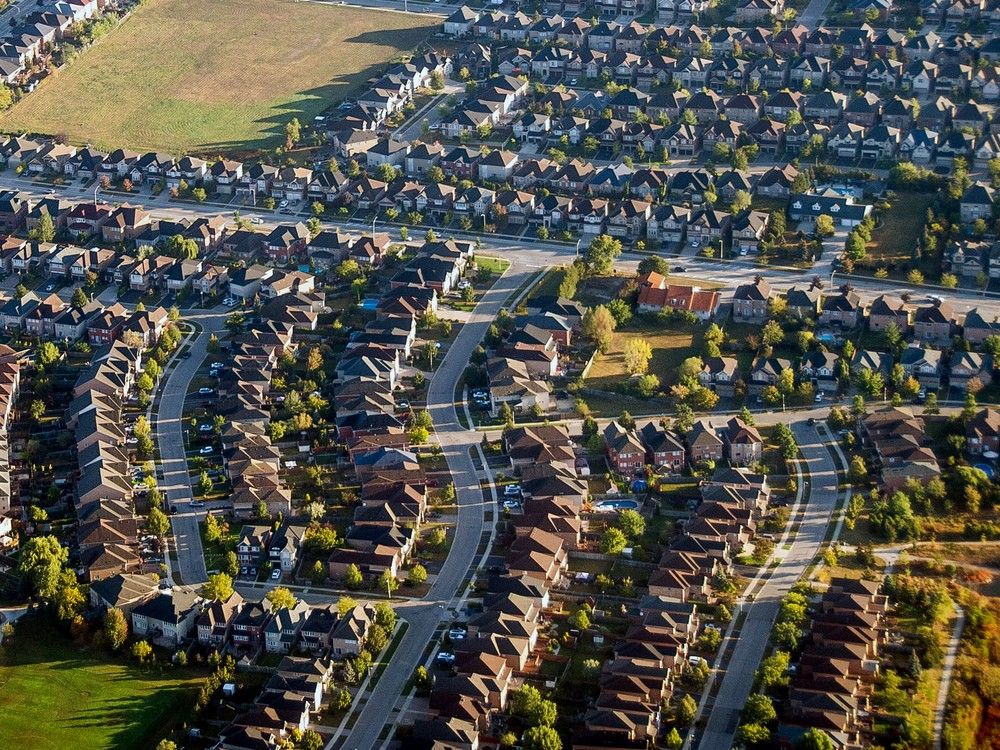
Homes stand in this aerial photograph taken above Toronto, Ontario, Canada, on Monday, Oct. 2, 2017.

Some properties in the Greater Toronto Area are being listed for $1 — a meagre price tag compared to the latest data on the average selling price, which was $1.1 million in April,

according to the Toronto Regional Real Estate Board

.

Most recently,

two adjacent homes in the East Danforth area

were listed for a loonie, as was a lot in the

Englemount-Lawrence neighbourhood

that gives buyers the opportunity to build a detached house, with approved permits, drawings and development charges, according to the listing.

A vacant lot

in Cabbagetown

also comes with a $1 price tag. It has approved zoning for four storeys and is “a rare and exciting opportunity for investors and developers,” the listing says.

Properties being listed for $1 isn’t a new strategy, explains Brendan Powell, broker of record at the BREL team at BSpoke Realty Inc.

“It tends to come up when sellers and agents have run out of more conventional ways to attract attention to their listing,” he told National Post over email on Tuesday.

“Another time when you are likely to see this strategy is when the objective value is very hard to determine,” he said, pointing out that the listings in the East Danforth, Englemount-Lawrence and Cabbagetown areas fall into that category.

“One is a vacant lot downtown, so the value is entirely in the eyes (and wallet) of the beholder — generally depending on what they plan to do with the space,” he said, referring to Cabbagetown.

Per the listing, the lot is located in the heart of Toronto’s bustling downtown and is “just steps away from leading universities, colleges, and hospitals.” It is “ideally situated to meet the growing demand for student housing, micro-suites, or high-demand downtown living rentals.”

As for the East Danforth area listing, Powell said the combined address of two connected sides of a semi being together is “quite unusual.”

“The value for that could be quite different from the simple combination of each property value on its own,” he said.

The listing reads: “Imagine the possibilities: live in one and generate income by renting the other, or create a multi-generational family residence.”

The Englemount-Lawrence lot comes with plans for a house, so “you are buying the lot, as well as all the plans, permits… the value of which is very personal.”

In these cases, each of the properties is hard to price, he said.

“The $1 price tag is kind of like saying ‘or best offer’ without having to commit to an arbitrary bracket. I still feel that more often than not, $1 listings are about attracting attention to unusual properties — heritage homes, unique properties,” said Powell.

Founder and broker of record at Bosley – Toronto Realty Group Inc. David Fleming,

who has written about $1 homes on Toronto Realty Blog

, told National Post over email that he thinks it’s a tactic “that never works.”

“It’s borne of desperation, and that desperation typically comes as a result of sellers who won’t accept fair market value, and/or listing agents who don’t have the stomach to show their sellers the reality of the market,” he said.

After some houses hit the market for $1 in March, Fleming wrote in a blog post: “This isn’t outside-the-box thinking at all. It’s pure lunacy, is what is.”

He compiled data from 2015 to 2024 and included listings in Toronto, Durham, Halton, Peel, and York. He narrowed down the listings to actual homes, excluding vacant lots or power of sales. He found that the success rate of selling a $1 home was close to 1 per cent. Although it’s possible, he said it was rare.

One example of a property elsewhere in Canada being listed for $1 is the former home of Canadian businessman Jim Pattison in West Vancouver. In 2022, the District of West Vancouver purchased the house for under $5.2 million and stipulated that whoever buys the home next will have to transport it to another location to make way for a public walkway and park along the waterfront,

Vancouver Sun reported

.

It was sold for $1.75 in July 2023,

per North Shore News

. “This is an extremely wonderful outcome because the applicant plans to move the home by barge, and temporarily store it until a new location in Vancouver is prepared. There’ll be no cost of this move to the district,” said West Vancouver Mayor Mark Sager at the time.

Europe is also no stranger to listing properties for pocket change.

Twenty-five municipalities in Italy are offering up vacant homes for the symbolic price tag of one euro. The younger generations who are no longer interested in living in smaller villages have left behind an aging population with no heirs to their property,

The Independent reported

. Local authorities have taken over and devised a plan — listing the homes for a mere euro — to attract new homeowners to help the communities thrive.

But, there are strings attached. The buyers must guarantee that they’ll plan a restructuring and revaluation project (usually within a year of purchase), support notarial fees for registration, start work within the time decided by the municipality, and take out a surety policy between 1,000 to 5,000 euros that expires when the work is completed,

according to 1eurohouses.com

.

Our website is the place for the latest breaking news, exclusive scoops, longreads and provocative commentary. Please bookmark nationalpost.com and sign up for our daily newsletter, Posted, here.


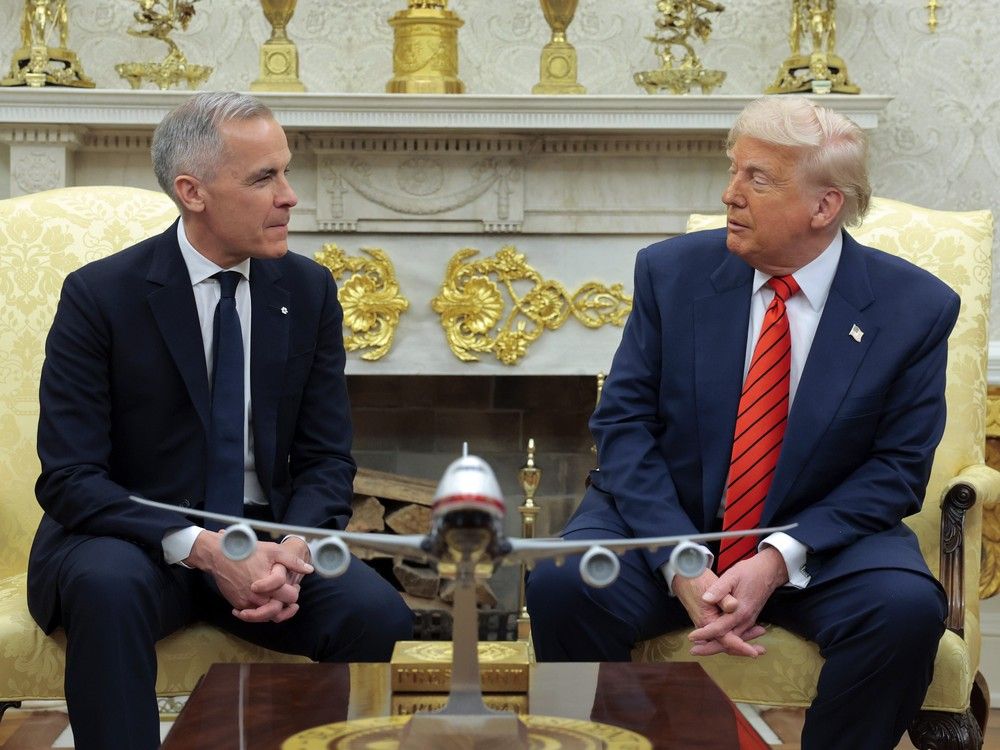
U.S. President Donald Trump meets with Canadian Prime Minister Mark Carney in the Oval Office at the White House on May 6, 2025 in Washington, DC.

Within hours of Canada’s sovereignty being made abundantly clear by its King in a historic and symbolic speech from the throne in the nation’s capital, U.S. President Donald Trump once again made a pitch for Canada to become the 51st state.

In a post to Truth Social, he said the cost to join in the “fabulous Golden Dome System” — the multilayered missile defence program to counter foreign threats to America, even those coming from space — would be US$61 billion should Canada choose to remain “a separate, but unequal, Nation.”

But join the U.S. as its “cherished 51st state” and protection from the defence program will cost Canada “zero dollars.”

“They are considering the offer,” Trump wrote.

Prime Minister Mark Carney’s office didn’t say whether it received such an offer when contacted by National Post, but said discussions on NORAD and the Golden Dome have been part of “wide-ranging and constructive discussions” Carney and his ministers have had with U.S. counterparts.

But while acting on his citizen-driven mandate to establish a new relationship with the U.S., his office said, “the Prime Minister has been clear at every opportunity, including in his conversations with President Trump, that Canada is an independent, sovereign nation, and it will remain one.”

National Post has contacted the White House press secretary and is awaiting a response.

The president first announced the

Golden Dome initiative in the Oval Office last week

, remarking during his address and in questioning from reporters that “Canada wants to be part of it” and will “pay their fair share.”

“We are dealing with them on pricing,” he said.

In a statement to the Canadian Press at the time, a spokesperson for the prime minister confirmed talks on the Golden Dome, but didn’t share costs or specifics.

The project has already been awarded its first $25 billion with the passage of Trump’s “One Big Beautiful Bill Act” — legislation that covers reforms in several sectors, including defence.

Carney has made multiple commitments on defence spending, the most recent being in Tuesday’s throne speech, which confirmed Canada would join ReArm Europe, the

European Commissions’s plan

to give member nations more “financial flexibility” to mobilize a combined 800 billion euros (CAD$1.25 trillion) for a “massive ramp-up of defence spending.”

Carney later told

CBC

he hopes to finalize that deal by July 1.

“Seventy-five cents of every dollar of capital spending for defence goes to the United States. That’s not smart,” he said.

As part of a pledge that Canada would hit NATO’s defence spending target of two per cent of gross GDP by 2030, the Liberals’ election platform included $130 billion in new defence spending over the next four years.

Canada’s position as one of just eight member nations that aren’t hitting the mark has been a bone of contention from

multiple U.S. administrations

, not just Trump’s.

When the pair had their first face-to-face at the White House in early May, Trump remarked that “Canada is stepping up the military participation.”

On the heels of that meeting, Pete Hoekstra, the new U.S. Ambassador to Canada, told

National Post

that both his and Trump’s standpoint, “51st state’s not coming back.”

“The president may bring it up every once in a while, but he recognizes it’s not going to happen unless the prime minister engages with the president,” he added.

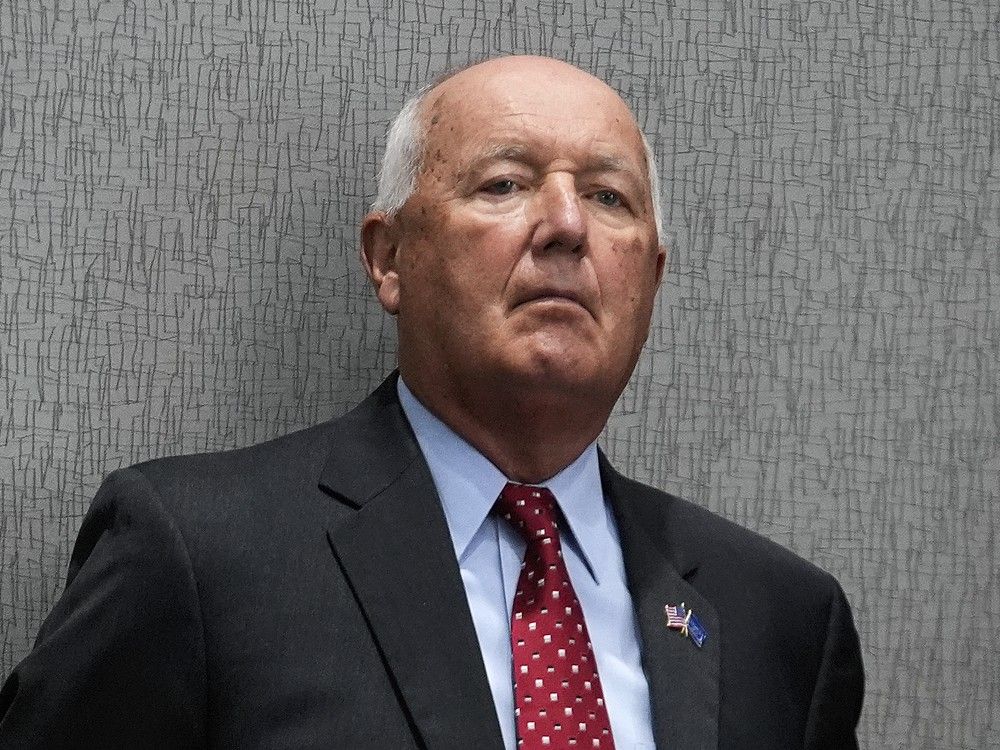
 U.S. Ambassador to Canada Pete Hoekstra.

Last week, Hoekstra told the

Hill Times

that while he appreciates Canadians’ concerns about Trump’s continued rhetoric, he’s not going to be distracted by it.

“I’m moving forward. The president sent that message clearly when he was with the prime minister. Now we’re waiting to see how Canada responds,” he said regarding the request for a proposal on how it wants to proceed on future trade agreements.

Hoekstra said he was “not very sympathetic” to Canadians feeling slighted, suggesting the U.S. is “hurt, too,” citing Canada’s lengthy NATO spending shortfall.

“International diplomacy is tough. The world is a tough place. Getting prosperity, security, and safety for people, which are the top priorities of the president, that’s hard,” he said. “So, no, I’m not very sympathetic.”

Our website is the place for the latest breaking news, exclusive scoops, longreads and provocative commentary. Please bookmark nationalpost.com and sign up for our daily newsletter, Posted, here.


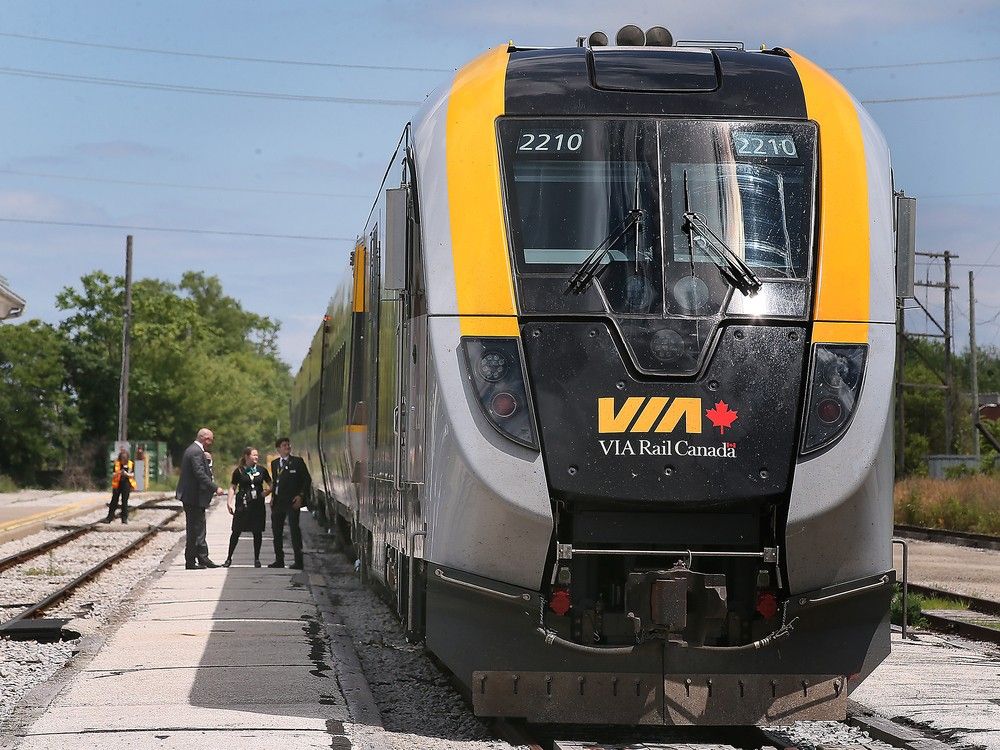
Via Rail workers have voted for a strike mandate. A strike could come on June 22 if negotiations fails to achieve a settlement.

Approximately 2,500

Via Rail

workers represented by Unifor have voted overwhelmingly (97.5 per cent) in favour of a strike mandate. This group includes staff in administration, customer service, on-board service, maintenance, call centres, mechanics, and other skilled trades.

Negotiations between Via Rail and Unifor are ongoing, with conciliation talks scheduled to last until May 31. After that, there will be a federally mandated 21-day “cooling-off” period. The earliest date a legal strike or lockout could occur is June 22.

Will there be a strike?

A strike is not imminent at the moment. The union is not obligated to strike upon being legally able to do so. Negotiations could continue, and an agreement could be reached before any job action is taken. The

strike mandate simply gives the union

the authority to call a strike if negotiations fail.

Meanwhile, Via Rail is operating normally, with

no disruptions reported

as of May 26.

How long could a strike last?

Recent

railway labour disputes

involving freight railways (such as Canadian National and Canadian Pacific Kansas City) have caused service disruptions on some routes that Via Rail uses, particularly in Northern Ontario, but Via Rail has been able to maintain most of its intercity operations.

The

length of a potential Via Rail strike

before service resumes would depend on how quickly Via Rail and the union can reach a new agreement. Historically, Canadian rail strikes have varied in duration — from as short as a few days to several weeks — depending on the complexity of negotiations and whether government intervention occurs. For example, a Canadian Pacific rail strike in 2022 lasted about 60 hours before a tentative deal was reached.

What could happen to my travel plans if there’s a strike?

If

a strike did occur

on or after June 22, there could be significant disruptions to Via Rail services, especially if no agreement is reached by then.

All services could be suspended for the entire duration of the strike, and normal operations would resume only once a settlement is reached and it is safe to do so. A strike could last days, weeks, or longer if negotiations stall and no back-to-work legislation is introduced.

So, a Via Rail strike could

significantly impact an upcoming trip

, depending on the timing and the route you plan to take.

Via Rail does not provide alternate transportation if your train is cancelled.

However, affected customers will be able to modify their reservations or obtain a full refund if their train is cancelled due to a strike. Via typically

contacts affected passengers

directly if a work stoppage is confirmed and provides information about refunds and changes.

Passengers are advised to check their email or Via Rail’s Train-Alert service for the latest updates. For any questions or if you need to modify your reservation, contact Via Rail directly at 1-888-VIA-RAIL (1-888-842-7245).

Our website is the place for the latest breaking news, exclusive scoops, longreads and provocative commentary. Please bookmark nationalpost.com and sign up for our daily newsletter, Posted, here.