LP_468x60
on-the-record-468x60-white

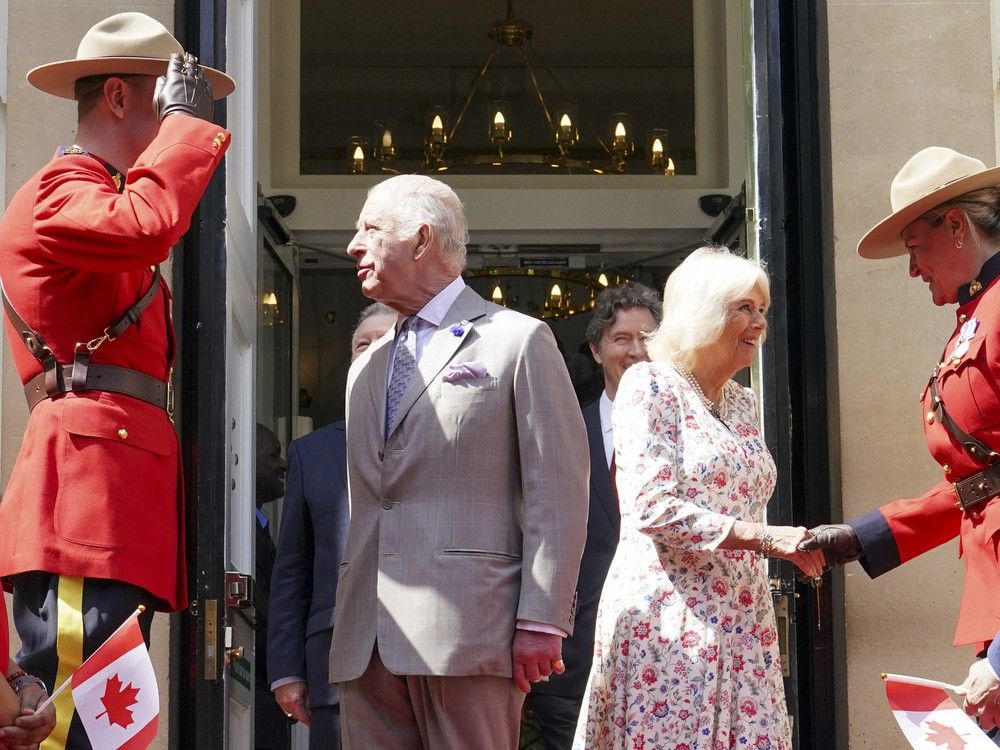
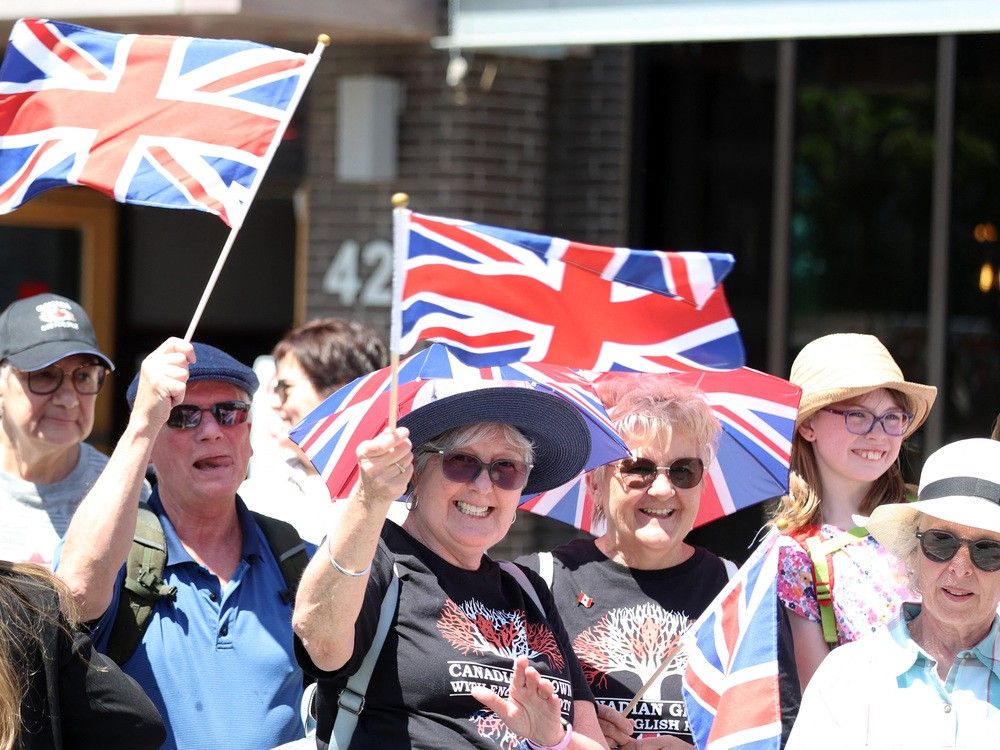
Well wishers wave flags before the arrival of Britain's King Charles III and Queen Camilla at a Lansdowne Park community event in Ottawa, Canada, May 26, 2025.

OTTAWA – When King Charles III and Queen Camilla first set foot on Canadian soil, the Bloc Québécois was already considering one of its first private member’s bills: making the oath of allegiance to the King optional.

“It’s (Canadians’) party. It belongs to them. We’re not part of that party. You know, there are some who say the King is welcome. I won’t welcome him here,” said Xavier Barsalou-Duval as he was leaving the House of Commons after the election of a new speaker Monday.

Outside, a few kilometres from Parliament Hill, hundreds of Canadians were present to welcome the King and Queen.

The Bloc Québécois MP for Pierre-Boucher–Les Patriotes–Verchères cares deeply about the monarchy. He cares so much about it that he will champion one of his party’s first bills to be introduced this session: making the oath to the King optional when MPs are sworn in.

The idea behind the bill is to give MPs who wish to swear an oath to the King the opportunity to do so, and if they do not, they could swear an oath to the institution they represent.

“I won’t hide from you that for me, it was a humiliation and it’s the fourth time I’ve had to go through this,” he told National Post.

The humiliation, he said, is related to a “modern incarnation of the old British colonial authority.”

Barsalou-Duval spoke of the “atrocities” and “oppression” committed by the kingdom and emphasized that nothing can excuse events like the deportation of the Acadians.

The Bloc Québécois will therefore not send any MPs to the speech from the throne delivered by the King in the Senate on Tuesday. After proposing a bill to protect supply management, making the oath to the King optional is the party’s top priority.

Barsalou-Duval said that this bill would meet the apparent priorities of Mark Carney, who wanted to invite the King at the first opportunity.

“It’s a debate that never dies and why the subject never dies because we always ask ourselves the question each time why it’s still there,” the Bloc MP said.

His bill, he said, will be similar to the one introduced by former Liberal MP René Arseneault in 2024.

At the time, a majority of MPs rejected the proposal, but many federalist MPs voted in favour.

One of them was Joel Lightbound, the Liberal MP from Quebec City who was recently appointed minister of public works and procurement.

In 2022, Lightbound voted in favour of a Bloc Québécois motion to completely abolish the monarchy. He was the only Liberal MP to do so. Two years later, he even gave a speech in the House of Commons in support of Arseneault’s bill.

“We are not preventing anyone from swearing an oath to the monarchy. We are just offering another option for those who, like me, as a member from Quebec, are uncomfortable or have reservations about swearing allegiance to a foreign monarch,” he said.

This time, the new minister said he would vote with the cabinet, despite his personal views, but also added that “it is a beautiful symbol to see the King here.”

“I don’t know what the cabinet’s position will be… I’m really looking forward to the speech from the throne,” he told reporters on Parliament hill.

Government House Leader Steven MacKinnon did not say whether the government would support the Bloc Québécois bill and said he would not comment on bills until he had reviewed them. He nevertheless called the royal visit “rich in symbolism.”

“I think it’s a recognition of our origins as a French-speaking, English-speaking, and indigenous country. And I think and believe that the King will have some interesting things to tell us,” said MacKinnon, who is a Quebec MP.

The NDP said it was also awaiting the bill, and Quebec Conservative MP Gérard Deltell said he was “not a big fan” of the monarchy, adding that the issue will be debated when the bill is introduced.

With files from Catherine Lévesque

National Post

atrepanier@postmedia.com

Get more deep-dive National Post political coverage and analysis in your inbox with the Political Hack newsletter, where Ottawa bureau chief Stuart Thomson and political analyst Tasha Kheiriddin get at what’s really going on behind the scenes on Parliament Hill every Wednesday and Friday, exclusively for subscribers Sign up here.

Our website is the place for the latest breaking news, exclusive scoops, longreads and provocative commentary. Please bookmark nationalpost.com and sign up for our newsletters here.

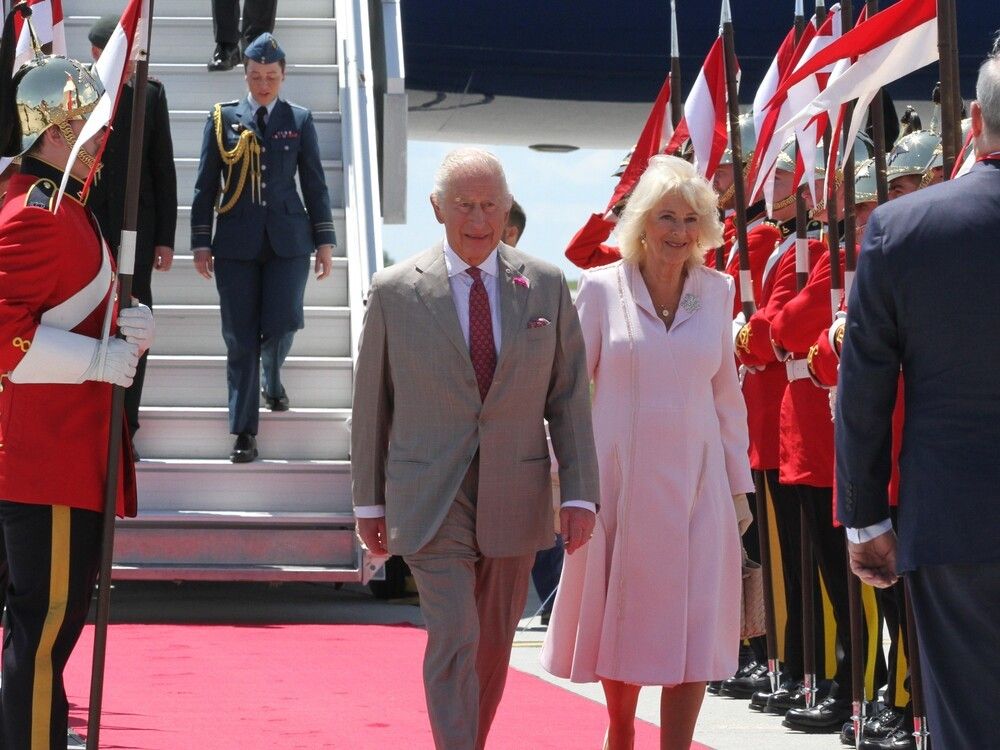
King Charles III and Queen Camilla arrive in Ottawa, Canada on Monday, May 26.

OTTAWA — A new poll shows that Albertans support the continuation of Crown rule in the province, even as they’re increasingly skeptical about the province’s future in Canada.

The poll, taken by Pollara Strategic Insights, finds that support for the monarchy is at a net plus-nine in Alberta, with 46 per cent of Albertans saying that Canada should remain a constitutional monarchy with the king as its head of state, and 37 per cent saying it should ditch the Crown.

This put Alberta three points ahead of British Columbia and 42 points ahead of Quebec, where just 25 per cent of respondents said Canada should keep its ties to the monarchy.

Dan Arnold, the chief strategy officer at Pollara, says he expects the question of the monarchy to loom larger as separatists get into the nitty gritty of what an independent Alberta would look like.

“There’s a lot of hanging questions out there and this is another one that could potentially become a source of friction,” said Arnold.

Debate

has recently surfaced online

about whether residents of an independent Alberta would have an option to keep Canadian passports and stay enrolled in the CPP, for example.

Arnold noted that supporters of the governing United Conservative Party were a net plus-10 in favour of the continuation of Crown rule (48 per cent to 38 per cent).

Recent polls show

up to two-thirds

of UCP voters would vote ‘yes’ in a referendum on Alberta independence.

The Pollara poll, taken on the heels of King Charles III’s first visit to Canada as monarch this week, finds the king has a net favourability rating of plus-22 among Albertans

— 46 per cent view him positively while 24 per cent view him negatively.

The findings were drawn from on online sample of 500 Albertans contacted between May 16 and 20, with an estimated margin of error of plus-or-minus 4.4 per cent.

Jeff Rath, a lawyer with the Alberta Prosperity Project, says there’s room for both monarchists and republicans under the separatist tent.

“There are a lot of people in our movement who are either monarchists, or at the very least ambivalent to the continued role of the monarchy within the Commonwealth of Alberta,” Rath told the National Post in an interview.

Rath, who’s worked extensively in treaty law, says the Crown could be a bridge to Alberta’s Indigenous population during the transition to independence.

“If one of the conditions the First Nations put on independence is… instead of having a (civilian) head of state we talk to King Charles and have a Governor General, so that they can maintain that relationship with the Crown and their treaties, I personally wouldn’t have any issue with that,” said Rath.

Alberta Premier Danielle Smith has said that any referendum question on the province’s independence must respect the

existing treaty rights of First Nations

.

Philippe Lagassé, an expert in Canadian constitutional law at Carleton University, says it won’t be easy for Alberta to go over Ottawa’s head and deal directly with the king.

“The treaties are now understood to be with the Canadian Crown, not the British one…

I suspect these treaties would come into play in a significant way were Alberta to try to secede,” said Lagassé.

Cameron Davies, leader of the Republican Party of Alberta, says he disagrees with Rath and wants to cut all ties to the Crown.

“The Republican Party of Alberta believes our future should be shaped here—by Albertans—not Ottawa, not Buckingham Palace,” wrote Davies in an email.

“The monarchy represents a colonial legacy and an unelected institution rooted in hereditary privilege—values that have no place in a modern, democratic Alberta.”

The poll’s findings were drawn from on online sample of 500 Albertans contacted between May 16 and 20, with an estimated margin of error of plus-or-minus 4.4 per cent

National Post

rmohamed@postmedia.com

Get more deep-dive National Post political coverage and analysis in your inbox with the Political Hack newsletter, where Ottawa bureau chief Stuart Thomson and political analyst Tasha Kheiriddin get at what’s really going on behind the scenes on Parliament Hill every Wednesday and Friday, exclusively for subscribers. Sign up here.

Our website is the place for the latest breaking news, exclusive scoops, longreads and provocative commentary. Please bookmark nationalpost.com and sign up for our daily newsletter, Posted, here.


Liberal MP Francis Scarpaleggia in 2019.

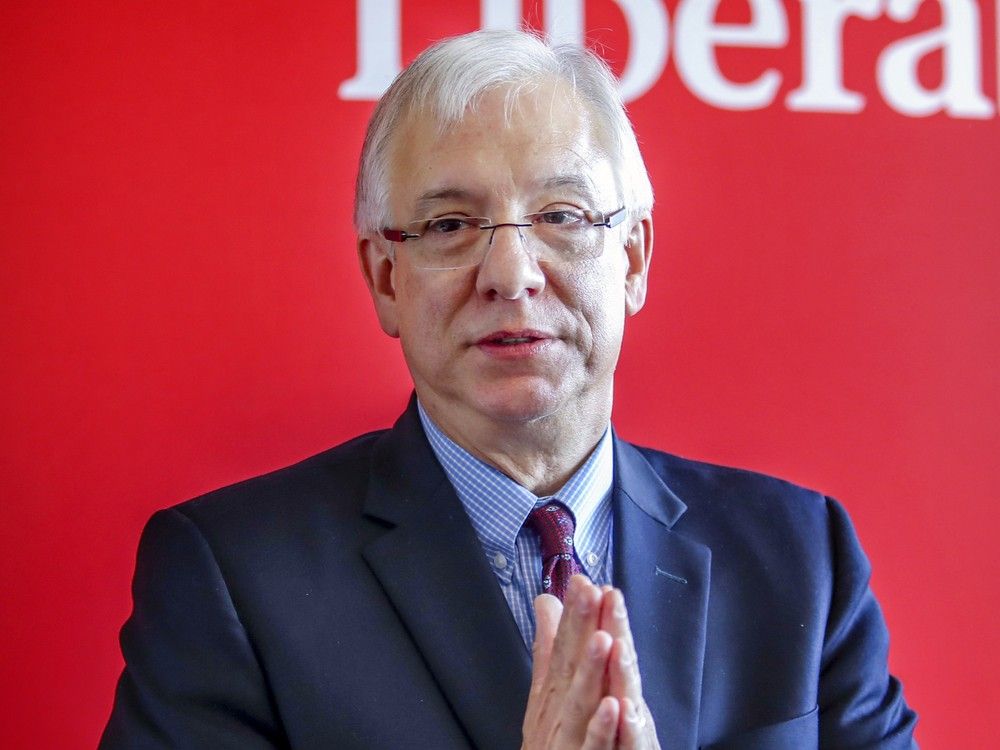
OTTAWA — Quebec Liberal MP Francis Scarpaleggia is the new speaker of the House of Commons, promising to bring back order and respect to the House as he presides over a new minority Parliament.

The longtime backbench MP was elected by his peers on Monday morning as the 39th speaker of the House of Commons during a jovial first sitting of the House of Commons since December.

It is unclear if the joviality will last in this minority Parliament as the final months of the Justin Trudeau government were tainted by a raucous and bellicose House marked by expulsions of MPs, mostly Conservative.

During his pitch to MPs before they voted for the speaker, Scarpaleggia said there must be limits to the attacks by Parliamentary opponents. After his election, he jokingly implored his colleagues to give him time to settle in before testing him.

“There’s nothing wrong with a clean, even board-rattling, polemical body check in the corners. I’ve been at the receiving end of a few. Robust debate is fundamental to a robust democracy, and a robust democracy is what makes for resilience,” the longtime Liberal backbencher told MPs before his election.

“The problem is when sticks go high… Canadians want to see sticks on the ice, and it’s the responsibility of the speaker to make this so,” he continued. “I believe it possible to skillfully and convincingly dissect and refute an argument without recourse to personal invective or intimidation.”

After symbolically dragging the new speaker to his chair, Prime Minister Mark Carney and Opposition leader Andrew Scheer both wished Scarpaleggia well in his new role.

“I will make mistakes, and I have no doubt that you will call them out for good reason,” Carney said with a smile during his first ever address in the House of Commons.

“Mr. Speaker, we offer you our support,” said Scheer, noting that recent speakers have had to deal with a wide array of issues ranging from nudity to explicit language to

“flying elbows.”

“I did hear that CPAC was considering putting a warning on the daily broadcast may contain violence, coarse language and nudity,” he joked.

Bloc Québécois Leader Yves-François Blanchet, interim NDP Leader Don Davies and Green Party head Elizabeth May also extended their best wishes to the new speaker.

Scarpaleggia defeated five of his Liberal colleagues to win the speakership: incumbent Greg Fergus, Sean Casey, Alexandra Mendès, Robert Oliphant and Sherry Romanado.

On Sunday evening, two Conservatives — Chris d’Entremont and John Nater — were also on the ballot. But the start of the election Monday morning, both Conservative candidates pulled out, paving the way for a Liberal MP to become speaker once again.

D’Entremont’s last-second retreat came as a surprise to many in the House, as late last week the veteran

Conservative MP pitched himself to National Post

as the voice of experience and reason for the job.

In many ways, the first day of a new Parliament looks and sounds like the first day back in school. Before the cameras turn on, MPs crowd the aisles to greet their colleagues of all political stripes, welcome neophytes, congratulate new cabinet members or even get in a quick chat with the prime minister.

Minutes before proceedings began, Carney and Opposition Leader in the House of Commons Andrew Scheer exchanged with a smile from their respective seats across the aisle.

The proceedings began with Bloc Québécois MP Louis Plamondon, a 41-year incumbent and the dean of the House, opening the new Parliament to preside over the speaker election.

But before, he shared a few words of wisdom acquired over four decades of federal politics.

“One piece of advice I’ve already given here in the House is, of course, to manage your frustrations,” he told new and veteran MP. “You may have questions like, ‘why wasn’t I appointed minister? Why wasn’t I appointed as a critic?’ But the feeling passes with time.”

His second piece of advice for newcomers was twofold: “speak up when you have something to say”, but also remember that when speaking to journalists, “one wrong word, and it changes your career.”

Peter Milliken, the longest-sitting Speaker in Commons history and

creator of the Speaker’s Scotch tradition

, overlooked the proceedings from the visitors’ gallery, even getting a shout out from Oliphant during his speech.

The six candidates were then given five minutes to pitch themselves to their colleagues. All promised to return decorum and respect in the House, though their methods differed.

Casey argued that there should have been “more expulsions” in the last Parliament over colleagues who defied the speaker or refused to withdraw unparliamentary language.

“What’s worse is that this lack of respect for Parliament has actually been used as ammunition to raise funds. Sadly, this demonstrates the current state of decline” of decorum, he said, adding that he aimed to “raise the bar” in how MPs treat each other.

Fergus, the incumbent speaker, pitched himself as the candidate of experience who knew how to manoeuvre in a minority Parliament. He admitted that he had made some faux pas during his tenure but compared himself to a “reliable car with experience” that now has a “couple of dents”.

“To be frank, it would have been a difficult time for anyone in that role,” he said of the last, raucous session where “tempers ran high, and cooperation ran low”.

Mendès, previously a deputy speaker who is currently undergoing treatments for cancer, said she would strive to bring more stability to the Commons and noted that a woman has never been elected speaker.

“This is the place where Canada’s most important conversations should be held, where we seriously debate and humorously disagree,” she said.

Oliphant promised to uphold Parliamentary dignity while having “zero tolerance” for unparliamentary behaviour, which he promised to crack down on “no matter where it comes from.”

Romanado promised to be “fair, firm and consistent” in upholding the rules of the House, while Scarpaleggia said he would be the defender of the backbenchers, which he has been all his political life.

After candidates finished their speeches, MPs lined up to fill out their vote in one of six booths in the centre aisle before dropping their ballot into an ornate wood box.

Carney cast his first ever speaker vote by putting his ballot into the box and then tapping twice on the slot as if to wish it safe travels.

National Post

cnardi@postmedia.com

Get more deep-dive National Post political coverage and analysis in your inbox with the Political Hack newsletter, where Ottawa bureau chief Stuart Thomson and political analyst Tasha Kheiriddin get at what’s really going on behind the scenes on Parliament Hill every Wednesday and Friday, exclusively for subscribers. Sign up here.

Our website is the place for the latest breaking news, exclusive scoops, longreads and provocative commentary. Please bookmark nationalpost.com and sign up for our politics newsletter, First Reading, here.


Toronto police estimate roughly 56,000 marched in this year's in this year's Walk with Israel event, eclipsing last year's mark by 6,000.

A man was arrested at the Walk with Israel in Toronto on Sunday for allegedly “yelling anti-Semitic slurs at attendees.”

The Toronto Police Service charged Tarek Ibrahem, 57, with mischief interference with property and causing a disturbance on Sunday afternoon, according to a

news release.

The case is being led by the city’s Hate Crime Unit.

“Wilful promotion of hatred and advocating genocide are hate propaganda (hate speech) offences which require the Attorney General’s consent to lay charges. These charges are often laid at a later time,” police said. “If a person is charged and convicted of the offence, the Judge will take into consideration hate as an aggravating factor when imposing a sentence.”

The

annual event

held in a predominantly Jewish neighbourhood in northern Toronto drew over 50,000 participants, many carrying Israeli and Canadian flags. The largest crowd of anti-Israel protesters was stationed at the intersection of Bathurst Street and Sheppard Avenue, a block shy of the walk’s endpoint at the Prosserman Jewish Community Centre (JCC). Ibrahem was arrested just south of the intersection at York Downs Drive.

Toronto police spokeswoman Stephanie Sayer told National Post in an email on Monday morning that police cannot comment on the matter because it “is now before the courts.”

“We investigate every reported instance of hate, including those that occur at demonstrations. As we’ve shown in the past, charges can be laid at any time – days or even weeks after an incident – as evidence is gathered. We remain committed to holding individuals accountable,” Sayer said in a statement.

Ibrahem is scheduled to appear at the Ontario Court of Justice on July 9.

Our website is the place for the latest breaking news, exclusive scoops, longreads and provocative commentary. Please bookmark nationalpost.com and sign up for our daily newsletter, Posted, here.


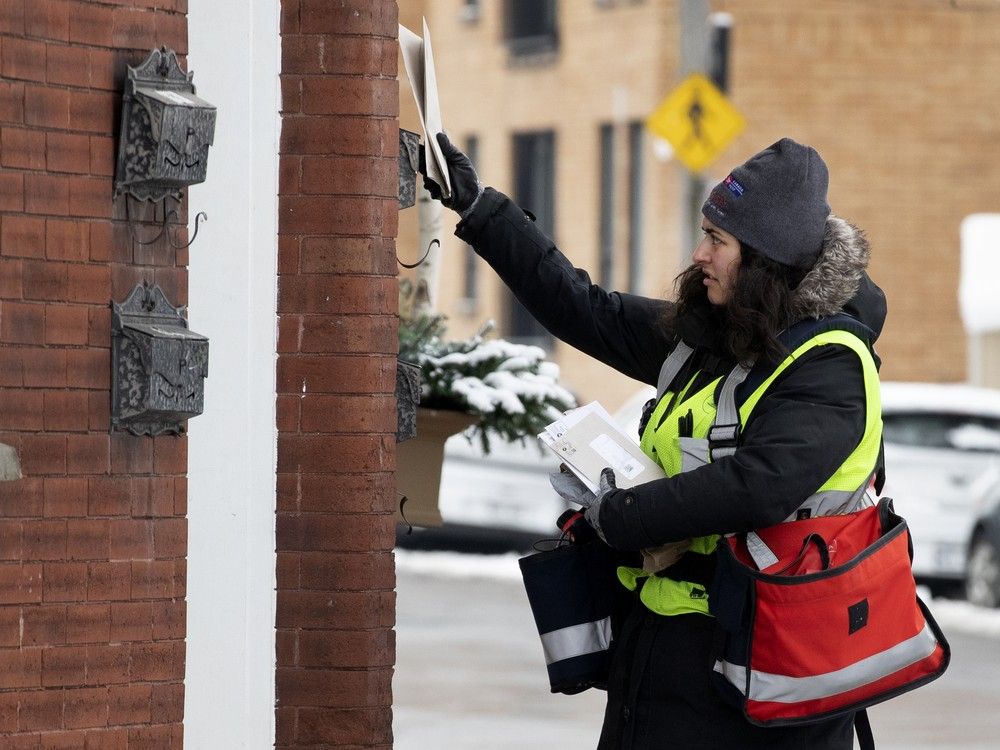
A Canada Post letter carrier delivers mail in Montreal.

Last week, Canada Post received a strike notice from the Canadian Union of Postal Workers (CUPW) that was set to begin on May 23 if an agreement could not be reached. While the deadline to strike has passed, the union instead has implemented

a nationwide overtime ban

 while negotiations continue.

The ban went into effect last Thursday and is still in place at the start of this week. Canada Post workers have been called on to refuse to work more than eight hours in a day and more than forty hours in a week.

What happened last time Canada Post workers went on a strike?

The overtime ban is a legal strike action and all CUPW members must follow this direction, according to the union.

With negotiations ongoing between Canada Post and CUPW, here’s what to know.

What’s the latest in terms of negotiations between CUPW, Canada Post?

On Sunday, the union responded to new offers sent by Canada Post last week. Canada Post will review the union’s response in detail, it said in

a news release

.

The response comes after both parties met with federal mediation and conciliation services at a facility just outside of Ottawa over the weekend, the union said.

“All of this was done through the standard process in mediation called: the integrative approach,” the union said. “Documents and ideas exchanged during the integrative approach are confidential and cannot be used against that party at any subsequent arbitration or any other legal proceeding. This privacy allows both parties to talk about issues they may not otherwise entertain.”

What are some of the issues that remain unresolved between Canada Post, CUPW?

The union said it is still working on resolving issues such as wages, cost of living allowance, sick days, short-term disability program, workers compensation, compensatory time, relief staff, staffing, contracting out, weekend delivery, and part-time usage.

When will Canada Post respond to CUPW?

The union said it was informed that Canada Post had left the facility to review the documents later on Sunday afternoon.

“We were told they may respond within a few days. We would hope the Corporation is back to us as soon as possible,” the union said.

Meanwhile, Canada Post said it would “respond in short order,” because it was “now time for urgency,” after nearly two years of negotiations, a 32-day-long national strike in November of last year and the release of the

final report of the Industrial Inquiry Commission

. The report offers up recommendations on how the union and Canada Post can move forward.

Although talks continue, the nationwide overtime ban remains in effect.

How is Canada Post being affected?

The drawn out negotiations seem to be affecting Canada Post.

“The impact of the ongoing uncertainty on our business is significant, but the impact on the Canadian economy is greater,” the corporation said on Sunday. “By the end of last week our delivered parcel volumes were down by 50 per cent over this time last year and continue to drop.”

Alternative carriers have seen a surge in business inquiries as the uncertainty plaguing Canada Post and its workers looms,

Financial Post reported

. Stallion Express Inc., an e-commerce shipping service, told the publication that it has seen a 22 per cent spike in “inbound inquiries and new-account requests.”

Our website is the place for the latest breaking news, exclusive scoops, longreads and provocative commentary. Please bookmark nationalpost.com and sign up for our daily newsletter, Posted, here.


King Charles III and Queen Camilla leave after a visit to Canada House, the High Commission of Canada in the United Kingdom, in London on May 20, 2025, to mark 100 years since it opened in 1925.

King Charles III

and

Queen Camilla

will arrive in Canada today for a short

royal tour

. The couple will only be in the country for about 24 hours. During that time, they will make a few stops around Ottawa, plant a tree and King Charles will deliver the Speech from the Throne on Tuesday. Prime Minister

Mark Carney

issued a statement Monday morning, welcoming the royal couple, who are set to land at Macdonald-Cartier International Airport in Ottawa at about 1:15 p.m. ET. “The Royal Visit is a reminder of the bond between Canada and the Crown — one forged over generations, shaped by shared histories, and grounded in common values. A bond that, over time, has evolved, just as Canada has, to reflect the strength, diversity, and confidence of our people,” Carney said.

National Post will have live coverage of the visit.

King Charles and Queen Camilla’s itinerary for Monday:

1:15 p.m. – King Charles and Queen Camilla arrive in Canada (open to media)

The couple will arrive at the Macdonald-Cartier International Airport in Ottawa. They will be welcomed at the Canada Reception Centre at the airport, which is used for guests of the government. They will be greeted by Governor General

Mary Simon

, Prime Minister Carney, his wife, Diana Fox Carney, Lieutenant Governor of Ontario Edith Dumont and her spouse, Tony Viscardi, and Indigenous leaders: Assembly of First Nations National Chief Cindy Woodhouse Nepinak; Natan Obed, president of Inuit Tapiriit Kanatami; Victoria Pruden, Métis National Council president and Chief Greg Sarazin, Algonquins of Pikwakanagan First Nation. There will be an arrival guard from the Royal Canadian Dragoons, a senior armoured regiment of the Canadian Armed Forces.

1:50 p.m. – Community gathering at Lansdowne Park (open to the public)

Charles and Camilla will visit the Ottawa Farmers’ Market, which isn’t usually open on Mondays. They will meet with local vendors and organizations and take part in various activities.

2:50 p.m. – Ceremonial tree planting at Rideau Hall (open to the public)

Charles and Camilla will visit Rideau Hall, the official residence of the Governor General of Canada and the official residence of the King and Queen while in Canada.

The couple will participate in a tree planting ceremony at Royal Grove, on the grounds of Rideau Hall. This will be the fifth tree planted by Charles and the second joint planting by the couple.

They will plant a blue-beech (Carpinus caroliniana), a small deciduous tree native to eastern North America, according to the website for the Governor General. “Typically found in moist, shaded woodlands and along stream banks, the blue-beech is known for its graceful form and distinctive, sinewy bark. Its finely serrated leaves emerge deep green in spring and summer, turning brilliant shades of red, orange and yellow in fall, adding vibrant colour to the landscape.”

Charles and Camilla will be surrounded by the viceregal representatives, community groups and school groups.

Audiences with the Governor General and the prime minister

The King will meet with the Governor General of Canada in the Large Drawing Room at Rideau Hall. There will be a photo opportunity at the beginning of the meeting.

Queen Camilla will then be sworn in as Canadian Privy Councillor during a ceremony in the Reception Room.

“The King’s Privy Council for Canada is a group of Cabinet ministers, former Cabinet ministers and other prominent Canadians appointed to advise The King on issues of importance to the country. This includes both issues of State and constitutional affairs. The King is also a member,” according to the website for the Governor General. There will be a photo opportunity to mark the end of the ceremony.

The King and Queen will then take a photo in the Ballroom with the viceregal representatives.

King Charles will also meet with the prime minister before concluding his schedule for the day.

On Tuesday, King Charles will visit Parliament and deliver the Speech from the Throne.

Read the full text of the prime minister’s statement:

Today, we are honoured to welcome Their Majesties King Charles III and Queen Camilla to Canada.

The Royal Visit is a reminder of the bond between Canada and the Crown — one forged over generations, shaped by shared histories, and grounded in common values. A bond that, over time, has evolved, just as Canada has, to reflect the strength, diversity, and confidence of our people.

Tomorrow, His Majesty King Charles III will deliver the Speech from the Throne in the Senate Chamber, nearly 70 years after Canada’s Sovereign first opened Parliament. This historic honour matches the weight of our times. It speaks to our enduring tradition and friendship, to the vitality of our constitutional monarchy and our distinct identity, and to the historic ties that crises only fortify.

Canada’s strength lies in building a strong future while embracing its English, French, and Indigenous roots – the union of peoples that forms our bedrock. Canada in the 21st century is a bold, ambitious, and innovative country that is bilingual, committed to reconciliation, and truly multicultural.

To that end, the Speech from the Throne will outline the government’s ambitious plan to act with urgency and determination, and to deliver the change Canadians want and deserve: to define a new economic and security relationship with the United States, to build the strongest economy in the G7, to bring down the cost of living, and to keep communities safe.


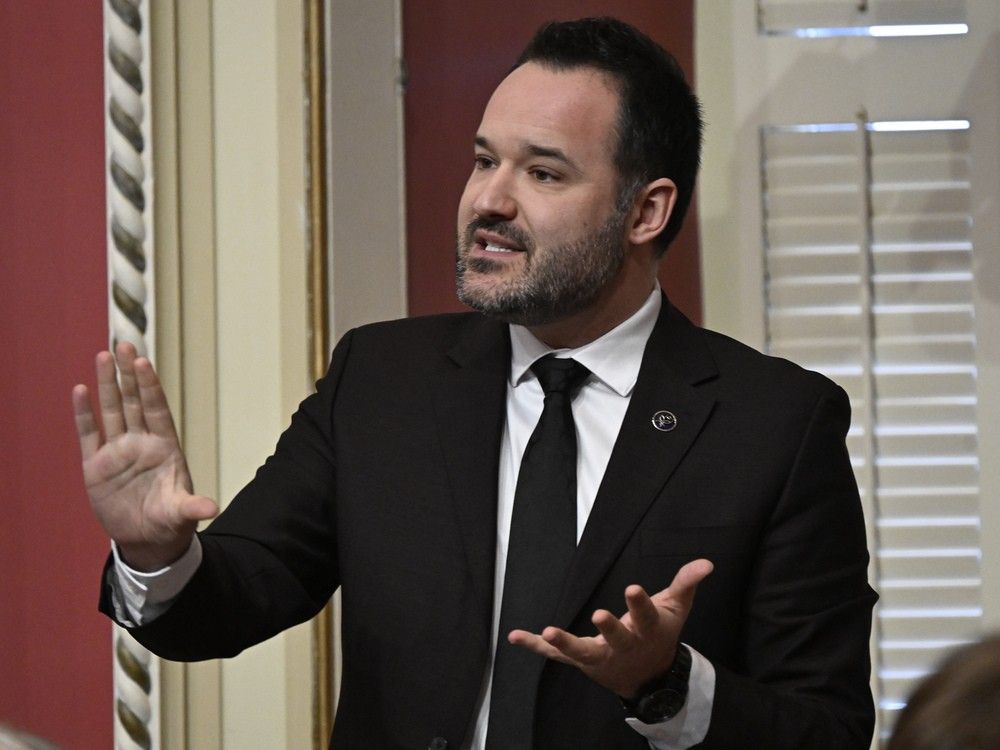
Quebec Culture and Communication Minister Mathieu Lacombe during question period at the legislature in Quebec City, Thursday, January 30, 2025

OTTAWA — The Quebec government wants major digital platforms to emphasize and boost access to francophone content and is ready to penalize them if they don’t oblige.

And it could set up a constitutional battle with the federal government.

When the Quebec Minister of Culture and Communications Mathieu Lacombe outlined his government’s intentions regarding the streaming giants earlier this week, Peter Menzies thought: “Oh boy, here we go.”

The former vice chair of Telecommunications at the Canadian Radio-television and Telecommunications Commission (CRTC) saw the province —again — acting and asserting powers over what seems to be a federal jurisdiction.

“There’s constitutional issues over who has jurisdiction over communications and broadcasting control,” he told National Post.

Bill 109 would allow the government to set quotas for francophone content such as music, films and television series on streaming platforms like Netflix, Spotify, Apple Music and YouTube.

Those platforms would also have to offer an easier way for users to find francophone content.

“We can’t choose something that isn’t offered to us. We can’t like something we don’t know,” Lacombe said earlier this week.

“Access to our culture, to films, to TV series, to songs in French, it must be easy, it must be simple when we’re in Quebec,” he added.

If Bill 109 is passed

, it would establish the “quantity or proportion” of original French-language content that must be offered on digital platforms with a default French-language interface. It would also enshrine the right of access to French-language cultural content in the Quebec Charter of Human Rights and Freedoms.

Lacombe’s argument is based on data that isn’t very encouraging for Quebec’s cultural sector. Citing government data, Lacombe claims that 92 per cent of young people have difficulty identifying French-language cultural goods available on online platforms.

Of the 10,000 most-streamed songs in Quebec in 2023, only five per cent were French-language titles from the province. Not so long ago, in the era of compact discs, Lacombe said, one in two sales was by a Quebec artist. Currently, among the 50 most-streamed songs online in Quebec, there is only one song in French.

“The challenges facing our cultural businesses are numerous, from audience renewal to ensuring adequate funding,” said Eve Paré, the executive director for l’Adisq, an association representing more than 200 companies in the music industry.

“This is a clear symbol that the Quebec government has taken note of the situation prevailing in our industry,” she added.

So the government is adopting a firm approach, including quotas. Lacombe wouldn’t say what they were, but they would be determined through regulations. If the law is not respected, individuals and companies could face administrative sanctions up to $15,000 and criminal sanctions up to $300,000.

Michael Geist, a law professor at the University of Ottawa, believes that if these services were required to respect certain quotas, they might decide, rather than comply, to simply exclude users whose billing address is in the province. That means a user in Gatineau would not have access to the streaming service, while an Ottawa resident, less than a kilometre away, would.

That’s because, according to Geist, the wording of the bill requires a certain percentage of French-language content on a streaming service, which has the effect of removing content in English or not. The companies will therefore shut down the service in Quebec or remove English-language content in Quebec.

“That’s why I think it’s a content removal bill,” said Geist.

“I will not say to block the English content. It sounds a little belligerent. I wouldn’t say that. I would say it’s more about putting our content forward,” said Lacombe at his press conference Wednesday.

Meanwhile, many companies and the federal government are watching this very closely.

“We will carefully review the proposed legislation,” YouTube Canada spokesperson Simon Langlois said in an email to the National Post.

It appears the province is once again feuding with Ottawa over provincial powers. The provincial bill apparently overlaps with the federal Broadcasting Act. Bill C-11 overhauled the Act in the last Parliament to ensure that platforms contribute to the creation, promotion, and dissemination of Canadian culture.

“Our government firmly believes that Canadian content should be easily accessible on streaming platforms, and in Canadians’ official language of choice,” said Vanessa Cranston, a spokesperson for Minister of Canadian Identity and Culture Steven Guilbeault.

The minister, we’re told, has taken note of the Quebec government’s bill and his department “will be examining it in depth.”

Guilbeault, who is also Prime Minister Mark Carney’s Quebec lieutenant and a popular political figure in the province, is expected to address this shortly, we’re told.

“There is no negotiation to be had with Ottawa. We are within our area of jurisdiction, so we legislate within our area of jurisdiction,” said Lacombe.

According to Geist, it all depends on how you frame the argument. If you argue that internet streaming constitutes broadcasting, then the power would rest with the federal or provincial government. “It’s not a shared responsibility,” Geist said.

Broadcasting is under federal jurisdiction. Therefore, if internet streaming is considered broadcasting, the powers could rest with the federal government, not the provinces. But if it’s anything other than traditional broadcasting, this calls into question the constitutionality of federal Bill C-11 and opens the door to the constitutionality of provincial legislation.

“It seems to me difficult to argue that both can be constitutional because it’s either broadcast or it isn’t, which then means it’s either federal or provincial,” said Geist.

According to Menzies, the biggest risk is that what Quebec believes it needs will be applied across the country.

“When Quebec still goes ahead and asserts its own authority in that area, it has a great risk of duplicating the regulation in that area, which causes confusion for the in this case, the streaming sector,” he said. “And does the CRTC end up just following Quebec’s lead and doing what their legislation wants?”

But for the Quebec government, it’s all about protecting its language and its culture.

“Quebec is today and will always remain the best judge of the state of its language and culture. We are a fully sovereign nation when it comes to our culture,” Lacombe said.

National Post

atrepanier@postmedia.com

Get more deep-dive National Post political coverage and analysis in your inbox with the Political Hack newsletter, where Ottawa bureau chief Stuart Thomson and political analyst Tasha Kheiriddin get at what’s really going on behind the scenes on Parliament Hill every Wednesday and Friday, exclusively for subscribers Sign up here.

Our website is the place for the latest breaking news, exclusive scoops, longreads and provocative commentary. Please bookmark nationalpost.com and sign up for our newsletters here.


Toronto police estimate roughly 56,000 marched in this year's in this year's Walk with Israel event, eclipsing last year's mark by 6,000.

Tens of thousands of people took to the streets of Toronto on Sunday for the annual Walk with Israel, breaking the event’s attendance record for the second straight year.

Local law enforcement estimated there were roughly 56,000 participants, surpassing the previous

benchmark set last

year by 6,000.

A rally and concert held shortly before the walk in the parking lot of Temple Sinai, a synagogue bordering a major highway, was packed with Israeli and Canadian flags and people of all ages. The Magen Group, a prominent local entertainment company run by

Persian Jewish

brothers, emceed the event and Jewish rapper, Kosha Dillz, made a brief appearance on stage.

“It feels so good,” Sara Lefton, the chief development officer of the United Jewish Appeal Federation of Greater Toronto (UJA), the

group that organized the event

, told National Post minutes before it began. “I think the Jewish community is really seeking togetherness. The more isolated we’ve been feeling, the more that we are seeking a moment like this to come together as the Jewish community, but also with our friends and allies.”

A contingent representing the

Nova Music Festival Exhibition

, an art installation honouring concert-goers massacred by Hamas on October 7, 2023, which is currently on display in Toronto, was also present. For Omri Kohavi, a survivor of the atrocities and co-founder of the Tribe of Nova Foundation, a group dedicated to helping other survivors of the attack, the public display of support for Israel was deeply moving. He echoed Lefton’s feeling of positivity at the sight of so many Canadians showing their solidarity.

“It’s a good feeling to see all of you guys. Very nice people,” he said with a heavy Israeli accent. “We are brothers. We are from the same roots, so it’s a great feeling.”

Kohavi was joined by Ilan Faktor, an organizer of the Nova exhibition and a prominent Israeli trance figure. Faktor spoke of the cultural inheritance Canadians and Israelis share and underscored the Walk’s importance for Jews “to be proud, stand for themselves and not hide or feel bad about themselves.”

“To stand for what we believe in, which is freedom, dance, (and) the love for people, we find it easy to relate to Canadians,” he said. “We just want people to be sensitive to what happened to us as human beings.”

The air was crisp as patches of early morning clouds gave way to blue skies and sunshine warming marchers as they made their way north along Bathurst Street through the predominantly Jewish neighbourhood in northern Toronto.

Anti-Israel protesters were notably fewer in number compared with last year’s event. The side streets lining the path were virtually absent except for a moderate-sized gathering of picketers at the intersection of Bathurst Street and Sheppard Avenue. Red, white and green smoke bombs, evoking the colours of the Palestinian flag, were ignited when the head of the column passed through the intersection but police quickly surrounded and isolated the incendiaries.

Several protesters carried posters showing Israeli hostage Omer Shem Tov kissing a Hamas terrorist on a stage in Gaza prior to his release at a public ceremony. Another carried a handwritten sign proclaiming: “The Torah was Noah’s Ark, Israel is (the) Titanic for you.” The inverted red triangle, a symbol frequently used by Hamas in propaganda videos to denote Israeli combatants, was displayed on multiple occasions.

There was a heavy police presence lining the route, particularly at the Bathurst and Sheppard intersection, which slowed marchers down during the walk’s final stretch, just south of its endpoint at the Prosserman Jewish Community Centre (JCC). Tensions flared in the logjam as police did their best to distance the two camps from one another. No arrests were witnessed at the time.

The pro-Israel crowd was diverse and boasted many non-Jews. Several Iranian flags featuring a lion — an icon embraced by members of the diaspora

critical

of the current regime — were spotted often. Members of

Allies for a Strong Canada

, a group of non-Jewish advocates established after October 7 to combat antisemitism in the country, were also present.

“On the question of antisemitism, on the question of the rights and freedoms of the Jewish people, you need to stand up right away,” the chair of the organization’s board, Tim Egan, said. His comments came

just hours

after Israel’s National Security Council elevated its Canadian travel advisory level from “no warning” to “potential threat” posed to Jews and Israelis.

“As a Canadian, I’ve been horrified for a very long time about how antisemitism is on the rise,” Egan continued. “I’ve always seen Israel as an ally, we should stand with our allies. Israel is an ally under attack and with the attack on Israel has come, I think, a disgusting attack on the Jewish people within Canada.”

 People participate in the UJA’s Annual Walk With Israel event in Toronto, on Sunday, May 25, 2025.

National Post

Our website is the place for the latest breaking news, exclusive scoops, longreads and provocative commentary. Please bookmark nationalpost.com and sign up for our daily newsletter, Posted, here.


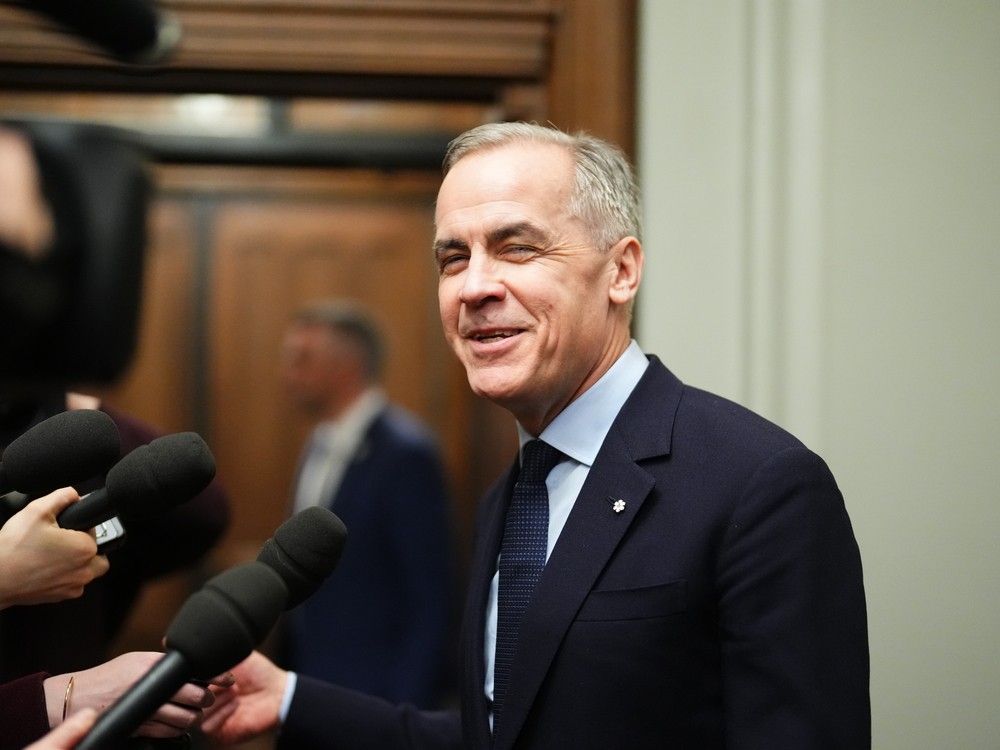
Prime Minister Mark Carney talks to media as he leaves the prime minister's office and makes his way to a caucus meeting in Ottawa, Monday, March 10, 2025.

OTTAWA — Liberal MPs are holding their first caucus meeting in Ottawa since their election win nearly a month ago, on Sunday afternoon to set the priorities for the new legislature.

The House of Commons will be back for four weeks before the summer break. During that time, MPs will have to elect a new Speaker, hear King Charles III read the Speech from the Throne and the government is expected to table legislation on its key economic priorities.

Those include enacting a middle-class tax cut, which the government has said would provide a family of four up to $840 of benefits, and knocking down internal trade barriers.

Prime Minister Mark Carney has pledged that those would be in place by Canada Day.

But the Sunday caucus meeting will also be an opportunity to discuss internal matters.

Liberals will have the opportunity to decide

whether to adopt the Reform Act rules

that would give them, amongst other things, the power to trigger a leadership review of their new leader, to expel or readmit a caucus member, or elect or remove a caucus chair.

Several MPs said it is nothing against Carney, but that the move is informed by the lack of formal processes they had to expel former prime minister Justin Trudeau last year.

Carney dodged questions about this possibility when asked about it a few days ago and simply said that these votes on the Reform Act will be taking place in caucus.

Liberals will also have to decide who they will be supporting to run for Speaker. As of Friday,

at least seven candidates

— five Liberal MPs and two Conservative MPs — were in the running, but eligible MPs have until 6 p.m. to decide to remove their names.

Carney, for his part, has a few busy weeks ahead of him after the start of the spring sitting.

Carney will be meeting with the country’s premiers in Saskatoon on June 2, will be hosting U.S. President Donald Trump and other G7 leaders in Kananaskis, Alberta, from June 15 to 17, and will be attending the NATO Summit in the Netherlands from June 24 to 25.

More to come.

National Post

calevesque@postmedia.com

Get more deep-dive National Post political coverage and analysis in your inbox with the Political Hack newsletter, where Ottawa bureau chief Stuart Thomson and political analyst Tasha Kheiriddin get at what’s really going on behind the scenes on Parliament Hill every Wednesday and Friday, exclusively for subscribers. Sign up here.

Our website is the place for the latest breaking news, exclusive scoops, longreads and provocative commentary. Please bookmark nationalpost.com and sign up for our politics newsletter, First Reading, here.


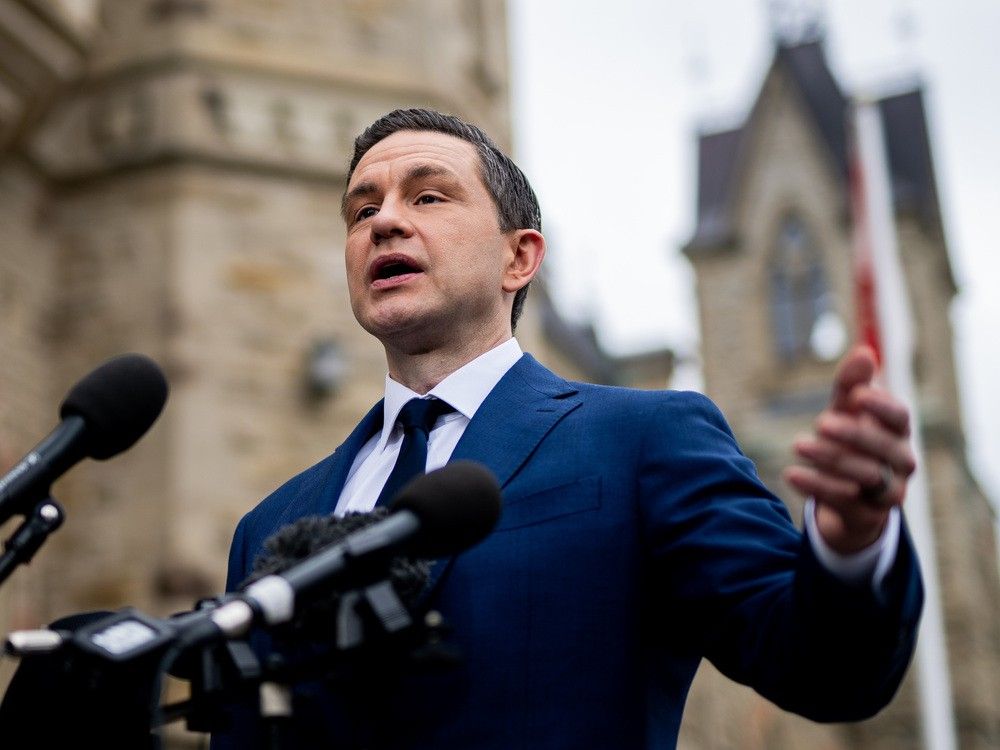
Conservative Party Leader Pierre Poilievre speaks to reporters outside of West Block on Parliament Hill in Ottawa on Thursday, May 15, 2025.

OTTAWA — Conservative Leader Pierre Poilievre will welcome the new House of Commons session with a speech to his MPs on Sunday afternoon.

The Conservatives are still reeling from an election loss to Prime Minister Mark Carney’s Liberals, which was made all the more devastating because the Tories were leading by more than 20 percentage points at the beginning of the year.

The party has yet to confirm if it will be doing an official review of the campaign to determine if lessons can be learned for the next election, but some MPs have said that they

want to see changes and “contrition”

from the leader in the wake of the loss in April.

Last week, Poilievre

announced that more than half of his MPs

will serve in critic roles with the roster showcasing more experienced MPs than fresh faces.

With the House set to open for the first time in nearly six months, there have been hints of a change of tone from the Conservatives, who have offered to work with the government on issues relating to Canada-U.S. relations as the country endures a trade war with its southern neighbour.

The first order of business for Poilievre, though, will be to get a seat in the House of Commons.

The Conservative leader will soon be running in a byelection in Battle River—Crowfoot after losing his own Ottawa-area seat in the April election. Conservative MP Damien Kurek has pledged to step down as a member of Parliament in the riding to allow Poilievre to run.

National Post

Get more deep-dive National Post political coverage and analysis in your inbox with the Political Hack newsletter, where Ottawa bureau chief Stuart Thomson and political analyst Tasha Kheiriddin get at what’s really going on behind the scenes on Parliament Hill every Wednesday and Friday, exclusively for subscribers. Sign up here.

Our website is the place for the latest breaking news, exclusive scoops, longreads and provocative commentary. Please bookmark nationalpost.com and sign up for our daily newsletter, Posted, here.