


LP_468x60
on-the-record-468x60-white

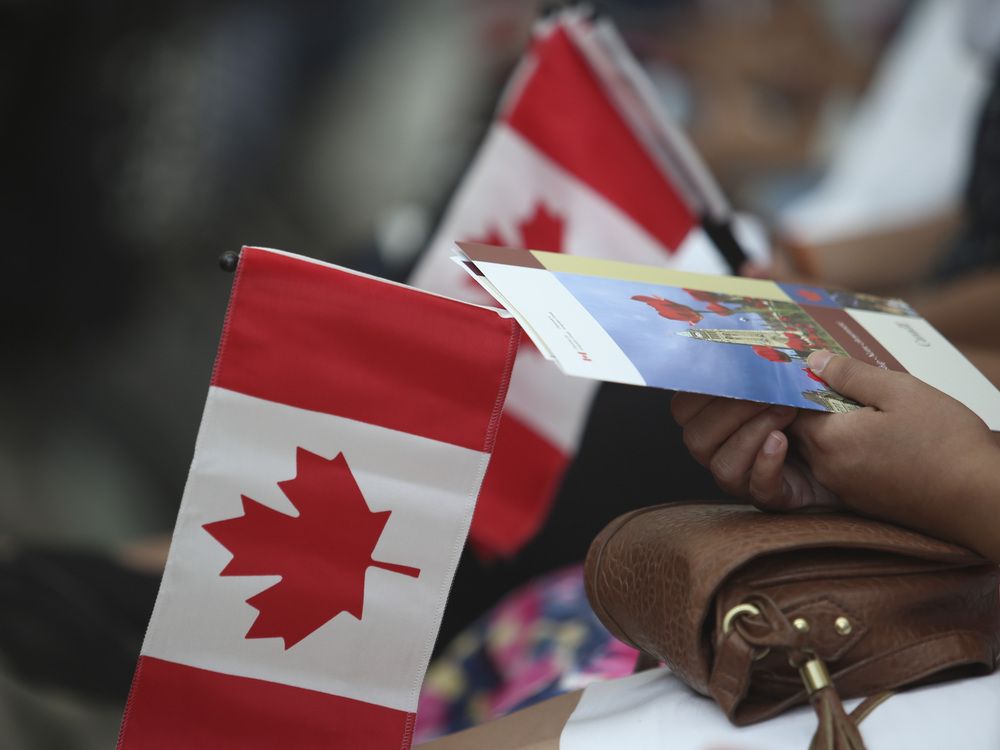
A citizenship ceremony takes place at Pearson International Airport in  Toronto on June 30, 2014.

A new bill introduced in the House of Commons is offering a way for some to obtain Canadian citizenship.

Bill C-3,

An Act to amend the Citizenship Act

, was tabled by Minister of Immigration, Refugees and Citizenship of Canada (IRCC) Lena Metlege Diab on Thursday. The bill would automatically grant Canadian citizenship to anyone who would be a citizen today if it weren’t for the first-generation limit or “outdated provisions,” the federal government said in

a news release

.

Currently, most Canadian citizens who are citizens by descent cannot pass their citizenship onto a child born or adopted outside the country.

The bill would also establish a new framework to allow for citizenship based on a Canadian parent’s connection to Canada. The connection can be proven by demonstrating they lived in the country for at least three years, or 1,095 cumulative days, before the birth or adoption of a child.

Here’s what to know.

What is the first-generation limit?

The limit refers to the fact that

someone does not automatically become a Canadian citizen

if they were born outside Canada and their parent was also born outside Canada to a Canadian parent, or adopted outside Canada by a Canadian parent.

The Ontario Superior Court of Justice declared that key provisions of the first-generation limit were unconstitutional in Dec. 2023.

“The Government of Canada did not appeal the ruling because we agree that the current law has unacceptable consequences for Canadians whose children were born outside the country,” per the news release.

The Court suspended its declaration until November 20, 2025, which means the current rules still apply until further notice,

according to the federal government

.

Why was the citizenship by descent bill introduced?

“The legislative amendments to the Citizenship Act made in 2009 by the Harper Conservatives restrict citizenship by descent to the first generation born abroad,” Diab’s office told National Post in an emailed statement.

“This has meant that individuals with a genuine connection to Canada are not recognized as Canadian citizens and has led to unacceptable consequences for Canadians whose children were born outside the country.”

The legislation was introduced to “correct this, to remove the first generation limit, extending Canadian citizenship to ‘Lost Canadians’ beyond the first generation,” per the minister’s office.

According to

a news release in 2008

, the amendments made by the Harper government were “to protect the value of Canadian citizenship for the future.”

“Canadian citizenship is more than a legal status, more than a passport,”

said

former 

Citizenship, Immigration and Multiculturalism Minister Jason

Kenney in 2010. “We expect citizens to have an ongoing commitment, connection and loyalty to Canada.”

What are “lost Canadians”?

The term refers to people who were born outside of the country to Canadian parents who were also born in another country.

In 1974, the first Canadian Citizenship Act contained provisions that cause many people to “either lose their Canadian citizenship or not acquire it in the first place,” the news release said.

Changes to the legislation in 2009 and 2015 restored or gave citizenship to some 20,000 “lost Canadians.” The new legislation proposes giving automatic citizenship to anyone denied citizenship under the current law.

“Citizenship is more than a legal status — it’s a profound connection to the values, history, and spirit of Canada,” said Diab, per the news release. “It reflects our belief that being Canadian means more than just a place of birth; it’s about belonging, shared experiences, and a commitment to the inclusive and diverse community we all call home.”

What could this mean for Canada?

The new bill could open up the possibility of many people applying for citizenship. Thousands of people could become Canadian, estimated immigration news website

Citizenship and Immigration Canada

.

With a potential surge of applications, Vancouver immigration lawyer Ryan Neely

told CTV News

that government should be certain that the IRCC’s systems are “equipped to handle the influx of applications.”

With additional reporting by The Canadian Press

Our website is the place for the latest breaking news, exclusive scoops, longreads and provocative commentary. Please bookmark nationalpost.com and sign up for our daily newsletter, Posted, here.


Dark chocolate contains flavonoids, a compound found in a variety of foods and beverages.

A new study reveals what drinking tea and eating dark chocolate and berries did for a group of more than 120,000 people.

Those foods, as well as fruits like grapes, apples, oranges, and beverages like red wine, all contain flavonoids, which are compounds found in many plant products. Flavonoids can “help your body function more efficiently while protecting it against everyday toxins and stressors,”

per Healthline

. The study’s authors said those who consumed a diverse range of foods containing flavonoids (such as berries, grapes and dark chocolate) “could lower their risk of developing serious health conditions and have the potential to live longer,” in

a news release

. The study has been peer-reviewed.

In the study, which was

recently published in the journal Nature Food

, researchers observed 124,805 participants between the ages of 40 and 70 from the UK Biobank, a large-scale database with biomedical information. The participants were tracked for roughly 10 years and their dietary information was collected using a questionnaire asking them about the frequency in which they ate approximately 200 types of food and 30 beverages.

Dr. Benjamin Parmenter, a research fellow at Edith Cowan University in Australia, was the study’s first author and co-lead. He said consuming roughly 500 mg of flavonoids a day or more was linked to a 16 per cent lower risk of “all-cause mortality” (meaning death from any cause).

It was also linked to a roughly 10 per cent lower risk of cardiovascular disease, type 2 diabetes, and respiratory disease.

A

study published in 2025

in peer-reviewed food science journal Foods said, as it pertains to human health, “flavonoids are recognized for their ability to combat aging, mitigate inflammation, safeguard the nervous system, and promote overall well-being.” However, in another study published in

2022 in the Nutrition Journal

, researchers “observed an increased risk of prostate cancer by higher intake of total flavonoids.” In a

study published in 2016 in the Journal of Nutritional Science

, researchers called for further studies on flavonoids so their usefulness “in the diet could be improved for better human health.”

“Over 30 different types of flavonoids are regularly consumed in the human diet. These are found in different types of everyday foods,” Parmenter told National Post over email.

A few squares of dark chocolate could be roughly 25 mg of flavonoids. One apple is equal to roughly 100 mg of flavonoids, while one orange is roughly 60 mg. For tea drinkers, one cup of black tea is roughly 300 mg of flavonoids, while the same amount of green tea is roughly 150 mg.

“We observed that consuming a higher quantity and wider diversity of dietary flavonoids, when consumed together, may represent the optimal approach for improving long-term health, compared with increasing either flavonoid quantity or diversity alone,” Parmenter said.

Those with the highest flavonoid diversity were more likely to be female, older, have a lower body mass index (BMI), be more physically active and have a higher education and were less likely to be current smokers, according to the study.

“We also know from lab data and clinical studies that different flavonoids work in different ways, some improve blood pressure, others help with cholesterol levels and decrease inflammation,” said study co-lead professor Aedín Cassidy, per the news release. Cassidy is from the Co-Centre for Sustainable Food Systems and Institute for Global Food Security at Queen’s University Belfast.

The findings of the study show how “simple and achievable dietary dietary swaps” can “potentially improve health in the long-term,” she said.

“Dietary swaps, such as drinking more tea and eating more berries and apples for example, can help increase the variety and intake of flavonoid-rich foods, and potentially improve health in the long-term,” said Cassidy.

According to researchers, no previous works appear to have reported on the human health benefits of a flavonoid-diverse diet.

“Consequently, replication of our findings in other cohorts and clinical trials will be critical, as will the exploration of flavonoid diversity with other disease outcomes. Interpretation, however, requires careful consideration,” said researchers, in the study.

The study was led by researchers from Queen’s University Belfast, Edith Cowan University Perth, and the Medical University of Vienna and Universitat Wien.

Our website is the place for the latest breaking news, exclusive scoops, longreads and provocative commentary. Please bookmark nationalpost.com and sign up for our daily newsletter, Posted, here.

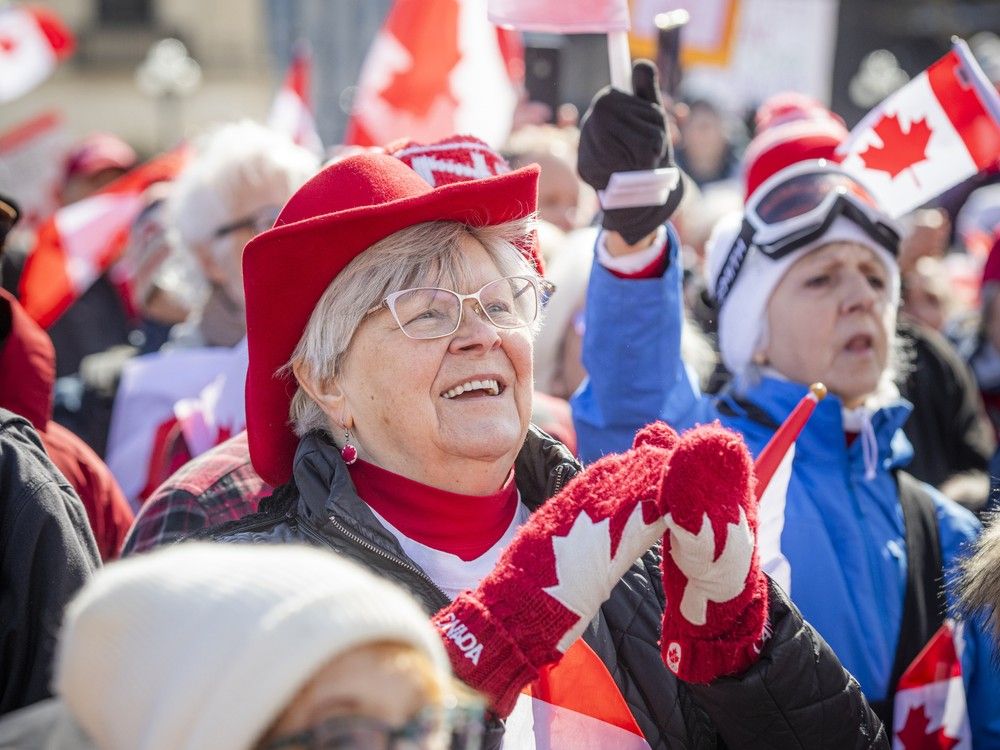
Crowds gathered on Parliament Hill today for the

Against a backdrop of fresh talk of Alberta separation and the constant spectre of Quebec’s sovereignty movement, a new national opinion poll found that most Canadians say breaking up will be hard to do.

A large majority of respondents nationally said any secession by one province would require negotiation with all provinces and must be supported by a clear majority of voters in the province, and most said separation cannot be a unilateral decision, and it should require approval by the federal House of Commons.

A

national opinion survey

, conducted by Leger Marketing for the Association for Canadian Studies and provided to Postmedia, was designed to probe Canadians attitudes about the process for separation, rather than their views on separation itself, and what should follow a successful provincial leave referendum.

“The bottom line is that Canadians across the country envision the process as much more complex than a simple majority vote on a referendum question,” said Jack Jedwab, president of the Montreal-based Association for Canadian Studies.

Public discussion about Alberta separating from Canada drew more mainstream attention in May, after the federal election returned the Liberal Party to government and Alberta Premier Danielle Smith tabled provincial legislation to make it easier for Albertans to trigger a referendum on the province leaving the rest of Canada. Smith said she would hold such a referendum if a citizen petition called for it.

Separatists in Quebec hope the renewed discourse on separation will boost their long-standing desire for independent statehood, which twice went to provincial referendum which failed to support sovereignty, in 1980 and 1995. The Parti Québécois plans another provincial sovereignty referendum in the years ahead.

That creates plenty of secessionist talk and debate, but it has been 30 years since Canada has seen an actual separation referendum.

“Many Canadians of voting age and, of course, most immigrants didn’t experience the last referendum 30 years ago, but there is a growing consensus that the rest of the country would want a say in the process and secession would not be simple,” said Jedwab.

The poll asked 1,537 people across Canada a series of questions on the mechanism of a possible separation.

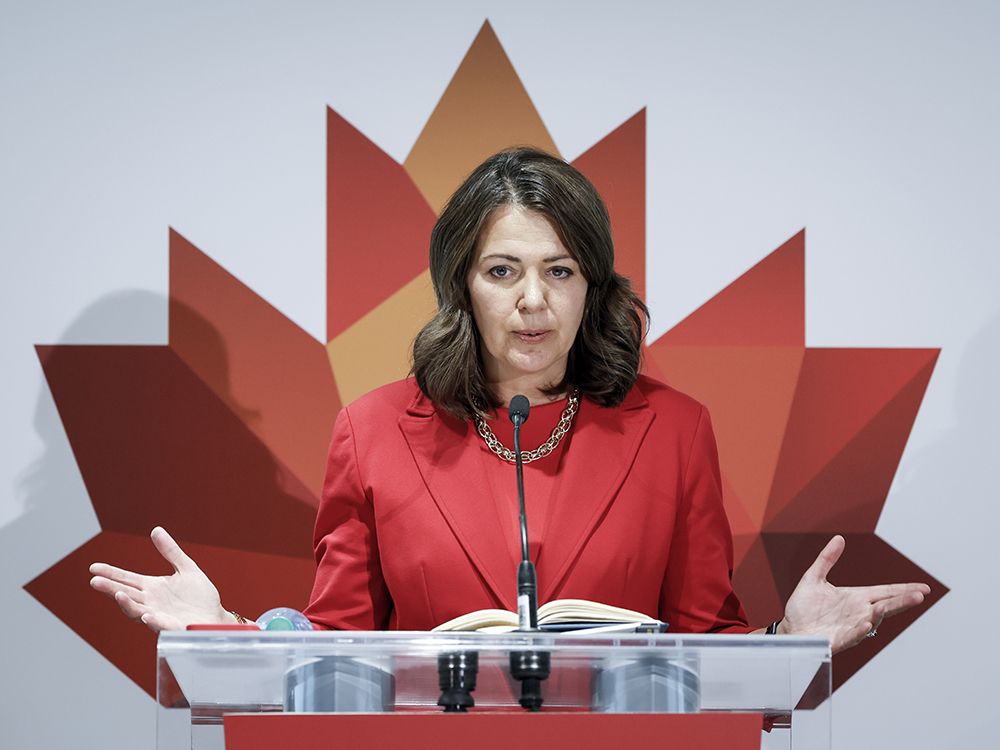
 Alberta Premier Danielle Smith tabled provincial legislation to make it easier for Albertans to trigger a referendum on the province leaving the rest of Canada.

A majority of Canadians said any referendum question regarding provincial separation from Canada must be unambiguous, with 59 per cent of respondents agreeing with that, with only 11 per cent disagreeing, and 30 per cent saying they don’t know or declined to answer.

Respondents in Quebec and Alberta showed the strongest support for an unambiguous question, at 71 and 62 per cent, respectively.

A clear majority of Canadians, 66 per cent, said there must be a clear majority of voters supporting separation in a separatist referendum for it to be considered — with Quebecers the softest on the issue.

The poll showed that 76 per cent in Atlantic Canada, 75 per cent in B.C., 72 per cent in Alberta, 66 per cent in Ontario, and 62 per cent in Manitoba-Saskatchewan agreed that there must be a clear majority of voter support for separation. In Quebec it was 55 per cent, still a majority, with 26 per cent saying it was not necessary, by far the highest in the country.

A majority of respondents in every region agreed that a province separating from Canada would require negotiations with all provinces — even respondents in Quebec, although they were the softest on the issue.

Nationally, 62 per cent of respondents agreed that negotiation was necessary for provincial separation, with 19 per cent saying it wasn’t needed and another 19 per cent saying they didn’t know or declined to answer.

The age of respondents impacted how strongly that feeling was, with the youngest cohort of 18 to 34 year olds showing a low of 56 per cent agreement, the middle cohort of 35 to 54 year olds rising to 61 per cent agreement, and the oldest cohort, those 55 years old and above, being the strongest in agreement at 67 per cent.

The regional breakdown on the need for negotiations was lowest in the two provinces most active with separatist ambition — Alberta at 52 per cent and Quebec at 57. The highest support for the need for negotiation was in Atlantic Canada (67 per cent), followed by Ontario (66), B.C. (65), and Manitoba-Saskatchewan (61).

Most Canadians said that even after a favourable provincial vote for separation, a province cannot unilaterally leave Canada, the poll found, although there is a lot of uncertainty about the issue.

Nationally, 42 per cent said a province cannot make its own decision to separate from Canada while 22 per cent said such a decision by a province was enough. A large number, 36 per cent, said they didn’t know or didn’t answer the question.

Only respondents in B.C. delivered a majority response dismissing unilateral departure — barely — at 51 per cent. Other regions followed: Ontario (46 per cent), Atlantic Canada (44), Alberta (43), Manitoba-Saskatchewan (42), and Quebec (31).

Quebec was the only region with more people embracing unilateral separation than dismissing the idea: 32 per cent said it was OK, while 37 per cent said they weren’t sure or didn’t answer.

While a majority of those in British Columbia, Atlantic Canada, and Ontario said a referendum question on separation should require the approval of the federal House of Commons, most Quebecers and Albertans disagreed.

In Alberta, 43 per cent said a referendum question should not require a federal parliamentary vote, while 35 per cent agreed it should. That’s even stronger than in Quebec, where 36 per cent said it should not require a federal approval, with 34 per cent saying it should.

Those in B.C. showed the strongest support for federal input, at 60 per cent, followed by Atlantic Canada at 58 per cent, and Ontario at 55 per cent. In Manitoba and Saskatchewan, pooled together in the poll, 43 per cent agreed there should be parliamentary approval, with 21 per cent saying it shouldn’t be required and 36 per cent saying they didn’t know or declined to answer.

“Canadians will want agreement on the question and will seemingly not be inclined to allow an outcome that involves a breakup to be established as set out solely by a province that wishes to separate,” said Jedwab.

“Without previous discussion around the process and the desired outcome, the risk is that results will not secure required recognition.”

The public opinion survey was conducted online with 1,537 respondents in Canada from May 16 to 18. As a non-probability sample in a panel survey, traditional margins of error do not apply.

• Email: ahumphreys@postmedia.com | Twitter:

Our website is the place for the latest breaking news, exclusive scoops, longreads and provocative commentary. Please bookmark nationalpost.com and sign up for our daily newsletter, Posted, here.
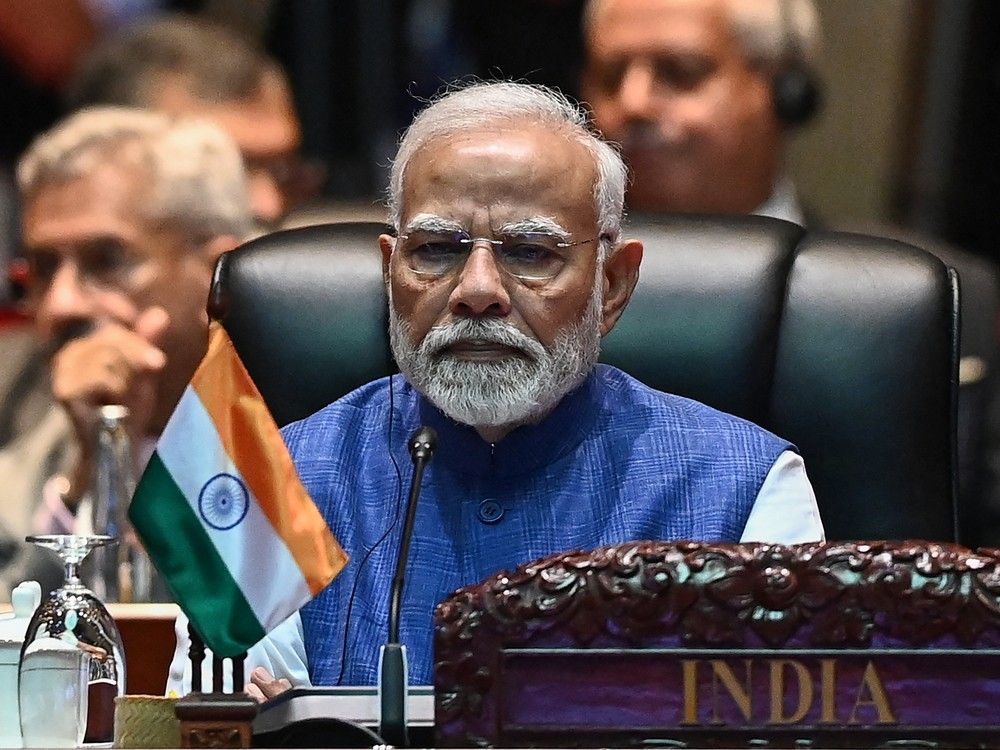

India's Prime Minister Narendra Modi attends the 19th East Asia Summit during the 44th and 45th Association of Southeast Asian Nations (ASEAN) Summits in Vientiane on October 11, 2024.

OTTAWA — India’s Prime Minister Narendra Modi says he will attend the G7 meeting in Kananaskis this month after receiving an invitation from Prime Minister Mark Carney.

“As vibrant democracies bound by deep people-to-people ties, India and Canada will work together with renewed vigour, guided by mutual respect and shared interests. Look forward to our meeting at the Summit,”

said Modi, on social media

.

Modi wrote that he spoke to Carney on the phone and congratulated him on his recent election victory.

Carney’s office confirmed the invitation on Friday morning, saying “the two leaders discussed the longstanding relationship between Canada and India.”

“Importantly, there was agreement to continued law enforcement dialogue and discussions addressing security concerns,” the statement reads.

Relations between the two countries have been tense since 2023, when a local Sikh leader was shot and killed outside the Guru Nanak Sikh temple in Surrey, B.C. Former prime minister Justin Trudeau

told the House of Commons

that there was credible evidence that agents of the Indian government were behind the murder.

More to come.

National Post

Get more deep-dive National Post political coverage and analysis in your inbox with the Political Hack newsletter, where Ottawa bureau chief Stuart Thomson and political analyst Tasha Kheiriddin get at what’s really going on behind the scenes on Parliament Hill every Wednesday and Friday, exclusively for subscribers. Sign up here.

Our website is the place for the latest breaking news, exclusive scoops, longreads and provocative commentary. Please bookmark nationalpost.com and sign up for our politics newsletter, First Reading, here.


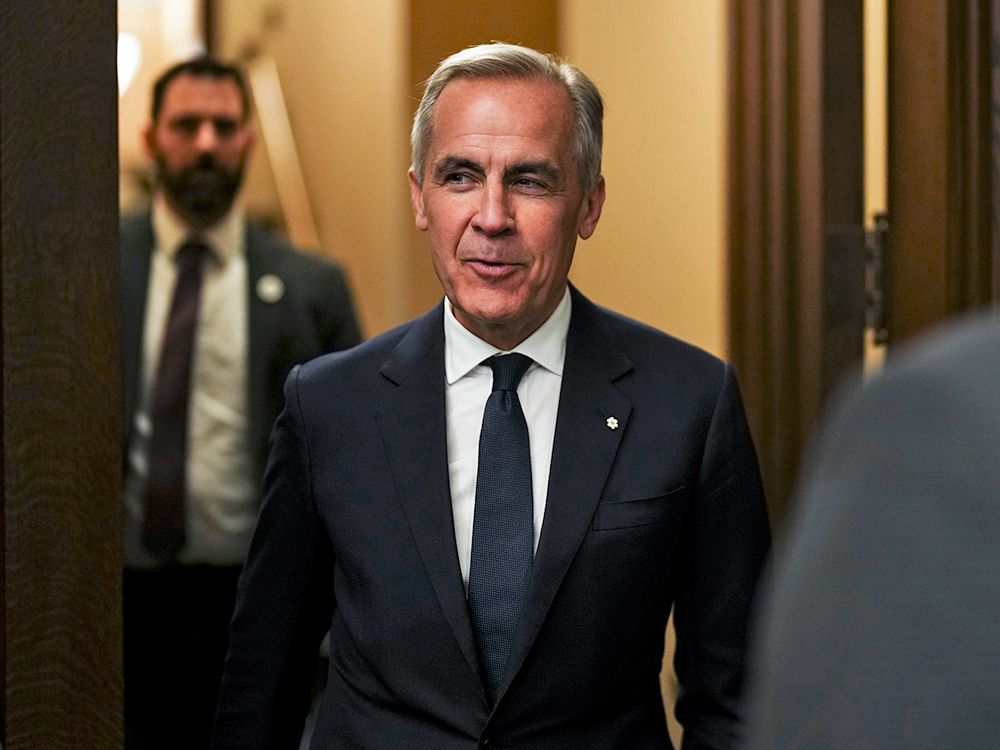
Prime Minister Mark Carney walks through the foyer of the House of Commons on Parliament Hill in Ottawa on Wednesday, June 4, 2025.

OTTAWA — Prime Minister Mark Carney’s government plans to remove federal trade barriers by recognizing the rules provinces have in place, National Post has learned.

The measures are set to be introduced in a “One Canadian Economy” bill aimed at knocking down federal trade barriers and fast-tracking the approvals process for major energy and infrastructure projects to be introduced Friday.

The full title of the bill is “An Act to enact the Free Trade and Labour Mobility in Canada Act and the Building Canada Act.”

The proposed legislation takes aim at the overlap that exists between rules at the provincial and federal levels of government, including when it comes to workers.

The federal government is hoping the legislation will receive unanimous support from all parties to fast-track its adoption, but at least one opposition party has said that will not happen.

Bloc Québécois House leader Christine Normandin said on Wednesday her party will want to study the bill in great detail and hear from experts in parliamentary committees, which are not yet up and running.

“For the interest of the population that we represent, we’re going to do the work,” she said.

Carney is expected to hold a media availability to answer questions about the legislation around 12:30.

Besides addressing trade barriers, the bill will usher in a new process to fast-track approvals for major projects by creating a new federal major projects office.

By creating the new office, the government promises to streamline the regulatory process and cut the approval timeline from five to two years.

Carney and the premiers met earlier this week and agreed on the criteria for what constitutes a project to be in the “national interest,” which would allow it to be fast-tracked.

Requirements include Indigenous participation, the potential for clean growth, and a high likelihood of success.

The federal government has promised that the proposed bill to fast-track resource project approvals would follow the constitutional duty to consult First Nations.

However, the Assembly of First Nations has said it needs to see the full text of the bill to analyze it legally and has warned the approach

poses a “serious threat” to treaty rights

. On Friday, they reiterated that concern.

“The Assembly of First Nations remains deeply concerned about the lack of time and appropriate process to carry out the Crown’s consultation and consent obligations, especially given the potentially massive impact on the rights of First Nations,” the AFN said, in a statement to National Post.

National Post

Get more deep-dive National Post political coverage and analysis in your inbox with the Political Hack newsletter, where Ottawa bureau chief Stuart Thomson and political analyst Tasha Kheiriddin get at what’s really going on behind the scenes on Parliament Hill every Wednesday and Friday, exclusively for subscribers. Sign up here.

Our website is the place for the latest breaking news, exclusive scoops, longreads and provocative commentary. Please bookmark nationalpost.com and sign up for our politics newsletter, First Reading, here.


Screen grab from video shows a person shooting in the Piper Arms pub in Toronto, on March 7, 2025.

A shocking mass shooting inside a Toronto pub in March, when three masked men shot wildly into the crowd during the establishment’s grand opening, is linked to an ongoing tow truck turf war that included other shootings and a robbery, Toronto police said when announcing charges against 11 people.

Ten suspects have been arrested, and another is considered a wanted fugitive, after a fervid spree of gun violence by what investigators believe might be a shoot-em-up band for hire.

“The indiscriminate nature of this gun violence is hard to comprehend,” Toronto’s Chief of Police Myron Demkiw said Wednesday. “This kind of brazen violence, this disregard for human life, is completely unacceptable.”

An intense investigation of the March 7 shooting at the Piper Arms pub near Scarborough Town Centre, one of Canada’s largest shopping malls, led police to four other shootings and a robbery they say are linked to a violent turf war over tow trucking business that has been hitting the Greater Toronto Area with shootings and arsons for several years.

The pub shooting, however, which saw an organized assault on a mainstream establishment in a popular public area by three masked men — one armed with an assault-style rifle and two with handguns — took public concern and fury to a new level.

“That night, three suspects entered the pub and opened fire inside. Nine people were shot, and other people were injured as a result. No one was killed, which is truly a miracle, but the effects of this mass shooting remain devastating for the victims and for the sense of safety in our communities,” said Demkiw.

Supt. Paul MacIntyre, commander of Toronto police’s Organized Crime Enforcement unit, said pain and damage from the attacks continues.

“This was a terrifying series of events for the victims and for our city — a group of individuals opening fire in public spaces, seemingly without hesitation,” he said.

“We’ve stayed in contact with the victims and their families throughout. Many continue to recover from serious physical and emotional trauma. Some were shot multiple times. One person was shot six times and survived. The strength and resilience has been remarkable.”

Police said their probe into the pub attack led them to a series of attacks and other crimes with common links.

Investigators from several Toronto police units used old-school investigative techniques of speaking to people, chasing leads, knocking on doors, and cooperating with neighbouring police forces that have experienced their own tow-truck war violence, Demkiw said.

MacIntyre said it became a complex and resource-intensive investigation.

Police allege investigators linked the gunmen in the pub attack to other crimes both before and after the mass shooting.

 Guns seized by Toronto police in probe of mass shooting.

On March 1, two suspects travelled in a stolen car to a Toronto plaza at Markham Road and Eglinton Avenue East. One suspect got out and shot at a victim standing nearby, who was injured. The pair then fled.

On March 4, three different suspects drove a stolen car to a towing yard near Weston Road and St. Clair Avenue West, police said. A gunman got out and shot and injured someone who was walking away from the yard. They drove to the towing yard and shot a second person who was in the towing yard in a drive-by attack. They then turned the car around and made a second pass, firing another salvo from the car windows.

Later that same night, police said the same three suspects, still in the stolen car, drove to a gas station near Lawrence Avenue East and Warden Avenue. One suspect got out and ambushed a man who was washing a pickup truck in one of the car wash bays. The victim ran off and was being chased by the gunman when he was intercepted by a second gunman who jumped from the car and also started shooting him. The victim was injured but survived.

On March 6, the two suspects accused of the plaza shooting five days earlier, arrived at a towing yard near the West Mall and The Queensway in a stolen car and shot at a vehicle leaving the yard. No injuries were reported.

It was the next night, police say, that one of the suspects from the pair of March 4 shootings was joined by two other men in a stolen car that arrived at the Piper Arms pub on Progress Avenue at Corporate Drive.

They parked and all three got out. One carried what looks like an assault-style rifle and the others had pistols.

Inside, patrons milled about. CCTV video footage from inside the pub shows four men standing near the doorway greeting each other when suddenly they dive in different directions when the door bursts open and shots blast inside.

Three men, with hoodies pulled up over their heads then move into the pub. The first one in carries a rifle with the distinctive long ammunition magazine curved like a banana; he turns to his left firing repeatedly as patrons at tables dive for cover.

The second gunman crouches as he moves inside, holding a handgun extended out sideways; he turns to his right, firing into a second room and then moves out of view of the camera into the side room.

The third gunman hangs back, barely past the door frame, and soon scurries out the door as the others briefly look around and then fire another volley.

The rifleman then jogs out the door. A few seconds later the second gunman emerges from the side room and follows the others outside.

Twelve people were injured, police said.

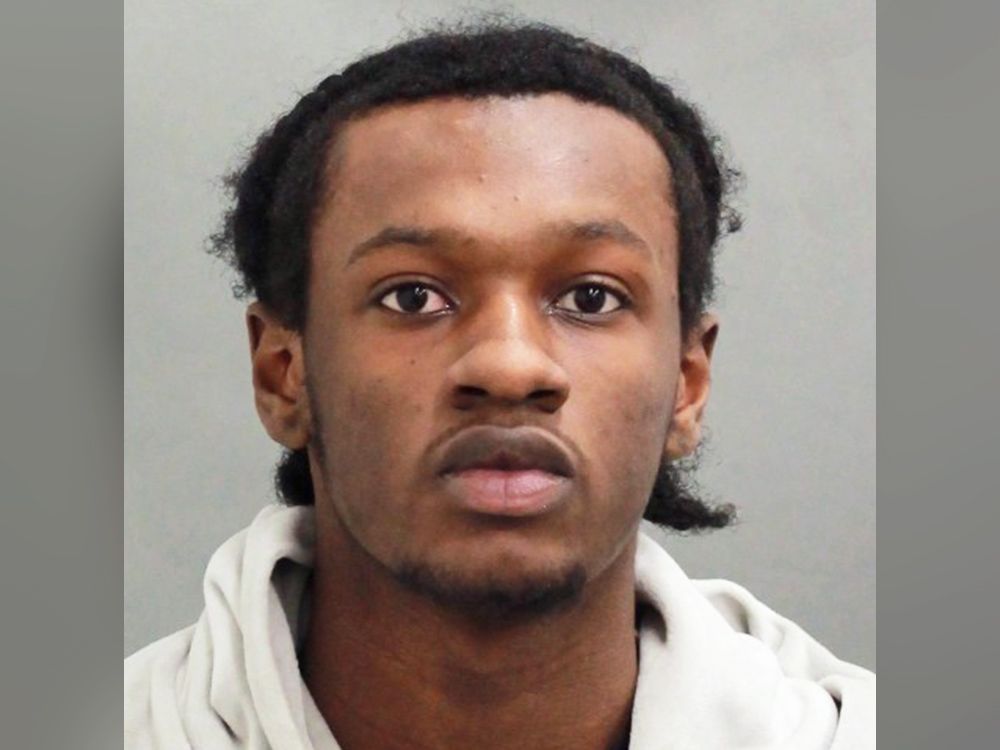
 Daykwon Joseph, 20, of Toronto, is wanted by Toronto police for shootings linked to the violence spree.

The reasons behind the pub shooting remain unknown, police said.

While the other shootings were connected to the tow truck industry, with victims being tow truck employees or targets being tow truck businesses, that doesn’t apply to the pub as far as police know, MacIntyre said.

The link to the turf war comes through the alleged gunmen.

“The shooting at the pub, we haven’t linked it to any tow truck violence at this point,” he said. “Where it is connected is the group of people that we identified as being part of the tow truck shootings have also done the pub shooting. Whether that was a one off, the reasons that they did it, we’re still investigating that,” MacIntyre said.

“We’re still looking at reasons why they did that and that’s still a very active investigation.”

Police are investigating whether the shooters were a band of hired guns, whose clients usually wanted them to target tow truck businesses and once targeted the pub.

The shooters were brazen, but not marksmen or skilled hitmen. The gunmen, MacIntyre said, were not a street gang in the usual sense.

“They’re not a gang, they’re not the definition of a gang, they’re just a collective of a bunch of guys that got together and are doing these shootings.”

Police connected two more incidents after the pub shooting to those arrested.

On April 11, four suspects in a stolen car attempted to rob a financial institution but failed, police said. Police later stopped the vehicle they fled in near Rexdale Boulevard and Highway 427 and two were arrested after a foot chase. Police found a loaded handgun with an extended magazine was recovered.

Finally, on May 26, police spotted a stolen vehicle and arrested two people inside and seized a loaded handgun, police said.

Of the 11 suspects charged, one remains a fugitive: Daykwon Joseph, 20, of Toronto. He is accused in the March 4 incidents — the double shooting at the tow yard and car wash ambush — and facing charges of attempt murder, six gun charges and other counts.

The three men accused in the pub shooting are Sheldon Gordon, 19, Juevar Griffith, 19, and Kayjean Morrison, 22, all from Toronto.

The others arrested range in age from 15 to 22 years old.

Demkiw said the shootings show the need for changes to Canada’s criminal code.

“These events underscore the importance of the law reform we’ve asked for in the past, including law reform concerning shootings in public spaces. Gunfire in our public spaces must be recognized for the harm it causes not just for those involved directly, but for the bystanders and the public at large,” he said.

• Email: ahumphreys@postmedia.com | Twitter:

Our website is the place for the latest breaking news, exclusive scoops, longreads and provocative commentary. Please bookmark nationalpost.com and sign up for our newsletters here.


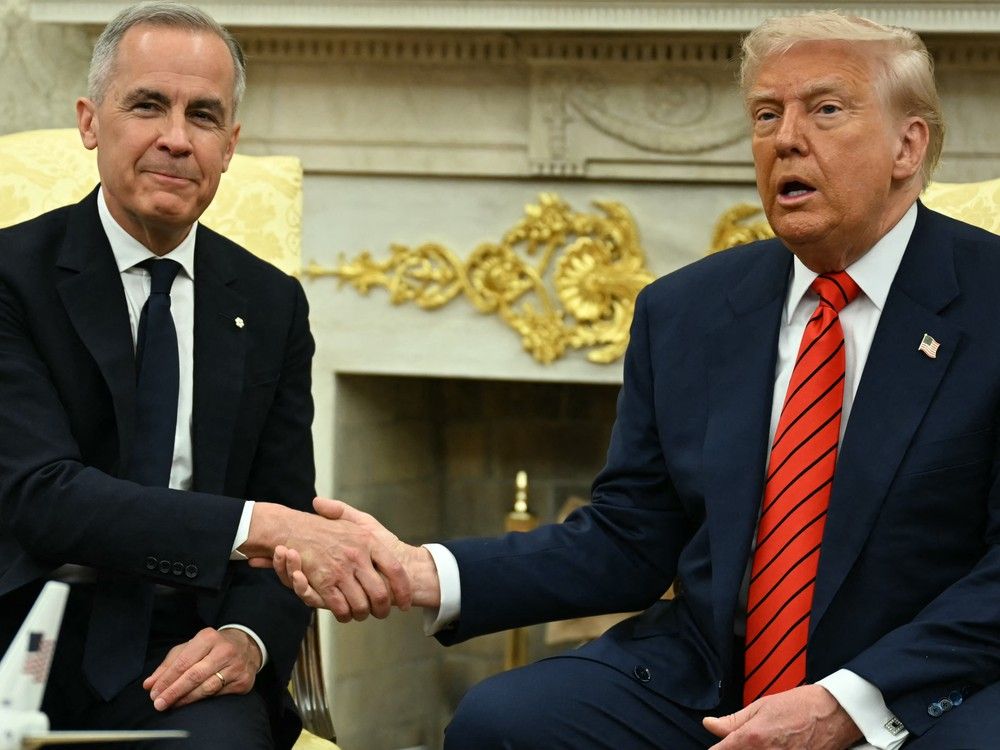
U.S. President Donald Trump meets with Prime Minister Mark Carney in the Oval Office of the White House in Washington, DC, on May 6, 2025.

OTTAWA — Prime Minister Mark Carney is directly involved in the negotiations with U.S. President Donald Trump for a new trade and security deal in exchange for the lifting of all tariffs on Canadian goods — in particular the crippling levies on steel and aluminum.

Ontario Premier Doug Ford told reporters at Queen’s Park on Thursday he spoke directly to Carney the day prior and said the prime minister is in “deep, deep discussions right now with the administration in the U.S. and President Trump.”

In Ottawa, federal Industry Minister Mélanie Joly also confirmed the ongoing discussions.

“First of all, we are for sure in a trade war. It’s normal that, at the same moment that this trade war is happening, there are also diplomatic discussions, so Prime Minister Carney and President Trump are talking,” she said in French during a brief media scrum.

Trump signed an executive order this week doubling the tariffs on steel and aluminum — from 25 to 50 per cent — which is causing massive anxiety in Canadian sectors.

So far, Carney said his government would take “some time but not much” to respond to Trump’s latest tariffs if the Canadian and American side do not arrive at a deal.

“We are in intensive discussions right now with the Americans on the trading relationship. Those discussions are progressing,” he told reporters on Wednesday morning.

Carney did not specify if he was directly involved in those “intensive discussions.”

Ford reiterated that matching retaliatory tariffs need to happen as soon as possible should those talks fail, and said he conveyed that message directly to Carney on Wednesday.

“The ideal situation is to get a deal, and if that deal does not happen in the next few days, then we have to slap another 25 per cent tariff on top of the existing 25 per cent tariff on our aluminum and steel,” Ford said.

“But I think the prime minister is doing an incredible job of negotiating along with (Canada-U.S. Trade Minister Dominic) LeBlanc as well,” he added.

LeBlanc was in Washington, D.C. on Tuesday meeting with U.S. Secretary of Commerce Howard Lutnick as Trump prepared to sign the tariff order on steel and aluminum.

Ford said it was his understanding the federal government has been “working hard around the clock” to sign a deal with Trump and that it might be “right at the brink” of doing so.

“Now, we know President Trump, he wakes up in the morning, he could change his mind, and we’ll be monitoring and discussing this with the prime minister on a daily basis until they get a deal, or they don’t get a deal,” he said.

“If they don’t, we have to come out guns blazing,” he said.

Meanwhile, Canadian steel company CEOS and union representatives were in Ottawa on Thursday to meet with federal ministers and officials to convince them to act fast before the inevitable job losses that could occur in the coming days and weeks.

Joly, who met with them, said she was in “solution mode” and said her goal was to make sure to “support the sector” at such a critical time.

“A lot of the conversation was about how we can make sure that we protect our domestic market, and we’re working on solutions. That’s why the industry and myself will continue to engage in the coming hours and days, because we need to get to a good plan together.”

Finance Minister François-Philippe Champagne also said he was also looking forward to meeting with the industry, and said they were “all on the same page.”

“We all want a very strong steel and aluminum industry in this country. They are committed. We are committed. We’re going to work hand in hand,” he said.

The federal government has

committed to use Canadian steel and aluminum

in national infrastructure and defence projects in hopes of countering the lost revenue and drop in exports due to tariffs. But the industry is wondering if it will be able to survive until then.

In order to speed up the process, the government is expected to table its “One Canadian Economy” bill on Friday which is expected to fast-track projects in the national interest.

All 13 provincial and territorial premiers

met with Carney over the weekend

to discuss which of their projects, from ports and offshore wind development to oil pipelines and critical mineral mines, could potentially be selected for the government’s new process.

The federal government is hoping the legislation will receive unanimous support from all parties to fast-track its adoption, but some in the opposition are reticent to the idea.

Bloc Québécois House leader Christine Normandin said her party will want to study the bill in detail in parliamentary committees, which are not yet up and running.

“For the interest of the population that we represent, we’re going to do the work.”

National Post

calevesque@postmedia.com

Get more deep-dive National Post political coverage and analysis in your inbox with the Political Hack newsletter, where Ottawa bureau chief Stuart Thomson and political analyst Tasha Kheiriddin get at what’s really going on behind the scenes on Parliament Hill every Wednesday and Friday, exclusively for subscribers. Sign up here.

Our website is the place for the latest breaking news, exclusive scoops, longreads and provocative commentary. Please bookmark nationalpost.com and sign up for our newsletters here.


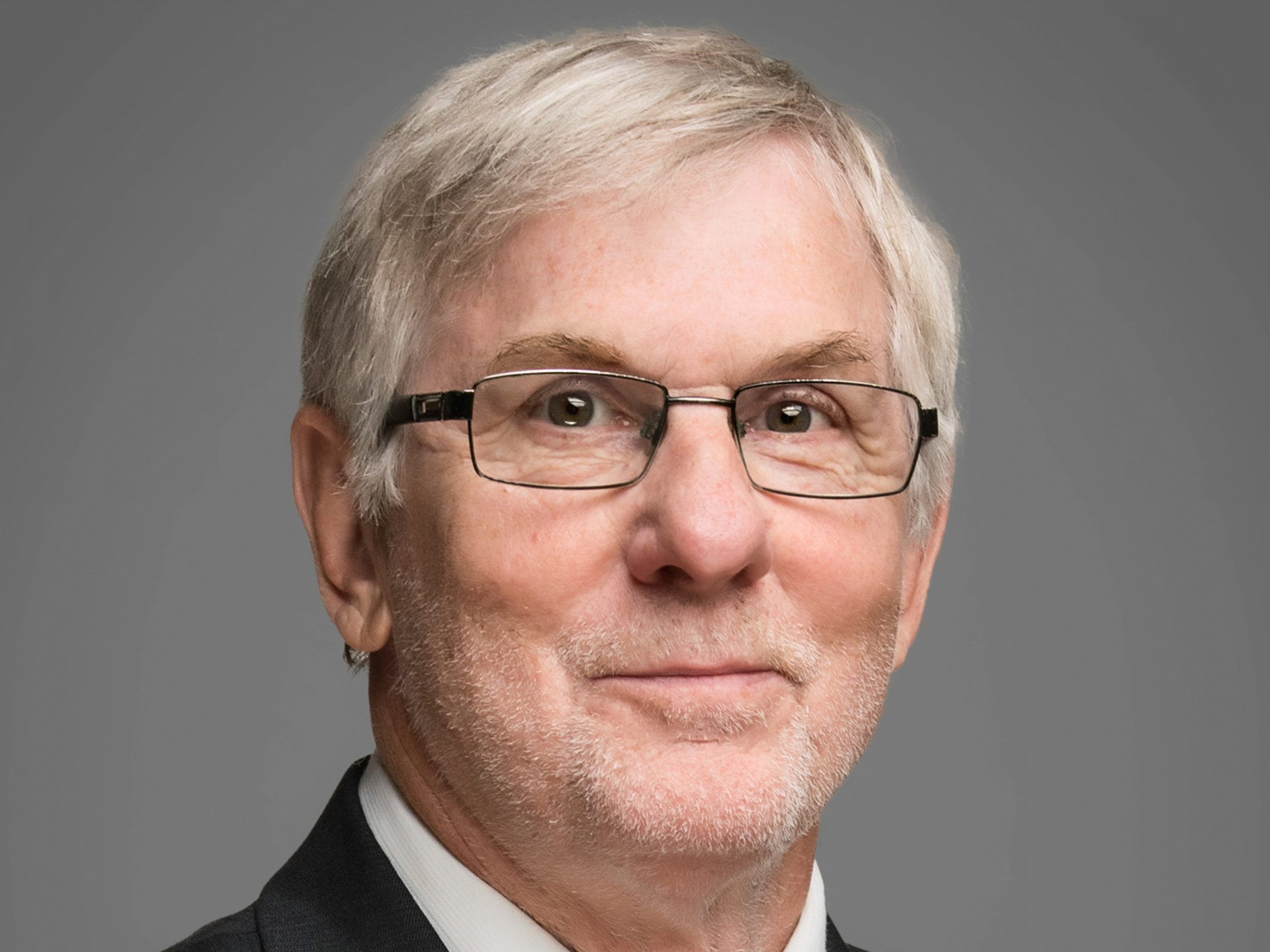
Award-winning author and Canadian Senator David Adams Richards has joined the Conservative Party of Canada's Senate caucus.

Less than two weeks after becoming a non-affiliated member of Canada’s Senate, New Brunswick Sen. David Adams Richards elected to join the Conservative Party of Canada’s caucus in Parliament’s Upper House this week.

The 74-year-old declined an interview with National Post, but an emailed statement illustrated an obvious frustration with both Justin Trudeau and Prime Minister Mark Carney’s Liberal Party of Canada.

“For years, so many of the concerns I and others had about our country were dismissed by an insular, self-absorbed government, with an almost blind indifference to ordinary men and women,” wrote Richards, an award-winning and celebrated Canadian writer.

“Now the Liberals are insisting on policies that certain senators pleaded for and who were so often ridiculed and refused.”

Richards didn’t elaborate on specific policies, but Conservative leader Pierre Poilievre said during the recent federal election campaign that Carney and the Liberals were

“plagiarizing” ideas from the Tory platform.

In a statement posted to X, Sen. Leo Housakos, newly acclaimed Leader of the Opposition in the Senate, welcomed Richards to a group “that is home to diverse opinions and healthy debate, consensus and cooperation, grounded in common-sense principles and committed to the important work of a robust and healthy opposition.”

Here’s what to know about Richards.

Richards the writer

Born in 1950, Richards was raised in New Castle, N.B., a suburb of Miramichi, where his parents operated a local movie theatre.

He’s married to Peggy McIntyre, with whom he has two sons, John Thomas and Anton Richards.

While his first published work after studying literature and philosophy at St. Thomas University in the early 1970s was a small book of poems, Richards became an acclaimed Canadian novelist with 16 titles on his resume, along with six non-fiction books and two collections of short stories.

His writings have been translated into 12 languages and are part of the curriculum of Canadian and U.S. universities, according to

the Senate of Canada.

In a style said to be influenced by the likes of Leo Tolstoy and compared to William Blake, his fiction work is mostly set in the Miramichi Valley where he grew up and the characters are inspired by the lives and experiences of its poor and working-class people.

“Through the characters of his fictionalized Miramichi, David Adams Richards explores conflicts between families with long community histories, the long-term consequences of errors in judgment, the complexity of making moral choices, and humanity’s unfortunate willingness to remember faults sooner than virtues,” per his

bio in the Canadian Encyclopedia.

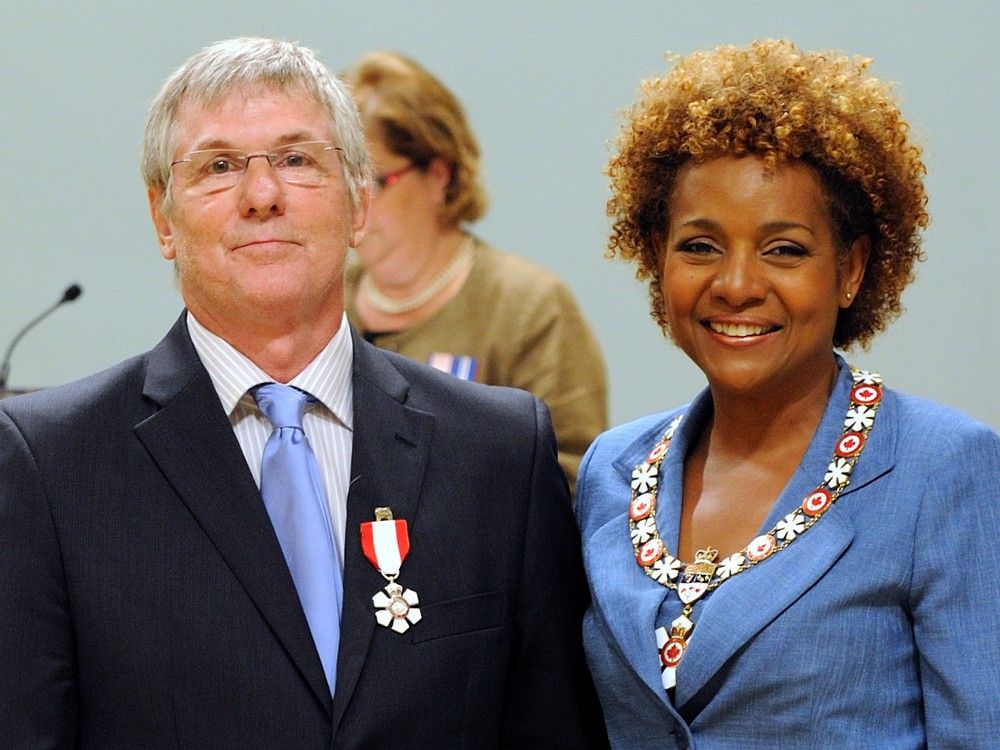
 David Adams Richards was invested into the Order of Canada by Governor General Michaëlle Jeanau in 2009.

Richards has been a writer-in-residence at multiple universities and colleges across Canada, three of which have awarded him honorary doctorates — the University of New Brunswick (1995), Mount Allison University in Sackville (2008), and St. Thomas University in Fredericton (1990). He received the same honour from the Atlantic School of Theology in 2010.

In 1998, he became one of just three Canadian writers to win a Governor General’s Literary Award in both fiction and non-fiction for Nights Below Station Street (1988) and Lines on the Water: A Fisherman’s Life on the Miramichi (1998). Writers Laura G. Salverson and Hugh MacLennan are the others. Meanwhile, his 1993 fiction novel For Those Who Hunt the Wounded Down and 2007’s The Lost Highway were also nominated for the government honour.

In 2000, his Mercy Among the Children was a co-winner of the Giller Prize along with Anil’s Ghost by Michael Ondaatje, the only time two recipients have shared the honour in its 31-year history. Lost Highway and The Friends of Meager Fortune (2006) were both longlisted for the Giller.

Richards has also been awarded two Gemini Awards for scriptwriting (Small Gifts and For Those Who Hunt the Wounded Down), the Alden Nowlan Award for Excellence in the Arts, the Canadian Authors Association Award for his novel Evening Snow Will Bring Such Peace, the 2011 Matt Cohen Award for a distinguished lifetime of contribution to Canadian literature and the Canada-Australia Literary Prize.

He is a member of the Order of New Brunswick (2005) and the Order of Canada (2009).

Richards the Senator 

When

first appointed to the Senate by Trudeau in 2017

, two years after the then-prime minister established the Independent Advisory Board for Senate Appointments to make the Upper House less partisan, Richards joined the relatively new Independent Senators Group (ISG).

The cohort had come together the year prior, not as a political party, but to work together on procedural and administrative matters, and had quickly grown to be the largest group in the Senate at 43 members.

Its size is what led to his departure to sit as a non-affiliated senator.

“There was certainly a leaning toward government bills which I thought at certain times I didn’t completely support,” he told Jason VandenBeukel in

an interview for his doctoral thesis in political science from the University of Toronto.

“And so I decided I will be an independent and come to my own conclusions about things.”

In November 2019, he was one of the founding members of the new Canadian Senators Group (CSG), which was established in part to address centralization within the Senate, particularly in the ISG, and to reinforce senators’ roles as regional representatives.

He remained with the second-largest ensemble in the upper house until May 21 this year, when he left to again sit as a non-affiliated member. He’s the only Liberal-appointed Senator to have joined the Conservative caucus, which now counts 12

s

enators.

As of Thursday, ISG leads the way with 45 members, CSG follows with 21, the Progressive Senator Group has 18, and there are eight non-affiliated. There’s one vacancy — the seat left behind upon Don Plet’s

mandatory retirement at the age of 75 earlier last month.

He’ll soon be joined in retirement by Richards, who turns 75 on Oct. 17.

In the Senate, Richards has been critical of Trudeau’s Liberal government at times, particularly regarding Bills C-11, the Online Streaming Act, and C-22, Ottawa’s controversial firearms legislation.

On the latter, in June of 2023,

he stood in the Senate

to lament Canadians being lectured “by a government that assumes and presupposes a superior moral nature against certain members of its own citizenry, and acts with uppity condescension toward so many who have done no wrong, suspecting them — without evidence — of things they would not do, while being unable to stop those who will continue to do wrong despite the regulations they continuously and tiresomely propose.”

 In 2023, Senator David Adams Richards sounded off against government legislation that aims to police streaming giants, calling it ‘censorship passing as national inclusion.’

He voted against it, but C-21 would receive royal assent in December.

As for the Online Streaming Act, he called it “censorship passing as national inclusion” and then read from an essay explaining how it puts freedom of speech and thought under threat.

“This is not opening the gate to greatness but only to compliance,”

he said.

“The writers I know don’t need to advance to fit an agenda, and neither do the songwriters or bloggers. When this bill mentions how we have evolved, it is simply a suggestion to comply.”

It, too, received Royal Assent.

Years earlier, it wasn’t legislation that Richards fervently spoke out against; it was how the uninformed vernacular used by U.S. hockey play-by-play broadcasters was changing how their Canadian counterparts call a game.

Reading from a statement, he said players don’t wear jerseys, they wear sweaters, and they put them on in the dressing room, not the locker room. There’s no such thing as a half wall, he insisted, it’s just the boards. And don’t call it a slapper, it’s a slapshot.

“These odious phrases are all momentary inventions by American play-by-play announcers who have never played or understood the game, and worse, almost sacrilegious, have no respect for millions of Canadians who do understand and love the game. Sayings now adopted by Canadians who have no sense of tradition,” Richards said.

“The first thing lost is the game’s essential genius.”

Our website is the place for the latest breaking news, exclusive scoops, longreads and provocative commentary. Please bookmark nationalpost.com and sign up for our daily newsletter, Posted, here.

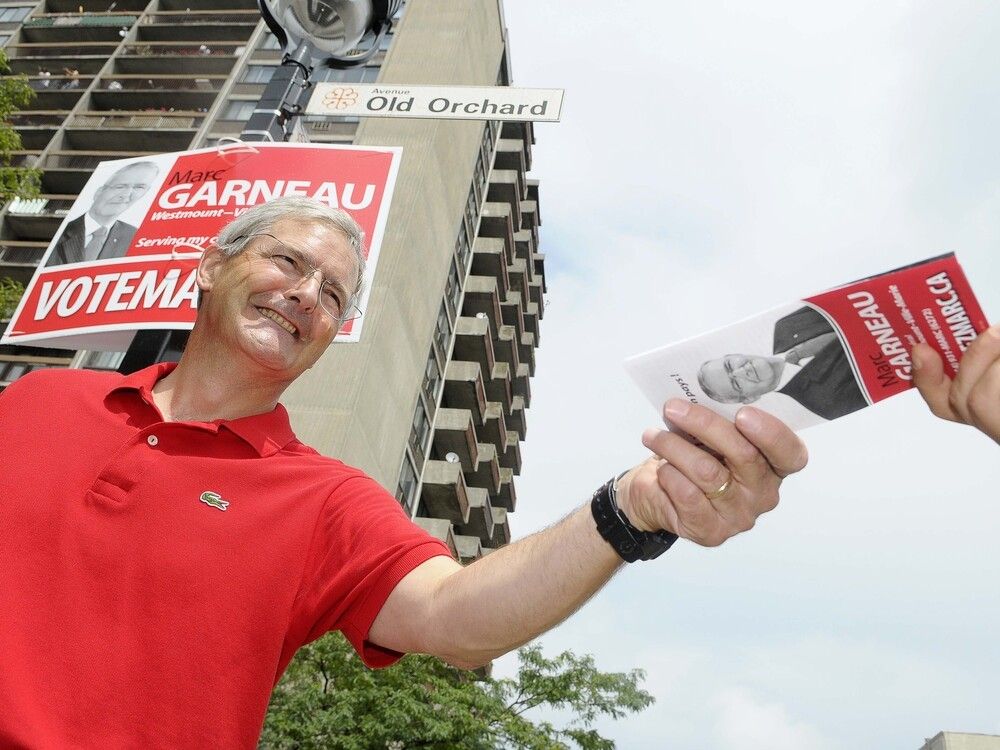
Marc Garneau hands out pamphlets on Monkland Avenue in Montreal on July 8, 2008.

OTTAWA — Meili Faille couldn’t believe her ears when she heard the news. Marc Garneau, the first Canadian to have visited space, was preparing to run against her in the 2006 election.

A few weeks later, she won. And Garneau never forgot it.

Twenty years ago, the Bloc Québécois MP at the time held sway in Vaudreuil—Soulanges. This riding, located on the west side of the island of Montreal, near the Ontario border, had elected Faille in 2004 following the sponsorship scandal.

In a riding where former NDP Jack Layton grew up, having a separatist represent a bilingual and multicultural community was an odd fit.

“We had an incredible team on the ground. We were dedicated to the community… Honestly, I didn’t even count the number of events I attended at the time, it was every single day,” Faille recalled in an interview with National Post.

But then, the race was shaken up

by then prime minister Paul Martin

.

Garneau, the then-president of the Canadian Space Agency was not launching his shuttle into space, but rather into the political sphere.

“Marc Garneau, I am convinced, will be a star in the parliamentary firmament,” said Martin at the time.

He was not.

Faille easily beat him by more than 9,000 votes in 2006, when the Conservatives took power. Garneau was a neophyte who went so far as to predict that the Bloc would disappear, “like dinosaur,” when he launched his political career.

“Marc Garneau was Canada, Canada, and simply Canada. It was his image. He was a Canadian figure. I mean, in the midst of the sponsorship scandal, it was a no-win situation for him,” Faille said.

“Basically, he was not able to convince people that he could prioritize Quebec positions over federal positions,” she added. “He was captain Canada.”

 Liberal Leader Paul Martin, left, arrives for a campaign stop with former astronaut Marc Garneau, the Liberals’ new candidate in Vaudreuil-Soulanges riding, Nov. 30, 2005.

His relationship with Quebec was not always easy. After 14 years in the House of Commons, he resigned in 2023, before his own government passed Bill C-13, an overhaul of the Official Languages Act, which included references to Quebec’s Charter of the French Language, known as Bill 96.

He found this inappropriate.

Garneau, a francophone, feared that the rights of Quebec’s English-speaking minorities were threatened by a conflicting interpretation of federal and provincial laws. “I’ve said this was a hill to die on. It is,” Garneau

told the Montreal Gazette

at the time.

It took hours for Quebec Premier François Legault to acknowledge Garneau’s death at the age of 76.

Parti Québécois leader Paul St-Pierre Plamondon did not offer his condolences, relaying instead a message from one of his PQ colleagues.

Meanwhile, in Ottawa, former colleagues described Garneau as a “gentleman,” “very serious,” “down to earth,” who’s reputation was unlike anybody else.

“He was so serious and took everything so seriously, to get him to loosen up a little bit was very difficult. Rarely did he take time to laugh and smile,” said his former liberal colleague MP Judy Sgro.

Even Faille was shaken. During his first election in 2008, Garneau ran into Faille, who had just defeated another star candidate: former Conservative senator and cabinet minister Michael Fortier.

The two exchanged pleasantries and ended up sitting together in opposition for three years, before Faille lost her seat in 2011.

“He was a good man. Listen, we weren’t in the same political family, but we respected each other. Marc was very nice,” said Faille.

In 2007, after then leader Stéphane Dion refused to allow Garneau to run in a byelection in Outremont against the NDP’s Thomas Mulcair, Garneau left politics.

He had previously supported Michael Ignatieff in the leadership race that Dion won and many Liberals suggested at the time that the two men weren’t necessarily the best of friends.

“By land or in space, through science and democracy, Marc Garneau has moved Canada and France, Canada and Europe, forward in the same direction. His memory will inspire us in our future endeavours,” Dion, who is now Canada’s ambassador to France,

wrote on Wednesday night

.

But the former astronaut ended up running in 2008 in the general election anyway.

Marcel Proulx, then Dion’s lieutenant in Quebec, met with Garneau to formalize his candidacy and present himself in a Montreal Liberal stronghold.

“It was a big deal that he would consider a run for us in Westmount-Ville-Marie. A huge deal. Let’s not forget that the LPC was not exactly popular in Quebec at the time,” Proulx told the Post.

“Westmount was the perfect riding for him. The riding needed a candidate of his caliber, perfectly bilingual and who cared about its needs and aspiration. And it worked,” he added.

The party wanted him to succeed. Marc Roy, a longtime Liberal collaborator from the Chrétien and Martin era, was sent by the party to evaluate the star candidate.

“We needed to help him,” Roy told us. As an astronaut, Garneau gave hundreds of interviews without any problem. In politics, it was different.

“Let’s just say he’s come a long way, like any politician, but it was a learning curve for him,” said Roy who later went on to become his director of communications and chief of staff while he was minister of Transports.

In 2008, Garneau won the election and spent 14 years on the Hill.

Roy saw firsthand his boss’s dedication and why he would never lose another election.

For example, Garneau left Montreal on a Saturday morning by train to visit Marc-Garneau School in Trenton, Ont., and returned home the same day.

He also met with the residents of Lac-Mégantic at a very emotional town hall meeting following the 2013 train derailment that destroyed the town.

“He always took the time, no matter the circumstances, to give that small amount of time to answer a question because he recognized the great privilege he had and the duty to give back and share it,” Roy said.

Garneau, he said, was an eternal student. He never forgot his first loss in Vaudreuil—Soulanges. It was not a regret. It was a noble experience, he thought.

“No matter the outcome, (all those who run in elections) never lose in such circumstances. Democracy is always well served,” Garneau said in

his farewell speech

on the floor of the House of Commons.

National Post

atrepanier@postmedia.com

Get more deep-dive National Post political coverage and analysis in your inbox with the Political Hack newsletter, where Ottawa bureau chief Stuart Thomson and political analyst Tasha Kheiriddin get at what’s really going on behind the scenes on Parliament Hill every Wednesday and Friday, exclusively for subscribers Sign up here.

Our website is the place for the latest breaking news, exclusive scoops, longreads and provocative commentary. Please bookmark nationalpost.com and sign up for our newsletters here.


Government House Leader Steven MacKinnon speaks with reporters outside of the Liberal caucus meeting in West Block on Wednesday, June 4, 2025.

OTTAWA — Prime Minister Mark Carney’s Liberal government used an obscure parliamentary maneuver to sidestep its first major test of confidence on Wednesday, adopting its reply to the throne speech by division.

The measure sailed through the House of Commons without a vote after Liberal MP Kevin Lamoureux, the parliamentary secretary to government House leader Steven MacKinnon, moved without objection for the government reply to be

sent to the King

via Governor General Mary Simon.

Conservative Leader in the House of Commons Andrew Scheer was one of the MPs on hand to watch the motion carry.

Ian Brodie, a political scientist and former chief of staff to ex-prime minister Stephen Harper, said that the procedural set piece likely reflected a tacit agreement between the new government and opposition parties.

“I’m sure the opposition parties thought this through and have consented to let the Carney government continue on,” said Brodie.

According to the

House rules of procedure

, motions like

the throne speech reply

may be adopted without a vote under two circumstances: by unanimous consent and “on division.”

The latter happens when support for the motion isn’t unanimous but no member of a recognized party moves for a recorded vote on its passage to be taken.

Interim NDP leader Don Davies said in the preceding hours that he’d instruct

his seven-member caucus

to vote against the motion but wasn’t in a position to make good on the threat, with the NDP not having enough seats to count as a “recognized party” for the

the purposes of parliamentary proceedings.

The minority Liberal government

suffered a minor scare

on Monday evening when it didn’t have the votes blocking a hostile amendment to the throne speech reply calling on it to present an economic update before Parliament breaks for the summer. The procedural vote was not a matter of confidence and the government has said it doesn’t consider it binding.

Liberal MPs downplayed

the narrowly lost vote

, saying that they weren’t surprised by the result.

Brodie says that a new election would not necessarily have been triggered if the Liberal throne speech reply was voted down.

“The Governor General could reasonably ask (Conservative Leader Pierre) Poilievre to form a government. It’s possible he could command the confidence of the House,” said Brodie.

He pointed out that the Liberal government has yet to clearly establish that it enjoys the confidence of the House since Parliament was prorogued by Carney’s predecessor Justin Trudeau several months ago.

— With additional reporting from the Canadian Press

National Post

rmohamed@postmedia.com

Get more deep-dive National Post political coverage and analysis in your inbox with the Political Hack newsletter, where Ottawa bureau chief Stuart Thomson and political analyst Tasha Kheiriddin get at what’s really going on behind the scenes on Parliament Hill every Wednesday and Friday, exclusively for subscribers. Sign up here.

Our website is the place for the latest breaking news, exclusive scoops, longreads and provocative commentary. Please bookmark nationalpost.com and sign up for our politics newsletter, First Reading, here.