LP_468x60
on-the-record-468x60-white

9News reporter Lauren Tomasi was hit by a rubber bullet fired by the LAPD at the far left while she was covering the protests in Los Angeles on Sunday.

As tensions boiled over for a third-straight day in Los Angeles, an Australian television reporter covering the unrest was hit with a rubber bullet during a live broadcast on Sunday.

At the time, Lauren Tomasi, a U.S. correspondent for 9News, and her camera operator were wrapping up a live hit from a downtown street near the Metropolitan Detention Centre, where protesters have clashed with police since Friday.

“This situation has now rapidly deteriorated, the LAPD moving in on horseback, firing rubber bullets at protesters, moving them on through the heart of L.A.,” the 31-year-old, standing alongside other members of the media, says into the camera as loud bangs and screams echo around her.

As the camera pans to the viewer’s left, an unmasked LAPD officer in riot gear quickly appears to take aim and fire at Tomasi, who is standing back on. The reporter quickly grabs her lower left leg as she screams in pain.

“You just f—ing shot the reporter,” screams a voice off camera as Tomasi’s cameraman turns away and asks if she’s OK.

“Yeah, I’m good, I’m good,” she says, emotion evident in her voice as they move away from the scene.

Some time before, at approximately 5 p.m. Pacific Time, Tomasi and her cameraman, whom she later identified as Jimmy, were caught in a large crowd that officers were trying to disperse from a major intersection with tear gas, flash bangs and horse-mounted officers.

“We are safe here. It’s just noisy. But you can see the volatility,” she tells Today Extra hosts back in Sydney.

The city had declared the gathering to be an unlawful assembly.

“Arrests are being made. To our media partners, please keep a safe distance from active operations,”

LAPD posted on X.

As things escalate, Tomasi and her cameraman try to stay to the side, but masked protesters interfere with her and the camera, forcing 9News to cut away.

Speaking with colleague Peter Overton later that night, Tomasi, who kept working after being struck, said it’s the risk journalists take.

“I’m OK. My cameraman Jimmy and I are both safe. This is just one of the unfortunate realities of reporting on these kinds of incidents,” she said in an area now entirely cleared of protesters.

Their employer echoed her statement and said the duo would continue to cover the happenings.

“This incident serves as a stark reminder of the inherent dangers journalists can face while reporting from the frontlines of protests, underscoring the importance of their role in providing vital information,”

Nine said in a statement.

Back in Australia, Senator Sarah Hanson-Young called it “shocking” and “completely unacceptable” on

BlueSky

and urged Prime Minister Anthony Albanese to raise the matter directly with U.S. President Donald Trump.

Per

The Guardian

, Senator Matt Canavan told the Australian Broadcasting Corporation that “a detailed investigation” is required, while Senator Nick McKim said government should immediately “make its displeasure at what happened abundantly clear … at the highest possible level.”

Meanwhile, Australia’s Department of Foreign Affairs and Trade issued a statement to say that the country “supports media freedom and the protection of journalists,” who should be able to work in safety.

Our website is the place for the latest breaking news, exclusive scoops, longreads and provocative commentary. Please bookmark nationalpost.com and sign up for our daily newsletter, Posted, here.


Canada's Prime Minister Mark Carney speaks during a news conference with members of his Cabinet on Parliament Hill June 6, 2025 in Ottawa, Canada.

OTTAWA — Prime Minister Mark Carney is pledging that Canada will achieve NATO’s spending target of two per cent of GDP on defence this year — five years ahead of

his prior commitment which promised to meet the mark by 2030

.

Carney, who is set to attend the NATO Summit later this month, made the announcement in a speech at the Munk School of Global Affairs and Public Policy in Toronto on Monday.

He said Canada’s strategy is focused on four pillars: investing in the “foundations of defence,” expanding and enhancing military capabilities, strengthening the government’s relationship with the defence industry and diversifying Canada’s defence partnerships.

“We will ensure every dollar is invested wisely, including by prioritizing made-in-Canada manufacturing and supply chains,” he said.

“We should no longer send three quarters of our defence capital spending to America.”

Canada’s boutique military: ‘Should we not be able to defend ourselves?’

Carney said the government will invest in new submarines, aircraft, ships, armed vehicles and artillery, as well as new radar, drones and sensors. He also committed to a larger and sustained Canadian Armed Forces presence in Canada’s north, year-round.

He said the government will expand the reach and security mandate of the Canadian Coast Guard and integrate those investments into Canada’s defence capabilities. And he said members of the Canadian Armed Forces will receive a “well-deserved” salary bump.

“We will further accelerate our investments in the years to come, consistent with meeting our new security imperatives,” he said.

“Our goal is to protect Canadians, not to satisfy NATO accountants,” he added.

Canada has long been under fire for not meeting NATO’s two per cent spending benchmark. The country is currently spending about 1.4 per cent of its GDP on defence.

Last year, Prime Minister Justin Trudeau pledged to meet NATO’s benchmark by 2032. During the leadership campaign, Carney moved that target by two years and said Canada would meet it by 2030.

Carney’s promise to meet it this upcoming year marks a significant shift. It also comes as NATO allies are expected to raise the defence spending target to five per cent of GDP.

Carney said the Department of National Defence will “immediately” design a new defence policy, “informed by experts and the experience of allies and partners, including Ukraine.”

He also committed to creating a new Defence Procurement Agency that will be overseen by Stephen Fuhr, his Secretary of State for Defence Procurement.

Carney called on all parties in Parliament to support these “critical investments in our security and sovereignty” but did not say if and when legislation will be tabled to approve billions in new defence spending.

He will be taking questions from reporters this afternoon.

National Post

calevesque@postmedia.com

Get more deep-dive National Post political coverage and analysis in your inbox with the Political Hack newsletter, where Ottawa bureau chief Stuart Thomson and political analyst Tasha Kheiriddin get at what’s really going on behind the scenes on Parliament Hill every Wednesday and Friday, exclusively for subscribers. Sign up here.

Our website is the place for the latest breaking news, exclusive scoops, longreads and provocative commentary. Please bookmark nationalpost.com and sign up for our daily newsletter, Posted, here.


New Glasgow Regional Police have charged a 22-year-old man with advocating and promoting genocide, public incitement of hatred and wilful promotion of hatred.

Jewish groups are praising a small-town Nova Scotia police force after a man who allegedly called for “death to all Zios” and said “we are going to ruin Zio Joo lives” was charged with hate crimes.

On Saturday, New Glasgow Regional Police charged a 22-year-old man with advocating genocide and promotion of hatred. He is in custody and expected to appear in court on Monday.

The arrest followed alleged postings calling for the deaths of “all Zios and people who support them,” a reference commonly used by anti-Israel activists to describe Zionists.

The Toronto-based

Canadian Antisemitism Education Foundation

commended the Nova Scotia police force for its “swift and efficient reaction” to a complaint of online hate.

“Within 36 hours of receiving this complaint, they effected an arrest and laid charges,” the group said in a “letter of commendation” posted to the X social media site. The foundation noted such charges require the consent of provincial prosecution authorities.

“Amazing,” the

Tafsik Organization

, a Toronto-based Jewish civil rights group, concurred on X.

The case had drawn much attention online after a prominent X account known as Leviathan shared alleged social media postings.

“I want all Zios and people who support them killed. If you are armed and reading this go out and kill, injure, take prisoners and bomb with great fireworks shoot in the sky. I want to see bomb explosions and death and destruction of all colonial capitals. I want no remorse, no quarter, One Israeli, One Tannish, One AmeriKKKa, One Dead Bastard,” reads one post shared by the Leviathan account.

In another, a man allegedly said: “Get ready for tomorrow and the next 3-4 months. Going to be wild seeing all the Zionists fall like fucking dominoes. We’re going to end their careers and beat them up and fuck the wound and end them once and for all. We are going to ruin Zio Joo lives. We are going to hang up the dirty Talmudic Zio Jooish demons and complete collapse and destabilize this ‘country’ and ensure no one can hide from me … because I am coming for them.”

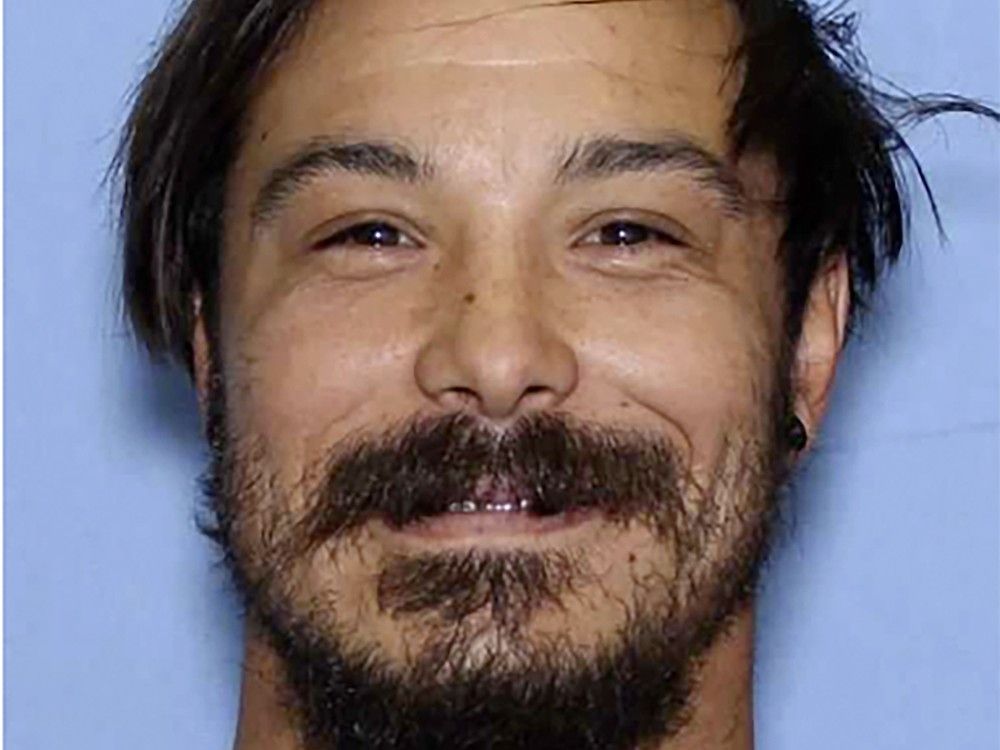
Luke Alexander McDonnell faces charges of advocating and promoting genocide, public incitement of hatred and wilful promotion of hatred.

“The New Glasgow Regional Police are committed to thoroughly investigating hate-motivated crimes and unequivocally condemn these reprehensible acts,” the force said in a news release.

Our website is the place for the latest breaking news, exclusive scoops, longreads and provocative commentary. Please bookmark nationalpost.com and sign up for our daily newsletter, Posted, here.


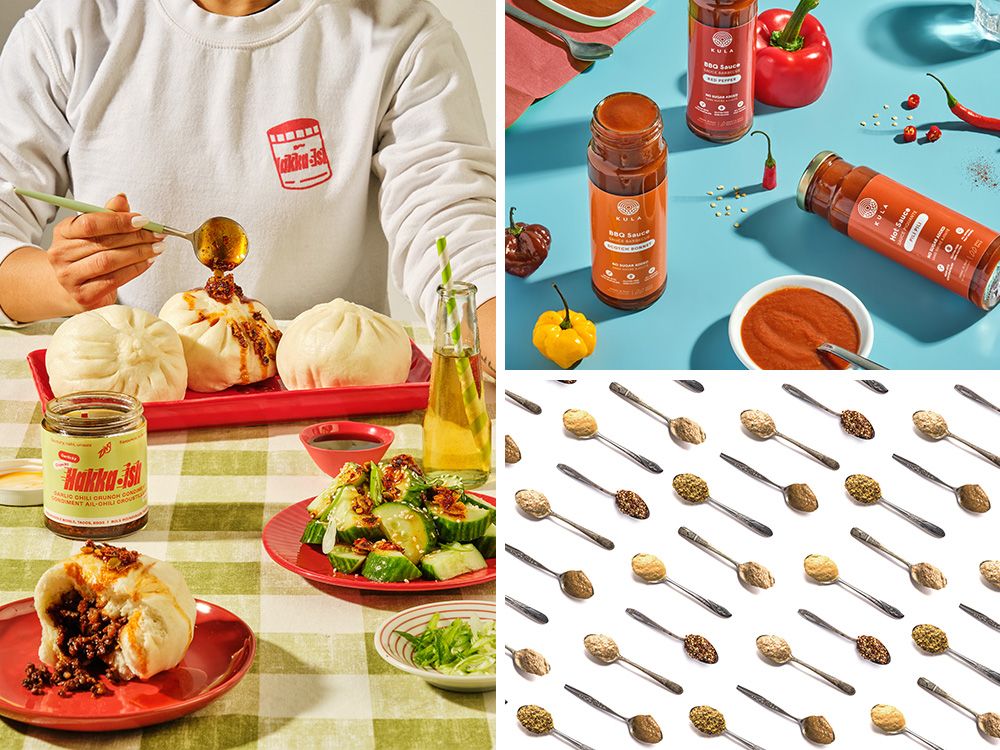
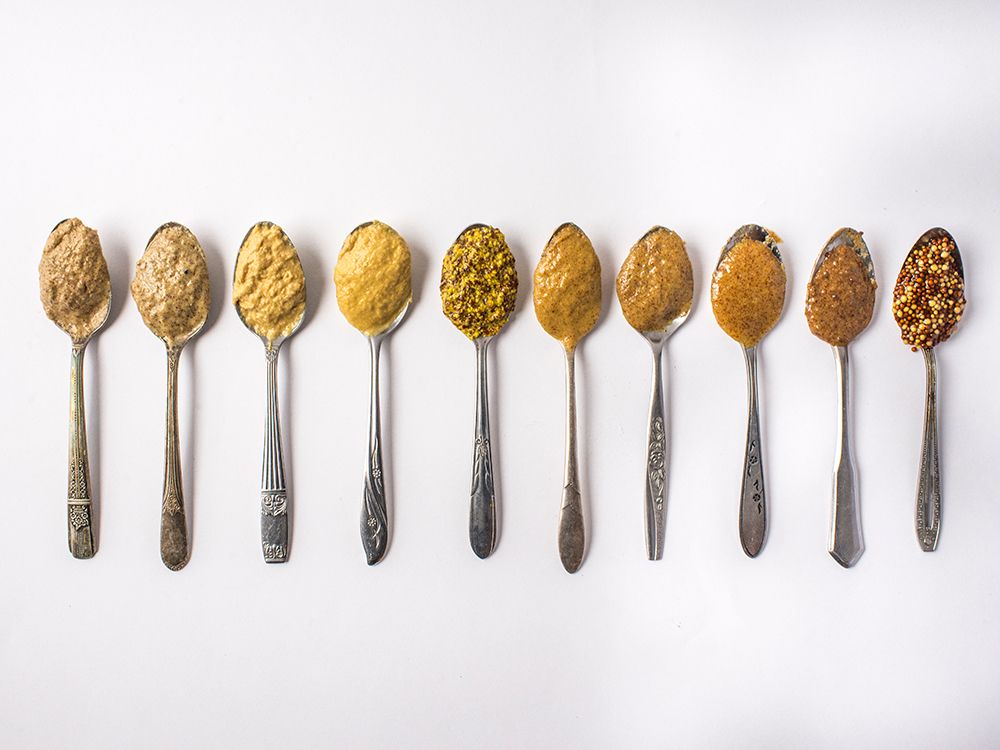
Clockwise from left: Zing Pantry Shortcuts' Hakka-ish Chili Crisp, KULA Foods' no-sugar-added barbecue sauces and pili pili hot sauce, and Kozlik's mustards. PHOTOS BY ZING PANTRY SHORTCUTS/DOAA JAMAL/KOZLIK'S

The “Buy Canadian” movement is stronger than ever. Seven in ten seek homegrown products when they shop (68 per cent, up five points from February), and more than half look at labels to avoid items made in the United States, according to a

Narrative Research

poll.

Proving that shopping local is no sacrifice, from innovative ways to slash sugar and sodium to time-honoured traditions, these six Canadian condiment companies make meals more delicious.

One of them is a dramatic example of how the “Buy Canadian” movement can change the trajectory of a small business overnight. Most have experienced a boost in sales and are finding grocery buyers more receptive because of the rise of patriotic consumerism. All are available Canada-wide at retailers or via their websites.

The condiment market is growing. With customers increasingly seeking out “

bold, international tastes

,” it’s only expected to expand.

A dab of mustard, a dash of hot sauce or a drizzle of chili oil can make the difference between a ho-hum meal and a phenomenal one. These producers reflect the diversity of Canada’s communities, whether expressing their heritage through flavour or creating something wholly new from homegrown ingredients.

“I’m loving how Canadians are recognizing all of the things that are available in our home,” says Asha Wheeldon, founder and CEO of Vancouver’s

KULA Foods

. “We have so many brands. We have so much richness of ingredients grown in Alberta, in B.C., and across Canada that we have access to.”

AKI’S FINE FOODS

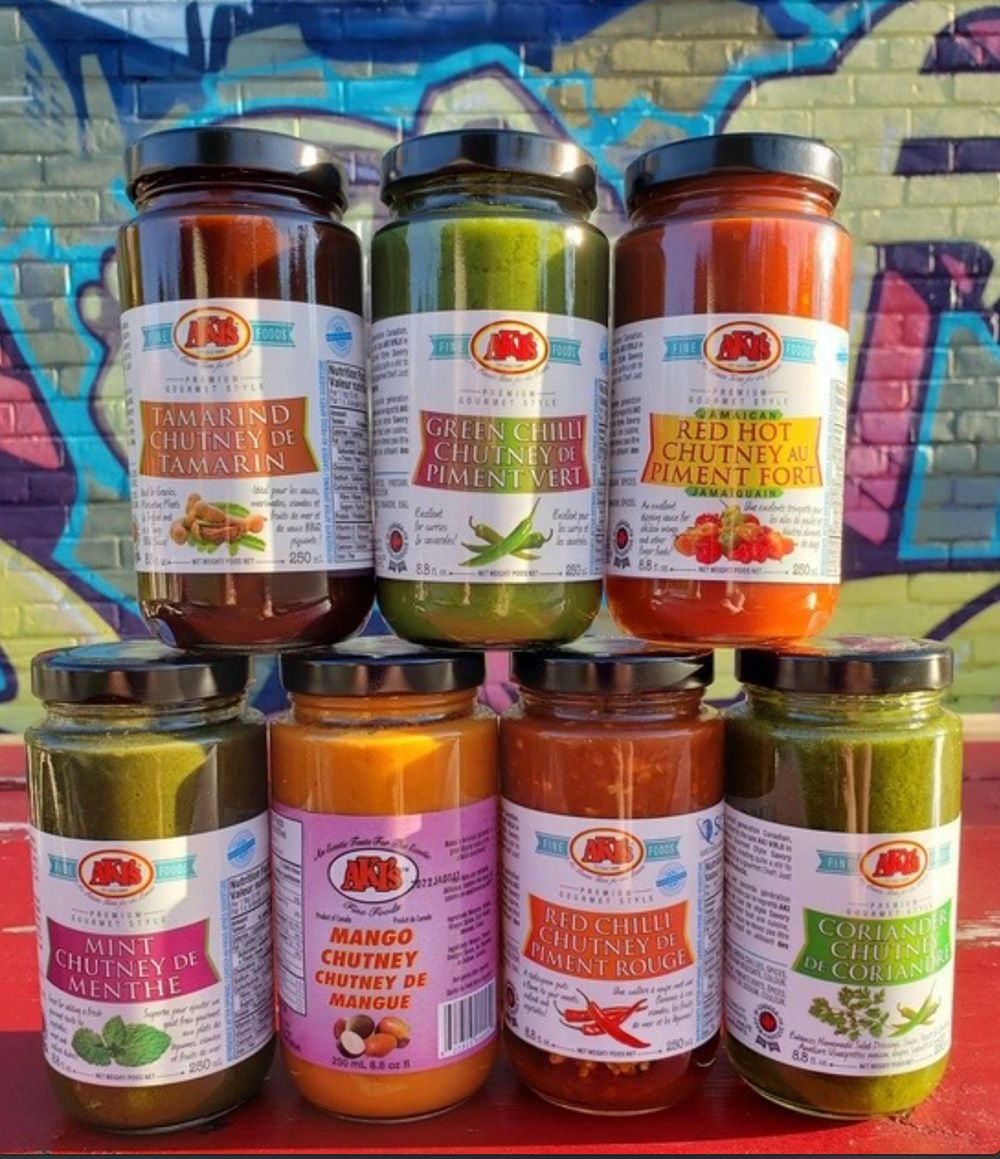
 Aki’s Fine Foods’ pickles, chutneys and barbecue marinades reflect CEO Shenul Williams’s Tanzanian birthplace and Indian heritage.

From

whisky

to

bean-to-bar chocolate

to

cheese

, many food and drink businesses have seen an uptick in sales since the “Buy Canadian” movement started gaining momentum in February. What Shenul Williams’s condiment business,

Aki’s Fine Foods

, experienced was more than a mere boost — it was a tsunami.

In March, Williams talked to her family about possibly having to close her Pickering, Ont.-based company. “I was just venting,” Williams recalls. “(I said), ‘We can’t take another whip like we took through COVID, and these tariffs are going to kill us. We can’t survive.”

Her daughter, Aliza Welch, took action. Unbeknownst to Williams, Welch posted about Aki’s Fine Foods on a “Buy Canadian”

Reddit thread

. The post went viral, and online sales are up 6,000 per cent.

“She’s my hero. She’s been there for me, thick and thin,” Williams says of Welch.

“My mom has been operating via word of mouth for 38 years, and until I made that post, that’s the only real social media presence this company has had,” says Welch, laughing. “That’s how you know her sauces are good because she’s been in business for this long.”

At first, they were concerned that the surge of interest in Aki’s Indo-African condiments, including pickles, chutneys and barbecue marinades, would fade, but it hasn’t. People across Canada are placing orders — with customers in British Columbia, Newfoundland and Ontario showing the most enthusiasm — and Williams hand-writes a thank-you card to each one.

“The way Canadians have been rallying behind my mom has been unlike anything I’ve ever seen before — and how they continue to rally behind my mom,” says Welch, now Aki’s marketing and outreach director (on top of her job in health care). “We just cannot thank them enough.”

Williams’s parents, the late Aki and Daulat Virji, founded the company in 1986. After Aki got cancer in 1989, Williams became CEO. “A young kid on the block and taking over, it was really hard, especially not knowing anything about the business,” she says. “It was a very rough time, but I think (the sentimental value) kept me going all these years. We’ve had ups and downs, but that’s what made me survive.”

Originally from Tanzania, Williams’s products reflect her East African birthplace and Indian heritage. “With the Indian fusion, they’re really, really robust flavour,” she says. Welch sees the longevity of Aki’s Fine Foods as a sign that Canadians want condiments that taste like “someone’s auntie” made them, using fresh ingredients in small batches.

Aki’s medium-hot Coriander Chutney is a top seller, and Welch likes to put it on everything from avocado toast to eggs. (She recommends the Red Hot Jamaican Chutney for heat lovers.) Mango Chutney, Chili Ginger Pickle, and Garlic and Ginger Paste are also popular. In 2024, Aki’s Zanzibar Spice BBQ Marinade was named the best sauce at Vancouver’s

Grocery and Specialty Food West

trade show.

Since Welch’s post, Aki’s has secured a national distributor, and stores that stocked some products want to include a broader range. Other major and independent retailers have also expressed interest, which Welch says is the direct result of thousands of customers requesting Aki’s condiments.

“I don’t think I realized before all of this how much of an impact we had as individual Canadians and buyers of products. People tell you, ‘Be aware of how you spend your money. It makes a difference.’ And until seeing how this influenced my mom, I didn’t realize how much power we had,” says Welch.

Williams adds: “My life changed overnight.”

LA BRASSERIE SAN-Ô

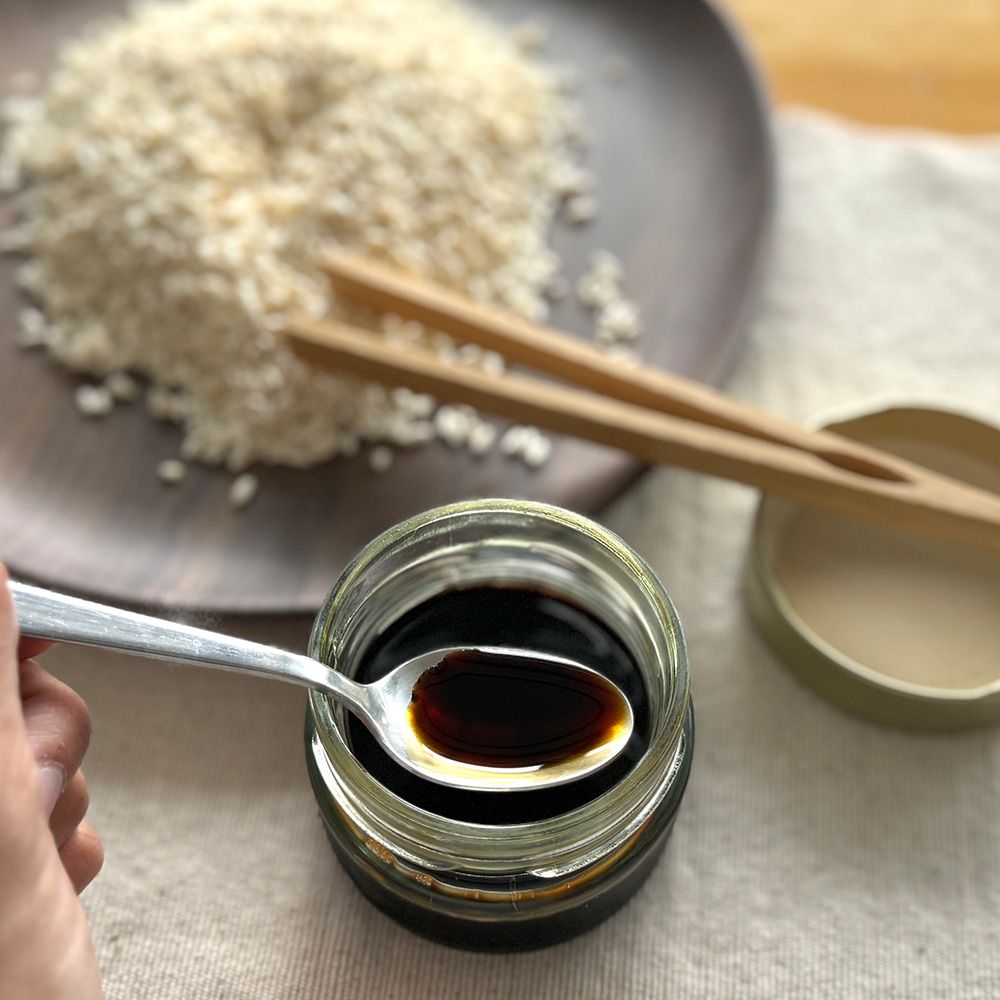
 La Brasserie San-Ô’s upcycled coffee teriyaki sauce is fermented using spent espresso grounds and koji.

Using only koji, rice, water, hazelnuts, cocoa and sea salt, Montreal’s

La Brasserie San-Ô

makes a chocolate spread that will leave you asking, “Nutella who?” Its no-sugar-added, dairy-free

Koji Cocoa Spread

won the silver

innovation award

at SIAL Canada in April, North America’s largest food innovation trade show. It stood out among 170 applications from 13 countries “as an indulgent but better-for-you spread.”

Husband-and-wife team Noriko Suzuki and Yota Suzuki founded the company in 2021 (formerly known as Koji Soupe & Labo) with restaurateur Masum Rahman, owner of

Buffet Maharani

, where they started production before moving to a dedicated fermentation lab.

Yota was a sake brewer in the Suzukis’ native Japan. The couple was familiar with amazake (“sweet sake”) — the first step of sake-making embraced as a naturally sweet, low-alcohol or non-alcoholic drink in its own right — and aimed for more concentrated sweetness. Noriko began using it as a sugar alternative. Then, her thoughts turned to breakfast. “What if we can use amazake as a chocolate spread?”

It all started with koji. “This is a really magic ingredient to enhance umami in any kind of cuisine,” says Noriko, president of La Brasserie San-Ô.

Koji, grain (such as rice or barley) inoculated with the mould Aspergillus oryzae, is “the heart of Japanese fermentation.” It lays the foundation for many condiments, such as miso, mirin, soy sauce and pickles. Though the Suzukis knew about koji,

Noma

, the legendary Copenhagen restaurant, inspired them to experiment beyond traditional uses.

(David Zilber, the former head of Noma’s fermentation lab and co-author of

The Noma Guide to Fermentation

, and current director Kevin Jeung are

both from Toronto

.)

“We try many, many new products. When I show the products to Japanese soy sauce companies or miso companies, they say, ‘Oh, this is not miso.’ ‘But this is not soy sauce.’ Noma opened our eyes,” says Noriko.

In addition to its cocoa spread, La Brasserie San-Ô makes artisanal condiments such as richly flavoured

red

and mellow

white

misos and

salt

and

soy sauce koji

, which Noriko recommends using in salads or as a marinade for proteins to enhance umami and tenderness. She highlights that only seven per cent of the soybeans used to make Japanese miso are domestic — most are grown in countries like Canada, shipped to Japan and then sent back in miso form. At La Brasserie San-Ô, they use Quebec soybeans, making their misos a wholly local product.

When they started the business, koji was lesser-known. Today, word is spreading. Most of their customers are chefs in cities such as Montreal, Quebec City and Ottawa, which Noriko credits to Noma’s influence. “Even chefs who said at that time, ‘We don’t use koji because we’re a French restaurant,’ are getting back (in touch, saying), ‘Maybe we can use your products,’” she says, laughing.

The Suzukis enjoy experimenting with koji to create new condiments, such as an upcycled coffee teriyaki sauce fermented using spent espresso grounds and koji, vegan oyster sauce, ketchup and Indian seasonings.

“We’re really having fun incorporating new types of dishes with Japanese condiments. When I was in Japan, we only used these condiments to cook Japanese food, but since we came here, we’ve found many global ingredients to incorporate with koji condiments. So, I want to explain and expand this interesting field to the Canadian market,” says Noriko. “It’s such a good journey for us as well. The story started when we immigrated to this country. That really opened our horizons.”

ZING PANTRY SHORTCUTS

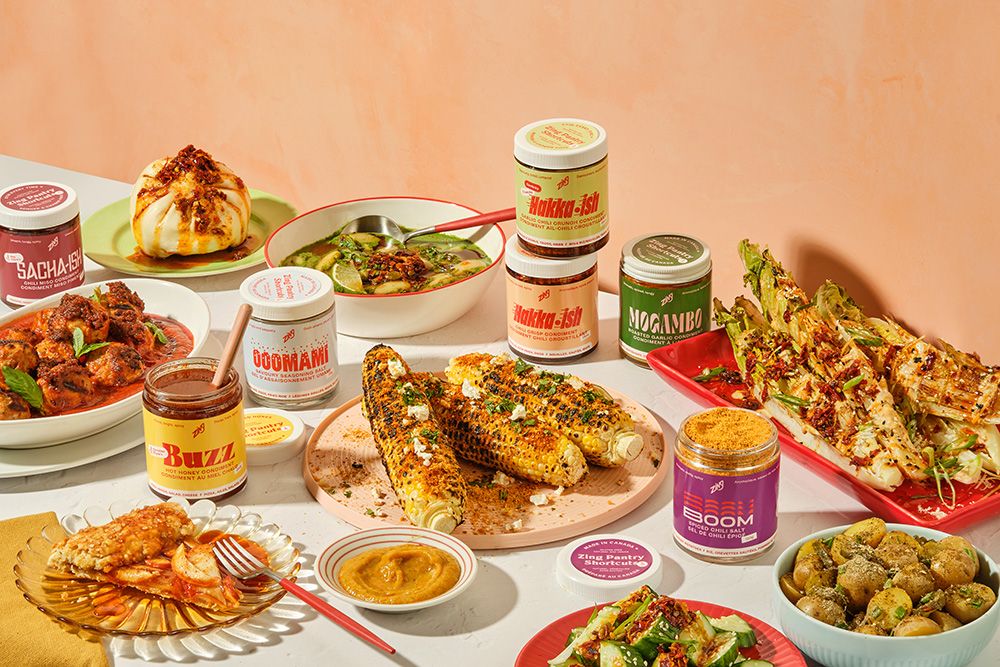
 Jannine Rane, Anush Sachdeva and Kiran Singh founded Toronto’s Zing Pantry Shortcuts in 2020.

In 2020, as people across Canada found themselves managing three meals a day within four walls, Jannine Rane and Anush Sachdeva were also in the throes of the “what’s for dinner” dilemma.

“We really were just trying to figure out a way where we could have that variety, which is the reality of how most people eat today. (It’s) based on wanting a mix of cultures, wanting that convenience, but then also the reality of what’s in the fridge at 6:23 on a Tuesday,” says Rane, co-founder and CEO of

Zing Pantry Shortcuts

in Toronto.

The average Canadian knows

seven recipes

, she adds, which is in stark contrast to our growing appetite for global flavours. According to

Canadian Grocer

, Korean, Japanese, Filipino and Thai cuisines are driving 24 per cent growth in the multicultural food category.

“How we want to eat and how we eat — there was no real overlap there. So that was the pain point. How do we eat what we want without having to spend hours in the kitchen? And the inspiration was really restaurants,” says Rane. “How does a restaurant get a plate of dinner from the kitchen to your table in 20 minutes? The secret sauce is the secret sauce, quite literally.”

Rane and Sachdeva co-founded Zing with their friend Kiran Singh, a chef, to bottle sauces that brought flavour “without compromising on quality or health. And doing it in a way that is also an homage to Canada and reflects the communities we live in.”

Over the past five years, they’ve partnered with Canadian chefs and food creators to develop a range of condiments, including Vincent Ng’s

Mala Savoury Chili Salt

, Pay Chen’s

Sacha-ish Chili Miso Condiment

and Christine Flynn’s

Buzz Hot Honey

.

They make their products in a Mississauga facility and manage all aspects of the business in-house. Rane says that Zing built its business with independent grocers, small boutiques and coffee shops willing to take a chance on something new. It’s now available at more than 700 retailers nationwide, including Metro, Whole Foods Market and Fortinos.

Zing’s top seller is one of its original products,

Hakka-ish Chili Crisp

. It’s been so popular that there’s now a

Garlic Chili Crunch

version. In 2020, Zing was one of a handful of companies in Canada making chili crisp. People often asked Rane what it was — but no longer, which she sees as evidence of how much more frequently people seek out these flavours.

According to

Agriculture and Agri-Food Canada

, chili sauces, such as chili crisp, are seeing the greatest growth in the “cooking and table sauce” segment, the largest sauce category.

Many people have advised Zing to move its operations to the United States, but Rane has resisted each time. She says running a Canadian small business in a consolidated industry and an uncertain economy isn’t easy, but her absolute belief in their work keeps her going.

“We took a leap of faith,” says Rane. “There was no one doing what we were doing at the time. We’re that example for folks that are starting now. So, I hope it’s the beginning of a wave of more Canadians being excited and proud of what we have to offer and just doing it — because I think we can and should.”

KULA FOODS

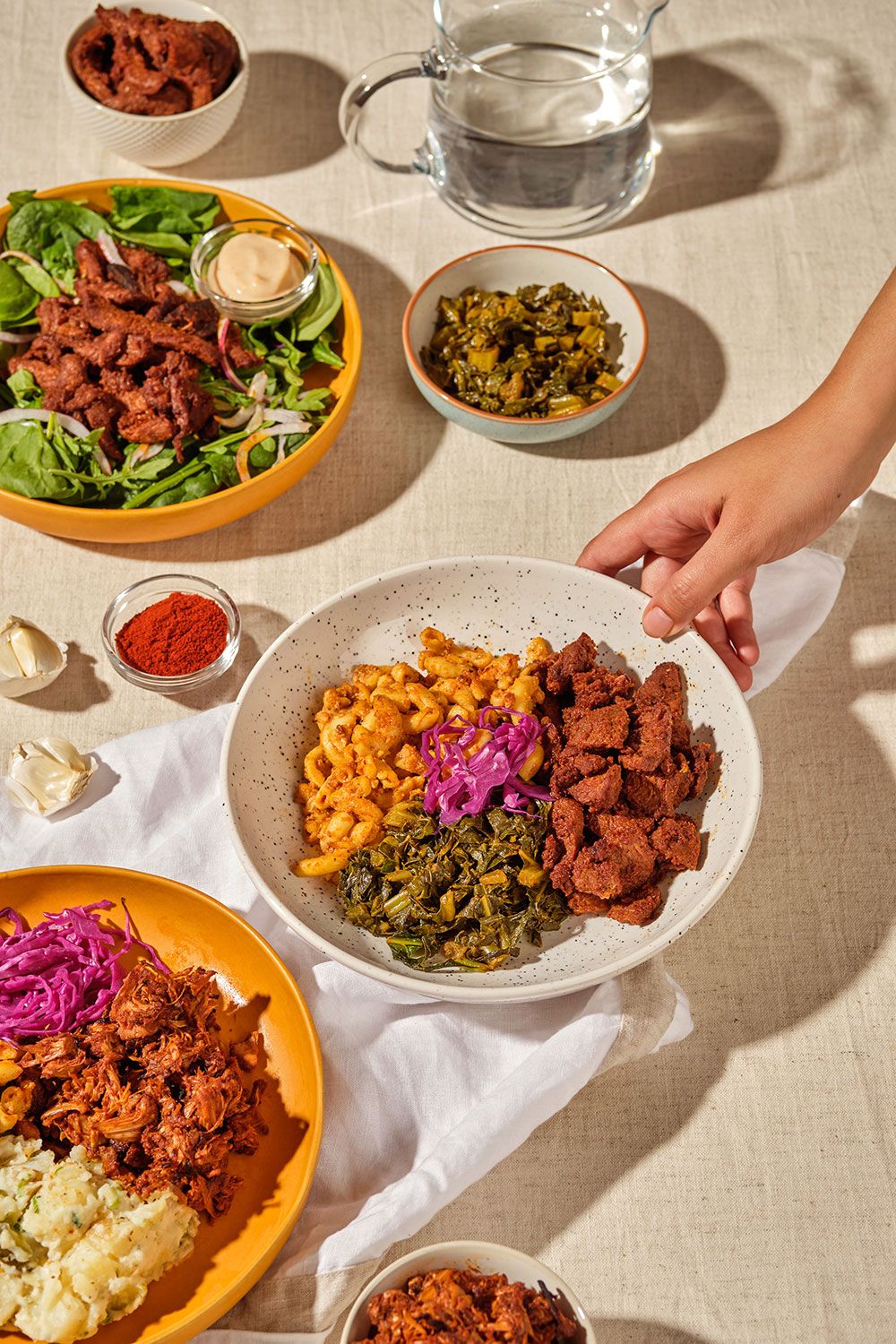
 Asha Wheeldon launched KULA Foods in 2018 to bring the regional African and Caribbean flavours she missed from her Toronto hometown to Vancouver.

As a self-described “flavour hunter,” the condiment category is a natural place for Asha Wheeldon to be. Since founding

KULA Foods

in Vancouver in 2018, she’s continually innovated. Raised in Toronto, Wheeldon launched the company to provide a taste of the regional African and Caribbean cuisines she missed from her hometown in plant-based proteins and condiments:

red pepper

and

Scotch bonnet

barbecue sauces and the warmly spiced, Kenyan-inspired

pili pili

hot sauce.

In 2021, KULA reformulated its sauces to remove all added sugar. “We wanted to create sauces that didn’t have so much sugar content in there, thinking about health needs for someone who has diabetes or is just looking to reduce sugar intake, but also to be able to achieve the flavour in their foods,” says Wheeldon.

After testing various options, KULA landed on

monk fruit

(a natural no-calorie sweetener). It partnered with Summerland, B.C.-based food tech company

Crush Dynamics

, which developed a patented process using grape pomace (a byproduct of wine production), tapping into the fruit’s polyphenols and fibres.

“They turn that into a full fermentation process technology that essentially uses grapes as an enhancer, and it takes away any (monk fruit) aftertaste,” says Wheeldon. “Working with them has really enhanced our sauces. Further to that, we’ve also been able to reduce our sodium and get the best texture possible.”

Local sourcing has been a priority since the beginning, and as a certified

B Corporation

, KULA measures the distance of the suppliers they work with. “Most of them are women. They’re diverse communities. They’re within an 80-kilometre radius. I’m really behind that message of, ‘Let’s support each other.’”

KULA is adding to its condiment line this summer with seasonings, such as Ethiopian berbere, Kenyan-inspired pili pili spice (which they’ve sampled as a hot chocolate beverage) and a curry blend highlighting Caribbean flavours — all without sodium. Working with Vancouver-based

Maia Farms

, KULA is infusing its seasonings with mycelium (the root structure of mushrooms).

“It’s going to have oyster mushroom roots that add benefits to activate fibre, potassium and so much more,” says Wheeldon.

Reformulating KULA’s sauces sprung from Wheeldon challenging the conventional use of sugar. A two-tablespoon serving of standard barbecue sauce can easily contain more than 30 per cent of the daily value of added sugars. “Why? That’s dessert,” she says, laughing. Similarly, Wheeldon envisioned seasonings without sodium. Working with friend Karen McAthy, Maia Farms’ director of food innovation, she arrived at adding functionality.

Functional beverages

(drinks with health benefits, such as those enhanced with protein or vitamins) have become increasingly popular, but Wheeldon hadn’t seen many functional seasonings. Beyond the health aspect, she says they can bring more creativity into cooking. Mycelium is also a natural thickening agent and adds body to gravies, pastes, soups and stews.

“We use condiments in cooking, so why not add functionalities that will enhance our experience, whether it’s the properties of cooking or the health benefits? If you can add fibre to more of your stews, why not? What excites me most is it allows us to expand our market reach around the types of customers we get. It’s not just about veganism. It’s about flavour. It’s about health. It’s about experience in the kitchen. So, it does create more expansiveness.”

TORSHI

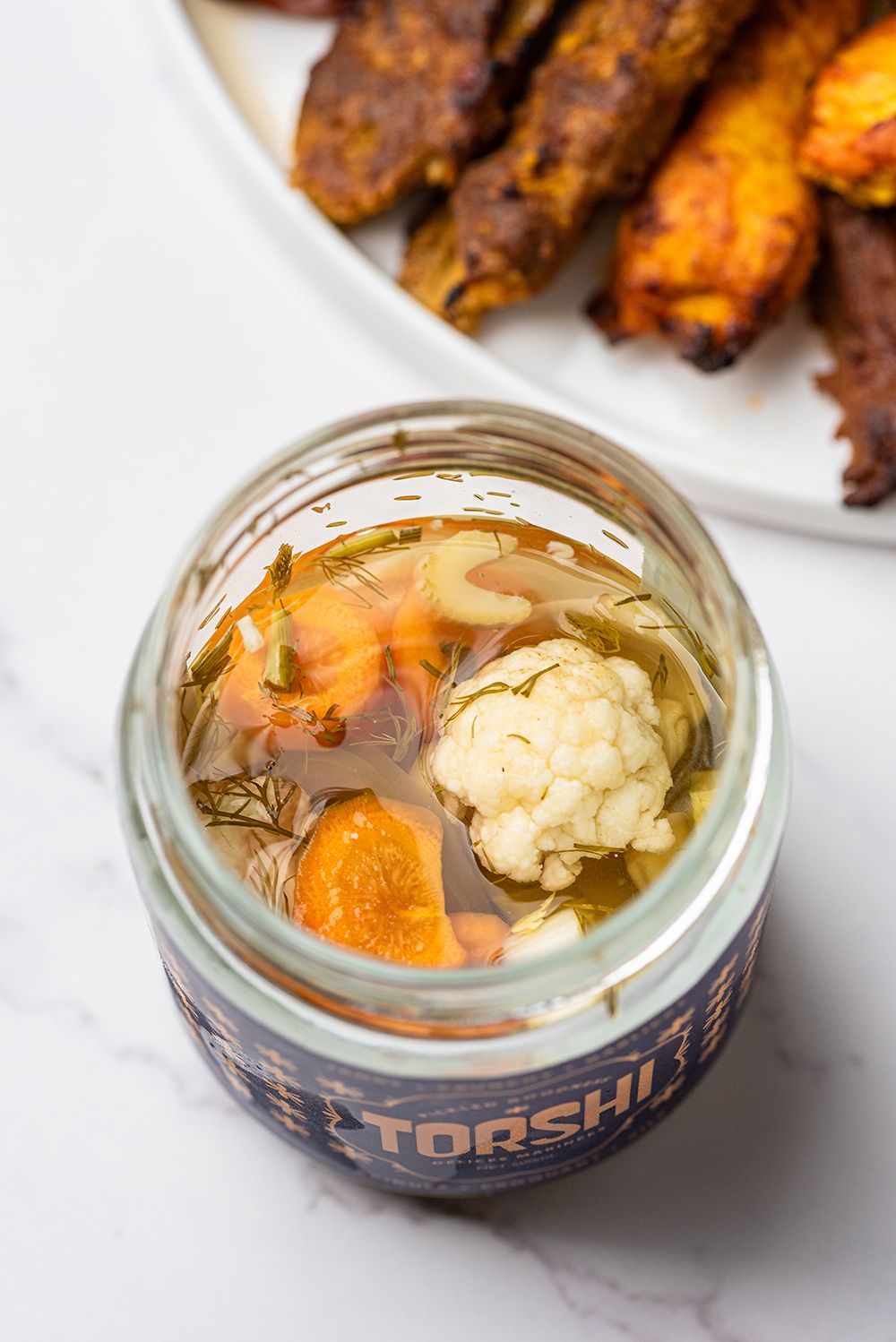
 Ottawa-based tech entrepreneur Aydin Mirzaee co-founded the Persian-style pickle company Torshi with his parents, Nasrin Eslamdoost and Saeid Mirzaee.

Ottawa-based

Torshi

started with an experiment. Tech entrepreneur and co-founder Aydin Mirzaee knew his mom, Nasrin Eslamdoost, was onto something with her torshi (Persian-style pickled vegetables). Every Christmas, Eslamdoost would visit him from New York, where she worked as a geneticist, and make a batch of torshi meant to last the year. It never made it past February.

“It was so frustrating because I was like, ‘How do I get this?’ I would go to stores, and of course, there are Persian stores and things like that, but there’s nothing that tasted the same.”

Aydin put the idea of a business aside until Eslamdoost retired and returned to Ottawa. When he suggested that she and his dad, Saeid Mirzaee (who teaches international law part-time at the University of Ottawa), join him in starting a torshi company, Eslamdoost was skeptical. So, Aydin proposed they evaluate the pickles’ appeal on their non-Persian friends. The test wasn’t about whether they said they liked them but about whether they voluntarily ate more.

“Sure enough, we did this, and the reception was really good. People would go for seconds. They’d finish the whole thing,” Aydin recalls. In September 2023, they took their experiment to the

Beechwood farmers’ market

in Ottawa. On the first day, they sold 22 jars.

“All of us were like, ‘Holy. This is crazy. People actually bought it.’ We just kept not wanting to believe it,” says Aydin. They couched their success in the idea that farmers’ market customers are inclined to support local and waited to see if there would be repeat purchases. There were. When Aydin saw that the

torshi.com

domain was on auction, they took it as another sign that their Persian pickle company was meant to be.

“Slowly, my parents started to believe: ‘We can do this. We can be entrepreneurs,’” says Aydin, laughing. “I’ve been doing this entrepreneurial stuff my whole life, and so this is very natural to me, but for them, what I’m proud of is that, later on, they’re doing this thing.”

In 2024, Matin Moghaddam, who shares the co-founders’ love of torshi, joined full-time as the general manager. Torshi —

mixed vegetable

,

carrot

and

cauliflower

— is now stocked in

93 stores

across Canada, but Aydin has his sights set on 1,000.

Crunchy and garlicky with the tang of an organic apple cider vinegar brine, their customers are putting torshi on charcuterie boards and in sandwiches and salads. Moghaddam says he used to think of torshi as an accompaniment, but seeing how people from other backgrounds are enjoying it, he appreciates its versatility. “Now there are more doors and opportunities that we can explore.”

Aydin and Moghaddam share the dream that, just like kimchi and hummus, one day, torshi will enter the Canadian lexicon. “This is not an embedded word within Canada,” says Aydin. “If you fast forward 10 years and everybody knows what torshi is, that would be crazy.”

Moghaddam adds: “That someone calls his wife and says, ‘Can you buy some torshi?’ and they understand each other’s language. And they won’t be like, ‘What’s that?’ That’s our vision.”

KOZLIK’S

 Based in Toronto’s St. Lawrence Market, Kozlik’s has made mustard since 1948.

To many,

Kozlik’s

is more than a mustard — it’s their mustard. “I used to open the store at 5 a.m. with my father on the weekends, and people would come by with their group of friends, and they’d stop and say, ‘This is my mustard.’ And they’d really take ownership over that,” recalls Noah Kessler, director of business development and son of owner Jeremy Kessler.

Kozlik’s has been in the condiment game since 1948. Noah grew up participating in the business after his father bought it from late founder

Anton Kozlik

in 2000. Initially, they made mustard on-site at Toronto’s

St. Lawrence Market

. One of Noah’s first jobs at 11 years old was cutting labels and adhering them to jars with a glue stick. His father is a former photographer, so the lines had to be perfectly straight.

Before they were in the mustard business, the Kesslers were Kozlik’s customers. Jeremy went down to the market one day — between jobs on the cusp of the digital era — and came home with a book of recipes. “Anton gave me a very good basic mustard education (he’d been making mustard for 50 years, so he knew a few things), and I seem to have a bit of a talent for it,” Jeremy told

National Post

in 2010.

Mustard is a classic condiment, and Kozlik’s is a time-honoured Canadian brand. One of Jeremy’s lessons that stuck with Noah is that incremental changes add up. “You may not notice the slight changes immediately, but when you look at it over time, they’re substantial.” With a background in economics, Noah believes running a profitable business and making products you feel good about is possible. Carefully sourcing glass, caps and labels helps safeguard profitability without sacrificing quality.

According to the

Alberta Seed Guide

, Canada is the world’s top exporter of mustard seeds, and half of all mustard eaten globally is the product of Saskatchewan-grown seeds.

When

drought hit

Western Canada in 2021, mustard farmers suffered, and a shortage followed. Noah says that prices soared by 300 per cent, spurring them to diversify their product line. If one of their input costs increases dramatically, they have other products to fill the gap. They also bought a German stone mill to grind whole mustard seeds, which they source from a farmer’s co-op in the Prairies.

In addition to more than 36 types of

mustard

, Kozlik’s now makes

barbecue sauces

,

horseradish

,

hot sauces

and

spice rubs

. Yet, mustard is still its “bread and butter.”

Classic Dijon

and

Horseradish

are the top sellers, and

Triple Crunch

, with its pop of acidity (“the poor man’s caviar”), is a favourite with chefs.

After 25 years in various roles in the mustard business, Noah appreciates its ability to enhance anything from dressings and marinades to hot dogs and pretzels. “We like to say that good mustard can make bad food good and good food better.” And with the recent focus on all things Canadian, it’s a shining example that often goes unnoticed.

“We used to joke when my father and I worked the weekends at the store. People would say, ‘Oh, Canada grows all this mustard seed?’ And we’d say, ‘Yeah, it’s very Canadian to do something well and not tell anyone about it.’ And that was true. Nobody knew that Canada had this history and heritage in mustard. So, we like to be a part of that. It feels close to home.”

Our website is the place for the latest breaking news, exclusive scoops, longreads and provocative commentary. Please bookmark nationalpost.com and sign up for our cookbook and recipe newsletter, Cook This, here.



Undated photo provided by Wenatchee Police Department shows Travis Caleb Decker, the Washington state father who is wanted for murder of his three young daughters. (Wenatchee Police Department via AP)

An American military veteran accused of kidnapping and killing his three young daughters near Leavenworth, Washington, is still at large, possibly near the Canadian border in Washington state.

Travis Decker’s connection to Canada focuses on apparent plans to flee to this country in the days leading up to the deaths of his three daughters.

What evidence points to a Canadian connection?

According to

court documents

and a U.S. Marshals Service affidavit, Decker conducted several Google searches on May 26, 2025, such as “how does a person move to Canada,” “how to relocate to Canada,” and “jobs Canada.” He also visited the official Canadian government job website, “Find a job – Canada.ca”.

This site provides resources for

finding employment and information about working in Canada

, suggesting he was looking for practical steps to secure work as part of a relocation plan.

While specific details of every site he visited are not public, his search terms and the official nature of the websites accessed align with

typical pre-arrival research steps

. These include understanding immigration pathways and requirements, exploring job markets and employment resources, gathering information about settling in Canada, such as housing and health care.

These searches occurred just days before Decker’s daughters were reported missing and subsequently found dead, indicating an

intent to leave the United States for Canada around the time of the alleged crimes

.

Does the location of the bodies of Decker’s daughters link him to Canada?

The

bodies of Decker’s daughters

were discovered near a campground in Chelan County, Washington, relatively close to the Canadian border and approximately 11 miles from the Pacific Crest Trail, a well-known route that leads directly into Canada.

Why would Decker’s military training influence the choice to slip into this country?

Authorities believe Decker may have been planning to use his

military survival and navigation skills

to escape into Canada undetected, possibly via remote terrain, such as the Pacific Crest Trail. His training included land navigation, survival, long-distance movement, and operating in woodland and mountainous terrain — skills that would be

critical for traversing remote areas near the Canadian border

.

Both law enforcement and family members have noted Decker’s

ability to live off grid

for extended periods, reportedly up to 2.5 months, using his survival knowledge to

remain hidden for an extended period. This has shaped their search strategy, focusing on wilderness areas and trails that require advanced survival abilities. 

Are officials searching the Canadian border?

The U.S. Marshals Service and other law enforcement agencies have expanded their search to

areas near the Canadian border

, and they are considering the possibility that Decker may have attempted to cross into Canada to evade prosecution.

Our website is the place for the latest breaking news, exclusive scoops, longreads and provocative commentary. Please bookmark nationalpost.com and sign up for our daily newsletter, Posted, here.


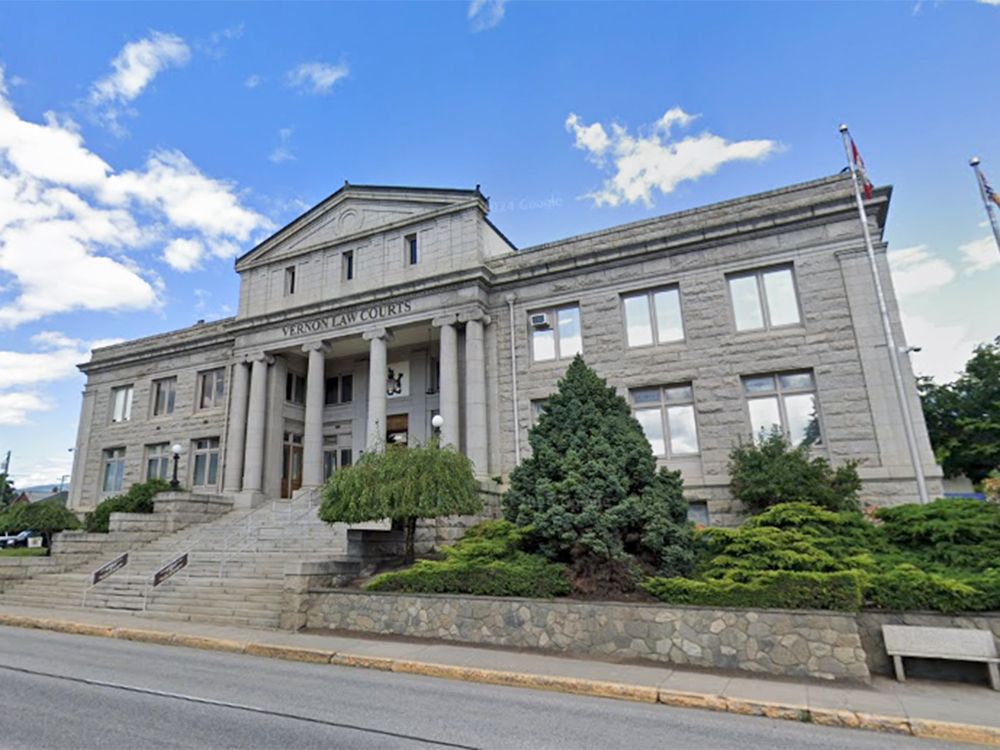
The provincial courthouse in Vernon, B.C.

A driver who has racked up 32 driving prohibitions or suspensions, as well as 16 24-hour driving bans, failed to convince a British Columbia judge he should get a lighter sentence than normal for drunk driving because more than six months in jail could get him deported to India.

Vernon’s Gurinder Pal Singh Bajwa, a permanent resident of Canada who escaped deportation in 2019 on an impaired driving conviction with a sentence of five months and 29 days, got a reduced sentence this time around because Mounties

captured him on surveillance cameras using the toilet

in a holding cell after he was arrested for impaired driving again on May 11, 2022, after rear-ending a white Hyundai Tucson with his Mercedes sport utility vehicle in the parking lot of a Wholesale Club. His blood alcohol level was more than twice the legal limit.

But the judge refused to lighten Bajwa’s sentence on convictions for impaired and prohibited driving to a level that wouldn’t have immigration consequences for the 57-year-old. Any sentence over six months can result in deportation from Canada.

“To accede to Mr. Bajwa’s request for a (conditional sentence) or a reduction of the jail time on either count for the impact of the collateral immigration consequences to Mr. Bajwa and as a remedy (for breaching his Charter right to be free from unreasonable search and seizure), would bring the administration of justice into disrepute and result in an inappropriate and artificial sentence; in other words, an unfit sentence,” Judge David Patterson of B.C.’s provincial court wrote in a recent decision.

Bajwa immigrated to Canada from India’s Punjab region over 34 years ago.

“He received his first British Columbia driving prohibition on March 19, 1993,” said the judge. “He has also accumulated a substantial number of additional Criminal Code convictions and Motor Vehicle Act infractions.”

The Crown recommended Bajwa get between nine and 12 months in jail, a $2,500 fine and a five-year driving prohibition for the impaired driving charge, plus another four months behind bars for getting behind the wheel while he “was subject to five separate driving prohibitions” or suspensions.

“I am flabbergasted that Crown counsel has only sought a four-month consecutive jail sentence (for driving while prohibited),” Patterson said in his decision dated June 2. “Given the circumstances of the offence, it is hard to imagine a more suitable case for the two-year less-a-day maximum sentence allowed.”

Bajwa’s lawyer argued for a conditional sentence or no more jail time than he got in 2019 — five months and 29 days behind bars. He noted that would allow Bajwa to remain in Canada.

The court heard Bajwa “has no one in India” and that he’s in the process of getting a divorce “as his alcohol usage ruined his relationship with his estranged wife and his children,” said the judge, who noted they live in Canada.

Eight days after he was caught drunk driving in May of 2022, Bajwa “was very intoxicated at his daughter’s wedding and smacked a plate of food out of her hand,” said the decision.

“He was subsequently convicted of assault … and handed a 60-day jail sentence followed by an 18-month probation order, which included having no contact with his estranged wife or children.”

That was “the last straw for the family, essentially,” said the decision.

Bajwa “claims that his problems with alcohol started when he was a roofer,” it said. “He had a group of co-workers and they would often go drinking alcohol together. His alcohol consumption spiralled out of control.”

After he was caught driving drunk in 2022, Bajwa “began the process of getting his life together,” said the decision. “He gave up drinking alcohol and took a few counselling sessions. He now lives with a close friend … and he is an active participant in the Vernon Sikh community.”

Bajwa’s “moral blameworthiness is at the highest end of the spectrum,” said the judge.

Patterson said he had “considered the potential impact of a jail sentence of six months or more on him, including the possibility that he may be removed from Canada, his home for more than 34 years.”

Bajwa got a letter from the Canada Border Services Agency in February of 2024 “alleging he may be inadmissible to Canada” for serious criminality.

“Removal from Canada would lead to dire consequences for Mr. Bajwa,” said the judge.

“He would be forced to leave the country he has called home for more than 34 years. He would face the prospect of returning to India, which has changed since he last resided there. A country that now may be as foreign to him as Canada was when Mr. Bajwa immigrated to Canada.”

After considering the Charter breach, Patterson sentenced Bajwa to 198 days (just over six months) in jail for the impaired driving conviction, fined him $2,000 and banned him from driving for three years.

For driving while prohibited, the judge handed Bajwa another 120 days behind bars (about four months) to be served consecutively, for a total of about 10 months in jail.

Our website is the place for the latest breaking news, exclusive scoops, longreads and provocative commentary. Please bookmark nationalpost.com and sign up for our daily newsletter, Posted, here.


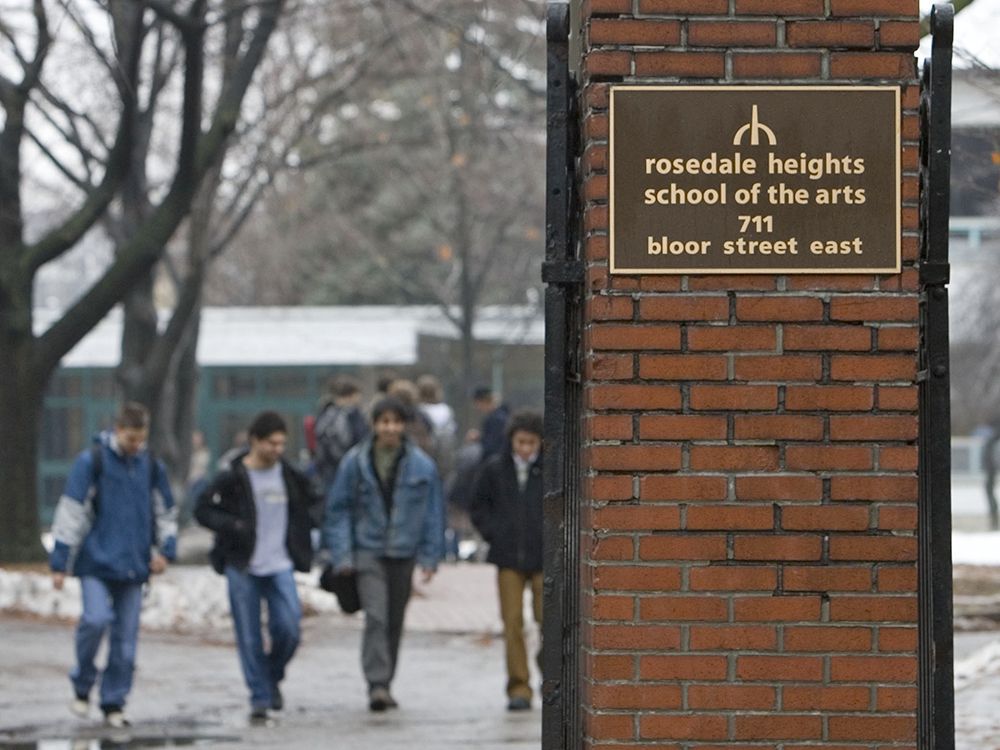
File photo of Rosedale Heights School of the Arts, a place students and parents say is special.

For more than three decades, Barrie Sketchley has led Rosedale Heights, an art-focused high school near Toronto’s tony Rosedale-Moore Park neighbourhood.

Now more than 80 years old, Sketchley’s fate will be decided on Monday when the board of trustees votes to approve — or reject — suggestions on principal assignments made by Toronto District School Board (TDSB) staff. Sketchley is expected to be forced to leave the school he helped build into something students and parents say is pretty special. And they are outraged and upset, racing against the clock to save his job. This is all happening against a backdrop of a number of controversies involving Canada’s largest school district.

Just last week, Ontario’s Progressive Conservative government introduced legislation to give the province more oversight over local school boards.

It was two weeks ago that parents and students first heard that Sketchley was expected to leave. The TDSB has a policy on transferring principals between schools; while this is meant to ensure that good principals are being moved around, parents haven’t always been happy with the decisions.

When Zara Kheiriddin, a 15-year-old Grade 10 student at the school, first found out that Sketchley was going to be moved, she acted quickly: with a friend, she organized a petition to keep him — and secured nearly 300 signatures from fellow students and teachers before Sketchley himself shut it down.

“It’s like, resounding, that most of students and parents and the staff, too, want him to stay,” said Zara. “It’s the school where I’ve felt the safest personally from, like, bullying and typical other — the kind of stuff you get in other schools.”

Zara is the daughter of National Post columnist Tasha Kheiriddin, who, in turn, wrote to Ontario Education Minister Paul Calandra expressing concern over Sketchley’s transfer.

“The community is asking for fairness, respect for a principal who has given everything to public education, and the right to maintain leadership that reflects the school’s unique mission and values,” Kheiriddin wrote. “I urge you to look into this matter immediately.”

Calandra’s office did not respond by press time to National Post’s request for comment.

“It just shows that not only do they disrespect parents, they’re disrespecting a valued educator who’s given so much to the community. That they would force him out in this way is appalling,” said Kheiriddin in an interview.

On Monday, trustees from the Toronto District School Board (TDSB) will meet to discuss Sketchley’s future. Given Sketchley’s age, some are concerned that a transfer would be a de-facto forced retirement.

Weidong Pei, the trustee for Willowdale, wrote last Thursday to Clayton La Touche, the director of education at the TDSB, formally arguing that Sketchley should be allowed to remain at Rosedale.

“Transferring Mr. Sketchley at this stage of his career — which would in effect amount to a forced retirement — would not only be undignified, it would also deprive RHSA and the TDSB of one of our most valued and effective school leaders,” he wrote.

In an interview, Pei said that he’s hoping the decision can be reversed, and if Sketchley chooses to retire, he can do so “on his own terms.” Scores of parents and students have emailed trustees to protest Sketchley’s transfer.

“This is not the right thing to do,” said Pei.

Deborah Williams, the trustee who represents the area of Toronto where Rosedale is located, declined to comment on the specifics of Sketchley’s case.

Katrina Matheson, the chair of the parents’ council at Rosedale, said people are “just really shocked at how disrespectful it is,” to be moving Sketchley after so many decades of service. He has been a TDSB teacher and principal for more than 40 years.

But there’s another lingering issue, too. Within the walls of Rosedale, there’s a burgeoning controversy about the student selection lottery. Since Rosedale is an arts-focused school, students are required to submit expressions of interest in attending. However, 20 per cent of seats are reserved for people from visible minority communities and First Nation, Inuit and Métis students receive priority admissions.

In the past, Rosedale itself made decisions about which students would attend the school, but now it’s handled centrally, at the TDSB. Parents and staff told National Post that Sketchley allegedly objected to this loss of control, and is perceived as a troublemaker by the TDSB. Sketchley himself declined to comment, citing TDSB policy.

“There’s people who skip classes and talk about how annoying it is to go to an art school and that they’re only there because their friends are there, or their parents make them go there,” said Zara.

The TDSB declined to comment on Sketchley’s case, saying it cannot comment on “any decisions that have not been approved by the Board.”

“The next round of decisions with regard to principal assignments — which happens routinely across our system throughout the year — will be made at upcoming Board meetings in June,” wrote TDSB spokesperson Ryan Bird in an email.


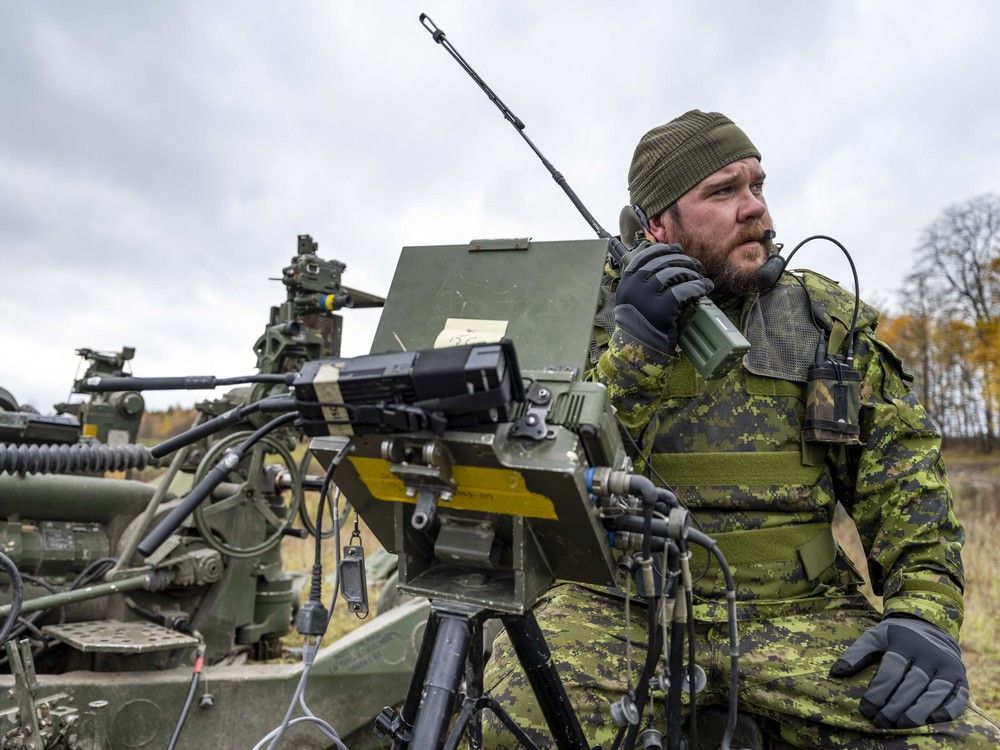
A Canadian Armed Forces member sends a radio message during a live fire exercise with members of enhanced Forward Presence Battle Group Poland in Bemowo Piskie, Poland on Nov. 7, 2023.

A new multilateral defence bank aims to help Canada and its allies build their militaries to meet looming threats in an increasingly hostile world while also giving Canadian industry a leg up when it comes to producing weaponry and military kit to tackle those threats head on.

And its Canadian president is hoping it will have a major presence in Toronto.

Announced this past spring, the new Defence, Security and Resilience Bank could solve financial problems for countries, including Canada, that are under pressure to increase military spending beyond two per cent of their gross domestic product (GDP). Some estimates peg the more likely target as five per cent of GDP as Russia and China grow increasingly belligerent on the world stage.

“We have to use our capital markets of allied nations for overwhelming force against our foes,” Kevin D. Reed, the new bank’s president and chief operating officer, said in a recent interview.

The theory is the bank would allow Canada and other countries to re-arm, said Reed, who has helped start nine companies including Equity Transfer & Trust.

“Hopefully that acts as a form of deterrent against big conflicts.”

The United Kingdom “has emerged as the lead candidate to take this on,” according to Reed.

“That being said, we’ve … advocated to our Canadian government that there’s a window here for Canada to take a co-leadership role with the U.K.”

Reed would like to see a branch of the bank located in Toronto.

If Canada chose to be the bank’s host nation, or to co-host with London, “you’re probably looking at 2,500-3,500” banking jobs in Toronto, he said.

The bank would be owned by member nations, including NATO and Indo-Pacific countries.

“They would capitalize the bank, we would get a triple-A rating, and we would take it to the bond market to raise money,” Reed said.

“If we have all 40 nations in, we would expect about $60 billion of equity into the bank over time, and then subject to the bond markets we would seek to raise $100 billion at first, taking that up to about $400-500 billion over time.”

For countries that don’t have a triple-A credit rating, it would mean a lower cost to capital, he said.

It would also allow nations in immediate need of more defence dollars to tap the bank for money, rather than waiting for annual budget cycles.

“The real driver in this is that it would provide credit guarantees to commercial banks to lend into the defence sector,” Reed said. “Most commercial banks … unless you’re a big prime (like Boeing), if you’re a number two or three or four in the supply chain, you’re almost unbankable, historically, because of ESG (an investing principle that prioritizes environmental and social issues, as well as corporate governance) and just a view of defence.”

The Defence, Security and Resilience Bank would be similar to Export Development Canada, a Crown corporation that provides financial and risk management services to Canadian exporters and investors, “but way bigger,” Reed said.

It would offer large banks such as RBC and BMO credit guarantees “that would loosen up capital so they could offer lines of credit, trade finance, you name it, but we can grow the industrial base a lot faster,” Reed said.

That would, in turn, speed up military procurement, he said.

“It takes nine years to get a jet or seven years to get a shoulder-fired rocket launcher,” Reed said. “It’s because the industrial base just isn’t big enough. It’s been constrained. So, this would push liquidity into the commercial banks.”

Sovereign countries could also “enhance procurement” by borrowing from the Defence, Security and Resilience Bank on the promise that they “have to execute within two years,” Reed said. “We want to foster that rapid-fire procurement that we know has been a problem for all member nations.”

Right now, it takes 16 years for startups to go from selling the Department of National Defence on their products to procurement, he said.

“Companies just can’t live in that

they call that the Valley of Death,” Reed said.

“That is a problem. If you want to invent a new bullet … in your garage, you’re going to wait a long time.”

Rob Murray, NATO’s inaugural head of innovation and a former U.K. army officer, started writing the blueprint for the bank about five years ago.

But, at the time, interest rates were flat, Russia hadn’t launched its full-scale war in Ukraine, and U.S. President Donald Trump was not in power.

When the Ukraine war began, interest rates started climbing and people started recognizing “threat levels are changing around the world,” Reed said.

Then Trump came to power in his second term and started “forcing the hand of many NATO nations” to increase their defence spending, Reed said.

Murray published his blueprint last December.

“On the back of that he was invited down to brief the president elect down at Mar-a-Lago,” Reed said, “and Rob’s world just started to expand rapidly with proposed member nations seeking him out, asking how would this work? How can we get involved?”

Murray asked Reed to step in as the bank’s president in early February “to help stitch together the coalition of governments” needed to bring the idea to fruition.

“Every European nation has been briefed,” Reed said.

“And we did the briefing for Canada right after the election” with senior people in Prime Minister Mark Carney’s office, the Privy Council Office, and departments including National Defence, Finance, Global Affairs and Treasury Board.

Reed also briefed officials in Singapore last week and plans to do the same in Japan, South Korea, Australia and New Zealand this week.

“We’re trying to drive this around a consensus of a dozen anchor nations,” he said.

NATO figures from last June suggest Canada spent just 1.37 per cent of its GDP on defence in 2024. The Liberals have said they expect it to reach two per cent by 2030 “at the latest.”

But that’s not fast enough for Trump, who has complained repeatedly about Canada piggybacking on the U.S. for military protection.

“While I don’t like what he’s saying, I see this as an opportunity to get ourselves going,” Reed said. “We have not done our job in a long time. We’ve not fulfilled our commitments, and this a kick in the pants to say who are we, and what do we stand for?”

Later this month, Reed expects NATO countries to accept a new spending minimum of 3.5 per cent of GDP for defence and 1.5 per cent for border security.

“To go from our base today … it’s another $100-110 billion a year to ramp up to that,” he said of Canada. “And that’s not in future dollars. That’s in last year’s dollars. So, any available mechanism that can help grow the industrial base and get them towards those NATO soon-to-be targets is going to be well received.”

Founding members of the bank will start meeting in the fall to hammer out details. Reed anticipates standing up the bank next year.

“I like the idea of another mechanism, and a very powerful and large one, and I think a very influential one, that can help us do more in the defence and security domain in Western democracies,” said retired general Rick Hillier, Canada’s former top soldier, who has joined the Defence, Security and Resilience Bank’s board of directors.

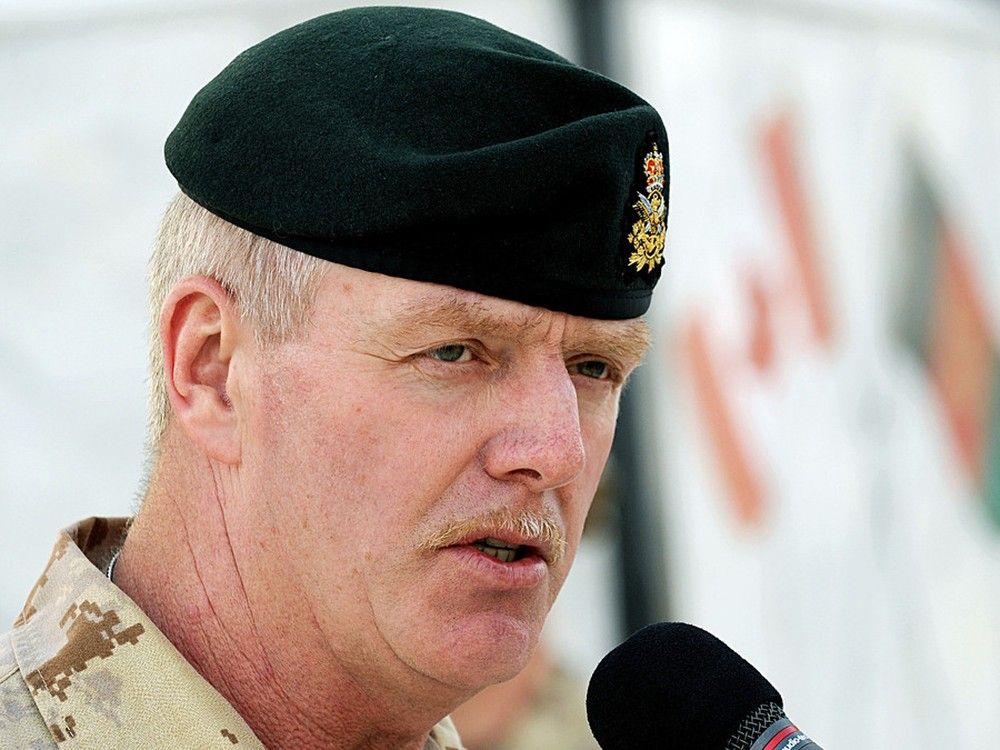
 Canada’s former top soldier, general Rick Hillier, when he was still in uniform.

He predicts Canada is going to need “a revolution in defence and security procurement” to solve the Canadian Forces’ equipment woes.

More money could accelerate the acquisition of new aircraft, warships and submarines, he said.

“The component I’m most worried about is the army,” Hillier said. “The army is broken. We’re down people. Our bases and our infrastructure are in very sad condition. And we lack every kind of capability that a force needs in the kind of areas where we would find ourselves fighting right now. If things go south in Eastern Europe and (Vladimir) Putin and Russia get into some kind of thing they can’t extract themselves from and start heading into Lithuania and Latvia, where there are several thousand Canadians, our sons and daughters, we are ill-prepared to insure that they’re ready to look after themselves.”

The army lacks self-propelled artillery pieces, air defence systems, technology that can detect, track, and neutralize drones, and equipment to remove minefields, Hillier said. “We need to focus a huge amount of that defence spend on the army.”

Canada has also been lagging in spending to defend our north, he said. “We’ve got to know what’s going on in the Arctic, to be able to see what’s going on specifically, to be able to communicate what’s going on and then to be able to respond to what’s going, whether its air, land, or depending on the time of year, sea forces. Right now, we can only do a very small part of that.”

The country needs satellites and ultra-long endurance drones to cover the north, Hillier said. Bases should be built in Inuvik, Rankin Inlet, and Iqaluit, he said. “Then you have to connect … those spots by upgrading the airfields across the north.”

The military also needs billions of dollars to repair and replace old buildings, Hillier said.

Canada’s military has a shortfall of about 15,000 people right now, Hillier said. “You do not attract first rate people with third rate infrastructure. And right now, you go to any garrison, any base, any wing across Canada and the infrastructure is crumbling.”

At CFB Trenton, the military’s hub for air transport operations in Canada and abroad, people can’t even drink the water on the base “because it’s contaminated,” Hillier said.

At CFB Petawawa, “the fire hall they’ve been trying to replace for years floods in any kind of a rainstorm,” he said. “As soon as it shuts down, you shut down operations in that training area, in that garrison, for the brigade, for the helicopter squadron and for the special forces training centre.”

Hillier believes the Defence, Security and Resilience Bank could help alleviate all of these problems.

“There’s an enormous amount of momentum because the inherent good in it is evident to most people as soon as they sit and think about what it could achieve,” he said.

This is the latest in a National Post series on How Canada Wins. Read earlier instalments here.

Our website is the place for the latest breaking news, exclusive scoops, longreads and provocative commentary. Please bookmark nationalpost.com and sign up for our daily newsletter, Posted, here.


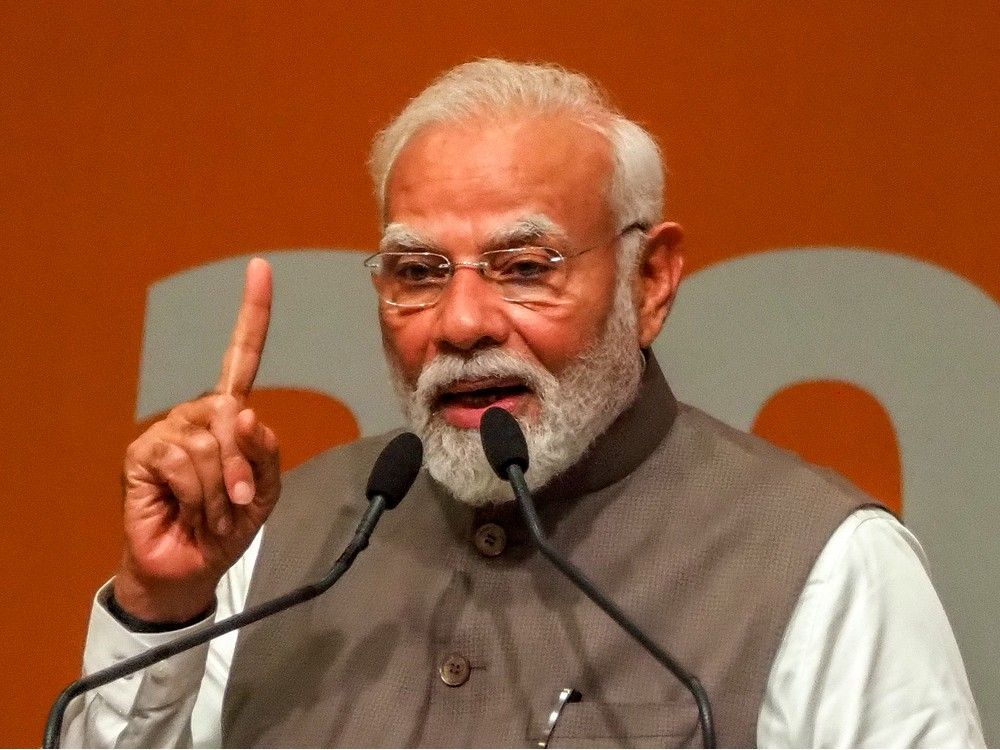
India's Prime Minister Narendra Modi addresses the gathering during an event marking 20 years of the Gujarat Urban Growth Story at Gandhinagar, in India's state of Gujarat, on May 27, 2025.

OTTAWA

— A Liberal MP says he intends to raise concerns to Prime Minister Mark Carney about the decision to invite India’s Prime Minister Narendra Modi to Canada as part of a meeting of G7 leaders later this month. 

Sukh Dhaliwal represents

the Surrey, B.C., riding that was home to Sikh activist and Canadian citizen Hardeep Singh Nijjar, whom Canada said in 2023 was killed by agents acting on behalf of the Indian government. Nijjar was gunned down outside a temple in June 2023. 

India

has denied the accusation but had considered Nijjar to be a terrorist. Nijjar was a prominent activist in the Khalistan movement, which has pushed to establish a separate Sikh state in India’s Punjab province. 

The accusation from former prime minister Justin Trudeau in September 2023 sparked a wave of tension in the Canada-India relationship, including last fall when the RCMP said it believed Modi’s government was linked to violence unfolding in Canada, including organized crime and murders.

A breakthrough appeared on Friday

when Modi confirmed he would be attending the upcoming G7 summit in Alberta, at Carney’s invitation.

Since then, Dhaliwal says he has received dozens of calls and more than 100 emails from constituents expressing concern. 

“They’re worried. They’re worried about their safety, they’re concerned about the justice in Mr. Nijjar’s case, as well,” he told

National Post

in an interview late Friday.

Dhaliwal said he has heard from other Liberal MPs also expressing concern, but said he would not divulge details to protect their privacy. 

He said he intends to raise the concerns he has been hearing from constituents with Carney or members of his team, and will be in Ottawa next week for the ongoing sitting of Parliament. 

“He’s willing to talk,”

Dhaliwal said of the prime minister.

“He’s willing to listen to his MPs, that’s what he has promised because he has always said that he’s interested in the voice from the grassroots, not the message coming from the top to the grassroots.”

“I will certainly raise this with him or his team.”

A statement from Carney’s office in response to questions from National Post didn’t directly address Dhaliwal’s concerns, but said “Canada’s sovereignty and national security is paramount.”

“As Prime Minister of the fifth largest economy and the world’s most populous country, Prime Minister Modi was invited to participate in these critical discussions,” the statement reads.

The prime minister also defended his decision to invite Modi to the G7 at a Friday press conference earlier in the day.

He said it was a matter he discussed with other G7 countries and, given that the group plans to discuss issues ranging from energy security to critical minerals and infrastructure, “there are certain countries that should be at the table for those discussions.”

Carney said India is central to a number of supply chains and has the fifth largest economy in the world and the largest population.

“So it makes sense.”

Modi said in a statement on social media that “I

ndia and Canada will work together with renewed vigour, guided by mutual respect and shared interests.” 

Conservative Leader Pierre Poilievre backed the decision for Modi to attend, saying Canada needs to work with India on security and trade.

Meanwhile, the World Sikh Organization, which advocates for Sikh Canadians, denounced the decision, with its legal counsel, Balpreet Singh, saying it amounts to a “betrayal.”

Carney declined to say on Friday whether he believed Modi was involved in Nijjar’s assassination, saying it would be inappropriate for him to comment on the matter given the fact that legal proceedings were underway.

Four Indian nationals have been charged in his death.

Dhaliwal said he does not support the decision to have Modi in Canada, but said he should offer a “commitment that his government or his agents of India, will never, ever intervene into the lives of Canadians.”

India’s prime minister should also agree to “full cooperation” in the investigation into Niijar’s death.

Last fall, Canada and India expelled each other’s diplomats after it cited RCMP evidence linking Indian government agents to crimes in Canada.

Canada had requested that India waive diplomatic immunity to allow police to investigate, which the federal government said did not happen.

Carney said on Friday that he and Modi in their discussion agreed to

“law enforcement to law enforcement dialogue. He also noted that
“some progress” had been made on issues of “accountability.”

Dhaliwal said the RCMP has been clear in its concerns about the links between the Indian government and violent crimes taking place in Canada.

He also pointed to Justice Marie-Josée Hogue’s report into foreign interference that named India as one of the top countries attempting to meddle in Canada’s democratic process.

The invitation to Modi touches on issues of the rule of law and fundamental rights, he added. 

“We cannot sacrifice those values.”

National Post

staylor@postmedia.com

Get more deep-dive National Post political coverage and analysis in your inbox with the Political Hack newsletter, where Ottawa bureau chief Stuart Thomson and political analyst Tasha Kheiriddin get at what’s really going on behind the scenes on Parliament Hill every Wednesday and Friday, exclusively for subscribers. Sign up here.

Our website is the place for the latest breaking news, exclusive scoops, longreads and provocative commentary. Please bookmark nationalpost.com and sign up for our daily newsletter, Posted, here.


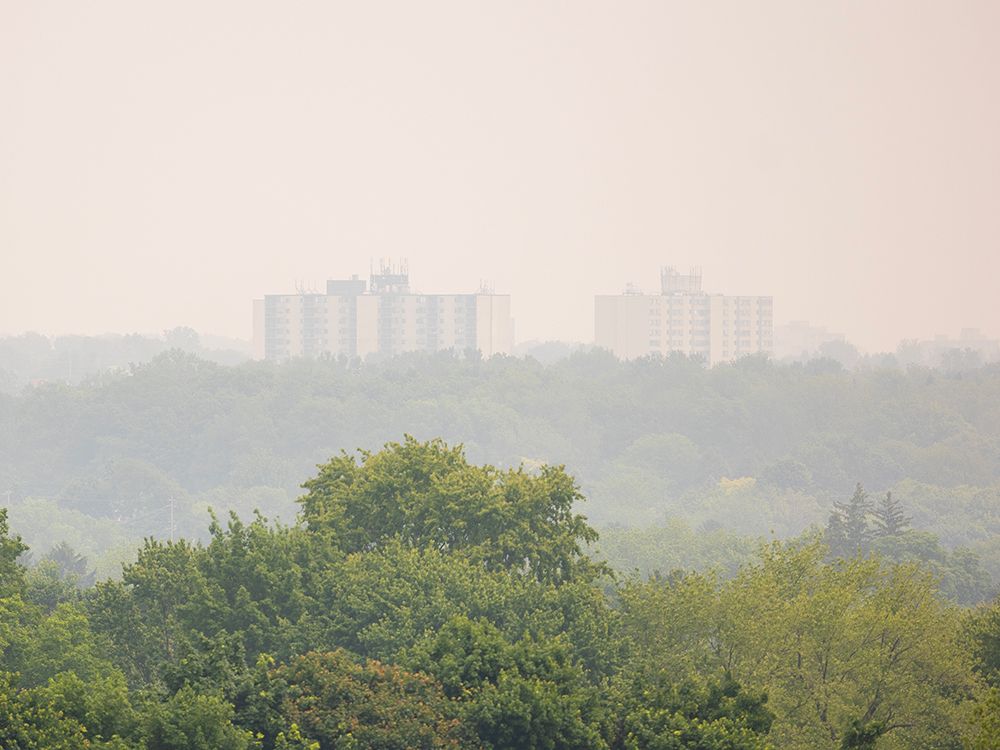
While those closest to the fires are most vulnerable, the fine particulates in wildfire smoke can travel 1,000 kilometres or more.

In addition to hearts and lungs, wildfire smoke may mess with the human brain, emerging research suggests.

Fine particulate matter carried in wildfire smoke can enter the brain via the bloodstream, causing inflammation and oxidative stress, a condition resulting from too many cell-damaging molecules called free radicals and not enough antioxidants to mop them up, one theory holds.

Recently, scientists have linked exposure to wildfire smoke to increased risks for impaired cognitive function, memory loss, greater odds of being

diagnosed with dementia

and an increase in

emergency department visits

for anxiety, depression, psychotic episodes and other mental-health problems.

Plumes of smoke from Prairie wildfires that have forced the evacuation of thousands of people from their homes led to air quality advisories issued for large swaths of the country Friday, with Environment Canada messages covering British Columbia, the Prairies and most of Ontario and Quebec, the

Montreal Gazette reported.

More toxic than other sources of pollution, wildfire smoke can cause a range of health effects, from mild coughs, itchy eyes and headaches to dizziness, wheezing, chest pains, asthma attacks, shortness of breath and heart palpitations.

And when heat and poor air quality combine, the health impacts are reached that much sooner, said Dr. Anna Gunz, a pediatric intensive care doctor at Children’s Hospital, London Health Sciences Centre and associate professor at Western University’s Schulich School of Medicine & Dentistry.

While those at the doorstep of fires are most vulnerable, the fine particulates in wildfire smoke can travel 1,000 kilometres or more.

The National Post spoke to Gunz to help unpack how wildfire smoke can impact physical and mental health. This conversation has been edited and condensed for clarity and length.

What makes wildfire smoke particularly risky for human health?

We have over 40 years of air pollution health data and so some of this is grounded in the same principles.

We love the smell of campfires. But even the smoke that we breathe by a campfire contains lots of particulates that are actually really bad for us. It’s not stuff that we’re supposed to be breathing.

When we think about wildfires, it’s not just wood that’s been cut from trees that you maybe know. It’s everything else that’s burning — pesticides, herbicides, metals. Even allergens and fungus.

Because it moves so far, you don’t need to be right next to a wildfire to be affected. It’s high concentrations for shorter periods of time, but it is ubiquitous. Part of the problem with being away from the wildfire is that people don’t necessarily realize the air might be bad. It can be really deceiving.

And then you have the people who are near the fires who’ve been evacuated or are at risk of evacuation. And so, the fear, the trauma, the risks of PTSD and other emotional things. People are stressed. I’m always thinking about children and women and those who are vulnerable (such as) Indigenous folks who are disproportionately displaced by wildfires every year and removed from their community.

What are the immediate health effects from exposure to wildfire smoke?

The first contact we have with smoke is our eyes, our mucus membranes, and our upper airways.

If we think about breathing in smoke and where it goes next, it goes to our large airways and those are the airways that are affected by asthma. So, certainly the people at highest risk of becoming ill, or more ill and coming into hospital, are anyone with puffers. Asthma, absolutely. But people with COPD (chronic obstructive pulmonary disease), cystic fibrosis and lung issues are going to have a harder time breathing.

Your eyes and your upper airways and mucus membranes are going to see the larger particles of irritants, and they’re going to start reacting to those larger particles.

And then the things we can’t smell or see, or taste are these small micro-particles, and that’s what gets absorbed through our lungs and into our blood stream. And it causes a huge inflammation in the body. That’s at least the biological reason why we think that the other things we see in terms of heart and brain health are noted.

Once inside the blood, how do micro-particles trigger something like a heart attack?

There’s been a lot of research looking at trying to understand the mechanisms in the pathways in your blood vessels that could lead to this.

Our blood vessels travel in our brains and in our hearts. Even though we think about heart attacks and stroke differently — they present very differently — ultimately what is happening is your small blood vessels that are either supplying your heart or your brain can become clogged.

The lining of our blood vessels is called the endothelium, and it’s this really complex place where there are these active living cells. (Endothelial function helps control how well blood is balanced in terms of clotting and how thin it is.)

One theorized mechanism is that (exposure to wildfire smoke) activates different inflammatory pathways that affect your endothelium.

There is less long-term neural data right now around wildfires. (However, one 10-year study of more than one million people in southern California found persistent exposures to wildfire smoke increased the risk of dementia more than other forms of air pollution. Another group found that wildfire smoke exposure during the 2020 California wildfires was associated with higher odds of subsequent emergency visits for mental health conditions. Inhaled particulate matter, the researchers said, can reach the brain, potentially causing inflammation, oxidative stress and damage to the brain’s blood vessels.)

Why is excessive heat plus smoke particularly dangerous?

When it’s hot, you also get secondary air pollutants, like ozone. The heat and the air interact to create more pollution.

What can people do to reduce their health risks?

Anyone with a chronic illness, the elderly and children are always at higher risk.

If it’s smoky outside, shut the windows, turn on the AC. Know what the air quality is and understand that it changes at different times of the day.

If you’re going to be outside, try to plan according to air quality (people can check the federal

Air Quality Health Index

or special air quality statements or advisories for their area). If you’re going to be doing something that has more exertion and you’re going to be breathing faster, like exercise, better to do that when the air quality is better.

An N95 mask can help filter a number of these particles.

If you know some kids (with asthma or other lung conditions) are going to be triggered (by the smoke), make sure that the care for the lungs is really under control heading into wildfire season. (ER visits for

asthma spiked across Ontario during the 2023 Canadian wildfires.)

For people who are living near evacuation zones where they know this happens and they talk about “go bags,” it’s important to think about medications. Ask your doctor to prescribe in such a way that you can have stashes of medicines in your “go bag” so that if you’re evacuated you still have access to them.

National Post

Our website is the place for the latest breaking news, exclusive scoops, longreads and provocative commentary. Please bookmark nationalpost.com and sign up for our newsletters here.