LP_468x60
on-the-record-468x60-white

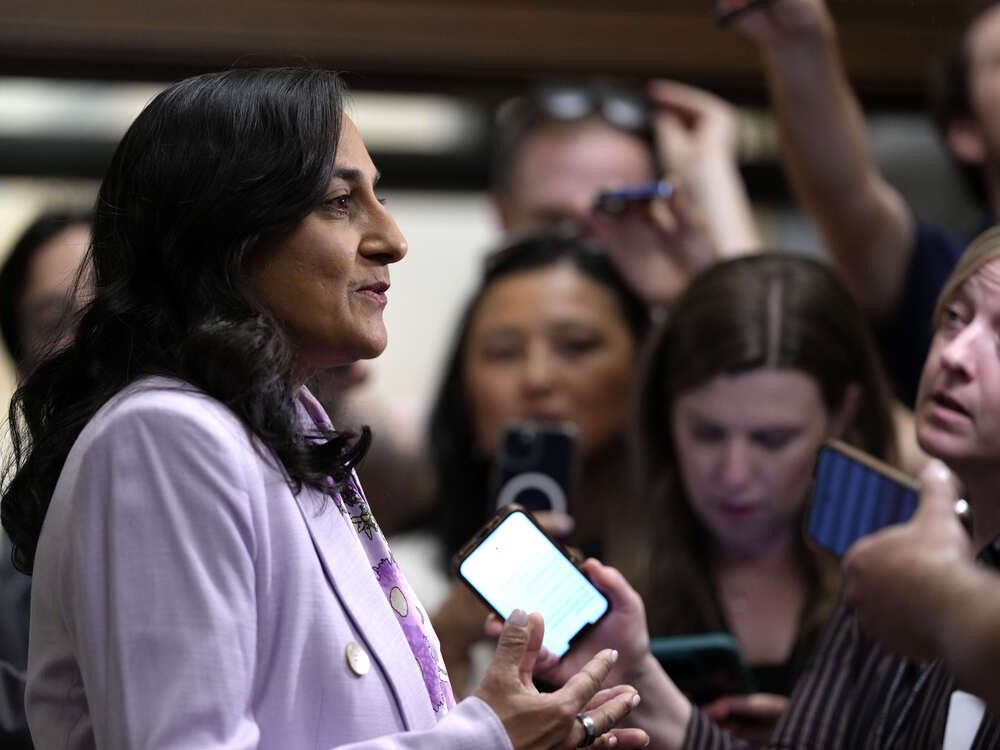
Minister of Foreign Affairs Anita Anand speaks to journalists as she arrives for a meeting of the federal cabinet in West Block on Parliament Hill in Ottawa on Wednesday, May 14, 2025.

OTTAWA — Canada has joined the United Kingdom and other allies in announcing sanctions against two members of Israel’s government who it says have incited violence against Palestinian civilians in the West Bank.

The move was announced in a joint statement released this morning by Global Affairs Canada and targets National Security Minister Itamar Ben-Gvir and Finance Minister Bezalel Smotrich, two far-right members of Israeli Prime Minister Benjamin Netanyahu’s cabinet.

“Itamar Ben-Gvir and Bezalel Smotrich have incited extremist violence and serious abuses of Palestinian human rights,” the statement reads.

“Extremist rhetoric advocating the forced displacement of Palestinians and the creation of new Israeli settlements is appalling and dangerous.”

In a statement to National Post, Israel’s foreign minister, Gideon Sa’ar, said the sanctions are “outrageous.”

“It is outrageous that elected representatives and members of the government are subjected to these kind of measures,” said Sa’ar.

“I discussed it earlier today with PM Netanyahu, and we will hold a special government meeting early next week to decide on our response to this unacceptable decision,” he said.

The countries’ statement says it has raised the issue with the Israeli government, but says “violent perpetrators continue to act with encouragement and impunity.”

“This is why we have taken this action now – to hold those responsible to account. The Israeli Government must uphold its obligations under international law and we call on it to take meaningful action to end extremist, violent and expansionist rhetoric.”

More to come … 

With files from Rahim Mohamed

National Post

staylor@postmedia.com

Get more deep-dive National Post political coverage and analysis in your inbox with the Political Hack newsletter, where Ottawa bureau chief Stuart Thomson and political analyst Tasha Kheiriddin get at what’s really going on behind the scenes on Parliament Hill every Wednesday and Friday, exclusively for subscribers. Sign up here.

Our website is the place for the latest breaking news, exclusive scoops, longreads and provocative commentary. Please bookmark nationalpost.com and sign up for our politics newsletter, First Reading, here.


The auditor general found that 31 federal organizations issued 106 contracts worth approximately $92.7 million to GCStrategies from April 2015 to March 2024.

OTTAWA – Another report, this time from Auditor General Karen Hogan, blames the federal government for repeatedly violating procurement policies by awarding dozens of contracts to the IT company that built the ArriveCan application.

The auditor general found that 31 federal organizations issued 106 contracts worth approximately $92.7 million to GCStrategies from April 2015 to March 2024. About $64.5 million was ultimately paid out by the government according to the report.

Over that period, the Canadian Border Services Agency gave four contracts worth $49.9 million to GC Strategies, while the Canadian Broadcasting Corporation gave one contract worth nearly $12,000.

But Hogan also found that in 54 per cent of contracts examined, federal organizations had evidence to show that all services and deliverables were received and in 46 per cent of contracts examined, they had little to no evidence that deliverables were received.

“Despite this, federal government officials consistently authorized payments,” reads the report.

The AG underlined that federal government officials are required to certify that all services and deliverables in the contract were received prior to release of payment to a contractor. Evidently, it was not always the case.

“There are no recommendations in this report because I don’t believe the government needs more procurement rules,” said Hogan on Tuesday.

“Rather, federal organizations need to make sure that the rules that exist are understood and followed,” she added.

Moreover, about a fifth of the contracts the auditor examined showed a lack of documentation on file that showed valid security clearances for contract resources.

Hogan noted that organizations “frequently disregarded government policies in this area.” For instance, it included not having records showing who performed the work, if they had the required experience and qualifications, and what work was completed.

Federal organizations are required to monitor the work performed by contractors.

GCStrategies is an Ottawa-based staffing company in the information technology that provided the feds with “services that included technology support.”

However, the contractor that received about a third of ArriveCan funding was found to be a two-person shop.

Their work with the feds led to “multiple”

RCMP investigations last year

, and an

exceptional reprimand

from the speaker of the House of Commons when the company’s co-founder Kristian Firth became the second private citizen and first in 111 years to be called on the floor of the House. He had to go through this extraordinary procedure because he had previously failed to answer questions on his role in the ArriveCan debacle.

ArriveCan was the mobile app the federal government required returning travellers to use at points during the COVID-19 pandemic to monitor COVID testing, quarantine plans and vaccine status.

Hogan had previously found costs

for the app had ballooned to roughly $60 million and that the app’s development showed “a glaring disregard for basic management and contracting practices.”

Last year, Public Services and Procurement Canada (PSPC) suspended the security clearance of GCStrategies. This suspension prohibited the company from participating in all federal procurements with security requirements, and existing contracts were cancelled.

Then last Friday,

PSPC announced

that “the company is ineligible from entering into contracts or real property agreements with the Government of Canada for seven years.”

According to the AG, no new contracts were awarded to GCStrategies in the last fiscal year.

More to come…

National Post
atrepanier@postmedia.com

Get more deep-dive National Post political coverage and analysis in your inbox with the Political Hack newsletter, where Ottawa bureau chief Stuart Thomson and political analyst Tasha Kheiriddin get at what’s really going on behind the scenes on Parliament Hill every Wednesday and Friday, exclusively for subscribers Sign up here.

Our website is the place for the latest breaking news, exclusive scoops, longreads and provocative commentary. Please bookmark nationalpost.com and sign up for our politics newsletter, First Reading, here.


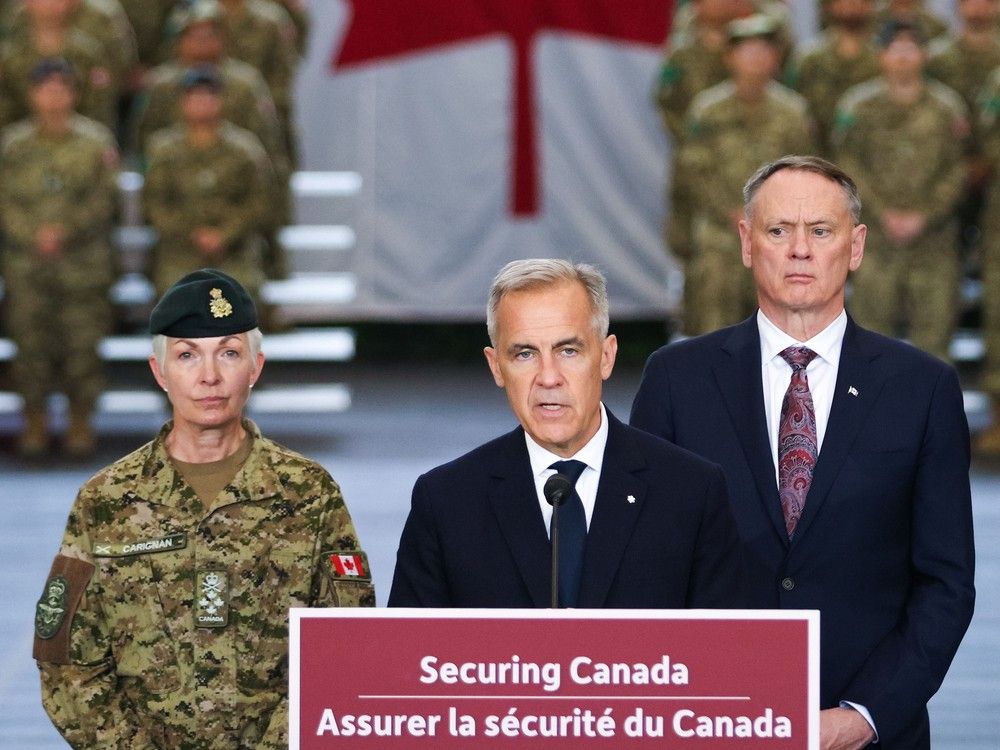
Prime Minister Mark Carney is flanked by Chief of the Defence Staff Gen. Carignan, left, and Minister of National Defence, David McGuinty, as they attend a tour of the Fort York Armoury in Toronto on June 9, 2025 in Toronto, Canada.

OTTAWA — Canada’s plan to replace its aging CF-18 fighter jets with American-made F-35s is now expected to cost $27.7 billion — nearly 50 per cent more than the original estimate in 2022 — plus another $5.5 billion to achieve full operation capacity.

Those are some of the findings made by Auditor General Karen Hogan, who tabled a report in the House of Commons on Tuesday. Her audit focused on whether the Department of National Defence (DND) would deliver the country’s fighter capability on time and on budget.

On top of the ballooning costs of the F-35s, Hogan found that the entire project is facing significant risks that could jeopardize the timely introduction of the new fleet.

Seven years after former prime minister Justin Trudeau vowed to never buy F-35s, his government finalized an arrangement with former U.S. President Joe Biden’s administration in December 2022 to buy 88 of these fighter jets by 2032.

The F-35s are expected to replace the outdated CF-18 Hornet fighter jets currently in use which will be gradually withdrawn from service between 2025 and 2032.

In 2022, the government said the estimated costs for the F-35 contract were $19 billion. Hogan’s report found that DND’s estimates were based on “outdated data” and had instead been gathered during the competitive process for acquiring the F-35s in 2019.

“We found that the department was not using the annual 2022 estimates produced by the Joint Strike Fighter Program Office that were more up to date than 2019, which were showing that costs of the aircraft had already increased substantially,” read the report.

It also adds that DND was only 50 per cent confident in its 2022 estimate, meaning that the department expected the cost to either be greater or stay the same in equal measure.

According to the auditor general’s report, DND’s most recent estimates show that the cost of the program has increased 46 per cent, or $8.7 billion, between 2022 and 2024, for a total of $27.7 billion. The increase is due to global factors, including rising inflation.

However, the report noted that the amount did not include other elements “needed to achieve full operation capability,” such as infrastructure upgrades or advanced weapons which would add at least another $5.5 billion to the total cost of the F-35 program.

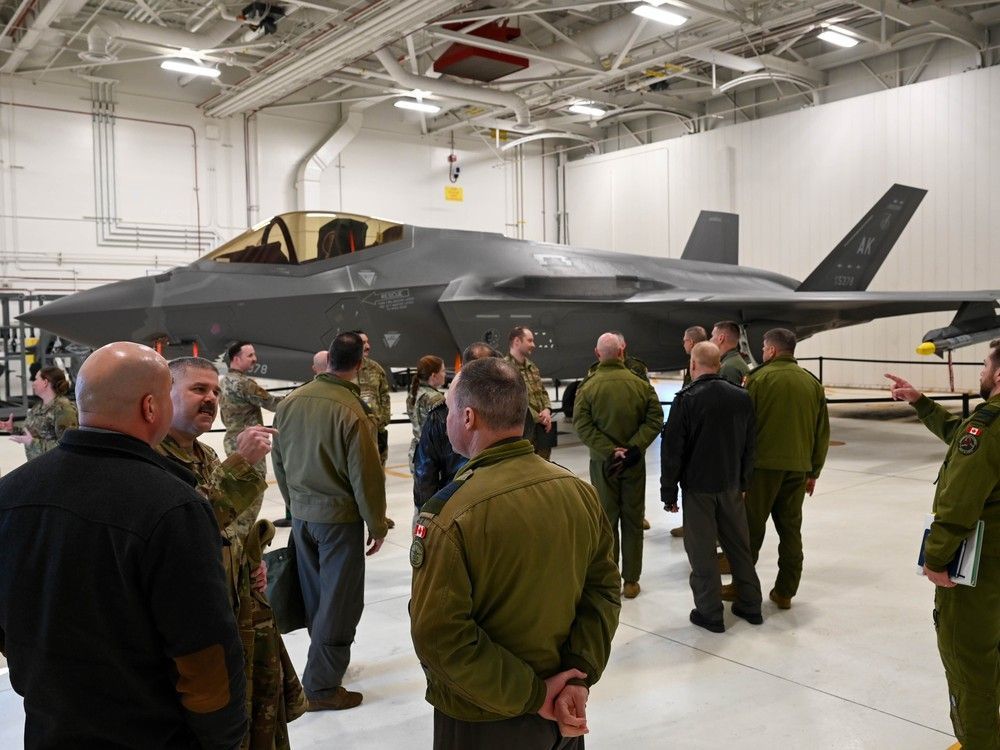
 Royal Canadian Air Force personnel visited a U.S. Air Force base in Alaska in March for discussions on the F-35.

As a result, Hogan recommended that DND review the cost estimates for the fighter jet program “on at least an annual basis” and include in the total cost all elements to achieve full operational capability. The department agreed to these recommendations.

The audit also found that the construction of two new fighter squadron facilities — in Cold Lake, Alberta, and in Bagotville, Quebec — is more than three years behind schedule and that developing an interim solution could further balloon costs of the fighter jet program.

The delivery of the 88 fighter jets is set to occur between 2026 and 2032. In 2026 and 2027, the first eight F-35s will be sent to an air force base in Arizona where initial pilot training will start. All subsequent aircraft would be sent to Canada between 2028 and 2032.

Hogan’s report noted the original plan was for the facilities in Cold Lake and Bagotville to be ready when the first aircraft would arrive in Canada in 2028. But at the time of the audit, DND estimated that the completion of the two facilities would have to wait until 2031.

Finally, Canada is still facing a potential shortage of qualified pilots which could slow down the transition from CF-18s to F-35s. The auditor general had already flagged an issue with personnel shortages in a report in 2018, and it remains a challenge over six years later.

The auditor general’s findings come on the heels of Prime Minister Mark Carney’s announcement that Canada would meet NATO’s defence spending target of two per cent of GDP this fiscal year, with a focus on prioritizing made-in-Canada manufacturing and supply chains.

In a statement, Minister of National Defence David McGuinty made no mention of potentially reviewing the F-35 contract —

like his predecessor Bill Blair a few months ago

— and instead vowed to work with his partners during the project to provide the best value to Canadians.

“This project will provide Canada with an invaluable air defence capability that will continue to support the RCAF (Royal Canadian Air Force) well into the future,” he said.

“It is critical to note that Canada needs fighter aircraft to protect the sovereignty of Canadian airspace and ensure the safety and security of Canadians,” he added.

McGuinty said the government is currently reviewing its defence procurement system, including DND’s internal processes, and reiterated that he will ensure the auditor general’s recommendations will be “fully integrated” into his department.

National Post

calevesque@postmedia.com

Get more deep-dive National Post political coverage and analysis in your inbox with the Political Hack newsletter, where Ottawa bureau chief Stuart Thomson and political analyst Tasha Kheiriddin get at what’s really going on behind the scenes on Parliament Hill every Wednesday and Friday, exclusively for subscribers. Sign up here.

Our website is the place for the latest breaking news, exclusive scoops, longreads and provocative commentary. Please bookmark nationalpost.com and sign up for our daily newsletter, Posted, here.


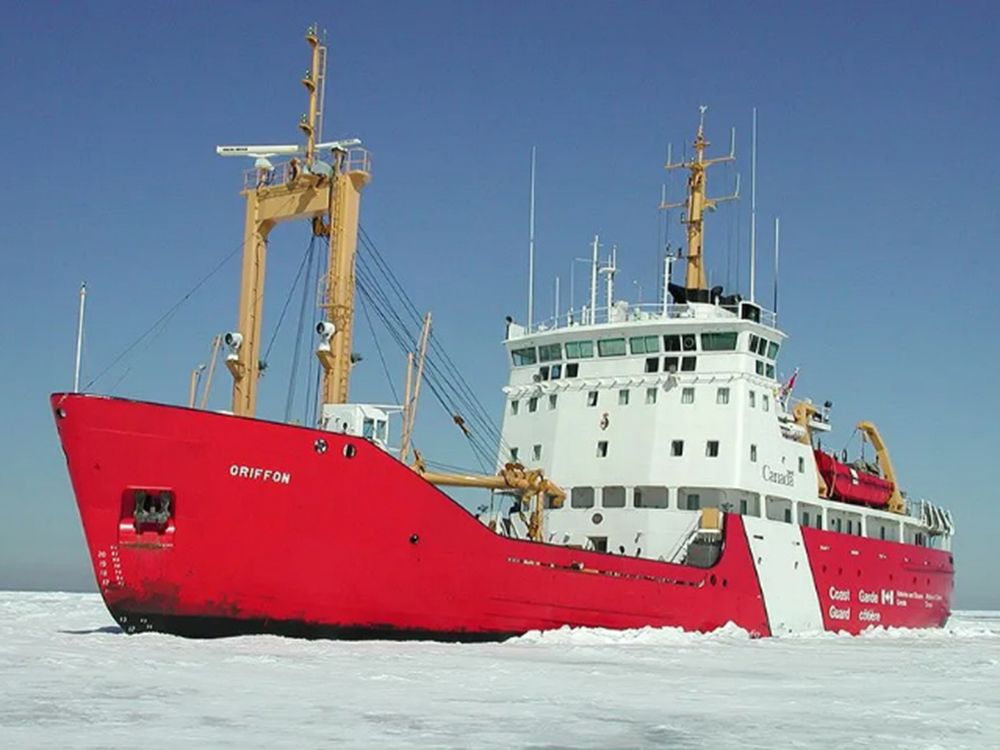
The Canadian Coast Guard ship CCGS Griffon.

OTTAWA — The Liberal government is mulling arming the Canadian Coast Guard as it launches a significant reform of the civilian maritime agency to give it a bigger role in the country’s security apparatus.

The move is one of many significant changes that the Liberals are planning for the chronically underfunded Canadian Coast Guard (CCG) that Prime Minister Mark Carney has promised to equip with new gear and a new security mandate.

On the same day Carney announced his plan to accelerate defence spending this year, his office told National Post Monday that the CCG — which currently reports to the minister of fisheries — would shift to the minister of national defence’s portfolio.

The move away from the fisheries minister makes it both likely easier for the CCG’s budget to be included in Canada’s defence spending in the eyes of NATO and is part of Carney’s desire to pivot the 63-year-old civilian agency towards a more security-oriented role.

“Canadians elected our new Government on a strong mandate for change — to protect our borders and defend our sovereignty with increased focus and investment. To that end, the Prime Minister will soon initiate the process of moving the Canadian Coast Guard to the leadership of the Minister of National Defence,” PMO spokesperson Emily Williams said in a statement.

“The change will permit the Coast Guard to fulfill better both its civilian and security responsibilities.”

The statement did not say when the changeover would happen, with Williams promising that “more details will come in due course.”

A senior Liberal source also told National Post that the government is considering arming the CCG, though they stressed that no decision has been made yet as officials continue to chart the reform.

Arming the CCG, which would be a massive — and costly — change for the special agency that has always been an unarmed civilian organization.

“We’re not there yet,” the official said of the decision. The source was granted anonymity to discuss internal government deliberations.

The Coast Guard has struggled for years with its mandate, pulled between its various responsibilities such as research, search and rescue, icebreaking, marine protection and coastal surveillance, but without any law enforcement powers.

Due to its icebreaking capabilities, it also has unique expertise on the Canadian Arctic within the government.

In the recent election campaign, the Liberals

promised to give the CCG a new mandate

“to conduct maritime surveillance operations” along with the required equipment.

Last week, the Liberals tabled a border security bill that proposes to give the CCG a new security mandate, the power to conduct “security patrols” and the ability to share information with the military and intelligence agencies.

In an interview, former CCG Commissioner Jody Thomas said the agency is long overdue for significant reform and that she’d been “nagging” the government to move the agency to the defence or public safety portfolio for years.

“It is a major change, and I think it’s an important change. I think that this is just another signal that Canada is changing its perspective on our own sovereignty,” said Thomas, who was also headed the Department of National Defence and was National Security Advisor to Prime Minister Justin Trudeau.

Regarding armaments, she said that icebreakers currently under construction have been fitted for, but not with, weapons, meaning that arming them would be a relatively straightforward task.

The real challenge of arming the Coast Guard, she warned, is training.

“It’s a very expensive decision, not for the weaponry, but for the training and the constant preparation and exercising that’s required,” she said. “The Navy is always in training… for what’s coming. The Coast Guard is out there working. So, it’s a very different fleet and with very different purposes.”

There are also talks within government of switching the Coast Guard from a special operating agency, which is still part of its host department, into a departmental agency with its own governing legislation that reports to the Minister of National Defense.

In an interview in late May, Thomas argued that that needs to happen.

“It does need to be a legislative agency, the special operating agency status right now, that’s a very flimsy sort of architecture and legal basis for an agency” with a security focus, Thomas said.

A chronic challenge for the Coast Guard has been the deteriorating condition of its fleet while it operates on a “shoestring” budget, according to Thomas.

As of November,

the CCG had 18 icebreakers

, making it the second-largest icebreaking fleet in the world. Its fleet registry shows it has just over 120 ships on duty, the majority of which are small rescue vessels.

But the aging fleet is also deteriorating rapidly, with ships spending more time in repairs and less time in the water.

“The CCG’s aging vessels are becoming more costly to maintain and are more frequently taken out of operation for unscheduled repairs, placing further strain on the remaining fleet,” the agency

said in its 2024-2025 department plans report

. “The need to replace the vessels has never been more important.”

In March, the federal government contracted two new polar icebreakers which are expected to be delivered between 2030 and 2032. But Thomas said the coast guard has much bigger needs.

“We’re one of the few countries that uses the same fleet for northern and southern ice breaking. We ice break year-round, essentially,” she said.

“So, you have to look at the wear and tear on the ship and the things you want them to do, and the places you want them to be, and they’re going to have to plan the fleet accordingly.”

National Post

cnardi@postmedia.com

Get more deep-dive National Post political coverage and analysis in your inbox with the Political Hack newsletter, where Ottawa bureau chief Stuart Thomson and political analyst Tasha Kheiriddin get at what’s really going on behind the scenes on Parliament Hill every Wednesday and Friday, exclusively for subscribers. Sign up here.

Our website is the place for the latest breaking news, exclusive scoops, longreads and provocative commentary. Please bookmark nationalpost.com and sign up for our daily newsletter, Posted, here.


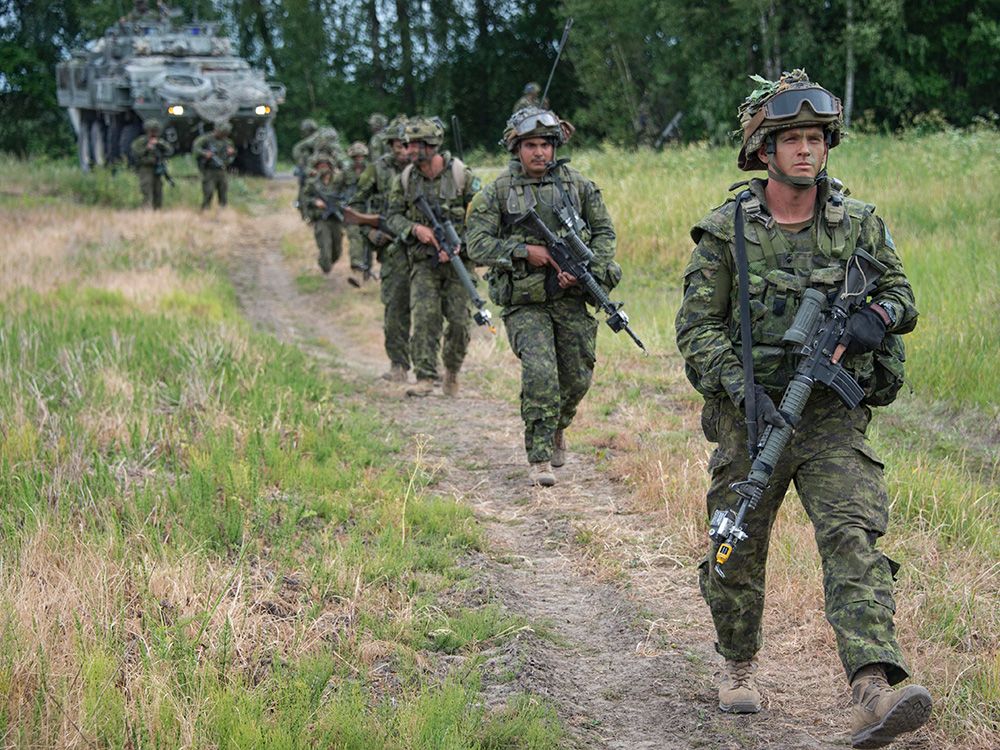
Canadian soldiers training in Latvia.

Canada’s plan to add more than $9 billion to defence spending this year was praised by military watchers Monday, but they cautioned that the country is shooting at a moving target.

Prime Minister Mark Carney

announced the country would meet its commitment

in this fiscal year of hitting the two per cent of gross domestic product mark that was agreed upon by NATO countries more than a decade back.

“It’s very encouraging that the prime minister has come out this early in his mandate and made such a strong commitment to defence,” said Vincent Rigby, a former top intelligence adviser to former prime minister Justin Trudeau, who spent 14 years with Canada’s Department of National Defence.

“You’ve gone from the former prime minister talking about the two per cent as a crass mathematical calculation to the current prime minister saying, no, this is actually a serious commitment. We committed to it 10 years ago and even before that. And we have to do it because we owe it to our allies. But we also owe it to the Canadian people. He made it quite clear this is about protecting Canada, protecting our national interests and protecting our values.”

New spending could do a lot to improve crumbling military infrastructure, said Michel Maisonneuve, a retired Canadian Army lieutenant-general who has served as assistant deputy chief of defence staff, and chief of staff of NATO’s Allied Command.

“The housing on bases is horrible,” Maisonneuve said.

He’s keen on Carney’s plan to participate in the $234-billion ReArm Europe program.

“This will bolster our ability to produce stuff for ourselves” while also helping the Europeans to do the same, Maisonneuve said.

“All the tree huggers are going to hate that, but that’s where we are today in the world.”

Carney’s cash injection includes $2.6 billion to recruit and retain military personnel. The military is short about 13,000 people. It aims to boost the regular force to 71,500 and the reserves to 30,000 by the end of this decade.

“There is no way we can protect Canada and Canadians with the strength that we have now,” Maisonneuve said.

Carney promised investment in new submarines, aircraft, ships, vehicles and artillery. He also talked about adding money to the defence budget for new radar, drones, and sensors to monitor the seafloor and the Arctic.

“All in all, great promises; we’ll just have to see what actually comes through,” Maisonneuve said.

“You can have as many drones as you want, if you want to hold terrain, if you want to protect yourself, you’re going to need boots on the ground.”

 Prime Minister Mark Carney is flanked by Chief of the Defence Staff Gen. Jennie Carignan, left, and National Defence Minister David McGuinty during an announcement the Fort York Armoury in Toronto on June 9, 2025.

Carney promised pay raises for those in uniform, but a technical briefing after his speech was short on details about who might get them.

“Corporal Bloggins needs a lot more than General Smith does,” said defence analyst David Perry, who heads the Canadian Global Affairs Institute.

“The senior ranks are pretty well compensated. The military has got an affordability cost-of-living issue in the lower ranks.”

For people who have to move regularly, like many in uniform, “the total compensation package hasn’t kept pace with changing cost pressures,” Perry said.

“The military is having a difficult time both getting people in and keeping them there once they do join. So, I think depending on how the pay measures are actually structured, it could have quite a significant impact.”

Canada spent about 1.45 per cent of its GDP on defence last year. If Canada’s defence spending does hit two per of GDP by March of 2026, “by then the target probably will have moved,” Rigby said.

“So, we’ve hit two per cent just as the target’s likely to go to 3.5 per cent or even right up to five per cent if you throw in extra security capabilities … beyond pure defence.”

That will leave Canada “playing serious catch up,” he said.

NATO leaders are meeting later this month to discuss boosting military spending.

“Two per cent is not going to cut it in terms of where the rest of the alliance is,” Perry said. “Pretty clearly there is a discussion about getting to a number much higher than that at the upcoming NATO summit. But given that we have been falling short of this now … 11-year-old target, I do think it’s a good first step to help regain some Canadian credibility by putting the money in the window to actually get to the two per cent mark this fiscal year.”

The other question is whether Canada be able to spend all of the promised money by next March, Rigby said. “We all know that one of the problems over the last number of years is National Defence can’t spend the money quickly enough.”

The Canadian Armed Forces (CAF) returns between hundreds of millions and over a billion dollars annually to central treasury, Perry told National Post earlier this year.

Carney is creating a defence procurement agency to help in that respect, Rigby said. “It’s not easy setting up new agencies. There are big machinery issues. It costs money. You’ve got to find the people.”

Our website is the place for the latest breaking news, exclusive scoops, longreads and provocative commentary. Please bookmark nationalpost.com and sign up for our daily newsletter, Posted, here.


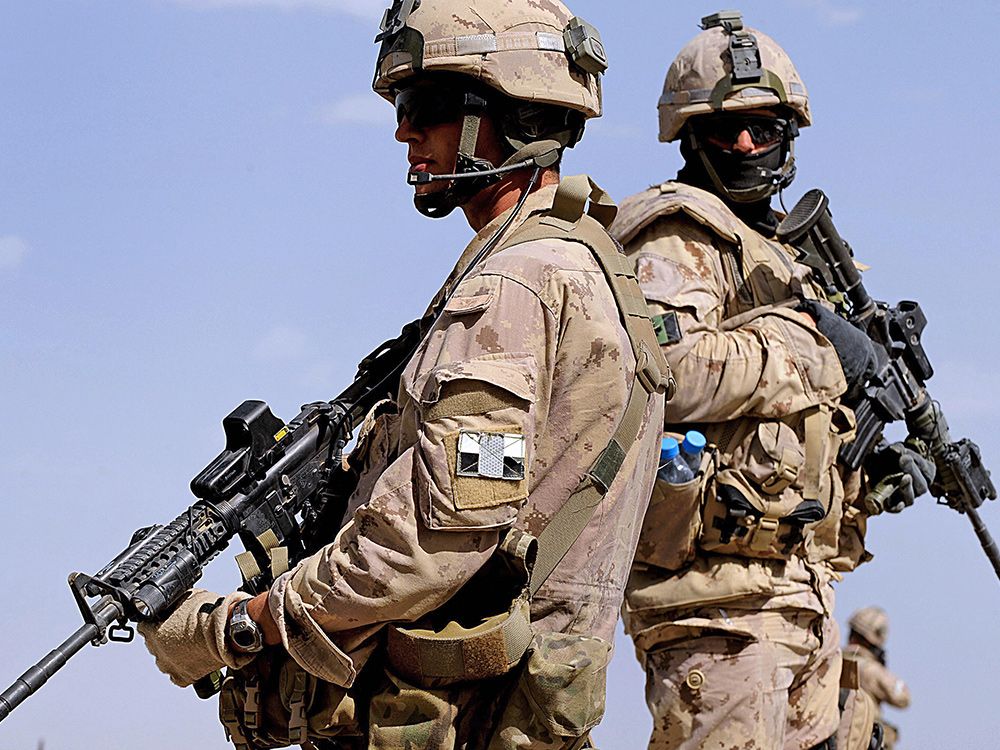
Canadian soldiers with the NATO-led International Security Assistance Force on patrol at Shah Wali Kot district some 35 km north of Kandahar Province on March 27, 2008. During the war in Afghanistan, Stephen Harper’s government was spending just over one per cent of GDP on defence.

In an ever-more insecure world, Canada’s federal government has announced it will

spend two per cent of its GDP

on military spending. That’s the standard that members of the North Atlantic Treaty Organization all agreed to back in 2006, but Canada has long been a laggard, to the extent that other governments, particularly the United States, have browbeaten the country for its meagre military spending.

At present, Canada spends 1.37 per cent of GDP on the military.

In 2024, NATO released a report detailing which nations hit the two-per-cent target. Twenty-three of the defence’s group’s members were either at or above two per cent. This includes Montenegro, a Balkan country with a population smaller than that of Mississauga, and the two most recent NATO members, Sweden and Finland.

Eight countries, including Canada, had not. Canada spends less than Italy on defence but more than Belgium. The lowest-spending NATO nation, Spain, puts 1.28 per cent of its GDP towards military spending. In July 2023, the Wall Street Journal editorial board called Canada’s

military spending “pathetic

.”

NATO is currently considering bumping its threshold from two per cent to five per cent, something that world leaders are expected to discuss at the annual summit at The Hague in two weeks’ time.

Peter MacKay, who served as defence minister in the former Conservative government,

told National Post

in 2023 that he regrets that the Conservatives hadn’t hit the target while they were in power.

By 2014, he said, there was a “great deal of fatigue around defence spending,” due to the years Canada had spent fighting in Afghanistan.

“We, the (Stephen) Harper government, were putting a lot of money into this effort to reach two per cent. And the department literally couldn’t spend it fast enough,” he said. “They would take the money and we would get wrapped around the axle literally on these big (procurement) projects. And we would, at the end of the year, have to send money back to the Treasury.”

Prime Minister Mark Carney announced Monday that Canada will spend an additional $9.3 billion on defence during the 2025-2026 fiscal year, for a total of more than $62 billion, or about two per cent of GDP.

But this isn’t the first time that a Canadian prime minister has promised that the country would hit the target. Here’s a non-exhaustive list of when Canada has promised to hit its NATO target and where its defence spending was at over the years.

1970s:

At this point, Canada was spending

2.8 per cent of its GDP on its defence budget

. While the 1970s were technically a period of détente in the Cold War, there were a number of close calls in the 1960s and the 1970s were a deeply unstable period. Throughout the mid-1970s, Canada’s military spending began to decline, averaging about 1.9 per cent of GDP, before growing slightly through the 1980s to 2.1 per cent.

April 1989:

In the 1989 budget, Canada planned to cut $2.7 billion from its defence budget and close 14 of its Cold War bases. An entire military program, nearly $700 million for an icebreaker, was scrapped.

November 2006:

NATO member countries commit to two per cent of GDP going towards the military. At the time, Canada’s defence spending was around 1.2 per cent of GDP.

January 2007:

During the war in Afghanistan, Stephen Harper’s government was spending just over one per cent of GDP. In January 2007, the Defence Department presented Harper’s cabinet with three spending options to grow the defence budget. The middle option was to spend $35 billion by 2025. As of 2025, defence spending

was a bit above $30 billion

.

September 2014:

At the NATO summit in Wales, allies reaffirmed their commitment to spending two per cent of GDP on military spending. However, just days before the meeting, figures released by the Department of National Defence showed that the federal government

intended to shrink defence spending

by $2.7 billion. (The government was pushing to balance the budget in advance of the 2015 election. Liberal Leader Justin Trudeau won a majority government in that election.)

June 2017:

Then defence minister

Harjit Sajjan announced an increase of $13.9 billion

in military spending over the next decade, and a plan that would put 5,000 more troops in uniform, but still leave Canada short of hitting the two per cent target. At the time, defence spending was at around 1.19 per cent of GDP.

October 2020:

Canada’s defence spending jumped to 1.45 per cent of GDP. However, that was not because of any new spending increases, but because the economy contracted during the COVID-19 pandemic.

May 2022:

Then defence minister Anita Anand said that Canada is on an “

upward trajectory

” when it comes to meeting NATO targets. However, in a virtual discussion hosted by the Canadian Chamber of Commerce, she stopped short of committing to a timeline.

June 2022:

The Parliamentary Budget Office said that if Canada was to reach the two-per-cent target by 2027, the country would need to spend more than

$75 billion more over five years

.

April 2023:

A leaked Pentagon assessment obtained by the

Washington Post revealed

that Trudeau had privately told NATO officials that Canada would never reach the alliance’s defence-spending target of two per cent of GDP.

July 2023:

NATO released a statement saying that all members have agreed to spend at least two per cent. Canada agreed to the target, but at the time had no plan to reach it.

In recent years, officials have defended the government’s failure to meet the two per cent target, saying that 
Canada has increased
 its military spending by 70 per cent since 2014. The Liberals announced $2.6 billion over three years on Canada’s mission in Latvia, $40 billion on NORAD modernization and billions in spending on the new F-35 fighter jets (a contract that is now being reviewed.)

April 2024:

The Canadian government

unveiled its updated military policy

— Our North, Strong and Free — which included $8.1 billion in further spending. However, it was not a commitment to reach two per cent. It would get Canada to 1.76 per cent by 2029-30.

June 2024:

Then prime minister Justin Trudeau

announced at the end of the 2024 NATO summit

that Canada would reach two per cent of GDP on military spending by 2032.

“We continually step up and punch above our weight, something that isn’t always reflected in the crass mathematical calculation that certain people turn to very quickly,” Trudeau said at the time. “Which is why we’ve always questioned the two per cent as the be-all, end-all of evaluating contributions to NATO.”

In July, Blair said:

“It was important to be realistic about how long it was going to take to make these investments, to do it the right way.”

November 2024:

Exclusive Postmedia-Leger polling showed that

45 per cent of Canadians

don’t believe that Canada will hit its commitments on military spending. In order to achieve that, Canada would need to nearly double defence spending. Just one-fifth of Canadians told pollsters they think it’s possible.

January 2025:

Then minister of national defence Bill Blair said that Canada could

accelerate its timeline of hitting

the two per cent target. Instead of 2032, Blair said that Canada could hit that benchmark by 2027 by simply accelerating the timeline set out in June 2024.

April 2025:

During the federal election, both the

Liberals and the Conservatives

promised to meet the NATO spending targets. The Liberals said they would do so by boosting spending by $18 billion over four years, while the Conservatives pledged to spend $17 billion over four years. In March, U.S. President Donald Trump said that the

United States wouldn’t defend NATO allies

that had not met their spending targets.

Our website is the place for the latest breaking news, exclusive scoops, longreads and provocative commentary. Please bookmark nationalpost.com and sign up for our daily newsletter, Posted, here.


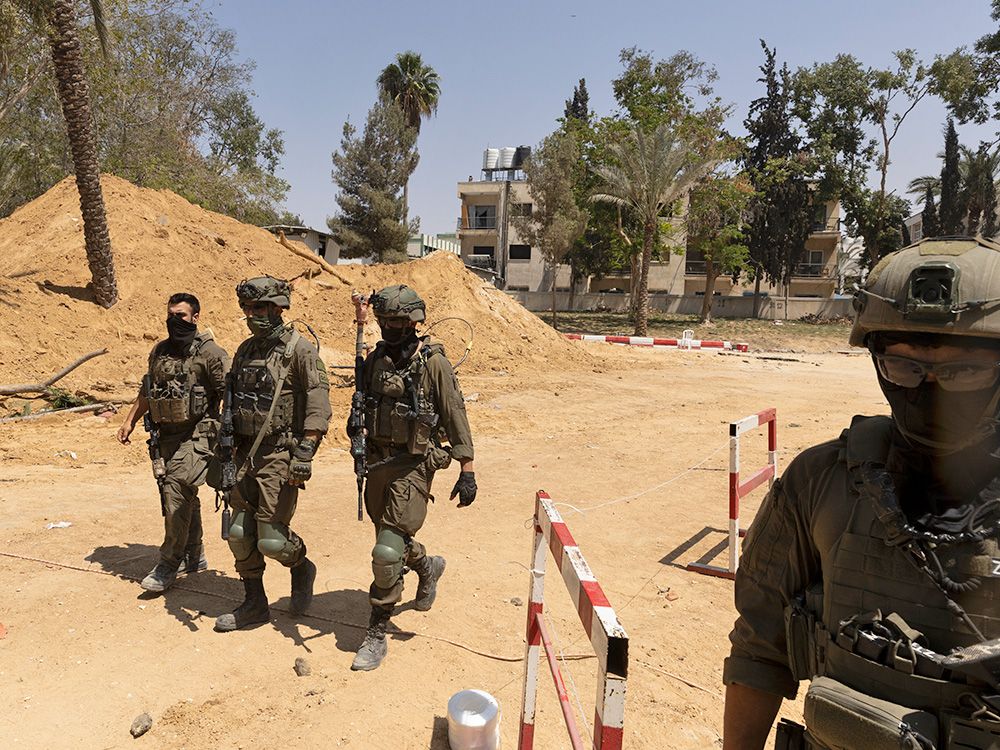
Israeli soldiers guard near the Gaza European Hospital near Khan Yunis, Gaza, on June 8, 2025.

The RCMP’s “structural investigation” into whether Canadian citizens serving with the Israel Defense Forces in Gaza may have committed war crimes has sparked outrage in the Jewish community and its leaders, who accuse Ottawa of political targeting.

“It’s funny how law enforcement in our cities have watched tens of thousands of people illegally protest and harass Jews while the RCMP tells us they want to play global cop and pour resources into finding bogeyman crimes,” said Toronto-based Israel Ellis, whose son Eitan is an Israeli soldier guarding a humanitarian corridor in Gaza.

After a flurry of media reports, the RCMP said in a statement

on June 4

 that it began investigating in early 2024 whether Canadian citizens were in contravention of this country’s Crimes Against Humanity and War Crimes Act.

The force said it wasn’t a criminal investigation, but to “collect, preserve and assess information” that included “open-source material and voluntary submissions.” The data may be used in the future, if it meets the legal threshold for prosecution.

The

RCMP statement

did not specify any group, entity, or army by name — such as Israel Defense Forces (IDF), Hamas, Palestinian Islamic Jihad, Abu Shabab, PFLP,  Muslim Brotherhood, or others, who are fighting in the conflict in and around Israel. But multiple Jewish groups contacted by the National Post said the announcement seemed politically targeted at Canadians who have fought for the IDF.

Nitsana Darshan-Leitner, president of Israel-based Shurat HaDin – Israel Law Center, said the Mounties have made an “unprecedented decision.”

“No other Western democracy is criminally investigating its citizens for fighting alongside an ally, let alone one defending itself from a genocidal terror organization,” she wrote in a statement.

The Canadian government “should focus its pressure on Hamas — the party that initiated this war,” she said, adding her organization will provide “legal defence and advocacy for those targeted by politically driven investigations.”

Hillel Neuer, the Montreal-born executive director of UN Watch, said the investigation is “nothing less than a moral inversion. It turns Canadian values upside down.”

Neuer said that “for good reason, Ottawa has never prosecuted dual citizens who served with British, French or American forces in fighting ISIS and al-Qaida.” He called it “unconscionable” that the federal Liberals “were even contemplating the prosecution of Canadians who fought in defence of civilians against a genocidal terrorist group.”

Noy Leyb of Calgary, who recently served in Gaza, told the Post that when Israeli authorities suspect soldiers of wrongdoing, they are tried in court.

He questions how the RCMP could acquire a full picture of any military operation. “How do you know what happened at what time, at what day, for what reason an IDF soldier did what you think they did? You have no clue. You couldn’t tell what happened unless you had somebody’s body cam,” he said.

“Do you really think that they have all the necessary footage and resources that they need to make a judgment? No, like, stay in your lane. Focus on the issues that you have in Canada.”

He noted that

about 330 Gazans

have come to Canada since the war began on Oct 7, 2023. “Did anyone check whether they were involved with war crimes or Hamas? I’ll bet not.”

There are about 

7,000 lone soldiers in Israel
— those serving from other countries — while an IDF study showed that in 2022, before the current war against Hamas began, there were 51 Canadians.

It’s the second time this year Ellis thought his son Eitan was being targeted. In an article attacking the IDF for what it called “ethnic cleansing, war crimes, apartheid and now genocide,” Canadian activist site

The Maple

 published in February a list of 85 Canadian-Israelis, whom it said were current or former Israeli soldiers. Eitan was on the list.

“He doesn’t know when or if there’s a bullet with his name on it. But I never expected this kind of bullet that would come from my government, and that really tore up my heart. I felt betrayed,” said Ellis, who is author of a recent book about the Hamas-led Oct. 7 attacks.

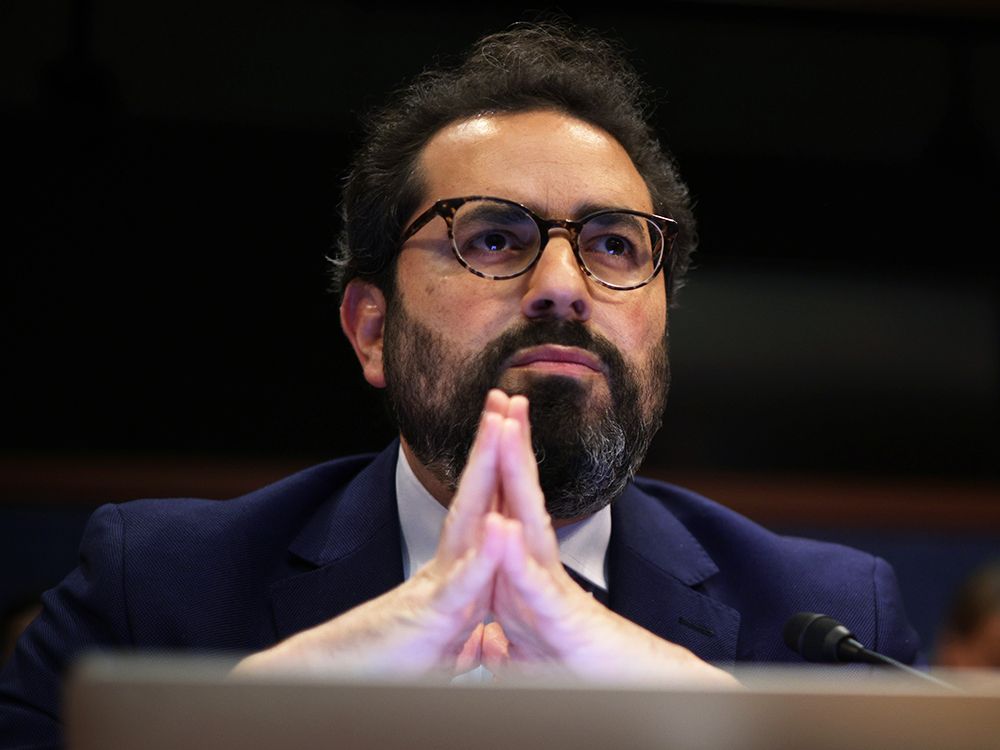
 UN Watch Executive Director Hillel Neuer said the RCMP investigation “turns Canadian values upside down.”

Noah Shack, interim president of the Centre for Israel and Jewish Affairs, in a statement said that “any suggestion that Israeli-Canadians should be targeted for their service — particularly in a war of self-defence waged by a close ally of Canada — not only represents a cynical distortion of the law, but fuels the violent hatred faced by Israelis and Jews in North America,” which he said included the two U.S. Embassy staffers shot in D.C. and the arson attacks in Colorado.

In that respect, he wants to “encourage authorities to carefully consider the impact on public safety of future statements, given the heightened threat environment faced by our community.”

According to the RCMP website, international war 

crimes investigations

 are “large, time consuming and resource intensive.”

Canada’s Crimes Against Humanity and War Crimes Act provides the legal protocol for suspects to be charged and tried for crimes committed in another country. The site said investigators visit the country and work with local officials to seek eye-witnesses, conduct interviews, as well as search for and analyze evidence — provided they receive consent from the host nation.

Michael Bueckert, acting president of Canadians for Justice and Peace in the Middle East (

CJPME

), an anti-Israel group, last week wrote an open letter to Justice Minister Sean Fraser, saying that his organization has “been advocating for such an investigation.” In January, the group sent a letter to Arif Virani, Fraser’s predecessor, to seek action against “Canadian nationals in violations of international law in Gaza.”

CJPME “cautiously welcome” the RCMP probe and said there was “serious likelihood” that Canadians were “involved in the commission of crimes against humanity, war crimes and genocide.”

The group wants the government to issue warnings to Canadian nationals serving or volunteering with the Israeli military they may be “criminally liable under the Crimes Against Humanity and War Crimes Act.” They want the Canada Border Services Agency to conduct “detailed interviews” with Canadian nationals returning from foreign military service, to then share with the International Criminal Court.

Gerald Steinberg, president of NGO Monitor, told the Post that the RCMP action could be traced to NGO-led campaigns that “exploit legal frameworks.”

After the RCMP’s statement, NGO Monitor

produced a study

of Canadian anti-Israel organizations that use lawfare against Israel. “Witch hunts under the facade of ‘war crimes investigations’ and parroting lies and propaganda will only add to the very real dangers facing Canadian Jews and others who stand with them,” he said.

Shai DeLuca, a television personality in Toronto, is a former IDF combat engineer who believes the investigations were at the behest of “very loud fundamentalist voices that the government is trying to pander to.”

Yet, he said, “nothing has been brought against any Canadian that served in the IDF from a year and a half ago until today. So, you know, I’m not concerned.”

There are greater war catastrophes he said the Mounties could be investigating, including in Sudan, Yemen, Syria, and Lebanon.

“It’s very important that people understand that service in the IDF during this war is not illegal in Canada, nor is it a war crime,” he added.

The IDF is not providing Canada with information about soldiers’ actions, he said, “the same way that Canada would not supply any other country with their sovereign military secrets or operations.

“So the RCMP can pretend all that it wants that it’s doing some investigation, but just like they said in that clarified statement, they’re opening channels to people who want to send them stuff. Well, you know, people send me stuff all the time. Doesn’t make it true.”

Our website is the place for the latest breaking news, exclusive scoops, longreads and provocative commentary. Please bookmark nationalpost.com and sign up for our newsletters here.



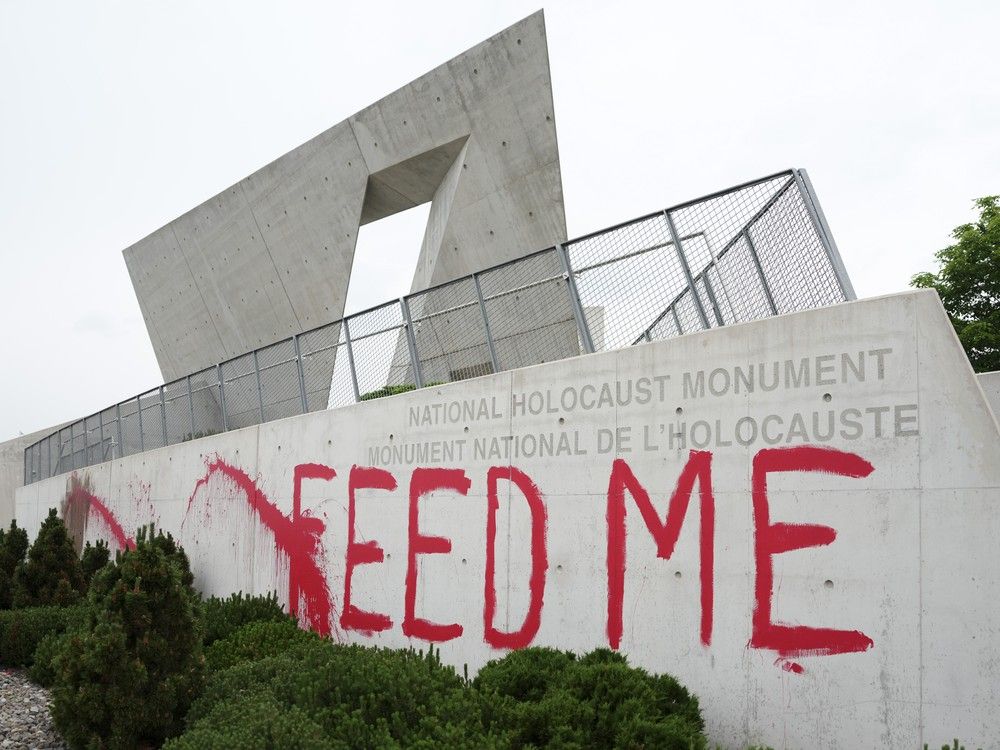
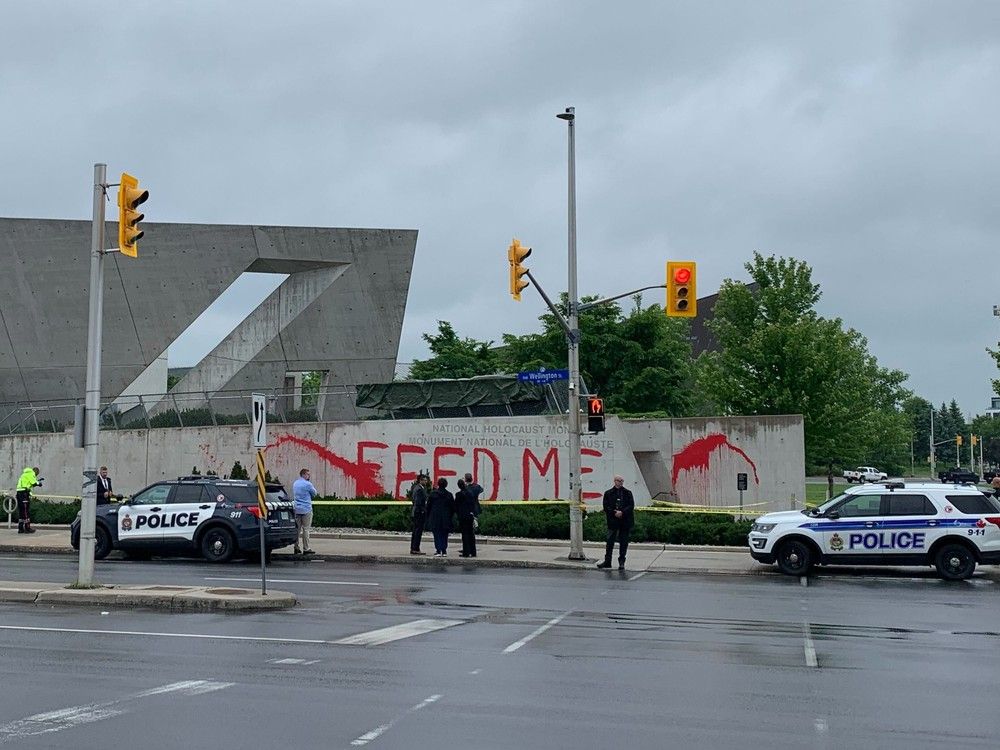
The vandalism of the National Holocaust Monument in Ottawa has drawn condemnation from Jewish leaders who say government needs to do more to quell antisemitism in Canada.

Before the Ottawa Police Service confirmed that graffiti found at the National Holocaust Monument on Monday morning would be investigated as a hate crime, the vandalism had already drawn condemnation as an antisemitic attack.

Lawrence Greenspon, co-chair of the monument’s governing committee, said the words “FEED ME” painted on the wall and red paint splashed elsewhere left little room for interpretation.

“This is not graffiti,” he told National Post. “This is a hate message and it comes from the hatred that is generated because of the consensus of many that Israel is to blame for the plight of the Gazans.”

Greenspon, the son of Holocaust survivor Stan Greenspon, said waking up to news of the defilement was painful and personal.

In a statement, Jewish Federation of Ottawa CEO and President Adam Silver called it “a brazen act of desecration” that was more than just vandalism.

“The Monument was built as a permanent reminder of the consequences of unchecked hatred, bigotry, and antisemitism,” he wrote. “To see it defaced is to witness, once again, the persistence of those very forces in our own society.”

Both expressed shock that such a crime would occur in the nation’s capital.

The Centre for Israel and Jewish Affairs (CIJA), meanwhile, labelled the vandalism as “absolutely disgusting” in

a post to X.

“Is this what the ‘pro-Palestinian movement has come to? Targeting victims of the Holocaust.”

Crews are in the process of removing the graffiti.

The incident is one of the latest to underscore growing antisemitism in Canada and Western nations in general, as hostilities between Israel and Hamas have escalated since the terrorist organization’s attack on Oct. 7, 2023.

“As a son of a Holocaust survivor, I never expected that my daughter would be living in a world where antisemitism is at the level that it is at,” Greenspon said.

Silver said the growth “underscores the urgent need for education, vigilance, and action,” not just remembrance.

The hate and bias crime unit is handling the investigation, according to OPS, which said in a statement it “treats incidents of this nature seriously and recognizes the profound impact they have on the community.”

Witnesses or anyone with information are encouraged to contact the authorities.

 Police are investigating vandalism to the National Holocaust Monument in downtown Ottawa on as a hate crime.

Greenspon said that while he appreciates OPS’s quick response and celebrates prosecutions for crimes like these, it will take more than the usual condemnation from political leaders if they truly hope to address the root cause of antisemitism.

Canada, he said, needs “to stop blaming, along with England and France, Israel for a situation that it did not create.”

“They need to stop blaming Israel for the food and water and medical aid that is much needed but is not getting through to the Gazans because of Hamas, and that’s been the case for years.”

Greenspon also said Canada and other nations should no longer contribute money to the United Nations Relief and Works Agency for Palestine Refugees in the Near East because he alleged those funds are being appropriated by Hamas to support their terrorism.

Last year, the outreach agency fired nine employees with suspected ties to Hamas and the Oct. 7 attack. Israel had sent UNWRA a list of 108 employees it deemed to be Hamas or Palestinian Islamic Jihad terrorists, demanding that they immediately be fired.

In a post to X earlier Monday, Prime Minister Mark Carney said “we can’t look away” from the rising antisemitism in Canada after visiting the Nova Music Festival Exhibition in Toronto, a travelling display dedicated to the victims of Oct 7.

“Young Israeli revellers came together that day to dance and celebrate, and were targeted by inconceivable violence,” Carney wrote. “I came to witness accounts of the atrocities committed — and hear directly from survivors and families of those murdered and taken hostage.”

Also on X, Conservative Party of Canada Leader Pierre Poilievre

said “antisemitic thugs…  should be caught and locked up”

while deputy leader Melissa Lantsman called it “a disgusting cowardly act.”

“Parliament is just steps away — that’s where dissent belongs. Defacing sacred ground in honour of the millions of victims of the Holocaust in the middle of the night with spray paint isn’t protest, it’s vandalism,”

she posted to X Monday morning.

Ottawa Mayor Mark Sutcliffe said he was shocked and disturbed to see the memorial defaced.

“Protests and demonstrations are an essential part of our democracy,”

he wrote on X

. “Disfiguring a sacred monument in a way that will traumatize victims, survivors and their families is not.”

Deborah Lyons, Canada’s special envoy for preserving Holocaust remembrance and combating antisemitism,

vowed to immediately contact authorities

about the “

disgusting display of Jew Hatred” in the capital. 

Our website is the place for the latest breaking news, exclusive scoops, longreads and provocative commentary. Please bookmark nationalpost.com and sign up for our daily newsletter, Posted, here.


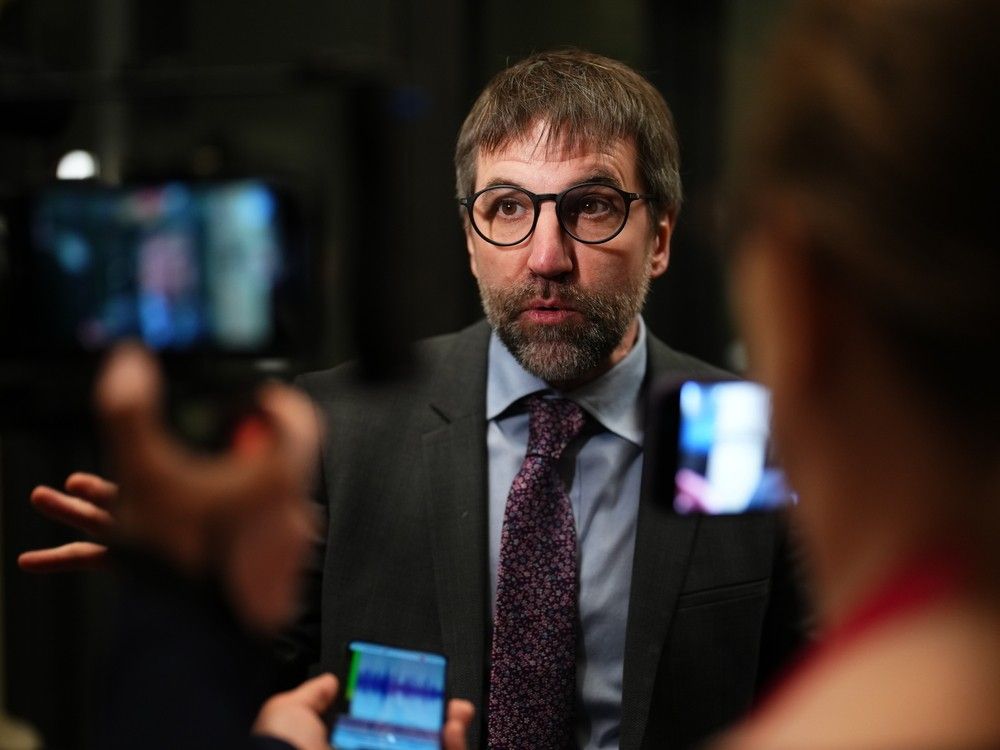
Steven Guilbeault arrives to a caucus meeting on Parliament Hill in Ottawa on Wednesday, March 22, 2023.

OTTAWA — Steven Guilbeault may no longer be federal environment minister, but Alberta Premier Danielle Smith says she still sees him as a threat to the province’s oil and gas industry.

Smith said on

her weekly radio show

this weekend that Guilbeault, now heritage minister, has an “overt motive” to establish new federally protected parks in the path of pipelines and other energy infrastructure.

She added that she wouldn’t consent to the creation of any new federal parks in Alberta.

“I do not want to see one additional acre of territory that’s within Alberta turned into a federal park … we certainly don’t need Steven Guilbeault telling us what is important to protect in Alberta,” said Smith.

“If there is critical habitat that Albertans want to protect … we’ll put in provincial parks.”

Guilbeault, a former Greenpeace activist, was shuffled out

of the environment portfolio

in March by Prime Minister Mark Carney but kept his role as minister responsible for Parks Canada.

This puts him in charge of implementing

the Liberals’ campaign promise

to create at least 10 new national parks and protect

30 per cent of public lands

by 2030.

According to Parks Canada’s website, the

agency is currently vetting

four proposed national parks and protected areas, including

a northern Manitoba watershed

on Hudson Bay, one possible destination

for future oil shipments

.

Guilbeault said in May that no new oil and gas pipeline projects should be initiated

until existing infrastructure is used

to capacity and speculated that both global and national demand for fossil fuels will peak in the next few years.

Neither Guilbeault’s office nor Parks Canada gave an immediate response to Smith’s comments about future federal parks blocking energy infrastructure.

This isn’t the first time that mistrust has flared between Smith’s United Conservative Party government and Parks Canada.

Greater Edmonton UCP MLA Brandon Lunty put forward

a private member’s bill

in late 2023 barring municipalities and Parks Canada from expanding urban parks without the province’s consent. The bill was signed into law in 2024.

Lunty told the National Post that he decided to champion the bill when he caught wind of bilateral discussions Edmonton’s city council was having with federal officials about an urban park in the capital region.

“It seemed like they were down the road a bit on those conversations and I kept coming back to the question of, well, what about the provincial perspective on this?” said Lunty.

He added that several residents came forward with their own concerns about a possible national urban park, culminating in a

citizen-led petition against the plan

.

Lunty said that he and several other UCP MLAs were concerned after learning that Guilbeault would keep his job as minister responsible for Parks Canada after the cabinet shuffle in March.

“Some of the initiatives we saw under minister Guilbeault in his previous files were, frankly, pretty harmful to Alberta’s energy sector and our economy, so (the re-appointment) was certainly something that was noted,” said Lunty.

Guilbeault was criticized by many, including

Alberta Forestry and Parks Minister Todd Loewen

, for not doing more to clear out highly flammable dead trees from Alberta’s Jasper National Park prior to devastating summer 2024 wildfires.

Alberta Public Safety Minister and Deputy Premier Mike Ellis has also suggested that he and other provincial officials

were sidelined by Guilbeault

during the recovery efforts in Jasper.

National Post

rmohamed@postmedia.com

Get more deep-dive National Post political coverage and analysis in your inbox with the Political Hack newsletter, where Ottawa bureau chief Stuart Thomson and political analyst Tasha Kheiriddin get at what’s really going on behind the scenes on Parliament Hill every Wednesday and Friday, exclusively for subscribers. Sign up here.

Our website is the place for the latest breaking news, exclusive scoops, longreads and provocative commentary. Please bookmark nationalpost.com and sign up for our daily newsletter, Posted, here.


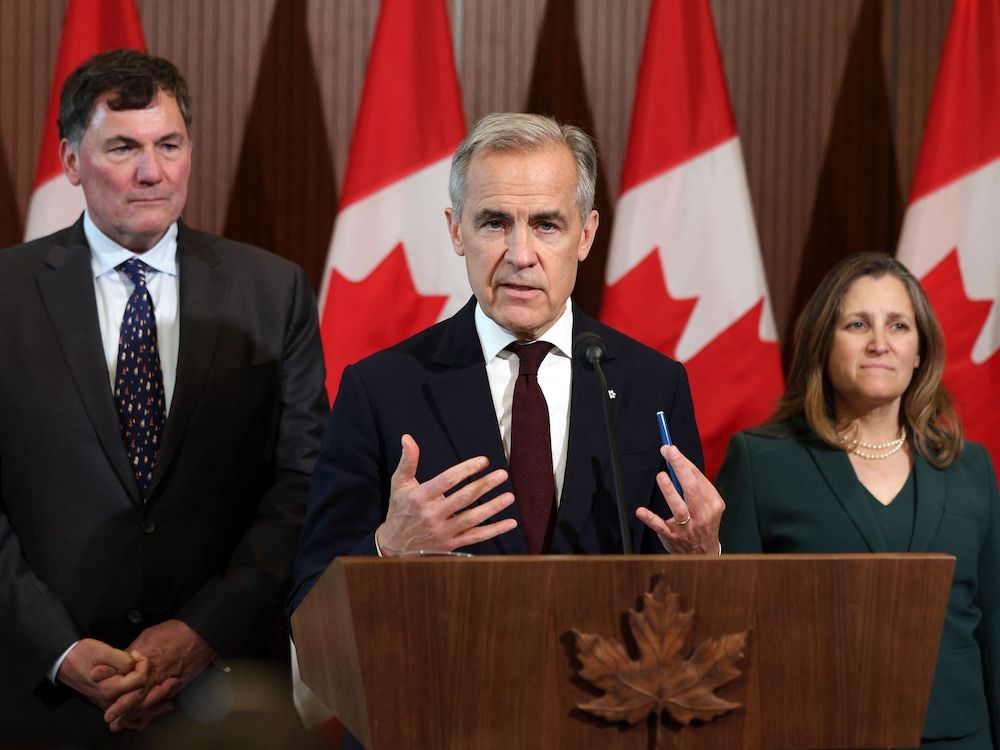
Canada's Prime Minister Mark Carney (C) speaks during a news conference, alongside President of the King's Privy Council Dominic LeBlanc (L) and Minister of Transport and Internal Trade Chrystia Freeland (R), on June 6, 2025.

OTTAWA

— A group of Canadian Sikh organizations is calling on members of Parliament to denounce Prime Minister Mark Carney’s invitation to India’s Prime Minister Narendra Modi to next week’s G7 leaders’ meeting. 

The open letter comes after Carney defended the invitation to Modi last Friday, saying it was important to have India at the table, given that it represents the world’s fifth-largest economy, is essential to supply chains, and now boasts the world’s largest population.

“Carney’s decision is not merely a diplomatic miscalculation,” reads the letter, released Monday.

“It is a direct insult to the Sikh community and a grave threat to the integrity of Canada’s institutions.”

Signatories include the World Sikh Organization, the British Columbia Gurdwaras Council and Sikh Federation, as well as the Ontario Gurdwaras Committee and the Quebec Sikh Council.

The letter was sent to 23 MPs from different parties across Ontario, British Columbia and Alberta, whose ridings have a sizeable Sikh population. Statistics Canada reports Canada as having the second-largest Sikh population outside of India.

The open letter follows

recent comments by Liberal MP Sukh Dhaliwal,

who represents the Surrey, B.C., riding where Sikh activist Hardeep Singh Nijjar was killed outside of a temple in June 2023, that he was concerned by the invitation extended to Modi and planned to raise it with Carney this week.

Dhaliwal said he had received dozens of calls and more than 100 emails from constituents expressing concern about Modi’s attendance at the summit.

The groups, in their letter, cite the statement made by former prime minister Justin Trudeau in September 2023 that Canada had “credible allegations” that India’s government was involved in the death of Nijjar.

That accusation sent shockwaves through Canada and resulted in a souring of relations with India, which denied the allegations.

The letter calls the decision to host Modi “reprehensible.”

“It sends an unequivocally clear message: the safety, dignity, and rights of Sikhs in Canada are expendable.”

India had regarded Nijjar as a terrorist. He was a prominent activist in the Khalistan movement, which pushes for a separate Sikh state to be created in India’s Punjab province.

Four Indian nationals have been charged in his death.

Last fall, further tension was inserted into the Canada-India relationship when the RCMP went public with a statement that it believed India’s government to be involved in violence unfolding in Canada, from murder to criminal gangs.

Carney said last Friday that when he and Modi spoke, they agreed to “l

aw enforcement to law enforcement dialogue.

He also noted that 
“some progress” had been made on “accountability” issues. 

Carney declined to comment on the question of whether he believed Modi was involved in Nijjar’s death, saying it would be inappropriate of him to comment given the ongoing legal case.

Conservative Leader Pierre Poilievre has said he supports having Modi at the G7, saying Canada must work with India to advance its trade and security interests.

NDP MP Jenny Kwan said in a letter posted to social media that she found the invitation “profoundly troubling and deeply hurtful to the Sikh community in Canada.”

In their open letter, the Sikh groups called on MPs to speak out about the invitation to Modi and to “r

eaffirm commitment to holding Indian officials accountable for interference and violence in Canada.”

They are also planning to stage a protest on Parliament Hill on Saturday, before the G7 meeting gets underway.

The meeting is taking place from June 15 to 17 in Alberta.

National Post
staylor@postmedia.com
Get more deep-dive National Post political coverage and analysis in your inbox with the Political Hack newsletter, where Ottawa bureau chief Stuart Thomson and political analyst Tasha Kheiriddin get at what’s really going on behind the scenes on Parliament Hill every Wednesday and Friday, exclusively for subscribers. Sign up here.

Our website is the place for the latest breaking news, exclusive scoops, longreads and provocative commentary. Please bookmark nationalpost.com and sign up for our daily newsletter, Posted, here.