LP_468x60
on-the-record-468x60-white

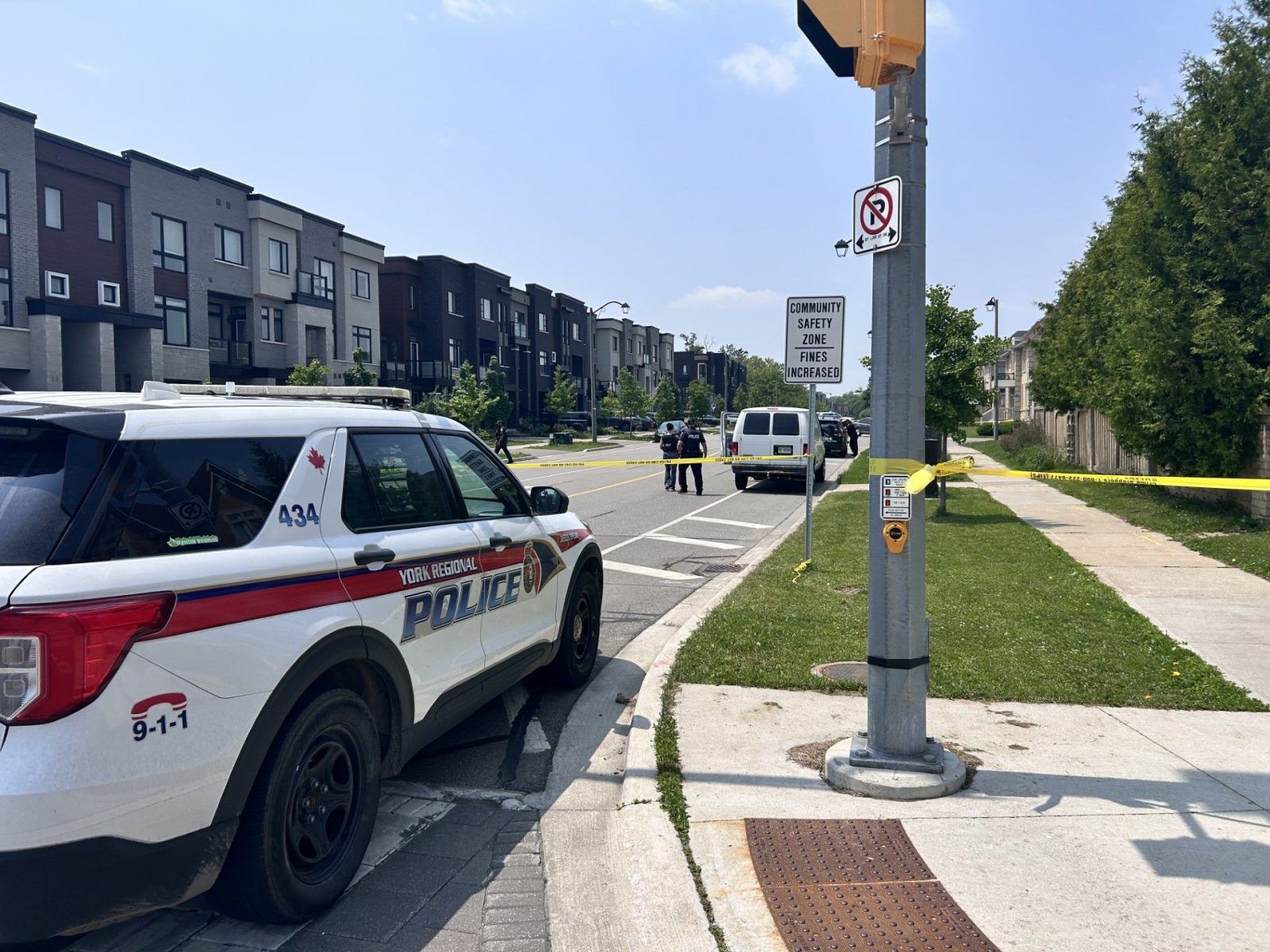
York region Police say a shooting outside a Jewish community centre in a GTA neighbourhood was not a hate crime.

A shooting near the Jewish Community Centre (JCC) in Vaughan, Ontario on Wednesday morning is not being ruled a hate crime, York Regional Police said during a midday press conference.

“There’s no indication at all that this is a hate bias incident,” media relations officer James Dickson said in response to a question from National Post.

Dickson told reporters at the scene that officers responded to reports of a shooting at 10:25 a.m. and confirmed that a 33-year-old man had been shot. The individual was taken to hospital with “serious but non-life threatening injuries” from a gunshot wound, he said.

“We do believe that the shooting was targeted,” Dickson added, while refusing to provide “any additional information in terms of identifying any of our victims.”

York Regional Police are currently looking for one “white male” suspect “operating an older-model, dark-coloured sedan.” Dickson asked people in the community with any information about the incident to contact local law enforcement but said they “don’t believe that there’s any public safety (concerns) at this time.”

“None of the criteria that would be there for the Hate Crime Investigation Bureau to be brought into consultation have been met,” the spokesman said. “We do believe this to be a targeted incident. We do know that there’s been a lot of incidents this year right across Vaughan that have brought hate bias to the front of people’s minds and I can confirm that this is not related to that whatsoever nor the (Jewish Community) Centre.”

The neighbourhood was quiet on the sunny afternoon. A few local students walked by, and captured images of the police tape blocking off streets. Local residents expressed alarm at the sight of their neighbourhood being filled with police cruisers.

“I figured it’s probably another kid just setting up a firework,” one eyewitness, who asked not to be identified, told the Post. “I don’t know what this government is doing,” he said, adding that the community is home to the elderly and kids and the threat of violence is disconcerting.

He told the Post that he heard lockdown announcements broadcast from the Jewish schools located nearby.

“I’m just so concerned because I come home late from work. If this is happening in broad daylight,” he said, without finishing the sentence.

Our website is the place for the latest breaking news, exclusive scoops, longreads and provocative commentary. Please bookmark nationalpost.com and sign up for our daily newsletter, Posted, here.



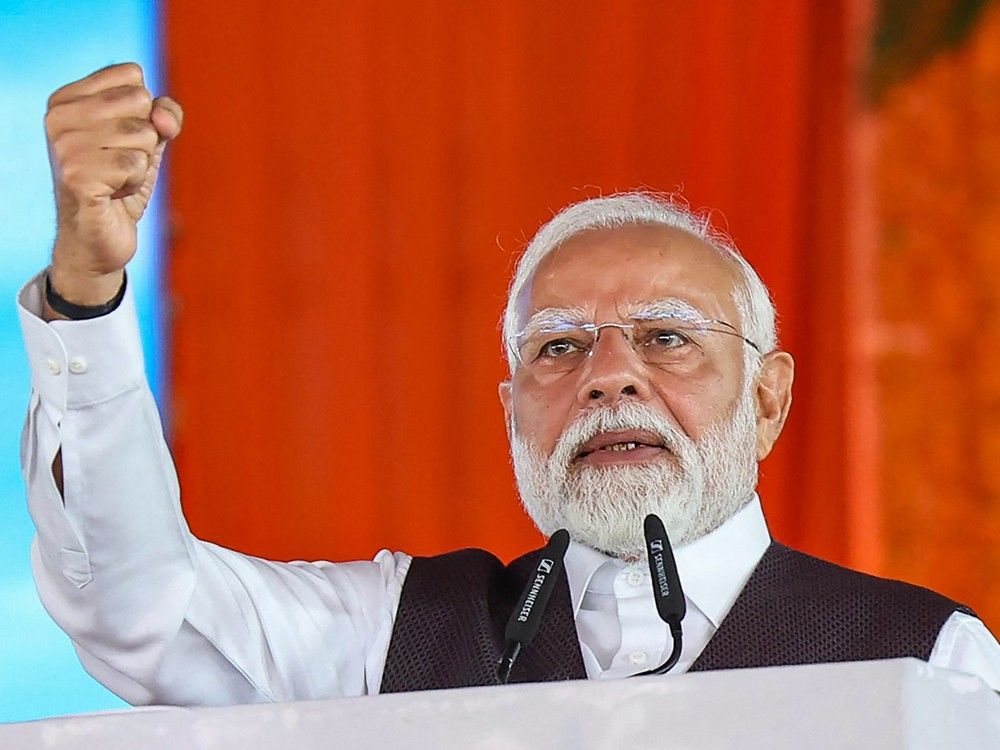
This photograph taken and released by the Indian Press Information Bureau (PIB) on June 6, 2025, shows India's Prime Minister Narendra Modi addressing the public during the inauguration of various projects at Katra in Jammu and Kashmir.

OTTAWA

— A Liberal MP says he met with Prime Minister Mark Carney to raise concerns about the decision to invite India’s Prime Minister Narendra Modi to Canada to attend the upcoming G7 summit. 

Sukh Dhaliwal represents the Surrey, B.C. riding, where prominent Sikh activist Hardeep Singh Nijjar was shot outside of a temple in June 2023, a killing that Canada has linked to agents acting on behalf of the Indian government. 

India has denied any involvement in Nijjar’s death. Four Indian nationals have been charged in the killing.

Since Modi confirmed last week that he would be attending next week’s G7 meeting in Alberta at Canada’s invitation,

Dhaliwal said he’s heard from many concerned constituents and confirmed to reporters that he raised them directly with the prime minister on Wednesday. 

“We expressed to him what our constituents are saying, and he knows the issue very well, and he’s very strong and alarmed on this,”

Dhaliwal told reporters on his way into the Liberals’ weekly caucus meeting. 

Gurbux Saini, the Liberal MP for the riding of

Fleetwood—Port Kells, said he also raised the issue with the prime minister and said he disagrees with the decision to invite Modi. 

“It’s not a Hindu-Sikh issue,” Saini told reporters.

“It’s a Canadian issue.”

Saini cited statements made by the RCMP that it has evidence showing India’s government to be involved in violent crime unfolding in Canada, from murders to intimidation by criminal gangs towards the South Asian community.

“India has to be accountable,” Saini said.

“They have to give assurance that they are going to cooperate with our agencies.”

He suggested that not only was the invitation to Modi damaging to Canada’s reputation, but that he was also concerned about a report that Canada had extended an invitation to the Crown Prince and Prime Minister of Saudi Arabia,

Mohammed bin Salman. 

Human rights groups like Amnesty International have issued statements about what they say has been the erosion of human rights under his leadership.

“It is a damaging thing, because Canadians are known in the world as caring and compassionate and people who love human rights,” said Saini.

Carney’s office confirmed he and the crown prince recently spoke on “deepening bilateral trade” and discussed other issues, including energy security and the need for peace in the Middle East.

Last week, Carney defended his decision to invite Modi to next week’s G7 meeting by saying that he did so as chair of the leaders’ group and that it was important for India to be at the table for discussions on trade and security, given it plays a central role in supply chains as well as boasts the world’s fifth-largest economy and largest population.

Sikh groups have nevertheless denounced Modi’s invitation and plan to meet with MPs later on Wednesday to press them to speak up.

Earlier this week, a coalition of Sikh Canadian organizations wrote to MPs from the Liberals and Conservatives whose ridings have sizeable Sikh populations, asking them to reject the invitation.

In a statement posted to X on Monday, Randeep Sarai, who serves as the secretary of state for international development, responded to some of those concerns.

“As a proud Sikh Canadian and Member of Parliament, I hear the concerns many of you are expressing regarding India’s participation at the G7.”

“Let me be clear: the safety and security of Canadians is, and always will be, our top priority.”

International Trade Minister Maninder Sidhu told reporters on Wednesday he has heard “concerns about invitations to leaders,” but defended the need to bring together different leaders to sort through economic issues, given the uncertainty caused by U.S. President Donald Trump’s global tariffs.

“We need to be able to collaborate and, of course, work out some issues.”

Ontario Liberal MP and former cabinet minister Karina Gould said she understands why, in a time of economic uncertainty and the need to diversity trade, it was important to have both India and Saudi Arabia around the table.

“But that being said, as Canada, you know, we also have certain values that are important to us, when it comes to human rights.”

National Post

staylor@postmedia.com
Get more deep-dive National Post political coverage and analysis in your inbox with the Political Hack newsletter, where Ottawa bureau chief Stuart Thomson and political analyst Tasha Kheiriddin get at what’s really going on behind the scenes on Parliament Hill every Wednesday and Friday, exclusively for subscribers. Sign up here.

Our website is the place for the latest breaking news, exclusive scoops, longreads and provocative commentary. Please bookmark nationalpost.com and sign up for our daily newsletter, Posted, here.


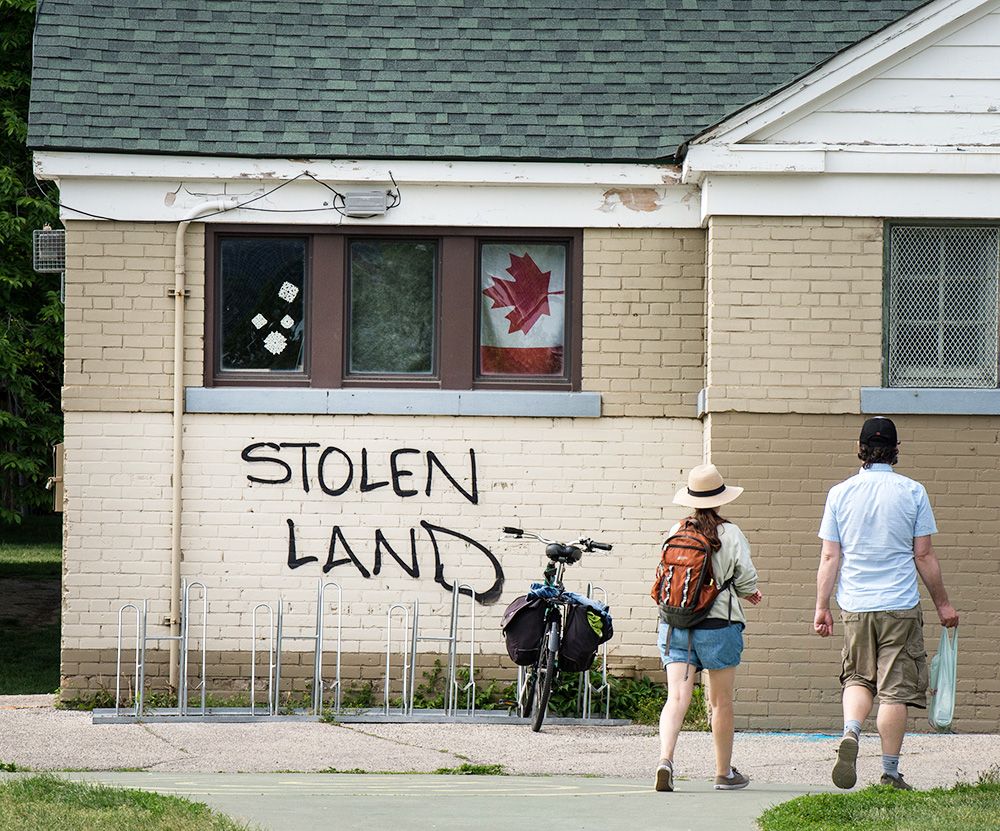
Grafitti stating “Stolen Land” in a Toronto park.

A majority of Canadians reject the idea they live on stolen Indigenous land, and the older people are, the more likely they are to say they don’t, according to a new public opinion poll.

Among all respondents across Canada, 52 per cent said they did not live on stolen Indigenous land, with 27 per cent saying they do. The remaining 21 per cent said they didn’t know or declined to answer.

Notably, there was a significant generational divide among those who answered

the national opinion survey

, conducted by Leger Marketing for the Association for Canadian Studies and provided to Postmedia.

More respondents in the youngest cohort, 18-to-24-year-olds, agreed they did live on stolen Indigenous land (41 per cent) than rejected the idea (37 per cent). That contrasts with those in the oldest age group of 65 years or older, who overwhelmingly said they did not live on stolen land (65 per cent) with only 15 per cent agreeing they did.

In between them, the remaining age groups were on an unbroken sliding scale in their answers: the older they were the more likely they were to reject the statement they lived on stolen land, and, conversely, the younger they were the more likely they were to agree that they did.

The sentiment rejecting the idea they live on stolen Indigenous land was a low majority regardless of the respondents’ region in Canada, except for in Atlantic Canada, where most people still rejected the idea, but at a nationally low rate of 44 per cent, with 29 per cent of Atlantic respondents saying yes, they do live on stolen land.

The type of land people live on also impacted their feelings on the issue.

Canadians living in rural areas were the least likely to agree they live on stolen Indigenous land, with urban dwellers the most likely to agree.

When asked to agree or disagree with the statement “I live on stolen Indigenous land,” 56 per cent of respondents living in a rural area said they disagree, 24 per cent said they agree, and 20 per cent said they didn’t know or didn’t answer. For those living in a suburban area, 50 per cent said they disagree, 29 per cent said they agree, and 21 per cent didn’t give an answer. For urban dwellers, 46 per cent disagreed, 34 per cent agreed and 20 per cent didn’t answer.

The city they live in also impacted opinions.

Those living in Calgary were the most vociferous in rejecting that their land is “stolen” among the cities named in the polling data. In Calgary, 69 per cent said no, 20 per cent said yes, and 11 per cent didn’t answer.

That differs sharply from those living in Edmonton, just 300 kilometres away in the same province, where respondents were the most amenable to the idea: 41 per cent said no, 32 per cent said yes, and 27 per cent didn’t answer.

Montrealers had the second most forceful rejection: 53 per cent said no, 26 per cent yes, and 21 per cent didn’t answer.

Next came those living in the Hamilton-Niagara peninsula, where 50 per cent said no, 27 per cent said yes, and 23 per cent didn’t answer, followed by the greater Ottawa area with 50 per cent saying no, 35 per cent saying yes, and 15 per cent not answering; Vancouver was next, where 45 per cent said yes, 34 per cent said no, and 21 per cent didn’t answer.

In the Greater Toronto Area, 43 per cent said no, 30 per cent said yes, and 27 per cent didn’t answer.

A majority of respondents who are Indigenous (53 per cent) said they live on stolen Indigenous land, although more than one third of Indigenous respondents (36 per cent) said no.

Homeowners are more likely to reject the belief they’re living on stolen Indigenous land than renters (53 per cent said no compared to 42 per cent).

Students (50 per cent) and the unemployed (37 per cent) are more likely to agree they live on stolen land than workers, with full-time workers (35) more likely to agree than part-time workers (30).

Respondents who described themselves as non-immigrants are more likely to reject that they live on stolen land than those who identified as immigrants (51 per cent compared to 44 per cent).

“Most Canadians reject the idea that they live on stolen Indigenous lands,” said Jack Jedwab, president of the Montreal-based Association for Canadian Studies.

“This reflects not just a disagreement over language, but a deeper divide in how people view Canada’s history — highlighting ongoing political conversations about land ownership and societal values.

“The findings also raise important questions about the impact of public land acknowledgments, particularly when they are made without genuine understanding or conviction…. The survey results suggest that requiring Canadians to publicly acknowledge they live on stolen Indigenous lands would imply that the majority does so without conviction.”

The poll asking Canadians if they think they live on “stolen” Indigenous land suggests it may be more palatable to use a different word: unceded.

The term unceded has become popular in modern usage, particularly in land acknowledgements that are frequently read at the start of government meetings and official public gatherings.

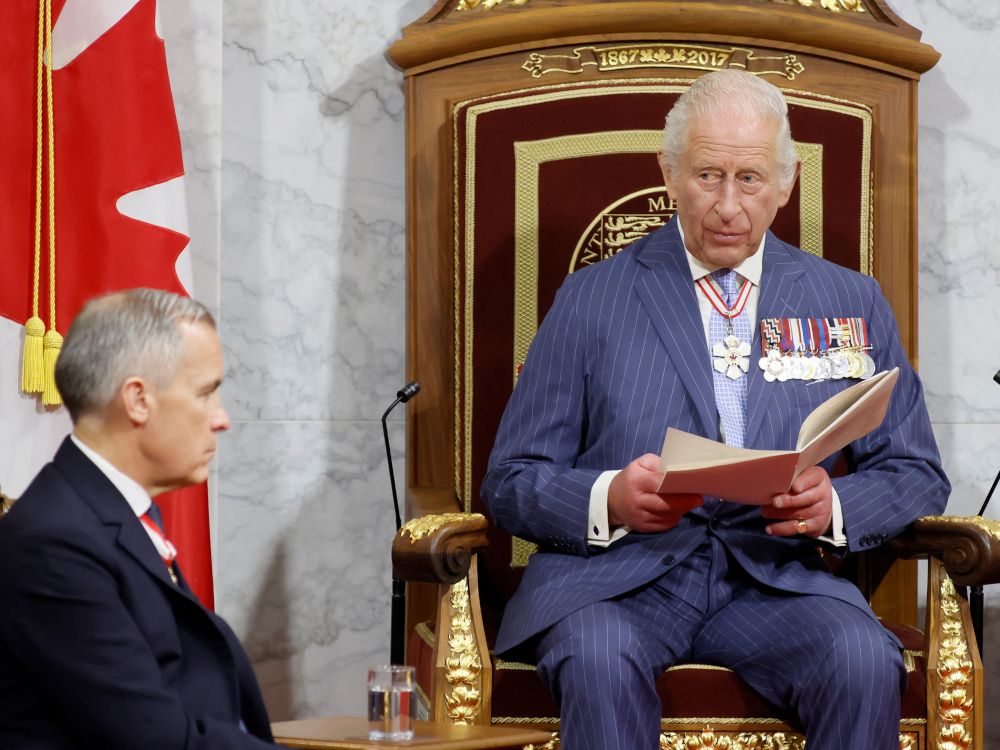
Even King Charles III in his recent throne speech in Ottawa began by saying: “I would like to acknowledge that we are gathered on the unceded territory of the Algonquin Anishinaabeg people. This land acknowledgement is a recognition of shared history as a nation.”

 King Charles, right, delivers the speech from the throne in the Senate in Ottawa on May 27. In his recent throne speech in Ottawa, he began by saying: “I would like to acknowledge that we are gathered on the unceded territory of the Algonquin Anishinaabeg people.”

There has been some pushback. In April professors launched a lawsuit against the at the University of British Columbia complaining that land acknowledgments saying the school is on “unceded Indigenous” land violates legislation requiring universities to be non-political. The petition claims the word unceded “is often considered synonymous or closely affiliated in meaning with the assertion that the territory of Canada is ‘stolen land’ and that the speaker, at least to some degree, and in this respect, does not recognize Canada as a lawful or legitimate state.”

Compared to the 52 per cent who declared in the recent poll they did not live on “stolen Indigenous land,” a 2021 survey found only 42 per cent of respondents rejected the statement that they live on “unceded Indigenous territory.”

“Paradoxically, the push back on the word ‘stolen’ may reflect not indifference, but the weight and seriousness people associate with it, and what such acknowledgement might imply,” said Jedwab. “Dismissing such views does little to advance issues that are highly relevant for the country’s past and future.”

The public opinion survey was conducted with 1,537 adult respondents in Canada from May 16 to 18. As a non-probability sample in a panel survey, traditional margins of error do not apply.

• Email: ahumphreys@postmedia.com | Twitter:

Our website is the place for the latest breaking news, exclusive scoops, longreads and provocative commentary. Please bookmark nationalpost.com and sign up for our daily newsletter, Posted, here.

AI Minister Evan Solomon speaks with reporters outside of the Liberal cabinet meeting in West Block on Tuesday, June 10, 2025.

OTTAWA

— As ministers settle into their new roles, discussions are underway about who is best suited to steer the government’s efforts to legislate against online harms, cabinet minister Steven Guilbeault said on Tuesday. 

Questions have arisen about which minister and department would be best suited to handle the complicated issue after the Liberals’ proposed Online Harms Act died in Parliament when Prime Minister Mark Carney triggered a federal election in March.

“It’s a good question,” said Guilbeault, who oversees the Canadian Heritage department, told reporters on his way into the Liberals’ weekly cabinet meeting.

“We’re having conversations to see what would be the most appropriate department to bring this forward.”

Canadian Heritage had been the first department to develop and later introduce the Liberals’ initial plan to combat the harms Canadian users experience online.

That proposal, which was released in 2021, was met with widespread backlash over concerns about the requirement for social media companies to remove content within 24 hours after receiving a complaint.

Experts had warned the provision was overly broad and risked infringing on free expression, given that companies could remove legal content.

The Liberals then struck an advisory group and got to work on figuring out a Plan B.

Responsibility for the bill also shifted from Canadian Heritage to the Justice Department.

In early 2024, former justice minister Arif Vriani introduced Bill C-63, which proposed to create a new digital safety regulator that would be tasked with ensuring social media giants took steps to reduce users’ access to content, such as child sex abuse images and incite extremism and violence.

That bill was also met with backlash over its proposal to introduce stiffer sentences for hate-related offences and reintroduce a controversial section to the Canadian Human Rights Act to allow people to bring forward complaints of hate speech, which civil liberties advocates and Parliamentarians said risked violating free speech.

Virani spent months defending the need for the tougher Criminal Code measures to be included in the online safety bill, but last December announced the government was prepared to split the bill to help get it passed.

In January, former prime minister Justin Trudeau announced his resignation and that Parliament would be suspended until March.

Emily Laidlaw, a Canada Research Chair in cybersecurity law at the University of Calgary, who sat on the government’s expert advisory group, said it was a mistake for the government to have combined different provisions into the same legislation and that by the time it announced the legislation would be split, “it was too late.”

“What I’m hoping is, when they reintroduce it, they have very firmly the platform regulation law,” she says.

Should the Liberals want to propose changes to the Criminal Code or the Canadian Human Rights Act, that should be separate, she said.

Justice Minister Sean Fraser told reporters on Tuesday that the government was going to look at different measures when it comes to protecting children online, but would have more to say in the months ahead.

One new factor in how the Liberals may decide to proceed is the fact that Carney named to his cabinet the country’s first minister responsible for artificial intelligence and digital innovation, a position currently held by former broadcaster Evan Solomon, who was elected in late April’s general election.

The Liberals in their last bill listed AI-generated sexualized “deepfakes” as one of the harms companies would have to take steps to tackle.

Asked whether online harms would fall under his mandate, Solomon told reporters on Tuesday that it was “up for debate.”

“But probably yeah.”

Laidlaw said while she does not believe the government needs to start a new round of consultations, it ought to take a second look at the scope of harms it is seeking to tackle.

For example, she suggested there was room to include the issue of identity fraud.

“I actually think it should be broadened to include some of the ways that AI can be used to facilitate harm, so it might not just be the typical social media on Instagram.”

National Post
staylor@postmedia.com
Get more deep-dive National Post political coverage and analysis in your inbox with the Political Hack newsletter, where Ottawa bureau chief Stuart Thomson and political analyst Tasha Kheiriddin get at what’s really going on behind the scenes on Parliament Hill every Wednesday and Friday, exclusively for subscribers. Sign up here.

Our website is the place for the latest breaking news, exclusive scoops, longreads and provocative commentary. Please bookmark nationalpost.com and sign up for our daily newsletter, Posted, here.


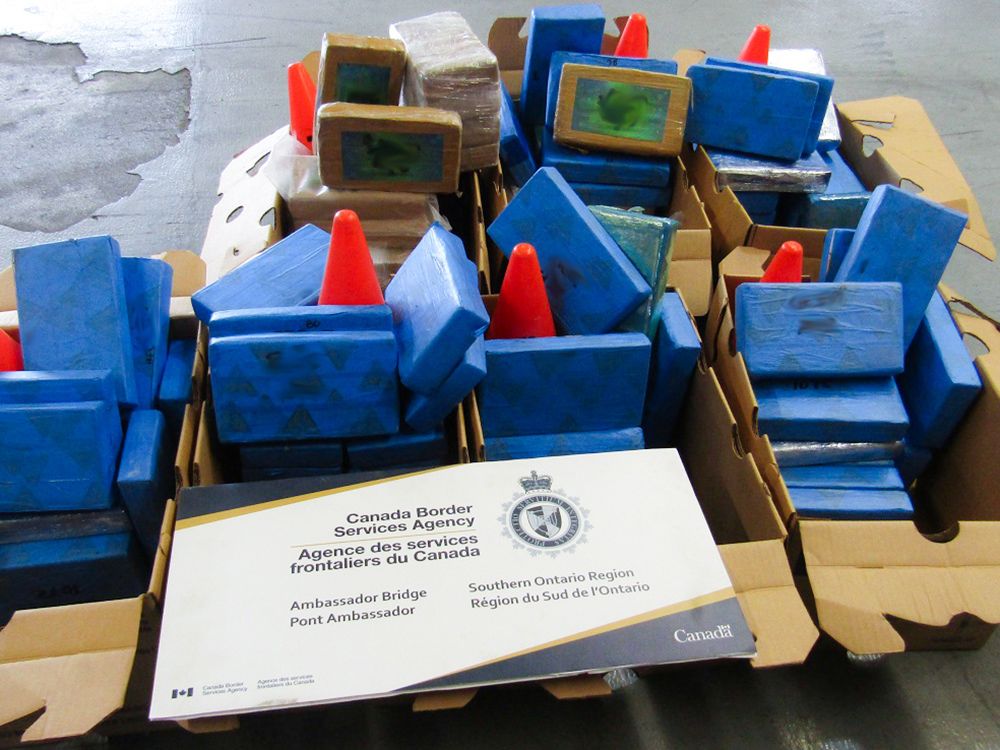
Suspected cocaine found by Canada Border Services Agency hidden in a commercial truck at the Ambassador Bridge border crossing in Windsor, Ont., on Feb. 11.

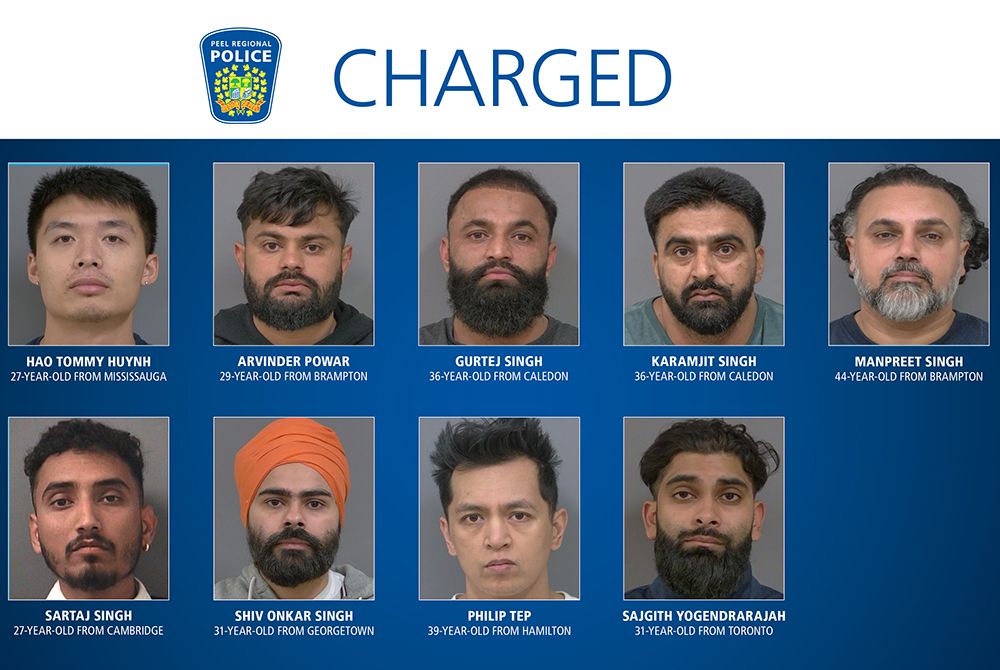
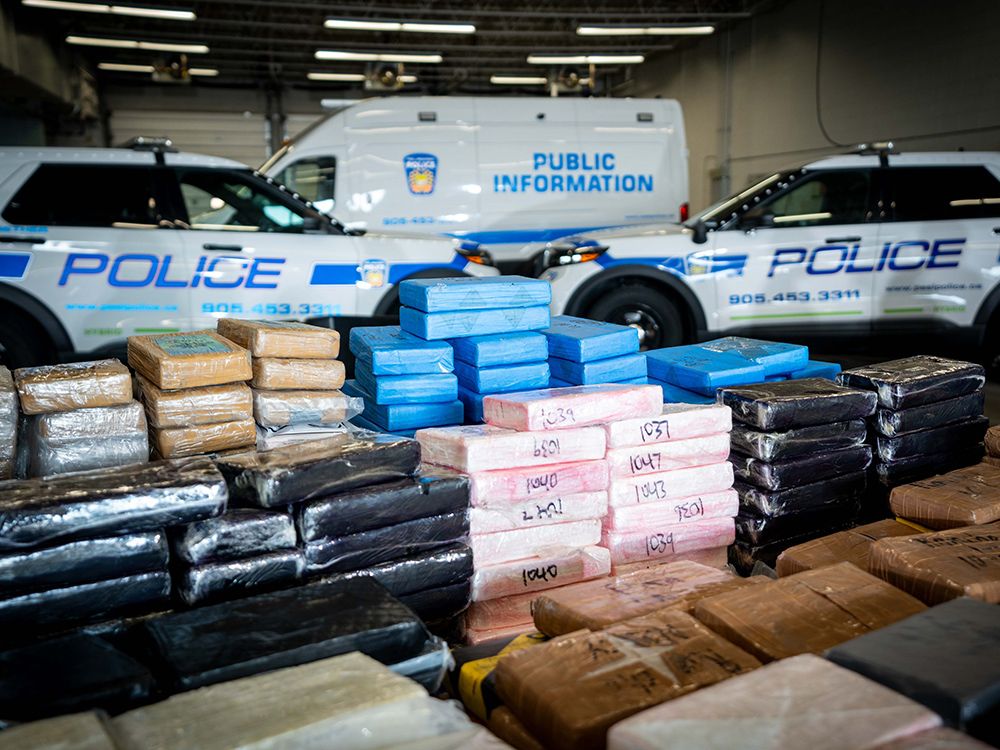
A cross-border drug smuggling network using commercial truck drivers to haul large loads of cocaine across the border from the United States into Canada has been revealed by police in southern Ontario, leading to the arrest of nine men and the seizure of 479 kilograms of bulk cocaine bricks.

Of the nine arrested, six have since been released on bail while three are still awaiting bail hearings after what Peel Regional Police described Tuesday as the largest drug bust in the police service’s history.

Investigators gave the cocaine an estimated retail street value (based on a per-gram level) of $47.9 million.

More than a third of the cocaine was caught at the border, reflecting a significant trend in the flow of drugs: from Mexico into the United States and then smuggled into Canada hidden aboard commercial transport trucks.

The importations were destined for Peel Region, located to the west and northwest of Toronto and encompassing the cities of Mississauga and Brampton and the town of Caledon. It is a large commercial trucking and distribution point, and home to the Toronto Pearson International Airport.

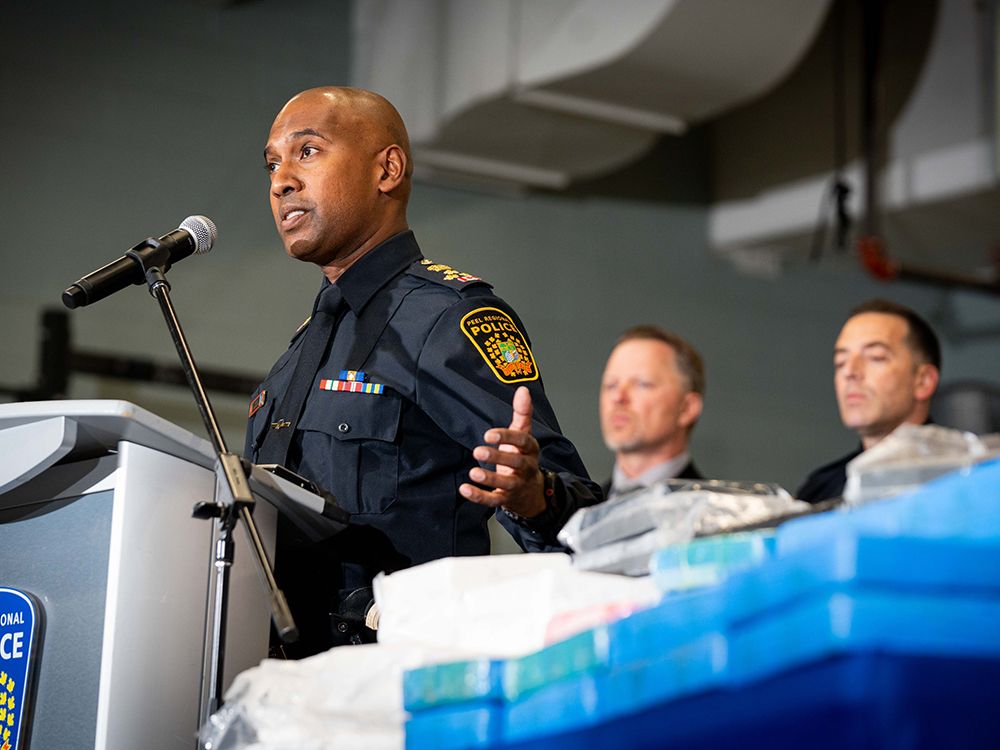
“Here in Peel, we have the largest logistics hub outside of Los Angeles, and what that means is that vulnerabilities in logistic systems can be exploited by criminal networks to their advantage,” said Peel’s Chief of Police Nishan Duraiappah.

 Nine men charged by Peel Regional Police in a large cocaine smuggling probe using cross-border commercial trucks.

The Peel probe, in collaboration with other Canadian and American agencies, identified commercial trucking companies and storage facilities connected to the smuggling operation, he said.

“This represents a seismic blow to transnational organized crime … these drugs came from south of the border and were destined right here in Peel and the greater Toronto area and other communities in Canada. And what they do is represent secondary and tertiary criminal acts, vulnerabilities and harm that damage our communities right across Ontario and beyond.”

The arrests and seizures, called Project Pelican, follow

recent similar arrests

, indictments and seizures in the United States of several American, Canadian and Mexican citizens who were using commercial transport trucks to

smuggle tonnes of cocaine

into Ontario and Montreal. The U.S. cases linked Los Angeles to Brampton through trucking operations.

Project Pelican began a year ago when investigators with Peel police’s Specialized Enforcement Bureau learned of an organized criminal network smuggling drugs into Peel region, Duraiappah said.

Det.-Sgt. Earl Scott, case manager for Project Pelican, said the importations were “a well-organized criminal enterprise.”

Peel investigators worked with Canada Border Services Agency (CBSA) officers to stop and search two specific trucks crossing into Canada.

On Feb. 11, border agents at Ambassador Bridge crossing in Windsor sent a tractor trailer arriving in Canada for a secondary examination based on intelligence developed during the probe, said Abid Morgan, CBSA’s director of intelligence and enforcement for the Southern Ontario region. CBSA officers, aided by a drug sniffing detector dog, found 110 bricks of suspected cocaine that weighed 127 kg. One person was arrested and charged.

 Stacks of bricks of bulk cocaine seized in Project Pelican, a large cross-border drug smuggling probe, are display by Peel Regional Police on Tuesday.

On May 24, border agents at the Bluewater Bridge border crossing in Sarnia sent an arriving tractor trailer for a secondary examination, again based on intelligence developed during the investigation. CBSA officers used a detector dog and a large-scale imaging truck and found 57 kg of suspected cocaine, CBSA said. One person was arrested and charged.

“This is a significant quantity of drugs that will never make it into our communities,” Morgan said.

The suspected cocaine was found hidden in the trailers of two tractor trailer trucks.

In addition to the two border stops and arrests, a series of coordinated search warrants and arrests took place around Peel region and in Toronto, involving more than 60 officers.

Two of those arrested in the probe were in possession of loaded guns, Scott said. The men arrested had no, or very little, known criminal background, he said.

The investigation continues, police said.

Peel’s Deputy Chief Nick Milinovich said the problem is acute.

“This is connected to a trend that we’re seeing,” he said. “And without commenting specifically on this investigation that trend is illegal drugs coming from Mexico through the U.S. using logistics companies to bring them to Canada. And not specific to this investigation, we’re aware of the trends. We’re seeing more illegal drugs than we have before.”

 Peel Region’s Chief of Police Nishan Duraiappah announcing the result of Project Pelican, a large cross-border drug-smuggling probe.

Milinovich said the amount of drugs seized was important enough, but the operation becomes impressive because of how difficult such transnational investigations can be.

“When you consider that with the complexity of the way crime has evolved today, the face of crime, it’s no longer a person within your jurisdiction that’s responsible for it, it’s transnational crime with complexity and barriers attached to it,” Milinovich said.

“Every gram every kilogram that we stop from coming to our community saves lives. Every firearm, illegal firearm, that we seize off the street saves lives.”

The investigation also involved the RCMP, U.S. Department of Homeland Security, the U.S. Drug Enforcement Administration, and the Criminal Intelligence Service Ontario.

• Email: ahumphreys@postmedia.com | Twitter:

Our website is the place for the latest breaking news, exclusive scoops, longreads and provocative commentary. Please bookmark nationalpost.com and sign up for our daily newsletter, Posted, here.

The Canada Revenue Agency.

Unless you are willing to calculate your Tax-Free Savings Account contribution room, you’ll have to wait for the Canada Revenue Agency to get caught up.

Individual contribution room is

usually readily available

by signing into your CRA account. Alternatively, you can usually call the Tax Information Phone Service.

However, that

hasn’t been so since mid-April

. Up-to-date numbers indicating taxpayer TFSA contribution room for 2025 haven’t been made available.

Unlike RRSP contribution room, “TFSA room is not shown on your notice of assessment,” says Jason Heath, managing director of Objective Financial Planners in Toronto. “Even when you try to view your TFSA details like the contribution history, it too is unavailable.”

Instead, a warning has been posted on the CRA site, says Robert Kepes, a tax lawyer with Toronto firm Morris Kepes Winter LLP.

The

warning states

: “TFSA information, including contribution room, is updated once your financial institution’s annual TFSA return is processed. We are experiencing delays in processing these returns as a result of a new data validation process. TFSA information is temporarily unavailable in your CRA account to prevent errors.”

Instead, the CRA is suggesting taxpayers calculate it themselves using the following:

Form RC343, Worksheet – TFSA contribution room

.

And there is an added CRA reminder to keep records of your TFSA transactions “to make sure that your contributions do not go over your TFSA contribution room,” which is what taxpayers are concerned about in the first place.

As to when this will be resolved, “the CRA has yet to provide a timeline for resolution,” says Heath.

You could try to determine your TFSA room by looking at all your past contributions and withdrawals since 2009 when TFSA accounts were introduced, he says. If you were 18 or older in 2009 and have always lived in Canada, your cumulative TFSA room would be $102,000.

But there’s a big caveat.

“The problem is a mistake could lead to a TFSA overcontribution, and financial institution records may not go back 16 years.”

An overcontribution is no small matter.

“The risk of making an overcontribution is significant. There is a penalty of 1 per cent per month for any overcontribution to a TFSA. And if a contributor messes up and forgets, it may be years from now (before the) CRA notices. Years of penalties and interest can add up fast, and CRA does not always show leniency with inadvertent errors.”

So, it may be better to be safe than sorry.

“As such, TFSA holders may want to wait if they are uncertain about their TFSA room until CRA’s records are updated,” Heath suggests.

Meanwhile, the CRA says it’s aware of this concern.

In an email to National Post, Sylvie Branch with CRA media relations writes that the agency recognizes the importance of its online services for taxpayers and “strives to minimize service outages.”

TFSA contribution room is generally updated on Jan. 1 of each year to reflect the new annual TFSA limit, says Branch. Adjustments to the contribution room are made when a taxpayer’s financial institution’s TFSA annual information return has been processed by the CRA.

However, this year’s delay, says Branch, stems from the agency striving to improve data accuracy.

Echoing the warning on the CRA site, she writes of the agency introducing a new data validation process in January 2025. The institutions filing the information “had to get accustomed to the new system, adapt to new processes, and … contend with stricter validation of the data they submit to the CRA.”

“As a result, there have been significant delays in processing TFSA annual information returns this year. Resolving our system issues, is our priority, so that we can update TFSA information in My Account as soon as possible.”

Unfortunately, she adds, the CRA does “not have an expected date for the resumption of service. We regret the inconvenience and thank taxpayers for their patience.”

Our website is the place for the latest breaking news, exclusive scoops, longreads and provocative commentary. Please bookmark nationalpost.com and sign up for our daily newsletter, Posted, here.

The Canada Revenue Agency.

The CRA says it has resolved “most issues” that made Tax-Free Savings Account information, in particular contribution limits, unavailable in My Account.

That’s the agency’s secure online portal where individual taxpayers can access their personal tax information.

In an email to National Post on Friday, the CRA wrote: “As a result, most individuals can now view their TFSA information in My Account.”

However, not all TFSA holders will be satisfied yet. The information is only available for about 90 per cent of TFSA holders.

“For the remaining 10%,” writes Charles Drouin with CRA media relations, “the information remains temporarily unavailable while we work to ensure their contribution room is updated. This precaution is in place to help prevent errors, and efforts continue toward a prompt resolution.”

As the agency did previously, it expressed regret over “any inconvenience this situation may have caused and appreciate the patience and understanding of Canadians as we continue working to fully restore this service.”

Individual contribution room is 
usually readily available
 by signing into your CRA account. Alternatively, you can usually call the Tax Information Phone Service.
However, that 
hadn’t been the case since mid-April

, the CRA confirmed with the CBC.

Unlike RRSP contribution room, “TFSA room is not shown on your notice of assessment,” Jason Heath, managing director of Objective Financial Planners in Toronto, tells National Post.

“Even when you try to view your TFSA details like the contribution history, it too is unavailable.”

Instead, a warning was posted on the CRA site, Robert Kepes, a tax lawyer with Toronto firm Morris Kepes Winter LLP, told National Post. It’s still there.

The 
warning states
: “TFSA information, including contribution room, is updated once your financial institution’s annual TFSA return is processed. We are experiencing delays in processing these returns as a result of a new data validation process. TFSA information is temporarily unavailable in your CRA account to prevent errors.”

The CRA continues to suggest that

 taxpayers calculate contribution room themselves using the following: 
Form RC343, Worksheet – TFSA contribution room
.

And there is an added CRA reminder to keep records of your TFSA transactions “to make sure that your contributions do not go over your TFSA contribution room,” which is what taxpayers are concerned about in the first place.

You could try to determine your TFSA room by looking at all your past contributions and withdrawals since 2009 when TFSA accounts were introduced, Heath says. (If you were 18 or older in 2009 and have always lived in Canada, your cumulative TFSA room would be $102,000.)

But there’s a big caveat. “The problem is a mistake could lead to a TFSA overcontribution, and financial institution records may not go back 16 years.”

An overcontribution is no small matter. “The risk of making an overcontribution is significant,” says Heath.

“There is a penalty of 1 per cent per month for any overcontribution to a TFSA. And if a contributor messes up and forgets, it may be years from now (before the) CRA notices. Years of penalties and interest can add up fast, and CRA does not always show leniency with inadvertent errors.”

So, 

for the remaining 10 per cent TFSA holders, it

 may be better to be safe than sorry.

“As such, TFSA holders may want to wait if they are uncertain about their TFSA room until CRA’s records are updated,” Heath suggests.

Meanwhile, the 

CRA has been

 aware of this concern.

In 

a previous 

email to National Post, Sylvie Branch with CRA media relations wrote that

this year’s delay stemmed

 from the agency striving to improve data accuracy.

Echoing the warning on the CRA site, she 

wrote that the agency introduced

 a new data validation process in January 2025. The institutions filing the information “had to get accustomed to the new system, adapt to new processes, and … contend with stricter validation of the data they submit to the CRA.”

“As a result, there have been significant delays in processing TFSA annual information returns this year. Resolving our system issues, is our priority, so that we can update TFSA information in My Account as soon as possible.

Our website is the place for the latest breaking news, exclusive scoops, longreads and provocative commentary. Please bookmark nationalpost.com and sign up for our daily newsletter, Posted, here.

OTTAWA — Chief Justice Richard Wagner, who promised a new era of transparency for the Supreme Court, could not say which private interest donated a lifelike bronze bust of himself that sits prominently in the building’s grand entrance hall.

During his annual press conference Tuesday, Wagner also questioned how the gift could raise concerns of conflict of interest.

“I don’t know who paid for that, so how can there be a conflict of interest?” Wagner responded to National Post’s questions.

Last July,

National Post reported that the Supreme Court

would not say which private interest had donated a lifelike bronze sculpture of Wagner to the court. The sculptor of the bust said at the time that he usually charges $18,000 for a piece like the chief justice’s.

Court watchers and lawyers told National Post at the time that the donation raised concerns of an appearance of conflict of interest and questioned the wisdom of not informing judges and the public of its provenance.

There is a longstanding tradition of busts of chief justices appearing in the Grand Entrance Hall, but Wagner’s sculpture differs from his predecessors’ in two key ways.

First, his bust is the only one that has no indication either on the inscription or the court’s website of who donated it to the court.

Second, his sculpture is the first to be displayed publicly before his departure from the court.

During the press conference, Wagner repeated a previous statement from the court that the bust’s donor requested to remain anonymous and added that he did not know who had paid for it.

But he did not explain why the court has not disclosed any information at all about the donor behind his sculpture, unlike those of his predecessor.

“I was told that there was a tradition at the Supreme Court that the bust of all the chief justices is made. And I was told that… it is paid by a foundation or individual which wants to remain anonymous. That’s what I was told,” he said. “I have no more explanation. That’s all I can tell you.”

The suggestion that Wagner — who posed for pictures for the sculptor and has been photographed next to the bust — has no idea who paid for the sculpture is also raising eyebrows across the legal and judiciary community. The chief justice’s ignorance of the provenance of the bust also raises risks that it was donated by a potentially embarrassing source that should have no ties to the court.

Wagner said sometimes judges receive “nominal gifts” from organizations or individuals, such as “quite a few pens,” medals or ties such as from the Supreme Court of South Africa. He noted that they are recorded on a sheet that he offered to send to reporters.

“We don’t have gifts, it’s more like tokens of appreciation that we receive,” he said.

Wagner also did not justify why the court was in the habit of accepting anonymous donations of busts of chief justices.  Ministers, their staff and hundreds of high-ranking public servants, for example,

must disclose almost all gifts valued at over $200

and their provenance to the ethics commissioner’s public registry.

Since his appointment as chief justice in 2018, Wagner has made increasing the transparency of the court a key tenant of his mandate. During his press conference, he listed many of the measures he’d put in place, such as increased disclosure from the Canadian Judicial Council which he also heads.

“I’m strong partisan of transparency, and since I became chief, I made sure to be as transparent as possible within the limits of the law as governed by the law,” he said.

Before Wagner, the SCC did not have an issue with disclosing at least the nature of the donor of every preceding chief justice’s bust. For example, former chief justice Bora Laskin’s bust was 

“presented by the Canadian Bar Association and the Canadian Society for the Weizmann Institute of Science.

The bust of Wagner’s predecessor, Beverley McLachlin,

was “presented by members of the Bar.”

The sculpture of former chief justice John Robert Cartwright

was “presented by his family.”

Court watchers and lawyers also previously questioned why Wagner’s bust was already on display before his retirement.

On Tuesday, Wagner acknowledged that the court had broken with tradition but argued that it was at the sculptor’s request.

“Usually the bust is displayed after the chief justice leaves the premises and the post. In this situation, I was I was told that the artist requested the registrar to expose or to display the bust because a third party has to get a copy. That’s the explanation I got,” Wagner said.

In July, the sculptor Jean-Pierre Busque told National Post that he did not know why the piece was already on display but confirmed that he had made a replica for the Quebec law firm where Wagner worked before his appointment to the bench in 2004.

“I have no idea why the bust was put out immediately as opposed to after retirement. They asked me for a bust … I delivered the bust to Ottawa, and they installed it,” he said last year. “People who visit the court are curious to know who the chief justice is. So, I think it’s normal that it be displayed.”

National Post

cnardi@postmedia.com

Get more deep-dive National Post political coverage and analysis in your inbox with the Political Hack newsletter, where Ottawa bureau chief Stuart Thomson and political analyst Tasha Kheiriddin get at what’s really going on behind the scenes on Parliament Hill every Wednesday and Friday, exclusively for subscribers. Sign up here.

Our website is the place for the latest breaking news, exclusive scoops, longreads and provocative commentary. Please bookmark nationalpost.com and sign up for our daily newsletter, Posted, here.

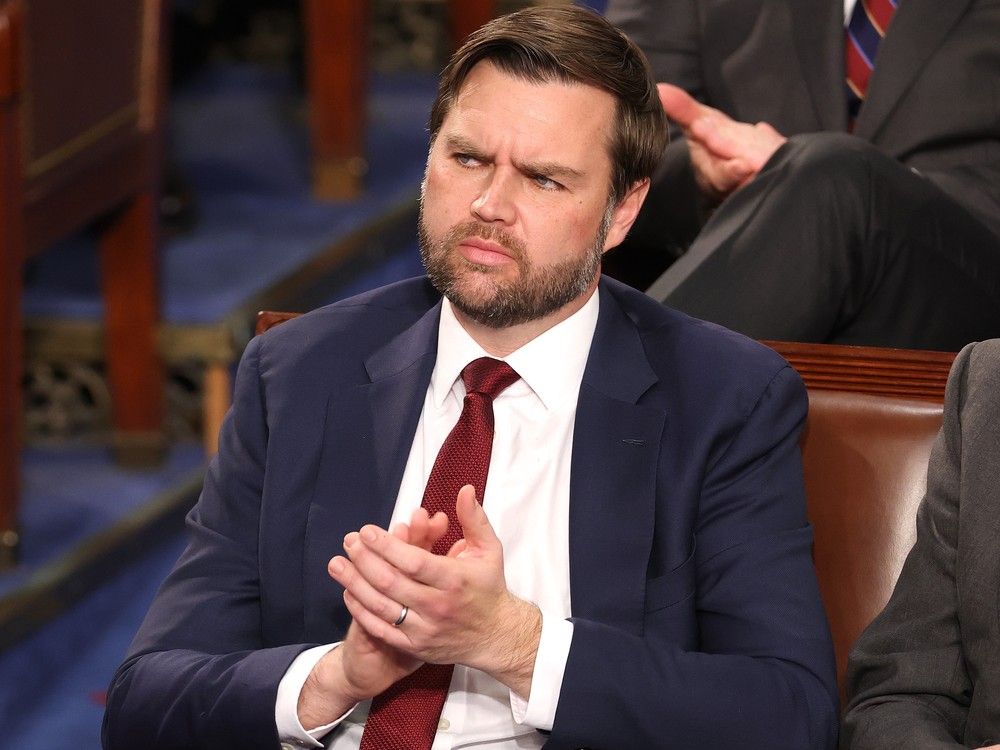
After American-based, Canadian-born men's fashion writer Derek Guy said on X that he is an undocumented immigrant to the U.S., Vice-President JD Vance responded with a gif to people questioning Guy's legal status.

An American-based Canadian men’s fashion writer who shared his story of being an undocumented immigrant in the U.S. put himself in the crosshairs of conservative critics questioning his legal status to remain in the country, including perhaps U.S. Vice-President JD Vance.

In response to the heated L.A. protests over Immigration and Customs Enforcement actions in the city, Derek Guy, who works out of San Francisco, made a candid post on X detailing his experiences.

After the 1968 Tet Offensive in Vietnam and following an “arduous journey,” his father and mother landed in Canada, where they found work as a janitor and secretary, respectively, and where Guy was born. Work eventually dried up, so his father went across the border to work with a sister in the U.S.

“He ended up staying in the US longer than he was supposed to — not knowing immigration laws — and asked my mom to come be with him. Of course, she went and carried me over the border while I was still a baby,” Guy wrote, noting he remains unclear about whether laws were broken when the trio crossed a border he considers to be still mostly “porous.”

“But either way, since I came here without legal documentation, I eventually fell into the category of being an undocumented immigrant. Yet, I’ve been in the United States since I was a baby. My identity and roots are very much based in this country, no different from anyone else.”

Many people commenting on his post felt differently, with several calling for his deportation.

Eventually, X user

@growing_daniel

suggested Vance had “the opportunity to do the funniest thing ever,” to which the VP reacted with a gif of actor Jack Nicholson nodding in a scene from The Departed.

“I think I can outrun you in these clothes,” Guy wrote, resharing Vance’s post, accompanied by two photos of the vice-president.

Guy, a freelancer who contributes to the likes of the New York Times and Esquire, has previously critiqued Vance’s wardrobe choices on his X account, which has 1.3 million followers.

Shortly after the former Ohio senator joined Trump’s team last July, Guy opined that “Vance’s jackets don’t hug him very well.” In summarizing a thread on tie choices during the vice-presidential debate with Minnesota Governor Tim Walz last fall, he wrote that Vance’s “was a distraction” and likened it to “something you’d wear to summer garden parties.”

In March, he responded to a user wondering why Vance’s pants were so short, saying a bespoke tailor he spoke to suggested the pants “are too slim, hence why they ride up on him like this.”

In the remainder of his post about L.A., Guy said the best solution is “systemic” and emphasized a necessity for citizenship paths for non-violent people such as himself and others, who “are good, honest people.”

“Ultimately, I hope me sharing this story helps push back against the idea that all undocumented immigrants are MS-13 members. I know many people in my position and they are all like your neighbors.”

Our website is the place for the latest breaking news, exclusive scoops, longreads and provocative commentary. Please bookmark nationalpost.com and sign up for our daily newsletter, Posted, here.

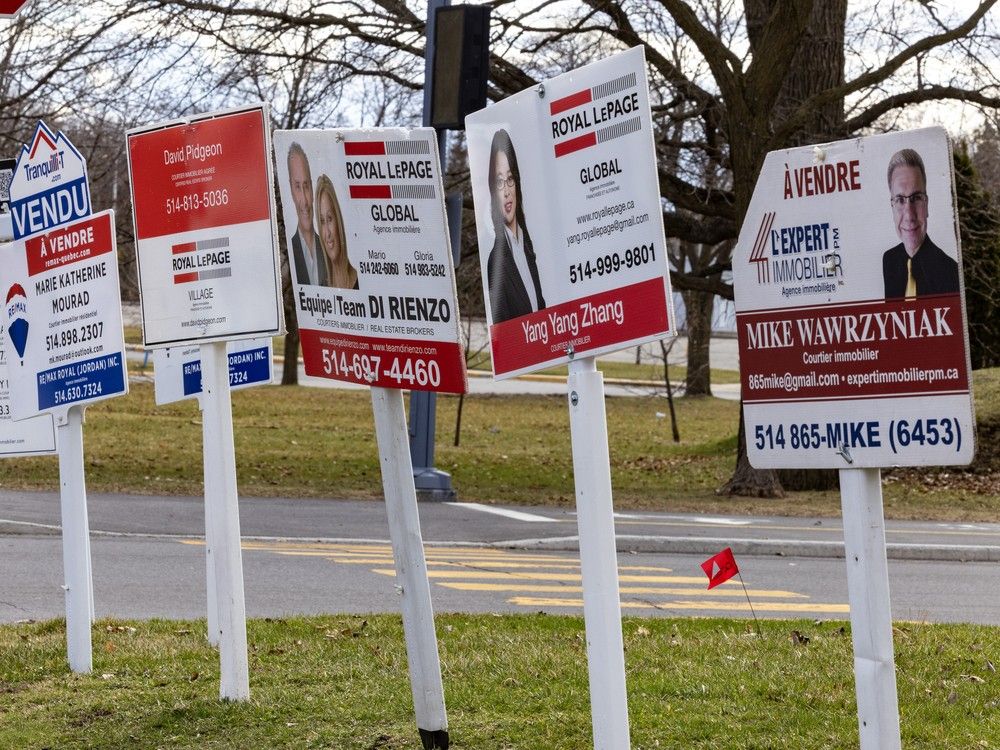
Real estate home sale signs in the Dorval suburb of Montreal Tuesday April 15, 2025.

OTTAWA — The federal government’s plan to eliminate the GST on first-time homebuyers’ purchases of most new homes may actually lead to higher prices, a new report says.
 

The report, by Desjardins Economics’ Kari Norman, found that the federal policy to eliminate or reduce the GST on newly built homes priced up to $1.5 million for first-time homebuyers may cut upfront costs. But without a corresponding increase in the supply of homes to quell the housing crisis, the bank economists say, the federal policy may just boost demand and the home prices that the government intends to help suppress.
 

The report also warns that the rebate could distort the market because homebuilders might anticipate homebuyers’ increased purchasing power and simply raise sticker prices on new homes. Another possible problem is that the rebate might encourage first-time buyers to rush purchases in anticipation of rising prices, Desjardins says, leading to a short-term sales spike that would likely be followed by a slump.
 

“While the policy is intended to improve affordability, in the near term it may instead inflate prices or compress inventory,” the report said. 
 

With the federal Parliamentary Budget Officer set to release an assessment Wednesday on the fiscal costs of the GST rebate on first-time homebuyers, Desjardins voiced concern that the policy will also mean that the benefits to buyers may be partly offset if the increased demand for homes leads to an increase in the costs of labour and building supplies.
 

“This could dilute some of the intended benefit, especially in overheated markets,” the report said.
 

Instead, Desjardins suggests that Ottawa mitigate the risk of demand outpacing supply by bundling the GST rebate with policies that would accelerate the pace of home building. The report says those other policies include streamlining permitting processes, investing in innovative practices, addressing skilled labour shortages and improving zoning flexibility.
 

Paul Smetanin, the president of the Canadian Centre for Economic Analysis, said he agrees with Desjardins’ concern about the GST rebate because the policy will increase demand and prices and give developers the chance to simply increase profits.
 

Smetanin said Canada’s housing crunch is a supply problem that needs supply solutions. In particular, he said, the three levels of government need to work together to address the infrastructure deficits — namely water, sewer, electricity — that exist in many communities lacking homes.
 

“On its own, it’s not going to work,” he said of the GST rebate plan.
 

Despite that, Smetanin said he appreciates Ottawa’s attempt to cut the taxes on housing developments, which he has calculated to be about 36 per cent on a new $1 million home. The primary taxes are development charges, property transfer taxes and sales taxes.
 

The federal government’s proposed policy, a key piece of its response to the political grenade that the housing crisis has become, is to eliminate the GST on newly built homes up to $1 million for first-time buyers and reduce the federal tax for those same buyers on homes priced up to $1.5 million. If the policy, which was introduced as legislation June 5, doesn’t spur an increase in the housing market, the GST rebate would reduce a home buyer’s mortgage by about $240 per month on a $1 million home. 
 

The legislation, part of a broader package that includes an income tax cut, would take effect July 1. It would apply to homes bought between May 27 of this year and 2031.
 

The Desjardins report says that about 85 per cent of all new home purchases would qualify for the full rebate, while 95 per cent of new builds in most major centres would fit under the $1.5 million ceiling. That figure drops slightly in the country’s two most expensive major markets, 92 per cent in Toronto, and 75 per cent in Vancouver. 
 

According to a study conducted by the Parliamentary Budget Officer during the recent federal election campaign, the proposed rebate would likely add about $2 billion to federal debt over the next five years. Those figures, however, don’t account for the increased spending that would likely occur if there were more new homeowners spurring additional construction and the consumer purchases that go with it.
 

The Liberals also vowed to make the housing market more affordable by simplifying national building codes and investing in prefabricated construction.
 

National Post
 

Get more deep-dive National Post political coverage and analysis in your inbox with the Political Hack newsletter, where Ottawa bureau chief Stuart Thomson and political analyst Tasha Kheiriddin get at what’s really going on behind the scenes on Parliament Hill every Wednesday and Friday, exclusively for subscribers. Sign up here.

Our website is the place for the latest breaking news, exclusive scoops, longreads and provocative commentary. Please bookmark nationalpost.com and sign up for our daily newsletter, Posted, here.