LP_468x60
on-the-record-468x60-white

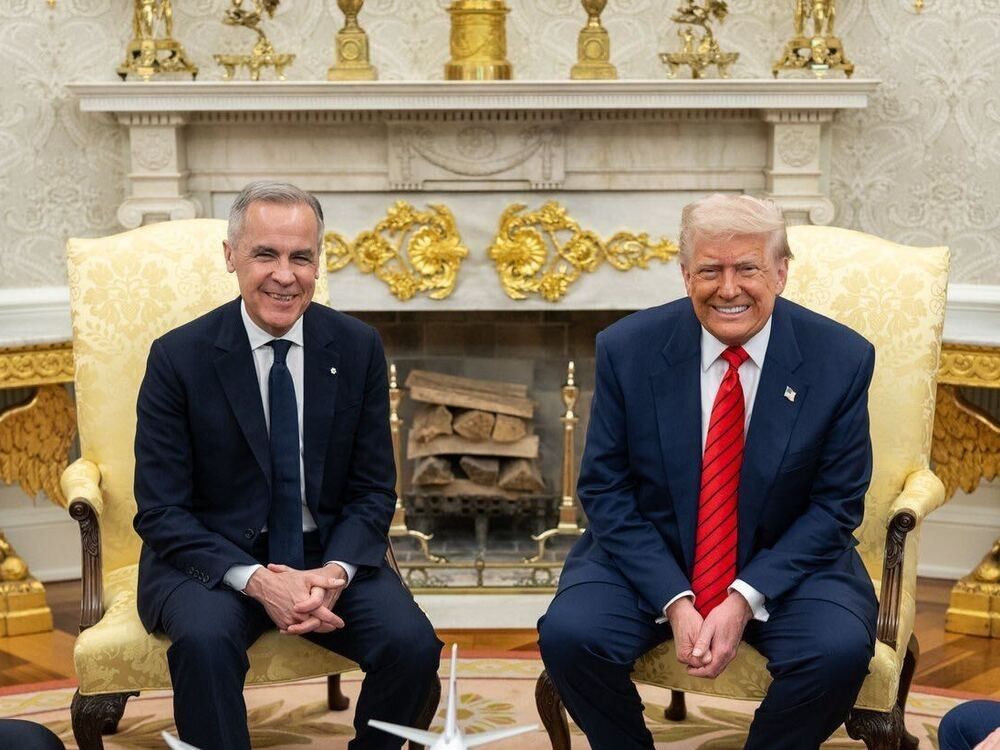
Prime Minister Mark Carney and U.S. President Donald Trump.

OTTAWA — Three days before G7 leaders converge on Kananaskis, Alta., former Prime Minister Jean Chrétien has some advice for Prime Minister Mark Carney for dealing with U.S. President Donald Trump.

“If he has decided to make a show, to be in the news, he will do something crazy. So let him do it. Keep talking normally,” Chrétien said of Trump to attendees of a pre-G7 conference organized by the University of Calgary on Thursday.

“He tends to be a bully once in a while, and don’t lose your cool when you have a bully in front of you… unless you grab him by the neck,” he added, earning laughs from the crowd for the reference to his famous

1996 “Shawinigan Handshake” with a protester’s throat

.

Chrétien’s advice to Carney comes as the Canadian government is avidly working to ensure that this G7 — scheduled from June 15 to 17 — doesn’t end in the same disarray as the 2018 edition in Charlevoix, Que.

At the time, Trump and the U.S. had initially agreed to sign on to the final joint statement, only to pull out in spectacular fashion via a Tweet lobbed from Air Force One calling

Prime Minister Justin Trudeau “dishonest and weak”

over criticism of American tariffs.

During a background briefing for reporters Thursday, a senior government official highlighted that Canada had proposed a different route to its G7 partners, the U.S., France, the U.K., Japan, Italy and Germany.

Instead of a single comprehensive joint statement agreed upon by all parties at the end of the meeting, sherpas — the top bureaucrats for each G7 country — and their teams are currently working on six smaller joint statements.

The statements are expected to focus on similar topics as the leaders’ meeting sessions: wildfires, critical minerals, immigration and migrant flows, foreign interference and transnational repression, artificial intelligence and quantum computing.

Essentially, parties have agreed to separate the typical comprehensive joint statement into mini statements that can be released as countries agree on the content. The new format is meant to address fears that consensus may not be reached on specific topics, which risks kiboshing the entire communiqué.

“The G7 is a group where consensus is essential. For us, it’s important to find the subjects on which we can find consensus,” the government official explained. “We want action, so that’s the reason why we have statements on certain topics, like critical minerals.”

As is the case for most diplomatic gatherings, much of the text will be decided between sherpas and diplomatic corps before foreign leaders even step foot in Canada.

Asked if there was a certain anticipation about how Trump may act at the G7, Germany’s ambassador to Canada Mattias Lüttenberg said that dialogue is key when tensions are high.

“It’s just so important to talk to each other and not just, as we say in Germany, pull up your eyebrows and crinkle your nose,” he said in an interview. “We have to talk to one another. We have to find a common ground and work jointly for the interest of our security, of our economies and of our people.”

Trump comes to Canada as both countries are reportedly actively exchanging draft deals to put an end to at least some of the U.S. tariffs implemented by the Americans this year and corresponding Canadian counter-tariffs.

The tariffs that Trump imposed against key Canadian sectors, such as steel, aluminium and foreign autos, as well as baseline 10 per cent border levies against virtually every other country are certain to be top of mind throughout the two days of discussions.

There is a stark contrast between the summit’s key themes under Carney and those of the last Canadian G7 presidency in 2018 under Justin Trudeau.

Seven years ago, leaders discussed topics

such as gender equality and women’s empowerment, climate change and clean energy, “investing in growth that works for everyone” and global peace.

Fast forward to this weekend and the topics sound a little more appealing to a former central bank governor, with no clear mention of gender, equality or climate change topics.

“I would say that climate is actually integrated quite significantly in our agenda,” the Canadian senior government official countered to inquisitive reporters Thursday, arguing there was some continuity in topics such as artificial intelligence and critical minerals.

“Critical minerals are essential to tackling climate change, given that they are required for the energy transition,” she noted. “Clearly, climate change is one of the factors behind the increased incidence of wildfires.”

On Thursday, Canadian officials warned that this summer is lining up to be the second worst wildfire season in Canadian history.

Leaders from non-G7 countries will also be in attendance, namely the heads of Ukraine, Mexico, India, Australia, South Africa, South Korea, the United Arab Emirates and Brazil.

As the host of the event, Carney is expected to have bilateral meetings with each other leader in attendance.

Canada had invited the crown prince and de facto leader of Saudi Arabia, Mohammed bin Salman, but he declined the invitation for unspecified reasons.

The crown prince’s refusal to attend may have been a relief for some Liberals though, as Canada has frequently criticized the country’s spotty human rights record. Carney is also already contending with growing strife over his decision to invite Indian Prime Minister Narendra Modi.

Sikh activists, organizations, community leaders, as well as some Liberal MPs, have been speaking out about Canada’s decision to invite Modi in light of statements made by the RCMP that it has evidence showing India’s government is involved in violent crimes in Canada.

The senior Canadian government official said Thursday that transnational repression will be a “specific focus” of discussions during the summit.

National Post, with files from Stephanie Taylor

cnardi@postmedia.com

Get more deep-dive National Post political coverage and analysis in your inbox with the Political Hack newsletter, where Ottawa bureau chief Stuart Thomson and political analyst Tasha Kheiriddin get at what’s really going on behind the scenes on Parliament Hill every Wednesday and Friday, exclusively for subscribers. Sign up here.

Our website is the place for the latest breaking news, exclusive scoops, longreads and provocative commentary. Please bookmark nationalpost.com and sign up for our daily newsletter, Posted, here.


The back of Air India flight 171 is pictured at the site after it crashed in a residential area near the airport in Ahmedabad on June 12, 2025.

Vishwash Kumar Ramesh, a 40-year-old British man, sat in Seat 11A in the first economy-class row behind business class, a window seat allowing a terrifying view as the plane he was on sank from the sky shortly after takeoff, crashing into a building and bursting into flames.

The crash apparently killed everyone else on board.

Ramesh was returning to London from Ahmedabad in western India, Thursday, when the Air India Boeing 787-8 commercial passenger jet crashed. Authorities have recovered 265 bodies with more expected to be found.

At first, officials declared there were no survivors, but local video showed an agitated man in a stained white T-shirt walking away from the crash with a slight limp, heading towards an ambulance while smoke billowed overhead.

He was later identified as Ramesh, and a photograph of him in a hospital bed later in the day shows injuries and blood on the left side of his face — the side that faced the window.

Authorities confirmed Ramesh was one of the passengers aboard Air India Flight 171. He showed local media his folded boarding pass which matched the passenger’s name, flight, and seat assignment in the plane’s manifest.

“Thirty seconds after take-off, there was a loud noise and then the plane crashed. It all happened so quickly,” Ramesh told the Hindustan Times from a hospital bed.

“When I got up, there were bodies all around me. I was scared. I stood up and ran. There were pieces of the plane all around me. Someone grabbed hold of me and put me in an ambulance and brought me to the hospital,” he said.

Officials said he suffered “impact injuries” to his chest, face and feet. He was in a general ward bed rather than a specialized trauma unit, suggesting his injuries were relatively minor.

While the seemingly miraculous survival is a wonder, as well as one glimmer of good news amid an enormous tragedy, for Ramesh it remained a day of loss and pain. He had been returning to Britain from visiting family with his older brother, Ajay Kumar Ramesh.

His brother was sitting in a different row from him.

Ajay Valgi, Ramesh’s cousin in England, told the BBC that Ramesh phoned his family and told them he was “fine” but that he didn’t know where his brother was.

Another brother, Nayan Kumar Ramesh, relayed a brief phone call with Ramesh: “He said, ‘I have no idea how I exited the plane.’”

There were 169 Indian citizens, 53 British citizens, seven Portuguese and one Canadian as passengers on the flight destined for London’s Gatwick airport, Air India said. Eleven children were on board. The Canadian has been identified as

Nirali Sureshkumar Patel, a dentist from Mississauga, Ont.

Officials said there were 12 crew members on board as well as the 230 passengers. Many others on the ground were killed and injured. Police said the jet smashed into a hostel that was used by local doctors.

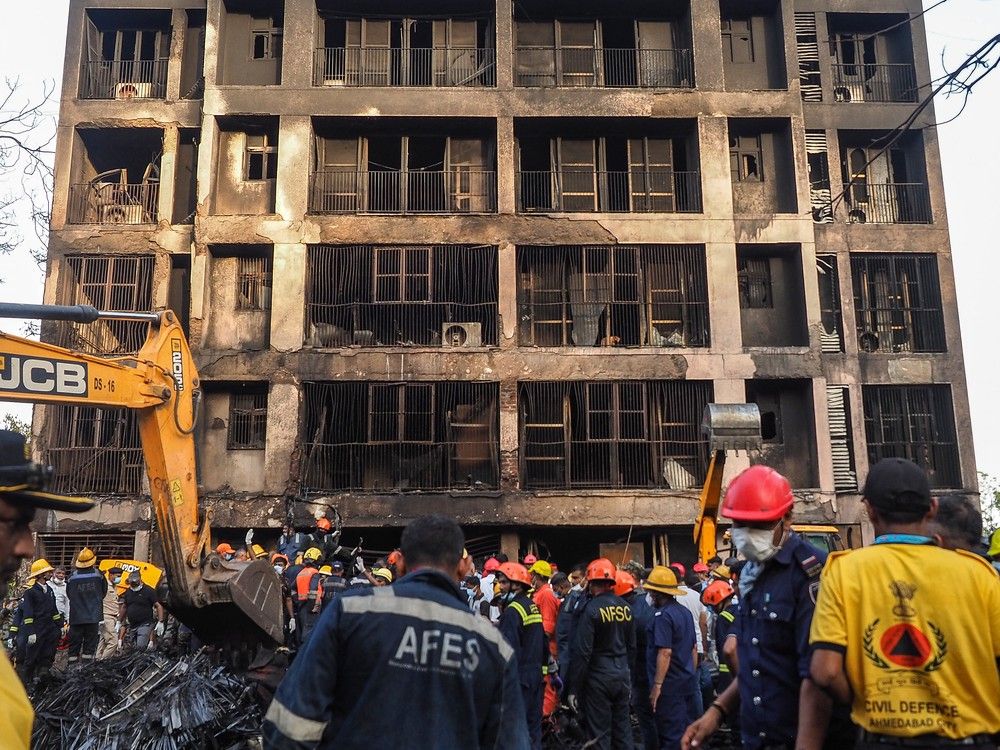
 Rescue officials work at the site where Air India flight 171 crashed in a residential area near the airport in Ahmedabad on June 12, 2025.

Ahmedabad’s police commissioner, G.S. Malik, told ANI News: “The police found one survivor in seat 11A. He has been in the hospital and is under treatment…. The death toll may increase as the flight crashed in a residential area.”

Ramesh was born in India but has lived in England for many years. He lives in Leicester, where he has a wife and child and an extended family, British media reported.

How he alone survived is not known.

Seat 11A is on the left side of the plane, beside an emergency exit and behind a kitchen galley that separates the business-class cabin from the cheaper seats further into the plane.

It is not considered a particularly desirable seat. It is close to the kitchen, which can be noisy, and it has no floor space for bags during takeoff and landing, according to Seatguru.com. While there is more legroom because it is an exit row, that comes at a cost: the tray table is nested in the armrest, making the armrest immoveable and the seat narrower.

Ramesh’s boarding pass says his flight was scheduled for departure at 1:10 p.m., on Thursday, an hour after his boarding call. It was 29 minutes late when it took off.

It was less than a minute after taking off that the air traffic controllers received a Mayday call from the plane, an international emergency distress signal, as it sank back to the ground, bursting into flames and sending up clouds of dark smoke that were clearly visible from the airport.

The plane is seen in videos sinking through the air, looking more like a planned landing than an erratic crash, but rather than finding a runway, it smashed through a building on the outskirts of the airport.

The front of the plane penetrated deep into the building, with only its tail sticking out.

Ramesh’s brother is still unaccounted for.

The cause of the crash is still under investigation. While authorities want to know what caused the plane to descend, there will also be great interest in how one man managed to walk away from the carnage.

• Email: ahumphreys@postmedia.com | Twitter:

Our website is the place for the latest breaking news, exclusive scoops, longreads and provocative commentary. Please bookmark nationalpost.com and sign up for our daily newsletter, Posted, here.


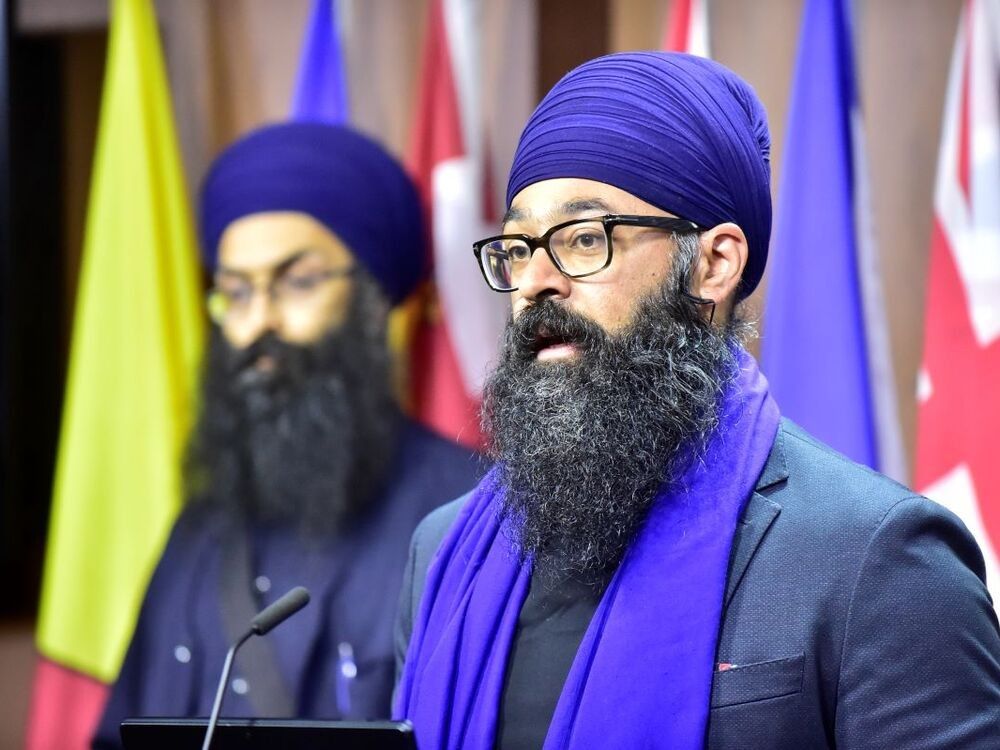
Moninder Singh of the BC Gurdwaras Council and Sikh Federation Canada participates in a press conference in West Block on Thursday, June 12, 2025. Bryan Passifiume/Postmedia Network.

OTTAWA — A prominent community activist says disinviting Liberal MPs from visiting Sikh temples is one of the steps

being considered to send a message to Prime Minister Mark Carney’s government over its decision to invite India’s prime minister to the upcoming G7 leaders’ summit. 

Moninder Singh, a spokesman for Sikh Federation Canada and the British Columbia Gurdwaras Council, said the repercussions from Carney’s decision to extend an invitation to Narendra Modi will not disappear once the G7 leaders’ meeting in Alberta ends next week.

“Everything is on the table going forward,” he told reporters during Thursday’s news conference.

“We won’t back down from this issue once Mr. Modi arrives, and he leaves, this won’t be an issue that just goes away with him. For us, it’s a deep sense of betrayal.”

Sikh activists, organizations, community leaders, as well as some Liberal MPs, have been speaking out about Canada’s decision to invite Modi to the G7 in light of statements made by the RCMP that it has evidence showing India’s government is involved in violent crimes in Canada, from murders to gang activity.

In September 2023, former prime minister Justin Trudeau stunned the House of Commons when he said Canada had “credible allegations” that agents acting on behalf of India had been involved in the killing of Sikh activist Hardeep Singh Nijjar, who in June of that year was shot outside of a temple in Surrey, B.C.

India has denied the accusation, which caused the Canada-India relationship to plummet.

A thawing of some of those tensions appeared to happen last week, when Modi confirmed he would be attending next week’s G7 leaders’ meeting in Alberta at Carney’s invitation.

Carney has defended making the invitation by saying he did so as chair of the G7 and after discussions with other countries. He also said India plays a central role in the world’s supply chains and boasts the fifth-largest economy and largest population.

The prime minister also said when he spoke to Modi they agreed to continue

 
“law enforcement to law enforcement dialogue.” Carney also said that “some progress” had been made on issues of “accountability.”

Balpreet Singh, legal counsel for the World Sikh Organization, told reporters Thursday that given past statements about India’s ties to Nijjar’s death and other acts of violence, extending an invitation to Modi sends the message to Sikh Canadians, “that our lives simply don’t matter

“This is a Canadian issue, but it doesn’t feel as though this is being treated like a Canadian issue,” he said.

“It’s being treated as though it’s just those brown people, it’s just the Sikhs, and you know, if a foreign government is killing them or threatening them or surveilling them, it’s OK. We’ll invite the prime minister and, you know, we’ll have a weekend in the mountains, and we’ll chat. That’s not how you would approach a threat from any other foreign country.”

His organization, along with Sikh Federation Canada and the British Columbia Gurdwaras Council and others, are demanding the Liberal government withdraw Modi’s invitation until more cooperation takes place with Canadian police agencies, as well as suspend intelligence-sharing agreements with India and hold a public inquiry into foreign interference and “transnational oppression.”

Moninder Singh said multiple protests are being organized at sites near Kananaskis in Alberta, where the G7 leaders are meeting, as well as on Parliament Hill for Saturday.

Asked whether temples may disinvite Liberal MPs from visiting over the issue, Singh told reporters on Thursday that it was “under consideration.”

“It has been talked about. We want to make sure that the government does the right thing. And what relationship do we have if our lives and the lives of our community members are going to be put at risk?”

On Wednesday, Balreept Singh said they met with some MPs to express their concerns, some of whom “expressed their inability to speak out publicly.”

Liberal MP

Sukh Dhaliwal, who represents the riding where Nijjar was shot, told reporters earlier that day that he raised the issue directly with Carney, saying many constituents have expressed their concern. 

Fellow B.C. Liberal MP Gurbux Saini also said he has heard the same.

National Post

staylor@postmedia.com
Get more deep-dive National Post political coverage and analysis in your inbox with the Political Hack newsletter, where Ottawa bureau chief Stuart Thomson and political analyst Tasha Kheiriddin get at what’s really going on behind the scenes on Parliament Hill every Wednesday and Friday, exclusively for subscribers. Sign up here.

Our website is the place for the latest breaking news, exclusive scoops, longreads and provocative commentary. Please bookmark nationalpost.com and sign up for our politics newsletter, First Reading, here.


Mike Smith played basketball at university, went to nationals a few times, and today is a successful executive in Halifax. But his charmed life was upended when his marriage collapsed and his access to his three children evaporated.

Seven years ago, he and his wife of nearly two decades had an intense verbal fight. His wife left the house, called the police and reported Smith had a mental health disorder. According to his telling, when they arrived he was given an hour to vacate the premises or face arrest. When he initially challenged the demand, one of the officers told him, “She wants to come home with the children.”

“I said, ‘I’m here, I’m the dad. She can drop the children off here. Her mother lives up the street. She can go stay with her mother.’”

The cops didn’t budge. Smith left his house that day, fearful of being arrested, and faced a very different life the next.

It is a nightmare he has yet to wake up from.

National Post has removed his real name and identifying details from this story for legal and privacy reasons.

A tense custody battle has left Smith with a fraction of time in the lives of his children while paying to support them. Last year, he made appointments with doctors to explore his eligibility for medical assistance in dying (MAID), a last-ditch attempt to ease the pain and grief he feels from the alienation of his kids.

“My story is one of thousands,” said Smith, who has since backed off his pursuit of MAID. “What I’ve been able to do is try to build awareness and move things forward using that pain, that suffering, as motivation to keep working.”

Dads have gotten a bad rap. They are caricatured on sitcoms as boys role-playing as men — Homer Simpson, Peter Griffin — or bumbling idiots in commercials who don’t know how to cook, do laundry or dress the kids.

Such views of fatherhood are entrenched in our loftiest institutions. The Supreme Court of Canada has enshrined a mother’s “constitutional right to the custody of their children,” researcher Grant Brown

wrote

in the National Post over a decade ago. “Fathers have no rights at all — only obligations.” The Ontario government

publishes mugshots

of men who allegedly skirt child support payments. No women are listed.

The “best interest of the child” remains the guiding principle of Canadian family law. Modern research clearly shows dads play a crucial role in the development of healthy children. Keeping fathers — and mothers — in the lives of their kids should be the optimal outcome in custody proceedings, but dads are still too frequently being cut out of their children’s lives.

Divorced dads can face protracted and costly legal battles to win back access, alongside the devastation of family dissolution and alienation from their children. But a new generation of men are building a grassroots fatherhood movement challenging antiquated stereotypes of masculinity and what they say is an unfair system for fathers.

“It was just assumed that divorced fathers were uninterested, kind of happy to be footloose and fancy free from responsibility after separation,” said Edward Kruk, a professor of social work at the University of British Columbia, describing his work in the 1980s with single mothers in Toronto.

His assumptions changed following a cross-national study he conducted on the impact of divorce on non-custodial fathers.

“To my absolute surprise, these fathers didn’t at all fit the stereotype,” he said of his 1989 PhD thesis studying dads in the U.K. and Canada. “I actually found that a lot of fathers were experiencing a grief reaction containing all the major elements of bereavement. The outcomes for fathers were really quite devastating in some cases.”

Kruk’s academic career coincided with a rise in men taking a more active role in family life. In 1976, stay-at-home fathers accounted for approximately one in 70 of all Canadian families with a stay-at-home parent. By 2015, according to

Statistics Canada

, the proportion had risen to about one in 10. A

2022 Pew Research Centre study

of American dads found they overwhelmingly viewed being a parent as an important aspect of their personal identity.

Canadian family institutions, however, have not caught up with the rapidly changing social landscape.

In 2008, Kruk published

a review

of Canadian family law, exploring the gendered outcomes of contested custody cases. He found mothers were awarded sole custody 77 per cent of the time, while fathers received such an arrangement in just 8.6 per cent of cases.

A 2018-19

Justice Canada survey

of custody decisions by Superior Courts in Manitoba, Saskatchewan, New Brunswick, Prince Edward Island and Yukon found sole custody was awarded to mothers in 27 per cent of cases compared with three per cent for fathers. In one indicator of equitable progress, joint custody was awarded in six in 10 (61 per cent) court orders.

Of the 275,000 active family law cases in 10 provinces and territories in 2019/2020, custody/access issues represented 19 per cent of the cases, according to the

Canadian Centre for Justice and Community Safety Statistics.

However, these cases represented just under one-third (31 per cent) of the total family events recorded by the courts, because custody/access cases tend to involve more court activity and remain in court longer than other family case types, such as divorce or support disputes. Quebec, Manitoba and Newfoundland were not included in the data.

Custody refers to the living arrangements of a child or children and which parent will have decision-making authority. Access allows the parent with whom the child does not primarily reside to apply for parenting time.

“I believe equal shared parenting is the ideal and what we should be striving toward,” Kruk said in an email to National Post.

‘I wasn’t in a good place’

Mike Smith is one of the fathers caught on the losing end of a long custody battle.

An emergency protection order filed by his ex, and put in place in the aftermath of the police incident, showed “on a balance of probabilities,” his wife was in “immediate danger” and a box was checked affirming there “has been a history of domestic violence.” The specific nature of abuse was not indicated, but the order included his wife’s allegation that he was “on meds for bipolar,” reads the document, shared with National Post.

The order prohibited Smith from seeing his wife for 30 days. Because the kids were in her care, he was effectively barred from seeing his children until he successfully challenged the order. He eventually found a new place to live, a short drive away.

In a second incident later that same year, his wife called child protection services, alleging the children in Smith’s care were scared, that he “was screaming at them,” and they didn’t want to be with him.

“That’s kind of when things started to get pretty screwed up,” he said.

Divorce proceedings were initiated, and the couple reached an agreement on interim parenting arrangements. His ex was granted primary care, with Smith agreeing to specified parenting time, including two visits per week, a weekend overnight stay and vacation time.

The agreement didn’t resolve the parenting issues; Smith wanted their time to be split 50/50. Other calls were made to police and child protective authorities in the bitter leadup to the divorce hearings.

A detailed parental capacity assessment was performed by a psychologist. Both parents and the children were interviewed, along with medical and other professionals close to the family. The report, reviewed by the Post, makes no mention of domestic abuse, but it does detail Smith’s anger issues, something also expressed by his children. It noted that Smith did not meet the diagnostic criteria for bipolar disorder, but he did have an anxiety disorder, for which he had been receiving treatment. Among the conclusions, the assessment noted that both parents loved the children, but they were being affected by the conflict between the parents.

“I was told repeatedly, for years, that she would leave and I would never see my kids again,” Smith explained when asked about his anger issues. “I wasn’t in a good place, and I did yell. I’m sure it scared my kids, but it was also me who cuddled our kids together every night, who (they) would come running to if they needed help or were hurt.”

At the conclusion of the divorce hearings, Smith’s ex was granted primary custody and the court ordered therapy for the family. Smith battled with the Superior Court of Nova Scotia throughout the next two years to challenge the ruling but failed. His attempts for equal parenting never materialized.

In a final attempt to fight the court orders, the judge concluded that Smith had not successfully completed his court-ordered therapy, and that his time with the children would be “at the sole discretion” of his wife, according to court documents reviewed by the Post. He was not allowed to take his children outside Halifax’s city limits or have sleepovers. The order required Smith to always be in public spaces with his children.

The judge cited Smith’s behaviour post-divorce, such as his repeated challenges to court orders, as a factor in her decision. She also noted his deteriorating relationship with his children, and said the decision was in their best interests.

The arrangement left him with minimal facetime while paying the “full amount of child support,” he said, translating to a couple of thousand dollars monthly. Most outings with his children are now confined to local restaurants or coffee shops. Occasionally, he takes them skiing and snowboarding.

Later that year, Smith was diagnosed with complex post-traumatic stress disorder (CPTSD), which develops from chronically reliving trauma.

“I still am grieving their loss,” he said. “I don’t know when I’m going to see them again.”

In May 2024, he undertook his first MAID assessment, which was rejected. A second, performed by a prominent Dalhousie University bioethicist later that year, approved the procedure, citing the pain of familial loss.

He’s no longer considering MAID.

“That was a dark time. I couldn’t see a way to stop the suffering. I don’t want to go back there,” Smith said.

He said he has turned his experience running the gauntlet of government agencies into a central clearing house for other parents across the country.

Survey of the custody landscape

The custody landscape didn’t always look this way, Kruk wrote in his 2008 study looking at child custody outcomes in Canada. Throughout the 19th century, there was a “paternal presumption” of child rearing. However, the Custody of Infants Act of 1839, a British law used in pre-Confederation Canada, challenged that view by permitting mothers to petition courts for access to their children. That paved the way for the “tender years doctrine,” which held that young children should reside with their mothers, Kruk wrote.

“This presumption appears to have been in place in Canada since at least the beginning of the 20th century and remained in place until the formal introduction of the ‘best interest of the child’ standard through Canada’s second Divorce Act” of 1986, he wrote.

The well-intentioned legislation failed to produce more equitable outcomes. Nipissing University criminal justice academic Paul Millar reviewed the Central Divorce Registry, a Department of Justice database, between June 1986 and September 2002, covering the post-reform period of the Divorce Act. In the more than one million judgments Millar examined, mothers were granted sole custody in two-thirds of cases, while fathers received it in just 11 per cent. The remainder were granted shared custody or were situations where neither parent was awarded custody.

Custody researcher Grant Brown reviewed the landscape of Canadian family law in his 2013 book, Ideology and Dysfunction in Family Law: How Courts are Disenfranchising Fathers, and summarized Millar’s findings in stark terms: “Mothers were more than 27 times as likely as fathers to obtain sole custody of the children.”

Kruk’s 2008 study catalogued a list of negative outcomes associated with fatherlessness, including that 85 per cent of youths in prison and 71 per cent of high school dropouts are the products of fatherless homes. Children raised in dad-absent environments are also more likely to be obese and use drugs and alcohol, according to the U.S.-based

National Fatherhood Initiative

.

That corresponds with University of Virginia sociology professor Brad Wilcox’s work in this space.

“Children are much more likely to flourish when they have an active and engaged dad in their lives,” he wrote in an email to the Post. “They get better grades, are less likely to get into trouble at school, and are more likely to avoid ending up depressed.”

‘No faith in the legal system’

In the early days of their marriage, Al Clarke said his wife grounded his life in sprawling Toronto. Then one day, a decade into the marriage, his wife began acting erratically, speaking uncharacteristically rapidly.

“It’s as if somebody went up to her and cranked it to max,” Clarke recalled. “I knew right away something was wrong.”

Clarke’s real name and identifying details have been removed from this story for legal and privacy reasons.

Clarke took his wife to their family doctor in Toronto, who signed a FORM-1, requiring her to undergo a psychiatric assessment at a local hospital.

Clarke’s wife eventually rebounded from the episode in the following months with his care and support. “Life simply carried on,” he told the Post.

Two years later, the couple conceived, but the welcome news didn’t solve their underlying tensions. Shortly after the birth of their son, their marriage fell apart. She left, taking their two-month-old son, who Clarke didn’t see for several weeks until a court order restored weekly access.

The delicate arrangement held for a few years. At first, Clarke saw his son several times a week for a few hours and a full day on the weekend. That was whittled down throughout a custody battle and his access shrank to one weekday and every other weekend in a subsequent court order. He now alternates between two to four hours of supervised access with his son each month.

The collapse of his family propelled Clarke to rock bottom. He lost 30 pounds and went for a psych evaluation. The doctor described a man who was preoccupied with the loss of his family and “having a hard time moving on and enjoying positive activities” a medical document shared with the Post reads.

He struggled to hold down his job and went on short-term disability, then long-term disability. He began seeing a therapist the following year. The practitioner’s notes also chart Clarke’s struggles to cope with the deprivation of his son and the ongoing custody battle.

“Al has no faith in the legal system, police services and Children’s Aid Society. He feels his identity as a male puts him at an immediate disadvantage in all of these respects,” read the therapist notes.

When Clarke returns his son to the police station, the agreed-upon meeting spot for custody exchanges, the therapist noted, “Al feels like a piece of him (is) dying every time this happens.”

Throughout the first years of his son’s life, Clarke said his wife repeatedly called the police to conduct wellness checks while their son was in his custody. A police report shared with the Post showed his ex-wife was threatened with public mischief charges if she didn’t stop.

“She has unnecessarily called police many times, and more than 200 hours of officers time has been wasted,” the report noted. It also noted there were no concerns with the father, “he has been very cooperative with the police.”

But Clarke still found himself on the losing side of the legal battle with his ex. A trial before the Superior Court of Ontario severely curtailed access to his son. He eventually collapsed from the stress of it all and was rushed to the hospital. The following year, he was diagnosed with PTSD.

When his ex’s lawyer raised his new medical condition during another divorce hearing, the judge ordered him to undergo another mental health evaluation and cut off contact with his son. The same month, Clarke was notified of an investigation by child services following a tip citing concerns for his mental health. The agency conducted interviews with both parents and the child and said it did not identify any additional protection concerns, documents shared with the Post show.

Limited, supervised access was eventually returned to Clarke two years ago.

“When I finally got to see my son, he was crying and, of course, I was crying more than he was. The first thing he said to me, he says, ‘Daddy, what did I do that I couldn’t see you?’ That really broke my heart.”

City of Fatherly Love

Philadelphia is known as the City of Brotherly Love but was actually named by founder William Penn by combining the Greek words for love (phileo) and brother (adelphos). Penn wanted his town to live up to its name. In recent years, the “City of Fatherly Love” is more apt as the American city becomes a hub for a growing fatherhood movement championing men taking a more active role in family life and child rearing.

Throughout the pregnancy of his first son, Joel Austin felt like an impostor. He wanted to be more involved, but felt unprepared, as though he lacked the basics. Shortly after the birth of his second son in 1992, his eldest was invited to a big-brother class at his local Philadelphia hospital. Surrounded by a sea of children, Austin had a realization.

“I’m the only one in my household who has not been taught how to care for an infant. They were learning things, which no one took the time out to show me,” he told the Post from his office in downtown Philadelphia. Austin is athletic, well-dressed, with broad shoulders and long locks speckled grey that also shades his beard.

He said doctors and other professionals dealt with him as an afterthought. He felt the home was not his domain, that his identity was simply being the breadwinner.

“How do you come from such togetherness to such division? It was her and the world,” he said of life being a new father. “I was pissed that you didn’t take me seriously. I was pissed that for nine months I felt invisible.”

His awakening wasn’t warmly received at home, at first. “Honestly, there was conflict. I felt as though I was stepping on her feminine toes. That was her job,” Austin confided.

The tensions Austin encountered at home manifested out in the world. When he’d take his children to the pediatrician, he would be asked where his wife was. He also began to question his career goals, which led to friction with work. One day, he was running late and trying to get his kids ready for school. They were playing, and he got upset with them. He explained that if he ran late, he could get fired.

“They both looked at me and said, ‘Well, does that mean you’ll have more time to play?’ That’s when I realized money was not going to be my legacy,” he recalled. “I’ve realized that I could become a millionaire, but my son will regret me because I didn’t show up at the game.”

Austin rebuilt his life by laying the foundations for a healthy home. He carved out time for vacations, made a point of nightly family dinners and visited his kids at school during lunchtime with fresh cupcakes, “sitting at these very tiny tables just kicking it for 30 minutes.”

His eldest recently confided that if it weren’t for his father’s “constant push,” he likely wouldn’t have graduated high school.

Austin founded

Daddy University

in 2004, which he describes as the longest-running male parenting education organization in the United States. The support group sees dads gathering around food and drinks to talk about the challenges of fatherhood. “Some venting, some peer pressure, support, safety, and it has grown into what it is now,” he says.

Austin’s proud of the events they run, like “Daddy Daughter Dance,” which gets fathers outside their comfort zone and builds lasting memories.

“I find it one of the most equalizing, non-racist, non-biased things in the world,” Austin says with a laugh as he explains the fatherhood learning curve. “All of them will complain, ‘I don’t understand her!’ No level of education, none of that — it doesn’t save you. Many of us are on-the-job training.”

Daddy University is just one example of a flourishing fatherhood ecosystem in Philadelphia. Rufus Sylvester Lynch, who runs the Strong Families Commission, said his Philadelphia non-profit is “not a fatherhood organization,” but a “child well-being organization through the lens of fathers.”

“When I talk about the Strong Families Commission, we’re talking about child well-being, because one of the things I’ve learned in messaging in America about fatherhood is try not to talk about it. Talk about something else. And that something else are the children.”

Lynch found that fathers’ perspectives were rarely considered by the children and family agencies in Philadelphia. Strong Families aims to nudge government bodies and public officials to remove barriers for fathers in child involvement. Lynch helped pioneer the father-friendly flagship accreditation, which a dozen city agencies signed up for by 2018.

The model, Lynch told the Post, lost its relevance in 2020 when national and state attention was redirected toward global health concerns, but he plans to “reactivate” the program in 2026. “My goal is to have Pennsylvania become America’s most father-friendly state in the union.”

There are others across Pennsylvania shouldering Lynch’s broader mission. In 2022, Lynch worked alongside Jeff Steiner, executive director of

Dads’ Resource Center

, to lobby and pass a state general assembly act that created the Pennsylvania Advisory Commission on Greater Father Involvement.

Steiner explained his Dads’ group caters to “single fathers fighting to be in the lives of their children.” Steiner grew up not knowing his father, a perspective he believes heightens his passion for fatherhood. “I couldn’t tell you who my father is, so that’s defined my life in a way where I kind of have, like, this hole in my soul.”

Steiner’s work involves dealing with state family courts and child protective services. “I wear a lot of hats,” he said, speaking about his mentorship of other fathers. Attitudes about fatherhood are rapidly changing, he said, but when asked whether child custody rulings still disadvantage men, he didn’t skip a beat.

“Everyone knows this is an issue. The judges, the lawyers, the social workers — everyone knows this is an issue. But there’s an inertia within the family courts,” Steiner said.

Joel Austin agreed. “Fathers still fall into second-class citizenship when it comes to children. It is an asinine system and it is also very biased.”

Push for equal parenting

There has been a growing push to make shared parenting the default in legal custody decisions. Studies have

shown

that children of divorce wish they had better access to both parents, and kids in joint parental custody often do better than those in sole custody arrangements. More equitable custody has also been found to reduce parental conflict because children are taken off the chessboard — they are no longer pawns in the inevitable power struggle of a messy divorce.

William Fabricius, a psychologist and

head of a research laboratory

on fatherhood and divorce at Arizona State University (ASU), told the Post that numerous studies examining the benefits of equal parenting show a similar conclusion: “We can’t disprove that equal time is best for kids,” he said.

Fabricius stumbled into the field in the ’90s when he discovered that psychology colleagues at ASU were prominent divorce academics. He found most of the research at the time failed to take the perspective of fathers and children into account.

The disconnect got him interested in the concept of equal parenting — the idea that child custody should be roughly equal between guardians so long as there is no credible evidence of abuse or violence. Fabricius was instrumental in passing two bills in Arizona over a decade ago that made the state the first in the nation to “embrace equal parenting time.” Other states, including West Virginia, Florida and Kentucky, have followed.

“It’s a worldwide phenomenon. Fathers want to be more involved with their kids,” Fabricius said, citing recent consultations he has done with legislators in Japan and Norway.

Canada’s National Association of Women and the Law (NAWL) argues that shared parenting endangers women trapped in abusive relationships, forcing them to share custody and their location with their abusers. Suzanne Zaccour, director of legal affairs for NAWL, disputed the view that family law is biased against fathers.

Zaccour pointed to articles she’d published that argue Canadian courts discounted domestic violence against women and prioritized father-child contact over child safety. “While it is true that more mothers than fathers have exclusive parenting time with their children, this is largely due to fewer fathers seeking parenting time,” she wrote the Post in an email.

Shared parenting arrangements are “not appropriate in all cases,” Zaccour continued. “Mandatory shared custody laws lead to negative outcomes for children by pushing judges to grant 50-50 shared parenting, even against the wishes or best interests of the child, including in cases of child abuse.”

Fabricius called such arguments “a bit of a straw man,” noting that courts are charged with determining “things like abuse and neglect and parental substance abuse or mental health problems.”

Edward Kruk, the UBC professor, is an advocate for reforming Canadian family law and serves as the president of the International Council on Shared Parenting. He’s heartened to see supportive statements from several European countries pushing for equal shared parenting but is frustrated that Canada is slow to embrace the change.

When it comes to legally contested custody cases, Kruk believes the percentage of equal shared parenting outcomes is “very, very low.”

“The closer to 50/50 division, the better the outcomes for children and parents,” Kruk said.

A majority of Canadians feel the same. Polling conducted by Nanos in 2022 found more than three-quarters (77 per cent) surveyed strongly or somewhat supported new legislation emphasizing “a presumption of equal parenting in child custody cases.” That’s up from 70 per cent in 2017. Two-thirds of respondents said such a reform is a “right” youth deserve and represents a “child’s best interest.”

“The public opinion polling for 25 years has been strongly in favour of equal parenting right across the board,” said Brian Ludmer, a lawyer and divorce specialist. Ludmer helped draft Bill C-560, sponsored by a Conservative MP in 2014, which sought to enshrine within the Divorce Act a “principle of equal parenting.” It failed to pass.

The Conservative Party of Canada has long advocated for shared parenting in its policy declaration guidelines, but Ludmer understands why other political parties don’t pursue the issue, given its limited electoral appeal. “We’re doing a disservice to our children by allowing this to continue this way. This is long overdue.”

Father’s Day joy and sorrow

Father’s Day is usually a time for BBQs and family gatherings. Austin’s tradition in Philadelphia is to invite the community of fathers he mentors to his place “to sit, drink and be merry.” He sees it as a “simple 24 hours of respect and appreciation,” with the children bringing “gifts, hugs or whatever they have.”

Austin’s Father’s Day joy is something not shared by Mike Smith and Al Clarke. The absence of their children in their lives makes the occasion particularly painful for the Canadian dads.

According to Clarke’s calculations, in 2024, he saw his son a total of 36 hours. As of the end of May, he’s had 14 hours of supervised scheduled time with him this year. Clarke struggles to maintain his optimism. He says he can’t remember the last time he got to celebrate Father’s Day with his son.

Smith deals with “conflicting emotions” come Father’s Day. “I hold onto the hope that, even briefly, my children are able to feel the simple and unconditional truth — they are deeply loved by their dad, not for what they do, but for who they are.”



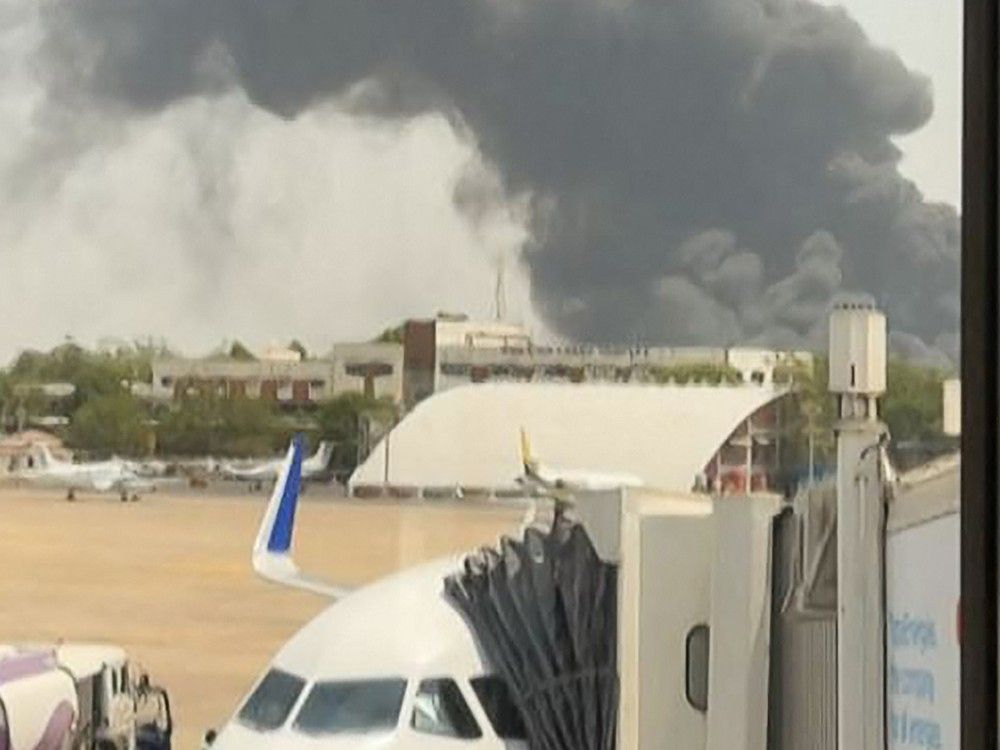
This frame grab from a video by @officialharshkataria on June 12, 2025 made available on the Eurovision Social Newswire (ESN) platform via AFPTV shows a plume of smoke, as seen through a window at the Ahmedabad airport, after Air India flight 171 crashed near the airport.

A plane bound for London, U.K., and carrying more than 200 people crashed on Thursday, Air India said.

Passengers include 169 Indian nationals, 53 British nationals, one Canadian national and seven Portuguese nationals, the

airline said in a statement

. “Air India is giving its full cooperation to the authorities investigating this incident,” it added.

The plane, a Boeing 787-8 aircraft, crashed five minutes after take-off at a residential area in Ahmedabad, a city in India with a population estimated to be over five million people. It was bound for London Gatwick Airport. Police told news agency ANI that the plane crashed into a doctors’ hostel,

BBC reports.

X user

Brian Krassenstein

shared footage of the crash on the social media site. “Please pray for these people,” he posted early on Thursday morning.

The tragedy “is heartbreaking beyond words,” India’s Prime Minister

Narendra Modi posted on X

. “In this sad hour, my thoughts are with everyone affected by it. Have been in touch with Ministers and authorities who are working to assist those affected.”

British PM Keir Starmer described the scenes emerging from the crash as “devastating.”

Starmer wrote on X

, “I am being kept updated as the situation develops, and my thoughts are with the passengers and their families at this deeply distressing time.”

Boeing shares take a hit after plane crash in India

The plane that crashed was reportedly a Boeing 787-8 Dreamliner, the company’s “bestselling passenger widebody of all time,”

according to Boeing

, and one of the most modern passenger aircrafts in service, per Flightradar24, an aviation tracking site.

Boeing said in a statement that it was aware of the initial reports of the crash, “and are working to gather more information.”

The shares of the company “tumbled as much as 9% before trading opened in the U.S.,” Associated Press reports.

Our website is the place for the latest breaking news, exclusive scoops, longreads and provocative commentary. Please bookmark nationalpost.com and sign up for our daily newsletter, Posted, here.


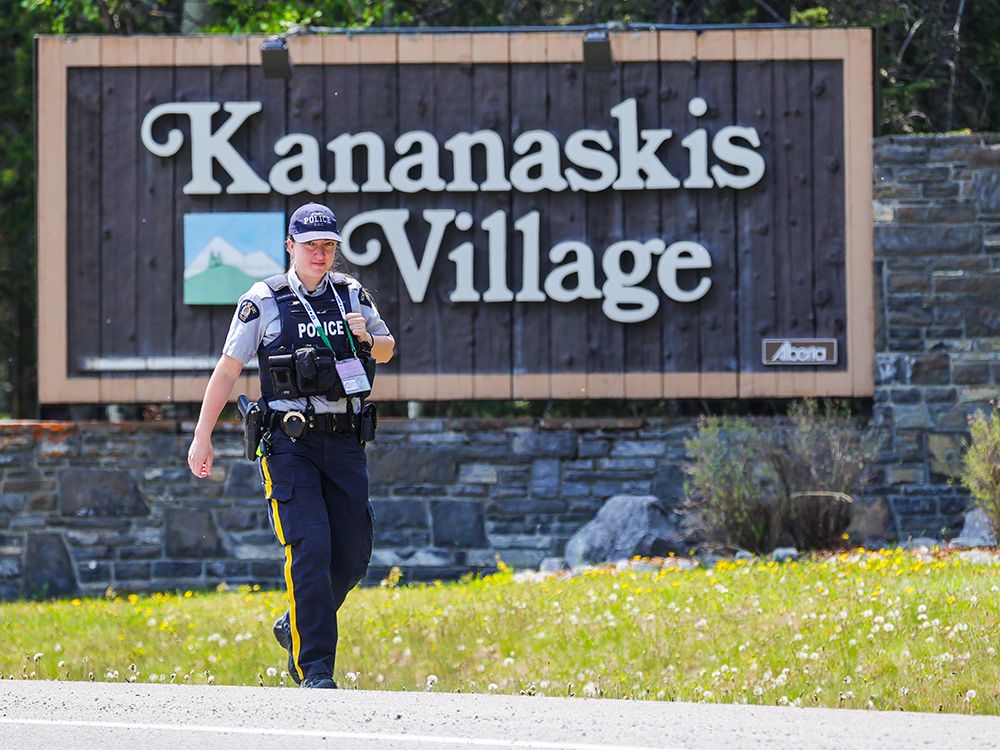
An RCMP officer walks past the entrance sign to Kananaskis Village ahead of the G7 summit.

Starting Sunday, seven of the most powerful people in the world will be at the G7 Summit in Kananaskis, Alta., where they will discuss economic instability and security issues, including Russia’s war on Ukraine.

Unsurprisingly, to bring the most powerful people in the world together, even at the best of times — and this is not the best of times — necessitates a massive security operation, with coordination across multiple Canadian agencies.

“(Security) is both massive and essential,” said John Kirton, the director of the G7 Research Project at the University of Toronto.

While Canadians are perhaps unlikely to have wildly strong views about French President Emmanuel Macron or Japanese Prime Minister Shigeru Ishiba, U.S. President Donald Trump has angered millions of Canadians with his aggressive rhetoric. Prime Minister Mark Carney has also angered many by inviting Saudia Arabia’s Mohammed bin Salman and India’s Narendra Modi.

Already, unspecified security concerns have led to at least one ceremonial casualty: Calgary’s White Hatter ceremony. Traditionally, the ceremony welcomes delegates to Alberta’s largest city, and they’re handed a white Smithbilt cowboy hat to celebrate Calgary’s frontier spirit.

In 2002, when the G8 Summit was also held in Kananaskis, leaders were given the ceremonial hats. U.S. president George W. Bush put it on his head, but Jacques Chirac, the late French president, reportedly turned up his nose at the gift and Russian President Vladimir Putin — not yet the international pariah he is today — examined the hat without putting it on his head. This time, however, there will be no ceremony.

“We have to respect that security considerations today are very different from the last time we hosted the summit in 2002 … there’s been a lot of nostalgia about what we were able to do in 2002,” said Calgary Mayor Jyoti Gondek earlier this week.

In 2002, a bear also died after falling from a tree as security officials were trying to scare it away from delegates. This year’s security team has a bear trap, should a curious bear get too close to the humans in the region.

The meeting, last held in Canada in Charlevoix, Quebec, in 2018, will happen against the backdrop of a global economic reorientation. Under Trump, the United States has initiated an international tariff war, breaking down decades of movement towards free trade. Meanwhile, Russia’s invasion of Ukraine continues — Ukrainian President Volodymyr Zelenskyy has been invited to the conference — and Israel’s war on Hamas continues to destabilize the Middle East.

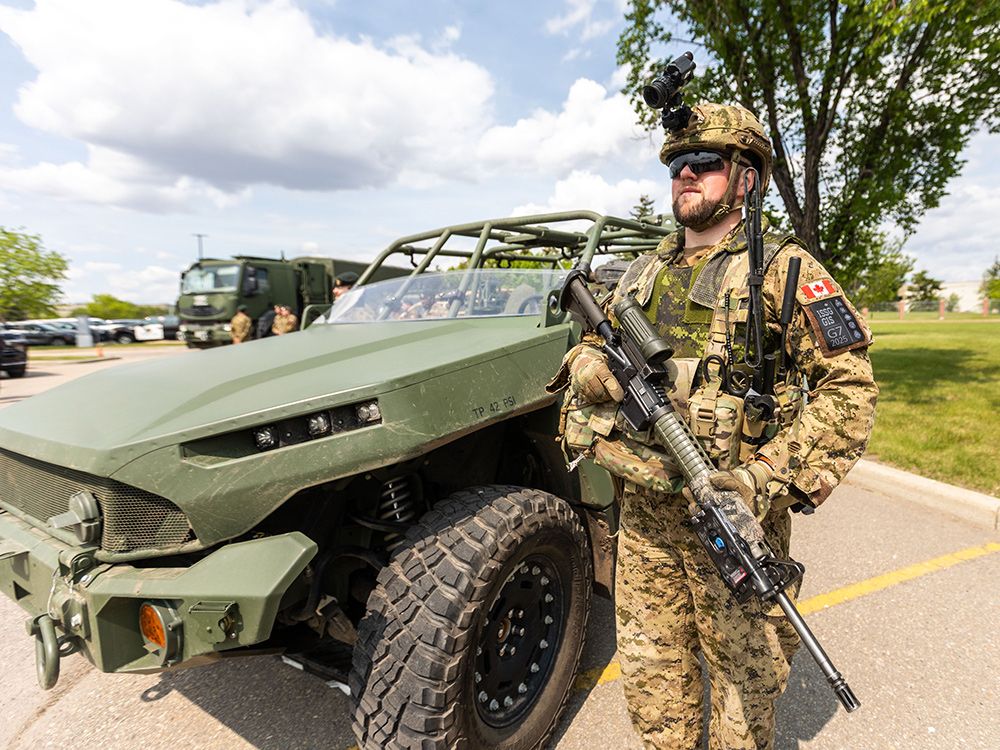
 Princess Patricia’s Light Infantry Cpl. Kevin Jackowski stands alongside a light tactical vehicle (LTV) following a press conference on security measures for the upcoming G7 summit in Kananaskis.

For the leaders at the G7, there are a number of security concerns, said Kirton: The first is that Trump survived an assassination attempt in July 2024, so there are general concerns about the safety of attendees. The second is that three leaders — France’s Macron, the U.K.’s Keir Starmer and the U.S.’s Trump — need to have staff on hand with the nuclear football in case of nuclear war. (None of the other powers at the G7, unless Modi attends, head countries with nuclear weapons.) There’s also the risk of violence or a terror attack or the possibility that a protest will get out of hand, such as in Genoa, Italy in 2001, when more than 200,000 demonstrators took to the streets. Additionally, unlike in Kananaskis in 2002 or Genoa in 2001, there are drones, which can be easily manipulated from afar.

“So that is a new and more complex threat to defend against,” said Kirton.

He described the threat environment for the 2025 summit as “more diffuse.” In Italy in 2001, for example, the fear was that al-Qaida would carry out an attack; in June 2001, Osama bin Laden told supporters of an intended attack on G8 leaders.

“That kind of threat is still on the playlist, but then you’ve got the new ones as well: wildfires and a great deal of anger against the president of the United States that you didn’t have at Kananaskis one,” said Kirton.

It remains to be seen if the specific tensions engendered by the attendees will lead to protest activities at designated zones in Calgary and Banff. The United States Secret Service, which came under heavy criticism in the U.S. after a failed assassination attempt against Trump while he was on the campaign trail last year, said it will continue to provide security for the president while he’s in Canada.

The Royal Canadian Mounted Police is the lead agency in security planning. But the Integrated Safety and Security Group (ISSG) managing G7 security also includes Calgary Police Service, Alberta Sheriffs, provincial conservation officers and members of the Canadian Armed Forces.

“The ISSG’s focus remains on providing a secure environment for the Summit, ensuring it unfolds safely and respectfully for all participants and host communities,” wrote Fraser Logan, a spokesperson for the RCMP, in an email to National Post.

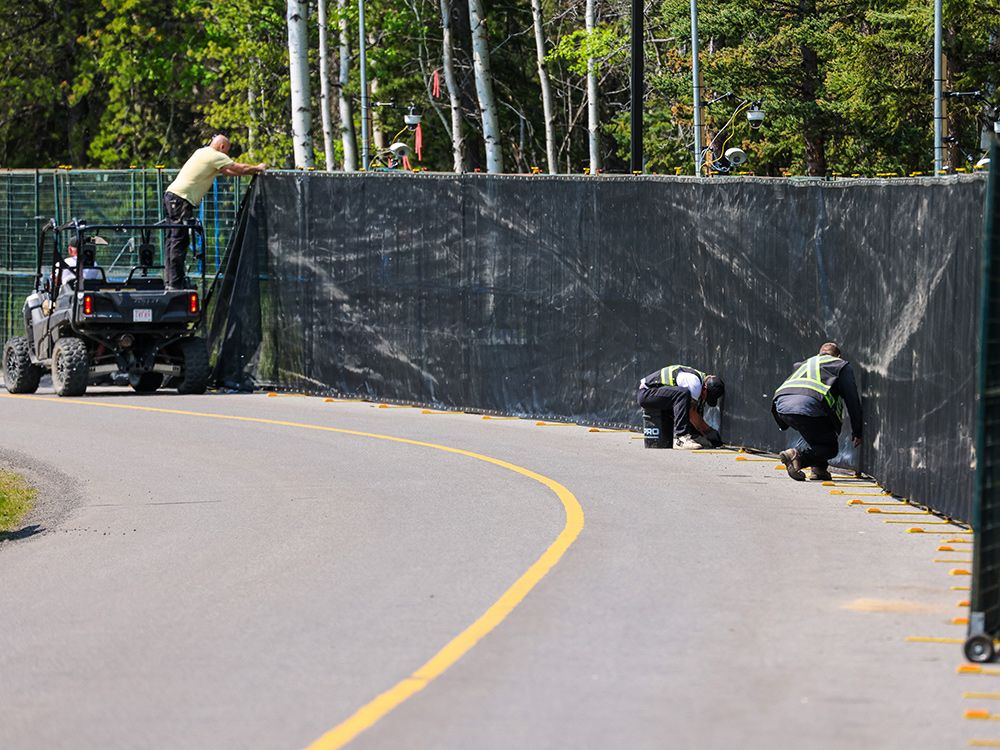
 Black fabric is installed on security fencing around Kananaskis Village, the site of the 2025 G7 summit.

Late last month, dozens of Canadian Armed Forces members streamed through outdoor retail outlets in Edmonton, stocking up on cold-weather gear and other necessities to keep them comfortable as they camp out in the bush for the duration of the summit. The Kananaskis region now resembles an armed camp,

the Calgary Herald reported

, with soldiers camped out and helicopters flying overhead.

During the summit, police and the military will be deployed on ATVs and in armoured vehicles. Drones will fly overhead. There are airspace restrictions in effect and military jets could shoot down any planes that persistently violate the 30-nautical-mile no fly zone around Kananaskis.

RCMP Chief Supt. David Hall, the ISSG security director, said hosting the G7 is a hugely complex project and is the “largest domestic security operation” possible for any host nation. Kananaskis Village itself will be sealed off by metal fencing and cameras are mounted on poles around the hotel where delegates are staying, the Calgary Herald reported.

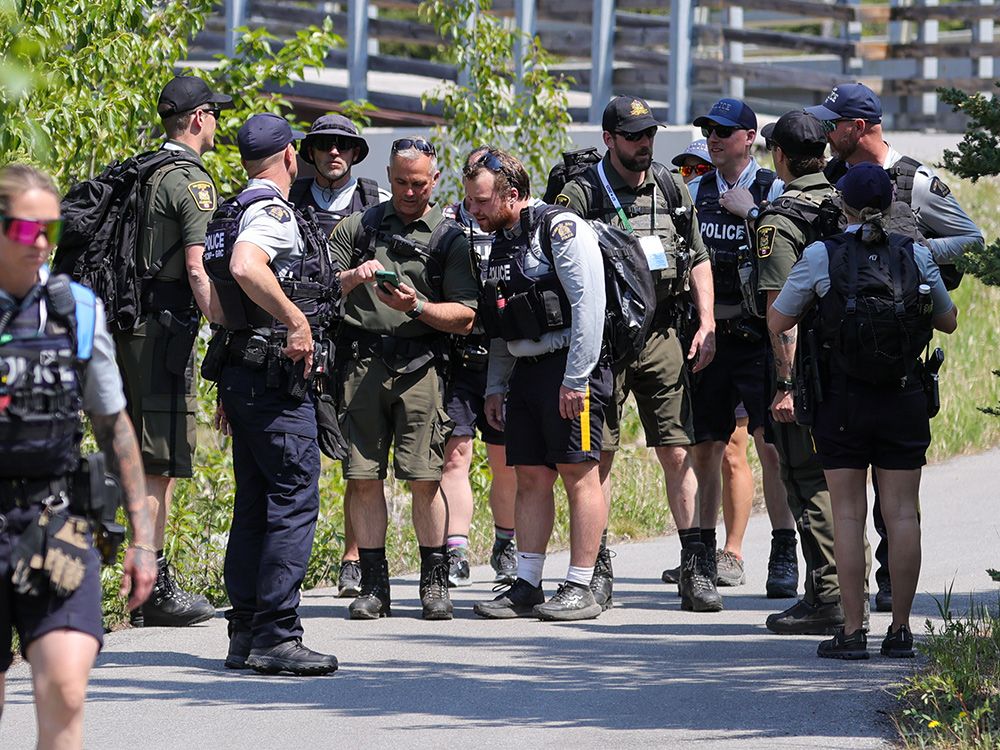
The trailheads, campgrounds and parking lots are packed with military vehicles and personnel, the Herald reported, and one group was hiking through the area to get to know the terrain. The Nakiska ski area, built for the 1988 Olympic Games, is being used as the staging area for security.

In 2002, 5,000 soldiers and 1,500 police were deployed, though the ISSG refused to discuss deployments for 2025.

“We don’t confirm numbers, the breakdown or the origin of deployment of our security personnel,” wrote Logan.

Throughout the region, including Calgary, the security procedures necessary to host such high-level dignitaries will be visible. Last month, Calgarians wondered at police moving through town. It turned out that it was members of the Calgary Police Service’s traffic section practicing their motorcade-escort skills in advance of the arrival of G7 delegates. The summit has also led to numerous road closures — and not just in the immediate area of the summit — but also around the Calgary International Airport, the closest airport to the Kananaskis region.

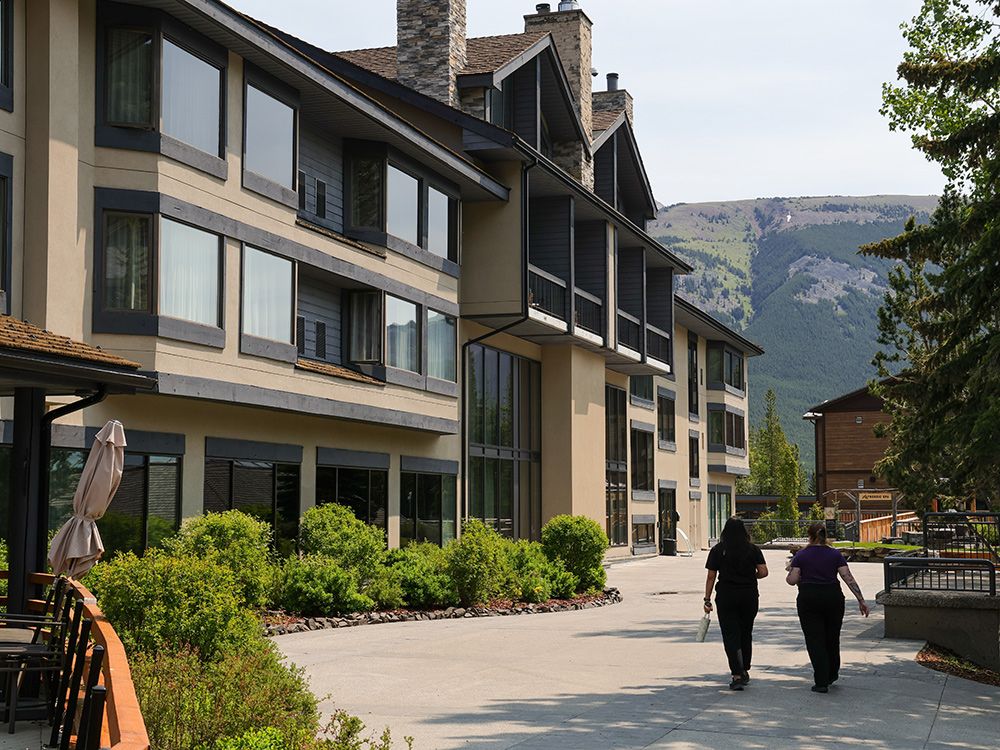
 The Pomeroy Kananaskis Mountain Lodge in Kananaskis Village, Alberta, the site for the upcoming G7 summit.

In the region itself, a 20-kilometre stretch of Highway 40 will be closed, cutting off access to many hikes and easy access to a favoured spring cycling route. However, travellers can take the Smith Dorrien Trail — a battered-but-scenic gravel backroad — from Canmore to access the southerly portions of Highway 40. The telephone line to reach Alberta Parks for information includes details on cancellations, suggesting that tourists with trips planned to the region should adjust their plans due to G7-related closures.

Within the security zone, only accredited personnel, including journalists, and residents of Kananaskis Village, will be permitted to enter.

“The general public is asked to try their best to stay away from these areas as wait times are expected to cause delays in travel,” the RCMP said in a statement Wednesday.

National Post, with additional reporting by the Calgary Herald

 RCMP officers and Alberta Sheriffs walk on a hiking path in Kananaskis as they prepare for the G7 summit.

Our website is the place for the latest breaking news, exclusive scoops, longreads and provocative commentary. Please bookmark nationalpost.com and sign up for our daily newsletter, Posted, here.


Factors driving longer wait times include a shortage of specialists and nurses, and limited operating room time, space and staff

The massive surgical backlogs left after rolling pandemic lockdowns are clearing but Canadians are still waiting longer than they were pre-COVID for new hips and knees, cancer surgeries and other “priority” procedures, new data show.

Even though 26 per cent more hip and knee replacements were done in 2024 than 2019, it still wasn’t enough to meet the need: just 68 per cent of Canadians received a hip replacement within the 26-week benchmark last year, compared to 75 per cent in 2019.

For those needing a knee replacement, 61 per cent got a slot in the operating room within the 182-day threshold, compared with 70 per cent in 2019, even though 21 per cent more knee replacements were performed in 2024 than in 2019.

Median wait times for breast, bladder, colorectal, lung and prostate cancer surgery also rose, with prostate cancer seeing the biggest bump in wait times, an extra nine days over 2019.

Wait times for scans to diagnose diseases and injuries also increased, “with MRI scans requiring an additional 15 days and CTS scans three more days compared with 2019,” the Canadian Institute for Health Information (CIHI) reported in a background release.

Canadians waited a median 57 days for an MRI scan in 2024. One in 10 waited 198 days.

The longer people wait, the more they deteriorate. Delays getting to an operating room “can lead to disease progression, increased symptoms of anxiety and depression, risk of mental health flareups and worsening of surgical and nonsurgical patient outcomes,” Canadian researchers have warned.

Hospitals across the country pushed back non-urgent surgeries during the early waves of COVID to free up beds. Almost 600,000 fewer operations were performed in the first 22 months of the pandemic alone compared to 2019, CIHI reported.

The backlog has meant that by the time people see a surgeon, their problem is more complex than it would have been in the past, Dr. James Howard, chief of orthopedic surgery at University Hospital – London Health Sciences Centre said in the news release.

Canada’s aging baby boomer generation, with arthritis and other joint conditions, is also putting pressure on the system.

“So even with surgeons collectively working as much as they can and completing more surgeries than we have in the past, we are not seeing wait times come down due to the complexity and volume of patients presenting to orthopedic surgeons,” Howard said.

While case numbers are bouncing back — five per cent more surgeries of all types were performed in 2023 than in 2019 — the volumes still haven’t kept up with population growth (seven per cent over the same period) or the 10 per cent rise in demand for surgery among those 65 and older, CIHI reported.

“Although an increase in the volume of procedures performed across Canada means that the surgical backlog from the height of the pandemic period has effectively been cleared, ripple effects in the health systems — due in part to the pandemic — persist that impact wait times in Canada,” CIHI’s Cheryl Chui, director of health system analytics, said in a statement.

Factors driving those longer wait times include a shortage of specialists and nurses, limited operating room time, space and staff, and emergency cases that take priority over scheduled ones.

Ontario and other provinces are trying to push through more surgeries and procedures, partly by doing more on an outpatient basis, meaning no overnight hospital stay.

Ontario has also announced plans to expand the number of private clinics providing publicly covered hip and knee replacements. Other provinces have done the same, though “the impact on surgical volumes and wait times is still being assessed,” CIHI said.

According to the agency’s latest waitlist snapshot, while the number of hip replacements increased from 22,000 in 2019, to 28,000 in 2024, and the number of knee replacements from 35,000 to 42,000 over the same period, a smaller proportion of people received joint replacement surgery within the recommended six months.

Nationally, in 2024, only 68 per cent of people needing a new hip were treated within the 26-week benchmark, compared to 75 per cent in 2019.

Ontario fared better than all other provinces: 82 per cent of hip replacement patients were treated within that timeframe. Newfoundland and Labrador (41 per cent) and Prince Edward Island (45 per cent) performed the worst. British Columbia (63 per cent), Saskatchewan (50 per cent), Manitoba (54 per cent) and Quebec (49 per cent) also scored below the proportion nationally. In Alberta, 73 per cent of hip replacements were performed within the benchmark in 2024.

Overall, patients waited a median 125 days for hip surgery in 2024 (half waited less, half waited more). One in 10 waited 340 days.

For knee replacements, 79 per cent of patients in Ontario received surgery within the 26-week benchmark in 2024, compared to 38 per cent in Quebec, 47 per cent in Saskatchewan, 55 per cent in B.C. and 62 per cent in Alberta.

While efforts are being made to better manage and monitor surgical waitlists, researchers have warned that people with severe pain or worsening symptoms aren’t being prioritized.

Wait times for cataract surgery were close to pre-pandemic levels — 69 per cent of people were treated within a 16-week benchmark in 2024 versus 70 per cent in 2019.

The percentage of people who received radiation therapy within 28 days and surgery to repair a fractured hip within 48 hours dropped slightly, by three percentage points from 2019 to 2024, falling to 94 per cent and 83 per cent, respectively.

The volume of prostate cancer surgeries performed dropped by three per cent, from 3,500 in 2019, to 3,400 in 2024. And men waited longer for the procedure — from a median 41 days in 2019, to 50 days in 2024.

Slower-growing cancers like prostate cancer tend to have the longest surgical wait times, CIHI reported.

Median wait times for breast cancer surgery increased from 18 days in 2019 to 23 days in 2024, and wait times for bladder cancer increased from 24 days to 28 days.

National Post

Our website is the place for the latest breaking news, exclusive scoops, longreads and provocative commentary. Please bookmark nationalpost.com and sign up for our daily newsletter, Posted, here.


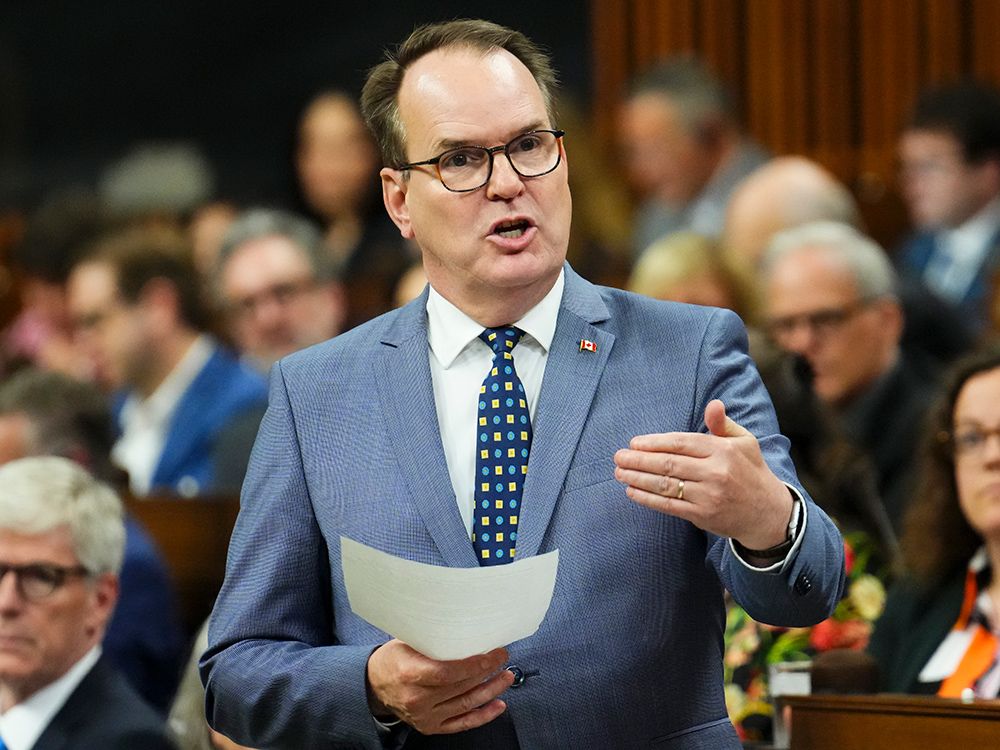
Leader of the Government in the House of Commons Steven MacKinnon responds to a question during question period in the House of Commons on Parliament Hill in Ottawa on Monday, June 9, 2025.

OTTAWA — Government House Leader Steven MacKinnon rejected the Bloc Québécois’ proposal to split Bill C-5 in two parts, so that the sections on lifting internal trade barriers and the fast-tracking of major projects can be studied separately.

Bloc House Leader Christine Normandin said earlier this week it made little sense that the bill, in its current form, would be sent to the House of Commons committee on transport as it falls under the mandate of Minister of Transport and Internal Trade Chrystia Freeland.

Normandin instead suggested dividing the bill to study the portions on free trade and labour mobility in one committee and the fast-tracking of major projects in the national interest in another. She said the free trade portion is “rather consensual” and could go “a bit faster,” whereas the major projects portion would warrant more scrutiny.

On Wednesday, MacKinnon offered a resounding “no” to the Bloc’s proposition.

“This is a bill that responds to economic conditions caused by the tariff war, among other things, and mobilizes premiers, mobilizes Canadians from coast to coast to coast behind projects of national significance,” he said.

“These projects have a certain urgency, as do interprovincial trade barriers that must fall,” he added. “This is a very comprehensive bill. We understand that it’s going to be debated, but it’s something that we solicited and secured a mandate for.”

Prime Minister Mark Carney said

his intention is to see the bill passed before June 20

, when the House of Commons rises and MPs return to their ridings for the summer.

“It is a top priority for this government, and we will do everything to get it passed before the summer,” he said after C-5 was tabled on Friday. “And if Parliament needs to sit longer, it should sit longer in order to get it passed. That’s what Canadians expect.”

MacKinnon said to date there is no consensus from other parties to sit into the summer.

The part of the bill on lifting internal trade barriers would allow a good or service that meets provincial or territorial rules to have met federal requirements but also make it easier for workers to get a federal licence by recognizing provincial or territorial work authorizations.

The second part, which is a bit more contentious, seeks to get projects deemed in the national interest — such as highways, pipelines, mines and nuclear facilities — built faster by having only one environmental assessment done and respecting federal conditions.

On Wednesday,

the Assembly of First Nations (AFN) once more expressed concern

the Liberals were “ramming” through this bill without giving First Nations time to properly study the text.

“I keep hearing that they want to push through this legislation right to the end of this month, and I think that that’s the wrong way to go,” said AFN National Chief Cindy Woodhouse Nepinak during a press conference on Parliament Hill.

Woodhouse Nepinak is expected to meet with Carney in July, presumably after the bill may have passed. She urged the government to slow down the process to allow meaningful consultation and study to occur with all the parties involved, including First Nations.

“Look, take the summer, take the time to listen to First Nations, take the time to listen to Canadians. And I think that’ll make a more united country,” she said.

Conservative Leader Pierre Poilievre, on the other hand, is favourable to the fast-tracking of major projects like pipelines and dismissed the need for a consensus to move ahead.

“If you wait till everybody agrees on everything, nothing will happen. You’re never going to get everybody to agree on every single project,” he told reporters on Monday.

“If the prime minister says he’s going to wait until everyone agrees, then nothing will get done, which is what has been happening for the last decade,” he added.

Woodhouse Nepinak said national chiefs before her were ignored in discussions on major projects, which caused civil unrest and lawsuits that slowed down the projects.

“Isn’t it better to talk through things rather than always being in litigation?” she asked. “It seems like First Nations always need to litigate, and then we get… results later.”

“Does Canada want to change that or not?”

National Post

calevesque@postmedia.com

Get more deep-dive National Post political coverage and analysis in your inbox with the Political Hack newsletter, where Ottawa bureau chief Stuart Thomson and political analyst Tasha Kheiriddin get at what’s really going on behind the scenes on Parliament Hill every Wednesday and Friday, exclusively for subscribers. Sign up here.

Our website is the place for the latest breaking news, exclusive scoops, longreads and provocative commentary. Please bookmark nationalpost.com and sign up for our newsletters here.


Lilly and Jack Sullivan have been missing since May 2, 2025.

Mounties searching for two young Nova Scotia siblings who went missing more than a month ago say they’ve administered lie detector tests, collected hundreds of hours of surveillance video from the area around the children’s home, fielded 488 tips and formally interviewed 54 people.

But they still haven’t found Lilly and Jack Sullivan.

“This investigation is being led by seasoned investigators committed to gathering information about the disappearance of Lilly and Jack,” RCMP Cpl. Guillaume Tremblay said Wednesday.

“All scenarios are being considered and every resource and tools are at their disposal.”

Mounties have previously said there is no evidence the children were abducted. Tremblay would not say Wednesday if investigators still believe that to be the case, and he would not get into whether or not police believe the children are still alive.

“We’re leaving no stones unturned in this case,” Tremblay said.

He wouldn’t say how many people have been subjected to lie detector tests during the hunt for the missing children. “Experts are examining every question and answer that those individuals are providing,” Tremblay said. “And it could guide the investigation.”

Mounties won’t say if they have any suspects in the case. “I can’t speak to persons of interests at this time,” Tremblay said. “It would compromise the investigation that’s ongoing.”

Mounties first got the call on Friday, May 2 at 10 a.m. that Lilly, 6, and Jack, 4, were missing from their trailer home on Gairloch Road in Lansdowne Station, Pictou County. Their mother and stepfather told police the children must have slipped out while they were in bed with their baby.

Late last month, the RCMP said the children were seen in public with family members one day earlier.

Mounties appear to have pulled out all the stops in the search for the pair.

“More than 11 Nova Scotia RCMP units are working on the missing persons investigation, some of which include the Northeast Nova RCMP Major Crime Unit, Pictou County District RCMP, Digital Forensic Services, Truth Verification Section, Legal Application Support Team, Police Dog Services, Underwater Recovery Team, Behavioural Sciences Group, and the Criminal Analysis Service,” the force said Wednesday in a news release.

“They are joined in their investigational efforts by the National Centre of Missing Persons, Canadian Centre for Child Protection, and provincial and municipal police agencies from Nova Scotia and other parts of Canada.”

Police have “extensively searched the property from which the children went missing, including every aspect of the home, grounds, outbuildings and nearby septic systems, wells, mineshafts and culverts,” said the news release.

Mounties have also obtained search warrants “to seize and examine materials and devices that may provide information useful to the investigation,” it said.

“We’re accessing, evaluating and analyzing a significant volume of information from a variety of sources. We have a very coordinated and deliberate approach to make certain all information is meticulously scrutinized, prioritized and actioned to ensure nothing is missed,” Cpl. Sandy Matharu, investigation lead with the Northeast Nova RCMP Major Crime Unit, said in the release. “We’re committed to doing what is necessary to locate Lilly and Jack and advance the investigation, which may take longer than we all hoped.”

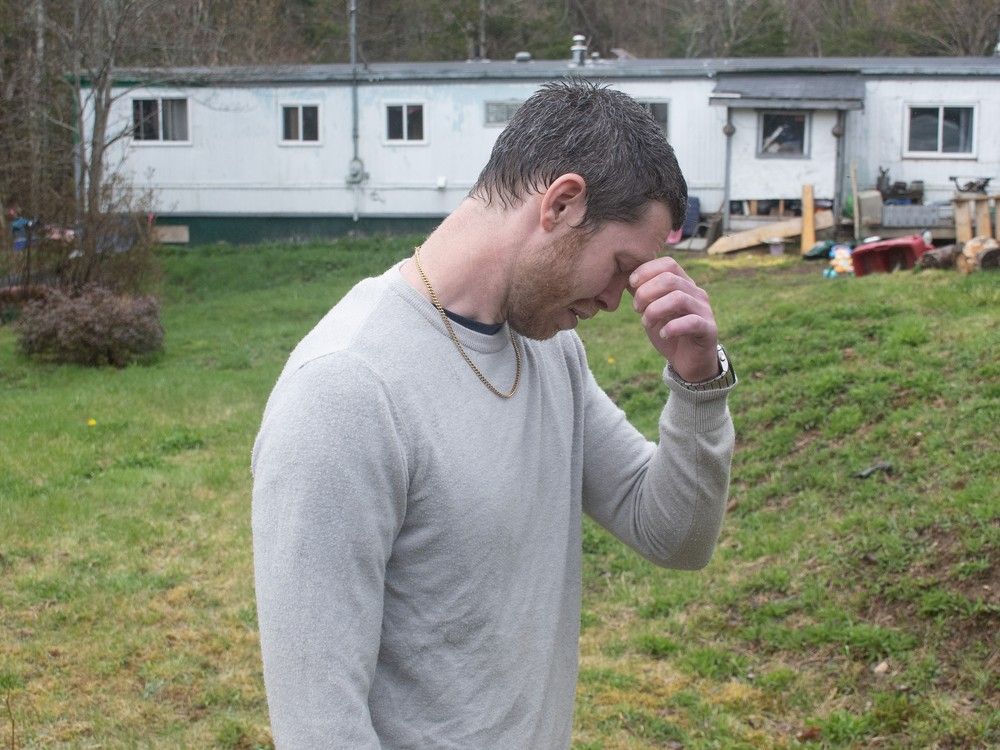
Daniel Robert Martell, who identifies as the children’s stepfather, told The Chronicle Herald earlier last month that he and the children’s mother, Malehya Brooks-Murray, last heard Jack and Lily on the morning of May 2, as they lay in bed with their baby.

“The sun was already up and Lily came into the (bedroom),” said Martell.

“She had a pink shirt on. We could hear Jackie in the kitchen. A few minutes later we didn’t hear them so I went out to check. The sliding door was closed. Their boots were gone.”

He surmised the children slipped outside through a sliding door.

 Daniel Martell, who identifies as the stepfather of Lily and Jack Sullivan, speaks with reporters following an announcement earlier this month that the search for the missing Pictou County children was being scaled back.Ryan Taplin – The Chronicle Herald

Martell said when they noticed the two children were missing May 2, he immediately jumped in the car and searched neighbouring roads, looking in culverts. By the time he returned home, the RCMP were there, having been called by the children’s mother.

Martell is not Jack and Lily’s father. He’s been Brooks-Murray’s partner for three years, though after the children disappeared she reportedly left him and the county with their baby and is staying with family.

Martell has said that he had been working with Northeast Nova Major Crime, had provided the RCMP with his cellphone and had agreed to take a lie detector test. Martell told CBC he passed that test, so “you really can’t point fingers at me anymore.” 

On the weekend after they vanished, Brooks-Murray told CTV that Jack and Lilly are not typically the type of children who would go outside on their own. “I just want to remain hopeful, but there’s always in a mother’s mind, you’re always thinking the worst,” Brooks-Murray said at the time.

A large scale-ground search began immediately after the children were reported missing. Hundreds of volunteers, multiple dogs, drones, an underwater recovery team and several aircraft scoured a heavily wooded 5.5-square-kilometre area before search efforts were scaled back on May 7.

Several additional searches have taken place since, many of them on weekends.

“The terrain here in Nova Scotia is very rugged in that area,” Tremblay said.

On Wednesday, Mounties said the information they have gathered to this point has not identified new search areas.

Police want anyone with information on the whereabouts of the missing children to call the Northeast Nova RCMP Major Crime Unit at 902-896-5060. To remain anonymous, contact Nova Scotia Crime Stoppers, toll-free, at 1-800-222-TIPS (8477), submit a secure web tip at www.crimestoppers.ns.ca, or use the P3 Tips app.

Our website is the place for the latest breaking news, exclusive scoops, longreads and provocative commentary. Please bookmark nationalpost.com and sign up for our daily newsletter, Posted, here.


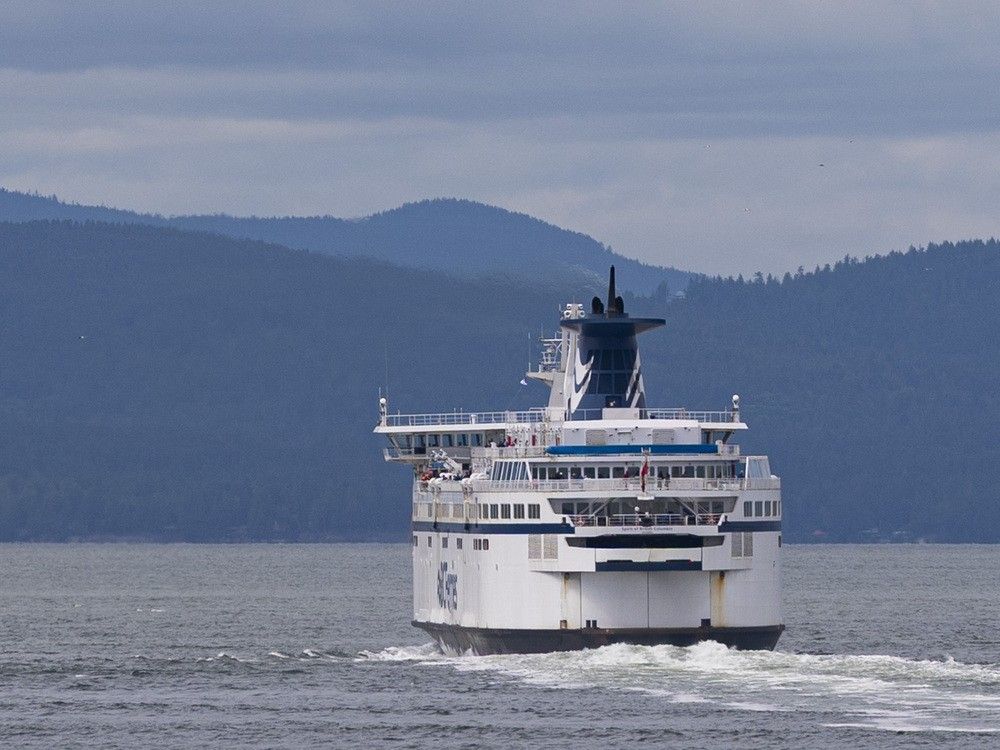
The Spirit of British Columbia leaves the Tsawwassen Ferry Terminal in Delta, BC, May, 14, 2025.

OTTAWA — BC Ferries set off a tidal wave of controversy on Tuesday after announcing a major shipbuilding deal with a Chinese state-owned enterprise, with the ripple effects of the decision reaching Ottawa.

Vancouver Island Conservative MP Jeff Kibble raised the issue in Wednesday’s question period, accusing the Liberal government of rewarding the provincial carrier for selling out Canada’s national interest.

“The Liberals are set to hand over $30 million (in federal subsidies) to BC Ferries while BC Ferries hands over critical jobs, investment and industry to China,” said Kibble.

BC Ferries said

in a press release

that it had awarded China Merchants Industry Weihai Shipyards (CMI Weihai) a contract to build four new vessels after a “rigorous” global bidding process.

Kibble blasted BC Ferries in the House of Commons for buying the ships from China instead of a “proven Canadian shipbuilder” and pressed the Liberal government to tie federal ferry subsidies to buying Canadian-built ships.

Liberal Transport Minister Chrystia Freeland said that she shared Kibble’s concerns about procurement “at all levels of government” but wouldn’t comment directly on the BC Ferries contract, calling it a provincial matter.

One politician who hasn’t hesitated to criticize the deal is the provincial minister responsible for BC Ferries.

B.C. Transportation Minister Mike Farnworth was quick to distance himself from the decision, saying he was worried about the message it sends in the midst of Chinese economic aggression.

“I do have concerns around procuring services from any country that is actively harming Canada’s economy through unfair tariffs or other protectionist trade practices. I have shared these concerns with BC Ferries,” Farnworth told the media.

Yet, despite his reservations,

he ruled out blocking

the BC Ferries-CMI Weihai deal.

“BC Ferries is an independent company responsible for its own operational decisions,” said Farnworth.

The B.C. government is the sole preferred shareholder in
BC
Ferries and it receives public funding.

Farnworth added that he was “disappointed” that the contract didn’t include more involvement from Canadian shipyards.

BC Ferries’ head of fleet renewal, Ed Hooper, told Postmedia

that no Canadian shipbuilders

bid on the contract won by CMI Weihai.

BC
Ferries CEO Nicolas Jimenez

said on Tuesday when the deal was announced that there are currently no tariffs associated with the import of vessels of this type into Canada and tariff disputes didn’t factor into the decision.  The value of the contract has not been released.

He said that the shipyard was “the clear choice based on the overall strength of its bid.”

“When it comes to things like trade policy, industrial policy, geopolitics, I think we would really defer that to the federal and provincial governments and expect them to manage and work those issues,” said Jimenez.

Liberal Prime Minister Mark Carney

promised to ramp up

Canadian shipbuilding during this spring’s federal election campaign.

The federal government previously awarded the Chinese state-owned company a contract to

build a new vessel

for East Coast ferry operator Marine Atlantic, according to a 2023 filing from Transport Canada.

The ship began service

between Nova Scotia and Newfoundland

in July 2024.

Federal Procurement Minister Joël Lightbound didn’t respond to an inquiry from the National Post about the BC Ferries-CMI Weihai deal, and didn’t indicate whether the federal government would continue to take bids from the company.

A spokesperson with Public Services and Procurement Canada told the National Post that CMI Weihai does not appear on the agency’s database of active bids.

Christian Leuprecht, a distinguished professor at Royal Military College, said that the BC Ferries-CMI Weihai contract carries clear national security risks.

“The moment you have Chinese equipment onboard, there will be tons of backdoors that either the company can deliberately install or Chinese intelligence can exploit,” said Leuprecht.

He added that B.C. is especially exposed to Chinese high jinks with the ferry being the main transportation artery to capital city Victoria.

“If there is, for instance, a confrontation between the U.S. and China over Taiwan, one of the things that China will do is try to sow social chaos,” said Leuprecht.

“One obvious way to do that in B.C. is to take out it’s most important ferry route.”

National Post, with a file from The Canadian Press

rmohamed@postmedia.com

Get more deep-dive National Post political coverage and analysis in your inbox with the Political Hack newsletter, where Ottawa bureau chief Stuart Thomson and political analyst Tasha Kheiriddin get at what’s really going on behind the scenes on Parliament Hill every Wednesday and Friday, exclusively for subscribers. Sign up here.

Our website is the place for the latest breaking news, exclusive scoops, longreads and provocative commentary. Please bookmark nationalpost.com and sign up for our daily newsletter, Posted, here.