LP_468x60
on-the-record-468x60-white

Florida Panthers center Brad Marchand skates with the Stanley Cup after defeating the Edmonton Oilers in Game 6 of the NHL hockey Stanley Cup Final Tuesday, June 17, 2025, in Sunrise, Fla.

The Florida Panthers won the Stanley Cup but in the process of celebrating the historic win have seemingly dented and “cracked” the Cup, as seen in photos shared by various sports news outlets Wednesday morning.

The second year in a row win comes after the defending champions beat the Edmonton Oilers in Game 6 Tuesday night.

Photos shared on social media upon closer inspection showed a dent to the Stanley Cup base and a chip in the bowl.

Resharing a photo by X user

Chris Jastrzembski

, news outlet

The Athletic

posted on social media: “It took less than 12 hours for the Panthers to dent the Stanley Cup.”

In another Getty Images photo reshared by X user

Seth Rorabaugh,

one can see the chipped top of the Stanley Cup. In a photo by Icon Sportswire and one shared by hockey news platform

Gino Hard

and ABC’s

WPBF News

, the chipped top of the cup is visible on the Montreal section.

“A crack in the Stanley Cup is noticeable in the post game celebration following game six of the Stanley Cup Final between the Edmonton Oilers at the Florida Panthers on Tuesday, June 17, 2025 at Amerant Bank Arena in Sunrise, FL.,” reads the

caption by Icon Sportswire.

The

last time a Canadian team won the Stanley Cup

was in 1993 when the Montreal Canadiens beat the Los Angeles Kings.

Florida Panthers damage the Cup on the Montreal 1993 section
by
u/sephil in
Habs

Our website is the place for the latest breaking news, exclusive scoops, longreads and provocative commentary. Please bookmark nationalpost.com and sign up for our daily newsletter, Posted, here.


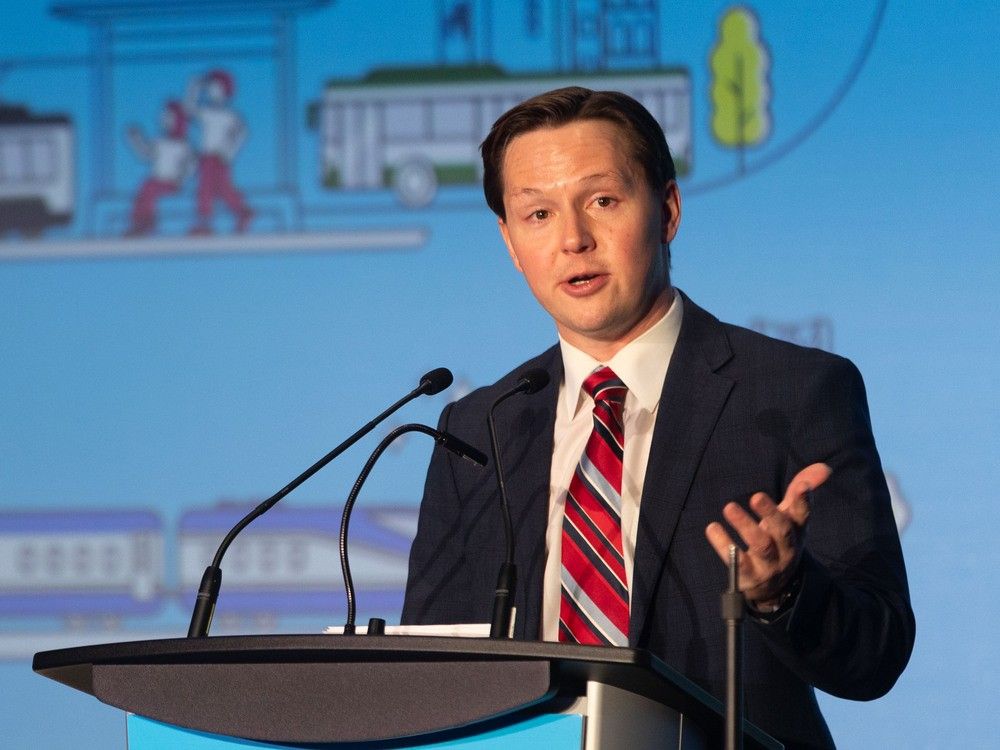
Transportation Minister Devin Dreeshen.

OTTAWA — Alberta’s point man on a massive western corridor project says he’s “cautiously optimistic” about getting rid of a major roadblock to the construction of a new West Coast oil and gas pipeline after visiting British Columbia’s northern coast.

Devin Dreeshen, the province’s minister of transportation and economic corridors, told the National Post that he was struck by the level of opposition among locals to the federal moratorium

on northern B.C. oil tanker traffic

, with several pointing out that the ban does nothing to stop tankers coming and going from nearby Alaska.

“When you go out there and you look at (the coastline), there’s almost an oil tanker a day going down from Alaska,” said Dreeshen.

“So, when you look at American tankers going north and south along the coastline, but us not allowing our Canadian tankers to go straight west, away from the coastline… The hypocrisy (of the situation) was pointed out by a lot of folks,” he noted.

“(People are) saying that we should be able to compete the same way the U.S. and other countries do, by being able to ship our oil out to our tankers.”

Dreeshen was in the northern port city of Prince Rupert, B.C., last week to strengthen Alberta’s ties to the critical Pacific trade outpost, joined by Alberta Indigenous Relations Minister Rajan Sawhney and members of Alberta’s Industrial Heartland Association.

Alberta already moves

nearly $4 billion of merchandise

through the Port of Prince Rupert annually

— including propane, agricultural products and wood pulp — but both Dreeshen and his boss, Premier Danielle Smith, think that this number could be much bigger.

Smith said in a May letter to Prime Minister Mark Carney that Prince Rupert would make the ideal endpoint for a new pipeline carrying Alberta oil to non-U.S. markets.

“As (one of) North America’s closest ports to Asia… the Port of Prince Rupert offer(s) year-round deep-water ports and existing terminal infrastructure,” wrote Smith.

The letter called for Carney to repeal the tanker ban to enable oil exports from the Port of Prince Rupert.

Smith called for a “grand bargain” at

this month’s first ministers’ meeting

in Saskatoon where some of the revenue from a new northwest coast pipeline would be used to finance the multibillion-dollar Pathways oilsands decarbonization project.

Dreeshen said that his work in building out a rail and transit network from central Alberta’s industrial heartland to northern B.C. and the premier’s pipeline advocacy are “two sides of the same coin.”

Both B.C. Premier David Eby and

Prince Rupert Mayor Herb Pond

say they support the North Coast tanker ban.

The moratorium was

first called by Justin Trudeau

shortly after he became prime minister in late 2015, effectively killing the Enbridge Northern Gateway pipeline to Kitimat, B.C. It was

signed into law in 2019

.

Chris Sankey, a member of the local Tsimshian community of Lax Kw’Alaams, says the tanker ban was rushed, and put into place without the adequate consultation of those affected.

“It didn’t give a platform for the Indigenous communities to get in the room and have a discussion, leadership to leadership … It was a decision that’s now come back to hurt Indigenous people’s ability to have an open and honest discussion about energy, infrastructure, and port development,” said Sankey.

“This is an opportunity to amend the ban (in a way) that aligns with Indigenous communities’ interests and concerns that we protect what we have and grow the economy.”

Sankey, now an investment advisor, ran unsuccessfully for the B.C. Conservatives in last year’s provincial election.

The office of federal Transport Minister Chrystia Freeland didn’t immediately respond to an inquiry from the National Post about the possibility of reversing the tanker ban.

National Post

rmohamed@postmedia.com

Our website is the place for the latest breaking news, exclusive scoops, longreads and provocative commentary. Please bookmark nationalpost.com and sign up for our daily newsletter, Posted, here.


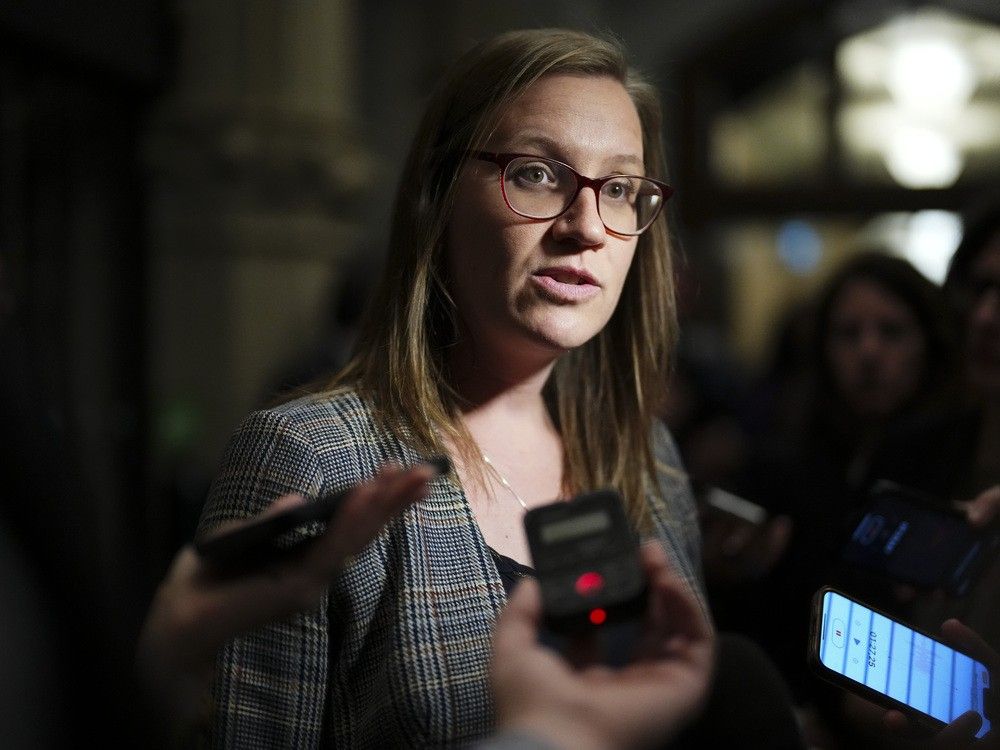
Karina Gould, Leader of the Government in the House of Commons arrives to a cabinet meeting on Parliament Hill in Ottawa on Tuesday, Oct. 22, 2024.

OTTAWA — More progressive Liberal MPs expressed cautious concerns about their government’s decision to ram through the internal trade and major projects bill in a matter of days, with some of them saying it could lead to legal issues down the road.

Bill C-5 would give the federal government sweeping powers for five years to quickly approve natural resource and infrastructure projects once they are deemed to be in the national interest — sparking criticism from First Nations and environmental groups.

Those concerns have been heard loud and clear and, in some cases, have resonated with some Liberal MPs. The bill is being studied and will be amended in a parliamentary committee on Wednesday, before it makes its way back to the House of Commons for a final vote Friday.

Earlier this week, Liberal MP Nathaniel Erskine-Smith said his government “is proposing to shut down democratic debate, curtail committee scrutiny and jam the bill through the legislature,” all which he said would make former prime minister Stephen Harper “blush.”

“Liberals would rightly scream if a federal Conservative government attempted the same,” he said in a speech to the House on Monday.

B.C. MP Patrick Weiler also urged parliamentarians to consider how this bill “could be used in bad faith by a future government” given those powers will be in place for five years.

A few Liberals expressed discomfort at the idea that some Indigenous groups said C-5 could potentially violate their treaty rights and that it does not clearly define the need for them to give free, prior and informed consent for projects taking place on their lands.

“There is a clear desire on the part of Canadians to be able to get big projects done in this country,” said Karina Gould, a former leadership contestant and current MP. “But there is a duty and an obligation to ensure that Indigenous rights holders are part of this process.”

“We have to get that balance right, because if you don’t, the government will be facing court challenges,” she added.

The warning has been issued by First Nations groups, including Ontario Regional Chief Abram Benedict who represents 133 First Nations across the province and said he would support them however they see necessary, whether it be in the courts or with protests.

“Obviously, we have to talk. We have to have those conversations, and we have to assure that Indigenous participation is included all the way through. And I think that will be the job ahead of us for the summer,” said Brendan Hanley, the Liberal MP for Yukon.

Hanley dismissed the idea C-5 could lead to another “Idle No More” movement? “No. I think we’re going to be able to handle this in collaborative conversations,” he said.

Marcus Powlowski, an MP from Northern Ontario, said he has heard the concerns Indigenous and environmental groups have about C-5 but does not totally agree with them, nor does he think the bill in its current form gives the government too much power.

“I think, especially at the moment, given the international situation, given the pressures from the United States, I think we need a strong Canada. And part of being a strong Canada is getting major projects going, getting access to critical minerals,” he said.

However, Powlowski admitted the government “didn’t have a lot of time” to come up with the legislation and hinted “maybe this is the best we’re going to get under the circumstances in the fact that we only have a few days to pass the legislation.”

“I think it’s important we pass this legislation, and there’s always an opportunity afterwards to amend it,” he said.

Government House leader Steven MacKinnon defended the government’s decision to pass C-5 before the summer, saying that it won an election campaign focused on lowering internal trade barriers and getting the economy moving with nation-building projects.

“This bill enjoys incredibly broad support, and we’re pleased to be making progress on that,” he said.

Other Liberals took issue with reporters describing the process as too expedited.

“I don’t think we’re ramming it through. I think we’re getting it done with accelerated speed,” said James Maloney, the Liberals’ caucus chair.

Heritage Minister Steven Guilbeault, a fervent environmentalist, sought to minimize the reach of C-5 this week. He said most major projects do not trigger federal impact assessments, so the bill would only apply to a “very small number of projects.”

“I think that, as we move forward, we will see that the type of projects that are being proposed are projects that we want in terms of being able to achieve our 2030 targets when it comes to emissions reduction,” he said during a press conference on Monday.

Guilbeault also expressed concern regarding consultations with Indigenous peoples: “This is an area where we have to be very careful… It can lead to problems down the road.”

National Post

calevesque@postmedia.com

Our website is the place for the latest breaking news, exclusive scoops, longreads and provocative commentary. Please bookmark nationalpost.com and sign up for our daily newsletter, Posted, here.


A still from a video posted to Instagram shows a school bus driver talking to several people.

A school bus driver who wore a schoolgirl’s uniform while driving a vehicle with a “Lolita’s Line” sign in the window will no longer be working for the York Catholic District School Board, a spokesperson has told National Post.

The incident stems from a video that was

posted to social media

after being filmed outside St. Michael the Archangel Catholic Elementary School in Vaughan, Ont., just north of Toronto.

In the video, several people are speaking to the driver, who briefly stands in front of the bus dressed in a short pink skirt, stockings and a frilly shirt, before entering the vehicle.

“You picked up the kids dressed like that?” one person in the video asks, to which the driver answers: “Yep.”

Another asks several times: “Why do you call your bus the Lolita Line?” The driver then closes the bus door and drives off.

Lolita is the title of a 1955 novel by Vladimir Nabokov, in which the narrator, using the name Humbert Humbert, describes his obsession with a 12-year-old girl, Dolores Haze, whom he later kidnaps and sexually abuses after becoming her stepfather.

A statement from the York Catholic District School Board shared by a board spokesperson says the board “is aware of a social media video filmed at St. Michael the Archangel CES.” It notes that third-party companies provide school busing in Ontario.

YCDSB staff immediately brought this matter to the bus driver’s employer. The company quickly addressed this situation with its employee, and the driver will no longer provide busing to and from the school,” the statement says. “The company has assured the YCDSB that this would not be an issue at any YCDSB school going forward.”

It adds: “All bus drivers in Ontario are required to pass a Vulnerable Sector Check with their local police department and they receive extensive training before transporting students. The YCDSB followed all of its child protection procedures after this incident.”

National Post has reached out to Landmark Student Transportation, the company listed on the side of the bus, but has not yet received a reply.

Our website is the place for the latest breaking news, exclusive scoops, longreads and provocative commentary. Please bookmark nationalpost.com and sign up for our daily newsletter, Posted, here.


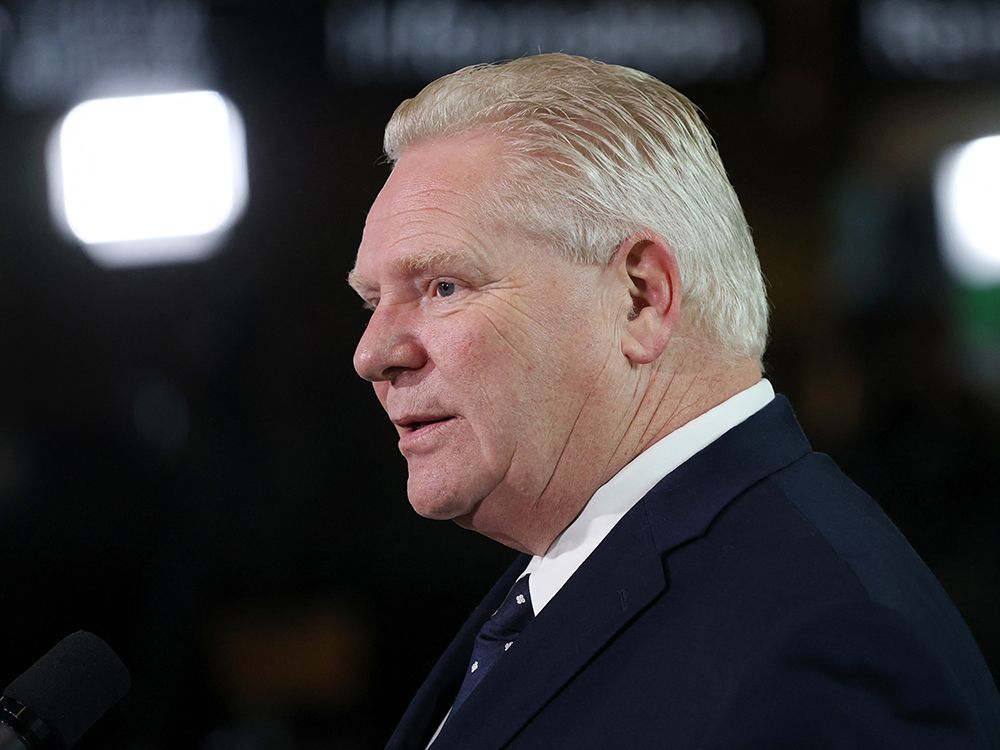
Ontario Premier Doug Ford.

Four suspects, including a 16-year-old, have been arrested after allegedly trying to steal a vehicle from the home of Ontario Premier Doug Ford overnight on Tuesday.

Ford discussed the incident later that day while

speaking at an event

marking the start of construction of a transit hub in Toronto’s east end.

“Four thugs come racing down my street. Masks on. Ready to take the car out of the driveway,” said Ford. “Surprise, surprise. At 12:30 a.m., two police cars are there.”

Toronto police officers who were at the scene saw the suspects wearing masks and driving in a vehicle near the home in the Lawrence Avenue West and Royal York Road area, according to authorities. The vehicle slowed down as it approached the driveway. Officers initiated a vehicle stop and investigated the suspects.

“One guy runs out, takes off. They capture him, and they catch these other guys,” said Ford.

Police said that officers found a car key programming device and a programmable master key inside the vehicle after a search.

“But just imagine, all the unfortunate people that don’t have security there at their house. (These people come) with masks on, and they have all the tools ready to break in,” said Ford.

Ford outlined the story after a “rant” about the bail system. He said the “system is broken” and that he would be “all over” the prime minister, pushing for bail reform. He asked what the country is coming to when these “criminals are running amok and terrorizing our neighbourhoods.”

“It’s disgusting and something has to change,” he said, before he shared the story about “stupid criminals” who allegedly tried to steal a car from his home.

“And guess what’s going to happen? They’re going to be back out,” said Ford, about the suspects. “I’m sick and tired of the weak justice system that we have. They have to get a backbone. We need to start throwing these people in jail. This is turning into a lawless society.”

The four suspects — two 23-year-old men from Toronto, a 16-year-old boy and a 17-year-old boy — were arrested and charged with possessing an electronic device for motor vehicle theft and unlawfully purchasing an automobile master key. The 17-year-old was also charged with resisting arrest and failing to comply with undertaking.

Under the Youth Criminal Justice Act, the 16 and 17-year-old suspects have not been named by the police.

Our website is the place for the latest breaking news, exclusive scoops, longreads and provocative commentary. Please bookmark nationalpost.com and sign up for our daily newsletter, Posted, here.


Taliban fighters stand guard in Kabul, Afghanistan, on Dec. 26, 2022.

As an Ottawa man who helped the Canadian Armed Forces during its NATO mission in Afghanistan waited for a decision from the Federal Court in a bid to bring his family to safety in Canada from the Taliban’s revenge, he heard distressing news from his sister.

She had fled Afghanistan when her husband was shot dead after receiving threatening phone calls from Taliban fighters and was living abroad waiting for a family reunification in Canada, but she had just heard she might be ordered deported to Afghanistan at the end of this week, he said.

“She called me crying,” the man told National Post from his home in Ottawa.

Then his hope that she could soon join him in Canada collapsed when he heard the decision Monday from Canada’s Federal Court on a case launched in 2023 by him and two other Canadians who all are trying to bring their family to join them in Canada after helping Canada’s military in Afghanistan.

“The situation is very serious. After she has been running for years, we heard this very devastating and unfortunate decision by the court,” he said. With a deportation threat looming from her temporary home and Canada’s court closing their escape path to Canada, the family is devastated.

“She said, ‘Tell me where should I go? What should I do?’ I said, to be honest with you, I can’t tell you anything. I don’t know what to tell you. And it’s all because of the government’s decision to put such rigid criteria on that public policy that denied her application.”

The three men sued the federal government, saying an immigration policy that gives easy entry to Canada to Ukrainian families fleeing Russia’s invasion should also apply to them.

All three were born in Afghanistan but had moved to Canada. They returned to Afghanistan to serve as Language and Cultural Advisors (LCA) for the Canadian military in Afghanistan, where they had top-secret security clearance while variously assisting troops from 2007 and 2011.

The three men complained to the court that Canada’s fast-track Ukraine policy didn’t have the same limitations that kept their families out, which violates their Charter rights by giving preferential immigration benefits based on race. They asked the court to strike out the words Ukraine and Ukrainian from the government’s fast-track policy so they could benefit from the same rules.

Section 15 of the Charter says: “Every individual is equal before and under the law and has the right to the equal protection and equal benefit of the law without discrimination and, in particular, without discrimination based on race, national or ethnic origin, colour, religion, sex, age or mental or physical disability.”

The three men had their identifies protected by the court because of danger to them and their relatives for working with the International Security Assistance Force, known as ISAF, the NATO-led military mission in Afghanistan. The one who was interviewed by the Post asked that his name not be published for fear it could be used to target his family.

After Afghanistan was retaken by the Taliban, Canada announced a special policy to help LCAs bring family here. It included rigid conditions that limited who was eligible. All three men had family denied. In the case of the man interviewed, his sister had fled the country with her children before the fall of Kabul, which made her ineligible.

“I was a Canadian citizen. I went there and people found out that I work with Canadian forces, so they targeted my family members there,” he said. “She fled Afghanistan before the Taliban took over because her husband got killed by the Taliban. Her kids were threatened to be assassinated by Taliban, so she had no other choice but to flee Afghanistan because of my job with the Canadian forces.”

Canada’s Ukraine special policy was introduced in March 2022. The Afghan LCA special policy was introduced on Jan. 30, 2023.

The lawsuits claimed differences in the policies rekindle racist immigration policies in Canada’s past that gave preference to some migrants, primarily white or from European countries, and limited or discouraged immigration from others, primarily brown or black or from Asian, African and Caribbean countries.

The government told court that immigration exemptions have long been a part of Canada’s response to various crises in different countries. Several, over the years, gave immigration exemptions for foreign nationals fleeing conflicts other than those in Ukraine or Afghanistan, including Iran, Iraq, Syria, Hong Kong and Sudan.

The former LCAs got their answer Monday; because the Ukraine policy expired on July 15, 2023, the three men’s lawsuit was dismissed.

“In my view the application is moot, and in the exercise of its discretion, the Court will not hear the application. Therefore, the application will be dismissed,” wrote Justice Henry S. Brown in his decision.

Mootness means that a decision of a court can no longer resolve the issue being argued; that no matter what a judge ruled it would have no practical impact on the problem.

Nicholas Pope, lawyer for the three men, said the decision that it is too late for the men to benefit from the Ukraine policy because it has expired was upsetting because the delay came from the government and the courts.

“Essentially, the federal government has immunized itself from Charter scrutiny of temporary immigration policies by failing to properly fund the Federal Court,” Pope told the Post. “The executive branch should never be allowed to avoid accountability by inhibiting a court’s ability to do its job.”

“The applicants’ family members are still at serious risk of death, torture, and targeted assassination by the Taliban because of the applicants’ service to the Canadian military,” he said.

• Email: ahumphreys@postmedia.com | Twitter:

Our website is the place for the latest breaking news, exclusive scoops, longreads and provocative commentary. Please bookmark nationalpost.com and sign up for our daily newsletter, Posted, here.


OTTAWA — Shortly after cutting immigration levels, the federal immigration department heard through government-funded polling that a slight majority of Canadians still found this year’s number too high.

Immigration, Refugees and Citizenship Canada commissioned the survey as part of its annual tracking of public sentiment towards immigration and reported it publicly as part of the government’s disclosures on its public opinion research.

The survey, which was done last November, followed the

federal government’s announcement

that it would reduce the number of permanent residents by nearly 100,000 in 2025. The target was set at 395,000, down from 485,000 in 2024.

The survey found that 54 per cent of Canadians said they “felt there are too many immigrants coming to Canada.” Another 34 per cent said they felt the number was fine, according to the report.

“When informed that Canada plans to admit 395,000 immigrants as permanent residents in 2025, 52 per cent said that it is too many, 37 per cent that this is about the right number and five per cent that this is too few,” it read.

“When informed that 395,000 immigrants is roughly 20 per cent fewer than Canada planned to admit in 2024, 44 per cent feel this is too many, 39 per cent that this number is about right and 13 per cent that it is too few.”

A spokesperson for Immigration Minister Lena Metlege Diab said in a statement that work has begun on setting immigration levels for the next two years, with that plan scheduled to be tabled in the fall, as it has in years past.

“(Immigration, Refugee and Citizenship Canada) will continue work together with partners to establish the best paths forward to ensure that Canada is in position to attract the best talent in the world, while ensuring that overall immigration levels are more sustainable, and that the integrity of the system’s programs remain in tact,” wrote

Ren
ée LeBlanc Proctor, the minister’s press secretary. 

“We won’t speculate about specific future policy decisions at this time, but note that work on the 2026-2028 levels plan is already underway.”

Determining how many more permanent and temporary residents Canada will allow into the country has been challenged by changing public sentiments around immigration, connected to concerns regarding housing affordability, the availability of doctors and other social supports.

While federal officials say immigration accounted for nearly 98 per cent of Canada’s population growth in 2023, helping to offset an aging population and bringing the country’s population to 41 people million last year, housing experts, economists, and the Bank of Canada all warned that it has contributed to the country’s housing shortage.

Keith Neuman, senior associate at the Environics Institute, a non-profit that has been conducting public opinion research on attitudes around immigration for the past four decades, says Canadians’ perspectives have changed in terms of people thinking about how many immigrants the country could handle.

He says that represents a shift from what research has shown in the past, where Canadians previously focused on who immigrants were and where they were coming from.

“The capacity issue has never really been something that Canadians have thought about, up to this point. And so that’s where the real shift has happened,” he said in an interview.

“It is now become a public issue and a political issue.”

In cutting this year’s numbers, former prime minister Justin Trudeau acknowledged the government “didn’t get the balance quite right” as it sought to address the country’s labour shortages emerging from the COVID-19 pandemic, presenting previous plans that set the country on track to accept 500,000 permanent residents by 2025.

Instead, the current immigration plan seeks to further cut the number of permanent residents from 395,000 this year to 380,000 in 2026 and 365,000 in 2027. It also noted that more than 40 per cent of the permanent resident intakes for this year would come from temporary residents already in Canada.

Prime Minister Mark Carney named addressing housing affordability as one of the top priorities he has outlined for his new government.

Another one is immigration, with Carney saying in his mandate letter to ministers that they would focus on “attracting the best talent in the world to help build our economy, while returning our overall immigration rates to sustainable levels.”

Neither the Conservative Opposition office nor Michelle Rempel Garner, Conservative Leader Pierre Poilievre’s immigration critic, responded to a request for comment about the party’s position on the current immigration levels plan.

Last week, Poilievre told reporters that Conservatives want “severe limits” on Canada’s population growth, which he said “has been growing out of control” as a result of the Liberals’ immigration policy.

Around that time Rempel Garner also told reporters she does not “fault” those looking to come to Canada, but blames the Liberals for not ensuring it was matching immigration to the capacity for housing and health-care, adding the immigration minister has failed to outline the government’s plan to carry out removals for those no longer allowed in the country.

In Parliament, Rempel Garner discussed the government’s levels plan in terms of saying it showed that “immigration is going up,” as did other Conservative MPs.

Neuman says while immigration has become a more politically polarized issue, with those favouring less of it siding with the Conservatives and Canadians supportive of increases identifying with left-wing parties, it is not an issue that sits top of many Canadians’ minds, unlike in the United States.

In fact, he suggests Canadians have been responding to immigration as more of a national issue than one that has impacted them directly.

The survey the immigration department commissioned last fall reported that nearly half of the respondents said they felt that immigration had a positive impact on their community.

Neuman says it is unlikely Canadians’ feelings towards immigration will change drastically, considering issues like housing remain a problem. However, given Canadians’ attention to U.S. President Donald Trump and the country’s relationship with the U.S., “the issue has kind of receded in the background.”

staylor@postmedia.com

National Post

Our website is the place for the latest breaking news, exclusive scoops, longreads and provocative commentary. Please bookmark nationalpost.com and sign up for our politics newsletter, First Reading, here.



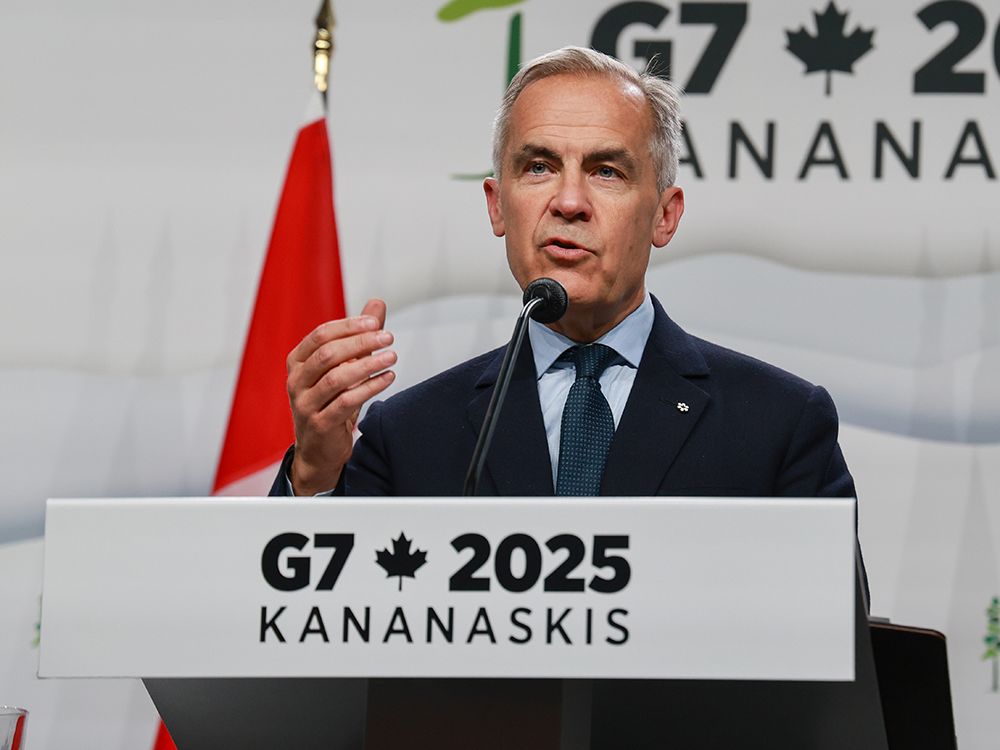
Prime Minister Mark Carney speaks during his closing G7 press conference in Kananaskis on Tuesday, June 17, 2025.

KANANASKIS, Alta. — Prime Minister Mark Carney said that Canada and India will reappoint high commissioners, easing the diplomatic crisis between the two countries, and reaffirmed the need for Russia to commit to an unconditional ceasefire.

In his closing remarks at the G7 Summit in Kananaskis, Alta., Carney spoke to reporters amid a number of international crises, including Israel’s escalating war with Iran, Russia’s invasion of Ukraine and global trade instability sparked by U.S. President Donald Trump.

As Carney works to lessen Canada’s dependence on exports to the U.S., the prime minister announced that he and Indian Prime Minister Narendra Modi agreed to reappoint high commissioner’s in their respective countries.

The announcement came after Carney hosted his first bilateral meeting with Modi on the sidelines of the summit as both countries work to thaw diplomatic tensions.

Last fall, both countries expelled most of the other country’s diplomats after the RCMP announced it suspected the Indian government was linked to numerous serious crimes in Canada, including the murder of Canadian Sikh Hardeep Singh Nijjar.

Carney described his meeting with Modi as a “necessary first step” in rebuilding the broken relationship.

He said the leaders discussed law enforcement and transnational repression, but he demurred when asked if he brought up Nijjar’s assassination.

”We had a discussion… about the importance of having law enforcement to law enforcement dialogue,” Carney said.

“Obviously there is a judicial process that is underway and I need to be careful about further commentary,” he added.

Just hours before that, the G7 leaders released six joint communiqués on subjects of concern, including transnational repression and artificial intelligence.

Notably, though, there was no communiqué on Ukraine, apparently because the Americans would not agree to the “strong language” the other leaders wanted to use, according to a senior government official briefing reporters on background.

“It is our values – of freedom, of democracy, and of justice – that are behind Canada’s unwavering support for a secure and sovereign Ukraine, said Carney in his closing remarks.

Reporters questioned Carney repeatedly on why there had not been a joint statement and if the U.S. was at fault.

Carney frequently responded that all parties agreed on the phrasing of support for Ukraine in his summit chair’s statement, which is a different document that does not require sign-off by all G7 members.

“G7 Leaders expressed support for President Trump’s efforts to achieve a just and lasting peace in Ukraine,” the statement says. “G7 Leaders are resolute in exploring all options to maximize pressure on Russia, including financial sanctions.”

The prime minister also alluded to the conflict between Israel and Iran, reiterating the main thrust of the G7 leaders’ Monday night joint statement on the conflict, which called Iran the main source of instability in the region, reaffirmed Israel’s right to self-defence and said that Iran can never be allowed to have nuclear weapons. The statement also addressed the fighting in Gaza, which began after Hamas’s attack on Israel on October 7.

“Leaders discussed the importance of unhindered humanitarian aid to Gaza, the release of all hostages and an immediate and permanent ceasefire,” said Carney’s statement. “Leaders also talked about the need for a negotiated political solution to the Israeli-Palestinian conflict that achieves lasting peace.”

As he opened his remarks, Carney harkened back to the founding G7 summit in Rambouillet, France, saying that the idea behind the summit was to build a new order.

“It wasn’t a mission to preserve an old rules-based order, but to build a new one – one that could withstand shocks, deepen integration and cooperation, and really deliver prosperity for all citizens,” Carney said.

Overshadowing the meeting was not just Trump’s criticism of Russia’s ejection from the G8 in 2014.

On Monday, the Prime Minister’s Office announced that Canada and the United States agreed to negotiate to reach a deal within 30 days. Carney said that it is a negotiation that is ongoing.

National Post

Our website is the place for the latest breaking news, exclusive scoops, longreads and provocative commentary. Please bookmark nationalpost.com and sign up for our newsletters here.


G7 leaders, minus U.S. President Donald Trump, meet with  Ukrainian President Volodymyr Zelensky, 2nd from right, during the G7 Summit in Kananaskis, Alberta, on June 17, 2025

KANANASKIS, ALTA. — A joint G7 statement supporting Ukraine in the face of its invasion by Russia was kiboshed during the summit after the U.S. refused to sign on unless it was watered down, according to a Canadian government official.

But during her closing press conference at the summit, Italian Prime Minister Giorgio Meloni denied there was a plan for a joint statement on the war in Ukraine.

“A joint statement on Ukraine was not expected,” Meloni said in Italian.

“During dinner yesterday including President Trump, Prime Minister Mark Carney shared with all the leaders what would be his main notes for his Chair’s statement on the discussions on Ukraine… and we all agreed,” she added.

Coming into the two-day summit of the world’s wealthiest economies, the Canadian source said six of the seven member countries (Canada, France, Germany, Japan, Italy and the U.K.) had agreed on “strong language” for a statement supporting Ukraine.

But the shared statement hit a fatal roadblock when it was presented to the Americans on Saturday, the official said during a background briefing for reporters.

The U.S. delegation said it would only sign on if the language was watered down significantly, said the source. They added that the Americans were reluctant to endorse the communiqué’s “strong language” as they try to bring Russian President Vladimir Putin back to the negotiation table.

The source was not able to detail what in the draft statement the U.S. wanted watered down.

But the changes were too significant for the other six states and the impasse was never resolved, the source said.

Instead, much of the text from the failed joint statement is expected to find its way into Canada’s closing statement as chair of this G7 summit.

The White House did not immediately respond to a request for comment.

The impasse illustrates the growing divide within the G7 on certain issues like the war in Ukraine, with some observers suggesting that the summit is looking more like the G6 plus U.S. President Donald Trump.

Trump has been far less critical of Putin and his invasion of Ukraine than his G7 compatriots during his presidency, going so far as calling for the Russian leader to rejoin the summit.

Monday, Trump told reporters during a photo op with Prime Minister Mark Carney that excluding Russia from the then-G8 in 2014 was a “big mistake.” At the time, Russia was excluded after its invasion of Crimea, a prelude to its full-scale invasion of Ukraine years later.

The lack of a joint G7 statement supporting Ukraine is all the more notable because Ukrainian President Volodymyr Zelenskyy travelled to Canada to attend part of the summit.

All leaders except Trump, who left the summit abruptly Monday evening to tend to the growing conflict between Israel and Iran, also attended a meeting session on the situation in Ukraine Tuesday morning.

During a bilateral meeting with Zelenskyy, Mark Carney announced further Canadian sanctions against dozens of Russian organizations or individuals and over $4 billion in additional support for Ukraine.

Zelenskyy thanked Carney for his invitation and his “very important words, warm words” and support for Ukraine.

“Ukraine has had, our family has had, a very difficult night, one of the biggest attacks from the very beginning of this war,” said Zelenskyy said, alluding to an overnight missile attack on Kyiv, which he said killed 12 people and injured 130. “It was a big attack on civilian infrastructure.”

National Post, with additional reporting from Tyler Dawson.

cnardi@postmedia.com

Our website is the place for the latest breaking news, exclusive scoops, longreads and provocative commentary. Please bookmark nationalpost.com and sign up for our daily newsletter, Posted, here.


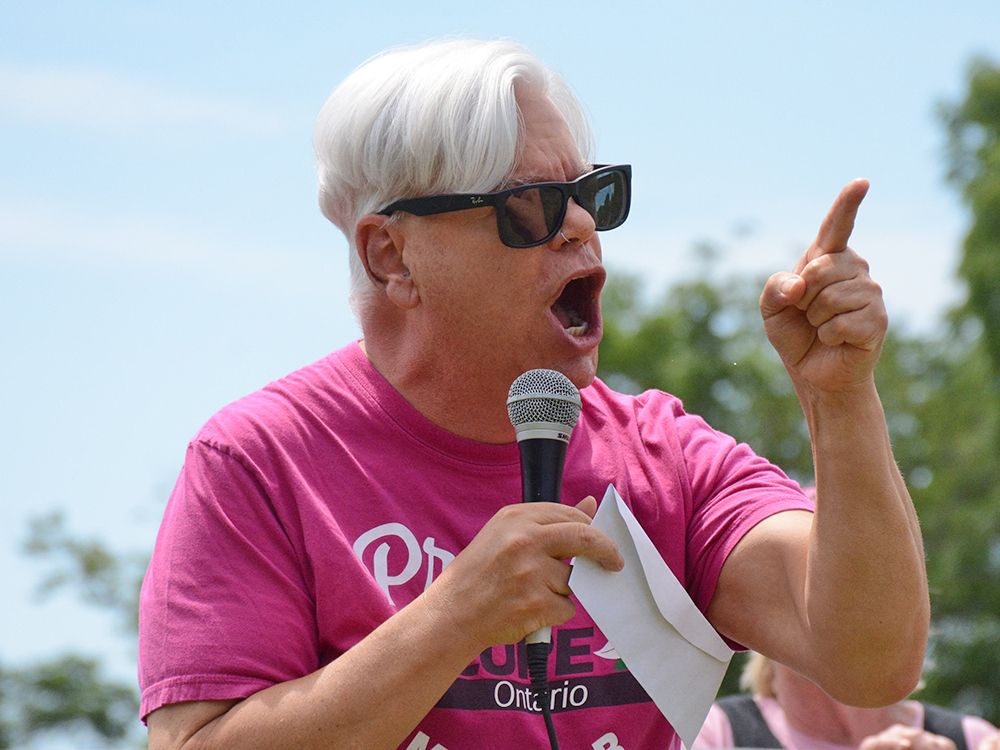
CUPE Ontario President Fred Hahn has faced accusations of antisemitism.

The Ontario chapter of the Canadian Union of Public Employees is sponsoring a demonstration outside the American consulate in Toronto in protest of support for Israel amid its ongoing efforts to destroy Iran’s nuclear facilities.

“Hands off Iran,” the advertisement for the Sunday event reads in all caps. Nearly a dozen sponsoring groups are listed on the poster alongside CUPE Ontario, including the Palestinian Youth Movement, an organization that has 

repeatedly

 expressed 

support

 for the October 7 Hamas invasion of Israel.

CUPE Ontario on Tuesday called the poster “an early unapproved draft version” and said a new poster was forthcoming. But the union’s decision to support the protest drew widespread criticism from provincial leaders and Jewish community groups.

“By supporting this protest, CUPE Ontario is siding with a regime — run by unelected mullahs — that tortures and kills dissidents, oppresses women and LGBTQ+ Iranians, persecutes minorities, and sponsors terrorism across the globe,” the Centre for Israel and Jewish Affairs (CIJA) general counsel Richard Marceau said in an email.

“In what world is this considered progressive? In backing Tehran’s theocracy, CUPE Ontario has aligned itself with the most extreme of the extremists.”

The poster was published on Instagram by the Palestinian Youth Movement and circulated by others on social media.

“In the past week, the Israeli occupation launched air strikes in Iran. We see this attack for what it is: a brazen attempt to escalate violence and undermine sovereignty in the region. From the Zionist occupation’s full blockade of the West Bank and starvation and genocide in Gaza, to U.S. claims of nuclear weapons, to (Prime Minister Mark) Carney’s failure to condemn the aggression, we stand against this coordinated imperialist attack on our region,” the Palestinian Youth Movement wrote on Instagram.

“We call for building and preserving unity in confronting Zionism.”

In its statement Tuesday, CUPE Ontario said it was simply joining with “other unions, labour organizations, and allies” in calling for peace.

“We are supporting the June 22 rally in Toronto to demand an end to war between Iran and Israel. This support is entirely consistent with CUPE Ontario’s long-standing role as an advocate for peace,” it said in a written statement.

B’nai Brith Canada, a national Jewish organization that runs an annual antisemitic tracker, questioned how the union was “standing in solidarity with terrorists and despots, whose ideology calls for the annihilation of Western civilization,” asking how it served “the best interest of Canadian workers?”

“The vast majority of the Western world acknowledges the existential threat posed by the Islamic Republic of Iran to global security,” the group

wrote

in a statement on X. “Yet, CUPE Ontario and Fred Hahn have chosen to side with the sanctioned regime and its terrorist henchmen the Islamic Revolutionary Guard Corps.”

Ontario Minister of Labour, Training, Immigration and Skills Development David Piccini

wrote

on social media that he was not surprised by the announcement, but was “deeply sad to see CUPE Ontario funding this garbage!” The Conservative MPP added that union “members deserve better for their dues than sponsoring this,” calling it “shameful.”

Last week, Israel

launched

a series of air strikes across Iran aimed at the country’s nuclear infrastructure and military leadership. Negotiations between the United States and the Islamic Republic were scheduled for Sunday in Oman; however, President Donald Trump has since

publicly criticized

Iran for dragging its feet during the talks and failing to make a deal sooner.

For decades, the religious leadership of Iran has sought a path to an atomic weapon, collaborating with Russia, China, North Korea and Pakistan to advance its nuclear capabilities and ballistic missile program. The country has long been widely viewed as a state sponsor of terror, including by the

Canadian

and

American

governments, playing a

pivotal role

in training and equipping designated terror entities such as Hamas, Hezbollah and the Houthis.

On several occasions, the political and religious leaders of Iran have called for the destruction of Israel. In 2005, then Iranian president Mahmoud Ahmadinejad declared, “Israel must be wiped off the map.” Ten years later, current Supreme Leader Ali Khamenei vowed the Jewish state would not exist in “25 years” during a speech in Tehran.

In 2012, Israeli Prime Minister Benjamin Netanyahu stated that Iran’s possession of nuclear weapons was a “red line.”

CUPE Ontario has faced increased scrutiny since the October 7 terrorist attacks, when union president Fred Hahn called the atrocities the “power of resistance.” He later issued an apology for his comments and said they were misconstrued by “bad faith actors with a divisive agenda,” but the union has remained opposed to Israel throughout its conflict with Iran’s proxies — Hamas, Hezbollah and the Houthis — and has encouraged members to attend anti-Israel vigils and rallies.

In November 2023, a group of Jewish members

filed

a complaint with the Human Rights Tribunal of Ontario (HRTO) alleging CUPE Ontario and Hahn “engaged in systemic discrimination against the complainants by promoting and engaging in antisemitism.” On Tuesday, one of the members, Carrie Silverberg, and the group’s attorney, Kathryn Marshall, told the Post in a written statement on behalf of Jewish union members in the complaint that they were “shocked and disgusted to see CUPE Ontario is proudly endorsing a ‘hands off Iran’ protest.”

“Despite being involved in active litigation from its own Jewish members, CUPE Ontario continues to show it doesn’t care and doubles down on its discriminatory actions,” they wrote.

In August 2024, dozens of union members called for Hahn’s

resignation

after he

shared

a video on his Facebook of an Olympic swimmer wearing a Star of David jumping off a diving board and turning into an exploding bomb.

“My intent was never to associate Jewish people with the violence enacted by the state of Israel. It remains my strongly held view that it is a terrible mistake, and anti-Semitic, to conflate abhorrent actions by the state of Israel with Jewish humanity or identity,” he later wrote in a Facebook post.

Our website is the place for the latest breaking news, exclusive scoops, longreads and provocative commentary. Please bookmark nationalpost.com and sign up for our daily newsletter, Posted, here.