



LP_468x60
on-the-record-468x60-white

Four-year-old Jack Sullivan, left, and six-year-old Lilly Sullivan, right, seen in this handout photo, went missing on May 2, 2025 in the community of Lansdowne Station, N.S.

Cadaver dogs did not find the remains last month of two young children who went missing more than five months ago from their home in rural northeastern Nova Scotia.

The RCMP is continuing “to explore all possible scenarios in its efforts to locate (six-year-old Lilly Sullivan and four-year-old Jack Sullivan) after searches in Lansdowne Station (in late September) didn’t result in finding human remains,” the force said Wednesday in a news release.

Insp. Luke Rettie and his police dog, Narc, as well as Sgt. Dave Whalen and his police dog, Kitt, searched a total area of 40 kilometres, it said.

“The teams, specially trained in detecting human remains, searched at the property from which the children went missing, along the pipeline and intersecting trails, and in an area where a pink blanket was previously found — all locations where there was the highest probability of finding the children. However, the teams did not locate any remains.”

The “dogs are highly trained to detect and indicate the scent of human remains,” Staff.-Sgt. Stephen Pike, who trains the animals, said in the release. “If the dogs did not alert their handlers, it suggests the dogs were never in the presence of human remains odour.”

That does not “definitively rule out the presence of remains in the areas that were searched,” Pike said. “It means either the odour is there and couldn’t be detected or the odour isn’t there.”

Mounties say investigators continue to “assess and follow up on information that has been gleaned from the more than 860 tips received to date, 8,060 video files that have been reviewed, and forensic testing that continues.”

The probe has multiple prongs, said the release.

“Each piece of information, including the results from the search teams, helps inform our next steps,” Staff-Sgt. Rob McCamon, a major crime investigator, said in the release.

“With support from agencies across Canada, the investigative team is working to validate or eliminate leads and follow the evidence wherever it takes us. At this stage, and as we’ve said all along, we’re considering all possibilities. We’ll keep going until we determine, with certainty, the circumstances of the children’s disappearance and they’re found.”

The children were first reported missing by their mother Malehya Brooks-Murray at 10:01 a.m. on May 2.
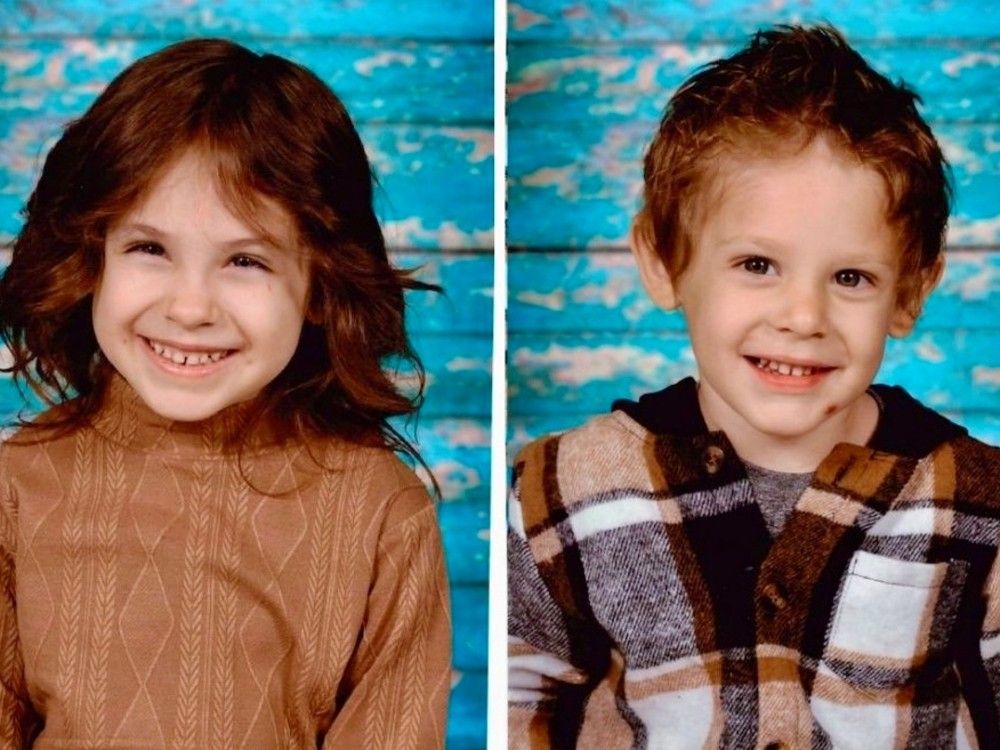
 Lilly and Jack Sullivan.

Brooks-Murray told police she believed the two children had wandered away from their home in rural Lansdowne Station, N.S. Police arrived 26 minutes later.

Searchers scoured the area around Lansdowne Station after the children vanished. Police dogs were employed early on that can pick up human scent, including that of recent remains. But last month marked the first time specialized cadaver dogs joined the hunt for the missing kids.

Jack and Lilly’s family mobile home sits along a gravel road surrounded by dense woods. The house also has a back patio, with a sliding glass door, which is most likely how the children got out that morning.

Court documents investigators used to obtain search warrants in the case indicate “the last time the children were seen outside their home was on May 1, when they were captured by video surveillance at a local Dollarama store with Brooks-Murray and Daniel Martell, their stepfather.”

RCMP conducted at least four polygraphs during their investigation. The first two were on May 12 with the children’s parents. Martell’s polygraph “indicated he was truthful,” as did the test for Brooks-Murray. She was found truthful when answering specific questions.

 Daniel Martell, the stepfather of Lilly and Jack Sullivan, speaks with reporters on Wednesday, May 7, 2025, after the RCMP announced they were scaling back the search for the missing children.

On June 10, the children’s step-grandmother, Janie MacKenzie, underwent a polygraph examination but another document notes that her “physiology was not suitable for analysis and an opinion on the polygraph examination was not rendered.”

The children’s biological father, Cody Sullivan, underwent a polygraph on June 12, and he passed the examination, with his answers found to be “truthful.”

In July, the Mounties said they were running forensic tests on a pink blanket found during the search of the heavily wooded areas near the children’s home. Police said at the time that the family had confirmed the blanket belonged to Lilly, but investigators released few details.

Later, police dispatched a sniffer dog to the area where the blanket was found, but the animal was unable to pick up a scent of Lilly or Jack, according to information police filed in court to get search warrants.

The children’s mother told police at one point that their biological father might have picked them up and taken them to New Brunswick. But investigators met with Sullivan on May 22.

“He said he did not know what happened to Jack and Lilly,” police noted. “He was home on May 2, 2025, and never goes anywhere. He has not been anywhere other than his house recently and has had no contact with Malehya since the children went missing.”

Police received lots of tips in the case, including one from a witness who said she was travelling with her sons on the morning of May 2 and saw two children walking along the side of the road. She told police she saw the children that morning walking toward a Caucasian female of about 50 to 60 years old who was waiting next to the passenger side of an older model tan or gold sedan with the back door open.

Investigators urge anyone with information about Lilly and Jack’s whereabouts to call the Northeast Nova RCMP Major Crime Unit at 902-896-5060 or to contact Nova Scotia Crime Stoppers, toll-free, at 1-800-222-TIPS (8477), submit a secure web tip at www.crimestoppers.ns.ca, or use the P3 Tips app.

Our website is the place for the latest breaking news, exclusive scoops, longreads and provocative commentary. Please bookmark nationalpost.com and sign up for our daily newsletter, Posted, here.


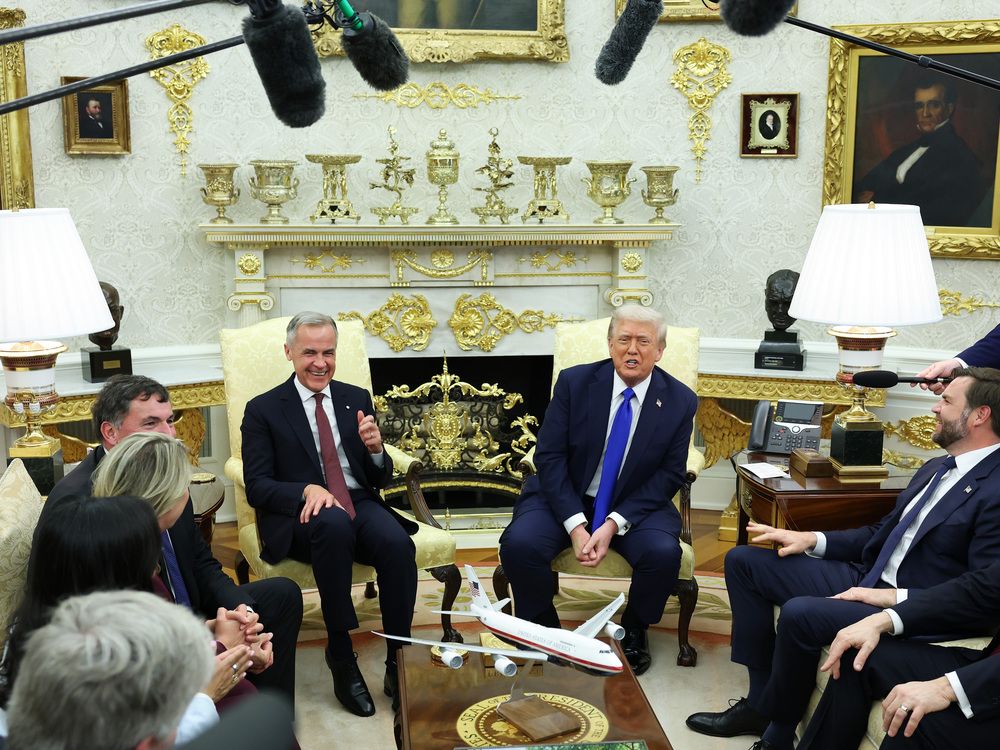
A former international student turned cook who spied on his female housemates through a peep hole as they used the bathroom has been sentenced to five and a half months in jail.

An Ontario judge weighed the “immigration consequences” for a former international student who spied on his female housemates through a peep hole as they used the bathroom and made video recordings of four of them “in various stages of undress” over a period of six months.

The Ontario Court of Justice heard Aswin V. Sajeevan, an Indian citizen here on a student visa, lived with 11 other people at a home in Barrie. The 20-year-old pleaded guilty to four counts of voyeurism, which the judge considered a mitigating factor in his case.

“I accept, and have considered, that there may be serious collateral immigration consequences for Mr. Sajeevan because of his criminal conduct,” said Justice Craig A. Brannagan.

The judge found “that the fit and appropriate range of sentence for this offender on the facts of this case for the four offences pleaded to would be between” six months and a year in custody.

But Brannagan sentenced Sajeevan recently to 5.5 months in jail after considering what both the Crown and Sajeevan’s lawyer termed “the potential for immigration consequences.”

According to the Immigration and Refugee Protection Act, a “permanent resident or a foreign national is inadmissible on grounds of serious criminality” if they are sentenced to more than six months in jail.

Brannagan found that “Mr. Sajeevan is sincerely remorseful for his crimes and is genuine in that he wishes to take responsibility for them,” said the judge’s decision, dated Oct. 2.

“While collateral consequences, including immigration consequences, are not mitigating per se, Canadian criminal law recognizes that they may nevertheless speak to the personal circumstances of the offender.”

Considering “collateral consequences is mandatory, not optional,” Brannagan said, noting the weight assigned to them “is an exercise in discretion by the sentencing judge.”

The court heard Sajeevan’s basement bedroom was next to a laundry room that was beside a bathroom used primarily by the women who lived in the house.

“Soon after the group moved in, in August of 2024, they discovered a ‘peep hole’ between the laundry room and the bathroom,” said the judge’s decision, which notes it had been patched up more than once, “only to have been uncovered each time.”

One of the male tenants and the four women who were spied on went to Barrie Police this past March to report the voyeurism case.

They told investigators that, on March 11, 2025, one of them found Sajeevan “crouched down in the laundry room, with the light off, peering through a ‘peep hole’ in the wall into the bathroom,” said the decision, which notes one of the women “was naked using the facilities” at the time.

When confronted, Sajeevan “adamantly denied any wrongdoing,” instead claiming “that he was searching for his earbuds.”

Sajeevan “was unable to provide an explanation” for why he was doing that in the dark.

Sajeevan “eventually admitted to his housemates that he had been watching them use the facilities in various states of undress at different times through the hole in the laundry room.”

The peep hole patching had “raised suspicions in the house” about Sajeevan, “who had been seen on numerous occasions entering the laundry room shortly after any of the females had entered the bathroom.”

Sajeevan works as a line cook in a restaurant, said the decision, which notes “that he attended college in Canada for computer programming but was suspended due to a low GPA.”

Sajeevan, who is from Kerala, India, told the author of his pre-sentence report that when he looked through the peep hole, “he was excited to see the female roommates and his curiosity fuelled his excitement leading him to feel guilty.”

Sajeevan’s father — a police constable — confirmed that voyeurism exists as a criminal charge in India, “and a person would be held accountable for it” there as well.

One of Sajeevan’s former female roommates reported the incident has left her “with intense fear and anxiety. She avoids using public washrooms. She has lost trust in friends. She ‘felt like (she) was living in a nightmare, and it truly felt like hell.’ She described that she had to take time off work, and that the fear and emotional distress arising from her victimization has made it difficult to function normally. She noted the significant breach of trust, in that Mr. Sajeevan ‘was capable of doing this to his own housemate, someone he lived with for two years.’”

Another female roommate reported “that she does not feel emotionally safe around men, and that these crimes have made it ‘very hard to trust people now, even (her) loved ones.’ She fears using public washrooms and those in her workplace, and she actively looks for hidden cameras in them.”

A third female roommate told the court she “has lost trust in people close to her. Her ability to sleep has suffered from the emotional distress that she has experienced.”

It’s clear, said the judge, “that Mr. Sajeevan’s offending has had a ‘chilling effect’ on his victims, causing them to modify their behaviour due to fear of the consequences that may befall them should their behaviour be covertly observed by someone like him. The emotional and psychological harm caused is palpable. I find that Mr. Sajeevan’s offending has had a significant and enduring impact on his victims.”

The Crown and Sajeevan’s defence lawyer both recommended he get a 12-month conditional sentence.

But the judge rejected their joint submission calling for house arrest, saying that “would cause an informed and reasonable member of the public to lose confidence” in the courts.

“The Crown’s submission that segregation of Mr. Sajeevan from the public through home confinement will protect society glosses over the fact that these offences were committed inside of his home, in the most private of places within his home (the bathroom), against the very people with whom he was residing,” Brannagan said.

“To suggest that home confinement is a fit and appropriate sentence is not just a tenuous proposition but, in my view, is one that is markedly detached from the realities of these offences and this offender. It stretches the bounds of credulity to imagine an optional condition to a (conditional sentence order) that is reasonably capable of preventing the commission of further offences of this sort, not to mention the logistical obstacles of actually enforcing them.”

The judge called voyeurism a “sinister” offence.

“It is a crime where the offender violates the personal integrity, safety, security, and privacy of their victim, without the victim knowing that they are being watched, in what are otherwise expected to be ‘safe places,’” Brannagan said.

The judge found that, “on the facts of this case, only a truly custodial jail sentence can meet the requirements.”

Brannagan also sentenced Sajeevan to 18 months of probation.

Our website is the place for the latest breaking news, exclusive scoops, longreads and provocative commentary. Please bookmark nationalpost.com and sign up for our daily newsletter, Posted, here.


Two Canadian Forces Snowbirds Tutor jets are seen parked during the Canadian International Air Show media day at Toronto Pearson International Airport on Aug. 28, 2025. The CF-18 Hornet in the background is similar to those flown by the Blue Angels.

The U.S. Navy’s Blue Angels are traditionally

the centrepiece

of San Francisco’s annual Fleet Week — six

F/A-18E Super Hornet fighter jets performing aerobatic manoeuvres in tight formation, to the delight of crowds.

This year, the U.S. government shutdown

has grounded

those navy flyers along with a host of other military craft. The navy said

in a statement

to media this week that, unless the shutdown is quickly quashed, military personnel will not be able to participate in the event.

Meanwhile, the show must go on, and so America’s allies to the north will step in.

The Snowbirds, red-and-white Tutor trainer jets familiar to Canadians from their appearances at Toronto’s CNE airshow and

other events

across the country, will have pride of place in the Fleet Week show this coming weekend.

Fleet Week

has taken place annually over the Columbus Day Weekend since 1981. The only year that saw the event cancelled was 2013, when a 16-day U.S. government shutdown overlapped with the event. This time, organizers decided to keep going with a reduced set of performances and fly-bys.

(The Blue Angels told the San Francisco Chronicle that their

appearance is “paused”

rather than “cancelled,” in the hopes that the government may be up and running again by Friday.)

This will be the second time in a month that the Royal Canadian Air Force has saved America’s bacon. Last weekend’s Pacific Airshow in Huntington Beach, Calif., had to go on

minus the U.S. Air Force

Thunderbirds teams thanks to the shutdown.

But the nine-strong Snowbirds team stepped up as the headliners

of the show

, alongside some Royal Air Force planes and parachutists from the U.K., and a number of non-military teams and pilots not affected by the shutdown.

“Thank God Canada is not the 51st state yet,” Kevin Elliott, director of the show, told the

New York Times

, presumably in jest.

He added that the organizers had been scrambling to rearrange the lineup around the sudden no-shows, but was relieved that the Snowbirds could “show up and, in a sense, save the day.”

The Blue Angels are scheduled to appear in

at least three more

airshows over the next month: one in Georgia on the weekend of Oct. 17; and two in Florida on Oct. 25-26 and Nov. 1-2. There are no plans for the Snowbirds to fly in any of those shows. National Post has contacted the team for comment.

The U.S. government shut down on Oct. 1. The longest shutdown in the nation’s history is 35 days, and began in 2018 during Donald Trump’s first presidency.

Our website is the place for the latest breaking news, exclusive scoops, longreads and provocative commentary. Please bookmark nationalpost.com and sign up for our newsletters here.


Prime Minister Mark Carney and U.S. president Donald Trump speak to reporters in the Oval Office of the White House on Oct. 7, 2025.

U.S. President Donald Trump today interrupted Prime Minister Mark Carney during a media event in the Oval Office of the White House to make a joke about merging the two countries.

READ MORE: ‘He’s a nice man, but he can be nasty’: Trump hosts Carney and says Canada will leave ‘very happy’

The remarks came at the beginning of a chat between the two men. Trump was discussing his recent plan for peace in the Middle East, noting: “Literally every country in the world has supported the plan.”

Carney, hands folded in front of him, replies: “Yep.”

Trump continues: “But in the meantime we’ll spend some time and we’ll make some deals and we’ll do some things that are good for both of our countries. And Mark, it’s an honour to have you, thank you very much.”

Carney begins: “You kindly hosted me and some of my colleagues a few months ago and I said at the time you were — are — a transformative president.”

He continues: “And since then, the transformation in the economy, unprecedented commitments of NATO partners to defence spending, peace from India, Pakistan, through to Azerbaijan, Armenia, disabling Iran as a force of terror. And now — and I’m running out of time but this is in many respects the most important —”

Trump then cuts him off to say: “The merger of Canada and the United States. I’m only kidding.”

Carney, smiling and speaking over the laughter in the room, replies: “No! That wasn’t where I was going.”

Carney was

in Washington to discuss trade

, security and other matters with Trump.

Our website is the place for the latest breaking news, exclusive scoops, longreads and provocative commentary. Please bookmark nationalpost.com and sign up for our newsletters here.


Tourists line up at a viewing area at Marineland in Niagara Falls, Ont. on July 18, 2001.

The Minister of Fisheries says she will not provide funding to Marineland after it threatened to euthanize 30 beluga whales due to financial strain.

“The fact that Marineland has not planned for a viable alternative despite raising these whales in captivity for many years, does not place the onus on the Canadian government to cover your expenses,” said Joanne Thompson to the company, in a letter obtained by National Post.

In June 2019,

stipulations to end the captivity of whales and dolphins

were added to the Fisheries Act and the Criminal Code. Marineland Canada has been shuttered since 2024 and has faced much scrutiny among animals rights groups, who accuse it of mistreating its animals. It is currently the only location in Canada that has whales in captivity. Between 2019 and 2025,

20 whales have died

in its care, the Canadian Press reported.

Last week, Marineland asked Thompson to allow it to relocate the belugas to Chimelong Ocean Kingdom, a theme park in China. Approving the request would mean “a continued life in captivity and a return to public entertainment,” Thompson said in a statement on Oct. 1.

She said she could not approve the request that would “perpetuate the treatment these belugas have endured.”

Marineland then asked the government for funding in a letter to Thompson on Oct. 3.

It said if it did not get a response by Oct. 7, it would “inform all stakeholders and the public accordingly and proceed with actions that will be a direct consequence of the Minister’s decision.”

Without funding, it would have to euthanize the whales, an outcome it said it was “desperately trying to avoid.” The park is in need of immediate operational funding, it said, “until a suitable relocation could be arranged.”

It said that currently, there were no sanctuaries in the world that could accommodate the whales. It would need the funds for “ongoing whale care” until such a place could be secured.

A source

told CBC News

that the whales cost roughly $2 million a month to maintain.

Thompson responded to Marineland in a letter on Oct. 6, a day ahead of Marineland’s deadline.

She condemned the company’s lack of planning and said it should work with the province to address its “serious concerns about the welfare” of its whales.

“The Government of Canada previously approved the

export of belugas from Marineland in 2021

and will consider any other permit requests that are in the best interest of the whales,” she said.

“At this point, you have only brought forward one proposal, which would mean continued life in captivity, further risks in transport, especially at this distance, and importantly, a return to public entertainment for these whales.”

She said she remains “open to export permit applications” and urges “Marineland to act in good faith.”

Ontario Premier Doug Ford, who recently

spoke to a critic of Marineland about the park’s situation

, discussed it again on Tuesday.

“It should be the federal government that allows them to move them to China or other marine areas that will take them, but saying no to everything and not coming up with a solution is not a great suggestion,” he said, the Canadian Press reported.

 Beluga whales swim in a tank at Marineland amusement park in Niagara Falls, Ont., June 9, 2023.

The Whale Sanctuary Project is dedicated to creating a sanctuary in Nova Scotia, which could be an option for the whales when it is ready. For now, the group said in

a news release

that it was “working with ally organizations to press for life-affirming options that must begin with on-site independent health evaluations for each individual whale.”

The ultimate goal should be for the whales to go to such a sanctuary,

said

national animal law advocacy organization Animal Justice on Monday. “Sanctuaries offer a chance for these highly intelligent and social animals to recover from the stresses of captivity and to live out their lives with greater freedom and dignity,” the group said.

“It would be devastating for animal lovers across Canada if Marineland follows through on its appalling threat to kill these beluga whales,” Camille Labchuk told National Post on Tuesday. She is the executive director of Animal Justice.

“It has been clear since Canada outlawed whale captivity in 2019 that the outdated marine park would soon close, and the whales would need to be relocated. We are heartbroken that Marineland failed to plan for the future care of these whales, while sitting on hundreds of millions of dollars worth of property.”

She called on the government to convene stakeholders “to find the best possible solution to care for the whales.”

Marineland did not respond to National Post’s requests for comment.

Our website is the place for the latest breaking news, exclusive scoops, longreads and provocative commentary. Please bookmark nationalpost.com and sign up for our daily newsletter, Posted, here.


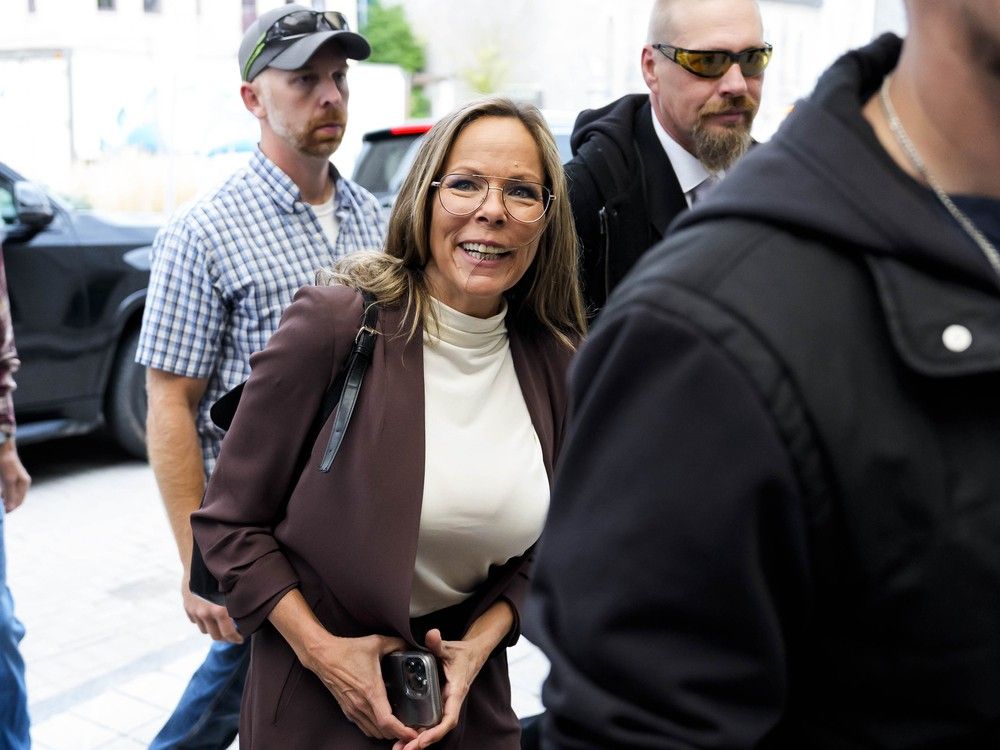
Tamara Lich arrives at the courthouse in Ottawa for sentencing in her trial with fellow Freedom Convoy organizer Chris Barber, on Tuesday, Oct. 7, 2025.

OTTAWA — Prominent Freedom Convoy organizers Chris Barber and Tamara Lich were sentenced to 12 months of house arrest and six months of curfew Tuesday, avoiding jail time for their roles in the 2022 blockade that the federal government declared a national emergency.

“The accused committed a serious crime of mischief,” Ontario Court Justice Heather Perkins-McVey told a

packed downtown Ottawa courtroom.

“The accused’s actions have had a significant detrimental effect on the citizens of Ottawa, who wanted nothing other than to carry on living in their community without having horns honking day and night, the roads impassable, blocked by noising trucks emitting diesel fumes, making it impossible at times to even exit their own building.”

Barber and Lich’s 18 month conditional sentences begin with 12 months of house arrest followed by six months of curfew between 10 p.m. and 5 a.m. They must also conduct 100 hours of community service.

In both cases, the accused can leave their homes under certain conditions, including to go to work or visit certain family members.

Having already spent the equivalent of just over 70 days in jail, Lich’s time under curfew will only be three and a half months instead of the full six.

With her decision, Perkins-McVey rejected both sentencing submissions by the Crown for an “unprecedented” seven-year prison term for Lich and eight years for Barber and by the defence for an unconditional discharge.

Earlier this year, Perkins-McVey ruled Lich and Barber were guilty of mischief for their role in organizing the three-week protest that paralyzed downtown Ottawa in February 2022, at the height of the COVID-19 pandemic. It ended when the federal government invoked the Emergencies Act to give police officers extraordinary powers to seize the protesters’ property and clear streets. 

Barber was also found guilty of counselling others to disobey a court order: an injunction barring blockading trucks from honking continuously at all times of day.

Lich and Barber sat impassively in the front row of the courtroom, flanked and backed by dozens of supporters. At their feet, KaBoom — 

a beige retired racing Greyhound

now working

as a court therapy dog

— lazed quietly as the judge read her decision.

Lich and Barber were key organizers of the polarizing anti-government protests that blockaded downtown Ottawa around Parliament Hill. Perkins-McVey described Lich as the “face of the convoy” and Barber as a “rock star” for the movement.

As a testament to their popularity within the movement, supporters in the courtroom swarmed and applauded Lich and Barber after sentencing hearing was adjourned.

On Tuesday, Perkins-McVey noted that both parties could not be further apart in their sentencing requests, describing it as an illustration of the political schism in the Canadian political landscape.

“Politics, though, has no place inside this courtroom and plays no role in the determination of what is a fair, just and appropriate sentence,” she said.

In addition to the stiff prison terms, prosecutors requested an order to seize Barber’s truck, a 2004 Kenworth long-haul truck nicknamed “Big Red,” which he brought to Ottawa during the Freedom Convoy.

Perkins-McVey described the Crown’s request as “extraordinary” and “unprecedented.”

The Crown’s request sparked much

controversy in Ottawa and beyond

, with Conservative Leader Pierre Poilievre calling the submission “political vengeance.”

Lich’s and Barber’s lawyers requested an absolute discharge, meaning they would not receive a criminal record.

“Tamara Lich, Chris Barber stood up for what they believed in and what many, many people — thousands of people across the country were not capable of standing up (for). And those people were inspired,” Lich’s lawyer Lawrence Greenspon told reporters in July.

Perkins-McVey reiterated Tuesday that the Freedom Convoy led by both accused had significant negative impacts on both residents and businesses in downtown Ottawa.

“The downtown core was in essence held hostage,” the judge said. “The Freedom Convoy in Ottawa involved thousands of protesters and hundreds of trucks.”

But she also noted that Lich and Barber have already faced “significant and relevant” consequences resulting from the criminal proceedings.

She noted Barber had his bank accounts frozen for months following the Freedom Convoy and currently faces a $9 million civil lawsuit for his role in the blockade. Furthermore, a criminal conviction would “jeopardize” his cross-border trucking business.

Lich, she said, has already “served 49 days in jail, endured strict bail conditions and faced public vilification.”

The judge said the decision on the order to seize Barber’s truck would come in November.

Before the hearing, dozens of Lich’s and Barber’s supporters crowded in front of the building to voice their support for the two Convoy organizers. Ottawa Police arrested at least one individual among the crowd before the beginning of the hearing.

More to come

.

National Post

cnardi@postmedia.com

Our website is the place for the latest breaking news, exclusive scoops, longreads and provocative commentary. Please bookmark nationalpost.com and sign up for our daily newsletter, Posted, here.

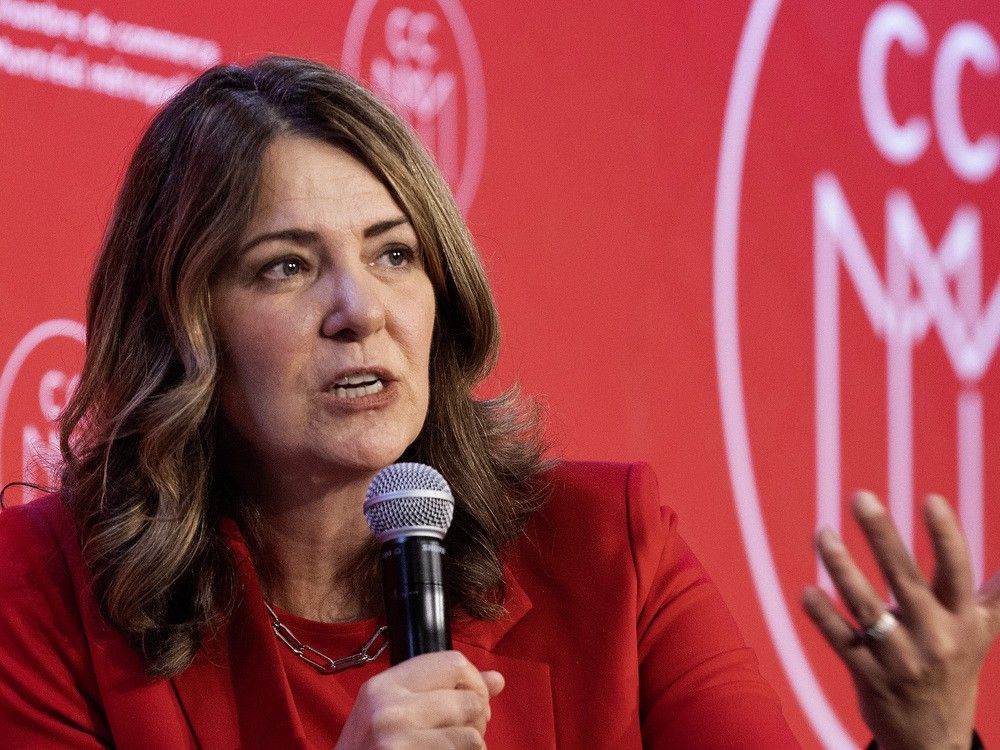
Alberta Premier Danielle Smith speaks to the Montreal Board of Trade on Monday October 6, 2025.

OTTAWA — Alberta Premier Danielle Smith is softening an

ultimatum she gave

Prime Minister Mark Carney several months ago, saying she hopes to negotiate a resolution of the nine federal laws she says are throttling Alberta’s oil and gas sector by Grey Cup.

“I can tell you that we are hoping to have some kind of agreement with the prime minister, by Grey Cup, where he gives a clear indication that he’s prepared to address the nine laws that have created an investment climate that is hostile to private investment,” Smith told reporters in Ottawa on Tuesday.

Smith was taking questions from the media a day after meeting briefly with Carney, just before he left Ottawa for a visit to Washington, D.C.

She wouldn’t divulge too many details from the meeting but said she was “very hopeful” that she and Carney could reach an agreement on the

nine so-called “bad laws.”

She also didn’t say what the consequences of not reaching a deal by Grey Cup would be.

Smith said last spring that the winner of April’s federal election would need to repeal or substantially revise the laws

— which include the electric vehicle mandate, West Coast tanker ban and emissions cap
— in the first six months of their term “to avoid an unprecedented national unity crisis.”

So far, the Carney government has paused the electric vehicle

sales target for 2026

and reportedly opened the door to

dropping the emissions cap

, in exchange for emissions reductions commitments from Alberta and the oil and gas industry.

Smith announced last week

that her government would act

as the initial proponent

of a new heavy oil pipeline to northwest British Columbia. She added that she hoped to submit an application for the pipeline to the new federal Major Projects Office by May 2026.

The project’s viability will hinge largely on whether the

federal moratorium on tanker traffic

along B.C.’s North Coast is reversed.

Federal Energy Minister Tim Hodgson

wouldn’t say when asked

on Friday whether he’d support lifting the tanker ban to make way for the new pipeline, saying that the matter was a “hypothetical question right now, because there is no project before us.”

Smith wasn’t asked about Hodgson’s remarks, but took aim at B.C. Premier David Eby, who called

her pipeline announcement “fictional”

in recent comments.

She called Eby’s comments “un-Canadian” and “unconstitutional”, noting that the

courts have made it clear

that B.C. cannot unilaterally block Alberta oil from reaching the coast.

“The reason we have a country and (we’ve) trade and commerce power … to the federal government is for exactly this reason, so that a parochial premier isn’t able to block nation building projects,” said Smith.

Eby said on Monday that a new coastal pipeline would too great a risk to Great Bear Rainforest and B.C.’s North Coast, which he called one of the world’s “most precious and intact ecosystems.”

He said last week

that a reversal of the tanker ban would be a “direct economic threat” to his province.

The Grey Cup, set for Nov. 16 in Winnipeg, will coincidentally kick off almost six months to the day after Carney named

his first post-election cabinet

in mid-May.

National Post

rmohamed@postmedia.com

Our website is the place for the latest breaking news, exclusive scoops, longreads and provocative commentary. Please bookmark nationalpost.com and sign up for our daily newsletter, Posted, here.


Drugs are tested for fentanyl at the Insite clinic in Vancouver.

Reviews and recommendations are unbiased and products are independently selected. Postmedia may earn an affiliate commission from purchases made through links on this page.

Opioid poisonings have killed tens of thousands across Canada, the vast majority of them adults.

But, in a heartbreaking group of cases, babies and toddlers have fallen victim to fentanyl or its more toxic cousin carfentanil.

National Post health reporter Sharon Kirkey joins me to discuss how many young children have died from opioid overdoses, how they’re winding up in the position to overdose to begin with and what some want to see done to try to prevent deaths like these.

Background reading:
Canada’s fentanyl crisis now claiming the lives of babies and toddlers

Subscribe to 10/3 on your favourite podcast app

Our website is the place for the latest breaking news, exclusive scoops, longreads and provocative commentary. Please bookmark nationalpost.com and sign up for our newsletters here.


Students gather outside Concordia University to protest the ongoing conflict in Gaza. The students are seen in Montreal, on Thursday, November 21, 2024.

Concordia University has been “forced” to close its downtown Montreal campus on Tuesday amid “threats of extreme disruption,” says its president and vice-chancellor.

Graham Carr said the decision came after two people were arrested on Monday “following the disruption of a class and midterm exam,” in an email sent to the “Concordia community” and obtained by National Post.

“One of those arrested was later discovered to be in possession of a metal bar and several incendiary devices. Neither of these individuals are members of the Concordia community,” he said.

“With hundreds of protesters from other universities and cégeps (public educational institutions in Quebec) expected — as well as counter protesters not linked to the university planning to gather outside our downtown campus this afternoon — the threat of extreme disruption is simply too high to operate as usual.”

In a

joint Instagram post

, Students for Palestine’s Honour and Resistance and Academics & Staff for Palestine (Concordia), said they planned to meet at the university’s Hall Building at 1 p.m. “Graham tries to portray his students as ‘dangerous,’ while his administration has been supporting the flow of weapons to Israel that have violently murdered the students of Gaza, destroying every university,” the statement said.

It added that students are “fed up with the zionists and imperialists in Carr’s administration.”

On Tuesday afternoon,

Montreal Gazette reported

that pro-Palestinian protesters had arrived on one side of the street, while a counter protest of pro-Israeli supporters gathered on the other side.

Israel’s foreign ministry called the protests “shameful” in a post on X.

“Concordia University student groups are organizing a rally this October 7, celebrating the massacre and atrocities committed by Palestinians, glorifying terrorism under the banner of ‘resistance,’” it said.

“These groups don’t support peace or justice. They’re celebrating murder, rape & the kidnapping of innocent civilians, carried out by Hamas terrorists – under the protection of a Canadian university. Terror has no place on campus.”

Montreal police confirmed to National Post that two people were arrested on Concordia’s campus on Monday. According to spokesperson Raphaël Bergeron, one was arrested for mischief and the other for assault of a security guard.

Carr said the decision to close the Sir George Williams campus came with “profound sadness.”

“Acts of intimidation and violence have no place in our society, and particularly not in institutions that centre around teaching and learning,” he said. “I am sure the vast majority of you are fed up with the behaviour and disrespect some exhibit toward the university. But the safety of our community is paramount.”

A

notice about the closure

was also issued by the university’s communications services on Tuesday, saying the in-person classes would be cancelled. “Faculty and staff who normally work on the SGW Campus are asked to work remotely, if possible,” it said.

The closure comes on Oct. 7, the two-year anniversary of when Hamas terrorists murdered 1,200 people in Israel and kidnapped 251 hostages. The attack sparked an ongoing war in the Middle East, with anti-Israel protests raging around the world, including in Canada and on Canadian campuses.

“In the last two years, we have seen protests on campus but have never been forced to enact such preventive measures,” Carr said on Tuesday.

Our website is the place for the latest breaking news, exclusive scoops, longreads and provocative commentary. Please bookmark nationalpost.com and sign up for our daily newsletter, Posted, here.

Prime Minister Mark Carney talks with President Donald Trump before a group photo at the G7 Summit, June 16, 2025, in Kananaskis, Canada.

OTTAWA — As federal officials

downplay the likelihood of Prime Minister Mark Carney reaching a trade deal

Tuesday with U.S. President Donald Trump, government officials warn that the talks have broadened to increasingly emphasize security and defence issues.

Security and defence questions have been part of the Canada-U.S. trade stalemate since Trump began threatening Canada’s sovereignty and its access to the U.S. market shortly after he re-entered office in January. At that time, he cited illegal immigration and illegal drugs, particularly fentanyl, as key concerns and barriers to continuing with the free trade deal he signed — and widely lauded — less than seven years ago.

But Canadian government sources now say they believe that the U.S. administration has become increasingly focussed in recent months on foreign affairs, particularly China’s escalating global pull.

The Canadian agenda is largely in line with previous Canada-U.S. trade negotiations in that Ottawa is prioritizing unfettered access to the U.S. market and shielding protected industries such as airlines, broadcasting and supply-managed industries such as dairy, eggs and poultry.

But the U.S. is increasingly concerned with matters not directly centred on cross-border trade, namely security.

A press release late last week from the prime minister’s office described Tuesday’s talks in Washington as focusing on “shared priorities in a new economic and security relationship between Canada and the U.S.”

Dominic LeBlanc, the minister responsible for Canada-U.S. trade, told National Post last week that it’s too early to say if Canada is more likely to land a wide-ranging or sectoral trade deal with the U.S., but pointed to the broader issues – energy security, critical minerals, defence, and the security of sensitive of “confidential” information – that are part of the negotiations.

“There are so many lines of intersection,” LeBlanc told a Senate committee.

One of the issue areas where the two countries’ interests intersect is clearly Arctic defence.

In an interview earlier this week with The Economist magazine, Prime Minister Mark Carney cited Canada’s need for hypersonic missile defence (defending against agile missiles that travel at least five times the speed of sound) as an area where the two countries talk about cooperation. Canada and the U.S. have cooperated on air defence since the two countries founded the North American Aerospace Defence Command (NORAD) in 1958 during the height of the Cold War.

Analysts say the American wish list for talks on security and trade with Canada could also include Arctic governance, border security regarding drugs and people, improved access to Canada’s supply-managed dairy and poultry markets, the U.S. defence industry’s desire to win lucrative Canadian contracts (particularly new fighter jets) and Trump’s interest in developing a so-called Golden Dome defence shield.

Mark Manger, a professor of political economy at the University of Toronto’s Munk School of Foreign Affairs, said the U.S. focus on security is in line with Washington’s agenda and recent global events. “It makes a lot of sense.”

One government source said the U.S. is increasingly focused on gaining access to Canada’s critical minerals and rare earths, particularly those that may be able to help provide enough energy to fuel the next generation of artificial intelligence. Washington is particularly engrossed in recent months in obtaining this high-powered AI, the source said, before China does.

“The race is on.”

Fen Hampson, a professor of international affairs at Carleton University in Ottawa, said security has long been Washington’s priority in recent years, even before Trump was back in power.

But Canada has some leverage in its talks with the U.S. because its neighbour needs Canada’s capacity in strategic industries such as steel and aluminum, Hampson said, if the Americans are going to keep pace with their new rival.

“There’s no question that China is the threat,” said Hampson.

As Trump and other American officials try to remind Canada that it has few or no cards to play in this continental trade game, Carney’s government has been trying to show that the opposite is true. Carney and his cabinet ministers have been racking up frequent flyer points trying to improve non-American trade, even as trade experts warn that that’s extremely difficult to do.

Canada will spend more time on U.S. trade than with other countries, Carney told The Economist, but aims to do as much business as possible all over the world. “We’re going to play other games (of cards) with other players.”

While a broad trade deal may be an unlikely outcome from this week’s talks, it may still represent an important step forward. Although Carney has said that he’s in regular contact with Trump, National Post reported a senior Canadian government source last month as saying that there had been limited communication in recent weeks between the two countries.

Since being elected in late April, Carney has set multiple deadlines for a new economic and security deal with the United States, but has missed each of them.

That only adds to the political risk this week for Carney. The Liberal leader was elected at least in part because of his perceived ability to deal effectively with Trump and his tariffs and voters want some results. “Canadians want to see goods,” said Carney.

In a recent letter to Carney, Conservative Leader Pierre Poilievre

criticized the prime minister’s lack of results

on U.S. trade and said the prime minister needs to come back from Washington this week with victories for Canadians.

But Carney and other cabinet ministers have warned that Canadians shouldn’t expect Canada-U.S. trade to revert to the way it used to be. Trump has shown characteristic unpredictability in recent months by both reducing and hiking his tariffs on Canadian goods.

On Sept. 30, the president added a new 10 percent tariff on Canadian softwood lumber, making it a total levy of 45 per cent. On Monday, Trump said he’ll add a 25 per cent tariff beginning Nov. 1 on all medium and heavy-duty trucks entering the U.S. Canada is a leading exporter to the U.S. of trucks in those classes.

The government is trying to prepare the Canadian economy for a world with more U.S. protectionism and where trade patterns in alternative overseas markets such as Europe and Asia are already well-established and difficult to crack. Economists and trade analysts have warned in recent months that trade diversification, a Canadian challenge since before Confederation, is not easy.

Trump has imposed in recent months a wide range of trade tariffs on a wide range of countries, some of which have since reached negotiated tariffs arrangements for their exports entering the U.S. market. Canada has been sheltered to some degree by its pre-existing CUSMA deal, although some key sectors have been targeted by Washington and have since suffered.

But that shelter may not last long. Although the 2020 CUSMA trade deal between the three North American countries (or USMCA, as it’s called in the U.S.) isn’t set to expire for more than a decade, it is scheduled to be reviewed next year upon its sixth anniversary.

Ottawa’s preparatory measures for the new trade landscape have included early efforts to improve ports, rail lines and pipelines to make Canadian exports more competitive, break down inter-provincial trade protectionism, and re-skilling programs for workers affected by the tariffs.

National Post

Our website is the place for the latest breaking news, exclusive scoops, longreads and provocative commentary. Please bookmark nationalpost.com and sign up for our daily newsletter, Posted, here.