LP_468x60
on-the-record-468x60-white

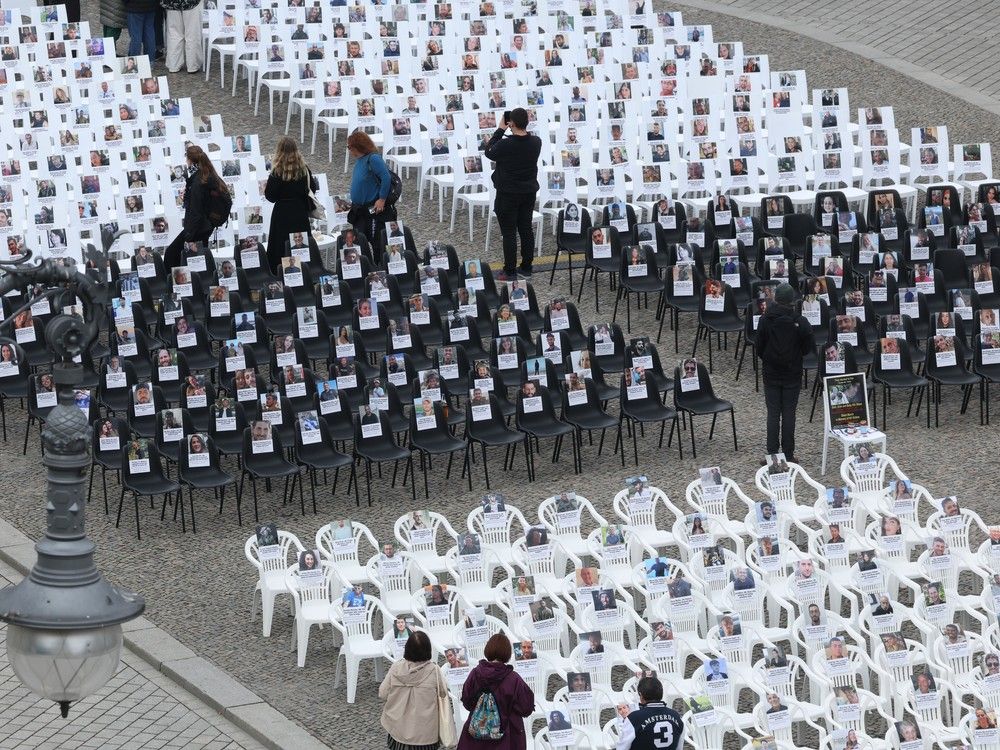
People walk among portraits of Israelis killed since the October 7, 2023 attack by Hamas at a commemorative installation in front of the Brandenburg Gate on the second anniversary of the attack on October 07, 2025 in Berlin, Germany.

This is an excerpt from a new book of essays, October 7: The War Over Words and Deeds, edited by Donna Robinson Divine and Asaf Romirowsky. Cole Bunzel is a historian and scholar and fellow at the Hoover Institution at Stanford University.

If the horrific events of October 7, 2023, ought to have made anything clear, it is that Hamas never ceased to bear violent, annihilationist intentions toward Israel, contrary to what many over the years had claimed or suggested.

On that morning, approximately 4,000 Hamas militants, together with some 2,000 other Gazans, broke through the Gaza-Israel border and rampaged across Israeli villages and kibbutzim, killing some 1,200 innocent people, the majority of them civilians, and kidnapping some 250 others.

While Hamas would later try to distance itself from some of the worst atrocities against civilians, claiming that “the Palestinian fighters were keen to avoid harming civilians,” even as it acknowledged that “(m)aybe some faults happened,” evidence abounds that the intention was to commit a massacre.

On the body of one dead Hamas fighter in Kibbutz Be’eri, for instance, was found a notebook with orders reading, “Kill as many people and take as many hostages as possible.” Indeed, the pictures and videos posted to social media by Hamas that day bespoke exceptional cruelty and bloodlust motivated by profound hatred.

In addition to the photos and videos of slaughtered Israelis and foreigners, there was the infamous phone call between one Hamas militant and his parents back in Gaza, in which he boasted to them about his murderous deeds.

“Dad, I am speaking to you from a Jew’s phone,” he can be heard telling his father in the captured recording. “I killed her and her husband, I killed 10 with my own hands. … I am in Meflasim, father. I killed 10. Ten! Ten with my own bare hands. Their blood is on my hands. … Mother, your son is a hero.”

The verbal messages sent by the Hamas leadership that day lent clarity to the aims and ambitions of the October 7 attack, which Hamas called Operation Al Aqsa Flood. In an audio statement announcing the operation, Hamas military leader Mohammed Deif began by listing off a host of grievances against Israel, from the injustice of the Jewish state’s establishment to more Israeli policies toward the West Bank and Gaza, but he made clear that forcing change in Israeli policy was not the purpose of the assault.

“Today, yes, today,” he thundered, “our people resume their revolution, rectify their path and return to the plan of liberation and the establishment of the state through blood and martyrdom. … Today is the day of the great revolution that will end the last occupation and the last racist apartheid regime in the world.”

Deif then called on Palestinians in the West Bank and in Israel to rise up and join in the great revolution, and he further appealed to the so-called Resistance Axis that includes Iran, Syria, Lebanese Hezbollah, the Shiite militias in Iraq, and the Houthis in Yemen: “To the brothers in the Islamic resistance in Lebanon, Iran, Yemen, Iraq, and Syria,” he said, “the day has come when your resistance joins the people of Palestine.”

Indeed, according to well-sourced reports, the October 7 attack was intended not as a one-off but as a catalyst for a larger regional confrontation culminating in the destruction of Israel and the full “liberation” of Palestine. Planning for the attack went back years and was confined to a small circle of Hamas leaders in Gaza around Yahya Sinwar, Hamas’s leader in the strip from 2017 till his death in October 2024.

After a short confrontation with Israel in May 2021, Sinwar sought to give the impression that he wanted calm and quiet as he focused on Hamas’s governance project in Gaza. But this was a deception. In the meantime, Sinwar courted Hezbollah and Iran, urging them to join the fray once Hamas began its attack.

Yet the response of the Resistance Axis fell far short of his expectations. According to one report, Sinwar had misread “ambiguous pledges of support” from Iran and Hezbollah “as firm commitments to open secondary fronts.” Other reporting similarly indicates that the Hamas leadership in Gaza expected far more from the Resistance Axis than proved forthcoming.

Given the secrecy surrounding the plot, many of its details, including its timing, were withheld from these partners. Nor was most of the Hamas leadership made aware in advance. Of Hamas’s overseas leadership, only Ismail Haniyeh, the head of Hamas’s political office, had been briefed. Most were given notice only hours before, and some only learned about it from the news.

Yet, while Hamas’s leaders may not all have known about the operation in advance, and some even appear to have faulted Sinwar for launching such a brazen and grisly attack that was sure to invite massive Israeli retaliation, there was no sign of disagreement or dissension in public. Even as some denied that atrocities against women and children had taken place, all praised the attack as an act of righteous and divinely sanctioned violence, the ultimate goal of which was to destroy Israel.

As Haniyeh, in Qatar, stated in an address broadcast on Al Jazeera on October 7, “Our objective is clear: we want to liberate our land, our holy sites, our al-Aqsa, our prisoners. This is the goal that is worthy of this battle, worthy of this heroism, worthy of this courage.” Addressing Israel, he continued, “We have only one thing to say to you: Get out of our land. Get out of our sight. Get out of our Jerusalem and our al-Aqsa. We don’t want to see you on this land. This land is ours; Jerusalem is ours, everything is ours. You are intruders on this pure and blessed land. There is no place for you.”

Later that month, Khaled Meshaal, Haniyeh’s predecessor as Hamas’s political leader, similarly remarked that “October 7 paved a large highway toward the elimination of Israel.” Perhaps most notorious were the comments of Ghazi Hamad, a Hamas politburo member based in Lebanon, who affirmed in a late October interview that Hamas’s intention was to repeat the violence of October 7 attack until Israel was finally annihilated.

“Israel is a country that has no place on our land,” he stated. “We must remove that country, because it constitutes a security, military, and political catastrophe to the Arab and Islamic nation, and must be finished. … We must teach Israel a lesson, and we will do this again and again. The Al-Aqsa Flood is just the first time, and there will be a second, a third, a fourth, because we have the determination, the resolve, and the capabilities to fight.”

Another senior Hamas official, the Lebanon-based Ali Baraka, boasted in an interview on October 8 about how Hamas had deceived Israel: “We made them think that Hamas was busy with governing Gaza, and that it wanted to focus on the 2.5 million Palestinians (in Gaza), and has abandoned the resistance altogether. All the while, under the table, Hamas was preparing for this big attack.”

Israel had indeed been deceived. The thinking among most Israeli politicians and intelligence officials was that while Hamas might initiate rocket attacks of limited scope every year or so, it did not seek a larger confrontation that could invite large-scale Israeli retaliation. As Israel’s national security adviser Tzachi Hanegbi stated in a radio interview just days before October 7, “Since the round of fighting in May two years ago, there is a decision by Hamas leadership to display unprecedented restraint and forbearance. For over two years there hasn’t been a single rocket fired under Hamas initiative from Gaza. Hamas is very, very restrained and understands the consequences of further defiance.”

The guiding belief was that Hamas was driven as much by self-preservation as by militant ideology. Beginning in 2018, Gaza began receiving millions of dollars in monthly financial assistance from Qatar, money intended to alleviate the humanitarian situation in Gaza but that also helped to prop up Hamas’s government. For Hamas to start a major war would be to put all that at risk.

Another group to have been deceived was the academic and analytical community. Many elements of this group believed not only that Hamas was deterred but indeed that it was evolving into a more moderate and pragmatic actor, one that Israel and the international community could profitably engage.

Such thinking went back years, beginning with Hamas’s decision to compete in the Palestinian legislative elections in 2006 and its seizure of full control of Gaza the following year. For some analysts, the responsibilities of governance would inevitably have a moderating effect on Hamas.

The epitome of this line of thinking came in a Foreign Affairs article in 2009 titled “Hamas 2.0,” which argued that “Hamas’ decision to join the Palestinian government in 2006, and its subsequent takeover of Gaza, have led to a significant ideological softening. … In a surprisingly short time, Hamas has largely abandoned religious rhetoric and calls for the violent liberation of Palestine, in favor of the increasingly secular and pragmatic task of state building.” This was a “fundamental shift within Hamas” that gave the lie to “the movement’s supposedly inflexible ideology.”

In the same vein, the Harvard scholar Sara Roy, in a 2011 book about Hamas’s social services sector, observed that “Hamas has a history of nonviolent accommodation and political adaptation, ideological reflexivity and transformation, and political pragmatism that the West should welcome.” She similarly made light of Hamas’s religiosity, stating that “Hamas’s fundamental impulse is political and nationalist, not religious, which has accounted for its pragmatism and flexibility.”

Such views do not hold up well in light of October 7. In the last analysis, given the choice between governance and resistance, Hamas chose resistance, and in a manner so brutal and heinous as to make the choice not just clear but irrevocable. Hamas, as it turned out, had been neither deterred nor transformed.

The timing of October 7 was of course determined by more than one factor. It was timed to coincide with the Jewish holiday of Simchat Torah, to take advantage of the tumultuous situation in Israel over a controversial judicial reform, and to disrupt efforts at achieving normalization of between Israel and Saudi Arabia. Yet the fundamental motivation behind the attack was no doubt ideological.

What Hamas showed was that it remained committed to a religiopolitical ideology that holds Israel’s existence to be an affront to God.

Even as some Hamas leaders appeared willing to engage in tactical accommodation with Israel, rejectionism remained a fundamental feature of the Hamas ideology shared by all.

Copyright 2025 Academic Studies Press

Our website is the place for the latest breaking news, exclusive scoops, longreads and provocative commentary. Please bookmark nationalpost.com and sign up for our newsletters here.
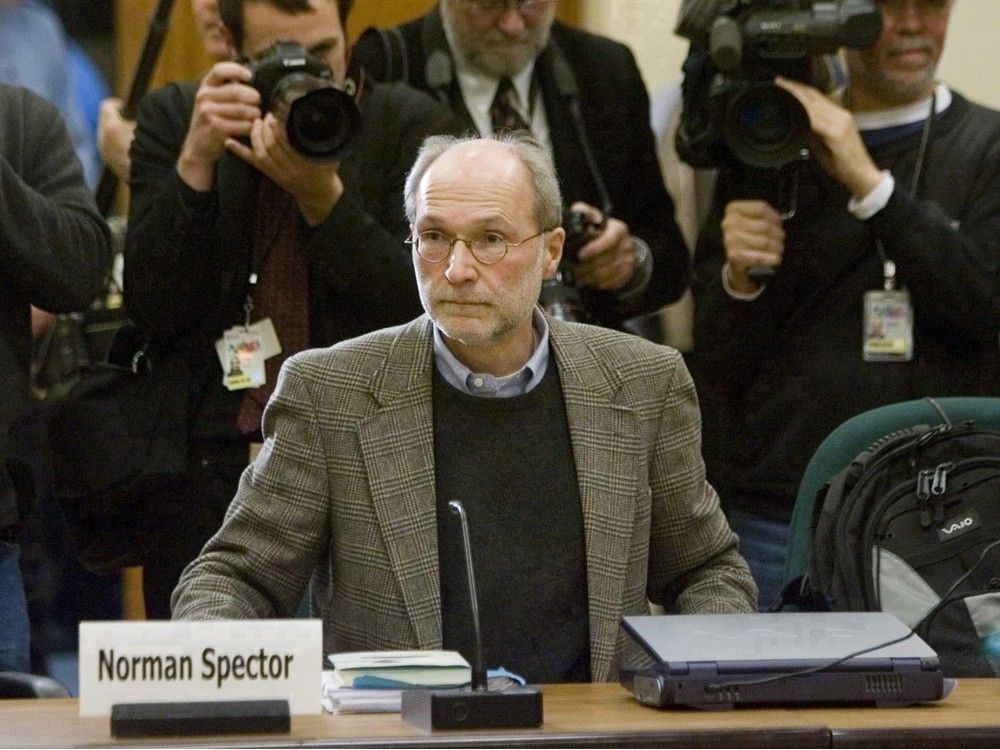
Norman Spector was chief of staff to then-prime minister Brian Mulroney, Canada’s envoy to both Israel and the Palestinian Authority in the mid-90s, and later publisher of the Jerusalem Post. From his prominent perch on the X social media platform, he is now a commentator and media critic. He spoke to Rob Roberts, editor-in-chief of National Post, via text on the eve of the second anniversary of the October 7 attack on Israel:

Q; Norman, I’ve just left an October 7 commemoration at a Halifax synagogue and I’m not sure I can adequately summarize what I heard, but it is at least in part this: Jews feel alone right now. That the brief moment where it seemed antisemitism was on the wane, that moment had passed and that something far, far worse has replaced it. And that Canadian Jews know they have allies, but that it’s not nearly enough. They can only rely on themselves. We’ll get into the reasons, but how does that compare to what you’re seeing and feeling?

I’ve just come from brunch with Gentile friends I’ve been seeing for years. We were sitting outside on a sunny Victoria day discussing many issues including Trump, Eby vs. Smith and the Israel-Hamas war in between patting the splendid Labrador at the next table. So, for me, not that much has changed on a day-to-day level, but I understand that’s not the case for Jews in Toronto, Montreal etc. and as is true for Jews in London, Paris etc. as well as at universities in the U.S. since October 7.

Q: Are you suggesting I misread the mood, or something else?

I’m probably not the right person to ask that question. I’m a product of Jewish day schools and speak Hebrew and know Israel pretty well, but I’m a retired early Boomer having already been to university and having already made my career and living in a fairly small city with a fairly small Jewish population, not religious and don’t belong to a synagogue etc. So for me personally not that much has changed. But I’m not oblivious to what’s going on across Canada and around the world.

Q: What do you make of what’s going on in Canada? And what would you attribute it to?

October 7 has had a profound effect on Israel’s standing in the world and on Jewish Canadians. Early on in the war, Parliament actually adopted a motion drafted by the Globe and Mail and moved by Elizabeth May advocating that the two issues be kept separate, but it got little attention (I think it was adopted by unanimous consent without a vote at the end of the day with few MPs in the House and I doubt many people know about it). But obviously it has not been successful!

Q: I’m embarrassed to say I can’t 100 per cent tell if you’re kidding. You gotta be.

See — I told you few people know about this! So the war has been transplanted into Canada, fortunately in a much less violent manner, and as it’s dragged on Israel has been increasingly losing in public opinion in most if not all Western democracies.

For domestic political reasons, Netanyahu framed it as a response to atrocities — rapes, hostages, etc. — by a barbaric enemy rather than the latest chapter in a century long existential war over a small territory between two peoples, which is how previous wars were framed. But his government’s opposition to two states itself precluded telling it like it is, and the longer the war went on the worse the deaths and destruction in Gaza looked compared to the atrocities and the more wind the pro-Hamas forces had in Canada to direct their animus against Jewish Canadians.

Israel had a war to fight — and the blowback on Jewish Canadians was not central or maybe even part of Netanyahu’s calculus.

I think things may have been different had Israel been truthful in framing the war (which I understand it couldn’t be).

It’s telling that this is happening in all Western democracies, including the U.S.

Another reason Israel is losing the war for public opinion is that the longer it’s gone on the more the divisions within Israel and among diaspora Jews have become evident. Bibi was unpopular before the war and foreign media have been eating up the stories of political survival being his motivation and the irony is that the hostages have come back to bite him in the ass domestically and with Trump.

So the media, too, framed it following Bibi’s lead rather than the truth — and the longer it went on the worse it got for Israel.

Right from the start we had this big debate over whether Hamas was a terrorist organization, as opposed to what it was truly all about.

It was late in the day for example that (Irwin) Cotler said that Hamas was not only a terrorist organization but an antisemitic, genocidal terrorist organization.

Deborah Lyons did not invoke the IHRA definition until the late in the day.

And neither did the Government of Canada, which had adopted the IHRA definition, cite it.

At one point (Justin) Trudeau said in French that he was a Zionist who believed in a Palestinian state too — but it took months until it was reported in English.

So as Israel’s standing declined with it losing the PR war, pro-Hamas forces were emboldened and here we are.

Q: You don’t think Israel was always behind the eight ball in terms of public opinion? That maybe a lot of the news media and almost all of academia and whatever forces control social media algorithms were always going to line up against the Jewish state? That decades of indulging “Israel Apartheid Week” and critical race theory framing of the conflict softened the West up for Hamas’s narrative?

Certainly, the tragic scenes coming out of Gaza, where Hamas was using civilians as human shields, didn’t help Israel’s cause. But I’m not sure I see Israel’s emphasis on these vital young people slain at Nova, or the murdered and kidnapped peaceniks from the kibbutzim, as an error.

In previous wars, Israel had wide support because it was seen as the little guy fighting for its survival. Also, they were shorter. But I’ll give you the role that settler colonialism etc. played. But that too would have been mitigated had the war been framed as being about two states, “one Jewish, one Arab” between the river and the sea as in the Canadian inspired UN partition plan.

I don’t discount the atrocities as being horrific — simply saying that the longer the war went on the more they were outweighed by the nightly scenes out of Gaza, and the TikTok phenomenon amongst younger people.

Q: Let’s talk about Canadian domestic politics. We could talk for hours about the choices made by Mark Carney and Pierre Poilievre — in terms of political strategy, in terms of principles, in terms of the impact on the debate on Canada. We’d certainly have a different Mideast policy if Trump hadn’t decided to throw the election to the Liberals.

No doubt about that. Carney has a bigger problem holding his coalition together on this and the death of the NDP leading to a two-party system in Canada has been vastly exaggerated. But I think the Conservative too would be better off for the war to end and the focus being entirely on their economic issues.

Q: Do you see principle or cynicism in Canada’s decision to recognize, sort of, a Palestinian state? I was struck by how Mark Carney framed it as a punishment for Israel, not through the lens of support for Israel and demanding the Palestinians take these important steps by a firm date. That felt like domestic politics to me.

The various leaders were responding to domestic public opinion. Carney’s first announcement was worse in that the elections were in 2026 and the recognition now, but they kind of adjusted before the vote to distinguish between it and normalizations. But basically it was performative and Trump quickly eclipsed them with some really creative diplomacy. I think even Carney recognized how weak the first position was.

Q: As we speak, anti-Israel activists at at least two Canadian universities are reportedly planning demonstrations to celebrate October 7. The Concordia event is described as a “October 7 Rally” in one of the online pamphlets I saw on X. It’s my sense that this is precisely why Jews feel so alone. Not only that such rallies are happening in Canada but that authorities aren’t intervening in much of this kind of stuff. Police are famously bringing demonstrators coffee!

Yes, that’s an excellent example of what’s been happening in Canada (at a university formerly known for a future Canadian senator and a Bermuda politician involved in a computer being thrown out a window!).

Had such demonstrations in Montreal and elsewhere from the start been labelled pro-Hamas rather than pro-Palestinian, police and other law enforcement agencies might have acted differently, since Hamas has been declared a terrorist organization under Canadian law (though Adil Charkaoui would have continued to benefit from the Criminal Code defence). And had  Irwin Cotler spoken out earlier and often with his definition of Hamas being an antisemitic, genocidal terrorist organization, some of the antisemitism we’ve seen in Canada might have been mitigated.

Q; Where does this go next, do you think?

Kier Starmer in the U.K. seems to have woken up to the physical threat to the Jewish community since the Manchester synagogue attack, although I may be giving him too much credit.

What happens next here? Does a potential peace deal defuse things in Canada?

I don’t know if I think it will. But I also don’t know if the peace deal has a real chance of success.

Is Canada capable of taking the threat seriously?

There will be no

peace

in the Mideast until both peoples elect governments that have campaigned on two states for two peoples — “one Jewish, one Palestinian” as in the 1947 partition plan — but there can be an end to this war. Starmer is now facing a serious challenge from Farage, but I’m not sure Poilievre will ever take that road — though immigration is certainly on the agenda right now thanks to him. All Canadians regardless of political stripe starting with Carney should be grateful to him for resigning Trudeau so thoroughly that he could not un-resign as did his Dad in 79! Both Israelis and Palestinians need elections and the results will have a major influence on how events unfold in Canada.

For better or worse (mostly the latter), the Mideast conflict has been transported to Canada with Jewish Canadians now on the back foot and increasingly divided in support for Israel.

Q: Divided in support for Israel, or for Bibi and the war? Are you even confident that an Israeli election bounces Bibi? That guy has 11 political lives and counting …

It’s by no means certain that Bibi will lose next time out.I think a new government that at least mouths support for two states will calm unease among Jewish Canadians.

Our website is the place for the latest breaking news, exclusive scoops, longreads and provocative commentary. Please bookmark nationalpost.com and sign up for our newsletters here.


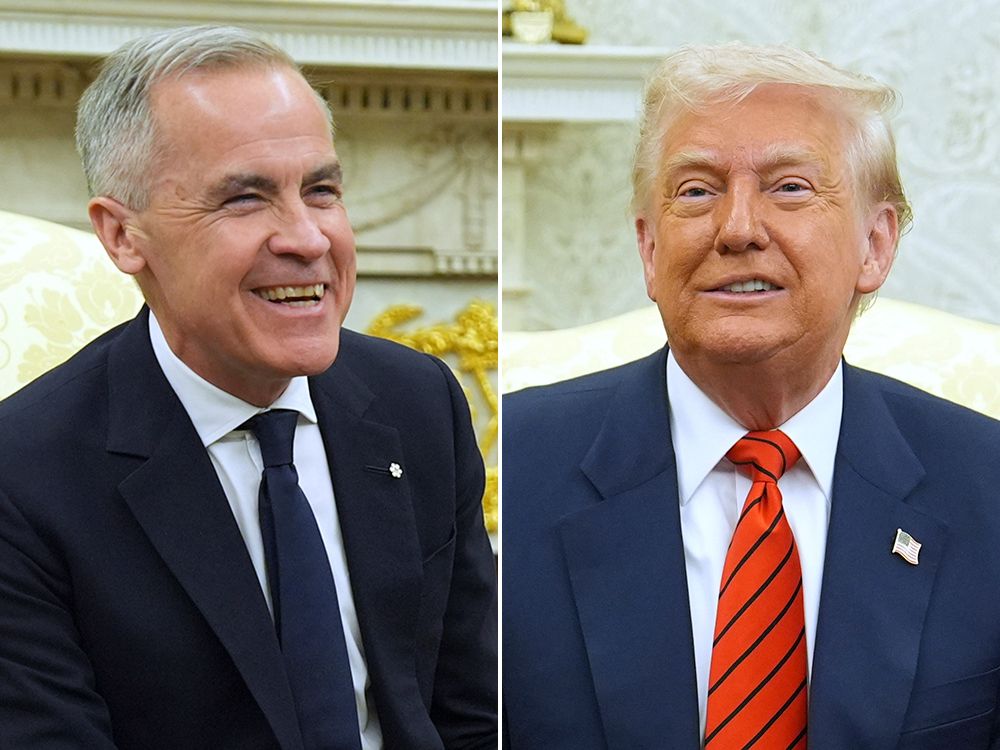
Prime Minister Mark Carney and U.S. President Donald Trump during their first Oval Office meeting on May 6, 2025.

WASHINGTON D.C. — Prime Minister Mark Carney is set to meet with U.S. President Donald Trump for his second time in the Oval Office, a meeting that political and industry observers are watching to see whether it brings any tariff reprieve.

A senior government official, speaking on a not-for-attribution basis ahead of the trip, tempered expectations about what could be delivered during the second sitdown in Washington between the leaders, since Carney took office back in May.

The Oval Office meeting between Carney and Trump will be followed by a working lunch in the cabinet room between the leaders, who will be joined by senior members from both of their teams.

“I guess he’s going to ask about tariffs ’cause a lot of companies from Canada are moving into the United States,” Trump said of the upcoming meeting on Monday.

Intergovernmental Affairs Minister Dominic LeBlanc, Industry Minister Mélanie Joly, and Foreign Affairs Minister Anita Anand travelled with Carney to Washington to meet their U.S counterparts, as did several senior staff, including Clerk of the Privy Council Michael Sabia.

Energy Minister Tim Hodgson will also be attending, according to the Prime Minister’s Office.

Carney was set to wake up Tuesday in Blair House, an official residence near the White House, where guests must be invited to stay by the president.

While those accommodations signalled a sign of warmth, the stakes remain high for what unfolds when Carney sits down with Trump in the Oval Office later Tuesday.

The leaders’ meeting coincides with the second anniversary of the Hamas attacks on southern Israel in October 2023, which triggered two years of war.

The sitdown follows Carney’s decision to recognize Palestinian statehood at the United Nations General Assembly last month, which was the last time the two leaders saw each other, and lands as Trump tries to implement his peace plan in Gaza. The president had previously publicly rebuked Canada for the move.

When it comes to trade, Carney has yet to secure a deal that would see the president remove or lessen the 50 per cent tariffs slapped on the steel and aluminum sectors, which Trump levied under section 232 of its U.S. Trade Expansion Act.

Tariffs also remain on copper and auto parts not compliant with the Canada-U.S.-Mexico free trade agreement.

On Monday, as Carney was preparing to depart for Washington, Trump announced even more tariffs, this time on heavy trucks.

Trump said a 25 per cent tariff on medium and heavy-duty truck imports will come into effect on Nov. 1, 

in a post on his social media platform Truth Social

.

The senior official emphasized that Canadians should not expect a breakthrough or deal to be announced following Tuesday’s meeting.

The official said the sit-down was more of a chance for Carney, Trump and their teams to talk through their various issues behind closed doors in a way that only an in-person meeting format could allow.

Opposition Leader Pierre Poilievre is nevertheless calling on the prime minister to deliver a “win,” saying Carney has failed to live up to the commitments he campaigned on during the spring federal election to secure a deal with Trump.

With two self-imposed deadlines over the summer come and gone, Carney has defended the position Canada finds itself in by calling it the “best” case scenario of any country grappling with U.S. tariffs finds itself in, given that products covered by the Canada-U.S.-Mexico free trade agreement were exempt.

That means roughly 85 per cent of the goods travelling between Canada and the U.S. are tariff-free.

Business Council of Canada President Goldy Hyder underscored that the deal was what has saved the Canadian economy from future damage by Trump’s global tariffs and said that maintaining it must be “job one.”

“We can’t get comfortable and complacent on that, however, because what happens if one day, for some reason, that’s not there anymore,” he said in an interview.

“We have to work towards preserving that, which means we need to make sure we’re leaning in on the review and renewal of the (Canada-U.S.-Mexico free trade agreement), that we believe in that review and renewal, and that we’re working hard with our negotiators to get the best deal for Canada.”

The senior government official said one of the motivating factors for Carney to meet with Trump was the first joint review of the agreement since it was struck during Trump’s first term, scheduled for 2026.

Both Canada and the U.S. have launched consultations on the deal, the review of which the Canadian side is expecting to be a lengthy and complex process, which Carney’s team is hoping to lay some groundwork on.

National Post

Our website is the place for the latest breaking news, exclusive scoops, longreads and provocative commentary. Please bookmark nationalpost.com and sign up for our politics newsletter, First Reading, here.


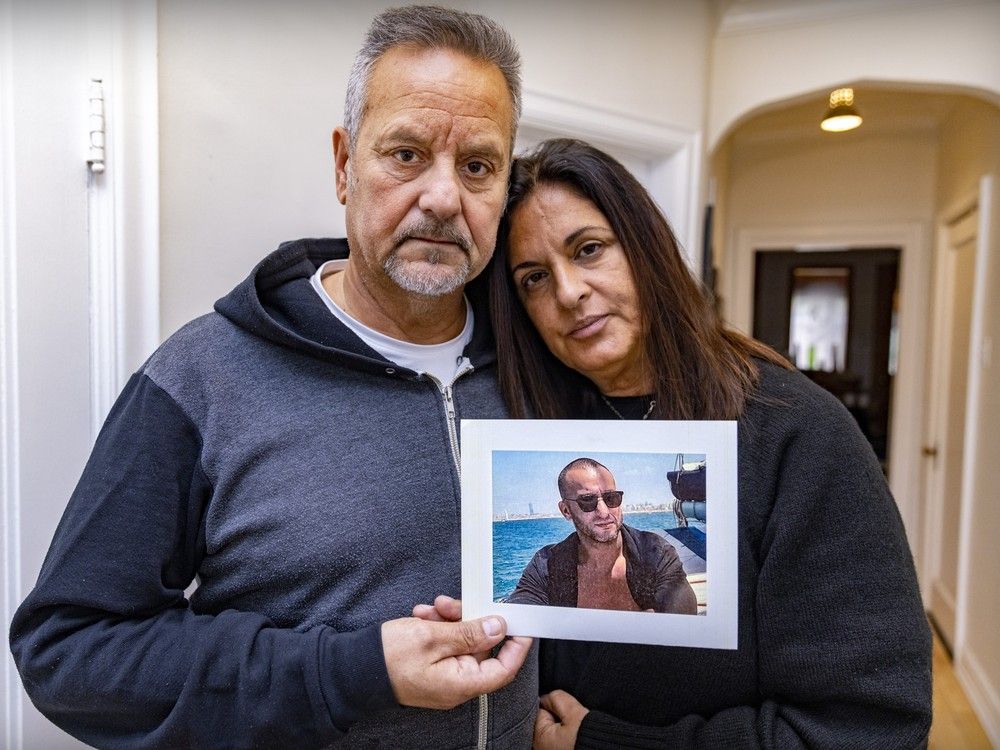
Alain Look and his wife Raquel hold a photo of their son Alexandre at their home in Montreal Tuesday October 10, 2023. Alexandre Look was killed during the Oct. 7, 2023, Hamas attacks on Israel.

Hamas victims’ families and Canadian Jewish groups are condemning anti-Israel protesters’ plans for events commemorating the “martyrs of Palestine” on Tuesday, the second anniversary of the October 7 attacks.

“When you think they can’t sink any lower, they do,” said Raquel Look, a Montreal woman whose son, Alexandre, was murdered on Oct. 7, 2023, after attending the Nova Music Festival in Re’im, southern Israel.

Alexandre, a 33-year-old Canadian who lived and worked in Cabo San Lucas, Mexico, was in Israel on vacation when he was killed, said his mom.

“I had to wait three weeks for Alex’s body to come home, and it was a hell I don’t wish upon anyone,” she said.

Social media posts indicate there are events planned at several Canadian universities, including Concordia, McGill and the University of Toronto, that would appear to glorify the October 7 attacks.

An event at the University of Toronto Mississauga will be, “honouring our martyrs,” says social media post from the the school’s students’ union, which promotes a gathering slated for 3 p.m. Tuesday outside the school’s student centre.

“We remember our martyrs, we honour their legacy, and we continue the fight for a free Palestine,” says the Instagram post from the school’s student union.

An Instagram account dubbed “Solidarity for Palestinian Human Rights McGill” posted a notice about an Oct. 7 rally planned for 1 p.m. at Concordia’s Hall Building. “It is time for students to take action in support of Palestine and its resistance,” says the post.

Jewish students and faculty members at some Canadian universities have complained in recent years about not feeling safe on campus. Some say they have been attacked, and others say they have experienced antisemitism.

Last year, the Canadian Security Intelligence Service warned that the Israel-Hamas war has led to a spike in “violent rhetoric” from “extremist actors” that could prompt some in Canada to turn to violence.

Two years ago, Hamas gunmen killed about 1,200 people and took another 251 hostage. In response, the Israeli military launched a campaign against Hamas that the terror group’s health ministry in Gaza says has killed an estimated 67,139 people. Israel disputes those figures, which include both fighters and civilians.

Iddo Moed, Israel’s ambassador to Canada, wrote Sunday on social media that western countries have seen “radicalization and the glorification of terrorism lead to violence against Jews in the Diaspora.”

“Now on the second anniversary of the October 7 Hamas terrorist attack, it pains me to learn of a series of events planned in cities across Canada to commemorate the ‘martyrs’ of October 7,” Moed wrote on X.

Any attempt to “honour or legitimize the perpetrators of such violence is not only deeply hurtful to Israelis and Jews everywhere but also stands in direct contradiction to the fundamental values of democracy, decency, and respect for human life,” Moed wrote.

He urged “all Canadians—regardless of background or beliefs—to stand up against hate in any form. Let us unite in condemning these commemorations and ensure that Canada remains a place where hate, violence, and the glorification of terror have no place.”

The ambassador called “on Canadian leaders from all parties and levels of government to join (him) in rejecting messages of hate and remembering the victims whose lives were stolen on October 7.”

On that day, Look said that Alexandre had phoned her early in the morning as he left the Nova music festival, telling her that there had been a terrorist attack. Along with his friends, Alexandre drove to a shelter about 15 minutes away from the festival site. He was on the phone with his mother until he said in Hebrew: “There’s a lot of them. Mommy, I can’t talk now.”

He dropped the phone, she said. “And we heard what we later found out was him fighting with the first terrorist. He actually managed to disarm the first one. And then we heard shots, lots of shots, and sounds of grenades.”

Look was huddled by the phone with her husband and Alexandre’s younger sister as the attack unfolded. “We were just nestled together, in total shock, crying.”

Of the nine people Alexandre Look had attended the music festival with, four were killed, said his mom.

Neither of the student groups hosting Tuesday’s events responded Monday to interview requests from National Post.

Richard Robertson, B’nai Brith Canada’s director of research and advocacy, condemned the events.

“It is disgraceful that, on Canadian streets, some now plan vigils that celebrate the atrocities that claimed thousands of lives, including eight Canadians,” said Robertson’s statement.

“The celebration of terrorism is not a form of free expression. It is an insult to every victim of violence and a betrayal of Canadian values.”

He urged Canadians not to “look away while extremists attempt to recast barbarism as resistance. Every public celebration of terror erodes the safety, decency, and unity that bind this country together. Those who cherish freedom and democracy must respond with moral clarity and unwavering resolve, standing firmly for human dignity.”

The Jewish service organization urged “our civic leaders, universities, and law enforcement to take clear action to ensure our public spaces are never used to promote or justify acts of terror.”

Canadians should be alarmed “to see terrorists openly memorialized and treated as heroes in the streets of our country,” said a statement from Noah Shack, chief executive officer at the Centre for Israel and Jewish Affairs.

“Just days ago in Manchester, we saw how pro-Hamas extremism is fueling acts of horrific violence against Jews. In response to these rallies celebrating Canadian-listed terrorist groups on Canadian campuses and other public spaces, authorities must be vigilant in ensuring that anyone who breaks the law is held accountable. At all levels, government must act to end the mass incitement happening in our country.”

The Jewish student organization Hillel took to social media Sunday offering to walk Montreal students to class Tuesday and looking for volunteers who are willing to accompany them.

Our website is the place for the latest breaking news, exclusive scoops, longreads and provocative commentary. Please bookmark nationalpost.com and sign up for our daily newsletter, Posted, here.


Taylor Swift performs during the Eras Tour concert, in Vancouver, on Friday, Dec. 6, 2024.

Vancouver’s Science World has a brief cameo in a new music video from Taylor Swift. In the video for

The Fate of Ophelia

, the lead single from Swift’s new album The Life of a Showgirl, the iconic dome of the west coast science centre can be seen briefly outside a window as Swift dashes by.

The blink-and-miss-it moment comes at about the three-minute-and-42-second mark, just before the end of the four-minute video.

It’s a busy four minutes full of scene and costume changes as Swift portrays a version of the character Ophelia from Shakespeare’s Hamlet.

At the start of the video she looks like a painting of the character by 19th-century artist John Everett Millais, before morphing into a burlesque performer in the style of Marilyn Monroe, then a go-go dancer, an Esther Williams look-alike in a musical number like those of choreographer Busby Berkeley, and more. The track ends with her in a party in a hotel room, outside of which Science World is seen.

 Left, Vancouver’s Science World, and right, a grab from the video The Fate of Ophelia.

The Science World connection is not the only shout-out to Vancouver in Swift’s latest release. The title track for the album The Life of a Showgirl ends with the sounds of a cheering crowd, which

Swift has confirmed

was lifted from the final show of her 20-month Eras Tour, which ended at BC Place in Vancouver.

For its part, Science World

hosted Swiftie Days

during the same time as the Vancouver concerts, featuring “Taylor-ed” activities that included a friendship bracelet station, sing-alongs, trivia, and sheet music to let people play Swift’s greatest hits on a giant piano.

Swift’s popularity has fans tweezering apart her lyrics and videos to uncover Easter eggs, and The Fate of Ophelia has many

non-Vancouver references

as well for fans to spot.

They include a picture of her fiancé, Travis Kelce, tucked into a mirror’s frame, a loaf of sourdough — she likes baking — and several other old paintings. Oh, and the number of the hotel room at the end of the video? It’s 87, the same number as Kelce’s Kansas City Chiefs jersey.

National Post has reached out to Science World for comment.

Love concerts, but can’t make it to the venue? Stream live shows and events from your couch with VEEPS, a music-first streaming service now operating in Canada. Click here for an introductory offer of 30% off. Explore upcoming concerts and the extensive archive of past performances.

Our website is the place for the latest breaking news, exclusive scoops, longreads and provocative commentary. Please bookmark nationalpost.com and sign up for our daily newsletter, Posted, here.


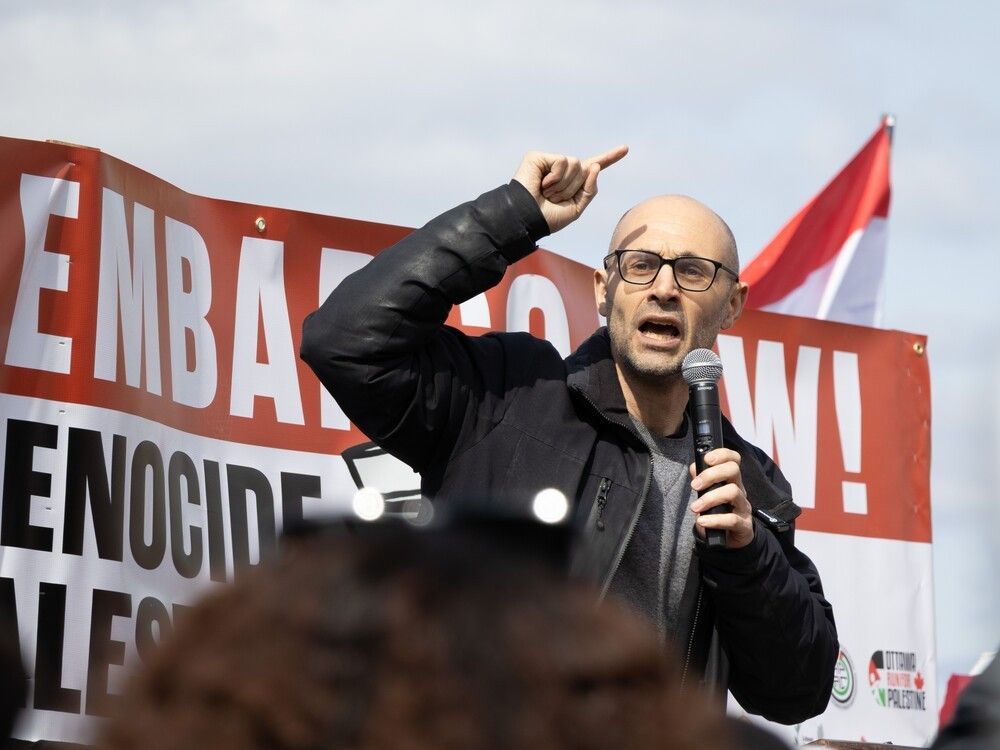
Yves Engler, a Canadian journalist and activist, speaks at a pro-Palestinian protest on Parliament Hill on Saturday, April 12, 2025.

OTTAWA — The NDP says that Montreal-based activist Yves Engler is misleading party supporters and the media by running an
unsanctioned leadership campaign and soliciting donations from Canadians.

Éric Hébert-Daly, who is the NDP’s chief electoral officer for the leadership race, said he had serious concerns about how Engler had been conveying the status of his campaign to members of the press.

“It has recently come to my attention that Mr. Yves Engler has been sharing with the media that he has not yet been approved by the Leadership Review Committee … to stand as an official leadership candidate. I would like to clarify that we are not in receipt of an application from Mr. Engler, and as such, he has no current standing within the leadership contest,” wrote Hébert-Daly.

“While we have not been sharing the status of candidacy to date in order to respect privacy and confidentiality, it is not acceptable to be misleading about approval status,” he said.

He added that, to avoid confusion, Engler and others testing the water for a leadership run have been “strongly advised” to wait for official approval before accepting campaign contributions or “making any public pronouncements.”

Hébert-Daly said that taking contributions before receiving approval was against

the leadership race rules

, which require all donations to be processed through the party.

Engler said in an earlier email that he was doing “everything in line with NDP and Elections Canada rules” and expected to be onstage for the

first official leadership debate

in November. He added he’d raised more than $80,000 thus far, which would put him on pace to easily pay the $100,000 entrance fee, and collected more than twice the required 500 signatures, with all

age, equity and regional criteria

met.

He added in a follow-up email on Monday that, per the rules, he had until January to turn in his nomination papers and would do so at the time he considered “most opportune.”

Engler also said he planned to attend a

Canadian Labour Congress (CLC) hosted

candidates forum later this month.

“We expect to be invited to CLC forum whose rules for participating are not outlined in candidate package,” wrote Engler.

As of Monday, three candidates had officially

entered into the race

: Edmonton MP Heather McPherson, filmmaker Avi Lewis and labour leader Rob Ashton.

Engler is a self-described social agitator with

a recent harassment arrest

on his rap sheet, running on a radical platform of

anti-capitalism and degrowth

.

He put X’s “community notes” function to work over the weekend

by posting fake endorsements

of his policy platform from socialist icons J.S. Woodsworth, Tommy Douglas and Karl Marx (all long dead).

“NDP 2026 (Engler’s platform) is a blast from the past with an eye on the future,” read the apocryphal blurb from Woodsworth.

McPherson told the National Post last week that she wouldn’t stand in the way of Engler jumping into the race.

“Mr. Engler can do what he does. I fundamentally disagree with him on a number of issues, but that’s neither here nor there. He can put his offer forward,” said McPherson in an interview.

Matthew McKenna, a spokesperson for Elections Canada, said that it wasn’t against the law for Engler to raise funds in advance of his candidacy being approved by the NDP.

“There’s nothing in the Canada Elections Act that prevents any individual from raising money for any reason,” said McKenna.

McKenna did caution that Engler could still face legal penalties for incorrectly reporting such contributions in his annual tax returns.

The donation page on Engler’s leadership website directs visitors to give via Interac e-Transfer, and clearly indicates that donations are not tax-deductible.

Donors must also attest that they’re Canadian citizens or permanent residents.

National Post

rmohamed@postmedia.com

Our website is the place for the latest breaking news, exclusive scoops, longreads and provocative commentary. Please bookmark nationalpost.com and sign up for our daily newsletter, Posted, here.


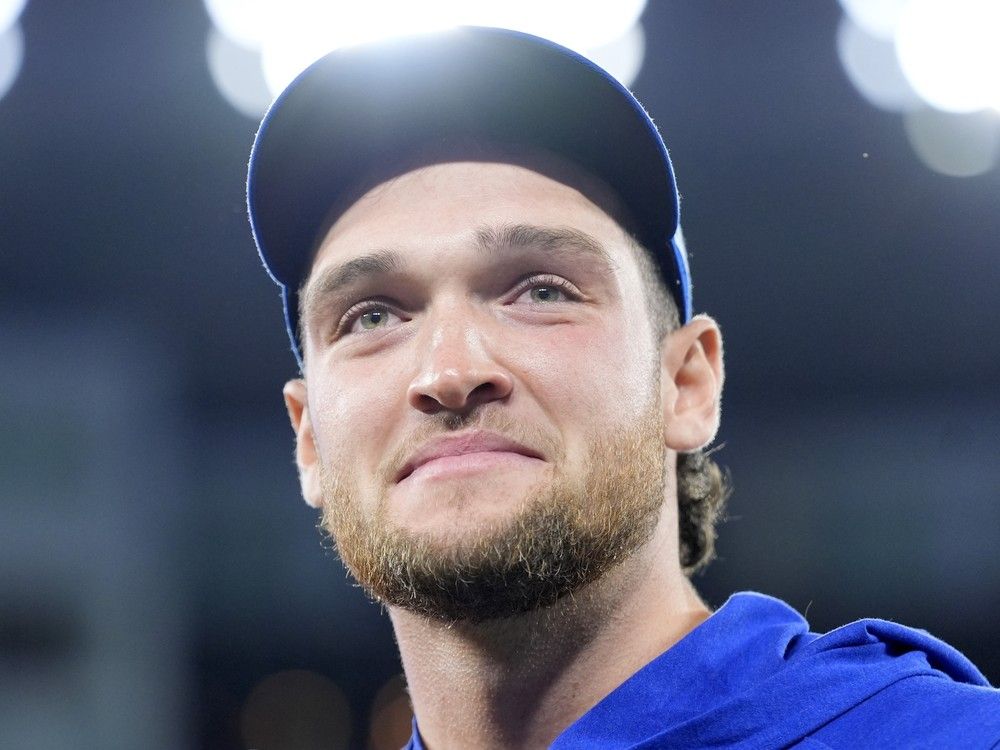
Trey Yesavage #39 of the Toronto Blue Jays speaks to the media after winning game two of the American League Division Series against the New York Yankees at Rogers Centre on October 05, 2025 in Toronto, Ontario.

Before the Toronto Blue Jays’ post-season game against the New York Yankees on Sunday, starting rookie pitcher Trey Yesavage told himself he’d better back up his comment from a day earlier that he is “built for this.”

By the halfway mark of Game 2 of the American League Divisional Series (ALDS) at Rogers Centre, the 22-year-old right-handed starter had, in his own words, “thankfully” made good on his claim, stymying a Yankees lineup that led all of baseball in runs and homers in the regular season over five and a third innings.

Along the way, he struck out 11 batters — including six straight through the third and fourth innings — while not surrendering a hit and walking just one.

In doing so, he set a franchise post-season record for strikeouts and became the youngest starting pitcher in MLB history to not surrender a hit in a playoff game.

When manager John Schneider drew good-natured jeers from the crowd of 44,764 when he made his way to the mound in the top of the fifth to pull the young hurler as the Jays were leading by a wide margin, thanks largely to a grand slam by face-of-the-franchise Vladimir Guerrero Jr.

“I know the fans probably wanted me to stay out there, but it’s a smart thing to do up over 12 runs at that time to not push it,” he said in the post-game press conference.

His dominant performance, which earned a curtain call from the Jays’ faithful, helped secure a 13-7 win to give the club a 2-0 lead in the best-of-five series that continues Tuesday in New York.


“This has got to be cloud nine,” he said. “I couldn’t imagine a better feeling right now.”

Here’s what to know about Yesavage and his meteoric rise to stardom with Canada’s team.

Where is Trey Yesavege from?

Yesavage was born on July 28, 2003, to parents Dave and Cheryl Yesavage of Boyertown, Pennsylvania, a borough in Berks County about 80 kilometres west of Philadelphia. He’s the oldest of three boys, with brothers named Cole and Chase.

”They’re my people,” he said, fighting back tears, during an on-field interview with Sportsnet’s Hazel Mae after Sunday’s game.

“They’re the reason I’m here right now and I couldn’t love them more. Mom, Dad, Cole, Chase… I love you guys.”

Yesavage’s parents, along with Cole, were there to witness his heroics on Sunday, with Dave seen on the Sportsnet broadcast enthusiastically high-fiving fans surrounding them after every strikeout.

Yesavage said it’s his dad’s “signature more.”

“He’s been doing it for years,” he said in post-game remarks. “When I was in college, he would run around our basement when they’re watching the game on TV, high-fiving everyone.”

In an interview with Mae from their seats after Yesavage left the game, Dave said his son has always been willing to put the work in, even building a pitching mound in the backyard and tossing at a target when there was no one to catch for him.

“We knew Trey could do it,” he said. “He knew he could do it as well.”

Cheryl, meanwhile, said she loved her son’s confident statement heading into Sunday’s big game.

“He absolutely was built for this,” she said.

How did Trey Yesavage become a Blue Jay?

Yesavage grew up playing baseball and, after a promising high school career in Boyerton, he was recruited to attend and play NCAA ball for the East Carolina University Pirates in Greenville, North Carolina.

He pitched out of the bullpen for his freshman season and performed well as a starter in his sophomore year, earning first-team All-AAC selection and second-team All-American honours, along with a roster spot on Team USA’s collegiate national team, according to

Baseball America

.

After an even more impressive third year with the Pirates — one that featured an impressive 145 strikeouts over 93.1 innings — Yesavage was a top prospect in the 2024 MLB entry draft. The Blue Jays wasted no time scooping him up when he was still available at 20th overall in the first round.

“Trey is somebody we have liked for a couple years now, dating back to his sophomore year when we got to see him pitch quite a bit as an underclassman,” Jays director of amateur scouting Shane Farrell told the

Toronto Star’s Gregor Chisholm

at the time. “As our pick was getting closer and he remained on the board, it was a decision we were really happy to make.”

His rise within the organization this season has been quick, but well-managed by the Jays.

Yesavage stayed in Dunedin to start the 2025 campaign playing A-level, where he overpowered hitters in seven starts before moving on to high-A ball with the Vancouver Canadians, where once again opposing batters had few answers to the hard-throwing 6-4 pitcher in four starts. An eight-outing promotion to AA with the New Hampshire Fisher Cats followed, after which he was summoned to the Jays’ AAA affiliate, the Buffalo Bisons, for six games.

By the end of his tenure in the minors, using a three-pitch arsenal of a fastball, splitter, and slider, he had amassed 160 strikeouts this season.

His MLB debut came on Sept. 15 in Tampa, where he went five strong, fanning nine — a new franchise record for a rookie pitcher’s debut — and allowing a single run on three hits. In 14 innings of work over three starts,

Yesavage collected 16 strikeouts, allowed just five earned runs, none coming on a homer.

What are teammates and the Yankees saying about Trey Yesavage?

Teammate and Jays’ ace Kevin Gausman, who held the Yankees to a single earned run in Saturday’s 10-1 series-opening win, said Yesavage proved he was indeed built for moments like this.

“He was incredible,” said ace Kevin Gausman, according to

Sportsnet’s Shi Davidi

. “To do that, in that moment, he’s different. I feel like I have a really good split and I think his is better. I’ll be honest, I’ve never said that about anybody, especially someone on my team.”

A big part of what makes Yesavage such a challenging pitcher is the average angle of his arm at the release point, which is measured by the league’s Statcast at 63 degrees,

second-highest among MLB starters

after Jonah Tong.

The higher the angle, the harder it is for the batter to pick up what type of pitch might be coming their way and its anticipated trajectory. In Yesavage’s case, it makes his splitter particularly hard to hit.

“He’s throwing from the CN tower, so it’s an angle that pretty much no one else in the big leagues is throwing from,” Jays veteran Chris Bassitt told Davidi. “It’s a look that you can’t really practice, you can’t go back and say, how you treated this pitcher, treat him like that. There’s no real comparison so it’s really hard to game-plan for him.”

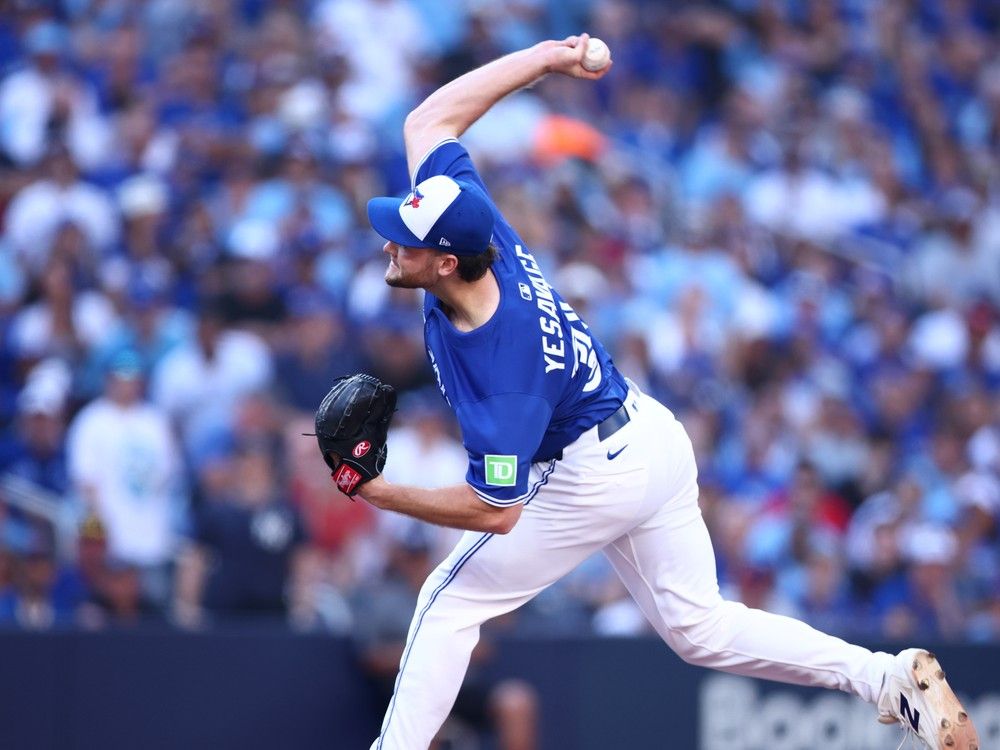
 Trey Yesavage’s average arm angle at release point is 63 degrees, second-highest among MLB starters.

In his post-game news conference, Yankees manager Aaron Boone said the young righty has “nasty stuff.”

“That split is unlike much you ever run into,” he said, per Sportsnet’s Ben Nicholson Smith. “We just didn’t have an answer.”

Yankees slugger and American League MVP candidate Aaron Judge, who walked and struck out to Yesavage on Sunday, also remarked about how tough his pitches are to gauge from the batter’s box.

“It’s kind of right over the top, releasing it right above his head,” he told MLB’s Keegan Matheson. “So everything’s kind of coming down into the zone, and you’ve got to pick it up — it’s either going to stay in the zone or kind of drop down around your knees.”


Henry Cortez and Smokie in a screen grab from a video he shot.

A Toronto man who recently self-deported from the United States says he was told to do so after an off-duty U.S. Immigration and Customs Enforcement (ICE) officer noticed his Canadian passport in his wallet at a pet store.

Henry Cortez had been living in Las Vegas for five years, but his visa had expired more than a year ago, he told National Post in an interview.

He hadn’t gotten round to renewing it. That suddenly became a problem when he went into a PetSmart in the city’s Summerlin suburb to buy supplies for his cat, Smokie.

A stranger noticed the Canadian passport he carries as identification, and joked: “You’re from Canada, eh?”

“And then after that, I paid for my stuff, and I said, hey, thanks, have a nice day. And he goes, ‘Hold on a second.’ And then he shows me his badge.”

The man, Cortez says, was “an off-duty ICE officer,” and he wanted to look at Cortez’s papers.

“And that’s when I knew that I was in trouble,” he recalls. Cortez says the officer gave him two choices: self-deport, or be detained if he was spotted again. He took the first option.

National Post has reached out to ICE for more information. The U.S. Department of Homeland Security recently reported that 1.6 million illegal immigrants

self-deported

during the first eight months of this year.

ICE also notes

that it has made 585 arrests of Canadian citizens in the United States, and there have been 623 removals, which includes deportation as well as self-deportations.

A U.S.

government document

on self-deportation notes that: “If ICE officials arrest you, there’s no going back — you may not have time to get your affairs in order, gather your belongings, or even say goodbye to the people you care about.”

Cortez says his own self-deportation triggered “a perfect storm” of misfortune. His cat freaked out at the vet while getting the rabies shot

she needed to travel

. Cortez wound up bleeding. Animal control was called. Smokie the cat was put into quarantine for a week.

“Well, my flight is in like, four days, so I have to scramble, you know? And so I had to make a really, really hard decision, and I had to leave without her.”

The vet was sympathetic. Smokie could have been euthanized when her owner left the country, but they gave her a temporary place to stay. That still leaves Cortez with having to arrange a more permanent accommodation, plus transportation across the border. Thanks to his visa troubles, he’s barred from reentering the U.S. for any reason for 10 years.

“I have a friend of mine that I used to work with, hopefully she can take over,” he says. “But it’s not guaranteed right now.”

He’s looking into pet transportation services: one to get Smokie near the border with Ontario; a second to bring her across. It’s an expensive proposition — Cortaez estimates $1,800 for the first leg of the journey, and at least a couple of thousand for the second — and he’s set up a

GoFundMe page

in hopes of finding help. He’s hoping to raise $5,200.

Cortez, who once worked as a bouncer, is looking for work and hoping to get a position as a Canadian Border Services Agency officer trainee in Newfoundland, where his daughter lives with her mother.

“I’m not exactly in a position to get a loan right now,” he says. “I’ve had some outstanding debts and car repossession. So I have to just try to save up as much money as I can, and if there’s any remaining family members I haven’t asked yet, to reach out to them as well.”

Cortez remains in touch with the vet in Las Vegas, and he’s heard that, after a few days of not eating much and hissing at everyone, Smokie calmed down.

“She’s starting to warm up to the people (and) they’re starting to adore her a little more now,” he says. “I guess she’s kind of accepted that she’s there.”

But “there” is not a long-term solution, and Cortez dearly wants to be reunited with his pet.

“This isn’t, you know, just about a cat,” he says. “Some people may look at it that way, but it’s truly just about family, love, loyalty and just not giving up on family, even when everything falls apart.”

He continues: “She trusted me … she wouldn’t trust anybody else in that pound. And, you know, she was a rescue that nobody wanted because she was under medication and stuff, and from the very first day, she chose me. I can’t give up on her now.”

Our website is the place for the latest breaking news, exclusive scoops, longreads and provocative commentary. Please bookmark nationalpost.com and sign up for our newsletters here.


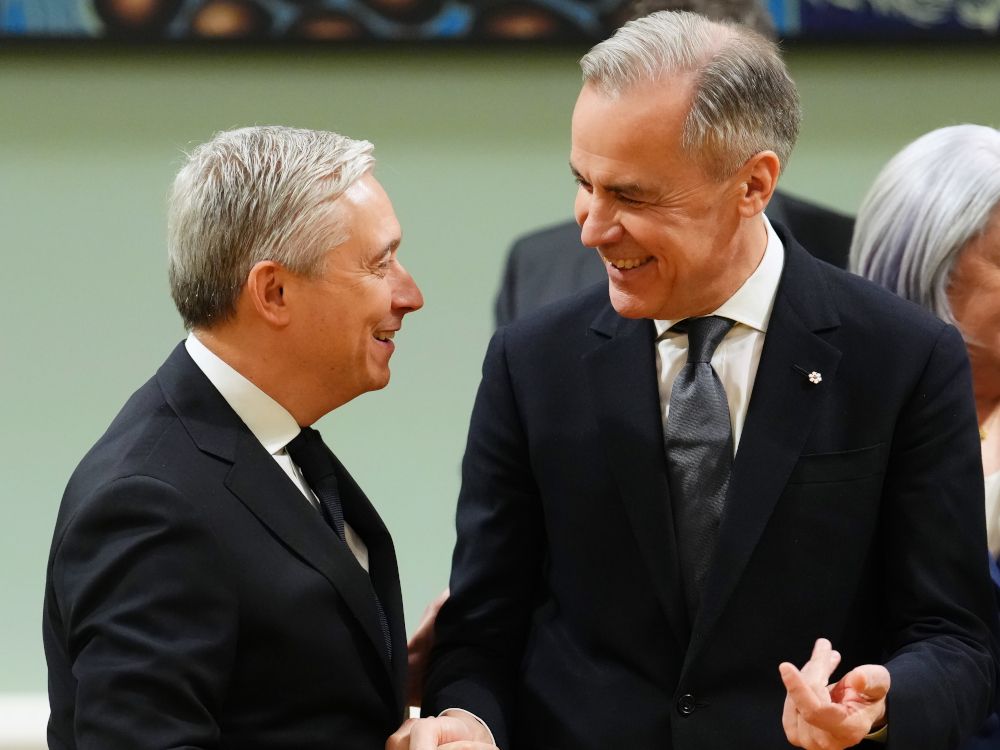
Prime Minister Mark Carney, right, and Finance Minister Francois Philippe-Champagne

OTTAWA — The federal government will table its annual budget in the fall from now on and distinguish capital spending from operating costs, breaking with a longstanding tradition of presenting the annual spending plan in the spring.

Finance Minister François-Philippe Champagne announced the new budgetary cycle and presentation on Monday morning. He said budgets will be tabled in the fall for the following fiscal year while the fall economic update would move to the spring. Finally, pre-budget consultations would move to the summer.

In a background technical briefing, senior government officials explained that the new schedule aims to make the government’s fiscal year planning more predictable for the private sector and other levels of government.

They also noted that it would better align with construction season, announcing capital investments further ahead of the summer construction season. “In the old cycle, budgets didn’t allow projects to take full advantage of the construction season. A fall budget cycle changes that — giving builders and investors a real head start,” reads a background document published by Finance Canada.

Prime Minister Mark Carney’s government also made good on the campaign promise to separate capital investments and operation spending in future budgets.

Champagne said capital investments would be spending that falls into one of six categories: capital transfers, capital-focused corporate income tax incentives, amortization of federal capital, private sector research and development, support to unlock large-scale private sector capital investment and measures to grow the housing stock.

Remaining spending would be classified as day-to-day operating spending. That would include many major government expenditures including transfers to persons, health and social transfers as well as government operation spending (such as salaries and benefits).

During the briefing, senior officials promised that the budget document would still contain the traditional unified accounting information including total spending, revenues and budget balance (such as the total value of the deficit if applicable).

More to come

.

National Post

cnardi@postmedia.com

Our website is the place for the latest breaking news, exclusive scoops, longreads and provocative commentary. Please bookmark nationalpost.com and sign up for our politics newsletter, First Reading, here.


A woman who wished to keep her identity hidden de-transitioned after years of testosterone therapy she started at age 15, and a double mastectomy she had at 18. She's experienced

“Ghosted”— ignored — by the surgeons who altered their bodies and ostracized by the communities that once embraced them, the largest study of detransitioners in Canada and the U.S. in decades is exposing a new form of stigma: detransphobia.

The survey of nearly 1,000 people suggests that many who halt or reverse a gender transition feel poorly supported by LGBTQ groups and gender-affirming care practitioners, and wish doctors “took a more neutral approach to care.”

“The mainstream gender-affirming care system largely presumes that gender identity/expression is immutable and that TGD (transgender) people will engage in only one gender transition,” the York University-led research team wrote in wrote in the

International Journal of Transgender Health.

“While this may be the reality for many TGD people, this presumption can create environments in which multiple transitions, gender fluidity, and detransitions are misunderstood or even stigmatized.”

While there’s no universally agreed upon definition, detransition “has been conceptualized as stopping, shifting or reversing aspects of an initial gender transition, often motivated by a shift in how one understands their sex/gender,” the researchers wrote.

It can mean changing names and pronouns, halting hormone therapy or seeking reversal surgeries such as breast reconstruction following a double mastectomy for masculinizing, female-to-male chest surgery.

“Some people who detransition may self-label as ‘detrans’ for short,” the research team wrote.

Estimates for detransition range from as low as less than one per cent, to as high as 30 per cent. Many studies only followed people for a few short years, meaning people can get lost to follow up.

Some who detransition may later resume the process — retransition — especially if the felt forced to detransition because of family pressures, discrimination or what one survey participant described as “the climate of fear around trans people.”

For others, the pressures are internal, the researchers wrote, including a shift in identity or a realization that their gender dysphoria was tied up in something else, “such as trauma or internalized homophobia.”

“Irrespective of their current gender identity, those undergoing a detransition often retain ‘atypical’ sex characteristics from prior hormonal and surgical treatments, leading to vulnerability to gender minority stressors and, potentially, an experience of ‘reverse dysphoria,’” the researchers wrote, meaning distress with the physical changes to their bodies.

Yet no formal health-care guidelines exist to help meet the medical and psychological needs of detrans people, who can also face social rejection and stigma from LGBTQ communities, said the research team, which is composed of a majority of LGBTQ researchers.

“I feel so alienated now, and super isolated from the rest of the queer community,” one study participant said.

“I lost every adult and friend in my life when I chose to detransition,” added another.

“I lost everything I had socially.”

The study is based on an anonymous survey, conducted between December 2023 and April 2024, of 957 people aged 16 and older living in the United States (704) or Canada (253) who self-identified with experiences of detransition, as well as one-on-one follow-up interviews with 42 selected participants.

In an effort to capture as wide a range of experiences as possible, the researchers advertised on Instagram, TikTok and other major social media platforms. The survey was sent to more than 615 trans and LGBTQ groups and gender clinics. Researchers also developed a protocol to spot and weed out scam, bot and fraudulent responses.

Respondents were asked to rank their degree of agreement (always, sometimes, never, not applicable) to a series of statements, like, “I needed health care but didn’t receive it.”

Most participants (79 per cent) were born female, reflecting the startling surge in biological girls being referred to gender clinics. One Canadian study found that, of 174 youth aged 15 and younger referred for puberty blockers to one of 10 gender clinics in Canada, 82 per cent were born female.

When asked how they describe themselves, 40 per cent of survey respondents were comfortable with “detransitioned,” 43 percent with transgender, 33 percent non-binary and about 20 per cent “cisgender”

About 42 per cent reported a history of discontinuing, and then later resuming transition.

Many people mentioned challenges getting access to medical care, or financial support to cover detransition procedures like voice training to deal with voice deepening, or laser hair removal for body and facial hair — side effects from testosterone therapy used in female-to-male transitions.

“I was turned down by four surgeons and ghosted by the one who did the mastectomy,” one participant described in the search for a surgeon for breast reconstruction.

Others said they would not have detransitioned “if I’d had any support whatsoever.”

 A woman in her 20s, who didn’t want to share her name, de-transitioned after years of testosterone therapy she started at age 15, and a double mastectomy she had at 18.

About 60 per cent said they “sometimes” or “always” avoid doctors, which other research has put down to fears of being judged for detransitioning; 42 per cent reported that their health-care provider “never” seemed knowledgeable when discussing detransition. Some reported receiving no information at all about what to expect going off hormones and how to avoid the side effects of stopping cold turkey.

“I had no confidence in my providers when I stopped transitioning,” one said.

Some described wanting “non-trans-affirming care providers,” saying past therapists were too eager to encourage their transition in the first place, or to retransition after detransitioning, “despite no expressed desire to do so.”

“Many shifted from (transgender) to gender non-confirming lesbian, gay or detrans identities, and, in hindsight, wished they had access to providers who took a more neutral approach to care,” the researchers wrote.

That backs previous research “and carries implications for gender-affirming care delivery,” they said.

Many described a need for professional mental health support, such as grief counselling “for losing a life I thought was gonna make me happy.”

Some felt detransitioning is being politically weaponized. “Conservatives want us to speak to them to ‘prove’ that transitioning is ‘evil.’ Liberals want to silence us for fear that we’ll somehow ‘influence’ trans people to detransition,” one said.

“We’re in a horrible space and it’s nearly more painful detransitioning for me than it was just suffering through an identity that didn’t fix my problems like everyone said it would.”

People expressed a need for detrans support groups and other community resources “to speak with other detrans people in person,” not online.

The study was funded by the Social Sciences and Humanities Research Council, a Canadian federal research funding agency.

National Post

Our website is the place for the latest breaking news, exclusive scoops, longreads and provocative commentary. Please bookmark nationalpost.com and sign up for our daily newsletter, Posted, here.