LP_468x60
on-the-record-468x60-white

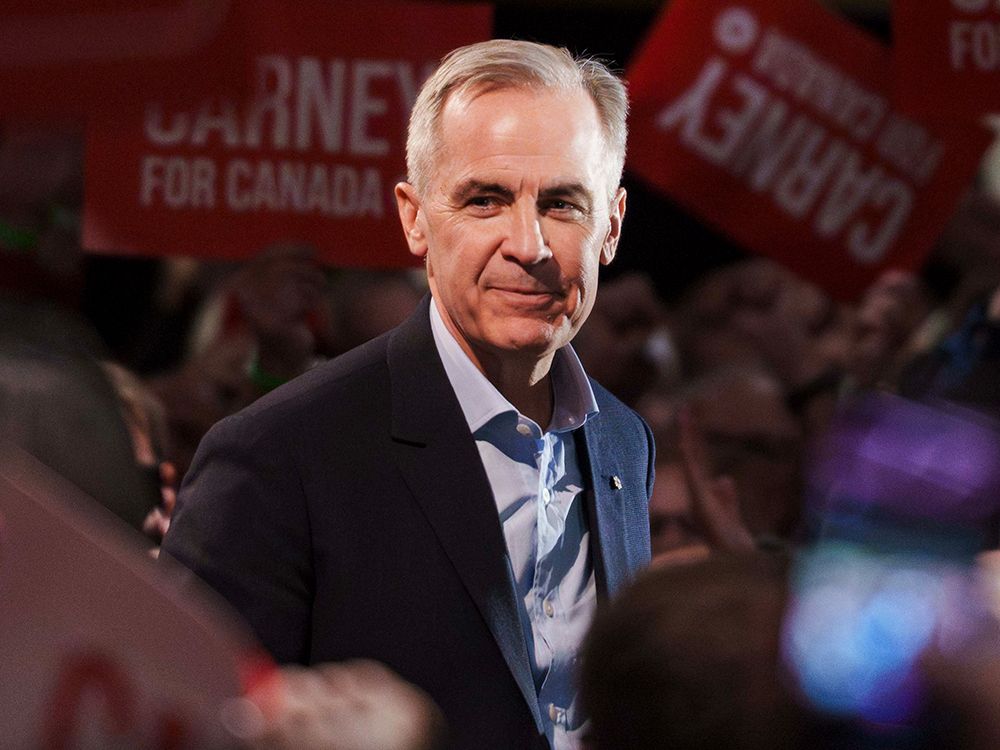
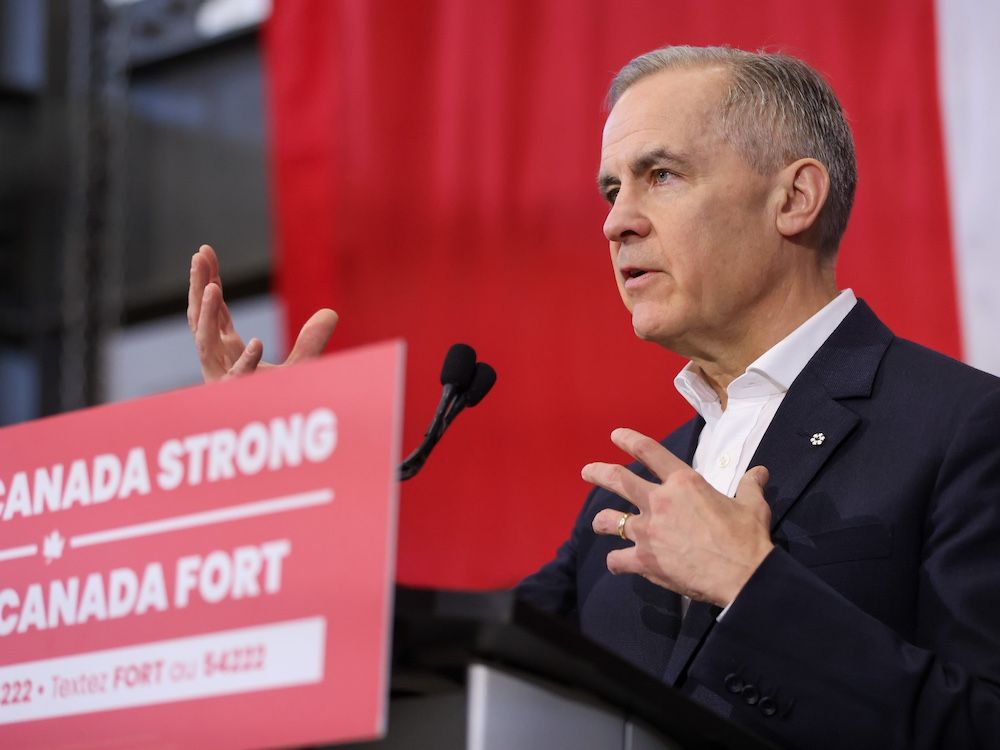
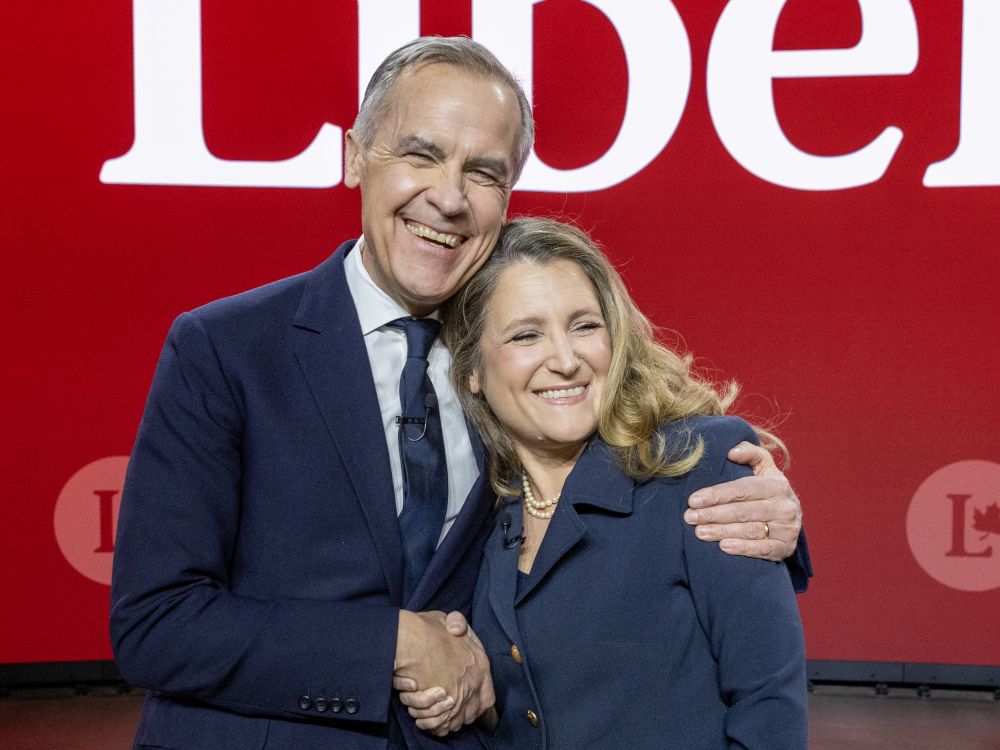
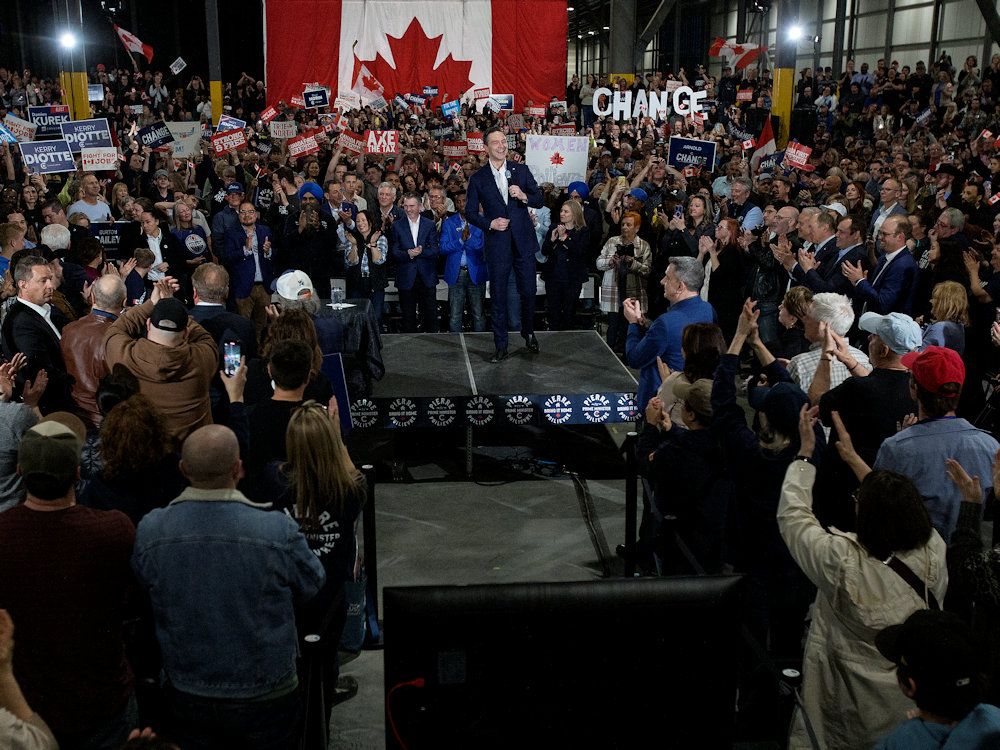
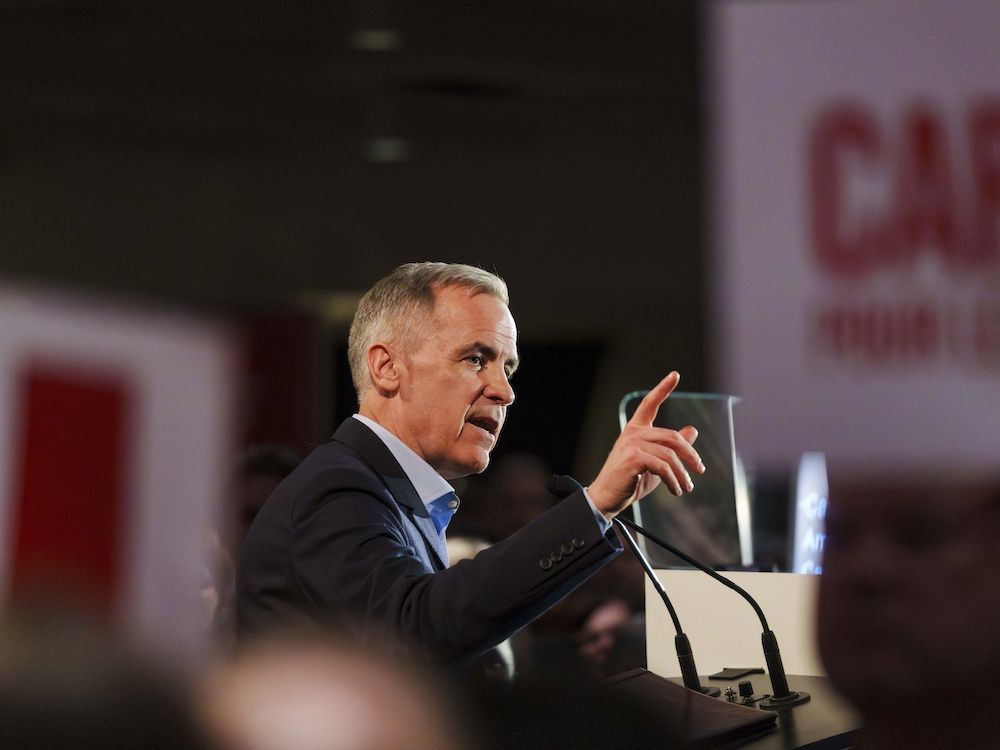
Liberal Leader Mark Carney speaks to supporters during a liberal party rally at the Red and White Club at McMahon Stadium in Calgary Alta. on Tuesday, April 8, 2025.  (Photo by Noah Korver)

Mark Carney likes to catalyse.

It’s one of his favourite words. When he finally agreed to join a Liberal task force in September — bowing to repeated entreaties from a flailing government — he described himself as “a catalyst in a much broader effort.”  Read through official plans for “a Mark Carney government” and the term appears again and again.

A Carney team would

adopt

a new fiscal approach “so that scarce public investment dollars catalyse multiples of private investment.” It would “catalyse major investments in AI infrastructure to reinforce Canada’s leadership in AI model development” and also “catalyse massive private investment in cutting-edge industries.” It would “focus on ensuring that government capital investment dollars catalyse multiple times their value.” It would “fundamentally reform the tax system and incentives to catalyse building.”

In terms of official Ottawa vocabulary, catalysing Canada would be a relief even if all it does is replace “robust” as the reigning champion of overused terminology. Everything in the Trudeau government was robust. They held robust discussions, considered robust plans, got involved in robust examinations, called for robust inquiries and generally went through life being very robust.

Catalysing is different. A catalyst, according to one dictionary, is “a substance that enables a chemical reaction to proceed at a usually faster rate or under different conditions than otherwise possible.” More pertinently, it’s “an agent that provokes or speeds significant change or action.” It doesn’t alter the action, it just makes it happen faster. Used in the context of Carney, it suggests the Liberal leader doesn’t consider his predecessor’s approach to such government mainstays as budgeting, investment, housing, immigration or affordability as necessarily bad, just badly done. The Trudeau regime was notably good on announcements, great at overspending but lousy at delivery and management. It was skilled at optics but not impressive at getting things done.

To give a for instance, the Trudeau team actively sought participation by private investment in major building projects. Its goal was “leveraging.” Ottawa would kick in a few billion dollars of seed money for much-needed investments, while “leveraging” it by drawing in several times the amount from private sector investors. Trudeau’s ministers liked the idea so much they tried it twice, with the $35 billion Canada

Infrastructure

Bank and

the

$15 billion Canada Growth Fund.

Neither produced

the

promised flood of investment dollars, perhaps because neither Trudeau nor his cabinet had the qualities or history to impress potential investors. They were politicians not entrepreneurs. The business of doing business was all a vague theory. Carney’s pitch is that he has the experience, the expertise, the contacts and the credibility they lacked.

While he definitely has the resumé, seeking to catalyse and actually succeeding at it are two different things. Carney has headed two central banks and an asset management firm with well-defined interests and skilled work forces attuned to their tasks. Plans, orders and directives could be clearly communicated and reliably implemented. That does not describe the federal civil service, a vast, sprawling entity resistant to risk, initiative or accountability, any of which might disturb the safety and security of a fixed and predictable work day. Trudeau left behind a bureaucratic blob that was 40 per cent bigger but not noticeably better. To offset its continued shortcomings he spent billions annually on consultants, advisers and outside experts, without achieving noticeable improvement.

How Carney will alter the situation will take more than just determination and brains. The way to reduce deficits without spending cuts or tax increases is to increase revenue. Eliminating the barriers to interprovincial trade is a good place to start, but also a graveyard of failed attempts. Former Conservative finance minister Jim Flaherty worked assiduously to win approval for a single national securities regulator in place of a haphazard collection of provincial poor cousins, but fell victim to lethargy, obduracy and provincial self-interest (though it was his own party that

delivered

the final blow). Not to mention that supply management, Canada’s most notorious protectionist racket, is universally supported among the parties, Carney’s included.

Jim Balsillie, the former Blackberry chieftain who splits his time between research, think tanks and philanthropy,

likens

Carney to “a more confident and efficient version of Mr. Trudeau,” pushing tired theorems based on outdated thinking. Carney

counters

that he’s “a different person with a different life experience and a vastly different professional experience than the (former) prime minister. Different person, different policies, different approach to governing.”

While he’s certainly a change in personality, experience and business know-how, if he has a suite of ideas that differ substantially from his predecessor’s, he’s yet to reveal them. On Monday in Victoria he unveiled measures to help seniors deal with financial uncertainties, after Conservatives had earlier released similar initiatives. Both parties are pledging support for workers, incentives for business and spending on infrastructure. His biggest effort to date, cancelling the carbon tax, abandoned years of Liberal climate theology in hopes of protecting votes.

Carney acknowledges that Canada spends too much, invests too little, has a productivity problem and is notably lagging in such technology essentials as data centres, AI systems, supercomputers and the like. His remedy is “a more efficient and effective government — one that delivers better results while spending responsibly.” Every government in memory has promised less waste and greater efficiency at some time or other, yet somehow debt and spending continue to balloon.

Given the Liberals’ record on the economy, more of the same under new management sounds a bit like expecting Hudson’s Bay Co. to rise from the ashes following a quick shuffle in the boardroom. Carney may outshine Poilievre in his business experience and corporate achievements, but he also outshines everyone else in the party he’s leading. It’s the same cast that brought us to this juncture; unless Carney plans to personally handle all the top cabinet posts, some of the familiar old crew will have their hands on the same old levers. Canadians are still waiting to learn what would be new about another Liberal government, other than it would include Mark Carney.

National Post


The greatest victims of extremist interpretations of Islam are Muslims themselves. This uncomfortable truth undermines Canada’s approach to combating anti-Muslim bigotry, as outlined in “The Canadian Guide to Understanding and Combatting Islamophobia.”

The guide defines Islamophobia broadly as, “Racism, stereotypes, prejudice, fear or acts of hostility directed towards individual Muslims or followers of Islam in general.” This definition creates an intellectual sleight of hand, conflating prejudice against Muslims with criticism of certain doctrines or political movements operating under the banner of faith.

The term “anti-Muslim bigotry” serves us better than “Islamophobia,” as it clearly identifies what we should oppose: discrimination, prejudice and hatred directed at Muslims as people.

Islamophobia, with its “phobia” suffix, implies that any fear or criticism of Islam itself is irrational and racist. This linguistic imprecision has real consequences for civil liberties and public safety. The guide does reference “anti-Muslim hatred,” but wrongly conflates it with Islamophobia.

When we intentionally conflate criticism of ideas with hatred of people, we betray both liberal principles and the Muslims fighting for change within their own communities. These Muslim voices are often the first to be silenced by accusations of enabling Islamophobia and find themselves abandoned by the very western liberals who should be their natural allies — a perverse outcome of supposedly “progressive” thinking.

The guide’s recommendation to “centre diverse Muslim voices” sounds admirably inclusive until one realizes which Muslim voices are systematically excluded: secular and reformist Muslims, as well as those who reject the injection of extremism and antisemitism into Islamic doctrine.

Instead, the most extreme political interpretations are presented as the voices of the community. This betrays Muslims fighting for liberal values and denies the rich diversity of thought within Muslim communities themselves. It also creates the false impression that Islam is monolithic, rather than dynamic and evolving.

The consequences extend beyond intellectual discourse. Across campuses, literary festivals and public forums, speakers who critique certain Islamic doctrinal interpretations or practices are labelled as bigots and effectively silenced.

Extremists have weaponized western guilt and liberal sensibilities, learning that calling someone “Islamophobic” can end careers and shut down debate. Thus emerges the circular logic of Islamophobia: any criticism of political Islam becomes evidence of bigotry, and any attempt to expose this fallacy becomes further proof of prejudice.

The guide’s references to an “Islamophobia industry” further illustrate this problem by inverting reality. When critics highlight extremist literature in certain mosques or foreign funding of radical preachers, they’re addressing documented issues with potential national security implications.

Dismissing such concerns as products of an “industry of hate” shields legitimate security issues from scrutiny. This paralyzes police, security services and policymakers, who grow reluctant to investigate real threats for fear of being branded as bigots. The cost of this self-censorship is paid primarily by vulnerable communities, including Muslims themselves.

The guide’s dismissal of concerns about extremism as “fearmongering” ignores the substantial problem of radicalization in some religious institutions. This hinders an honest assessment of how religious institutions can become vectors for political influence that may undermine democratic values and social cohesion.

The guide’s media representation complaints also merit a challenge. While the media does report on world events driven by religiously motivated violence, the guide is wrong to demand de-emphasizing such events. The answer to biased coverage isn’t enforced silence, but more nuanced reporting, including platforming Muslims who clearly separate Islam from Islamist extremism.

None of this denies the reality of genuine anti-Muslim prejudice. From vandalized mosques to harassment of visibly Muslim women, bigotry against Muslims demands unequivocal opposition. Every citizen deserves equal protection regardless of faith. Fighting prejudice, however, shouldn’t require terminology that conflates people with ideology.

Islam, like all religions, needs the space for open critique and discussion, not blanket protection. This balanced position allows us to combat genuine bigotry while preserving the intellectual freedom that benefits believers and non-believers alike.

When we replace “Islamophobia” with “anti-Muslim bigotry,” we lose nothing in our fight against prejudice. What we gain is the clarity needed for both honest critique and genuine protection — clarity that serves us all in building a pluralistic society.

National Post

Dalia al-Aqidi, Haras Rafiq and Mohammad Rizwan are members of Secure Canada’s International Muslim Counter-Voice Initiative.


Liberal leader Mark Carney speaks at a campaign rally at the Red and White Club at McMahon Stadium in Calgary on Tuesday, April 8, 2025.

I’m reading my six-year-old son Lewis Carroll’s classic Through the Looking-Glass and What Alice Found There, with all its delightful nonsense talk about shoes and ships and sealing wax, of cabbages and kings.

But, in the words of the Red Queen, life through the looking glass is “as sensible as a dictionary” when ranked against what is happening in the real world.

President Donald Trump’s trade war has sparked a stock market sell-off and a rise in Treasury yields. As The Economist 

pointed out

: “This should not be happening” (yields normally fall when share prices rise, as investors flee to the safety of American government debt). We are in the bizarre position of seeing Greek 30-year bonds rated as a safer investment than their U.S. equivalents.

There is also an air of the surreal around the Canadian general election, with the Lazarus-like resurrection of the Liberals.

The Conservatives just can’t catch a break, to the point where a 

new Ipsos poll

 claims the Liberals even have an advantage when it comes to support for their energy policies. Ipsos asked which party and leader would do the best job managing Canada’s energy and resource industries, in terms of creating jobs and growing the economy.

If there is any area of policy that should be an Achilles heel for Liberal Leader Mark Carney it is this. Yet he outpolled Conservative Leader Pierre Poilievre on the question of who would be better “to balance both economic opportunities and environmental concerns” in developing energy resources.

Carney was in Calgary in his home province on Wednesday trying to salve wounds that have festered over a decade during which Albertans viewed Liberal policies as a sustained assault on their interests. In one of his rare visits to the province in fall 2018, Justin Trudeau’s hotel was besieged by angry Calgarians and he was booed at an event for his role in killing pipelines and instituting a tanker ban off the West Coast.

Carney tried to make nice, thanking Alberta’s energy workers “on behalf of a grateful nation. You are an integral part of Team Canada and you make Canada strong.”

But many Westerners will remain skeptical, remembering another Trudeau visit to the province — this one in late 2012 — when he said he was there “to confront the ghosts associated with my father,” namely the hated National Energy Program. The younger Trudeau said the resource industry helped define Canada’s success and that “no country in the world would find 170 billion barrels of oil in the ground and leave it there.”

But the reason the Liberals only have two MPs in the province is because many Albertans believe that’s exactly what Trudeau tried to do during his time in office.

Carney has made conciliatory noises but has been less than precise about his plans to develop Canada’s resources since becoming prime minister, and he continued that tendency on Wednesday.

We remain none the wiser on the

consultations around an emissions cap that he referred to

, or on the new “integrated”

industrial carbon credit market

that he has talked about obliquely.

What he did say was that his government, if elected, would issue regulatory decisions after two years, instead of five, through a “one project, one review” process.

He said Canada can’t lose sight of its response to climate change or long-term competitiveness in the energy sector. And that it means working closely with the industry to reduce emissions through carbon capture and storage projects.

But he said regulatory substitution is possible, where provinces, territories or Indigenous groups lead project assessments.

Carney said scrapping the Impact Assessment Act — previously Bill C-69 — doesn’t make sense. “Rather than stopping projects in their tracks and throwing out the whole act, (then) starting from scratch and spending the next decade in court,” he said Ottawa would sign co-operation agreements with the provinces and others to rely on their assessments.

The Liberal leader was asked directly whether he is committed to doing everything in his power to build new oil and gas pipelines and new LNG projects.

He did not answer in the affirmative, but said he has put in place a tangible process that identifies projects deemed to be in the national interest; that builds energy corridors; that puts in place a “one project, one review” approval system; and that allows for provinces to sign on to regulatory-substitution agreements, as British Columbia has already done.

“We are going to move forward as a country when we come together: federal, provincial, industry, labour and First Nations. I think we have the ability as a Liberal government to bring together all Canadians and get things done,” he said.

Stirring words but anyone with experience in the energy industry knows not to mistake motion for action.

The tone is positive, but the Liberal government has been promising permitting reform and the implementation of one project, one assessment for at least a year.

As Carney noted, British Columbia has already signed up for substitution agreements because the Impact Assessment Act already allows for this prospect. Even then, the federal government

took months to make their own decision

 to approve the Tilbury Marine Jetty LNG project on the Fraser River in Delta, B.C.

There is no guarantee that Alberta would even sign such an agreement, given the Supreme Court of Canada has ruled that provinces do not need federal recognition to assert their jurisdiction over natural resources.

What Carney does have right is the need for a sense of urgency.

In the midst of what he called “the biggest crisis in our lifetime,” Canada’s regulators appear to be living in a world of cabbages and kings.

Heather Exner-Pirot, a senior fellow at the Macdonald-Laurier Institute, pointed to the NexGen Energy Rook uranium mine in northwestern Saskatchewan, which has provincial environmental approval, Indigenous consent, capital, and demand in place. It is, in the parlance, “shovel-ready,” but requires the green light from the Canadian Nuclear Safety Commission. CNSC staff have completed their review of the environmental impact statement and have

now scheduled public hearings for … November 19

.

Carney talks of doing things at speeds we didn’t think possible. This is the epitome of the political will meeting the administrative won’t.

National Post

jivison@criffel.ca

Get more deep-dive National Post political coverage and analysis in your inbox with the Political Hack newsletter, where Ottawa bureau chief Stuart Thomson and political analyst Tasha Kheiriddin get at what’s really going on behind the scenes on Parliament Hill every Wednesday and Friday, exclusively for subscribers. 

Sign up here

.


Chad Wolf, former Acting Secretary of the U.S. Department of Homeland Security during the first Trump administration, told this year's Canada Strong and Free Networking Conference that MAGA leaders don’t really think, or care, that much about Canada.

Every year when

the (Preston) Manning Centre Networking Conference released

its program, and every year since

it rebranded as the Canada Strong and Free Networking (CSFN) Conference

, the Canadian media have gone looking for controversial speakers on the conservative movement’s annual program in Ottawa.

The Globe and Mail honed in this week

on Robert Lighthizer, an influential free-trade skeptic who is a veteran of important trade positions in both the first Trump and first Reagan administrations. Those two Republican presidents

couldn’t really be more different on the question of free trade

(not that Reagan was always doctrinaire in his support for it)

. That’s very interesting!

Perhaps we can all agree that a septuagenarian Republican veteran of such policy debates is a great person to listen to right now (I’m kidding; we can’t). But the story wasn’t so much about who Lighthizer is as it was about the fact this particular discussion, moderated by Mark Mulroney,

a vice-chair at Scotiabank

, would be closed to the media

and conducted under “Chatham House Rules.”

That means (per the London think tank that established the convention) that attendees are free to disseminate “the information received, but neither the identity nor the affiliation of the speaker(s), nor that of any other participant.” Unlike many of the CSFN events, the Lighthizer-Mulroney dialogue will not be streamed either on Rumble (from the conference itself) or on CPAC, which is also broadcasting much of the event, the conference spokesperson Alex Spence confirmed to National Post.

“Why?” is a legitimate question. And it was underscored by the kickoff event at the conference, which featured a veteran of the first Trump administration with an interesting resumé: Chad Wolf, who was Trump’s acting director of Homeland Security

until a federal court judge ruled he had been illegally appointed

, thus relieving him of his position and invalidating his suspension of the Obama-era Deferred Action for Childhood Arrivals policy, which granted certain children of illegal immigrants amnesty from deportation.

Wolf is perhaps second-best known for

an underling claiming he had ordered him

to stop sharing information up the chain of command about potential Russian interference in the American electoral process.

It’s easy to imagine mainstream media outlets losing their minds over Wolf’s invitation — all the more so in this brave new world where we’re supposed to consider Wayne Gretzky a quisling and travel to the United States an act of treason.

But in discussion with former Conservative Party of Canada president John Walsh, Wolf shared a few key things about the mainstream MAGA view of Canada that we should all want to hear, especially since Americans of all political stripes tend to be so charmingly solicitous when you get them out of their comfort zones.

Apparently, the MAGA royalty don’t really think, or care, that much about Canada. Over and over again, Wolf — who, remember, was in charge of border security — stressed that the Mexican border has always been, and still is, the major problem.

”A lot of people in the United States don’t realize we have two borders,” Wolf said at one point. “They focus almost exclusively on the southern border. And … the threats — the human trafficking, the illegal narcotics — I mean, it’s where the game is at.”

“All statistics” prove this is true, said Wolf. He seemed to have had very little conception of the fentanyl problem as it pertains to Canada, except to stress that China and Mexico were

far

bigger problems at the moment.

Also: Trump wants us to move way faster than we’re used to — on “Trump time,” as Wolf called it.

“Things … cannot happen in months. We’re talking days and weeks,” he told Walsh. “And that is a little different and a little difficult for folks in D.C. to contemplate and wrap their heads around.”

The Canadian political establishment, presumably, even less so. Haste makes waste, but so does sloth. We should work on that.

Wolf also basically conceded American conservatives like Canada’s traditional immigration policy to the extent it was designed to attract people willing and able immediately to contribute to the economy. That has been the cornerstone of Canada’s immigration consensus (which Walsh mentioned) for decades, at least until recently.

“As a country, to be able to control who comes in and who doesn’t based on their resources is a really, really fundamental concept,” Wolf told Walsh. “Sounds like you guys are doing it. We haven’t done that in the United States in a long time.”

There was plenty in what Wolf said to pick apart, roll your eyes at and otherwise pooh-pooh. There was nothing to suggest the encounter wasn’t worthwhile, however. “Meeting jaw to jaw is better than war,” Winston Churchill famously said. Americans and Canadians haven’t been at war — quite the opposite — for more than 200 years.

Engagement is the way forward.

National Post

cselley@postmedia.com

Get more deep-dive National Post political coverage and analysis in your inbox with the Political Hack newsletter, where Ottawa bureau chief Stuart Thomson and political analyst Tasha Kheiriddin get at what’s really going on behind the scenes on Parliament Hill every Wednesday and Friday, exclusively for subscribers. Sign up here.


Liberal leader Mark Carney speaks during a campaign stop at the Iron Workers Local Union 725 offices in Calgary on Wednesday April 9, 2025. 
Gavin Young/Postmedia

“One can only correct inappropriate policies in a timely manner if one sticks to seeking truth from facts.”

That will be an uncontroversial proposition to anyone who draws distinctions between good-faith truth claims and instances of brazenly fabricated hogwash. It should be similarly uncontroversial by now to any reasonable person that U.S. president Donald Trump is either unwilling to draw such distinctions, or he’s congenitally incapable of doing so.

Either way, a bitter antipathy to the fact-discerning habits of traditional news media is a defining feature of the Trump administration, and Trump lieutenant Elon Musk, arguably the second most powerful personality in the Trump White House, has become a fountainhead of disinformation and hysterical propaganda, having transformed his platform “X” into something most closely

resembling

Beijing’s preferred media-manipulation device, WeChat.

It has gone beyond vindictive resentment over various news organizations’ disdain for President Trump’s “Make America Great Again” constituents. The White House went so far as to rescind the Associated Press news service’s customary access privileges for merely refusing to amend its style guide to replace “Gulf of Mexico” with Trump’s executive-order “Gulf of America” name change.

In China, uttering those words — one can only correct inappropriate policies in a timely manner if one sticks to seeking truth from facts — can land you in a lot of trouble these days. The editors of the nominally independent Caixin Media business news platform was punished for raising the admonition about seeking truth from facts in a December 2023 editorial that was mildly critical of the Communist Party’s reckless mismanagement of the Chinese economy. The editorial was made to vanish.

Around the same time, the Zhongtai Securities economist Li Xunlei published a column on the news site Yicai and on his personal WeChat account referring to a Beijing Normal University study showing that seven in 10 Chinese citizens were somehow surviving on about $280 a month. Yicai was made to scrub the column. Its headline on the multi-purpose messaging platform WeChat is accompanied by the message: “The content can’t be viewed due to violation of regulations.”

You’d want to be especially cautious in the effort to comprehend Trump’s just-announced additional tariffs on U.S. imports of Chinese merchandise to a rate of 104 per cent — which Beijing has matched with what it’s at least arguably accurate to describe as reciprocal import duties of 84 per cent on imports of American merchandise. Trump has since raised his China tariff to 125 per cent.

China’s global outreach efforts stand to benefit enormously from the Trump administration’s conscious or unconscious decision to alienate the United States’ traditional allies and trading partners by launching what the White House has falsely described as “reciprocal” tariffs, as there’s nothing reciprocal about them (though many of those tariffs were put on a 90-day pause Wednesday).

Beijing is clamping down hard on any public notice of the wreckage Xi Jinping has been making of the Chinese economy. Even so, there’s good reason to believe Xi Jinping is quite serious about his professed determination

to fight Trump’s trade war barrages.

Paradoxically, during last year’s U.S. presidential election campaign, Beijing’s foreign-influence machinery was cranked into high gear, replicating Russia’s massive 2016 bot farm advocacy for a Trump win. Beijing’s online masquerades were out in full force last year to target the Biden-Harris Democrats.

Apart from making new friends from America’s new enemies, China is in a much better position to weather a long-haul trade war than the United States is. American buyers comprise less than 15 per cent of China’s $3.5 trillion export market, and the United States can’t easily reroute its textile and electronics supply chains in a repeat of Trump’s first term as president. India is now up against a 26 per cent American tariff barrier. Vietnam is facing a 46 per cent import duty hurdle, and Taiwan’s penalty is 32 per cent.

Canada is enduring a complex jumble of tariffs, threatened tariffs, and on-again, off-again tariffs in a potentially catastrophic dilemma: squeezed between two global hegemons and subject to extortion and trade blackmail by both of them, with no dearth of “domestic” forces pulling in China’s direction.

A caveat about China’s resilience: nobody really knows what the Chinese economy can sustain. Seeking truth from facts in China can be a very dangerous line of work. After being detained last April for having said unflattering things about the regime’s handling of the economy generally and Xi Jinping’s mismanagement specifically, the respected economist Zhu Hengpeng, by last September,

simply disappeared.

Zhu was the director of the Chinese Academy of Social Sciences’ Public Policy Research Center, which reports directly to the Chinese Communist Party’s State Council. Three days ago, the centre

was shut down

and any activity carried out under its auspices were deemed illegal. The centre’s social media accounts have gone dark along with its website. “All activities carried out in the name of the former research centre are illegal and legal responsibility lies with the perpetrators,” according to a statement from the Academy’s Institute of Economics.

What got Zhu into trouble were comments he made in a private chat group hosted by WeChat. The platform is closely monitored, censored and manipulated by the Chinese state police. According to Global Affairs Canada, perhaps a million Canadians rely on WeChat for various uses.

Canadians should be familiar with the mischief the Chinese Communist Party makes with WeChat. According to the Hogue Commission on Foreign Interference and the Security and Intelligence Threats to Elections Task Force, Beijing has run clandestine disinformation operations through WeChat targeting Conservative shadow foreign affairs minister Michael Chong two years ago, and more recently targeting former deputy prime minister Chrystia Freeland during her challenge to Mark Carney in the Liberal leadership race.

In recent days, the SITE Task Force disclosed that it had detected a clandestine operation run by Beijing’s operatives on WeChat that was apparently aimed at bolstering Carney’s credentials as a potential prime minister, referring to Carney as a “rock star” and the “adult in the room” of the federal election campaign.

Asked Tuesday why Beijing would be singing his praises, Carney told reporters: “I have absolutely no idea, and yeah, I have absolutely no idea, and, well, I’ll leave it at that.”

Of course it’s impossible to know what Carney was thinking, but no reasonable person could be led to believe that Carney has no idea why Beijing would want him to come out on top in this month’s federal vote.

The Liberal party’s intimacies with the Chinese Communist Party go back decades. Beijing’s business-class proxies are deeply embedded in the Liberal party establishment, as the recent Paul Chiang scandal once again made plain. The evidence is irrefutable that in the last two federal elections Beijing undertook strenuous clandestine exertions to monkeywrench the vote in several ridings to the advantage of its preferred candidates and to the disadvantage of the Conservative Party.

During his time in the leadership of Brookfield Asset Management, Carney was back and forth from China frequently and was a vocal advocate of Beijing’s plans for a “multi-polar world” and Beijing’s hopes to challenge the U.S. dollar as a reserve currency with China’s own renminbi.

As it’s said, “one can only correct inappropriate policies in a timely manner if one sticks to seeking truth from facts.”

So let’s do that as often and as rigorously as we can.

National Post


Conservative leader Pierre Poilievre made a campaign stop at a tire shop in SE Edmonton on Tuesday, April 8, 2025. Photo by Shaughn Butts/Postmedia

Something’s different. Pierre Poilievre has transformed.

Over the years, he’s gone from attack dog backbench MP to senior cabinet minister, to, finally, confrontational opposition leader. While not all found his snark and direct approach to their taste, his unrelenting missives worked. Daily, he stood in Question Period, tearing holes into Liberal policies and non-answers from the prime minister, eventually torpedoing the party’s popularity, forcing them to push out their leader.

Up until recently, he was still in that mode. But there’s been a shift as of late. When asked by a reporter about the size of his rally Monday night in Edmonton, he didn’t fall back into that approach. Instead, he projected the light playful confidence befitting an opposition leader with these successes under his belt, one who realizes he can still fight without emphasizing his bite. This is how one becomes prime minister in Canada

On Tuesday, while holding a news conference at an automotive repair shop in Edmonton, Pierre Poilievre had what some might call an uncharacteristically light

exchange

with Globe and Mail reporter Laura Stone:

Poilievre: “Hi Laura. How’d you like our rally last night?”

Stone: “Well, I wanted to ask about your rallies and whether size matters.”

This evoked a smile and laugh from Poilievre.

This is where the niceties end. The framing of a question about whether he was operating in an echo chamber wasn’t what I’d call charitable. The reporter, herself, even admitted to exaggerating in her questioning:

“I actually want to know about your rallies and what your strategy is, and who you’re talking to, because you bring up things like woke mob, century initiative, bulldozing the CBC, I’m exaggerating, but getting rid of CBC HQ. At what point are you just talking in an echo chamber to people who already feel that way here? Do you feel like these are broadening the tent of support to liberal or undecided voters to get them on board with your campaign?”

But instead of getting his back up, which he has done in the past, Poilievre lifted his head high, maintained a smile and responded with grace. This time, asking questions of his own: “I think it’s pretty broad. I think, how many people do you think we had last night?

Stone responded, “Thousands.”

Poilievre continued, in a kind manner, clearly enjoying the process and pressing her on the numbers, “Well, that’s pretty obvious, I think you can be more precise than that.” Stone mentioned conflicting reports of 10,000 and up to 15,000, but was hesitant to estimate.

He pressed on, adding flattery, “One last question. How, when, was the last time we had a rally that big in Canada? You’re a very well-informed person. I know that if there were a bigger rally than that you would know about it.”

Poilievre has been masterful at being Socratic — answering a question with another question — for some time now. Who can forget the, “How do you like them apples?”

interview

, where he very stoically responded to an interviewer who suggested he was taking a page out of Trump’s playbook. But when Poilievre drilled down, the reporter couldn’t explain what he meant by the implied accusation. And yes, it was an accusation, not a question.

What was new this time was his grace in the face of pointed questions. Visibly and audibly, Poilievre did not allow the reporter get under his skin. He listened charitably, smiled, tilted his head as he asked questions for clarification and comfortably answered: “Listen, I think to have 10 or 15,000 people at one political rally, this is a movement like we’ve never seen, because people want change they want to put our country first for a change.” His change in tone and body language from apples until Edmonton, would have moved him from a B to A+ student in a rhetoric class — the difference between a fairly accomplished member of society and someone capable of leading the country.

What accounts for this change? If I were to guess, I think it took some time for his accomplishments to catch up with his confidence. The numbers at the rally in Edmonton and the glowing backing of former Conservative prime minister Stephen Harper, no doubt, helped put that wind in his sails.

Harper

told

the crowd: “I am the only person who can say that both of the men running to be prime minister once worked for me, and in that regard, my choice, without hesitation, without equivocation, without a shadow of a doubt, is Pierre.”

Harper described Poilievre as “smart, articulate, possessing tremendous passion for our country and strong convictions about sound public policy.” He highlighted his growth from occupying several positions during his time in government, from backbench MP to opposition leader, pointing out that Poilievre didn’t simply parachute into the role. Here, Harper took one of two, not-so-subtle swipes at Liberal Leader Mark Carney. The second was at Carney’s claim he led Canada through the global financial crisis. Harper told the audience in no uncertain terms that it was his government and the late Jim Flaherty who deserves that recognition, not Carney.

Harper stressed to those in attendance that the most important characteristic a prime minister needs is “elected, accountable, political experience.” Poilievre has this in droves. This is inarguable. And now he’s shown us he can also display the grace that communicates he understands it to be true, unlike our parachuted-in, Monopoly man-like caretaker prime minister, who we may discover after election day has only been visiting.

tnewman@postmedia.com

X: @TLNewmanMTL


Mark Carney, left, poses for a photo with Christia Freeland following a Liberal leadership debate in Montreal on Feb. 24.

Liberal Leader Mark Carney is shaping up to be as much of a “feminist” prime minister as his predecessor, Justin Trudeau. Which is to say:

not at all

.

An early warning sign of his attitude towards women was seen last month, when a clearly exasperated Carney

condescendingly told

CBC reporter Rosemary Barton — who was asking Carney a tough but entirely reasonable question about his personal finances — to “look inside yourself, Rosemary.”

No one, not even Liberal supporters, can argue that his snide reply to a seasoned reporter like Barton was anything other than a major gaffe. And this was a female reporter from the CBC, no less — Carney basically shot her with friendly fire.

The same could be said of Carney’s later

interaction

with Globe and Mail reporter Stephanie Levitz, whose question about Carney’s blind trust resulted in a similarly condescending response. “Look, Stephanie,” s

aid Carney

, followed by mocking laughter, “I follow the rules of the ethics commissioner.” How silly of Levitz to preempt a potential Liberal scandal! Who does she think she is?

Are you beginning to sense a pattern with Carney? It’s hard not to, particularly after the comments Carney went on to make about Alberta Premier Danielle Smith this week.

At one of his campaign rallies, on the topic of tariffs, Carney suggested he would send Ontario Premier Doug Ford to appear on Fox News. He then mocked Smith, saying, “And we’re going to send Danielle next, we’re … well no, maybe we won’t send Danielle.…

“No, maybe we won’t. We won’t send Danielle. We’re going to keep her. No, it was a bad idea. Strike that, just ignore that.” His disrespect for Smith, both for her agency and her intelligence, was palpable.

During a presser this week, Smith was asked to comment on Carney’s remarks. “Well, I’ve noticed this with progressive men, how much they talk about how much they support women — until they meet a strong, conservative woman. And so this is a pretty consistent type of approach that I’ve seen not only from the current prime minister, but the former one, as well,”

Smith said

.

“And the attitude is ‘sit down and shut up.’ Well, I don’t shut up, I make sure that Albertans know exactly how I feel about issues and I’m going to continue advocating on behalf of my province, whether he likes it or not.”

It was the perfect response. Smith is popularizing the notion that so-called progressive men are neither feminist nor progressive when it comes to women — a long overdue reckoning for the males of Canada’s leftist political elite.

These are men who parrot the misogynist slogans of the deranged third-wave feminist movement, which insists that prostitution is run-of-the-mill — or even empowering — work for women, and that anyone who claims to be a woman is one. These are the men who’ve sold out Canadian women’s sex-based rights.

And Carney fits right in. On March 8, Carney made a social media post to commemorate International Women’s Day. Did he have some thoughtful words to share about the women he admires or respects the most? Something about his wife, daughter or mother, perhaps?

No. He shared a

few campaign photos

of himself standing with unnamed women, with a comment that might have been written by artificial intelligence, or perhaps by a 12-year-old boy trying to pad an essay on the same topic: “Canada has been built by so many strong, resilient women who care about our country, and want to make it better.

“Today, I celebrate the contributions and hard work of women across our country, including those who are still building it.

#IWD

It looks as though Carney put more effort into matching his grey sweater and white collared shirt than he put into expressing his admiration for the women who are “still building” our country. What are us women “still building” exactly? I couldn’t say, and apparently Carney can’t, either.

It is difficult to know what’s worse: Trudeau’s obsequious, pandering faux-feminism, or Carney’s flat-lining, barely-alive attempts to go through the motions. No matter. Whichever version of fake feminist we have at the helm, one thing is not going to change: the Liberal party will never be “for women.”

We can expect Carney will parrot

the Liberal line

about how he will never take away a woman’s right to choose — a cheap political trick to score points against the Conservatives, who will also never take away a woman’s right to choose.

And Carney will make his obligatory International Women’s Day social media post next year, too. Perhaps it will even contain specific praises, or — God willing — make some sense. There really is nowhere to go but up when it comes to Carney and the way he speaks to, and about, women.

Carney isn’t fooling me. He doesn’t stand with women — and we should not stand for him.

National Post


Conservative Party Leader Pierre Poilievre speaks to the crowd during a campaign rally in Nisku on Monday April 7, 2025.

First Reading is a Canadian politics newsletter that throughout the 2025 election will be a daily digest of campaign goings-on, all curated by the National Post’s own Tristin Hopper. To get an early version sent directly to your inbox, sign up here.

TOP STORY

As Liberals denounce the massive rallies following the Conservative campaign as being too Trump-like, Tory Leader Pierre Poilievre is yet to break attendance records set by the Liberals themselves more than 50 years ago.

On Monday night, an estimated 15,000 people turned up in the Edmonton area for a Canada First rally featuring Poilievre and former prime minister Stephen Harper.

The gathering crashed local cell phone networks, and was both the largest of the 2025 campaign and the largest in the 22-year history of the modern Conservative Party.

The Liberals have

accused

Poilievre’s rallies of being Trumpian in nature. On April 5, the official Liberal Party X account uploaded video of Poilievre talking about crowd sizes, and contrasting it with similar statements by U.S. President Donald Trump. “Poilievre is obsessed with crowd sizes. Who does that remind you of?” the post says.

But long before Poilievre was drawing large crowds, a Liberal leader was doing the same.

If Poilievre wants to break the all-time national attendance record for an indoor partisan political rally, he still has a few thousand attendees to go until he can breach a benchmark set by then prime minister Pierre Trudeau in 1979.

It was an election that Trudeau would ultimately lose to then Progressive Conservative leader Joe Clark. But on May 22, Trudeau capped off the campaign with an overflow rally of 18,000 at Toronto’s Maple Leaf Gardens, then one of the largest indoor venues in the country.

Crowd sizes are notoriously difficult to estimate — particularly in an era before drones or digital photography — but the numbers for the 1979 rally are reliable given that Maple Leaf Gardens had a known seating capacity (16,000 for hockey, 18,000 for concerts).

And that wasn’t all that unusual for Trudeau, whose 15 years as prime minister featured several unusually large partisan gatherings.

In Trudeau’s first election, in 1968, a crowd of between 25,000 and 40,000 gathered to see him in Montreal’s Place Ville Marie in an event that made headlines as “another huge Trudeau crowd.”

The 1968 campaign would also see convened a crowd estimated at 45,000 in Toronto’s Civic Square, which was reported as “the largest political rally ever in this country.”

Canadian political culture has not traditionally featured all that many mass rallies, in part because it’s often too cold to host them outside and there are limited options for indoor events. To this day, Canada is home to only a handful of indoor venues with seating capacities of more than 20,000.

In 1957, then Progressive Conservative leader John Diefenbaker led what has been described by historians as a “perfect” campaign. The election — which ended in a record-breaking landslide for the Progressive Conservatives — was defined by overwhelming crushes of people intercepting Diefenbaker in hotel lobbies or at train stations.

But given the limited venue options in 1950s Canada, the Diefenbaker campaign was never able to host a single gathering of more than a few thousand.

The “crescendo” of the 1957 campaign, according to reporters at the time, was when 6,000 people crammed into Vancouver’s Georgia Auditorium. “I didn’t think Canadians could get so het up about politics,” said one attendee quoted in the Vancouver Sun.

Poilievre’s rallies, notably, have often been convened in industrial venues configured to hold standing crowds. That was the case on Monday, where the rally was held at an empty warehouse near the Edmonton International Airport.

The day prior, Poilievre had appeared at a warehouse in Penticton, B.C., before a crowd

estimated at 3,000

by the Penticton Herald — a number equivalent to roughly one tenth of the city’s population.

When it comes to generalized political rallies, meanwhile, the record easily belongs to the 1995 “unity rally” convened in Montreal to convince Quebecers to vote “No” in that year’s secession referendum. The oft-repeated estimate is that 100,000 people attended, including thousands who bused in from neighbouring provinces.

And the Canadian record for the largest one-day ticketed gathering of any kind still belongs to 2003, when the SARSstock rock concert attracted as many as 500,000 attendees to Toronto’s Downsview Park.


LAST RIDE OF THE GIGANTO BALLOTS

In Conservative Leader Pierre Poilievre’s home riding of Carleton, this election will once again feature absurdly long ballots, similar to the ones used in a June by-election in Toronto-St. Paul’s. It’s the work of the Longest Ballot Committee, an activist group that discovered there’s no real material barrier to running dozens of independent candidates in a single riding. This whole thing might also be the work of communists. The Longest Ballot Committee has multiple

featured pages

 on the Communist Party of Canada’s official website.

 Alberta Premier Danielle Smith has responded after Liberal Leader Mark Carney made a joke at her expense in a campaign appearance in Victoria. “Well. I’ve noticed this with progressive men, how much they talk about how much they support women until they meet a strong conservative woman,” she said. Carney was joking about the envoys he would send to the White House to negotiate an end to the trade war, when he threw out Smith’s name as an example of who he wouldn’t be sending.

CONSERVATIVE ENDORSES CONSERVATIVE

Former prime minister Stephen Harper officially endorsed the Conservatives on Monday night. While it’s not all that unusual for a Conservative to endorse Conservatives, Harper has sat out the last two federal elections.

Harper’s full endorsement speech 

is here

, but the line everyone seems to be mentioning is when Harper said that both Conservative Leader Pierre Poilievre and Liberal Leader Mark Carney used to work for him (Poilievre was a Conservative backbencher, Carney was appointed governor of the Bank of Canada by Harper). Said the ex prime minister, “in that regard, my choice, without hesitation, without equivocation, without a shadow of a doubt is Pierre Poilievre.”

Get all of these insights and more into your inbox by signing up for the First Reading newsletter here.


Hydromorphone pills sit on a table Thursday, Jan. 26, 2017 in Belleville, Ont.

A new peer-reviewed

study

has found that British Columbia’s “safer supply” policy was associated with a statistically significant increase in opioid hospitalizations with no reduction in deaths. To make matters worse, it found that the addition of drug possession decriminalization policies was associated with a further increase in hospitalizations. This research

vindicates critics

of the harm reduction movement, and raises serious concerns about whether the

federal Liberals

and

B.C. NDP

acted recklessly by forwarding these untested policies.

The study, which was published in JAMA Health Forum last month, says that safer supply alone was associated with a 33 per cent increase in opioid hospitalizations, while the introduction of drug decriminalization was associated with a further spike, leading to a combined 58 per cent increase compared to provincial rates seen in the late 2010s.

Although some harm reduction activists insist that

safer supply

and

drug decriminalization

save lives, the study found that neither policy was associated with decreased opioid deaths — but there was no associated increase, either.

The study used publicly available health data to compare hospitalization and mortality rates between B.C. and six other Canadian provinces, with the latter acting as a control group. This data spanned from the beginning of 2016 until the end of 2023, and, for the purposes of the study, was divided into three periods: pre-safer supply (2016-2019), only safer supply (2020-2022) and safer supply plus decriminalization (2023).

The researchers determined that “neither the safer opioid supply policy nor the decriminalization of drug possession seemed to alleviate the opioid crisis,” and hypothesized that

widespread diversion

of safer supply opioids onto the black market, which has been “

increasingly documented

,” could explain increased hospitalization rates.

The researchers cautioned that “diverted opioids could attract new users, including

youth

,” and that such users “face a higher risk of overdose, even from pharmaceutical-grade opioids,” because they are opioid-naive. However, they added that “the absence of a significant increase in overdose deaths suggest that the availability of pharmaceutical-grade opioids may have mitigated some of the risks associated with (the) unregulated opioid supply, potentially reducing the severity of outcomes.”

In other words: they suspected that diverted safer supply opioids may have saved some lives, but that this benefit was partly cancelled out by new deaths caused by diversion-related drug use — hence stable mortality and more hospitalizations.

However, according to Dr. Lori Regenstreif, a Hamilton-based addiction physician, there could be a significant delay before safer supply diversion causes a measurable increase in deaths, as individuals who develop addictions to pharmaceutical opioids generally die many years later, often after escalating to stronger substances. She noted that such a delay was observed with the OxyContin crisis, which safer supply bears a

striking resemblance to

. This muddles the study’s claims about the potential lifesaving benefits of safer supply opioids, which are already meagre to begin with.

The researchers were far more uncertain about the effects of B.C.’s drug decriminalization experiment, predominantly because it was implemented in tandem with safer supply, making it impossible to study in isolation. They further noted that, in this context, increased hospitalizations could be explained in two opposing ways: either decriminalization increased drug use and caused new overdoses, or, alternatively, it “reduced stigma associated with drug use, encouraging persons merely gave addicts the confidence to seek medical assistance they would’ve otherwise avoided.”

The study data cannot, by itself, clarify which explanation is more plausible. As such, either side of Canada’s harm reduction debate could conceivably present these increased hospitalizations as a victory, depending on what other data they use to contextualize this phenomenon.

As the evidence base behind

safer supply

and

B.C.-style drug decriminalization

is very thin, and marred with

low-quality research

, this study is an invaluable addition to the national discourse —  but it is also undermined by some serious methodological limitations.

The statistical analysis it employed (known as “

difference-in-differences

”) relied on drawing comparisons between B.C. and several other Canadian provinces — but many of these comparator provinces also had safer supply during the study period, to varying extents, which undermined their efficacy as a control group. In Ontario, for example, seizures of hydromorphone, the opioid predominantly distributed via safer supply,

increased by over 1,000 per cent

in several mid-sized cities between 2019 and 2023.

To make a comparison: if you want to study how cigarettes affect cancer rates, it’s better to compare a daily smoker to a non-smoker, rather than to a weekly one.

Real life is messy, and, according to the study, there were many other confounding factors which could have contributed to the divergent health outcomes between the provinces, such as employment rates or changes in the availability of naloxone or evidence-based addiction medications (i.e. methadone).

Many of the authors behind this study released

a similar paper last year

, which also found that safer supply was associated with increased hospitalizations, but received some criticism for failing to address these confounding factors. While this new paper improves upon its predecessor by taking a “synthetic” approach that filters out some potential confounders, it’s just not feasible to perfectly eliminate these potential sources of bias.

In an email to National Post, Dr. Meldon Kahan, medical director of the

META:PHI Provincial Network

, wrote that it is “very difficult to control for confounding variables in large observational studies,” and cited evolving fentanyl distribution patterns as an example: “If B.C. gets fentanyl from China before it’s distributed to other provinces, then B.C. might have a larger share of the fentanyl supply than other provinces, and this could explain the discrepancy in overdoses.”

Despite methodological limitations, Kahan nonetheless believed that the study supports the hypothesis that safer supply drugs are being widely diverted, expanding the consumption of opioids and exacerbating the national overdose crisis.

National Post


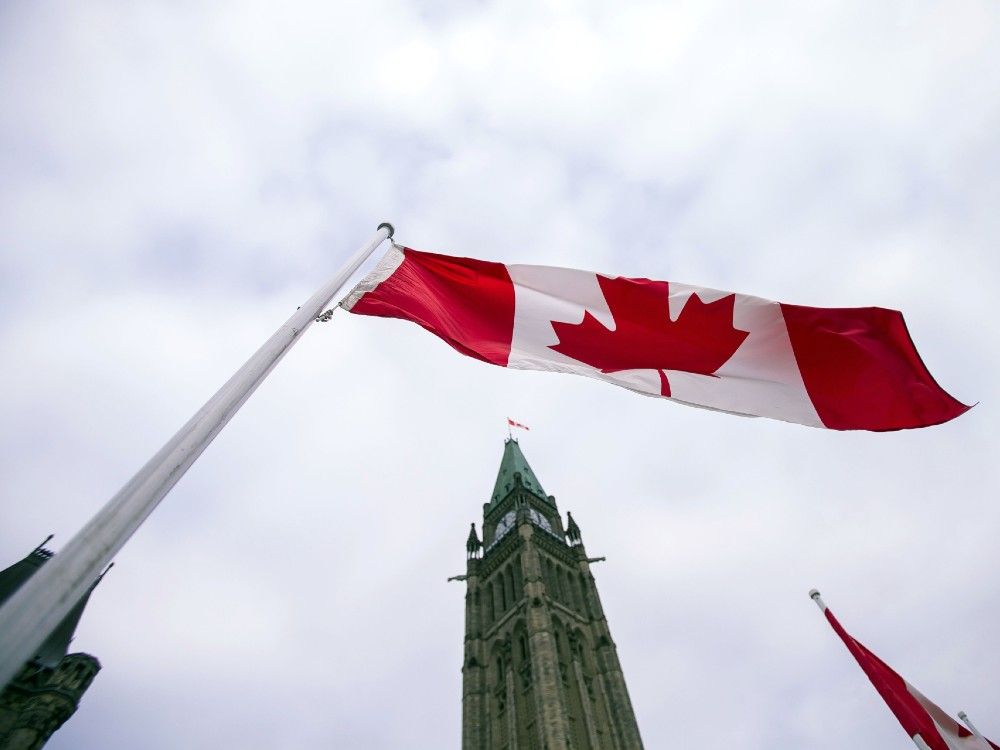
Canadian flag in front of the peace tower on Parliament Hill in Ottawa.

Prime Minister Mark Carney’s willingness to shield an MP who openly mused about targeting political rivals is more than a scandal.

It erodes Canadians’ trust. 

When a government leader tolerates this sort of behaviour it sends a message that accountability and safety are negotiable. It will certainly harden the opinions of rightfully cynical Canadians, just

28 per cent

of which have confidence in the federal parliament.

Federal and provincial governments must react immediately to counter foreign interference threats and to create policies that will protect Canadians. These policies should ensure that children can leave their bikes on their front lawns, and all can travel to and from work, or go about their business, without worrying about personal safety, a reality Canadians once enjoyed.

It would be tempting to say that this is not your parents’ Canada anymore, but even young adults can remember when things were different. And this change appears to have happened fairly recently.

Coming out of the COVID-19 pandemic in 2023, a survey found that

64 per cent

of respondents reported feeling that crime and violence had worsened. In January, another survey found that

one-third

of newcomers to Ontario, such as Ukrainians and Indians, felt safer in their countries of origin than in Canada.

Canada now

experiences

higher property crime rates than many of its developed-world peers, particularly in recent years, with notable increases compared to countries like the United States.

Car theft has become so widespread that some have dubbed Canada as “ground zero” for the crime, with instances rising an eye-popping

561

per cent in Toronto between 2018 and 2023.

In 2024, reported shootings in Toronto rose to

461

, up

34 per cent

from the previous year. In that same timespan, documented violent assaults stretched to a high of

25,819

instances.

There were several

random attacks

in downtown Vancouver near the main branch of the public library last year. In

September

, one man was murdered and another had his hand severed by a violent criminal. In December, another perpetrator stabbed a victim to death.

Retail theft has become commonplace, leading to increased costs for small business owners and endangering employees with losses of

$9.1 billion

in 2024. Workers at Loblaws are being

issued body cameras

to ward off aggressive and potentially violent behaviour from would-be thieves or other assailants, much good it may do them.

Failed government policies around bail, sentencing, and safer supply are largely to blame.

Safer supply,

endorsed

by the Liberals, and deployed by provincial governments like the B.C. NDP, has been a

disaster

. Attempts to gaslight the public into believing that giving narcotics to addicts is a good idea have been insulting to the intelligence of everyday people who saw the effects in real-time.

A recent damning

study

found that, unsurprisingly, the B.C. government’s policy of distributing free narcotics to drug addicts as well as decriminalization policies have failed to mitigate the opioid crisis. The report found that the safe supply program resulted in no net decrease in deaths and overdoses. To make matters worse, earlier reports discovered that safe supply opioids were being

diverted

for tracking on the black market.

If the federal or provincial government simply asked people who live in proximity to Vancouver’s downtown eastside they could have gotten the same conclusion for free.

In Canada today, it’s become unsurprising to see addicts

cleaning crack pipes

or

improperly disposed of drug paraphernalia

with government labelling in the local Tim Hortons. Canada’s most iconic coffee chain now doubles as a makeshift drug den.

Notably, the same federal survey that found such low trust in parliament also found that the police were the most trusted public institution, with

65 per cent

having high confidence in the officers.

Even if Ottawa and the provinces became fully committed to getting tough on drugs, crime, and disorder, the courts would still stand in the way. If bad public policy is one branch of the decaying tree sucking the trust out of Canadian life, the judiciary is another.

In 2019, a van was stopped on the highway by police in British Columbia. A sniffer dog detected drugs being transported on board, which turned out to be 27,500 pills of fentanyl, the opioid that has contributed to the

deaths

of over 50,000 Canadians since 2016.

A judge let the suspect

off the hook

because the dog improperly sat down, their trained signal to indicate they can smell hidden illegal substances. Apparently, this was a violation of the suspect’s Charter rights because the “partial sit-down” did not warrant a search of his vehicle.

Judges’ creative Charter uses aside, increased policing appears to help and might restore trust in institutions. Vancouver Mayor Ken Sim fulfilled one of his signature election promises from 2022 by

hiring 100 police officers

to bolster the ranks of the Vancouver Police Department.

Unsurprisingly, crime rates

fell

, with violent crime down 6.6 per cent, and property crime declining by almost 11 per cent. The mere presence of more police is an effective way to deter crime, let alone using their powers to combat it.

Canadians’ trust in government will not improve until they feel their personal and national security is being considered.

Carney’s choice to side with an MP under police investigation, who later resigned of his own accord, speaks to a lack of willpower to stamp out misconduct, whether it be in Ottawa or out on the street. Accountability and a culture unafraid to punish wrongdoing must begin at the very top before it trickles down, both politically and culturally.

National Post