LP_468x60
on-the-record-468x60-white

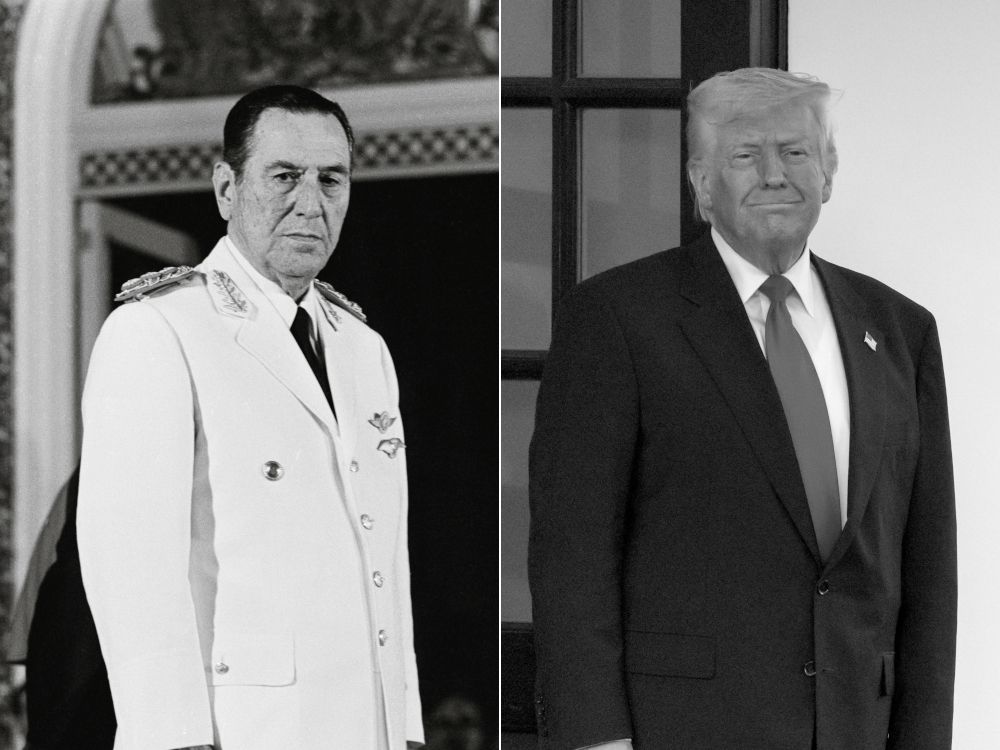
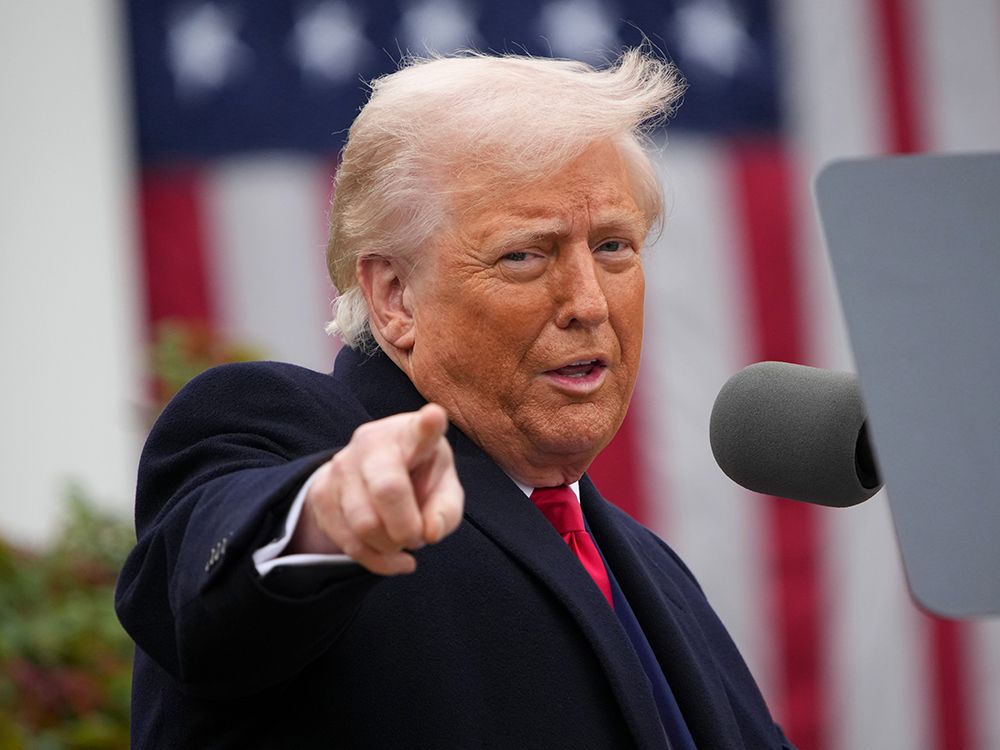
Former Argentinian president Juan Perón, left, and U.S. President Donald Trump.

Let’s be blunt: MAGA is not a conservative movement. It doesn’t conserve anything. It doesn’t uphold tradition. It doesn’t champion markets, fiscal responsibility or even the family. It’s a spiritually left-wing movement masquerading in red, white and blue. And its driving force isn’t principle — it’s grievance.

Strip away the flags, the Bibles and the tough-guy posturing, and you’ll find the ideological DNA of Occupy Wall Street — just angrier, older and clad in camo. MAGA’s worldview is not about building a free and ordered society. It’s about punishing enemies, settling scores and excusing personal failure by externalizing blame onto shadowy elites, foreigners and “traitorous” corporations. It’s class warfare, rebranded for cable news.

Economically, it’s a train wreck. This is a movement that openly scorns free trade, glorifies tariffs and believes in nationalizing industrial policy through sheer force of will. It sees profit as inherently suspect and global capital as a kind of demonic conspiracy. These are not the beliefs of the free-market right. These are the old battle cries of the anti-globalization left — just with more testosterone and fewer pronouns.

Trump slaps tariffs on everything in sight and tells his base they’re winning, even as the costs are passed on to consumers and supply chains are choked. MAGA voters cheer — not because it makes economic sense, but because it feels good to watch someone get hit. It’s not policy, it’s performance art.

The stock market? Once the sacred cow of the GOP, now it’s treated as a scam. “The stock market isn’t the economy,” they parrot, straight from the Bernie Sanders playbook. Investors are no longer the engine of innovation. They’re “parasites.” Corporations that deviate from nationalist orthodoxy are labelled “woke,” “treasonous” or worse.

And what replaces the free market? A kind of crude economic tribalism — one that rewards loyal industries, punishes the disloyal and increasingly demands the state play referee in every transaction. It’s not capitalism, it’s economic retribution.

MAGA doesn’t want prosperity — it wants revenge. The movement is animated by a belief that someone else is always to blame. If your factory job’s gone, it’s because of the globalists. If your town’s in decline, it’s because elites conspired to abandon you. If your life isn’t what you wanted it to be, it’s not your fault — it’s theirs. This is not conservatism, it’s victimhood with a red hat.

It gets worse. MAGA is not interested in fiscal discipline. It refuses to touch entitlements and demands endless government intervention, so long as it’s targeted at “real Americans.” It’s redistribution with a southern accent.

Social conservatism? That’s gone, too. Sure, MAGA members will pose for a photo with a Bible, but let’s be honest — the movement doesn’t care about virtue. It cares about domination. The culture war has become a hollow spectacle, stripped of any grounding in moral order or religious conviction. Drag shows and “wokeness” are attacked not because they offend a higher truth, but because they’re easy targets that get clicks and rile up the base. It’s not about restoring order — it’s about catharsis.

In this sense, MAGA is spiritually indistinguishable from the very leftist movements it claims to despise. Both are driven by envy. Both are obsessed with systemic oppression. Both seek to tear down existing institutions in the name of the “people.” Both confuse destruction with justice. And then there’s U.S. President Donald Trump — the archetypal strongman. His model is not Ronald Reagan or Winston Churchill. It’s Juan Perón.

Perón rose to power in 1940s Argentina by promising to smash the corrupt elite and elevate the “common man.” He positioned himself as the tribune of the working class, launched massive public works programs, handed out subsidies, raised tariffs and ruled through a cult of personality. His political philosophy — “Justicialismo” — was an incoherent mix of nationalism, labourism and economic authoritarianism. It was never about ideas. It was about control, loyalty and vengeance against enemies of the people.

Perón nationalized industry, suppressed dissent and funnelled benefits to his supporters through state largesse. The goal wasn’t prosperity — it was dependence. And that dependency bred loyalty. Sound familiar? Trumpism is textbook Peronism: loyalty to the leader over loyalty to principle. It’s a worldview defined by emotional tribalism, not rational governance. Institutions don’t matter — only who’s in charge. The economy doesn’t matter — only who wins and who loses. And truth doesn’t matter — only what gets the crowd to roar.

Trump has followed the Perón playbook, complete with dramatic rallies, theatrical appeals to the masses and a carefully nurtured sense of being “the voice of the forgotten.” MAGA doesn’t want policy. It wants spectacle. It wants fury. It wants feeling. That’s the core of the MAGA project: externalize blame, demand protection and never, ever accept personal responsibility.

There is nothing principled about this movement. It’s crude. It’s economically illiterate. It’s allergic to accountability. It doesn’t seek to conserve — it seeks to coerce. It doesn’t believe in markets or morals. It believes in power. So let’s stop pretending MAGA is the future of the right. If anything, it’s the bastard child of the populist left — a Peronist tantrum dressed up in American symbolism.

It is a movement rooted not in conviction, but in grievance. Not in liberty, but in control. Not in success, but in resentment. MAGA isn’t conservatism — it’s oppositional defiance disorder parading in the carcass of what conservatism used to be. It’s rage for its own sake, wrapped in flags and slogans, burning down every principle it used to pretend to defend.

National Post

Anthony Koch is the managing principal at AK Strategies, a bilingual public affairs firm specializing in political communications, public affairs and campaign strategy. He previously served as national campaign spokesperson and director of communications for Pierre Poilievre, as well as director of communications and chief spokesperson for the Conservative Party of British Columbia general election campaign.

Donald Trump’s massive tariff assault is convulsing global trade and stock markets, but his erratic foreign policy and national security impulses may be even more ominous in terms of global stability, creating consternation and concern among erstwhile allies in Ukraine, Taiwan and NATO.

The promised peace agreement on Ukraine “in 24 hours” is having difficulty getting off the ground. While Ukraine immediately signed on to the proposed U.S. partial ceasefire, Russia has persistently dragged its feet while continuing to inflict damage on civilians and infrastructure, most recently killing

nine children

in Ukrainian President Volodymyr Zelenskyy’s hometown.

The U.S. Special Envoy, Steve Witkoff, may have been an astute real estate dealer but his expertise on Russia and national security seem shallow. He is being played adroitly by the wily Russian Foreign Minister Sergey Lavrov and his team of Russian officials who are past masters at diplomatic deceit and deception.

In public interviews, Witkoff parrots Russian talking points, on Ukraine in NATO, on the validity of Russian “elections” in Eastern Ukraine, and on the need for an economic partnership with Russia. He has also promoted renewed Russian membership in the G7 but has sought no concessions in return and avoided any reference to security guarantees or reparations for Ukraine or war crime charges against Russian President Vladimir Putin. It is a decidedly one-sided approach — all carrots, no stick — and Trump’s threat of sanctions on Russian oil ring as hollow as his support for Ukraine.

Even worse, despite all the sanctions, Russia exported

more than US$3 billion

in goods to the U.S. last year, including uranium, and yet was inexplicably excluded from Trump’s tariff actions.

The U.S. president

continuously claims

that America has given $350 billion to Ukraine, much more than Europe — the latter he says were all loans. In fact, the U.S. has appropriated $182.7 billion to Ukraine, not all of which has been distributed. Military aid funds make up 56 per cent of the total, all of which is spent purchasing U.S. munitions and equipment. (There is no evidence supporting Trump’s claim that the U.S. has given $350 billion to Ukraine.)

According to the Kiel Institute for the World Economy, a German research organization

tracking funding

to Ukraine, the U.S. has so far allocated $125 billion compared with about $145 billion from Europe. About 35 per cent of the EU aid was in the form of “highly concessional” loans — long maturities and subsidized interest costs. Trump is demanding complete compensation for U.S. aid in the form of the emerging rare minerals agreement.

China, North Korea and Iran all support Russia full tilt in its conflict with Ukraine and can only be encouraged by the wobbly strategy emerging from Washington.

Unfortunately, the Europeans

cannot provide

the Patriot or other advanced missiles to counter missile and drone attacks from Russia.

Regrettably, the Europeans remain tongue-tied about diverting to Ukraine the $300 billion of Russian assets frozen in Europe, to assist with any rehabilitation efforts. If only their rhetorical support for Ukraine could show more substance.

All this simply proves that Zelenskyy was correctly skeptical in his infamous White House session when he dared to question the credibility of Russian commitments to peace, remarks that earned him belittling harangues from the president and Vice-President JD Vance. Secretary of State Marco Rubio sat mute. The Ukrainian Ambassador held her head in her hands.

When Trump announced his April 2 “Liberation Day” tariffs, Taiwan was one of the hardest hit countries (32 per cent). It quickly signalled intentions not to retaliate but instead to reduce tariffs to zero and invest more in the U.S. Meanwhile, China has intensified military threats by air and sea against Taiwan, actions that have generated no reproach from Washington.

Gordon Chang, Senior Fellow at the Gladstone Institute,

recently warned

that Chinese President Xi Jinping is becoming more desperate to counter China’s soft economy and internal infighting in the politburo and the military. Chang cautioned that the regime could be on the “cliff of disintegration” and may see an attack on Taiwan as a useful deflection. Trump’s ambivalence on defending Taiwan simply increases that risk.

The single exception to the worrying confusion in Washington over Ukraine, NATO and Taiwan is the Middle East, where the Trump administration stands squarely with Prime Minister Benjamin Netanyahu and Israel in the battle against Hamas and other Iranian terrorist proxies in Lebanon and Yemen. Trump has ordered broad military attacks on the Houthis in Yemen, much more than the careful tit-for-tat responses by the Biden administration facing Houthi attacks on U.S. naval ships and commercial vessels traversing the Red Sea. As Europeans make more use of the Red Sea than the Americans these actions can be seen as helpful to NATO allies.

The situation concerning Iran is more complicated and alarming. Both Israel and the U.S. insist Iran must not have a nuclear bomb and yet Ayatollah Ali Khamenei’s regime is very close to that capability. More troubling is the fact that its nuclear missile capability could threaten North America. The threat of bombing Iran’s facilities hangs over events like the sword of Damocles. The U.S. and Iran have agreed to meet in Oman on Saturday, April 12, to try to reach a diplomatic settlement but, as always, the problem will be in the details or conditions of any negotiated agreement. There is not a modicum of trust between the parties and prolonged, inconclusive talks may only bring the prospect of military action even closer.

Regarding NATO, disparaging remarks about Europe by senior U.S. security officials during a Signal chat about an attack against the Houthis, in which the editor in chief of The Atlantic magazine was

mistakenly and embarrassingly included,

 can only intensify angst about U.S. resolve and its relations with Europe. Efforts to coerce European members and Canada to pay more and not freeload off America are getting some new commitments. Otherwise, “America First” may become “America Alone,” posing an even greater threat to global stability.

The next NATO Summit will be in the Hague, June 24-25, 10 days after the G7 Summit in Kananaskis, Alta. Both will be first tests for Trump’s second term, and given the precarious mood, the prospects are daunting.

National Post

Derek H. Burney is a former 30-year career diplomat who served as Ambassador to the United States of America from 1989 to 1993.


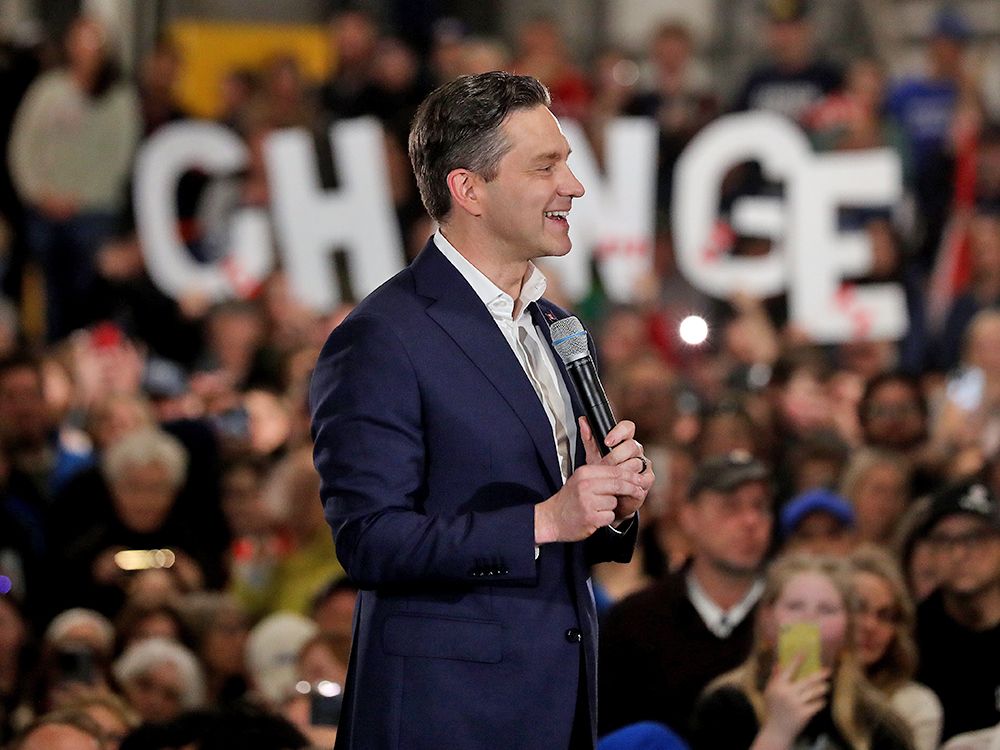
Conservative Party leader Pierre Poilievre speaks to the crowd during a campaign rally in Nisku, just south of Edmonton, on Monday April 7, 2025.

The morning after one of the biggest political rallies in recent Canadian history, Pierre Poilievre was still buzzing.

In the wake of his policy announcement in Edmonton on Tuesday, he bantered with reporters. “When was the last time we had a rally that big in Canada?” he asked. “This is a movement like we’ve never seen. Because people want change.”

Something is happening, that’s for sure.

The 10,000-plus people who

joined the Conservative leader and his former boss, Stephen Harper

, in a vacant warehouse south of Edmonton are on board with the concept of change. In the West of the country, there is deep disquiet about the resurrection of the Liberals and the potential impact on the resource sector.

Harper said that the bulk of the problems affecting the country such as falling living standards, declining employment and housing opportunities, rising crime and regional divisions were created by three Liberal terms in government, “policies the present prime minister supported and wants a fourth Liberal term to continue.”

Poilievre picked up on the theme at his event the next morning, boiling the election down to a fourth Liberal term or change to a Conservative government that would cut taxes, build homes and “unleash” the resource industry. “That’s the choice,” he said.

It’s the strongest message track Poilievre has to play but it is being drowned out by the cacophony of anxieties around Donald Trump’s efforts to reorder the world trading system.

The president has not talked about annexing Canada or mentioned the 51st state canard in recent days but fears of recession, or worse, are preoccupying voters.

The bad news is good news for Mark Carney, who is seen as being best prepared to lead the country into an uncertain economic future.

That is the message track the Liberal campaign has sought to reinforce.

His wife, Diana Fox Carney, introduced him at an event in Richmond, B.C., on Monday night, calling him “cool and calm under pressure,” citing the example of the day after the Brexit vote in Britain when Carney was governor of the Bank of England.

“He had done the work, he was ready and knew what needed to be done to take the country through difficult days when no one else seemed to. That’s where we find ourselves today,” she said.

At his morning event in Delta, B.C., Carney said Trump is trying to fundamentally restructure the U.S. economy and, in the process, is rupturing the global economy, leading to volatility on global financial markets.

“That is putting retirement savings at risk and people’s livelihoods, from the auto industry in Ontario to forestry workers in B.C., in jeopardy,” he said.

The writers of the political satire Veep once appropriated the slogan of Australian prime minister Malcolm Turnbull “continuity with change” because it sounded “hollow and oxymoronic.”

But essentially, Carney is campaigning on “stability with change.” He is promising to protect what Canadians have, while adapting to the world that is morphing beyond recognition. “Business as usual will not work; the status quo cannot stand,” he said.

His critics accuse him of

engaging in a kind of Project Fear

, the scaremongering that was employed by the Remain side during the Brexit referendum.

But the Remain warnings turned out to be a reality check, not groundless pessimism, and Canadians don’t need much convincing that the Trump administration really does want our water, our land and our resources.

Carney imparts all this in funereal tones, with a face so grave it looks like it should be peering from a coffin.

He talked about “building our way out of an economic crisis,” providing $25 billion in financing for prefabricated and modular housing and cutting development charges and taxes on new homes in half for multi-unit housing.

Retrofits for heat pumps and roof and window replacements will be paid for from the new large emitter carbon credit market (the industrial carbon tax) that

he has yet to explain

.

“These are insurmountable challenges if, like Pierre Poilievre, your only plan involves fiddling with the tax code and slashing programs that work,” he said.

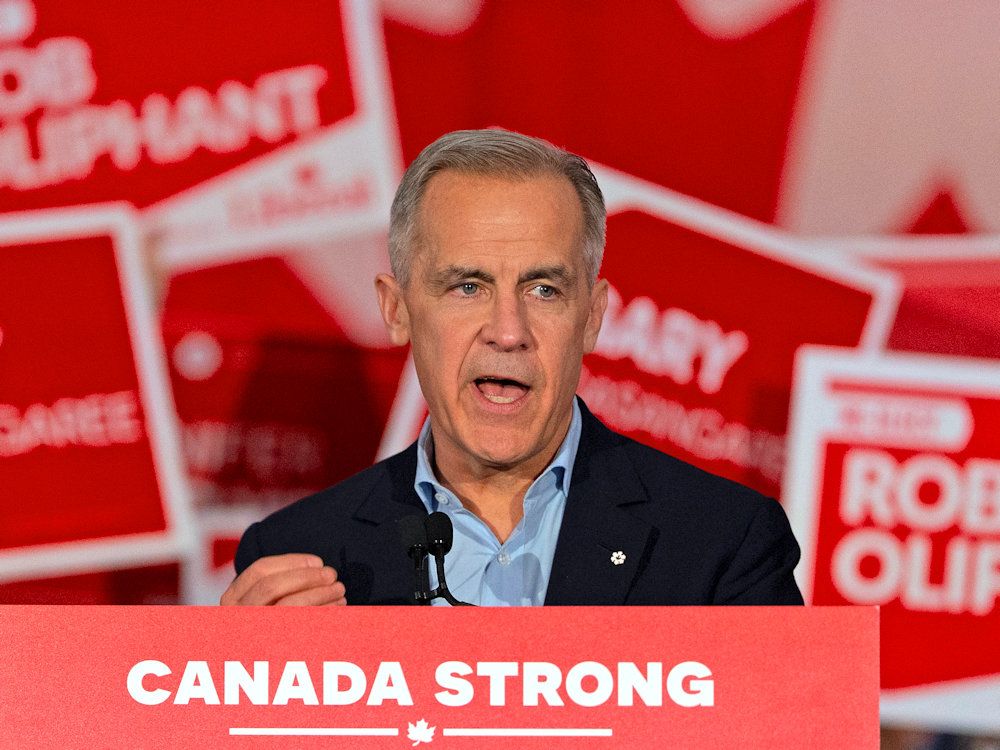
 Liberal Leader Mark Carney holds a campaign rally in Richmond, B.C., on April 7, 2025.

Carney says he is not a career politician but “a pragmatist” who has appeared in the nick of time to address a series of crises, as if some kind of Bat Signal has been projected over the northern skies to summon a saviour during the country’s darkest hour.

It is a measure of the critical situation that Canadians feel themselves to be in that so many are willing to take so much on faith.

The polls suggest that many people who had forsaken the Liberals have come back and see in Carney the experienced centrist they believe the country needs. Those people have, for whatever reason, decided that Poilievre cannot be extended the same level of trust.

The latest 

Angus Reid Institute poll

 suggests 50 per cent of voters view Carney as the best prime minister, compared to just 28 per cent for Poilievre.

There are signs that the Liberal leader’s positive momentum may be slowing: the Angus Reid poll said that the net percentage whose view of him has improved, against those whose view has worsened, is dipping slightly. But he remains firmly in net positive territory, in stark contrast to Poilievre, who polls show has been unable to improve perceptions among people who are not hardcore supporters.

A Trump-like focus on the number of people who attended his rallies is unlikely to change those views.

The Conservatives simply have to put doubt in the minds of the jury about whether Carney has the right stuff if they are to have any chance of victory in the second half of the campaign.

National Post

jivison@criffel.ca

Get more deep-dive National Post political coverage and analysis in your inbox with the Political Hack newsletter, where Ottawa bureau chief Stuart Thomson and political analyst Tasha Kheiriddin get at what’s really going on behind the scenes on Parliament Hill every Wednesday and Friday, exclusively for subscribers. Sign up here.


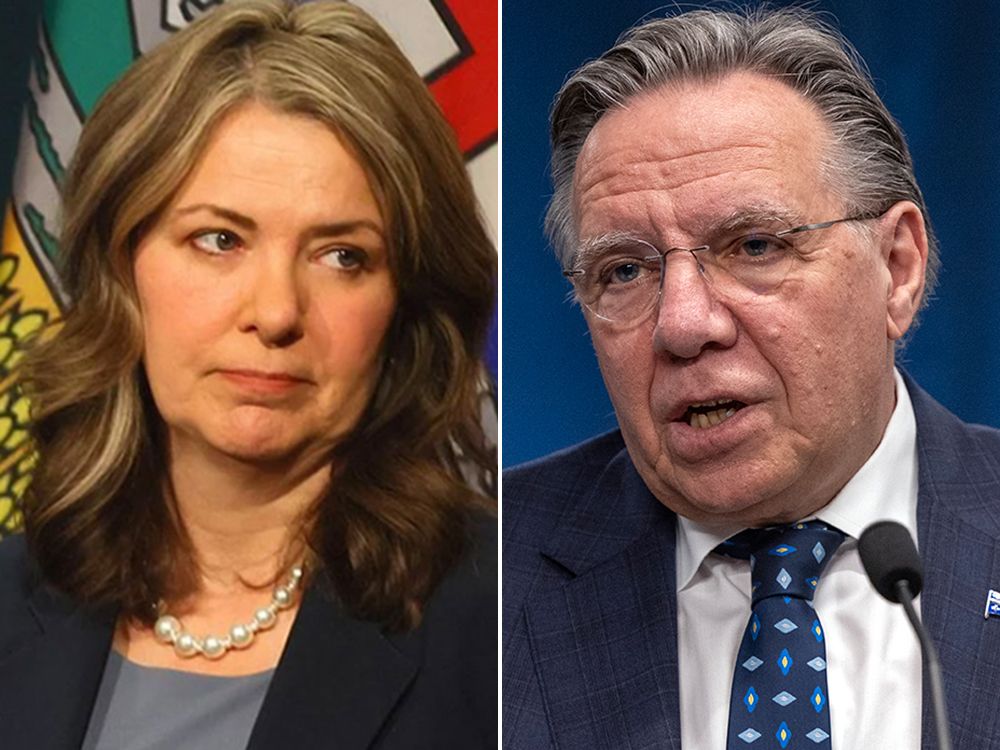
Alberta Premier Danielle Smith and Quebec Premier François Legault.

Despite what you may have heard

,

these are not happy times for separatists

— not separatists from Quebec, and not separatists from Alberta. “National unity,” on the other hand, is a much more fraught question.

Leger’s latest results

on Quebec sovereignty, released late last month, suggest the referendum the Parti Québécois has promised to hold in its first term in government might yield a 68 per cent “no” to separation vote. That’s 10 points worse than in 1980. Fully 30 per cent of respondents who intend to vote PQ in the next provincial election intend to vote “no,” as do 56 per cent of those intending to vote Québec Solidaire and a whopping 79 per cent intending to vote for the governing Coalition Avenir Québec.

These aren’t just losing conditions. They’re obliteration conditions.

Recent polls have Mark Carney’s Liberals eating Bloc Québécois leader Yves-François Blanchet’s lunch in Quebec, at 44 per cent to 24 per cent, according to polling analyst Philippe J. Fournier’s running average. The Conservatives are just behind at 23 per cent — which would be a great result for the Conservatives and Pierre Poilievre.

A Poilievre government might be good news for nationalists. On federal-provincial relations, he is a proud non-interventionist, even (at least sometimes) when he disagrees with provincial policy. But if anything, a federal government that respects Quebec’s autonomy is a

threat

to separatism, because it denies nationalists their most traditional foil: Ottawa’s supposedly appalling disrespect..

If I were concerned about Quebec separatism, I would consider all this good news. Better a federalist party than a separatist party. But I’m not concerned about Quebec separatism, for the same reason I’m not concerned about Alberta separatism: Not enough people support it, and there’s no obvious prospect of that changing.

The Angus Reid Institute published a poll on Sunday finding only 30 per cent of Albertans would vote for sovereignty

even if the Liberals formed the next government

— just 25 per cent otherwise. Losing conditions, if ever there were any.

That came days after Preston Manning

wrote an article

warning of resurgent Western separatism. He warned “large numbers of Westerners simply will not stand for another four years of Liberal government, no matter who leads it.”

I’m not sure polls back this up any more than they do the Quebec narrative. But many Laurentian types are appalled by this talk, needless to say —

in his pro-carbon-tax era

, Manning was, for a time, their kind of conservative — but 30 per cent really isn’t that many people in the midst of historic economic upheaval.

Indeed, “national unity” is a much bigger question than “sovereignty,” and I think it would be silly not to worry about it at least a bit. (Although I will note that despite its size and widely varying regional interests, the PR firm Edelman’s “trust index” in 2023 found

Canada to be only “moderately” polarized

, similar to much smaller and less economically diverse countries like the Netherlands, France, Ireland and Germany.) The double standard with which Central Canadians, Liberals in particular, treat the ideas of Quebec and Western separatism, has always been utterly flagrant. Quebec separatism: Mortal threat, to be countered however possible

(see: Sponsorship Scandal).

Alberta separatism: Just stupid.

To take just the first and most execrable example that showed up on my timeline on Tuesday morning, Ontario Liberal MP Adam van Koeverden

sneeringly congratulated Poilievre for his Monday-evening endorsement by Stephen Harper

. “(Harper) joins felons like Conrad Black, conspiracy fraudsters like Alex Jones, nazi-saluters like Elon Musk, and far-right influencers Jordan Peterson, Joe Rogan and Ben Shapiro. Good company!”

Would he say something similar if François Legault endorsed Poilievre (

as he more or less did Erin O’Toole)

? Like fun he would.

Legault has done things that Alberta Premier Smith would never do include banning police officers, teachers and certain other public servants from wearing turbans, hijabs, crucifixes or kippahs on the job — as the Quebec government did with Bill 21.

Smith has said Alberta will join on Quebec’s side once Bill 21 gets to the Supreme Court, in order to stand up for the notwithstanding clause that shields the law from the Charter. That’s understandable, if not ideal. Mind you I’m not sure Mark Carney knows what Bill 21 even is: On Friday

, the Toronto Star’s Althia Raj reported, he actually said he had “no opinion” on the matter

.

If this is where Alberta and Quebec finally join forces in earnest to fight the feds, in the courts or in general, it would in one sense be natural. But it would also be far less than ideal. Freedom of all sorts, not least religious, should be Alberta’s nationality as well as Canada’s. And indeed,

a Leger poll in February 2024 found Prairie voters were the most opposed of any region to both Bill 21 and Bill 96

, which attacks minority language rights. (Both are now law in Quebec.) Forty-four per cent of Albertans said they felt the laws were discriminatory, and only 18 per cent said they weren’t.

Meanwhile Poilievre, while himself quite rightly a defender of the notwithstanding clause (he would probably need it to mop up Canada’s justice system, for starters), has made no bones whatsoever what he thinks about Bill 21.

Asked by Radio-Canada in an interview last week about the bill,

he cited a Sikh member of his security detail who wears a turban.

“He’s ready to save my life. He’s ready to save the life of my children by giving his own. Should I tell him he can’t have a job because he’s wearing a turban?” Poilievre asked rhetorically. “I don’t agree.”

Not agreeing is fine, so long as there is basic mutual respect. Central Canadians clearly feel Western Canadians are out to lunch on the subject of sovereignty, in a way they don’t feel about Quebec sovereignty. But they’re the same exact thing. If Alberta and Quebec do join forces against Ottawa in earnest, Central Canada will only have itself to blame.

National Post

cselley@postmedia.com

Get more deep-dive National Post political coverage and analysis in your inbox with the Political Hack newsletter, where Ottawa bureau chief Stuart Thomson and political analyst Tasha Kheiriddin get at what’s really going on behind the scenes on Parliament Hill every Wednesday and Friday, exclusively for subscribers. Sign up here.


Calgary Police are shown at the scene of a fatal shooting in the parking lot at Trans Canada Mall near 16 Ave and 52 St NE on Monday, November 13, 2023.

Last week, an Edmonton man was

given

a four-year prison term (with only six months left) for beating another man to death in a jealous rage. The Liberal-appointed judge gave him such a lowball sentence because the offender was Indigenous, had a rough personal history, and

because

“a restrained view of sentencing in this case serves the goal of rehabilitation in Canadian society.”

It’s outrageous that intentionally, violently taking another life can count for so little — but that’s our justice system under a decade of Liberal rule. Under Mark Carney, that wouldn’t change: he doesn’t appear to have a plan to improve public safety, nor does he seem to be remotely interested in the issue.

In the two weeks of campaigning that we’ve seen since the election was called, Carney’s mentioned crime a mere three times. His platform

includes

the brief objective of “Combat organized crime,” with no details as to how that will be achieved. And on Sunday, he

sent thoughts

to “those affected” by a shooting at a townhouse in his riding, and said nothing more.

Before that, on the first Monday of the campaign, he

acknowledged

an assault against a Muslim woman from Ajax, Ont., who was nearly set on fire by an attacker at a library. He left out the details: specifically, that the 25-year-old woman who committed the act was

arrested

last fall for swinging a machete at a man near a Tim Hortons, and that she was

on probation

at the time of the library attack. We simply can’t say at this point whether a hate crime transpired — it’s more likely that the assailant is a victim of mental health delusions, addiction, or both.

Nevertheless, Carney was quick to denounce the Ajax attack as an Islamophobic event, take his identity-politics points for the day, and leave it at that.

Conservative Leader Pierre Poilievre

noted

the very same crime — only, instead of fanning the flames of racism, he offered sympathies and pointed to the obvious problem at the root of the incident: a criminal justice system that allows a violent machete-swinger back into society to terrorize people in what should be peaceful public spaces. And, instead of offering mere helpless words, he raised a solution. Stricter bail laws. Simple, but substantive.

The side-by-side look really illustrates the two candidates on crime as a whole. Carney’s entire take on justice can be reduced to rare emotional engagements while taking absolutely zero responsibility for policy and solutions.

Poilievre, on the other hand, talks generously about

victims

, the absurd

injustices

produced by our courts and his proposed solutions. His most

recent string of announced policies

— strict bail conditions in cases of intimate partner violence, a new criminal offence for intimate partner violence and the treatment of domestic killings as murder rather than manslaughter before the law — seem to be in direct response to

harrowing stories

of women killed even when their violent partners are under no-contact orders.

He’s also targeted the drug trade,

promising

to “impose” life sentences for offenders guilty of fentanyl trafficking above 40 milligrams, cross-border dealing of illegal firearms and multiple counts of human trafficking. For those trafficking 20 to 40 milligrams, he’s

pitching

15-year sentences. Now, these go too far for my taste: street dealers shouldn’t be punished to far greater degrees than the manslaughterers, the aggravated assaulters and the rapists of the nation. That said, it’s a relief to see someone take justice seriously for once.

For years, we’ve had the exact opposite. Former prime minister Justin Trudeau essentially legalized a population-wide venture into harm reduction by

decriminalizing simple possession

, with extra emphasis on Indigenous offenders, and giving drug injection sites a pass. Then, to reduce the incarceration rates of Black and Indigenous offenders, who are sentenced to prison at rates greater than the general population, he

reduced

mandatory minimums for certain crimes and expanded the availability of house arrest.

Trudeau then launched

Black

and

Indigenous

justice strategies, with extensive plans for more race-based privileges in the system.

None of this is likely to change under a Carney government. He’s still a social progressive at the end of the day, and he’s notorious for outsourcing his moral judgment. Case in point: when

asked

on Friday about whether he thought Quebec’s

proposed expansion

to its religious neutrality law, Bill 21, was discriminatory, he answered that he had no opinion. “I’m not a lawyer, so it’s a question for the courts.” By completely deferring his positions on contentious issues before the courts to a few government lawyers, he’d be completely shirking his responsibility. (Poilievre, it should be noted, actually could form an opinion on Bill 21: he

doesn’t agree

with it, but supports Quebec’s right to legislate.)

Really, the last time he

appeared to care about crime

was during the Freedom Convoy of 2022, when he declared the movement to be sedition, called for “choking off the money” and demanded that individuals be held responsible. Where’s this attitude when it comes to drug trafficking? Child luring? Domestic violence? Car theft? Street-blocking Hamas demonstrators? General urban disorder?

Poilievre, at least, understands that being the top steward of Canadian justice requires thinking about these things, and that justice is a matter for Parliament first, courts second.

But Carney? We’d be up for a repeat, watching him shrug submissively as courts repeal reasonable mandatory minimums for crimes like child luring and dole out soft sentences to men convicted of

sexual assault

,

incest

and

intimate partner violence

.

National Post


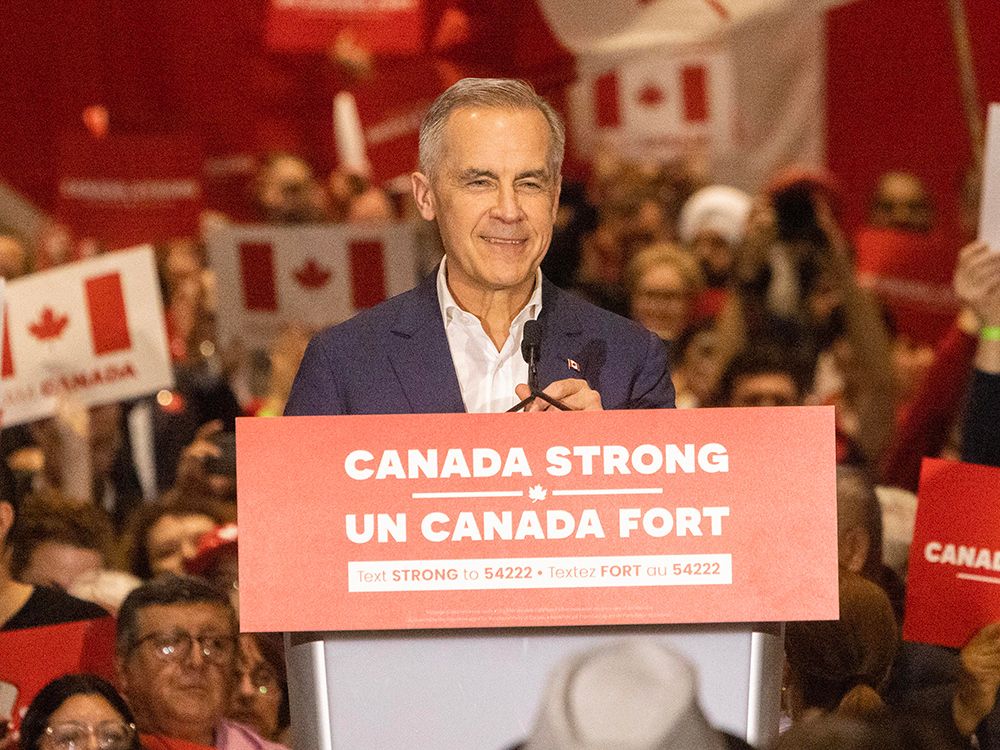
Liberal Leader Mark Carney

Liberal Leader Mark Carney should feel right at home in Alberta: after all, he was raised there. But his trip there this week feels more like a political minefield than a homecoming. That’s largely due to his recent quip that while he’s happy to dispatch Ontario Premier Doug Ford to advocate for Canada in Washington, he wouldn’t send Alberta Premier Danielle Smith.

Since Smith has openly plumped for the election of Conservative Leader Pierre Poilievre, the line got a lot of laughs. But unsurprisingly, she didn’t think it was funny, accusing Carney of dissing a “strong Conservative woman.” While playing the feminist card is a little over the top, Smith’s underlying message — that the federal Liberals disrespect Alberta — has a longstanding history.

During the 2000 election, while campaigning in New Brunswick, Liberal Leader

Jean Chrétien remarked

that, “I like to do politics with people from the east. Joe Clark and Stockwell Day are from Alberta. They are a different type.” He quickly added, “I’m joking,” before saying, “I’m serious.” The next day, he somewhat apologized, noting that he had friends in Alberta, including cabinet minister David Kilgour, whose office received so many angry calls, he arranged a press conference to say that Chrétien was “obviously joking.”

In 2010,

Justin Trudeau told

a Quebec TV host that, “Canada isn’t doing well right now because it’s Albertans who control our community and socio-democratic agenda.” When asked whether Canada was “better served when there are more Quebecers in charge than Albertans,” he replied, “I’m a Liberal, so of course I think so, yes,” adding that Canada’s greatest prime ministers were all from Quebec and that, “This country, Canada, it belongs to us.”

The comments resurfaced during Trudeau’s leadership campaign in 2012, outraging westerners, including then-immigration minister Jason Kenney, who dubbed them “the worst kind of arrogance of the Liberal party,” reminiscent of the national energy program, which decimated the Alberta economy in the 1970s. After Justin Trudeau became prime minister, he imposed a national carbon tax and co-led

an international proposal

to end public financing of fossil-fuel projects.

Carney has long been

an advocate of

climate finance, which ties capital investment to climate goals to move to a net-zero economy. This is why despite dropping the consumer carbon tax, Carney maintained the industrial portion to incentivize companies to reduce their carbon footprints. This does not earn him a lot of love in oil-dependant Alberta, something he should be mindful of in the current political climate.

As the Liberal leader is quick to remind us, Canada’s biggest challenge is how to deal with the threat posed by a belligerent U.S. administration. This makes any additional internal strain highly unhealthy. At the moment, those strains are strongest in the West, where there are public figures only too eager to fan them, including Smith and former Reform party leader Preston Manning, who recently

called Carney

a “threat to national unity.”

It’s easy to dismiss Manning’s take as hyperbolic click-bait, but it reflects a belief that the Liberals have long treated Alberta as an afterthought. Saskatchewan Premier Scott Moe also

warned

this week that western alienation is an issue in his province.

As prime minister, Carney must contend with those sentiments, even if he doesn’t agree with them. And if he wants to keep the job, he needs to ensure that he doesn’t get twinned with Trudeau in terms of attitudes on energy and the environment, not just for political purposes, but also for economic ones.

As Canadian industries from automobiles to aluminum buckle under the weight of U.S. tariffs, our energy sector becomes more important then ever. America needs our oil, but we also need to diversify our export markets, which means building pipelines. That will require national consensus, and national leadership. That leadership starts by respecting the West, and cutting out the jokes.

Postmedia Network

Tasha Kheiriddin is Postmedia’s national politics columnist.


Liberal Leader Mark Carney speaks during a campaign rally at the Metropolitan Centre in Toronto, Ontario, on April 4, 2025.

First Reading is a Canadian politics newsletter that throughout the 2025 election will be a daily digest of campaign goings-on, all curated by the National Post’s own Tristin Hopper. To get an early version sent directly to your inbox, sign up here.

TOP STORY

Conservative Leader Pierre Poilievre has accused his opponent, Mark Carney, of “plagiarizing” the Tory platform.

The charge of agenda plagiarism has been floating around Conservative circles for quite some time, most notably in regards to the carbon tax. This time last year, the Liberal Party was fervently rejecting Conservative promises to cancel the carbon tax, defending carbon pricing as a policy that would put “more money in your pockets” via rebates. Now, after ending the carbon tax, Liberal Party literature is celebrating it as a move to put “more money in your pocket.”

But at a Saturday appearance in Osoyoos, B.C., Poilievre accused Carney of plagiarism over the issue of apprenticeship grants.

On March 31, the federal government officially ended the Apprenticeship Incentive Grant, a payout of several thousand dollars for Canadians taking up a certified trade, such as electrician or plumber.

One of Poilievre’s first campaign pledges, issued on March 21, after the cancellation was announced, was a promise to restore the grant — along with a package of other policies designed to push more Canadians into the trades.

On April 5, the Liberals rolled out a promise to “provide an Apprenticeship Grant of up to $8,000 for registered apprentices” — albeit without mentioning that they’d just ended a program doing just that.

Said Poilievre: “I can’t help but notice that Mr. Carney is contradicting himself again today as he plagiarizes my latest policy.”

Here are some other Conservative issues that have worked their way into the Liberal platform in recent weeks — and a comparison of how the Liberal version compares to the original.

Ending the carbon tax

The Conservatives talked of “axing” the carbon tax, and Liberals referred to it as “scrapping” the carbon tax. But otherwise, the end result was the same: The removal of the roughly 17-cent premium on gasoline that was imposed starting in 2019 as a way to disincentivize emissions by making fossil fuels more expensive.

Where the Liberal/Conservative carbon tax policies differ is that the Liberals have only promised to get rid of the “consumer” carbon tax. That is, the one that’s itemized on heating bills, or tacked on to purchases of motor fuel. They still plan to maintain taxes and industrial regulations that would hike the cost of emissions at an industrial level.

The Conservatives have promised to eliminate this second level of Canadian carbon tax, saying that whatever climate policy takes shape under a Conservative government, it would all be “carrot, not stick.”

Speeches

This isn’t a policy, but Carney has begun using lines in his speeches that are eerily similar to those being used by the Tories. Last week, the pro-Conservative group Canada Proud was circulating a video contrasting a Carney speech with a Poilievre speech that had been delivered only the day before. Here they are:

Poilievre: “What binds us together is the Canadian promise; that anyone, from anywhere, can achieve anything. That hard work gets you a great life in a beautiful, affordable home on a safe street protected by brave soldiers.”


Carney: “For generations, Canadians have built this great country on the idea that if you work hard … you should be able to afford a good life, have a good home in a welcoming and safe community.”

Housing affordability

Poilievre’s signature issue during his 2022 run for Conservative leadership was the notion of dispensing with the “gatekeepers” restricting housing development in Canada, and thus driving up the price of real estate.

This tracked pretty closely with a massive Liberal push on housing affordability, including the Housing Accelerator fund, a Liberal-devised program to incentivize municipalities to remove barriers to development.

Back in October, the Conservatives first wheeled out the idea of eliminating the GST on sales of new homes under $1 million.

On March 20, in one of his last acts before calling an election, Carney announced that his government was “eliminating the GST on all homes up to $1 million for first-time home buyers.”

Slogans

While politicians of all stripes often refer to Canada as the “best country” in the world, references to Canada as the “freest” country are quite rare. Prior to 2010, the term “freest country in the world” was only uttered in the House of Commons three times.

But Poilievre has adopted “freest country in the world” as a personal motto since 2012, and frequently ended speeches with it during his successful 2022 run for the Conservative Party. The phrase is so associated with Poilievre that rival Canadian politicians really only use it as a critique. Last September, for instance, Liberal House Leader Karina Gould said Poilievre “talks about making Canada the freest country in the world, but the only thing he has ever done is to take people’s freedoms away.”

On March 21, soon after his swearing-in as prime minister, Carney spoke of his desire to make Canada the “strongest, fairest and freest country in the world.”


LET’S POLL

Most polls have the Liberals somewhere between 44 and 46 per cent. But it’s a completely different story when it comes to the Conservatives. In 12 separate polls published over the course of the weekend, the Conservatives ranged from 34.9 per cent to 40 per cent.

Abacus Data remains an outlier in that it’s one of the few pollsters not to show a major Liberal lead. In fact, they think it’s a tie; surveys published on both April 3 and March 27 had both the Liberals and Conservatives with 39 per cent. As to why Abacus Data is so different, one factor might be that they’re weighting their results by voter turnout. Even if more habitual voters are planning to vote Liberal, Abacus’ data shows that the Conservatives are poised to disproportionately benefit from voters who would otherwise have stayed home.

 This was Liberal Leader Mark Carney during a weekend stop in Vancouver Island where he made a rare joke at the expense of Alberta Premier Danielle Smith. “We’re sending Doug Ford onto Fox News to show them that we’re not messing around up here,” Carney said of his strategy to deter Trump’s trade war. “And we’re going to send Danielle next. Well, maybe we won’t. We won’t send Danielle. That’s a bad idea. Strike that.”

GAFFETERIA

Last week saw Toronto-area Liberal candidate Paul Chiang quitting in the midst of controversy that he had joked about having his Conservative opponent — a wanted Chinese dissident — arrested by the Chinese government. And now the Liberals have picked Chiang’s replacement; Peter Yuen, also a former police officer.

Awkwardly, it didn’t take long for

a 2017 video to emerge

 in which Yuen, in full Toronto Police uniform, is seen singing the patriotic anthem My Chinese Heart. It was taken at a gala hosted by the Confederation of Toronto Chinese Canadian Organizations.


FOREIGN INTERFERENCE

Canadians used to be able to have federal elections without knowing which outcome was favoured by hostile foreign governments (answer: they usually didn’t care). In the 2021 election, it was eminently clear that the People’s Republic of China favoured a Liberal victory. And that seems to be how it’s shaping up this time. Canada’s new election integrity task force sounded the alarm Monday that a series of moderately pro-Carney posts were making their way around Chinese social media with the apparent help of the Beijing government.

Get all of these insights and more into your inbox by signing up for the First Reading newsletter here.


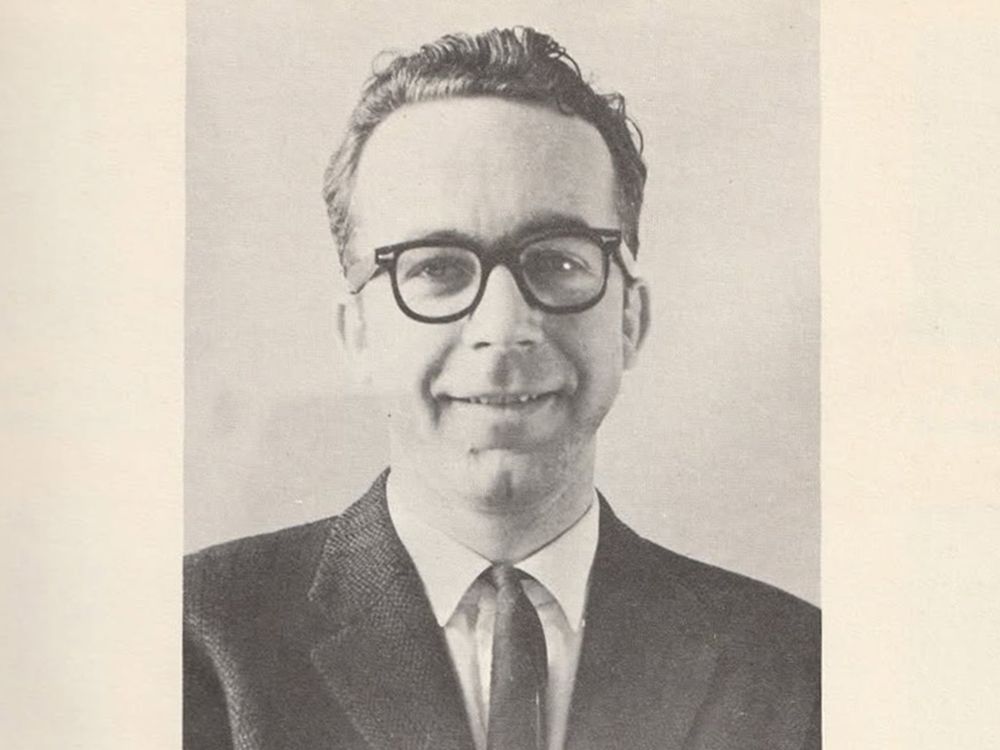
Principal Robert Carney's picture from the 1963 yearbook at Joseph Burr Tyrrell school in the Northwest Territories.

Watching Liberal friendly commentators try to explain away the whole issue of Mark Carney’s father

and his status as a teacher of Indigenous kids

in the North is a lot like watching the new Captain America movie.

Not to give away any spoilers — but a lot of the fun in the movie comes from watching the new American president (played by Harrison Ford) try to suppress the anger that’s welling up inside. We know he’s an angry guy (we get lots of clips showing him losing his cool from the past). But he’s turning over a new leaf — he’s a new man. If only people wouldn’t keep doing stupid things — things which make him very angry — because he

must not

lose his temper.

Yeah, it doesn’t go well.

Except with the Robert Carney story (that is, Mark Carney’s father), the Harrison Ford character is being played by a cadre of leftist radicals who now need to suppress their inner urge to call out what they see as wrong think.

Over the last several years a large group of radical academics — largely historians and Indigenous studies specialists — have been insisting that there is only one line to take on the history of residential schools and Canada’s policies towards Indigenous peoples in the past. There was how it used to be done — which we are to call genocidal — and then there is how it must be done now, decolonization and nation-to-nation relations.

Academics, like University of Manitoba “settler historian” Sean Carleton, even created whole new terms like

“residential school denialism”

to belittle and possibly even criminalize anyone who doesn’t unequivocally decry Canada’s past actions.

And yet now many of these same academics, Carleton amongst them, are equivocating over the story of Robert Carney.

They are calling for nuance and insisting that things are complicated and that we need to approach the topic with empathy. Yes, they say, Carney’s father was “complicit” in the residential schools system, but the details aren’t quite clear.

But what is so striking about their account is the way — in the midst of this election — they are willing to focus on what we don’t know, and to insist on particular details that might be incorrect or at least not yet verified in the account of those with whom they disagree. He was a principal, they emphasize, at a day school and not a residential school. And we don’t’ yet know enough about events at this particular school to say anything definitive.

It’s an astounding turnaround for the kinds of academics who, in other contexts, have believed in nuance about as much as a vegan at a pig roast.

It’s cognitive dissonance in real time.

These are the same academics who have criticized commentators for asking why no graves have yet been excavated at the Kamloops site. Instead of treating this as an important factual question — about getting to the truth — they have spun these questions as if they are examples of a hateful ideology. And yet now, with Robert Carney, we need to be careful and nuanced.

The problem seems clear: if they call out Robert Carney this might just dampen those Liberal poll numbers.

The funny thing is that there actually isn’t much of a story that CBC reported on Thursday, not on the simple facts of the case. Or at least there shouldn’t be in a world where we don’t assume that past values are present values or that there can be only one view on complicated and divisive social issues.

Mark Carney’s father, from what we know, seems to have been a well-intentioned educator. He taught at Joseph Bull Tyrrell school in the North West Territories and went on to do a PhD in education and to be a professor at the University of Alberta where he was a specialist on native education.

Robert Carney held views which these same radical academics have in most other cases labelled as “problematic” and “denialist.” He thought that the schooling he offered to Indigenous kids was useful. And though he called out some of the terrible behaviour in residential schools he also didn’t think this was the only aspect of the schools’ history. When the Royal Commission on Aboriginal Peoples gave its report on the schools Carney published a review calling out the commission for being too one-sided.

In contemporary academia, this just isn’t done. This is a world where everyone who writes on this situation first lets everyone know their racial background, and so do the CBC journalists who write stories about it too. If you’re not indigenous you have to identify as a settler.

Only a few years ago these same academics and activists who are now trying to suggest the story requires “untangling” were the same people who

supported

the Canadian Historical Association’s

“Canada Day Statement.”

This was the published claim that the history of the Canadian governments policies towards Indigenous peoples was a settled issue and there was only one perspective allowed. There wasn’t much room for nuance or academic discussion there. not even in the world of the university.

But with Carney they are talking about how the situation is complicated.

In fairness, they aren’t quite giving in. They called for Mark Carney to appear on atone for — and distance himself from — his father’s beliefs.

And, on Saturday, Carney was happy to oblige,

effectively throwing his father under the bus.

For the activists, it was not a moment too soon. The Cognitive dissonance was hard to endure.

National Post


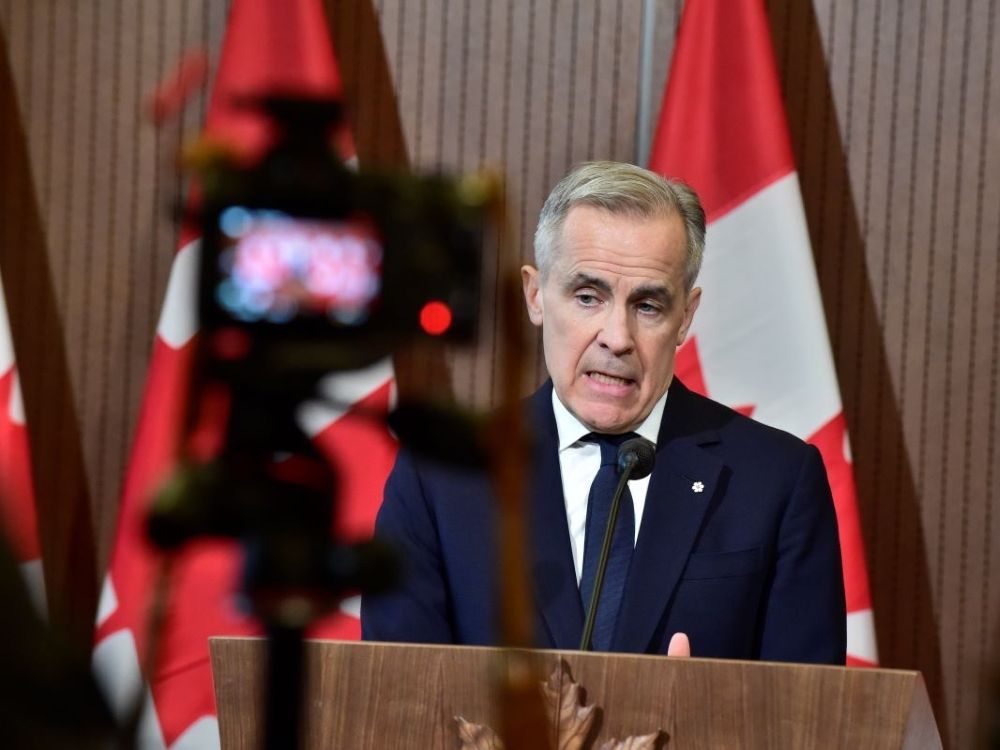
Prime Minister Mark Carney speaks during a press conference in the foyer of the House of Commons in Ottawa, ON. on Thursday, April 3, 2025.

By Michel Maisonneuve and Barbara Krasij

According to the legacy media, the second coming of the Messiah is here, and his name is Mark Carney. Pundits are salivating at his anointment, and pollsters are getting more airtime than ever, giddy with predictions of a Liberal majority. How did we get here?

Last December, as calls for Justin Trudeau’s termination were heard nationwide, the polls showed overwhelming support for a Conservative supermajority. Why, there were even whispers that the Liberals wouldn’t retain their party status in the new legislature. Since then, the tables supposedly turned, and we are now facing a fourth term of the most destructive government Canada has ever known. The Messiah? You’ve got to be joking!

Nothing has changed and nothing will change if Carney is elected. It’s the same old government, run by the very same people, with the same mandate that turned a once proud and successful Canada into a post-national state with a strangled resource sector and zero hope for its young people. Antisemitism is still present just below the surface, sometimes exploding in our streets as our flag is burned amid chants of “death to Canada.”

Canadians have never been so divided. A resurgence of separatism has sprung in Québec, and the same sentiments grow in Alberta: last month, Mainstreet Research

found

that 25 per cent of Albertans would support joining the United States. To the south is a newly elected president famous for smelling weakness in his opponents, ready to pounce on our debilitated nation with crippling tariffs and perhaps even attempt to achieve manifest destiny by making Canada the 51st state.

Canadians shouldn’t believe Carney is the man to save us.

Carney is a multimillionaire who made his money in central banking, consulting and advising. His PhD has been

marred

with plagiarism allegations. He has supported sending investments to tax havens

abroad

. His loyalty is to the dollar, and the companies whose boards he sat on — companies that

left Canada

for the United States and

took loans

from China.

His ethics are at least as questionable as his predecessor’s, minus only perhaps Trudeau’s fetish for playing dress-up. If he has nothing to hide, then why doesn’t he disclose all of his assets and business interests to the public,

as Canadians expect?

He has never been elected to public office, cannot speak French and

calls

the offering up of a Conservative candidate to fetch a bounty from the Chinese government “a teachable moment.”

It seems that Trump is the only issue on which Carney waxes poetic. The rest of the time, he is blatantly stealing ideas from the Conservative party platform without batting an eye. Liberals and the legacy media — one and the same, really — are applauding this agent of change as if he’s a saviour.

The same voices are accusing Conservative leader Pierre Poilievre — the only man who can deliver real change in this election — of not having properly identified the “ballot question.” What drivel! Poilievre and the Conservatives identified the ballot issue months, if not years, ago: affordability. The Trump tariffs, threats of annexation and general treatment of Canada are important issues, but they are not as important as the pressure Canadians feel from housing, jobs, immigration, health care and wages.

Besides, Trump’s bullying of our country is the result of 10 years of complete mismanagement in Ottawa.

Imagine what Canada would be like right now if it had spent the last several years becoming one of the greatest energy suppliers to Europe and Asia, replacing Russian gas. If our trade partners had been diverse and wide-ranging. If our government had been living within its means, ensuring its public services were efficient and effective. If our productivity had been at the top of the OECD scale. If our borders had been secure with a properly staffed and well-equipped border services agency.

Imagine a Canada that had been fielding strong armed forces, with forward-deployed arctic units, aircraft and submarines able to defend our country, and if our leaders were known to be strong allies who had met and exceeded their commitment to NATO. One of our roles in NATO was to personify the transatlantic link between Europe and North America because of our historic links to France and the United Kingdom. We lost that role long ago through the virtue signalling of our government, our lecturing others about their failures and our inaction in defending our own country.

Trump would have behaved differently towards Canada if we had prioritized the right actions in the last 10 years.

When we first met Poilievre, he told us that he wants to protect Canadians. That was a lot different from the old, tired Liberals who for many years have acted as though they want to do anything but. Today, Canadians are burdened by taxes, identity politics, gatekeepers and a government that has lost touch with its citizens. It is no wonder that Poilievre is pulling in thousands at his rallies. He is speaking and listening to Canadians who want change.

The “new” Liberal party is now pivoting towards the ideas that Poilievre first put forward years ago. Should we trust the same Liberals to implement the very policies that they completely opposed until Trump took office? No. It is time for new leadership that can bring Canada back to its promise and help Canadians achieve their full potential. In our combined 56 years in uniform, we have seen leaders, and Poilievre is a leader.

Before we can fix things with Trump and renew our relationship with the United States, we have to fix Canada right now — not in five years’ time. The only one who can be trusted to do that, and restore hope to Canadians, is Poilievre and the Conservative team around him.

National Post

Lt.-Gen. (retd.) Michel Maisonneuve spent 35 years in the Canadian Army and 10 more as Academic Director of RMC Saint-Jean. His book,

In Defence of Canada: Reflections of a Patriot

, was published in October 2024 by Sutherland House. 

Major (retd.) Barbara Krasij spent 21 years in the Royal Canadian Air Force. 


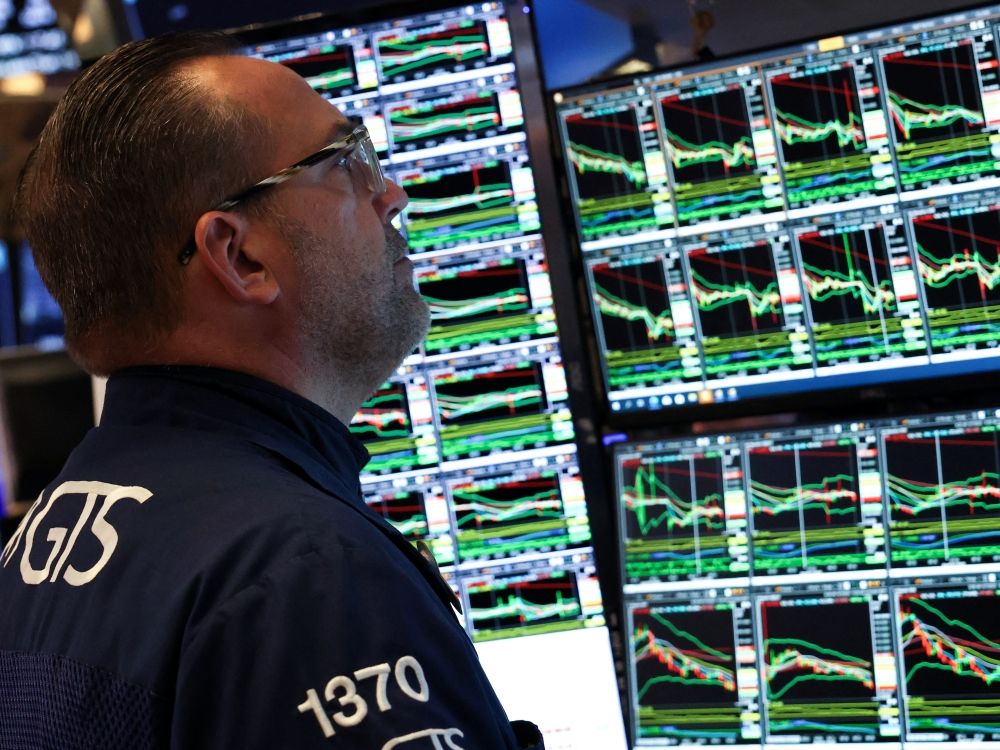
A trader works on the floor of the New York Stock Exchange (NYSE) at the opening bell in New York City, on April 7, 2025.

I find myself wondering if April 7 will be remembered clearly as one of the major defining moments in the Trump trade crisis of 2025, or if it will be a mere curiosity amid an intense period of political chaos to rival August 1914. As you’ve probably already heard, because we are all self-consciously part of the investor class now, the global stock market surged early in the morning because some people misunderstood a Fox News chyron, broadcast while one of President Donald Trump’s major courtiers was giving an interview, and social media was briefly flooded with fictitious hopes that the president might pause his pervasive, arbitrary program of new economic tariffs.

There was a brief explosion in the markets, very welcome after two days of epochal gore, but the White House quickly shut down any rumours that the president intended to backtrack on tariffs, and even warned of further increases on tariffs against Chinese-made consumer products. The bloodbath immediately resumed. Within hours, literally trillions of dollars in value had been created and destroyed in the equity markets: the movements, based on absolutely nothing but whispers, confusion and hope, dwarfed those seen after 9/11 or during the initial days of the COVID-19 pandemic.

Some people will blame financial markets for being hypersensitive; others will blame that dang “social media” (media being social by nature since our ancestors were doing cave paintings, but I know we have come too far to fix this terminology). The problem with “social media” is mostly that we haven’t fully developed the immune system of skepticism that we need to coexist with it, as we eventually did for earlier media.

As for the financial markets, they’re doing what they’re supposed to: transmitting price signals with maximum speed. The extreme volatility jerking around your investments and pension entitlements is genuine! It’s out there in the world, and more specifically in the White House! Trillions of dollars in economic value really do depend on the mood and actions of one man, because the United States has plumb forgotten it has a parliamentary system of government!

Perhaps I should embrace this as a sign that the world is being converted by means of the sword to classical-liberal doctrines of free trade, and that the Crisis of 2025 is mere prelude to an era in which artificial trade barriers are universally reviled and ridiculed. In the meantime, what April 7 ought to highlight is that our world has somehow reverted to enlightened despotism everywhere one looks. The White House really is now just an early modern European royal court: your economic future is legitimately hostage, as some 18th-century Hessian farmer’s might have been, to a few privileged (and mostly unelected) personalities and their random offgassings. We are not experiencing a crisis of hypermodernity. We are receiving forcible instruction in what the world looked and felt like in a time before liberalism.

National Post