
First Reading is a Canadian politics newsletter that throughout the 2025 election will be a daily digest of campaign goings-on, all curated by the National Post’s own Tristin Hopper. To get an early version sent directly to your inbox, sign up here.
TOP STORY
With just two weeks to go until voting day, polls are beginning to show evidence of Conservative momentum as Canadians’ fear of U.S. President Donald Trump begins to dissipate.
The current numbers still heavily favour some kind of Liberal victory, but a series of new polls show a noticeable trend towards the Tories, including one of the few polls this election to put the Conservatives in the lead.
The latest survey by Mainstreet Research had the Conservatives with 43 per cent as compared to 40 per cent for the Liberals.
It’s the first of 21 Mainstreet polls conducted during the federal election campaign to show a Conservative lead.
Meanwhile, as Trump’s trade war with Canada fades into the background, there is spiking interest on affordability and the economy — the two issues on which the Liberals have traditionally polled quite poorly.
“For all those banging on about Canadian election being all about Trump, that’s not what numbers show,” wrote Darrell Bricker, CEO of Ipsos Public Affairs, in a series of Sunday social media posts.
Most critical force in any election is momentum, what Bush 1 called the big ‘mo. Difficult to create, difficult to manage, difficult to measure. Does seem over last few days to have switched a bit. Too early to say it’s a trend, but there’s been a wobble.
— Darrell Bricker (@darrellbricker) April 13, 2025
Citing a new batch of Ipsos numbers, Bricker said “cost of living” is now leading the list of voters’ concerns by 14 points, while worries about Trump are now at the “mid-tier” of what Canadians think the election is about.
“If election becomes about personal prosperity, race will continue to tighten,” wrote Bricker. He added that “there’s been a wobble” in the race’s momentum.
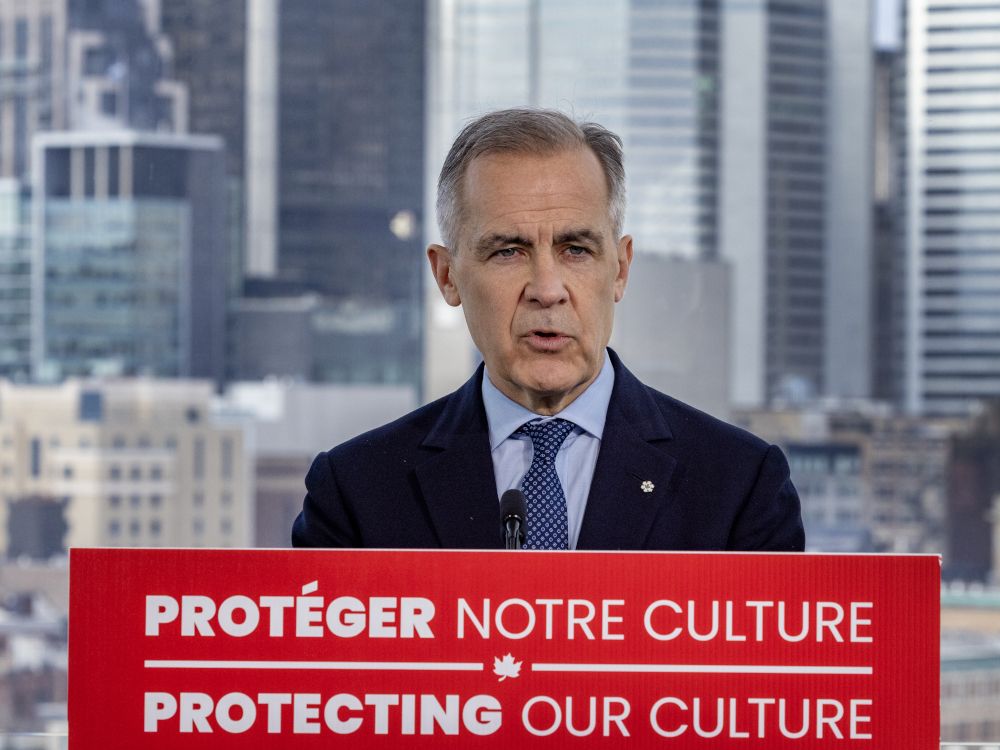
Liberal Leader Mark Carney has enjoyed a commanding lead for the first three weeks of the election campaign, but pollsters have long warned that his advantage was more volatile. As The Hill Times put it in the election’s first days, the Liberal lead was “built on toothpicks and very dry sand.”
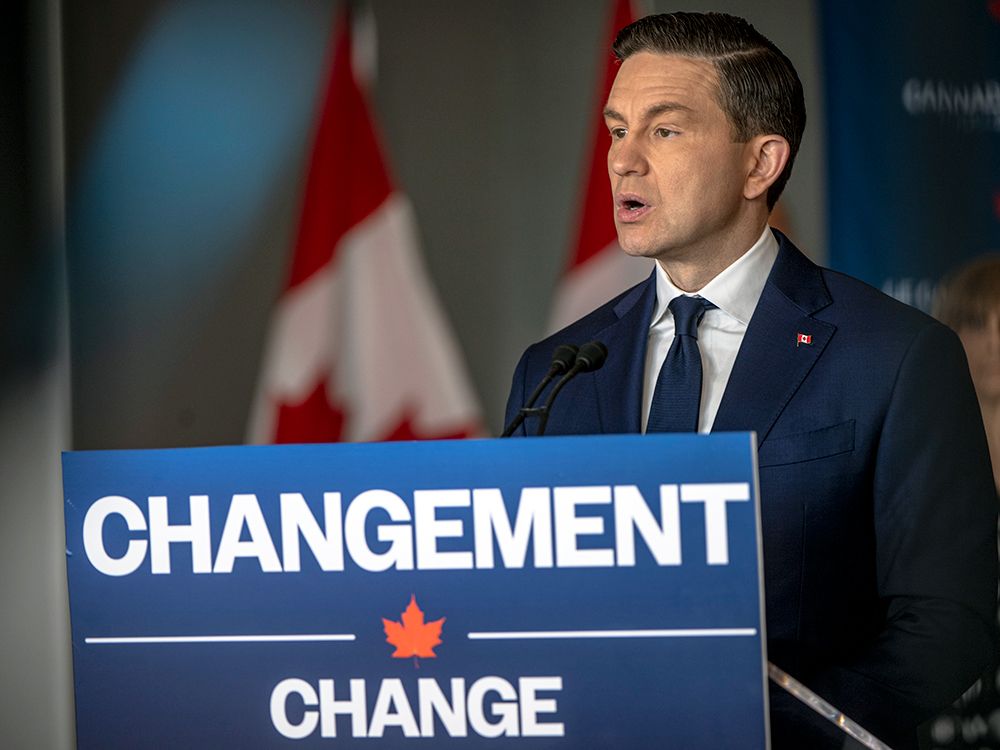
For one thing, Carney has only been a politician for two months prior to the election, and he remains a relatively unknown quantity as compared to Conservative Leader Pierre Poilievre, who has occupied the post since 2022.
Still, despite the most recent Mainstreet poll, most of the available indicators are still showing the Liberals on course for victory.
The poll aggregator 338Canada is projecting a Liberal caucus of 190 seats, much more than the 172 needed to win a majority.
The election modeller Poliwave is much the same; they’re projecting a 193-seat Liberal majority.
Even the betting markets are in the tank for the Liberals. The website Polymarket has racked up more than $40 million in bids on the question of who will be the next prime minister of Canada.
Although Poilievre has edged up slightly in recent days, he’s still at 32 per cent likelihood, as compared to 69 per cent for Carney.
The Conservatives are ironically experiencing the most successful polling streak in their history. At no other point since the party’s 2003 founding have they so consistently polled at 40 per cent or higher.
The problem for the Tories is that the progressive vote has consolidated around the Liberals. NDP and Bloc Québécois fortunes have dropped off a cliff, while the Liberals are hitting sustained levels of support unknown since the 1960s.
It also means that only a slight uptick in NDP or Bloc fortunes would have an outsized impact on the Liberals’ election day results.
At least in the last 50 years, most Canadian federal elections have followed a relatively predictable course: Whoever is in the lead at the election’s outset ends up winning.
The three federal elections contested by Liberal Leader Jean Chrétien, for instance, were all ludicrously uneventful. In 1993, 1997 and 2000, the Liberals exhibited double-digit leads almost immediately, and held the lead until election day, where they won comfortable majorities.
But there are scattered examples of momentum beginning to shift halfway through a campaign.
It happened in 2006. When a motion of non-confidence dissolved the Liberal minority government of Paul Martin, an initial flurry of election polls showed the Liberals enjoying a lead of as much as 10 points.
This moment flipped in the final two weeks of the campaign, ultimately yielding a victory for the Conservatives that even they found surprising.
A mid-election momentum switch happened again with the 2011 “Orange Crush.” In the final two weeks of the campaign Quebec suddenly leaned hard for the NDP, largely at the expense of the Liberals and Bloc Québécois, who both suffered sudden and catastrophic defeats.
But the textbook example of a mid-campaign momentum shift belongs to 1984, an election which shares similarities with the 2025 race in that it also featured an incumbent Liberal government headed by a rookie leader.
John Turner called a federal election immediately after succeeding Pierre Trudeau as Liberal leader, and a Carleton-Southam poll published soon after the July 9 election call had Turner enjoying 45 per cent support as compared to 42.5 per cent for the rival Progressive Conservatives.
Only after Turner’s lacklustre performance in the official leader’s debate did that lead dissolve, leading to a rise in Progressive Conservative fortunes that would ultimately yield one of the largest landslides in Canadian history.
BUTTONGATE
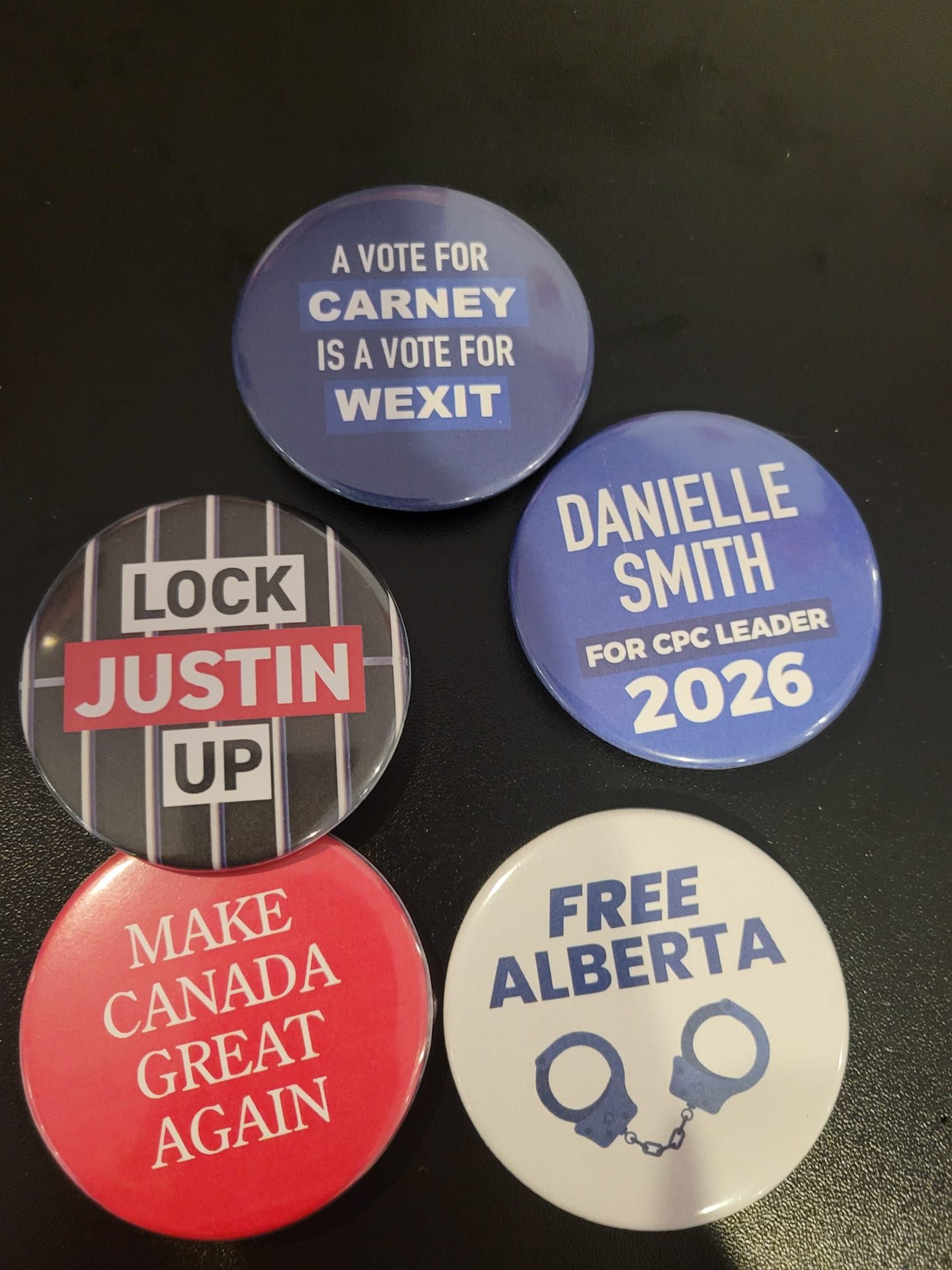
Last week, a CBC journalist was hanging around some Liberal election staffers at an Ottawa bar when one of them talked about circulating fake Trump-like campaign buttons at the recent Canada Strong and Free Networking Conference.
“When confronted, the staffer at first confirmed what he’d done. But he then denied saying anything when told that CBC News would be reporting on the operation,” read an account by Kate McKenna, the CBC journalist in question.
One of the fake buttons identified by CBC read “stop the steal” — a direct reference to U.S. President Donald Trump’s perennial claim that the 2020 election was rigged against him. Other suspicious buttons turned up by the Toronto Sun included the slogans “Lock Justin up,” “Make Canada Great Again” and “It’s time to stay calm because there is no climate crisis.”
The actions would seem to veer close to violating the Elections Act. Under Canadian electoral law, you risk jail for making a “false statement” about the “membership in a group or association” of a candidate or “a public figure associated with a political party.”
But the Liberal Party was noticeably unapologetic in their statement confirming the fake buttons. “After many news reports last week about conservative infighting and prominent Trump allies being hosted at this Canadian conservative conference, it’s been reported that Liberal campaigners had created buttons poking fun at those reports — which regrettably got carried away,” read a statement sent to Postmedia reporter Bryan Passifiume.
EVERYBODY’S TALKING (BUT IN FRENCH)
One of the major differences between Quebec and the rest of Canada is that they have talk shows which basically everyone watches. Tout le monde en parle (Everybody’s talking) routinely attracts Sunday night audiences of up to one million, meaning that it’s not unusual for one in every nine Quebecers to be watching.
As such, a good TLMEP appearance can make or break a close election: NDP Leader Jack Layton’s performance on the show was largely credited with his party sweeping the province in the 2011 election.
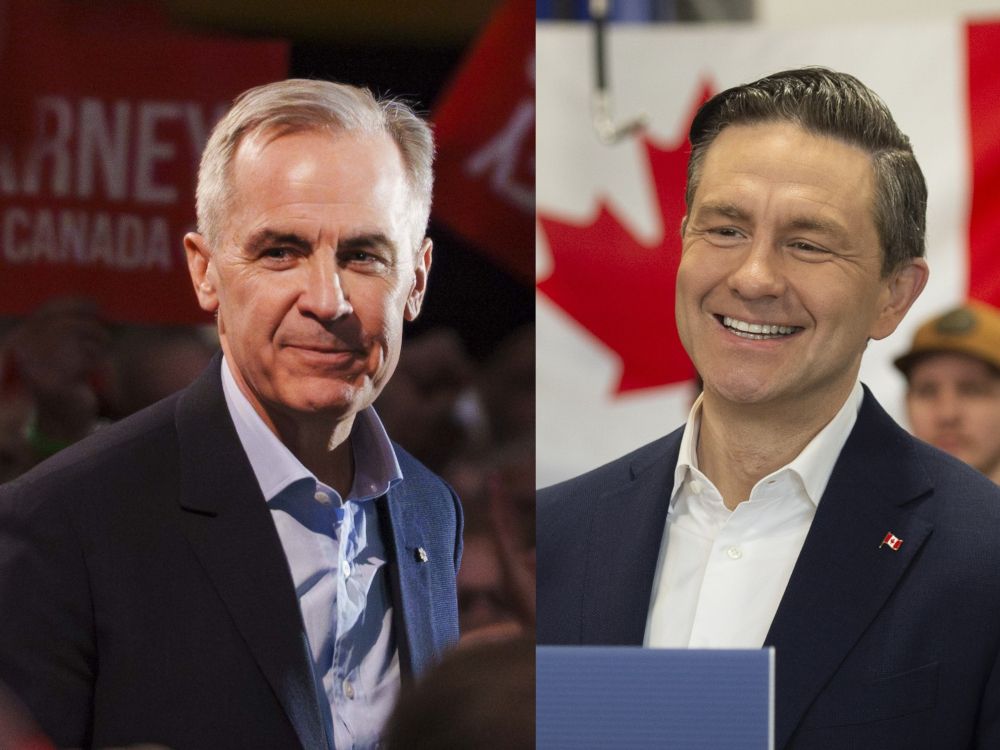
And on Sunday, Quebecers saw both Conservative Leader Pierre Poilievre and Liberal Leader Mark Carney.
Poilievre reportedly did quite well in a venue that is not known for its love of conservatives, much less those born in the Prairies. He even managed an inside joke of sorts, saying that his wife only accompanied him to meet fellow guest Kevin Parent, a well-known Quebec singer-songwriter. “She’s here for him, not for me,” he said.
Carney had a bit more ground to make up, given that he has noticeably shaky French and keeps flubbing basic facts about Quebec, such as confusing the 1989 Polytechnique massacre with the 1992 Concordia University massacre. But his interview did feature the extremely rare occurrence of Carney seeming to criticize his predecessor, Justin Trudeau.
“We have the same values … but me, I’m going to put an emphasis on the economy,” he said. “Mr. Trudeau, we should say that he was less interested in this.”
Get all of these insights and more into your inbox by signing up for the First Reading newsletter here.