


LP_468x60
on-the-record-468x60-white

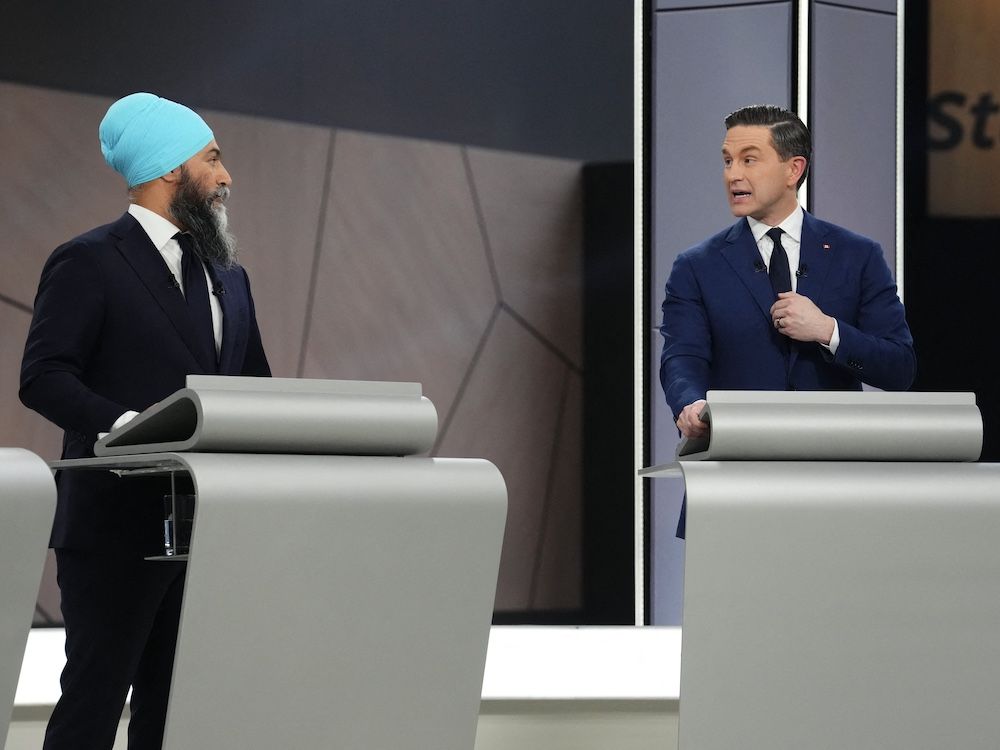
New Democratic Party Leader Jagmeet Singh (L) makes a point to Conservative Leader Pierre Poilievre during the French-language Federal Leaders' debate at Maison de Radio-Canada in Montreal, Quebec, Canada, on April 16, 2025. (Photo by SEAN KILPATRICK/POOL/AFP via Getty Images)

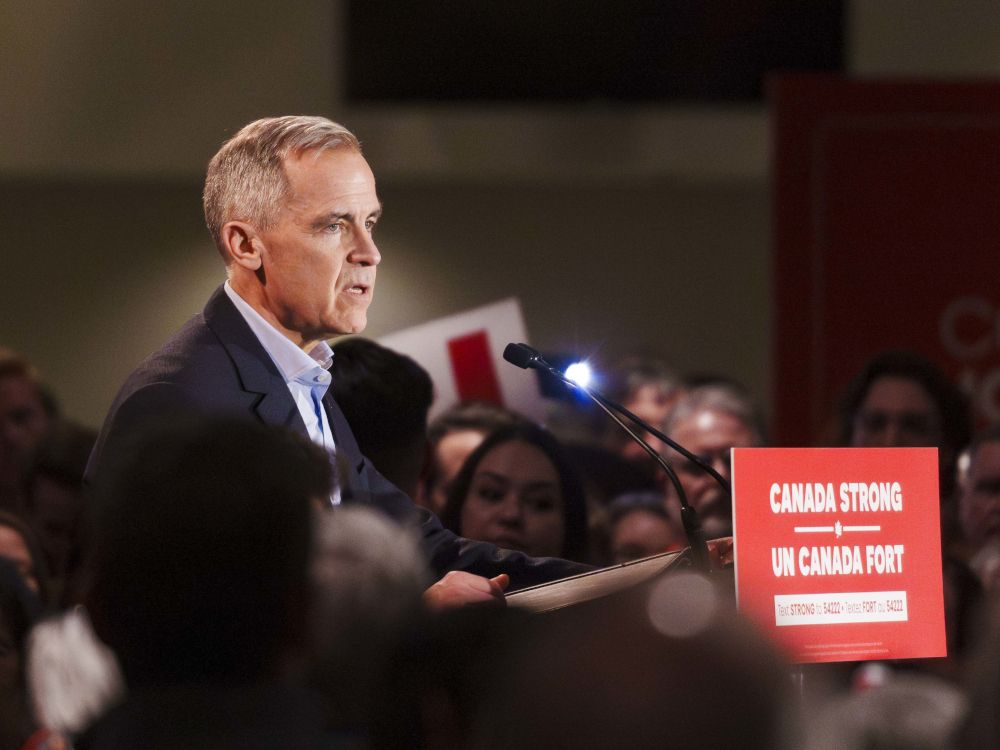
Wednesday night’s French-language leaders’ debate in Montreal didn’t produce any knockout punches — but if you were scoring on points, Liberal Leader Mark Carney came out on top. And he did it the old-fashioned way: by letting his opponents beat each other up.


Carney’s performance was far from riveting, and he frequently fell into economist-speak, such as when he talked about “catalyzing capital” and opined on the intricacies of operating budgets. But he kept his cool, delivered solid lines, and even a couple of zingers, such as when Poilievre trotted out his “You’re not Justin Trudeau and I’m not Justin Trudeau either, OK?


And while Carney’s French was faltering by the end of the night, it was far better than his performance during the Liberal leadership debate, thus allowing him to exceed expectations. Thanks to the free-for-all format of the debate, which did not include dedicated one on ones, he also managed to skate away when things got too heated, as other debaters jumped into the conversation to grab some airtime.


The most aggressive on that score was Bloc Québécois leader Yves-François Blanchet, who had the best command of the French language. But Wednesday night, it worked against him. Usually clever and erudite, Blanchet came off as cocky and hectoring, reminiscent of another Quebec nationalist: the late Premier Jacques Parizeau. Rather than outline what the Bloc would do to solve problems like housing and inflation, Blanchet schooled the other leaders on topics such as the difference between Quebec’s economy and the rest of Canada’s, and the effectiveness of coalition governments in Europe. Earlier in the week, Blanchet had

bragged

to the media that he didn’t need any “particular preparation” for the debate — and frankly, it showed.


Then there was Conservative Leader Pierre Poilievre. He was more statesman-like than usual, but went after Carney on several issues, accusing him of wanting to build bureaucracy instead of homes, and of doing a lousy job as governor of the Bank of England. But Poilievre also spent a lot of the night sparring with NDP leader Jagmeet Singh, who happened to be positioned right next to him on stage. And Singh was only too happy to oblige, hammering Poilievre on health care, accusing him of wanting to “Americanize” the system. (Singh even got into a dustup with moderator Patrice Roy for constantly interjecting about health care, an issue that was not on the official agenda.)


The resulting exchanges were counterproductive to both the NDP and the Conservatives. They underscored what is shaping up to be Poilievre’s greatest strategic error of the past two years: hammering “sell-out Singh” for propping up Justin Trudeau, thereby driving Singh’s brand into the basement and sending NDP voters scurrying over to the Liberals, especially now that U.S. President Donald Trump is back in the White House.


With all the hype around Trump as the ballot box question, however, he was barely mentioned in the debate. Instead, the candidates refreshingly focused on actual issues: housing, immigration, energy, and debt. But none of them brought a costed platform; instead, both the Conservatives and the Liberals promised to deliver one Easter weekend, when no one will be paying attention. 


Instead, Trump made an appearance in the post-debate press conferences — thanks to media outlets Rebel News, Juno News and True North, whose reporters came early to the event and dominated the microphones. They asked Carney how many genders there are and Poilievre whether he would deport permanent residents who commit hate crimes. They also asked Singh why he hadn’t condemned the burning of 200 Christian churches in Canada. In response, Singh refused to take questions from Rebel, calling them disinformation merchants, Carney answered that there were two sexes, and Poilievre said he would deport foreign nationals who broke the law.


And how many people watched?  The Canadiens were in a playoff game against the Carolina Hurricanes at the same time — which they won 4–2 — and even Quebec Premier François Legault

skipped the debate

in favour of hockey. We’ll see whether Thursday’s English match-up gets more attention — and whether opposition leaders shift their strategy to focus on Carney, rather than each other.


National Post


A sign showing the Canadian Charter of Rights and Freedoms is shown during a rally at Central Memorial Park in downtown Calgary on Saturday, September 18, 2021. Jim Wells/Postmedia

If elected, Conservative Leader Pierre Poilievre has now confirmed that he would invoke Section 33 of the Canadian Charter of Rights and Freedoms, also known as the notwithstanding clause or the Parliamentary supremacy clause, to ensure that multiple murderers remain ineligible for parole.

Reactions to this announcement from Poilievre’s political opponents have been entirely predictable. Responding on X, Liberal MP Anthony Housefather for instance

charged that:

“Using the notwithstanding clause shields overriding a Charter right in a manner not reasonable in a free & democratic society. Parliament has never done this. Nor should it. It is a slippery slope. Do it once & tomorrow it will be used to override a right important to you.”

There is little reason to doubt that authors of statements like these believe that they offer a compelling argument against the use of Section 33. After all, who wants politicians, even elected politicians, to overrule the courts on issues that are important to them? Is a slippery slope not at least a possibility, if federal legislators begin to make regular use of Section 33?

Unfortunately, this argument supposes that the Charter truly serves to protect “rights” that are important to the average Canadians, but that is an assumption that can no longer be taken for granted. Although the text of the Charter certainly guarantees rights to everyone, judicial interpretation has over time undermined its universal character, transforming it from a traditional rights instrument that guarantees equal rights to all persons, into an instrument of rights distribution that rewards decidedly unaverage litigants at the expense of virtually everyone else.

Consider the following cases. The average Canadian, regardless of sex, race or creed, is likely not going to consume drugs in public parks, nor is the average Canadian likely to erect a tent, let alone a tent city, in such a park. But judges have interpreted the Charter in a way that at least presumptively guarantees the “right” to do

both

of

these things

, at the expense of the ability of everyone else to make use of these public spaces.

Likewise, the average Canadian, regardless of sex, race or creed, is unlikely to commit multiple violent offenses, or for that matter to commit a sexual offense such as sexual interference with a minor. Yet the Supreme Court has concluded that

multiple murderers can’t be subjected to “stacked” parole ineligibility periods

— precisely the issue that Poilievre’s proposed use of section 33 would seek to address — and held that imposing a mandatory six month minimum sentence on someone who lures and has sexual intercourse with a minor amounts to

“cruel and unusual punishment.”

Decidedly unaverage defendants benefit in both cases, while everyone else must contend with the resulting degradation of public order.

Conversely, the average Canadian is increasingly less likely to be protected by the Charter in the things that he or she actually does. Let’s assume, for instance, that the average Canadian is a parent. Some older decisions suggest that the average Canadian’s parental rights

will be protected under the Charter

. Yet the Charter is now being weaponized against parents, including for the

purpose

of denying them access to information necessary to properly discharge their duties to act in the best interests of their children. This is occurring most notably in the

ongoing challenge

to Saskatchewan’s law requiring parental notification and consent to a change in their child’s recorded name or pronouns. Perhaps the Courts will resist the conclusions being urged upon them by activist litigants in these cases. But that is far from a foregone conclusion.

What if we assume that the average Canadian is female? Surely one might think that if the Charter benefits someone, it is women. But unrestricted access to abortion, if one considers this desirable,

has never been mandated by the Charter.

Meanwhile, the Charter has to date been of little assistance to women who have dared to express their views

on the importance of sex-segregated spaces

.

More broadly, there are serious reasons to doubt that the Charter will offer much protection to anyone, male or female, who expresses a political opinion at odds with prevailing left-liberal orthodoxies, even as those who hold such adverse opinions may include upwards of 70 per cent of the Canadian population. This concern is particularly salient, given that Liberal Leader Mark Carney has

suggested

that he would revive Bill C-63, also known as the “Online Harms Act,” if elected. This Bill would impose potential life imprisonment for “hate speech,” in addition to allowing private actors to bring human rights complaints against anyone they believe to have engaged in such speech.

These are but some of the many examples that could be cited in support of the conclusion that the Charter no longer provides a net benefit to average Canadians, and instead increasingly serves to burden them by undermining their rights in favour of those of decidedly unaverage persons. The result is a problem not just for the legitimacy of the Charter, but also for the broader rule of law. Fortunately, the framers of the 1982 Constitution foresaw this possibility, as they had at their disposal the precedent of the Lochner-era U.S. Supreme Court, which routinely invalidated legislation promulgated in the common good for the benefit of entrenched economic interests. It is for this reason that the framers of the 1982 Constitution included section 33 in the Charter. We should not be concerned when it is used for its intended purpose.

Stéphane Sérafin is an assistant professor at the University of Ottawa’s Faculty of Law, Common Law Section.


Canada’s political class needs to stop treating the notwithstanding clause like it’s radioactive.

Section 33 of the Charter of Rights and Freedoms is not some dangerous loophole to be used only in times of national emergency. It’s a core feature of our constitutional architecture — one that recognizes the rightful supremacy of Parliament in a Westminster democracy. And it’s time we started using it as it was intended.

For too long, Canadian legislators have outsourced their authority to the judiciary. Faced with difficult political questions, too many politicians have thrown up their hands, passed vague or overly broad legislation and then waited for the courts to “clarify” it for them. That’s not how our system is supposed to work.

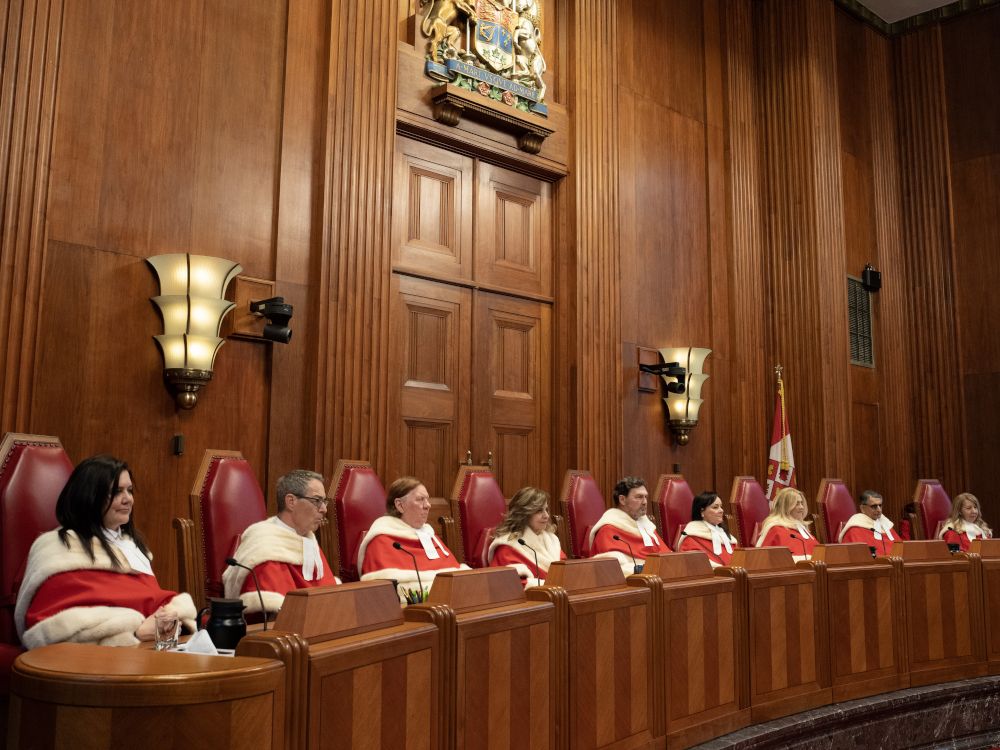
We are not governed by robes. We are governed by elected representatives who are answerable to the people. Yet in recent decades, the Supreme Court of Canada has assumed an outsized role in defining the boundaries of public policy, often in ways that are both unpopular and constitutionally dubious.

Consider decisions like Canada v. Bedford or Carter v. Canada, in which the court effectively rewrote national policy on prostitution and euthanasia — areas of profound moral and societal complexity — with little more than a few paragraphs of rationale and a one-year implementation timeline.

Or R v. Bissonnette, in which the court struck down consecutive life sentences for mass murderers as “unconstitutional,” citing the need to preserve “hope” for even the most heinous offenders. Was that decision legally sound? Maybe. Was it democratically legitimate? Absolutely not.

Canadians never voted for these outcomes. Their elected representatives never debated or passed such policies. Yet the court decided them anyway — and politicians acquiesced without so much as a whimper.

It’s important to remember: Section 33 is not an override of the Charter — it is part of the Charter. Without it, the Charter would never have come into being. When the Constitution Act, 1982, was being debated, several provinces — rightly wary of judicial overreach — demanded a mechanism to preserve parliamentary supremacy and legislative accountability.

The notwithstanding clause was the compromise that made the Charter possible. It’s not a constitutional backdoor. It’s a constitutional cornerstone. It ensures the Charter reflects Canada’s democratic traditions — not just legal theory, but lived, representative governance.

It’s time to reverse this trend. Parliamentary supremacy is a foundational principle of the Westminster system. It means that, while courts can interpret laws, they do not have the final say on public policy.

That right belongs to Parliament and the provincial legislatures. Section 33 exists to ensure that balance — to correct the overreach of judges who may be well-meaning, but who are neither elected nor accountable to the public.

Invoking the notwithstanding clause does not “suspend” rights. It ensures that the definition of rights is not monopolized by a handful of jurists. It is a democratic pressure valve — one that affirms that rights and freedoms must be interpreted in the real world, with real consequences, by real lawmakers who can be fired at the ballot box.

At some point, we’re going to have to stop pretending that nine unelected lawyers in Santa Claus robes know better than millions of Canadians and their representatives. Judicial wisdom is no substitute for democratic legitimacy.

Instead of clutching pearls every time a government invokes Section 33, we should be asking why it’s been used so sparingly. The truth is that Canadian politicians have grown timid — too afraid of headlines, op-eds and activist judges to assert their own legitimacy. That has to end.

It’s time for a renewal of legislative courage in this country. If Parliament truly is supreme, then it’s time it started acting like it. The notwithstanding clause should be a normal — even routine — part of our governance. Because in a healthy democracy, the final word shouldn’t come from the bench. It should come from the ballot.

National Post

Anthony Koch is the managing principal at AK Strategies, a bilingual public affairs firm specializing in political communications, public affairs and campaign strategy. He previously served as national campaign spokesperson and director of communications to Pierre Poilievre, as well as director of communications and chief spokesperson for the Conservative Party of British Columbia general election campaign.


Liberal Leader Mark Carney

Liberal Leader Mark Carney has, during this election campaign, been a man of many words — and little substance. His statements about what he envisions for Canada are often so vague as to appear generated by an artificial intelligence program that’s been prompted to create political ads.

Hey Grok, can you make a political ad about building a better and stronger Canada? Emphasis on the “building.” Maybe say something about elbows, too.

On X this week,

Carney wrote

: “Thank you to the Carpenters’ Regional Council for your endorsement — and for everything you do to build this country. Together, we’re going to train thousands more apprentices and build nation-building projects.”

On International Women’s Day,

he posted

: “Canada has been built by so many strong, resilient women who care about our country, and want to make it better. Today, I celebrate the contributions and hard work of women across our country, including those who are still building it.

#IWD

To recap: Canadian carpenters are building the country with nation-building buildings. Women, too, are building the country, in some unnamed fashion. (Perhaps those of us who are not carpenters are doing it with our wombs — building actual humans.) That’s not all, though — Carney is going to participate in this building, as well.

“My government will rebuild and rearm our military to prepare Canada for an increasingly divided world. By boosting domestic production, using Canadian materials, and backing new Canadian technologies, we’ll get the job done,”

Carney boasted

.

He failed to qualify what he meant when he said he would be preparing us “for an increasingly divided world.” Are we going to war? And if so, against whom? Additionally, what are these “new Canadian technologies”?

My only guess: it is the Canadian elbow, which, under Carney, has in fact become a sort of weapon of mass division — though it has only been effective domestically, to deepen what now feels an irreconcilable divide between our country’s left and right sides of the political spectrum.

Will you hazard a guess as to what Carney might say if you ask him the time? “It’s time to build in this country,” Carney posted on X this week. Of course it is.

“I’ll make sure Canadian workers have the tools they need to take on the challenges of today and tomorrow,”

he elaborated

. Whether Carney is talking about homes, humans, pipelines, Canadian military technology or something else entirely is painfully unclear.

Carney has faced

similar criticism

regarding his comments in French: that he is not fluent enough to offer much substance in Canada’s second official language. In February, he

mistakenly said

in French that he is “in agreement with Hamas.” In March, he

struggled to understand

a French-speaking journalist’s question. His answers in French have been short and simple. But is he really doing any better in English? I think not.

We should seriously consider if this is less a matter of Carney’s French-speaking skills, and has more to do with his general failure to articulate any substance or vision for his leadership. His English comments are hardly more meaningful than the ones he makes in broken French.

Despite the constant and trite references to “building,” he has not, in either language, given Canadians a straight answer on building pipeline projects. He even vacillated — in a single sentence — from a no, to a hopeful maybe, to a more reserved “we’ll see” while on the Quebec talk show, “Tout le monde en parle,” recently.

“We are in a crisis, we must act. We must choose a few projects, a few big projects. Not necessarily pipelines, but maybe pipelines, we’ll see,”

said Carney

.

Speaking at a Liberal new conference about our military, Carney offered more vacuous

statements and promises

: “We won’t only bring the Canadian Armed Forces up to today’s standards, we will also build a military that is ready to fight threats that Canada is facing. And we will protect Canadians, now and into the future.”

In two sentences, he managed only to raise more questions for the voting public: What are “today’s standards” for our military? Who sets them? And what “threats” are we facing that require military intervention? Which threats require protection “now,” versus in the future? Is our military, at present, not capable of fighting this current and unnamed threat that we require protection from?

And, most importantly: are we really going to allow this man to run our country after equivocating his way through the election? Canadians deserve better than Carney.

National Post


The two men vying to be our next prime minister

both

agree

that counter-tariffs are an effective response to U.S. President Donald Trump’s trade war. But very little attention has been paid to the other side of the equation: increasing trade with other countries to provide new customers for Canadian businesses and alternatives to American products on store shelves.

This will entail expanding existing trade agreements and forging new ones with our allies, but also taking a close look at onerous Canadian regulations that impede trade with other advanced countries.

After Trump imposed tariffs on foreign automobiles, steel and aluminum, along with 10 per cent across-the-board tariffs on virtually every country in the world, it should be abundantly clear that no one is safe from his trade war and that the rest of the world must band together to protect our economies.

Trump has done more to dismantle the liberal postwar economic order in a few short months than anyone has in the last 80 years. If other western leaders want to protect the gains we’ve made in that time, they need to move just as quickly to solidify their own free-trade blocs.

New Zealand Prime Minister Christopher Luxon is

leading the charge

to use the Trans-Pacific Partnership, now known as the CPTPP, as the basis for a broader free-trade agreement that would include the European Union. But in order for that to happen, world leaders need to put aside their petty grievances and focus on the task at hand.

Shortly after winning the Liberal leadership, Mark Carney travelled to

Paris and London

to shore up our trading relationship with our European allies.

Yet it is noteworthy that Canada is one of only two countries that has not yet ratified the

United Kingdom’s accession

into the CPTPP, meaning that we don’t enjoy the benefits of free trade with the country with whom we share a system of government and a King. Meanwhile, France is one of a handful of countries that has

yet to ratify

the free-trade agreement between Canada and the EU.

If we can’t even agree to implement trade deals that have already been negotiated and agreed upon with countries that have such deep historical ties to Canada, what hope do we have of improving trade with our other partners around the world?

Part of the problem is that Canada refuses to follow the example of countries like Australia and New Zealand, which successfully phased out their own systems of supply management years ago with

great success

.

As a result, supply management has proven to be a sticking point in virtually every trade negotiation we’ve entered into, and is a constant source of tension even among countries we have free-trade deals with.

But we have also fallen into the trap, along with our European friends, of over-regulation. Modern bureaucratic states impose so many restrictions on commercial enterprises, it often becomes uneconomic to market their products in other countries.

Canada, for example, imposes

stringent labelling requirements

to ensure product information is available in both English and French, and that nutritional information conforms to our very specific requirements.

None of this is necessary, especially in an age in which we can hold a phone up to a box of French crackers to see what it says. But the problem extends far beyond language or disagreements over the recommended daily intake of fibre.

As the

CBC reported

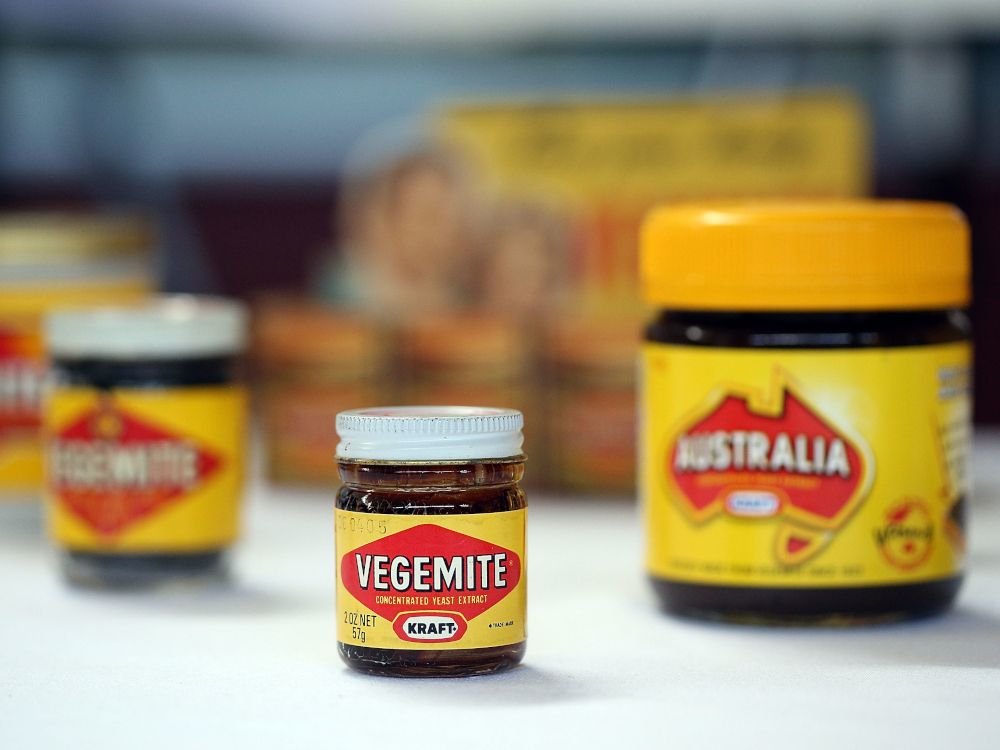
on Monday, Leighton Walters, an expat from Down Under who owns several Australian-themed coffee shops in the Greater Toronto Area, was told earlier this year by the Canadian Food Inspection Agency (CFIA) that he was no longer allowed to sell the roughly $8,000 worth of Vegemite he had imported because it contains … too many vitamins.

Under current regulations, only a select list of products are allowed to contain added vitamins. Vitamin B-rich spreads like Vegemite and its British equivalent Marmite are not among them because … well, just because.

A similar situation arose a decade ago when reports that the government had ordered Marmite and the Scottish drink Irn-Bru to be taken off the shelves of a British supermarket in Saskatoon caused outrage on both sides of the pond.

The CFIA later

clarified

that only versions of those products formulated specifically to meet Canadian requirements — i.e., those that don’t contain added vitamins or a specific type of food colouring — are allowed to be sold in this country. Because heaven forbid we trust that other advanced Commonwealth nations would have reasonable enough food safety standards.

We have quite literally regulated ourselves into a corner. We can’t even import spreads like Marmite and Vegemite — which have been staples of British and Australian diets for decades — not because they’re unhealthy or unsafe, but because they don’t conform to our nit-picky regulations.

Which I suppose shouldn’t be too much of a surprise given how hard it’s been to get our own provincial governments to accept each other’s standards. But if we want the liberal economic order, and our own economy, to survive Trump’s mercantilism, we’re going to have to get past our petty regulatory hang-ups and recognize that if a standard is good enough for the Australians, the British or the French, it’s probably good enough for us, too.

National Post

jkline@postmedia.com

Twitter.com/accessd


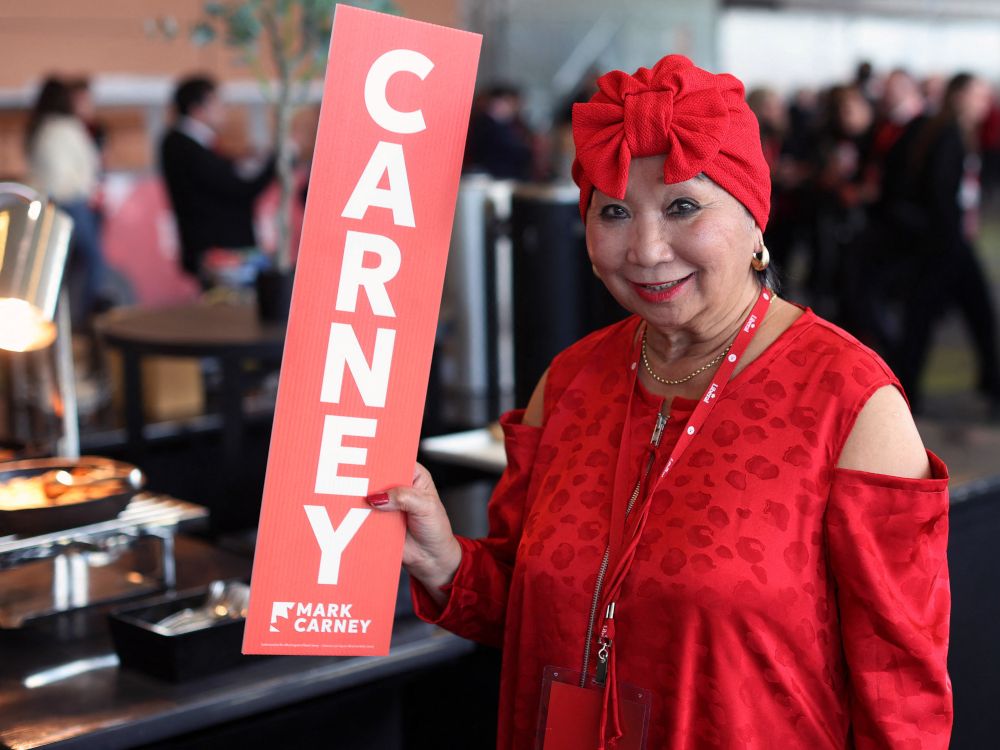
A supporter holds up a sign for Mark Carney at the Liberal leadership convention in Ottawa, on March 9.

We have two Canadas, two peoples and two solitudes, but unlike in years past, they are not the product of race, religion or language.

For Canadians with grey hair, property and growing pensions, it’s usually a joy to live here. A life of affordable property, upward mobility and the promise of valuable assets was their minimum expectation, and most exceeded it. For those under 35, this is verging on a pipe dream.

In decades past, a summer job could cover tuition and graduates could expect to enter a welcoming job market. Today, paying off student loans occupies the first rung of their professional careers, before the average young person can begin saving for a house, let alone loading their savings accounts.

Needless to say, accumulating true wealth through the purchase of assets is harder than ever. The undercurrent of anger and disillusionment felt among young Canadians would not exist without this sort of alienation. A dearth of affordable housing is a well-trodden theme in this country, but it must continue to be hammered home until there is real change.

Inflating the value of scarce real estate is one of the most powerful drivers of the Canadian economy, and it is crippling the country. As of February, the average house price in Canada was

$712,400

, while the benchmark price for a detached house in Vancouver topped

$2 million

.

The unwillingness to expand the housing supply to overtake demand is at the root of this, and it will take significant effort to fix the problem. In February, Canada Mortgage and Housing Corporation chief economist Mathieu Laberge warned that restoring affordability will be a “marathon not a sprint,” a grim prognosis that many will be numbed to at this point.

Another pillar of the rotten Canadian way is the substitution of meaningful private-sector job growth with the expansion of the public service. Between 2019 and 2023, net job growth in the public sector was almost

four times higher

than the private. During those same years in

British Columbia

, private-sector employment grew less than five per cent, while the number of government jobs increased by over 20 per cent.

This is not how a healthy, equitable market economy should function, and there are consequences to it. A large public-sector workforce is made possible through the use of taxpayer dollars, either paid up front or by taking out large sums of debt.

In effect, wealth is largely recycled rather than created, and the Canadian public sector has not justified its cost through innovation or the provisioning of high-quality services. Waiting several hours in the emergency room at the back of the triage line hammers this point home.

The Canadian economy is not attractive to private investment when compared to the United States. Donald Trump’s erratic second presidency is an opportunity for Canada to become a freer and more desirable place to do business. But regrettably, federal and provincial governments continue to over-regulate key industries and drive investment away in areas like the resource sector.

The big misconception about natural resources is that it only creates blue-collar jobs out in the bush. In reality, it also

generates huge numbers

of corporate office jobs in major cities.

In a city like Ottawa, the drawbacks of a local economy that’s dependent on the civil service can clearly be seen. Nearly the entire area around the Rideau Centre and ByWard Market is blanketed in homelessness and addiction, and the streets are lined with empty storefronts.

Since the COVID-19 pandemic, public-sector employees have abandoned in-office work in droves, and

undertaken job action

to ensure it remains that way. This has left downtown Ottawa bereft of people and vibrancy. The result is urban blight, plain and simple.

Also in Ottawa are sizable contingents of lobbyists who advocate on behalf of Canada’s many protected industries, such as airlines, telecoms and agriculture, ensuring that protectionist measures remain in place, at the expense of consumers and foreign investment.

All of this, whether it be inconveniences like the price of milk or the prohibitive cost of flying, are features of the Canadian system, not bugs. The essence of the Canadian model is the specific entrenchment of wealth, at the cost of younger families and the private sector.

The beneficiaries of this system are mostly those born prior to 1981, whose political, economic and social power is vaster than anything millennials or gen Z can muster. As the party that dominated 20th-century Canadian politics, the Liberals are bound to uphold the model they created. In effect, they are mercenaries for the grey-haired and the asset-rich.

Since forming government in 2015, they have

enriched pensions

and lowered the

age of eligibility

, while largely standing by as affordability worsens for young people. This explains why older Canadians remain the Liberals’

most loyal

voter bloc.

This generational divide will have consequences. A lack of Canadian opportunities in sectors like tech will drive the most ambitious south to reach the pinnacle of their careers in the United States. In Canada, new families are

reluctantly relocating

away from their hometowns to find suitable housing they can afford. It means that the most comfortable segments of the population will rarely see their grandchildren.

This alone is reason enough to declare the Canadian model broken, and for us to find something better to take its place. There is no alternative if Canada is to have a future.

National Post


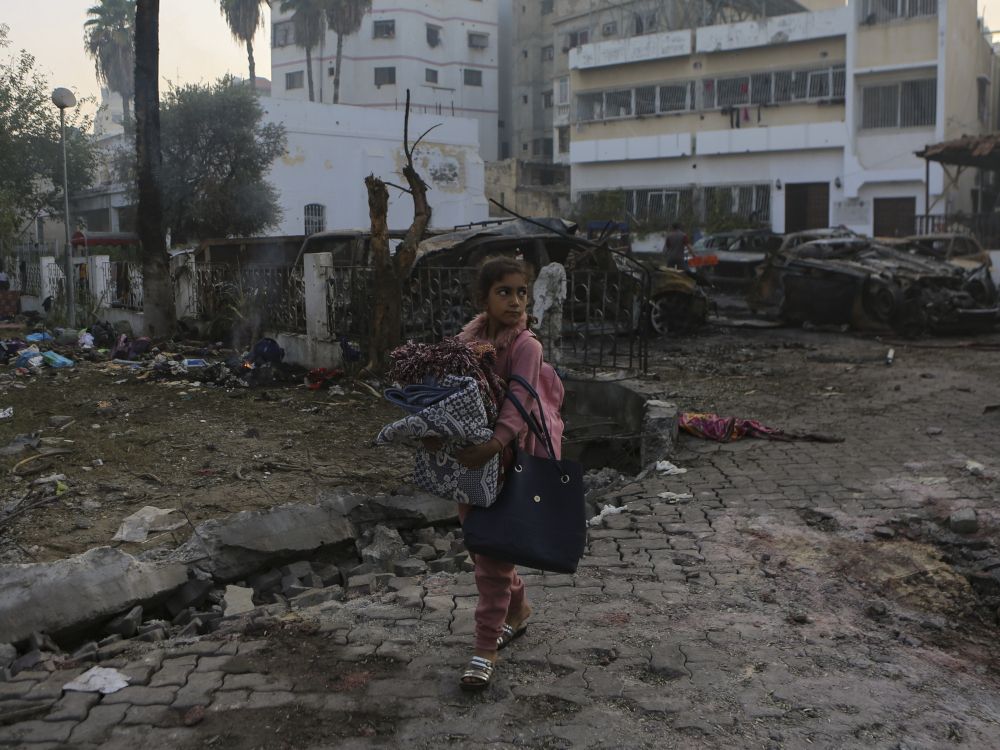
A Palestinian girl walks past the parking lot of the al-Ahli hospital in Gaza City, after it was hit by an errant Palestinian rocket, on Oct. 18, 2023.

The Gaza Health Ministry did not tell anyone that

1,852 individuals

it listed as dead last October no longer appear on its official list of victims.

In March, the ministry published a list that includes 50,021 names, but a fierce debate continues over its accuracy since new irregularities keep turning up. Meanwhile, the Hamas-controlled Health Ministry is attempting to explain them away, rather than being transparent about its methods.

Several analysts who have tracked the Health Ministry’s data since the start of the war quickly spotted the gap in the data. The first was Salo Aizenberg, who

posted his findings

on X. Aizenberg

listed

the unique ID numbers of more than 1,000 individuals who disappeared from the list so others could check his work.

Prof. Lewi Stone, a biomathematician at Tel Aviv University, had already noticed a pattern of inconsistency between different versions of the list. In a forthcoming paper, Stone examines 1,792 entries that appeared in the August 2024 list, but not the following one from October. He finds that 79 per cent of those missing entries belong to women, children and the elderly.

The Gaza Health Ministry rarely has to justify its opaque methods, since top media outlets treat its numbers as fully credible without conducting real due diligence. Yet Ben van der Merwe, an investigative reporter from SkyNews who had previously

published

sympathetic stories about the

ministry’s work

, decided that the missing names were a big story and asked for an explanation.

The answers came from Zaher al-Wahidi, head of the ministry’s statistical unit. The ministry has previously disclosed that its data comes from two principal sources: hospital death records and reports filed by the relatives of those whose deaths were not recorded, often because the body was missing.

It turns out that 97 per cent of the entries removed from the ministry’s list between October and March began as reports filed by families. Wahidi acknowledged that some may submit false claims in hopes of collecting death benefits.

The statistics chief also pointed to the mislabelling of deaths from natural causes as a principal reason for the errors. This drew the

attention

of analysts like Aizenberg and Stone, who have long questioned the ministry’s claims that it excludes natural deaths from its list of war victims.

Drawing on demographic data, Stone estimates there are 5,000-6,000 natural deaths in Gaza in a typical year, and the war has now lasted 18 months. He also notes that the ministry has never produced a list of natural deaths, despite investing so much effort in reporting casualties. If the lists have been blended all along, whether fully or partially, a significant adjustment may be in order.

Previously, Wahidi insisted that Gaza authorities carefully vetted family reports for accuracy. He said last August that a judicial committee reviews each report. With its approval, the family must then

approach

a “public prosecutor to verify that the event occurred (and that) the one they’re registering was actually a martyr, and not a natural death.”

Clearly, this process broke down or was not sound in the first place. Yet the recording process in hospitals was also flawed. According to SkyNews, the majority of names that were de-listed between August and October last year came from hospitals. Wahidi

explained

that his team audited the data after receiving complaints from individuals who were very much alive but still listed as dead by the ministry.

Yet even the ministry’s corrections often need to be corrected. In a forthcoming analysis, Gabriel Epstein of the Israel Policy Forum finds that 241 names that were removed from the list were later added back to it between June 2024 and March 2025, and a handful of those were then removed a second time.

A sympathetic observer might assume that all this numerical chaos may simply be the result of attempting to collect and verify data in the middle of a devastating war. There’s no question that this task would be far easier in peace time. Yet the ministry’s persistent lack of transparency suggests it routinely employs problematic methods until others expose its mistakes.

The ministry also has a track record of outright deception. In the first days of the war, it

told reporters

that Israeli airstrikes had caused a massive explosion at Al-Ahli Arab Hospital in Gaza City, killing nearly 500 people. In fact, a Palestinian rocket

caused the explosion

, and the actual death toll was far lower — but the ministry has never acknowledged the true figure.

With regard to its casualty statistics, the ministry recorded around 15,000 deaths on the basis of what it described as “reliable media sources.” It never identified those sources, and then Wahidi began

denying

that the ministry ever relied on them in the first place. To cover its tracks, the ministry appears to have gradually

replaced

those entries with more reliable records.

There’s no question that journalists around the world need to reconsider their habitual reliance on the Health Ministry’s numbers. As the case of SkyNews illustrates, interesting admissions begin to flow when reporters exert even limited pressure on the ministry. The United Nations should also revisit its reliance on the ministry’s numbers.

But the most important lesson here may be for the Israeli government and armed forces. They have never mounted a serious public challenge to the credibility of the ministry’s figures, even though its numbers are a driving force behind media coverage that places overwhelming responsibility for civilian casualties on Israel, as Hamas embeds itself in Gaza’s homes, schools, mosques, hospitals and UN facilities.

National Post

David Adesnik is vice-president of research at the Foundation for Defense of Democracies.


Liberal Leader Mark Carney

On two recent occasions, Liberal Leader Mark Carney had the opportunity to take a strong, ethical stand — to quite simply do the right thing — and twice he failed to do so.

Carney refused to fire Liberal candidate Paul Chiang, after he said a rival should be kidnapped and handed over to China; and now he has failed to dismiss staffers who maliciously distributed fake and misleading buttons at a Conservative conference.

Instead, the staffers who planted the Trump-style buttons at the Canada Strong and Free Network conference have been “reassigned” to other jobs.

Considering that the staffers last job for the Liberal war room was to create misinformation as part of a dirty-tricks campaign, one wonders what their new roles will be.

There was only one way to deal with these staffers and it was to fire them, immediately.

These were not low-level workers, but people within the Liberal war room. They were — still are, apparently — intricately associated with getting Carney elected.

Planting buttons with slogans such as “Stop the Steal” — a reference to Donald Trump’s 2020 election loss — was an attempt to implicate Conservatives as mad MAGA supporters and denigrate them in the eyes of voters.

It was immoral, unethical and possibly criminal. We’ve just had a national inquiry into foreign interference in this country and here we have a blatant example of disinformation being spread by a Canadian political party.

“Disinformation is false information that is deliberately intended to mislead. Once a disinformation narrative is introduced into the information ecosystem, the goal is for it to be spread virally and unwittingly by others,” says the

Privy Council Office

.

“Disinformation is a constantly evolving threat that affects all democracies and impacts all parts of society in different ways. Countering disinformation is a global issue and requires a response from all areas of society — governments, industry, independent election administrators, civil society and citizens.”

As prime minister, Carney should have shown moral leadership and taken strong action against the staffers. Reassigning them so they can continue to work to get him elected is not only a sign of weakness, but of louche self-interest.

When challenged about the buttons,

Carney apologized

and said, “This is totally unacceptable,” adding, “I’ve made it absolutely clear to my campaign that this behaviour or anything approximating it or in that spirit is unacceptable (and) cannot happen again.”

But a lame apology probably isn’t the kind of forceful response envisaged by the Privy Council Office, and it is definitely not the kind of response that should be coming from a government that says it’s committed to fighting disinformation.

Similarly, Carney failed to act responsibly over the Chiang affair, after it was revealed that his Liberal candidate told Chinese-language media that people should kidnap a Conservative rival and hand him over to the Chinese Consulate to collect a bounty.

These were deeply deplorable comments that should have been met with swift and firm action from any Liberal leader. Instead, Carney defended Chiang. Carney said Chiang was a man of “integrity,” who had a “lapse in judgment” and apologized. And that for Carney was that.

Except the furor and anger over the affair wouldn’t go away. Eventually, Chiang, probably with a little help from senior Liberals, decided to step down as a candidate.

The Chiang affair and the button fiasco reveal a flaw in Carney’s judgment. Unfortunately, they also highlight what appears to be part of a pattern of suspect behaviour.

Where does the prime minister of Canada pay his taxes? It’s a straightforward question that requires nothing but a straightforward answer, but for days, Carney dodged it.

Campaign spokesperson Mohammad Hussain gave a vague, non-answer when the

Toronto Sun asked

last week about Carney’s taxes. “Mark Carney has followed all the rules as a tax-paying resident of Canada,” said Hussain, who refused to clarify.

It took almost a week for Carney to say he pays his taxes in Canada. But why the obfuscation?

Even before the election campaign began, Carney’s veracity was under scrutiny. In February, he was asked about a decision by Brookfield Asset Management, whose board he chaired, to move its headquarters from Toronto to New York.

Carney said the decision was taken after he had resigned from the board. But

documents

obtained by Conservatives showed the move was approved months earlier while Carney was still chairing the board. Why the deceit?

Maybe Carney has lost his moral compass, but if he does still have it, then the instrument is in urgent need of repair.

National Post


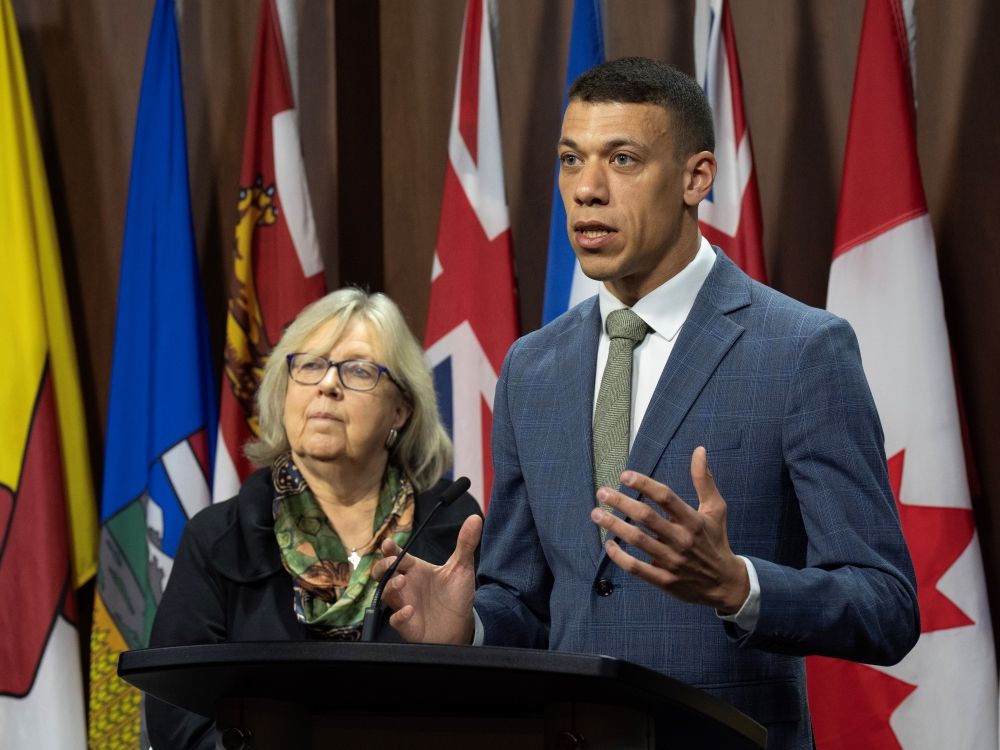
Green Party co-leaders Elizabeth May and Jonathan Pedneault are seen during a news conference in Ottawa, Wednesday, March 5, 2025.

One day, we might be freed from the Green Party of Canada’s outsized ability to sponge up bandwidth in pursuit of goals that will never remotely be reached, but it won’t come in time for the debates on Wednesday and Thursday. And so, all viewers will be cursed with listening to the lame duck party’s frivolous posturing, a cavernous pothole on the road to e-day.

This forced viewing isn’t only an impediment to democracy — it’s unjust, in violation of the rules that were drafted by the Leaders’ Debates Commission, the government-created entity that has set the parameters for federal election debates since its creation in 2018.

In 2025, debate participants must check off two of the following three boxes: they must have one MP in Parliament; they must be polling at four per cent or more; they must have candidates running in 90 per cent of the country’s ridings.

The Greens, according to the debate authorities’

calculations,

are polling at merely 2.7 per cent and therefore miss that mark on criterion two. They meet criterion three because they told debate authorities that they had a full candidate roster — but the party’s subsequent submissions to Elections Canada reveal that only 68 per cent of ridings will have Greens on the ballot.

Instead of revoking the Greens’ invitation to the debate, as would have been appropriate for leaders who don’t meet the modest standard that has been set, the debate commission insisted that no changes would be made in light of the flawed data.

“The commission made its decision with respect to which political parties met the debate participation criteria 27 days before election day. The timelines were set to ensure that the debates producer has sufficient time to produce a debate of high quality,” a debate commission spokesperson

told

CBC.

So, instead of a leaders’ debate, we’ll also be getting a Green party advertisement on Wednesday and Thursday — an event to familiarize the country with its new co-leader, Jonathan Pedneault, who doesn’t have a hope of becoming an MP. In his Montreal-area riding’s 2023 by-election, he

came in fourth,

losing to all three major federal parties. His time on stage will likely be forgettable, as will be his face, absent any gaffes or gasp-worthy jabs at others.

Indeed, that sums up a lot of side-by-side coverage comparing leaders this election, as the Greens have often been included. Radio-Canada’s “Cinq chefs” program at the beginning of the month

dedicated

its final 15 minutes to Pedneault. CBC News has

written

that Canada’s five “main parties” include the Greens. CPAC’s

“Leaders Tour”

graphic includes Pedneault and Elizabeth May, the Greens’ other co-leader.

The Greens are not always included in election coverage, but when they are, they take up about 20 per cent of space with less than three per cent support across the country. Not only does their spotlight outstrip their fleck of popularity by an order of magnitude, it opens the Overton window, giving a more centrist appearance to the Liberals and NDP. A quick glance at the Green

platform

reveals that they’re just a more extreme version of the modern Liberals, anyway.

That same courtesy is not extended to the right. Excluded from “main party” discourse, and denied these showers of undeserved attention, is the People’s Party of Canada. Like the Greens, they shouldn’t be permitted to take up space on the debate floor, and in election coverage in general — but it’s unfair that they’re the only sub-five per cent national party that’s getting the treatment it’s due. It should be both or none. And in a first-past-the-post system that generally keeps novelty parties out of governing coalitions, it should be none.

Canadians already struggle with paying basic attention to politics as is, with voter turnout

reaching

a mere 63 per cent in the 2021 election — while in the 20th century, it hovered around 70. Roughly a quarter of Canadians

couldn’t even name

Jagmeet Singh and Pierre Poilievre back in January, according to pollster Abacus Data. We don’t have the latest figures for May’s recognizability because Abacus didn’t ask; last year, however, less than half of

those polled

knew who she was. It wouldn’t be surprising if Pedneault’s numbers were in the single digits.

And let’s be honest with ourselves: most of the attention that anyone aware of the personalities heading the Greens can be described as “rubbernecking.” Whether it was May’s

wobbly press gallery dinner address

and tribute to Omar Khadr, the

messy palace coup

against former leader Annamie Paul, or the misgendering

controversy

that cast a shadow over the interim leadership of Amita Kuttner, the party has proven to be an excellent generator of drama.

All of this should mean that debates, and election coverage more generally, should focus on finding meaningful differences between the figures that matter, and not on providing publicity services and participation ribbons to parties that have never managed to get more than three MPs elected. (Even this, it should be noted, wasn’t a longlasting achievement: the Greens in 2019 added New Brunswick’s Jenica Atwin to the roster, who ended up defecting to the Liberals two years later.)

The debate commission is well aware that there are only two contenders for prime minister in this election, and four parties that genuinely matter in the current Parliament. If it had any respect for the time of undecided Canadian viewers, it would keep the Greens off the podium and divvy up their screentime between the leaders who actually deserve it.

National Post


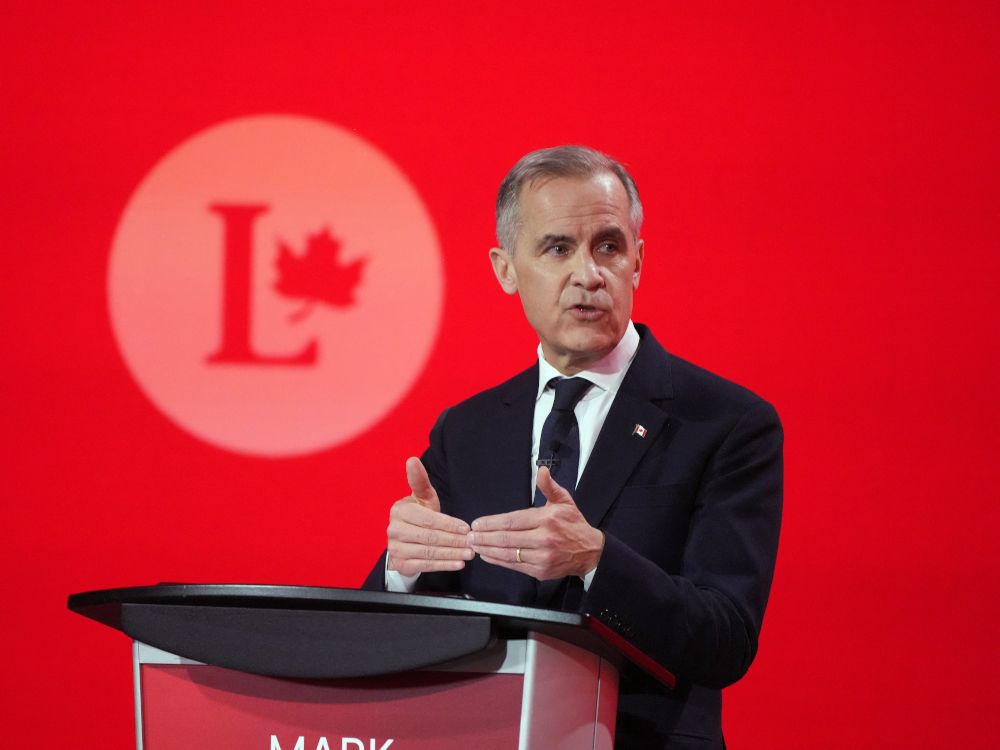
Mark Carney participates in a Liberal leadership debate in Montreal on Feb. 24.

As Canadians tune in to the leaders’ debates this week — in French on Wednesday and English on Thursday — they’ll hear about affordability, tariffs, immigration and even an entire segment on climate, an issue that no longer cracks

the top five

. But one subject is conspicuously absent from both stages: national defence.

It’s a baffling omission. While the French debate will touch on identity and sovereignty, and the English debate includes a discussion on public safety, defence is at best buried beneath broader themes — and at worst, completely ignored. That’s unacceptable.

Canada is facing the most perilous global environment in our lifetimes. War continues to rage in Ukraine and Israel’s still battling Hamas. Tensions are rising in the Pacific as China flexes its military muscles. Add to that a belligerent U.S. president eyeing our Arctic — and seemingly our whole country — and the situation is stark. If Canada won’t take its own security seriously, no one else will.

Rebuilding the Canadian Armed Forces is not a niche issue. It’s foundational to our sovereignty, our economy and our role in the world. Both Conservative Leader Pierre Poilievre and Liberal Leader Mark Carney have recognized this.

Poilievre

would build

an Arctic base and hire 2,000 more rangers to patrol the North. Carney has committed to deploy more personnel in the North and create a streamlined, “made in Canada”

procurement process

, which is long overdue. But both have yet to answer how they would meet Canada’s NATO spending commitment of two per cent of GDP — which the U.S. now

wants to hike

to five per cent.

Carney said Canada would do it within a “

few years

” (during his leadership run, he said

by 2030

), while Poilievre said Canada will “make our own decisions on exactly how much we spend.” And neither leader has said how they’ll pay for their commitments without ballooning the deficit. Poilievre has said he would cut foreign aid, but that won’t be enough.

Where will the money come from? What other programs will be axed? How will both parties’ proposed tax cuts square with defence spending increases? And even if we spend more money, how will we encourage Canadians to join — and stay in — the Armed Forces, which has seen

more people leave

than join for the past three years?

Instead of devoting a segment to these questions, the debate commission seems intent on curating the “safe” topics — and ones that favour the Liberal party. Tariffs and Donald Trump? Check. Climate? Check. And in the English debate, “leading in a crisis.” That segment is tailor-made for Carney, the only leader on stage who can say he has actually done so.

The problem is that without national security, none of those other issues matter. Without secure trade routes, tariff policy is moot. Without a capable military, we cannot defend our borders, ensure public safety or even decide our own destiny.

As we saw this weekend on Radio-Canada’s must-watch Sunday talk show, “

Tout le monde en parle

,” there is surprisingly little daylight between Poilievre and Carney when it comes to responding to Trump. Both say that no one can change what he does, so we must focus on changing ourselves: strengthening our internal economy and diversifying our economic alliances.

If the debates skip over issues where there are competing visions — like national defence — the campaign risks devolving into a superficial personality contest. “Poilievre is too Trumpy.” “Carney is too elitist.” These caricatures may play well on social media, but they don’t help voters make informed choices.

The debate commission should have done better. But it’s not too late. If moderators Patrice Roy and Steve Paikin are reading, I’d offer a suggestion: clip this column and ask the hard questions that Canadians need answered.

Postmedia Network

Tasha Kheiriddin is Postmedia’s national politics columnist.