



LP_468x60
on-the-record-468x60-white

In this file photo taken on November 10, 2019 an Iranian flag flutters in Iran's Bushehr nuclear power plant, during an official ceremony to kick-start works on a second reactor at the facility.

Concern over Iran’s nuclear program goes back almost to the turn of the century. In many ways, it’s the issue that never goes away and never gets resolved.

But with Tehran inching ever closer to actually developing nuclear weapons, and with an extremely unpredictable occupant of the White House, could that finally change?

Trying to read the tea leaves on this issue is notoriously difficult, but the signs point to a resolution this year. This could involve either Israel, the United States or both striking Iranian nuclear targets; alternatively, Tehran could take the final decision to build the bomb.

There are three factors that lead me to this conclusion.

First were the

Israeli air strikes against Iran

in October last year, in retaliation for earlier Iranian ballistic missile strikes. These sent a clear and unambiguous message: we can strike you at will, and there is little that you can do about it. The strikes were so successful that it’s entirely possible that they convinced the mullahs that a nuclear weapon is about the only option left to deter Israel. Iran’s air defences have been

severely crippled,

and it takes years to build this capability back up.

Second is the changed regional dynamic. Over the past year, the strategic environment in the Middle East has been transformed to Iran’s great detriment, as it has seen three major allies weakened.

First came the war in Gaza, which has decimated both Hamas and the territory itself since it began in 2023. Hamas is funded by Iran and has served as its surrogate on Israel’s border for decades. The most recent ceasefire collapsed last month, and the fighting continues. The end surely cannot be far away, and it will leave Iran greatly weakened. A future without Hamas looks increasingly likely.

Next came the extraordinary Israeli strikes in the fall of 2024 against Hezbollah, Iran’s ally in Lebanon, which have similarly decimated the terror group’s force. Hezbollah was once the primary power broker in Lebanon, but is now one of many competing for power and influence. And Jerusalem demonstrated once again that its intelligence capabilities remain unmatched.

Then, there were the devastating Israeli strikes against the Iran-backed Houthi militia in Yemen, which began last fall and have continued into the new year; these did considerable damage to both civilian and military infrastructure. The result is a trio of Iranian allies that have been dramatically weakened.

And third is the unpredictability of U.S. President Donald Trump, who revels in making threats and keeping other countries’ leaders off balance.

Indeed, at the end of March, Trump issued his most pointed threat yet at Tehran,

telling

Reuters, “If they don’t make a deal, there will be bombing. It will be bombing the likes of which they have never seen before.” This came after the president sent a letter offering to hold talks, with the United Arab Emirates acting as an intermediary, regarding the future of Iran’s program. The offer was initially

rebuffed

.

Since then, however, it appears the Iranians have had a change of heart, as talks were

held

with the U.S. in Oman last weekend, and are expected to continue this week.

It’s virtually impossible to say where this leaves us. The on-again, off-again nuclear negotiations offer few clues. While the chances of a deal in the near future remain remote, it is not inconceivable that it could happen. Few would have thought the

original

2015 nuclear deal, which saw Iran agree to curb its nuclear program in exchange for sanctions relief, and which

deteriorated

after the U.S. pulled out in 2018, was possible in the weeks and months leading up to it. With so much uncertainty surrounding the talks, it is impossible to say with any confidence where they might be headed.

That said, there remains the very real possibility of a solo Israeli military strike against Iran’s nuclear facilities, something that the Israelis have been practicing for years. With a strong friend in Trump, Israel may feel like it now has more freedom to do what it wants. And, as noted, Jerusalem has little to worry about in terms of Iranian air defences (although the same cannot be said about possible Iranian retaliation against Israel itself).

There is the further possibility that, feeling hemmed in with the loss of its regional allies and pressured by an unpredictable U.S. president, Tehran may finally make the decision that it has been dancing around for more than 20 years and attempt to build the bomb.

Nuclear watchdog agencies have said that, should Iran make this decision, it could likely construct up to five nuclear weapons in a matter of months, a development that would signal the end of the nuclear non-proliferation regime. In response, a series of countries — including Saudi Arabia, Japan and South Korea — may quickly decide to become nuclear weapons states themselves.

The questions surrounding Iran’s nuclear program have swirled for more than 20 years. The restarted U.S.-Iran talks may go a long way in determining the eventual outcome. Which way they will go is still unknowable, although I have always believed that Iran will not give up the core elements of its program, and thus an Israeli strike is likely. But after 20 years, the question looks like it will finally be resolved, one way or the other.

Andrew Richter is an associate professor of political science at the University of Windsor.

National Post


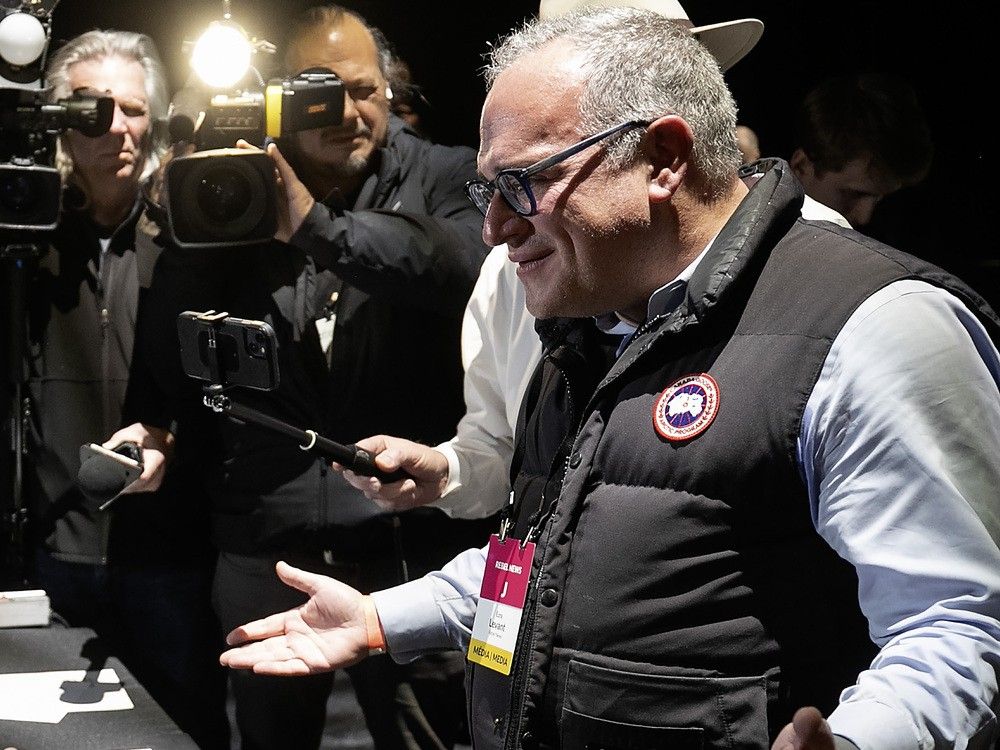
Ezra Levant, right, president of Rebel News, has a heated discussion with Ethan Cox, reporter of Ricochet Media, following the English Federal Leaders' Debate in Montreal on Thursday April 17, 2025.

Shortly after 8 p.m. ET on Thursday, before the English Leaders Debate in Montreal ended, word began to spread on X that the media scrum that was to immediately follow the debate was cancelled. The

reason

given to reporters by the Leaders’ Debate Commission’s Executive Director Michel Cormier: “We don’t feel that we can actually guarantee a proper environment for this activity.” This did not please members of the press. One could be heard shouting out: “Why? This is an infringement of the liberty of the press. This is your one job!”

While it’s not the commission’s job officially (it’s not mentioned in their mandate), post-leadership debate scrums — a gathering of journalists around a politician to ask questions and obtain quotes — are a standard practice. And it’s suggested under the

media accreditation

section of their site that they will occur, and a scrum did occur the night before, after the French leadership debate, as well as after both the English and French debates in 2019 and 2021.

If, as the commission points out,

debates

are important for reasons of public interest, then so, too, are scrums. They’re an opportunity for reporters to ask questions which may not have been asked, or sufficiently answered, during the debate. Hearing these answers can help Canadians decide how to vote. This scrum was especially important, given that it’s been particularly difficult this election campaign to get answers from Liberal Leader Mark Carney who’s paused his campaign a number of times, leading to both Conservative Leader Pierre Poilievre and Bloc Québécois Leader Yves François Blanchet to accuse him of

hiding

. You cannot hide during a scrum.

I don’t think anyone really believes that the scrums were cancelled because the commission was unable to secure a “proper environment.” They had 24 hours to do so after a chaotic scrum the night before. What changed? Why did we only find out after 8 p.m. ET that the scrums were not going to occur? Cormier, unfortunately, did not explain.

Global News’ Mercedes Stephenson

tweeted

that “a source with direct knowledge says the Debates Commission’s decision to cancel the scrums re ‘not being able to guarantee a proper environment’ was related to The Rebel… including Rebel staff trying to interrupt/get on the air during a CBC broadcast that was live earlier tonight.” No video evidence has been provided and the source of this claim has not been verified by National Post.

There’s a good chance the Leaders’ Debate Commission cancelled the scrums because after the French debate the night before they received backlash from traditional journalists and outlets for the decision to accredit several alternative media journalists and really had no way to suddenly disallow them from participating the second night during the English debate.

The uproar from traditional journalists was over the fact that media outlets were limited to one journalist each at post-debate scrums, with the exception of Rebel News which secured five spots for reporters. According to

Toronto Star

, this decision to allow five Rebel News journalists was likely the result of Rebel News owner Ezra Levant threatening a lawsuit.

The commission has gotten itself into hot water previously for

limiting accreditations

to alternative media organizations.

According to a 2019

report

from the commission, it turned down four organizations after having “concluded they were involved in political activism.” The decision was challenged by two of the organizations, Rebel News and True North, in Federal Court, which “ruled on an interim basis that, among other things, the Commission did not follow the rules of procedural fairness in respect of its denial of accreditation and ordered the accreditation of the two organizations. They obtained an injunction requiring the Commission to allow them to cover the debates and press availabilities of the leaders immediately following the debates.”

In 2021, the commission tried attaching

guidelines

to accreditation from the Canadian Association of Journalists (CAJ) for those reporters whose outlets were not automatically given accreditation to the debates because they were not part of either the Canadian Association of Journalists, the News Media Council, the Parliamentary Press Gallery, the Québec Federation of Journalists and the Québec Press Council.

To assess whether or not they could be considered professional journalists, the commission decided they would need to review the work of alternative media reporters to determine whether it was free of what the commission deemed conflicts of interest. According to the commission in 2021, a

conflict of interest occurred

:

“When an organization: becomes an actor in the stories it tells, including providing and applying financial and legal assistance to some of its sources to work toward a desired outcome or offering free legal services, crowdfunds to help some individuals in stories hire lawyers, purchases political advertising and launches petitions;

Or, when a reporter: writes opinion pieces about subjects they also cover as journalists, endorses political candidates or causes, takes part in demonstrations, signs petitions, does public relations work, fundraises and makes financial contributions.”

Based on this criteria, the commission

rejected

Rebel News’ application to participate in the scrums again in 2021. After Rebel again took the commission to Federal Court, it won an injunction allowing it to cover the debates despite not meeting the commission’s guidelines.

This left the commission in what they referred to as a “dilemma.” They could continue to try using discretion when granting media accreditation which could be overturned by the courts or approve all accreditation requests regardless of professional qualifications.

Coming at the alternative media outlets in 2019 with the charge of being politically-activist probably wasn’t a good idea. The claim could be made that all outlets are to some extent. It’s also not clear how the CAJ guidelines disqualify these alternative media sites. Because of this, it is likely the Federal Court will continually weigh in favour of the right for these outlets to ask questions at key debates, whether people like them or their questions or not.

After realizing they perhaps should not have invited that many non-traditional reporters and receiving blowback from other journalists that these outlets were even there in the first place, it seems the commission simply gave up and decided to cancel the English debate scrums to avoid any further blowback.

Sadly, as a result of the commission’s decision, Canadians did not get to hear the candidates answer reporters questions from traditional or alternative media. And we are worse off for it.

tnewman@postmedia.com

X: @TLNewmanMTL


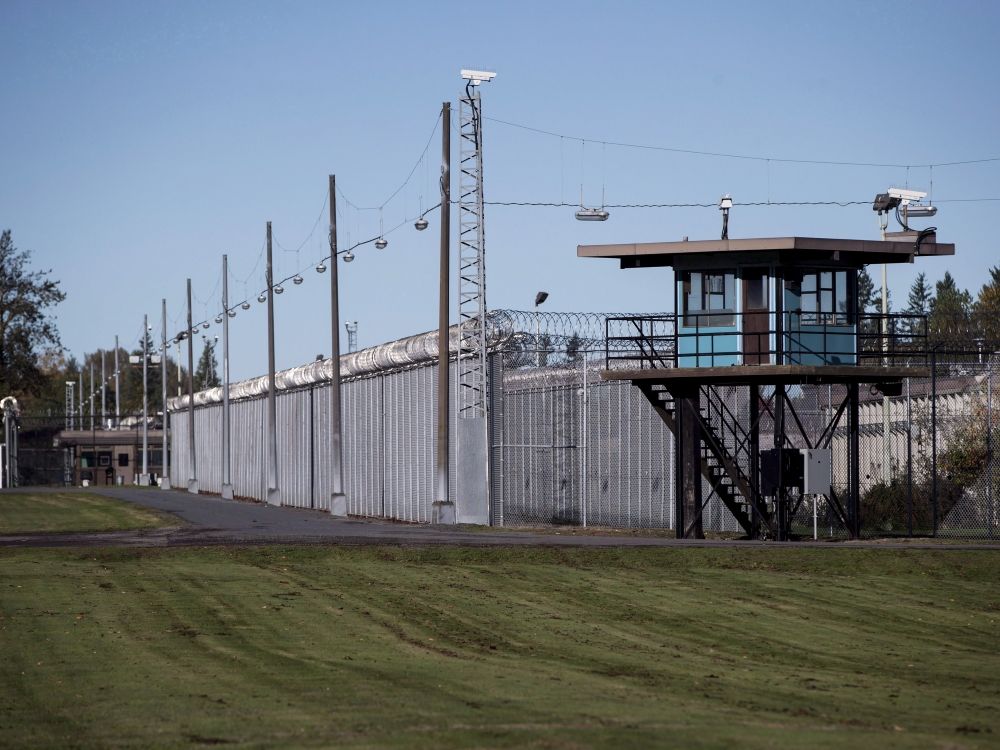
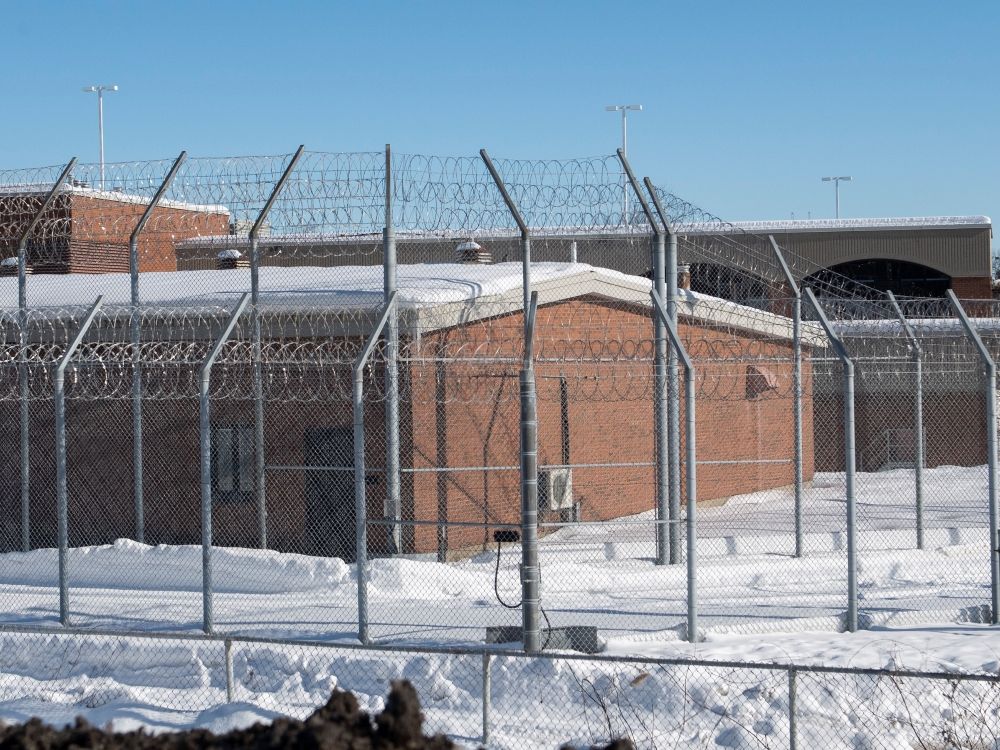
The Matsqui Institution, a medium-security federal men's prison on the grounds of the Pacific Institution, is seen in Abbotsford, B.C., on Thursday October 26, 2017.

Anthony Housefather is a Montreal Liberal MP of unusually courageous and actually-liberal character. A couple of days ago he issued an electioneering tweet about the Conservative proposal to

invoke the Charter of Rights’ notwithstanding clause

in order to legislate unconditional life sentences for multiple murderers:

“Using the notwithstanding clause shields overriding a Charter right in a manner not reasonable in a free & democratic society. Parliament has never done this. Nor should it. It is a slippery slope. Do it once & tomorrow it will be used to override a right important to you.”

I bring up Housefather’s tweet in the spirit of what the psychiatrist-blogger Scott Alexander calls “steelmanning,” i.e., representing a truly strong version of an argument you oppose instead on whaling on a straw man. In this tweet Housefather is speaking up for genuine libertarian values I share, and that you probably do too. The notwithstanding clause in the Charter does allow the legislature to override other Charter rights in cases where courts have found, or may find, that the override is unreasonable. The Parliament of the Dominion has indeed never yet done this. It’s proper that there should be a flavour of taboo around the notwithstanding clause — a strong political reluctance to use it. And “slippery slopes” are a ubiquitous phenomenon when it comes to fundamental civil liberties.

In other words, it’s a compelling argument if you were born yesterday. However, as interlocutors in Housefather’s Twitter thread are quick to point out, these fine sentiments are bound to induce some eye-rolling coming from a sitting Liberal MP. Which is to say, from someone whose libertarian spirit was scarcely in evidence in the long-ago year 2022, when the Liberal government invoked war-measures legislation, suspended the activity of Parliament and ran riot over due process and personal property because of some noisy truck horns and a few goofballs in camouflage.

Does our Emergencies Act not totter at the edge of one of those slippery slopes, one wonders? One wonders this, as it happens, while watching an American president abuse emergency powers that permit him to set tariffs according to his morning choler and the odour of the wind. So I ask: is there no potential for a non-Liberal government ever to make use of the hysterical precedent established for us by the Liberals? And should one blab about slippery slopes while standing atop on Mount Robson with a big hose of bear grease in one’s mitts?

The Conservatives say that, if elected, they will make Parliament’s first use of the notwithstanding clause to reverse the Supreme Court’s decision in Bissonnette, whereby life sentences without possibility of administrative parole were unanimously ruled to constitute “cruel and unusual punishment” under the Charter. I’ve criticized Bissonnette ad nauseam in this space: I wonder if Housefather thinks I did this because I don’t think having a strong rule against cruel and unusual treatment is important, or because I’d like to be subjected to cruel and unusual treatment myself.

Lest there be doubt, let me re-elaborate my position. I think it degrades the concept of “cruel and unusual” punishment, and that it mars our Constitution, when courts overtly redefine those words to take over social policy-making. I think Parliament should be allowed to specify penalties for crimes. I think that’s the kind of decision that properly belongs to elected legislatures, to people who must encounter and answer to the public from time to time, and not exclusively to ephors in ermine. I think the language of “cruel and unusual punishment” in our law was intended to forbid innovative forms of state torture, and not to substitute the superior moral instincts of judges for the inferior ones of parliamentarians. (However little I think of most parliamentarians not named Housefather.)

I don’t think lifelong imprisonment for a mass murderer — in Bissonnette, a mass murderer of defenceless people at prayer — is either cruel or unusual if the imprisonment is otherwise humane. I don’t think the existence of prisons is per se an affront to human decency, but a lamentable necessity of civilization. I think it’s dangerous not to deter further murders perpetrated by someone who has just committed one, which is a clear practical consequence of the Bissonnette ruling.

And I don’t think anything in these paragraphs is contrary to the moral and democratic instincts of Canadians, who are not fully reconciled even to the abolition of the death penalty if you believe 50 years of polling. Have I said anything controversial or outrageous — or even anything illiberal? I hope to God not.

National Post


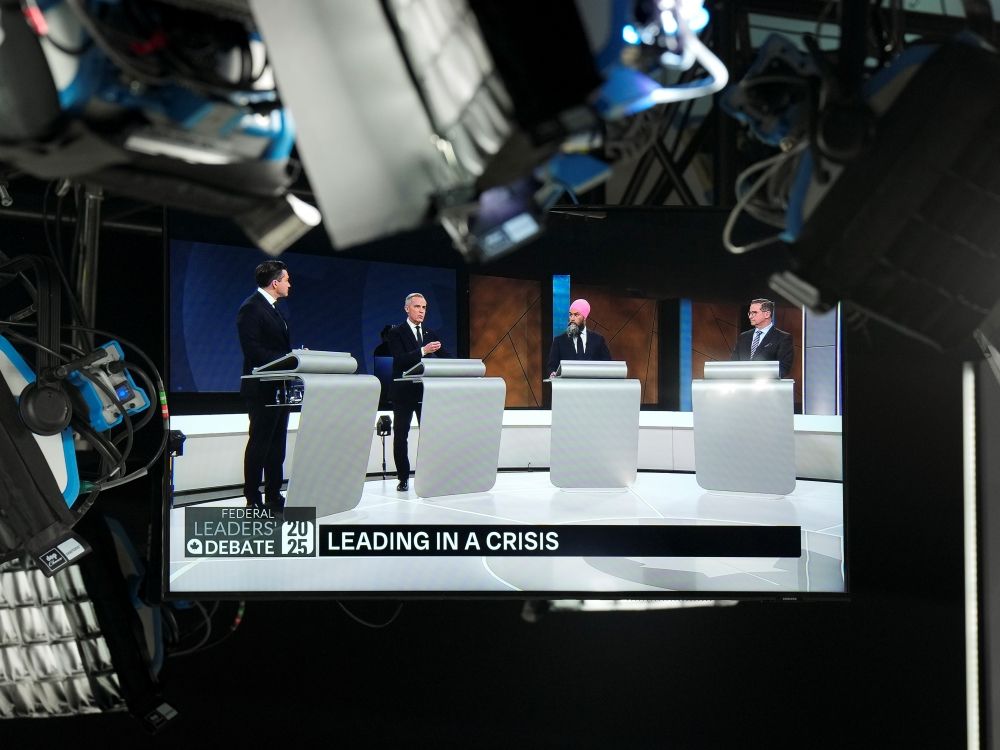
Conservative Leader Pierre Poilievre, left to right, Liberal Leader Mark Carney and New Democratic Party Leader Jagmeet Singh and Bloc Quebecois Leader Yves-Francois Blanchet are seen on a TV monitor on set as they participate in the English-language federal leaders' debate in Montreal, Thursday, April 17, 2025.

There is no doubt as to who won Thursday night’s English-language debate. That achievement went to Pierre Poilievre, who, while delivering a coherent message about his own hopeful vision for a future, more prosperous Canada, ran circles around a sluggish Mark Carney and deflected the volley of Jagmeet Singh’s pea-gravel-sized interruptions.

If there was any attack dog on the floor, it was Bloc Québecois Leader Yves-François Blanchet, who for much of the debate kept his metaphorical jaws snapped around Carney’s leg.

No matter what he did, Carney just couldn’t shake Blanchet. The Bloc leader accused Carney of

promising

to force pipelines through Quebec in English, and the opposite in French. He

berated

Carney for bringing up child care and health, matters of provincial responsibility. He accused Carney of not sufficiently

hearing out

the concerns of Quebec Premier François Legault. He

decried

Carney for associating with the Century Initiative, the advocacy group urging massive population growth, by hiring one of its

founders

as an adviser.

In contrast to Singh’s lukewarm attempts at hot takes, Blanchet actually sizzled. He

mocked

Carney’s crisis management skills, as the latter was anti-Brexit while he was serving as the United Kingdom’s central banker (the country ultimately left the European Union). As for Carney’s negotiating skills, Blanchet wondered aloud what deals the Liberal leader has negotiated aside from tax havens in the Caribbean.

Carney, for the most part, tried to keep an even tone in the delivery of his message. Only, his message was bland, vulnerable to hole-poking, and, at worst, promised things we Canadians already have.

Take crime, for example. The topic easily went to Poilievre, who

defended

his intention to use the notwithstanding clause to re-legalize the sentencing of mass murderers to actual life in prison (at present, mass murderers have to become eligible for parole after 25 years because the Supreme Court has ruled that lengthier parole ineligibility periods amount to Charter-violating cruel and unusual punishment).

Carney

objected

to this, insisting that Parliament should submit wholly to the courts on the matter of criminal punishment; to make any intervention otherwise embarks on a “dangerous slope.” Less dangerous, apparently, was the prospect of a literal mass murderer walking free at the pleasure of a generous parole board.

It was impossible for Carney to gain the upper hand on the file. He tried,

referencing

Justin Trudeau’s minor edits to the Criminal Code: tweaks to bail law and to gun crime sentencing. As for his own ideas, he

proposed

to criminalize the act of impeding anyone from “being near or going to their place of worship, their school, their community centre” — but this, however, is already a crime, captured under the umbrellas of

mischief

and

causing disturbance

.

Carney made a similar gaffe last week,

promising

to revoke the gun licences from people facing domestic violence charges — which has been the law in Canada since the 1980s.

Severe errors like these couldn’t be made on the topic of Carney’s financial assets because he simply wouldn’t answer.

Asked

by Blanchet whether he’d disclose his assets given his history as a fund manager and board chair in the Brookfield corporate empire, he boasted about the company’s success and maintained that he “followed all the rules.”

Carney’s own zinger against Poilievre on the matter of security clearance missed: Poilievre explained how the current federal government’s briefings come with a gag order that could keep him from talking about, or acting on, allegations of foreign interference.

It was a sore spot for the Liberal leader, who, despite holding office for a month, had already done his share of ignoring blatant foreign interference by

refusing to boot

candidate Paul Chiang from the party. Chiang told supporters (jokingly, he says) that they could turn in his Conservative opponent to Chinese authorities for a real

bounty

of $1 million. When Poilievre brought this up, Carney’s eyes went wide.

Poilievre’s focus of the night? The same as his campaign: prosperity. While acknowledging the need for environmental protection, he drilled down on the importance of repealing the Liberal Impact Assessment Act early, drawing a line from the current unworkable state of Canada’s environmental legislation to its wilted economic condition. Carney, on the other hand, insisted that the existing system was adequate.

Poilievre pointed out the sheer unfairness of today’s rental market, the necessity of alleviating taxes on housing, the need to keep regular Canadians safe by protecting us from the worst of our country’s criminals. He, too, delved into the immigration issue, accusing Liberal ministers for having “allowed massive overcrowding” that “has caused housing shortages, job shortages.”

“Today, many of you are worried about paying your bills, feeding your families or ever even owning a home,” Poilievre closed. “You’re worried your kids are in danger, but I’m here to say, it doesn’t have to be this way. With change, we can restore the Canadian promise so that hard work gets you a beautiful house on a safe street under a proud flag.”

He was stoic, stately and genuinely passionate about the prospect of a better Canada — a stark contrast to his opponent, who seemed to be on the drowsy hunt for his next administrative post.

National Post


Conservative Leader Pierre Poilievre

In a rare, casual interview, Conservative Leader Pierre Poilievre talks to Brian Lilley in this special bonus episode about what it’s been like campaigning for an election with his wife and kids, what he thinks about people saying he’s too “angry” and what he does to stay in shape during the race. He also discusses what he makes of provincial Conservatives in Ontario publicly criticizing his campaign, and fear tactics being used against him to scare seniors about their benefits. Of course, Poilievre also gets into his plan for handling U.S. President Donald Trump, the problem of younger Canadians losing hope in the future of their country and his plans to improve housing and the cost of living. (Recorded April 12, 2025.)


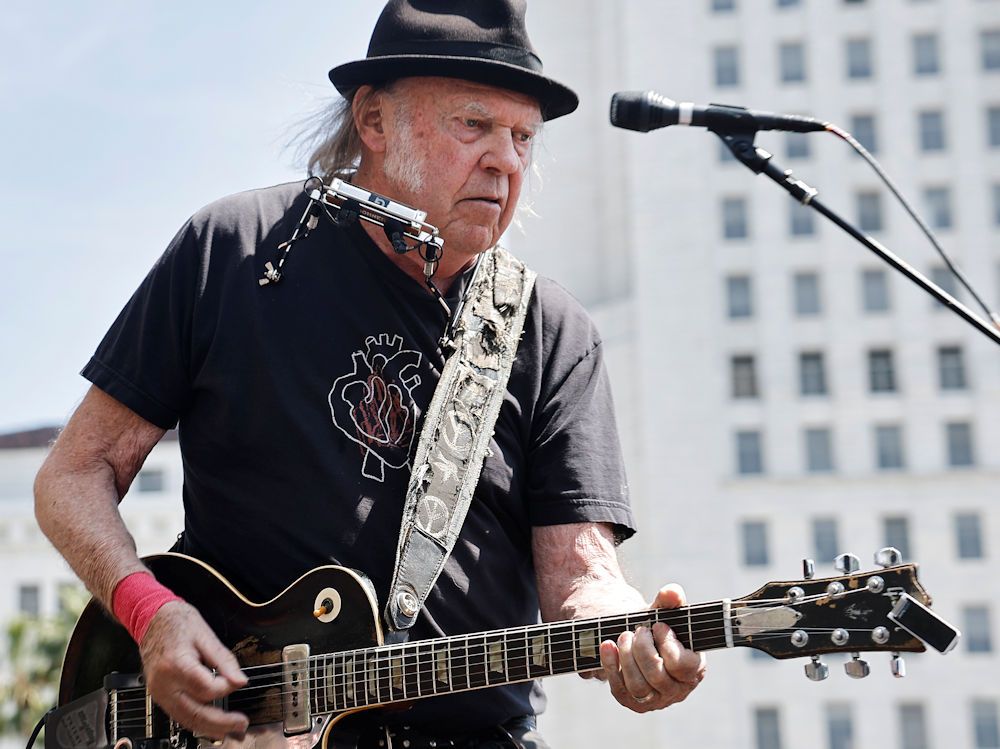
Neil Young performs during the ‘Fighting Oligarchy’ rally at Grand Park on April 12, 2025, in Los Angeles, California.

First Reading is a Canadian politics newsletter that throughout the 2025 election will be a daily digest of campaign goings-on, all curated by the National Post’s own Tristin Hopper. To get an early version sent directly to your inbox, sign up here.

TOP STORY

For the second time in the 2025 election, the Liberals have received the endorsement of a high-profile expat who hasn’t lived full-time in the country for several decades.

On Monday, Winnipeg-raised rock icon Neil Young published an open letter on his official website entitled “I’m With You, Mr. Carney.”

“I am writing because I want to tell you how much I appreciate and support what you are trying to do for our great country, Canada,” he wrote, before outlining his outrage at U.S. moves against Canada, and his support for Carney in opposing them.

“I believe you are the person our country needs to lead us through this crazy situation and bring us out the other side as a stronger, smarter, more resilient Canada,” he wrote.

Although Young did not mention the ongoing election or specify whether he intended to vote in it, he ended by declaring he was “with you all the way.”

This follows upon a pair of videos produced early in the campaign between Carney and Mike Myers, the Canadian-born actor most famous for the Austin Powers franchise.

On a set made to resemble the sidelines of an ice rink, Carney quizzes Myers on various items of Canadiana, such as the name of the two puppets on the long-running CBC children’s series Mr. Dressup.

“You really are Canadian,” says Carney upon receiving the correct answers.

Both Myers and Young live primarily in the United States, have obtained U.S. citizenship, and are even on record expressing their pride at having become Americans. Myers last lived full-time in Canada in 1986, Young in the mid-1960s.

In a 2022 interview, Myers spoke of his gratitude at becoming a U.S. citizen, praising the “strong ideals” of the United States. “I don’t take it lightly at all; it’s a very, very important thing to me,” he said.

Young became a U.S. citizen in 2020, which he celebrated by declaring his intention to vote against U.S. President Donald Trump. He also recorded a short song declaring himself a “Cana-erican.”

Just this week, Young’s wife Daryl Hannah accused the Trump administration of having attempted to sabotage the process.

“They tried every trick in the book to mess him up, and made him keep coming back to be re-interviewed and re-interviewed. It’s ridiculous (because he had) been living in America and paying taxes here since he was in his 20s,” she told the BBC, according to comments published in the San Francisco Chronicle.

Young does own a cottage outside Omemee, Ont., the “town in North Ontario” mentioned in his hit 1970 song Helpless.

At the height of COVID lockdowns, Young lived there for six months with Hannah, but is otherwise known to divide his time between Colorado and California.

Just last week, he was pictured in Thousand Oaks, Calif., attending an anti-Trump street protest, where he held a sign reading “hands off Canada.”

Given the specifics of Canadian tax law, it’s unlikely that either has paid significant Canadian income taxes at any point since obtaining stardom.

Canadian citizens become exempt from federal income taxes the moment they become a “non-resident” by moving abroad. As such, both Myers and Young would only owe taxes on a “Canadian source income.”

This is distinct from the United States, which taxes its citizens regardless of residency. Any U.S. citizen living as an expatriate in Canada risks losing their U.S. passport if they don’t make annual filings to the Internal Revenue Service.

Celebrity endorsements are a rare feature of Canadian elections for the precise reason that a disproportionate number of Canadian celebrities live in the United States as expats.

Actor Jim Carrey has been active in U.S. politics, and endorsed Democratic candidate Joe Biden in the 2020 presidential election. But he’s been mum on the 12 Canadian general elections that have occurred since he moved to the United States in 1983.

In the 2019 general election, actor Ryan Reynolds issued only a vague social media post that didn’t mention any specific candidate or party, but reminded Canadian voters that they would be picking a government that would “SHAPE CLIMATE POLICY.”

TORY VS. TORY

One of the less appreciated aspects of power politics in Canada is the issue of candidate nominations. While some candidates obtain their positions via open nominations, a good chunk of them are still parachuted into ridings based on orders from party HQ. One of the effects of this is to consolidate power around the party leader, since he ends up being surrounded by a caucus of people who owe their nominations to him personally, rather than their riding association (a dynamic that was painfully obvious during the drawn-out process to remove Justin Trudeau).   

The messiest iteration of this was in Abbotsford–South Langley, where the local pick — former B.C. finance minister Mike de Jong — was pushed out in favour of a 25-year-old rookie. De Jong is now running as an independent, and he’s been endorsed by Ed Fast, the riding’s longstanding Conservative MP.

THE DEBATES

The French-language debate

happened last night

,

and the Green Party didn’t end up being invited. The Leaders’ Debate Commission had initially scheduled the party to appear, before realizing that the Greens didn’t actually meet the requirements. If they’d been polling higher than four per cent, or were running candidates in at least 308 ridings, they would have been allowed on stage, but they managed neither.

Get all of these insights and more into your inbox by signing up for the First Reading newsletter here.


Liberal Leader Mark Carney listens as Conservative Leader Pierre Poilievre makes a point during the French-language federal leaders' debate, in Montreal, Wednesday, April 16, 2025.

Conservative Leader Pierre Poilievre landed a few pretty solid blows against Liberal leader Mark Carney during

the French-language debate in Montreal

on Wednesday night. Whether those blows will matter to Quebecers, who will have comprised the vast majority of the audience for the debate, it would be foolish to prognosticate.

But they were pretty good burns.

“Your Liberal government for 10 years has the worst track record on immigration, on housing, on immigration, on crime,” Poilievre said Carney. “Doesn’t it embarrass you to ask for a fourth term of office?”

“I’ve just become leader. I’ve been prime minister for one month,” Carney rebutted, noting his trade outreach efforts both domestically and internationally.

In the very unlikely event I had been advising Carney on how to assume the Liberal leadership, which he had very clearly been contemplating for quite some time, I would have advised him to take his time to assemble a campaign team that put some distance between him and Justin Trudeau — precisely to fend off accusations like Poilievre’s.

Instead, Carney launched

his campaign with Tom Pitfield as the campaign’s executive director — Pitfield being a longtime friend of and campaigner for Trudeau, husband of former party president and current Montreal MP Anna Gainey, and guest on Trudeau’s

infamous jaunt to the Aga Khan’s island in 2014

. Nothing at all about Carney’s campaign screams “change,” with respect to how the next government might operate.

Carney fronts an altogether spent force of a party seeking a fourth term in government — a government that would include several ex- and presumably potential future ministers who hastily un-resigned from politics once they saw the polls suddenly shifting in Liberal favour. By rights, the Liberals should be sent to their room to think about what they have done over the past decade or so.

Being sent to their room is more or less what rightly happened to Stephen Harper’s government after roughly a decade, and what rightly happened to the Jean Chrétien/Paul Martin Liberals after quite a bit more than a decade. It’s healthy, especially in a country where the two leading parties don’t really disagree passionately on all that much, least of all the central question posed by Wednesday night’s debate, which was what to do about Donald Trump.

Answer: Fight! Borrow money and give it to people! Buy Canadian! Etcetera! Unanimous!

Carney’s “it’s my first day” protestations are all well and good, but he had clearly been thinking about taking this plunge for a very long time. How is it possible he didn’t assemble a better team — a team that might be more aware of his glaring weaknesses?

“You don’t want change,” Poilievre alleged of Carney, who attempted a rejoinder — by arguing this election is all about who can stand up to Donald Trump — and then Yves-Francois Blanchet pounced:

“It the same party, the same ministers, the same focus, the same ideology,” the Bloc Québécois leader charged. Changing the party leader doesn’t change all that when everything else remains the same, he said.

And he’s right. Carney, like former Liberal leader Michael Ignatieff before him, doesn’t even seem to be in charge of his own campaign.

But was anyone watching?

National Post

cselley@postmedia.com

Get more deep-dive National Post political coverage and analysis in your inbox with the Political Hack newsletter, where Ottawa bureau chief Stuart Thomson and political analyst Tasha Kheiriddin get at what’s really going on behind the scenes on Parliament Hill every Wednesday and Friday, exclusively for subscribers. Sign up here.


Saint-Jerome prison is shown in Saint-Jerome, Que., north of Montreal, Sunday, January 24, 2021.

The worst of Canada’s academics are allergic to the thought of locking violent criminals up for any length of time, which is why they began to foam at the mouth when Conservative Leader Pierre Poilievre announced his plan to give escalating sentences to repeat offenders in the form of a three-strikes law.

Poilievre’s

idea

is to “stop criminals convicted of three serious offences from getting bail, probation, parole or house arrest.” Those convicted of a third serious crime would be given a 10-year sentence minimum, and would also automatically be designated as “dangerous offenders” which, under the law, prevents their release from prison.

At present, dangerous offender status is only applied if a judge thinks a high bar has been met. It’s not automatic, and instead requires evidence to be heard in a courtroom.

Some very basic logic underlies this proposal: repeat offenders are more likely to commit crimes; violent offenders are more likely to hurt people; therefore, taking them out of the general population should result in fewer violent crimes that hurt people.

One counterargument comes from Ben Perrin, a University of British Columbia law professor who circulated

one particular 2001 Chicago Journal of Legal Studies paper

in response. It analyzed American three-strike laws and found that they correlated with an increase in murder, and was

cited

in the Globe and Mail for his efforts. His sentiments have been echoed in

National Newswatch

and elsewhere.

Perrin

put

the objection of the anti-three-strike camp this way: “It’s the fact that the third offence leads typically to 25 year or life sentences. Or in the case of Poilievre’s 10 minimum followed by indeterminate incarceration. When you have nothing to lose then things can go from bad to worse. That turns robberies into murders.”

The study Perrin highlights found a correlation between three-strike states and higher murder rates — 10 to 12 per cent more homicides in the short term, and 23 to 29 per cent more in the long term. But in this analysis, the authors couldn’t “determine how forceful the laws are in practice.” They did note that California’s three-strikes law was the most severe, and that California also had the lowest increase in homicides.

Counterarguments were raised the next year in a

paper

by Joanna Shepherd-Bailey, who focused on California’s data. Looking at specific crimes across specific counties, she found that two-strike sentences had a “significant deterrent effect on murder, aggravated assault, robbery, and burglary,” as did three-strike sentences on murder, robbery and burglary. Two- and three-strike sentences for rape resulted in higher numbers, but not to the point of being statistically significant. Also insignificant was the impact on auto theft and larceny (theft), which was positive or negative depending on the number of strikes.

“The results confirm the theoretical predictions that strikeable offenses will be more strongly deterred than other felonies. Murder, aggravated assault, robbery, rape, and most burglaries are strikeable offenses, whereas auto theft and most larcenies are not…. Fearing initial strikes, potential criminals commit fewer crimes that qualify as initial strikes.”

As for the slight increase in rapes, Shepherd-Bailey noted that stricter laws could have resulted in more reports of rape to police. Victims are more likely to speak out if they believe the justice system will keep their attackers locked up, goes the thinking.

The studies and models from the U.S. can only do so much for us here in Canada. There’s a big difference between a life sentence for a third strike in an American court and a 10-year sentence in the Canadian system, as Poilievre is proposing.

And there’s also the element of basic justice. Theoretically, longer sentences for serious crimes, and for repeat serious offenders, should already be the norm here. Judges are required by the Criminal Code to consider harm against family members, intimate partners and children as aggravating factors. The same goes for crimes that involve organized crime, terrorism and offences that were committed on house arrest or parole. In addition, a longer criminal history

can

contribute to a longer sentence.

However, we see no such thing. Repeat violent offenders are

routinely

given slap-on-the-hand sentences as soft judges prioritize potential rehabilitation and race relations over community safety. Instead of spending more time away from society, habitual

stabbers,

sexual offenders

and

woman-beaters

are

given indefinite chances at changing their ways — and when they finally do kill someone, it’s often society, not the judges who refused to meaningfully cut off their access to victims, that gets the blame.

And when Parliament does try to step in and prevent unconscionably low sentences, it’s often overruled by the Supreme Court of Canada and its expansive interpretations of the Charter. The use of the notwithstanding clause is our last hope; it’s a relief that Poilievre intends to wield it.

Of Poilievre’s three-strike proposal, one defence lawyer from London, Ont.,

told

the CBC that “The answer lies in spending money at the front end on the things that help prevent crime in the first place, like housing, school, health care, addictions and mental health supports.” Well, duh. The better life is, the fewer criminals our society should produce in the long-term.

But the prison system is the drip tray of society, and it works in the here and now: many of those it catches are people who are long past being helped by schools and hospitals. Some can be rehabilitated, sure, but plenty can’t — and they’ll spend the free portion of their lives wreaking violence on those around them. While we improve the economy and the institutions that are relied upon by vulnerable youth, we must also isolate the people who are attuned to violence.

Parliament can restore justice by limiting judges’ ability to abuse their authority with absurdly light sentences for violent, repeat offenders. Three-strike laws could get us there, and thus, they’re worth a shot.

National Post


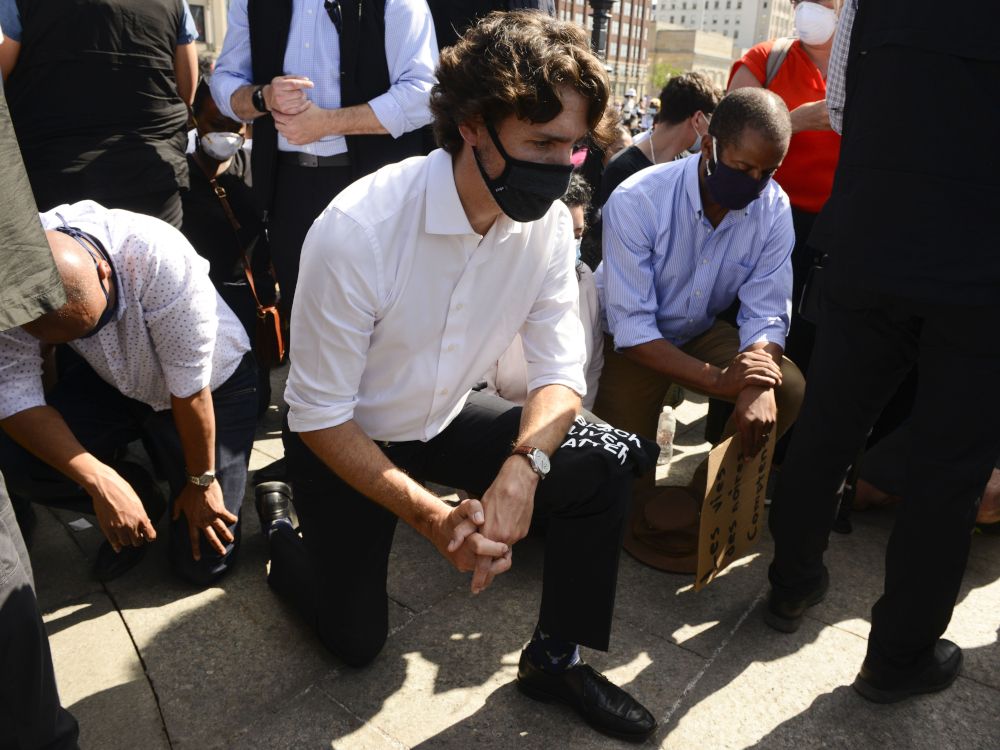
Then-prime minister Justin Trudeau takes a knee during an anti-racism protest on Parliament Hill following the murder of George Floyd in the United States, in 2020.

Let’s start with what isn’t true, what never happened and what’s upside down and backwards about which party in the federal election campaign has been most keen to introduce American manic disorders into Canadian politics.

Joining other leaders around the world in extending pro-forma congratulations to U.S. President Donald Trump on his narrow electoral victory last November, Conservative Leader Pierre Poilievre is said to have said: “I congratulate President Trump on his victory and look forward to joining him in his war against woke, leftist ideology.” Except Poilievre

never said that

, despite what you might have read on social media. Poilievre is not an admirer of Trump, and Trump certainly isn’t fond of Poilievre.

Here’s something Liberal Leader Mark

Carney never wrote

in his book, “Values”: “Western society is morally rotten, and it has been corrupted by capitalism. This requires rigid controls of personal freedoms.”That, too, has been making the rounds of social media, apparently because Conservative MP John Brassard misread a review of the book that appeared in the National Post four years ago, and posted his error on Facebook in March.

Here’s something else that never happened: participants in a Conservative-friendly conference in Ottawa last week had nothing to do with the Trumpish “Stop the Steal” buttons strewn around the place. Liberal staffers did that, surreptitiously, with the obvious intent to leave the impression of a Trump-style preemptive Conservative rejection of the April 28 vote result in the event of a Liberal win.

After the dirty-tricks operation came to light, Carney apologized on behalf of the Liberal party and said the war room staffers would be reassigned, whatever that might mean. The incident followed closely on Carney’s insinuation that individuals at a Brampton Conservative event who were carrying banners that read, “Do you believe the polls,” were similarly following the example of Trump’s persistence in his incendiary claim that he won the 2020 presidential election, which he clearly did not.

While many saw the slogan as a reference to opinion polls showing a dramatic revival of Liberal fortunes, Carney proposed a more sinister interpretation. “I know there’s certain parties that just import all their slogans and their policies from America,” he said, “but let’s not import that nonsense into Canada.”

The irony here is that the Liberal government that swept into office in 2015 and limped through two scandal-wracked minority terms following the federal elections of 2019 and 2021, and which is now led by Carney, was perhaps the most American-influenced government in Canadian history. There wasn’t a single faddish American mania of the “woke” variety that the Liberals failed to inject into the Canadian mainstream by way of lavish subsidies from the federal treasury and a whole-of-government dedication to the esoteric preoccupations of “progressive” American university faculties.

Here’s another irony: in his unceasingly vulgar outbursts and imbecilities about Canada and his moronic insistence that Canadians should just pack it in and submit to becoming America’s 51st state, Trump was inadvertently close to the mark in his derisive references to “governor Trudeau.” For much of his term in office, former prime minister Justin Trudeau behaved like an especially unserious and woke governor of an American state. The editors of the Wall Street Journal noticed this three years ago, when they wrote, “One of the oddities of Canadian politics is that its Liberal party politicians so often sound like they’re running for office in the U.S.”

The term “woke” is an unhelpful way of characterizing a dominant strain of postmodern American political culture that’s displaced conventional class-based leftism. It’s a contested and fractious term that nonetheless describes a very real phenomenon, perhaps best defined by the American literary theorist Walter Benn Michaels as “the politics of an upper class that has no problem with seeing people left behind as long as they haven’t been left behind because of their race or sex.”

Its foundational propositions effectively erase the Canada-U.S. border. Both countries are to be understood as structurally racist and illegitimate colonial settler states. With surprising speed, the ideology spread from “elite” American universities to corporate boardrooms and the editorial boards of “quality” newspapers and magazines, the U.S. Democratic party and straight into the policymaking committees of the Canada’s Liberal and New Democratic parties.

While “wokeism” borrows from the polemics of socialism, it’s centred in the managerial caste, leaving the left-behind working classes susceptible to the inducements of right-wing populism. This is a predicament that is not lost on the colourful Vermont Sen. Bernie Sanders, who is perhaps the closest thing to a socialist, in the conventional sense of the term, on the American scene.

“Trump has done a good job in claiming that Democrats do nothing more than the woke agenda,” Sanders said after last year’s electoral victory of the “Make America Great Again” movement. “It should come as no great surprise that a Democratic party which has abandoned working class people would find that the working class has abandoned them.”

In Canada, the NDP has rapidly descended from a class-based worldview through “anti-war” Corbynism to Queers for Palestine sensibilities that have caused working people to all but abandon the party, which explains a lot, although not everything, about the Liberals’ recent surge in the polls.

While Poilievre has gone out of his way to avoid American-style “culture war” politics, he is no longer shying away from its lexicon. Poilievre says he’s committed to returning Canada’s military to a “warrior culture” from a “woke culture.” Earlier this week, he pledged to end “the imposition of woke ideology in the federal public service and in the allocation of federal funds for university research.” He’s also promised to unravel the Liberals’ “woke” approach to criminal justice.

It suits Carney’s purposes to call this the importation of American “nonsense” into Canada, but it’s just as easily understood as an effort to expunge the distinctly American nonsense that the Liberal party adopted and put into force and effect for nearly a decade.

During the uproars over the murder of George Floyd five years ago, Trudeau made a great show of taking a knee on Parliament Hill, setting the stage for procurement policies that favoured Black-owned businesses and investment in “equity-deserving groups.” The federal civil service was castigated for being deeply imbued with systemic racism, and Global Affairs staff were instructed in the doctrine that

only white people

can be racist.

The peculiar leftist argot of the American haute bourgeoisie was adopted wholesale, right down to a “2SLGBTQI+ Action Plan,” which purported to fund organizations devoted to the advancement of “two-spirit, lesbian, gay, bisexual, transgender, queer, intersex and additional sexually and gender diverse (2SLGBTQI+) people in Canada.”

In the absence of a “George Floyd moment” of our own, Ottawa created one by turning a wildly misreported story about a “mass grave” discovered at a residential school into a lavishly funded year-long incitement of lowered flags on federal buildings and solemn discourses on Canada’s genocide of Indigenous people. The riots, statue-toppling and church burnings were merely regrettable aspects of a necessary racial “reckoning.”

When a leak from inside the U.S. Supreme Court foreshadowed the undermining of abortion rights established by the 1973 decision in Roe v. Wade, Trudeau said he was horrified, and pledged to redouble efforts to ensure access to abortion in Canada. The annual Aug. 1 commemoration of the pre-Confederation emancipation of slaves throughout the British Empire was reduced to

federal admonitions

to reflect on the legacy of anti-Black racism in Canada.

It went on and on like this, to the point that Prime Minister’s Office communiques were sometimes indistinguishable from the Instagram accounts of American Ivy League student social justice committees.

So if we’re going to talk about the presence of American social pathologies in Canadian politics, let’s at least not be parsimonious about it.

National Post


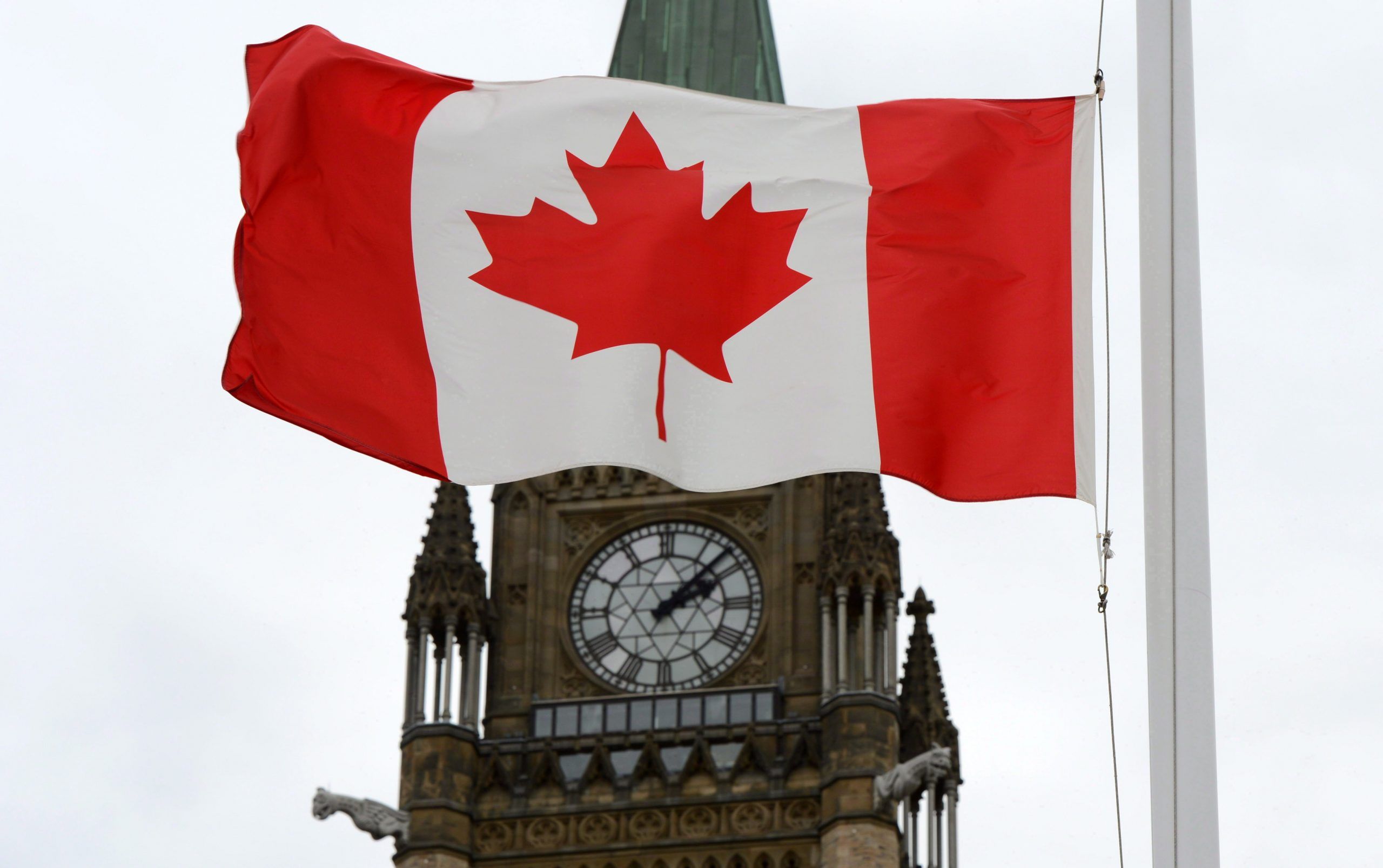
A Canadian flag blows in front of the Peace Tower on Parliament Hill in Ottawa, Ont., Wednesday, Oct. 24, 2012. THE CANADIAN PRESS/Sean Kilpatrick

On Monday, during a campaign stop in Montreal, Pierre Poilievre had the audacity to suggest that his government would use the notwithstanding clause to overturn a Supreme Court decision that ruled that consecutive parole ineligibility periods for multiple murderers was “cruel and unusual punishment” and violated the murderer’s human dignity. For most reasonable Canadians, this is a no-brainer. Liberal Leader Mark Carney, however, rushed to condemn the move as “dangerous,” while CBC’s Power and Politics host David Cochrane and his panel guest Rob Russo suggested it was a solution for a problem that doesn’t exist. But the problem of light murder sentencing does exist, and not just for mass murderers.

Poilievre’s proposition isn’t new. In 2011, Stephen Harper’s Conservative government enacted the

Protecting Canadians by Ending Sentence Discounts for Multiple Murders Act (Bill C-48)

as part of its tough on crime platform. It was an amendment to the Criminal Code that allowed judges to impose consecutive rather than concurrent parole ineligibility terms.

The act was in response to

cases

like Clifford Olson’s, a convicted serial killer dubbed the “Beast of British Columbia” who confessed to murdering 11 children, but was eligible to seek parole after only 25 years because under the legislation of the time, the 25-year parole ineligibility for all 11 of these heinous murders was to be served concurrently.

While Olson never received parole, dying in his prison cell in Laval, Que. in 2011, he was eligible for three parole hearings, a 1997 request to reduce his sentence under the faint hope clause and regular parole hearings in 2006 and 2010. Each hearing stirred up the fears of families who should have been reassured by law that this “Beast” would never see the light of day again.

Harper’s Multiple Murders Act remedied that problem, but was struck down in 2022 by the Supreme Court in a decision named

R. v. Bissonnette

which ruled that sentencing offenders to serve consecutive parole ineligibility periods amounted to “cruel and unusual punishment” and contravened the Charter. In considering the effect of the prescribed sentence on the offender the court found that imposing even two consecutive ineligibility periods of 25 years each would violate the respondent’s Charter rights and such sentencing was “grossly disproportionate and totally incompatible with human dignity.”

On the contrary, this ruling, which

reduced parole eligibility

from 40 to 25 years for Alexandre Bissonnette was a gross indecency and incompatible with the human dignity of the families of the six people who died and five others who were seriously injured when Bissonnette burst into the Great Mosque of Quebec and opened fire on worshippers who were gathered on Jan. 29, 2017 for evening prayer.

When asked about Poilievere’s intention to overturn the Supreme Court ruling for multiple murderers, Liberal Leader Carney called the use of the notwithstanding clause for this reason “a very dangerous step.”

But putting the legislation on the sentencing of multiple murderers back into the hands of MPs in Parliament is not a dangerous step, it is democracy. Supreme Court judges are not beholden to constituents like MPs are, and this type of decision that affects the safety of Canadians needs to be answered for, politically. It should not be decided by bleeding-heart Supreme Court judges.

Canadians have seen how poor sentencing standards ushered in by the Liberals have devastated communities. The same can be said for pre-trial release: the Liberals enacted Bill C-75 in 2019 which

codified a principle of restraint

in granting bail to “

promote the timely release of accused persons with the least onerous conditions that are appropriate in the circumstances

.”

This reform, along with the Gladue principles, created in a fool-headed 1999 Supreme Court ruling called

R v. Gladue

, allowed courts to apply lighter sentences to Indigenous offenders if their background included discrimination, physical abuse, separation from culture or family, or drug and alcohol abuse, leading to cases like

Myles Sanderson

‘s in 2022. He terrorized James Smith Cree Nation in Weldon, Sask., killing 11 people and injuring 17. Before doing so, he had 59 prior convictions including violent offences like assault and robbery.

Poilievre’s use of the notwithstanding clause would correct the Supreme Court’s mistake, allowing the legality of parole ineligibility periods to be decided by the votes of elected members in Parliament, as it did before and should again. The only reason this needs to happen is because the Supreme Court consistently makes decisions that aren’t based in reality.

Some have suggested Poilievre’s proposition is a solution in need of a problem. CBC Power and Politics host David Cochrane

said

on his show: “I mean, extreme mass murderers, I mean, they become

eligible

for parole. Right? Like, they don’t get parole.” His panel guest, Rob Russo from

The Economist

jumped in saying, “How many mass murderers are been running around Canada? How many have been released? Anybody?” Cochrane responded, “I would say zero.” Russo then implied that Poilievre wasn’t sincere about why he wanted to use the clause, suggesting it was political and inspired by Trump, even though this is something the Conservatives have already done in the past and simply believe in.

Putting aside that Cochrane and Russo can’t seem to comprehend that families should not have to go through these parole hearings, it took me two seconds to think of a case that proves Cochrane and Russo wrong.

In 1992, a horrific triple murder took place at McDonald’s in Sydney River, N.S. Three men robbed and murdered three employees who happened to be their co-workers, leaving a fourth permanently disabled. Their haul from this horrific event — $2,017 from the restaurant’s safe.

These murderers were subjected to the 25 year concurrent parole eligibility rule of the time. Two of the killers, Darren Muise and Freeman MacNeil were granted full parole in 2012 and 2024 respectively. The third, Derek Wood, is

still imprisoned

, but would likely also have been released by now if he hadn’t stabbed an inmate in 1998 and assaulted corrections officers in 2007. So, yes, CBC, multiple murderers can and do get parole in Canada, and I’d wager most Canadians agree with Poilievre that they shouldn’t.

National Post

tnewman@postmedia.com

X:

@TLNewmanMTL