LP_468x60
on-the-record-468x60-white

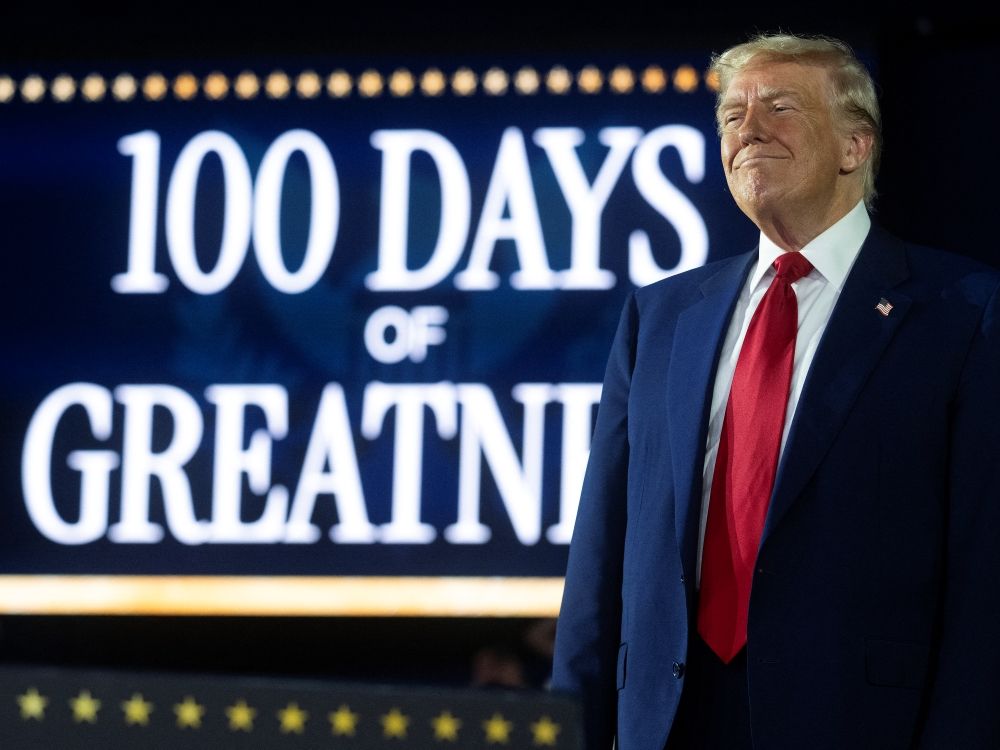
President Donald Trump delivers a speech marking his 100th day in office at Macomb County Community College Sports Expo Center in Warren, Michigan, on April 29, 2025.

On Wednesday, in the prelude to a cabinet meeting, U.S. President Donald Trump made yet another remark to chill the blood for those concerned about his country. Trump’s cat-and-mouse game of arbitrary changes to American import tariffs is starting to raise concerns about prices and supply chains for consumer goods. The American economy has unexpectedly shrunk in the first 100 days of Trump 2.0, even though workers and businesses are scrambling to make purchases before the effects of Trump tariffs set in. The underlying state of the economy is probably worse than the short-term numbers.

Trump says this is all a matter of “get(ting) rid of the Biden ‘Overhang,’” i.e., it’s his immediate predecessor’s fault. And let’s face it: no other politician on Earth would say anything else 100 days into an executive term. If that was as far as Trump went, it wouldn’t be of unusual concern. What struck me was his separate remark implying that, yeah, tariffs might foul up supply chains a little in the transition to the glorious economy of the future, but haven’t we Americans had it too soft for too long?

“Maybe the children will have two dolls instead of 30 dolls,” the president mused. “So maybe the two dolls will cost a couple bucks more than they would normally.” The message, which brazenly puts the contentment of children front and centre, is one you can’t imagine any other American leader delivering so directly in peacetime: have you all considered being happy with less?

The answer one would expect the median American voter to give is “Hell no.” It’s crazy that I should have to write this, but consumer abundance is a defining feature of the United States! During the Cold War, American supermarkets were the unanswerable argument for economic freedom: you could summarize the United States pretty reasonably as “It’s the country that coined the word ‘super-market.’” In our hyper-interconnected social-media world, I see a dozen conversations a week in which some European boasts of affordable healthcare, walkable neighbourhoods and having July and August and half of September off work every year: the inevitable answer from Americans is “OK, but have you been inside a

Buc-ee’s

, Gustav?”

In all post-Protestant countries there exists a lingering feeling that consumer abundance is a secret source of civilization weakness, an addictive vice depleting the moral strength one might need in a true crisis. The United States has done the most to shake off this harmful superstition, and its government has made, I don’t know, 150 years of policy choices favouring abundance over egalitarianism. Until quite recently, when any new form of life-altering technology appeared on the face of the Earth, you could be dead certain Americans would make mass popular use of it first. It was for the leadership of less fortunate peoples to talk endlessly of sacrifice, of heroic austerity in the pursuit of collective goals or of mere social harmony.

Trump’s polling numbers have sagged badly among political independents, but his loyal voters haven’t started loathing him yet despite the bad economic signals. In the longtime American client states like Canada, we are all feeling newly awkward about the U.S.’s status as a vanguard of the species. We’ve been jolted into an awareness of our dependence on the United States.

The awkward part is that we mostly don’t want the U.S. to become just another country. In the balance sheet of history we must still count ourselves lucky in our choice of sole neighbour, and the good luck includes the albedo effect of American values we share: individualism, enterprise, brute materialistic competitiveness. If the American voter really does start voluntarily choosing two dolls at Christmastime instead of 30, something precious will have been lost from the world.

National Post


As an international organization of Islamic scholars and faith leaders based in Canada, the Global Imams Council (GIC) respectfully calls on all parliamentarians to advance a vision rooted in the principles of compassion, mutual understanding, and dedication to democracy and human dignity.

The GIC reaffirms our commitment to these principles as Canadians welcome a newly elected Parliament. We envision Canada as a beacon, inspiring unity and reminding us of our humanity under a shared Creator.

In a time when discord threatens to fray our social fabric, our elected representatives share a sacred duty: to transcend party lines, helping weave the diverse threads of our Canadian tapestry into a unified whole.

We must remain vigilant, for the forces of extremism seek to erode our shared values and darken our collective future. It falls to you, our elected leaders, to safeguard the principles that could guide Canada toward a future where all citizens can flourish in harmony.

We call on Canada’s new Parliament to:

1. Draw a clear distinction between Islam — our personal faith — and Islamism — a political ideology that misappropriates Islamic concepts to foment revolution and division, undermining democratic values and institutions. Islamism is a malign strategic force that tears at our social fabric, setting Muslims against each other and fracturing the bonds between Canada’s diverse communities. By recognizing this crucial difference, we can better preserve the integrity of our faith while addressing the very real challenges posed by extremist ideologies that cloak themselves in the language of our Holy Quran.

2. Protect Canadians and the global community from the threat of extremism, including Islamism. As Islamic scholars, we firmly reject any misinterpretation of the Holy Quran that seeks to justify lawlessness, violence, or terror. Such distortions betray the true essence of Islam and stand in opposition to our shared humanity. We respectfully urge parliamentarians to implement thoughtful policies that safeguard our society from radicalization while preserving our cherished freedoms. This includes measures to counter the spread of extremist ideologies that may seek to take root in Canadian communities, always balancing security concerns with our commitment to inclusivity.

3. Protect Muslim individuals, who are worthy of safety, dignity, and respect from anti-Muslim bigotry, but leave all ideologies, whether political or religious, open to scrutiny. As faith leaders, we unequivocally oppose all forms of hatred, including prejudice against Muslims. At the same time, we maintain that thoughtful criticism of extremist ideologies, including Islamism, must not be misconstrued as bigotry or “phobia.” We encourage parliamentarians to uphold this nuanced approach, fostering an environment where open dialogue can thrive while protecting individual rights. This balance aligns with the spirit of the Canadian Charter of Rights and Freedoms, promoting both free expression and the dignity of all citizens. By doing so, we can create a society that values both diversity of thought and mutual respect.

4. Recognize that Canadians of all faiths are inherently members of the human family, and foreign conflicts must never be exploited as a pretext to undermine our common humanity. Pursuant to the Ottawa Declaration issued by the Global Imams Council on December 4, 2024, we categorically reject those who falsely distort the teachings of Islam as justification to promote hatred against other communities, including our Abrahamic brothers in faith. We reaffirm the Islamic Fatwa Council’s Fatwa against Hamas and assert a categorical prohibition against the glorification of and support for extremist groups. We appeal to parliamentarians to direct authorities to take appropriate measures against such public displays of extremism, which damage Canadian society and threaten public safety.

5. Support Canadian foreign policies in the Middle East that advance peaceful co-existence for all. The Abraham Accords represent an essential and historic opportunity to build a future protected from the global onslaught of Islamist extremism. We believe Canada should work with states and organizations seeking to realize and expand upon the vision of cooperation and mutual understanding reflected in these momentous agreements. We urge parliamentarians to advance this noble goal in Canada’s regional policies and foreign aid programs, enabling the forces of coexistence to flourish.

We hereby pledge to uphold these principles and to work collaboratively towards their realization, in goodwill and cooperation with parliamentarians of all stripes. Let Canada be a nation in which every citizen knows the blessings of peace, prosperity, and dignity.

Mohammed Tawhidi is the vice president of the Global Imams Council and is a member of its Governing Committee

National Post


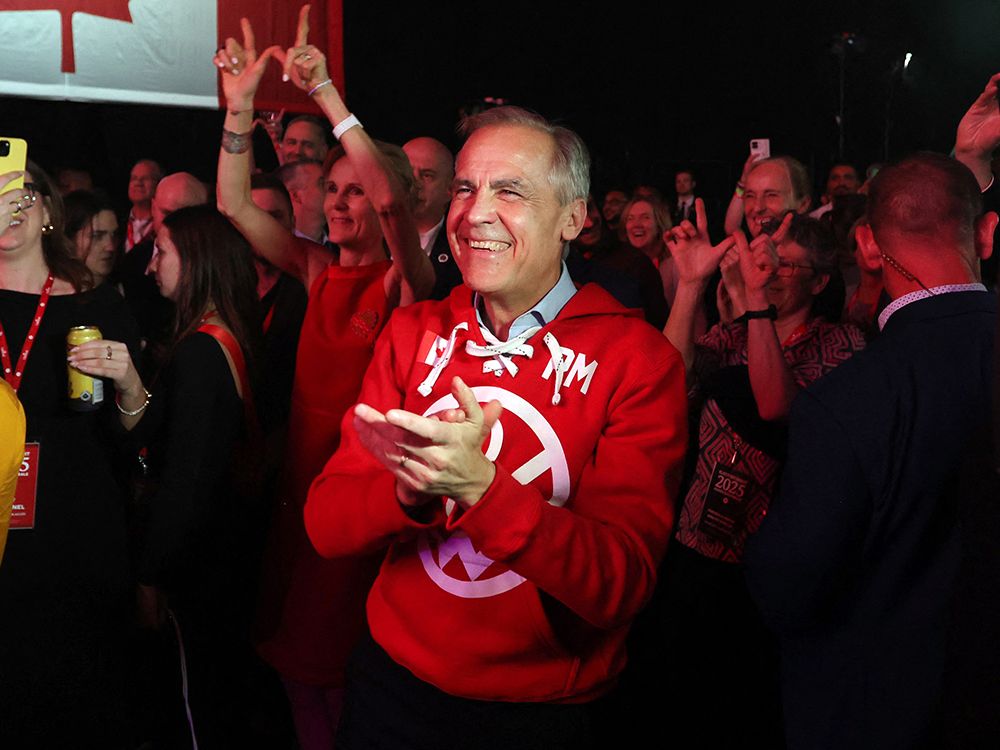
Prime Minister Mark Carney dances at a victory party in Ottawa after the Liberals won the April 28 federal election.

PM’s words ‘ring hollow’

Re: Mark Carney promises to ‘govern for all Canadians’ after Liberal win — Catherine Lévesque, April 28

It is now crystal clear: Canadians do not deserve a democracy. That form of government requires work on the part of its citizens. It needs to be nurtured by people who monitor it regularly, watched over by a robust, impartial media, brought to heel by organizations dedicated to preserving it, and, most importantly, have safety valves that release pressure when its dynamics start to take wrong turns.

The Canadian electorate chose to ignore the past 10 years of constant alarm bells ringing in Ottawa, and through ignorance or apathy or the call of a pop-culture mindset have put in place the same incompetent, entitled people under the thumb of a hyper bureaucrat who is thought to be and thinks he is above everyone else intellectually, technically and ideologically.

Canada is closer now than it ever was to becoming #51 because we failed to see what Justin Trudeau’s post-national agenda was leading us to: Canada Inc., to be subsumed in a hostile (but non militaristic) takeover by Trump.

Larry Baswick, Stratford, Ont.


To those who believe or say Canada isn’t broken, the numbers say otherwise. Liberals generated an overwhelming amount of their support east of the Manitoba/Ontario border. West of that border, they generated just enough interest to justify calling them a rump political splinter group.

Mark Carney says he’ll govern “for all Canadians,” but those words ring hollow. Justin Trudeau made the same promise three times and conveniently forgot what he said the moment he said it.

The numbers show there’s a huge East-West divide and it’s clear that a lot of Canadians have little faith in Liberal promises. Suggesting he’s going to govern for all Canadians, Carney is already mouthing standard boilerplate rhetoric. What else would he say?

If Carney wants to bridge the divide, he should stop with the bromides and start creating change that involves the hopes and dreams of the alienated.

Paul Baumberg, Dead Man’s Flats, Alta.


So, Mark Carney promises to govern for all Canadians. When did we last hear that pledge, or one similar to it? I remember, it was Justin Trudeau’s acceptance speech in 2015: ”You want a PM who never seeks to divide Canadians, but takes every single opportunity to bring us together.” The words were barely out of his mouth before Trudeau began his campaign to divide Canadians by making Alberta the whipping boy of Confederation.

As for Carney, he couldn’t resist taking a jab at Alberta (and Saskatchewan) during his acceptance speech. Do I believe that he will do anything to help Alberta unlock its resource potential for the benefit of all Canadians? Or anything to build a pipeline to get Alberta oil to new markets? I don’t, but apparently a lot of Canadians outside Alberta believe his assurances because they elected him. I guess those Canadians still believe in the tooth fairy, too.

Nancy McDonald, Stratford, Ont.


Western alienation threatens national unity

Re: A national unity crisis is brewing — Tasha Kheiriddin, April 29

Columnist Tasha Kheiriddin suggests that “nation-building projects like pipelines and nuclear-powered energy corridors” will be doomed to fail, as the three minor parties (NDP, Bloc Québécois and Greens) are hard-left and therefore would not support the Liberals in these efforts. Fair enough, however I disagree with her premise that there would be no support forthcoming from the Conservatives, as such projects were and are some of the core policies of the party.

To shun supporting the Liberals in progressing “nation-building” projects — especially building pipelines — for partisan political reasons would be suicide. If the Conservatives cannot get beyond this feud and work for the good of the nation, the nation will notice, and they will find their party devastated when they “look ahead to the next time.”

Tom Tulloch, Halifax


If one thing is clear in the aftermath of the federal election, it’s that Canadian voters did not take into account the danger posed by the feeling of alienation that exists in western Canada. This, of course, is due to the opposition by previous Liberal governments to the development and export of our oil and natural gas reserves. (Note Bill C-69 — dubbed the anti-pipeline bill — among others.)

As a result, our Canadian GDP and all Canadians have suffered greatly. Liberal Leader Mark Carney has removed the consumer carbon tax on gasoline, but will surely reapply it at the producer level, thus raising the cost of fuel again. He also has not shelved the proposed emissions cap on oil and gas production.

We must not forget the fact that Carney is first and foremost an environmentalist — perhaps even a climate alarmist. He was the UN Special Envoy on Climate Action and Finance and creator and co-chair of the Glasgow Financial Alliance for Net-Zero (GFANZ). He has recently called for Canada to “build, baby, build,” borrowing U.S. President Donald Trump’s syntax, but made no mention of oil or pipelines.

I’m sure Trump will enjoy watching this scenario — western Canadians threatening to leave Canada without his help!

Harry K. Hocquard, King, Ont.


Never waste a good crisis

Re: Too many Canadians happy with Liberal decline — Adam Pankratz, May 1

The election results, says National Post columnist Adam Pankratz, send a message that a “great many Canadians have determined the previous decade is one they approve of.”

Really? Didn’t the campaign start with an electorate dissatisfied with high taxes, burgeoning housing costs, eye-watering food bills and wasteful government spending?

Or did Mark Carney and Liberal strategists take a page right from the Democrat playbook — “never let a good crisis go to waste” — to capitalize on voters pumped with patriotic adrenaline, elbows up and wallets closed to the U.S.?

Dorothy Lipovenko, Westmount, Que.


“It was Poilievre’s job to reveal the abysmally poor job the Liberals had been doing’

Re: Poilievre has a strong case to stay Conservative leader, but it’s not ironclad — Chris Selley, April 30

Back in December, the Conservatives were riding high in the polls. Hundreds of thousands of Liberals had concluded that they would vote Conservative in order to do what their Liberal MPs had stoutly refused to do: fire Justin Trudeau. Make no mistake, these Liberals had not suddenly become Conservatives. They would and many did move back to the Liberal fold at the first opportunity.

As Leader of His Majesty’s Loyal Opposition, it was Pierre Poilievre’s job to reveal to Canadians the abysmally poor job the Liberals had been doing since 2015. By late December 2025, his abrasive ridicule of Trudeau had finally lured so many Liberal voters into the Conservative fold that even the Minister of Finance and Deputy Prime Minister, Chrystia Freeland, was convinced her boss had to go. Poilievre had finally accomplished what a responsible Liberal caucus could have achieved after the SNC-Lavalin scandal broke in 2019. This was a huge service to Canada and to Canadians, but not, as it turned out, to the Conservative party or to Poilievre himself.

Mark Carney is a decent man, but if he governs as obliviously as Trudeau did and if his caucus then refuses to dismiss him, the Leader of the Opposition should flay and roast him just as mercilessly as he did Trudeau.

Patrick Cowan, North York, Ont.


Sadly, Pierre Poilievre’s humiliating defeat in his own Ontario riding might have been avoided if Ontario Premier Ford, master at playing both sides against the middle, had not snuggled up to Mark Carney as the partner most likely to support billions in subsidies already committed to manufacturing EV batteries, while anticipating Carney’s promise to build “energy corridors” will use Ontario steel.

So much for co-ordination between federal and provincial Conservatives. The only upside in that voters in Carleton got a lesson in map-folding as they wrestled with a ballot almost a metre in length listing 91 candidates.

Kope Inokai, Toronto


Federal civil servants exercise their voting power

Re: Pierre Poilievre didn’t stand a chance — Carson Jerema, April 29

Today, one in five Canadians work for a government of some sort. With that kind of voting strength in place, left-leaning governments will be difficult to displace. This was on display the night of the election when Pierre Poilievre lost his seat in Carleton, where a significant number of voters are federal employees. Apparently, the fear tactic used by the Liberals to win the seat was that if the Conservatives were elected, federal employee jobs would be at risk. Poilievre had held that seat for almost 21 years.

So as the certainty of a full socialist welfare-like state looks irreversible, or at the very least the death spiral to the left continues unabated into the foreseeable future, that leaves the West to continue to pay the bills without a strong voice at the federal table, and little to no choice in our economic destiny. Is it not time to consider that the West should leave this experiment known as Canada?

Jim Tyndall, Cokato, B.C.


Jagmeet Singh leaves little legacy

Re: Singh the author of his own demise — Jesse Kline, April 30

After years of supporting a failed Liberal government, the Jagmeet Singh NDPers have finally hit the wall, with no room to move, no bolstering of the Liberals professing to “work for the people” and in the end, left with only sweat on their hands. No doubt many NDP supporters feel the same about the party’s reluctance to defeat the Liberals, as do Conservatives, who saw the larger issues facing the country, and their significance to Canada.

It turns out that Singh was on the wrong side of party politics, and will not leave a meaningful legacy, doubtless to be known as the leader of the party that let the Liberals and Justin Trudeau run out the clock until a saviour arrived.

Duane Sharp, Mississauga, Ont.


The art of Quebec’s deal

Re: Bloc Québécois leader says he won’t ‘threaten to overthrow the government anytime soon’ — Antoine Trépanier, April 29

Apparently, Bloc Québécois Leader Yves-François Blanchet prefers negotiating Quebec’s exit from Canada with Canada, rather than the U.S.A.

Will Halpenny, Niagara-on-the-Lake


Americans ‘appalled’ by Trump’s actions

Re: Mark Carney’s election victory speech — April 29

I was saddened to hear Prime Minister Mark Carney’s statement that “Our old relationship with the U.S., a relationship based on steadily increasing integration, is over … We are over the shock of the American betrayal, but we should never forget the lessons.”

I am one of a very large number of U.S. citizens who are appalled by so many of President Donald Trump’s actions, from his climate denial and serial dishonesty, to his cruelty in the treatment of individuals and of nations.

I have a lot of fond memories of Canada, and great friends there. My teaching degree is from the University of Toronto, and as a young man I took several fishing trips to Manitoba. I still have a beautiful photo of a sunset on Clearwater Lake.

Perhaps my deepest bonds come from working on lobby teams in D.C. with the wonderful members of Citizens’ Climate Lobby Canada. In the summer of 2013, I lobbied side-by-side with Sonia Furstenau, who until recently was the leader of the Green Party of British Columbia.

In your understandable anger and frustration, I hope that Canadians will not paint all Americans with the same broad brush.

Terry Hansen, Milwaukee, Wis.


Hopefully you have received many letters like this, but I would like to add my voice to the Americans who are totally ashamed of our so-called President Trump’s treatment of Canada since he came to office.

Many of us can still recall Canada’s great kindness to American citizens during the 1979 Iranian hostage crisis, and in the wake of 9/11 when thousands of Americans were stranded at the Gander Airport, and were taken in by caring Canadians. Please don’t judge all of us by Trump’s idiocy.

David H. Zeuch, Albuquerque, N.M.


CTV should apologize for airing comment

Re: Nova Music Festival Exhibition to open in Toronto with personal items from victims of Hamas attack — Ari David Blaff, April 22

As the daughter of Italian immigrants raised in a richly multicultural Toronto, I was devastated to see CTV broadcast a statement from a pro-Palestine group referring to the ongoing Nova music festival exhibit as a “grotesque spectacle of selective grief.” I attended the exhibit — it is a raw, emotional tribute to the nearly 400 young people brutally murdered and 44 others taken hostage at the Israeli musical festival during the Hamas attack of October 7, 2023. It demands empathy, not political spin.

That such a dehumanizing comment was aired on Yom HaShoah, a day meant to honour the memory of Holocaust victims, is beyond appalling. This kind of coverage is tearing at the social fabric of my beloved city, making it increasingly unrecognizable.

CTV owes the public an apology.

Nancy Post, North York, Ont.


National Post and Financial Post welcome letters to the editor (200 words or fewer). Please include your name, address and daytime phone number. Email letters@nationalpost.com. Letters may be edited for length or clarity.



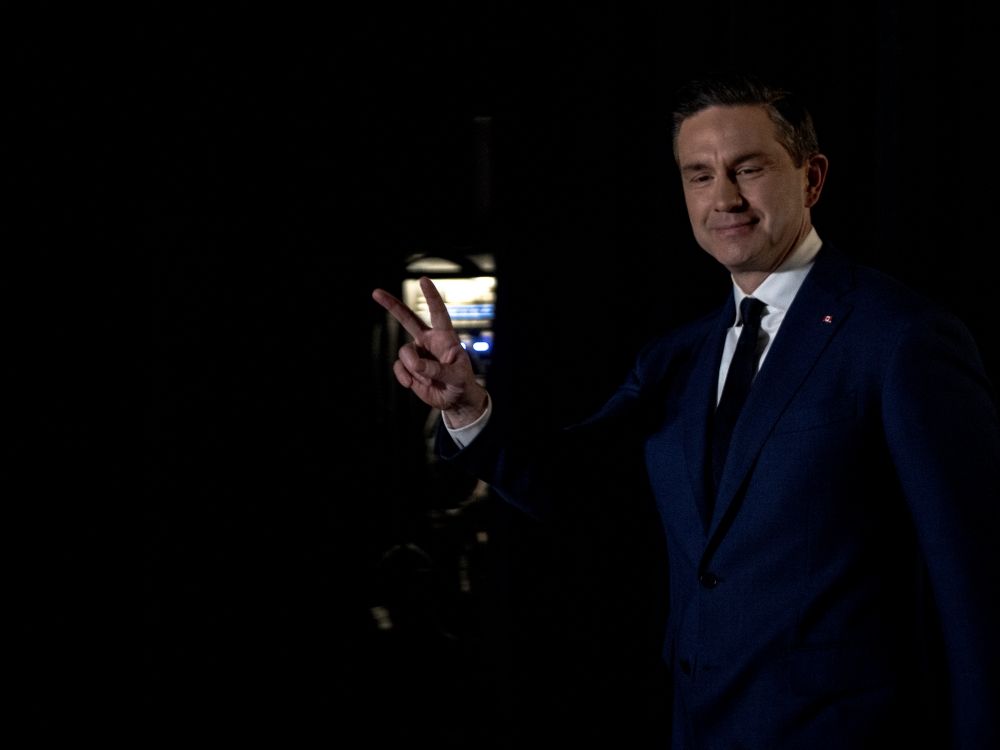
Canadian Conservative leader Pierre Poilievre flashes the V-sign as he arrives to speak to the media at CBC-Radio-Canada after he participated in the French Federal Leaders Debate broadcast in Montreal, Canada, on April 16, 2025.

By the narrowest of margins, anti-Trump posturing and pugnacity was more influential with voters on Monday than recollections of the shambles by almost every measurement of the government’s previous ten years. Trump is an extraordinarily effective president for the Americans, but his carnival manner and flippant bombast does not travel well, (though it is often entertaining). His trade argument against Canada, as many have pointed out, is rubbish since there would be no American trade deficit with this country if energy were excluded and much of the oil that we sell the United States is at a knock- down price and is sold on by them to third parties for a large and easy profit. As I wrote in this column when he started his nonsense about Canada becoming the 51st state, instead of every politician in the country putting on the uniform and airs of Captain Canada, and Justin Trudeau telling Trump that Canada would “collapse” but that we would make a manful effort to raise our contribution to our own national defence to  two per cent of GDP as we have pledged, but in five years, we should have countered the U.S. president with hauteur and ridicule.

We should have invited all of the governors of the northern U.S. border states to secede from that country, (though the practice was discouraged by Abraham Lincoln and General Grant and General Sherman), and join Canada for the benefit of a lower crime rate and a relatively honest justice system where prosecutors are disbarred for replicating the conduct of the Nazi jurist “Raving Roland” Freisler, a frequent phenomenon in the U.S.

If absurd tariffs continued to be threatened, the federal government should have announced that it would compensate and where possible find alternate markets for Canadian suppliers of electricity, oil, and phosphates to suspend deliveries to the United States, to remind its president that we are useful, resourceful, and little minded to behave like doormats. For good measure, I recommended massive funding of American pro bono law reform institutions such as the Innocence Project, to assist the United States in reducing its 98 per cent federal conviction rate, 95 per cent without trial, through the perversion of the plea bargain system and the gutting of the Bill of Rights, in the cases of nonviolent alleged first offenders.

Instead, the new prime minister plied his rounds uttering gratuitous snideries about the United States which, we might occasionally wish to remind ourselves, despite its many shortcomings, is incomparably the most successful country in the history of the world, with whom we have had an astonishingly cordial relationship for over 200 years. The Liberals tried to rise above Justin Trudeau’s assertions that we had no identity and were a post-national country that had attempted genocide against our native people and were on the verge of collapse. They tried to prove by raising their voices that we were not a 98-pound weakling country. Donald Trump doesn’t care who the prime minister of Canada is and unfortunately, neither does anyone else in the world outside this country. One of the fables of the Justin Trudeau era was that “The world needs more Canada.” Perhaps, but the world, unfortunately with some reason, thinks we are an absurdly woke, under-achieving country. Canada was hornswoggled by Carney’s nasty fairy tale that “Trump’s trying to break us.” Trump thinks that federal union would be a favour to Canada. We don’t agree but Trump does not spend five minutes a week thinking about Canada. Our schoolyard pouting and fist-shaking did not impress him and if Carney succeeds in imposing his climate straight-jacket, this country will be on political suicide watch.

The president’s chief interest seems to be to repatriate the parts of the American automobile business that moved to this country. If he is implacable in that determination, and some of the Japanese automakers have already indicated that they would be happy to relocate to the United States, then we should prepare arrangements to take over automobile and auto industry related businesses in this country at depreciated values, make arrangements with overseas manufacturers such as Volvo or Kia, (if the Swedes and the Koreans can do it so can we), and build an automobile industry of our own for the first time since Sam McLaughlin in Oshawa over a century ago and assure that no American-manufactured automobile ever enters this country again other than with a tourist at the wheel. So far, we have been, as the English say, “all mouth and no trousers,” and if Trump assists us in learning how to act like and be taken as a serious country, he will, no doubt inadvertently, have done us a favour. We can start by using the fiscal influence of the federal government on the provinces to require that public education in this country cease to teach that we are a nation of imperialists, racist colonialists, and reprobates. We must reacquaint ourselves with our history-warts and all, it is a distinguished history which all Canadians should know something about and regard with pride.

I do not unsay what I have written here and elsewhere about Mark Carney, but he has retained his office in a fair election and, like all the party leaders, spoke graciously on election night. He’s my prime minister too and I wish him success. If it turns out better than I have predicted, I will recant my previous comments as appropriate, with unfeigned humility and a glowing heart. The only previous leaders who won four consecutive general elections without facing a fragmented official opposition were Macdonald, Laurier, and King-St. Laurent. For the government of Justin Trudeau to be elected for a fourth consecutive time is counterintuitive, disappointing, embarrassing, but a remarkable achievement for Mark Carney, especially since he was the gray eminence of that blunderbuss regime.

It was in some respects also a good night for the Conservatives. Trudeau had taken the Liberal party so far left that the so-called New Democrats, (though after 64 years their novelty is wearing thin), have become redundant. That the Conservatives came within a couple of points of the Liberals after the NDP had collapsed into the Liberals’ lap was a remarkable achievement, and a resurrection of an authentically conservative national party in a practically two-party system, for the first time since Robert Borden in 1911. (Stephen Harper is an authentic conservative but he only gained and held office for nine years when there was a fortuitous division of the traditional Liberal clientele with the NDP and the Bloc Québecois. As soon as the Liberals reverted to a French-speaking leader, Harper was out.) Mark Carney is the first successful English-speaking federal Liberal leader since Lester Pearson and his position is just as tenuous. The last time an English-speaking Liberal federal leader won a parliamentary majority was Mackenzie King in 1940. The liberals should remember this before they become intoxicated drinking their own bath water from a fire-hose.

Nor should Pierre Poilievre be at all discountenanced at losing his own constituency, which has been invaded by Liberal civil servants over the years. King was prime minister for 22 years and lost his own district four times, twice as prime minister. It’s irrelevant. On Monday, the Conservatives defied the (biased and amateurish) polls for Ontario, gained 18 MP’s in the province, ran the Liberals a practical dead heat with a shrivelled NDP and sold intelligent conservatism to hundreds of thousands of converts, including a promising number of young voters and of working people. Poilievre missed it by a thread this time but he still looks more like the future than his rivals, in his own and other parties.

National Post


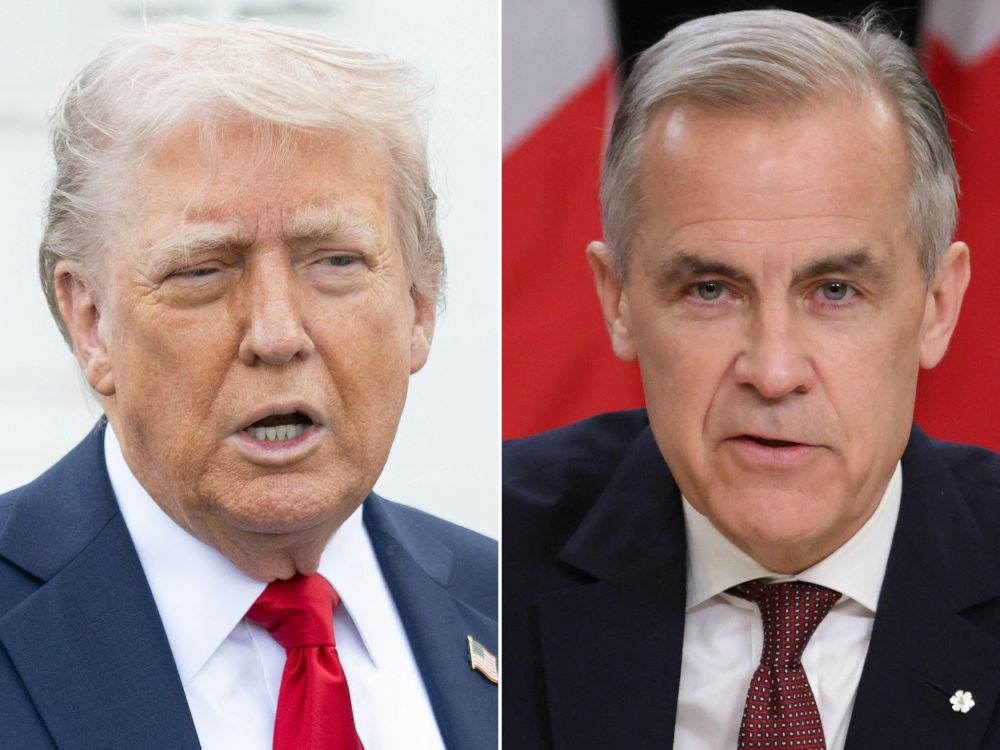
U.S. President Donald Trump, left, and Prime Minister Mark Carney

Like virtually all politicians, Prime Minister Mark Carney’s

victory speech

was filled with promises and pledges to reach across the aisle and govern for all. The public would be right to be skeptical, because few political leaders manage to deliver on such lofty goals. But this time must be different, because as Carney acknowledged, this is a “critical time” in our history, when we are facing not only the upending of our relationship with the United States, but an increasingly hostile and dangerous world.

First on the agenda will be the upcoming trade negotiations with the U.S. Carney successfully convinced a plurality of Canadians that he was better suited to take on U.S. President Donald Trump than his rival, despite little evidence to back up the claim. Carney’s

upcoming meeting

with the president in Washington on Tuesday will provide the first real test of how he plans on dealing with Trump. And news that

King Charles

will deliver the throne speech on May 27 will help strengthen our image as a strong and sovereign country. Yet the question remains: what can we get out of such a deal with the Americans?

There are very real questions about whether Carney will be able to forge an amicable relationship with his U.S. counterpart. His election night speech was an odd mix of hopefulness that we can achieve big things and dark premonitions about a dystopian future. He spoke of “American betrayal,” and pointedly claimed that Trump “is trying to break us, so that America can own us.” In an uncharacteristically diplomatic fashion, Trump later

brushed off

Carney’s heated rhetoric by acknowledging that the remarks were made in the heat of an election campaign, and called the prime minister a “very nice gentleman.”

Despite Trump’s measured tone, it is telling that he wanted Carney to come to him. Trump revels in the idea of foreign leaders coming to the White House and grovelling for a deal. When former prime minister Justin Trudeau flew to

Mar-a-Lago in November

, Trump clearly saw him as weak, as that was when he started talking publicly about turning Canada into the 51st state and referring to the PM as “Governor Trudeau.” Carney must now walk a fine line of appearing confident and strong, while not giving the president an excuse to hold a grudge against him.

And this is merely the starting point in what is sure to be a tough set of negotiations. We can expect Trump to play hardball, because we know he thinks the current deal is too generous, and that his goal is to encourage manufacturers to move to the U.S. We must also acknowledge that Trump is not a trustworthy negotiating partner, as some of the tariffs he’s imposed are in clear violation of the free-trade deal negotiated during his first term.

Canada must be clear-eyed about the fact that whatever deal we get will likely be worse than the one we have now. Nevertheless, if Carney can come to an agreement that provides stability over the next four years — and includes a similar stipulation that it will be renegotiated after six years, when we will hopefully have a more friendly face in the White House — he will be able to consider it a win.

But this is only half the battle. Regardless of the outcome of the trade negotiations, Canada needs to start looking out for its own bottom line by tearing down internal trade barriers, building trading relationships with other countries, making it easier for Canadian companies to compete in global markets and developing our abundant natural resources. We were thus pleased that Carney talked about building Canada “into an energy superpower” on election night.

This is a phrase that was never uttered by Trudeau, who spent his nearly 10 years in office erecting barriers to energy development and transportation. But Carney has also pledged to keep the

Impact Assessment Act

— whose requirements are so onerous, it has caused most companies with plans to build pipelines and other infrastructure to simply give up — maintain the oil and gas

emissions cap

and the

industrial carbon tax

, and introduce a system of

carbon tariffs

.

While the government has a desire to balance economic growth with environmental protection, these policies continue to put too much weight on the environment and will only further Canada’s affordability problem. As we saw when Trudeau was in office, a sole focus on keeping Canada’s carbon emissions low, without acknowledging that cleaner-burning Canadian energy, like natural gas, can be used by other countries to help reduce their carbon footprints, will only serve to inhibit the Canadian economy, without reducing global CO2 emissions.

A big theme of Carney’s victory speech was “humility,” and we hope he is humble enough to realize that Canadians put a lot of trust in a party that, mere months ago, was so deeply unpopular, it looked like it would go down in a historic defeat. To live up to that trust, Liberals will have to follow through on the best of their myriad

campaign promises

, including building millions of new homes, growing the economy, developing the Arctic and strengthening the Canadian Armed Forces.

We remain skeptical that they will be able to achieve these goals, especially without burdening future generations with massive amounts of debt. But for the sake of our country, we sincerely hope this proves to be a pivotal and positive moment in Canadian history.


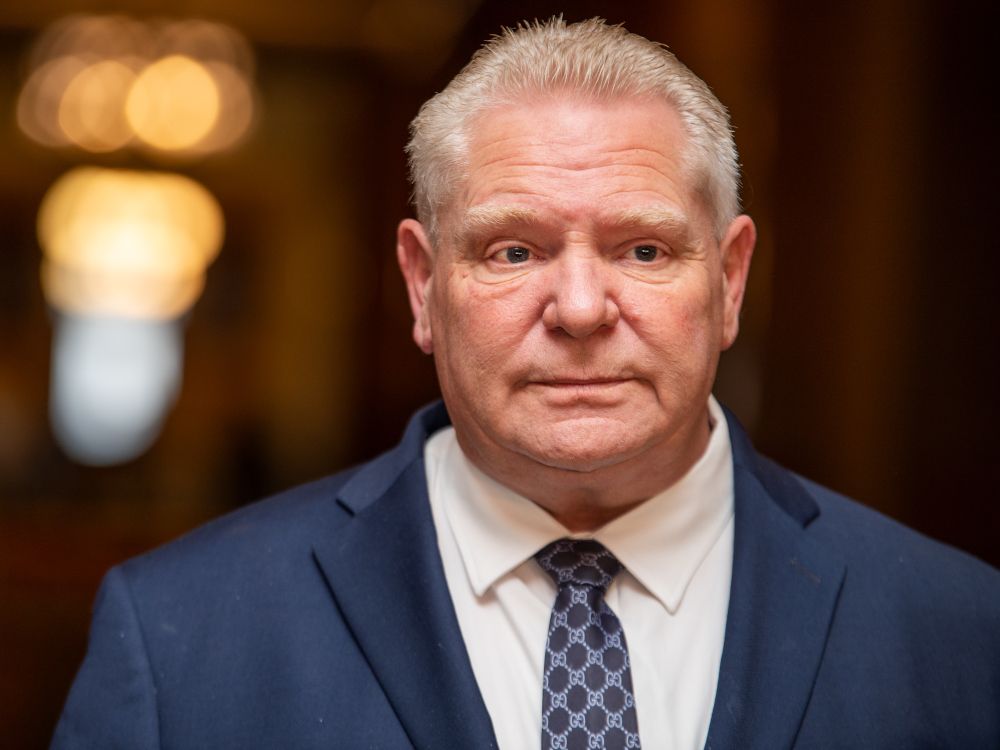
Ontario Premier Doug Ford

On Wednesday, Ontario Premier Doug Ford claimed that Canada’s politically appointed judiciary is

overstepping its authority

and that judges should be elected so that they are more responsive to the will of the people. His criticisms are absolutely warranted: judicial activism has run amok, causing demonstrable harms.

Ford’s comments were prompted by a recent legal battle over a law,

Bill 212

, that his government passed last November, to forcibly remove bike lanes on three major Toronto streets.

Biking activists

sued the province

in December, arguing that the law violates cyclists’

Section 7

Charter rights (“the right to life, liberty and security of the person”), and sought a preliminary injunction blocking enforcement until their case could be fully adjudicated in court.

There is a clear test for granting such injunctions: (1) the request must concern a serious issue; (2) the applicant must experience “irreparable harm” if the injunction is not granted; and (3) the benefits of the injunction must not outweigh any harm it causes to the public interest (this is known as the “balance of convenience”).

When the Supreme Court

established this test

, though, it emphasized that there is a strong public interest in respecting the authority of the legislative and executive branches of government.

Nullifying duly enacted laws erodes the separation of powers, so, ideally, this should only be done after a full hearing, especially if constitutional matters are involved. Overruling Parliament via preliminary injunctions is supposed to be reserved for “clear cases.”

Likewise, when determining a balance of convenience, judges are supposed to assume that duly enacted laws serve the public interest as intended. If this is not actually the case, that is only to be recognized in the final ruling.

With Bill 212, an Ontario Superior Court judge, Stephen E. Firestone,

initially ruled

that the activists had not met the “heavy burden” of demonstrating that sufficient harms or “a compelling overall public interest rationale” justified nullifying the provincial legislature’s authority.

He argued that, while removing bike lanes may irreparably harm some cyclists, “this is not a case where the applicants have no viable alternative means of transportation,” and that biking is a voluntary choice for the vast majority of people.

Regarding the public interest, he wrote that, “Toronto is a densely populated city with competing demands for road space,” and cycling represents only three to four per cent of all trips made within the city.

“The courts’ role on this interlocutory motion is not to second-guess the wisdom of the policy or to question whether it really serves the public interest. It is assumed to do so,” emphasized Firestone, correctly.

The case was then forwarded to another Superior Court judge, Paul Schabas, who, upon reviewing more evidence,

granted the injunction

his predecessor had refused.

Deviating from

judicial precedent

, Schabas explicitly denied that Bill 212 served the public interest and spent much of his ruling defending bike lanes and minimizing their trade-offs.

He utterly ignored Firestone’s concerns about whether the cyclists’ irreparable harms were inflated and defended the injunction due to what he claimed was a “competing public interest of encouraging cycling as a means of transportation.”

Putting things into perspective: a democratically elected provincial government was overruled by an unelected judge who seems poised to enshrine bike lanes as a Charter right.

Although voters expressed their preferences by giving a strong mandate to an anti-bike government, this judge paternalistically ignored them and decided that the more important public interest lies in encouraging more cycling.

I’m a cyclist who cherishes bike lanes and thinks that Bill 212 is asinine, but I sympathize with Ford. This issue should be resolved in democratic arenas, not through judicial activism and hastily fabricated Charter rights. Overreach is bad, even when it benefits you personally.

And this case is just the latest example of a judiciary run amok. Early last year, the B.C. Supreme Court used flimsy evidence and

specious arguments

to grant an injunction against a provincial law that would have outlawed public drug consumption. Apparently, smoking meth on sidewalks had, out of nowhere, become a Charter right.

Similarly, last December, Ontario Superior Court judge Michael Valente

questionably determined

that homeless people have a Charter right to sleep in encampments unless there is sufficient shelter space where open drug use is permitted.

The ruling seemed designed to coerce municipalities into adopting contentious homelessness and addiction policies without democratic buy-in, and was later indirectly criticized by Valente’s colleague, Judge James Ramsay, who noted, upon

ruling

on a similar case, that “micro-management by judges will not be productive.”

Amid rising judicial activism, Ford is right to call attention to the fact that all judges within Canada’s superior courts are appointed by the federal government. Although candidate lists are put together

by third parties

, the feds nonetheless have the final say on who sits on the country’s most influential benches.

The impact here isn’t hard to discern:

Schabas

and

Valente

, who discovered Charter rights for bike lanes and drug dens, were Liberal appointees, while

Firestone

and

Ramsay

, who exercised judicial restraint, were Conservative picks.

Electing judges invites a different, equally serious,

set of problems

and likely isn’t the answer, but something needs to be fixed.

National Post


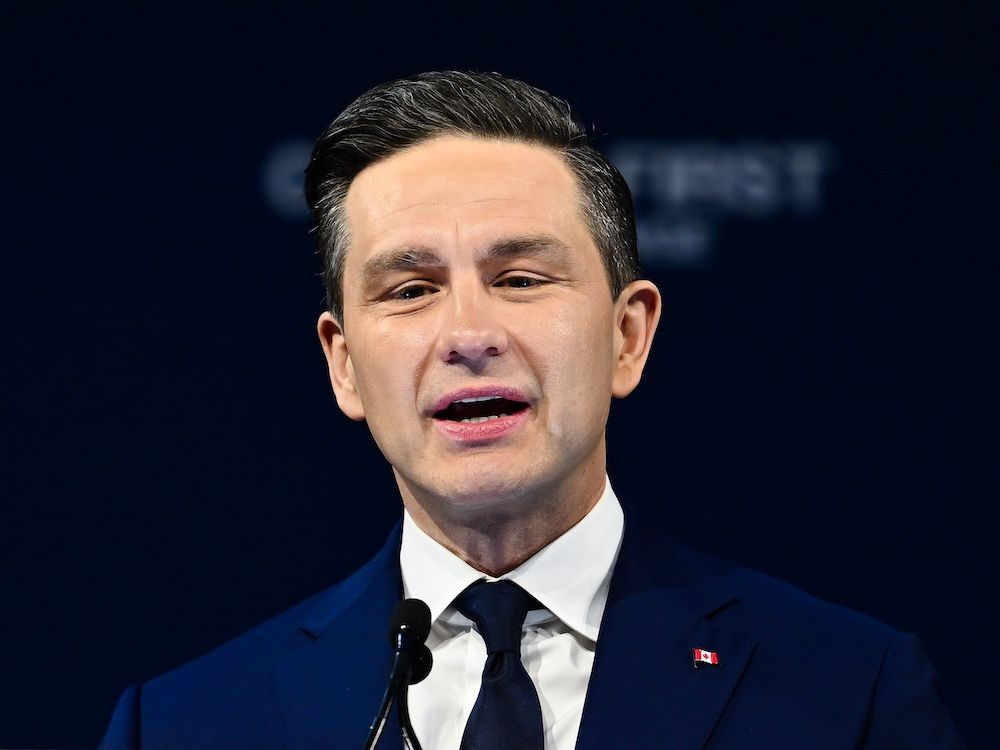
Conservative Party Leader Pierre Poilievre speaks to his supporters after losing the Canadian Federal Election on April 29, 2025 in Ottawa, Canada. (Photo by Minas Panagiotakis/Getty Images)

Pierre Poilievre has earned the right to remain leader of the Conservative party.

There were no calls coming from inside the federal tent for him to depart after failing to displace the Liberal government in Monday’s election. In his concession speech, Poilievre himself made it clear he had

no intention of leaving

, nor should he.

Though he lost his seat, Prime Minister Mark Carney said Friday that he would call a byelection “as soon as possible,” once there is a vacant seat Poilievre can run for. And, as it happens, MP Damien Kurek is stepping aside for his leader, the party announced, also on Friday. The Conservatives won the rural Alberta riding of Battle River—Crowfoot by 82 per cent on Monday, indicating Poilievre should be back in the House in short order as leader, where he belongs.

The most prominent voices that were calling for him to leave are partisan Liberals. All conservatives in Canada, party members or not, should never, ever take advice from active Liberals and progressive activists. It is the equivalent of sticking a hand in an alligator’s mouth.

No matter how much they try to frame their advice as well-intentioned or constructive, the Canadian left views most conservatives as zoo animals, and their only goal is to win.

If Conservatives can learn anything from Liberals, it is by observing how they operate during elections. On the other hand, the flood of false counsel spewing from

jubilant left-wingers

on National Newswatch,

TikTok

, and elsewhere calling for Poilievre to resign can be ignored.

It is only fitting that the Conservative party and those who voted for them should take some time to wallow, but that should be kept brief, and their eyes must still look towards the future. Contrary to the prevalent narratives, Poilievre has fundamentally transformed the party in a way that will pay great dividends down the line.

It won the

student vote

and established itself in general as the first choice of young voters, winning

student-heavy ridings

in cities like London, while driving huge inroads through blue-collar communities to

sweep

industrial regions like Windsor. The Conservative breakthrough in Ontario, especially in the

Greater Toronto Area

, bodes well for the future.

This was all accomplished under Poilievre’s leadership, and it enabled them to hold the Liberals to a minority and attain the largest share of the popular vote in party history. A fourth consecutive defeat to the Liberals is still a deeply demoralizing blow, but turfing Poilievre and tearing down the house would be a terrible reaction.

Much of the criticism directed at Poilievre, again mostly from people who despise him, says that the loss of his own Carleton seat to Liberal challenger Bruce Fanjoy is sufficient reason for him to leave. This is nonsense.

The Ottawa-area riding of Carleton was not safe for Conservatives in the same way that Harper’s former seat of Calgary Heritage is. It is located in a region with thousands of Liberal-leaning public servants and progressive voters.

Prior to becoming leader, Poilievre had to put in serious legwork to

retain it

in the past, such as in 2015 where he won it by just three per cent.

This time around, the time Poilievre usually would have spent door knocking and shaking hands in Carleton was spent on a whirlwind rally tour that galvanized the Conservative campaign and halted the Liberal majority.

Again, the Conservatives expected to win this campaign, and shortening Carney’s seat count is not a victory, but this is still Poilievre’s party, and a survey by Abacus Data found that far more Canadians

identify as

partisan Conservatives than they do Liberals.

One of the silly narratives being spun is that Poilievre “blew” a 27-point lead.

At the peak of its popularity around Christmas, the Conservative party polled at 46 per cent. On Monday, their vote share was 41 percent. The decisive factor was the

implosion

of the NDP vote, not the Conservative one.

Since the modern party was formed in 2003, the only Conservative leaders to get the party close to a majority, or outright win one, have been Stephen Harper and Pierre Poilievre, both of whom were vilified by the progressive media and pundits who pretended they had the party’s best interest at heart.

Poilievre has remade the Conservative coalition into what it is, a party of strivers, young people, and battlers, to borrow a term from Australian political lingo.

A study should be conducted into how many of the ridings in exurban areas or smaller cities that went Conservative are full of newly arrived families from the bigger cities, who fled there in search of affordability.

The cost of living crisis will outlast the shock of the second Trump presidency, the opening months of which scared many Canadians out of voting for change in favour of Carney and the stability he projected. Carney’s base is ideologically disparate, being drawn from across the political spectrum into a circumstantial alliance.

There are NDP supporters, Liberal loyalists, pro-business types, and boomers, few of whom would normally share a room.

Those who have read the Life of Pi should compare it to the passage where a lion, a zebra, a hyena, and an orangutan find themselves together in a lifeboat after a storm sinks the ship they were being transported upon. After briefly co-existing in a crisis, they promptly break ranks and eat each other.

After the pain of losing this election, the Conservatives have work to do by mending fences or building fresh relationships, not to mention finding another seat for Poilievre, but a leadership race is out of the question. The Conservative party is his party until he says otherwise.

National Post


TEL AVIV, ISRAEL - MAY 01: A woman wearing an Israeli flag headband poses on the boardwalk on Yom Ha'atzmaut (Israel's independence day)  on May 01, 2025 in Tel Aviv, Israel. Despite all official celebrations and commemoration services being cancelled due to the ongoing wildfires in the Jerusalem hills, people still celebrated with customary BBQs and family get togethers. Yom Ha'atzmaut is Israel's independence day, commemorating the Israeli Declaration of Independence on 14 May 1948. Independence day begins on the evening after israel's national memorial day for fallen soldiers and victims of terror. (Photo by Alexi J. Rosenfeld/Getty Images)

This week, Israel celebrated its 77th Independence Day — a moment of national pride, reflection, and defiance. But Israel’s story didn’t begin in 1948. Its true birth stretches back more than 3,500 years, rooted deeply in a land where the Jewish people first built their Temple in Jerusalem around the year 957 BCE. From the Western Wall, the only remaining vestige of that holy sanctuary, to the ancient synagogues of Tzfat, the fortress of Masada, and the ruins of King David’s palace, Israel is not merely a modern state — it is the very soil of Jewish history and civilization.

Yet, you wouldn’t know any of this if you lived in Canada or much of Europe today, where mobs chant in the streets not for peace, but for the erasure of Israel. Rampaging against the Jewish state, antisemitic demonstrators call for its destruction with impunity — even as Israel mourns and remembers its fallen on Yom HaZikaron and celebrates its miraculous survival on Yom Ha’atzmaut.

It’s been a devastating 18 months. Hamas, Hezbollah, the Houthis, and their puppet master Iran launched a war not of Israel’s choosing. It was barbarism against civilization. Yet Israel — as always — has fought back, not just with might, but with a heart of courage. This is a war for survival, and it is one Israel will finish on its own terms.

The statistics tell a staggering story. There are 57 Muslim-majority countries across the globe, representing 24 per cent of the world’s population and covering nearly 25 million square kilometers of territory. In contrast, there is only one Jewish country — Israel — encompassing just 21,937 square kilometres, a fraction of the world’s map and population. And yet, in that sliver of land, a miracle was born.

Since its founding in 1948, Israel has lost over 25,000 soldiers in defence of its people — brave men and women who stood between their homes and annihilation. In recent months, we’ve mourned the innocent victims of Hamas’s October 7 massacre, as well as the young soldiers who continue to risk their lives in Gaza and along the northern border. Yom HaZikaron was especially poignant this year — the pain raw, the wounds still bleeding. But even amid tears, Israelis paused to remember and then resumed the sacred act of living.

Despite it all, Israel’s population has reached more than 10 million — a teardrop in a world of 8.2 billion but a great achievement for a people who have had to rebuild after the murder of the six million in the Holocaust.

But walk the streets of Tel Aviv, or Jerusalem, or Eilat, and you’ll find cafes bustling, babies in strollers, students laughing on campuses, and startups humming with energy. Israel is not just surviving — it is thriving. It is the beating heart of hope.

Need inspiration? Look at Israel. Despite war and trauma, Israelis were recently ranked the 8th happiest people on earth. Why? Because Israelis live with purpose. While their neighbours build terror tunnels and preach hatred, Israelis innovate. They heal. They dream. Just last month, Google acquired an Israeli tech firm for $32 billion — its largest acquisition ever. Out of 196 countries, Israel now ranks 28th in global GDP, a mere six places behind Canada.

To the detriment of its enemies, the atrocities of October 7 have only solidified Israel’s national spirit. A new generation is rising — battle-tested, proud, determined. These young men and women, forged in the fires of war, will become the leaders of tomorrow, writing the next chapters of Israel’s story. Like Hannah Senesh, who parachuted into Nazi-occupied Europe to save lives, and Menachem Begin, who built a state from the ashes of exile, they will carry the flame forward.

Israel is undergoing a rebirth. The political squabbles will subside. What remains will be resilience, strength, and unity. Israel’s enemies should take heed: they have not only failed — they have accelerated Israel’s renewal.

So, yes — remember the past. But today, celebrate the future. Israel is still the most magical place on earth.

Am Yisrael Chai.

Avi Benlolo is founder and CEO of the Abraham Global Peace Initiative, a Canadian think-tank.


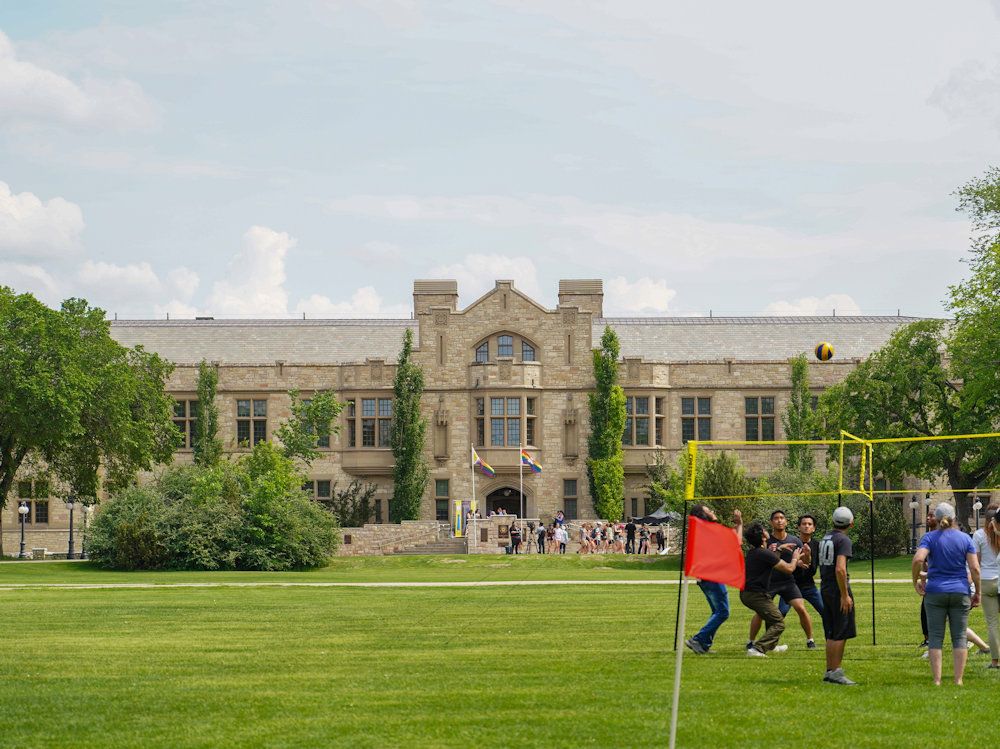
The administration building of the University of Saskatchewan is photographed in Saskatoon on Thursday, June 1, 2023.

First Reading is a Canadian politics newsletter curated by the National Post’s own Tristin Hopper. To get an early version sent directly to your inbox, sign up here.

TOP STORY

A University of Saskatchewan law professor provided a unique window into the equity mandates now ubiquitous at Canadian universities by blogging the details of a compulsory anti-racist “learning journey.”

The course was officially known as an Anti-Racism/Anti-Oppression and Unconscious Bias Faculty Development Session, and is a mandatory requirement of University of Saskatchewan faculty looking to participate in hiring committees.

An email announcing the program was given the subject line: “Mandatory unconscious bias and anti-racism training.”

“The training is intended to further your personal journey of learning and action, regardless of how knowledgeable or experienced you are, so attendance is mandatory irrespective of previous training or academic field of specialization,” faculty were told.

The course materials tell participants that they’ll be taught about the “systemic racism” of the university environment and how they have benefited from unearned racial privileges.

By session’s end, participants are told that they’ll be able understand their own “unconscious bias” and “reflect on and understand how power, privilege and meritocracy lead to inequities.”

One of the activities is to fill out a “power and privilege” wheel. These wheels, prepared and distributed by the Government of Canada, ask users to grade their “privileges” on everything from mental health to sexuality to skin colour. The most privileged identity, as identified by the wheel, is a white, able-bodied, heterosexual “colonizer/settler.”

Michael Plaxton, an expert in criminal law and statutory interpretation, alternately called the course a “mandatory DEI bootcamp” and a “forced march of self discovery.” He noted that it began with a declaration of “we’re not here to debate.”

The course included three readings. The first,

White settler colonialism and the myth of meritocracy

, was written by Idle No More activist Sheelah McLean, and details how white Saskatchewanians owe their prosperity to “150 years of racist, sexist and homophobic colonial practices.”

“The myth that Canadian society is created on individual work ethic ignores how racially dominant groups gain access to social and political power,” it reads.

The second was a chapter from the 2022 U.S. book Confronting Institutionalized Racism in Higher Education. The chapter interviews five “racialized” American university faculty and concludes that the entire system is rigged to benefit white people. “Racialized faculty are expected to have accomplished more, yet their tenure and promotion files are always scrutinized through certain deficit driven lenses of presumed incompetence,” it reads.

The third reading was also from the United States. A paper from the American Association of University Professors entitled Achieving Racial Equity in Promotion and Tenure. The document argues that if the racial makeup of university faculty doesn’t mirror the racial makeup of social generally, standards should be altered to “increase the number of tenured faculty members of color on campus.”

Plaxton was asked to leave the meeting after about 30 minutes, although not because he was posting its details on social media. As he

detailed in a follow-up post

, when a coordinator asked him why he was there, he replied, “I was there because my union made it a condition of participating in future tenure and search meetings.”

This precipitated a brief exchange which ended with Plaxton being told that if he was “unwilling to participate,” he was free to go.

Plaxton told National Post that he wasn’t any kind of “crusader on the whole DEI thing,” and that he didn’t think any of the course leaders “were anything other than earnest, well-meaning people.”

“No one was rude to me,” he wrote in an email, adding that he mostly felt “awkward” about the whole affair.

But Plaxton’s experience is now the norm. Academia has been at the sharp end of a wholesale Canadian institutional embrace of the doctrine of “anti-racism,” and everything from grant funding to hiring to promotion now hinges on a candidate’s willingness to accept the tenets of “equity, diversity and inclusion.”

In February, an analysis by the Aristotle Foundation found that nearly all Canadian academic job postings

now contain a “diversity” requirement

. This could be a mandatory “diversity survey” in which the applicant is required to detail their various racial and sexual identities. Or, in some cases, it could be a job that is explicitly limited to select demographics, such as a Black, Indigenous or female applicants.

It is also standard practice for research funding to be incumbent upon the racial or sexual diversity of the applicants. As far back as 2021, McGill University’s Patanjali Kambhampati

went public with criticism

of new guidelines from Natural Sciences and Engineering Research Council of Canada that required applicants to list the identity characteristics of research assistants they would be prioritizing.

Anti-racism is different than traditional Canadian guidelines on racial tolerance, which mostly advocated for race to be treated as an irrelevance.

Rather, anti-racism is based on the premise that any inequality of outcome is itself evidence of a racist system, and must be remedied via special treatment for groups deemed to be marginalized or “

equity-deserving

.”

The University of Saskatchewan’s EDI Framework for Action, like most institutionalized anti-racism plans, is quite specific about this. The goal is “equity,” as distinct from equality, and is defined as “taking the range of human attributes and qualities into account and providing each individual with what they need to be successful.”


IN OTHER NEWS

Within hours of Monday’s election result, one of the most immediate consequences was a credit rating agency warning that Canada’s AAA credit rating was now in peril. “Canada has experienced rapid and steep fiscal deterioration, driven by a sharply weaker economic outlook and increased government spending during this electoral cycle,” read an analysis by FitchRatings published Tuesday. The agency said that Canada’s economy was still resilient to take a punch in the form of “a fiscal or economic shock,” but the sheer scale of spending promised by the new Liberal government “would pressure its credit profile.”

 Prime Minister Mark Carney’s first published interview following his Monday election win was with a foreign outlet. Carney, who has not yet held a post-election press conference with Canadian media, granted an exclusive to the BBC where he said he would negotiate with Donald Trump “on our terms.” And this is pretty on brand for Carney; his campaign for Liberal leader also kicked off with a flurry of non-Canadian media appearances, including a spot on The Daily Show.

Another consequence of Monday’s election that hasn’t been getting a lot of notice: A bunch of MPs won’t be getting their pension now. Last year,

it was a scandal

that the Trudeau government changed the date of the October election to one that just so happened to put dozens of MPs over the finish line towards qualifying for the gold-plated parliamentary pensions. You need six years of parliamentary service to qualify for the pension, and by moving the election from Oct. 20 to Oct. 27, 80 MPs first elected in 2019 would be pushed over the threshold, regardless of whether they won re-election. With the election having been called six months earlier, some of those 80 are now pensionless, including the NDP’s Laurel Collins, Taylor Bachrach and Matthew Green, and the Liberals’ Jenica Atwin.

 In a Wednesday cabinet meeting, U.S. President Donald Trump once again expressed his apparent pleasure with the Canadian election outcome, saying that it was won by the candidate who hated him “the least.” “The conservative hated me much more than the so-called liberal,” he said.

By winning just seven seats on Monday night, the NDP not only chalked up the worst result in their history, but they lost official party status in the House of Commons. You need at least 12 MPs to be an “official” party, and without it the NDP will lose millions of dollars in parliamentary allocations, and will lose many of its privileges in regards to question period. And so, one of the only surviving New Democrats, Don Davies,

is now proposing that they just be given official party status anyway.

Davies

told CTV News

that one of his first legislative priorities will be a proposal to change the terms of official party status.

Get all of these insights and more into your inbox by signing up for the First Reading newsletter here.


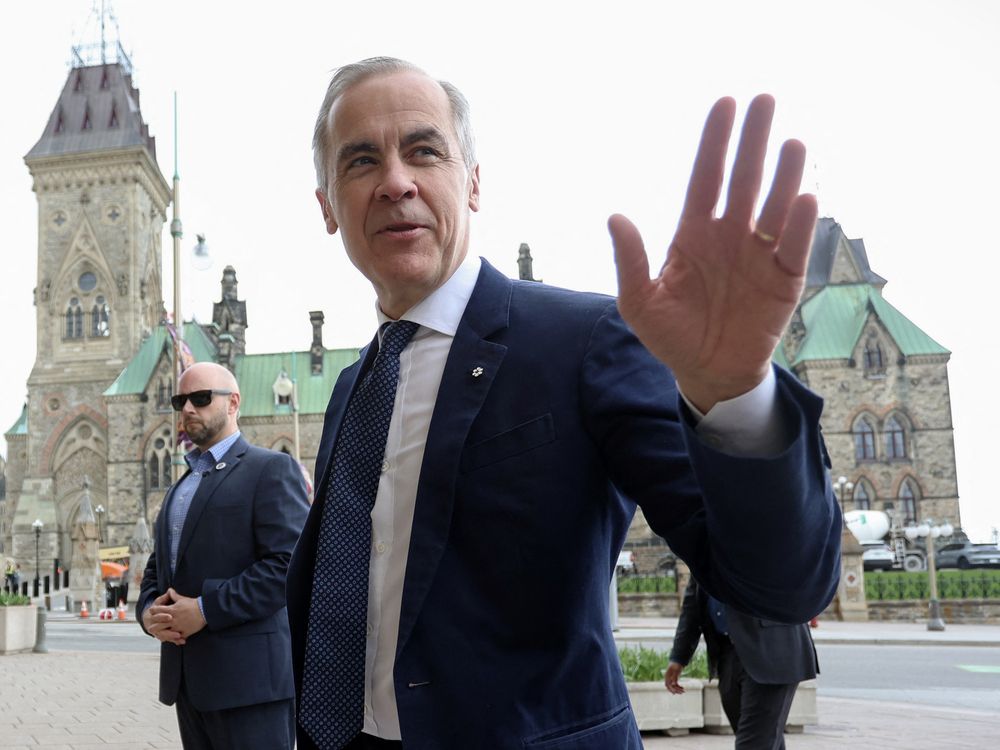
Canada's Prime Minister Mark Carney speaks to the media upon arriving at his office on Parliament Hill April 29, 2025 in Ottawa, Canada.

Economists, commentators and casual observers alike predicted that the election of Prime Minister Mark Carney would do the economy more harm than good — and it seems that they’re already being proven right.

On Tuesday, Fitch Ratings, one of the great deciders of how much interest Canada pays on its debt,

flapped a warning flag

in our faces for electing Prime Minister Mark Carney the night before.

“Canada’s credit strengths offer significant headroom to weather a fiscal or economic shock,” wrote the ratings agency, “but increased structural deficits would pressure its credit profile.”

Fitch had already priced in federal government deficits for 2025 and 2026, amounting to 2.6 per cent and 2.4 per cent of Canada’s GDP, respectively. Factoring in the Carney platform, though, resulted in even worse figures: the 2025 deficit is now slated to be 3.1 per cent of GDP, growing to 3.2 per cent in 2026.

For context, the federal deficit between 2000 and 2019 ran at 0.4 per cent of Canada’s GDP. The Carney plan takes us to eight times that. Plus, he has the hurdle of a new Parliament, with new political dynamics. “As a minority government,” Fitch cautions, “the Liberals will have to compromise with other parties to pass legislation, increasing the likelihood that enacted policies will differ from the platform.”

Yeah, if you thought the projected deficit was bad now, just wait until the survivors of the great NDP cull start demanding socialized doggy daycare. It’s only going to get worse from here. Remember that Canada is already

paying

$54 billion in interest annually on its giant pile of debt, or 1.8 per cent of GDP. Downgrades from the ratings agencies will mean we have to pay even more.

Go elsewhere and you find additional warnings. Morningstar, the American financial services firm,

figured

that the housing situation in Canada won’t be sorting itself out with all the red tape and trade uncertainty; Carney’s plan to remove GST from homes bought by first-time buyers “may drive improved demand but exacerbate the same housing problem they are trying to solve,” making matters worse.

This bodes very poorly for Canada, which is already in a bad place. GDP, the measure of our country’s objective output, has been limping upward. Divide that by population, which has been growing relentlessly under the Liberal government, and it looks much worse. GDP per capita

fell

for six consecutive quarters, only to slightly improve in the subsequent, and most recent, quarter.

A recession is reached when a country has seen at least two consecutive quarters of negative growth — but since that usually refers to a decline in total GDP, Canada has narrowly avoided the label. In February, CIBC Deputy Chief Economist Benjamin Tal didn’t bother sugarcoating it with labels: “Let me break it to you: we are in a recession — a per-capita recession,” he

told

a real estate forum in Toronto.

How bad we’re doing on a per-capita basis depends on your reference time period. Going back to 1981 and following up to 2024, the economy grew per capita at an average rate of 1.1 per cent,

says

Statistics Canada. Only now, this growth has since flattened, leaving our post-pandemic GDP per capita seven per cent below what it otherwise would have been: in the last quarter of 2023, GDP per capita was $58,111; had we remained on the 40-or-so-year trend, it would have been $62,356. We’re at a point where catch-up games will need to be played for years to return the economy to what it once was.

Carney won’t be able to fix the economy in a day, and reasonable people will hold off on feelings of betrayal until he’s actually had some time behind the wheel. But no one should ignore the warning from Fitch, which says, “We’ve read what Carney had in store and it was bad; worse, even than the trajectory under former Prime Minister Justin Trudeau.” Canada’s AA+ rating from Fitch — and high praise for its stability — haven’t been downgraded by the agency just yet, but it’s certainly looking like it’s headed that way. Instead of ignoring it, it should be taken as a last warning.

Unheeded warnings are par for the course in Canada, though, so it’s doubtful we’ll ever see that blimp turned around. The same, we can probably say for, on the trade front: Carney, despite baselessly maligning Conservative Leader Pierre Poilievre by

telling

followers that he “worships at the altar of Donald Trump,” and

declaring

the “relationship we had with the U.S.” to be over, is already warming up to President Donald Trump.

Trump

praised

Carney on Wednesday, reportedly saying on a call with the Canadian prime minister that “we’re going to have a great relationship.” Despite the Liberal campaign’s constant invocations of Trump, the president was happy with the election result because, between the two candidates for prime minister, “They both hated Trump, and it was the one that hated Trump, I think, the least that won. I actually think the Conservative hated me much more than the so-called Liberal.”

An improvement from the “governor” talk no doubt, but still cause for concern.

So, Canada, this is what we have in the first week of the (elected) Carney government. A recession that, let’s be real, is already underway, a credit downgrade on the horizon and a tariff warmonger who’s suddenly very happy to be working with the country’s new private-equity prime minister.

National Post