



LP_468x60
on-the-record-468x60-white

An artist's rendering of the redesign of Ontario Place.

My love for Lake Ontario began when I was young. Like many people, my parents were not born in Canada. We didn’t have a family cottage up north to escape to every summer. Our family stayed in Toronto and the waterfront was our playground. It’s why I’ve spent my career fighting to make the waterfront an even better place to live, work and play. I’ve represented this part of Toronto at city hall and in Parliament.

I see Therme — which is developing a public park and beach, along with a water park and spa at Ontario Place ­— as a great addition to the work I’ve done. This is why I’ve joined their team.

Over my career, I’ve helped lead movements to build waterfront parks and improve transit. I served on Harbourfront Centre’s board and, while in politics, helped create new cultural facilities on Queen’s Quay. I also worked to deliver the budget for Waterfront Toronto, to naturalize the Don Valley and move a vision for the Port Lands forward.

But more importantly, I’ve made sure we didn’t just protect affordable housing along the shore of Lake Ontario, I helped build new social housing in the area, to make sure Toronto really does have a clean, green waterfront for all.

Critics have thrown everything at Therme’s project. It’s too big, too exclusive, too foreign, too expensive, too this and too that. It’s too bad.

You have to wonder what these protesters would have said about the original Ontario Place. Imagine the push-back to dumping contaminated landfill in the lake to make artificial islands and then surrounding them with acres of surface parking lots on the water’s edge. How would they have responded to a ticketed regional tourist draw with futuristic architecture, a luxury yacht club and fast-food outlets?

To be clear, Therme is not doing any of this. But that’s how the original Ontario Place was built in the 1970s.

Therme’s new facility is different. Plans include indoor water slides and pools, as well as places to indulge yourself with a massage or a sauna. It will be a place to bring kids or hang with friends or just relax on your own and have fun.

I’ve been to Therme’s locations in Germany and Romania. Therme is not elitist or an expensive experience. It’s affordable, popular and entirely in keeping with what Ontario Place used to be.

There is, however, one key departure from the original design. The admission gates to the grounds are being removed. Accessing the waterfront and the new green space the size of Trinity Bellwoods Park will be free at Ontario Place. You won’t need a ticket to have a picnic or watch the sun set over Lake Ontario ever again.

One thing I hope everyone can agree on is that ever since the pods closed, free access to the water’s edge has proven to be a good thing. The success of Trillium Park needs to be celebrated and expanded. Therme is excited to deliver around 16 acres of publicly accessible green space along the water’s edge, with more shoreline habitat and over 3,000 new trees planted next to the lake. Building more parks is good for the people of Toronto.

And there’s another important change coming to Ontario Place: unlike the original project, Indigenous rights holders are now partners in this new vision. The Mississauga’s of the Credit First Nation support Therme. They are partners in the design of the park and other parts of the facility, including co-creating space for ceremonies and traditional gatherings. The original design did none of this.

Ontario Place is finally becoming a place for everyone. That’s why I support the project and have joined Therme.

National Post

Adam Vaughan is a senior advisor and spokesperson for Therme Canada, and a former Toronto city councillor and member of Parliament.


Ambulances and police cars are parked outside Atocha station as many travelers prepare to spend the night inside, following a massive power cut affecting the entire Iberian peninsula and the south of France, in Madrid on April 28, 2025.

First Reading is a Canadian politics newsletter curated by the National Post’s own Tristin Hopper. To get an early version sent directly to your inbox, sign up here.

TOP STORY

At the precise moment that Canada was handing electoral victory to one of the world’s most vocal boosters of green energy, 60 million Europeans were plunged into a catastrophic blackout caused in part by green technology.

And in Alberta, at least, last week’s blackout in Spain and Portugal is being cited as a preview of coming attractions if the green visions of Prime Minister Mark Carney come to pass. “Albertans would be left to freeze in the dark,” said Alberta Premier Danielle Smith.

On April 28, the conjoined power grids of Spain and Portugal plunged into complete shutdown, leaving both nations without electrical power for 10 hours. Grid operators were ultimately forced to reboot the system from a cold start; the “nightmare scenario” according to 

an analysis out of University College Dublin

.

Although blackouts of this scale have happened before, it’s not a coincidence that the disaster struck a region of Europe notable for its heady embrace of renewable energy. At the precise moment that the Iberian peninsula was plunged into darkness, 78 per cent of its electricity was 

being provided by renewables

, mostly solar.

When an as-yet unknown hiccup hit the power system, all these renewables proved unable to take the strain and plunged into shutdown.

An analysis 

published out of Spain’s Universidad de Salamanca

 noted that when an electrical grid is powered by large, baseload sources such as hydro dams or nucelar power plants, they’re able “to keep the frequency stable in the face of sudden changes in generation or demand.”

“However, variable renewable sources, such as solar photovoltaic, do not have this capability,” it read

For European policymakers, the blackout has highlighted that decarbonization can come with massive unintended consequences.

At the very least, it highlighted the vulnerability of a country fixing all of its energy needs to the electrical grid. More than half of the Spanish rail network is electrified, meaning the April 28 blackout 

instantly stranded passenger trains

 all across the country.

Headlines everywhere from India to the U.K. called the blackout a “wake up call.” The term was also adopted by Eurelectric, an association representing the European electrical sector. “Yesterday’s blackout was a wake-up call,” wrote the group.

Even the pro-decarbonization Stockholm Environmental Institute concluded that the Iberian blackout highlighted the perils of overburdening aging electricity systems with green technology.

“The question isn’t whether the energy transition should continue, but whether we’re investing fast enough to keep the system stable as it evolves,” it 

wrote in a policy paper.

The Canadian energy grid is somewhat different than in Iberia, in that more than 60 per cent of Canadian electricity comes via hydroelectric dams, which aren’t subject to the same fragility as wind or solar.

Nevertheless, Canada has pursued the same tack of pushing the economy towards increased electrification, while failing to keep pace with electrical capacity. A 2023 report by the Public Policy Forum noted that if Canada was going to meet all its stated net-zero goals, it would need to double its electrical generation capacity 

in just 25 years

 — all while phasing out huge swaths of the grid now dependent on fossil fuels such as natural gas.

Although Carney did not mention green issues all that often during the 45th electoral campaign, it was only a few months ago that he was one of the world’s leading advocates for the concept of “net zero.”

Carney was UN Special Envoy on Climate Action and Finance, and also co-founded the Net-Zero Banking Alliance, a club of banks and financial institutions pledged to reorient their portfolios away from fossil fuels. Although the alliance has 

massively hemorrhaged members in just the last few months

.

Iberian renewable energy projects happen to be among the many green energy assets held by Carney’s former firm, Brookfield Asset Management. Just last year, Carney was CEO of Brookfield when it acquired the Spanish renewable energy firm Saeta Yield SA.

His 2021 book Values also focuses heavily on the need to both purge the Canadian energy grid of fossil fuels, and to make more of the Canadian economy dependent on electricity.

“The core will be to electrify everything and simultaneously develop green electricity,” wrote Carney. For Canada specifically, he wrote that the future would require “completely electrifying surface transport and a large share of building heating” — and phasing out all but “clean, non-emitting” power by as early as 2030.


IN OTHER NEWS

As Alberta separatists find new purpose in response to the election of Prime Minister Mark Carney, a

different kind of separatism is being proposed by Alberta NDP Leader Naheed Nenshi.

The longstanding deal with the NDP is that joining any of its provincial branches automatically confers membership in the federal NDP (an arrangement that doesn’t hold for provincial Liberal and Conservative parties). But after the electoral immolation of the federal NDP in last week’s election, a majority of delegates at an Alberta NDP convention on Saturday voted to sever official ties with their federal big brother. The rumour is that this could eventually yield a name change, although the last time a provincial party tried that it

was an immediate disaster for them

.

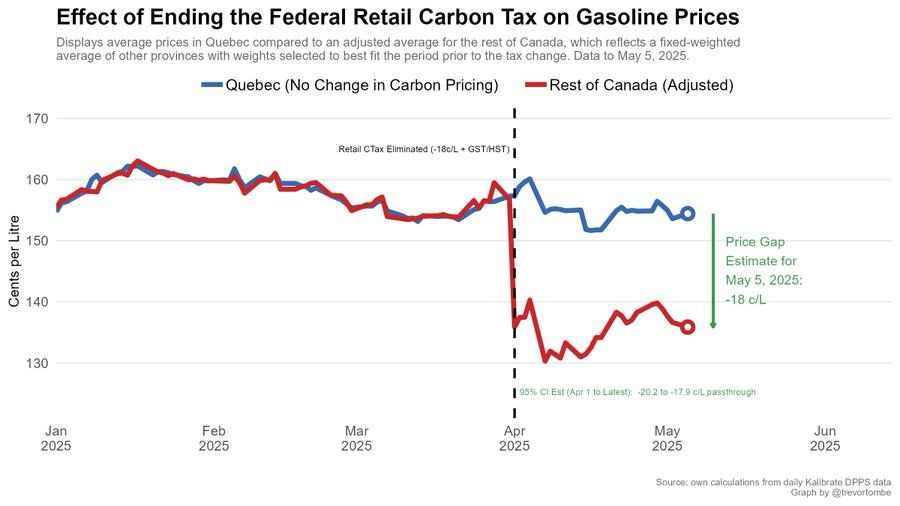
 Cynics might have assumed that the zeroing of the federal carbon tax in March would have had minimal effect on gasoline prices as filling stations would simply keep prices the same and collect the difference as profit. But a new analysis by University of Calgary economy Trevor Tombe finds this didn’t happen. He compared Canadian gas prices to Quebec (which kept its carbon tax), and found that average retail prices went down by about 17 cents per litre, meaning that the savings from the tax, at least for now, were passed onto the consumer.

Another Anglophone country has retained its unpopular center-left government largely as a reaction to U.S. President Donald Trump.

Australia’s incumbent Labor Party had long been fated for defeat at the hands of the Australian Liberal Party (which, confusingly, is Australia’s main conservative option). That is, until the mere threat of tariffs from Trump sunk public support for the Liberals, ensuring

a renewed majority for Labor

. Trump appears very pleased with all of this. Just as he celebrated the victory of Canadian Prime Minister Mark Carney, he seemed equally happy about the re-election of Australian Prime Minister Anthony Albanese, saying he’d always been “very nice and respectful to me.”

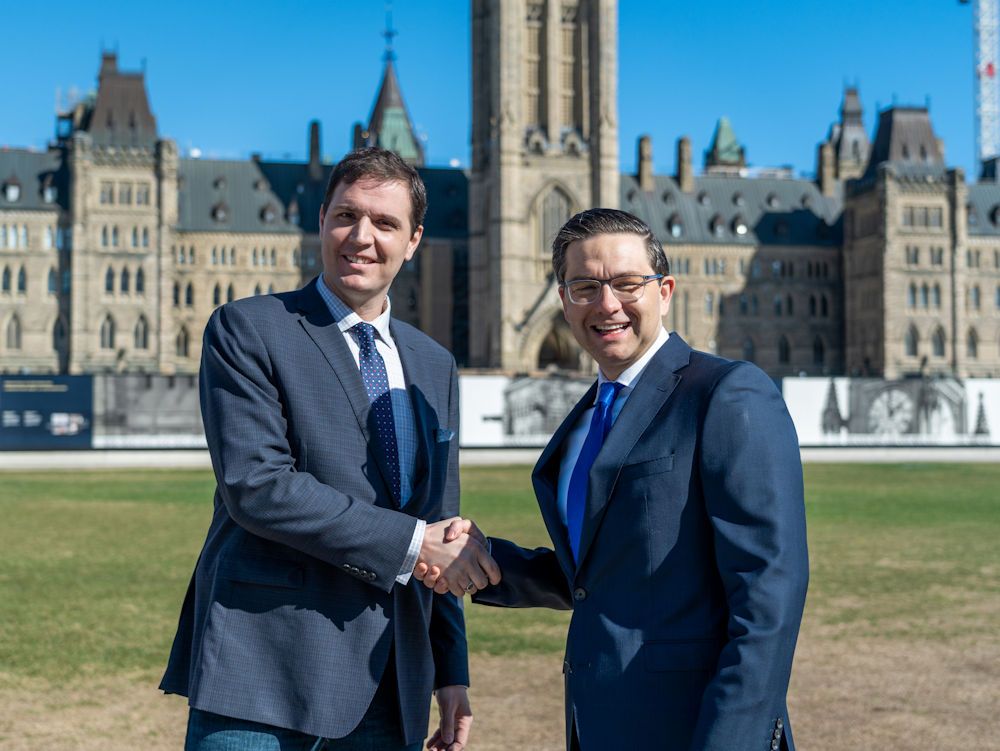
 Conservative Leader Pierre Poilievre spent the weekend touring around Battle River—Crowfoot, the extremely Conservative and mostly rural Alberta riding he intends to win in a by-election. In last week’s election, Poilievre lost the Ottawa-area seat he’s held since 2004. As some have pointed out online, Poilievre becomes just the latest Ontarian forced to go to Alberta to find work.

Get all of these insights and more into your inbox by signing up for the First Reading newsletter here.


In what was once considered an inconceivable scenario, a London-based law firm acting on behalf of Hamas submitted a legal challenge to the U.K. Home Office

demanding

its removal from the British government’s list of proscribed terrorist groups.

The case has a Canadian connection, too: Charlotte Kates, co-founder of the Vancouver-based terror group Samidoun,

contributed

an “expert report” as part of the legal challenge “against the criminalization of Palestinian resistance in Britain.”

Many in Canada’s top universities share a similarly worrying, warped school of thought: organizations like Hamas, Hezbollah and the Taliban have been unfairly classified as terrorist entities by western colonial systems and laws that are riddled with racism and “Islamophobia” (a popular grift of Islamist groups in the West to silence and punish critics and to evade legitimate scrutiny).

Influential figures within faculty departments, student unions and diversity, equity and inclusion offices are not just excusing but actively promoting extremist ideologies, including radical Islam and support for terrorism.

Cloaked in the language of academic freedom, social justice and human rights, they are jointly funding studies and platforming individuals who condone terrorism as a legitimate act of resistance and undermining the critical work performed by Canada’s national security agencies with

accusations of bigotry

.

The Toronto Metropolitan University’s arts faculty is one such example. The faculty recently funded

a research paper

, which argues that the process of designating Islamist groups like Hamas, Hezbollah and ISIS as terrorist organizations by Canada’s security apparatus is deeply flawed because of “systemic Islamophobia” and racism.

Titled “Racialized Knowledges: Understanding the Construction of the Muslim “Terrorist” in the Policy Process,” the paper discusses how “policymakers rely on white logic to depict state institutions as neutral, obscuring their inherent anti-Muslim orientation.” It also claims that Canadian security agencies “maintain the association of ‘terrorism’ with Muslims,” regardless of who commits the violent act. For context, roughly 70 per cent of all

listed terrorist groups

in Canada are explicitly of the Islamist variety.

In another case of terrorism whitewashing, the University of Toronto’s Centre for Criminology & Sociolegal Studies hosted

a seminar

in February titled, “Silenced Voices: The Impact of Terrorism Designations on Palestinian Advocacy in Canada.” The event’s organizers argued that Canadian media coverage and political discourse unfairly portray pro-Palestine activists in a poor light, using “framing techniques that align with criminalizing narratives, often using labels such as ‘terrorism’ and ‘violence’ to delegitimize Palestinian voices.”

The keynote speaker was Basema Al-Alami, a PhD candidate at U of T’s law school. According to

her university bio

, Al-Alami’s research focuses on “the intersection of counterterrorism, entrapment law and anti-Muslim bias in Canada’s legal system.” Her PhD research alleges “systemic issues in national security practices, particularly the litigation and over-policing of Muslims in post-9/11 Canada.”

In another example from earlier this year, the University of Ottawa’s Institute of Feminist and Gender Studies invited Nada Elia, a Palestinian-American professor at Western Washington University, to

give a talk

on “Weaponizing Feminism in the Service of Genocide.” In an article titled “

Weaponzing Rape

,” Prof. Elia argued that, “Israel is weaponizing claims of sexual violence for propaganda purposes,” and that there is “no reliable evidence to document any of the alleged crimes.” According to the watchdog group

Canary Mission

, she has previously “defended terrorists and called for the ethnic cleansing of Jews from Israel.”

It is clear that Islamists, empowered by the cover of progressive activism on campuses, are waging a calculated campaign to erode the core values of western democracy. Their campaign goes far beyond dissent or protest — it is ideological jihad aimed at infiltrating educational institutions, weakening our legal foundations, distorting our security interests and disrupting our cultural, social and political stability from within.

The fallout from normalizing violence on university campuses is already visible, but a deeper danger lies ahead: when universities allow extremist ideologies to take root, they risk shaping a generation of graduates who no longer see terrorism as a crime, but as a justifiable form of resistance. This radical shift in young minds carries grave consequences — not only for the Jewish community, but for the security, unity and the democratic fabric of Canada itself.

With the Israel-Hamas war reviving the spectre of

jihadist terrorism

and ramping up

youth recruitment

in Canada, universities should not be platforming voices and ideologies that undermine our security and unity, priorities that Prime Minister Mark Carney alluded to in his post-election

victory speech

. Governments must seek accountability from university bosses to protect the integrity of our education system and restore trust in our institutions.

The unconscionable attempt by young,

indoctrinated barristers

to get Hamas removed from the U.K. terror list is a consequence of the

years-long infiltration

of Islamist ideology into the British education system. With the Trump administration demanding that Ottawa do more on the continental-security file, Canada can ill-afford to end up in a similar situation.

National Post

Casey Babb is a senior fellow at the Macdonald-Laurier Institute in Ottawa, a fellow with the Institute for National Security Studies in Tel Aviv, an associate fellow with the Royal United Services Institute in London and an adviser with Secure Canada in Toronto. Joe Adam George is a national security analyst with the Macdonald-Laurier Institute and the Canada research lead on Islamist extremism with the Middle East Forum in the U.S.


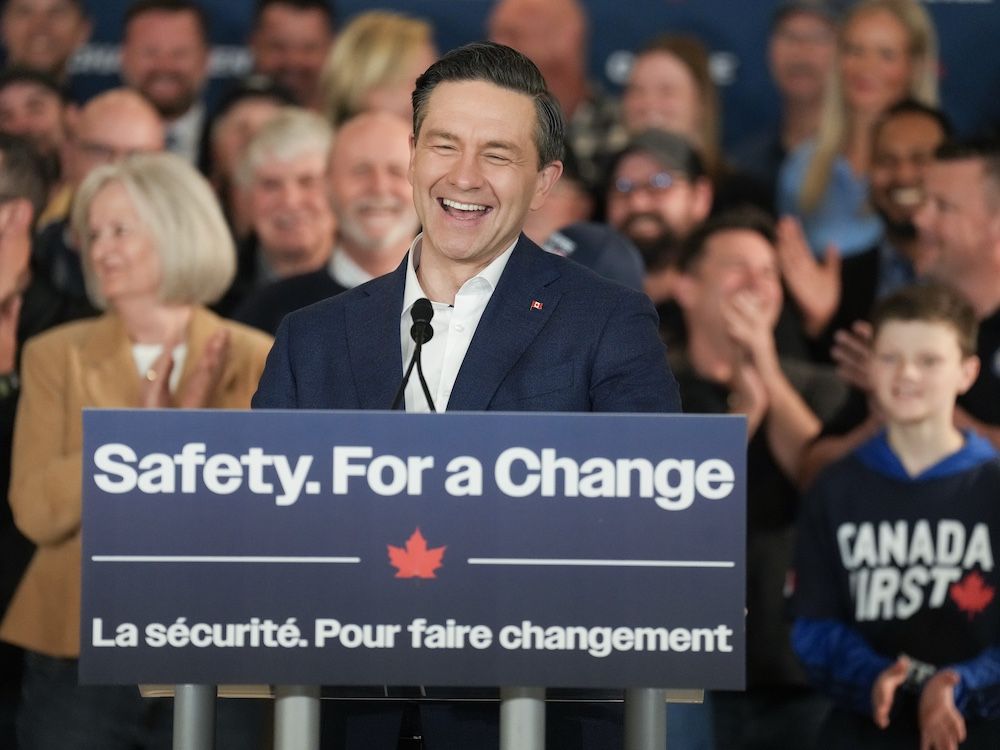
Conservative Leader Pierre Poilievre holds an availability at the Croatian Sports and Community Centre of Hamilton in Stoney Creek, Ont., on Wednesday, April 23, 2025. THE CANADIAN PRESS/Chris Young

The election dust has settled, leaving the Liberals with a minority government. This has led to calls — from both conservatives and progressives — for Pierre Poilievre to step down as Conservative party leader. But these calls are premature, overlook the success of several of Poilievre’s policies — many of which were co-opted by the Liberals in order to win — and severely underestimate the Liberals’ incumbent advantage in the face of an unforeseeable natural disaster that plagued an otherwise normal Canadian election campaign —  U.S. President Donald Trump.

In late December, 45 per cent of voters

polled

by Angus Reid intended to support Poilievre’s Conservatives and their policies while only 16 per cent polled said they’d vote for the Liberals. Angus Reid referred to this as “The Federal Liberals’ New Year’s Eve Nightmare.”  Until this point, Poilievre’s leadership was favoured. And, it turns out under his leadership Conservatives

managed to secure

42 per cent of the seats to 41.3 per cent of the votes. So, what likely happened to that other 3.7 per cent of the vote?

The failure of the Conservatives to form government is a product of a perfect storm — a turn cloak Liberal government switching from publicly mocking Poilievre’s policies to adopting them wholesale without acknowledging from whence they came, and the entrance of a chaos agent, whose tariff threats loomed large in the backdrop of this election, and whose trolling memes were such an offense to Canadian sensibilities that at least some of us appeared to forget why we wanted to vote the Liberals out in the first place.

It turns out one party’s nightmare is another’s winning lottery ticket.

None of this suggests that Poilievre should step down as party leader — quite the opposite — it suggests that he understands what’s important to Canadians so well that his opposition has to copy his ideas.

Yet, this hasn’t stopped critics from suggesting that nothing was, as one former Stephen Harper advisor put it, “

more avoidable”

  than Poilievre’s loss, suggesting that “enough of the electorate recoiled from a man who was unable to make the transition from polemicist to statesman,” and doubted his ability to lead in “one in the most critical moment in Canada’s modern history.”

But Poilievre’s polemics were clearly not a problem in late December, and they

softened noticeably

during the campaign.

It’s also arguable that it was Liberal Leader Mark Carney who ran a highly polemical campaign against Poilievre. Carney pulled out all the stops to link Poilievre, without any evidence, to Trump.

In late March, in front of Rideau Hall, Mark Carney

told Canadians

that this election would be one where they were choosing between “a government that is unifying, standing up for Canada and is taking focused action to build a better economy” or one that promotes “want division and Americanism.” He continued, “That’s what Mr. Poilievre seems to be offering. Just endorsed by the premier of Alberta.”

This was in response to Alberta’s Danielle Smith suggesting that although there would be many disagreements, Conservative leader Pierre Poilievre would be “very much in sync with … the new direction in America” and that the two countries would “have a great relationship,” pointing to issues they’d have in common: “If we do have Pierre as our prime minister, then I think there’s a number of things that we could do together. Pierre believes in development, he believes in low-cost energy, he believes that we need to have low taxes, doesn’t believe in any of the woke stuff that we’ve seen taking over our politics for the last five years.”

Apparently, it would be just horrible if a Canadian Conservative prime minister had many disagreements on some things with U.S. President Donald Trump, but agreed on some other important issues. Isn’t that exactly what Canadians expect Carney will be doing?

Despite the fact it was Smith who made these claims, Poilievre suffered their damage.

Calling Poilievre a “

slick-haired populist with the razor-sharp mind and bunker mentality

,” Globe columnist Lawrence Martin argued that the Conservative leader was caught flat-footed to the Liberals who had been in power for 10 ten years. But of course, he wasn’t. He was caught flat-footed by a party that abandoned even one of their own most beloved policies, including the consumer carbon tax, to win, and by Trump, and those who unfairly accused him of being like Trump.

If roles had been reversed, and Conservatives had been in power for ten years when Trump’s threats began, they, too, would have benefitted from incumbency and the rally-round-the flag effect that the Liberals enjoyed.

The only difference is, of course, because of conservative policies, the country probably would’ve been in much better economic condition when it happened. In contradiction to ten years under the Liberals and a

lost economic decade

, ten years under the Conservatives instead may have resulted in a stronger energy industry in Canada which we could have used to support our neighbours in Europe when they needed our help replacing energy from Russia.

The Liberals’ failure to secure a majority was in part, due to losses in Ontario, likely because they did not adopt

enough

of Poilievre’s policies, specifically, in regards to public safety, crime, and immigration. These are some of the complaints Liberal MPs heard while canvassing lost ridings such as Vaughan-Woodbridge and

Markham—Unionville. Abacus Data pollster David Coletto suggested that crime (especially car theft) likely played a “subtle but effective role” in flipping York region to Conservatives. This suggests that in these and other Ontario ridings that flipped, Mark Carney wasn’t enough like Pierre Poilievre.

It seems strange to suggest that Pierre Poilievre should step down as leader when his policies actually worked for the Liberals and would have likely secured them a majority if only they’d taken more of them on. I see no evidence that any non-incumbent leader would have been able to withstand the Trump chaos factor which the Liberals leaned into. Poilievre should proudly stay on as party leader and fight the Liberals tooth and nail on their blatant hypocrisy. He should just do it with the confidence and subdued tone of Canada’s next prime minister. After all, Canadians may soon have buyer’s remorse.

tnewman@postmedia.com

X:

@TLNewmanMTL


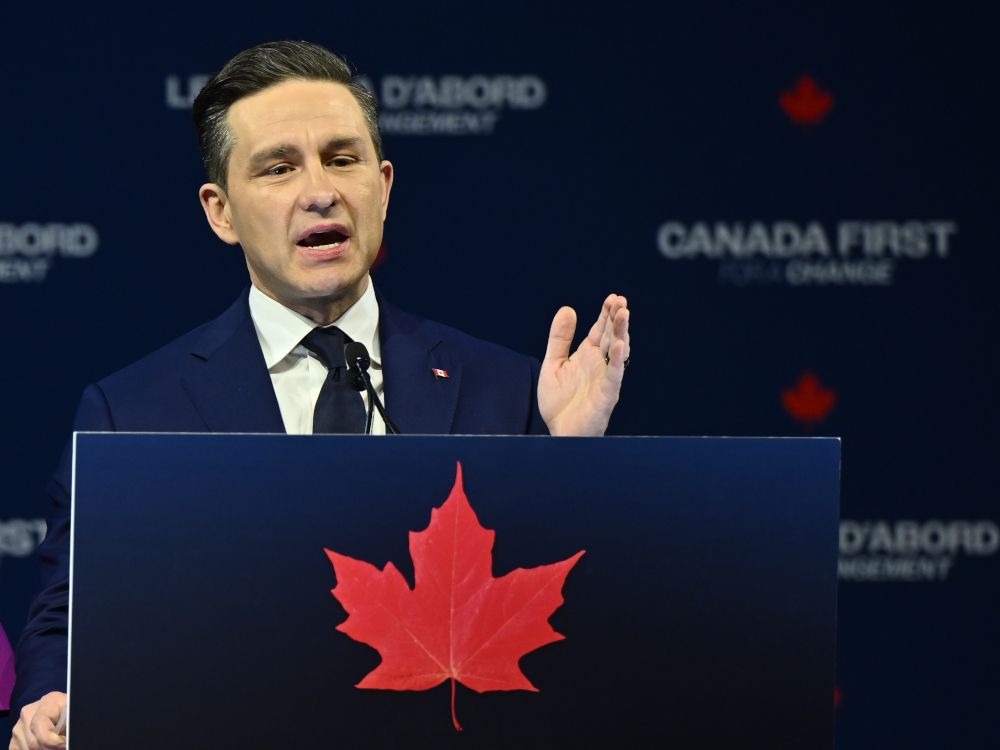
Conservative Leader Pierre Poilievre

The big election surprise was that the Conservatives can do so well and still lose. Leader Pierre Poilievre created a new Tory coalition, sweeping up working-class NDPers and anti-establishment People’s party voters, as Brian Lilley discusses with Tasha Kheiriddin and Stuart Thomson from Postmedia’s Political Hack newsletter. But Poilievre now needs even more to beat the Liberals — which means building bridges with moderate conservatives he’s shunned. That likely includes people in the laptop class, like those in Carleton who voted him out of his long-held seat, and provincial Tories (even the antagonistic Doug Ford). The panel also considers who’ll lead the NDP now; why U.S. President Donald Trump’s warming to Prime Minister Mark Carney; and whether Carney will ever get warm with the West. (Recorded May 2, 2025.)


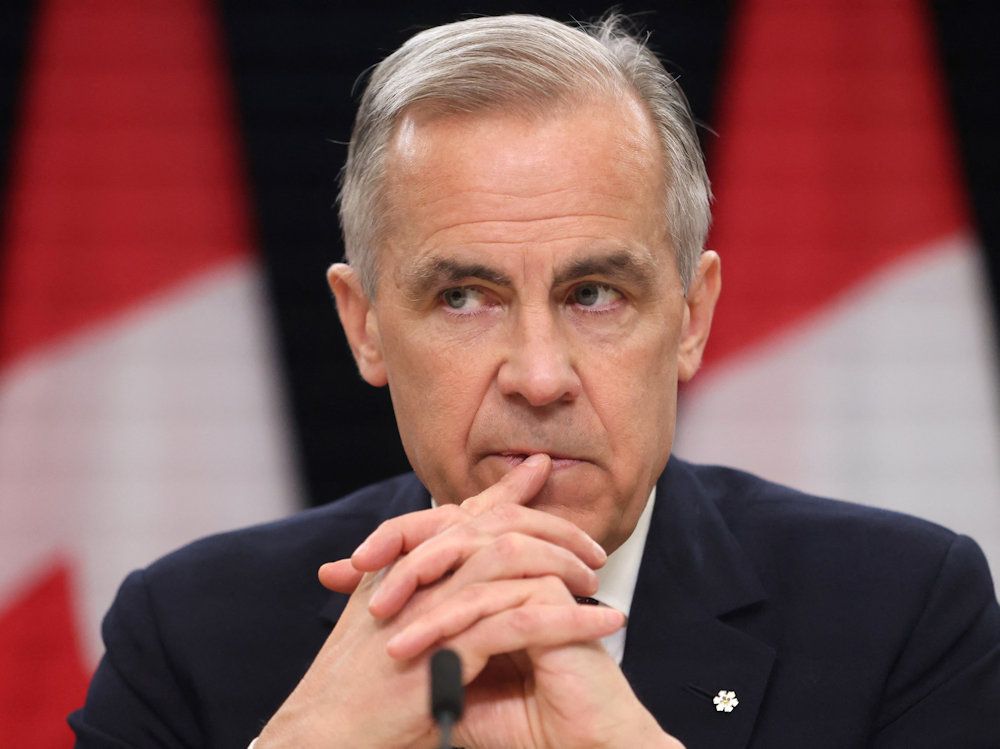
Prime Minister Mark Carney speaks at a press conference in Ottawa, Ontario, on May 2, 2025.

First Reading is a Canadian politics newsletter curated by the National Post’s own Tristin Hopper. To get an early version sent directly to your inbox, sign up here.

TOP STORY

The immigrant vote, long considered a reliable vote store for the Liberal Party, is quickly emerging as an important factor in having denied Prime Minister Mark Carney his expected majority.

Not only did immigrants break for the Tories in any number of pre-election polls, but immigrant-heavy ridings were the most likely to see their share of the Conservative vote increase as compared to 2021.

An analysis

published Thursday

by The Economist found that among the 31 Toronto-area ridings whose population was at least 40 per cent immigrants, almost all of them experienced a shift to the Conservatives as compared to the 2021 federal election.

The reverse was true in ridings where the Liberals picked up support. The fewer new Canadians in a riding, the more likely they were to flip red.

The Economist concluded that while Canada’s 2025 election yielded effectively the same result as in 2021, underneath the surface the country had undergone an electoral realignment similar to what’s occurred in the United States. “Just as in the United States, working-class and immigrant voters swung right,” wrote the publication.

“The immigrant community of Canada just blocked the Liberals from forming a majority,” declared Angelo Isidorou, executive director of the B.C. Conservative Party, in a post-election assessment.

“These new Canadians share our conservative values of hard work and the Canadian dream.”

The B.C. Conservatives experienced a similar phenomenon in their own election in October. Although they lost to the B.C. NDP, the party

saw its most dramatic gains in the immigrant-heavy suburbs

of Metro Vancouver.

Mainstreet Research polls leading up to the Oct. 19 vote also found that the B.C. Conservatives were conspicuously preferred by non-white voters, be they Black, East Asian, Latino, Middle Eastern or South Asian.

This trend wasn’t as noticeable in Monday’s federal election, as the Liberals were able to capitalize on a wholesale collapse in NDP support and head off Conservative gains.

But the trend was there: A

comprehensive map

of 2025 Liberal-Conservative vote shifts making the rounds on reddit on Thursday showed that the more immigrant and non-white a Vancouver riding, the harder their shift to the Conservatives.

One of the few Canadian ridings to flip from Liberal to Conservative on Monday, in fact, was the majority Chinese-Canadian riding of Richmond Centre—Marpole.

In the final week of the campaign, a survey by Innovative Research Group had noted that B.C.’s Chinese-Canadians had been emerging as

far more Conservative than average

, with this support almost entirely concentrated among first-generation immigrants.

Among Chinese-Canadians who had immigrated to Canada since 2011, Conservative support stood at an overwhelming 65 per cent. This was compared to just 18 per cent of Canadian-born Chinese-Canadians.

Conversely, the B.C. capital of Victoria has

long charted rates of ethnic diversity and new immigration

that were well below the national average. On Monday, the city ended up posting some of the most dramatic vote shifts to the Liberals in the country.

The 2025 election also saw a noticeable shift among younger voters, with a plurality of Canadians under 34 supporting the Conservatives.

A post-election Nanos poll concluded that 41 per cent of Canadians under 34 voted Conservative, against 32 per cent who voted Liberal. Among the over-55 cohort, meanwhile, the Liberals dominated at 52 per cent to the Conservatives’ 34 per cent.

The 2025 election thus represents one of the few times in Canadian history where the average 25-year-old was more likely to vote Conservative than the average 65-year-old — and where the average immigrant was more likely to vote Conservative than the average native-born Canadian.

As to why both groups are shifting right at the same time, one explanation is that both have been disproportionately vulnerable to the decline in living standards that has defined Canada’s last 10 years, particularly in the area of housing affordability.

Increasingly unaffordable homes have not only shut out young people from real estate ownership, but large numbers of new Canadians.

A July 2024 poll published by the Angus Reid Institute found that recent immigrants were some of the most likely to report being overwhelmed by high shelter costs. “Many recent immigrants are departing the country because of the high cost of living, and especially housing,” read an accompanying analysis.

A Leger poll from that same year found that 84 per cent of recent immigrants to Canada

reported that they found life “more expensive”

than they’d anticipated.

New Canadians have also started to emerge as prominent opponents of some of Canada’s more liberal social policies, including harm reduction, repeat bail for chronic offenders and even

lax integration of other immigrants

.

This was highlighted by Abacus Data’s David Coletto in a comprehensive Friday breakdown of how the election fared in the Toronto suburbs, where Coletto concluded that — even in the face of a nationwide Liberal upsurge — Conservatives “maintained their base and grew it.”

Coletto

pointed to large populations

of South Asian and Chinese Canadian voters in the suburbs bordering the City of Toronto and said they jibed with the “cultural conversatism” represented by the Tories.

“They value family, faith, entrepreneurship, and community order,” wrote Coletto. “For many, the Liberals’ progressive stances on gender, parental rights, and criminal justice reform felt out of touch.”


IN OTHER NEWS

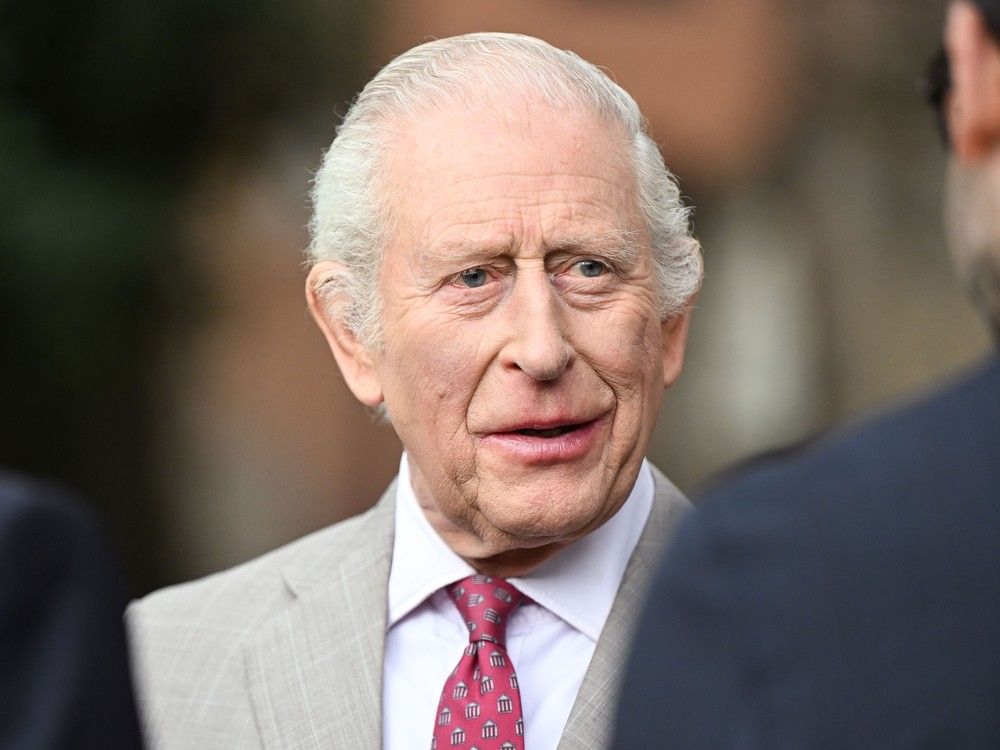
The King is coming to Canada. Although King Charles III has been our head of state for more than two and a half years at this point, he hasn’t yet made a trip to Canada, which is somewhat understandable given that he was diagnosed with cancer early last year. But Prime Minister Mark Carney, who spent a lot of time with the King while governor of the Bank of England,

appears to have convinced him

to read the speech from the throne when Parliament reconvenes on May 27.

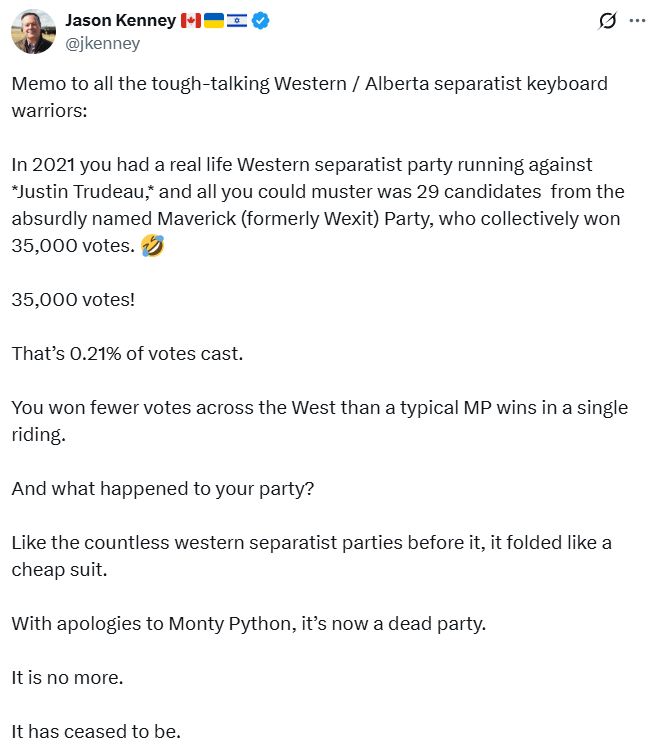
 Former Alberta premier Jason Kenney was careful to stay out of the public eye for the first year or so after being forced out of his position by his own United Conservative Party. But he’s recently been much more vocal about his opinions, including this blistering social media rant against the Alberta separatist movement.

Ujjal Dosanjh is one of the only Canadians who might be able to empathize with what just happened to NDP Leader Jagmeet Singh. In 2000, Dosanjh was leader of the B.C. NDP when it suffered one of the most lopsided defeats in Canadian history, going from a majority government to just two seats. But Dosanjh, who also served as minister of health under then prime minister Paul Martin, didn’t mention any of that in a

recent blog post

. Instead, he welcomed the new government of Mark Carney, said he trusted him on fiscal issues, but warned the Liberals to be more diligent about requiring new immigrants to assimilate. “We need immigrants but not the kind that tell us to bend to their whims, religious or otherwise,” he wrote. “I hope Mr. Carney doesn’t believe one can come to Canada and not change even a bit and be in Canada ‘who you were where ever you were.’”

 The man on the left is Damien Kurek, and he is no longer the Conservative MP for Battle River—Crowfoot after stepping down to make way for Conservative Leader Pierre Poilievre, who failed to win his Ottawa-area riding on Monday. Poilievre won’t be taking any chances with his new seat; Battle River—Crowfoot is one of the safest seats for any party in the history of Confederation. On Monday, the rural Alberta riding went for the Conservatives by a staggering 81.8 per cent.

Get all of these insights and more into your inbox by signing up for the First Reading newsletter here.


Philippe Lagassé says Prime Minister Mark Carney should be applauded for inviting King Charles III to delivery his throne speech.

King Charles III will be giving the Speech from the Throne to open Canada’s 45th Parliament. Prime Minister Mark Carney should be applauded for inviting the King to do so.

Canada’s existence has been called into question by the president of the United States. Having the Sovereign, the personification of the Canadian state, open the federal legislature sends a message: ours is a country of institutions that date back a thousand years, inherited from the United Kingdom but shaped by our unique history and aspirations.

We will not abandon them for American statehood, especially when the United States’ much vaunted constitution of “checks and balances” is abjectly failing. Indeed, our system — with its hereditary head of state, appointed head of government, and executive branch that must hold the confidence of elected legislators — has never looked so good.

Having the King open Parliament can help Canadians better understand and appreciate their system of government. Lack of trust in institutions is a dangerous trend, one we must address if we want Canada to be stronger and more unified in the face of economic coercion and growing threats to our security. A first step toward building trust in institutions is sparking genuine interest in them.

Monarchy is good at that. Love it or hate it, royalty gets people talking and asking questions. Seeing the Sovereign read a throne speech will stir curiosity about our constitution and how it evolved. Canadians love to talk about the Charter of Rights and Freedoms, but there’s a lot more to our constitution than that, and we would do well to elevate those other parts, notably those aspects of the Constitution Act 1867 that determine how we are governed and manage foreign affairs.

The Crown, in the late political scientist David E. Smith’s words, is the first principle of Canadian government: the more you grasp it, the more knowledgeable you are about our parliamentary democracy and cabinet government. Most of the constitutional events we’ve seen in recent months, including the prorogation of Parliament and the appointment of a prime minister who wasn’t a parliamentarian, are directly connected to the Crown’s powers.

Canadians will also need to muster an energetic, positive patriotism to stay united and build a resilient country. This will involve reclaiming our shared history, acknowledging our faults, but celebrating our accomplishments above all.

 King Charles III holds an audience with the Prime Minister of Canada Mark Carney at Buckingham Palace on March 17, 2025 in London, England.

The Crown is a key part of our national story. Canada would not be Canada without King George III’s Royal Proclamation of 1763, which recognized the rights of Indigenous peoples and laid the foundation of the treaties that the Crown would sign with them. Canada was confederated as a Dominion of the Crown of the United Kingdom of Great Britain and Ireland in 1867.

We subsequently leveraged the Crown to achieve our autonomy and independence. The Statute of Westminster 1931 effectively divided the Crown, such that the Crown of Canada became separate and distinct from its British counterpart. Canada’s standing as a de facto sovereign state was then cemented on Sept. 10, 1939, when King George VI declared war for Canada on the advice of his Canadian government, seven days after it was declared for the United Kingdom. Canada then achieved full independence and sovereignty when Queen Elizabeth II proclaimed the Constitution Act 1982 into force on Parliament Hill in 1982.

Not everyone is thrilled that the King will be giving the throne speech, of course. Having loudly complained that the King was not doing enough for Canada a few months ago, the Crown’s critics are now upset that the monarch is showing up. Perhaps they could pick a lane.

The Bloc Québécois and Parti Québécois are annoyed, too. Considering that Bloc leader Yves-François Blanchet recently called Canada an “artificial country with very little meaning” and stated that he’s a member of a foreign legislature, he may not be the best judge of the monarch’s role and importance.

Other naysayers will argue that the “King of England” has no business opening the Canadian Parliament. It’s true that we share our monarch with the United Kingdom and that the British Parliament decides our laws of royal succession. We haven’t been as forceful as our Australian and New Zealand cousins in asserting full control of our Crown in that respect.

Yet when he gives the throne speech, speaking in both official languages, Charles III will be doing so as the King of Canada, an office that is fully separate and distinct from its British counterpart. His presence will reflect a fundamental truth about the country we will be defending this 45th Parliament: we are a state of many nations united by institutions that reflect historic compromises. The Crown and Parliament capture this reality perfectly, and the King-in-Parliament even more so.

Philippe Lagassé is an associate professor and Barton Chair at Carleton University.


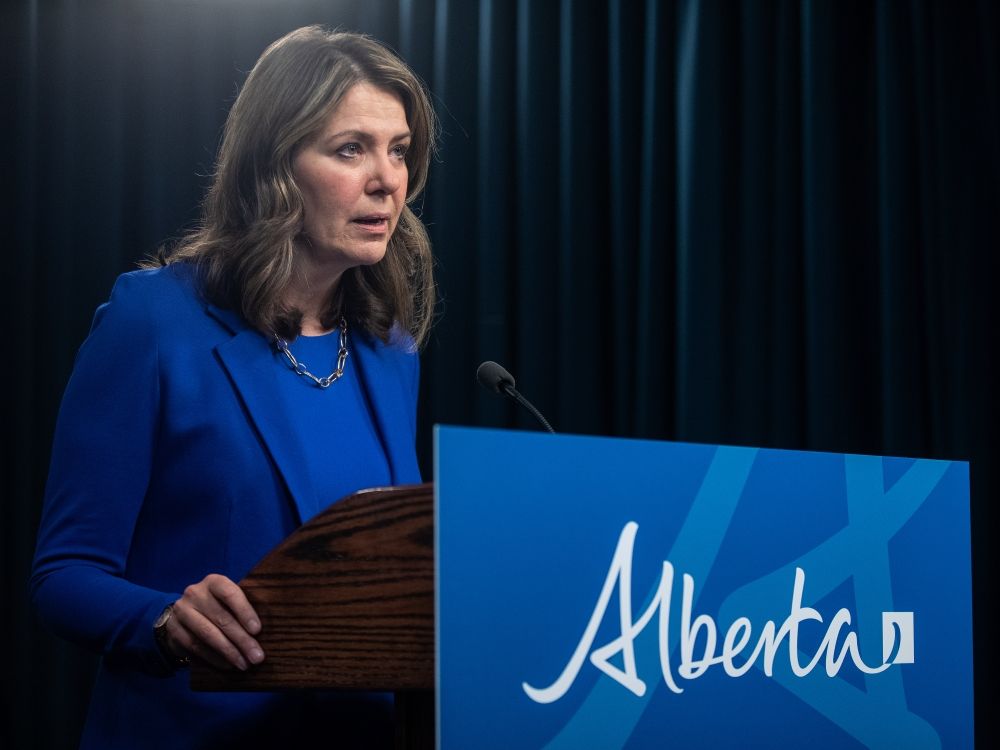
Alberta Premier Danielle Smith announces proposed changes to several pieces of democratic process legislation, in Edmonton on Tuesday April 29, 2025.

If more provinces stood up for themselves when the feds started encroaching, we’d be a lot better off as a country. That in mind, it was good to see Alberta announce on Thursday that it would be

challenging

the federal Clean Electricity Regulations, which became law in December.

The

new rules

aim to net-zeroify the entire Canadian grid by 2050, banning carbon emissions by new units with at least 25 MW of electrical generation capacity over a preset “technology-neutral annual emissions limit” by 2035; the ban will also cover existing units by 2050 at the latest. It’s

expected

to cost the country $40 billion from now until 2050 — and it’s justified because magic math in Ottawa pegs the benefits to society in that time will be worth $55 billion.

Aside from spelling disaster in Alberta (and other provinces, to a lesser extent), there’s a pesky little document that could stand in its way: the Constitution. In 1867, it was

decided

that legislating on the “development, conservation and management of sites and facilities … for the generation and production of electrical energy” was exclusively the job of provincial legislatures.

On that basis alone, the Clean Electricity Regulations should have set off alarm bells in premiers’ offices across the country. Premier Danielle Smith saw that plain and clear.

“Section 92 of the Constitution … enumerates our exclusive jurisdiction,” she said Thursday, speaking at a news conference. “That’s the word (used) in the Constitution: ‘exclusive’ jurisdiction over resource development and the development of electricity — and there’s a reason for that. It’s because every province has different endowments and different abilities to generate electricity. That is why it has been assigned to the provinces to make these decisions.”

Like Smith, the feds are well aware that Alberta is a fossil-fuel rich province that relies on natural gas for most of its power and does not have an abundance of dammable rivers. This was explained in the regulatory impact analysis

statement

that was released alongside the official, final version of the Clean Electricity Regulations.

“Notably, Alberta, Saskatchewan, Nova Scotia, and to some extent, New Brunswick and Ontario, rely more on unabated emitting generation than the national average. Accordingly, these provinces are expected to experience the biggest shift in generation sources as a result of the Regulations.” In other words, “You guys better get ready to lay out a whole lot of solar panels.”

As for who will feel the most pain, take a wild guess: “Ontario and Alberta are modelled to take on nearly 70 per cent of the total costs net of cost-savings accounted for in the (cost benefit analysis), largely driven by incremental capital costs for new electricity system capacity.”

Before the regulations were finalized, Alberta did its best to

express

concerns with the real-life effects of the proposed framework. For example, the draft regulations proposed to cap power generation at peaker plants, which run at peak times to ensure blackouts don’t happen, at 450 hours per year, which would limit these facilities to using only five per cent of their capacity. Alberta protested, and the time limits were removed — but even so, the

other provisions

of the regulations will cap these facilities to operating at a maximum of 20 per cent capacity. In the end, it means Ottawa is still strangling the provinces’ ability to manage their grids at peak times.

For another example, look at how the regulations treat emergency management. The first draft actually required the federal government to sign off on allowing exemptions to the rules in cases of local emergency — which exposed anyone who needed to break the rules to the risk of jail. Alberta objected, and now the final rules allow emissions in emergency circumstances (which must meet federal criteria) to be exempt from the overall emissions cap for 30 days (extensions would be allowed, but only with federal approval) — with an added requirement that any use of this provision must come with a detailed justification.

So, instead of getting rid of this leash that limited a province’s emergency response, Ottawa merely lengthened it while trudging into the zone of provincial emergency management. And criminal penalties for those who step outside the federally drawn lines are

still on the table

.

“We have zero large-scale natural gas plants being proposed,” Smith told the news conference. “That tells me something about the level of uncertainty that natural gas plants have, because remember, this is written as (a) criminal violation if you do not meet the target by 2035.”

“What CEO is going to, by 2035, building with today’s technology, be able to guarantee a 95 per cent abatement on their CO2 within 10 years, with technology that doesn’t exist, on the risk of going to jail? I’m going to tell you there are zero,” she added.

It’s unclear how this will go in the courts. The feds will no doubt point to the top court’s 2021

ruling

on greenhouse gas pricing, which opened up new bubbles of federal jurisdiction within what was otherwise provincial domain if the intent was to reduce greenhouse gas emissions. A majority of the court figured that climate change was such a dire and existential threat that it was entitled to greenlight one very specific policy tool to deal with it: former prime minister Justin Trudeau’s carbon tax.

In reality, climate change turned out to be not as cataclysmic as originally thought, because the Liberals set the carbon tax to zero in March.

Meanwhile, it’s also been demonstrated that playing the environment card doesn’t always work. Major provisions in the federal government’s overzealous Impact Assessment Act were declared unconstitutional after a different court challenge by Alberta; the law cast its net so wide that it unlawfully pulled provincial projects into the onerous federal review process. (This law has since been revised, but unsatisfactorily, so it’s off to the courts again).

Smith is doing the right thing by fighting out these incursions in court. Just like how lawns need to be edged, the naturally expanding bureaucratic hulk of federal jurisdiction needs to be checked. If Alberta ends up winning — and it’s very possible it does — it would be a victory for not just the province’s grid, but for every province that believes in preserving the Constitution’s division of powers.

National Post


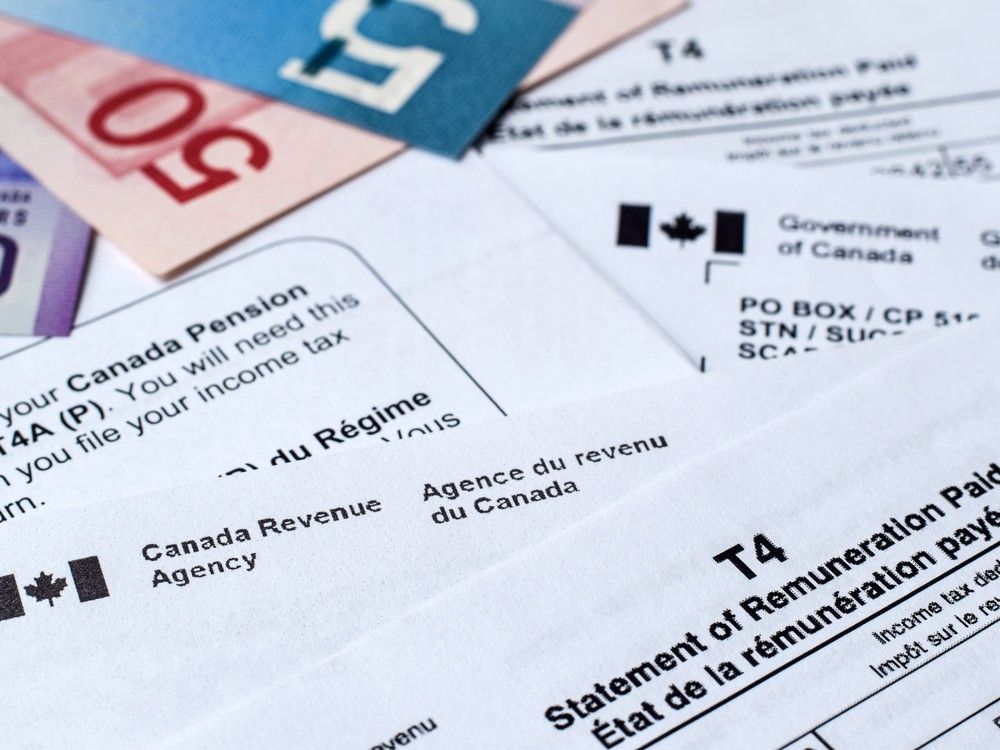
Canada Revenue Agency income tax forms and statements to prepare taxes. Getty Images

I

recently noted

that even struggling New Mexico, the only U.S. state to end the last four decades less economically free than it began, is still more prosperous than most Canadian provinces. That’s largely a result of Canada

losing ground in terms of wealth

relative to its southern neighbor after decades of hand-in-hand growth. But Canada’s provinces outstrip almost all states in at least one area.

Unfortunately, that area is the tax burden that provincial and state governments inflict on residents.

In a

report published last month

, the Fraser Institute’s Tegan Hill and Nathaniel Li point out that, until a decade ago, Alberta offered the lowest combined federal and provincial/state personal income tax rate on the North American continent. “Paired with no provincial sales tax, the ‘Alberta Tax Advantage’ made the province an incredibly attractive place to start a business, work, and invest,” they write.

But Albertans’ taxes went up in 2015. At 48 per cent, Alberta now has the tenth-highest top personal income tax (PIT) rate in Canada and the U.S. While lower than every other province but Saskatchewan, this is higher than peer energy-producing U.S. states that compete for workers and investors. Worse, Alberta imposed its top rate at a relatively low anything over $355,845 (CAD) in 2024. “By comparison, the

top rate in competing U.S. jurisdictions

applies at $834,688 (CAD).” Among Canada’s provinces, only Newfoundland and Labrador imposes its top combined rate at a higher threshold — $1,103,478 (CAD) — than any state.

Among U.S. states, California’s combined top personal income tax rate is the highest — though lower than that of every province but Alberta and Saskatchewan. Hawaii is tied with Alberta. Notably, Alaska, Texas, and Wyoming, among energy-rich jurisdictions, don’t tax personal income at all.

It’s not just the top marginal rate paid by the wealthiest that stings so sharply.

“An Albertan with $50,000 in annual taxable income, for instance, faces a combined marginal tax rate of 25.00 per cent, while the combined rate in select U.S. jurisdictions ranges from 12.00 to 16.90 per cent, a gap of between 8.10 to 13.00 percentage points,” write Hill and Li. “The gap becomes smaller, but continues to exist at $75,000 and $100,000, ranging between 3.38 and 8.50 percentage points.”

And, while Saskatchewan has the lowest combined top personal income tax rate in Canada, it taxes lower incomes a bit more heavily than Alberta.

When it comes to top combined federal and provincial/state capital gains tax rates, California has the highest tax burden in North America. But eight Canadian provinces rank immediately after California in their capital gains tax burdens. Saskatchewan, at 18, ranks one slot better than Alberta. But once again, the top rate applies at a lower threshold — $250,000 for Saskatchewan and the portion over $355,845 for Alberta — compared to CAD $710,789 for U.S. jurisdictions.

In terms of combined federal and provincial/state sales taxes, the nine most heavily taxed jurisdictions are all Canadian provinces. Alberta, to its credit, still has no provincial sales tax, only a federal levy, which puts it close to the other end of the rankings. “Alaska is the only energy jurisdiction that has a lower sales tax (1.82 per cent) than Alberta. Four U.S. states — Montana, New Hampshire, Oregon, and Delaware — have no sales tax (federal, state, or local),” note Hill and Li.

It’s more of a mixed bag when it comes to combined corporate income tax rates which are “one of the most economically damaging types of taxes because they reduce returns from business investment, which stifles innovation, lowers wages, impacts job creation, and lowers overall economic growth,” according to Hill and Li. The most heavily taxed jurisdictions include both states and provinces. Alberta, which once had the lowest corporate income tax rate, still comes in at a respectable seventh lowest between Canada and the U.S. — far better ranked than also energy-rich Alaska, but more highly taxed than Wyoming, Texas, and South Dakota.

Taxes fund government services. But they do so by reducing the return on people’s labour and investments, and there’s always disagreement about how much government people want. High taxes can deter entrepreneurs from starting and growing businesses. They can even drive people away.

Last year, a 

paper

  published in the American Economic Journal: Economic Policy looked at the adoption of income taxes by U.S. states from 1900 to 2010. While governments increased their revenues, they didn’t collect as much as they expected. That’s because, as 

summarized

 by the University of California-Riverside, “the introduction of income tax in the post-World War II era led to out-migration by wealthy Americans.” That is, people with means moved from high-tax states to lower-tax ones.

Co-author Ugo Antonio Troiano warned politicians pushing for changes in tax policies that “raising taxes too much might backfire, as the state might lose too many relatively wealthy contributors.”

The ability of taxes to repel people has only increased as it’s become easier and more affordable (

and politically attractive

) to move. In January of this year, Katherine Loughead of the Tax Foundation examined data from the U.S. Census Bureau, U-Haul, and United Van Lines. She found that “Americans are continuing to leave high-tax, high-cost-of-living states in favor of lower-tax, lower-cost alternatives.”

“Of the 26 states whose overall state and local tax burdens per capita were below the national average in 2022 (the most recent year of data available), 18 experienced net inbound interstate migration in FY 2024,”

observed

Loughead. “Meanwhile, of the 25 states and DC with tax burdens per capita at or above the national average, 17 of those jurisdictions experienced net outbound domestic migration.”

That doesn’t mean that everybody is going to end up in Texas, even if it

sometimes seems that way

. For one thing, it’s more difficult for people to cross national borders than it is for them to move from one state or province to another. And pulling up a life to restart someplace else is always a challenge.

But many people remain very mobile, especially in the energy industry, which often requires a willingness to relocate. Plus, investment flows where it gets the highest returns, with borders of any sort offering little resistance. That means Alberta and Saskatchewan are poised to benefit when competing with other provinces for productive Canadians. But all of Canada’s provinces are currently at a disadvantage when they’re competing with U.S. states for investors and entrepreneurs.

We could all benefit from less of a bite by the tax man. That’s even more true of Canada than of the U.S.

National Post


Prime Minister Mark Carney gives his victory speech at TD Place in Ottawa the evening of the federal election, April 28, 2025. Columnist Fr. Raymond J. de Souza says the speech was strange but pleasantly surprising.

During the federal election campaign I

wrote

that the “politics of humiliation” had become toxic to Canadians in the Trumpian era. Election night then delivered some humbling, and a call for humility — both of which are different from humiliation.

The humbling was personal for Pierre Poilievre, who lost his own riding. The NDP collapse fuelled a Liberal surge. Poilievre’s riding is immediately north of mine; the incumbent Conservative here, Michael Barrett, held off an astonishing 19-point Liberal gain by holding his vote from last time (50 per cent). Poilievre would have squeaked through had he held his vote, but the most famous Conservative in the country lost six points from 2021, in a riding where voters had known him for 20 years.

It is an opportunity, even if unwelcome, for humility. I have crossed paths with Poilievre since the early 2000s and have found him gracious and engaging. He can be humble. Yet the campaign was curiously centred on the man himself. Why the all-Pierre-all-the-time approach — including emblazoning his name on the campaign plane — when he consistently polled worse than his party did? As he charts out a return to Parliament and a future election campaign, the lesson ought to be that less Pierre is more.

Prime Minister Mark Carney delivered what surely must be the strangest — in a pleasantly surprising way —

victory speech

in memory. While Poilievre was defiant in defeat, Carney began by telling his excited partisans that they might wish to hold off their cheers until “after this next section, because I am going to begin with the value of humility, and by admitting that I have much to be humble about.”

They cheered anyway; they would have cheered if he had read a take-out menu. So he told them, again: “It’s not an applause line, it’s just a statement of fact.”

“Over my long career, I have made many mistakes, and I will make more, but I commit to admitting them openly, to correcting them quickly, and always learning from them,” he said.

As an aside, admitting mistakes would be welcome from the CBC. On

election night

, Rosemary Barton “reminded viewers” that four consecutive election victories was “incredibly rare in Canadian politics.”

It is not. Since 1887, when Sir Wilfrid Laurier became Liberal leader,

every single Liberal leader

has been part of four consecutive election victories, save for John Turner, Stéphane Dion and Michael Ignatieff. Twice the Liberals put five straight victories together.

Put another way, over 138 years, the Liberals have only been led for 11 years by leaders who were not part of a four-straight string. What Carney achieved is impressive, but it is what Liberals simply do.

Back to humility. Carney seems to be proposing — time will tell how sincerely and effectively — virtue as an approach to governance. His election was due in large part to not being Justin Trudeau, the great woke narcissist, and not being Donald Trump, the great anti-woke narcissist.

Narcissism is not a partisan affliction — they come in all political flavours, from Italy’s Silvio Berlusconi to Great Britain’s Boris Johnson to France’s Emmanuel Macron. Forty years ago there were genuine giants in global leadership; today we have lesser men who think that they are greater. It is a cultural illness which makes for bad politics. Perhaps Carney sees that.

There is a danger in political leaders speaking about virtues. The charge of hypocrisy always lurks nearby. Nevertheless Carney charged on with his victory-speech-cum-moral-philosophy-instruction.

“We see kindness as a virtue, not as a weakness,” he said. He recalled meeting two women in Gander who hosted stranded passengers on 9/11, and who showed him a thank you card from a young girl which read, “Your kindness motivates me to use my kindness.”

“Virtue is like a muscle that grows with its exercise,” Carney said, in about as brief as summary of Aristotelian-Thomistic ethics as can be imagined at a political rally. “We become just by doing just acts; brave by doing brave acts. When we are kind, kindness grows.”

It is true. We cannot simply wish to be honest. We possess the virtue — the good habit — of honesty only by being honest until it becomes habitual. Likewise, repeatedly telling untruths establishes the opposite vice, a dishonest character. Politicians of all stripes face that challenge on a daily basis.

Carney must tread carefully. His predecessor exasperated Canadians by lecturing them, denigrating those who disagreed as being of lesser value. He virtue-signalled but did not possess the actual virtue. There is a safeguard that will protect Carney from such a fate: humility.

It goes for Poilievre too, who, now humbled, may be better able to persuade Canadians to accept what he has to offer, which is considerable.

National Post