LP_468x60
on-the-record-468x60-white

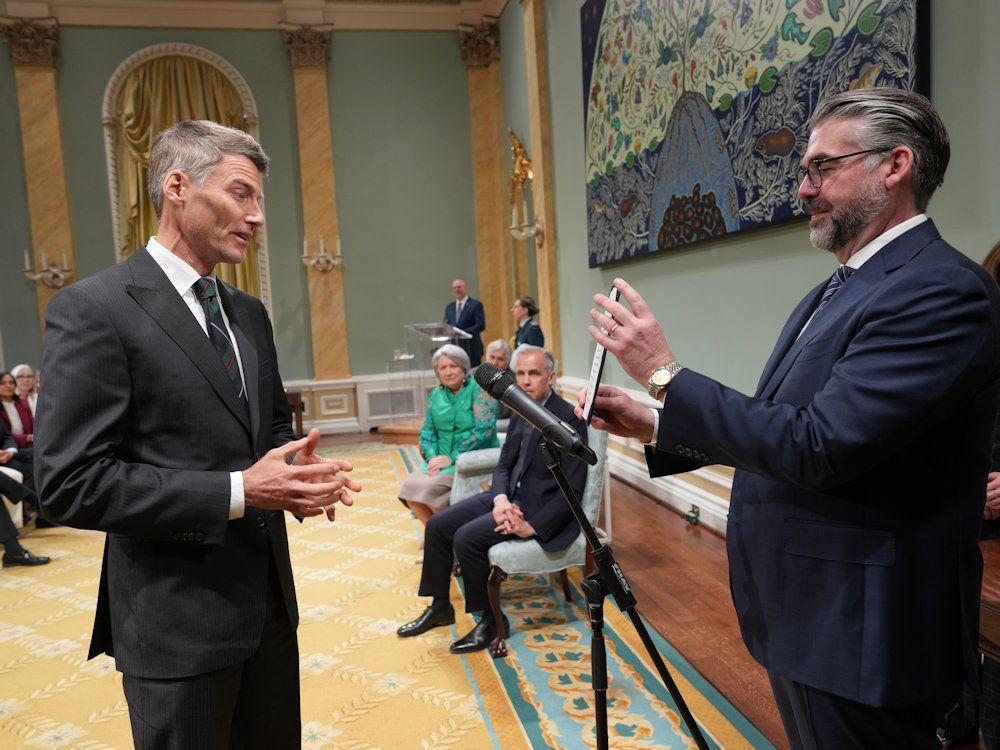
Gregor Robertson, Minister of Housing and Infrastructure and Minister responsible for Pacific Economic Development Canada, takes part in the cabinet swearing-in ceremony at Rideau Hall in Ottawa on Tuesday, May 13, 2025.

First Reading is a Canadian politics newsletter curated by the National Post’s own Tristin Hopper. To get an early version sent directly to your inbox, sign up here.

TOP STORY

When Gregor Robertson first became Vancouver mayor in 2008, he promised affordable housing, fewer drug overdoses, lower crime and a total end to homelessness by 2015.

All of those problems would become catastrophically worse under his watch. But given that Robertson was just appointed federal housing minister on Tuesday, it’s notable that his most iconic failure was on the issue of housing affordability.

On Robertson’s first day as mayor, the average detached Vancouver home cost the inflation adjusted equivalent of $942,000.

It was the most unaffordable jurisdiction in Canada, but Robertson took the helm of a city in which it was still technically feasible for average Vancouverites to own property.

According to RBC estimates from the time

, the average Vancouver household could still feasibly purchase a townhouse, although it would consume 50 per cent of their income in mortgage costs.

When Robertson left the mayor’s office in 2018, the average cost of a detached house in Vancouver had doubled.

Adjusting for inflation, the benchmark house price on Robertson’s last day was $1.8 million. Across Robertson’s decade-long tenure, the average Vancouver house had surged in price by an average of $84,000 per year, or $230 every 24 hours.

Rents and condo prices had similarly attained record highs, to the point where the City of Vancouver was no longer just the most unaffordable jurisdiction in Canada; it was now one of the most unaffordable cities on earth.

According to a ranking at the time by the California-based Center for Demographics and Policy, Vancouver was now

second only to Hong Kong

in terms of world cities where home ownership was most out of reach for locals.

Shelter costs had become so divorced from local incomes that the mortgage costs of owning just an average home in Vancouver

now represented

87.8 per cent of the typical household income. “It’s increasingly hard to dismiss concerns that housing unaffordability is at crisis levels in Vancouver,” reported RBC at the time.

Robertson had entered office

promising a Vancouver

that would “inspire the world.”

His inaugural speech in December 2008 pledged that in addition to his “audacious” plan to end homelessness, he would “spur the creation of new affordable housing” using everything from zoning reform to tax incentives to “unlock” vacant stock.

“If ever there was a city that can set and reach and exceed courageous goals, it is Vancouver,” said Robertson.

Robertson’s last months, by contrast, were marked by a series of interviews in which he maintained that Vancouver’s cratered unaffordability wasn’t his fault.

“I wouldn’t have dreamed the crisis would get this intense,” he told the U.K.’s The Guardian in 2018, putting the blame on everything from “national governments underinvesting in housing” to “provincial governments not doing enough.”

“The city doesn’t control offshore investment, doesn’t control the real estate industry, doesn’t control what developers can do … we really did have limited tools,” Robertson said

in an outgoing interview

with CBC’s Justin McElroy.

He added, “we recognize this has been a big challenge, but it’s a globally significant perfect storm.”

When defending his record on housing, Robertson usually pointed to subsidized housing programs that had been approved under his tenure. “We are investing $61 million into affordable housing this year — the highest in our history,” he wrote in a 2015 op-ed in The Georgia Straight.

All the while, his administration lagged on addressing many of the prime drivers of the crisis, ranging from zoning constraints to the city’s

sky-high development fees

. The Vancouver Sun would note in 2018 that it wasn’t until Robertson’s

final council meeting as mayor

that the City of Vancouver would

greenlight a basic zoning reform

allowing duplexes to be built in neighbourhoods zoned for single family residential.

“He always knew population growth that was coming — yet everybody acted like this was a surprise,” Vancouver developer Bob Rennie, a onetime supporter of Robertson,

told Postmedia in 2018

.

Perhaps most notably, Robertson had long resisted any notion that Vancouver home prices were being bid up by foreign buyers who were effectively treating the city’s real estate as a financial commodity.

In 2015, urban planning researcher Andy Yan released a groundbreaking case study which analyzed six months’ worth of Vancouver home sales and found that

66 per cent of the buyers

were signing their purchase papers with non-Anglicized Chinese names.

At the time, Robertson was one of several public figures to accuse Yan’s research of being divisive.

“This can’t be about race, it can’t be about dividing people … it needs to get to the core issue about addressing affordability and making sure it’s fair,” the mayor

told CBC in 2015

.

As a Global News profile would note, only three years later Robertson would

be blaming other levels of government

for failing to appropriately curb “offshore investment.”

On Tuesday, a reporter told Prime Minister Mark Carney that his new housing minister had overseen one of the most explosive increases in home prices in the country’s history, and asked whether this was a signal that “you don’t think housing prices should go down.”

Replied Carney, Robertson “brings the type of experience that we need to tackle some aspects of this problem.”


IN OTHER NEWS

Prime Minister Mark Carney obviously had his first post-election cabinet sworn in on Tuesday. Despite signals that his government would be taking a hard tack away from the prior Liberal government, almost all of the key posts are occupied by Trudeau government veterans (albeit in different positions).

This includes …

Sean Fraser, Minister of Justice.

As immigration minister under Trudeau, Fraser oversaw a massive unchecked increase in migration to Canada that peaked at more than a million newcomers per year in 2022 and 2023. In the Trudeau government’s last months, they notably admitted error on the immigration file and sought to reverse many of the increases (albeit under a different immigration minister).

Chrystia Freeland, Minister of Transport.

As finance minister, Freeland championed the wildly unpopular capital gains hike, and oversaw

one of the largest and fastest expansions

of the federal debt in Canadian history. In her last weeks as minister of finance, Freeland would orchestrate an

extremely complicated and contradictory holiday GST break

that economist Mike Moffatt would describe as “probably the worst tax policy in a decade.”

Mélanie Joly, Minister of Industry.

Joly was Trudeau’s last foreign affairs minister, a tenure marked by her frequent mismanagement of Canada’s response to the Israel-Hamas War. This included multiple instances in which she deviated from Canada’s official line on the conflict, such as a statement in which

she called for

“negotiations at a negotiating table” between Israel and Hamas, a group that Canada (and all its peer countries) regard as a terrorist group.

François-Philippe Champagne, Minister of Finance.

As industry minister under Trudeau, Champagne coordinated several multi-billion dollar subsidy packages in order to entice foreign EV-makers to build factories in Ontario and Quebec. Despite claims that the subsidies would pay for themselves within five years, the Parliamentary Budget Officer said

the reality was closer to 20 years

… and that was before many of the subsidy recipients

started running into financial problems

.

Steven Guilbeault, Minister of Canadian Identity and Culture.

Guilbeault was probably

the single most controversial Trudeau cabinet minister

when he served as Minister of Environment. Not only was he the face of the carbon tax, but he championed a ban on gas-powered cars by 2035, was widely criticized for 2024 comments in which he seemed to pledge to stop building new roads, and has been blamed for forestry mismanagement preceding the partial wildfire destruction of Jasper, Alta.

 This AI-generated image obviously isn’t real, and it comes from a Mark Carney parody account. But during the federal election campaign, Liberal candidate Evan Solomon briefly featured it on his X account, apparently in the mistaken belief that the AI image was a real image from Prime Minister Mark Carney. Anyway, Solomon is the Minister of Artificial Intelligence now.

Get all of these insights and more into your inbox by signing up for the First Reading newsletter here.
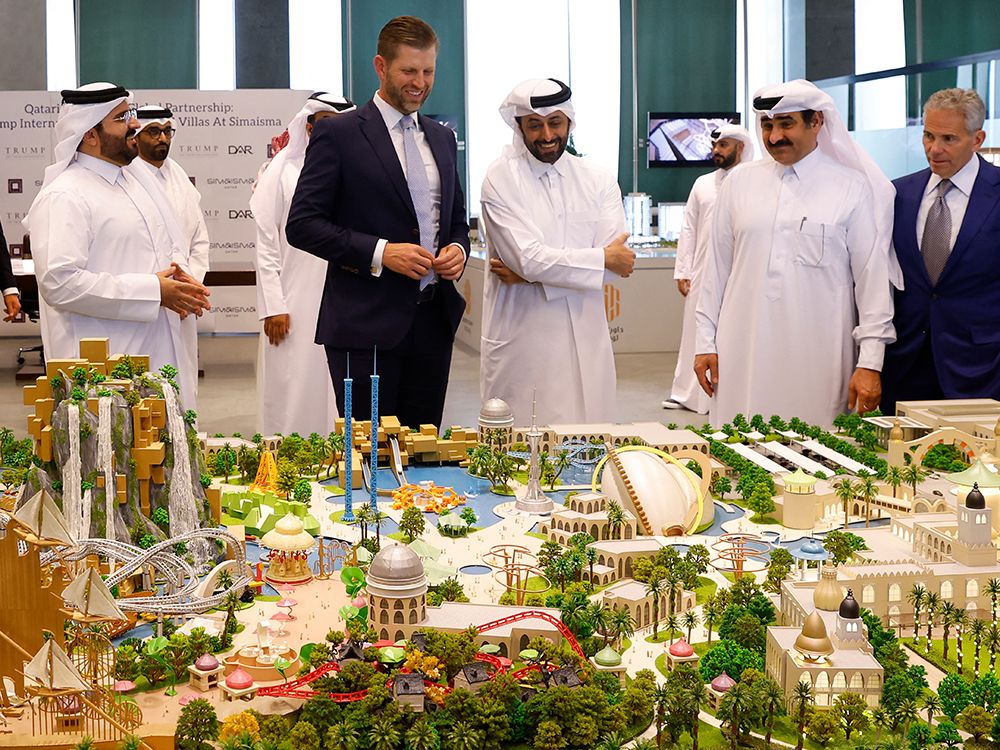
Eric Trump, executive vice-president of the Trump Organization and the son of U.S. President Donald Trump, looks over the plan for a development deal in Qatar that will include an 18-hole Trump International Golf Course and residential villas near the capital of Doha, on April 30, 2025. The golf course and Trump Villas are to be constructed as part of a major government-backed development scheme.

To serve God or mammon? The Sermon on the Mount says to serve both is impossible.

Has U.S. President Donald Trump made his choice this week?

The president is making the first foreign trip of his second term, aside from the overnight trip to Rome for the funeral of Pope Francis. In his first term, his first foreign trip was also to Saudi Arabia.

That choice was a bit of a shock, especially for Canadians. Canada had that privilege. Presidents John F. Kennedy and Lyndon B. Johnson both made their first foreign trips to Canada. Things fell off after that. President Richard Nixon did not visit until the last year of his first term; Gerald Ford and Jimmy Carter never came north.

Canada’s place was then restored. Presidents Ronald Reagan, George H.W. Bush and Bill Clinton all made their first trips to Canada. When George W. Bush went to Mexico first (before visiting Canada on his second trip), it was noted as a significant decision, and a signal that North America as a whole would be the priority. President Barack Obama corrected course in 2009, making Ottawa his first visit.

President Trump in his first term only came to Canada for the G7 summit in Quebec in 2018, at which he insulted our prime minister, invoked national security to justify tariffs, and pleaded for Russian President Vladimir Putin to be readmitted to the G7. Trump will be back next month for the G7 in Alberta. He may not insult our new prime minister, but he will argue national security regarding tariffs and complain again about Putin’s absence.

The decision to make Saudi Arabia the first destination in 2017 took everyone by surprise. It was an ambitious trip, with several stops. Trump flew from Saudi Arabia to Jerusalem and then on to Rome, where he met Pope Francis.

It was something of a grand monotheism tour, visiting the capitals of Islam, Judaism and Christianity all in one long arc, showing something of a religious imagination and diplomatic creativity. When three years later the Abraham Accords — the greatest achievement of the Trump presidencies to date — were concluded, the seeds of that Abrahamic vision could be detected in that first foreign trip.

This time it is different. It’s not Saudi Arabia, Israel and Italy, but Saudi Arabia, Qatar and the United Arab Emirates. And the theme is not God, but very much mammon. The president is cashing in.

After his real estate empire went bankrupt in the 1990s, Trump shifted toward monetizing his celebrity. There were a few building projects, but mostly branding deals, where it was the Trump name that was being bought and sold. Reality television made that a still more lucrative path.

Branding is about selling a name and access. And the president of the United States has a bigger name to sell than most, and access to him can prove lucrative.

The Trump family’s wheeling and dealing is no longer a surprise. Soon after the first Trump term ended, son-in-law Jared Kushner set up an

investment fund

to which Saudi Arabia “invested” $2 billion. The fund has made no investments, but Kushner has made tens of millions in fees. Was it a thank you for the first Trump trip in 2017, or a downpayment for the second Trump trip now? Perhaps both.

The rapacity was utterly shameless, with the Secret Service charged exorbitant rates to stay in Trump properties while protecting the Trump family. The extent was such that entire

books

were compiled on the multifarious schemes.

The current visit to the Gulf was greased by the Trump sons, Donald Jr. and Eric,

signing agreements

in recent weeks for Trump Organization golf courses, towers and even cryptocurrency plays. It was advance planning without precedent. Hundreds of millions are set to flow to the Trump family. Even if such are not legally considered direct bribes, the stench of pay-for-access is overwhelming.

The Qataris, who are expert at deploying their petro-wealth to launder their dubious reputation as a state-funder of terrorism, have no doubt captured Trump’s heart with the offer of a US$400-million gift, a 747-8 airplane that, somehow, is to serve as Air Force One now, and later as the gaudiest bauble at the Trump presidential library. While it remains a mystery how the Qatari royal family jet would meet the security and communications requirements of Air Force One, no doubt it will be decorated in the late-Saddam décor favoured at Trump Tower, Mar-a-Lago and now the Oval Office.

Even some of the most devout MAGA souls, who are inclined to see Trump more than Abraham himself as an instrument of divine providence, are blanching at the brazenness of the Qatari baksheesh.

All of which is a sleazy shame, as this Gulf tour should have been focused on strengthening the Abraham Accords in light of the new, post-October 7 challenges in the region. It is hard, though, to keep your feet on the ground, and your eyes on the prize, when enormous emoluments are filling the sky.

National Post


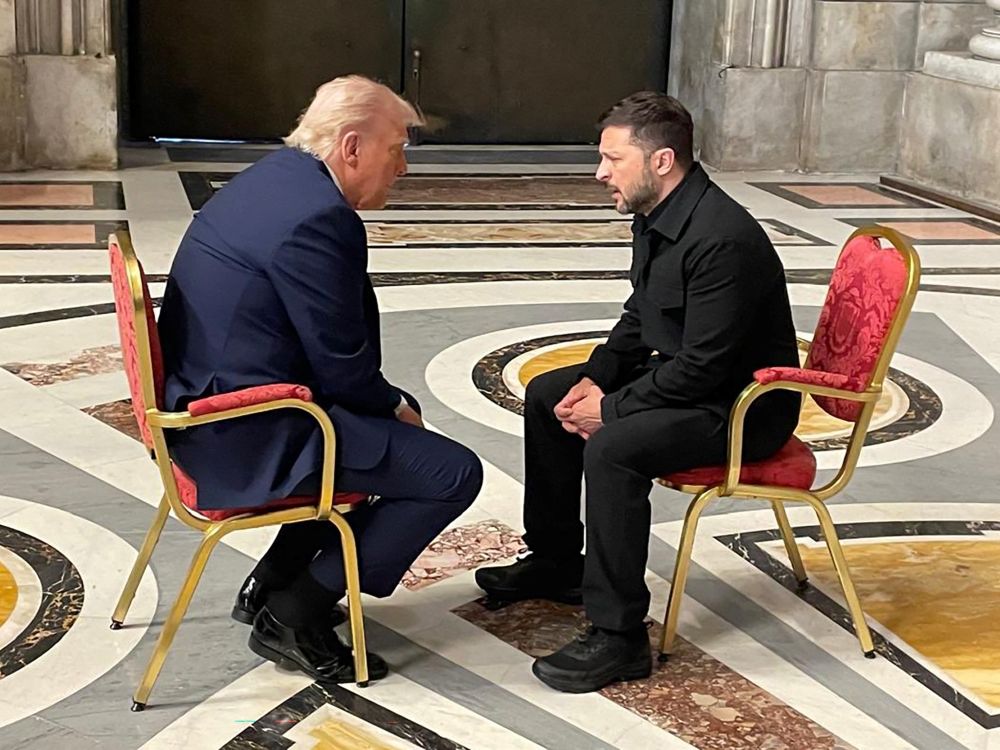
In this handout photograph taken and released by the Ukrainian Foreign Ministry on April 26, 2025, Ukraine's President Volodymyr Zelensky (R) meets with US President Donald Trump (L) on the sidelines of Pope Francis's funeral at St. Peter's Basilica at The Vatican.

Donald Trump prides himself in being the consummate dealmaker but has yet to negotiate on anything significant in his second term as president, least of all a complex peace deal on Ukraine. He 

backpedalled

 on “terminating” U.S. Federal Reserve Chair Jerome Powell a week after 

seemingly threatening

 to do so, and erratically modified his blunderbuss approach to tariffs. Administration officials have described these walkbacks as negotiating tactics, but critics say they’re evidence that Trump was never as deft or resolute as he had claimed, suggesting further that his drop in the polls may have been the cause.

After 

promising

 to end the war in Ukraine “in one day,” Trump now acknowledges to his advisers that achieving peace is 

more difficult

 than he previously thought. His tactics have been decidedly one-sided. Trump’s special envoy to Russia (and Iran), Steve Witkoff — a real estate developer and close friend of the president — is not encumbered with expertise on either. But he is in the catbird seat with Trump, upstaging Secretary of State Marco Rubio, who is now 

also

 the national security advisor.

Witkoff has offered concession after concession to Russian President Vladimir Putin, 

according

 to one European official familiar with the negotiations: denying Ukraine membership in NATO and recognizing Russian rule in Crimea and other occupied territory. Witkoff has also 

praised

 fraudulent referendums in Ukraine as real. His sole objective seems to be to placate Putin.

When Trump proposed a one-month ceasefire 

in March

as a precursor to peace negotiations, Ukraine readily accepted but Russia ignored, instead flagrantly increasing its bombing of Ukrainian civilians. A frustrated Trump pleaded publicly with “Vladimir” to “stop”

on April 24

 and made empty threats that increased sanctions might follow. Putin 

countered

 with a proposal for a three-day ceasefire from May 8 to 11.

Frustrated by the lack of progress to peace, the U.S. president 

declared

 on April 18 that the U.S. could walk away entirely from the conflict, a refrain reiterated that day by Rubio, who 

added 

that Trump may have to “move on” to face other global challenges. Vice-President JD Vance 

lamented

 last Wednesday that Russia was “asking for too much.” If they were serious, their words should have been accompanied by additional munitions for Ukraine and tighter sanctions on Russia. Congress is contemplating both. Then, last Thursday, Trump 

proposed

 a 30-day unconditional ceasefire.

Most recently, over the weekend, leaders of four European countries (France, the United Kingdom, Germany and Poland), tacitly backed by the White House, 

threatened

 sanctions on Nord Stream 2 unless Russia agreed to a 30-day ceasefire. Putin countered, 

proposing

 to start direct talks with Ukraine on May 15 in Turkey. Ukraine prefers a ceasefire first before direct negotiations.

Russia is weak economically and militarily, and the U.S. could increase that vulnerability. It could make the war more costly for Russia. Tighter sanctions on oil and gas, which 

account for

 more than 40 per cent of Russia’s exports according to the United Nations, would be crippling. The U.S. could also use frozen Russian funds to pay for more munitions, intelligence and training support for Ukraine without burdening U.S. taxpayers. In March, the U.K. 

estimated

 that Russian soldiers have suffered more than 900,000, while a recent BBC 

analysis

 suggests between 185,000 and 260,700 have been killed.

Putin may prefer a prolonged war because he would have difficulty reintegrating thousands of conscripted soldiers into a war-fuelled economy, which could jeopardize his hold on power. Without additional pain, he could simply drag the talks out, keep fighting and wait for the U.S. to walk away. But the U.S. has a lot at stake, and running away would risk repeating the embarrassing withdrawals from Vietnam in the 1970s and, more recently, Afghanistan. Unlike both instances, the U.S. has lost no soldiers in Ukraine.

NATO allies are perplexed by what is happening, constrained by their inability to replace key American munitions and concerned about whether any security commitments will be honoured by the U.S. This will undoubtedly dominate discussion when NATO leaders meet next month in The Hague.

No one can fully comprehend Trump’s inclination to pivot to Putin in the war with Ukraine. He does seem to prefer strong dictators like Putin and Chinese President Xi Jinping versus “soft” democratic leaders in NATO. His cavalier disregard for the carnage wreaked by Russia on Ukraine and his unwillingness to sustain solemn commitments to resist unilateral aggression have abjectly betrayed values endorsed by the U.S. since the end of World War II.

Establishing peace between a lawless aggressor and its vulnerable victim is a daunting challenge for any mediator, but the U.S. is not a neutral observer in the conflict. It has been Ukraine’s indispensable ally. Putin should not be rewarded for starting the war. He has never honoured any agreement signed with Ukraine, which is why Ukrainian President Volodymyr Zelenskyy is rightly skeptical.

Putin has maintained openly that Ukraine is not a “real country” and belongs back in the fold of what used to be the Soviet Union. Ukraine will never accept a deal that formalizes the annexation of its land, no matter how much pressure is exercised by Washington.

A comprehensive and credibly monitored ceasefire that preserves the status quo without prejudice and is anchored in strict security guarantees for Ukraine may be the most practical outcome, obliging Putin to explain to Russians why his lunge against Ukraine failed.

The framework deal 

signed

on April 30 on minerals and energy splitting development revenues equally between Ukraine and the U.S. is an encouraging example of co-operation between the two countries. While it lacks concrete security guarantees, it does signal that the U.S. will take a clear stake in Ukraine’s future. That agreement followed Trump’s 

calmer meeting

 in the Sistine Chapel with Zelenskyy in late April, just before the funeral of Pope Francis.

Both deals may inject necessary balance into the peace talks, something that Ukraine uniquely deserves.

National Post

Derek H. Burney is a former 30-year career diplomat who served as Ambassador to the United States of America from 1989 to 1993.


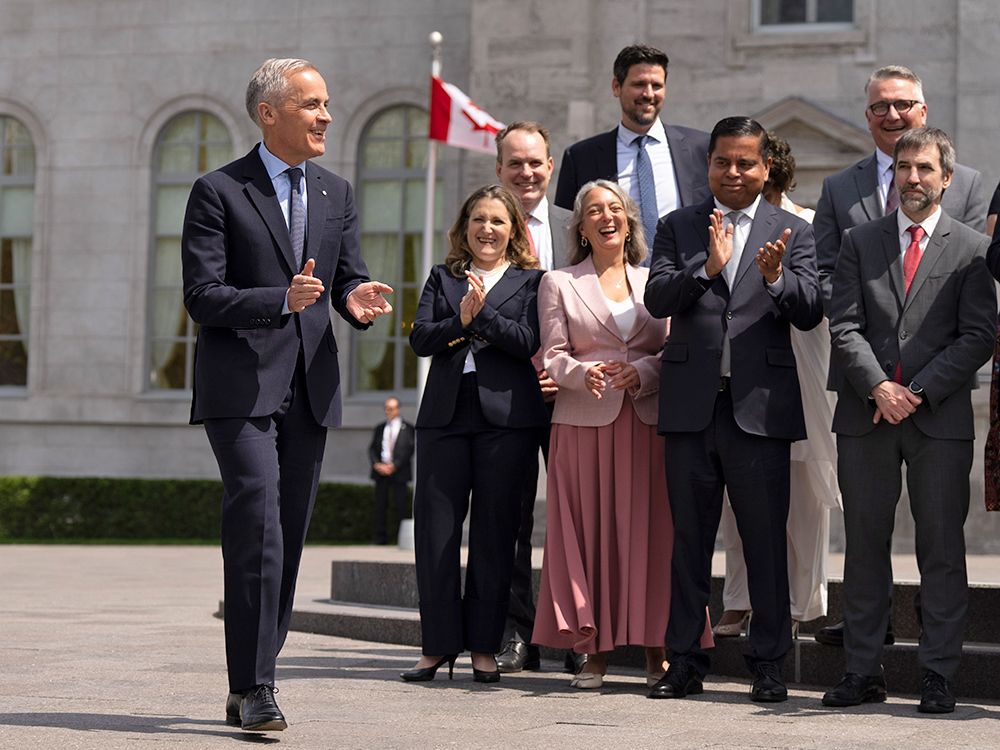
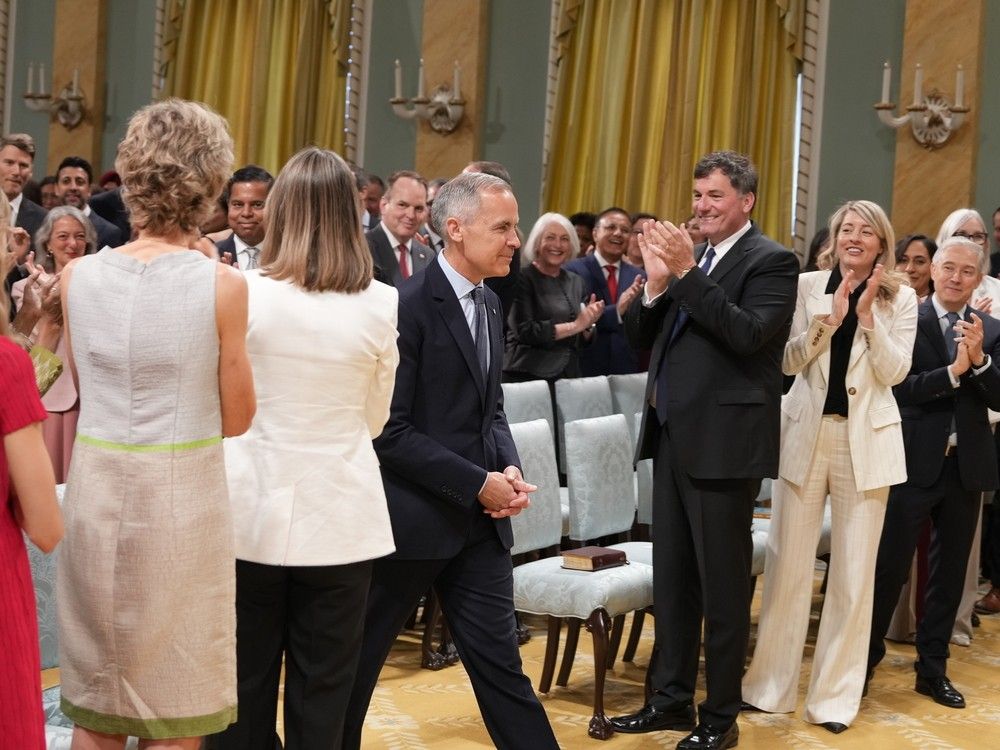
Prime Minister Mark Carney applauds members of his new cabinet as he arrives for a news conference following a swearing-in ceremony at Rideau Hall in Ottawa on Tuesday, May 13, 2025.

As the new prime minister reflects with pride on his unsullied cabinet, he should remember the words of P.G. Wodehouse’s Bertie Wooster: “It’s always when a fellow is feeling particularly braced with things in general that Fate sneaks up behind him with a bit of lead piping.”

The recent history of swearing-in ceremonies suggests that the day of the cabinet unveiling is the peak of the government’s popularity. After that, it’s all downhill.

Ironically, much of the damage to the governing party’s brand will be done by

the very ministers being sworn in with such fanfare

.

Some of the new cohort will prove to be ethically challenged, the wrong fit, as useless as pulled teeth or incompatible with their deputy ministers. Mark Carney, like every prime minister before him, has just made mistakes that he didn’t know he was making.

Take Justin Trudeau’s first gender-neutral cabinet, which emphasized diversity over competence. With hindsight, Trudeau would likely have made any number of revisions: step forward

Hunter Tootoo

,

Maryam Monsef

,

MaryAnn Mihychuk

,

Kent Hehr

, John McCallum, Stéphane Dion and, for different reasons, Jody Wilson Raybould.

At least, Carney’s new ministry was not chosen as if the participants would later play themselves in the movie version.

The 2015 ceremony was like a carnival: cheering crowds were invited to hail each new arrival as if they were Taylor Swift. Trudeau’s statement on why he had balanced men and women in his cabinet — “Because it’s 2015” — was his most memorable, carefully crafted but apparently impromptu line.

The 2025 version looked more like the annual general meeting of an insurance company, charged with electing new officers to the board.

This time around, there was less of a bias against anyone older than 40 and ministers appear to have been chosen largely on merit.

But the constraints of gender, ethnicity and geography mean that 50 per cent of this cabinet is female, compared to 38 per cent of the caucus. In addition, there are rookie ministers who, as Carney said of Conservative Leader Pierre Poilievre, have barely made payroll and are now running large government departments.

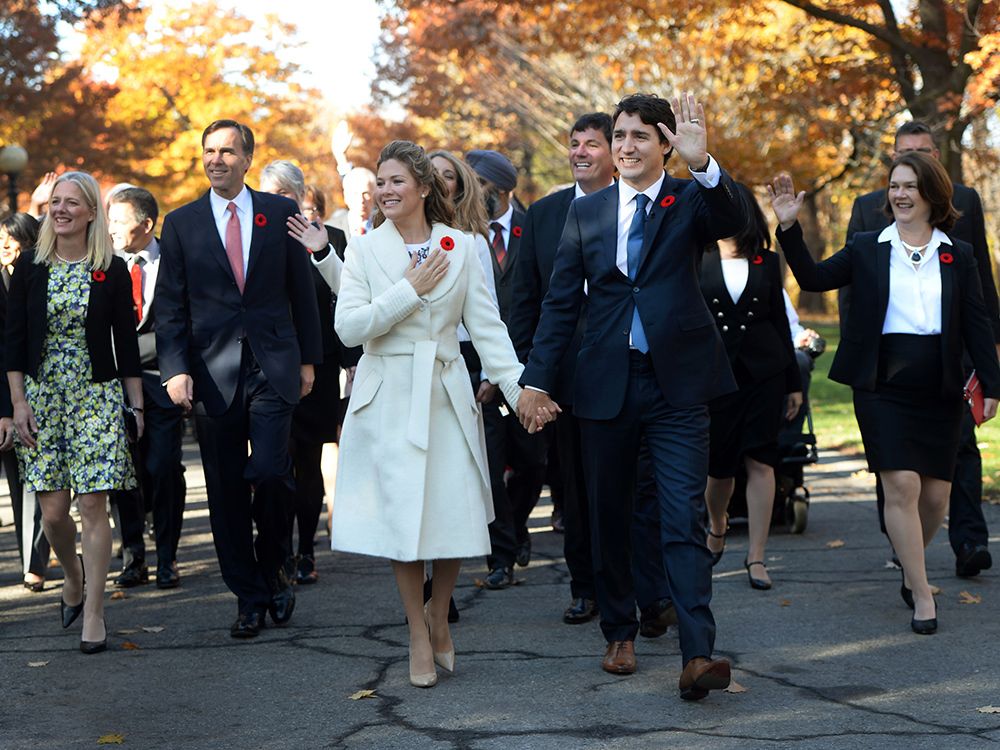
 Prime Minister-designate Justin Trudeau and Sophie Gregoire-Trudeau walk to Rideau Hall with members of Trudeau’s future cabinet to take part in a swearing-in ceremony, Nov. 4, 2015.

Ottawa is a small town and not particularly well connected to the rest of the country. The legitimacy of any government rests on it reflecting the way Canada looks and thinks. Carney said he did not want a cabinet that looked like him.

Fair enough.

But it necessitates against putting the best-qualified people in the most important jobs, with all the inevitable frustration at failing to hit targets that follows.

Cabinetmaking, as Sir John A. Macdonald once said, is reliant on the quality of the timber sent by voters.

Carney has been relatively lucky in this regard

: he had a large pool to choose from and there are a couple of new faces that will make this an upgrade on recent cabinets.

The priority files are clearly Canada-U.S. relations and national unity.

On the former, Dominic LeBlanc is such an able fixer that Carney may have been tempted to transplant him to Washington permanently as ambassador. As it is, he remains the point man on Canada-U.S. trade. Voters wanted change and new faces on the front bench. By any measure, LeBlanc’s face is not fresh. But the Trudeau government’s bias against experience meant in its early days, it discovered age-old problems for the first time. LeBlanc’s presence at least provides continuity, stability and an ability to get along with the unspeakable.

Foreign affairs is Anita Anand’s fifth portfolio in as many years. But she too is a serious person who has impressed most people with whom she has had contact.

There are some curious choices: Gregor Robertson at housing, given the soaring house prices in Vancouver when he was the city’s mayor; and Sean Fraser at justice, given that the Canadian consensus on “immigration as a good thing” was shattered while he was minister.

But the key change is the appointment of Tim Hodgson as natural resources minister to replace Jonathan Wilkinson, who had become persona non grata with the energy industry. Hodgson has Carney’s trust: the two worked together at Goldman Sachs and the prime minister brought his former colleague into the Bank of Canada as an adviser when he was governor. Hodgson also has energy experience as the former chair of Hydro One and a board member with MEG Energy.

A study by the 

Angus Reid Institute

 last week found the number of people in Alberta seeking to separate would fall dramatically if the government pursued more energy-friendly policies. No pressure, sir, but you have the power to make or break the country.

Perhaps the key formula for success with many of the rest is to ensure that rookie ministers are not teamed up with rookie deputy ministers or rookie chiefs of staff. One senior player in the Trudeau government told me that in his experience, if three out of three are experienced, all will be well; if two out of three are, you can still make progress; if one out of three is fresh in their job, you’re probably going backwards; and, if all three are new, you’re heading straight backwards.

The key to real progress is to have a senior figure at the top to push a file and navigate the bureaucracy.

Without that, cherished projects grind to a halt.

Carney is more likely to be that person than was Trudeau, who was almost entirely political.

But the prime minister can’t do it single-handedly, so he is going to have to streamline a system where the scarcest commodity in Ottawa — time — is used as efficiently as possible.

That means everyone needs to be pushing in the same direction, which is not the norm in politics.

Carney will be aware of Louis XIV’s famous quote that each appointment creates hundreds of malcontents and one ingrate. He has just bumped senior figures like Wilkinson, Bill Blair and Ginette Pettipas-Taylor from cabinet. Inevitably, that means thwarted ambitions and bruised egos.

He will be equally aware that Trudeau’s failure to manage or even show interest in his caucus sealed his fate.

Carney has promised the return of “more traditional cabinet government,” after years of complaints that the unelected advisers at the centre are too dominant.

Yet, as his predecessors found out, modern politics demands that the message be co-ordinated from the centre. Eddie Goldenberg, who was senior adviser to former prime minister Jean Chrétien, recalled in his account of Ottawa life, The Way it Works, that the government in which he was a key player tried to involve the whole cabinet in priority setting. It stopped when it became clear that they were too busy with their own departmental responsibilities to give serious thought to the government’s agenda.

During the campaign, Carney joked that instead of campaigning in poetry and governing in prose, he campaigned in prose and will govern by econometrics. But he is no longer running a central bank where his will quickly became his subordinates’ command.

Now, he’s at the helm of a great, unwieldy machine where an order becomes a request as it moves down the chain, before turning into a recommendation and finally a suggestion at the operational level, if it makes it that far.

Why? Because it’s 2025. The political will is about to meet the administrative won’t.

National Post

jivison@criffel.ca

Get more deep-dive National Post political coverage and analysis in your inbox with the Political Hack newsletter, where Ottawa bureau chief Stuart Thomson and political analyst Tasha Kheiriddin get at what’s really going on behind the scenes on Parliament Hill every Wednesday and Friday, exclusively for subscribers. Sign up here.


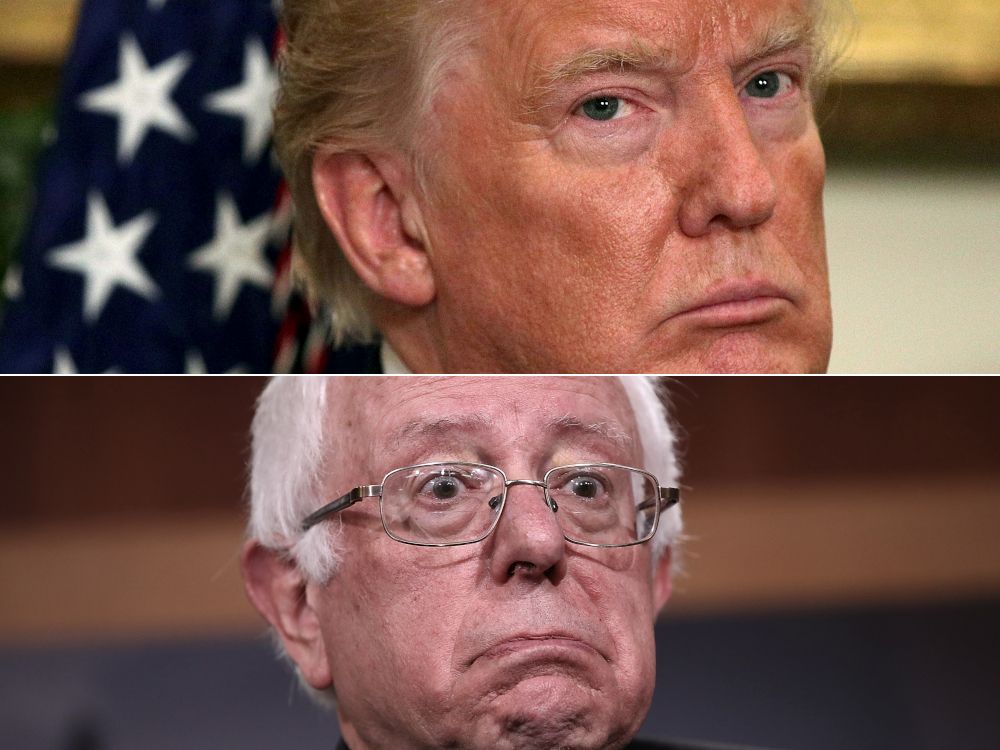
U.S. President Donald Trump, top, and Sen. Bernie Sanders both support price controls as a means of controlling the economy, writes J.D. Tuccille.

In a democracy, when all viable options on the ballot offer nothing but variations of government-directed control, there’s little choice to be had. In the United States, Democrats openly embrace the idea of a command economy directed from Washington, D.C. Likewise, U.S. President Donald Trump’s new scheme for prescription drug price controls makes clear that he also wants to push aside market mechanisms in favour of state dictates. Forget freedom, the big American political parties now offer different flavours of socialism.

On Monday, the

Trump administration complained

that, “Drug manufacturers discount their products to gain access to foreign markets and then subsidize those discounts through high prices charged in America — in essence, Americans are subsidizing drug-manufacturer profits and foreign health systems.”

This is a fair concern and one highlighted in the past by economists. They’ve proposed making it easier for Americans to buy drugs

from overseas

and have them shipped to the U.S., easing the

drug approval process

,

replacing approvals

with advice that would inform instead of dictate to doctors and patients, and

dumping

the Food and Drug Administration (FDA) in favour of non-governmental

third-party certifiers

.

These are good pro-freedom ideas for improving access to medicine. Some have been (partially) implemented. The FDA’s

Right to Try

program, for example, is an attempt to ease the laborious drug-approval process for potentially life-saving medications. The Trump administration made efforts during its

first term

and

again last month

to make it simpler to purchase prescription medications at competitive prices.

But President Trump’s latest action reflects his taste for shaping the world

by command

. His

executive order

addressing the high prices Americans pay for prescription drugs instructs government officials to “communicate most-favoured-nation price targets to pharmaceutical manufacturers to bring prices for American patients in line with comparably developed nations.”

The Department of Health and Human Services will establish a system for patients to purchase drugs directly from manufacturers (a mechanism that evolves naturally in free markets), with medications offered at “most-favoured-nation” prices. If the government doesn’t like the prices, the order specifies that, “The secretary shall propose a rulemaking plan to impose most-favoured-nation pricing,” and officials can take other actions to compel compliance.

There’s a lot wrong with American medicine. It mostly involves excessive regulation, government dictates and weird tax incentives. Government involvement is the problem, not the solution. Under former president Barack Obama, the government pushed health care companies to consolidate,

squeezing independent practices

out of existence because it found large companies easier to control.

In 2010, Obama administration health-care advisers Nancy-Ann DeParle, Ezekiel Emanuel and Robert Kocher boasted about the

Affordable Care Act

in

a letter

published by the Annals of Internal Medicine: “The economic forces put in motion by the act are likely to lead to vertical organization of providers and accelerate physician employment by hospitals and aggregation into larger physician groups.”

Trump is embracing that same top-down approach, with medicine — in this case, the pharmaceutical industry — remaining nominally private, but subject to government command.

As the Cato Institute’s Michael Cannon, who literally

wrote the book

on reforming U.S. health care from a free-market perspective,

points out

, “Trump’s executive order is an attempt to impose government price controls on pharmaceuticals.” Cannon recommended regulatory reforms to get the government out of the health-care market. “Price controls are never the answer,” he added.

A major problem with price controls is that government can dictate a price, but it can’t guarantee that anybody will produce and sell sufficient quantities of a good at that price. It also can’t eliminate the consequences of putting a ceiling on prices and lowering incentives for developing new drugs.

West Virginia University economics professor Chris Freiman elaborated on this point,

arguing that

, “Drug price controls are a classic example of what is seen versus what is unseen.” What consumers will see, he noted, is cheaper drugs. But what they will never see is “the drugs we would otherwise have benefited from but aren’t created in the first place” because pharmaceutical companies fear price caps will reduce or eliminate the return on their investments.

Republicans rightly criticized then-Democratic presidential candidate Kamala Harris when she proposed combating the inflation caused by

wild spending

during the Biden-Harris administration (and Trump’s first term) by

fixing prices

. She

promised

to “bring down prices” by taking on “big corporations that engage in illegal price gouging and corporate landlords that unfairly raise rents on working families.” Besides rent, she had a particular fixation on

dictating grocery prices

.

Even the Washington Post’s Democrat-friendly editorial board called Harris out,

saying

, “Thankfully, this gambit by Ms. Harris has been met with almost instant skepticism, with many critics citing President Richard M. Nixon’s failed price controls from the 1970s.”

Unfortunately, Trump doesn’t just share his predecessors’ taste for price controls, he also emulates the Biden administration’s appetite for

government-directed industrial policy

, with politicians planning economic development and picking winners and losers. Trump

told reporters

earlier this month about the supply choking effects of his tariff policies, saying, “A 10-year-old girl, nine-year-old girl, 15-year-old girl, doesn’t need 37 dolls.… She could be very happy with two or three or four or five.”

His comments echoed socialist Vermont senator and former Democratic presidential hopeful Bernie Sanders’

2015 dismissal

of “a choice of 23 underarm spray deodorants or of 18 different pairs of sneakers” in a free economy as unnecessary when he saw what he considered greater goals to pursue.

Interestingly, Trump’s secretary of health and human services, Robert F. Kennedy Jr.,

said

during the announcement of the drug price plan, “I have a couple of kids who are Democrats or big Bernie Sanders fans, and when I told them that this was going to happen, they had tears in their eyes.”

When a Republican president and his Democrat and socialist opponents agree more than they disagree about their desire for a planned economy, it’s obvious that our political choices are as severely constrained as they would make our selection of dolls and deodorants. Americans may overwhelmingly

reject central planning

, but our major politicians are all socialists now.

National Post


An empty school during a COVID-19 lockdown in Windsor, on Jan. 10, 2022. During the COVID-19 pandemic, we were told that schools and playgrounds needed to be locked down for the sake of the children. Now during a flu season that may well be killing more Canadian children than COVID-19, there’s absolute silence.

As readers will no doubt have heard, measles is back — especially in Ontario, which has reported 83 per cent of cases in Canada so far this year; and especially in southwestern Ontario, among

largely unvaccinated Anabaptist communities

, which Ontario’s chief medical officer of health, Dr. Kieran Moore, says account for 70 per cent of cases.

As of April 26,

Health Canada reported 1,506 measles cases nationwide

,

up from just 69 at this time last year

; of those 1,506, only 74 infected individuals are known to have had one or the recommended two doses of the MMR (measles, mumps and rubella) vaccine, while 83 per cent are known to have been completely unvaccinated.

According to the U.S. Centers for Disease Control (CDC)

, between one and three children per 1,000 who contract measles will die from it, or from complications of it, notably pneumonia and encephalitis. And about 20 per cent of unvaccinated sufferers, of all ages, will wind up in hospital.

It’s nothing if not frustrating. One might think the great success of COVID-19 vaccines would encourage people to appreciate better-established vaccines like MMR (mumps, measles and rubella), which has been around longer than I have been alive. Instead, by many accounts, the decline in routine vaccine uptake already occurring before the pandemic has continued to decline.

As worrying as measles is, North America’s nasty flu season this year seems to have received much less attention. And it’s vastly more deadly.

Around this time last spring,

the U.S. Centers for Disease Control (CDC)

estimated there had been in the United States “at least 34 million illnesses, 380,000 hospitalizations, and 24,000 deaths from flu so far.” Last year was considered a bad year for the flu.

This year so far

: “47 million illnesses, 610,000 hospitalizations, and 27,000 deaths.”

At this time last year, the CDC reported that

164 children had died in the U.S. from the flu

. This year,

the number is 226

.

For comparison’s sake, the most American children who died from COVID-19 in any 18-week period was 944. So obviously COVID was much more dangerous, but the flu is no joke. COVID was all anyone talked about for two years; meanwhile, hardly anyone talks about the flu as a serious threat to life or long-term health, least of all among children.

Canada is so allergic to data that it should carry an EpiPen; so we don’t have anything like as clear a picture of what’s going on here with the flu as they do in the U.S. —

especially with respect to outcomes among children

. But the picture we have suggests Canada has suffered more or less the same problem as the States, as you would expect.

But Statistics Canada’s mortality figures tell an interesting tale: In 2020, 2021 and 2023 combined, 62 Canadian children are recorded as having perished from COVID-19 — and 103 from “influenza and pneumonia,” which is the International Classification of Diseases (ICD) code under which Canada reports flu deaths.

During the pandemic, to compare COVID-19 to the flu was to invite the whole world to jump down your throat. And in many senses, indeed, they aren’t worth comparing: 47,000 Americans died of “influenza and pneumonia” in 2022, a year in which COVID-19 killed 271,000.

But recall how often you heard politicians saying during the pandemic that we needed to lock everything down, close schools and playgrounds and skate parks

for the sake of the children

? Very early on in the pandemic, we knew that was a filthy lie: We were keeping kids home not primarily or even significantly for their own safety, but for their parents’ and especially their grandparents’ safety.

Politicians knew that the saving grace of COVID-19 was that it didn’t target otherwise-healthy children for death. But they also knew that “think of the children” was the easiest way to sell restrictions on everyday life, and so that’s what they used.

Now we have a flu season that may well be killing more Canadian children than COVID-19, and there’s absolute silence. No one called for schools to be closed, for Canadian Tire stores to be divided into essential and non-essential goods aisles, for bars and restaurants to be shuttered, for returning travellers to be locked up in hotels for society’s amusement.

These are the sorts of contradictions, conundrums and failures that all the pandemic inquiries we’re not getting should be looking into. Because we clearly haven’t learned anything at all from the pandemic nightmare except that we’re better than Americans … and our superiority complex was more than big enough to begin with.

How little have we learned? Moore, Ontario’s chief medical officer of health, took some flak last month for daring to mention that the measles outbreak was hyper-concentrated in certain unvaccinated religious communities.

Dr. Ninh Tran, of Ontario’s Southwestern Public Health District, warned that associating measles cases to certain communities might provide “a false sense of security for the general public.” As if Ontarians actually believe being Mennonite attracts the influenza virus.

“(B)eing part of any particular group or religion doesn’t put you at risk,”

Tran told The Canadian Press

; rather, your vaccination status does.

Remember being told we shouldn’t wear masks because we’re too stupid not to let it provide us with “a false sense of security”? Remember being told we mustn’t associate diseases with certain populations, lest we succumb to prejudice and discrimination? Yeah, we’re back there. Zero lessons learned. Vaccination rates dropping. I just hope I’m already dead by the time the next pandemic comes along.

National Post

cselley@postmedia.com

Get more deep-dive National Post political coverage and analysis in your inbox with the Political Hack newsletter, where Ottawa bureau chief Stuart Thomson and political analyst Tasha
Kheiriddin
get at what’s really going on behind the scenes on Parliament Hill every Wednesday and Friday, exclusively for subscribers. Sign up here.


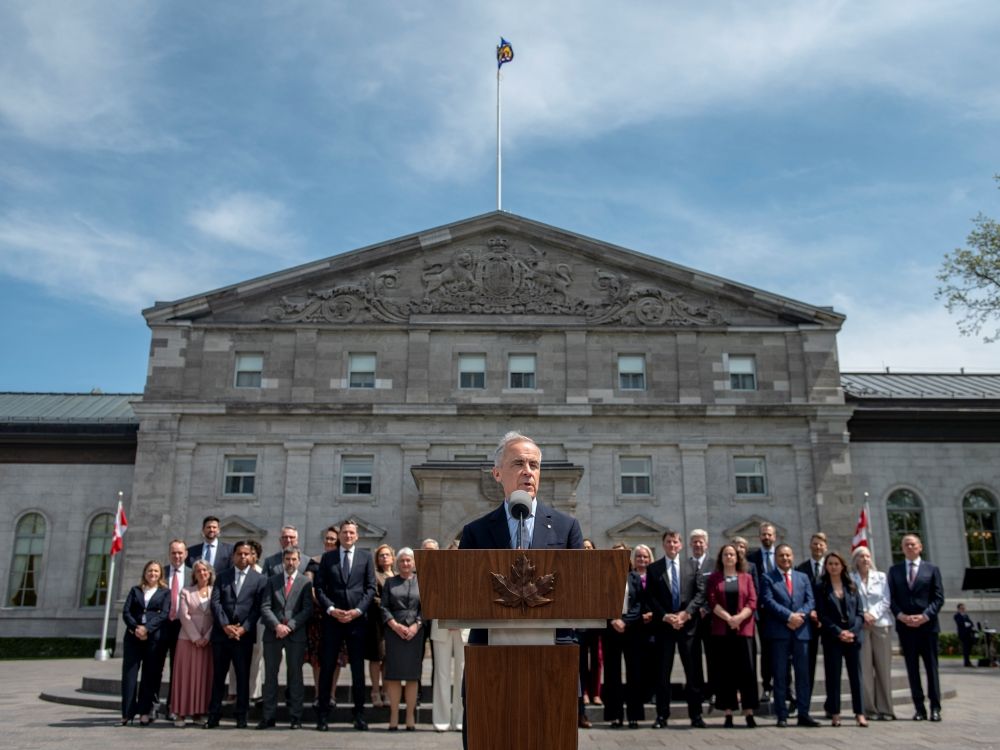
Canadian Prime Minister Mark Carney delivers a press conference at Rideau Hall after his cabinet's swearing-in ceremony on May 13, 2025 in Ottawa, Canada.

Well, Canada isn’t completely unchained from the worst of its deadweight Trudeau-era cabinet ministers, but at least Prime Minister Mark Carney had the sense to prune some of them.

The casualties of the cull were revealed Tuesday morning after an obligatory land acknowledgement, with the naming of Carney’s two-tier, 38-person cabinet

consisting

of 28 ministers and 10 junior ministers, dubbed “secretaries of state.”

Big names have been left off the list — such as Jonathan Wilkinson, former natural resources minister and thorn in Western Canada’s side — while elder ministers have largely been shuffled around and sometimes downgraded. Only 13 brand-new MPs have been

added

.

One big upgrade is newcomer and Energy and Natural Resources Minister Tim Hodgson, an Ontario MP who was once CEO of the Canadian offshoot of Goldman Sachs. He’s

held

numerous corporate board roles over the years, including chair of Ontario electric utility company Hydro One and board member of Alberta oilsands developer MEG Energy, and has worked as a sustainable finance adviser. Back when Carney was in charge of the Bank of Canada, he served as a special advisor to the governor.

Hodgson offers a light of hope. He’s still a Liberal, and bound to operate under the constraints set out by his team, but he at least has an understanding of energy and how money works at scale. That’s no guarantee of success — his predecessor in the role, Wilkinson, had also worked for energy companies earlier in his career, and still pushed for the

carbon tax

in its heyday and

defended

its partial cancellation in Eastern Canada. But with Hodgson comes an opportunity for change.

That’s a potential olive branch for Alberta, which buzzed with anger in Steven Guilbeault’s environment minister years. That said, we’re not home free from the man, as he’s now the minister of “Canadian identity and culture” as well as official languages. The culture file is responsible for museums, film and media funds and much of the Liberal diversity-equity-inclusion push, and official languages department has been the means of suppressing Anglo participation in the civil service and more recently the judiciary. Guilbeault will continue having a means to antagonize Western Canada from his new seat.

Meanwhile, his heir, Environment Minister Julie Dabrusin, was previously the natural resources parliamentary secretary and has a past of excusing project delays and cancellations as matters of market force rather than government uncertainty. When the proposed Newfoundland and Labrador’s Baie du Nord offshore oil project was delayed back in 2023 due to “market conditions” — after being scrutinized for four years by federal climate screeners — she

shrugged

. At other times, she’s

tone-policed

energy CEOs and

dismissed

the Canadian potential to provide Europe with energy and

even opposed

the now-cancelled Teck Frontier oilsands project in 2020. At least she’s not a

convict

.

Elsewhere in cabinet, former CBC host and new MP Evan Solomon now sits as minister of artificial intelligence. Solomon was

fired

from the broadcaster in 2015 for using his work contacts to make art deals. One client? Carney himself. Clearly Carney has enjoyed whatever piece he received into his collection via Solomon.

Then there’s the housing file, which will be taken over by another newcomer to Parliament, former Vancouver mayor Gregor Robertson. Robertson was on the front line of Canadian decline, leading his city into a housing crisis in the 2010s that has only gotten worse since. He has a history of spouting some of the worst Liberal positions: on the objectively observable impact of immigration on housing, he

discouraged

in 2015 discussions out of fear of “dividing people”; on drugs, he

advocated

strongly for decriminalization in 2018. Ultimately, his great failures were housing, homelessness and drugs — and now, he gets a shot at a redo, this time from Ottawa.

As for the guy who took Canada’s immigration system on a catastrophic post-COVID nosedive, and later moved on to the disaster file of housing, well, he’s going to be justice minister now. Sean Fraser bodes poorly for general safety and order in Canada based on his record alone.

More interesting is the appointment of Joël Lightbound to cabinet as the minister of government transformation, public works and procurement. In the Trudeau era, Lightbound was on the margin, exiled to backbench status after publicly criticizing the Liberal brain trust for using COVID as a political wedge in the lead-up to the 2021 election. Clearly capable of independent thought, he might actually be useful in the area of procurement, which is a notorious festering ground for government inefficiency.

Cabinet demotions of note include Transport and Internal Trade Minister Chrystia Freeland, who’s taken a major downgrade from finance. She’s a cyclist, which does harm her transport cred, but she’s

also

been pulled over for going 132 km/h on the highway, which at least demonstrates that she values speed. Joining her in the discard pile is Mélanie Joly, once in foreign affairs, now the industry minister. Both were headliners under the rule of Justin Trudeau, and neither were particularly good at governing.

And lastly, some characters are out of the cast completely. Bill Blair, former minister of emergency preparedness (among other things) and thus one of the leads on Canada’s COVID response, was dropped. Also out is Ahmed Hussen, once the immigration minister and lead contributor to Canada’s overpopulation problem, later the diversity minister who answered for the granting of “anti-racism” funds to vicious antisemite Laith Marouf.

Not all deadwood has been thinned out, and many replacements come with the potential for disappointment. We’ll just have to wait and see.

National Post


Air Canada planes sit on the tarmac at Pearson International Airport in Toronto.

Despite Prime Minister Mark Carney’s campaign of anti-American fear, as well as stories and announcements that Canadians should avoid the country, there is no evidence Canadians should be fearful about travelling to the United States.

According to a Leger survey conducted early this month, the

majority

of Canadians are leery about travelling to the United States because they feel unwelcome (54 per cent), or they no longer feel such travel is safe (52 per cent).

These fears are unfounded. There is no evidence Canadians are unwelcome in the U.S., nor is there evidence that travelling there is unsafe. There are several reasons, however, why Canadians may have been led to believe this was the case.

The first is the story of Jasmine Mooney, a Canadian who has been described as an actor turned entrepreneur. Much attention has been paid to her detention, but very little to the possible reasons.

When Mooney attempted to travel from Vancouver to California in November 2024 — before Donald Trump assumed office for the second time — she found out that her three-year U.S. work visa, which had been acquired the previous spring, had been revoked.

Mooney

told

the Guardian that a border agent told her she couldn’t work for a U.S.-based company because it used hemp in its products. Hemp-derived CBD is an

ingredient

in the drink Holy! Water, the

company

Mooney

co-founded

.

Although many states have legalized cannabis and hemp production

was legalized

at the federal level in 2018, the use of CBD in food and beverages is still a

legal grey area

. When Mooney was stopped in Vancouver and not permitted entry, she was heading to Natural Products Expo West, an exhibition that

features many products that contain hemp

.

According to

Newsweek

, “Mooney said she later returned to the Mexico border with a new job offer and the necessary visa paperwork, but because she had already been flagged, Customs and Border Protection (CBP) officers denied her entry back into Mexico and detained her instead.”

The fact that Mooney presented CBP with a new job offer suggests she was aware that border officers flagged her for her first job. If Mooney knew border agents had taken issue with her Holy! Water’s ingredients, she probably shouldn’t have followed up her denial of entry with an attempt at a different border with a new job offer.

That would have obviously looked suspicious when she tried to enter the U.S. — from Mexico of all places — in March. According to one

immigration expert

quoted by Newsweek, she would likely not “have met with the same repercussions had she applied to enter the United States at a border crossing between Canada and the U.S. in similar circumstances.”

In addition to this widely circulated story, on April 15, the Canadian Association of University Teachers sent out a hyperbolic warning, saying that it “strongly recommends that academic staff travel to the U.S. only if essential and necessary.”

As

evidence

for why this was necessary, the group claimed that a French researcher was denied entry to the U.S. because his phone contained messages that were critical of Trump’s policies on academic research. However, the CBP says he was turned away due to the “discovery of proprietary information” from an American lab.

Another example given was a Brown University professor who, despite having a valid visa, was turned away after it was found that she had attended the funeral for a Hezbollah leader and had “sympathetic photos and videos of prominent Hezbollah figures” in her phone. Hezbollah is a listed

terrorist organization

in the U.S.

And who can forget the dishonest, anti-American fear campaign, cynically employed by Prime Minister Mark Carney, and quickly dropped after the Liberals secured a minority government? This very effective campaign stoked fears in Canadians as to whether they’d be safe travelling to the United States.

Although Carney reportedly gave Trump

a heads-up

that he would be talking tough during the election campaign, his rhetoric wasn’t just anti-Trump, it was anti-American. In his victory speech, Carney said, “

As I’ve been warning for months, America wants our land, our resources, our water, our country. These are not idle threats. President Trump is trying to break us so America can own us

.”

Canadians can, of course, choose to travel elsewhere than the U.S. if they wish, but it shouldn’t be because they feel unsafe or unwelcome. These claims have been greatly exaggerated by those who should have known better, those who reacted hyperbolically and those who wanted to use your fear for their own benefit.

National Post

tnewman@postmedia.com

Twitter.com/TLNewmanMTL


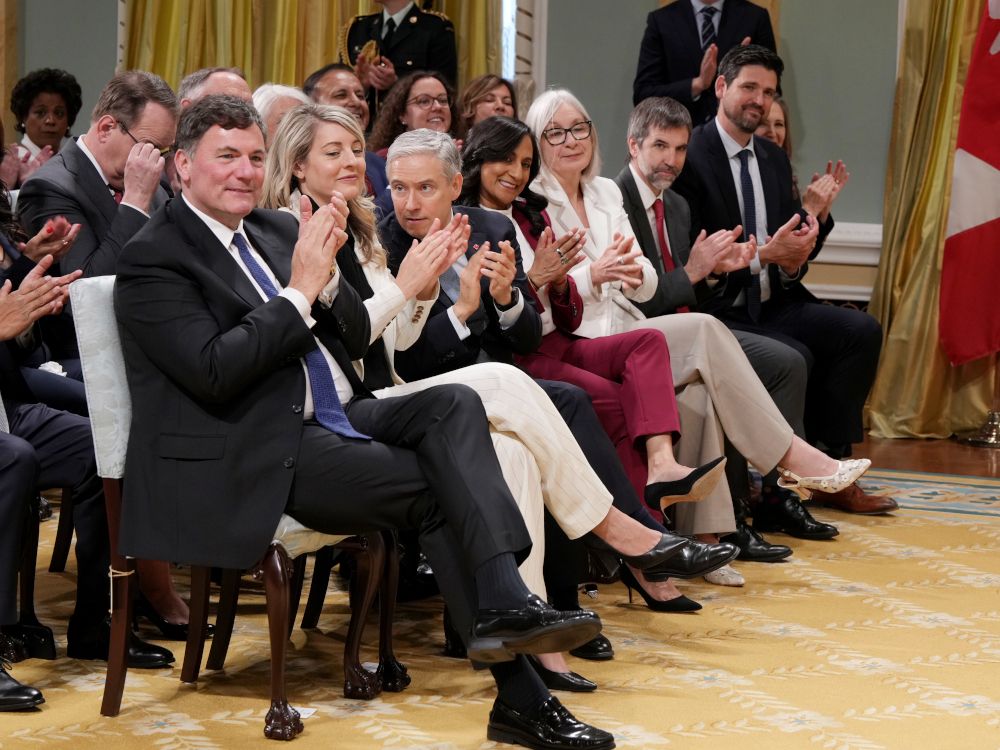
From left, cabinet ministers Dominic LeBlanc, Melanie Joly, Francois-Philippe Champagne, Anita Anand, Patty Hajdu, Steven Guilbeault and Sean Fraser applaud during a cabinet swearing-in ceremony at Rideau Hall in Ottawa on Tuesday.

Prime Minister Mark Carney promised change, a new way of doing things at speeds never before seen. Yet to help him do this, he is relying on the same old, tired, incompetent ministers who got us into the mess we’re currently in.

The Liberals will trumpet the large number of new faces in Carney’s 28-member cabinet — there are 15 MPs who have never served before.

But the top tier of ministers — the ones sitting in the front row at the swearing-in ceremony on Tuesday — were all former Trudeau acolytes, cabinet ministers now committed to rescuing us from a crisis of their own making.

In the front row was Sean Fraser, our new justice minister and attorney general, and the man who, under former prime minister Justin Trudeau, was responsible for immigration and then housing, two files he spectacularly failed at. If we want to know how bad Fraser was in those jobs, we need only look to Carney’s election platform.

“The last time we faced a housing crisis at such a broad scale was after the Second World War,” read

the platform

. This crisis “has left younger generations facing rents, down payments and mortgage payments so high that it turned housing into a barrier to opportunity instead of a cornerstone of opportunity.”

What about Fraser’s record at immigration? According to the Liberal platform, the Trudeau government let immigration “grow at a rapid and unsustainable pace.”

In December, when Liberal fortunes were in the toilet, Fraser announced that, for family reasons, he was quitting politics. Strangely, after the party witnessed a reversal in the polls, he announced he was returning.

In Carney’s eyes, Fraser’s blundering on two key files qualifies him to become justice minister. The only thing worse than Fraser as a cabinet minister may be Carney’s judgment.

Also in the front row was Chrystia Freeland, who served as deputy prime minister and finance minister under Trudeau and is now returning to cabinet as minister of transportation and internal trade.

Freeland’s record is best summed up, again, by the Liberal platform: “Business investment in Canada has dropped from 14 per cent of GDP in 2014 to 11 per cent in 2024, undermining long-term economic growth.”

Meanwhile, long-time Trudeau lieutenant Mélanie Joly, whose reign at foreign affairs was about as successful as Fraser was at housing and immigration, moves to industry.

Carney has said that his government will focus on the economy and dealing with U.S. President Donald Trump. It is odd, then, that in this key portfolio, he chose someone who has already been at the cabinet table for 10 long and unsuccessful years.

Dominic LeBlanc, another Trudeau loyalist (as well as his babysitter) and another long-standing member of cabinet, returns with responsibility as great as his title: president of the King’s Privy Council for Canada and minister responsible for Canada-U.S. trade, intergovernmental affairs and one Canadian economy.

And the list of top cabinet posts goes on, all sounding familiar because they were all Trudeau devotees who sat around his cabinet table: François-Philippe Champagne, Anita Anand, Patty Hajdu, Steven Guilbeault, Gary Anandasangaree, David McGuinty, Steven MacKinnon, Rechie Valdez and Joanne Thompson.

The Liberals will brag that they are introducing two dozen new faces — if you include Carney’s decision to appoint 10 secretaries of state, which are essentially junior ministers — but it’s not true.

Carney promised “new ideas and a new plan,” as well as “change, big change.… People want change because they are worried,”

he said

after becoming Liberal leader. “I’m a pragmatist above all. And that means when I see something that’s not working, I’ll change it.”

Well, it’s pretty clear that one thing that wasn’t working properly was the Trudeau Liberals. As Carney has acknowledged, the previous government left the country in worse economic shape, with a bad investment environment and a housing and immigration crisis among its many problems.

And yet, the people responsible for that are in his new cabinet. This isn’t pragmatic, it’s more of the same.

One of the Trudeau ministers who didn’t make the new cabinet was Jonathan Wilkinson, the former minister of natural resources.

In a long

post on X

on Tuesday, Wilkinson seemed to criticize the Trudeau government’s economic policies, while also suggesting Carney should avoid them.

“Opportunity also rests on economic strength, wealth must be created, not merely redistributed,” he wrote.

Yet, in choosing the old B-Team, Carney is setting himself up to make the same mistakes, as well as reneging on a promise he made only last month.

“A change of course is desperately needed,” read the Liberal platform. Canadians, in their desperation, thought Carney would be that change. They were wrong.

National Post


Canadian Prime Minister Mark Carney, centre, arrives for the cabinet swearing-in ceremony at Rideau Hall in Ottawa on Tuesday, May 13, 2025.

Prime Minister Mark Carney promised change, and today’s cabinet shuffle was his first test. But did he lose the “Just like Justin” tag once and for all? Not completely — and the west is unlikely to be happy about it.

Carney did return to the traditional Westminster model of a tiered cabinet, featuring a core of ministers and a phalanx of “junior ministers,” aka secretaries of state. The format allows ministers to focus on the big files while secretaries handle focused files, which are not necessarily connected to a department. Trudeau had abandoned the model, in part due to his desire to have gender parity in cabinet — something that Carney achieves at the core level, with 14 men and 14 women, but does not at the secretary of state level, which features 6 men and 4 women.

What wasn’t in cabinet was anyone from the opposition parties. There was some speculation as to whether members of the NDP would be in cabinet, to get the government over the 172-member majority threshold. That didn’t happen — perhaps because of the need to reward key players in the party, who would likely have grumbled had they been excluded to the benefit of floor-crossers.

And maybe, Carney doesn’t think he needs it. Former PM Jean Chretien quipped to CBC news, “we have a virtual majority.” Hmm.

So who’s in and who’s out? Carney dropped eleven ministers from the previous cabinet, including Jonathan Wilkinson and Bill Blair. But the first row at Tuesday’s swearing-in looked highly familiar, maintaining the core of Trudeau’s former cabinet, albeit in different roles, including Chrystia Freeland, Steven Guilbault, Sean Fraser, Mélanie Joly, Anita Anand, François Philippe Champagne and Dominic Leblanc.

Freeland stayed on as minister of transport and internal trade. She had already been replaced at finance in Carney’s previous shuffle by Champagne, who remained in the portfolio in addition to taking on national revenue. Joly got industry and economic development for the Quebec region, vacating foreign affairs to Anand, while Hajdu took minister of jobs and families and economic development of northern Ontario. Guilbault remained minister of identity and culture. while Fraser became justice minister and attorney general and minister responsible for the Atlantic promotion agency.

The twinning of several key players with major regional economic development portfolios, notably that of northern Ontario, home of Premier Doug Ford’s pet project, the Ring of Fire, says a lot about Carney’s economic priorities — and his political ones. Economic development can be a highly partisan exercise, gaining favour for the party in power by doling out regional projects — and often requires cooperation with provincial governments.

But what about the West? It scored four cabinet seats and four secretary of state positions — less than the province of Quebec, which got nine positions. Prairies economic development Canada went to Edmonton MP Eleanor Olszewski, who is also minister of emergency management and community resilience, while fellow Albertan Jill McKnight got veterans affairs and associate minister of defence. Gregor Robertson, who gets the Housing portfolio, and Rebecca Chartrand, minister of northern and Arctic affairs and minister responsible for the Canadian Northern Economic Development Agency, hail from B.C. and Manitoba, respectively.

But the key portfolio of energy went to Tim Hodgson, MP for the Ontario riding of Markham—Thornhill. Hodgson has a background in clean energy as past Chair of Hydro One, but not in fossil fuels. In total, fourteen members hail from Ontario, including new faces such as Julie Dabrusin, who became minister of environment and climate change, Gary Anadasangaree from Scarborough-Rouge Park who got public safety.

It’s a cabinet for the economy, but the question is, whose? Carney has promised nation-building priorities, including pipelines and electrification corridors. Without strong western representation in cabinet, he had better tap other regional voices and experience for these key undertakings, not just to stave off Western ire — but to ensure that they are done right.

Postmedia News

Tasha Kheiriddin is Postmedia’s national politics columnist.