LP_468x60
on-the-record-468x60-white

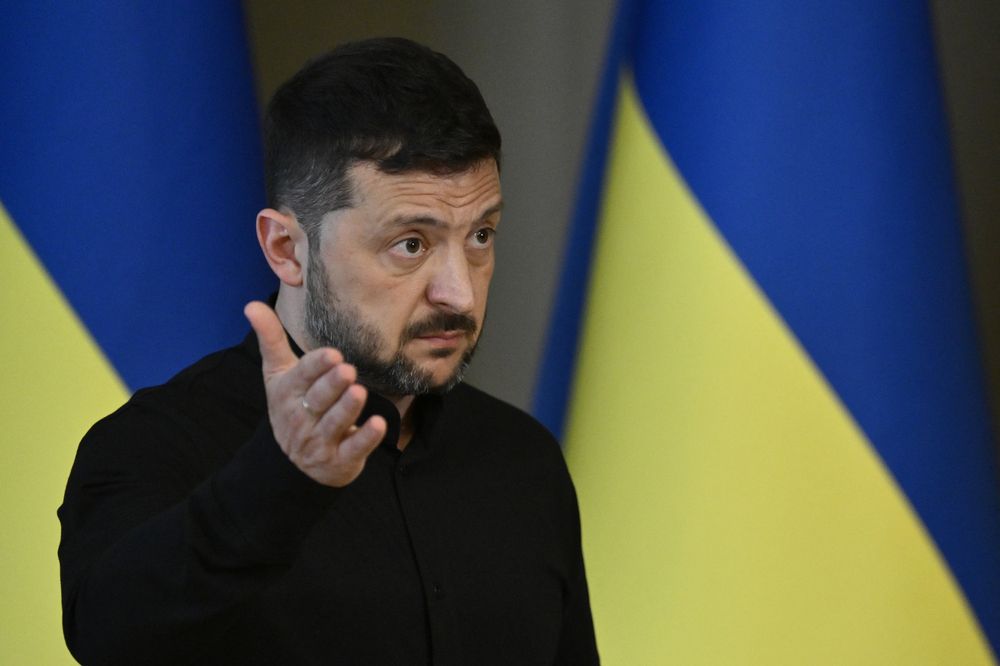
Ukraine's President Volodymyr Zelensky delivers a press conference in Kyiv on May 13, 2025, amid the Russian invasion of Ukraine. Zelensky urged the United States to levy its most hard-hitting package of sanctions on Moscow if Russian President rejects a call to meet in Turkey this week. (Photo by Genya SAVILOV / AFP) (Photo by GENYA SAVILOV/AFP via Getty Images)

Last weekend, Russian President Vladimir Putin delayed European-led sanctions against his regime by proposing that Kyiv and Moscow engage in direct peace talks in Istanbul, Turkey, this Thursday. While Putin appears to act in bad faith by

stalling for time

, his gambit backfired thanks to Ukrainian President Volodymyr Zelenskyy’s shrewd maneuvering.

Putin’s Istanbul proposal emerged in the immediate aftermath of Moscow’s annual May 9 “Victory Day” military parade, which traditionally commemorates the 1945 defeat of Nazi Germany but has recently transformed into a

jingoistic propaganda exercise

.

This year, the Kremlin unilaterally announced a

three-day ceasefire

coinciding with the parade, but Zelenskyy understandably rejected the arrangement and counter-proposed a more equitable 30-day ceasefire instead, which Russia declined.

The 30-day ceasefire proposal

found support

, though among the leaders of the United Kingdom, France, Germany, and Poland, who

visited Kyiv

the day after Victory Day for a meeting of the “coalition of the willing.” After securing the approval of US President Donald Trump over the phone, they published a

joint statement

with Ukraine calling for an “unconditional” and “comprehensive” ceasefire, lasting at least 30 days, which was supposed to begin this Monday.

The statement argued that such a ceasefire could “create room for diplomacy” and help negotiators outline “foundations of peace.” It further asserted that Ukraine’s military, as the primary guarantor of Ukrainian sovereignty, should be strengthened and that a “reassurance force” of foreign troops should be stationed in the country to provide further security.

“[We] agreed that if Russia refuses a full and unconditional ceasefire, stronger sanctions should be applied to its banking and energy sectors, targeting fossil fuels, oil and the shadow fleet,” read the statement.

Tighter sanctions could prove devastating to the Russian economy, which is

already sputtering

under high inflation and elevated interest rates. There is also reportedly

broad congressional support

within the United States to implement comprehensive sanctions alongside Ukraine’s European partners, which could include a

500 per cent tariff

on imports from countries that purchase Russian oil and gas.

However reasonable and proportionate these terms might have been, they were obviously unpalatable for Russia. Not only has Putin

vehemently opposed

the stationing of Western troops in Ukraine, he has insisted that long-term ceasefires should only be implemented after the conclusion of peace negotiations, not as a precondition for talks, presumably because this would allow him to

press his military advantages

and extract greater concessions from Kyiv.

This is precisely why the proposal was an excellent maneuver. Putin has long insisted that Kyiv, not Moscow, has been the real obstacle to peace —  so why not call his bluff?

Unfortunately, Putin was too clever to take the bait. Rather than explicitly reject the Western-backed ceasefire, he simply

ignored it

and proposed direct peace talks in Istanbul instead. Crucially, he framed these talks as a continuation of earlier Istanbul-based negotiations that occurred in the spring of 2022 and insisted that they follow the same principles.

Yet, in those first rounds of negotiations, Moscow had

sought not peace, but surrender

. Its original proposals included limiting Ukraine’s forces to 85,000 troops, 342 tanks and 519 artillery pieces, accounting to roughly a 60-70 per cent reduction of the country’s prewar military power. Furthermore, Kyiv would have been banned from joining any military alliances, or hosting any foreign soldiers or bases, and would have had to rely on “security guarantees” from a handful of unspecified countries whose protection would’ve been subject to a Russian veto.

Such restrictions would’ve left Ukraine utterly defenseless against further Russian invasions, guaranteeing eventual vassalization. They were entertained largely because Ukraine was negotiating from a position of weakness, but talks collapsed after the discovery of Russia’s

Bucha massacre

made continuation politically and ethically impossible.

Three years later, little has changed. Putin maintains that peace can only be achieved if the war’s “

root causes

” are addressed, which is code for the installation of a puppet regime in Kyiv. He also

wants Ukraine to abandon

the four provinces Russia “annexed” in late 2022, even though Russian troops only partially occupy these lands. In other words: Russia’s notions of “peace” remain indistinguishable from Ukraine’s subjugation.

In light of these facts, Ukraine and its European allies initially rejected the renewed Istanbul talks and prepared to move forward with harsher sanctions. Then Trump

blindsided everyone

by posting on Truth Social that he supported Putin’s solution and that peace talks should begin “

immediately

.” Amid the uncertainty, the much-hyped sanctions

were postponed

.

Zelenskyy quickly turned the situation back to his advantage by

publicly challenging

Putin to a one-on-one meeting in Turkey. “There is no point in prolonging the killings. And I will be waiting for Putin in (Turkey) on Thursday. Personally. I hope that this time the Russians will not look for excuses,” he wrote

on X

on Sunday.

This

created a dilemma

for Putin: either skip the Istanbul talks and risk appearing weak and uncommitted to peace, or attend and legitimize an

archnemesis

.

After dithering for several days, the Russians announced at the last minute that they would send a

low-level delegation

to Istanbul and that Putin would not attend the talks that he himself proposed. This was enough to expose the Istanbul process as a farce and to reportedly place the imperiled sanctions plan

back on course

for American and European lawmakers.

Putin made his play, and he failed — all because Zelenskyy told him to put his money where his mouth is.

National Post


Premier David Eby. The B.C. government is cancelling the carbon tax by introducing legislation to drop the rate to $0, effective Tuesday, April 1, 2025. Photo: B.C. Government

B.C.’s New Democratic premier and minister of health think that they can solve the province’s nursing shortage by enticing U.S. nurses to cross the border. The idea is laughable.
 

This week, Premier David Eby and his minister, Josie Osborne, announced that they had streamlined licensing applications for U.S. nurses, and approved a whopping — wait for it — 113 nurses to practice in B.C. This was following an online campaign with unknown costs,
as per a statement Osborne
provided to media.
 

For context, the province currently has
approximately 6,000
vacant nursing positions. Those 113 American nurses represent a fraction of the shortage — a mere 1.8 per cent of the nurses required to make our system whole. Eby and Osborne both bragged of a 127 per cent increase in applications, to 177. Based on their numbers, if all American license applicants went on to get hired and work in B.C., this sudden increase would represent an additional 1.65 per cent of the 6,000 missing nurses. That is their best case scenario, and it’s not much to brag about.

There’s more: in addition to the unknown costs of the B.C. government’s recruitment campaign, Osborne told media this week that it’s also unknown how many of the 113 nurses will go on to accept a job offer. How many of those few, I wonder, are aware of the current USD to CAD exchange rate?
 

American nurses
typically earn more than their Canadian counterparts
, and in a currency that is worth substantially more. To boot, B.C.’s annual nurse licensing fee is the highest in the country — and is astronomical compared to what American nurses pay. For instance, B.C. registered nurses paid over $800 after tax in 2025, while Washington nurses paid
less than $150
. So why, pray tell, would anyone choose to uproot their life and move countries, to a province with a high cost of living and lower salary? To B.C.’s ruling NDP, it’s about social justice, of course.

“American health-care professionals are increasingly drawn to B.C. as a place that supports science, protects reproductive rights and takes care of people no matter how much money they have in their bank account,”
Eby said
in a media release on Monday.

Allow me to read between the lines of Eby’s statement: he believes that he can take advantage of Democratic American nurses and health care workers, who, he hopes, might see Canada as a socialized-medicine paradise and haven for diversity, equity, and inclusion, “gender affirming care,” punch-card abortion access, and any other activist cause du jour. In essence, he hopes to attract nurses who dislike President Trump so much that they would be willing to take a pay cut. Indeed, Eby and Osborne are targeting their recruitment campaign in blue states.
 

“In early June, the Province will be launching a targeted U.S. marketing campaign in parts of the country with the highest interest in moving to B.C., including the states of Washington and Oregon, and select cities in California,” reads their release. 
 

On their
recruitment website
, they brag of a “universal health care system that puts patients before profits,” and of “safe, diverse, and inclusive communities.”
 

If only reality were as pretty as the NDP’s portrayed vision of our health-care system.
 

What B.C. nurses are actually facing is this: burnout; mandatory overtime;
increasing and unacceptable violence
on the job; unmanageable workload; nearly one third of
young nurses quitting the profession
because they cannot tolerate the work, or work-life balance; and — 
speaking from personal experience
— a cult-like atmosphere where dissent from the government’s social justice orthodoxy is severely punished. Nor can we forget that B.C. fired approximately 1,800 health care workers in 2022 over their refusal to take the COVID vaccine. We don’t how many of those were nurses, but we do know that
nurses make up the bulk of health care workers
. Our province’s nursing schools, once highly competitive and with waitlists,
now
have
difficulty
filling their seats.
 

On top of all this, nowhere in Eby’s recruitment campaign does he reconcile his cheery view of our health-care system with the fact that
our government
,
health care institutions
, and nursing academics are all of the opinion that the
entire system is steeped in racism
. Our national broadcaster
referred to the alleged racism in B.C.’s health-care system
in 2021 as “widespread and potentially deadly,” with little progress being made to change it. 
 

A perusal of the Canadian Journal of Nursing Research reveals
dozens of articles
or studies on the topic of racism in our health-care system published over the past decade.
One such study concludes
that “(e)veryone in nursing needs to challenge the culture of silence regarding racism. White nurses in particular need to welcome discomfort, listen and learn about racism, then speak out to help disrupt its normative status.”
 

Eby and Osborne cannot have it both ways: either our health-care system is so
illustrious and patient-centred
that American nurses should happily take a pay cut to live and work here — or, it is infected by a seriouqs case of systemic racism and needs to be overhauled for the safety of patients and nurses alike

Eby’s government must take meaningful action on our nursing shortage. That they’ve possibly contributed to garnering license applications from 1.65 per cent of the total nurses we desperately need in B.C. over the last month is, by contrast, meaningless.

National Post


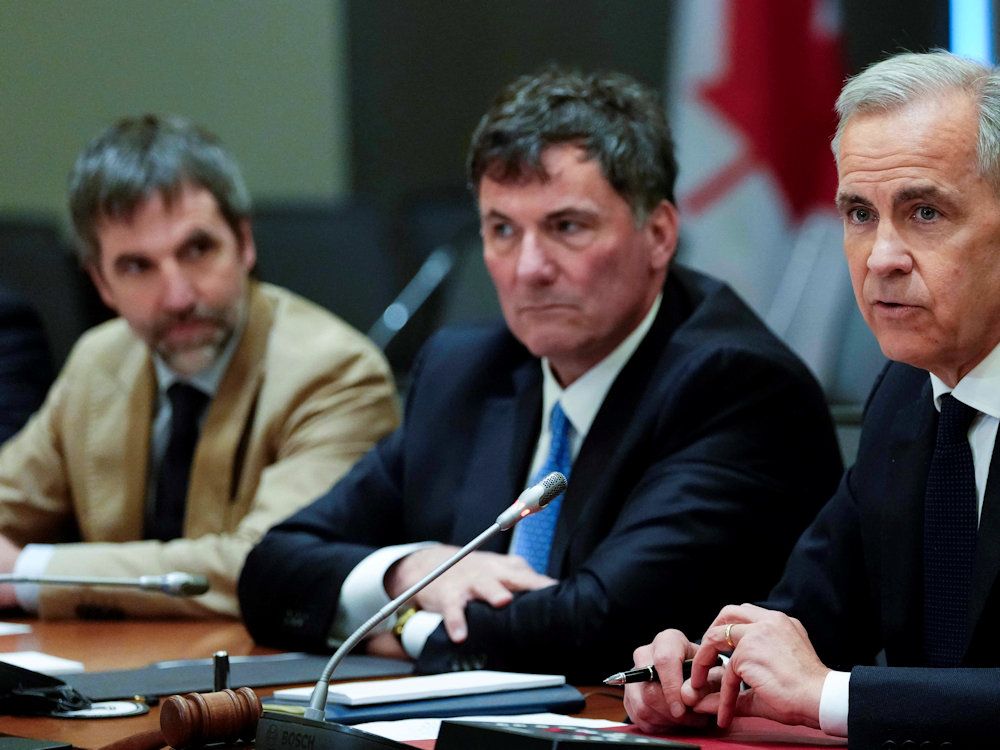
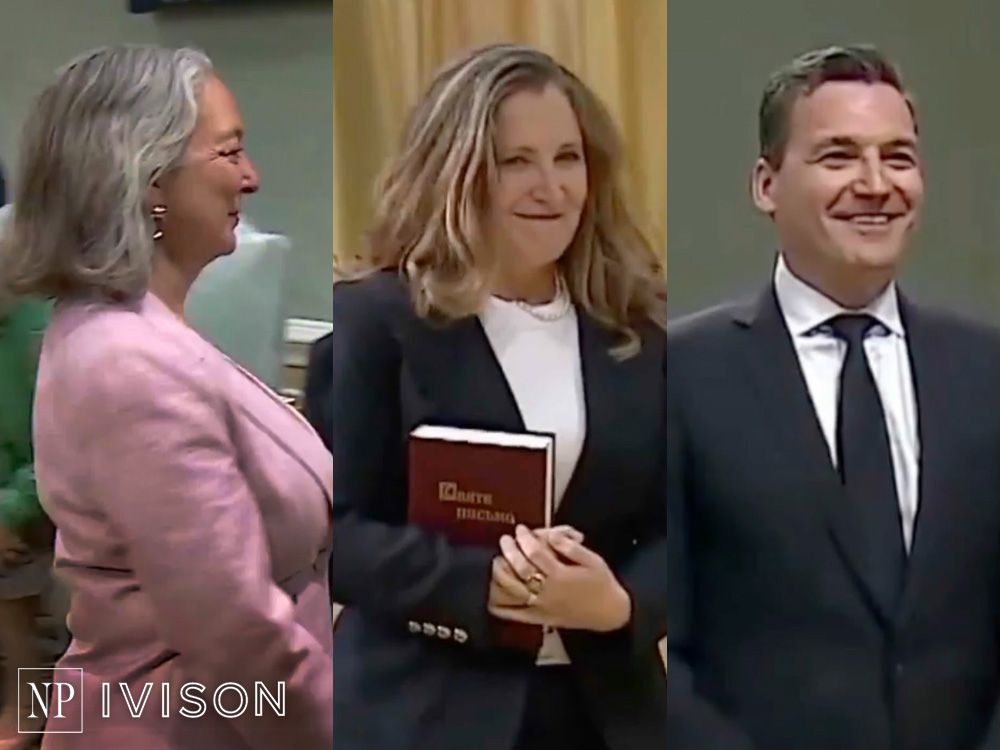
Prime Minister Mark Carney speaks after a meeting of the federal cabinet in West Block on Parliament Hill in Ottawa on Wednesday, May 14, 2025. Steven Guilbeault is at far left.

First Reading is a Canadian politics newsletter curated by the National Post’s own Tristin Hopper. To get an early version sent directly to your inbox, sign up here.

TOP STORY

Although Steven Guilbeault no longer occupies his controversial position as minister of environment, his new cabinet post ensures that he will now have command of one of Canada’s most sweeping Trudeau-era internet controls.

Guilbeault will be supervising the implementation of the Online Streaming Act, a 2023 law that enables the feds to impose content controls over much of the Canadian internet.

Tuesday’s cabinet shuffle retained Guilbeault in his pre-election post as minister of Canadian Identity and Culture. The position gives him oversight over the CBC, Parks Canada, the Department of Canadian Heritage and the Canadian Radio-television and Telecommunications Commission, among others.

“Thank you for your confidence, Prime Minister Mark Carney. I look forward to getting to work building a stronger country, based on the values of Canadians,” said Guilbeault in a Tuesday social media post.

At the time of Parliament’s dissolution, federal agencies had only just begun the process of applying the terms of the Online Streaming Act, but it had not yet yielded any noticeable changes to how Canadians were able to consume content from sites like Netflix or Disney+.

The Online Streaming Act effectively requires internet companies to follow the same rules on “Canadian content” as traditional TV and radio broadcasters.

Ever since the 1970s, Canadian broadcasters have been required to stick to minimum quotas of so-called “Canadian content.” Commercial radio stations, for instance, risk losing their licence unless they can prove to the CRTC that at least 35 per cent of the music they play is Canadian.

What’s still up in the air is how such controls will be applied to the internet, and who will be subject to them.

In 2023, the CRTC required any streaming service or social media company with more than $10 million in Canadian revenue to register with them. Just this week, the CRTC began hearings to determine how Canadian content would be defined under the terms of the Online Streaming Act.

While the act was still before Parliament, regulators hinted that it would likely take the form of streamers being forced to rejig their content algorithms in order to artificially highlight Canadian media, while artificially hiding other media. In 2022, CRTC chairman Ian Scott told a Senate committee that the Online Streaming Act could empower him to tell the likes of Netflix: “I want you to manipulate it (the algorithm) to produce particular outcomes.”

The Act also requires streaming services to pay five per cent of their revenues to government-administered media funds.

Within hours of Guilbeault’s reappointment, one of those funds, the Canada Media Fund, publicly welcomed him into the post.

“Experienced leaders like Minister Guilbeault will be key in the coming years as our sector weathers growing pressures and rapid transformation,” read a statement by Valerie Creighton, the fund’s president and CEO.

In January, the Centre for Canadian Innovation and Competitiveness estimated that the likely result of the five per cent mandate would be for streaming services to hike the costs of their Canadian subscriptions.

“With the five per cent revenue contribution requirement, the average Canadian family will pay an extra $40 per year, or almost an extra month of streaming subscriptions, into various media funds,” the group wrote in January.

This is Guilbeault’s second run in the position. He was also minister of Canadian Heritage from 2019 to 2021, during which time he tabled the legislation that would eventually become the Online Streaming Act.

The language of the Online Streaming Act also goes beyond mere Canadian content by hinting that streamers may also be subject to “inclusive” mandates on their content.

The Online Streaming Act specifically requires broadcasters to produce content that reflects “Black or other racialized communities,” as well as Canadians of “diverse … sexual orientations, gender identities and expressions.”

As one CRTC fact sheet puts it, the Online Streaming Act empowers them to “ensure online streaming services support Canadian and Indigenous content.”

All the while, the rules for what is and what is not Canadian are famously complex. The mere presence of a non-Canadian crew or non-Canadian financing can often mean that an otherwise Canadian product is denied official recognition by Ottawa.

One of the most notable exceptions is that much of the catalogue of Canadian singer-songwriter Bryan Adams does not qualify as CanCon because Adams works with non-Canadian co-writers. Just last week, while appearing at Toronto’s Departure Festival, Adams renewed his criticism of the CanCon regime.

“It’s an archaic system; we don’t really need it in Canada,” he said. “People listen to music, they don’t consider nationality.”

Guilbeault remains relatively popular in Quebec, where his Montreal riding of Laurier–Sainte-Marie is now one of the safest Liberal seats in the country.

However, his turn as environment minister made him a bête noire throughout Western Canada for his championing of everything from carbon pricing to a total ban on sales of new gas-powered vehicles by 2035.

On Wednesday, Guilbeault weighed in on environmental policy one more time, saying that Canada shouldn’t build any new pipelines until all of its existing pipelines are being used at full capacity.

“Before we start talking about building an entirely new pipeline, maybe we should maximize the use of existing infrastructure,” said Guilbeault, before claiming that the Trans Mountain Expansion pipeline is only operating at 40 per cent capacity — a figure that turned out to be wrong (it’s actually at about 70 per cent capacity).

IN OTHER NEWS

One thing missed in much of the news coverage of the new cabinet is who didn’t get in:

  • Karina Gould, the former Liberal House leader who ran against Mark Carney in the Liberal leadership race. Immediately after Carney was sworn in as prime minister, Gould was prominently at his side during a factory visit. No such joint appearances have happened after she was snubbed from Carney’s pre-election cabinet, and now his post-election cabinet.
  • The last member of Justin Trudeau’s wedding party. There was a period of time when no less than three members of Trudeau’s wedding party were high-level government figures: Gerald Butts was principal secretary to the prime minister, while Marc Miller and Seamus O’Regan were cabinet ministers. Butts resigned amid the 2019 SNC-Lavalin scandal, O’Regan didn’t run for re-election and Miller was just snubbed for cabinet. However, the cabinet still retains Trudeau’s former babysitter, Dominic LeBlanc.
  • Nate Erskine-Smith, the Toronto-area MP who was appointed as housing minister in Trudeau’s final cabinet — and then retained in the post in Carney’s pre-election cabinet. Unusually, Erskine-Smith actually complained about not getting to be a cabinet minister anymore, writing on social media that he felt “disrespected.”

To read about about the rest of the Liberals’ “cabinet losers,” click here

Also, the cabinet awkwardly contains two Liberals who announced they were leaving politics to spend more time with their families, only to immediately return when Liberal polling numbers became more favourable. That would be Anita Anand, the new foreign affairs minister, and Sean Fraser, the new justice minister. Fraser, in particular, made a big deal out of how much politics had taken him away from his family and how happy he was to be rid of it.

 Canada’s new housing minister, Gregor Robertson, was immediately asked the obvious question as to the Liberal government’s plan to make housing affordable. Namely, he was asked whether he would bring down housing prices. Robertson’s answer? “No.” He said housing prices are “a huge part of our economy” and that he would be building more homes, but in a way that Canada’s sky-high real estate prices remained “stable.”

Get all of these insights and more into your inbox by signing up for the First Reading newsletter here.


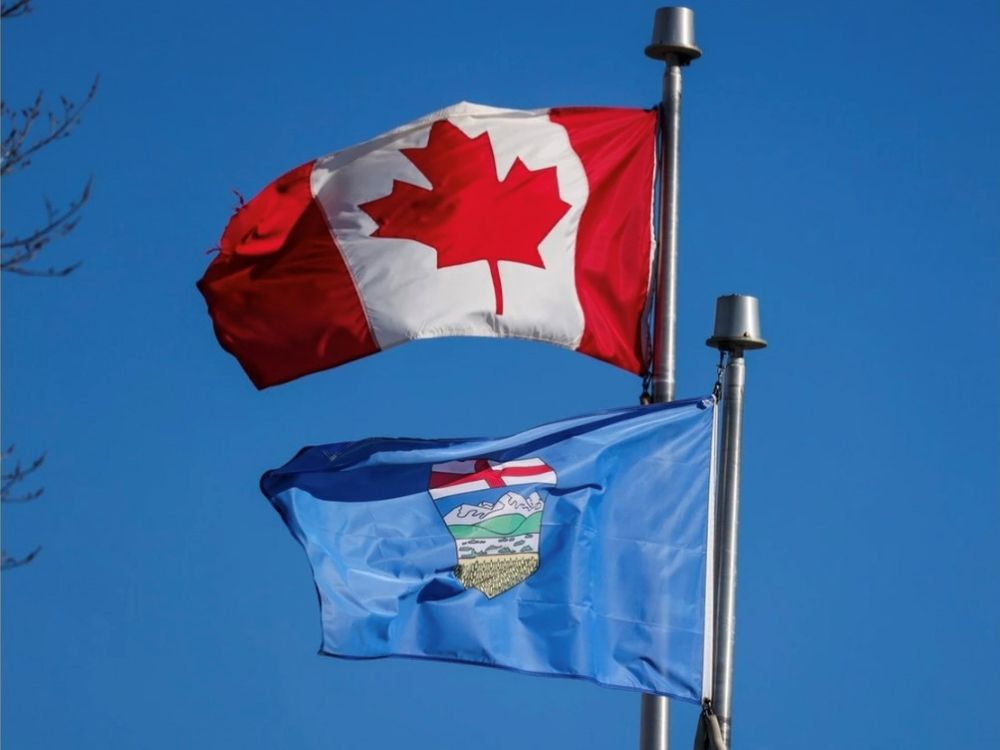
The Canadian flag and an Alberta provincial flag fly together in Cochrane.

No matter where you stand on Alberta separation — whether you approve from afar, or oppose it from Edmonton — it’s important to remember how small it is. One key theme that continues to emerge from any polling on the issue is the movement’s minority status. It’s doomed, just from the numbers alone.

The best public opinion data we have yet, taking the temperature of the province, was released Thursday by Postmedia-Leger. In a weekend survey, it asked Albertans how they would feel about various separation scenarios and found that even the most popular form of secession — with Alberta, Saskatchewan, British Columbia and Manitoba forming its own country — was supported by only 35 per cent of the province.

The concept of an Alberta-Saskatchewan independent nation-state was supported by 30 per cent of Albertans, while 29 per cent supported the idea of an Alberta-alone nation-state. Only 17 per cent of Albertans supported joining the United States as a state. This is consistent with previous polling: in March, Mainstreet Research

pegged

support in Alberta for some form of independence at 37 per cent, while a May poll by Research Co.

found

that in Alberta, “29 per cent of voters would welcome separation from Canada, while 64 per cent would not.”

In Leger’s study, support also varied by demographic: men, whose support for secession ranged between 32 and 40 per cent depending on the scenario, were generally more in favour of leaving than women, whose support ranged from 23 to 30 per cent. Edmonton-based support for leaving ranged from 25 to 28 per cent, again, depending on the scenario, while in Calgary it ranged from 25 to 34 per cent; in the rest of the province, it was between 35 and 42 per cent.

That’s not to say the numbers can’t change, but it’s hard to anticipate them getting much better for the separatist camp. For one, they have to contend with the reality that a plurality of Albertans — 44 per cent, per the Leger survey — see themselves as primarily Canadian, and another 32 per cent see themselves as equally Albertan and Canadian. Only 21 per cent see themselves as mainly Albertan.

Which makes sense. Alberta is far more open to natural resource development and favours personal independence and limited government to a greater extent than the rest of the country, but when it comes to areas of provincial jurisdiction that have a greater impact in defining local identity, it follows the rest of Canada.

It doesn’t have its own unique film and television industry, exports pop and country stars to the United States. It directs much of its political energy at Ottawa instead of its own house. Its universities offer little different from those of Ontario because they’re deeply beholden to federal policy. Its schools continue to teach shallow curriculums heavily influenced by the progressive left. It isn’t leading the nation on crime either; like everywhere else in the country, it’s plagued with a lack of court transparency, keeping transcripts and judicial statistics from entering the public domain, where they’d actually be useful.

Major cultural overlap with the rest of Canada aside, the separatists also have a hurdle in each other. Some of their number favour American statehood; others, total independence; others, independence only if it includes all of the western provinces. Who is their leader? Unclear — there are multiple factions within the separatist faction.

The leader of the Alberta Republican Party, a separatist political party with People’s-Party-of-Canada-level irrelevance, is already

under fire

from independent media commentators for lacking conservative cred. Meanwhile, the Alberta Prosperity Project, a separate group organizing to put a separation question on a referendum ballot, is receiving

pushback

from some secessionists for not sufficiently considering the input of others. Of the minority of Albertans who want independence, it’s not clear at all who they want as leader, and how they’d like their new country to work — beyond of course having tax cuts. The Alberta Prosperity Project even

seems to think

that its people would keep their Canadian passports.

As for what motivates the separatist crowd, most — 53 per cent — wanted to separate for economic, political and cultural reasons together. Another 30 per cent wanted to separate for economic reasons alone, which is a significant minority of the movement. They make up a weaker strut in the frame, as they’d logically withdraw support if the economic calculus doesn’t end up playing out in Alberta’s favour. And it probably doesn’t.

A lot of the big economic plans for Independent Alberta are based on fantasy math and imagined scenarios that blot out the cons while exaggerating the pros. Unless Alberta takes part or all of B.C. with it — and that’s incredibly unlikely, unless northern and interior B.C. are somehow conquered by the New Alberta Army or granted permission to split by their province’s urban political centre — it will be landlocked and only able to export its resources to the two countries it’s sandwiched between, resulting in worse-than-global-market revenues. Proponents point to Switzerland, a high-end manufacturing and banking fortress, as evidence that Alberta Alone could succeed — when in fact we’d be more comparable to mineral-heavy Mongolia.

And no, there is no United Nations treaty that would guarantee Alberta favourable access to B.C.’s coast; the UN’s treaty on ocean use at best

allows

coastal nation-states to make agreements with landlocked neighbours to allow access on terms they both find agreeable.

Talk to a regular Costco-shopping Albertan and they’re most likely not going to favour independence. In fact, they’re probably not happy with the

increased level of investor uncertainty

that indulging separatist fantasies has almost certainly brought upon the province. When you talk about “Alberta separatism,” you are talking about a group that’s big enough to cause the province problems, but too small to ever achieve independence.

National Post


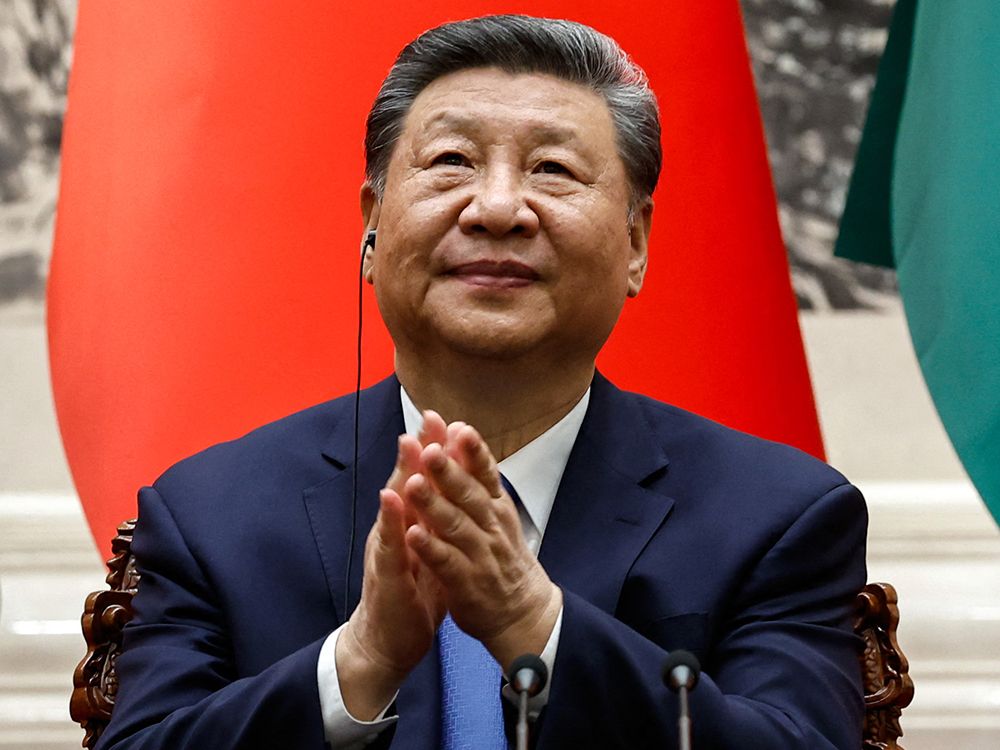
Chinese President Xi Jinping applauds after a joint press conference with Brazilian President Luiz Inacio Lula da Silva in Beijing on May 13, 2025.

There was a curious, but telling, contrast of geopolitical images this week. While U.S. President Donald Trump was pursuing uber-opulence in Riyadh, traipsing along purple carpets, inspecting plans for glittering Saudi cities of the future and looking to collect the keys to the most decked-out private jet in history, his geopolitical opposite, China’s Xi Jinping, was speaking to the leaders of Latin America and the Caribbean in a very drab conference centre in Beijing.

It neatly sums up the continuing differences in geopolitical priorities between the two, and underlines a fundamental philosophical difference that will see strategic neglect on the part of this U.S. administration if it continues.

The fundamental priority for the U.S. in its competition with China should be to secure supply chains for the economies of the future. While high-tech billionaire and presidential adviser Elon Musk and OpenAI CEO Sam Altman were in tow with Trump on his Middle East shindig, doing deals for Saudi cash to buy U.S. computer chips (and weapons), Xi was quietly consolidating the supply side of the equation back in Beijing.

You can do all the deals for high-end product that you like, but if you haven’t got the ingredients to make the products, then you haven’t got a product.

The ingredients for semiconductor chips — the building blocks of the world’s technological future — are dependent upon two things: critical minerals and Rare Earth Elements (REE), and the processing capacity to refine them. The second part is an even bigger challenge than the first.

China currently has the entire global market in critical minerals and REE sewn up, and while the U.S. might feel great as it consolidates wealth in palaces in the desert, its Chinese rival is quietly strengthening its strategic base.

On the extractive side, China has for years been securing supply markets both through its Belt and Road Initiative (BRI) projects and the supply of much-needed liquidity to developing markets. While the U.S. has often had a difficult relationship with Africa and Latin America, China has worked ruthlessly to shore up what it sees as its leadership of “The Global South.” As Larry Summers, former U.S. Treasury Secretary, once quoted an unnamed foreign diplomat as saying, “What we get from China is an airport. What we get from the U.S. is a lecture.”

Under Trump, the U.S. perhaps no longer dolls out compliance lectures, but after cancelling most of its foreign aid program, it doesn’t doll out much else.

As of February 2025, China had Memorandums of Understanding (MOUs) to support BRI projects in more than 145 countries, including 53 in Africa and 21 in Latin America and the Caribbean. Total BRI support (since its launch in 2013) stands at US$1.175 trillion, with US$121.8 billion invested in 2024 alone.

On Tuesday, Xi pledged a US$9-billion credit line for Latin American and Caribbean markets, and a separate pledge of US$4.8 billion for Brazil including investment from Chinese EV maker Great Wall Motors and the purchase of a copper mine in north-eastern Brazil. So China both opens a further major market for its product at the same time as securing the supply chain for it.

The second and much overlooked problem for the U.S. (and the wider West) is the processing and refining part of the equation. Doing the real estate deals for source markets is the easy bit — this is the much harder and dirtier part.

More than 20 years ago, China gave up on trying to compete in the “old” internal combustion engine market. Instead, it decided long before Musk was even dreaming of Tesla that electric vehicles were the future. It built both the extractive supply chain via its BRI efforts, but also the domestic processing capability, which according to Barclays stands at 90 per cent of the world’s capacity.

Processing critical minerals is a dirty and expensive business, and Western miners lament that it’s almost impossible to compete dollar for dollar with China while trying to maintain environmental standards, let alone bottom-line cost competitiveness. This is key not just for EVs and giga-factories, but also for the much-cherished advanced semiconductor reshoring Trump is attempting to do.

It also hasn’t escaped folks’ attention that unpredictable tariffs will just wall up the U.S. while China presents itself as the more reliable trading partner — a consistent message delivered in Beijing this week.

Even before Trump, the U.S. had been debating a pivot to Asia not just from Europe, but with domestic energy production now secured, from the Middle East. While THE MIDEAST may have attractive sovereign wealth funds and ultra-wealthy consumers, the debate on its wider strategic relevance is moot, unless it becomes a willing critical minerals processing hub (there’s not much to offer on the extractive side).

So as the U.S. delegation flies home (still on the old Air Force One), it might want to ponder that while it’s posturing and threatening the folks in its own backyard, its strategic adversary is buying and eating lunch with them.

National Post

David Oliver is a geopolitical strategy expert and founder of Minerva Group. You can follow him on his Substack The Ultima Ratio.


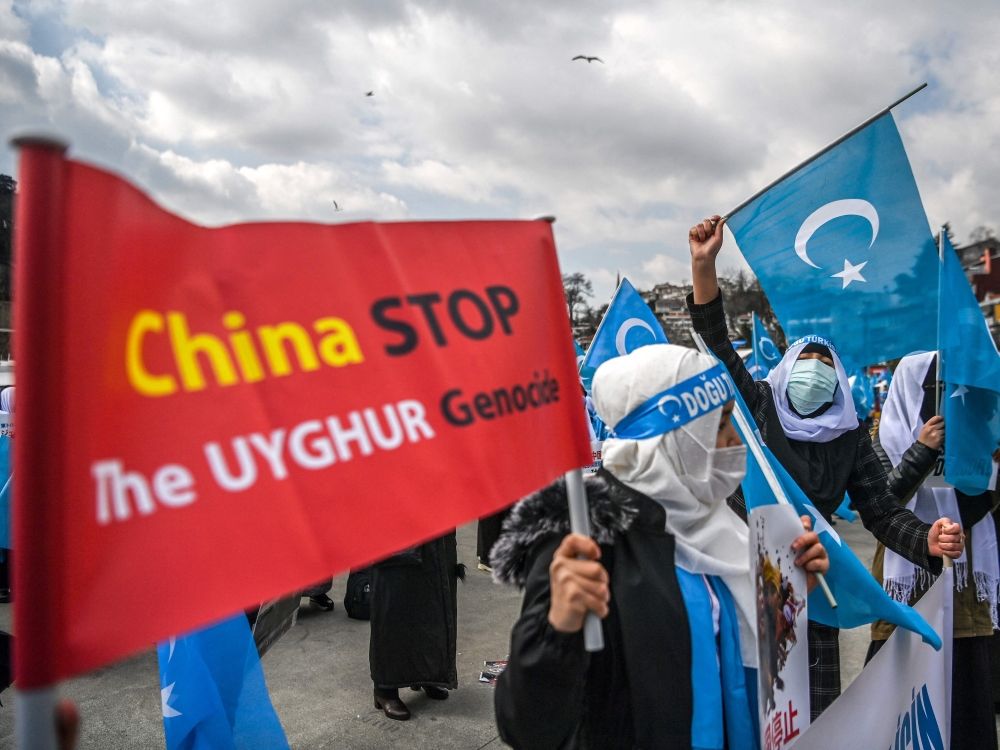
Members of Women Muslim Uighur minority hold placards and flags of east Turkestan as they demonstrate to ask for news of their relatives and to express their concern about the ratification of an extradition treaty between China and Turkey, near China consulate in Istanbul on March 8, 2021 during the International Women Day.

By Margaret McCuaig-Johnston and Sophie Richardson

Prime Minister Mark Carney faces a host of urgent and challenging policy issues. The first is trade with the United States, and support for sectors of the Canadian economy affected by tariffs. But the prime minister is also a person of empathy and values, and those are expected to be central to his policies, including his new approach to

foreign policy leadership

.

One policy priority that will reflect the prime minister’s values: significantly stepping up efforts to protect human rights in China and to end Beijing’s human rights violations in Canada. Carney laid down markers when he

identified the Chinese government

under Xi Jinping as Canada’s biggest security threat, and committed himself to countering Chinese foreign interference.

As Carney says in his book,

Value(s): Building a Better World for All

, leaders catalyze and coordinate actions. His first chance to demonstrate this will be chairing the G7 Leaders’ Summit in Alberta, which will run from June 15 to 17. All seven member nations have developed initiatives addressing

foreign information manipulation and interference

, and Carney can lead their adoption.

Canada can also lead at international human rights institutions, including the United Nations Human Rights Council. Bodies like these are under significant 

pressure

from Beijing to be silent regarding Xi’s abuses (China’s actions towards the Uyghur population possibly amount to

crimes against humanity,

says the UN), and to

refrain

 from criticizing governments at all.

Carney can announce Canada’s intention to run for a seat on the council, and in the meantime lead efforts to advance resolutions, hold briefings and lead like-minded governments in gathering evidence of widespread, systematic Chinese state abuses. Canada has supported similar initiatives,

highlighting

 violations of more than two million Tibetan and Uyghur children’s rights to education in their own language, and 

supporting

an effort to hold a debate about extensive human rights infringements in the Xinjiang region of China, where most Uyghurs live. Ramping up these efforts requires a committed champion, and Canada is well-positioned to step into that role.

Canada can also redouble its longtime support for independent civil society in China. Although Xi’s government strives to erase independent activism,

courageous individuals

working on issues ranging from public health to women’s rights to ending the death penalty still raise awareness, support affected communities and occasionally win local policy victories. Diplomats often observe that human rights gains should come from people inside the country — but greater external support is essential. New CBC funding could be deployed to salvage Tibetan- and Uyghur-language journalism

no longer supported by Washington

.

Beijing’s efforts to undermine human rights in Canada are now 

well-documented

, and Canadians just went to the polls again without the process being fully insulated from interference. The Chinese Communist Party’s transnational repression now cuts into Canadians’ rights to free speech, assembly and political participation. During the federal election, Beijing-generated disinformation spread on WeChat and TikTok, leading the Canadian Security Intelligence Service to

warn

candidate Joe Tay and his team to stop canvassing door to door for their own safety. His loss is likely to embolden Beijing.

In recent months Beijing has also

issued

bounties of HK$1 million (C$180,000) for the arrest of certain Canadian citizens, and

sanctioned

20 individuals in Canada for criticizing Beijing’s rights abuses. Thousands of Canadians affected by Chinese state repression were disappointed with the

Hogue commission’s

 unwillingness to make recommendations to address these problems. CSIS and other agencies have new authority to act on foreign interference, and effective implementation will be key. A registry of foreign agents will help clarify who in Canada is working on Beijing’s behalf.

These persistent threats, along with Beijing’s recent shocking

execution

of four Canadians despite strong diplomatic interventions, and its

arbitrary detentions

of Canadians, reflect an urgent need to work towards a “better world for all.” That includes those being repressed in China, and Canadians feeling the long arm of the Chinese Communist Party. The prime minister can catalyze that action, reflecting Canada’s values and forging a world that respects human rights.

National Post

Sophie Richardson is the co-executive director of the Network of Chinese Human Rights Defenders. Margaret McCuaig-Johnston is a board director of the China Strategic Risks Institute and a senior fellow in the Graduate School of Public and International Affairs at the University of Ottawa.


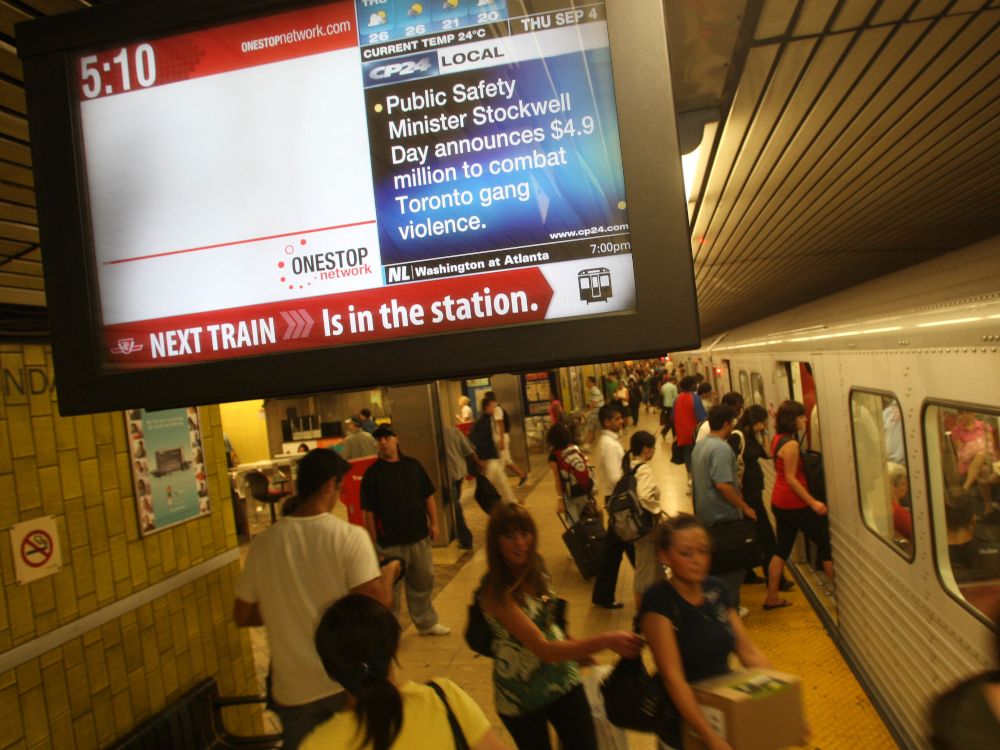
Passengers board a train at Dundas subway station in Toronto, in 2008.

Imagine this scenario. High-ranking officials make a decision about an important and potentially controversial matter. It was made with the best of intentions, and would hopefully ensure the entire process evolved in a proper and co-ordinated manner.

Yet low-ranking officials disagree with the decision and arbitrarily ignore the directive and head in a completely different direction. In spite of this arrogant and rather devious manoeuvre, this strategy somehow moves forward without any discussion or fear of repercussions.

Believe it or not, this scenario is was just played out in real time in Toronto. Jennifer Dundas, a lawyer and former CBC political affairs reporter,

revealed

on Tuesday that Toronto Transit Commission (TTC) “staff have defied the will of the Board of Commissioners in recommending renaming of Dundas Station.”

According to her post on X, “Last year, the Board, led by chairperson Jamaal Myers, ordered staff to recommend a process for public consultation. Staff, however, defied the motion. They have brought forward a recommendation to rename the subway stop ‘TMU Station’ with no advance warning, and no public consultations.”

This, in effect, means City of Toronto staff “completely ignored this February 2024 order,” Dundas wrote in

a separate post

, “which specifically directed them to recommend a process for public and stakeholder consultation.”

She’s right. The TTC board adopted a motion in February 2024 that clearly directed staff to create a “framework for considering the naming of Dundas Station and Dundas West Station … with a recommended process for public and stakeholder engagement.”

This was supposed to include “background on any requests or discussion with non-profit third parties.” Yet low-level city staffers ignored what the board specifically wrote and went on their merry way with a new, unauthorized agenda.

This is part of a long-standing woke agenda in the city that’s largely supported by left-wing radicals and other fringe rabble-rousers. Toronto city council has spent a not-so-insignificant amount of time, energy and resources the past few years on renaming “

Dundas-linked city assets

.” This refers to anything in the city named after Henry Dundas (1742-1811), a trusted ally of British Prime Minister William Pitt.

2020 petition

calling for the name of Dundas Street to be changed amassed around 14,000 signatures. That’s all left-wing Toronto city councillors needed to enthusiastically

pursue the matter

.

Dundas’s critics feel he was an awful person whose mere presence has hurt the reputation of “Toronto the Good.” A

2021 report

from the city’s executive committee sided with “many scholars” who believed had a “controversial legacy.”

In the committee’s less-than-humble opinion, “The continued commemoration of Henry Dundas — who is described in peer-reviewed academic research as having played an instrumental role in delaying the abolition of the slave trade — is in direct conflict with the values of equity and inclusion that the City of Toronto upholds.”

Yet this assessment is inaccurate. Dundas was an abolitionist who was opposed to slavery. He spoke in favour of well-known abolitionist William Wilberforce’s motion to abolish the British slave trade. “I am of opinion with him that the African trade is not founded in policy,”

Dundas said

in the House of Commons in 1792.

“I am of opinion with him that the continuation of it is not essential to the preservation and continuance of our trade with the West India Islands. I am of opinion that there is no mortality in that quarter that is incurable, and that the human race may not only be maintained, but increased in the West India Islands.

“In all these great leading questions I concur with my honourable friend. It may then be asked, ‘Do you not agree then, to the abolition of the trade?’ I answer that neither do I differ in this opinion.”

Dundas also proposed an important amendment to Wilberforce’s motion: “That the slave trade ought gradually to be abolished.” He took this middle-of-the-road stance because he believed immediate abolition could lead to “other nations tak(ing) up the trade” and an illegal slave market.

He hoped his “moderate measures” would prevent these scenarios from occurring. The British Parliament agreed and adopted Dundas’s amendment by a vote of 230-85.

The evidence seems clear that Dundas supported abolitionism and opposed slavery, so why is this being ignored?

Dundas’s critics, along with many low-level Toronto city staffers, were furious that he didn’t move to end the British slave trade as quickly as they felt he should have. Hence, they want to remove his name from Dundas Station and replace it with the name of Toronto Metropolitan University.

This is the same post-secondary institution where Jewish students reportedly feel harassed and say that, “You can’t be openly Jewish at TMU,” according to a recent report in the

National Post

. I guess we know where Toronto’s anti-racist priorities truly lie.

National Post


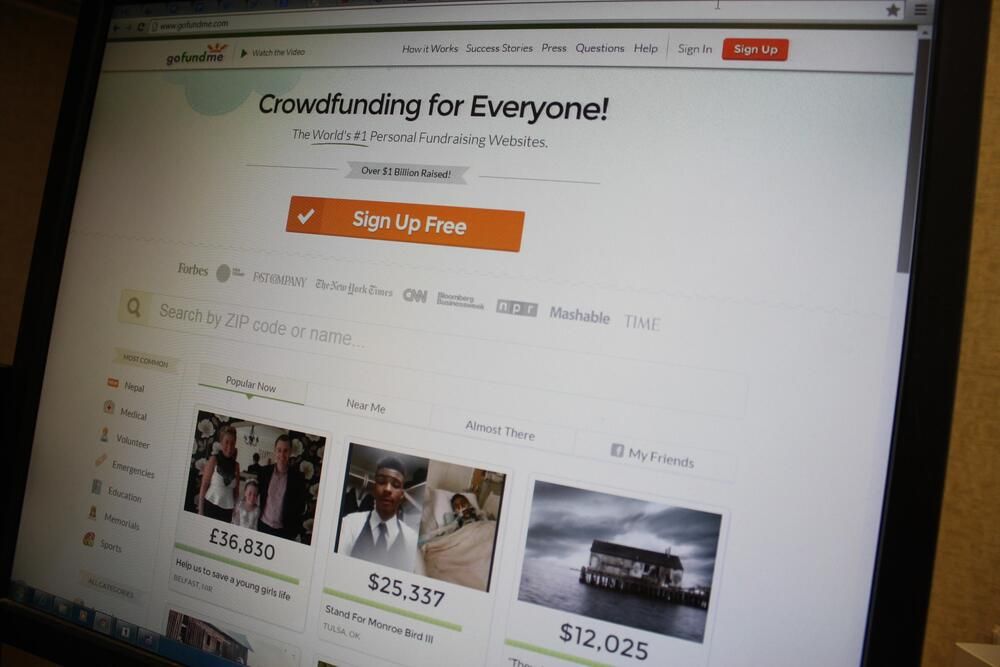
Crowdfunding, or raising money from several investors over the Internet, has made websites like GoFundMe and Kickstarter popular.  Photo: Karissa Donkin/Telegraph-Journal

One fundraising campaign on the popular crowdfunding platform GofundMe has been used to finance terrorist group ISIS under the guise of supporting Palestinians in Gaza, and it’s not clear whether there could be more.

On Monday, at the Ontario Superior Court of Justice, 12 year sentence was handed down to Toronto resident Khalilullah Yousuf, who pleaded guilty to participating in a terrorist group and terrorist financing.

Yousuf claimed he was crowdfunding on sites like GoFundMe for Palestinians in Gaza and Muslim religious events, but was instead sending the money to ISIS supporters in the U.S., Spain, and other countries. In combination with pandemic Covid Emergency Response Benefits (CERB) he received and crowdfunding, he

sent

over $35,000. To confirm his funds were being put to ISIS’ use, supporters sent him photos of the weapons and ammunition it was spent on, as well as an ISIS flag.

Yousuf’s involvement with ISIS wasn’t limited to financing. Allegedly, as part of an International ISIS network, he communicated with the group online through encrypted messages, participated in recruitment, created propaganda, and provided instructions to these supporters on how to carry out attacks.

After a two-year investigation, which involved intelligence forces in Canada, the U.S., and Spain, Yousef was finally arrested in July 2023. His use of multiple methods to transfer these funds, especially cryptocurrency, which is increasingly 

used

 for funding terrorism, may have led to him being flagged.

Yousuf’s case highlights the need for the strident inspection of crowdfunding platforms which host members claiming to raise funds for humanitarian purposes in the Middle East, not just for ISIS but also for other terrorist groups including Hamas, Hezbollah, the Popular Front for the Liberation of Palestine (PFLP), Samidoun and any other groups who may be exploiting the well-meaning nature of Canadians to fund and plan attacks here and abroad.

Whether the investigation into Yousef’s ISIS financing began at crowdfunding sites, and whether they are all being actively monitored for terrorist funding in Canada is unknown. But they should be.

Setting up a crowdfunding campaign on a site like GoFundMe is an easy way to draw attention to a specific cause and raise money for it. GoFundMe describes it as a three-step process where a user is prompted to fill in the details of a campaign, share it easily with links to have it gain momentum, and fill out their banking details in order to receive the money.

GoFundMe charges a fee of 2.9 per cent plus 30 cents on each transaction. Given that, the platform, no doubt, wants to ensure that they are not facilitating the financing of terror. Intelligence services, for their part, can benefit greatly from having a record of the accounts these funds were paid to.

How the platform and intelligence agencies would identify fraudulent causes, though, is unclear. GoFundMe, for example, has 18 categories of causes listed, which span everything from the medical needs of

patients enduring cancer treatment

to

supporting school robotics teams

to 

supporting starved Palestinian kids with hot meals

. The latter campaign already amassing US$3,413,301 of its US$4 million goal.

Perhaps intuiting funds raised for Gaza may be put to alternate uses, GoFundMe has created helpful pointer for those looking to raise funds for Gaza called: “

How to raise funds to evacuate civilians from Gaza

.” In it, campaign creators are kindly warned that they cannot create causes which support armed conflict or most travel for military and territorial defense.

In their

tips section

, the crowdfunding platform asks campaign creators to include specific details of where the funds will be sent: names of towns, cities, or villages; how the funds will be used: aid, clothing, medical supplies, food; and if the funds will be transferred to another organization after being deposited into their bank account.

But for all these guidelines and rules, it’s unclear how, if, and by whom this information is verified.

Then there’s an even bigger issue. Campaigns that, perhaps, should be flagged and put into review, may not always be so overt. They could even be fake. Anyone could make a fake campaign in one category — fundraising for veterinarian expenses for a sick cat, for example — but then use the funds for something completely different, like funding ISIS or Hamas, or a phoney non-profit organization affiliated with these groups, once they hit the fundraiser’s bank account.

In other words, the veracity of the campaign cause appears to rely largely on the goodwill of its creator. This is not very comforting. It’s hard to imagine how the platform or intelligence agencies would even begin to verify whether these funds are going, for example, to children in Gaza, or to members of Hamas. But they should.

Of course, the problem inherent in supporting charitable organizations who may be involved in terrorist activities extends past crowdsourcing sites like GoFundMe which largely well-meaning Canadians use to support causes.

The Canadian government has chosen to continue to fund UNRWA, despite

reports

that 12 of its workers were involved in the attacks on October 7, and 190 were working as Hamas or Islamic Jihad operatives at the time. In addition, UNRWA

teachers

have r

egularly called to “murder Jews, and create teaching materials that glorify terrorism, encourage martyrdom, demonize Israelis and incite antisemitism” and have allowed Hamas to use UNRWA’s Gaza headquarters to house their data centre.

Stopping the flow of funds to terrorist organizations and those sympathetic to them starts at the highest level in Canada — our government. Hopefully, Canadians will not have to pay heavy costs for their unseriousness in these matters.

tnewman@postmedia.com

X:

@TLNewmanMTL 


In this week’s show, John Ivison is joined by regular guests Eugene Lang and Ian Brodie to take a deep dive into Mark Carney’s post-election cabinet shuffle.

Brodie, a former chief of staff to prime minister Stephen Harper, said one concern he has is the predominance of “downtown Toronto, urban progressives” in the new cabinet.

“It’s an almost obsessively Toronto-focused cabinet,” he said, noting that excluding the one Liberal elected in Calgary (Corey Hogan) was a “missed opportunity”.

Brodie said that new natural resources minister Tim Hodgson is an improvement on his predecessor (Jonathan Wilkinson).

“But the problem is not that the Natural Resources department has been standing in the way of natural resource development in this country; the problem has been the environmental regulations that come out of the Environment Ministry. The Environment Ministry is huge now and much larger than it was 10 years ago. It has many more levers over the Canadian economy and the people in the Environment Department seem to be quite prepared to use all of them. The fact is that we have basically, to be blunt, the kind of a standard issue, downtown Toronto, social justice activist, kind of do-gooder, NGO type person as minister (Julie Dabrusin).

“There is a long history of ‘we have to keep oil and gas in the ground and keep Alberta and Saskatchewan from growing if we’re going to save the planet’. If that’s the approach of the government, then we’re in for a very difficult couple of years.”

Lang, a former chief of staff to two Liberal defence ministers, said his first impression is that there are far too many Trudeau-era ministers in this cabinet.

“I count 11 out of 28 – about 40 per cent of this cabinet are former Trudeau-era ministers. There is no reason for that. Mr. Carney owes none of these people anything. And he had an opportunity here to really show change in this cabinet, and he chose not to,” he said. “It’s more than about optics. It’s about competence. The last Trudeau government’s great failing was its relative lack of competence in governing. I don’t know how you improve the competence in your governing when 40 per cent of your ministers are from a government that was less than competent.”

Brodie said that, while the cabinet does look like a rearrangement of the chairs of people Carney inherited, there is “deep experience” on the front bench with ministers like Dominic LeBlanc on the Canada-U.S. trade and security file.

Lang took aim at the appointment of 10 secretaries of state, who will report to ministers on specific files (for example, Ruby Sahota has the responsibility to combat crime, reporting to justice minister, Sean Fraser).

“There seems to be this sort of narrative going around that secretaries of state are people that you can get focused on a specific issue within a portfolio and deliver results. That’s nonsense in my experience. I once worked for a secretary of state a long time ago. One of the biggest challenges a secretary of state has in the Canadian government is getting senior officials in their department to return their calls. There is a real competition here that goes on between secretaries of state and ministers and their offices. Secretaries of state have no legal authorities. They usually have no program authorities. I can’t think of a secretary of state in the long history of our secretaries of state that has meaningfully advanced an important file in government. I’ve never seen it,” he said.

Carney has said he is bringing back a more traditional cabinet-style government.

Lang said that every prime minister in recent history has said this – and none have.

“I think the last time we had a functioning cabinet government in the old sense was probably under (Jean) Chrétien 30 years ago. (Carney) says he wants to run a team. He says he’s going to empower ministers. Well, we’ll see,” he said.

Lang said that reorganizing ministries and creating new agencies is going to require “a lot of legislative bandwidth.”

“(The Liberals) made an election platform commitment to create a new organization called the Defence Procurement Agency. That sounds innocuous. It’s not. That’s a massive, complex machinery of government change, involving three or four departments. And it’ll be interesting to see if they even have the stomach to try and carry that out in a minority government context. Machinery of government changes, in my view, rarely yield the claimed benefits. They tend to be very painful things to execute. They tend to take years, if not decades. So, one wonders whether we’re stuck with the basic structure we have, whether we like it or not, because of the pain and the effort that’s needed to make major changes,” he said.

Brodie talked about the need to reform the bureaucratic side of government

“The next step ordinarily would be a reorganization in the Privy Council Office, the central agency closest to the prime minister that sends out the instructions to the rest of government and checks to make sure whether anybody’s paying attention to those instructions, he said, noting that reform would include the deputy minister cohort.

“In my view, it’s not so much that the deputy minister group is weak. I know there are some very good people there. (But) it’s just way too big. There are a bunch of fake deputy ministers floating around – people with high falutin titles and pay scales, all the accoutrements of the deputy minister group, all the status in Ottawa that comes with the title ‘deputy minister’, like being the viceroy of some central Europeans satrapy during the Holy Roman Empire.

“It’s a big deal when you go to the Rideau Club as a deputy minister, unless you’re the deputy minister of something that doesn’t really exist and your staff is four or five people stuck away in some obscure office building. And Ottawa is full of them. Frankly, the Privy Council Office itself is full of them. If I were advising on transition or on the machine of government, I would say the next step is to just get rid of that and streamline your senior civil service team in order to focus authority on a handful of people who can make things work for you.

“Mr. Carney knows all these people. They all know him. He’s as well placed as any new prime minister is to make changes in this group and I expect there’ll be big changes. But if he doesn’t make them between now and the end of parliament, you’re wasting the summer opportunity for new deputies, new ministers, and a streamlined team to get things moving for the fall session of parliament. He cannot waste the summer with ministers not knowing exactly what they’re supposed to do or with deputy ministers worried about whether they’re going to be shuffled in August or September.”

Lang agreed, saying the same principle applies to assistant deputy ministers (the next rung down in the public service).

“You could blow out 40 per cent of the assistant deputy ministers in this town and no Canadian would notice. The Privy Council Office, the prime minister’s department, has 1,400 officials working in it. Now when Ian was in the Prime Minister’s Office, there were 700 people working there. When I was in government, before that, there were 400 people working there. You could cut that organization in half tomorrow and nobody would notice,” he said.


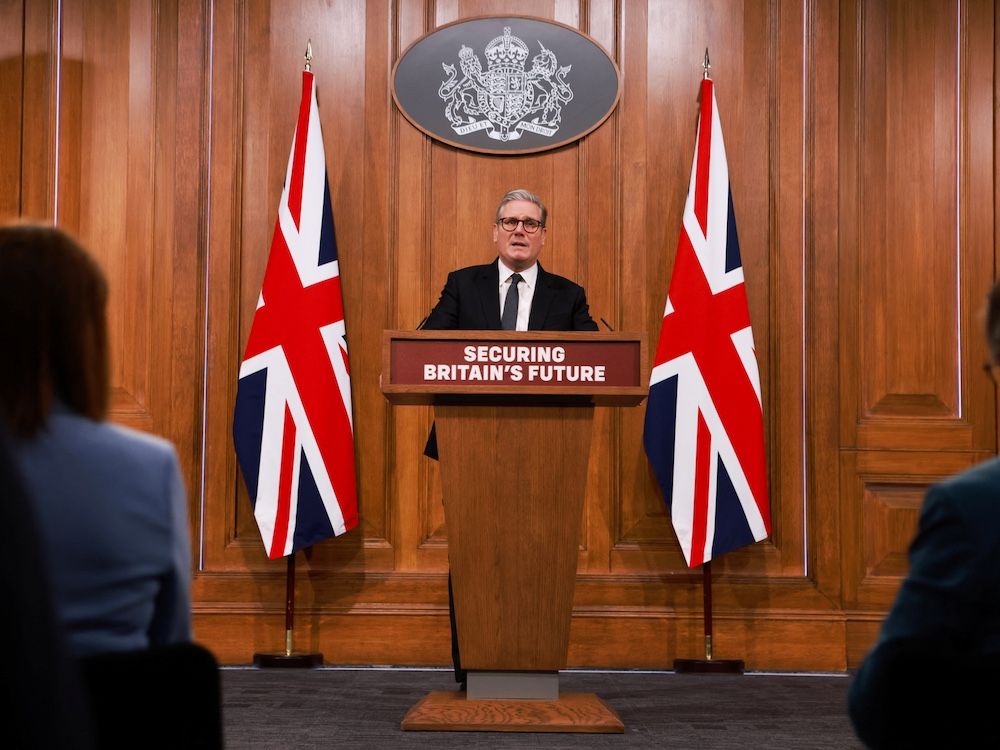
Britain's Prime Minister Keir Starmer delivers a speech during a press conference at the media briefing room of 9 Downing Street, central London, on May 12, 2025 (Photo by IAN VOGLER/POOL/AFP via Getty Images)

“We risk becoming an island of strangers, not a nation that walks forward together.”

These are not the words of a populist firebrand or a conservative hardliner. They were spoken by Sir Keir Starmer, leader of the Britain’s Labour Party and, since July 2024, prime minister of the United Kingdom.

In one of the most consequential political shifts in recent memory, Starmer has charted a new and unapologetically realist course on immigration. It is a striking departure not only from his party’s past rhetoric, but from the dominant dogma that has guided western policy-making for the better part of three decades: that mass immigration is always an economic benefit, a social good, and a moral imperative.

Today, Starmer is dismantling that orthodoxy piece by piece. He speaks plainly of ending what he calls Britain’s “open borders experiment.” He has acknowledged the structural imbalance that developed when immigration was used as a shortcut to economic growth without the corresponding investment in workforce development. “For too long, businesses were actively encouraged to bring in lower paid workers, rather than invest in our own people,”

he said on Monday.

His government now aims to reduce net migration from its record high of 745,000 in 2022, overhaul the visa regime, and reassert democratic control over the immigration system.

And in a statement that would have been politically unthinkable for a Labour leader just a few short years ago, he

declared

, “If you want to live in the UK, you should speak English. That’s common sense.”

Starmer

has gone even further,

directly confronting the social consequences of uncontrolled immigration: “The current system is contributing to forces that are slowly pulling our country apart. I believe we need to reduce immigration, significantly.”

It is common sense, but in Canada, it still isn’t common currency.

Even as we face the unmistakable consequences of population-driven pressure on housing, health care, and wages, immigration remains a third rail in Canadian politics. Raising concerns, no matter how grounded in data or lived experience, is still treated as impolite at best and inflammatory at worst.

As recently as 2022,

Canada was adding more than a million people per year through a combination of permanent immigration, international student intake, temporary worker programs, and asylum claims. This is not coordinated nation-building, it is unmanaged growth. And the consequences are everywhere: runaway housing costs, collapsing affordability, overstretched hospitals, stagnant productivity, and a generation of young Canadians priced out of the future.

But the effects are not merely economic. They are social, cultural, and civil as well. On the streets of Toronto, Vancouver, and Montreal, diaspora groups now square off over foreign conflicts with disturbing frequency. Protests turn into brawls. Schools become battlegrounds. Religious institutions face threats and vandalism not for what they preach here in Canada, but for the politics of distant homelands. From Middle Eastern tensions to South Asian rivalries, we are importing divisions faster than we can build cohesion. Multiculturalism without integration has mutated into parallel societies — and at times, outright hostility between them.

Prime Minister Mark Carney has indicated an interest in adjusting course. There is growing recognition of the strain posed by ballooning temporary programs. But Liberal changes have been reactive and piecemeal, too little, too late to undo the distortions already set in motion.

Despite a decade of record population growth, Canada’s real GDP per capita has stagnated. Productivity is declining. Infrastructure lags far behind need. The promise of a growing economy has not translated into growing prosperity for the average Canadian.

And yet the dominant vision remains one of constant expansion. Though Carney has not explicitly endorsed the goals of the Century Initiative, it is noteworthy that his inner circle includes senior figures tied to the group, an organization whose central premise is that bigger is always better, and that Canada should aim to reach 100 million people by 2100.

The New Democratic Party offers no meaningful dissent, still clinging to the romanticism of borderless globalism. And the Conservative party, though beginning to voice legitimate concerns about housing supply and integration, has yet to present a coherent and politically confident plan to reform the immigration system.

If even Britain’s Labour government, long a standard-bearer of liberal cosmopolitanism, can shift course, what’s stopping Canada’s political class?

The issue is not immigration itself. It is the scale, speed, and lack of planning. A responsible immigration system should align with national capacity, reflect labour market needs, and foster real integration. It should aim to grow not just the size of our population, but the quality of life for those who already live here, and for those we welcome.

Prime Minister Starmer has shown that rejecting false binaries, between openness and order, growth and cohesion, is not only possible, but necessary. As he warned, a country that loses its sense of shared identity risks becoming “an island of strangers.” That warning should resonate deeply in Canada, where faith in institutions is eroding, trust in government is weakening, and a growing number of Canadians feel left behind.

The reckoning is coming. If Britain can face it head-on, surely we can too. Better to shape the future on our own terms than to be overwhelmed by its arrival.

Anthony Koch is the managing principal at AK Strategies, a bilingual public affairs firm specializing in political communications, public affairs and campaign strategy.