LP_468x60
on-the-record-468x60-white

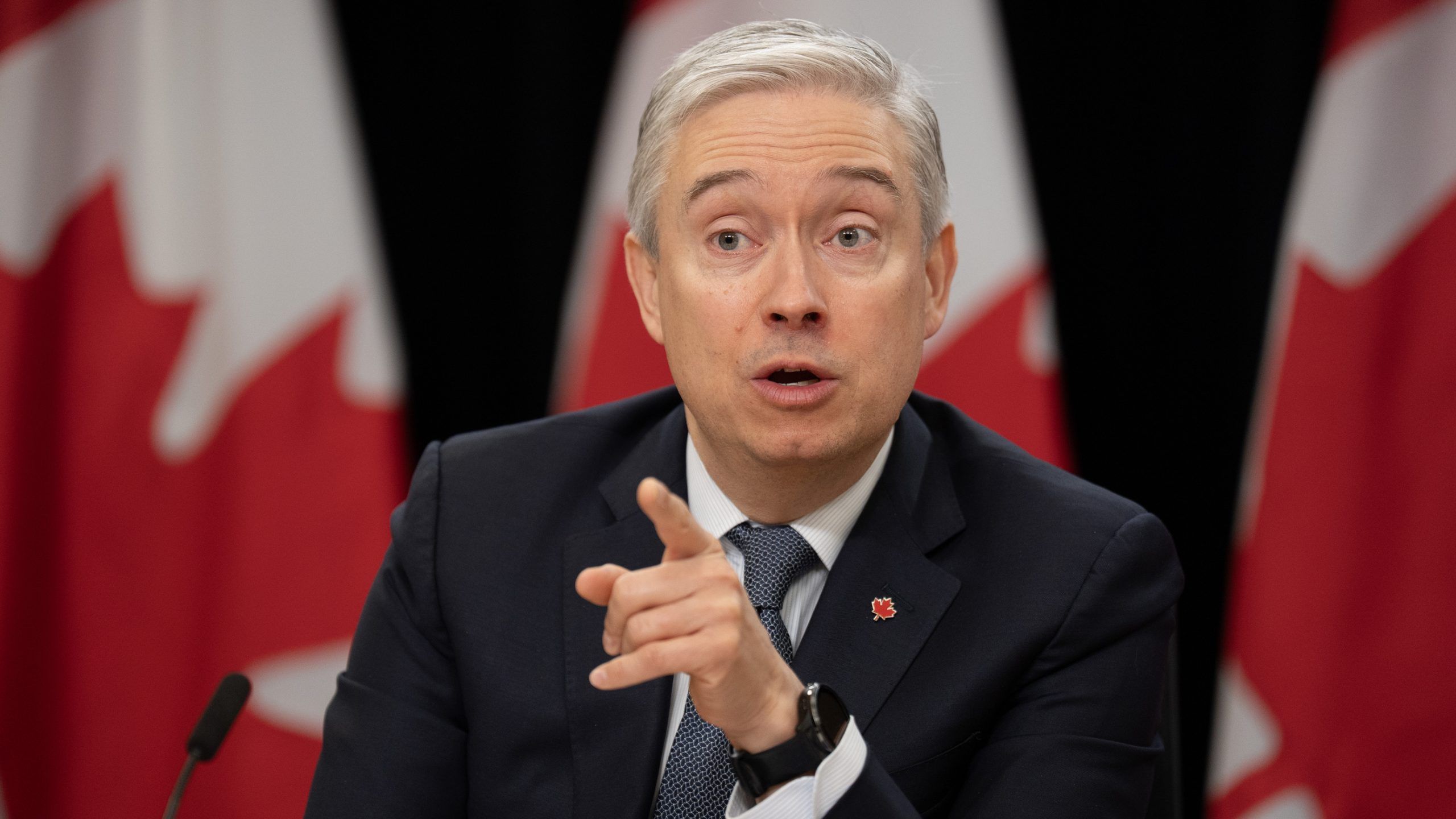
Former Innovation, Science and Industry Minister, now Minister of Finance and National Revenue, Francois-Philippe Champagne speaks during a news conference on tariffs, Wednesday, March 12, 2025 in Ottawa.  THE CANADIAN PRESS/Adrian Wyld

When the federal government spends your money — and it is most definitely your money — one of the ways it is held accountable is by presenting an annual budget.

The budget, among other things, details how the government spent your money, how much more of your money it will need in the future, the profligate and useful ways in which your money was spent, and — especially in the Liberals’ case — how much debt the government needs to rack up to pay for its excessive spending.

One of the government’s primary roles — perhaps its most important — is to be stewards of the public purse.

Not to have a budget for two years is not only an abdication of that role, it is a slap in the face of all Canadians. Give us your money, says the Liberal government, but accountability? Why, there is no need for that.

The

last budget

in April 2024 promised “fairness for every generation,” to build more homes, to make life more affordable and to grow the economy.

Then it got blown up in December when Finance Minister Chrystia Freeland resigned, charging Prime Minister Justin Trudeau with “

political gimmicks

” and implying the Liberals were failing to keep their fiscal powder dry in the face of incoming U.S. tariffs.

The whole episode highlighted just how important it is for us all to keep an eye on the nation’s finances.

Shortly thereafter, Parliament was dissolved, then prorogued, and then there was an election. The supposed democracy of Canada hasn’t had a sitting Parliament for five months.

And now our newly minted finance minister, François-Philippe Champagne, says we don’t need a budget this year. Instead, we will get a fall economic statement which isn’t the same thing at all. Often called a mini budget, it is less detailed and more an update on where things stand. Champagne

told

CTV’s Vassy Kapelos, “My objective is to provide (Canadians) with the best possible picture of the finances of Canada. It is to be prudent.”

Champagne said that after the summer parliamentary break and in the fall, there would be a fiscal update “which is going to be substantive and, like I said, there is going to be no surprises.”

Our finance minister speaks in contradictions: on the one hand he wants to give Canadians the best possible picture, and on the other hand, he will only provide a mere update in the fall.

It is also a wonder that the word prudent didn’t turn to ashes in his mouth considering the Liberals abysmal ten-year economic record in power. A new

report

by the Fraser Institute reveals total government spending has soared. In 2014, it was 38.4 per cent of the national economy, last year it was 44.7 per cent. Our debt burden now means we are the seventh highest out of 40 advanced economies.

“Simply put, over the last decade, Canada has experienced substantial growth in both the size of government and the overall debt burden that has outpaced virtually every other advanced country. This has translated to a deterioration in the state of Canada’s finances relative to comparable countries, and likely means lower economic growth and reduced living standards for Canadians,” says the report.

But for Champagne, as he said in the interview, his focus is first a tax break for Canadians, then a Throne Speech and then a fall statement.

Our finance minister, apparently, is incapable of handling more than one thing at a time. Give him a stick of gum and he’ll fall over. As Conservative MP Mike Lake has

pointed out

, in 2011 the new government of Stephen Harper produced a budget six weeks after the election.

Champagne also discounted a budget this year because it normally falls in February or March, and this year there was an election.

Well, after 9/11, then finance minister Paul Martin produced a so-called “security budget” in December, so there’s precedent for having a budget later in the year.

And it’s not as if this is a totally new government. The Liberals have been in power for ten years, they know how things work, almost half the cabinet were in Trudeau’s government, and Champagne has been in Parliament for a decade with stints at industry and international trade.

Not having a budget because it’s the wrong time of the year, is a lame excuse designed to cover up a deep-seated disdain for being held accountable. Although, let’s not dismiss the idea that the finances are so bad the Liberals are reluctant to detail them in public.

It was the Liberals who previously touted their high-profile guardrails to keep the finances under control. But then the guardrails were exceeded, then they were changed and then they were dropped.

No guardrails, no budget and no accountability. Two decades ago, the

second report

of the Gomery Commission, the inquiry into Adscam, the Liberal sponsorship scandal under Jean Chrétien, was entitled “Restoring Accountability.”

It noted that there needed to be greater transparency in the operation of government and that, “Parliament’s capacity to exercise its traditional roles of watchdog of the public purse and guardian of the public interest will have to be reinforced.”

Not having a budget makes the government less accountable, Parliament more impotent and the public distrustful and disregarded.

The public purse belongs to the people of Canada. They have a right to know how much is in there and who is dipping into it.

Having a budget isn’t some privilege granted to the people, it’s a right with roots that go back to the

Magna Carta

of 1215 — a charter which was also about accountability.

We need a budget now.

National Post


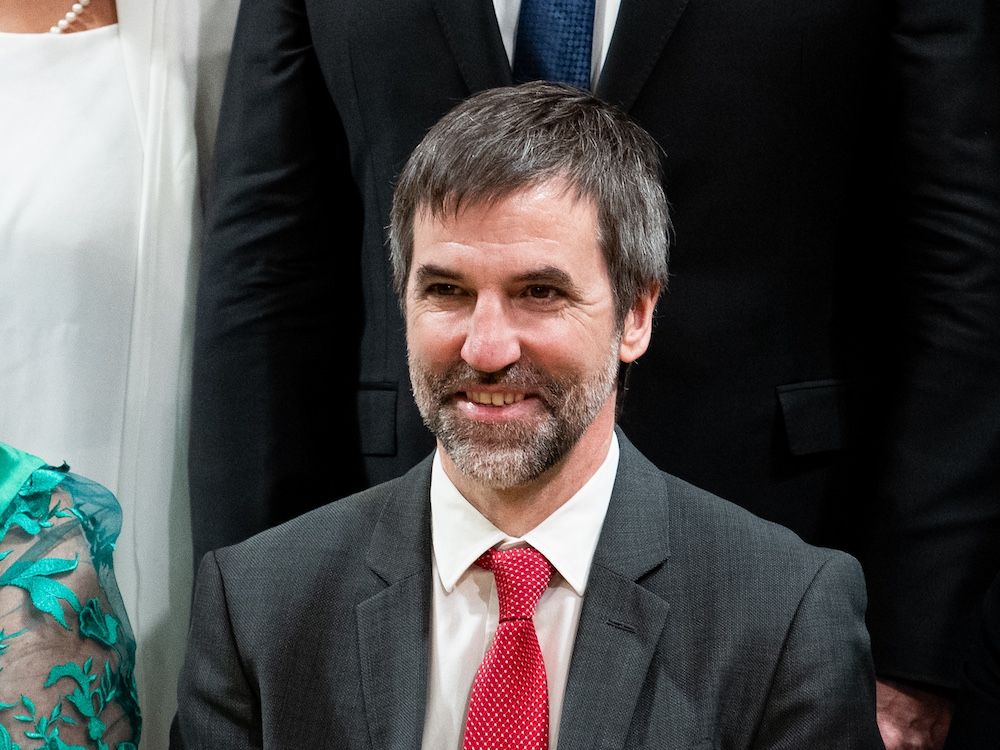
Minister of Canadian Identity and Culture and Minister responsible for Official Languages Steven Guilbeault	following a cabinet swearing in ceremony at Rideau Hall in Ottawa, on Tuesday, May 13, 2025. THE CANADIAN PRESS/Spencer Colby

The first notable act of our newly-minted culture minister, Steven Guilbeault, was to recite to media scribes the myth of peak oil. Asked whether pipelines would continue to be a disruptor to Alberta-Ottawa relations, he replied:

“The Canadian energy regulator, as well as the International Energy Agency, are telling us that probably by 2028, 2029, demand for oil will peak globally and it will also peak in Canada.”

“So… before we start talking about building an entirely new pipeline, maybe we should maximize the use of existing infrastructure.” He went on to claim that the Trans Mountain Expansion Project (TMX), which came online in

2024

, was running at only 40 per cent capacity. This was wildly incorrect: in 2024, TMX

ran

at 77 per cent capacity, and that share is projected to grow over the years to reach 96 per cent in 2028.

As for peak oil, Guilbeault was also very likely wrong. For years, activists have claimed that the highest volumes of oil consumption were just over the horizon, only to be proven wrong time and time again. Just like how the deadline on COVID restrictions of “two weeks to flatten the curve” was stretched to two years, the impending decline of oil constantly moved farther and farther out.

The theory was first put forward in 1956. Geologist and Shell researcher M. King Hubbert put forward a paper predicting the beginning of the end of U.S. oil production somewhere between 1965 and 1971. This was a fearsome prospect because life in the developed world was dependent on cheap, readily available energy, and its absence (and subsequent increase in price) could reverse hard-fought economic progress.

For a time, he appeared to be right: when the early 1970s hit, oil production in the United States began falling slowly — but the bottom of this trough was hit in 2006, and U.S. production surpassed historic highs around 2014.

Globally, Hubbert predicted a production peak for 2000. In reality, production hit what is now a mini-peak in 1979, sinking to early ’70s levels during the early ’80s — but it later

picked up speed

and steadily climbed over the years. No ceiling was hit in 2000; production kept on rising. It did hit a trough in 2020, but that was due to worldwide COVID shutdowns and the price shock they caused to oil contracts.

Had technology never advanced past the achievements of the 1950s, Hubbert may well have been proven right. But humans continued to innovate and eventually found new ways of extracting harder-to-reach hydrocarbons from the earth’s crust.

Doomsday predictors continue to be fooled by humanity’s ability to improve technology and find new ways to consume. “Peak Oil Production May Already Be Here,”

read

one 2011 headline in Science. One 2005 paper sponsored by the U.S. government

laid out

a number of other failures following Hubbert: an Iranian oil executive thought 2006, a California Institute of Technology vice-provost thought 2010 or earlier, various oil company geologists predicted somewhere between pre-2009 and 2020.

On the far end of peak-oil predictors was Shell energy, which pegged the end-time at “2025 or later,” and energy economist Michael C. Lynch, who in 2003

dismissed

the hysteria and predicted no foreseeable peak at all. The math behind this supposed end to oil was shoddy and inconclusive.

“Most of their key findings appear to be no more than a misunderstanding of statistical analysis,” Lynch

wrote

of the alarmists in a later paper. “Not only can some of their methods be demonstrated to be ineffective, and their conclusions repeatedly failed, but the authors publish data and cases selectively, omitting those which contradict their theories, implying that the work is unreliable.”

Now that previous predictions have been blown by at hurricane speeds, new ones are being made. The International Energy Agency (IEA), an intergovernmental organization on energy aimed at achieving global net-zero emissions, made the bold

statement

last year that peak oil would hit before 2030. Consulting company

McKinsey

and French oil company

TotalEnergies

figure it’ll be around 2030. It won’t be long before we find out whether they’re right — but there certainly isn’t a consensus.

Indeed, just one month before the IEA made its bet, the Organization of the Petroleum Exporting Countries (OPEC) released its own forecast, setting the peak oil date sometime beyond at least 2050. Last month, OPEC

followed up

with a statement pointing out the IEA’s own interests: “In recent years, the IEA has pushed for ideologically driven net-zero goals, ones that have often been accompanied by targets or timelines that lack a grasp of what meeting them truly involves.”

The same could probably be said about the Canada Energy Regulator (CER), which in 2023 predicted peak oil would hit as early as 2026. The CER is independent but its leadership consists of many federal appointees, which after a decade of Liberal governance makes it a softly Liberal institution, governance-wise. Its CEO lists her pronouns and an Indigenous territorial acknowledgement in her bio and one of its

overall goals

is the achievement of net-zero.

Those aggressively pushing for net-zero — including agencies and regulators ideologically opposed to hydrocarbon extraction — will point to their alarming figures as evidence that there’s no need to construct additional pipelines and refineries. If demand is about to plummet, they say, it’s not worth the environmental and financial cost.

It’s fair to assume that someday, perhaps if humanity unlocks fusion energy and superconductors, that oil will be a thing of the past, much like how coal no longer fuels trains and firewood is no longer used for cooking, at least in the developed world. But that’s likely years, even decades, away yet — the experts certainly haven’t reached a consensus. Indeed, artificially constraining oil production and forcing energy prices to rise for climate reasons could hamper the very technological advancement we need.

National Post


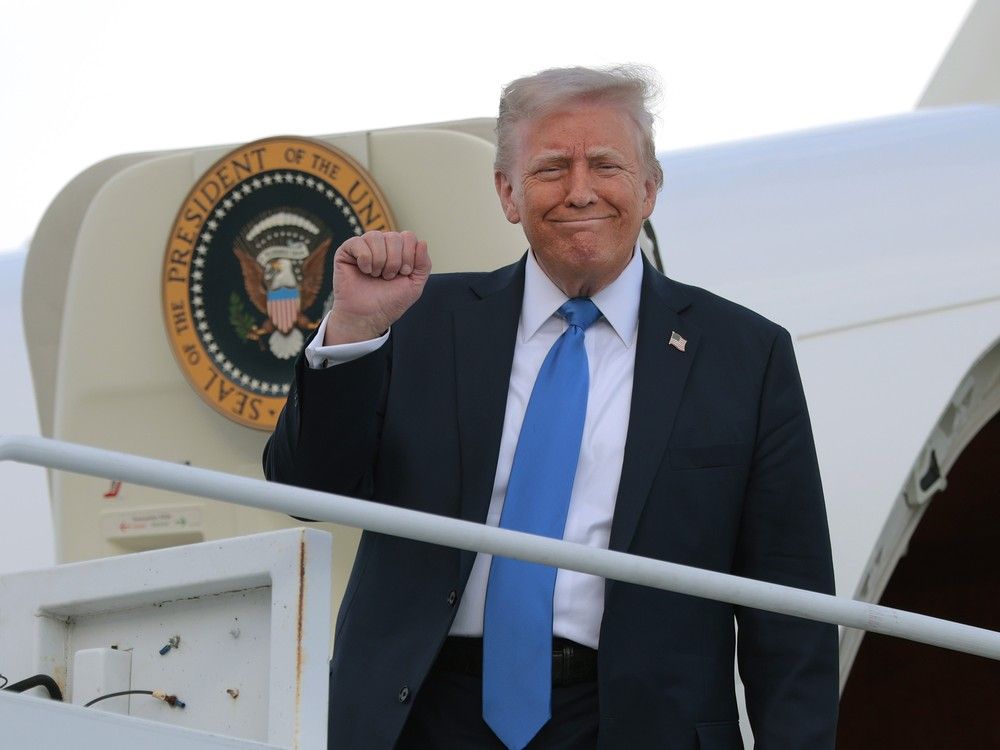
Donald Trump is expected to receive a luxury jet from Qatar, which could serve as his president aircraft. Qatar says the deal is not complete.

For a guy who peddled glossy

golden high-top sneakers

and a line of

superhero trading cards

bearing his image during his run for the presidency, accepting a “free” US$400 million

flying palace

from a foreign country eager for his favour is just another day at the office for Donald Trump.

In Trump’s case, the office is the White House, and the luxury jet he’s been offered by the Qatari government is just more evidence of the high favour in which he’s held around the world, according to official spokespeople. That the Trump family business is building a luxury golf and beachside residential development in Qatar in a

deal including a company owned by the Qatari government

is beside the point. As is the fact the president is accepting the gift from a foreign power while prosecuting a tariff war launched on the premise that Americans should do their business with fellow Americans — for the sake of the nation — rather than favouring unAmerican competitors.

Doesn’t matter. In a country where each new day starts with another headline about the latest capers in the Oval Office, it’s just another big ho-hum. Remember last week when he wanted to

tariffize the movies

, as if anyone could define precisely what made a film American when virtually every such venture involves input from around the globe? Or the sudden need to rescue white people from South Africa, where they make up just eight per cent of the population but

own

75 per cent of the private land?

What’s notable about the Qatari commotion is not that it’s worse than any other hundred-or-so Trumpian brouhahas, but how little these episodes disturb the placid surface of American indifference. As the president was welcoming the exceedingly generous freebie from an authoritarian monarchy where political parties are banned, his Republican disciples in Congress were releasing their plans to

slash

up to US$880 billion in spending, largely targeted at the Medicaid

program

that provides health coverage to low-income adults, children, pregnant women, the elderly and people with disabilities.

The Congressional Budget Office calculates the plan would remove coverage for about eight million people who can’t afford their own. New costs would be imposed on those earning above the federal poverty level, which

starts

at US$1,300 a month for individuals.

The disparity between the president’s good fortune and that of his flock, many of them no doubt firm Maga-ites, was noted, but caused no serious disturbance. And no wonder, it’s not like anything’s changed.

The Wall Street Journal recently

reported

that the richest 19 households in the U.S. gained an extra US$1 trillion in wealth last year. More, it said, than Switzerland’s entire economy. The country’s top 1 per cent now hold 31 per cent of its wealth, against 3 per cent for the bottom half of the population. From outside its borders, the U.S. may bear a worrying resemblance to the Bourbon nobility just before the French Revolution, but within its walls, America’s aristocracy appears perfectly safe. The last time Americans stormed anything, it was in support of the very administration — all

covered

by generous, subsidized health benefits — that demands they start paying their own way for doctor visits.

That insouciance evidently extends to the president’s increasingly blatant use of his position as a means to further enrich himself and his family. The Qatari resort deal is just one of an impressive collection of money-making schemes in the works for the first family and those who have successfully cozied their way into the circle of friendship.

Trump governs by whim and has a well-established practice of reversing, re-reversing and possibly re-re-reversing himself under pressure, so the fate of the Qatari gift remains up in the air. But it fits his steady reduction of U.S. ethics to the subterranean levels he inhabits.

Anne Applebaum, the journalist and historian known for her work on autocracies, has taken to collecting

samples

of the administration’s self-serving dealings. Examples in her Kleptocracy Tracker range from the unashamedly blatant — an ultra-private club in Washington launched by Donald Trump Jr. and friendly mega-donors where supplicants can pay up big time to win the favour of presidential surrogates — to the byzantine, which is the only way to describe the web of interconnected interests behind the billions of dollars in cryptocurrency and related dealings that have immensely increased the Trump family’s net worth since he took office.

Trump is due to

host

the biggest buyers of his family’s own crypto coin, the $TRUMP, at an “ultra-exclusive private VIP Reception” and gala dinner this month. The coin,

launched

just as its namesake was reclaiming the White House, hit US$5.5 billion within hours of launch, much of the buying reportedly by foreign interests with much to gain by proximity to the presidential ear. Is it likely to cause significant damage to the president’s standing? Not likely. These things pass largely undisturbed across the American consciousness, like a flock of birds crossing at high altitude, noticed, perhaps, but shrugged off as just another matter of no great significance.

A country that once fought a war to free itself from the clutches of a near-absolute monarch now dozes idly through a debauched regime it elected itself and continues to tolerate as it busily promotes its own interests over theirs. When future historians come to puzzle over this strange time, the toughest riddle may not be how or why Donald Trump managed to become president, but why Americans let him corrupt so many of their beliefs and institutions, unmolested and in plain sight.

National Post


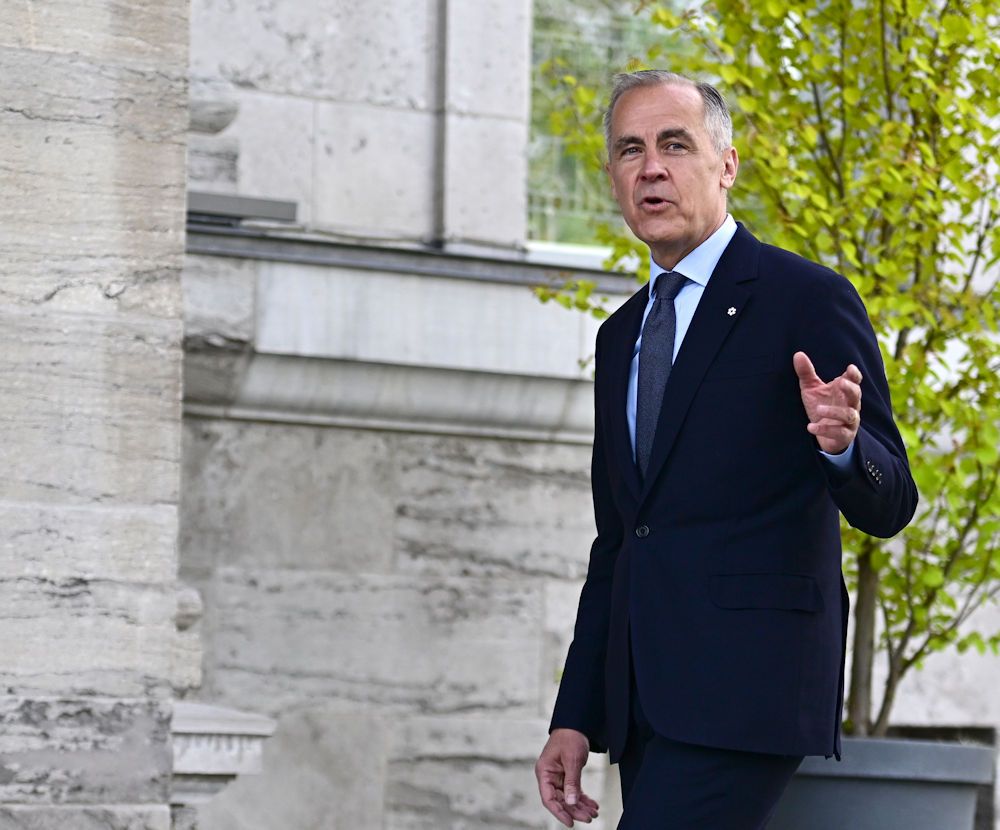
Canadian Prime Minister Mark Carney, arrives for the cabinet swearing-in ceremony at Rideau Hall in Ottawa on Tuesday, May 13, 2025.

First Reading is a Canadian politics newsletter curated by the National Post’s own Tristin Hopper. To get an early version sent directly to your inbox, sign up here.

TOP STORY

Only two months into the job, Prime Minister Mark Carney is already steamrolling through the usual checks by which a Canadian government is supposed to spend and manage taxpayer money.

During the federal election, Carney greenlit a record $70 billion without Parliamentary approval. And now, even before the House of Commons has reconvened, his government has

signalled its intentions not to publish a budget

.

With both actions, the new Liberal government has neutered one of the reasons Canada has a Parliament in the first place: To review and manage the disbursement of money.

“The direct control of national finance has been referred to as the ‘great task of modern parliamentary government’,”

reads the procedural guidebook

given to all new Canadian MPs.

The text then reminds them that “the House of Commons has exclusive control over the business of public finance.”

The procedural notes for the Canadian Senate

similarly tell

Senators that managing the appropriation of money is “among the most important tasks that parliamentarians undertake.”

During his brief tenure, Carney has already used his executive authority to request two disbursements of money outside the federal government’s usual spending channels.

On April 1, Carney was granted an order-in-council releasing $40.3 billion in emergency funds. The second, granted on May 2, was for $33.1 billion.

The orders alone are not unprecedented: There’s long been a provision for the Governor General to release emergency funds to keep the lights on during a federal election.

It’s called a “special warrant”; an emergency dispensation of money “urgently required for the public good.”

Where Carney took the provision into uncharted territory is in the sheer scale of money, $73.4 billion, that he released via special warrants without the figures being approved by the House of Commons.

In the snap election of 2011, by contrast, it only took $24.5 billion in special warrants to keep the federal government operational. The 2008 election required no special warrants; there was enough pre-approved money to wait until the House of Commons convened after the election.

On the issue of a federal budget, Carney is also not violating any written rules in refusing to produce one. He’ll simply be breaking with more than a century of Parliamentary precedent in tabling multi-billion-dollar appropriations bills before the House of Commons with few specifics as to his government’s wider fiscal plans.

It’s been more than five months since the federal government has actually approved funding the way it’s supposed to: Via an itemized “money bill” that is approved in a vote by the House of Commons.

The last one, for $21.6 billion,

was passed on Dec. 10

— when Carney’s day job was still as an executive with Brookfield Asset Management.

The Dec. 10 appropriations bill details how much money is going to each federal agency, but it lacks any information about the government’s wider fiscal picture.

The bill only covers four months of government spending, so there’s no information about how much is being spent across the fiscal year, where the money is coming from, and how much is being financed via debt.

If the Carney government intends to simply limp along with periodic appropriations bills, the result will be much the same for the foreseeable future. Parliamentarians will be given itemized lists of new government spending to approve, but without any wider context.

This is all the more notable given that even when the Liberals were telling Canadians their spending plans, they were conspicuously unable to stick to them.

The resignation of Prime Minister Justin Trudeau was driven in large part by a disastrous Fall Economic Statement, delivered on Dec. 16, which revealed that the federal government was on track to rack up

$61.9 billion in new debt

, way higher than the $40.1 billion they had been shooting for. Although sometimes called “minibudgets,” Fall Economic Statements are different in that they don’t necessarily have to be passed by the House of Commons.

As to why the Carney government feels it necessary to dispense with a budget, the best answer from Finance Minister François-Philippe Champagne appears to be that they don’t need one because they already outlined their generalized spending priorities in the Liberal election platform.

“We said we’re going to spend less so we can invest more, we said to Canadians where we’re going to invest … a lot of that is out there,” Champagne told CBC.

There have been periods in Canadian history where the country has gone more than a year without a federal budget. But there were always extenuating circumstances.

The most obvious being the failure to table a federal budget in 2020, the first year of the COVID-19 pandemic. In the midst of the Second World War, similarly, the feds

went a then-record 482 days between budget presentations

.

But what hasn’t really happened before is a government refusing to table a budget in the immediate aftermath of a contentious federal election resulting in a hung parliament.

Upon news of Carney’s “no budget” plans, Conservative MP Mike Lake noted that the Tories had a budget ready only five weeks after their victory in the 2011 general election. Election day was May 2, and finance minister Jim Flaherty

had a budget

in front of the House of Commons by June 6.

Wrote Lake, “it is entirely unacceptable for this new Carney Liberal government not to present a budget at this time of fiscal chaos caused by the previous Liberal government.”


IN OTHER NEWS

 Prime Minister Mark Carney is still doing this thing where he signs “orders” in front of news cameras; this particular one is ostensibly a directive to cut income taxes. But Carney isn’t actually doing anything. While the U.S. president can sign executive orders that immediately set new policy, Carney is basically signing a prop. Any tax cut, if delivered, will be initiated via Canada’s usual channels of legislation and orders-in-council, none of which involve the prime minister signing a single piece of paper contained within a leather folder.

On the same day that the new finance minister said there would be no budget and the housing minister said that housing prices shouldn’t go down, the new foreign affairs minister repeated propaganda about Israel intentionally starving Gazan civilians. “We cannot allow the continued use of food as a political tool,” said Anita Anand, before uncritically

repeating Hamas-provided figures on Gazan civilian casualties

. Although anti-Israel organizations perennially claim that Gaza has been intentionally brought to the brink of famine by Israeli action, it’s

never actually happened

, even with the routine theft of aid supplies by Hamas.

 As this newsletter goes to press, at least 100 people are forming a human chain outside a B.C. ostrich farm in order to prevent a government-ordered cull of the herd. The Canadian Food Inspection Agency ordered the 400 or so birds at Universal Ostrich Farms killed after an outbreak of avian flu. The farm has countered that the birds all recovered and are no longer reservoirs for the disease.

After the Liberals won a Quebec riding by a single vote in a controversial recount, the second-place Bloc Québécois is

taking Elections Canada to court

, alleging that the process was mismanaged. Of particular note is that at least one Bloc voter had her mail-in ballot returned to her because Elections Canada misprinted the label – something that Elections Canada admits.

Get all of these insights and more into your inbox by signing up for the First Reading newsletter here.


Vandalism on the Bagg St. Synagogue in Montreal in March 2023, months before the number of antisemitic incidents in Canada skyrocketed following the Oct. 7 terrorist attack on Israel by Hamas.

This week, I sat in a courtroom and witnessed something all too rare in today’s Canada: accountability for antisemitism.

In a decision that should echo across this country, the Ontario Court of Justice

sentenced

Kenneth Jeewan Gobin, a 36 year-old hate-motivated assaulter in Vaughan to 12 months in jail and two years’ probation.

The man — already known to police — had spit on two Jewish individuals while shouting “Heil Hitler” and “Hitler should have killed you all,” punctuating his assault with a Nazi salute. It was vile. It was deliberate. And it was motivated by nothing other than unfiltered antisemitic hatred.

I was present in court to support the victims — Jewish Canadians simply walking home from synagogue on the Sabbath. What I heard from the bench offered a rare, sliver of hope. Justice Michael Alexander Townsend did not equivocate. He called the attack “a despicable assault,” adding:

“To spit on a Jewish person, telling them that you wished Hitler had killed them and their entire community, saluting and praising the person responsible for the Holocaust — Hitler — is a despicable assault.”

He went further, affirming the need for real deterrence:

“In the case before me, a significant jail sentence is the only way for the principles of general deterrence and denunciation to be met.”

Justice Townsend continued:

“His actions are but part of the landslide of hate directed toward the Jewish community; he was not the beginning, nor will he be the end.”

One of the victims, Tilda Roll, expressed what so many of us feel: she was relieved — not just for herself, but for the precedent this ruling set. The court, she said, had finally declared: “Enough is enough.”

But this case is not the whole story — it’s just a snapshot in a much darker, more complex picture. Because beyond the courtroom doors, the threats are not slowing down. They’re multiplying.

In recent weeks, news broke of a Yemeni man, Husam Taha Ali Al-Sewaiee, who was

arrested

in Canada for allegedly attempting to join a Middle Eastern terrorist organization. According to reports, the individual was attending local protests and had been arrested for uttering threats. Despite the seriousness of the case, he was released on bail, and is now living under house arrest in a religious facility, with restrictions imposed through a terrorism peace bond. The message this sends — that credible allegations of terrorism don’t always result in custody — should alarm every Canadian.

In British Columbia, a religious sermon was delivered by Younus Kathrada that reportedly included a chilling

prayer

: “Oh Allah, destroy the Jews, oh Allah destroy the Jews … oh Allah destroy them for they are no match for you,” The speaker also

praised

children as young as ten for aspiring to become martyrs. Such rhetoric, openly shared online and translated for global distribution, is not just hate speech — it’s incitement. And yet, outrage remains minimal, even while the Jewish community demands charges be laid.

Meanwhile, in Quebec, a group chat used by medical school applicants was

exposed

for hosting hundreds of antisemitic, misogynistic, racist, and homophobic slurs. The posts mocked Jewish religious symbols, degraded women in medicine, and targeted LGBTQ2+ individuals. The forum had over 1,400 members.

Almost no one spoke up

.

In every corner of this country, the pattern is unmistakable: antisemitism and extremism are seeping into our communities, our institutions, our schools, our pulpits — and yes, our politics. But what’s worse is the silence that often follows. Too many officials tiptoe around these issues. Too many institutions look the other way. Too many hate crimes are met with warnings, not prosecutions.

That is why the sentence handed down in Vaughan meant so much. It was more than a judgment — it was a rare affirmation that our laws still mean something. That justice, though often slow and inconsistent, is still possible.

Canada has a hate problem. These are the words we all expect to hear from our new Prime Minister. Recognizing the problem is the first step to solving it. The courtroom gave us a sliver of hope. Let’s not waste it.

National Post


An electronic billboard ad calling for an independent Alberta is seen in Edmonton in 2019.

Following last month’s Liberal election victory, and after a decade of damaging federal policies by the Trudeau government, some Albertans are calling for a

referendum

on separation. While Premier Danielle Smith

said

she does not support separation, she “will honour” the referendum process. And according to a

recent poll

, more than one-third of Albertans are open to leaving Canada. But whether or not the referendum actually happens, one thing is clear — Albertans have reason to be frustrated with confederation.

In our current system, Ottawa collects taxes from individuals and businesses across the country then transfers that money to Canadians for federal and national programs including the Canada Pension Plan (CPP) and employment insurance. Albertans contribute disproportionately to this system, thanks to the province’s relatively high rates of

employment

, higher

average incomes

and

younger population

.

For example, from 1981 to 2022 (the latest year of available data), Albertans’ net contribution to the CPP — meaning the amount Albertans paid into the program over and above what retirees in Alberta received in CPP benefit payments — was

$53.6 billion

. British Columbia was the only other province where workers paid more into the CPP than retirees received in benefits — and Alberta’s contribution was six times greater than B.C.’s contribution.

On equalization — Canada’s transfer program aimed at ensuring each province could provide comparable levels of public services — Alberta has not received payments since 1964/65. In 2022 (the latest year of available data), the federal government spent

$21.9 billion

on equalization, while 13.5 per cent of total federal revenue came from Alberta, which means Alberta taxpayers contributed an estimated $3 billion to the equalization program that year — while receiving no payments.

More broadly, Alberta’s total net contribution to federal finances and national programs (that is, total federal taxes and payments paid by Albertans minus federal money spent or transferred to Albertans) was

$244.6 billion

from 2007 to 2022 — more than five times more than the net contribution from British Columbians or Ontarians (the only other two net contributors) despite Alberta’s smaller population.

So that’s the reality — Alberta massively overcontributes to federal and national programs. But that’s not necessarily a problem, in and of itself.

The problem is that despite Alberta’s outsized importance within Canada, Albertans have faced a barrage of federal policies that

disproportionately

and negatively impact the province including

Bill C-69

(which imposes complex, uncertain and onerous review requirements on major energy projects),

Bill C-48

(which bans large oil tankers off B.C.’s northern coast and limits access to Asian markets), an arbitrary

cap on oil and gas emissions

, numerous “

net-zero

” targets, and so on.

On the campaign trail, Prime Minister Mark Carney

promised

to keep the emissions cap and Bill C-69, (which opponents call the “

no more pipelines act

”). Yet in a

recent interview

with CTV, Carney said he will “change things at the federal level that need to be changed in order for projects to move forward” adding that he may eventually remove both the emissions cap and Bill C-69.

That would be welcome news in Alberta, which continues to punch above its economic weight despite federal policies that prevent the province from reaching its full economic potential. And any policies that restrict Alberta ultimately limit prosperity in Canada.

Albertans may soon face a referendum on separation. The rest of Canada should understand why so many Albertans are frustrated with the status quo. Federal policies specifically target their province’s energy industry despite their disproportionate contribution to the federation. It’s time to undo these federal policies, for the benefit of all Canadians.

Tegan Hill is director of Alberta policy studies at the Fraser Institute.

National Post


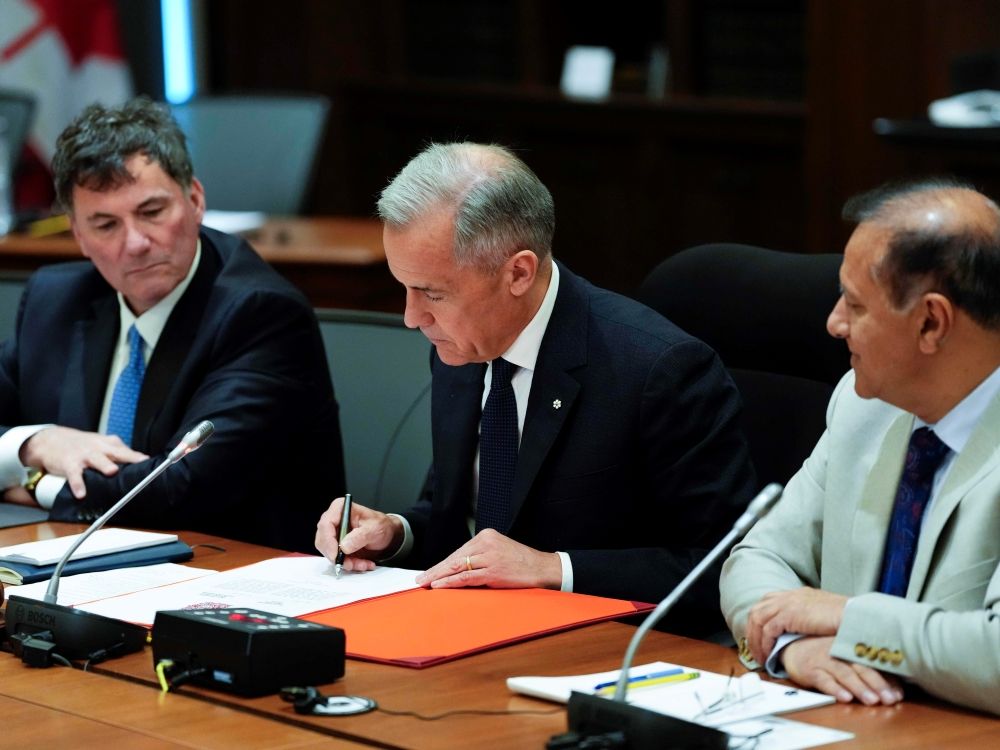
Prime Minister Mark Carney signs a document at the end of a meeting of the federal cabinet in West Block on Parliament Hill in Ottawa on Wednesday, May 14, 2025.

Our new prime minister attracted some criticism in March when he staged an unfamiliar piece of American-style political theatre, inviting cameras to 

record him signing an official-looking instrument

 to knock out the federal carbon tax on consumer fuels. What I should say is that he attracted a 

surprising 

and 

encouraging

amount of criticism, and not just from my fellow wacko Tristin Hopper. Canadians are not exactly hyper-aware of the distinction between a head of state and a head of government, and even opposition politicians could not necessarily have been expected to bristle at Mark Carney’s attempt to role-play as the ultimate executor of law. I would, in fact, expect them to take notes and prepare to steal the idea.

But the whole thing was just Trumpian enough for people to notice, and to balk. 

Behold! It is my pen, and the trace left by my signature, through which all political power flows! 

This led to a point-missing little debate about the exact nature of what Carney signed — a “decision note”? A “ministerial recommendation”? Just a memo? It doesn’t matter one tiny little bit: the crux of Carney’s offence is that he had a ceremony, period. He’s the Queen’s first minister: he isn’t part of the ceremonial part of the Constitution, and shouldn’t try to climb the fence which keeps him out. Unfortunately, he hasn’t had a sniff of the House of Commons yet, so no doubt he felt it was good strategy to be seen as a man of action bursting out of the starting gate on governing. Especially since we are not getting, or debating, 

an actual federal budget for some time

.

Yesterday 

the PM did the Trump thing again

, inviting the cameras into a just-concluded cabinet meeting so that everybody could see him work the magic with his pen and put the wheels in motion on a slight cut to the lowest income-tax rate. Unlike the zero-rating of the carbon tax, this can’t actually be done through an order-in-council: it will have to go through Parliament, so Carney’s photo-op was carefully described as the signing of 

“a symbolic order” to “prioritize” the dip

 when the time comes later this month.

You can’t help but admire Carney’s artistry a little when you watch the clip. He starts a little speech. “It’s my pleasure, on behalf of the cabinet, to sign this in order to deliver that tax cut….” And it’s at that precise moment that the executive pen slashes and swoops like a katana, followed by the PM switching to a few words of French, delivered with studied casualness, no big deal, yes I speak it, who ever doubted it. Applause.

I understand that at any given moment, somewhere between 30 and 60 per cent of Canadians want the country to be a republic, or think they want that. If I can digress for a minute, it’s a source of endless fascination to me that absolutely all of these newly ebullient Alberta separatists are republicans, that they 

all

use the language of a Republic of Alberta. This was equally true of the 1980s Alberta separatist movement. These doofuses in 50-gallon hats are already talking about how Alberta 

could keep Canadian passports and the Canadian dollar if it secedes

, but there is not, to my knowledge, one single separatist squawker who wishes to keep the Crown. I’ve never in my life, not once, seen a Dominion of Alberta bumper sticker. Maybe I should make and sell some.

Anyway, there’s no mystery to it. Like republicans in the rest of Canada, these halfwits just like the plucky revolutionary vibes of the word “republic,” and the main reason they like it is that they swim in a sea of American media, made for people to whom the word “republic” connotes continuity and bravery rather than destructive restlessness and smug disloyalty.

That’s all right, for Americans, but the general experience of most republics is that they drift toward imperialistic style and theatrical despotism, often followed by orgies of bloodshed. This happens precisely because new-minted republics lack a properly evolved apparatus for dispersing power, caging the chief magistrate, and keeping electoral politicians humble.

If I had written these words five years ago, many of you would have thought “Oh, cripes, another one of those monarchist kooks.” In President Donald Trump’s second term they should hit you like a brick in the face. I wonder if we are becoming more attached to the Crown and all that this symbol implies, if for no other reason than these are tokens and guarantors of our determination to pursue an independent destiny on the American continent.

I.e., you don’t even have to buy my exotic theory that 

constitutional monarchies can be better at preserving “republican” values

 than republics are. You just need to imagine that anything which makes us more American in political form and behaviour will push us further down the road to becoming Americans, and that we would be of less value to the human species as Americans. In the spirit of resistance to any chiseling away at our distinctive constitutional design, I offer a simple message to the prime minister: cut the crap.

National Post


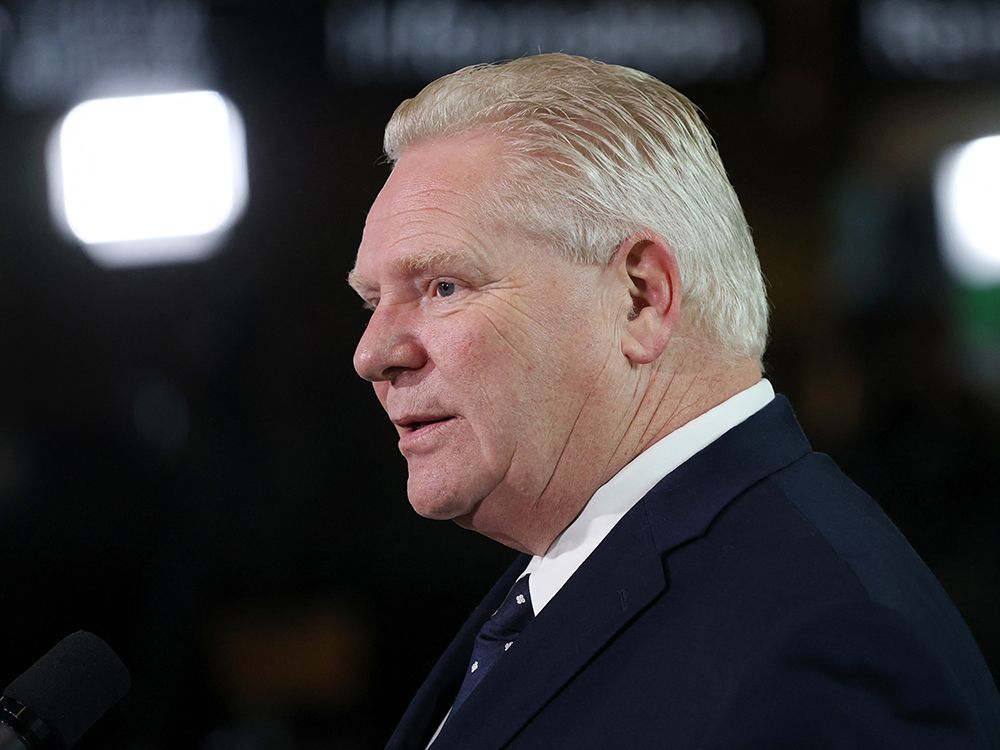
Ontario Premier Doug Ford.

Ontario Premier

Doug Ford’s new budget

is billed as a plan to protect workers, businesses and communities from U.S. tariffs and the economic uncertainty they have caused.

Judged by that standard,

the plan released Thursday

is a middling effort that offers temporary tax deferrals for businesses, retraining for those who lose their jobs, money for heavily affected communities, and contributions to multiple pots of money that are meant to stimulate the economy.

The biggest pot consists of $5 billion to protect jobs, transform businesses and develop new sectors of the economy. Of that, $1 billion is intended for immediate liquidity relief for businesses hit hard by tariffs.

It’s a scattershot effort from there, with money for everyone from grape growers to operators of short-track railroads that serve some industries. This is micro thinking, not macro.

Infrastructure spending will be accelerated this year and next, moving forward about $7.7 billion in spending as compared to what was described in last fall’s economic update. That will benefit companies and workers in the infrastructure industry, but these are not the ones most affected by tariffs.

What’s lacking is an overall, compelling plan that will reduce Ontario’s over-dependency on the American economy and boost its mediocre growth. If you want to make businesses more internationally competitive, cut corporate taxes. If you want to stimulate the economy, cut income taxes. Creating multiple little pots of money that will enable the government to “invest” in this and that encourages companies to look for handouts, not build a stronger economy.

This budget promises to “unleash” the Ontario economy, but real GDP growth is projected at only 0.8 per cent this year and one per cent next year. By comparison, the International Monetary Fund projects

real GDP growth nationally

of 1.4 per cent this year and 1.6 per cent next year. The OECD projects

real GDP growth in the U.S.

will increase by 2.2 per cent this year and 1.6 per cent next year.

Naturally, this budget follows Ford’s longstanding approach of projecting a budget balance in a couple of years. Wednesday, the premier said, “We can always balance in a year or two.” Presumably he meant always promise to balance in a year or two.

This year’s projected deficit is $14.6 billion and next year it will be $7.8 billion before a tiny surplus occurs in 2027-28. To attain that goal, the Ford government will have to exercise a lot tighter control on program spending than it has recently. Between 2023-24 and 2024-25, base program spending increased by $14.5 billion. The new budget predicts base program spending will only increase $8.2 billion by 2027-28. That sounds like wishful thinking.

The new Ford budget is notably weak on the key issues of affordability, housing and health care.

The budget will make permanent earlier reductions in gasoline and fuel taxes that were announced as temporary in 2022 and renewed regularly since. Great stuff, but that doesn’t put any additional money in Ontarians’ pockets. Tolls will also be eliminated for the provincially owned portion of Highway 407, a modest boon to those that use it, nothing for those who don’t. But let’s not forget the $200 cheques sent out around election time. Already spent it? Too bad.

Ford’s limited affordability efforts look weak compared to the federal government’s personal income tax cut that is

expected to save two-income families $840 next year

. Ford promised a similar tax cut in 2018, but the promise remains unfulfilled.

Housing gets only the lightest attention in this budget, despite the persistent unaffordability issue in Ontario. Some money is added to existing funds that help municipalities pay for new water and sewer services, perhaps reducing development charges. The government has also earmarked $50 million over five years to expand modular housing capacity, an area already heavily targeted by the federal government.

On health care, the budget rehashes worthy plans to build more hospitals and long-term care homes and train more doctors and nurses. It also points to an already announced but rather vague plan to provide primary care for 300,000 additional people this year. The message is patients, be patient.

In all, this new budget relies far too much on reminding Ontarians what the Ford government has done and not enough on what it will do in the future. It feels like the budget of a government in mid-term, not a new government.

Of course, that’s exactly what it is. Earlier this year, Ford paused his government and insisted that he needed a new mandate to take dramatic tariff protection actions. Looking at the budget, it’s hard to see why he needed a special blessing from voters.

Ford is fond of saying it’s “not business as usual” in Ontario these days. Unfortunately in this budget, it mostly is.

Randall Denley is an Ottawa journalist. Contact him at randalldenley1@gmail.com

Get more deep-dive National Post political coverage and analysis in your inbox with the Political Hack newsletter, where Ottawa bureau chief Stuart Thomson and political analyst Tasha Kheiriddin get at what’s really going on behind the scenes on Parliament Hill every Wednesday and Friday, exclusively for subscribers. Sign up here.


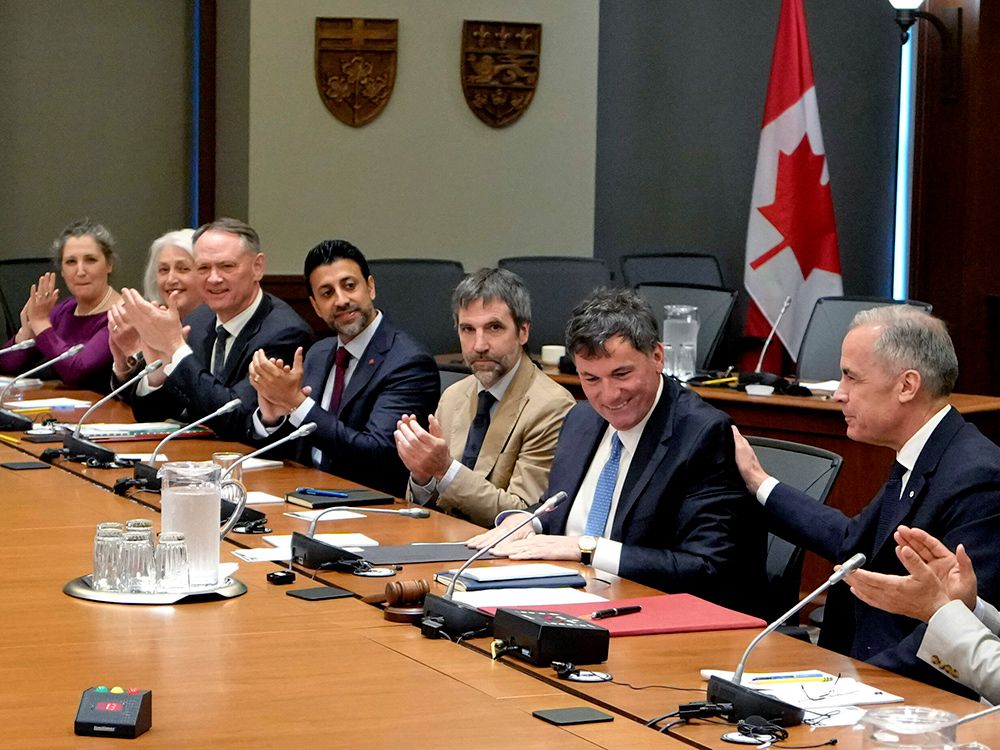
Prime Minister Mark Carney at a meeting of his cabinet on Parliament Hill, on Wednesday, May 14, 2025.

There have been concerns about the “presidentialization” of the Canadian prime ministership for years — worries that have been exacerbated by

Mark Carney’s tendency to sign Trump-style legislative orders to grant tax cuts

.

Academics have suggested that the cabinet has become nothing more than a focus group for the prime minister, who instead of being

primus inter pares

(first among equals) is now merely

primus

.

On the evidence of the new cabinet’s first day in office, that may be no bad thing.

Politicians who don’t know what they’re talking about should follow the old proverb: “A closed mouth gathers no foot.”

Yet on Wednesday, ministers rushed to the mics outside the cabinet room like turtle hatchlings dashing to the ocean to meet the waiting reef sharks.

The new housing minister, Gregor Robertson, was

asked if house prices need to fall

. “No, we need to deliver more supply to make sure the market is stable,” he said — a move that even a cabinet minister should be able to see would lower prices.

Millennials viewed this as an admission that the new minister doesn’t think housing should ever be affordable for their generation.

The implicit bargain is to protect the wealth of existing homeowners, while hinting at cheaper prices to come for new buyers.

The political imperative is to dance on the head of a pin, as Carney did Thursday when he was asked if he was signalling that he didn’t think prices should go down.

“You’d be very hard pressed to make that conclusion from everything I’ve said and what our priorities are,” he said, without committing himself one way or another.

Robertson wasn’t the only one to step in it.

Steven Guilbeault, the minister of Canadian identity, is apparently having separation anxiety from his old job as environment minister and, instead of sticking to his own lane,

answered questions on pipeline policy

.

Before Canada starts talking about building new pipelines, he said, it should maximize use of existing infrastructure like the Trans Mountain pipeline, which he claimed is operating at 40 per cent capacity.

Aside from the fact the company says it is utilizing 77 percent of its capacity, why is the culture minister offering opinions that land in the West like weeping gelignite? Surely, his job is to try to cultivate, rather than sabotage, a Canadian identity?

The comments were in stark contrast to the prime minister’s during a CTV interview the other day, when he said he supports building pipelines if the consensus exists for them. “I’m a prime minister who can help create that consensus,” he said, suggesting he is minded to try.

The third gaffe of the day belonged to Anita Anand, the new foreign affairs minister, who decided to wade into the quagmire of Middle East politics —

with disastrous effect

.

She said that Israel cannot be allowed to use food as a political tool. “The prime minister has been clear on that. Fifty-thousand people have died because of aggression against the Palestinian people and Gazan people in Palestine. Using food as a political tool is simply unacceptable,” she said.

Carney did

talk about the issue on social media during the general election

but, while he criticized the Israeli government’s blockade of Gaza, he also said Palestinian civilians must not suffer the consequences of Hamas’s “terrorist crimes” and said Canada would continue to work for the release of all Israeli hostages.

In all three instances, the rookie prime minister proved more adept at standing on all sides of the issues than his hapless colleagues.

As an aside, with all that material to work with, it was somewhat surprising to hear the leader of the Opposition singling out

François-Philippe Champagne’s admission that there won’t be a budget any time soon

as his main talking point Thursday. But maybe this is part of a new plan to broaden Pierre Poilievre’s appeal, by not actually opposing the government.

What the first day fumbles suggest is that Carney’s hopes of having a more “traditional” cabinet government are a little impulsive.

Former prime minister Stephen Harper, almost by necessity, pioneered a kind of executive democracy that was highly centralized and kept ministers on a tight leash. Justin Trudeau quickly adopted many of the same principles, where the centre governed from on high.

Carney likely wants his PMO to be a strategic player but not to micromanage his ministers.

But it is already clear that he needs to become more presidential, not less, to co-ordinate his team, set priorities and provide clear communication lines on files for ministers less skilled in the art of ambiguity than a former bank governor is.

National Post

jivison@criffel.ca

Get more deep-dive National Post political coverage and analysis in your inbox with the Political Hack newsletter, where Ottawa bureau chief Stuart Thomson and political analyst Tasha Kheiriddin get at what’s really going on behind the scenes on Parliament Hill every Wednesday and Friday, exclusively for subscribers. 

Sign up here

.


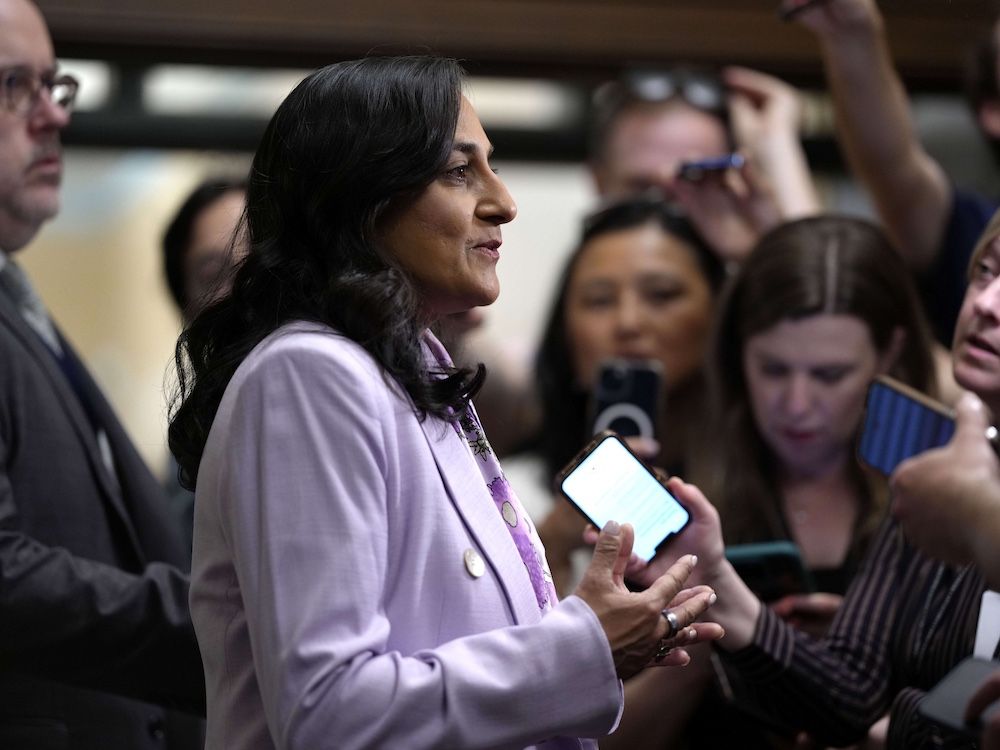
Minister of Foreign Affairs Anita Anand speaks to journalists as she arrives for a meeting of the federal cabinet in West Block on Parliament Hill in Ottawa on Wednesday, May 14, 2025. THE CANADIAN PRESS/Justin Tang

A day after being sworn in as foreign affairs minister,

Anita Anand lashed out at Israel proving,

yet again, that the Liberals are oddly concerned with keeping the support of those who sympathize with terrorists.

When asked by a reporter about Israel’s blockade of Gaza, Anand

could

have pointed out that Hamas, the Palestinian terrorist group that governs the enclave, had been stealing aid and reselling it for profit. She

could

have pointed out that it was Hamas that refused to continue a ceasefire with Israel that would have ended the war. She

could

have pointed out that Hamas continues to hold hostages, or that it routinely inflates casualty numbers and obscures the number of fighters killed to leave the impression of higher civilian deaths. Finally, Anand

could

 have pointed out that Hamas started the war with Israel by committing the October 7 massacre.

She could have pointed out any number of those things, but instead, Anand chose to attack Israel. “We cannot allow the continued use of food as a political tool,” she started, conveniently ignoring Hamas’s routine theft of aid. The organization has profited

at least US$500 million

since October 7, funds it has used to bolster its terrorist ranks. For example, in October Hamas

was caught on camera

hijacking 47 aid trucks in a convoy of 100.

After Israel started its blockade in March, however, Hamas started to struggle to pay its ranks, as funds from stealing

aid began to dry up.

Chastising Israel for using food as a “political tool” while overlooking the fact humanitarian aid has been used to fund Hamas’s own war effort, demonstrates an appalling level of bad faith on the part of the foreign affairs minister.

Anand then summed up the war as one entirely of Israel’s making, while simultaneously accepting Hamas’s dubious casualty count. “Over 50,000 people have died as a result of the aggression caused against the Palestinian and the Gazan people in Palestine,” she said.

Anand, apparently, gets her information and her talking points from Hamas, which, again, started this war when it slaughtered 1200 people in southern Israel. Suggesting war is “a result of the aggression caused against” the Palestinians shows she is either very poorly informed, or deliberately pushing an anti-Israel agenda that is absent of facts.

As for the number of casualties, the Hamas controlled health ministry is an unreliable source, routinely listing deaths that never occurred, with 3,400

supposed deaths being dropped in April.

A

report

in December by think tank the Henry Jackson Society found that casualty counts were regularly manipulated, including, for example, listing thousands of people who would have died whether there was a conflict or not, such as cancer patients, as among the war dead. The report found that 17,000 of the then supposed 44,000 deaths were Hamas fighters, and a majority of those killed were males between the ages of 15 and 45. Hamas also notoriously embeds itself in schools, mosques and hospitals, using its population as human shields.

Repeating Hamas’s casualty numbers without at least distinguishing between Hamas fighters and actual civilians is repeating terrorist propaganda.

Anand also said “we need to continue to work towards a ceasefire,” but, again, it is not Israel that is standing in the way of an end to hostilities. After the end of

 a 42-day ceasefire in March,

Israel had agreed to a U.S. proposal to move to a second phase that would have eventually led to the end of the war. It was Hamas that refused in part because it didn’t want to agree to be disarmed.

Anand’s blaming of Israel, while ignoring the actions of Hamas continues the regrettable pattern of her predecessor,

Mélanie “have you seen the demographics of my riding” Joly.

Under Joly’s “leadership,” Canada continued funding UNRWA, despite the fact some of its employees took part in October 7, an arms embargo was implemented against Israel, and Canada supported a UN motion calling for a ceasefire that placed no conditions on Hamas. Joly’s department

condemned an Israeli attack on a school that never occurred,

just as Joly herself

condemned

Israel for an explosion at a hospital that was

committed by the Palestinian side.

Again and again, the Canadian government’s position could be summed up as: Israel has a right to defend itself, so long as it doesn’t use its army. The terrorists who started all this? Well, they are the victims of “aggression,” according to Anand.

All of this would be bad enough, but Canada’s government contributes nothing to resolving the conflict. The Liberals want to snipe at Israel, painting distorted pictures of the war, without doing any of the work. By not supporting the only democracy in the Middle East, Canada forfeits any influence it might have over Israeli policy, showing that this Liberal government is just as performative as the last.

National Post