LP_468x60
on-the-record-468x60-white

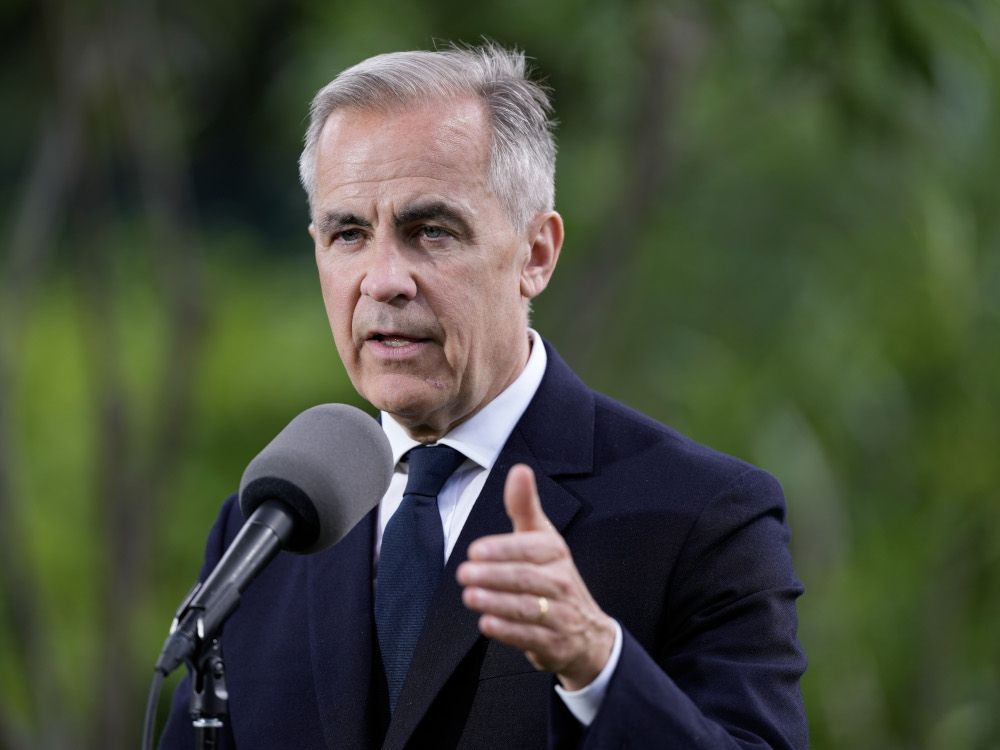
Prime Minister Mark Carney

He won last month’s election for the Liberals promising he had a plan to protect Canada’s economy from the predations of the American president. But since returning to Ottawa, Prime Minister Mark Carney has sent alarming signals to business and scared off badly needed capital investment, as economist and professor Ian Lee tells Brian Lilley this week. The Liberal government’s decision to delay the budget makes it seem like there actually is no plan, Lee says. Meanwhile, comments from Carney’s cabinet that they’re wavering on a new oil export pipeline suggest that this government will be just as unwelcoming to resource development as the last one. Now, it’s looking like the man elected to reverse Canada’s long-running decline might just make it worse. (Recorded May 16, 2025.)


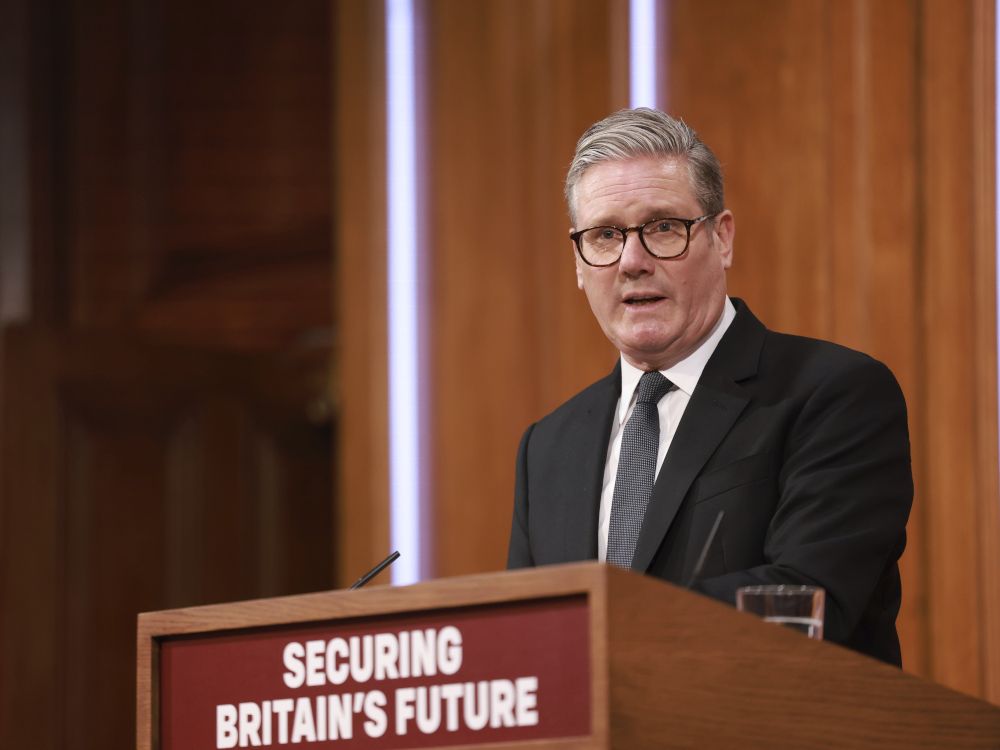
British Prime Minister Keir Starmer

British Prime Minister Keir Starmer did something extraordinary and unexpected last week: he

publicly acknowledged

that his country’s immigration system is broken.

Starmer ended generations of progressive orthodoxy by admitting that the dynamics of human migration, multiculturalism and integration have changed.

Going forward, his Labour government will

set higher standards

for English-language proficiency, require most newcomers to live in the country for 10 years before applying for citizenship and reduce the number of foreign workers allowed into the country.

Most important was his remarkable admission that without change, Britain was at risk of turning into “an island of strangers.”

Predictably, the London cosmopolitan commentariat

condemned Starmer

for allegedly giving in to pressure from the far-right, as did a column in the

Globe and Mail

.

Yet the reality is that Starmer is simply representing the British people. Surveys in both

Britain

and

Canada

consistently find that the majority of people think immigration rates are too high.

Tortured attempts to

compare Starmer’s comments

to Enoch Powell, a famously hard-line British critic of immigration in the 1960s, fail to recognize that we live in a different world.

There are obvious merits to immigration, and in Canada, everybody has family or friends who were born abroad, or who are the children of newcomers.

Yet something changed in the 2010s. The rise of social media platforms accelerated at breakneck speed while western governments began drastically ramping up

levels of immigration

.

Through these flows of people and information, the world has become more interconnected than ever before. Simultaneously, the post-Cold War consensus broke down and global, ethnic and religious tensions have polarized public opinion the world over.

Successful immigration strategies require integration, but that is becoming increasingly difficult. The sheer number of new residents in places like the United Kingdom and Canada have created insular communities where Old World passions, feuds and politics remain top of mind.

Most western countries have long ceased to demand that newcomers do anything more than enter the workforce and obey the law, assuming that social and cultural harmony would remain intact.

Meanwhile, more emphasis has been placed on multiculturalism, while the idea of assimilating into the dominant culture of the country is treated as unimportant, or even undesirable.

Opening a laptop or iPhone has made keeping stronger ties to foreign countries far more convenient. Whether it be news networks like Al-Jazeera or platforms like TikTok, people spend more time on their devices than ever, making it very easy for new immigrants to keep at least one foot in their homelands.

This is a major challenge to the process of integration, and has led to the importation of old hatreds into new lands. The war in Gaza laid bare this new reality. Terrorists have been inspired to

burn down synagogues

and

shoot at

Jewish schools in places like Canada and Australia.

These barbaric attacks have no place in Canada, but the perpetrators and their cheerleaders do not seem to realize this.

The recent clash between India and Pakistan over Kashmir is another overseas conflict that risks being imported into western societies. Both countries have massive diasporas, and if the conflict escalates, it

risks causing violence

on the streets of cities like London.

Political campaigns have already been transformed by this phenomenon. During the 2024 British election, many candidates effectively ran

as lobbyists

for the

Palestinian cause

, rather than as champions of their local communities.

And in last year’s byelection in the Montreal riding of LaSalle—Émard—Verdun, the NDP candidate narrowly lost after running on

a pro-Gaza platform

and decorating his campaign posters with Palestinian, rather than Canadian, flags.

There is historical precedent for this phenomenon. Large numbers of Irish Catholics migrated to British industrial cities like Liverpool in the 19th century, resulting in major population growth, but also

sectarian conflicts

with Protestants that lasted for generations.

In Canada, waves of immigration from Ireland to Ontario imported these same

religious tensions

. In 1868, Irish-Canadian politician Thomas D’Arcy McGee

was assassinated

after he took a stand for his adopted country and unambiguously condemned the republican cause in Parliament. Conflicts between the two factions

were commonplace

on the streets of Toronto well into the 20th century.

Such violence is still possible in Canada and elsewhere. Last fall the FBI tipped off the RCMP about a Pakistani man who had allegedly planned a

mass-shooting in New York

. Just last week, British police foiled

a terror attack

that involved five Iranian nationals who were suspected of targeting the Israeli Embassy.

We live in a multicultural part of the world, but our fragmenting social harmony is dangerous and cannot continue unabated. Governments have a duty to adapt to our time and the changes it has brought, which includes migration and societal cohesion.

Quebec is the only Canadian jurisdiction that’s attempting to seriously address this challenge. In January, the provincial government tabled

Bill 84

, an act respecting national integration, which is intended to foster respect for the province’s secular and democratic values and teach newcomers French.

Although decried by progressives as intolerant, Bill 84 is a sensible and moderate piece of legislation intended to help address serious issues. The rest of Canada should take note.

Keir Starmer’s words were bold, but it is high time that our leaders stop ignoring the growing threat to our societies, lest we, too, become half a continent of strangers.

National Post


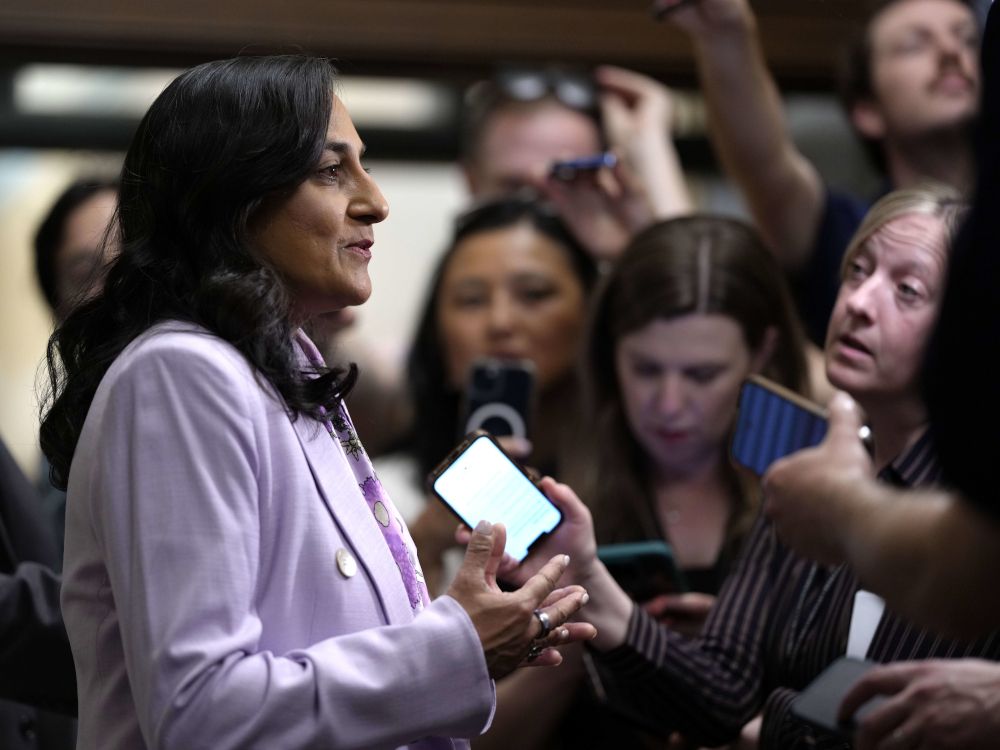
Foreign Affairs Minister Anita Anand speaks to journalists as she arrives for a meeting of the federal cabinet on Parliament Hill in Ottawa on Wednesday.

Practically the first words out of Anita Anand’s mouth after she became Canada’s new foreign affairs minister were not about reaffirming alliances, protecting Canadian citizens abroad or defending democratic norms. Instead, she chose to cast immediate blame on Israel for the devastating conditions in Gaza — without acknowledging, let alone condemning, Hamas’s horrific October 7 massacre, which precipitated this war.

This was no small omission. On that day, Hamas terrorists infiltrated Israel, brutally murdering 1,200 people — including women, children, the elderly and at least eight Canadian citizens. It was the deadliest single day for Jews since the Holocaust. Any serious foreign minister, especially one stepping into the role during an active conflict, should have led with that fact.

Yet Anand’s statement focused almost exclusively on Israel’s conduct. She used the language of “aggression,” suggesting a one-sided moral landscape, and offered no contextual recognition that Hamas is a terrorist organization that has embedded itself within civilian infrastructure while firing thousands of rockets into Israeli cities. That is not just a diplomatic fumble, it’s a profound strategic misstep.

Historically, Canada’s foreign policy has rested on the principles of sovereignty, accountability and collective security. We joined the global coalition in Afghanistan after 9/11, not only out of solidarity with the United States but because 24 Canadians were murdered in the attack. We understood that terror organizations like al-Qaida and its Taliban hosts represented a global threat and that inaction or equivocation was not an option.

And yet here we are, just over two decades later, with a Canadian foreign minister choosing to emphasize Israeli “aggression” while downplaying or ignoring the role of Hamas — a group every bit as ideologically extreme and operationally ruthless as al-Qaida. The contradiction is glaring. When Canada’s own citizens were murdered by terrorists on 9/11, we mobilized militarily and diplomatically. When Canadians are murdered by Hamas in Israel, the new foreign minister offers language that reads like equivocation, if not appeasement.

This is not just morally incoherent, it’s strategically dangerous. It signals to allies that Canada cannot be counted on in times of crisis. It suggests that our foreign policy may be governed more by trending narratives than by hard realities. And it invites adversaries to believe that Canada’s leadership can be pressured or swayed by asymmetric warfare and media optics.

So the question must be asked: was this a rookie misstep, or the first clear signal of a broader shift under the Carney government? If this was Anand speaking out of turn — before receiving a full briefing or grasping the nuance of Canada’s historical posture in the Middle East — then she has done herself and the country a disservice. The Foreign Ministry is not a place for ideological improvisation or headline-chasing rhetoric. It requires precision, balance and, above all, a grounding in facts.

But if this was a policy signal — if Anand is articulating the new voice of Canadian foreign policy under Prime Minister Mark Carney — then Canadians deserve clarity. Is this government adopting a more strident, critical posture toward Israel while minimizing or ignoring the provocations and atrocities of Hamas? Is Canada moving away from its longstanding commitment to Israel’s right to self-defence? Is this the end of the careful, principled diplomacy that has marked Canada’s voice on the world stage for decades?

Carney has earned a reputation as a thoughtful, conscientious global actor who’s pragmatic, informed and deliberate. If Anand’s comments reflect his government’s intent, they mark a sharp, dissonant turn. And if they do not, then it is incumbent upon Carney to correct the record and reinforce a coherent message. Silence, in this case, implies endorsement.

Foreign policy begins with credibility, and credibility begins with facts and with moral clarity. If Minister Anand wants to lead Canada’s diplomacy, she must first recognize what happened on October 7 — not only because Canadians were among the murdered, but because truth is the foundation of peace. If she and her government chooses to forget this lesson, they risk not only moral confusion, but strategic irrelevance. Canada cannot afford either.

National Post

Alan Kessel is a former legal adviser to the Government of Canada and deputy high commissioner of Canada to the United Kingdom. He is also a senior fellow at the Macdonald Laurier Institute.


In recent years, a clear pattern has emerged in paediatric gender medicine: every country that has reviewed the evidence for interventions such as puberty blockers and cross-sex hormones for adolescents has found it to be exceptionally weak, and responded by shifting towards cautious, psychotherapeutic care. In sharp contrast, Nova Scotia has just

announced

an expansion of its paediatric gender services to ensure that youth across the province can access these controversial medical treatments.

So, who is getting it right? The growing list of nations that have conducted years-long investigations into their gender clinics, commissioned gold-standard systematic reviews, and ultimately acted to protect children from unproven interventions?

Or, is it Canadian provinces like Nova Scotia — which have done none of the above, allow ideology to guide public health policy, and continue to follow the increasingly discredited World Professional Association for Transgender Health (WPATH), an

activist
association

posing as a medical authority, known for

suppressing inconvenient evidence

and letting politics shape its guidelines?

The evidence for the puberty suppression experiment has been

shaky

from the beginning, and the rationale highly questionable. Yet, it went largely unchallenged until 2020, when

Finland

became the first country to apply the brakes after a thorough review of the science.

Sweden

soon followed, then

Norway

,

Denmark

, and

England

. More recently,

Brazil

,

Chile

,

Queensland

, and

Alberta

have joined the retreat, and the U.S. Department of Health and Human Services just released the

most scathing

review to date.

In short, every jurisdiction that has scrutinized this medical protocol has come to the same conclusion — there is no reliable proof of benefit, and the risks are too serious to allow the experiment to continue.

For every Canadian province except Alberta to remain steadfastly committed to this treatment model as the dominos fall globally requires an extraordinary level of willful blindness. This is evident in our federal government’s ongoing failure to commission an independent review of our paediatric gender clinics, and in our

provincial
health

authorities, which continue to trust WPATH despite a

deluge of revelations

in recent years that the group has abandoned scientific rigour, evidence-based practice, and the Hippocratic Oath.

Equally troubling is that most of Canada’s top media outlets

choose to ignore

this scandal, instead acting as mouthpieces regurgitating activist misinformation. The CBC’s

coverage

of Nova Scotia’s announcement is a case in point. Written by a trans-identified reporter, Andrew Lam, the article parrots outdated ideological talking points — such as the

long-debunked claim

that puberty blockers are fully reversible — as if it was settled science. The piece contains no mention of the international pivot away from this medical approach. This kind of reporting helps to create the conditions for policy decisions like the coming expansion of services in Nova Scotia.

To cap things off, Justin Trudeau-appointed Senator Kristopher Wells

publicly amplified

Lam’s piece on the social media platform X, praising Nova Scotia’s action as “an excellent example of inclusive and affirming healthcare that should be implemented across Canada,” illustrating just how deeply trans activism has permeated the higher levels of Canadian society.

It bears repeating that at the centre of this medical misadventure, there are healthy young people being subjected to

irreversible interventions

based solely on

self-declared identities

without consideration for the

latest reviews

raising the alarm about these clinical practices. These interventions impede natural adolescent development and come with risks such as

lifelong infertility

,

impaired sexual function

, and

bone density issues

.

At this point, strong leadership is urgently needed to shake Canada out of its stupor. Supporters of youth gender medicine often

claim

that the government has no place interfering in the doctor–patient relationship, and in an ideal world, that would be true.

However, the field of gender medicine has not only failed to regulate itself; it has refused to self-correct, even as the harm becomes undeniable. A group of Canadian doctors recently issued a

public statement

condemning their profession’s handling of this crisis. The responsibility now falls to our governments to act to protect young people from a medical world that remains impervious to evidence and reason.

A well-known joke provides the perfect analogy for Canada’s current approach to this unfolding scandal. A woman hears on the news that a lunatic is driving the wrong way down the highway and calls her husband to warn him. “One?” he shouts. “There are hundreds!” That is Canada — barreling headlong in the wrong direction, drunk on a dangerous cocktail of wilful ignorance, progressive ideals, and ideological fervour — somehow convinced every other nation is mistaken.

It is unclear how long we can keep this up, but one thing is certain: when we’re sifting through the inevitable wreckage of this calamity, no one will be able to say we weren’t warned.

Mia Hughes specializes in researching pediatric gender medicine, psychiatric epidemics, social contagion and the intersection of trans rights and women’s rights. She is the author of “The WPATH Files” and a senior fellow at the Macdonald-Laurier Institute.

National Post


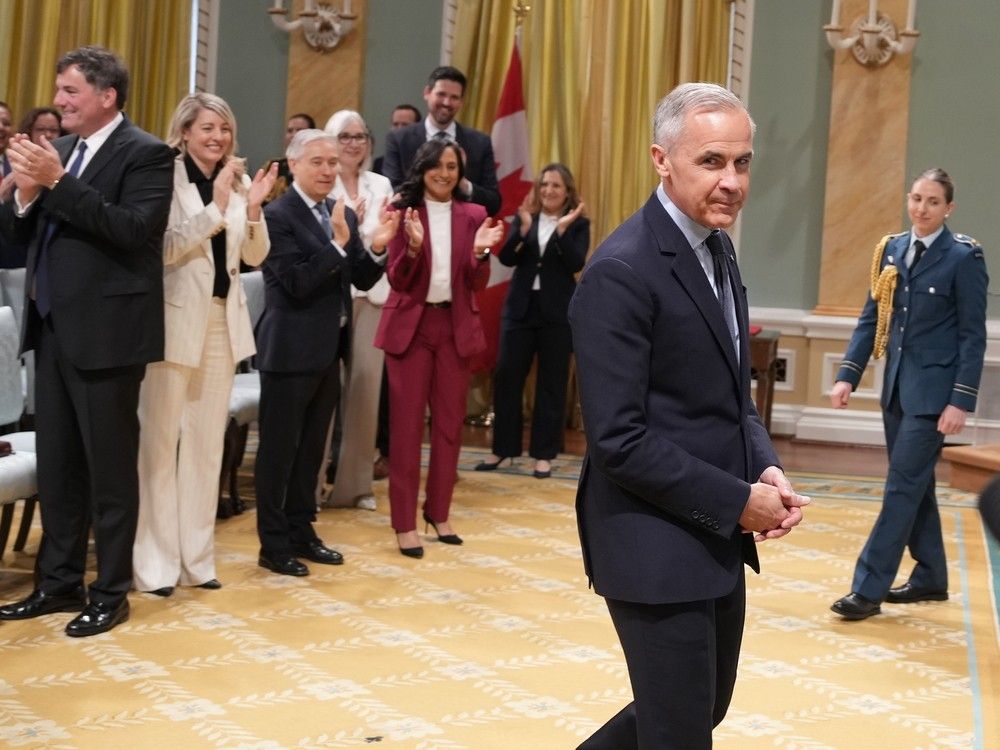
Prime Minister Mark Carney introduces his new cabinet at Rideau Hall on Tuesday, May 13.

Prime Minister Mark Carney’s cabinet hasn’t even been around a week, and it’s produced what should be a month’s worth of gaffes. It’s an omen so bad that even many Carney backers are slumping in disappointment, taken by surprise at how swiftly their hopes were dashed.

Carney’s cabinet was named Tuesday, and with that, the apprehension began. Key problem ministers of the Trudeau age were left in: Steven Guilbeault, former environment minister, was moved to culture; Chrystia Freeland, finance minister of ill repute, was moved to transport and internal trade; Mélanie Joly, former inconsequential foreign affairs minister, went to industry. Sean Fraser, who handled both housing and immigration with catastrophic results, is now in charge of justice.

In case there was any doubt as to their incompetence, they were quick to demonstrate why any skeptics’ misgivings were correctly placed. Guilbeault

immediately took to

dismissing the need for new pipelines, perpetuating the myth of peak oil and peddling the falsity that Canada’s newest pipeline was running at under half capacity (in fact, it was running at 77 per cent capacity).

Fraser, meanwhile, started off his tenure by

telling

media, heading into the new cabinet’s first meeting, that he intends to work more from home. In December, he had announced he planned not to run again to spend more time with his “amazing family,” and another candidate was lined up for his seat — only for him to

un-resign

three months later, after Carney’s ascent.

“Given the nature of the portfolio, a lot of the stakeholders we have are less interested in having you attend groundbreakings, the openings of new buildings that you may have funded, and are quite accustomed to having meetings virtually,” he told the scrum. “So I anticipate during constituency weeks, I’m going to be based in my hometown a little more than I was before.

“There may be an opportunity, depending on what’s going on in the House, to avail myself — not all the time, of course, but once in a while — of the virtual abilities to participate in the House of Commons proceedings, so we’re going to figure some of this out as we go.”

Crime is already worsening in Canada, and citizens increasingly feel unprotected by the system, which seems more interested in balancing racial scales and excusing any criminal that can spin a victimhood narrative. It’s a bad sign that the attorney general — one of the most critical roles in the federal cabinet — is already planning how to not fully devote himself to the job.

Joly and Freeland, at least, have managed to keep their first week relatively blemish-free. Their longtime colleague, Anita Anand, newly arrived at the foreign affairs post, was quick to use her new platform to blame Israel and put up a

defence

for Hamas, however.

As for the new ministers, they’ve provided Canadians even more reason for concern — Housing Minister Gregor Robertson being chief among them. The fact that Robertson was even named housing minister was an immediate red flag, given his record of overseeing Vancouver’s transformation as city mayor (a role he held from 2008 to 2018) from a family-friendly coastal city into Ground Zero of Canada’s drug and housing crises. Under his watch, detached home prices in his city

doubled

and rents skyrocketed. He denied responsibility for this at the time, even though he addressed development fees and zoning at a glacial pace.

Robertson confirmed that he’d be no different as housing minister when he

opened his mouth,

heading into that first cabinet meeting. Asked whether home prices need to go down, he replied: “No, I think that we need to deliver more supply, make sure the market is stable. It’s a huge part of our economy. We need to be delivering more affordable housing.” He had made the

same point

on CBC’s Power and Politics the day before.

If that’s his true goal, it spells disaster for Canada’s younger generation. The University of Ottawa’s Missing Middle Initiative, founded by economist Mike Moffat,

did the math

in April. It found that, assuming home prices stay frozen for the next few decades, it would take an average of 18 years for Canadian incomes to catch up such that housing returns to 2005-levels of affordability.

“Clearly, this approach isn’t going to work,” read the analysis. “Waiting 20 years to restore affordability would mean pricing out an entire generation of middle-class families from housing.”

And to top it all off, the government doesn’t plan to table any form of budget until the fall, leaving Canadians in the dark about Carney’s plan for the country’s immediate future. This is after the prime minister wrapped up a five-week campaign that focused on his ability to come up with a plan, and on his expertise in statecraft — a message that managed to convince enough Canadians to win him a minority government.

For the 43 per cent who voted Liberal, there were clearly expectations for change that warranted giving the Liberals yet another chance. We can at least appreciate that Carney wasted no time in revealing their judgment to be mistaken.

National Post


The Liberal party's

Forty years ago a light-hearted moment in Parliament indicated darker days ahead.

In May 1985 the “

Rat Pack”

made up T-shirts and presented one to John Turner, the leader of the opposition. It was thought some innocent fun, a bit of brio for a deflated Liberal party. Even if it was fun then, it hasn’t been for a long time.

After the 1984 Mulroney landslide, the Liberals were in rough shape, reduced to only 40 MPs, only 10 more than the NDP, and wondering about their relevance. Into that vacuum stepped four MPs — young, brash and attention-seeking. They pilloried the Mulroney government in question period, especially in regard to patronage and assorted scandals. They brought energy to the dispirited, dreary Grits.

They got the nickname “Rat Pack” and revelled in it. Brian Tobin of Newfoundland was the senior “statesman” of the group, having been first elected in 1980. The other three were part of the 1984 intake: Sheila Copps of Hamilton, Ont., John Nunziata from Toronto and Don Boudria from east of Ottawa.

Parliament had only been broadcast since the late 1970s. Television was introduced to inform, but carried with it the potential to outrage. The Rat Pack brought the outrage in abundance. It made for good television, contemporary with salacious daytime talk shows and 15 years ahead of reality television.

The Rat Pack was politically effective. Turner encouraged them because they brought new vigour; Brian Mulroney’s cabinet — John Crosbie most of all — inveighed against them as they held it to account; the media loved them for generating easy-to-cover controversy; and the public rewarded the Rat Pack with the higher profiles that led to three of the four becoming cabinet ministers.

The proudly progressive Rat Pack would be loath to consider themselves progenitors of Trumpian politics, but the all-outrage-all-the-time, name-calling, hyper-partisan, attack-dog style is not a matter of liberal or conservative. It may be more compatible with populist politicians, but that it was perfected by the Liberal Rat Pack demonstrates that it is malleable packaging that can be wrapped around shifting content.

Parliament will resume sitting in 10 days with the genuine grace of having King Charles III read the Speech from the Throne. It was an inspired invitation from Prime Minister Mark Carney, and there is no doubt that His Majesty’s visit will inspire patriotism and pride in a sovereign Canada.

It will be the perfect occasion to restore the dignity of Parliament, especially question period in the House of Commons. For those who can bear to watch, the affair is marked by duelling ovations, each side leaping to its feet to feverishly applaud any and all utterances, no matter how banal, devoid of wit, or empty of substance. When not standing in a cacophonous uproar, they are seated, barracking in a never-ending orgy of argy-bargy.

It doesn’t have to be that way. Alberta showed the way some years ago, after Jason Kenney won the Progressive Conservative leadership in 2017. After witnessing the raucous spectacle of the legislature (before he had a seat), he

vowed

to do something about it if elected. When he entered the legislature in 2018 as leader of the United Conservative Party in opposition, he declared unilateral disarmament. His caucus would not applaud, heckle or thump their desks. In early 2019,

he promised

, if elected premier, the UCP would change the standing orders to demand decorum all around. He did, and Albertans could be proud of the MLAs on both sides. Regrettably, those reforms have not endured under his successor.

Childish behaviour in Parliament is a bit like the weather; everyone complains about it but nobody does anything to correct it. Someone always objects on the supposed grounds that proper behaviour would somehow be advantageous for the other side.

This month offers a rare opportunity where that should not apply. Both Pierre Poilievre and Andrew Scheer, who will the lead the Conservatives in the House of Commons, have amply demonstrated that they can successfully launch a full-throttle attack on the government. They have nothing to prove in that regard, but do have a partisan interest in showing their capacity to hold to account, to enquire, to propose alternatives in a less combative style — as Poilievre himself did toward the end of the election campaign. Constructive criticism is in the Conservative interest.

As for the prime minister, he concluded his campaign

alluding

to the late Mario Cuomo’s aphorism that political leaders “campaign in poetry, and govern in prose.”

“I campaigned in prose,” he said. “So I’m going to govern in econometrics.”

Not even this economist finds econometrics rhetorically engaging, but his point remains. Part of Carney’s political attraction is a sober, even sedate, presentation of substance. He could attempt the melodrama of Justin Trudeau, backed up by the murine squealing of his backbenchers, but he would not be good at it — and why would he want to be?

The propriety of Parliament, a bipartisan concurrence of interests, the public good, the King’s visit — the moment is there for the ceremonial seizing, like the mace that embodies the authority of the House of Commons.

The mischief of the Rat Pack was entertaining but destructive. Forty years is long past time to bury it.

National Post


Prime Minister Mark Carney, right, arrives for the swearing in of his cabinet at Rideau Hall on May 13, 2025.

‘Undeserving of a cabinet post’

Re: Poilievre says Guilbeault is a threat to national unity after pipeline comments — Rahim Mohamed, May 15; and Carney’s cabinet has too many ‘downtown Toronto, urban progressives’ — John Ivison, May 14

I am still waiting for former prime minister Stephen Harper’s “hidden agenda” to reveal itself, however, are we now seeing the beginning of Mark Carney’s hidden agenda?

Here we have our new Minister of Canadian Identity, Steven Guilbeault, who incidentally, along with his former boss, Justin Trudeau, could not have done more to destroy our identity over the past 10 years, telling us that there is no demand for new pipelines. Just like he previously stated that we do not need any more large-scale roads.

I don’t know what the air at the top of the CN Tower is like, but perhaps it caused Guilbeault to become delusional when he scaled it 24 years ago for Greenpeace.

John King, London, Ont.


It is surprising to me that Prime Minister Mark Carney would retain one of the most disliked politicians in Canada in his cabinet. Minister Guilbeault should stop living in the past and focus instead on his new responsibilities.

Building additional pipelines across Canada makes eminent sense. First, their construction would employ Canadians. Second, pipelines could generate income for those whose land the pipeline crosses. Thirdly, pipelines would employ even more Canadians and make Canada energy self-sufficient. There would be no need to continue importing 79,600 barrels per day (29,054,000 barrels per year) of Saudi oil whose extraction is far more damaging to the environment than Alberta’s oil.

The fact that Guilbeault sees no business case for any new Trans Canada pipeline shows the extent to which he suffers from ideological blindness. He is undeserving of a cabinet post of any kind.

Gordon S. Clarry, Etobicoke, Ont.


During the recent election campaign, our new prime minister repeatedly stressed that Canada’s business would be done differently under his stewardship, differently from how his disgraced predecessor had governed. Yet, when Mark Carney announced his cabinet at Rideau Hall on May 13, there were many of the same old familiar faces who had stood shoulder-to-shoulder with Justin Trudeau, through thick and thin, during the gross mismanagement that personified the past decade’s debacle in Ottawa.

As a coup de grace at the photo-op, Carney shot himself in both feet by singling out the new housing minister, Gregor Robertson — saying his expertise with housing during his time as mayor of Vancouver would become part of a “pan-Canadian strategy.”

Just to set the record straight, Robertson was swept into the mayor’s chair in 2008 by Vision Vancouver after a brief stint as an MLA with the opposition B.C. NDP. He promised to end homelessness in the city by 2015, but all these years later it is still a terrible problem in Vancouver, as it is in every other community across Canada.

By the time Robertson resigned as mayor in 2018, the

average price

of a detached home in the city had gone from $857,578 to $2.3 million, as his reign of error left Vancouver as one of the most unaffordable housing markets in the world.

Bernie Smith, Parksville, B.C.


‘Better the devil you know’

Re: ‘This is about the economy’: What motivates Alberta separatists— Tyler Dawson, May 15

As an Albertan of 45 plus years (moved from Ottawa in ’79) I certainly understand the heightened frustration of always dealing with perceived Liberal animosity towards Alberta. The feeling is that Ottawa always wants to take, instead of giving as good as it gets.

Unfortunately, as we experienced last year with Premier Danielle Smith’s trial balloon to remove Alberta from the Canada Pension Plan and launch a separate Alberta Pension Plan, taking momentous steps towards independence is extremely upsetting as people’s comfort zones are challenged. Secession is one of those big steps, and as many people as there are who are severely frustrated with the current relationship, much like the debate surrounding the APP, when push comes to shove I doubt the numbers will be there to leave the Canadian family. I believe most people would rather live with the devil they know than the one they don’t.

Paul Baumberg, Dead Man’s Flats, Alta.


Alberta’s desire for greater autonomy will not likely take the form of a stand-alone republic, a 51st state or perpetual negotiations with Ottawa. Becoming a protectorate, where it will have its own autonomy, but benefit from the U.S. for international affairs and protection from threats, is the likely path. It could be established by way of a treaty between Alberta and the U.S., which the U.S. would negotiate in a nano-second. Protectorates have been used for centuries with a wide variety of nations. Quebec almost achieved its self-designed independence with its razor-close (49.4 per cent to 50.6 per cent) sovereignty-association vote in 1995. The protectorate arrangement often begins a longer process to full independence. Beware, Alberta’s and Canada’s future lies with this highly achievable structure.

John P.A. Budreski, Whistler, B.C.


Hollywood North something to be proud of

Re: Trump frets over Canadian cultural imperialism — Jesse Kline, May 8

In his recent analysis of Donald Trump’s scattershot tariff proposal, Jesse Kline rightly acknowledges the threats posed to Canadian cultural sovereignty by the dominant U.S. entertainment complex. But he then falls back on the all-too-Canadian trait of modesty-verging-on-self-doubt. Dismissing Canadian content as “lame” overlooks the reality that Canada has long punched above its weight in entertainment — at home and around the world.

From award-winning comedy and drama to documentaries and kids’ programming, Canadians produce some of the best content on the planet. These productions also create tens of thousands of jobs for Canadians, drive billions in domestic GDP, and, last year, attracted nearly $1 billion in foreign investments.

This is something all Canadians should be proud of.

Reynolds Mastin, President and CEO, Canadian Media Producers Association


Toronto’s top priorities?

Re: Toronto city staff ignore orders in their quest to rid the city of Henry Dundas — Michael Taube, May 14; and ‘You can’t be openly Jewish at TMU’ — Ari David Blaff, May 6

I think we can generally agree that if there was one thing that Toronto officials had to really focus on, it was removing the name of a major abolitionist and anti-racist from a subway station, and replacing it with the name of a university now best known for its virulent antisemitism.

Tom Curran, Consecon, Ont.


‘Rules of the game no longer count’

Re: Free trade being replaced by crony trade — William Watson, May 13

“Elbows up” has taken on a whole new meaning since the time I played shinny hockey in Montreal. It now appears that to protect your interests, you must kiss the captain of the opposing team. The rules of the game no longer count. Nor does skill or experience. It is now being illustrated by experts such as Prime Minister Mark Carney and Peter Navarro, U.S. President Donald Trump’s senior trade adviser. Notwithstanding their scholarly leadership, when it comes to understanding trade, I prefer to reference the real expert on global finances, Adam Smith. He told us: “The taylor does not attempt to make his own shoes, but buys them of the shoemaker. The shoemaker does not attempt to make his own cloaths, but employs a taylor.” (An Inquiry into the Nature and Causes of the Wealth of Nations, 1776).

I don’t think trade need be more complicated, nor more bureaucratic, nor dependent on flattery.

Larry Sylvester, Acton, Ont.


Trump’s threats ‘highly aggressive’

Re: And just like that, the Trump ‘threat’ disappears — Conrad Black, May 10

Conrad Black asserts that U.S. President Donald Trump has never threatened Canada. Black wrote, “Trump never spoke of annexation” and “Trump never uttered one word implying an aggressive act against the independence of Canada.” It was all a friendly invitation. Not true.

On Jan. 7, while Trump (haltingly) ruled out the use of military force to annex Canada, he advocated for the use of “economic force” to pressure Canada into joining the United States. I suspect that any informed person would consider such comments highly aggressive.

Black suggests that as part of the U.S., we might enjoy lower taxes. True, but there is the matter of their federal debt that is 124 per cent of GDP, which stands in poor comparison to ours at 69 per cent. Most Canadians might look askance at the prospect of joining a country with an average life expectancy that is four years less than ours and where the murder of a health-care CEO is widely applauded. They might decide that a rabid gun culture and toxic political environment are not to their liking. And they are not naive enough to think that Republicans would add a new Blue state with as many electoral votes as California. More likely Trump has a vassal state in mind.

Paul Proulx, Duntroon, Ont.


I was walking my five-pound dog when another dog ran over and clamped his jaw on my dog’s haunches. When I shouted at the woman to call her dog off, she said, “That’s the way he likes to play.” I said that I didn’t know that and neither does my dog.

Similarly, I don’t find Donald Trump’s threats so light, amusing and jocular as Conrad Black does. For a leader of the U.S.A. to talk with such light-hearted tomfoolery about such serious matters is in itself a shame and makes mock of Trump’s position as the leader of a western country.

It is ridiculous that Trump jokes about taking over another country, particularly when we’ve seen Russia attempt to do just that in Ukraine. And knowing Trump is serious about the Gulf of America, taking back the Panama Canal and perhaps helping himself to Greenland, why wouldn’t we think there is a grain of truth in his desire to take on Canada?

Diana Tremain, Toronto


Jew-hatred on campus has to stop

‘You can’t be openly Jewish at TMU’ — Ari David Blaff, May 6

Recently, the eminent historian Niall Ferguson pointed out that prior to the rise of Naziism in Germany, German universities were considered to be among the top institutions in the world. With the rise of the Nazi regime, Jewish academics, like Albert Einstein, and students, either fled or were kicked out. These same institutions, Ferguson continued, 80 years on, still have not regained the global prestige they enjoyed prior to that time.

Looking south, Harvard, once the crown jewel of the academic world, is now the butt of jokes, while Columbia has noted a sharp decrease in the number of students accepting placement in its troubled halls.

It is a lesson that the majority of Canadian universities still have not learned. Last year, when brightly coloured tents sprouted overnight on university campuses like toadstools after a rain shower, with the notable exception of the universities of Calgary and Alberta, our university administrators prevaricated, stalled and tried to pretend the whole thing was not happening. In a sense, they deserve some sympathy, as much of what they are expected to do is schmooze big donors, not take a stand against mobs bent on hate.

The encampments were neither spontaneous nor “protests.” Orchestrated by professional provocateurs, these were mobs, whose purpose was to harass and intimidate Jewish students and faculty.

We have all heard the meaningless twaddle from these institutions about how there is no place for hate on the campus. But the sad, discouraging description of the continuing assault on Jews at Toronto Metropolitan University proves how ineffectual these words are.

It’s time for action. As the students in Ari David Blaff’s article advise, Jewish students and faculty, and others who are disturbed by this behaviour, should go elsewhere, to a college or university where they can work and learn in a more welcoming environment. Donors should reconsider giving money to TMU and others like it. Faculty like the instructor who claimed that only four million Jews, not six million, died in the Holocaust (even one death is one too many), should be fired for prejudice and profound ignorance. And finally, the universities should be forced to open their books and disclose just where their funding is coming from — especially for programs like Middle Eastern Studies.

While we may find lots to criticize about what is happening in the United States, at least the Trump administration is taking action against the perpetrators of Jew-hatred on campuses. That’s more than can be said about our government and our institutions of higher learning.

E. Joan O’Callaghan, Toronto


National Post and Financial Post welcome letters to the editor (200 words or fewer). Please include your name, address and daytime phone number. Email letters@nationalpost.com. Letters may be edited for length or clarity.



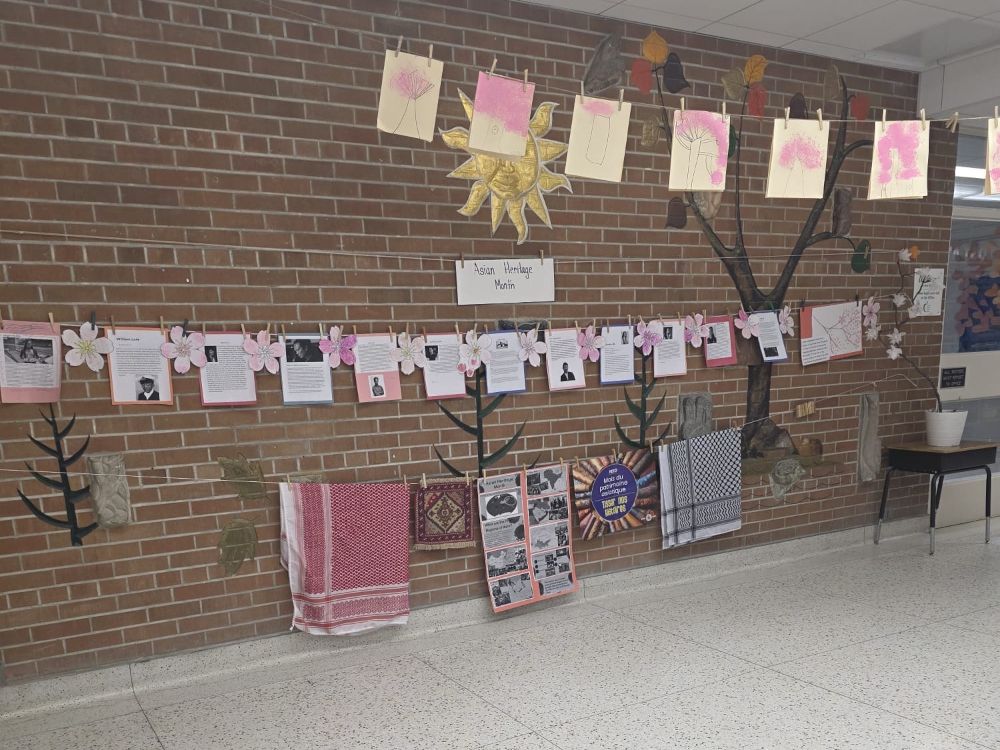
Two keffiyeh are displayed in the front entrance of a Toronto elementary school as part of an Asian Heritage Month exhibit.

Problems with political activism and antisemitism seeping into Canadian schools came to the fore last fall after Toronto students were taken to a rally against environmental contamination on an Indigenous reserve that quickly descended into an

anti-Israel hate-fest

. But this was only the tip of the iceberg: our schools have become cesspools of Jew-hatred and woke identity politics, yet most of the time, the public never hears about it.

The elementary school in my urban Toronto neighbourhood, for example, is a microcosm of everything that’s wrong with our public-education system.

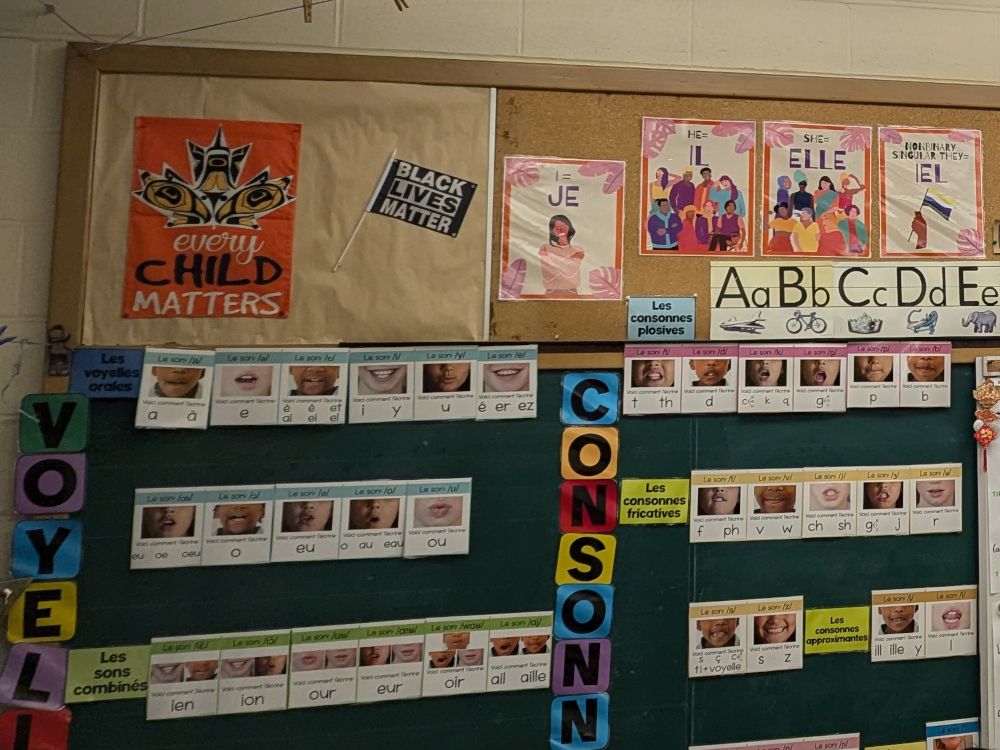
On a tour of the facility last fall, every classroom I visited prominently displayed a Progress Pride flag. Many included other faddish political slogans like “Black Lives Matter” and “Every Child Matters.” Yet the closest thing I saw to a Canadian flag was a Maple Leaf embedded in Pride colours. In class, students spend an inordinate amount of time learning about the “bad white people” in residential schools and participating in mock protests, while completely ignoring all the things that make Canada great.

Perhaps it should come as no surprise, then, that following October 7 — when thousands of Hamas terrorists invaded Israel, brutally raping and slaughtering 1,200 people, mostly civilians, and taking over 250 hostages — the school has become increasingly inhospitable to the neighbourhood’s Jewish community.

 Political slogans are seen on the wall of an elementary school classroom in Toronto in 2024.

At the start of the month, a display celebrating Jewish Heritage Month — which contained cultural symbols (notably, nothing relating to Israel) and artwork created by students attending a private Jewish aftercare program run out of the school — was put in a glass cabinet in the school’s foyer. A commemoration of Asian Heritage Month, which also takes place in May, was put up along another wall at some point.

Based on accounts from parents and teachers, along with photos, a teacher added two keffiyeh — a symbol of violent resistance against Israeli Jews — to the Asian Heritage Month display last Friday, arguing that the Middle East is technically part of Asia.

Islamic History Month

, however, is observed in October, which calls the teacher’s motives for prominently featuring Palestinian jihadi symbols next to a Jewish cultural display into question. Either way, the effect was to politicize what was supposed to be an innocuous celebration of the school’s multiculturalism.

Then, on Tuesday, the displays were abruptly moved to a remote corner of the library, where they cannot be seen by parents or other visitors. Books about Islam were also added to the exhibit, which can be seen from a photo. A number of Jewish families expressed concern to me, and in emails to the principal that I have viewed, that the decision may have been made because their cultural identity had become too controversial. The school’s principal refused to answer questions about why she made the call, and a Toronto District School Board (TDSB) spokesperson claimed that, “As both displays continued to grow, they were relocated to the library to better support student engagement.” Yet the new space is much smaller than the old one.

This is not the first time something of this nature has happened. To commemorate the anniversary of the Quebec mosque shooting at the end of January, some classes attended a TDSB-sanctioned talk by children’s author and illustrator Hatem Aly, who’s listed as a participant in a

boycott

of Israeli cultural institutions. And the day after Yahya Sinwar, the Hamas leader who masterminded the October 7 massacre, was killed by Israeli forces in Gaza, two kindergarten teachers showed up for work wearing keffiyehs.

 Keffiyehs are incorporated into an Asian Heritage Month display in the library of a Toronto school.

As I noted in an email to the principal at the time, the keffiyeh is “an overtly political symbol with roots in Islamic terrorism that has become associated with the vile antisemitic rallies on Canadian streets, in which protesters regularly call for the genocide of the Jewish people and have led to violent attacks against Jewish institutions, including schools. It is both divisive and deeply offensive and should have no place in the classroom.”

Indeed, although the scarf is a traditional Bedouin garment, it has

long been associated

with violent Palestinian attacks against the British, who controlled the area after the First World War, and the region’s Jewish inhabitants. It was used to hide the identities of Palestinian guerrillas when they launched assaults against the Brits in the 1930s. It was popularized in the West in 1969 as the garment worn in a

widely circulated photo

of

Leila Khaled

, the Popular Front for the Liberation of Palestine terrorist who was one of the hijackers of TWA Flight 840 from Rome to Tel Aviv.

In more recent decades, it became associated with the late Palestinian leader Yasser Arafat, a man who turned down numerous viable offers for peace and Palestinian statehood in favour of two bloody intefadehs. And nowadays, it is the fashion choice of the thugs who occupy university campuses, picket outside synagogues and in Jewish neighbourhoods, and fill western streets with calls to “globalize the intefadeh” and wipe out all the Jews “from the river to the sea.”

Although the principal seemed genuinely concerned with parents’ objections to keffiyehs in the classroom, she insisted she had no control over her staff’s work attire and suggested reaching out to Erin Altosaar, TDSB superintendent of education. Altosaar, however, also insisted that the “keffiyeh is a symbol of cultural identity and we do not question … the cultural identities of others.”

 Leila Khaled

A TDSB spokesperson defended the more recent heritage month incident along similar lines, stating that, “Palestinians (Gaza, West Bank) are considered to be a part of West Asia, including the Levant region, and as such cultural attire and other artifacts from that part of the world were represented in the Asian Heritage Month display.” (Though one can imagine the backlash from displaying an Israeli flag or Israel Defence Forces logo for Asian Heritage Month, even though Israel is technically part of West Asia, as well.)

School administrators, it would seem, are more than happy to sweep issues like this under the rug and pretend as though the problems caused by their wholesale buy-in to the identity-politics craze and blurring of the lines between education and activism don’t exist. But in this case, it would appear as though the keffiyeh was used, not as a means of expressing solidarity with the Palestinian people, but of antagonizing the local Jewish community and politicizing Jewish cultural expression.

This incident was orchestrated by those at the school who apparently could not stand the thought of elementary kids celebrating their culture without injecting Middle Eastern politics into the fray. It was aided and abetted by a school administrator who was unwilling to stand up to her own staff, creating a culture of fear among faculty, who are genuinely afraid to speak out. And we can be quite sure that similar things are taking place at public schools right across the country.

Unfortunately, the school board is unlikely to do anything to address issues such as this. While the

TDSB’s inquiry

into the field trip to an anti-Israel rally acknowledged “the deleterious effect on young minds of hearing chants that troubled them,” it spent more time criticizing the media for its coverage of the incident and painting the “TDSB’s Indigenous communities” as the true victims.

It’s high time for the provincial government to intervene and make it clear that politics has no place in the classroom — full stop.

National Post

jkline@postmedia.com

Twitter.com/accessd

This column was originally published in the Channel Israel newsletter. Sign up here.


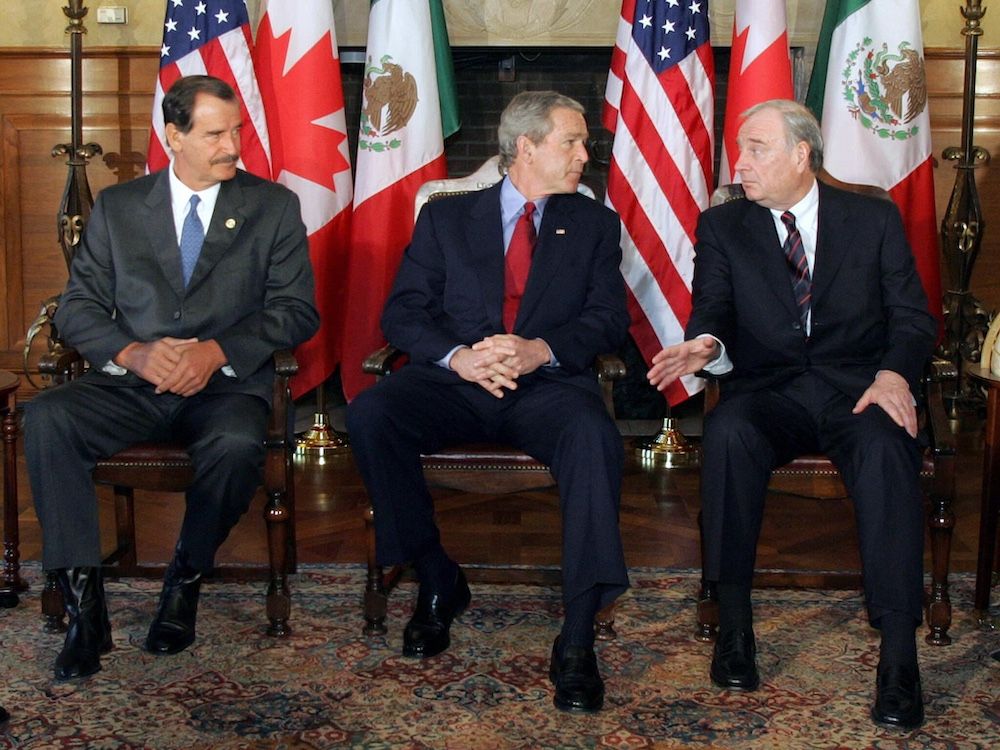
US President George W. Bush (C), Mexican President Vicente Fox (L) and Canadian Prime Minister Paul Martin (R) sit down for their tri-lateral meeting at the Baylor University Library 23 March, 2005 in Waco, Texas. The centerpiece of the three-way summit is to be the signing of a new accord aimed at improving the security and economies of the three countries. The leaders will head to Bush's nearby Crawford ranch for lunch. AFP PHOTO / TIM SLOAN  (Photo credit should read TIM SLOAN/AFP/Getty Images)

Happy North America Day! Don’t laugh. There was a time when policy-makers, political theorists, business leaders, economists and politicians would have raised glasses of trilateral Canadian whiskey, American bourbon and Mexican tequila to toast a grand concept: “Here’s to the union of our three glorious nations into a North American Community!” Some even took the idea further: “Let us drink to a United North America!”

Today, in the midst of trade wars and what seems like accelerating division and animosity, the prospect of greater continental cohesion looks impossible. Not too long ago, however, many dreamed the impossible dream of a united North America. If unity and amicable co-operation ever does catch on some time in the currently unimaginable future, the perfect date to celebrate would be today, May 17.

Exactly 20 years ago — on May 17, 2005 — a group of Canadian, American and Mexican political and business officials produced a document that bears an improbable title:

“Building a North American Community.”

The 47-page report, published by the Council on Foreign Relations, was signed by a diverse collection of business and economic personalities from each country, including (among other Canadians) Thomas d’Aquino, head of the Canadian Council of Chief Executives; John Manley, former Liberal deputy prime minister; Tom Axworthy, a former key figure in the Liberal government of Pierre Trudeau; Allan Gotlieb, former Canadian ambassador to the U.S.; and Michael Hart, a leading Canadian academic and bureaucrat.

It is hard to imagine today that, only 20 years ago, such a distinguished and somewhat diverse collection of experts in North American business, political and economic affairs could have coalesced around a report that advocated greater integration of the three nations. It was a radical document by today’s standards. Examples of its key recommendations — to be executed under the essential principle of “respect for each other’s National sovereignty” — included the following ideas:

• Creation of a common economic space in which trade, capital, and people flow freely, by truck and train and through open skies for air travel;

• In trade, national boundaries will be defined by a common external tariff around a secure perimeter;

• Greater integration of military, security and defence structures;

• Develop the integration of North American resource strategies around metals and minerals central to the growth and economic security of North America. While the 1994 North American Free Trade Agreement has produced great economic benefits, it has not ensured a free-flow of resource products; more needs to be done; and

• Develop a continental energy strategy, including accords for mining, forestry and agricultural products.

It is important to note the obvious: the ideas and principles behind the North American unity movement 20 years ago have no relation to President Donald Trump’s arrogant references to wiping out the Canada-U.S. border and the creation of a 51st state. Trump is an anti-free-trader and extreme nationalist who aims to impose his American authority, while the North American Community project was based on positive, voluntary and mutually beneficial collaboration and negotiation.

The May 17 report in 2005 was preceded by ideas that began to take hold a few years earlier. In an interview with the Post for this article, Thomas d’Aquino, the former head of the Canadian CEO council and a leading advocate of continental co-operation, pointed to the two main factors driving the unity movement. One was an obvious need at the turn of the century to expand and improve the 1994 NAFTA agreement, although chances of action on NAFTA were slim, he said. But then came the need to react to the security risks revealed during the 2001 attack on the World Trade Center. “As soon as 9/11 happened,” said d’Aquino, “we at the CEO council launched an initiative called the North America Security and Prosperity initiative. And what we were proposing was a much bigger and broader project than NAFTA.”

That project was formally taken up by the three governments in March 2005, at a leaders meeting in Waco, Texas, the first of many meetings of the “Three Amigos” — prime minister Paul Martin and presidents George W. Bush and Vincente Fox. On the day of the March leadership meeting, Canadian John Manley, former Mexican finance minister Pedro Aspe and former Massachusetts governor William Weld published a commentary in The Wall Street Journal titled “North America the Beautiful.” The three called on the North American leaders to announce a plan and structure to “provide energy and momentum to the North American agenda.”

At the Texas meeting, the three leaders established a

Security and Prosperity Partnership

that was to meet annually to advance continental integration. As time passed, however, the annual meetings of the Three Amigos stumbled, generally making little serious progress. The national leaders never met during Trump’s first term and then only irregularly under Biden. At the last one, in 2023,

nothing much happened.

By 2023, the North American idea had been totally abandoned. What went wrong? As d’Aquino sees it, the concept lost momentum as national leaders changed. While Liberal PM Paul Martin backed the project, Conservative PM Stephen Harper was “much, much cooler to the idea. … He thought it was too big, too grandiose.” The real reason the project lost momentum, according to d’Aquino, was the arrival of president Barack Obama in 2009. “Obama thought the security partnership project was a Republican thing and he basically decided to walk away from it. And he didn’t reject it outwardly, he just let it die on the limb. It was Obama who killed it.”

Before we get to another reason for the fate of the North American unity proposals, it’s worth noting that there were some later attempts to revive continentalism among the three nations.

One came from Hugh Segal, the late Canadian Senator, author and political strategist who in 2011 wrote a book that extolled the benefits of what is described as moderate Canadian conservatism. Segal’s progressive moderation was put aside briefly in

The Right Balance: Canada’s Conservative Tradition

when he advocated for a Canadian White Paper on how to structure a North American Community. As he put it in his book, “drugs, climate change, disease control, trade and poverty challenges known borders.”

In a excerpt from The Right Balance published in 2011 in the National Post, Segal

outlined his belief

that Canada should take a leading role in fostering a continental pact of some kind. “A North American Community is not about the victory of the right or the left in this country, the United States or Mexico.”

On that point, Segal was wrong. The opposition to any form of continental unification has generally come from the harder edges of left and right, two populist streams that meet at the Canada-U.S. border. That clash of cultures was documented in another 2011 book titled

The North American Idea: A Vision of a Continental Future

by Robert Pastor, who died in 2016.

Pastor’s book offers insightful perspectives on the ideological forces in favour of North American cohesion and the left/right forces that have ultimately produced the anti-collaboration environment that dominates today. And Pastor, who worked on the ideas long before 9/11, knows the continental story, up and down, inside and out.

A professor of international relations and a former U.S. government national security official, Pastor wrote an earlier 2001 book — 

Toward a North American Community

— that outlined the basis for a continental structure that was needed to move beyond the limited scope of the 1994 NAFTA agreement. On the cover is a photo of prime minister Jean Chrétien, and presidents George W. Bush and Vicente Fox.

The problem with NAFTA, in Pastor’s view, was that while it was successful in boosting trade and growth, it failed to provide structures and approaches to the inevitable ongoing areas of cross-border trade and conflict. As if reading the tea leaves for 2025 and the Trump era, Pastor wrote that NAFTA would come under constant criticism from political and economic players who tend ”to focus on the balance of trade and capital flows and the creation and loss of jobs.”

As a result of his 2001 book, Pastor played a significant role in preparing the May 17, 2005, report, Building a North American Community. He also had an inside track on the evolution of the idea over time and the role of what today would be called right and left populism in undermining the prospect of greater continental agreement on trade, economics, national security and other issues.

In Canada, core opposition to greater North American unity has come primarily from an activist left that has consistently fought against NAFTA and globalized trade expansions. Pastor mentions Maude Barlow and the Council of Canadians, along with other Canadian intellectuals who have mounted

steady campaigns

against any perceived risk of Americanization. The greatest Canadian fear is loss of sovereignty, a risk now accentuated by Trump’s claims to want a 51st state.

While few Canadians would favour full-scale union with the U.S., the idea raises the instant responses from the liberal left. It always has. A few days after the May 17, 2005, report Toronto Star columnist David Crane warned Canada to steer clear of what he called Fortress North America. “What Canada needs is a global vision of its future, not that of the 51st state.” True enough, but that was not the plan for the North American Community.

American opposition to continentalism has perhaps most often come from the populist right. Pastor describes as typical his appearances on a CNN talk show with Lou Dobbs as he came under attack from “paleoconservative” Pat Buchanan for allegedly attempting to undermine U.S. sovereignty by wiping out the borders, a move that would give anti-conservative leftist liberal Canadians and Mexican’s greater control over conservative America. Pastor says that as a result of these

accusations

, he received emails accusing him of being a “treasonous wretch” who should be deported to Mexico or Canada. Another said: “You are an enemy of the U.S.A. and should be hung for treason.”

Writing in 2011, Pastor again read the tea leaves. He said that Americans should “absorb the North American idea and accept that they are part of the solution.” Only then will the three countries ”find more creative paths to address chronic problems like drugs, violence, illegal immigration, and trade, and new transitional issues like pandemics or the crisis in the auto industry.”

Since the 2005 report, a succession of national leaders have failed to tackle the North American problem and turn it into an opportunity. Earlier co-operative action could have avoided today’s confrontational crises that now require another rethink of the continental issues, this time with Trump in control.

Some, including d’Aquino, see an opportunity. Mexico would remain as part of a revitalized Canada-United States-Mexico Agreement on trade, while Canada also pursued other international trade options. But on other issues, Mexico would not be part of a separate Canada-U.S. treaty covering bilateral defence and security, the role of Canada as a supplier of minerals and products such as aluminum and steel, and the border management of drugs and guns, among other topics. “This is not a substitute for the U.S. free trade agreements,” said d’Aquino, but a complement.

At this point in Canadian-U.S. relations over growing continental economic and security issues, we seem to be a long way from such agreement, just as we are a long way from being able to drink a toast to celebrate Happy North America Day. The opportunity was abandoned more than a decade ago, but we could benefit from recalling that there once was a time when reasonable co-operation and agreement was possible and appreciate that history offers a reason for hope that the opportunity could come again.

National Post


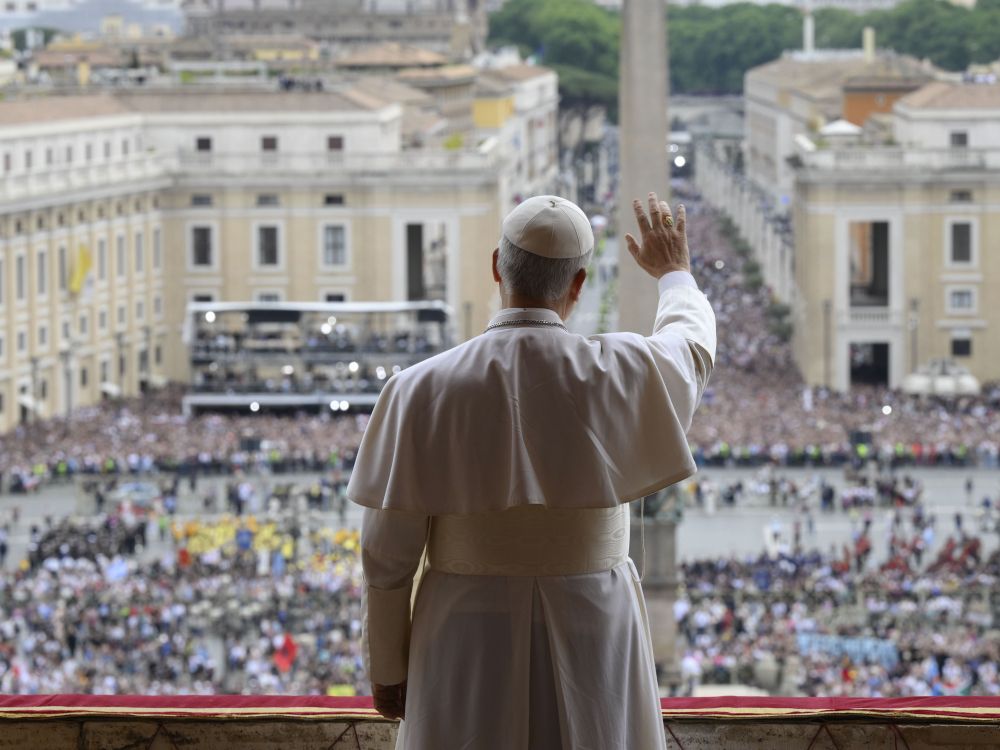
Pope Leo XIV waives from the central balcony of St. Peter's Basilica, overlooking St. Peter's Square, where tens of thousands of faithful gathered to receive the first traditional Sunday blessing after his election, on May 11.

There are two principal takeaways from the election last week of Pope Leo XIV, one reflecting on the condition of the Roman Catholic Church, the other that the new Pope is an American, albeit one who has spent much of his career in Latin America. Despite centuries of effort by millions of people to portray the Roman Catholic Church as a superstitious anachronism, it endures. This is the first pope whose native language is English since Adrian IV (Nicholas Breakspear), who died in 1159. English is the most widely spoken language in the world and although that singular self-nominated “defender of the faith” Henry VIII of England caused the English-speaking peoples to be more heavily influenced by the Reformation, and not necessarily its best aspects, than the other great western cultures, it is high time that there was an English-speaking pope.

People of my venerable age group will recall that St. Pope John XXIII attempted a substantial modernization of the Roman Catholic Church and made it more accessible by increased use of contemporary languages in place of Latin and other liberalizations, and that this is a process that generally has continued gradually. His successor, Paul VI, initiated the practice of popes travelling widely and the subsequent elections of Polish, German, Argentinian and now an American Pope, are steadily wrenching that organization free from the secretive and easily caricatured Roman cohort of its curial governors, and have brought it closer to and made it more reflective of its far-flung constituencies. With any organization, ecclesiastical or secular, the challenge of reform is to make the basic tenets more available and popular without modifying them in a way that undermines the raison d’etre of the institution. The Catholic Church, in walking this line, has tested the faith of many and forfeited the respect of some.

Of the approximately 1.4-billion nominal Roman Catholics, about one billion attach a significant amount of credence to being members of that faith. It is an organization united by concepts of the sanctity of life and the existence of a divine intelligence that can be propitiated, and that does assert itself in human lives. Anyone who entertains any religious views is thoroughly aware of the widespread practice, particularly prevalent in our atheistic media and academic and other cultural communities that religion is merely a fetishistic heirloom of the Dark Age when people generally had an insufficient respect and ambition for what human ingenuity and diligence could achieve; a consolation for the fact of death. Perversely, our anti-theistic elites profess a respect for Islam, which is in some measure a violent replication of theoretically pacifistic Christianity (including the annunciation of both by the Archangel Gabriel). This indicates that non-western support of Islam is really, in many cases, just antagonism to Christianity. It requires more faith and is intellectually more difficult to deny the existence of any spiritual or supernatural forces in the world than to uphold them. There has always been a zone in the human psyche that ponders the unknowable regions of the cosmos and attempts to replace authentic faith with a vacuum, which has sometimes led to the most horrible pagan aberrations in history, including Nazism and communism.

The immense crowd that packed St. Peter’s Square and the approaching Via de la Conciliazione last week, conspicuously largely composed of younger people waving the flags of most of the countries of the world, indicated that the papal election is not just a Roman municipal tourist celebration. Interest in ecclesiastical matters has fluctuated very widely throughout history, from the dawn of Christianity when Christ and most of his early disciples were brutally murdered, through centuries when Rome was more powerful than any secular government, and times of terrible lassitude, degradation and corruption, when the public’s respect was thoroughly alienated but the faith that had been dishonoured survived.

There are now evidences of growth of Catholic religious practice, partly in reaction to the oppressions of Christianity, partly in recognition of the spectacular failure of secularization and the unsustainably incompetent performance of most secular governments, and partly because of a resurgent sense that spiritual forces do exist and persist despite the antics of charlatans and publicity-seeking iconoclasts. While the rigorous non-believers regard the Roman Catholic Church as an institutional bumble bee, flying laboriously in defiance of all laws of nature and logic, the election of the new Pope has demonstrated its imperishability again. Secularism and parts of the Enlightenment have not delivered a human plenitude of knowledge, any more than unspontaneous piety did. When Christianity fields its intellectual first team from St. Augustine and St. Thomas Aquinas to modern thinkers such as St. John H. Cardinal Newman and Jacques Maritain, it always defeats the atheists.

The new Pope’s American nationality has been widely claimed to indicate increased administrative efficiency, which the church desperately needs. It is also significant that such an internationally varied and highly intellectual group as the College of Cardinals has not hesitated to elect a pope from the most powerful and influential, as well as the most controversial country in the world. The American public has rejected wokeism, reckless tampering with gender, subordination of parents to educational administrators and the effective deconstruction of our Judeo-Christian traditions, and given a mandate for their reinforcement. The current U.S. administration is raucous and sometimes abrasive, but it is eliminating the country’s trade deficit, has stopped the invasion of the U.S. by masses of destitute foreigners and is using its influence effectively in the Middle East and elsewhere. This Pope has been a Republican voter in Chicago. He appears to be socially generous but a defender of the traditional verities. Perhaps coincidentally, and perhaps not, this is the first time that the Holy See and the world’s most powerful secular government have been led simultaneously by fellow countrymen since the “Babylonian Captivity” of the pope removing to Avignon in the 14th century. The world’s most powerful state and the world’s largest organized religious institution, led by men of the same nationality, may be advancing on parallel lines.

The terrible and long-ignored crisis of molestation and sexual abuse has finally been addressed, and the Christian churches are now among the safest milieus for the sexually vulnerable. Faddishness and the appeasement of destructive tinkerers have nibbled at the base of the Roman Catholic Church, as the United States between Ronald Reagan and Donald Trump wobbled badly at times, and the constitutional guidelines of American government have been challenged, especially by politicization of the justice system. Both the Holy See and the United States have retained their preeminence and they may now be counter-attacking simultaneously, not by agreement, but by the spontaneous wish of their leaders and people.

If this is what is happening, the world will be better for it.

National Post