


LP_468x60
on-the-record-468x60-white

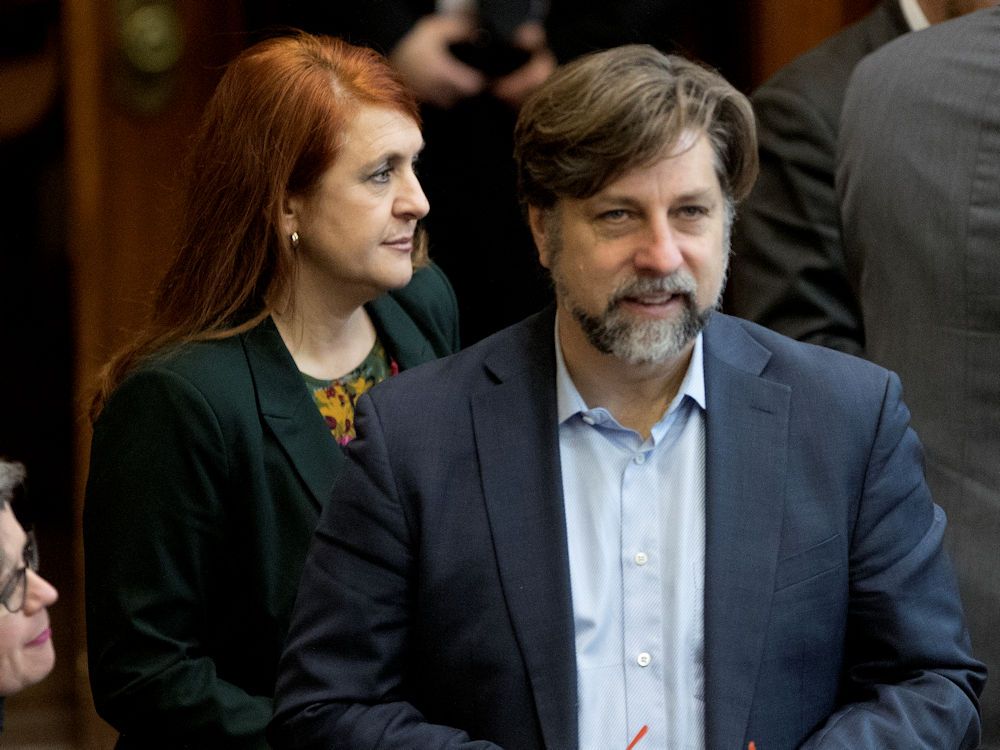
Luc Ferrandez pictured in 2018.

First Reading is a Canadian politics newsletter curated by the National Post’s own Tristin Hopper. To get an early version sent directly to your inbox, sign up here.

TOP STORY

A Quebec radio host and former politician is under fire from disability rights advocates after a broadcast in which he suggested that doctor-assisted suicide could be a form of “liberation” for the mentally ill.

During a May 15 broadcast on the talk radio station 98.5 Montreal, host Luc Ferrandez suggested in French that MAID should be seen as a “solution” to “put an end to the pain” of certain individuals in permanent institutional care.

He added that Quebec should enshrine “comité de sages” (committees of experts) to authorize assisted suicide “in cases where, for example, someone no longer has any parents, people who were abandoned … people who no longer receive visits … no longer have any joy in life, they have no more interest in living, who live in permanent suffering.”

In a Sunday statement, the Montreal-based disability rights advocate RAPLIQ 

accused Ferrandez

of promoting a “eugenic ideology.”

“To speak of euthanasia with logistical calm, as if it were a measure of social efficiency, is to deny the value of different lives,” wrote the group. “It is to slip down a eugenic slope, the very same that has led history into the abyss.”

Ferrandez is a former mayor of the Montreal borough of Le Plateau-Mont-Royal. He co-hosts a daily three-hour talk show with Nathalie Normandeau, a former deputy premier under the Quebec Liberal government of Jean Charest.

His MAID statements came during a 30-minute discussion over the case of “Florence,” an intellectually disabled 24-year-old woman who was profiled in

an investigation by La Presse.

Florence, not her real name, was held in solitary confinement for eight days at Quebec’s Leclerc Institution following a perennial failure by Quebec health authorities to place her in an institution that suited her needs.

Florence is described as having the mental capacity of a small child, and suffers from Prader–Willi syndrome, a rare genetic condition in which the sufferer always feels hungry.

“The young woman does not have any awareness of danger. She doesn’t know how to read nor dress herself without assistance. She becomes lost if she’s left alone outside,” wrote La Presse.

As the investigation details, Florence was assigned to prison after she kept escaping from group homes in an attempt to find food. The story interviews Florence’s mother, who provided full-time care for her daughter for 22 years until becoming overwhelmed and turning her over to the care of provincial health authorities in the summer of 2023.

Mid-way through Thursday’s segment on the case, Ferrandez suggests that Florence’s mother should have the right to end her daughter’s life via doctor-assisted suicide.

“How does the law have the right to say ‘no’? How does the state have the right to say ‘no’?” he said, to agreement from Normandeau.

He added that in extreme disability cases, the only medical solution is to “freeze” a patient in bed, and that death could be seen as “a way to end their pain.”

According to RAPLIQ, the segment treated death as a “social solution.”

“When a former mayor and a former minister consider that the morgue would be a “logical” outcome due to a lack of adequate public services, they relieve society of its moral, political, and human responsibility,” read the group’s Sunday statement.

Canada is already on track to have the world’s highest rate of deaths caused by assisted suicide, and Quebec is easily the province that has most enthusiastically embraced the practice.

Health Canada’s most recent figures on MAID are from 2023, and in that year assisted suicide was

responsible for 7.2 per cent of total Quebec deaths

— about one in every 14.

That was the same year that the head of a Quebec MAID oversight body, the Commission sur les soins de fin de vie, warned that the province’s health-care system no longer saw assisted death as an “exceptional” option, or even as a last resort.

“We’re now no longer dealing with an exceptional treatment, but a treatment that is very frequent,” Michel Bureau said at the time.

In recent months, Quebec has even taken the step of expanding MAID eligibility into areas that are still technically considered homicide under federal law. In October, Quebec Justice Minister Simon Jolin-Barrette told doctors that they could start administering MAID to unresponsive or mentally incompetent patients, provided the patients had signed an “advance directive” to that effect.

Even under Canada’s rather permissive MAID laws, euthanizing an unresponsive patient qualifies as homicide, and the federal government has rejected Quebec’s pleas for an exemption.

Nevertheless, Jolin-Barrette said the province’s prosecutors would simply be ordered not to enforce the Criminal Code in cases

involving the doctor-assisted death

of an unresponsive patient, provided the death was “provided in compliance with wishes expressed in a free and informed manner.”


IN OTHER NEWS

 Canada has once again received explicit praise from the Palestinian terrorist group Hamas. The above communique was issued in response to a joint statement signed by Canada, the U.S. and France which called for Israel to unilaterally cease military operations in Gaza, and made no mention of removing Hamas from power in the territory. This is the second time Hamas has thanked Canada for its diplomacy in regards to the Israel-Hamas conflict. The first came in December 2023, after Canada similarly called for a ceasefire that would have the effect of preserving Hamas’ control of Gaza.

The saga of the C-19 rifle used by the Canadian Rangers is very close to the platonic ideal of why Canada is chronically unable to acquire good kit for its armed forces. Until the debut of the C-19, the Rangers were one of the last armed forces on earth still using the bolt-action Lee-Enfield .303 rifle, a firearm that dates back to the First World War. Instead of simply buying a newer gun, the Canadian government insisted on a designed-in-Canada replacement that took years and ultimately cost $5,000 per unit.

And apparently these new guns are already breaking:

The wood stocks quickly began cracking in the extreme cold of the Arctic.

Although Mexico has always been the primary fentanyl-smuggling threat to the United States,

a new U.S. Drug Enforcement Agency report has highlighted Canada as a “growing concern” given the high number of fentanyl “super-labs”

that the RCMP keep busting. The gist of the report is that if the U.S. is successful at stemming the flow of Mexican-origin fentanyl, drug cartels 

might be able to pick up the slack via Canadian branch operations

. “These operations have the potential to expand and fill any supply void created by disruptions to Mexico-sourced fentanyl production and trafficking,” it reads. The political implications for this, of course, are that the administration of U.S. President Donald Trump keeps citing fentanyl as the reason why he’s slapping trade tariffs on Canada.

Get all of these insights and more into your inbox by signing up for the First Reading newsletter here.

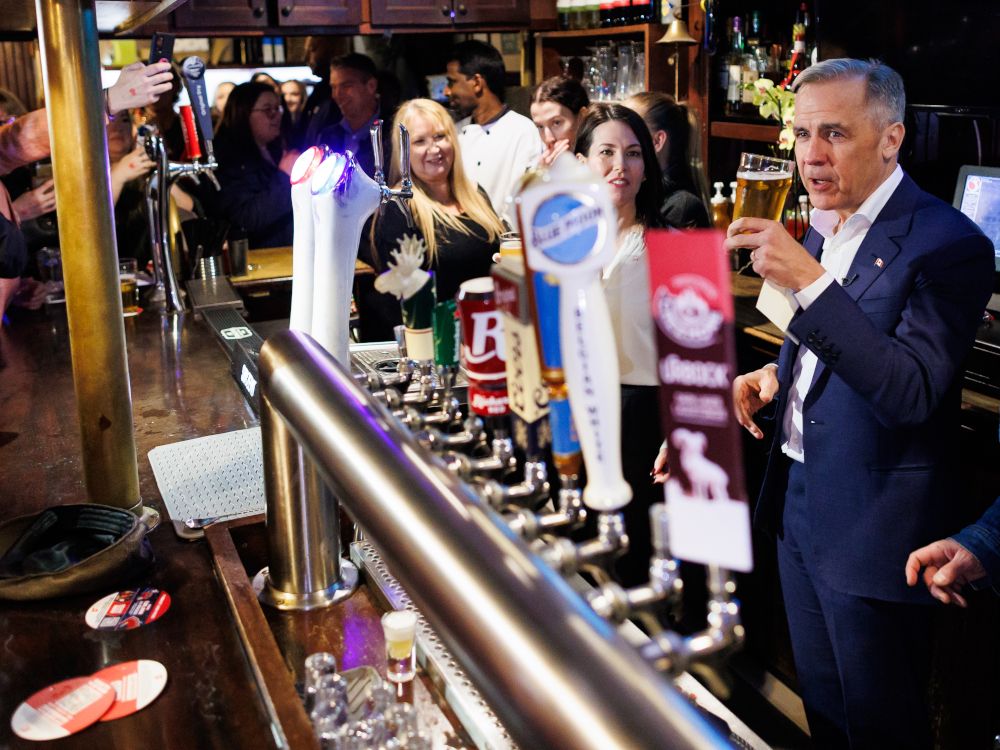
Prime Minister Mark Carney, right, enjoys a pint at a pub in Halton Hills, Ont., on March 31.

When Prime Minister Mark Carney adopted “elbows up” as a de facto campaign slogan, Canadians thought he was referring to the forceful way his government would tackle the economic crisis caused by the trade war with the United States. But judging by his post-election plans, it seems more likely that he was actually referring to the proper way to hold a beer on the summer barbecue circuit.

Less than a month ago, Carney was hammering home

the point

that this was the “most consequential election of our lifetime.”

The

Liberal election platform

noted all the problems this country faces, including the worst “housing crisis” since the Second World War, “unsustainable” immigration, a military that’s not prepared to face “a world of growing threats” and slumping private-sector investment that’s “undermining long-term economic growth.” It used existentialist language, claiming that our “sovereignty” is “under threat” and that a “change of course is desperately needed.”

Despite sharp differences between the visions offered by the Liberals and Conservatives, there was remarkable unanimity on the need to develop our natural resources, diversify our export markets and reform some of the previous government’s more extreme environmental policies.

Given this government’s ambitious agenda, and the fact that Parliament has been

out of session

since Dec. 17, 2024, one would expect Carney and his new cabinet to buckle down and get to work fixing the myriad problems Canada faces and fortifying the economy to withstand the effects of U.S. President Donald Trump’s fast-moving tariff war.

Instead, we learn that following the throne speech on May 27, our new MPs will put in less than a month’s work before breaking for the summer on June 20. The Liberals won’t even bother

tabling a budget

until the fall. Even teachers are wondering how a group of public servants could have it so good.

Normally, I would be celebrating the fact that the House hasn’t been sitting since December and won’t actually get down to business until the fall session begins on Sept. 15.

When former prime minister Justin Trudeau prorogued Parliament in January, a number of

really egregious bills

died on the order paper. Normally, I’d thank my lucky stars that our federal politicians haven’t had the opportunity to make things worse, as they are apt to do, over the past five months.

But again, these are not ordinary times. In his

first 100 days

in office, Trump issued 142 executive orders, upended the global economic order, signed five bills into law, laid off tens of thousands of public servants and launched a major crackdown on illegal immigration.

By the time our Parliament actually gets down to business in September, 140 days will have passed since the election and Carney will have been prime minister for 185 days. Aside from the three-week spring session, Parliament will not have convened for a full nine months — enough time to make a human baby!

Yet Carney will have practically nothing to show for it — no legislation (unless his government miraculously gets a bill through the House and Senate during the spring session), no budget, not even a

coherent counter-tariff policy

.

Instead of staving off the threat of Alberta separatism and making it easier to get pipelines approved, Liberal MPs will be flipping flapjacks at the Calgary Stampede. Rather than finding ways to get Quebec to buy into a pro-Canada agenda and ratifying new trade deals to bring down grocery costs, they’ll be enjoying the cuisine at

Saint-Jean-Baptiste Day

barbecues and

strawberry socials

in Prince Edward Island.

Politicians generally excuse their lengthy time off by noting that much of their work involves dealing with constituents. Having spent a summer working at a provincial constituency office in my youth, I can attest that this is absolutely true. But during what Carney acknowledged in

his victory speech

is a “critical time” in our history, Canadians need their elected representatives to focus on big-picture items.

We need them to simplify the tax code, not help us deal with the Canada Revenue Agency; to spend their time removing red tape so new housing and infrastructure developments get approved, rather than helping individual constituents navigate municipal bureaucracies.

Canadians would be right to question why their elected representatives receive such generous compensation to do so little work. Statistics Canada

reports

that in 2024, the average Canadian worker made just over $35 an hour. Assuming a 40-hour work week and no time off, that amounts to an average salary of a little more than $73,000.

Meanwhile, returning MPs, who will have been on Parliament Hill for a mere 20 days in the first eight and a half months of 2025, earn a base salary of

over $203,000

— 177 per cent more than the average taxpayer. The prime minister makes double that amount.

If Carney wants to send the message that he is serious about cleaning up the mess Trudeau left behind and confronting the economic threat posed by Donald Trump, he would keep Parliament open for the summer and use that time to craft a budget and start implementing his agenda. Waiting until the fall will only serve to exacerbate the problems that have been piling up in the country and put the lie to his promises of implementing reforms at breakneck speeds. So much for “elbows up.”

National Post

jkline@postmedia.com

Twitter.com/accessd


Prime Minister Mark Carney introduces his new cabinet at Rideau Hall in Ottawa on May 13, 2025.

The election result was a personal triumph for Prime Minister Mark Carney with generous assistance from Donald Trump. Instead of being a verdict on the dismal Liberal decade of slow growth, low productivity and investment, and declining competitiveness, it quickly became a referendum on who would be the best leader to withstand the tariff attacks and disrespectful challenges against Canada’s independence by America’s mercurial president. During the campaign, Carney was resolute, assuring Canadians that he would not yield to bombast. In his first meeting with the president after the election, he demonstrated resolve and tact. His use of a real estate analogy, along with a smile, to dispel any notion of Canada becoming the 51st state was a master stroke of diplomacy. There is still much at risk with the U.S., but at least the mood is different.

The election was Pierre Poilievre’s to lose, and he did, including embarrassingly his own seat — a victory he clearly had taken for granted. Poilievre surrendered a 20- to 25-point lead in the polls by being tone deaf to the threat posed by Trump and the nationalist fervour it sparked in Canada. His “common sense” platform had a Trumpian flair. He unnecessarily alienated support from Premiers Doug Ford of Ontario and Tim Houston of Nova Scotia and their campaign teams, and ignored Brian Mulroney’s advice, long before the election, to adopt a “big tent” approach to building the party. Poilievre’s relentless “attack dog” demeanour did not convey an image of a prime minister in waiting. He failed to adapt to both the threat from Trump and the absence of Trudeau. At one point in the leaders’ debate, Carney

interjected

, “You spent years running against Justin Trudeau and the carbon tax. … and they’re both gone.” Carney deftly abandoned the carbon tax on consumers early in the campaign.

As a central banker, Carney has had many dealings with world leaders whereas Poilievre, as a career politician, has had much fewer. In fairness, Poilievre did make a net gain of 24 seats in the election and attracted significant support from young Canadians obviously concerned about the affordability of housing and their career prospects in a sluggish economy.

Poilievre is determined to remain as leader of the Conservatives and run in an Alberta byelection for a seat being vacated for him by the elected MP. But, before casting anything in stone, his caucus should rigorously assess what went wrong with their leader and his entire campaign team who snatched defeat from the jaws of certain victory.

NDP Leader Jagmeet Singh did much worse, reducing the party to

seven seats

, five short of official recognition in Parliament. In the absence of Justin Trudeau, voters vented their wrath on his record as the leader who helped keep the Trudeau government in power. Singh ultimately paid the price for being the toady supporting Trudeau’s record, which Carney carefully side-stepped. Singh lost his seat and resigned as NDP leader.

The Bloc Québécois also suffered from the Trump threat, losing 11 of its 33 seats in Quebec, although the party is pushing for a

byelection

in one riding where the Liberals won by a single vote. The Bloc’s call for separation from Canada rang a bit hollow in the face of threatened annexation. Even though Bloc Leader Yves-François Blanchet openly described Canada as “an artificial country,” he clearly saw little value for Quebec being swallowed up by America.

With the election now behind us, the hard task of governing a nervous, divided country begins. Brian Mulroney often said that the principal challenges for any Canadian prime minister are managing relations with the U.S. and maintaining national unity — more relevant perhaps today than ever. The best answer to both would be concrete plans to stimulate economic growth and improve productivity, competitiveness and investment. Revise our tax systems to attract not dispel investment, especially for small and medium-sized businesses. Overhaul regulatory and permitting processes to encourage, not stultify, development of our extensive energy and minerals, including rare minerals resources. Promote real investment partnerships with Indigenous communities to support resource development.

Carney tempered his strong environmental track record by emphasizing both conventional and clean energy products as the path for Canada to become an energy “superpower.” His close friend, Tim Hodgson, who was appointed minister of natural resources, voiced a similar “all of the above” approach on energy. Their straddle may come back to haunt them.

There should be no rush to negotiate with the U.S. until we clarify what its objectives are regarding Canada. The trust factor remains an open question. The Canadian government should forcefully challenge the American assertion that they are being “ripped off” by Canada on trade, reminding them pointedly that excluding energy exports, 40 million Canadians buy almost as much from them as 347 million Americans buy from Canada. That is the reality. We should also litigate the gross violations to the Canada-U.S.-Mexico Agreement and the bogus national emergency excuse for U.S. tariff actions, as a

dozen American states

are already doing in the U.S. Court of International Trade.

U.S. Treasury Secretary Scott Bessent, United States Trade Representative (USTR) Jamieson Greer and Interior Secretary Doug Burgum should be sought out as rational members of the U.S. cabinet to dialogue with, as opposed to Commerce Secretary Howard Lutnick, whose views on Canada are off the wall.

Relations with the U.S. will never be the same but, if we bolster our economy pragmatically and rapidly revamp our shambolic military capability, we will strengthen our ability to stabilize what will continue to be our key relationship while enabling us as well to diversify with other partners using resources that Canada has in abundance.

The speech from the throne will lay out the government’s plans and priorities, but a bloated cabinet, larger than any country of Canada’s size warrants, and laced with many holdovers from the lost decade, is not a signal for real change. Besides, having

four ministers

with overlapping responsibilities for trade is a recipe for confusion, not coherence.

Mark Carney deserved to win the election, but bold action requires hard choices and firm leadership. Whether he will implement changes desperately needed to restore growth and competitiveness in Canada’s economy will ultimately determine his fate as prime minister.

National Post

Derek H. Burney is a former 30-year career diplomat who served as Ambassador to the United States of America from 1989 to 1993.


Broad support for our universities depends on their neutrality in the eyes of governments and citizens, writes Peter MacKinnon, a former president of three different Canadian universities.

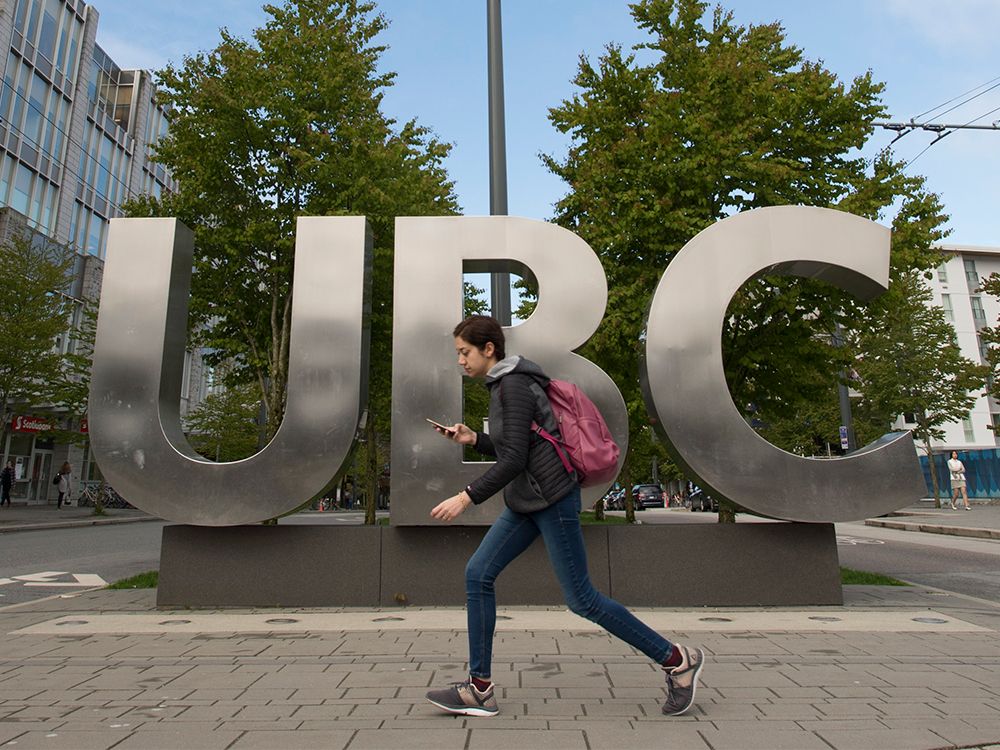
On April 7, four professors at the University of British Columbia filed a

petition

in the B.C. Supreme Court seeking a determination that the university has become politicized and is in violation of Section 66(1) of the province’s University Act requiring it to be non-political. This petition, co-signed by a former graduate student, brings to mind the University of Chicago’s 1967

Kalven Report

, which insisted that universities must remain neutral on political issues. This neutrality “arises out of respect for free inquiry and the obligation to cherish a variety of viewpoints. And this neutrality as an institution has its complement in the fullest freedom for its faculty and students as individuals to participate in political action and social protest. It provides its complement, too, in the obligation of the university to provide a forum for the most searching and candid discussion of public issues.”

The issues here are clear and important. Broad support for our universities depends on their neutrality in the eyes of governments and citizens. Those who work in them as faculty, students or staff are free, as individuals or in groups, to be active in political causes, but they must do so in their own names without attributing their views to their universities. Senior university officers do not have the same freedom. When they publicly align with political causes, their endorsement is widely attributed to their universities thereby jeopardizing the non-partisan support on which they depend.

The UBC professors are petitioning the Supreme Court to find that their university is taking political positions and is thereby violating the requirement of neutrality: first, by repeatedly acknowledging that the university is on unceded land; second, by taking a “naked, political” position against Israel in its war with Hamas; and third, through requirements that job applicants pledge support for the political agenda of DEI.

In making the first and second claims, universities are entering contestable political space. With respect to the first, land acknowledgments have become incantations that have more than one potential meaning. On one level, they are acceptances of a connection between an Indigenous history and presence, and the lands on which a university sits, the nature of which is unspecified. On another level, they are sometimes the basis of claims that the land on which a university sits has been stolen from Indigenous peoples; because they are unceded the legitimacy of the university’s presence on them is in doubt. Exploring the issues raises questions of a political nature.

At first contact between Indigenous peoples and European newcomers, the Indigenous population of the 10 million square kilometres that are now Canada was estimated (as reported by Britannica) to be about 200,000. The estimate may be on the low side but, if close, the numbers mean that in what is now the second largest country on Earth, only small parts of this land were inhabited by humans. Numbers and locations have changed over the centuries since, but many of the claims routinely made by the 97 universities in Canada, that they are located on Indigenous lands, are potentially contentious. The issue here is not the adjudication of these claims; it is to recognize that some at least are challengeable, which brings us back to the UBC professors’ claim that UBC is on political ground in its explicit and public acknowledgment that it is located on unceded Indigenous lands.

The professors’ second claim is that their university is taking a political stance on the Israel-Hamas war. This claim is manifestly sound if statements favouring the latter in the conflict can be brought home to the university, that is, they were made by administrators whose seniority means that their utterances can be seen as the institution taking sides.

The third claim is that UBC’s DEI initiatives are politicizing the university. Most of us can agree that the promotion of fairness and a sense of belonging, and the welcoming of diverse peoples, are laudable institutional goals. As in so many things, the devil is in the details, and some of those details are troubling, none more so than a requirement that applicants for jobs must pledge support for DEI and disclose how they would advance its goals. In the first place, such a pledge is an add-on, unrelated to historically understood qualifications for academic jobs. Second, the pledge offends academic freedom if it requires adherence to particular DEI goals; third, some DEI goals are contentious (for example, race-based faculty and staff appointments) and choices to pursue them are political decisions.

There is substance, then, in the UBC professors’ claims. Whether they are borne out by the evidence remains to be seen but it is encouraging to see internal restlessness about well-grounded concerns that universities are falling short of the institutional neutrality, openness to differences, and vigorous debate on public issues that are necessary for them to thrive. Hopefully, we shall see similar challenges elsewhere.

National Post

Peter MacKinnon has served as the president of three Canadian universities and is a senior fellow of the Macdonald-Laurier Institute and the Aristotle Foundation.


Crowds gather on Parliament Hill for an

It goes without saying that the recent federal election did not end as I had hoped for, but instead of looking in the rear-view mirror, one must appreciate the silver linings that have emerged.

While acknowledging the separatist rumblings in both Alberta and Quebec, the country has experienced a bout of patriotism that hasn’t been evident for some time. It was only a few short years ago that our government wouldn’t fly our flag on our national holiday and Canadians were shamed on a regular basis for the sins of our forefathers. Our apologies and daily acts of contrition were not enough to end the legacy of colonialism and oppression that had come to define our nation.

Then we experienced the ultimate in election interference, thanks to U.S. President Donald Trump. By all accounts, the ballot question should have been how to build a more prosperous country after a decade of economic decline. Instead, the ballot question oddly turned into a referendum about Trump. Canadians, in a grand act of patriotism, voted for the guy they thought could stand up to the bogeyman south of the border.

While going door to door, I reflected on the houses proudly displaying Canadian flags. By and large, house after house, those displaying large flags were voting Liberal. This was a new development since the proud display of the Canadian flag had, until the election, been reserved for those who supported the trucker convoy. Now, the truckers are proudly joined by Liberals in standing up for the sovereignty of our country.

It appears that our experiment as a post-nationalist state has concluded. We can once again be proud to be Canadians.

Hopefully now our government can get out of the apology business and maybe try the governing business for a change. We can also finally dispense with the colonialist oppressor theme that took our country down so many useless rabbit holes. We can stop the intellectually dishonest pastime of renaming schools and streets as a way of demonstrating our commitment to a more just society. We can stop virtue-signalling and trying to rewrite history. Maybe on July 1st of this year, we will celebrate the great experiment of Canada.

Perhaps Sir John A. Macdonald can be resurrected and removed from the metaphorical and physical box he has been put in and restored to his place as our country’s first prime minister, who connected this country from sea-to-sea.

To quote American philosopher Eric Hoffer, “Every great cause begins as a movement, becomes a business, and eventually degenerates into a racket.” Let us hope that the colonialist, oppressor, equity-seeking, trigger-inducing experiment that has degenerated into a racket can also be put in the rear-view mirror so that our schools can go back to teaching and our workplaces back to producing. In this new world, we can start identifying as Canadians and not by gender, race, sexual orientation or ethnicity.

The cynic might think that the Liberals exploited Canadian nationalism to simply get re-elected. If that were in fact the case, they now have a problem. Nationalism can’t be turned on and off like water from a tap. Canadians have rediscovered their pride and it is vastly better than shame.

There is also the fact that the new prime minister has gone to great lengths in a short time to re-establish ties to our colonial past by asking King Charles to give the speech from the throne when Parliament resumes. In this act, Carney sends a strong message that Canada and Canadians are proud of our place in the Commonwealth and its ties to the monarchy.

It will be the first time in over 40 years that a monarch has given such a speech here. Hopefully, someone discussed the matter in advance with Gov. Gen. Mary Simon, or at the very least, saved her a seat.

Canada was never for sale but over the past 10 years the Liberal government has tried to discount its value. If there is a silver lining in the past election, maybe it is remembering what it is like to be proud to be Canadian.

Special to National Post

Karen Stintz was the Conservative candidate for the Toronto riding of Eglinton-Lawrence in the April 28, 2025 federal election. She is the recipient of the King Charles III Coronation Medal.


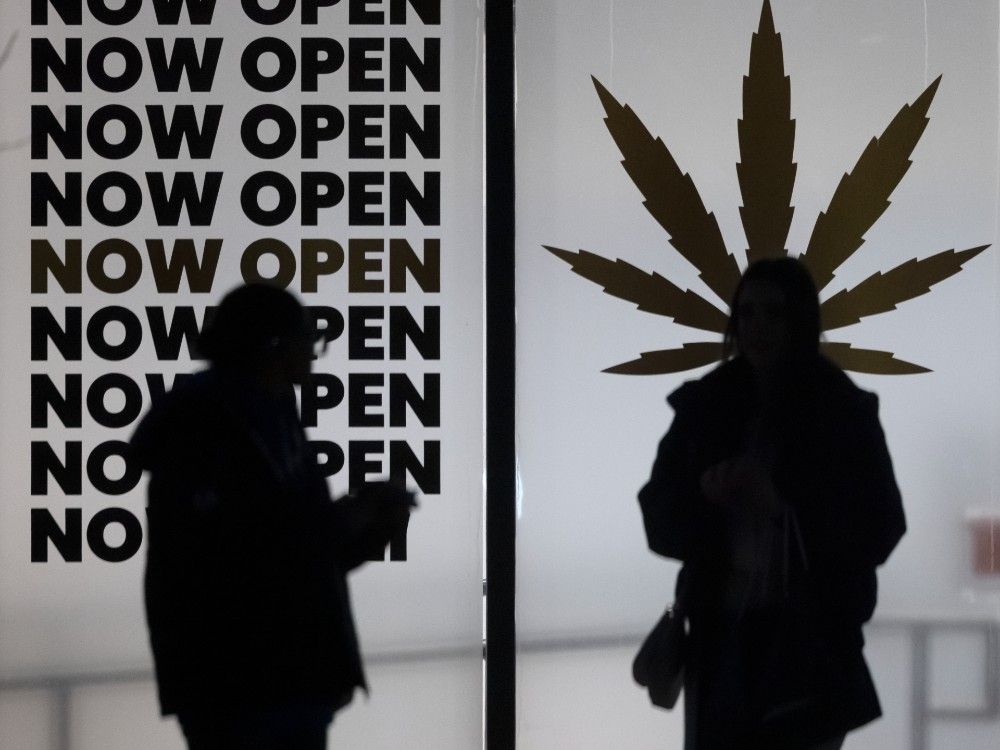
If you want to be a millionaire, start with a billion dollars and launch a cannabis production company in Canada.

In the original version of his famous quote, British entrepreneur Richard Branson was highlighting the challenges and capital intensive nature of the airline industry. But a new report by consultancy firm Deloitte, due for release on Wednesday, paints a similar picture.

The report looked at the impact of Canada’s cannabis excise tax and concluded the industry’s financial viability is in question because of high taxes.

The Cannabis Act of 2018 was a cornerstone piece of legislation for the Trudeau government, which pledged to “outflank” organized crime by undercutting the black market for pot.

But the new report suggests that illicit producers still control between one quarter and a half of the market, partly because a punitive excise tax regime raises costs for legal producers.

The Deloitte report, commissioned by the Cannabis Council of Canada, said that the excise tax paid to governments accounted for 31.5 per cent of gross production revenues last year, at a time when prices are falling.

It would, of course, be rare to find an industry that endorses the amount of tax it is paying.

However, the government’s own expert panel, which conducted a legislative review of the Cannabis Act last year, noted the industry’s “urgent concerns” about viability and said they were “well founded.”

Deloitte looked at the financial results of 36 licensed cannabis producers between 2019 and 2024 — nine of which filed for insolvency during the period under review.

The share of production revenues diverted to excise taxes doubled in that time, making it the largest single expense.

When the excise tax was set at $1 per gram or 10 per cent of the value of dried or fresh cannabis seeds (whichever was greater), prices were around $10 per gram. But the flood of new entrants to the market, and the stubborn illicit market, lowered the price to around $3-4 per gram, sending the effective tax rate over 30 per cent.

The industry has argued that the excise duty should be adjusted to a uniform 10 per cent of value and the flat rate of $1 per gram should be eliminated entirely.

The expert panel said Finance Canada should consider a review of the excise tax model, recognizing that it was originally designed when the average price of dried cannabis was significantly higher.

It is hard to argue otherwise after looking at the financial performance of the industry.

The report notes the wholesale price received for producers for one gram of flower fell from $5.68 per gram in the second quarter of 2019 to $3.17 in the third quarter of 2024.

As a result, the excise tax as a percentage of the wholesale price rose from 13.1 per cent to 33.8 per cent in the same period.

Needless to say, no one is making any money. Canadian companies were not able to generate sufficient cash flows to cover their debts, the report said, in part because companies are required to pay tax within 30 days of sales but typically do not collect cash from sales until 60-90 days.

For comparative purposes, excise taxes for cannabis as a percentage of retail sales were 17.9 per cent, compared to 14.4 per cent for spirits, 6.3 per cent for beer and four per cent for wine. (The Deloitte report did not make a comparative analysis for cigarettes, which differ in price by province, but the federal excise duty of $38 on a $160 pack of 200 smokes in Ontario comes out at around 24 per cent of sales).

The expert panel that reviewed the Cannabis Act concluded that the licensing framework has created a legal industry that is providing consumers with a quality controlled supply of products and which is making “steady progress” in shifting Canadians to the legal market.

It expressed worries about the number of young people using cannabis, and was particularly concerned about the increased reports of poisonings among children consuming edibles.

The panel recommended that the consumption of “higher risk” cannabis with elevated levels of THC should be discouraged by higher excise taxes.

The Deloitte report called the conclusion “misguided,” saying concerns over public health should focus on minimizing the illicit market.

“Placing further restrictions and requirements on legal cannabis products would simply strengthen the illicit market and will only be effective in the absence of a strong illicit market,” the report said.

This makes sense. The panel said that any moves the government introduces to support the industry must consider public health.

But the legal market is highly controlled. Producers are obliged to pay regulatory and security clearance fees for staff — costs the illicit market simply does not have.

If it is taxed out of existence, the only winners are the black marketeers. Since one of the government’s current priorities is to tackle crime and drugs crossing the border, it is only logical to support one at the expense of the other.

“Canada likes to position itself as a global leader in legal cannabis — but since legalization in 2018, the federal government has failed this industry and the tens of thousands of hardworking Canadians it supports,” said Paul McCarthy, president of the Cannabis Council of Canada. “With a new government in office, it’s time for a fresh approach. The cannabis industry deserves the same attention and support as any sector of our economy.”

Federal and provincial governments earned $2.2 billion from cannabis taxes and licenses in 2024, as sales increased by 11.6 per cent.

There is a kind of wonder in treasuries across the land that this revenue appeared from nowhere, as if from a fairy tale featuring enchanted beans and stolen geese.

But there is not an unlimited supply of golden eggs.

When the federal budget finally appears later this year, it should include a legislative change that only taxes legal cannabis producers on 10 per cent of the value of their product.

jivison@criffel.ca

Twitter.com/IvisonJ

Get more deep-dive National Post political coverage and analysis in your inbox with the Political Hack newsletter, where Ottawa bureau chief Stuart Thomson and political analyst Tasha Kheiriddin get at what’s really going on behind the scenes on Parliament Hill every Wednesday and Friday, exclusively for subscribers. Sign up here.

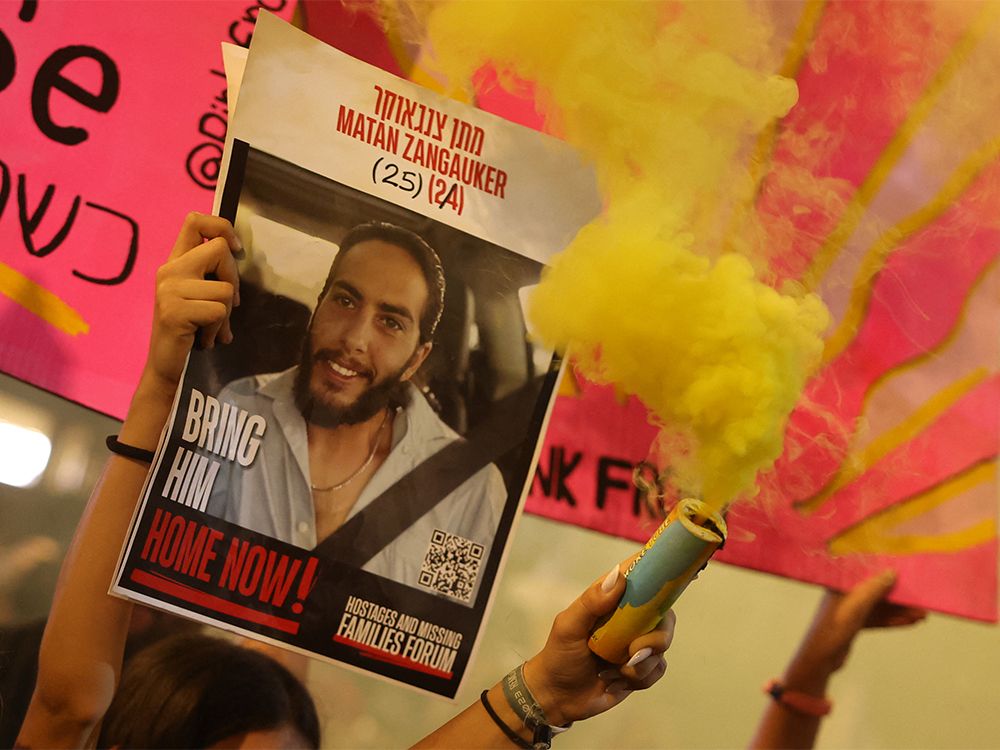
A demonstrator holds up a photo of Israeli hostage Matan Zangauker during a protest calling for the end of the Israel-Hamas war and for action to secure the release of hostages held in the Gaza Strip since the October 7, 2023 attacks by Hamas terrorists, in front of the Israeli Defence Ministry in Tel Aviv on May 17, 2025.

Canada, along with many western countries, must take some responsibility for the tragedy that is happening in Gaza.

Canada and others were obscenely quick to pile on Israel shortly after the October 7 attacks; to downplay the fate of the hostages; to paint all Palestinians as victims; and by those actions to allow anti-Israeli mobs to flood cities while vile antisemitism raged.

All this along with treating Hamas as good-faith negotiating partners instead of the cold-blooded, murderous barbarians they are.

After October 7, Canada was faced with a clear moral choice: stand with Israel or the terrorists? But the Trudeau Liberals didn’t want to stand with either. And so as time has gone by, it’s been easier for the Liberals to condemn Israel for its conduct of the war rather than Hamas for its continuation.

Not having the courage to make the right choice 19 month ago, means Canada finds itself betraying an ally and by extension helping Hamas.

What was Israel to do but fight when it faced an existential threat from terrorists while being abandoned by its allies?

Hamas still exists today, is still holding hostages, is still fighting, is still an impediment to peace, is still the cause of unimaginable suffering in Gaza, because Canada and others failed from the outset to insist that the terrorist organization instigated the war and had the power to stop it.

As soon as the horrors of October 7 became known, Canada had one role: to rally allies in support of Israel, to denounce Hamas, to demand they disarm and disband and, most importantly, to work tirelessly and unstintingly to get the hostages home.

It is worth repeating again and again, this war would end if Hamas released the hostages.

Of the 251 hostages taken on Oct. 7, about 55 are still

captive

, and of those only about 24 are believed to be alive.

Why isn’t the first demand of Canada that Hamas release all the hostages, immediately and without conditions?

But in a joint

statement

by Prime Minister Mark Carney and the leaders of the U.K. and France, the hostages get short shrift.

First, the statement denounces Israel’s military operation, then it talks about the suffering of Gazans, it goes on to speak about aid into the region, it makes demands of Israel and goes on to refer to humanitarian operations with the UN. Then, and only then, do the hostages get mentioned.

“We call on Hamas to release immediately the remaining hostages they have so cruelly held since 7 October 2023,” says the statement.

It adds, “Israel suffered a heinous attack on October 7. We have always supported Israel’s right to defend Israelis against terrorism. But this escalation is wholly disproportionate.”

But this statement isn’t quite true, it doesn’t quite reflect the reality.

Sure, the day after October 7, prime minister Justin Trudeau issued a

statement

denouncing the attacks and supporting Israel.

But within weeks, his tone, and that of Foreign Affairs Minister Mélanie Joly, had changed. Once Israel had started to defend itself, Trudeau and Joly were empathizing with the Palestinians and were quick to point the finger of blame at Israel, even if it wasn’t its fault.

When the Al-Ahli Hospital in Gaza City was hit with a missile in late October 2023, Trudeau and Joly quickly

suggested

it was an Israeli bomb. It turned out to be a misfired rocket from within Gaza.

The Liberal government’s lack of support for Israel has undoubtedly motivated pro-Palestinian/anti-Israel protests across Canada. It probably helped fuel the antisemites who

targeted

schools, daycare centres and businesses with firebombs and vandalism.

Carney’s joint statement will compound that misery.

A

statement

on X by The Jewish Community Council of Montreal noted that the statement would be “read, amplified and weaponized by those who seek to justify violence and hatred against Jews in Canada. When the Government of Canada speaks about this conflict, it is not only addressing events in the Middle East — it is shaping the climate for Jews in Montreal, Toronto, Vancouver, and beyond.”

When Trudeau supported the International Criminal Court’s arrest warrant for Israeli Prime Minister Benjamin Netanyahu and former defence minister Yoav Gallant, Jewish groups were horrified.

The Centre for Israel and Jewish Affairs (CIJA)

posted

to X, “We are ashamed that Canada would align itself with such a politicized decision.”

Now Carney continues the Liberal tradition of blaming Israel, while doing nothing. The joint Canada-U.K.-France statement hits all the usual talking points — the call for a ceasefire, the need for a long-term political solution, trying to find a path to a two-state solution, and so on.

But there’s nothing concrete here. And that’s part of the problem: no one wants to get involved.

Even the Middle East countries, some of them in the ceasefire talks, are wary of actually getting physically involved in this conflict or its aftermath.

In March, Arab leaders issued a declaration after the so-called Palestine Summit on how peace and security might be brought to the region.

But as the Carnegie Endowment for International Peace think-tank

pointed

out, despite the plan, Arab leaders were loath to put boots on the ground.

“Some in Israel and the United States have called for Arab countries to deploy troops to Gaza and to take over governing during the transition period. The plan rejects both ideas,” said writer Amr Hamzawy in a commentary.

Nineteen months after this war started, Israel is still facing an enemy that wants to wipe it off the map, Palestinians are suffering an intolerable and hellish existence, and the Hamas terrorists are still fighting because they refuse to relinquish control.

Carney probably believes that signing that joint declaration is making a moral statement. All he’s really doing is virtue-signalling and making things worse at home.

National Post


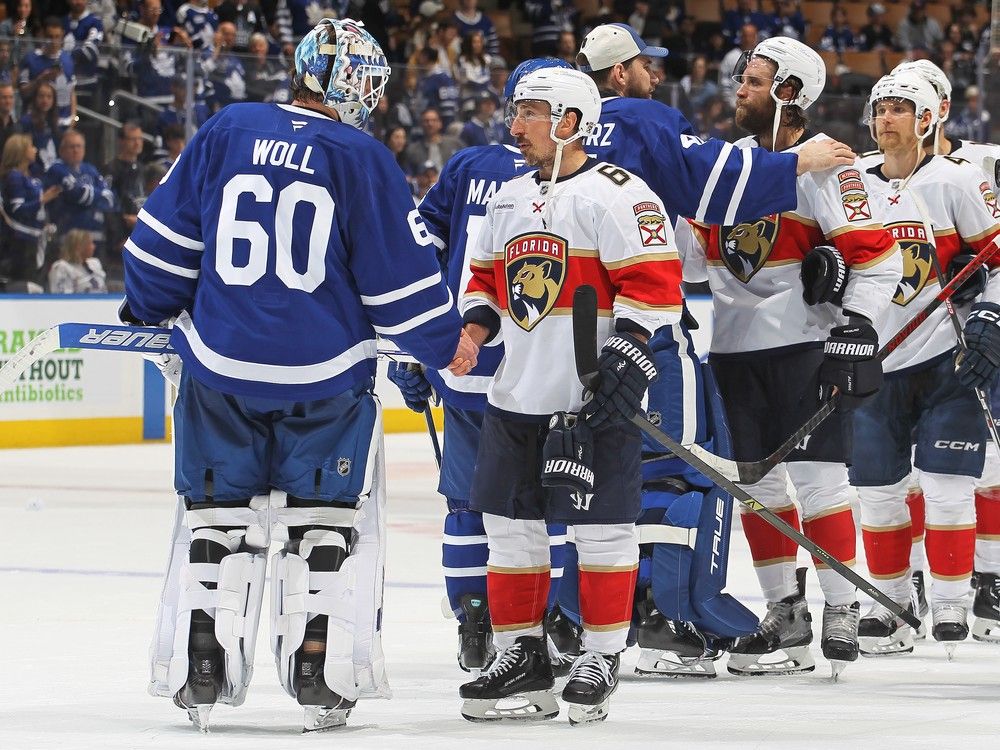
Joseph Woll #60 of the Toronto Maple Leafs congratulates Brad Marchand #63 of the Florida Panthers on their victory in Game Seven of their playoff series on May 18 in Toronto. The Panthers defeated the Maple Leafs 6-1 to win the series 4 games to 3.

The Toronto Maple Leafs

have again skated into summer

with a trail of brown-and-yellow ice behind them, losing 6-1 in Game 7 of the second round of the playoffs to the the Florida Panthers on home ice, Sunday night. They had been up 2-0 in the series. Dismal.

The futility of this hockey club cannot be overstated. Six currently operating NHL franchises have never reached the Stanley Cup finals. The oldest is the original Winnipeg Jets-cum-Arizona Coyotes-cum-Utah Mammoth — zero sniffs at the cup over 45 years of existence. The Leafs haven’t been to the finals, let alone won, in 58 years.

I can’t quantify this, but I’m pretty sure the Leafs have severely devalued the NHL’s brand in this city and region, which is (or ought to be) the biggest pro-hockey market in the world. Head out to a pub with only one television when the Leafs and Raptors or Blue Jays are playing at the same time and you’ll see the issue right quick: You may well have to argue to get them to put on the Leafs.

In recent years, we Leafs fans have been treated to by far the most talented teams of my lifetime. But again, a decade into this new, better era, it ended in ignominy. Nine seasons with Auston Matthews, the highest-paid player in the league, and just two playoff-round wins to show for it.

“No one can defend the status quo,”

James Mirtle wrote for The Athletic

on Sunday. I’ve been watching people defend the status quo ever since. I’ve been hearing, again, about how mentally difficult it is to play in the hockey fishbowl of Toronto. As if Montrealers and their media aren’t

considerably more

obsessive about the Canadiens, who routinely find a way to make deep, unlikely playoff runs with far less talented teams than the current Leafs. As if the New York Yankees and Boston Red Sox and Los Angeles Dodgers players don’t manage to win in much more turbulent fishbowls. Ridiculous.

But look, the Leafs aren’t really the problem here. Every cartel-based sports league has basket-case franchises, though few have woven their baskets quite as intricately as Maple Leaf Sports and Entertainment. The problem, from the NHL’s capitalist perspective, ought to be that the only team in the third-largest city in Canada or the United States has been driving people away from hockey like it’s their job.

As a game for urban children — certainly at the elite level — hockey is already a sport for the relatively wealthy: people with money and cars; people with the time and inclination to fight traffic to get their kids to 6 a.m. practices, and work remotely. Basketball and soccer are, understandably, in the ascendency.

I have

long argued that the most obvious solution for the NHL and its money-hungry owners is another team

— or two, or three — in the Greater Toronto Area. Contrary to generations of Toronto barstool wisdom, the Leafs do not have any sort of “veto” over such an idea. “An expansion franchise is a three-quarters vote (of member clubs). Nobody has a veto,”

NHL Commissioner Gary Bettman said, somewhat testily, in 2014

.

And there is literally no downside to it, for anyone: The Leafs will always sell out whatever arena they inhabit, forever.

But without any business or billionaire willing to get behind a second team, there’s no point making the argument. If Toronto is really a hockey city, other solutions are available.

The major-junior Ontario Hockey League has never been a hit in Toronto. The venerable Leafs-owned Toronto Marlboros moved to Hamilton in 1989. The awkwardly named St. Michael’s Majors — St. Michael’s College being a private Catholic school/hockey factory that churned out the likes of Ted Lindsay, Tim Horton and Frank Mahovlich — decamped in 2007 for Mississauga. At the senior minor-league level, the Toronto Marlies, the Leafs’ American Hockey League farm team that wears Leafs uniforms, drew about 5,900 people a game this past season — well under their very pleasant arena’s capacity.

There are other models, though. The two-year-old Professional Women’s Hockey League (PWHL) has been selling a lot of tickets

in its six Canadian and American markets

— eight markets next year — offering its players a minimum salary of US $35,000, and an average of US$55,000, to play 30 regular-season games a season.

It’s great hockey. But as novel as it is, gender-wise, it’s hardly revolutionary business-wise. Canada and the United States have seen dozens of entrepreneurial upstart hockey leagues come and go over the years. They ranged widely in ambition and credibility. There was the World Hockey Association, which imagined itself a competitor to the NHL and put the likes of Bobby Hull and Gordie Howe on the ice to demonstrate it. And there was the America West Hockey League, an altogether ludicrous and short-lived contraption that stretched from Fairbanks, Alaska to Fernie, B.C. (where I cheered on the Ghostriders in the early 2000s) to Tupelo, Miss.

If there are no willing investors for a second GTA NHL team, why not an upstart men’s league along the lines of the PWHL —

which is incidentally owned by the Mark Walter Group

, which also owns Major League Baseball’s L.A. Dodgers.

I would propose no drafts, no age limits (within reason, I suppose), no salary caps, just capitalism. Sign whoever you can sign for whatever money you can cobble together and play hockey. How many disgruntled major-junior players are there out there, playing for no money with dodgy organizations in towns hundreds or thousands of kilometres from their families? How many older players currently plying their trades in European leagues (some of which pay

very

well, mind you) would rather be closer to home?

If there are no billionaires or telecommunications giants willing to step up and advocate for a second Toronto NHL team, let’s get some minor-league rich folks into the game. By rights you could start a six-team league just in the GTA. And if that doesn’t work, well, maybe Toronto has one true hockey team it deserves. It’s often said, ruefully, that Toronto is less a “hockey city” than a “Leafs city.” And the Leafs are a haunted mansion of wretched defeat.

National Post

cselley@postmedia.com


Canada’s new housing minister, Gregor Robertson, was immediately asked the obvious question as to the Liberal government’s plan to make housing affordable. Namely, he was asked whether he would bring down housing prices. Robertson’s answer? “No.” He said housing prices are “a huge part of our economy” and that he would be building more homes, but in a way that Canada’s sky-high real estate prices remained “stable.”

Canada’s new housing minister Gregor Robertson says that the prices of existing homes

shouldn’t go down

, lest this negatively impact current homeowners, and that affordable housing should be provided through massive government subsidies instead. His position is economically illiterate and raises concerns about his fitness to lead this portfolio.

Anyone with a cursory understanding of economics knows that, in a regular market, the price of any given commodity will be roughly the same for both the buyer and seller. If you want people to have the option of purchasing $3 coffee, for example, you need cafes that are willing to sell coffee for $3 as well. While these dynamics are sometimes distorted — i.e. through taxes and subsidies — this is, for the most part, how transactions work.

So if you want the Canadian housing market to become more affordable for buyers, it naturally follows that sellers will have to accept lower prices, which, for existing homeowners, means that the value of their properties must decline. This is an obvious point that is well-understood

throughout the political spectrum

.

Yet, on his first day on the job, upon being asked whether prices need to go down, Robertson

said “no”

and advocated for delivering more government-subsidized “affordable housing” instead. He later

clarified on X

that his opposition is rooted in the fact that, for most Canadians, their current home “is their most valuable asset.”

His comments betrayed a profound misunderstanding of the current housing market and its impact on the broader economy.

Canada is in the throes of an unprecedented housing bubble that has been stoked by two decades of bad government policies. Prices

have doubled

since the early 2000s, after adjusting for inflation, thanks to

red tape that throttles

the construction of new homes and guarantees persistent market shortages. Those who bought early — meaning older Canadians — made huge sums of money at the expense of younger Canadians and newcomers, who will be stuck purchasing these overvalued assets.

It is now extraordinarily difficult for Canadians to buy their first property in major markets without

parental aid or an inheritance

. In cities like Toronto and Vancouver, it takes

over a decade

to save for the minimum downpayment of an average home, even if you make $100,000 a year and save 10 per cent of your gross income. The problem is so dire that some have characterized Canada as an

emerging “neofeudal” society

where homeownership is predominantly a hereditary privilege.

Young Canadians are aware of this grim reality: according to a

2025 survey

by East Home Renovation, in Ontario and British Columbia fewer than 15 per cent of non-homeowners aged 18 to 44 believe they will ever own a home.

This status quo is ossifying the economy. High housing costs have made Canadian employers less competitive: they

struggle to attract

skilled workers to high-cost cities, and must pay low-skilled workers

higher wages

to compensate for unreasonable rents. Overinvestment into real estate is also

exacerbating the national productivity slump

: while other countries plow their capital into research and development, we park our money in condos.

There is clearly an urgent moral and economic impetus for lower housing prices. Simply keeping them flat and letting wages “catch up” will not be enough, and would, according to

calculations produced

by housing expert Mike Moffat, only restore affordability to key markets after 15 to 50 years.

The housing minister’s refusal to accept these truths suggests that the Liberals either do not understand housing economics, or that they prioritize the interests of existing homeowners, who comprise an enormous voting block, over the well-being of the country as a whole.

Robertson’s proposed solution —  mass construction of government-subsidized “affordable housing” — is not credible. While such homes can help a sliver of disadvantaged Canadians get on their feet, they are prohibitively expensive to build and cannot be provided at scale.

To illustrate: in 2020 the federal Rapid Housing Initiative

committed $3.83 billion

to support the construction of only 15,896 new units over four years —  or roughly 4,000 units per year at a cost of around $240,000 per unit. In contrast, Canada’s private market launched

around 242,000

units in 2024.

Prime Minister Mark Carney has promised to

double housing construction

, but if only half of this expanded supply (125,000 units) consists of subsidized affordable housing, the costs to the federal government would be around $30 billion per year, bloating the annual operating deficit by 50 per cent.

There’s no way Canada can afford that. Even if it could, it is unclear why the country should take on so much debt-fuelled spending —  which younger Canadians will have to eventually pay off — simply to protect the inflated equity of existing homeowners. Robertson’s solution would effectively constitute yet another intergenerational wealth transfer from younger generations to their better-off elders.

Worse yet, it would severely restrict housing options. There are around

16 million units

in Canada, and approximately

75 per cent

of housing purchases are of existing homes. By intentionally keeping the overall market unaffordable, Robertson would lock new buyers out of these homes and force them to buy from a relatively small pool of subsidized alternatives.

When asked about housing prices last week, Carney said, 

quite unhelpfully,

that this is “not a yes-no question” and the issue “relates to different time horizons.” He could’ve just given the middle finger to younger Canadians instead. At least that would’ve been more honest.

National Post


Israeli military vehicles deploy at Israel's southern border with the Gaza Strip  on May 20, 2025 amid the ongoing war with the Palestinian terrorist group Hamas. (Photo by Jack GUEZ / AFP)

On Monday, Canada issued

a joint communique

with France and the United Kingdom on Israel’s latest military operation in Gaza. “We will not stand by while the Netanyahu Government pursues these egregious actions,” it read. “If Israel does not cease the renewed military offensive and lift its restrictions on humanitarian aid, we will take further concrete actions.” In response, Israeli Prime Minister Benjamin Netanyahu

clapped back

that “the leaders in London, Ottawa and Paris are offering a huge prize for the genocidal attack on Israel on October 7 while inviting more such atrocities.”

Netanyahu’s leadership has often been questioned, but on this point, he is right. While the statement acknowledges that Israel “suffered a heinous attack on October 7,” and calls on Hamas to release the hostages “they have so cruelly held,” the collective amnesia is mind-boggling — and highly selective. We don’t blame Ukraine for fighting Russia after it invaded their country.

So I will repeat, for those who either forgot or choose to ignore it: if Hamas had not launched a highly planned, unprovoked attack on Israel on October 7, 2023, killed over 1200 people, and kidnapped another 250, Israel would not be in Gaza right now. If Hamas had released the remaining hostages eighteen months ago, one year ago, six months ago, Gaza would not be flattened, children would not be starving, and people would not be homeless.

Instead, Hamas did not, and they are.

Why? Hamas knows there is no way to “win” this war: Israeli military power is superior. Hamas also knows that Netanyahu depends on the hard right elements of his coalition to remain in power and is fighting corruption charges.

Eighty-seven per cent

of Israelis blame him for the security failures that led to October 7.

Seventy per cent

want him gone. Without the war, he likely would be, but instead, his government has endured,

dismissing calls

for early elections. The next vote is scheduled for 2026.

Hamas knew its act of war would produce a severe counter-reaction, and that by not releasing the hostages, they would give Netanyahu every reason to continue fighting. That fighting would inevitably lead to mass casualties among the Palestinian population, which would produce a reaction in the rest of the world: the revival of antisemitism.

And that was the true goal of October 7.

Hamas is the proxy of the Iranian government, whose stated goal is the destruction of the state of Israel. But Iran knows they cannot achieve this goal alone. They need the rest of the world to turn on Israel. They must strip it of allies, like they did this week, with the collaboration of our government. They must make the world hate the Jews, wherever they live, giving protesters “licence” to commit acts of aggression against Jews, like they did last week in Toronto,

detonating smoke bombs

outside a Jewish-owned open-air café. The number of reported cases of hatred targeting Jews is up

124 per cent

in Canada since 2022, to seventeen cases a day. Where is our government’s outrage on that?

Answer: nowhere. Instead, our new foreign minister, Anita Anand, on her first day in office,

went on a tear

about Israeli “aggression” with no mention of the hostages. And now, a week later, Canada issues its statement, condemning Israel for fighting an enemy that seeks its annihilation.

There is no question that the Palestinians bear immense, unspeakable suffering in this war. The images of dead children and grieving parents are horrific. But rather than end their suffering by releasing the hostages, Hamas weaponized it on social media, on college campuses, and international forums. They sacrificed their people for their own bloodthirsty purpose, “from the river to the sea,” And instead of calling them out, our government swims with the tide.

Postmedia News

Tasha Kheiriddin is Postmedia’s national politics columnist.