
LP_468x60
on-the-record-468x60-white

Sophie Cunningham of the Indiana Fever signs autographs ahead of an WNBA game against the Toronto Tempo at Scotiabank Arena in Toronto on Aug. 18. Cunningham was booed by some attending the game, likely for her opposition to transgender athletes playing in women's sports, writes Marty York.

As a backup who comes off the bench, Sophie Cunningham of the Indiana Fever is not the most talented player in the Women’s National Basketball Association. There is little doubt, however, that she has emerged this season as the most renowned.

And there’s no question that she has played a major role in the league’s soaring attendance figures and television ratings.

At 30, the 6-foot-1 guard/forward is averaging only about eight points a game. Yet, chiefly because of her and teammate Caitlin Clark, the WNBA has ascended into considerable prominence.

Recently, the first-year Toronto Tempo, not a formidable team in the WNBA, drew an atypical decent crowd because the opponent was the Fever. Toronto fans would be hard-pressed to name two players with the Tempo, but identifying Cunningham and Clark of Indiana has turned into a breeze for even the most casual of WNBA followers.

Not that the duo is popular with Toronto fans. No, Clark was booed in Toronto because, well, she’s a truly terrific superstar in the WNBA, and the booing is a sign of respect, much the way Bobby Orr or LeBron James would be booed during their respective games in Toronto, and elsewhere.

But the booing of Cunningham struck me as bizarre, to say the least. She wasn’t being targeted in Toronto because she is Clark’s on-court protector. Nor was she being booed because of her delightful personality, swagger, beauty and marketability.

She was being booed because she had the audacity to tell ESPN in a much-publicized interview that she is opposed to transgender athletes playing in women’s sports. Even women in Toronto booed Cunningham. Weird, eh? Women booing a woman for sticking up for women.

Cunningham said she wasn’t bothered even slightly by the booing in Toronto. “I’m here to extend love,” she told reporters. “But I also think with that love is truth, being honest. And I want to protect young girls in a locker room, or young girls in sport who shouldn’t have to go against biological men.”

She is bang-on and, after doing some in-depth research on the subject, I wholeheartedly agree with Cunningham.

Allowing biological men, with their undeniable physical advantages in strength, speed and endurance, to compete against biological females undermines the progress being made in women’s sports.

Dr. Gregory Brown, a professor of exercise science at the University of Nebraska, has produced more than 60 peer-reviewed publications for academic journals. He wrote last January that “Female athletes have been injured and deprived of roster spots, starting positions, awards and championships in their own category, all due to the mistaken belief that a transgender identity somehow negates the well-documented performance advantages conferred by male sex.”

At every level, from school sports to the Olympics to the pros, opportunities for success for females have been diminished when transgender individuals are permitted to participate in their competitions.

Dr. Brown noted that female athletes have lost scholarships, medals, playing spots, and even top salaries as pros, when their sports have been co-opted by male trans athletes.

There is a view, held by many who follow the WNBA, that there are male trans athletes recognized as women in the league. Cunningham has mildly suggested the testing of WNBA players to determine their sex at birth.

The league’s administrators are not only balking at the suggestion but reprimanding Cunningham and warning her to be silent on the issue.

Yet Cunningham isn’t simply talking out of her hat. She is honest. She tells it like it is. She is wiser than your average athlete. She is in the process of finishing a book that will sell well, at least with the anti-woke enthusiasts.

She is pleasant, amicable and multi-talented, a bright shining light in the historically underrated and underappreciated world of professional women’s sports. She should be a welcome part of a league trying to grow.

With her ability to utilize social media, her gift of gab and her light-hearted approach to friendly and fun-loving messaging, she is irrefutably a marketing guru.

The folks who run and follow the WNBA should cease and desist from admonishing her and, yes, booing her. Rather, she should be — and I don’t often say this when it comes to athletes — exalted and thanked. She truly is one of a kind.

National Post


Alberta NDP leader Naheed Nenshi, joined by Service Alberta and Red Tape Reduction critic Gurinder Brar, spoke to media in Calgary on Tuesday, August 25, 2026 criticizing Danielle Smith's position toward the ongoing trade talks with the U.S.

The Canadian Press’s Dayne Patterson reports Wednesday morning that Alberta’s floundering opposition leader, Naheed Nenshi, is demanding that Alberta’s consultative October referendum on separation be postponed … because of the developing U.S.-Canada trade war. If you’re busy today, just picture me laughing and saying “Whaaa?” for a few seconds and then move on in good conscience. NDP Leader Nenshi never wanted to have a referendum in the first place, so one supposes any excuse for such a demand will do; maybe next week he’ll want the vote called off because of a comet or other celestial portent.

I wasn’t keen on a nebulous separation referendum myself, but it seems to me the thing to do in the face of an electoral test is to go cast a ballot, advocate for a position, try your best to have your side win, etc., etc. All that good democracy stuff, which I do understand to not be the historical strong suit of the Alberta New Democrats.

It seems to me that from a purely strategic standpoint, the trade war is a giant expensive gift to the federalist side of the referendum, which shouldn’t have any trouble winning no matter what happens. The separatist cause in Alberta is fragmented, and contains some radical libertarians who would genuinely like an independent (but landlocked) microstate managed on Javier Milei principles; others are pure scoundrels who pretty obviously see the separation fantasy as a first step toward political union with the culturally superior States.

Whichever future you might imagine in contemplating secession, it involves giving the U.S. greater weight and negotiating power in Albertan affairs — and the more conservative or classical-liberal you are, the uglier the spectacle of the trade war really is. One of my political axioms is that trade is a substitute for war, and that maximizing trade serves practically as a substitute for it. The United States’ scores on quasi-objective indices of economic and political freedom are spiralling , and its Constitution is being subjected to naked violence.

And our instinctive feelings of kinship with the American people are suffering new injuries every day. Most Americans are perhaps confused or even annoyed to find that the president they have elected twice regards Canada as an illegitimate, conniving rogue state, but we are learning the hard truth that this attitude doesn’t truly traumatize or upset them. The median U.S. voter half-agrees with Trump, or is willing to dismiss his territorial belligerence as ironic, cheeky posturing. No doubt one day the Stars and Stripes really will fly everywhere under heaven, and beyond. Trump’s not really wrong, you see, just impolitely early.

In time, Canada and the U.S. may become the friendly continental yokemates they once were; and at that very time there might be a serious danger in the existence of an Alberta “separatist” movement full of republican closet cases. For now, separatists seem to me to be facing maximum headwinds. Hypothetical concerns about foreign “interference” with a referendum are in a state of near-mania. The biggest star in the separatist movement is facing extremely vexing legal troubles . The Albertan Liberal prime minister’s approval ratings appear to net out to about zero in Alberta these days, which is a remarkable, even historic phenomenon.

And, sure, there’s always the conspiracy theory that Ottawa will blast Alberta with export taxes on oil as soon as the separation vote is past , but it’s not 1980 anymore: Saskatchewan’s oil and gas production has flourished, making our neighbour more of a fellow hostage, and Newfoundland’s economy is now just as oil-dependent as Alberta’s, so it’s politically not as easy to single Alberta out to suffer the blows in the front rank of a trade war.

National Post


Alberta NDP leader Naheed Nenshi, joined by Service Alberta and Red Tape Reduction critic Gurinder Brar, spoke to media in Calgary on Tuesday, August 25, 2026 criticizing Danielle Smith's position toward the ongoing trade talks with the U.S.

The Canadian Press’s Dayne Patterson reports Wednesday morning that Alberta’s floundering opposition leader, Naheed Nenshi, is demanding that Alberta’s consultative October referendum on separation be postponed … because of the developing U.S.-Canada trade war. If you’re busy today, just picture me laughing and saying “Whaaa?” for a few seconds and then move on in good conscience. NDP Leader Nenshi never wanted to have a referendum in the first place, so one supposes any excuse for such a demand will do; maybe next week he’ll want the vote called off because of a comet or other celestial portent.

I wasn’t keen on a nebulous separation referendum myself, but it seems to me the thing to do in the face of an electoral test is to go cast a ballot, advocate for a position, try your best to have your side win, etc., etc. All that good democracy stuff, which I do understand to not be the historical strong suit of the Alberta New Democrats.

It seems to me that from a purely strategic standpoint, the trade war is a giant expensive gift to the federalist side of the referendum, which shouldn’t have any trouble winning no matter what happens. The separatist cause in Alberta is fragmented, and contains some radical libertarians who would genuinely like an independent (but landlocked) microstate managed on Javier Milei principles; others are pure scoundrels who pretty obviously see the separation fantasy as a first step toward political union with the culturally superior States.

Whichever future you might imagine in contemplating secession, it involves giving the U.S. greater weight and negotiating power in Albertan affairs — and the more conservative or classical-liberal you are, the uglier the spectacle of the trade war really is. One of my political axioms is that trade is a substitute for war, and that maximizing trade serves practically as a substitute for it. The United States’ scores on quasi-objective indices of economic and political freedom are spiralling , and its Constitution is being subjected to naked violence.

And our instinctive feelings of kinship with the American people are suffering new injuries every day. Most Americans are perhaps confused or even annoyed to find that the president they have elected twice regards Canada as an illegitimate, conniving rogue state, but we are learning the hard truth that this attitude doesn’t truly traumatize or upset them. The median U.S. voter half-agrees with Trump, or is willing to dismiss his territorial belligerence as ironic, cheeky posturing. No doubt one day the Stars and Stripes really will fly everywhere under heaven, and beyond. Trump’s not really wrong, you see, just impolitely early.

In time, Canada and the U.S. may become the friendly continental yokemates they once were; and at that very time there might be a serious danger in the existence of an Alberta “separatist” movement full of republican closet cases. For now, separatists seem to me to be facing maximum headwinds. Hypothetical concerns about foreign “interference” with a referendum are in a state of near-mania. The biggest star in the separatist movement is facing extremely vexing legal troubles . The Albertan Liberal prime minister’s approval ratings appear to net out to about zero in Alberta these days, which is a remarkable, even historic phenomenon.

And, sure, there’s always the conspiracy theory that Ottawa will blast Alberta with export taxes on oil as soon as the separation vote is past , but it’s not 1980 anymore: Saskatchewan’s oil and gas production has flourished, making our neighbour more of a fellow hostage, and Newfoundland’s economy is now just as oil-dependent as Alberta’s, so it’s politically not as easy to single Alberta out to suffer the blows in the front rank of a trade war.

National Post


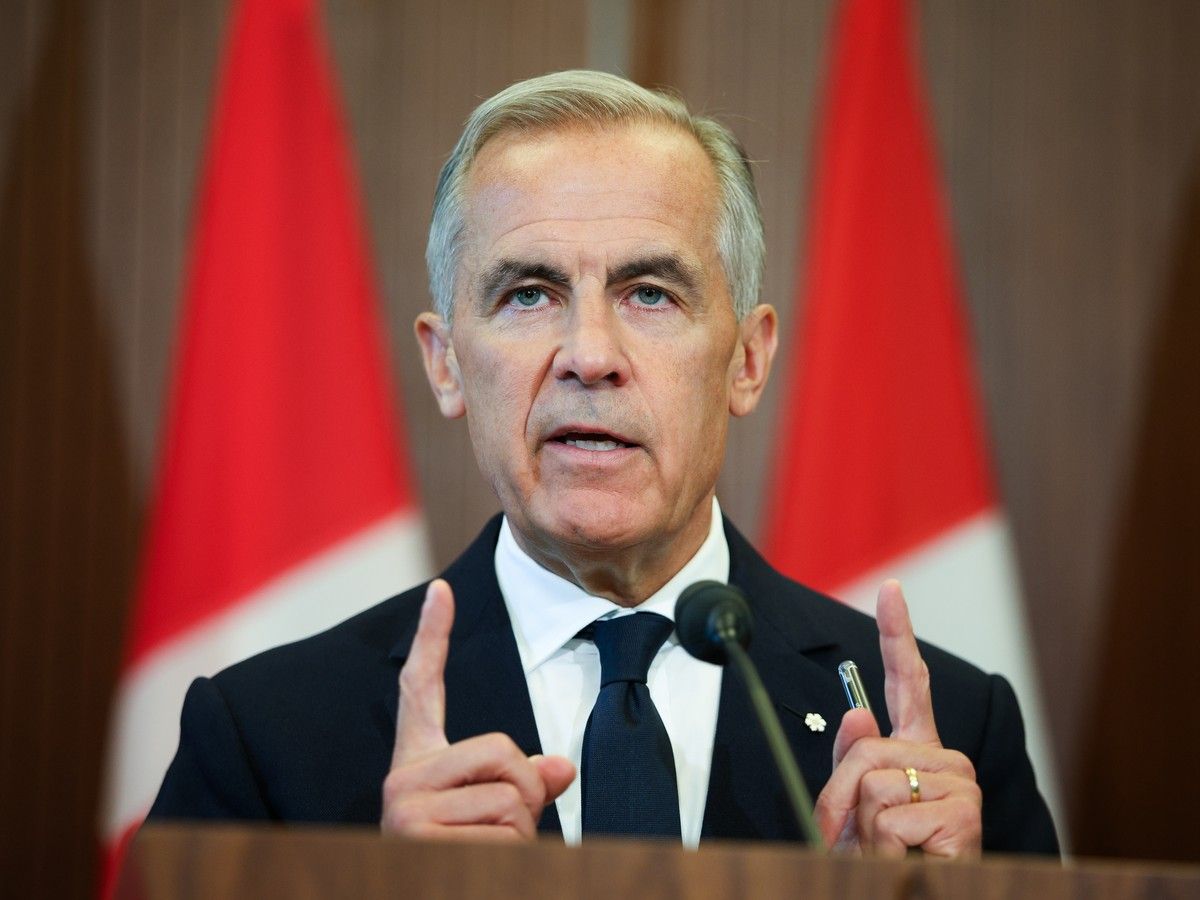
Prime Minister Mark Carney speaks during a press conference addressing the trade situation with United States in Ottawa on Saturday, Aug. 22, 2026. This content is reserved for subscribers.
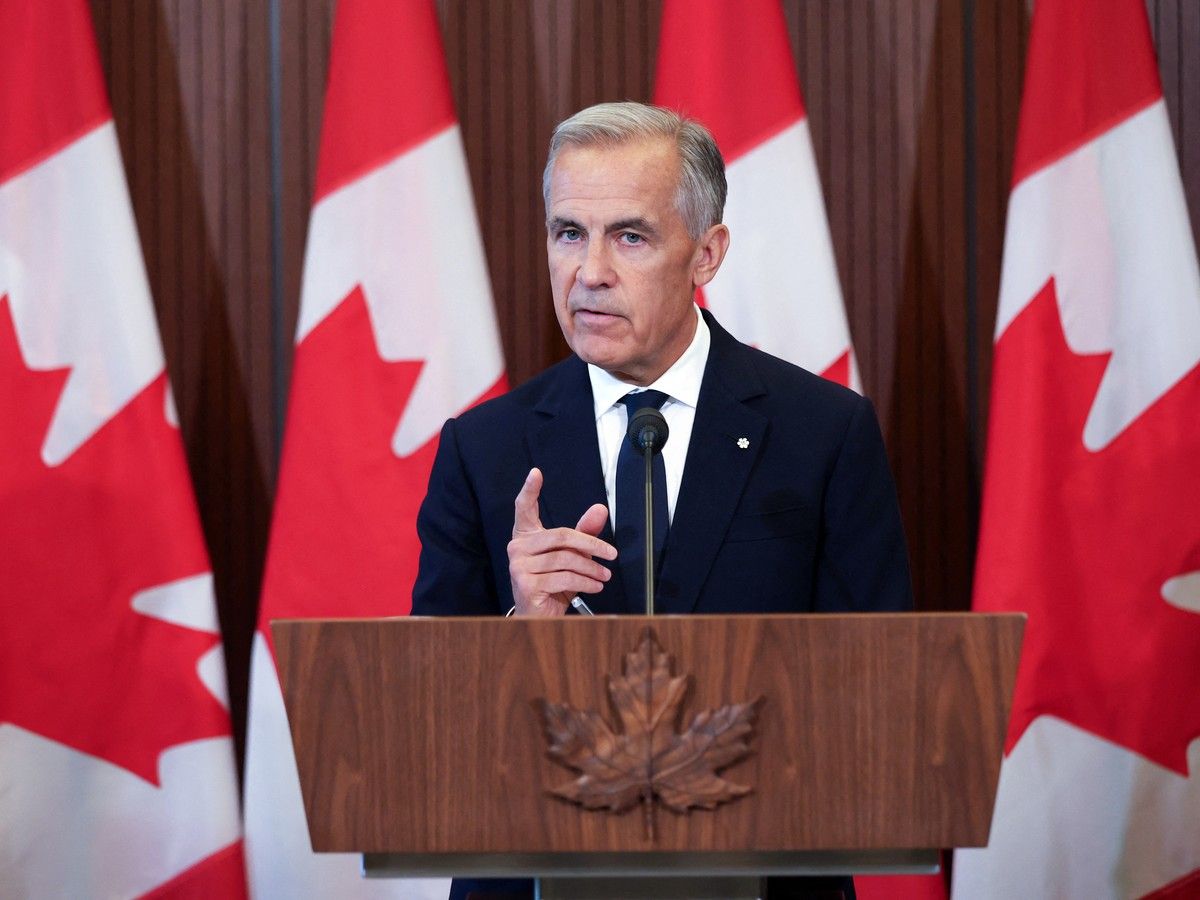


Prime Minister Mark Carney speaks during a press conference addressing the trade situation with United States in Ottawa on Saturday, Aug. 22, 2026. This content is reserved for subscribers.


Canadian Prime Minister Mark Carney speaks at a press conference in Ottawa, Ontario, on August 22, 2026 after trade talks with the US collapsed.

Prime Minister Mark Carney has undeniably brought a measure of dignity, sharp intellect and technocratic excellence back to the Prime Minister’s Office. This is a welcome change after a “ lost decade ” defined by poor governance and the severe mismanagement of Canada’s socio-economic environment and its most important relationship, with the United States.

However, Canadians must face an uncomfortable truth. Our teetering economy, lagging productivity and housing crises were entirely made in Canada. They predated the first and second terms of U.S. President Donald Trump. Yet, the governing Liberal Party has found it politically expedient to gaslight the public, blaming our current woes on the U.S. and the current occupant of the White House. It is always easier to point a finger at the caricature of the “Ugly American” than to admit we have spent the last decade or more behaving as an “ Ugly Ally .”

Under Justin Trudeau, the previous prime minister, Canada’s relationship with its most vital security and trading partner was disastrously mishandled. Cabinet ministers routinely prioritized domestic political points over cross-border diplomacy. We saw Trudeau explicitly campaign against “MAGA conservatism,” while Foreign Affairs Minister Mélanie Joly publicly mused about creating a “ game plan ” to deal with a hypothetical authoritarian shift in the US. After enjoying dinner and a selfie at Mar-a-Lago following Trump’s 2024 electoral victory, Trudeau flew back to Canada. Just days later, he called Kamala Harris’s electoral defeat a setback for women.

While Ottawa was busy moralizing at Washington, it was asleep at the wheel on actual national security. The Trudeau government repeatedly ignored stark warnings from our Canadian Security Intelligence Service and think tanks like the Macdonald-Laurier Institute regarding foreign interference and elite capture , primarily orchestrated by Beijing. Consequently, Canada became the black eye of the Five Eyes intelligence alliance. We were left out of the Quad and AUKUS. We simultaneously managed to alienate India and frustrate Japan, a vital geoeconomic partner that has expertly navigated the very U.S.-China friction Canada fumbles.

Carney has done his best to stop the bleeding, and for that, Canadians should be thankful. However, his geopolitical compass remains fundamentally miscalibrated.

Rather than abandoning the partisan habit of using the U.S. as a scapegoat for Canada’s structural economic stagnation, Carney has continued the gaslighting. Worse, he has actively courted a “strategic partnership” with China, a state with a documented, deep track record of foreign interference in Canadian democratic institutions, and Washington’s primary strategic competitor.

At his Davos 2026 address , Carney drew a false equivalence between the U.S. and China, suggesting Canada could somehow float above the fray as a neutral middle-power broker. This is a dangerous fantasy.

Washington is not going to tolerate a contiguous neighbour and NORAD partner integrating its economy with a hostile strategic competitor. This is not uniquely a Trump phenomenon; it is a bipartisan Washington consensus. It was the Trump administration that inserted Article 32.10 into the USMCA (CUSMA) trade agreement, effectively giving the U.S. veto power over any free trade agreement Canada might pursue with a “non-market economy” like China. But the Biden administration maintained and rigorously enforced that exact same geoeconomic architecture.

As abrasive and difficult as the current White House can be, Carney’s job is not to posture for the Davos crowd. It is to steer Canada away from self-destructive anti-American sentiment, manage the U.S. leadership with pragmatic cognitive empathy, and ensure Canada is anchored securely within the reorganization of the North American and global supply chains.

We are not living in the 1990s. Canada is no longer a comparative middle-power heavyweight. While other nations have risen, our relative clout, military resources, and diplomatic credibility have severely declined. We cannot convene coalitions to resist American pressure while simultaneously relying on the American taxpayer to subsidize our continental defence.

Canada desperately needs a new identity and a new grand strategy. That strategy cannot be rooted in a romanticized nostalgia for middle-power diplomacy, nor in a contrarian desire to poke Washington in the eye. It must be built on the cold, structural realities of our geographic, institutional, and cultural proximity to the United States. Until the Prime Minister’s Office accepts this, the “Ugly Ally” will continue to find itself isolated, outpaced and ignored.

Stephen Nagy is a Senior Fellow and China Policy Project Lead at the Macdonald-Laurier Institute. His work focuses primarily on Indo-Pacific affairs, foreign policy, security, and great-power competition.


Canadian Prime Minister Mark Carney speaks at a press conference in Ottawa, Ontario, on August 22, 2026 after trade talks with the US collapsed.

Prime Minister Mark Carney has undeniably brought a measure of dignity, sharp intellect and technocratic excellence back to the Prime Minister’s Office. This is a welcome change after a “ lost decade ” defined by poor governance and the severe mismanagement of Canada’s socio-economic environment and its most important relationship, with the United States.

However, Canadians must face an uncomfortable truth. Our teetering economy, lagging productivity and housing crises were entirely made in Canada. They predated the first and second terms of U.S. President Donald Trump. Yet, the governing Liberal Party has found it politically expedient to gaslight the public, blaming our current woes on the U.S. and the current occupant of the White House. It is always easier to point a finger at the caricature of the “Ugly American” than to admit we have spent the last decade or more behaving as an “ Ugly Ally .”

Under Justin Trudeau, the previous prime minister, Canada’s relationship with its most vital security and trading partner was disastrously mishandled. Cabinet ministers routinely prioritized domestic political points over cross-border diplomacy. We saw Trudeau explicitly campaign against “MAGA conservatism,” while Foreign Affairs Minister Mélanie Joly publicly mused about creating a “ game plan ” to deal with a hypothetical authoritarian shift in the US. After enjoying dinner and a selfie at Mar-a-Lago following Trump’s 2024 electoral victory, Trudeau flew back to Canada. Just days later, he called Kamala Harris’s electoral defeat a setback for women.

While Ottawa was busy moralizing at Washington, it was asleep at the wheel on actual national security. The Trudeau government repeatedly ignored stark warnings from our Canadian Security Intelligence Service and think tanks like the Macdonald-Laurier Institute regarding foreign interference and elite capture , primarily orchestrated by Beijing. Consequently, Canada became the black eye of the Five Eyes intelligence alliance. We were left out of the Quad and AUKUS. We simultaneously managed to alienate India and frustrate Japan, a vital geoeconomic partner that has expertly navigated the very U.S.-China friction Canada fumbles.

Carney has done his best to stop the bleeding, and for that, Canadians should be thankful. However, his geopolitical compass remains fundamentally miscalibrated.

Rather than abandoning the partisan habit of using the U.S. as a scapegoat for Canada’s structural economic stagnation, Carney has continued the gaslighting. Worse, he has actively courted a “strategic partnership” with China, a state with a documented, deep track record of foreign interference in Canadian democratic institutions, and Washington’s primary strategic competitor.

At his Davos 2026 address , Carney drew a false equivalence between the U.S. and China, suggesting Canada could somehow float above the fray as a neutral middle-power broker. This is a dangerous fantasy.

Washington is not going to tolerate a contiguous neighbour and NORAD partner integrating its economy with a hostile strategic competitor. This is not uniquely a Trump phenomenon; it is a bipartisan Washington consensus. It was the Trump administration that inserted Article 32.10 into the USMCA (CUSMA) trade agreement, effectively giving the U.S. veto power over any free trade agreement Canada might pursue with a “non-market economy” like China. But the Biden administration maintained and rigorously enforced that exact same geoeconomic architecture.

As abrasive and difficult as the current White House can be, Carney’s job is not to posture for the Davos crowd. It is to steer Canada away from self-destructive anti-American sentiment, manage the U.S. leadership with pragmatic cognitive empathy, and ensure Canada is anchored securely within the reorganization of the North American and global supply chains.

We are not living in the 1990s. Canada is no longer a comparative middle-power heavyweight. While other nations have risen, our relative clout, military resources, and diplomatic credibility have severely declined. We cannot convene coalitions to resist American pressure while simultaneously relying on the American taxpayer to subsidize our continental defence.

Canada desperately needs a new identity and a new grand strategy. That strategy cannot be rooted in a romanticized nostalgia for middle-power diplomacy, nor in a contrarian desire to poke Washington in the eye. It must be built on the cold, structural realities of our geographic, institutional, and cultural proximity to the United States. Until the Prime Minister’s Office accepts this, the “Ugly Ally” will continue to find itself isolated, outpaced and ignored.

Stephen Nagy is a Senior Fellow and China Policy Project Lead at the Macdonald-Laurier Institute. His work focuses primarily on Indo-Pacific affairs, foreign policy, security, and great-power competition.


Activists take part in a rally ahead of a rumoured anti-immigrant protest on August 7, 2024 in Brentford, United Kingdom.

Last week, the United Kingdom released an orientation manual for migrants. Among the sage pieces of advice it offered to readers were “never use threat, force or pressure to make someone have sex” and “women can … choose who they marry.”

“If you have sex with someone without their consent, this is called rape,” counselled the manual. “Rape is a serious crime in the UK. You could go to prison, lose your support and accommodation, and it will affect your asylum claim.” Other topics covered included domestic violence and respect for others in public. It’s a quick nine pages. Indeed, Canada could probably make use of such a leaflet.

Going by the stream of migrant violence news that the U.K. has emitted for years now, the document is overdue. It’s far too common to hear of shocking rapes perpetrated by migrants against vulnerable men , women , teens and even children in parks , wooded areas , beach toilets , rental units . And the problems extend beyond rape: there appear to be basic deficiencies in public etiquette from the migrant cross-section of society. Inappropriate loitering near primary schools has been a reported problem, incestuous cousin marriage (and the insistence that it’s fine) is a growing problem, as is dishonesty when interacting with public systems, as is perpetual unemployment and receipt of welfare.

A few printed handouts aren’t going to solve all of these problems, but they at least provide some validation to those who have been assured otherwise for years. A “please don’t rape” guide at least provides an official acknowledgement that perhaps the relentless stream of headlines about the latest ravaging in X county and sentencing in Y city amount to a pattern of some sort.

But what about in Canada? Well, we don’t have much for official orientation materials. I asked Immigration, Refugees and Citizenship Canada whether we have anything like a “don’t rape” pamphlet, or perhaps a guide advising newcomers not to dump garbage in ditches. No such thing, is the official answer. Instead, Canada shunts the responsibility of orientation onto settlement services, at a cost of nearly $1 billion in 2026-27.

“All permanent residents and protected persons are eligible for IRCC-funded settlement services,” which, said the spokesperson, “help them integrate and build a successful life in Canada as quickly as possible and include information on rights and freedoms of individuals according to Canadian law, understanding of Canadian values, as well as their responsibilities and obligations.”

We’re similar to the U.K. in experiencing a migration at a scale unseen in recent memory, and this has come with its share of friction. Our schools now struggle to keep up with an unmanageable quantity of children who can’t speak or are learning English. The government circulates marriage fraud warnings — which have been denounced by newcomers writing in the Globe and Mail for being too uninclusive of other cultures’ transactional views of matrimony.

Organized crime is a growing problem as international crime groups move to exploit our porous border and inadequate immigration screening . The trucking industry has become known for corner-cutting and killing other drivers on the road — and an influx of foreign drivers seems to be part of the equation.

The federal government has washed itself of the responsibility for integration by shunting it off to third parties and calling it a day. While there isn’t anything wrong in working with partners, the feds are clearly happy to use them as an excuse to not communicate clear standards of conduct visible to the entire public. By leaving the bar-setting exercise to settlement service providers, the feds also escape the awkward position of having to explain why they’re bringing in people who need an explainer to not rape children.

Alas, not all can be hidden. The feds sponsored a “Pre-Departure Guide for Newcomers to Canada,” published in 2025, which is, in a way, even less flattering to the administration responsible than the British guide. It focuses predominantly on the rights of the newcomer, rather than the responsibilities. It dedicates more space to educating the reader about Canada’s openness to people switching genders than it does to the basic rules of consent.

“We are usually told by a doctor or our parents that we are male or female based on our appearance and how our bodies are formed,” it unironically instructs its pupils, as if the two biological sexes are as silly as the four humours.

A small part of the nearly 200-page workbook explains some common public behaviours in Canada and asks the reader to consider whether this will be new to them. These include: “lining up,” “making eye contact” and “using underarm deodorant.” Urinating and littering in public, it adds, are considered unacceptable.

Then, it makes a quick detour into crime. A worksheet is presented in which one must sort different crimes by punishment. Carrying a firearm without a permit comes with jail, you’re supposed to learn. Unwanted sexual touching or remarks come with either jail or a fine. Other “jail” entries include bribery, polygamy, female genital mutilation, as well as “Making, sharing or owning photos of naked children,” “Forcing others into marriage,” and “Having sex with children.”

Further on, the workbook presents a family violence matching exercise, where the reader is to draw a line from images of stick-figures abusing each other in some fashion to the written description of the act, the worst being “Killing a family member as a way to save a family’s honour.”

Elsewhere, it gently nudges newcomers to get jobs rather than rely on Canada Child Benefit payouts.

It’s a bare-bones set of standards that is troublingly indirect and away from public view. We’d be much better served by having it written right out on the Government of Canada website, which carries a little more authority than some PDF. Even more, we’d benefit from the civic discourse that would come with.

National Post


Activists take part in a rally ahead of a rumoured anti-immigrant protest on August 7, 2024 in Brentford, United Kingdom.

Last week, the United Kingdom released an orientation manual for migrants. Among the sage pieces of advice it offered to readers were “never use threat, force or pressure to make someone have sex” and “women can … choose who they marry.”

“If you have sex with someone without their consent, this is called rape,” counselled the manual. “Rape is a serious crime in the UK. You could go to prison, lose your support and accommodation, and it will affect your asylum claim.” Other topics covered included domestic violence and respect for others in public. It’s a quick nine pages. Indeed, Canada could probably make use of such a leaflet.

Going by the stream of migrant violence news that the U.K. has emitted for years now, the document is overdue. It’s far too common to hear of shocking rapes perpetrated by migrants against vulnerable men , women , teens and even children in parks , wooded areas , beach toilets , rental units . And the problems extend beyond rape: there appear to be basic deficiencies in public etiquette from the migrant cross-section of society. Inappropriate loitering near primary schools has been a reported problem, incestuous cousin marriage (and the insistence that it’s fine) is a growing problem, as is dishonesty when interacting with public systems, as is perpetual unemployment and receipt of welfare.

A few printed handouts aren’t going to solve all of these problems, but they at least provide some validation to those who have been assured otherwise for years. A “please don’t rape” guide at least provides an official acknowledgement that perhaps the relentless stream of headlines about the latest ravaging in X county and sentencing in Y city amount to a pattern of some sort.

But what about in Canada? Well, we don’t have much for official orientation materials. I asked Immigration, Refugees and Citizenship Canada whether we have anything like a “don’t rape” pamphlet, or perhaps a guide advising newcomers not to dump garbage in ditches. No such thing, is the official answer. Instead, Canada shunts the responsibility of orientation onto settlement services, at a cost of nearly $1 billion in 2026-27.

“All permanent residents and protected persons are eligible for IRCC-funded settlement services,” which, said the spokesperson, “help them integrate and build a successful life in Canada as quickly as possible and include information on rights and freedoms of individuals according to Canadian law, understanding of Canadian values, as well as their responsibilities and obligations.”

We’re similar to the U.K. in experiencing a migration at a scale unseen in recent memory, and this has come with its share of friction. Our schools now struggle to keep up with an unmanageable quantity of children who can’t speak or are learning English. The government circulates marriage fraud warnings — which have been denounced by newcomers writing in the Globe and Mail for being too uninclusive of other cultures’ transactional views of matrimony.

Organized crime is a growing problem as international crime groups move to exploit our porous border and inadequate immigration screening . The trucking industry has become known for corner-cutting and killing other drivers on the road — and an influx of foreign drivers seems to be part of the equation.

The federal government has washed itself of the responsibility for integration by shunting it off to third parties and calling it a day. While there isn’t anything wrong in working with partners, the feds are clearly happy to use them as an excuse to not communicate clear standards of conduct visible to the entire public. By leaving the bar-setting exercise to settlement service providers, the feds also escape the awkward position of having to explain why they’re bringing in people who need an explainer to not rape children.

Alas, not all can be hidden. The feds sponsored a “Pre-Departure Guide for Newcomers to Canada,” published in 2025, which is, in a way, even less flattering to the administration responsible than the British guide. It focuses predominantly on the rights of the newcomer, rather than the responsibilities. It dedicates more space to educating the reader about Canada’s openness to people switching genders than it does to the basic rules of consent.

“We are usually told by a doctor or our parents that we are male or female based on our appearance and how our bodies are formed,” it unironically instructs its pupils, as if the two biological sexes are as silly as the four humours.

A small part of the nearly 200-page workbook explains some common public behaviours in Canada and asks the reader to consider whether this will be new to them. These include: “lining up,” “making eye contact” and “using underarm deodorant.” Urinating and littering in public, it adds, are considered unacceptable.

Then, it makes a quick detour into crime. A worksheet is presented in which one must sort different crimes by punishment. Carrying a firearm without a permit comes with jail, you’re supposed to learn. Unwanted sexual touching or remarks come with either jail or a fine. Other “jail” entries include bribery, polygamy, female genital mutilation, as well as “Making, sharing or owning photos of naked children,” “Forcing others into marriage,” and “Having sex with children.”

Further on, the workbook presents a family violence matching exercise, where the reader is to draw a line from images of stick-figures abusing each other in some fashion to the written description of the act, the worst being “Killing a family member as a way to save a family’s honour.”

Elsewhere, it gently nudges newcomers to get jobs rather than rely on Canada Child Benefit payouts.

It’s a bare-bones set of standards that is troublingly indirect and away from public view. We’d be much better served by having it written right out on the Government of Canada website, which carries a little more authority than some PDF. Even more, we’d benefit from the civic discourse that would come with.

National Post


In the aftermath of Oct. 7, 2023, Jews at Toronto Metropolitan University antisemitism. harassment and fear are part of their campus life.

A Canadian, Jewish, post-secondary student reported being called a “ Zionist whore. ” Another reported being placed on a list of “ known Zionists. ” And yet another reported being dropped from research projects simply for saying they wished for the “safety and security of both Palestinians and Israelis.” Zionists have been described to Jewish students as “evil” and deserving to be killed. And all of this occurred on Canadian campuses.

In early August, the federal government released the Campus Antisemitism and Student Experiences (CASE) report . Produced by the Association for Canadian Studies and the Metropolis Institute, and commissioned by Canadian Heritage, the report documents shocking levels of antisemitism experienced by Jewish students on Canadian universities and colleges. Ninety-six per cent of the 900 Jewish post-secondary students surveyed either experienced or witnessed at least one antisemitic incident in the past year alone.

Just over a week after the report was released, several Jewish Canadian academics, who describe themselves as anti-Zionists, attacked the CASE report’s findings in a Globe and Mail op-ed, claiming that the report treats opposition to Zionism as evidence of antisemitism, disagreements as evidence of hatred and provides grounds for disciplining scholars for what they teach and for the policing of legitimate protests.

Their argument is both disingenuous and false.

The CASE report paints a disturbing picture of campus life for Jewish post-secondary students after October 7. Since that day, students in this survey reported having been subjected to hostility, intimidation, exclusion and abuse (not infrequently initiated by professors) because they are Jewish, Israeli or perceived to be Zionists. Some report having been spat on and/or described as child killers, white supremacists and racists. They report feeling pressured to denounce “genocide” and marginalized, as well as being excluded from academic or extracurricular activities and having been subjected to rhetoric that goes far beyond criticism of Israel.

The anti-Zionist professors deny the definition of anti-Zionism as an ideology that calls for the annihilation or erasure of Israel and its people — thereby missing the point. That is precisely how anti-Zionism so often manifests on campuses and is experienced Jewish students — not as some reasoned political, intellectual or even passionate argument, but as the basis for vilifying Jewish students.

These anti-Zionist academics also ignore the long and well-documented history of antisemitic abuse perpetrated under anti-Zionist slogans. From the Soviet Union to Poland, to Iraq, Iran, and other Middle Eastern states, Jews have experienced violence and persecution justified in the name of anti-Zionism. It’s notable that their abusers — particularly in the former Soviet Union — often insisted that they were just being anti-Zionist and not antisemitic. Antizionism is not a political debate like any other because it relies on disinformation and aims to dismantle the world’s only Jewish state.

These anti-Zionist faculty members claim that the CASE report improperly treats the assignment of pro-Palestinian readings or criticism of Israeli policy as troubling classroom antisemitism. Yet, they did not care to explain how professors teaching courses unrelated to the Middle East might think it was a good idea to assign a podcast arguing that Zionism was similar to Nazism, or spend weeks discussing Gaza and the creation of the State of Israel, repeatedly referring to it as a “Zionist political project.”

These academics also gave no explanation as to why a professor might remove course content simply because it had been developed by a Jewish Israeli doctoral student. Nor did they seem to have an answer for why professors might decide it was completely normal to refer to to Zionism is an evil ideology, or to say, “those f–king Israelis,” in class. And they were mum as to why and how a Holocaust denial website could end up as mandatory reading material.

That’s because there is no good explanation for any of these things.

When a professor tells a class that all Zionists should be killed, that Jews belong in Poland and need to go back there, or forces a student to find “positive connections” between the Black Lives Matter movement and Hamas, grades students on metrics such as signing pro-Palestinian petitions or attending related demonstrations, or gives a female student a 0 per cent grade in a women and gender studies course because she spoke up about sexual assaults committed on October 7, this is not about criticism of Israeli policy. This is about demonizing and marginalizing Jews inside and outside the classroom.

The anti-Zionist professors who criticize the report demonstrate no real interest in how antizionism is being weaponized, not only to attack Jewish students on campus, but also to inspire and incite others to do so. Contrary to their assertions, the CASE report does not erase a century of Jewish debate. It exposes how anti-Zionism stifles classroom debate.

In our opinion, these professors are enablers of pervasive antisemitism because they are in denial (at best) about the lived experiences of so many Jewish students on campuses across Canada. They re-victimize Jewish students by invalidating those experiences.

It was inevitable that anti-Zionist critics would deny the high levels of toxicity experienced by Jewish students at universities and colleges. Fortunately, the CASE report has shone a bright light on campus antisemitism. Now, what are governments and educational institutions going to do about it?

National Post

Pamela Walker, professor, Carleton University and co-president of the Network of Engaged Canadian Academics

Cary Kogan, professor, University of Ottawa and co-president of the Network of Engaged Canadian Academics

Deborah Lyons, former special envoy on Preserving Holocaust Remembrance and Combatting Antisemitism

Mark Sandler, chair, Alliance of Canadians Combatting Antisemitism

Alexa Barett-Taller, former Carleton University student and Springboard fellow

Izabella Tabarovsky, fellow, London Centre for the Study of Contemporary Antisemitism and research fellow Max and Tessie Zelikovitz Centre for Jewish Studies