LP_468x60
on-the-record-468x60-white

On Friday last week, Global Affairs Canada published an official advisory telling Canadian businesses to stay away from an entire category of lawful commerce. The document warns of “significant legal, financial and reputational risks” tied to Israeli settlements in the West Bank and East Jerusalem, and advises companies against “investments, financial transactions, procurement, purchases and tourism” connected to them. Foreign Affairs Minister Anita Anand framed this warning as an extension of Canada’s “long-standing position” that the settlements are “illegal under international law” and “constitute a serious obstacle to a just and lasting peace.”

This advisory threatens to sanction both Israelis abroad and Canadians.

This is a serious problem. This decision does not come from a Canadian court or statute. It was not made by members of Parliament. It comes from Ottawa deciding, on its own authority, that the matter is closed. There is an important distinction Ottawa is blurring: Canada’s foreign-policy position is not the same thing as Canadian law. Parliament has debated the issue. NDP MP Heather McPherson introduced Motion M-28 in March calling for, among other things, targeted sanctions connected to settlements. But Parliament has not enacted a general prohibition on Canadians doing business connected to Israeli settlements. This matters.

The advisory’s argument appears to rest on a single premise: Israeli settlements are “illegal under international law.” This claim rests on a contested interpretation of Article 49(6) of the 1949 Fourth Geneva Convention , which says an occupying power “shall not deport or transfer parts of its own civilian population into the territory it occupies.” The treaty does not define “transfer” in that provision or expressly say civilians are prohibited from moving voluntarily. The legal dispute is over how broadly “transfer” should be interpreted and what degree of government encouragement, assistance or involvement is sufficient to constitute one. Credentialed international lawyers have disputed these questions for decades.

In the advisory, Ottawa points to the United Nations as the source of its reasoning. Fair enough. But let’s be precise about what the UN has actually said and done.

UN Security Council Resolution 2334 calls the settlements a violation of international law. But it was passed under Chapter VI of the UN Charter, not Chapter VII, which authorizes enforcement. Whatever diplomatic and legal significance Resolution 2334 carries internationally, it does not itself make settlement commerce a crime under Canadian statute. A UN Security Council resolution addressed to states does not, by itself, make it illegal under Canadian law for a Canadian to buy a bottle of wine, for instance, produced in a West Bank settlement. Wine is not unique, it is simply a useful example because settlement-produced wine has already been tested in Canadian courts Canada has dealt with precisely such wines before, the resulting Canadian litigation concerned how they could be labelled, not whether Canadians were prohibited from buying them.

Ottawa’s strongest argument is the International Court of Justice’s 2024 advisory opinion . But an advisory opinion is not legally binding, and several judges issued separate or dissenting opinions. A government may consider it, but it should not relay it to its citizens as Canadian law they break at their peril.

Here is the honest truth. There is a strong international consensus against the settlements, but there is also a decades-old legal dispute. Ottawa can acknowledge both. What it cannot do is turn international consensus into settled Canadian law.

None of this requires minimizing settler violence. There have been serious and documented attacks by extremist Israeli settlers against Palestinians, and those responsible should be investigated, prosecuted and, where justified, sanctioned. Canada has already sanctioned specific individuals and entities connected to extremist settler violence. That proves the point: target those responsible through defined legal mechanisms. Do not use their crimes to cast suspicion over every Israeli who lives beyond the Green Line , or every Canadian who lawfully does business with one.

Ottawa knows the difference. It has not asked Parliament to make settlement commerce illegal. It has not pursued a Canadian court ruling that it is unlawful. Instead, it is using an advisory to discourage conduct Parliament has not prohibited. This advisory casts a cloud of legal risk over a sweeping range of otherwise lawful activity, from investment and purchasing to tourism, without actually prohibiting any of it. It is prohibition by insinuation.

Then comes the part written to be skimmed past. Businesses that decline to comply “may result in the withdrawal of Trade Commissioner Service support and potential future support from Export Development Canada and the Canadian Commercial Corporation.”

This consequence is real. A Canadian business engaged in commerce that no Canadian law prohibits can risk losing federal support simply because Ottawa considers that commerce connected, even “indirectly,” to a settlement. But what does “indirectly” mean? A supplier? An investment fund with distant exposure? Ottawa does not draw the line. Businesses are left to guess, and the safest choice is obvious: walk away. That is how an advisory becomes a chill on lawful commerce without Parliament ever banning it.

You can hold any view you like about the West Bank and still see what this is. This is not about whether settlements are wise, good or just. It is about who gets to decide that something is illegal, by what process and with what accountability. Governments confident in their legal grounds pass laws. Governments that suspect they would lose the vote, or lose in court, issue advisories.

Ottawa reached a verdict against a defendant it never charged, in a case no court has heard, and now bills Canadian businesses to enforce it.

If this trade is illegal, prove it. Table the legislation. Name the conduct. Define it. Put it to a vote, and defend it before a judge who can strike it down. That is what the rule of law requires.

Until then, stop leaning on citizens you are unwilling to legislate against. Withdraw the advisory.

National Post

Matthew Taub is the founder and executive director of Unapologetically Jewish. A nationally registered non-profit fighting antisemitism.
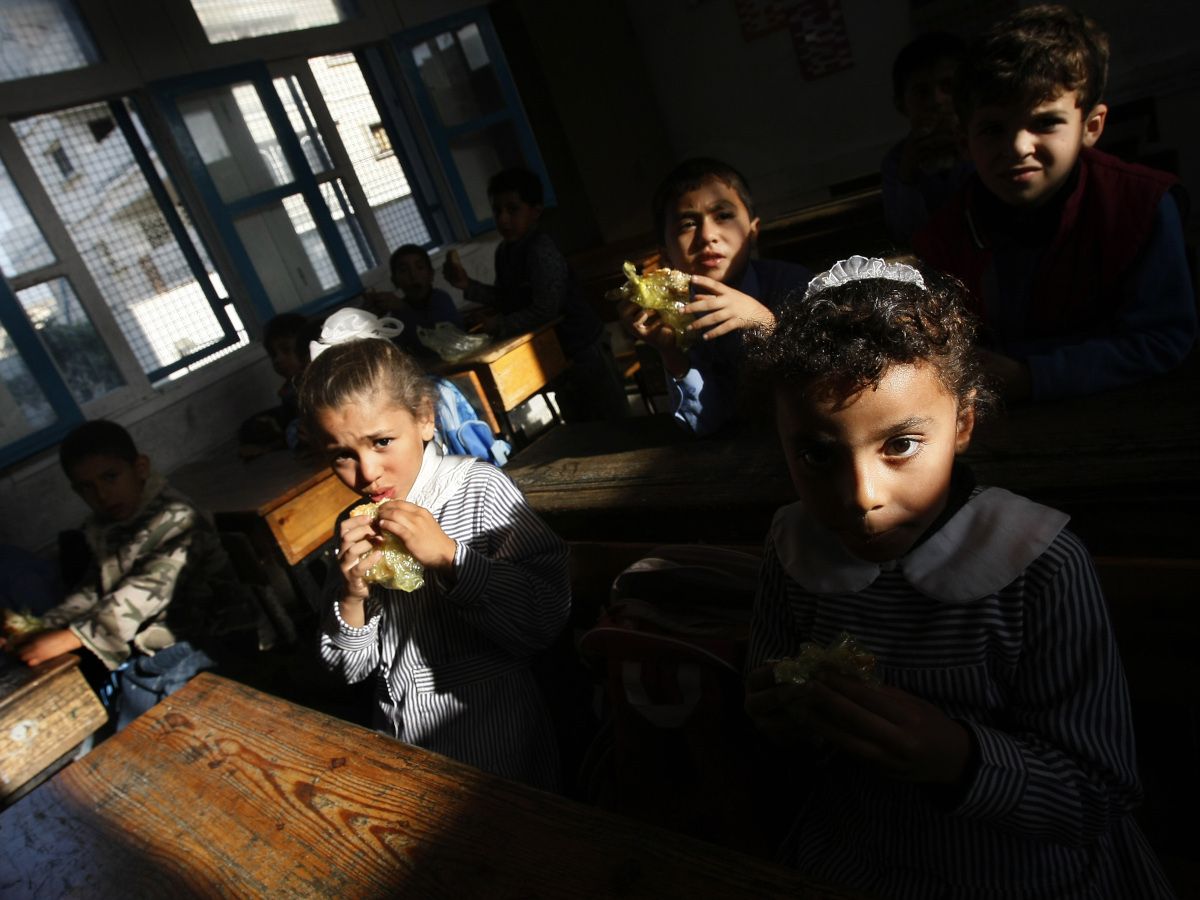

Palestinian students attend an UNRWA-run primary school in Gaza City in 2008.

U.S. special envoy Jared Kushner recently said that Gaza will not be rebuilt until it’s demilitarized. His reasoning was straightforward: no one wants to pour billions of dollars into reconstruction only to see the territory taken over by terrorists or destroyed again. He is right about the problem. But demilitarization alone will not solve it.

Taking away the terrorist’s weapons is necessary. But so is asking what made generations of young people willing to carry them in the first place.

If Gaza is to have a different future, reconstruction and rehabilitation must happen together. One to rebuild the physical environment, and the other to rebuild the institutions and ideas that shape future generations. I know this because I grew up in Gaza.

In fourth grade, my Islamic education teacher called me to the front of the classroom. He ran toward me, performed a military-style roll, then stood with his hands positioned around an imaginary rifle.

“You need to learn these movements,” he told us. We needed to become soldiers, he said. The war against the Jews would continue until the end of time, and killing Jews, according to my teacher, was an act of worship.

I was around nine years old at the time. The same teacher condemned the Oslo Accords and called the Palestinian Authority traitors. I did not know what the Oslo Accords were. I did not even know where Oslo was. I knew who I was supposed to hate before I even understood the conflict.

By secondary school, the imaginary rifle became a real Kalashnikov. We had a class in which we learned to disassemble and reassemble weapons. The instructor belonged to Hamas’s security apparatus. Once, his rifle accidentally discharged and a bullet tore through a classroom wall.

My father was furious when he learned that I was being trained with weapons. He went to the school and objected. Two days later, the principal humiliated me during morning assembly, calling me weak because I had brought my father instead of behaving like the “men” who fight to liberate Palestine.

My father understood something my school did not: patriotism did not require turning his son into a soldier. This is why the debate over Gaza’s reconstruction cannot be limited to buildings.

A school is not rehabilitated because someone replaces its windows, pours new concrete and installs new desks. What matters is what happens after children sit at those desks.

The United States and its partners therefore need to think about Gaza’s reconstruction in two inseparable tracks: demilitarization and deradicalization, physical reconstruction and civic rehabilitation.

That does not mean erasing Palestinian identity or political aspirations. Palestinians should be free to advocate for statehood, challenge Israeli policies and tell their own history. Deradicalization cannot become a euphemism for political submission.

It should mean something much more specific: ending the institutional glorification of violence, religious hatred and the militarization of children. Washington should make that principle part of any reconstruction framework.

International funding for education should require independent reviews of the curricula and teaching materials. Teachers and administrators should be screened for involvement in armed organizations. Schools should be strictly separated from military activities. Religious instruction should not be used to dehumanize Jews or sanctify violence against civilians.

Teacher training matters just as much as textbooks. A beautifully written curriculum means little if the adult standing in front of the classroom teaches children that compromise is treason and death in battle is the highest form of achievement.

Gaza will also need alternatives, not simply prohibitions. Young Palestinians need civic institutions, sports, arts, entrepreneurship, political debate and education that gives them ways to pursue dignity and purpose outside armed movements. Deradicalization succeeds when another identity becomes more compelling: student, engineer, entrepreneur, artist, citizen.

And Palestinian parents who resist militarization need protection and support. My father was one of them. He did not need an outsider to teach him that putting a Kalashnikov in his son’s hands was wrong. He needed a system that stood behind him when he said “no.” Instead, the system humiliated his child.

That distinction should matter enormously to Americans and others throughout the West. Gaza is not a population of two million irredeemable extremists. It is a society in which people have lived for decades under institutions and political forces that have profoundly shaped its citizens, starting from their formative years in the classroom. Yet institutions can change.

Kushner is right that rebuilding Gaza without demilitarizing it risks financing another war. But removing rifles and tunnels addresses only half of the problem.

I remember an imaginary rifle in my teacher’s hands when I was nine. Years later, there was a real one in mine. The distance between those two rifles is where Gaza’s future will be decided. Reconstruction must begin there.

National Post

Moumen Al-Natour is a Palestinian lawyer from Gaza and a co-organizer of the 2019 “We Want to Live” street demonstrations against Hamas.


Palestinian students attend an UNRWA-run primary school in Gaza City in 2008.

U.S. special envoy Jared Kushner recently said that Gaza will not be rebuilt until it’s demilitarized. His reasoning was straightforward: no one wants to pour billions of dollars into reconstruction only to see the territory taken over by terrorists or destroyed again. He is right about the problem. But demilitarization alone will not solve it.

Taking away the terrorist’s weapons is necessary. But so is asking what made generations of young people willing to carry them in the first place.

If Gaza is to have a different future, reconstruction and rehabilitation must happen together. One to rebuild the physical environment, and the other to rebuild the institutions and ideas that shape future generations. I know this because I grew up in Gaza.

In fourth grade, my Islamic education teacher called me to the front of the classroom. He ran toward me, performed a military-style roll, then stood with his hands positioned around an imaginary rifle.

“You need to learn these movements,” he told us. We needed to become soldiers, he said. The war against the Jews would continue until the end of time, and killing Jews, according to my teacher, was an act of worship.

I was around nine years old at the time. The same teacher condemned the Oslo Accords and called the Palestinian Authority traitors. I did not know what the Oslo Accords were. I did not even know where Oslo was. I knew who I was supposed to hate before I even understood the conflict.

By secondary school, the imaginary rifle became a real Kalashnikov. We had a class in which we learned to disassemble and reassemble weapons. The instructor belonged to Hamas’s security apparatus. Once, his rifle accidentally discharged and a bullet tore through a classroom wall.

My father was furious when he learned that I was being trained with weapons. He went to the school and objected. Two days later, the principal humiliated me during morning assembly, calling me weak because I had brought my father instead of behaving like the “men” who fight to liberate Palestine.

My father understood something my school did not: patriotism did not require turning his son into a soldier. This is why the debate over Gaza’s reconstruction cannot be limited to buildings.

A school is not rehabilitated because someone replaces its windows, pours new concrete and installs new desks. What matters is what happens after children sit at those desks.

The United States and its partners therefore need to think about Gaza’s reconstruction in two inseparable tracks: demilitarization and deradicalization, physical reconstruction and civic rehabilitation.

That does not mean erasing Palestinian identity or political aspirations. Palestinians should be free to advocate for statehood, challenge Israeli policies and tell their own history. Deradicalization cannot become a euphemism for political submission.

It should mean something much more specific: ending the institutional glorification of violence, religious hatred and the militarization of children. Washington should make that principle part of any reconstruction framework.

International funding for education should require independent reviews of the curricula and teaching materials. Teachers and administrators should be screened for involvement in armed organizations. Schools should be strictly separated from military activities. Religious instruction should not be used to dehumanize Jews or sanctify violence against civilians.

Teacher training matters just as much as textbooks. A beautifully written curriculum means little if the adult standing in front of the classroom teaches children that compromise is treason and death in battle is the highest form of achievement.

Gaza will also need alternatives, not simply prohibitions. Young Palestinians need civic institutions, sports, arts, entrepreneurship, political debate and education that gives them ways to pursue dignity and purpose outside armed movements. Deradicalization succeeds when another identity becomes more compelling: student, engineer, entrepreneur, artist, citizen.

And Palestinian parents who resist militarization need protection and support. My father was one of them. He did not need an outsider to teach him that putting a Kalashnikov in his son’s hands was wrong. He needed a system that stood behind him when he said “no.” Instead, the system humiliated his child.

That distinction should matter enormously to Americans and others throughout the West. Gaza is not a population of two million irredeemable extremists. It is a society in which people have lived for decades under institutions and political forces that have profoundly shaped its citizens, starting from their formative years in the classroom. Yet institutions can change.

Kushner is right that rebuilding Gaza without demilitarizing it risks financing another war. But removing rifles and tunnels addresses only half of the problem.

I remember an imaginary rifle in my teacher’s hands when I was nine. Years later, there was a real one in mine. The distance between those two rifles is where Gaza’s future will be decided. Reconstruction must begin there.

National Post

Moumen Al-Natour is a Palestinian lawyer from Gaza and a co-organizer of the 2019 “We Want to Live” street demonstrations against Hamas.


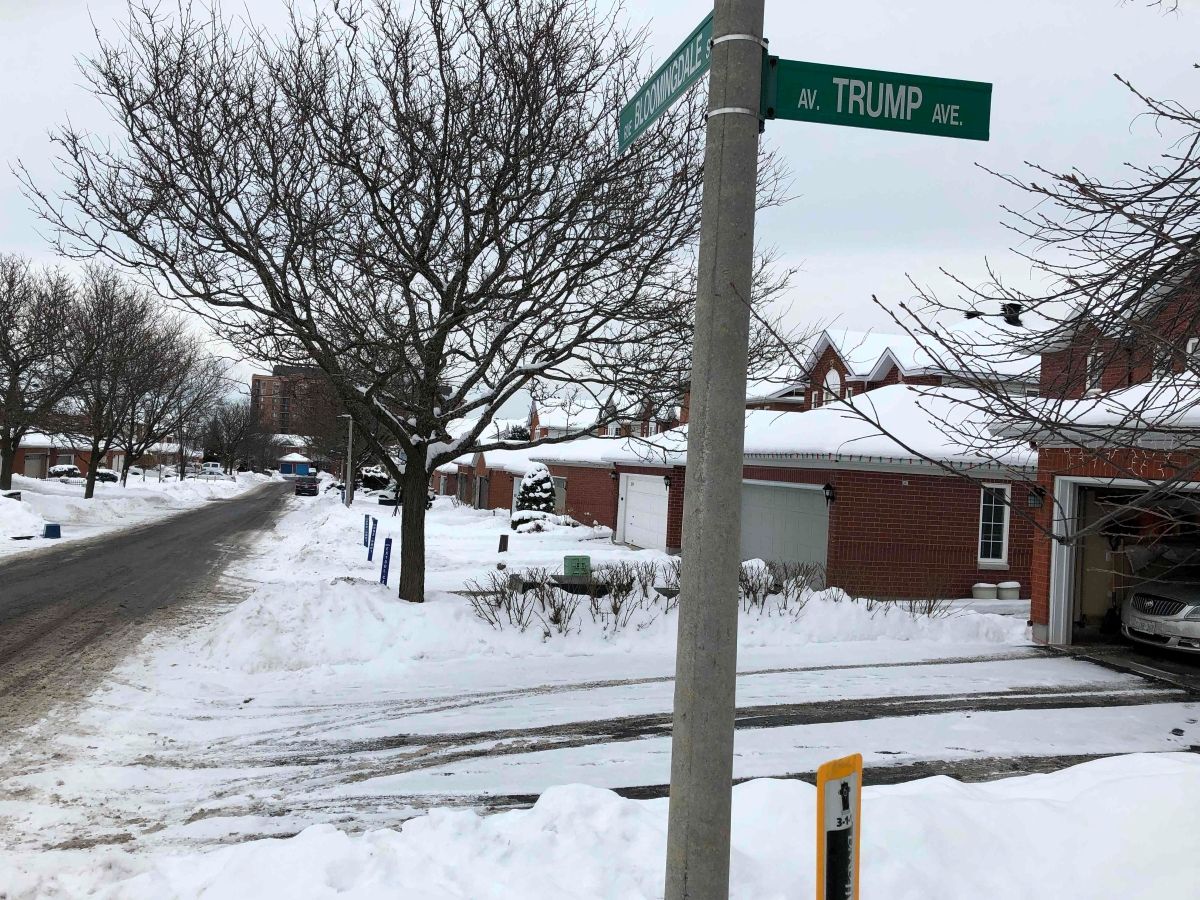
The 'Trump Avenue' street sign is seen in a west side suburb in Ottawa on Jan. 26, 2021.

I couldn’t help ruminating on yesterday’s news of a renewed push to find a more suitable name for Trump Avenue in Ottawa’s Central Park neighbourhood. We live in an era of woke iconoclasm — some would say in the dying days of one — but this is obviously a different sort of matter. Trump Avenue started making national headlines in 2021, when city council polled residents about the offending nomenclature but failed to secure a majority in favour of a change that would involve some inconvenience and expense. Trump had just been ejected from the White House, a process accompanied by a smattering of violent resistance; perhaps the good people of Trump Avenue hoped he would retreat safely into the crumbling pages of history and spare them the trouble of revision. Didn’t we all.

In 2026, as in 2021, reporters covering the Trump Avenue controversy have been a tad elliptical about how Trump Avenue came by its name. One might be forgiven for thinking that the personal connection to Donald J. Trump was incidental; a photo caption on Wikipedia at the time of writing has the effrontery to describe the street as “indirectly named” for Trump. The truth is that the developers who turned an experimental farm into the Central Park subdivision in the 1990s named a street very directly after renowned real-estate developer Donald J. Trump for explicitly articulated marketing reasons.

All the streets in Central Park contain themed references to the posh parts of New York, but there is no original “Trump Avenue” in NYC. His name is just plastered all over the place — and in the ’90s that name still denoted glitz, wealth and commercial vision rather than destructive lunacy. People were expected to want to buy property on Trump Avenue, and did buy it.

Those whose brains aren’t wriggling with ideological nematodes naturally prefer that the names of the byways they use and the places they inhabit be as permanent as possible, which is why so many of us fume over acts of re-naming contrived to serve as humiliation rituals or gestures of obeisance. This is, as it turns out, an excellent reason not to name or re-name things after living people, or in pursuit of other ephemeral trends. Even leaving all such considerations aside, it was stupid in the first place for Ottawa to tolerate the creation of a “Central Park” full of names imitating another capital’s landmarks. Developers cannot seem to resist this sort of crap, which is how Calgary and Edmonton recently sprouted twin outer-suburban neighbourhoods that are both called “The Hamptons.” (Note: they do not resemble the Hamptons.)

What makes this case exceptional is that celebrity developer Trump turned President Trump has not only abused power in a multitude of ways and threatened the integrity of the Canadian state; he has just now followed through on his threats and ordered the U.S. federal government to rename Lake Ontario (as it renamed the Gulf of Mexico) in pursuit of his vendetta against Canada. It might be one thing, an understandable but obnoxious thing, to impulsively rename Berlin, Ontario, because you are at war with a state that claims to represent all Germans. But Trump is now the world’s most notorious practitioner of crazed onomastic revision itself!

And, as we all know, his amour-propre has the size and flammable nature of a zeppelin: he will actually feel indignant and aggrieved if he gets wind that the impulsively named Trump Avenue has suddenly been re-branded. One is tempted to suggest “Mamdani Boulevard” or “Ocasio-Cortez Way,” but let’s try for our own sake to achieve nirvana and exit the St. Petersburg-Petrograd-Leningrad-St. Petersburg cycle of political renamings.

National Post


The 'Trump Avenue' street sign is seen in a west side suburb in Ottawa on Jan. 26, 2021.

I couldn’t help ruminating on yesterday’s news of a renewed push to find a more suitable name for Trump Avenue in Ottawa’s Central Park neighbourhood. We live in an era of woke iconoclasm — some would say in the dying days of one — but this is obviously a different sort of matter. Trump Avenue started making national headlines in 2021, when city council polled residents about the offending nomenclature but failed to secure a majority in favour of a change that would involve some inconvenience and expense. Trump had just been ejected from the White House, a process accompanied by a smattering of violent resistance; perhaps the good people of Trump Avenue hoped he would retreat safely into the crumbling pages of history and spare them the trouble of revision. Didn’t we all.

In 2026, as in 2021, reporters covering the Trump Avenue controversy have been a tad elliptical about how Trump Avenue came by its name. One might be forgiven for thinking that the personal connection to Donald J. Trump was incidental; a photo caption on Wikipedia at the time of writing has the effrontery to describe the street as “indirectly named” for Trump. The truth is that the developers who turned an experimental farm into the Central Park subdivision in the 1990s named a street very directly after renowned real-estate developer Donald J. Trump for explicitly articulated marketing reasons.

All the streets in Central Park contain themed references to the posh parts of New York, but there is no original “Trump Avenue” in NYC. His name is just plastered all over the place — and in the ’90s that name still denoted glitz, wealth and commercial vision rather than destructive lunacy. People were expected to want to buy property on Trump Avenue, and did buy it.

Those whose brains aren’t wriggling with ideological nematodes naturally prefer that the names of the byways they use and the places they inhabit be as permanent as possible, which is why so many of us fume over acts of re-naming contrived to serve as humiliation rituals or gestures of obeisance. This is, as it turns out, an excellent reason not to name or re-name things after living people, or in pursuit of other ephemeral trends. Even leaving all such considerations aside, it was stupid in the first place for Ottawa to tolerate the creation of a “Central Park” full of names imitating another capital’s landmarks. Developers cannot seem to resist this sort of crap, which is how Calgary and Edmonton recently sprouted twin outer-suburban neighbourhoods that are both called “The Hamptons.” (Note: they do not resemble the Hamptons.)

What makes this case exceptional is that celebrity developer Trump turned President Trump has not only abused power in a multitude of ways and threatened the integrity of the Canadian state; he has just now followed through on his threats and ordered the U.S. federal government to rename Lake Ontario (as it renamed the Gulf of Mexico) in pursuit of his vendetta against Canada. It might be one thing, an understandable but obnoxious thing, to impulsively rename Berlin, Ontario, because you are at war with a state that claims to represent all Germans. But Trump is now the world’s most notorious practitioner of crazed onomastic revision itself!

And, as we all know, his amour-propre has the size and flammable nature of a zeppelin: he will actually feel indignant and aggrieved if he gets wind that the impulsively named Trump Avenue has suddenly been re-branded. One is tempted to suggest “Mamdani Boulevard” or “Ocasio-Cortez Way,” but let’s try for our own sake to achieve nirvana and exit the St. Petersburg-Petrograd-Leningrad-St. Petersburg cycle of political renamings.

National Post


On a Finance Canada call with stakeholders on Tuesday, Canadian producers expressed concerns that the government had pledged to impose a 25 per cent tariff on U.S. seafood, including Maine lobster, even though the list of U.S. targets did not include Canadian seafood products.

If crisis management is about preventing a bad situation from getting worse, the federal government deserves full marks for its decision to adjust the list of American goods that will be subject to tariffs.

Late on Wednesday, Finance Canada announced that it was removing U.S. seafood and fish products from the list of tariffed goods, “based on feedback.”

That feedback was white-hot anger expressed by Canadian seafood producers, who threatened to go public with their frustration, creating a breach in the united Team Canada front.

On a Finance Canada call with stakeholders on Tuesday, producers expressed concerns that the government had pledged to impose a 25 per cent tariff on U.S. seafood, including Maine lobster, even though the list of U.S. targets did not include Canadian seafood products.

The producers were terrified that the Americans would respond with a 50 per cent tariff that would kill the market for the 80 per cent of Canadian aquaculture products that go south.

From the perspective of exacting maximum political pressure on Donald Trump, the imposition of a tariff on Maine lobster was inspired. The seat of Republican Senator Susan Collins is up for grabs in November’s midterm elections and it is considered a toss-up by most predictive markets.

A relieved Collins posted on X Thursday that she appreciated Canada’s decision to remove seafood and fish products from its retaliatory tariff list.

“I urge the U.S. to respond to this show of good faith from our Canadian friends by returning to the negotiating table and working to amicably resolve this trade dispute,” she said.

A 25 per cent tariff imposed by Canada would likely prove to be highly damaging, given that up to 60 per cent of the state’s lobster catch is sent to Atlantic Canada to be processed. Canada has historically bought around $400 million of Maine’s catch. “Maine lobstermen and the industry as a whole didn’t start this fight. We are just the ones getting hit with the bill,” wrote the MaineWonk, a popular policy commentator based in northern Maine.

However, the Canadian industry argued that not only would jobs involved with processing and storing the $1 billion of American seafood imports be at risk but the viability of an aquaculture sector that exports $4 billion south would be in question if the Americans retaliated.

The Canadian Aquaculture Industry Alliance is understood to have written to Finance Canada, giving the government 48 hours to roll back the policy or it would consider going public with its concerns.

While exerting maximum political pressure was one of the competing objectives considered by the government in drawing up its list of targets, the priority, at least according to Industry Minister Mélanie Joly, is to protect jobs and businesses.

The latest news from Canada-U.S. Minister Dominic LeBlanc is that talks might resume if the Americans “clarify” their position on sticking points like language and culture policies. That followed a CBC interview with the U.S. Trade Representative Jamieson Greer, in which he said that such issues were not a red line.

In such an environment, imposing tariffs in sectors that have not been targeted by the White House would be unnecessarily provocative – and potentially costly to Canada.

The decision to show flexibility in response to Canadian businesses, while being clear that the dollar-for-dollar retaliatory tariffs are immutable until a deal is reached, is smart politics.

jivison@criffel.ca
Twitter.com/IvisonJ


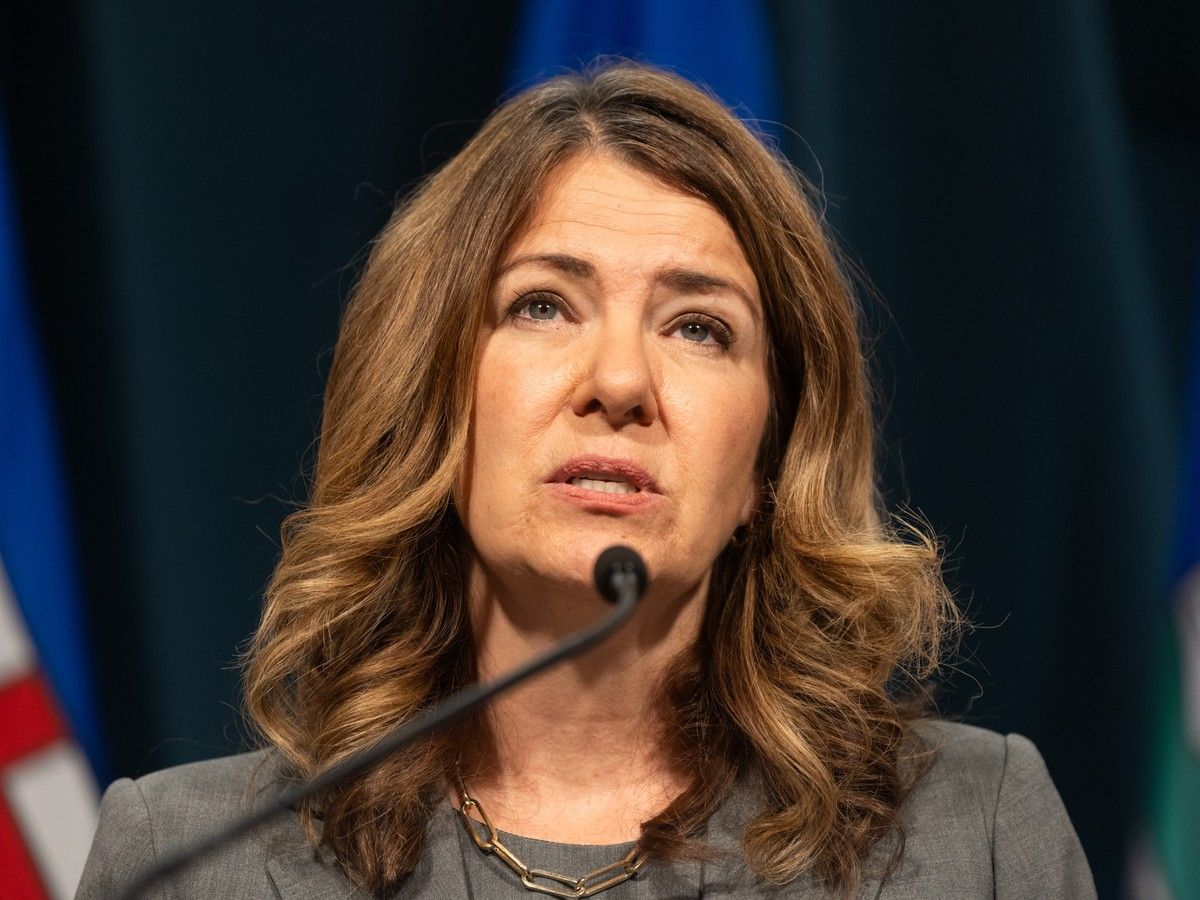
Premier Danielle Smith speaks at a press conference in Calgary on Monday, July 27, 2026 regarding diagnostic health services in Alberta.

In a feeble attempt to cast Canada as the villain and aggressor, the White House released a “fact sheet” on Tuesday laying out our alleged trade transgressions.

Canada, the White House says, is guilty of having imposed “discriminatory” tariffs on U.S. vehicles, of banning American alcohol in most provinces, and of “locking out” U.S. dairy through tariff rate quotas “more restrictive than those given to Europe.”

Of course, none of this happened in a vacuum. Canada didn’t just wake up one day and decide to wage economic warfare against our largest trading partner. This fact sheet conveniently omits the American imposition of tariffs on Canadians which preceded our retaliation.

We were content to maintain our trading relationship with the United States, as per the deal negotiated under Donald Trump, which he had previously described the “best” trade deal ever. That trade deal, by the way, covered those same dairy provisions that the Americans are now complaining about. Yet, we were still willing to have a conversation about that, too.

It is abundantly clear at this point how and why we got to this point. One of the first acts of Donald Trump’s second term was to slap tariffs on Canada — not to mention musings and threats about annexation — which was subsequently followed up by even more tariffs.

No Canadian should be under any illusion as to the cause and source of this dispute. To the extent that we require some sort of national “Team Canada” consensus, it’s that crucial point.

There are those reluctant to blame the U.S. president, however. Part of that is a simple partisan impulse, a desire to see the prime minister and his government stumble and fail..

There are also those who simply admire or sympathize with Trump and his MAGA movement, and long for a similar figure and movement here (wouldn’t a Canadian Trump also be protectionist and pro-tariff?). And, yes, there are those that are flat-out disloyal to Canada: those that are attempting to break up this country, many of whom wouldn’t mind being absorbed into Trump’s America.

It does not follow, however, that acknowledging the chief culprit in this quagmire commits us to supporting a certain course of action. It’s fair to call out the domestic “Blame Canada” contingent, but the accusations of disloyalty should not flow down to those who disagree on the nature or degree of a retaliatory response.

It’s interesting that for all the talk of “Team Canada,” our strategy depends heavily on the absence of an American equivalent. It’s certainly not disloyal for American critics of the president’s destructive agenda to voice those concerns and advocate for a more sane and logical approach. Our hope is that the dissenters prevail.

It’s fair to note that no Canadian response will ever pose the same sort of existential threat as U.S. pressure on Canada can, but presumably our objective here is still to get back to the sort of friendly trading relationship we had prior to all of this madness.

Assuming that’s the goal — and that such a goal is in Canada’s interest — then it’s hardly disloyal to favour a course of action that gets us back to the negotiating table and that minimizes disruptions in the remaining trade between the two countries.

Maybe there’s no point in talking to the Americans for now. Maybe it’s time to draw a line in the sand. Reasonable people can disagree on the best path forward here.

But given that less than a week ago, our official position was to negotiate and be willing to make compromises toward the broader — beneficial — goal of an agreement with our biggest trading partner, it’s unfair to paint those who still hold that position as quislings or fifth columnists.

Moreover, for all our efforts to remind Americans that their tariffs are inflicting costs and economic damage on themselves, the same holds true for our own retaliatory tariffs. Whether we believe they’re morally or strategically justified doesn’t make them any less economically painful.

It’s not disloyal to worry about compounding the damage to Canada’s economy that Trump’s tariffs will already cause. Public opinion may be on the side of going to the mattresses and making the Americans feel some pain, but we can have room for differences of opinion on the extent to which we attempt to do so.

Alberta’s premier seems to be bearing the brunt of the accusations of falling short of “Team Canada” expectations. Given that Alberta is in the throes of a separation referendum and that Premier Danielle Smith leads a party with a not insignificant amount of separatist sentiment, there is some degree of invited suspicion.

Smith’s expressed concern about the impact of higher and broader tariffs, though, is hardly unwarranted. And the desire to get back to the negotiating table is, again, presumably what Ottawa hopes to achieve at some point.

Furthermore, the reluctance to put certain tactics on the table, such as Ottawa taxing or restricting oil exports to the U.S., is understandable.

For one, while we can bristle at the idea of pandering to separatists, such federal interference in the oil and gas industry would be ill-timed and counterproductive to the federalist cause in Alberta.

But also, premiers can be advocates for their regions and their industries. We see Quebec’s premier making it clear that their red line is protecting language and culture, as well as supply management. Ontario’s premier is obviously prepared to do whatever it takes to protect the auto sector. Surely Doug Ford would be hesitant to put that sector at risk if Trump’s tariffs were targeting Canadian oil and gas.

And, as Smith pointed out Wednesday, placing an export tax on Canadian oil would surely provoke an American response. An export tax on American oil that flows into Canada would be dire for Ontario and Quebec especially.

Ultimately “Team Canada” shouldn’t mean unanimous, unwavering support for whatever course of action the federal government happens to favour at the moment. We should be able to agree that Canada is the aggrieved party here and that it’s regrettable that our closest ally and most important trading partner has chosen this path.

It’s still reasonable to ask, however, what it is we’re trying to achieve moving forward, and what the costs and benefits of a particular tactic might be.

Ultimately, this whole debacle only serves to underscore the value and importance of free trade, and it’s still a pro-Canada position to desire free trade and to acknowledge the very real downside of tariffs and other trade barriers.

Rob Breakenridge is a Calgary-based podcaster and writer. He can be found at robbreakenridge.ca and reached at rob.breakenridge@gmail.com


U.S. Trade Representative Jamieson Greer speaks to the press outside the West Wing of the White House in Washington, DC, on August 24, 2026.

One of the big issues in the Canada-U.S. trade war — the one about language, culture and sovereignty no less — has been settled.

It’s remarkable what can be achieved when the two sides aren’t even talking to each other.

Canada-U.S. Trade Minister Dominic LeBlanc posted on social media on Tuesday, “Canada welcomes that the U.S. is now withdrawing its positions on discoverability and labelling and is confirming that measures to promote French language and Canadian culture will not be subject to future U.S. trade actions.

“We look forward to further constructive U.S. clarifications on their other positions which would create the possibility of a mutually beneficial trade agreement that respects Canadian sovereignty.”

It appears LeBlanc was responding to an interview given by U.S. Trade Representative Jamieson Greer to the CBC that was at least forthright in setting out the U.S. positions.

Tariffs on medium and heavy trucks were always going to be heavier than autos, said Greer, who also made clear that returning manufacturing back to America was a prime goal.

“We are trying to reindustrialize 25 years after suffering from globalization where we lost five million jobs, 30,000 factories,” said Greer. “For weeks I’ve been clear about what we could deliver.”

It was the Canadians, claimed Greer, who “at the end” said that when they were talking of autos they meant “everything from a little escort to the biggest truck you can think of.”

Canada and the U.S. are agreed that tariffs on those trucks are an area of great disagreement. And considering the economic fallout, especially for Ontario, it is a red line for Canada.

On Saturday , Prime Minister Mark Carney pointed to a second issue that had caused the breakdown of talks accusing the U.S. of trying to impose restrictions on Canada pursuing free trade agreements with other countries.

“Unacceptable,” said Carney. “One thing we were not going to accept was any restriction on those deals.”

But listening to what Carney later said in his news conference, and what Greer told the CBC on Wednesday night, the issue is not so black and white. The U.S. and Canada may be a lot closer in their positions.

Greer said Carney’s characterization that the U.S. was trying to restrict Canadian free trade deals “goes far beyond anything we have discussed.”

He said Canadian provincial and federal officials wanted to create Fortress North America — “their term not mine” — which would require those within the north American market to “protect its borders.”

“We can’t have Canada be a place where you can get flooded with steel and aluminum from other countries and be used as a back door into the U.S.,” said Greer. “We have to have mutual protection.”

Carney made a similar argument Saturday.

When the prime minister was asked whether the trade restrictions required Canada to impose tariffs on other countries in conjunction with the U.S., Carney said, “There were elements of that in certain sectors.

“To be clear, we would see the merits of that as part of a comprehensive deal that made sense for Canada.”

Having an integrated auto sector, or steel/aluminum sector, meant that the U.S. and Canada had concerns about non-market economies and trans shipments through third countries. “Then it makes sense to align,” said Carney, adding, “We would be prepared to do that” within a comprehensive deal.

“But that’s us deciding to do something in our joint interest as opposed to being told to do something or being restricted from doing something,” said the prime minister.

Although, isn’t a trade deal about agreeing to do something that is hopefully beneficial to both countries?

On the issue of discoverability — the attack on our sovereignty — Greer was adamant that it was never a red line for the Americans.

“So first of all, importantly, President Trump, myself, and the U.S. government recognizes the importance and sensitivity of the French language in Canada, in Quebec, in areas in the Maritimes.

“I mean, that’s part of Canadian Québécois identity,” said Greer.

“This is something we talked about, but we showed a lot of flexibility. And our view is there is no way we would let a good deal go by for something like this. It’s like the farthest thing from a red line.

“It’s been presented in the Canadian press like some big thing that we held the line on. This is not true at all.”

It is astonishing, and welcome, that of three major issues one has been solved already, especially, as Greer revealed, “We don’t have open channels right now.”

But Greer was very aware of the mood in Canada and next steps.

“Our view is don’t retaliate, but I know how people are feeling in Canada and what they think. So it’s unfortunate, but it is what it is,” he said. “If there’s further retaliation from the Canadian side, we, of course, are not going to just sit down and take that.”

But Greer should sit down and so should LeBlanc. And the place to do it is at the bargaining table.

The problem with any war is that the conflict usually escalates to catastrophic proportions before both sides are ready to negotiate.

Let’s start opening the channels now.

National Post


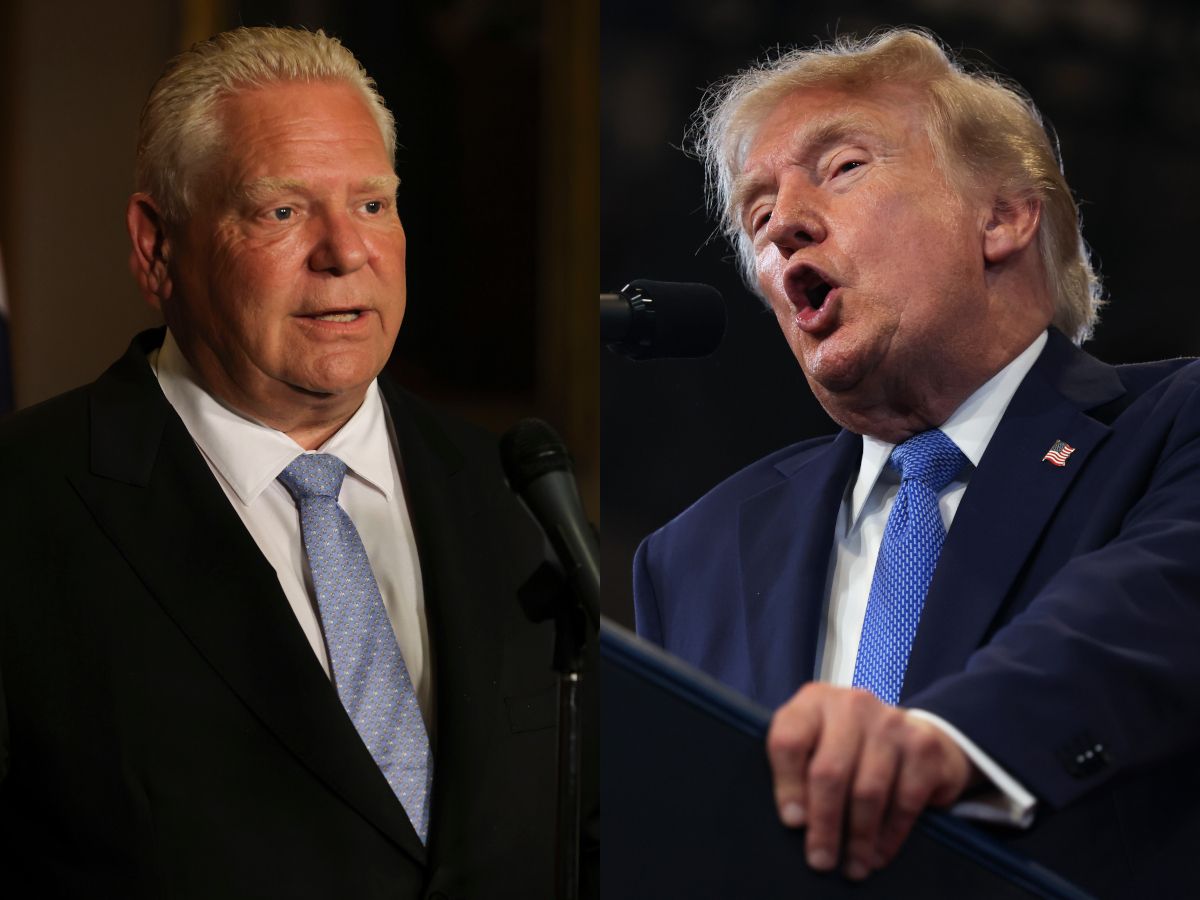
Ontario Premier Doug Ford, left, and U.S. President Donald Trump

Canada’s trade war with the U.S. is bad for Ontario, but not for Doug Ford.

For the premier, the trade war is a godsend, a chance to rise above the minor-league missteps and general lack of direction that have dogged his government for most of this year.

For months, Ford has sat quietly on the sidelines as Prime Minister Mark Carney worked on the trade issue in his calm and quiet way. It seemed as if Ford’s stint as Captain Canada had come to an end.

Then, with one classic Ford outburst, the premier was back. When Trump threatened even more tariff punishment, Ford invited the president to “kiss my ass. ” One would have to be a hardcore Ford hater not to say, “right on!”

By the time the war of words was done, Trump had said Ford was “”less charismatic, intelligent, and overall unimpressive,” compared to his late brother, Rob. Trump also called the premier a “flunky” and threatened to rename Lake Ontario to Lake America because “we don’t expect to be doing much business with Ontario any longer.”

In a second volley, Ford called Trump “a loser,” the “king of bankruptcies” and a “dictator.”

Then Ford started to work the U.S media circuit, toning down his message for that audience and admitting that things had gotten “a little heated.” The premier was back in the spotlight. Well played.

A Liaison Strategies’ poll this week suggested quick political dividends for Ford. His personal approval rating climbed from 24 per cent in July to 36 per cent now. Still not great but heading in the right direction.

The same poll said 85 per cent of Ontarians polled favoured keeping American booze out of retail stores. This is Ford’s best weapon in the trade fight. The booze ban by provinces took on surprising importance in the failed trade talks, apparently a precondition to the deal going through.

After the talks collapsed, Ford said he wouldn’t have supported a deal that would hurt Ontario workers, one Carney seemed ready to make. Ford also said he wouldn’t allow American booze to be sold in Ontario as part of such a bad deal.

In effect, the relatively trivial liquor issue gave Ford a near-veto on trade talks, one he still has if the same approach is taken in future talks. That leverage makes Ford more of a player on trade issues than he has been.

The trade war flareup was ideally timed for Ford. He hasn’t had a great year. His eight-year-old government has lost momentum, bogged down by self-inflicted problems like the controversy over buying a jet for the premier’s use, cabinet ministers soaking the public for the use of hotel rooms, and the PC Party sending someone to snoop on the Liberal leader in Jamaica.

Now Ford’s shortcomings have been pushed out of the news by the trade issue, just like they were in last year’s snap election. Ford might not like Trump, but he does come in handy.

Some dismiss Ford’s war of words with Trump as political theatre that distracts from the real trade issues, but the whole affair is political theatre. Trump’s tariffs have always been more about putting on a show of dominance and making others bend to his will. Trade itself is incidental.

Think of the Ford-Trump tussle as like a hockey fight. It won’t determine the final score, but it pleases some fans in the moment.

Ford knows how to deliver a political punch. That’s not really Carney’s style. About the closest Carney came to a shot was noting that the Americans’ trade deals were sometimes signed in pencil . Good line, but Trump’s communications on trade are more like ransom notes scrawled in crayon by a 12-year-old.

Trump is an easy target, a man who is little more than a cartoon villain. The tougher task for Ford is getting super-popular Carney to stand up for Ontario. Carney is being hailed as a hero for not giving the Americans everything they want, but the deal he was reportedly prepared to accept would have been a serious blow to Canada’s largest province.

It seems that Carney would have agreed to permanent high tariffs on steel, auto manufacturing and forestry, three critical Ontario industries. Tariffs that are less than Trump’s threatened maximum number are not a win if they are still high enough to cripple those industries.

Ontarians ought to be concerned by Carney’s record of making concessions to Trump and getting nothing in return. The PM’s impending counter-tariffs offer some hope that he has a spine, but history suggests otherwise.

For Ford, managing Carney is the biggest challenge. It will require some subtlety. Unfortunately, that’s not the premier’s strong suit.

National Post

Randall Denley is an Ottawa journalist and author. Contact him at randalldenley1@gmail.com


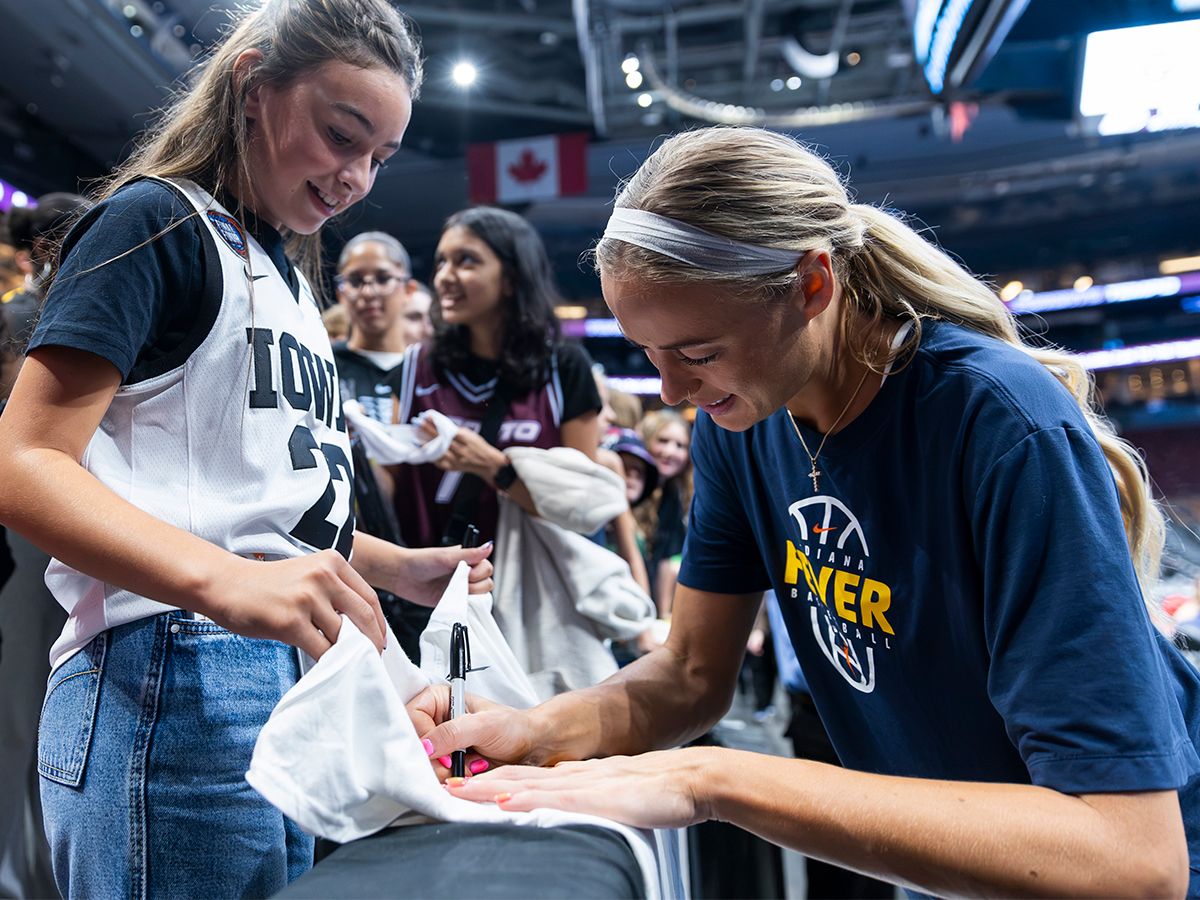
Sophie Cunningham of the Indiana Fever signs autographs ahead of an WNBA game against the Toronto Tempo at Scotiabank Arena in Toronto on Aug. 18. Cunningham was booed by some attending the game, likely for her opposition to transgender athletes playing in women's sports, writes Marty York.

As a backup who comes off the bench, Sophie Cunningham of the Indiana Fever is not the most talented player in the Women’s National Basketball Association. There is little doubt, however, that she has emerged this season as the most renowned.

And there’s no question that she has played a major role in the league’s soaring attendance figures and television ratings.

At 30, the 6-foot-1 guard/forward is averaging only about eight points a game. Yet, chiefly because of her and teammate Caitlin Clark, the WNBA has ascended into considerable prominence.

Recently, the first-year Toronto Tempo, not a formidable team in the WNBA, drew an atypical decent crowd because the opponent was the Fever. Toronto fans would be hard-pressed to name two players with the Tempo, but identifying Cunningham and Clark of Indiana has turned into a breeze for even the most casual of WNBA followers.

Not that the duo is popular with Toronto fans. No, Clark was booed in Toronto because, well, she’s a truly terrific superstar in the WNBA, and the booing is a sign of respect, much the way Bobby Orr or LeBron James would be booed during their respective games in Toronto, and elsewhere.

But the booing of Cunningham struck me as bizarre, to say the least. She wasn’t being targeted in Toronto because she is Clark’s on-court protector. Nor was she being booed because of her delightful personality, swagger, beauty and marketability.

She was being booed because she had the audacity to tell ESPN in a much-publicized interview that she is opposed to transgender athletes playing in women’s sports. Even women in Toronto booed Cunningham. Weird, eh? Women booing a woman for sticking up for women.

Cunningham said she wasn’t bothered even slightly by the booing in Toronto. “I’m here to extend love,” she told reporters. “But I also think with that love is truth, being honest. And I want to protect young girls in a locker room, or young girls in sport who shouldn’t have to go against biological men.”

She is bang-on and, after doing some in-depth research on the subject, I wholeheartedly agree with Cunningham.

Allowing biological men, with their undeniable physical advantages in strength, speed and endurance, to compete against biological females undermines the progress being made in women’s sports.

Dr. Gregory Brown, a professor of exercise science at the University of Nebraska, has produced more than 60 peer-reviewed publications for academic journals. He wrote last January that “Female athletes have been injured and deprived of roster spots, starting positions, awards and championships in their own category, all due to the mistaken belief that a transgender identity somehow negates the well-documented performance advantages conferred by male sex.”

At every level, from school sports to the Olympics to the pros, opportunities for success for females have been diminished when transgender individuals are permitted to participate in their competitions.

Dr. Brown noted that female athletes have lost scholarships, medals, playing spots, and even top salaries as pros, when their sports have been co-opted by male trans athletes.

There is a view, held by many who follow the WNBA, that there are male trans athletes recognized as women in the league. Cunningham has mildly suggested the testing of WNBA players to determine their sex at birth.

The league’s administrators are not only balking at the suggestion but reprimanding Cunningham and warning her to be silent on the issue.

Yet Cunningham isn’t simply talking out of her hat. She is honest. She tells it like it is. She is wiser than your average athlete. She is in the process of finishing a book that will sell well, at least with the anti-woke enthusiasts.

She is pleasant, amicable and multi-talented, a bright shining light in the historically underrated and underappreciated world of professional women’s sports. She should be a welcome part of a league trying to grow.

With her ability to utilize social media, her gift of gab and her light-hearted approach to friendly and fun-loving messaging, she is irrefutably a marketing guru.

The folks who run and follow the WNBA should cease and desist from admonishing her and, yes, booing her. Rather, she should be — and I don’t often say this when it comes to athletes — exalted and thanked. She truly is one of a kind.

National Post