The recent U.S. and Israeli strikes on Iran may have fundamentally altered the balance of power in the Middle East, but one takeaway stood out glaringly: most Muslim countries did not stand with Iran when it was being pounded by Israeli bombs.
This says a lot about how much the theocratic regime in Tehran has been distanced from the rest of the Muslim world. Even Iran’s partners in the BRICS and the Shanghai Cooperation Organisation — which are largely seen as anti-U.S., anti-western alliances — didn’t lift a finger.
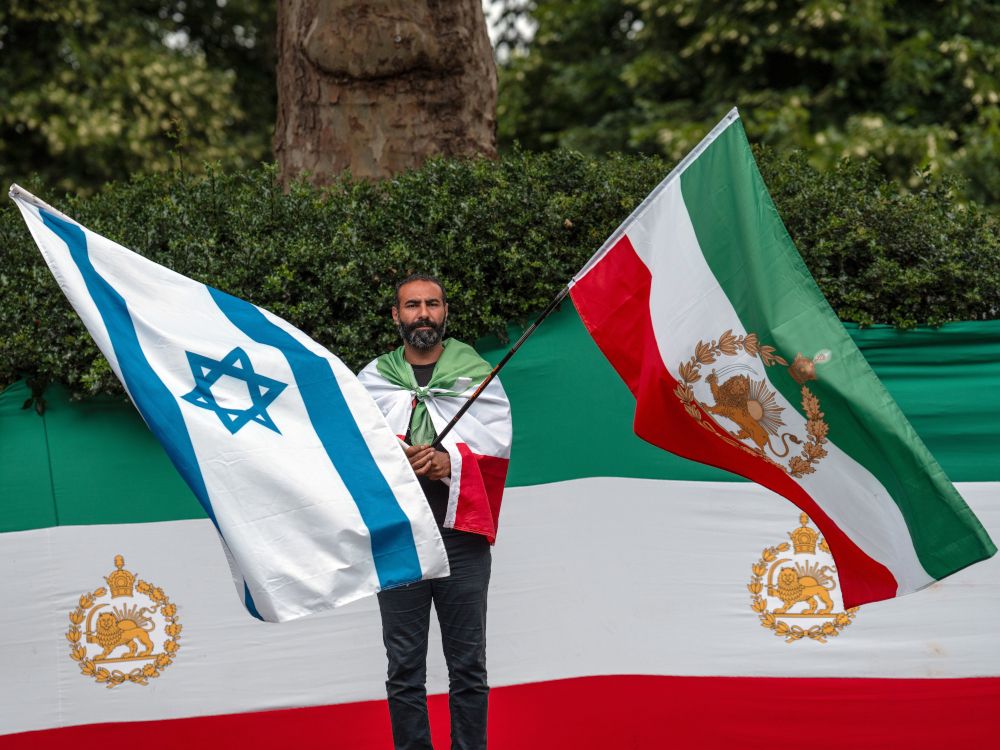
Many Iranians living outside Iran supported the campaign by Israel and the United States to destroy Iran’s nuclear facilities. While there were some Iranian dissidents living in the West who passionately supported Hamas and took to the streets to protest Israel after October 7, this time around, there wasn’t much intimidation, bluster or vandalism.
Many of them simply kept quiet, as if tacitly endorsing whatever was happening to the Iranian regime. The apathy of the Muslim world towards the regime spectacularly shattered the myth that its brand of Islam and its pan-jihadism is accepted and supported by a majority of Muslim nations.
In truth, this has never been the case. Iran stands isolated from the Muslim world for a number of reasons. From a political perspective, many countries in the region believe the Iranian mullahs pervert Islam to further their own political ends and are angry over last year’s strikes against Pakistan and the more recent targeting of a U.S. military base in Qatar.
Iran, of course, is a Shiite country, which has historically put it at odds with some of its Sunni neighbours. But even other Shiite nations do not like the fact that when Ayatollah Khomeini was in exile in France in the 1970s, he attempted to forge relations with the Sunni Muslim Brotherhood and brought many of its ideas back with him to Iran.
Then there was the so-called Axis of Resistance, which consisted of Hamas, Hezbollah, the Houthis and the Assad regime in Syria. These jihadists use violence as a means of achieving their extremist goals, which usually doesn’t garner much support among the international community. Just look at how many countries stood by Afghanistan after America was hit on 9/11 — almost none.
The Iranian regime is hated both at home and abroad due to its internal oppression (especially of women) and external aggression. This shatters the myth that Muslims across the board are jihad-loving, regressive populations. The resistance of Iranians at home, and in the diaspora, shows that many of them never liked what was happening to their country.
Even people from Lebanon and Syria, the countries where Iran ruled through its terror proxies for years, did not protest when Israel and the U.S. struck Iran. In fact, many Lebanese people did not even try to hide their jubilation when Hezbollah was knocked down from its perch.
One thing that struck us is that, as American and Israeli bombs were raining down on Iran’s nuclear and military facilities, the streets of nearby Dubai remained unusually calm — something that likely never would have happened even 20 years ago. The United Arab Emirates has always lived under the threat of Iranian aggression, but now things seem different.
Something has fundamentally changed in the Gulf security calculus. The calm on U.A.E. streets mean that rulers and businesses don’t think Iran poses a significant threat anymore. The U.A.E.’s warm relations with Israel and the U.S. following the signing of the Abraham Accord adds an extra layer of security and comfort. Perhaps this explains why there was no panic among the ruling elite when war broke out in a neighbouring country, as there was during the first and second Gulf wars.
Now that the last vestige of jihadi Islam has been defanged, the hope is that Muslim rulers and populations will use this opportunity to reset their worldviews and pivot towards a future that brings prosperity and progress.
National Post
Raheel Raza is the president of Muslims Facing Tomorrow and Mohammad Rizwan is a journalist who is currently in Dubai.