

LP_468x60
on-the-record-468x60-white

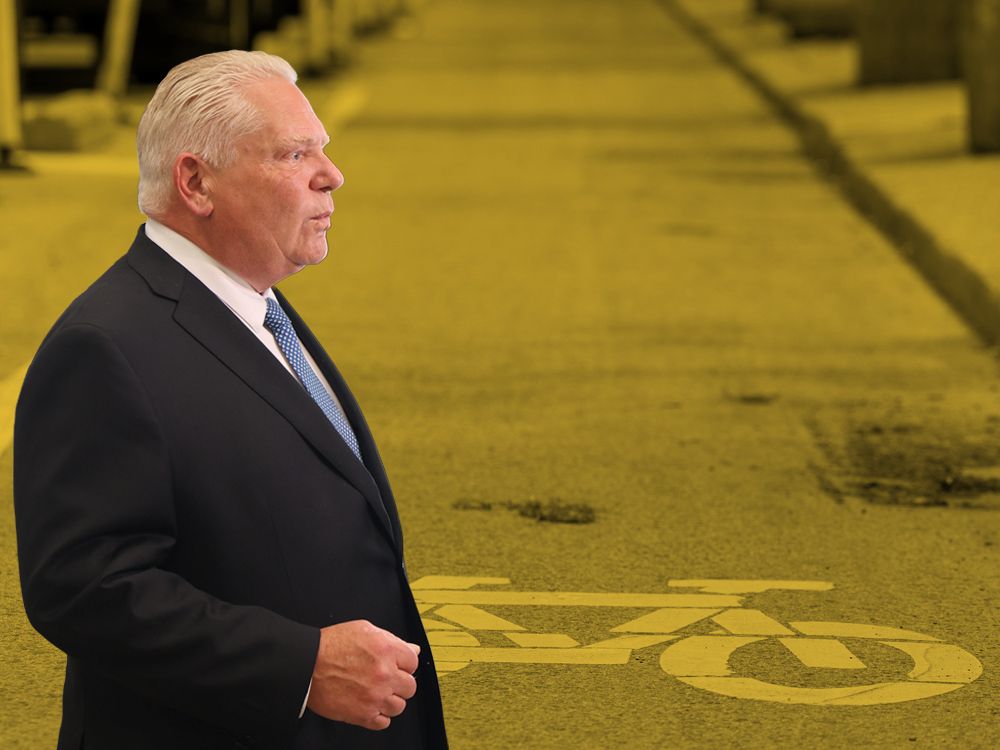
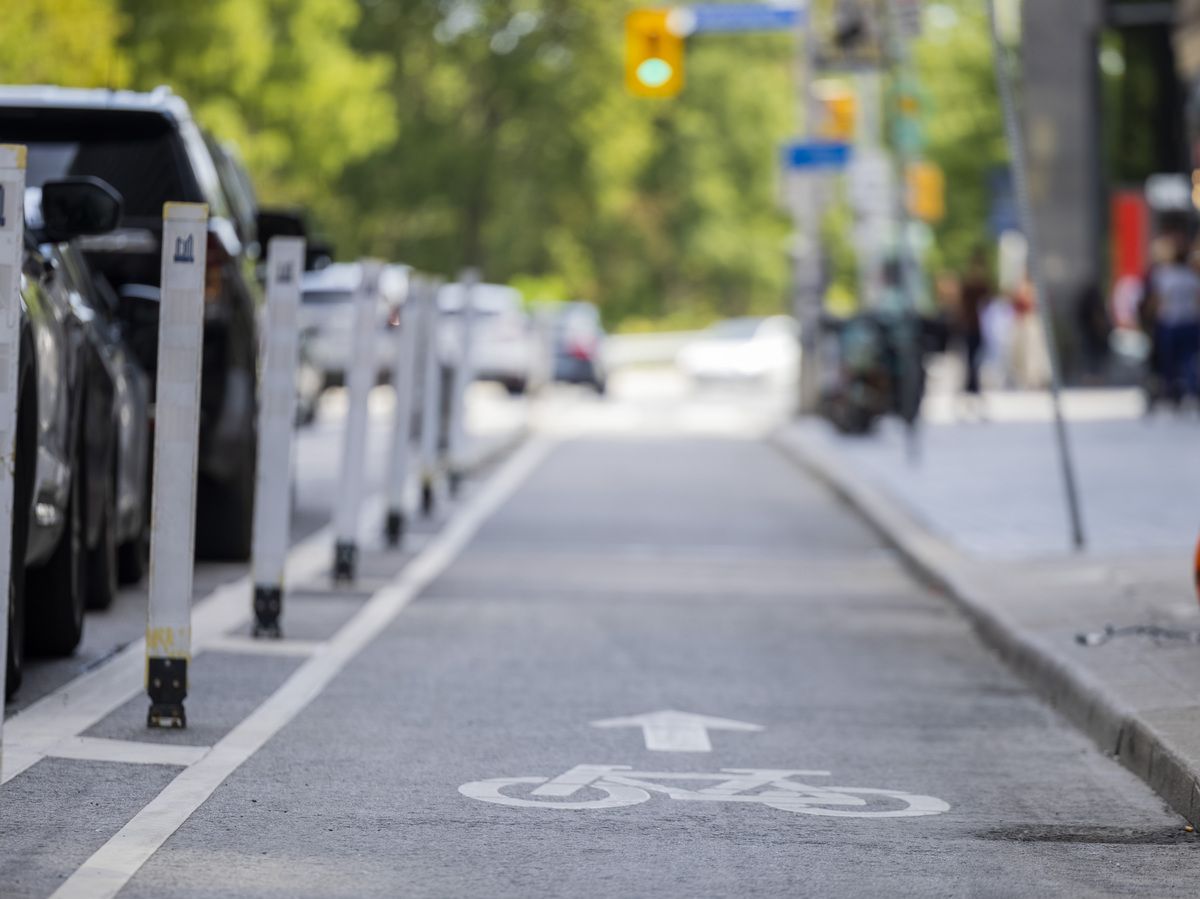
Bike lane along Bloor Street East between Shebourne Street and Parliament Street in Toronto on Aug. 13, 2026.

Last week, a three-judge panel of the Court of Appeal for Ontario laid waste to Superior Court Justice Paul Schabas’s 2025 ruling granting an injunction against the Ontario government ripping out bike lanes in Toronto.

Removing the lanes “imposes a high and grossly disproportionate cost on section 7 rights holders,” Schabas wrote, referring to the section of the Charter guaranteeing the right to “life, liberty and security of the person.”

Money quote from the appeal court ruling, written by Justice Grant Huscroft: “(Courts) learn a great deal about a matter in the course of judicial review proceedings, and judges may be tempted to comment on matters of policy. … But the temptation must be resisted. It is not just that courts have no expertise in policy making. … It is illegitimate for courts to involve themselves in matters of legislative policy.”

Many conservatives and other critics of judicial overreach punched the air, and understandably so.

More good news: the week before, someone finally went to court to file a challenge against Quebec’s obviously illegal “law” amending the Canadian Constitution to excuse members of the National Assembly from swearing allegiance to Canada — which is to say to the Crown, which is to say to our head of state, the current Queen or King of Canada, which is to say Canada . Provinces can’t legally do that, even when they’re Quebec. Quebec did it, and a lot of other stuff, anyway.
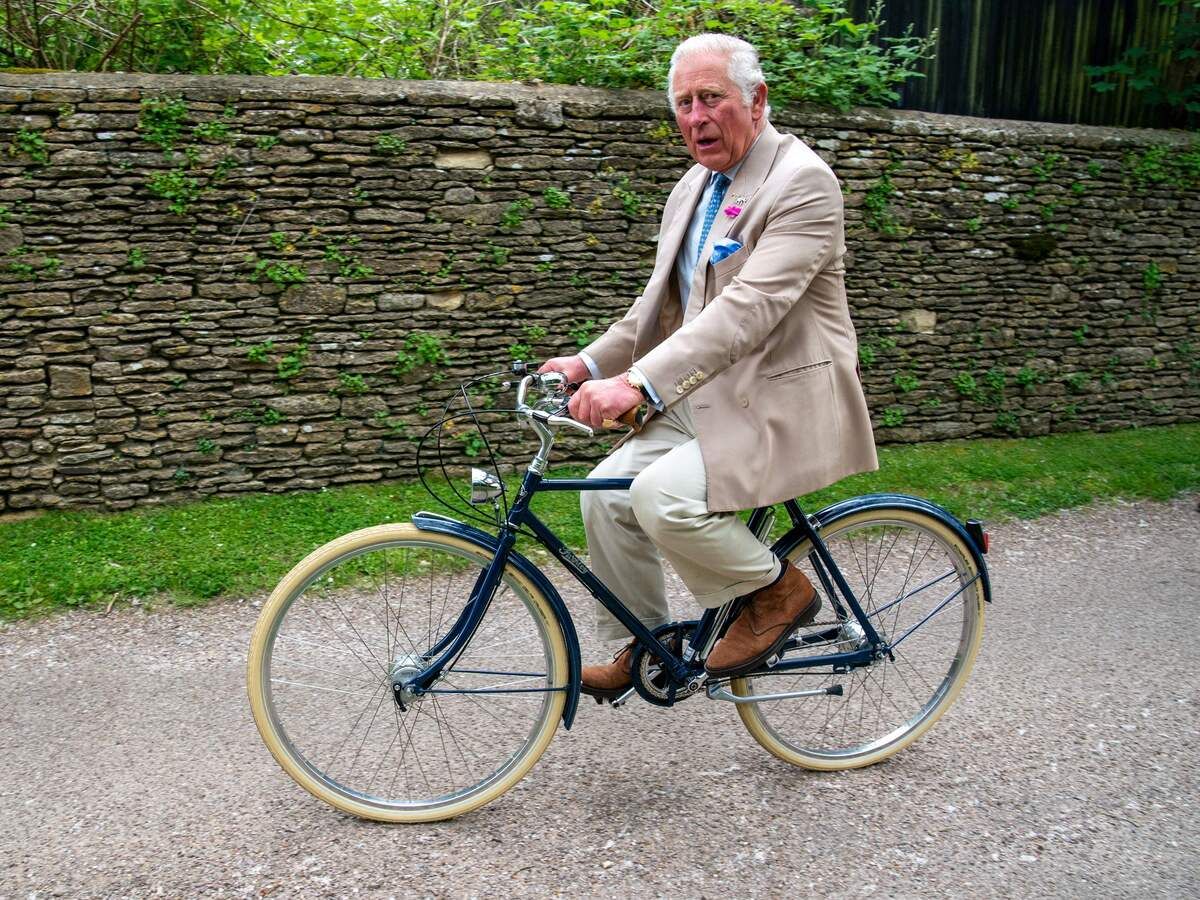
 Britain’s Prince Charles, Prince of Wales, cycles on a bicycle in Tetbury, Gloucestershire, on June 10, 2021.

The appellant is Lawrence David, a Quebecer, University of Ottawa law professor, founder of the Public Interest Litigation Institute and, from what I’ve read of him , an interesting fellow.

“This legal action is not about monarchy or republicanism,” David told Canadian Lawyer . “It’s simply about if they want to abolish the oath, follow the rules for constitutional amendment. … Any amendments that affect the office of the King or (Quebec’s) lieutenant governor can only be done unanimously by Parliament and the 10 legislatures.”

The Canadian government just shrugged and added Quebec’s oath amendment to the Constitution (the online version, anyway). It’s outrageous. They didn’t have to do that. I suspect even the National Assembly, which of course voted unanimously against mandatory oathing, was surprised. (That simpering capitulation reminded me a bit of the financially desperate preacher Eli beseeching Daniel at the end of Paul Thomas Anderson’s There Will Be Blood: “I am a false prophet! God is a superstition!”)

In light of this, why shouldn’t Alberta or Saskatchewan or British Columbia unilaterally amend the Constitution to fit their own needs? Well, OK, Ottawa wouldn’t let them, because they’re not Quebec. So hello, national unity crisis.

Anyway, one ruling was big news. The other barely made a blip.

Hint: The one that barely made a blip, even if not in Quebec’s francophone media, is the one that speaks directly to the future of the rule of law in Canada. That’s not the bike lanes issue, which is ultimately about highly questionable government (but Ontarians are well used to that).

I’m not a fan of ripping out bike lanes as the Ford government conceives of it. Most notably, precedent — not to mention Ministry of Transportation documents obtained by the Toronto Star under freedom-of-information last year — illustrates that the space those lanes currently occupy on Toronto streets will, once removed, almost certainly be replaced by street parking.

That doesn’t help congestion. This might be partially about congestion, at least in the Ford government’s hivemind, but it’s also a front in a much larger culture war. “When cyclists lose, motorists win,” many core Ontario Tories (and a good few Liberals and New Democrats!) believe. (I also very much suspect the Ford Tories won’t rip out nearly as much bike-lane mileage as they’re promising.)

But I think I know the biggest reason why the bike lanes case got much more news coverage than the basic rule of law case, even in the dead of summer. (In theory that’s the absolute best time to file a dry, esoteric challenge like David’s if you want some press, because so many reporters and interns are staggering around chasing “should pets be allowed on splash pads?” stories.) It’s in significant part because Canadian newsrooms have vastly more sympathy for bike lanes than they do for Canada’s constitutional monarchy.

My haughty, jumped-up advice to people and media outlets alike: Don’t pay attention to or cheer on court rulings or laws just because you agree or disagree with their stated aims. There is near-zero chance it won’t bite you in the rear end somewhere not far down the line, the more emboldened politicians and judges become.

National Post
cselley@postmedia.com


Mark Carney speaks during a summer meeting of Canada's premiers in Charlottetown, Prince Edward Island, on July 23, 2026. This content is reserved for subscribers.


Donald Trump speaks to the media on the construction of a new helipad on the South Lawn of the White House continues on August 19, 2026 in Washington, DC. This content is reserved for subscribers.
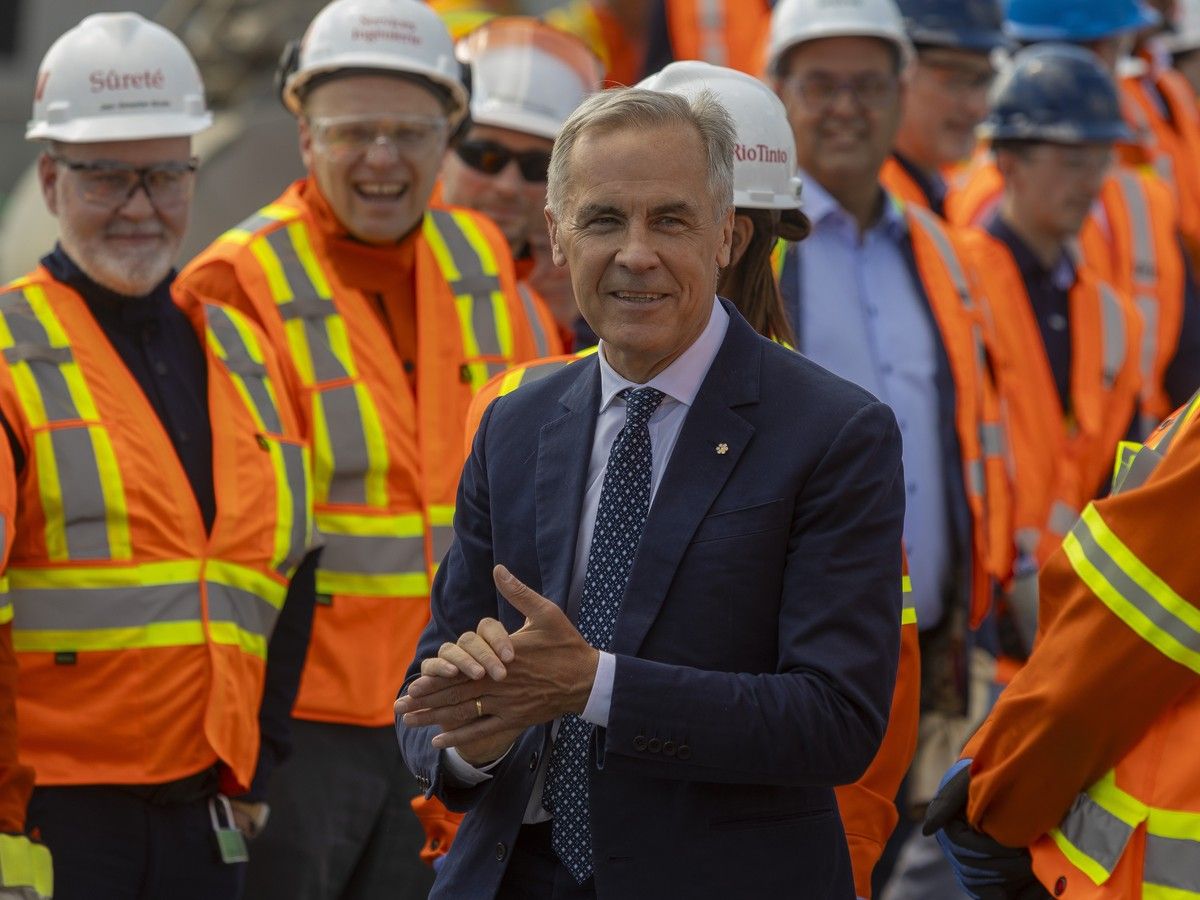

Canadian Prime Minister Mark Carney shakes hands with employees at Rio Tinto, a major aluminum smelter in Saguenay Thursday August 6, 2026.

It should come as no surprise that U.S. President Donald Trump’s Wednesday deadline to impose 50 per cent tariffs on $29 billion worth of Canadian goods came and passed with little fanfare — the president is famous for making boisterous threats and then backing down at the last minute. But as businesses, consumers and investors eagerly await details of a trade deal that may-or-may-not come by Friday, the lesson for Canadians should be that we cannot continue to allow our fate to hang on the whims of foreign politicians.

Of course, that’s a lesson we should have learned long ago. It’s been over a year since Prime Minister Mark Carney, fresh off an election victory, promised to “do things previously thought impossible at speeds we haven’t seen (in) generations,” including building “twice as many homes every year,” developing “new trade and energy corridors” that will turn Canada into “an energy superpower” and freeing inter-provincial trade.

It would be unfair to suggest that the Carney Liberals haven’t made any progress on their signature election promises. But at a time of profound political and economic transformation, which the prime minister likened to the start of the Second World War and the end of the Cold War, the pace of change has been anemic, at best.

Carney, for example, promised to create a system to fast-track major projects in order to free their proponents from the Byzantine approvals process put in place by his predecessor and facilitate a construction boom that would create jobs and provide the country with the infrastructure it so desperately needs. The Major Projects Office was set up nearly a year ago, and since then, 18 projects have been referred, but none have so far been green-lit.

Carney initially said he hoped projects would be approved within a “maximum of two years,” so he hasn’t yet missed his own deadline. But even projects that were already being planned and specifically cited in the 2026 Liberal election platform continue to progress at a snail’s pace.

While Ottawa and Victoria recently signed an agreement to fund the George Massey Tunnel replacement in Metro Vancouver, the cost estimate has more than doubled since 2021, the province terminated its deal with the consortium that was supposed to build it and the completion date has been pushed back to the fall of 2031. The Quebec City Tramway that was initially supposed to be up and running by 2029 has been delayed until 2033 . The list goes on.

On housing, too, Carney promised to build nearly 500,000 homes a year. Yet the Canada Mortgage and Housing Corporation reported this week that year-to-date housing starts are down four per cent compared to last year and July 2026 saw 19 per cent fewer housing starts in urban areas than July 2025.

Compare this to other countries that found themselves in a “crisis” and decided to “build, baby, build” (to quote our prime minister). During COVID, China built two fieldhospitals with a total of 2,500 beds in less than two weeks.

Before Russia invaded Ukraine in February 2022 and sparked a European energy crisis, Germany didn’t have any liquefied natural gas terminals. That same month, then-chancellor Olaf Scholz announced that two terminals would be built posthaste. The Wilhelmshaven terminal was already being planned and its approval was fast-tracked. It started receiving shipments in December of that year. Additional terminals were up and running by early 2023.

After Iran shut down the Strait of Hormuz earlier this year, the United Arab Emirates announced plans to fast-track the approval of a new pipeline that is expected to be operational next year. And it’s not the only Middle Eastern country building at speeds not seen in generations: last month, Goldman Sachs predicted that new pipelines would be able to divert nearly half of prewar Persian Gulf oil exports around the Strait by the end of 2027 — before Canada is likely to have approved a single new pipeline.

On trade, too, the prime minister has generally prioritized announcements and photo-ops with other leaders over tangible results. Many of his trips abroad have culminated in statements emphasizing our “shared commitment” to “free and fair trade,” or pledges to “advance the strong and growing economic partnership between our two countries.” While some free-trade agreements are in the works , nothing major has yet to be put to paper. Carney hasn’t even managed to convince his buddies in the European Union to fully ratify the free trade agreement we signed in 2016.

Some progress has been made on inter-provincial trade, with the Canadian Federation of Independent Business (CFIB) giving the federal government an A+ on its latest “ State of Internal Trade ” report. But the CFIB cautions that the “high grades largely reflect commitments and policy intentions more than progress felt on the ground.” Landmark agreements on the mutual recognition of goods, direct-to-consumer alcohol shipments and labour mobility have yet to be fully implemented, or still contain major gaps.

Carney also promised last year to boost the economy by reducing the regulatory burden faced by Canadian businesses. While some steps have been taken, business leaders are still waiting to see tangible results. A KPMG survey released earlier this month found that Canadian companies are generally hopeful about the federal government’s economic policies, but that their “optimism is tempered by a desire for faster execution.”

Sixty-seven per cent of the 359 business leaders surveyed said that “regulatory compliance requirements,” such as red tape, “have created institutional gridlock, delaying projects and deterring investment”; while 65 per cent said “over-regulation and higher taxes make it harder for businesses to scale and remain in Canada.”

If Donald Trump’s Tuesday night social media post claiming that the potential deal may revive the Keystone XL pipeline is true, it would be a huge win for both countries. But we should not need a foreign leader to twist our arm in order to get shovels in the ground on projects like this. Trump will be a wildcard for as long as he’s in office. While Canada can’t control him, we can take steps to rapidly improve our economy and open trade with the rest of the world — if only our prime minister was willing to do so.

National Post
jkline@postmedia.com
Twitter.com/accessd


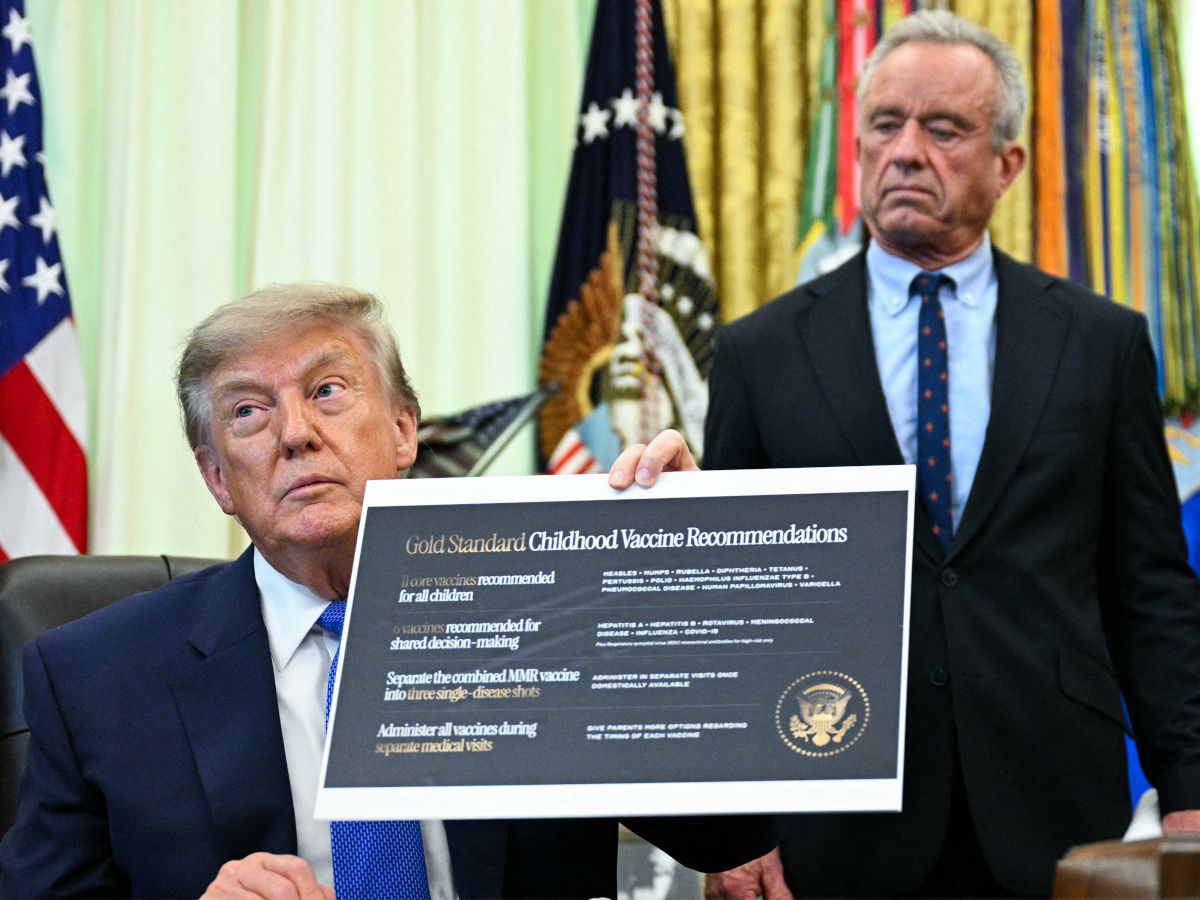
U.S. Secretary of Health and Human Services Robert F. Kennedy Jr., right, looks on as President Donald Trump speaks before signing an executive order calling for more research and flexibility on vaccines, in the Oval Office of the White House in Washington, D.C., on Aug. 10.

Three weeks before President Donald Trump signed an executive order reducing the number of recommended childhood vaccinations and splitting vaccines into multiple shots, Johns Hopkins University announced that the number of measles cases in the United States had reached levels not seen since “Terminator 2” was in theatres.

If those optics weren’t bad enough, this week the U.S. Centres for Disease Control (CDC) released data showing a sharp increase in kindergarten students who sought vaccine exemptions in the 2025-26 school year. The percentage of kindergartners who received the measles, mumps and rubella (MMR) vaccine dropped to 92.4 last year, well below the 95 per cent coverage needed to prevent outbreaks.

This is significant for a disease that was officially eradicated in the United States 26 years ago and can lead to serious complications, including brain swelling, pneumonia and even death. Similarly low childhood vaccination rates have been reported for other potentially deadly diseases, including polio.

Despite these concerning numbers, Trump and his health secretary, Robert F. Kennedy Jr., directed federal officials last week to split the MMR vaccine into three separate shots and reduce the number of diseases the federal government recommends children be vaccinated against from 18 to 11.

At first blush, splitting an existing vaccine into three doses may not seem like a big deal. After all, these are merely guidelines, not mandates, and children who follow them will still be vaccinated against measles, mumps and rubella.

But the guidelines will put pressure on states, doctors, pharmaceutical and insurance companies to follow suit. And separating the MMR vaccine into three doses delivered at three separate appointments means more medical bills, more time off work, more screaming children and a greater likelihood that doses will be missed, or parents won’t bother showing up in the first place.

In other words, it’s a surefire way to reduce vaccination rates even further — which is exactly what the president wants. While RFK Jr. has long been a prominent anti-vaxxer , according to a July 27 report in the Wall Street Journal, it was Trump who instructed Kennedy to come up with solutions to reduce the number of childhood vaccinations, going as far as to suggest the health secretary would be seen as a failure if he didn’t take action.

The directive flew in the face of Trump’s own advisors, who had previously told RFK to avoid anti-vaccine rhetoric as it was unpopular with the public and psoed problems for the administration. The new recommendations also contradict the guidance provided by the CDC, which notes that, “No published scientific evidence shows any benefit in separating the combination MMR vaccine into three individual shots.”

Although the administration claims to be following “gold-standard science,” it is actually motivated by the long-debunked claim that vaccines cause autism. This myth dates back to a small study published in The Lancet in 1998, which claimed a potential link between the two but was retracted after it was found to have used falsified data and the author was revealed to have numerous undisclosed conflicts of interest.

Further research has failed to uncover a causal connection between vaccines and autism. A study published in the Annals of Internal Medicine in 2019, for example, followed over 650,000 Danish children born between 1999 and 2010, and concluded that the “MMR vaccination does not increase the risk for autism, does not trigger autism in susceptible children and is not associated with clustering of autism cases after vaccination.”

In 2021, the Cochrane Collaboration, the medical research group that became the darling of many conservatives after concluding that masks were of little use during the pandemic, reviewed the available scientific literature and concluded that the MMR vaccine is highly effective and does “not cause autism.” Similar findings were released last year by the World Health Organization’s global advisory committee on vaccine safety after reviewing 15 years worth of data.

Yet Trump has long been fixated on this issue. In 2014, he wrote on social media that, “If I were President I would push for proper vaccinations but would not allow one time massive shots that a small child cannot take – AUTISM.” And his views have not changed despite the abundance of evidence showing that vaccines don’t lead to increases in autism and the growing spread of preventable diseases in the U.S.

Upon signing his executive order last week, the president again falsely claimed that the new measures would have a “huge impact on autism,” that “large amounts — like vats — of vaccine are currently pumped into your child’s body” (a typical dose is around 0.5 millilitres) and that the U.S. is merely following the lead of its peers (Canada administers the MMR vaccine as a single dose, and the United Kingdom recently consolidated the chicken pox vaccine into it, as well).

Skeptics will point out that we don’t know why autism rates have been rising and that the scientific method requires assumptions be constantly tested. While true, there are numerous other potential causes for increased autism diagnoses, not least of which is the fact that in 2013, the “Diagnostic and Statistical Manual of Mental Disorders” combined a range of behavioural difficulties into what is now classified as autism spectrum disorder.

While further study is certainly warranted, the new vaccine guidelines essentially aim to turn the entire country into a giant science experiment, which will put many lives at risk in the process.

Yet this policy did not come out of nowhere. It is the culmination of a trend witnessed in American society, and the West more broadly, which has seen a growing confluence between the conspiratorial fringes on the left and the right. Ten or 15 years ago, it was easy to classify most anti-vaxxers as either health-conscious, but scientifically illiterate, soccer moms or hippies — the type of people who dine at vegan restaurants and think crystals will cure their health problems.

But during the pandemic, we witnessed a flourishing of vaccine skepticism on the right, as well. Poor public health messaging during COVID, and the general failure of authorities to account for their mistakes, further eroded trust in medical professionals. Add to this an unconventional president who crafts policy on a whim and has little regard for the advice provided by his own government officials, and you have a perfect storm.

In 1991, the last time U.S. measles cases were higher than they are today, “Terminator 2” showed the world a terrifying vision of a future in which intelligent robots try to wipe out humanity. Today, those fears seem closer than ever. But when historians look back, they may realize that the threat of artificial intelligence paled in comparison to the communicable diseases that vaccines had largely eradicated in the 20th century.

National Post
jkline@postmedia.com
Twitter.com/accessd


BC Premier David Eby leaves the chamber for a short break while at the chamber in the legislature in Victoria, on Wednesday, May 27, 2026. Chad Hipolito/Postmedia

In the 1990s, a B.C. NDP government cabinet minister famously pronounced , “Remember, government can do anything it wants.”

That basic undemocratic ethos is alive today in the present B.C. NDP government headed by Premier David Eby, most particularly on the Aboriginal “reconciliation” agenda.

Controversy continues to swirl around what critics refer to as the governments “land back” ideology, which appears firmly rooted in the larger and more ominous ethos of “decolonization.”

For some years now, British Columbia’s non-Aboriginal population have been taunted by two NDP administrations as “colonizers,” “settlers” and “uninvited guests” — language that has even been used in the B.C. legislature by government MLAs.

The government has also instructed against using the term “British Columbians,” as this term is considered offensive to those who do not accept the sovereignty of the Crown or the legitimacy of the Canadian province of British Columbia.

In its pursuit of “decolonization,” the NDP government has been working assiduously to “return” as much land as possible as quickly as possible to Aboriginal communities, many of which are tiny in terms of on-reserve residents.

Changes have been made by the NDP to negotiation mandates, and those changes are now reflected in the approach of the B.C. Treaty Commission — allowing for negotiation of Aboriginal title outside of the treaty process in “Foundation Agreements” and “other arrangements,” designed to circumvent the regular treaty process.

Aboriginal title is being negotiated by the B.C. and federal governments with shocking results. For example, we have witnessed the creation of Aboriginal title over the entirety of the Haida Gwaii archipelago with no requirement for the Haida to prove the historical occupation necessary under Canadian constitutional law for the existence of such title.

Recently, real estate developer Rick Illich decried the province’s “closed door negotiations” on Aboriginal rights and title. In his words the “secrecy” of those negotiations is “undemocratic,” and “terribly irresponsible and disingenuous” to most of the province’s population.

The 2024 B.C. NDP election platform made no mention of actively negotiating Aboriginal title deals, referring simply to “carrying on with the implementation of DRIPA (the Declaration on the Rights of Indigenous Peoples Act) ” and “advancing reconciliation in tangible and measurable ways.”

In other words, they appear to have given themselves a blank slate, leaving the government free to do “anything it wants” on the “reconciliation” file in pursuing its “land back” ideology.

Increasingly, British Columbians are treated to new and startling revelations about what public lands the government is transferring to Aboriginal communities. The latest in a long list of such revelations is the plan to transfer important public lands in and around Victoria to bands in the Te’mexw Treaty Association, all with a minimum of public information having been made available.

Apparently, the public lands in question have been deemed “surplus” by B.C. and Canada. Such “surplus” lands include significant parts of the federal lands that house the historic Hatley Castle and Royal Roads University and large areas of existing provincial parks in the Capital region.

How can iconic historical sites and B.C.’s public provincial parks be considered “surplus,” with no public involvement whatsoever in government’s determination of that conclusion?

In 2002, the B.C. Liberal government held a referendum seeking public input on treaty mandates. Question number four of that referendum saw 94.5 per cent of the respondents confirm that parks and protected areas should be maintained for the use and benefit of all British Columbians. Now, in 2026, that public mandate is being shredded by the present B.C. government.

Negotiations are underway throughout British Columbia in furtherance of the B.C. NDP government’s “land back” ideology, which appears to be a core feature of its “reconciliation” agenda.

While the public watches helplessly from the sidelines, hoping for further glimpses of what public lands their government is sacrificing on the altar of “reconciliation,” the Eby government continues to negotiate in secrecy — giving every indication that, like its 1990s counterpart, it is a government that also thinks, “we are the government and we can do anything we want.”

Surely, there must be a time coming when the population of British Columbia says enough, and demands that the government finally begins to act in the greater public interest?

Perhaps we are finally getting closer to that time?

National Post


A legal battle over Toronto’s bike lanes has turned into a bigger conversation about public policy and the role of the courts. In this interview, National Post contributor Ben Woodfinden joins Rob Breakenridge to discuss last week’s Ontario Court of Appeal decision that rejected the notion of a Charter right to bike lanes and overturned a lower court decision that blocked the Ontario government from removing a number of downtown Toronto bike lanes. Woodfinden argues that the decision is a victory for common sense and judicial restraint, helping to remind us all that policy decisions belong to elected officials, not judges. He also discusses what this means for the Charter section at the centre of this case: Section 7, which Woodfinden argues has seen a dramatically expanded interpretation since it was drafted over four decades ago. Watch the full video directly below.


Premier Danielle Smith was joined by Prime Minister Mark Carney was in Red Deer, north of Calgary on Wednesday, July 29, 2026 at a new housing project in the central Alberta city.

Danielle Smith is “far-right,” a “separatist” and “destabilizing,” according to her long list of haters.

Since becoming the 19th premier of Alberta in 2022, a thesaurus could be filled with the litany of labels thrown at Smith. The United Nurses of Alberta warned that her planned medical reforms, which the federal government is also scaremongering about, might destabilize the rotten Canadian health-care system. By any honest measure, such a poorly functioning health-care system deserves to be destabilized.

Alberta’s Opposition Leader Naheed Nenshi vilified her decision to call a referendum on whether Alberta should pursue independence as a way to “save her political skin” (Nenshi’s approval rating sat at 35 per cent when he made the statement), and accused her of coddling separatism.

The University of Waterloo’s Emmett Macfarlane, who made a name for himself on Twitter (now X) as a rational, regulated user, called her program “evil” and declared that Smith was Canada’s most dangerous politician. For all such apocalyptic rhetoric, Smith’s record as premier has been largely competent and pro-Canada.

Alberta is not the ideologically pure conservative utopia that its proponents and critics make it out to be. It never has been. Nevertheless, Smith has governed reliably from the right and held together the coalition that is Alberta’s United Conservative Party (UCP).

Regicide is always a threat to the UCP leader, and Smith came into the role following a tight leadership election in which a substantial faction backed her rival. However, she rode out institutional hostility and distrust among parts of the UCP’s rank-and-file to receive 91.5 per cent support in the party’s 2024 review. That sort of stability can be considered an achievement in itself in Alberta.

On taxes, Smith has not wavered. Last year, her government introduced an income-tax bracket of just eight per cent for the first $60,000 earned in the province, which was indexed to $61,200 this year, all while holding the line on the general corporate tax rate.

Smith has been a steady supporter of the energy sector, pursuing new export capacity and making a new million-barrel-per-day pipeline to the West Coast central to both her policy agenda and her bargaining position with the federal Liberal government.

If there is any failure, it is the $9.4 billion budget deficit slated for 2026–27, which should not become habitual. However, it should be noted that this makes Alberta’s provincial budgeting part of the norm in Canada rather than the exception, though that is not an excuse.

On social policy, Smith has set her government apart from its counterparts on the nominal right-of-centre. Alberta is one of the few provinces that require parental involvement if a child seeks to change his or her name or pronoun, and it permits parents to remove their children from certain parts of the school curriculum that they deem inappropriate. Furthermore, medical gender transitions have been restricted for minors, and female sporting divisions have been restricted to biological girls and women. This goes much further than other so-called conservative premiers across this country.

Under Smith, the provincial government has strengthened the Alberta Bill of Rights, specifically around medical consent, vaccination, firearms and private property. Many of these items are dismissed by progressives on both the left and right as “culture war” politics, as though the culture war were not of the utmost importance, the best evidence being the vigour with which progressives themselves prosecute it.

On health care, Smith has been leading the way in Western Canada on reforms aimed at expanding the much-needed role of the private sector. If the United Nurses of Alberta calls Smith’s agenda “destabilizing,” it is hard to read that as anything but a good thing. To be clear, the Canadian single-payer system is so dysfunctional that people are dying because of it.

When it comes to federal relations and the place of Alberta within Confederation, Smith has navigated a minefield with impressive dexterity thus far. Smith confronted Justin Trudeau’s government without hesitation when necessary and has since pivoted to negotiations with the more publicly conciliatory government of Prime Minister Mark Carney.

The accords struck between Alberta and Ottawa in May saw Ottawa shelve the oil-and-gas emissions cap in exchange for reinvigorating carbon-capture initiatives. Additionally, Alberta secured a streamlined assessment deal and the categorization of another pipeline as a project in the national interest.

Dealmaking is not surrender, and parts of the agreements between Ottawa and Alberta clearly recognize Alberta’s jurisdiction over resources, Crown land and electricity.

Of course, the biggest threat to Smith is not the federal government, the NDP or budget deficits, but the upcoming referendum over Alberta’s constitutional future.

The October 19 vote will include a non-binding choice between remaining a province and beginning the constitutional process toward a later, binding separation referendum. Smith has stated plainly that she will vote to remain. She is not telling alienated Albertans that their grievances are imaginary or immoral, but is instead giving them a vote while making it clear that she is committed to the federalist camp.

Canada has no greater, more powerful champion in Alberta than the premier, and this is what her critics cannot admit. Whether it is Alberta’s First Nations chiefs, Naheed Nenshi or others, they have been repeating for months the claim that Smith is treasonous or secretly a separatist. If she is, Smith has a funny way of showing it.

Along with her question on separation, Smith has included other constitutional questions on the October 19 ballot, including provincial judicial appointments, Senate abolition and priority for provincial laws. These are ambitious but perfectly legal constitutional proposals, certainly not an insurrection. All of them build on the longstanding Albertan conservative ideal of a stronger Alberta within a united Canada, and in this regard, Smith has the opportunity to become a generational figure.

National Post


I am proud to be a Canadian. I always have been. I believe this is the greatest country in the world — with the possible exception of the weather.

Our history is incredibly positive. The things we have done in the world to help others, whether in war or in peace, have regularly shown that Canada defends freedom and human dignity. Canada has been a haven for people fleeing oppression for generations. That is not an accident. It is the result of choices made by men and women who came before us, often with very little, and built something lasting.

Yet, there is something wrong with this country today. There appears to be a concerted effort, subtle but consistent, to debase our past, make Canadians feel ashamed of who they are and where they come from, and to suggest that our history is mainly a story of oppression and failure.

That is not honest and it is not healthy.

Every nation draws strength from its past. Knowing what our predecessors accomplished gives us the confidence to face our own challenges and to strive to do better. Canada has grown because people tried to better themselves and their situations for their families. Canada is made up of stories of immigrants leaving hardship behind, farmers clearing land with hand tools and engineers designing bridges across impossible geography.

Were there flawed people along the way? Of course. All leaders, even the great ones, were flawed. That is no ground for cancelling them from history. They built a wonderful country with the tools and understanding they had in their times. Their execution may have been imperfect, but their intent was often noble, and their achievements are real.

Like it or not, we are in a kind of historical war. Our governments and many of our institutions are systematically debasing the foundations of our great country — a country that people worldwide still strive to be part of. Perhaps the goal is to make us look only to our politicians to solve our problems and build our future. I do not believe that is wise.

A good example of the need for recognizing our admirable history and the assurance it can provide us lies with our Jewish brothers and sisters. I posed the question to a Jewish friend at lunch recently: “If one removed the history of the Jews, where would you be?” My friend said, “It is memory that has sustained us, nurtured us and inspired us. It is our collective memory that we can pass onto our children which enables us to move forward with pride and confidence.”

The courage and resilience of the Jewish people through great persecution, rests on how history has guided and inspired them over thousands of years up until now. This illustration is also true of other nations and faiths, but the Jews are a powerful example of how tenacity and accomplishment are supported by their past.

As a practicing Christian and Catholic, I, too, have witnessed our government’s debasing of our wider history as well as our faith basis for years. A history of great sacrifice, steadfastness, contribution and accomplishment by all Canadians. Again, were there deeply flawed people along the way — yes. They were, thankfully, a small minority and should not dominate our historic memory.

In addition, our so-called efforts at inclusion are, in fact, exclusion and, as a consequence, they undercut our faith in Canada and its future. We are now “a house divided.”

If one were a conspiracy theorist, it would seem a long-term, organized effort has been at work. The above efforts have been continual and consistent. What’s being missed is what is replacing our history — negativity, self-entitlement, division and even hostility.

Sadly, the debasement effort seems to be succeeding as Canadians are losing some of the pride previous generations have felt for our country. Remember, they built the Canada we all now enjoy.

It seems the excuse of tolerance has, in fact, been a cover for intolerance and even bigotry throughout Canada’s officialdom. Canada is now fractured and is starting to appear less like a democracy than a tyranny of special interest groups.

Pride in one’s history is the glue that holds countries together and gives them the confidence to push forward. Without nurturing and preserving our history, Canada, as a nation, is doomed.

Canada is my home. But a home without memory is just a building. A nation without history is just a border on a map.

We can acknowledge mistakes without erasing achievements. We can be honest about the past without hating it. And we can be proud of Canada without being blind.

If we want a future worth building, we need a past worth remembering.

National Post

Thomas S. Caldwell, C.M. is the chair of Caldwell Financial Ltd. Urbana Corporation.


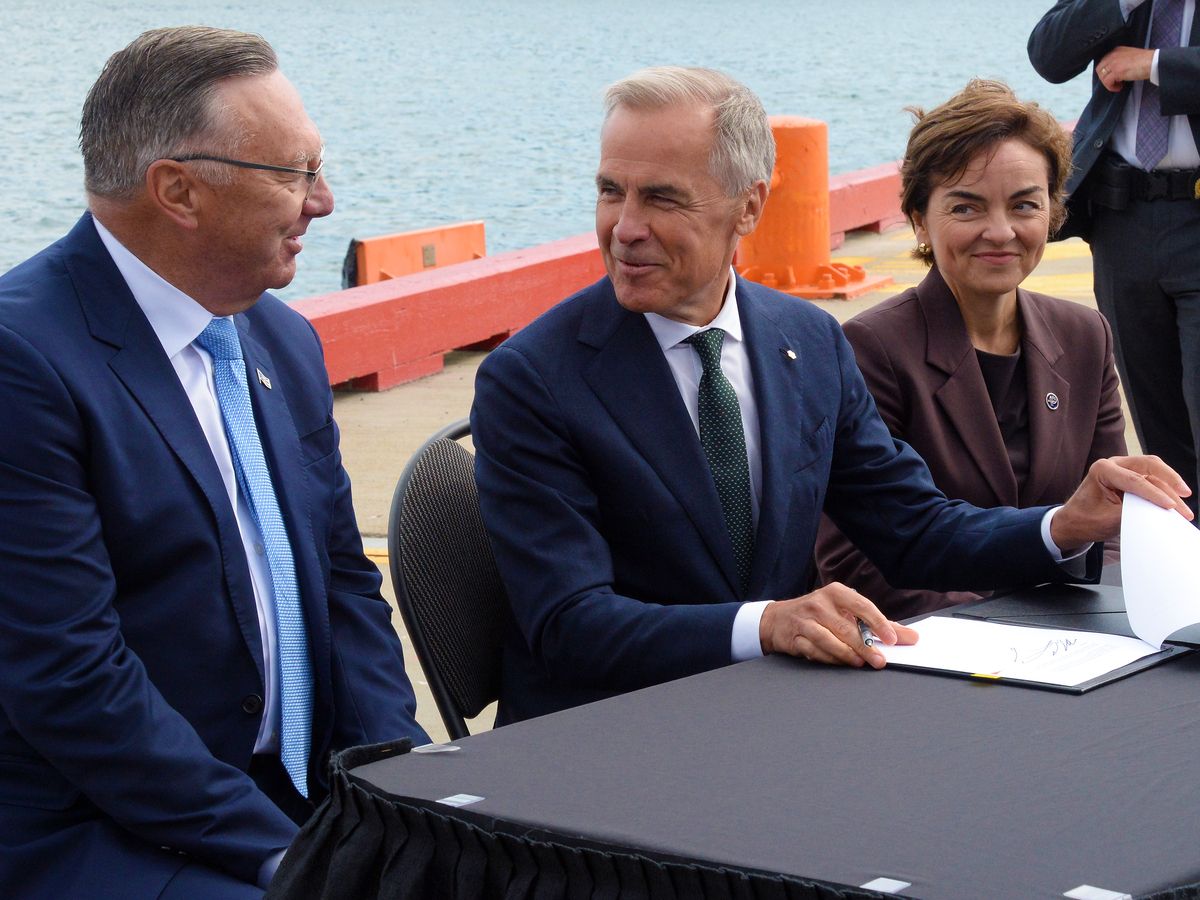
From left, Newfoundland and Labrador Premier Tony Wakeham, Prime Minister Mark Carney and Quebec Premier Christine Fréchette take part in a signing ceremony following an announcement for a new Churchill Falls deal on Aug. 17, 2026.

The most important thing happening in Canada this week is not the threat of 50 per cent tariffs on US$20 billion of this country’s products by President Donald Trump.

Rather, according to Prime Minister Mark Carney, the most consequential event was Monday’s announcement in St. John’s, N.L., of a multi-billion-dollar clean energy deal with Quebec that will see a tripling of the generating capacity of the Churchill Falls hydro-electric project. The additional power generated by the expansion would be enough power to light, heat and cool Toronto, Montreal and Vancouver combined, Carney said.

The deal replaces the notorious 1969 Churchill Falls power contract that heavily favoured Hydro-Quebec at the expense of Newfoundland and Labrador. It will see the average rate paid per kilowatt hour rise from 0.2 cents to around 6 cents.

The benefit for Quebec is that it secures additional clean power for the province until 2077. Even allowing for the price increase, Hydro Québec will still be paying much less than any alternative source of power, Premier Christine Fréchette said.

Quebec runs on cheap hydro and the deal guarantees predictable, stable energy for the next 50 years. The 10,000 MW provided for by the deal is more than one-quarter of Hydro-Québec’s current output.

In that sense, Carney is right — it is historic in ending nearly 60 years of enmity between the provinces and offers increased economic development opportunities for both.

The deal was stalled until the federal government stepped forward with $10 billion in financing. Ottawa will expand the Churchill Falls plant; construct a transmission line to the Labrador West mining trough; support the construction of a new dam at Gull Island; build a 2,000 MW onshore wind energy project; and refer the whole series of interlocking investments to the Major Projects Office to coordinate funding and accelerate permitting.

It appears to be no coincidence that Carney, Fréchette and Newfoundland and Labrador Premier Tony Wakeham stood shoulder to shoulder to make the announcement two days before Trump’s new tariffs were due to land.

Wakeham said that the deal would not have reached fruition without Carney’s leadership. “You helped bridge the gap between the two sides,” he said. “This is a partnership between two provinces and a federal government that is dreaming big for Canada and executing big for Canada. That, sir, will be your legacy and I’m proud to be a partner in it.”

Fréchette acknowledged that a Parti Québécois government could tear up the agreement after October’s election. “But where will they get 10,000 MW of power, and at what cost?” she said.

The veracity of the claim that this is a “win-win-win” deal is debatable — it involves huge federal investments and it will be years before taxpayers see any return.

But it is absolutely the kind of “nation-building investment” that Carney promised when he sought election last year. “We are giving ourselves more than any other nation can take away,” he said.

The deal will also build trust between the provinces, “the most valuable commodity in an increasingly volatile and unreliable world,” the prime minister said.

Carney outlined how the increase in power would help industry access iron ore and graphite reserves in Labrador. “Each investment unlocks the others,” he said.

He was asked if he planned to talk to Trump before Wednesday’s deadline.

He said he did, “and the first thing I will talk about is this historic investment. I say that in all seriousness… Maybe I’ll translate ‘maîtres chez nous’ for the president as well. This is what a good deal looks like,” he said.

Carney didn’t directly link the supply of critical minerals, including high purity iron ore, to the current negotiations with Trump, but it’s clear he intends to impress on the president that Canada is not a supplicant. Rather, the message from Monday’s announcement is that this country is united in its determination to forge an independent future.

The pressure is already building on Trump not to proceed with the threatened section 338 tariffs under the Smoot-Hawley Act. The U.S. Chamber of Commerce issued a statement saying that new tariffs would drive up costs for U.S. families, disrupt supply chains and risk jobs that are dependent on trade with Canada and Mexico.

Yields on the 30-year U.S. Treasury bill hit a two-decade high of 5.3 per cent on Tuesday, over persistent inflation, geopolitical and borrowing fears.

The prospect of an extension to Wednesday’s deadline is considered a reasonable bet. But senior sources have reiterated that the two sides are far apart when it comes to lowering the sectoral tariffs on steel, aluminum, autos and forestry, in large part because the Trump administration believes they are working when it comes to re-shoring investment.

The president clearly believes an incremental bump in light vehicle production is worth risking a trade war with his nearest neighbour.

But he is also the man who has threatened to bomb Oman (an ally), backed the world’s worst regime (North Korea) and told reporters to mind their own business when they asked how his 20-year-old son Barron has accumulated $150 million. All within the past 48 hours.

Whatever comes out of the White House this week will be transitory. The Churchill Falls deal will outlast us all.

National Post
jivison@criffel.ca
Twitter.com/IvisonJ