
LP_468x60
on-the-record-468x60-white

FILE PHOTO: Shopify CEO Tobi Lütke spoke at the companies annual Unite event at Toronto's Evergreen Brick Works, Tuesday May 8, 2018.

Canada has a particularly robust immune system, but rather than rejecting what is harmful, the country’s Laurentian standard-bearers swoop in to attack anything that could be positive, particularly if it is not aligned with a mushy left-wing worldview or with the interests of the Liberal party. So it is with the hysterics over Shopify CEO’s Tobi Lütke’s expression of opinions in places where other people can read them.

On July 25, Lütke floated the idea of banning seniors from voting, posting on X: “New deal: when you get your pension deal it’s locked in and guaranteed. But now you are a dependent and that means no voting, just like dependents under age. Enjoy the deal, let people with a stake in the future decide.”

It was in response to the influence of people of a certain vintage that show up to community consultation meetings and block development. In particular, the comment was directed at a story about opposition to a housing project in San Francisco, but the phenomenon is also understood across Canadian cities. Not to mention the fact that Prime Minister Mark Carney draws disproportionate support from those over 65, no matter how bleak things look, because he personifies their hold on power.

When a retired banking executive suggested to Lütke an alternative approach that would involve weighting votes by how much income tax a voter pays, Lütke replied “Good system.” Under this plan, votes would be divided like so: “no income tax paid – 0 vote, $1-100k – 1 vote, $100-200k 2 votes and so on… cap it at 5 votes for $500k+”

Whether or not the Shopify co-founder considered these serious proposals or just a bit of snark to make a point about how people who no longer pay income taxes are driving public policy didn’t seem to matter. The blowback was swift and angry. Liberal advisors and left-wing commentators on X pounced, calling Lütke a “wanker” or implying he was a literal Nazi, given his German heritage.

Mostly, the social media reaction ignored the real issues being raised about voting demographics and devolved into your standard pearl-clutching about “billionaires,” which then bled into the opinion pages of the Toronto Star and the Globe and Mail.

The Star’s David Olive , surprisingly, nearly made Lütke’s case for taking the vote away from seniors. He cited research that considered what happens in democracies with an aging population: “governments tend to prioritize pension protection — whose costs rise over time — at the expense of more growth-enhancing policies.” However, Olive ended his column not with what might have been an interesting position, but a lament that Lütke doesn’t spend his money in a more socially conscious way.

A political scientist, also writing in the Star, likened Lütke’s comments to “ authoritarianism,” and one of the Globe and Mail’s marquee columnists called Lütke a “first-class fool” for a whole range of opinions that a marquee Globe columnists wouldn’t have.

So maybe Lütke’s voting ideas are not going to find their way into any contemporary policy platform, but they are hardly uniquely loopy. Certainly, no more loopy then the former Google executive who spoke at the Liberal party convention this spring, advocating a $500,000 exit tax for Canadians who want to emigrate out of the country.

In any case, the over the top reaction to Lütke’s posts on weighted voting wasn’t really about this specific opinion, but the breadth of opinions he has expressed in recent years and the amount of attention he commands because he is Canada’s most successful tech entrepreneur.

He has said , under Justin Trudeau, that “Canada veered into socialism.” When Trump first imposed tariffs under the admittedly dubious justification of Canada’s fentanyl problem, Lütke posted“These are not crazy demands.” Build Canada , the advocacy group associated with Lütke, has recommended cutting government spending, reducing taxes and phasing out Old Age Security for higher earning seniors.

Additionally, Lutke’s critics complain that Shopify does not vet those who use its software for whether or not they hold acceptable political opinions.

Canadian business leaders are supposed to be quiet and compliant and accept their role as little more than leaders of public utilities who, in exchange for acquiescence, are gifted with favourable tax credits, regulation to keep out competitors, as well as oligopoly and trade protection. Pretty much any major company operating in this country, a Bombardier, or an Air Canada, any of the main automakers, or dairy farmers, are inextricable from the state, and in Canada that means the Liberal party. Don’t even get me started on the arts industry.

When it comes to industries Ottawa doesn’t much care for, such as the energy sector, agreeing not to raise a racket is the price of being permitted to exist at all. But it is an existence that is heavily contained and directed not towards private profits, but the goals of the government, be them environmental, social, or financial.

As for the Ottawa-based Shopify, its staggering global success as a default digital commerce platform, renders it largely immune to being managed. Revenue for the company’s most recent quarter was US$3.4 billion, a 34 per cent increase from the same quarter last year, while US$116 billion in sales were conducted using Shopify’s platforms across 6.8 million stores.

Tobi Lütke is doing his best to goad this country back to prosperity. He is not the foreign invader his critics would paint him as, but someone whose success all business leaders in Canada should aspire to.

National Post
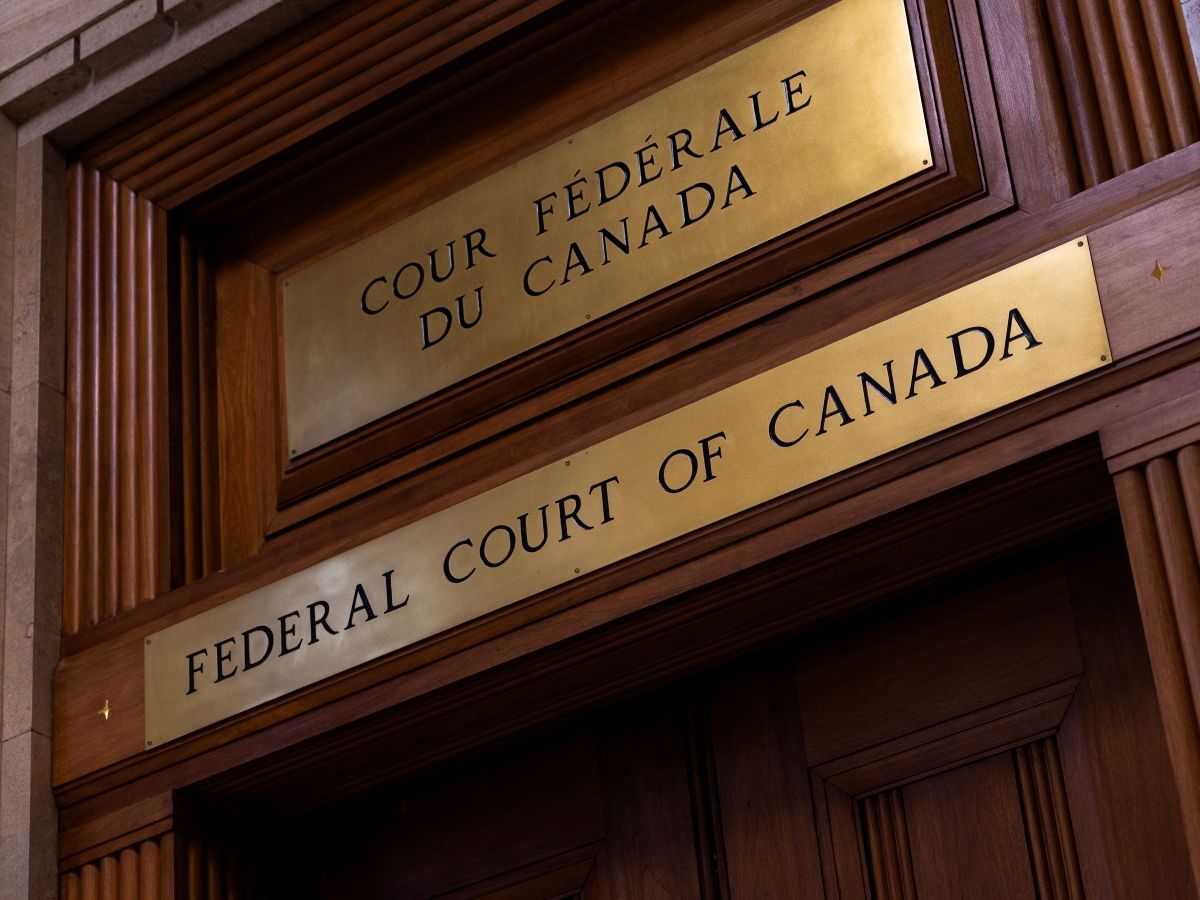

Federal Court of Canada sign hangs above the door frame inside the Supreme Court of Canada building in Ottawa on Wednesday, Feb. 18, 2026.

In January 2025, a transgender man from Wisconsin applied for asylum in Canada with the hope of attaining permanent refugee status. The person, who is biologically female, had visited the country several times prior and had even gotten engaged to a Canadian. But after a year and a half of asylum proceedings, the applicant was met with rejection: just a couple of weeks ago, the Federal Court issued a decision green-lighting the individual’s deportation.

Alexis Aldinger’s reasons for wanting to stay in Canada, as quoted in the Federal Court decision, were as follows: “As a pansexual transgender man, I fear for my safety in my own country due to the Trump administration’s continued attack on immigrants, LGBTIQ2+ members, its own citizens and threats of annexing other countries.

“In addition, I have suffered severe trauma from the emotional and psychological turmoil of growing up in a family home who rejected my identity as a transgender male. I cannot seek state protection from the U.S.A. authorities, as they are the people who I fear persecution from the most. If I return to the U.S.A., I fear that I will be killed or forced to live as something I am not, causing me further traumatization and emotional and psychological damage.”

In general, Aldinger feared the “risk of violence and death and serious discrimination in virtually all aspects of life due to hateful political actions and rhetoric.”

It was the kind of asylum application that would have been scoffed at 15 years ago by just about anyone who read it, from immigration officials to regular citizens. Unheard of back then was the term “pansexual,” which means a person who claims to be attracted to all genders (which also implies the person believes in more than two genders). Even transgenderism wasn’t a widely known concept. It would have been unthinkable to most people that such niche issues could become the basis for an asylum claim.

Even by contemporary understandings, Aldinger’s claim didn’t make any sense. Among the reasons cited was U.S. President Donald Trump’s hostility toward immigrants. And if it were the case that merely this could form the basis of an asylum claim, well, Canada would essentially have an open border to any migrant who settled in the U.S., which would render the country unrecognizable within a generation.

Aldinger also claimed to have personal safety fears in the U.S. due to Trump’s threats to annex other countries. This would have seemed more genuine if this person chose to flee to somewhere other than Canada, which Trump has mused about annexing. If Aldinger actually feared the effects of Trumpian military conquest, Canada would be one of the last places to go.

Overall, Aldinger’s claim seemed to be based on personal anxiety over politics. And while I have no doubt that this individual was unhappy at the thought of living in a country governed by Trump, it was clear that this person’s minor grievances amounted to what is sometimes called a “first-world problem.” This wasn’t a case of running away from starvation, evading flying bullets, escaping camps or fleeing the prospect of being buried in a mass grave.

Justice Sébastien Grammond saw the unserious claim for what it was. He acknowledged that reports of violence against transgender people in the U.S. did exist, but not to the point of establishing a “well-founded fear of persecution.” And while evidence of discrimination against transgender individuals in the U.S. had been put before Grammond’s court, he didn’t see anything that warranted refugee protection. Aldinger’s home state of Wisconsin even offers publicly funded “transgender-related health care,” so that wasn’t a concern in this case.

“The evidence filed by Mr. Aldinger also suggests that many people in the United States have a negative perception of the LGBTQ+ community, and transgender persons in particular, and that politicians have fuelled this negative sentiment in many ways,” continued Grammond. “However, the negative social perception of a group, even encouraged by political discourse, does not necessarily give rise to a well-founded fear of persecution.”

Aldinger would have been deported on Aug. 4 if no more legal avenues were left to delay it further. It’s impossible to really know because the Canada Border Services Agency considers the execution of a publicly ordered deportation to be private information. Alas, this decision at least assures the public that some judges can still be trusted to dispose of these bogus claims.

Transgender-related asylum claims by Americans are a recurring problem in Canada. One such case involving a trans individual from Arizona was reported by the Globe and Mail last year. Another individual from Colorado has been fighting since 2019 for the right to live in Canada as a refugee; recent Instagram posts show that this person remains here.

Just like Aldinger’s feeble case, these claims take up capacity in our already overburdened system and impose various other costs upon the public. For example, asylum seekers who haven’t been assessed yet, as well as those who have been rejected and are in the process of appealing, receive health care that is either free or heavily discounted, depending on the specific service in question.

The Federal Court’s firm “no” to Aldinger discourages other Americans from making similar thinly supported asylum claims in Canada. It’s also a small victory for common sense. And so, it’s worth a small celebration.

National Post


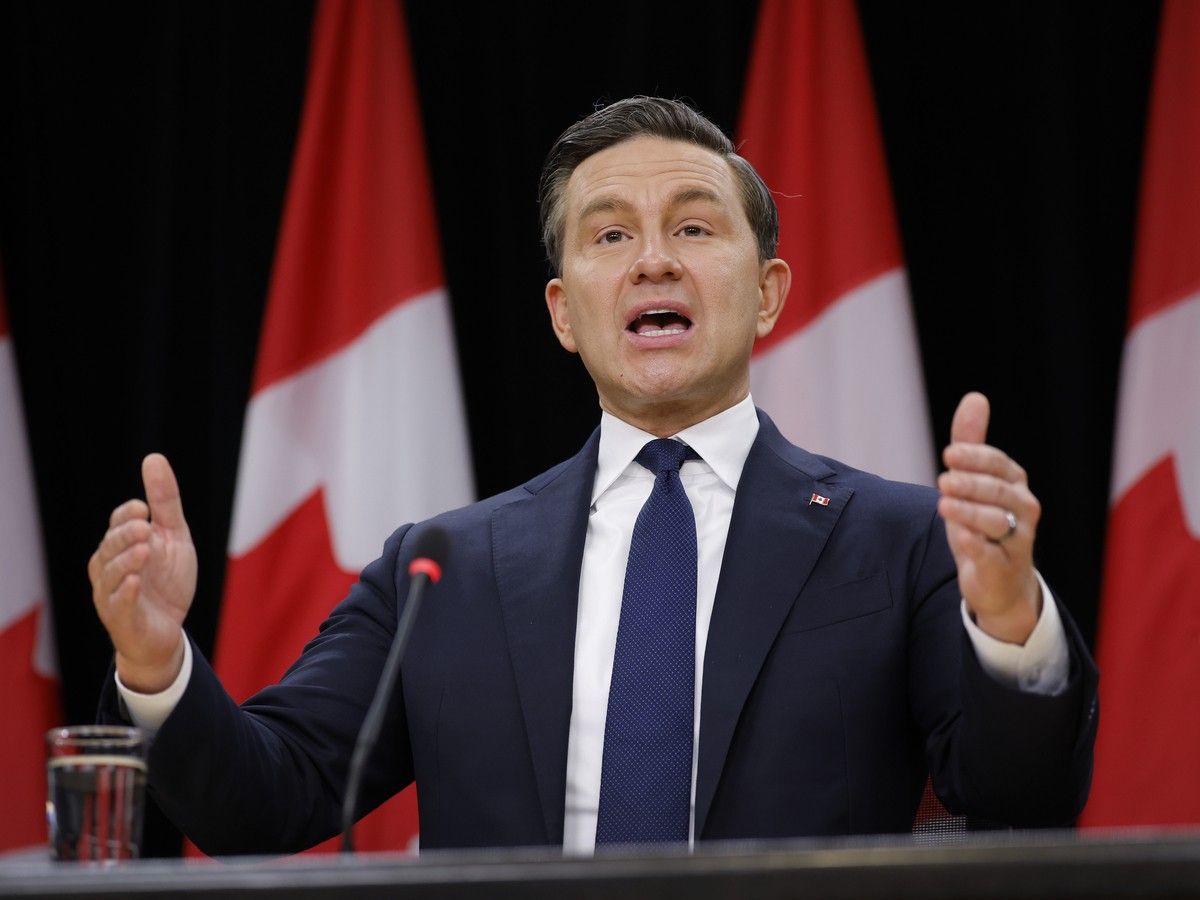
Conservative Party of Canada Leader Pierre Poilievre takes part in a press conference at the National Press Theatre in Ottawa on June 25, 2026.

There is a growing chorus of Conservatives who want Pierre Poilievre gone. They should be careful what they wish for.

This isn’t necessarily a defence of Poilievre. He has made mistakes, his critics have legitimate arguments and nobody is entitled to lead a political party forever. And maybe the Conservatives will eventually conclude that somebody else should lead them into the next election.

But replacing Pierre is not a strategy. And right now, a leadership race would likely be catastrophic.

I just lived through something like this in British Columbia. Leadership races have a remarkable ability to turn political allies into mortal enemies almost overnight. Federally, it would be infinitely worse because Canadian conservatism is entering one of the most internally divided periods of my lifetime.

The arguments bubbling underneath the surface are much bigger than Pierre Poilievre.

Conservatives are divided about populism, immigration, Trump, foreign policy, social issues, the role of government, the culture wars and even what kind of voters the party should be trying to represent.

There is an increasingly obvious divide between the older conservative establishment and a younger, more frustrated right. There are Conservatives who think the party has become too radical, and those who think it remains hopelessly timid. One side wants to recover professional suburban voters. Another thinks the future of the right is working class and populist. Some want a return to Harper-era conservatism. Others think that political world is dead.

Poilievre didn’t create these divisions. He is simply sitting on top of them. Remove him and they don’t disappear. They become the leadership race. This is what his critics need to understand.

A leadership contest right now wouldn’t just be about who has the best tax plan or who performs best in a debate. Every unresolved argument on the Canadian right would suddenly have a candidate attached to it.

The populists would go after the establishment. The establishment would go after the populists. Social conservatives would organize. Libertarians would organize. Immigration would become a defining issue. Trump would become a defining issue. The convoy and COVID would somehow be litigated all over again. Quebec Conservatives and western Conservatives would discover, once again, that they do not always want the same things. The list goes on.

And because this is happening in the social media age, every disagreement would immediately become personal.

There would be opposition research, leaks, anonymous accounts, decade-old tweets, caucus intrigue, donor wars and armies of activists spending six months explaining why other Conservatives are morally, intellectually and politically unfit to lead the country.

Then, someone wins. And what exactly happens the next morning? Everyone hugs?

This is the part I think Conservatives are taking much too lightly.

The Conservative Party of Canada is not necessarily a naturally occurring organism. It is a coalition constructed out of political traditions that spent years fighting each other and, within living memory, belonged to different political parties.

The Canadian right has split before. There is nothing written in the heavens saying it cannot split again.

In fact, the conditions for a serious rupture may be better today than they have been at any point since the merger. The ideological distance between different parts of the Conservative coalition is growing at precisely the same moment that social media is making political disagreements more personal, tribal and unforgiving.

A sufficiently vicious leadership race could create wounds that don’t heal.

Some supporters may decide they cannot stomach the winner. Some donors may walk away. Some MPs may become permanently alienated. Some activists may simply stop participating. And, eventually, somebody may ask the question Canadian Conservatives have spent twenty years avoiding: why are we all still in the same party?

That is a dangerous question to start asking without a very good reason.

And what makes the enthusiasm for a leadership race even stranger is that I have yet to see compelling evidence that replacing Poilievre actually solves anything.

Who is this person who obviously performs better? I hear plenty about getting rid of Poilievre. I hear considerably less about who replaces him.

More importantly, most of the Conservative Party’s problems are plainly bigger than its leader.

If Conservatives have credibility problems with parts of the electorate, those problems did not begin with the current leader. They have persisted through multiple leaders, campaigns and attempts at reinvention. The same is true of the party’s weak professional infrastructure, its chronic difficulties in certain regions and demographics and the ideological tensions within the broader conservative movement. These problems have outlasted leaders from different wings of the party, with different personalities and political strategies.

At some point, when the same weaknesses keep reappearing under different leadership, it becomes difficult to argue that the leader is the root cause.

Maybe Poilievre cannot win. Maybe someone else eventually has to try. But that is a very different proposition from pretending a leadership race is the ultimate reset button. Right now it’s probably more of a grenade.

So, by all means criticize Poilievre. Demand changes. Demand accountability for mistakes. Debate whether he remains the right person to lead the party. But anyone advocating pulling the pin should have a much better answer than “someone else might do better.” Because we are playing with something much larger than the career of one politician.

Canadian conservatism is unusually divided right now. The disagreements are real, the factions are increasingly hostile and the Conservative coalition is considerably more fragile than many of the people inside it seem to understand. Poilievre, like all political Leaders, will eventually be replaced. The question is whether Conservatives really want to risk tearing themselves apart to do it now.

Be careful what you wish for. The Conservative Party can survive Poilievre. I’m much less certain it could survive the war over who comes next.

National Post


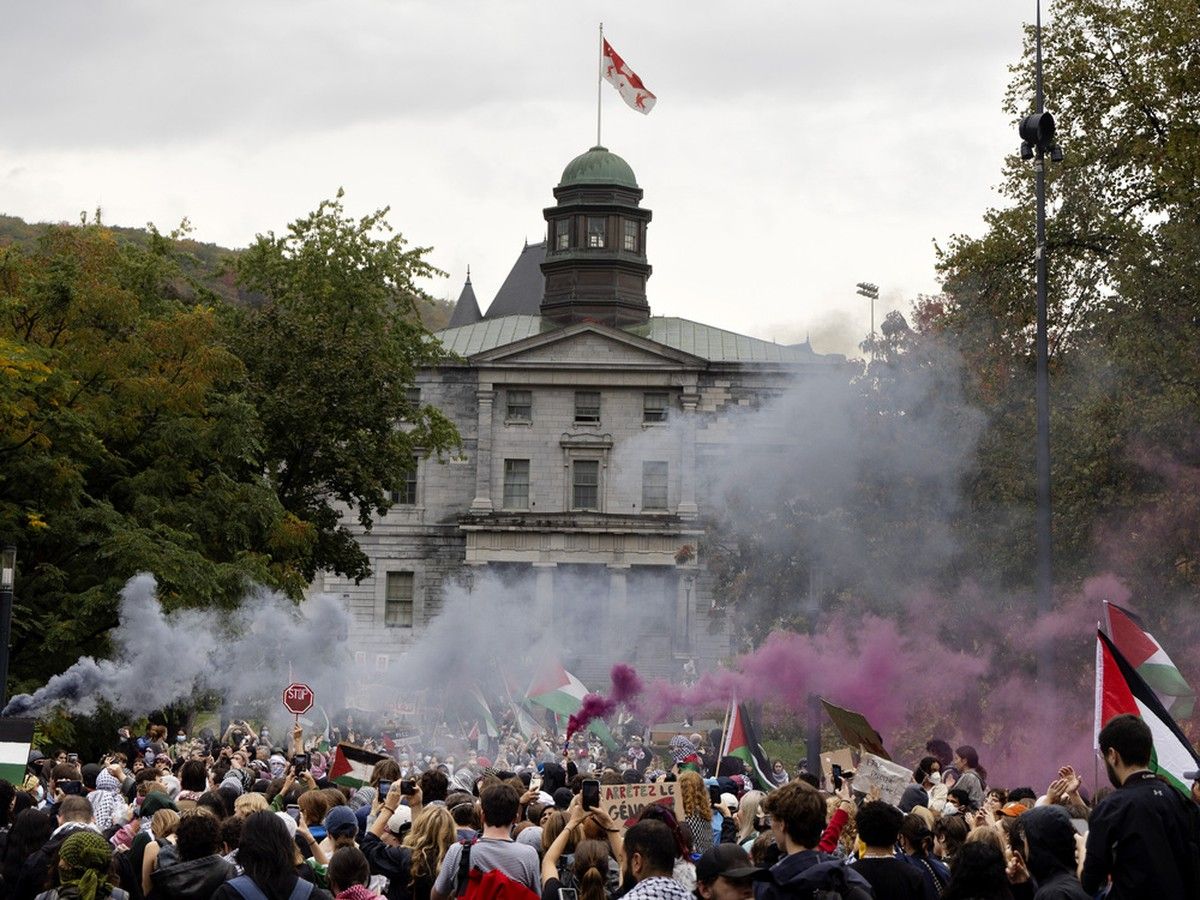
Students occupy the main entrance to McGill University during a student anti-Israel protest on Tuesday, October 7, 2025.

Released on August 5, the Government of Canada-commissioned Campus Antisemitism and Student Experiences study — CASE — produced a finding that should have ended complacency about the climate facing Jewish students: some 96 per cent of those surveyed reported experiencing or witnessing at least one form of antisemitism during the previous year. The study also collected more than 1,200 accounts of antisemitism by asking open-ended questions.

But another CASE finding deserves attention.

The Jewish students surveyed were not monolithic in their relationship to Zionism. CASE defines Zionism as the belief that Jewish people have the right to self-determination in part of their ancestral homeland. Sixty-nine per cent said Zionism was very important to their identity, 18 per cent somewhat important, six per cent not very important and seven per cent — 55 out of 762 valid respondents — not important at all.

Across the first three groups, concern about antisemitism remained substantial. Among those for whom Zionism was very important, 95 per cent either strongly or somewhat agreed that antisemitism was a serious problem on their campus. That fell to 79 per cent among those for whom it was somewhat important and 61 per cent among those for whom it was not very important.

Then the pattern collapses.

Among students for whom Zionism was not important at all, only 11 per cent agreed antisemitism was a serious campus problem. None strongly agreed. Sixty-seven per cent of this group strongly disagreed with the statement “Antisemitism is a serious problem on campus.”

The divide becomes even more striking when respondents are asked about concrete incidents rather than general perceptions. Forty-two per cent of students for whom Zionism was very important reported antisemitic remarks or gestures directed at them often or occasionally; among those that rejected Zionism most, just four per cent did. Sixty-nine per cent of the first group reported frequently or occasionally witnessing antisemitic remarks directed at somebody else. Among the least-Zionist respondents, that fell to 13 per cent.

Only 23 per cent of respondents for whom Zionism was very important agreed their campus was safe and inclusive for Jewish students. Among those for whom Zionism was not important at all, 92 per cent said it was.

In any case, there is a mountain of evidence on one side of this divide: police-reported hate-crime statistics, public-opinion surveys of Canadians showing wider recognition of anti-Jewish hostility, the testimony of Jewish students and the broader documented escalation of antisemitic incidents. CASE does not stand alone. Its findings sit inside a much larger evidentiary record.

The magnitude of the discrepancy also raises the question of whether something resembling denialism is operating — not necessarily a conscious rejection of facts, but a tendency to minimize or reclassify evidence that conflicts with one’s political framework. One possible explanation is psychological or social: for some students, acknowledging pervasive antisemitism may conflict with their understanding of Jewish identity or with a desire for social acceptance.

The least-Zionist respondents are not merely less likely to regard antisemitism as a problem. Across multiple measures, antisemitism almost disappears from their reports and perceptions of the campus environment.

Jewish students who do not see antisemitism as a serious problem should not negate the experiences of the majority of those who say that it is. We rarely accept that standard when discussing racism encountered by other communities. It should not apply here.

CASE reveals two things simultaneously. First, antisemitism is reported extraordinarily widely among Jewish students. Second, a small subgroup for whom Zionism is unimportant, for some reason or another, is less likely to notice antisemitism on campus.

What the CASE study exposes, therefore, is something deeper than ordinary disagreement. Even Jewish students with somewhat weaker attachment to Zionism continue to report antisemitism at substantial levels. The dramatic break occurs only among the group for whom Zionism is not important at all. Such outright detachment appears to be associated with the near-erasure of antisemitism from their perception of campus life.

The serious question is therefore no longer whether antisemitism exists on Canadian campuses or in the wider society. There is far too much evidence for that question to remain intellectually credible. The question is why, for a small group of Jewish students, so much of it becomes almost invisible. And that’s important whenever a select minority of voices are elevated precisely because they deny or minimize the antisemitism documented by their peers. The evidence does not disappear because some refuse to recognize it. Only the recognition does.

Methodological note: CASE used targeted, network-based recruitment because there is no complete national sampling frame identifying Jewish postsecondary students. Its regional distribution broadly tracks the Census geography of young Canadian Jews, and recalibration by broad region and gender changed the two headline exposure measures only marginally: 89.1 to 87.4 per cent and 95.7 to 95.4 per cent.

National Post

Jack Jedwab, President & CEO, Association for Canadian Studies & Metropolis Institute

Paul Holley, Research & Evaluation Director, Association for Canadian Studies & Metropolis Institute

Cary Kogan, Professor, University of Ottawa, and co-President of the Network of Engaged Canadian Academics


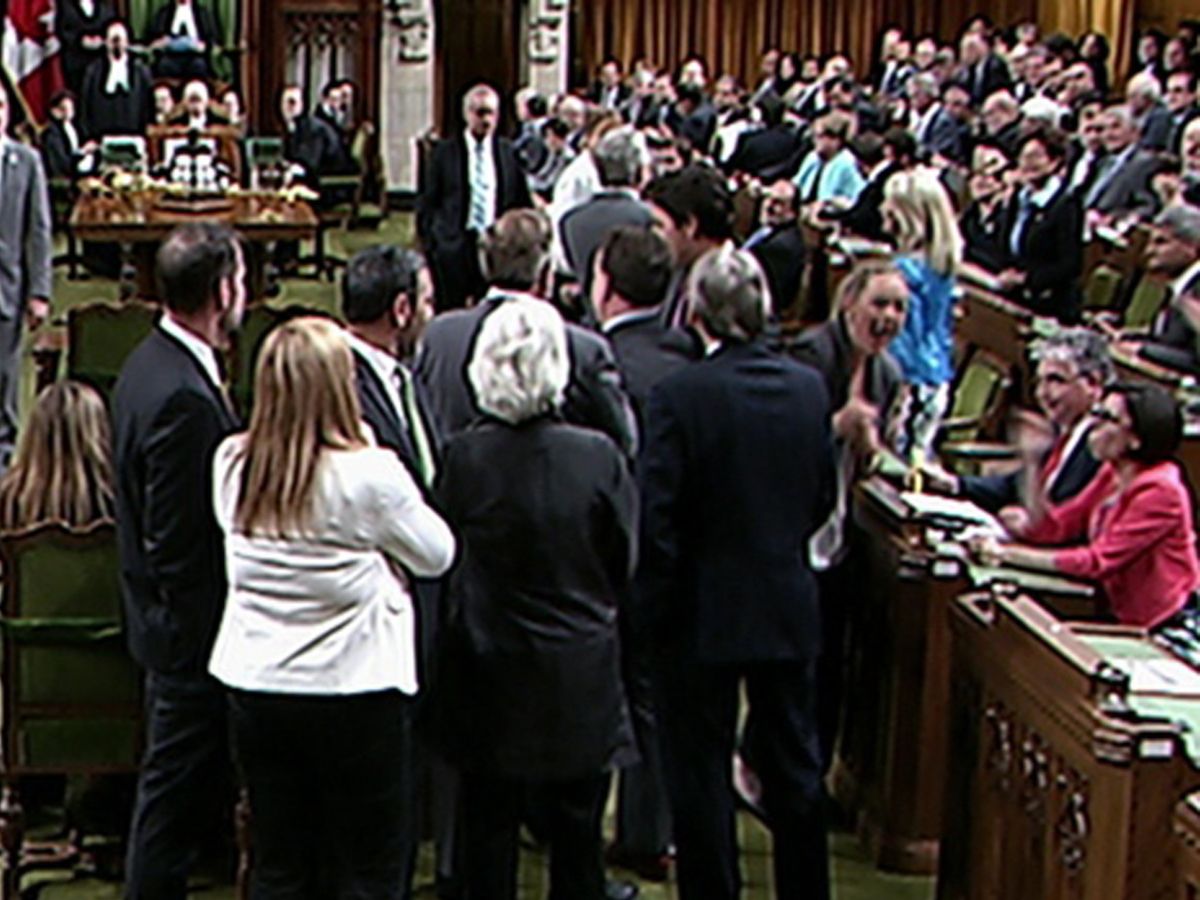
Detractors like to say that House of Commons decorum has never been worse than it is today, but don’t be so sure. Charlie Feldman is the author of the new book, “Unparliamentary: Tales from Canada’s Colourful Unparliamentary Past.” He joins Brian Lilley to recount stories of foul-mouthed, rowdy, drunken and altogether misbehaving MPs and senators from all the way back to Confederation right up to former prime minister Justin Trudeau’s “elbowgate” that make today’s cohort seem tame by comparison. Along the way, Feldman explodes some fabled stories as myths, surveys a surprising scarcity of sex scandals and uncovers some things we might have preferred not to know, from the story of the salmon hidden inside an MP’s pants and why feces were once thrown in the House. (Recorded July 14, 2026.)


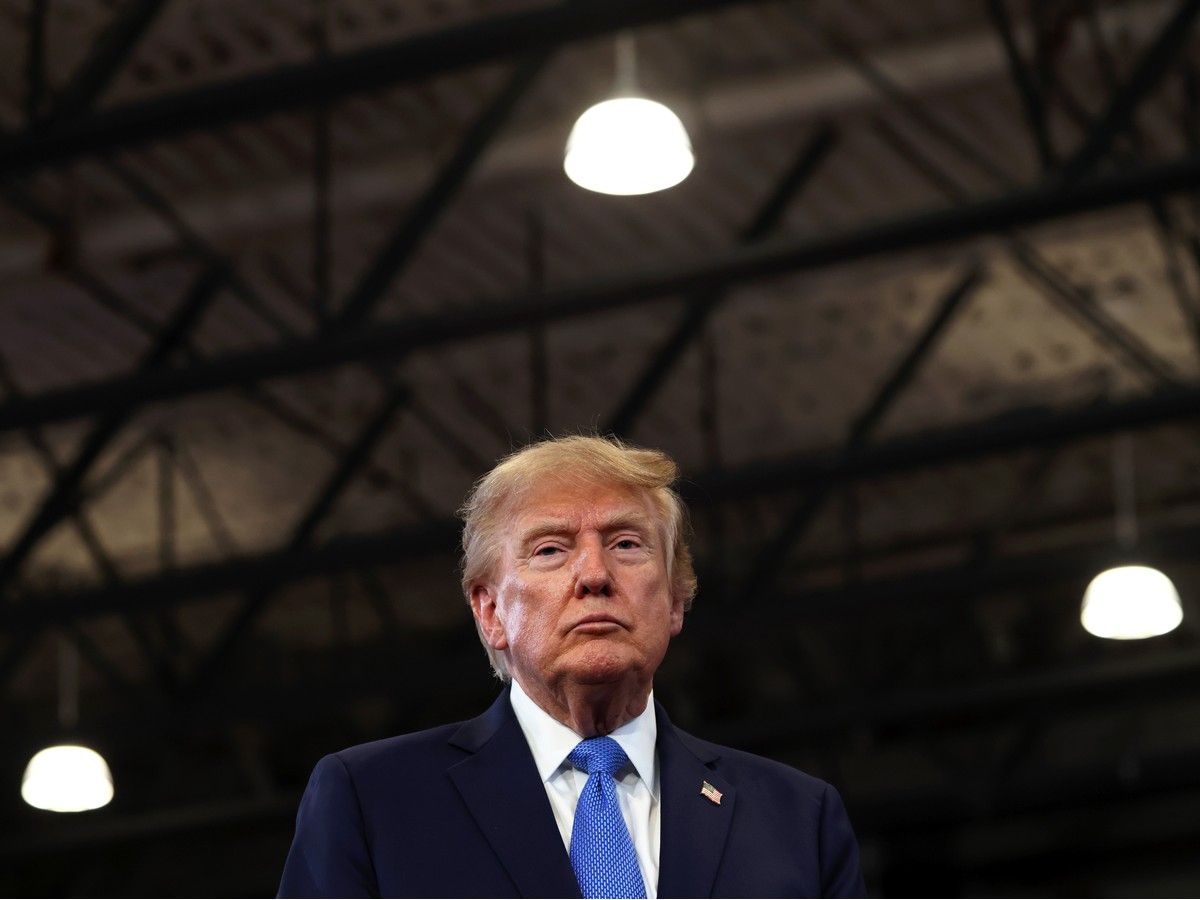
U.S. President Donald Trump departs after delivering remarks at the David S. Mack Center for Training and Intelligence on August 14, 2026 in Garden City, New York.

The latest arbitrary deadline to a gratuitous threat made by an untrustworthy president falls this week when Aug. 19 arrives and the U.S. does or does not introduce 50 per cent tariffs on a package of Canadian goods.

The degree to which this seizes Mark Carney might be indicated by the fact the prime minister chose to spend a week vacationing in Italy rather than nibbling his nails as the minutes ticked down. Sure, his aides say he stayed in close contact with Ottawa, but anyone who’s spent any time in Italy knows that distant crises always seem somewhat less desperate when considered over a cappuccino while pondering a statue or two in a pleasant piazza.

Italians tend to take a relaxed view of life thanks to their long history of ups and downs and knowledge that, whatever the disaster, life goes on. Empires, dictators, wars and calamities come and go; Italy is littered with the remnants of fallen worlds testifying to the foolishness humans can get up to, but also to the ability to recover from the madness of others.

If any of this crossed Carney’s mind while he sought a break from his duties, he might also consider that the reputation of one of his predecessors benefits not from something he did, but something he didn’t do. When Jean Chrétien is being toasted by Liberals as a successful and well-remembered leader, his refusal to join the U.S. in its ill-fated crusade in Iraq is a leading reason.

Canada preferred to be friends with the U.S. just as much then as it does now, but was sentient enough to understand that joining it in bad ideas and self-defeating ventures wasn’t a requirement. American President Donald Trump’s misguided tariff war is just such an example. Whatever the temporary pain, Canada would be far better off in the long run avoiding any sort of agreement that lets Washington claim the slightest victory in its attempt to bully concessions out of Ottawa.

Better to walk away, let the White House do its worst and deal with the consequences. That will inevitably be the result under this administration in any case. Whatever piece of paper negotiators wave should a last-minute “deal” be reached won’t be worth the ink wasted on the signatures. As long as Trump is president the U.S. can’t be trusted to keep its word. A quick-fix tariff accord could be signed at breakfast and broken before lunch.

Until its leadership changes, any agreement with the U.S. is a recipe for ongoing uncertainty. Even if Republicans suffer defeat in November’s mid-term elections, the president’s ability to sow confusion will remain considerable until 2028, and likely longer given the time it would take to re-establish America’s reputation as a reliable country.

It’s difficult to know just where the current talks lie. Official pronouncements, strategic leaks and expert analysis are all over the map. Canadian negotiators Dominic LeBlanc and Janice Charette are reportedly hopeful agreement can be reached, but they’d have to say that or they’d be useless in their jobs, no matter how senseless U.S. demands might be. Nothing that comes from the mouth of U.S. Trade Representative Jamieson Greer gives cause to believe their hopes will be fulfilled.

While LeBlanc and Charette have repeatedly trekked to Washington for discussions, Greer has seen no need to return the courtesy. Reports on discussions, opaque as they’ve been, suggest the U.S. has not moved an inch in its list of demands, while showing no material interest in accommodating Ottawa’s rival concerns. Many of the demands, if the reports are accurate, are grotesque in their reach: special rights to Canadian minerals, required purchases of U.S. technologies, guaranteed access to Canadian resources, all of which represent a surrender of Canada’s right to do as it pleases with its assets.

The brazenness of the attempt at a shakedown cries for Ottawa to write off the talks as pointless. Instead, the game plan appears to consist of devising a formula squishy enough to placate Washington while minimizing the immediate damage. Canada’s team seems deep into efforts to find concessions able to soothe delicate American sensibilities without triggering outrage among Canadians already fed to the teeth with the U.S. leadership and its ongoing obnoxiousness.

Carney has managed to retain his popularity with voters to date. Liberals remain well ahead of Conservatives in opinion polls, and Carney enjoys a wide lead over opposition leader Pierre Poilievre. But his standing is based largely on belief in his ability to handle the U.S. challenge, a level of trust that could quickly erode if he’s seen as responding with weakness to U.S. belligerence.

In any case, Trump cares more about attention than popularity; his infatuation with himself is self-generated and immune to human intervention. He’s safe in his job for two more years and unable to run again; Carney needs public support more than Trump does and has to show reason for Canadians to provide it. Demeaning the country in the name of momentary economic gains is not a road to renown.

Charette reportedly informed Greer that Canadian hostility towards Washington could force Canada to retaliate to any new tariffs, and that Ottawa couldn’t “rein in or control” premiers set on taking a tough line on talks. The U.S. seems weirdly preoccupied with the boycott of U.S. alcohol, which represents a tiny fraction of imports to Canada; it may be the dispute’s outcome will rest on the ability to talk Premier Doug Ford into allowing California wine and Kentucky bourbon back on the shelves of Ontario liquor stores.

If that’s the case, more power to Ford. There is no such thing as an agreement with Donald Trump, his word is worthless and Canada will have to deal with the end of reliable and sensible trading rules with the U.S. now or later. If something has to be done, it’s just as well to get on with it. Now’s as good a time as any to inform Washington Canada is uninterested in further pointless discussions, and let ordinary Americans get back to bearing the brunt of their president’s expensive obsession.

National Post


Anti-Israel protesters hold a rally at Toronto Metropolitan University in a file photo from April 2024.

The cesspit of antisemitism that has been permitted to fester at Toronto Metropolitan University (TMU) is laid bare in a just released report by former Ontario Appeal Court Justice Mary Lou Benotto.

Jewish students spat on, pelted with sour milk, intimated, harassed, threatened, and living in fear because a university was unable to tackle the scourge of antisemitism that swept through its halls after Oct. 7, 2023.

In an astonishing statement, one tenured professor pleaded with the Jewish community to send their children anywhere but TMU.

“I will tell anyone, with great sorrow, anyone in the Jewish community, not to have their children apply to TMU. Can you imagine that? I love this university and I’ve worked here for (over a decade),” the professor told Benotto.

“It’s given me my entire professional life. Now I tell friends not to let their children go here because they’ll be harassed, and mistreated, and bullied and potentially assaulted. And I say, ‘Send them to McGill, or Western, or U of T, or to the U.S., or somewhere else.’ They are all better.”

What is so horrifying is that it wasn’t just other students behind this wave of hate that put Jews in the crosshairs, but also some faculty.

“Some administrators and University leaders expressed concern that certain faculty members may be encouraging, incentivizing, or intensifying student activism in ways they viewed as inappropriate or inconsistent with professional boundaries,” said the report.

A section entitled “Educator statements” highlighted the hate in the classrooms.

The Benotto review “was also given multiple examples of statements reportedly made in classrooms, faculty-led seminars, and educational spaces that many Jewish participants experienced as antisemitic, dehumanizing, or normalizing hostility toward Jewish people.”

Statements included: denying or minimizing the Holocaust (it appears Hitler wasn’t conducting a genocide, it was merely “discrimination”; saying “academic power is rooted in Jewish supremacism” and it needs to be “rooted out of academia” and holding a discussion about “how much violence we are willing to engage in.”

The introduction to the report notes, “The Review is based on the foundational principle that universities are meant to foster inquiry, debate, and democratic engagement.”

Yet, at TMU, failure to enforce its own policies has allowed hatred towards Jews to blossom, debate and discussion to be shut down and the inmates to overrun the asylum.

It’s clear from the report that the people behind the pro-Palestinian/anti-Jewish protests were out of control.

Senior university administrators were followed, filmed, verbally assaulted and had things thrown at them.

“Administrators, some faculty, Jewish student and faculty representatives, and event organizers frequently described conduct they experienced as crossing from protest into intimidation, harassment, or attempts to silence participation,” said the report.

“Interviewees in this group pointed to repeated event disruptions, aggressive confrontations, social media targeting, doxxing, hostile language, and personal accusations directed at identifiable individuals.”

In one incident, said the report, the vice provost was in a campus café when a student threw pamphlets at her containing accusations of war crimes against Israel. On another occasion, the same woman was surrounded by masked students shouting at her and filming her while displaying signs depicting her as a war criminal.

“Protesters repeatedly followed the University President to the parking garage and surrounded his vehicle and then posted a video of the event with disparaging remarks,” said the report.

Posters around campus showed senior university administrators, including the president, vice-provost and chief financial officer, alongside the phrase, “Wanted for Genocide.”

Is it any wonder that one emeritus professor told of her shame at being associated with the university?

The report also noted that many Palestinian, Arab, Muslim, and pro-Palestinian participants experienced fear, exclusion, and marginalization. “Several described grief and trauma connected to events in Gaza, frustration with institutional neutrality, and concern that criticism of Israel was too readily conflated with antisemitism.”

But it is clear from the report that there was a divide between some students who felt unsafe and those who really were unsafe.

The Benotto review began as an investigation into two incidents. In September last year, Students for Justice in Palestine (SJP) disrupted a Democracy Forum event featuring AI Minister Evan Solomon by shouting “war criminal” and “baby killer” and causing it to be shut down.

In November, the same group smashed their way into an off-campus meeting of a speaking event hosted by Students Supporting Israel. The meeting was also cancelled.

The report noted that in the second incident the university had refused to allow the meeting to take place on campus. “TMU effectively permitted a ‘heckler’s veto,’ whereby the threat of disruption determines who is permitted to speak.”

But Benotto’s review quickly became “a broader institutional issue: a deeply polarized campus environment shaped by the aftermath of October 7, 2023, and the ongoing Israeli-Palestinian conflict.”

Can TMU, the virtue-signalling university that ditched the name Ryerson on the altar of diversity, equity and — how ironic — inclusion, get a grip on things?

“The Review concludes that the two incidents under review were symptoms of a deteriorating campus climate that, absent decisive institutional action, are likely to recur,” said the report.

Urged to act decisively, TMU responded with the speed and gusto of a dead sloth.

It has created “an Implementation Task Force” to review the recommendations of the Benotto report and come up with policies, procedures and proposed actions.

But as Benotto boldly pointed out: the university already has the tools it needs with its Code of Conduct. The challenge lies in a “consistent and principled” enforcement, she said.

Consistency would be nice; principles would be great. TMU seems inclined to neither.

National Post


Anti-Israel protesters hold a rally at Toronto Metropolitan University in a file photo from April 2024.

The cesspit of antisemitism that has been permitted to fester at Toronto Metropolitan University (TMU) is laid bare in a just released report by former Ontario Appeal Court Justice Mary Lou Benotto.

Jewish students spat on, pelted with sour milk, intimated, harassed, threatened, and living in fear because a university was unable to tackle the scourge of antisemitism that swept through its halls after Oct. 7, 2023.

In an astonishing statement, one tenured professor pleaded with the Jewish community to send their children anywhere but TMU.

“I will tell anyone, with great sorrow, anyone in the Jewish community, not to have their children apply to TMU. Can you imagine that? I love this university and I’ve worked here for (over a decade),” the professor told Benotto.

“It’s given me my entire professional life. Now I tell friends not to let their children go here because they’ll be harassed, and mistreated, and bullied and potentially assaulted. And I say, ‘Send them to McGill, or Western, or U of T, or to the U.S., or somewhere else.’ They are all better.”

What is so horrifying is that it wasn’t just other students behind this wave of hate that put Jews in the crosshairs, but also some faculty.

“Some administrators and University leaders expressed concern that certain faculty members may be encouraging, incentivizing, or intensifying student activism in ways they viewed as inappropriate or inconsistent with professional boundaries,” said the report.

A section entitled “Educator statements” highlighted the hate in the classrooms.

The Benotto review “was also given multiple examples of statements reportedly made in classrooms, faculty-led seminars, and educational spaces that many Jewish participants experienced as antisemitic, dehumanizing, or normalizing hostility toward Jewish people.”

Statements included: denying or minimizing the Holocaust (it appears Hitler wasn’t conducting a genocide, it was merely “discrimination”; saying “academic power is rooted in Jewish supremacism” and it needs to be “rooted out of academia” and holding a discussion about “how much violence we are willing to engage in.”

The introduction to the report notes, “The Review is based on the foundational principle that universities are meant to foster inquiry, debate, and democratic engagement.”

Yet, at TMU, failure to enforce its own policies has allowed hatred towards Jews to blossom, debate and discussion to be shut down and the inmates to overrun the asylum.

It’s clear from the report that the people behind the pro-Palestinian/anti-Jewish protests were out of control.

Senior university administrators were followed, filmed, verbally assaulted and had things thrown at them.

“Administrators, some faculty, Jewish student and faculty representatives, and event organizers frequently described conduct they experienced as crossing from protest into intimidation, harassment, or attempts to silence participation,” said the report.

“Interviewees in this group pointed to repeated event disruptions, aggressive confrontations, social media targeting, doxxing, hostile language, and personal accusations directed at identifiable individuals.”

In one incident, said the report, the vice provost was in a campus café when a student threw pamphlets at her containing accusations of war crimes against Israel. On another occasion, the same woman was surrounded by masked students shouting at her and filming her while displaying signs depicting her as a war criminal.

“Protesters repeatedly followed the University President to the parking garage and surrounded his vehicle and then posted a video of the event with disparaging remarks,” said the report.

Posters around campus showed senior university administrators, including the president, vice-provost and chief financial officer, alongside the phrase, “Wanted for Genocide.”

Is it any wonder that one emeritus professor told of her shame at being associated with the university?

The report also noted that many Palestinian, Arab, Muslim, and pro-Palestinian participants experienced fear, exclusion, and marginalization. “Several described grief and trauma connected to events in Gaza, frustration with institutional neutrality, and concern that criticism of Israel was too readily conflated with antisemitism.”

But it is clear from the report that there was a divide between some students who felt unsafe and those who really were unsafe.

The Benotto review began as an investigation into two incidents. In September last year, Students for Justice in Palestine (SJP) disrupted a Democracy Forum event featuring AI Minister Evan Solomon by shouting “war criminal” and “baby killer” and causing it to be shut down.

In November, the same group smashed their way into an off-campus meeting of a speaking event hosted by Students Supporting Israel. The meeting was also cancelled.

The report noted that in the second incident the university had refused to allow the meeting to take place on campus. “TMU effectively permitted a ‘heckler’s veto,’ whereby the threat of disruption determines who is permitted to speak.”

But Benotto’s review quickly became “a broader institutional issue: a deeply polarized campus environment shaped by the aftermath of October 7, 2023, and the ongoing Israeli-Palestinian conflict.”

Can TMU, the virtue-signalling university that ditched the name Ryerson on the altar of diversity, equity and — how ironic — inclusion, get a grip on things?

“The Review concludes that the two incidents under review were symptoms of a deteriorating campus climate that, absent decisive institutional action, are likely to recur,” said the report.

Urged to act decisively, TMU responded with the speed and gusto of a dead sloth.

It has created “an Implementation Task Force” to review the recommendations of the Benotto report and come up with policies, procedures and proposed actions.

But as Benotto boldly pointed out: the university already has the tools it needs with its Code of Conduct. The challenge lies in a “consistent and principled” enforcement, she said.

Consistency would be nice; principles would be great. TMU seems inclined to neither.

National Post


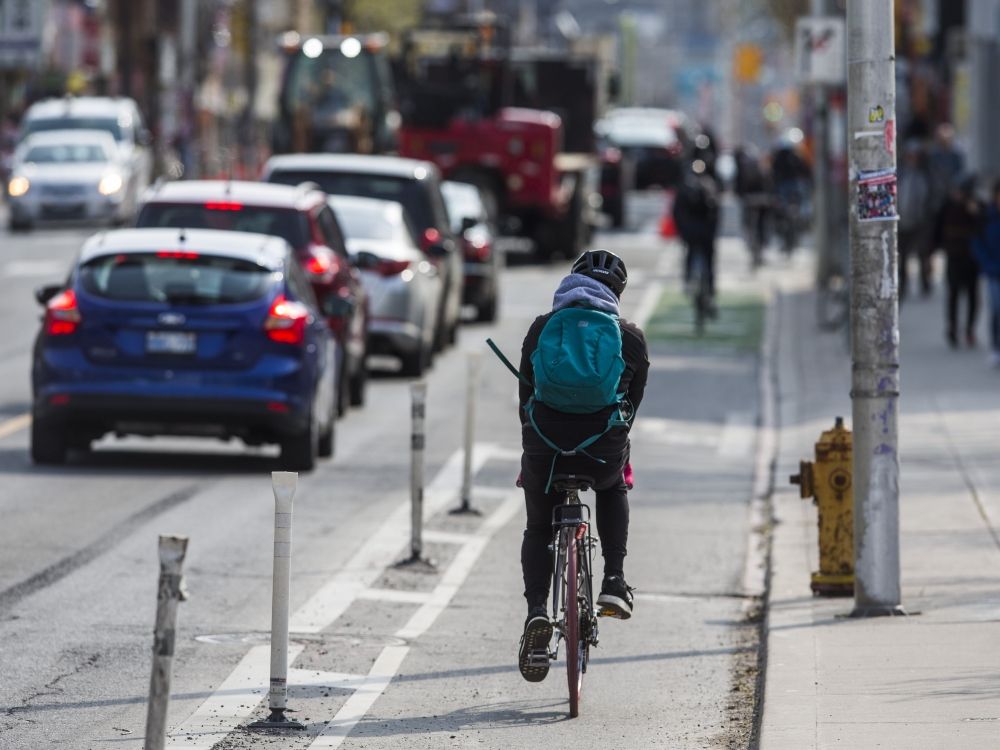
A cyclist in the bike lane along Bloor St. W., near Christie St. in Toronto, Ont. on Thursday May 9, 2019.

It’s absurd it even came to this, but on Friday the Court of Appeal for Ontario ruled that the Ford government was allowed to remove bike lanes in Toronto, overturning Justice Paul Schabas who ruled a year ago that removing them would violate cyclists’ rights to life and security of the person under Section 7 of the Charter.

The decision was unanimous, written by Justice Grant Huscroft, and could be described as a polite judicial smackdown. It’s a win for common sense, and the decision itself is worth reading for yourself no matter how frequently or infrequently you ride a bike. It is one of the best written and clearly and concisely argued decisions you’ll ever find. One specific passage jumps out, and should be mandated for memorization for every law student and practicing lawyer:

“Now, courts learn a great deal about a matter in the course of judicial review proceedings, and judges may be tempted to comment on matters of policy. The temptation to do so may be great; judges may suppose that they have much to offer to public policy debate. But the temptation must be resisted. It is not just that courts have no expertise in policy making — no expertise in making the sorts of polycentric decisions that legislatures make routinely. It is illegitimate for courts to involve themselves in matters of legislative policy. Policy is for politics.”

In one paragraph, Huscroft summarizes the proper role for the courts in our Westminster democracy, and where they so often seem to go wrong and engage in acts of judicial hubris that result in judges becoming legislators imposing policy preferences through the courts.

Huscroft rightly grants that a judge often has access to information and evidence that make them able to weigh in on public policy debates, but in reality judges have no expertise or legitimacy to do so. But far too often they give into the temptation. These kinds of questions must be left to politics, and public policy debates are the domain of politicans and legislators, not judges. It’s notable that Huscroft felt the need to say this in the decision.

Justice Schabas, in his now overturned Aril 2025 decision, introduced the reasons for his ruling with multiple pages of political scene-setting. He recounted remarks from the Ontario premier and the transportation minister, disputed traffic data, exchanges at committee, submissions from the mayor of Toronto and members of the public who had turned up to oppose the bill. He criticized the government’s conduct in passing the law and worried aloud that it had gone through over the objections of the government’s own internal advice. The court of appeal decision dismisses the lower court’s reasoning here in a single sentence: “None of this was relevant to the task before him.”

Schabas found the law arbitrary on the strength of Shoshanna Saxe, a transportation scholar who testified that removing the lanes would fail to ease congestion and would eventually make it worse through induced demand. Huscroft calls that a category error. Legislatures get to decide if a law actually works. A court’s only question is whether the means bear some logical connection to the end, and adding car lanes clears that bar just by being capable of easing congestion for a while. Saxe was forecasting traffic conditions years out. You can agree or disagree with Saxe on this, but it’s irrelevant for whether the law violates a section of the Charter.

At the time of the earlier decision, many of the progressive advocates for Charter protected bike lanes tried to claim, citing Schabas, that the decision did not establish a right to bike lanes. But just because the lower court stated no such right was established doesn’t make it true, and Huscroft demolishes the argument pretty effectively. He states that forbidding a legislature from removing bike lanes can only mean the lanes were constitutionally required in the first place, and he calls the conclusion “logically ineluctable.” A policy chosen by one legislature would end up frozen into the constitution and out of reach of the next one, undermining a bedrock rule of Westsminster democracy, namely that no parliament may bind its successors. The lanes exist only because democratically elected legislators passed a statute enabling them, and nothing stops a later Queen’s Park or City Hall from repealing it.

Deny it or not, the 2025 decision amounted to discovering a Charter protected right to bike lanes on the basis of academic and technical arguments about traffic, induced demand, and congestion. So how did we even get here in the first place? Justice Huscroft is candid about how this happened in the court of appeal ruling: “Something has gone wrong.” Specifically, something has gone wrong with jurisprudence of Section 7 of the Charter, which guarantees the “Life, liberty and security of the person.”

Dave Snow, a professor at the University of Guelph, published a study in May that details exactly what and how things have gone wrong. Section 7 was meant to be modest, and those who drafted it chose the phrase “principles of fundamental justice” over the American “due process” specifically to keep judges away from policy. In one 1985 reference case the Supreme Court decided the Charter’s drafters’ own statements deserved minimal weight and have taken the interpretation of Section 7 in a very different direction than initially intended.

Snow built a dataset covering every Supreme Court Charter decision since 1984. Twenty-one separate principles of fundamental justice have been invented since, roughly one new principle every seven cases, and across 61 Section 7 breaches in 40 years the Court has allowed the infringement to stand exactly once. This has of course trickled down to lower courts, who have among other things, recently used the section to block a homeless encampment clearance in Waterloo and a British Columbia ban on public drug use.

The newest member of the Supreme Court, Glenn Joyal, once called Section 7 “the single most fertile source for the discovery of new rights,” writing as chief justice of Manitoba’s Court of King’s Bench.

Cycle Toronto is considering whether to appeal the bike lanes decision to the Supreme Court, which has separately agreed to hear an Ontario case seeking to answer how far Section 7 reaches outside the criminal justice system. Almost every piece of federal and provincial legislation touches somebody’s health or safety somewhere, and a Section 7 that opens all of them turns every policy fight in the country into litigation, decided by whichever side retains the more persuasive expert. Legislatures would go on meeting and passing bills, but ultimately subject to our supreme legislators who sit on the bench.

Whatever you think about bike lanes, Justice Huscroft’s court of appeal decision is about something bigger than cycling. Those fights should happen, but judges shouldn’t be the ones deciding them. Friday’s decision is a win for democracy, but as long as Section 7 keeps getting interpreted the way it so often is, we’ll keep getting progressive policy legislated from the bench, with only a handful of judges as intellectually rigorous as Grant Huscroft standing in the way.

National Post


A cyclist in the bike lane along Bloor St. W., near Christie St. in Toronto, Ont. on Thursday May 9, 2019.

It’s absurd it even came to this, but on Friday the Court of Appeal for Ontario ruled that the Ford government was allowed to remove bike lanes in Toronto, overturning Justice Paul Schabas who ruled a year ago that removing them would violate cyclists’ rights to life and security of the person under Section 7 of the Charter.

The decision was unanimous, written by Justice Grant Huscroft, and could be described as a polite judicial smackdown. It’s a win for common sense, and the decision itself is worth reading for yourself no matter how frequently or infrequently you ride a bike. It is one of the best written and clearly and concisely argued decisions you’ll ever find. One specific passage jumps out, and should be mandated for memorization for every law student and practicing lawyer:

“Now, courts learn a great deal about a matter in the course of judicial review proceedings, and judges may be tempted to comment on matters of policy. The temptation to do so may be great; judges may suppose that they have much to offer to public policy debate. But the temptation must be resisted. It is not just that courts have no expertise in policy making — no expertise in making the sorts of polycentric decisions that legislatures make routinely. It is illegitimate for courts to involve themselves in matters of legislative policy. Policy is for politics.”

In one paragraph, Huscroft summarizes the proper role for the courts in our Westminster democracy, and where they so often seem to go wrong and engage in acts of judicial hubris that result in judges becoming legislators imposing policy preferences through the courts.

Huscroft rightly grants that a judge often has access to information and evidence that make them able to weigh in on public policy debates, but in reality judges have no expertise or legitimacy to do so. But far too often they give into the temptation. These kinds of questions must be left to politics, and public policy debates are the domain of politicans and legislators, not judges. It’s notable that Huscroft felt the need to say this in the decision.

Justice Schabas, in his now overturned Aril 2025 decision, introduced the reasons for his ruling with multiple pages of political scene-setting. He recounted remarks from the Ontario premier and the transportation minister, disputed traffic data, exchanges at committee, submissions from the mayor of Toronto and members of the public who had turned up to oppose the bill. He criticized the government’s conduct in passing the law and worried aloud that it had gone through over the objections of the government’s own internal advice. The court of appeal decision dismisses the lower court’s reasoning here in a single sentence: “None of this was relevant to the task before him.”

Schabas found the law arbitrary on the strength of Shoshanna Saxe, a transportation scholar who testified that removing the lanes would fail to ease congestion and would eventually make it worse through induced demand. Huscroft calls that a category error. Legislatures get to decide if a law actually works. A court’s only question is whether the means bear some logical connection to the end, and adding car lanes clears that bar just by being capable of easing congestion for a while. Saxe was forecasting traffic conditions years out. You can agree or disagree with Saxe on this, but it’s irrelevant for whether the law violates a section of the Charter.

At the time of the earlier decision, many of the progressive advocates for Charter protected bike lanes tried to claim, citing Schabas, that the decision did not establish a right to bike lanes. But just because the lower court stated no such right was established doesn’t make it true, and Huscroft demolishes the argument pretty effectively. He states that forbidding a legislature from removing bike lanes can only mean the lanes were constitutionally required in the first place, and he calls the conclusion “logically ineluctable.” A policy chosen by one legislature would end up frozen into the constitution and out of reach of the next one, undermining a bedrock rule of Westsminster democracy, namely that no parliament may bind its successors. The lanes exist only because democratically elected legislators passed a statute enabling them, and nothing stops a later Queen’s Park or City Hall from repealing it.

Deny it or not, the 2025 decision amounted to discovering a Charter protected right to bike lanes on the basis of academic and technical arguments about traffic, induced demand, and congestion. So how did we even get here in the first place? Justice Huscroft is candid about how this happened in the court of appeal ruling: “Something has gone wrong.” Specifically, something has gone wrong with jurisprudence of Section 7 of the Charter, which guarantees the “Life, liberty and security of the person.”

Dave Snow, a professor at the University of Guelph, published a study in May that details exactly what and how things have gone wrong. Section 7 was meant to be modest, and those who drafted it chose the phrase “principles of fundamental justice” over the American “due process” specifically to keep judges away from policy. In one 1985 reference case the Supreme Court decided the Charter’s drafters’ own statements deserved minimal weight and have taken the interpretation of Section 7 in a very different direction than initially intended.

Snow built a dataset covering every Supreme Court Charter decision since 1984. Twenty-one separate principles of fundamental justice have been invented since, roughly one new principle every seven cases, and across 61 Section 7 breaches in 40 years the Court has allowed the infringement to stand exactly once. This has of course trickled down to lower courts, who have among other things, recently used the section to block a homeless encampment clearance in Waterloo and a British Columbia ban on public drug use.

The newest member of the Supreme Court, Glenn Joyal, once called Section 7 “the single most fertile source for the discovery of new rights,” writing as chief justice of Manitoba’s Court of King’s Bench.

Cycle Toronto is considering whether to appeal the bike lanes decision to the Supreme Court, which has separately agreed to hear an Ontario case seeking to answer how far Section 7 reaches outside the criminal justice system. Almost every piece of federal and provincial legislation touches somebody’s health or safety somewhere, and a Section 7 that opens all of them turns every policy fight in the country into litigation, decided by whichever side retains the more persuasive expert. Legislatures would go on meeting and passing bills, but ultimately subject to our supreme legislators who sit on the bench.

Whatever you think about bike lanes, Justice Huscroft’s court of appeal decision is about something bigger than cycling. Those fights should happen, but judges shouldn’t be the ones deciding them. Friday’s decision is a win for democracy, but as long as Section 7 keeps getting interpreted the way it so often is, we’ll keep getting progressive policy legislated from the bench, with only a handful of judges as intellectually rigorous as Grant Huscroft standing in the way.

National Post