


LP_468x60
on-the-record-468x60-white

An addict injects hydromorphone, an opioid available for free from some provincial governments, including B.C. and Ontario, at a safe consumption site.

PETERBOROUGH, ONT. — I’ve come to think that we Canadians are so polite that even though we now find ourselves living inside a real-life zombie movie, many seem afraid to raise a fuss for fear of offending the zombies.

“Sorry, sir, but I think you’re gnawing on my arm.”

In our case, the zombie apocalypse is the epidemic of drug addiction that fills our streets with addicts. Contemplating their next fix — or in the temporary delirium granted by the last one — they shuffle in front of our cars, defecate on our sidewalks, and break into our cars and houses.

We all have our stories of zombie run-ins.

Last week, while visiting my local ER, I met someone I’ll call “Dwight.” I was there to help my child. Dwight was there to get access to drugs.

I shouldn’t have known Dwight’s name — I certainly didn’t know the name of any other patient in the small curtained off “rooms” where we found ourselves. But Dwight was hard to miss. Loud rock music was blaring from his room. It’s not normal in an ER but apparently Dwight needed to be calmed down and he had an iPad and this is all the nurses had to work with.

It wasn’t enough. Soon Dwight was demanding drugs. Like RIGHT NOW. The nurses couldn’t help. He’d just been given drugs.

That’s when he began to smash things.

When he smashed the computer next to his bed, the security guards came. But they didn’t approach Dwight. As the nurse kept telling him, security was just there to keep everyone else safe.

“Please sit back down Dwight. Go back to your bed Dwight.”

Dwight didn’t go back to bed. The shouting got worse. So did the swearing and then, randomly, the accusations of racism against the non-white security guards who had just shown up. It wasn’t until the police came and restrained Dwight to the gurney that things began to settle down. Though not until they had sedated him.

In the meantime, my own child, who was in immense pain, didn’t get attention. The nurses and doctors couldn’t get near us.

But don’t worry, Dwight was OK.

Over the past year I’ve almost killed addicts several times. Not that I wanted to. But when you’re driving along the street and they randomly walk out in front of your car, it’s a little tricky not to become an accidental killer.

Trips to the library aren’t exactly like when I was a child. Our library is downtown across from an old Greyhound station. It’s not as if a bus station is entirely salubrious, but when they replaced it with the “Consumption and Treatment Services Site” things got a lot more zombie-movie-like.

Recent trips to the library have included such highlights as watching one man defecate beside our car even as, a few feet away, a group of people huddled in a group and injected drugs. Then there was the time I entered the library only to find a couple spreading out their things in the library foyer, including drug paraphernalia and large bottles of booze.

If you went by what it is mostly used for, you might think the library toilet in the basement — right next to the children’s section — is meant to be a homeless person’s French-shower location and possibly a place to shoot up (if the sounds in the stalls are anything to go by).

There’s nothing like a little drug addiction to go with your Harry Potter.

Perhaps the most egregious case is the fate of the Silver Bean café, a charming little gem of a spot housed in a water-side building that was a local millennium project. It’s advertised as everyone’s “cottage in the city” and it is genuinely a magical place. Of course, it’s also very much a cottage in the city for the region’s drug addicts.

Do you have to go to the washroom after your latte? You might think you’d go to the purpose-built public toilets only a few feet away from the café. But you’d be wrong, or just stupid. The entrance to the washrooms is a garbage dump continuously occupied by hordes of men and women who are only partly aware of what is happening in the world and who think 9:30 a.m. on a Tuesday is a perfectly good time to enjoy a bit of beer and meth, thank you very much.

Instead, the café, which is tiny and has almost no inside space, allows customers to go around back and through its kitchen into a tiny washroom. At least the zombies at the public toilet aren’t disturbed.

There are more stories — everyone has them. There was the woman who I saw last winter stumbling through downtown without any pants on. Or underwear either.

Then there are the women who linger on street corners on the edge of downtown, bedraggled, drug-skinny, and haggard. If only you’ll meet their eye as you drive by, they can offer you some sexual services.

Peterborough isn’t unique. My zombie apocalypse is probably your zombie apocalypse, too.

All of this has happened while the so-called “harm reduction” programs have expanded. And even though the “housing first” advocates did build a new community of tiny homes for the homeless just a couple of years ago, somehow, for some inexplicable reason, the problem has only gotten worse.

I won’t pretend to have any elaborate plan or solution. This seems to me to be one of those things that social scientists call a “wicked problem.”

But I do think it’s worth pointing out — again and again — that it is very much like a zombie apocalypse. And just like in any zombie movie, the zombies aren’t the only ones getting hurt.

National Post


Rav4 SUVs sit in a lot at Toyota's manufacturing plant in Cambridge, Ontario.

The inherent absurdity of President Donald Trump’s tariff mania was laid bare in the deal he has just announced with Japan.

After it comes into force, a

Toyota RAV4 made in Japan will be charged a tariff of 15 per cent

, while a similar vehicle made in Cambridge, Ont., with two-thirds North American content, will be charged a 25 per cent import levy. Trump has threatened that Canada will face a 35 per cent tariff on all goods not covered by the U.S.-Canada-Mexico trade deal (USMCA), including autos, by Aug. 1 barring any last-minute deal. Needless to say, Toyota is unlikely to continue making cars in Canada for long, if that differential remains in place.

Trump heralded his agreement with Japan as “the largest TRADE DEAL in history” on social media.

The broad terms will see Japan’s 25 per cent tariff rate reduced to 15 per cent across the board, except for steel and aluminium, in return for the commitment to invest US$550 billion in the U.S.

Japan will also buy 100 Boeing planes and hike defence spending with American firms by US$3 billion a year.

The president said that Japan will “for the first time ever” open its market to the U.S. for autos and rice, “which was always a complete NO, NO”.

There is a kernel of truth in this typical bluster: Japan will allow simplified safety checks on U.S. vehicles, which will likely increase U.S. imports from a paltry 16,000 last year. Japan has always allowed a minimum amount of rice to enter the country tariff-free, nearly half of which comes from America. That minimum access framework will remain in place but more of the discretionary amount will come from the U.S.

Trump said he will have a say in where the Japanese invest the US$550 billion and the U.S. will receive 90 per cent of the profits. Let’s check the joint text when the deal is made public to find out if this is another of the president’s subtle untruths.

The old phrase “the beatings will continue until morale improves” was not meant to be taken literally. Yet, news of the deal’s terms was welcomed with the kind of euphoria that used to greet Deep Purple at the Budokan arena in the ’70s.

Pre-Trump, Japan used to pay an average of 1.6 per cent in tariffs. Yet, at the prospect of 15 per cent, stock prices shot up in Japan: Toyota rose 14 per cent; Honda increased by 11 per cent. Auto stocks also rose around the world, including among the Big 3 North American carmakers that remain targeted by high tariffs.

GM said this week that it

took a US$1.1 billion pounding from tariffs

in the second quarter and expects the impact to worsen in the third. The prospect of the Detroit-based giant only being beaten up by a 15 per cent tariff going forward, instead of 25 per cent, saw its stock soar by 6.29 per cent on Wednesday.

Steve Verheul, Canada’s former chief trade negotiator and now a principal at consultancy GT&Co., said the clear inconsistency of penalizing cars made with two-thirds North American content, combined with the losses being reported by U.S. manufacturers, should provide Canada and Mexico with leverage to get a better deal than Japan.

Against that, U.S. Treasury Secretary Scott Bessent said Japan was given the deal “because they were willing to provide the innovative financing mechanism” that he did not think other countries could replicate.

Is the Carney government willing to arrange hundreds of billions of dollars of loan guarantees to invest in Canadian operations in the U.S., and then hand over 90 per cent of the profits? Unlikely.

Goldy Hyder, president and chief executive of the Business Council of Canada, said Canada’s special market access to the U.S. is under increasing threat. “Clearly it isn’t in Canada’s interest if cars made in Japan, Korea, the EU and the U.K. are going to the U.S. at lower tariff rates than from here … We have consistently been pounding on the importance of USMCA and expanding the (non-tariff) exemption,” he said.

Verheul said the Japanese agreement reinforces why Canada should not be in a hurry to get a deal with Trump. “We need to see what others get first, in order to ensure we have preferential treatment in the U.S. market, in comparison to countries outside North America,” he said.

There is another good reason to hold off. As U.S. economist Paul Krugman noted in 

his analysis of the deal

, American consumers are still facing a major price shock that could sour voters on Trump’s tariff wars.

There has been a relatively muted effect on consumer prices so far, but there is no evidence that the prices Americans are paying for imports is falling, which is what you might expect if foreigners were really paying for the tariffs.

Instead, Krugman said U.S. businesses are absorbing the costs, rather than passing them on to consumers, by selling off inventory bought before tariffs hit. Importers are hoping that tariffs go away. But if they don’t, inflation is coming, he said.

In that light, Canada should probably hold out until reality bites and Trump’s leverage is winnowed away by rising prices.

National Post

jivison@criffel.ca


Elementary school students cast their votes in a mock election. Now that the U.K. has lowered their voting age to 16 in real elections, maybe Canada will be next.

Well, they went and did it. Last week, the United Kingdom, Canada’s mother parliament, lowered the voting age to 16. That will only embolden Canadians who want it to happen here, because we’re much more like Britain than we are like Germany, Austria, Belgium, Argentina or Brazil, which also allow 16- and 17-year-olds to vote at least in some elections.

One of the most common arguments for allowing 16- and 17-year-olds to vote was repeated by Scott Stirrett, CEO of Venture Canada,

in the Globe and Mail recently

: “Some argue that 16- and 17-year-olds aren’t mature enough to vote. But we already trust them with serious decisions. They can drive. They can consent to medical treatment. In criminal court, they can be tried as adults.”

They can drive

with significant restrictions

, and they also tend to be quite bad at it. So that analogy doesn’t really work, unless we’re going to give them half or two-thirds of a vote. They can consent to medical treatment … but they can also be overruled if doctors deem they’re not mature enough to consent to the treatment in question. So that argument doesn’t work either. They are

very rarely

tried as adults in criminal court, and only in extreme cases — it seems odd to invoke young murderers and rapists in the cause of democratic reform — and

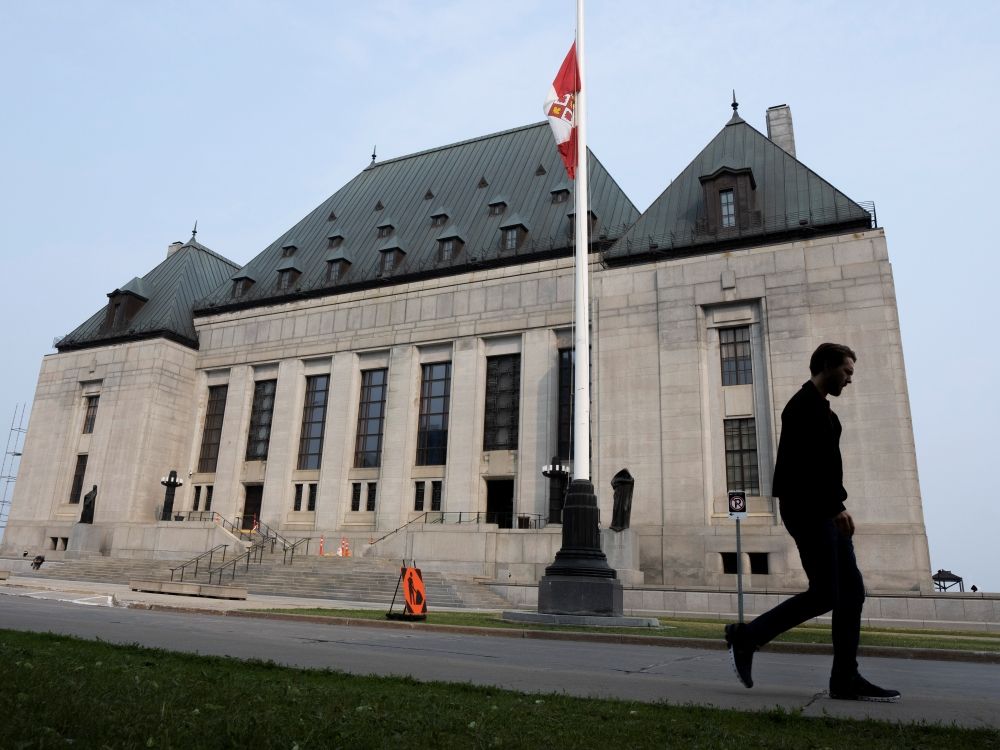
the Supreme Court just made it harder to do so

.

Oddly,

as Jesse Kline noted in these pages

, this argument never seems to come with any broader emancipation agenda. There are a heck of a lot of things 16- and 17-year-olds can’t do, in large part because we don’t trust their judgment. They can’t legally drink alcohol or buy tobacco or cannabis in any province. They can’t get married without parental consent (the rules vary by province). They can’t gamble. We certainly don’t trust them to sit on juries. We don’t let them see certain movies in cinemas, at all or without parental supervision.

We don’t let them go to bed when they want to.

And amidst the debate at Westminster, the Conservatives raised a point I had never thought of before: The most conspicuous thing 16- and 17-year-olds can’t do with respect to democracy is run for office. The new British regime doesn’t change that.

“Why does this government think a 16-year-old can vote but not be allowed to buy a lottery ticket, an alcoholic drink, marry, or go to war, or even stand in the elections they’re voting in?” Tory MP Paul Holmes

asked in the House of Commons

.

It’s a bloody good question, and it undermines the whole idea of lowering the voting age. But it’s the way things have gone.

Austria didn’t lower the age

to stand for office when it lowered the voting age in 2007. Nor did Germany or Belgium,

when they lowered the voting age
to 16 for European elections

. If I didn’t know better, I would suspect they didn’t really trust under-18s to participate fully in democracy at all.

As is the case with proportional representation, many on Team 16 are clearly motivated by partisan interests. Young people have traditionally voted left. It’s an interesting time in Canada in that regard, however, considering how comprehensively the Canadian centre-left has failed the millennial, gen-Z and gen-alpha generations, and driven them away from the Liberals and New Democrats. Clearly there are people who honestly believe 16 is an appropriate voting age.

But as is the case with proportional representation, and with the monarchy abolitionists, the state of the discourse is remarkably dismal. Other arguments in the wind at the moment: 16 is when we usually teach civics in high school, so it would dovetail nicely with allowing them to vote. And there is evidence that 18-year-olds are considerably more likely to vote if they had the vote at 16.

On the former point: Civics education in this country is often a perfunctory disgrace, which desperately needs fixing. Voting shouldn’t be a school project.

On the latter point: Just because you think higher turnout is a huge imperative doesn’t make it one. Turnout was 69.5 per cent in April’s federal election, which is more than showed up to usher Stephen Harper out amidst Trudeaumania II. Not bad. Certainly not a calamity.

Eighteen is not an arbitrary number. A lot of rights, responsibilities and opportunities — running for office, for example — present themselves to Canadians at that age. Sixteen

is

an arbitrary number. That’s reason enough to stand pat, at least until the Supreme Court rules we

have

to lower it.

National Post

cselley@postmedia.com


Laith Marouf in 2010

The notorious “anti-Zionist” hatemonger who was at the centre of a federal anti-racism funding scandal three years ago has been

released

from the custody of Lebanon’s Military Intelligence Directorate after being detained on Sunday in a restricted area adjacent to the border with Israel.

Laith Marouf, whose $133,000 “anti-racist action” grant in 2022 caused an uproar owing to his history of antisemitic outbursts and extremist activism going back two decades, was detained in the Lebanese border town of Mais al-Jabal after failing to present proper media credentials, his colleagues say. He was released late on Tuesday, reportedly with no charges or conditions, after being held incommunicado under “extensive interrogation” at the Defense Ministry’s headquarters in Yarzeh, just outside Beirut.

Marouf’s colleagues and supporters say his

detention

is a case of persecution that stems from the Lebanese government’s acquiescence to the Israel Defence Forces, and his arrest raises questions about press freedom in Lebanon. A spokesman for the Canadian embassy in Beirut told National Post that consular officials had been made aware of Marouf’s arrest. Citing the Privacy Act, the spokesman said: “We are working on the case, but we aren’t going to provide any more information.”

In April, 2022, Marouf obtained a federal Anti-Racism Action Program grant to convene workshops for federally-regulated broadcasters across Canada to discuss Ottawa’s expectations in equity and diversity. What was awkward was that Marouf

was widely known

for calling Quebeckers frogs, referring to certain Black people as slaves and calling Israelis “loud mouthed bags of human feces, aka the Jewish White Supremacists” who would one day be forced to “go back to where they come from.” He’d already been suspended from Twitter (now X) at least once for hateful commentary and for advocating violence, and he’d been a regular pundit for Iran’s Press TV and the Kremlin’s Sputnik propaganda platform, frequently serving as a featured supporter of the brutal and now-ousted Assad regime in Syria.

It was because his father was a Syrian diplomat in Montreal that Marouf came to play a central role in violent “anti-Zionist” protests at Concordia University as far back as 2002. Marouf obtained Canadian citizenship five years ago.

During the public uproar that unfolded in 2022, telecommunications consultant Mark Goldberg dug up records showing that Marouf’s Community Media Advocacy Centre had collected

a total of $517,480

in Broadcast Participation Fund grants after the Trudeau government came to power in 2015. After the uproar, Heritage Canada officials were treated to workshops about antisemitism and instructed in how to better spot racists and antisemites among grant applicants. Efforts were made to recover CMAC’s most recent grant of $133,000 — the Canada Revenue Agency and an international bill-collecting service was engaged, to no avail. By last August, after being reduced to offering CMAC a settlement that required a repayment

of only $40,000,

which also went nowhere, Heritage Canada appears to have given up. The Canadian Radio-television and Telecommunications Commission is continuing its review of policies on funding broadcast and telecom consultations, and is accepting comments and interventions until September 9.

In the meantime, Marouf went on to

establish

his own pro-Hezbollah “Free Palestine Television” in Beirut. He has insisted that his FPTV is “unaffiliated with any political party or groups,” but FPTV relies heavily on interviews with fellow “anti-Zionists,” sympathetic coverage of Hezbollah’s tribulations, and combat videos featuring Hamas, the Mujahideen Brigades and the Al-Qassam Brigades.

Last year’s massive Israeli military operations in Lebanon, involving a punishing invasion of Hezbollah-controlled territory and the complete decapitation of the Khomeinist proxy’s leadership, led to a tentative ceasefire last November. Hezbollah’s persistent rocket attacks were brought to an end, but hundreds of civilians were killed in the conflict, entire communities on both sides of the border remain displaced, and Israeli forces continue to make occasional incursions into Lebanon to prevent Hezbollah from reestablishing itself in the border areas.

Mais al-Jabal, the border town where Marouf was picked up on Sunday, had been a Hezbollah stronghold for years. Last October the IDF destroyed lookout posts and dozens of weapons caches and tunnels in the town, some mere metres from the Israeli border. Only last Friday, the IDF sent several armoured vehicles into Mais al-Jabal and blew up two bulldozers.

When Marouf arrived in Mais al-Jabal he was detained at a checkpoint and informed that he didn’t have any authorization to be in the area, according to a statement from FPTV. He was then taken to a detention centre at nearby Tebnine, where his driver Hadi Hoteit, an FPTV producer and correspondent for Tehran’s Press TV, was released. Marouf was to be taken to the South Command of Military Intelligence in Saida to complete the “formalities” to obtain a permit, but instead, Marouf was removed to the Defence Ministry headquarters in Yarzeh, in the Beirut suburbs, according to FPTV.

Mais al-Jabal is only about 20 kilometres from Kiryat Shmona, Israel’s northernmost city. Roughly 22,000 people lived there before Hezbollah joined Hamas in its war on Israel in October, 2023. Roughly half the buildings in the city were destroyed by Hezbollah rockets.

National Post


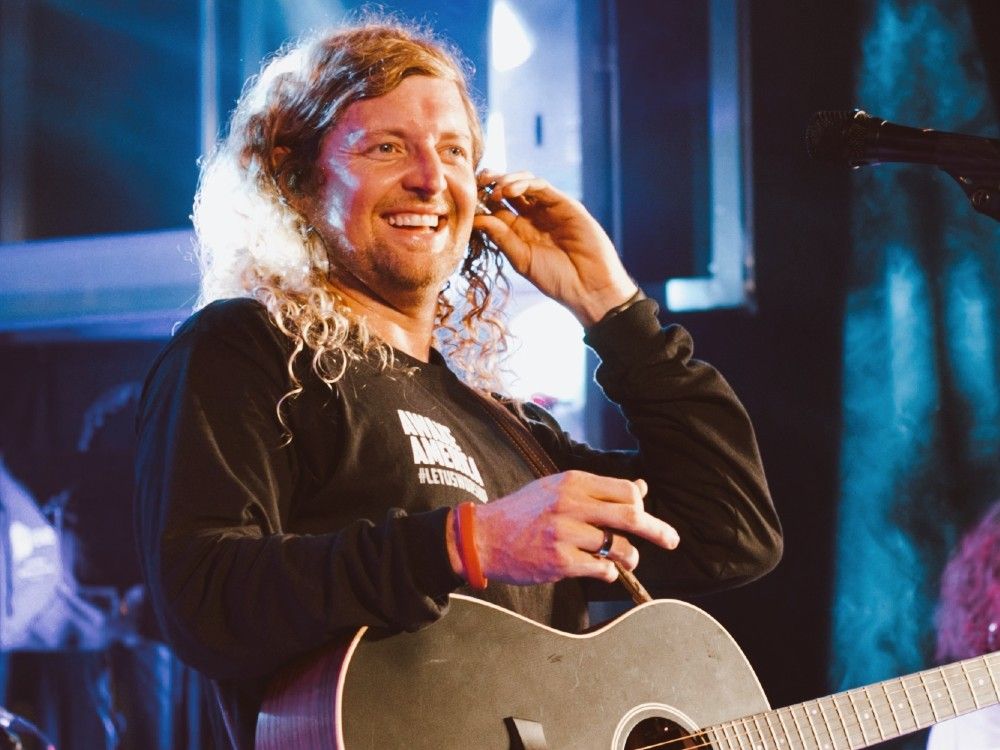
Sean Feucht, shown in a picture from the press kit on his website, will be performing at Confederation Landing in Charlottetown despite pushback from local residents.

That’s it. I’m calling it: the only thing kitschier than a MAGA hat inspired by U.S. President Donald Trump is the fanatical anti-MAGA sentiment that has some Canadians behaving like the jealous stepchild sibling to our southern neighbour.

That is certainly how several residents of Nova Scotia are acting after discovering that

a so-called “MAGA influencer” and musician

, Sean Feucht, had booked a show at the

York Redoubt National Historic Site

for Wednesday night. Their outburst about Feucht led Parks Canada 

to revoke his permit

late Tuesday over “evolving safety and security considerations.” The musician has since secured a new location in rural Nova Scotia.

On his website, Feucht

describes himself

as a “speaker, author, missionary, artist, activist, and the founder of multiple global movements.…” As per

Rolling Stone magazine

, he’s a “far-right Jesus rocker” who praises Trump. Feucht unsuccessfully ran as a Republican candidate in 2020. In 2023, he

wrote about how Canada

“desperately” needs awakening and revival.

Let him try.

Feucht is not my cup of tea. At all. But the marvellous part in all of this is that

no one is forcing me to attend any of his shows

. Nor is anyone else being forced to attend. Not a single Nova Scotian will be dragged, kicking and screaming, to the Parks Canada site, or any other site where Feucht will presumably crow about the gospel and the Grand Old Party. How great!

Nevertheless, several Nova Scotian residents garnered media attention after decrying the planned event. Not content to merely express their intolerance of Feucht’s views, they want the whole show cancelled. Shut ‘er down. They damn near succeeded. Their level of perturbation is hokier than a bright red “MAKE AMERICA GREAT AGAIN” cap. At least with the cap, one is merely expressing oneself — and not also trying to control what others can see, hear, think or do.

More outrageous, still, is that Shannon Miedema, Liberal member of Parliament for Halifax, attempted to do the bidding of her censorious, anti-freedom constituents.

According to CBC News

, the outlet was shown a message that Miedema emailed a resident, which reads: “I have the utmost respect for the value of free speech, I do not believe this event aligns with Parks Canada’s core values of respect for people, equity, diversity and inclusion, or integrity.”

A bit like a vegan preaching the “utmost respect” for the value of not consuming animal flesh while munching on a medium-rare steak, no? Miedema, Miedema. Allow me to give you a lesson on free speech: it necessitates allowing others to speak, even when you dislike (or think you will dislike) what they have to say. This is basic, 101-level stuff.

Listing off “diversity, equity and inclusion” within a vague statement on harm or “integrity” to suppress others’ speech has become a predictable — and equally pathetic — trope of the far left. These characters, Miedema included, have yet to realize that to the average Canadian, being cancelled is now widely considered a badge of honour. We’ve grown tired of wokescolds.

Such scolds don’t need a red hat to be identified as members of a cult-like community from afar. What they need instead is the sympathetic ear of a CBC reporter afflicted by an equivalent level of anti-MAGA fervour.

Both the locals and the CBC have deployed the typical smears against Feucht, accusing him of being “anti-2SLGBTQ+” for, at least from what I’ve seen, speaking out against gender ideology and pediatric gender transition (a clear medical scandal to all but the most brainwashed of minds). The CBC article describes Feucht as having “spoken out against the 2SLGBTQ+ community, abortion rights and critical race theory on his website.”

Unfortunately for all those who’ve come down with a wrist-spraining case of handwringing over Feucht’s upcoming show, it remains legal in this country to hold, and share, opinions on contested topics. Yes, even about abortion, gender and race — and even if one identifies as a MAGA supporter while doing so. It’s difficult, clearly, but these disgruntled pseudo-patriots are going to have to wipe the tears from their faces using Canada’s Charter of Rights and Freedoms.

Perhaps Feucht would have crooned only for a stand of trees and an empty harbour. Now, maybe thousands will show up at the new venue and become indoctrinated into his campy brand of MAGA-Christian revivalism. A “forbidden,” cancelled show carries greater appeal, after all. Feucht is not doing anything wrong, or criminal — so none of us should require a say as to whether or not he is allowed to perform in one of our national parks.

York Redoubt National Historic Site appears to be a beautiful place. Shame that Feucht won’t see it. You know what else is beautiful about our country? Canada is — or at least should be — free. Let’s try to keep it that way.

National Post


Fathers of Confederation at the Charlottetown Conference of 1864, showing Canada's future first Prime Minister John A. Macdonald, seated centre front.   HANDOUT. George P. Roberts/Library and Archives Canada

The premiers are conferencing this week in Ontario with a scheduled drop-in from the prime minister. Then there will be a news release hopefully reporting incremental progress of some kind — perhaps on trade barriers, infrastructure, more counter-tariffs, or whatever.  

But suppose, just suppose, that at some future federal-provincial conference the assembled first ministers are forced to fry much bigger fish. Suppose they are forced  to consider major amendments to the constitution — maybe even re-drafting it — because some province, east or west, has actually obtained a “clear majority” in a referendum on a “clear question” to secede. 

I know, I know… such a situation is highly unlikely and it is considered unpatriotic to even raise it. But sometimes strange things happen — like a banker becoming prime minister of Canada or the Blue Jays attaining first place in the American League East — so please bear with me. And unpleasant as it may be to many of my generation to even contemplate the word “secede,” that is the word to be used for the sake of clarity if that is in fact exactly what its proponents mean and intend. 

According to the federal Clarity Act and the Supreme Court’s interpretation of it, here is what would not happen if some province were to get the support of a “clear majority” of its citizens on a “clear question” to secede. Such a province — notwithstanding the naïve assumptions of some sovereigntists — could not then march merrily into Independence Land. Instead, what would be triggered is a full-blown federal-provincial conference in which the federal and provincial governments would be obliged, according to the Supreme Court, to enter into “good faith negotiations” with the subject province, such negotiations to be governed by such court-enforceable principles as
the rule of law, democracy, federalism, and the protection of minorities.  

To implement the results of these negotiations — no matter what they were — would most likely require major amendments to the Canadian constitution, with all of the provinces having a major role to play since significantly amending Canada’s constitution requires the agreement of the federal parliament and at least two-thirds of the provinces having, in aggregate, at least 50 per cent of the population of all the provinces. 

In other words, any serious secession attempt and the constitutional negotiations it would trigger, could in effect open the door to a partial or complete overhaul of our constitutional arrangements — a Re-Confederation, if you will. 

Just as the original fathers of Confederation were strongly motivated by fear of the United States, so might today’s participants in any re-confederation exercise find themselves influenced by the same fear. And just as the original founders were obliged to promise the building of the Canadian Pacific Railway to secure B.C.s commitment to Canada, so their modern equivalents might find themselves obliged to commit to the creation of a sea-to-sea energy/transportation corridor in order to bind Canada West to the re-confederated entity. Who says history doesn’t repeat itself?

Exploring the potential parallels between the original confederation conferences and any Re-Confederation Conference a little further: who would be the present day equivalents of Charles Tupper and Leonard Tilley, vigorously championing the interests of Atlantic Canada? Who would be the equivalents of George-Étienne Cartier and George Brown, vigorously representing the divergent interests of Quebec and Ontario?  Who would be the present day champions of those regions and interests conspicuously absent from the original confederation discussions — the champions of the interests of Canada West, the northern territories, and Canada’s indigenous peoples? And would the re-founders include the equivalent of a John A. Macdonald — someone with the stature, skills, lubricating capacity,  and luck required to even keep any Re-Confederation Conference from blowing apart, let alone giving birth to Canada Next?

Finally, what might be the major demands and concessions that the principal participants in such a conference would bring to the re-confederation table?

Quebec would of course be expected to press its sovereignty association demand in one form or another. And this time there is unlikely to be strong and charismatic champions, within or outside Quebec, for “Please Stay, Don’t Leave.” Certainly the current prime minister — an anglophone banker who speaks French poorly and despises nationalism — is ill-equipped to play that role. And under current circumstances, several of the western provinces might be inclined to support Quebec’s ultimate assertion of sovereignty, provided one of the terms of its future “association” with Canada was an ironclad agreement to provide an open energy/transportation corridor across its territory to the Atlantic. 

Conceding sovereignty association to Quebec, however reluctantly, might also cause Canada West to rethink its own position within any re-confederated Canada. What if Canada West were to simply take Quebec’s vacated place within the federation — its 3 seats on the Supreme Court, its 24 seats in the Senate, and the majority of its seats in the Commons? Might Quebec conditionally “out” and  Canada West more effectively “in,” largely alleviate the strains that both Quebec nationalism and western alienation currently place on the federation?

Besides Quebec arriving at any future Re-Confederation Conference with its well thought out sovereignty-association proposition, it would behoove the other major components of the Canadian federation to think through how they would rewrite the constitution of Canada if they had the opportunity to do so. 

Canada West, in particular, should be prepared to come to any such conference with its own clearly thought out redraft of the current constitution — a redrafted constitution in which any future Senate is made democratically accountable and genuinely representative of regional interests; a redrafted constitution in which the currently inequitable equalization formula is made largely unnecessary because Quebec is now on its own and each of the remaining provinces is sufficiently equipped and responsible to carry its own weight; and a redrafted constitution now completely devoid of those current clauses which give the federal government the means of overriding the constitutionally defined division of powers between the central and provincial governments.

And so, Re-Confederation to form Canada Next. Possessor, guardian, and developer of the vast northern portion of the North American continent. Just a pipedream you say? But that’s what many said when those parochial colonials, with all their conflicting interests and passions, first met at Charlottetown to begin the creation of the original Canadian federation. Can we not do as well or better than they, if the times and circumstances were to demand that we do so?

Preston Manning is a former leader of the Opposition.


Revellers take part in the annual Halifax Pride parade in a file photo from July 23, 2016. Adam Zivo writes that the LGB community and the transgender community should chart their own autonomous paths, as was done decades ago.

Canada needs a new LGB movement that focuses exclusively on the interests of lesbians, gays and bisexuals, and which can operate without interference from transgender activists. The reality is that same-sex attracted people have unique needs that differ from, and occasionally clash with, the trans community, but which are not being adequately addressed under the status quo.

While some people assume that homosexuals and transgender people are interchangeable, that is simply not the case. Yes, same-sex attraction and gender dysphoria

can overlap

, particularly in early life, but orientation and gender identity remain distinct concepts. In fact, maintaining this distinction has historically been integral to the gay rights movement, which fought for decades to normalize the belief that men are still wholly men (and women still wholly women) regardless of which sex they sleep with.

The conflation of orientation and gender is a relatively new development; when gay and trans activists burst out of their closets in the 1970s, they generally saw themselves as

belonging to distinct movements

. Many early homosexual organizations, such as the

Gay Activists Alliance

, maintained that trans rights were unrelated, or at least peripheral, to their own struggles, and feared that associating with the trans community would erode public acceptance of same-sex attraction.

Lesbians were particularly adamant about separation, with leading theorists denouncing male transsexuality as a colonization of womanhood. For example: in 1979, lesbian feminist Janice Raymond published

The Transsexual Empire

, a polemic wherein she argued that transgenderism uses “patriarchal myths” to appropriate and dominate women’s bodies. Her work was highly influential, and inspired the Lesbian Organization of Toronto to

ban transsexuals in the late 1970s

so that their space could remain for “women born women only.”

Trans activists reciprocally formed their own organizations, such as the

Street Transvestite Action Revolutionaries

, which allowed them to uncompromisingly pursue their own goals without deference to outsiders. They criticized the homosexuals who had rejected them, arguing that they were too assimilationist, bourgeois and narrow-minded in their critiques of social injustice.

This was a reasonable state of affairs. Each community, being represented by its own constellation of organizations and activists, enjoyed a great deal of self-determination. Homosexuals and transgender people were free to strategically co-operate, but could also meaningfully critique one another when their interests clashed.

The gay movement ultimately

proved more successful

— largely because homosexuals were better resourced and were, on average, more strategic with their battles and words. In other words: respectability politics worked. As such, the transgender community was eventually absorbed into the gay rights movement as a junior coalition partner

in the 1990s

, forming the modern LGBT umbrella.

Transgender people greatly benefited from this alliance, with gay labour setting the foundation for eventual trans acceptance. There were few downsides for homosexuals at first, because “LGBTQ” organizations remained cognizant of their needs. But then the United States legalized same-sex marriage and many homosexuals, feeling victorious, drifted away from community activism.

In their absence, LGBTQ organizations were entirely

co-opted by transgender activism

, and the social issues faced by gays and lesbians (e.g.

sexualized drug use

for men, and

intimate partner violence

for women) were abandoned in the gutter. Many homosexuals found themselves voiceless, and, worse yet, scorned by the very institutions that were supposed to represent them.

Cannibalized from the inside by gender radicalism, the mainstream LGBTQ movement came to insist that biological sex is irrelevant to orientation. Lesbians were advised to

enjoy “girl dick”

while gay men were pressured to unlearn their “

genital preferences

.” Homosexuals who asserted their sexual boundaries were

excommunicated from queer spaces

and dating apps while being smeared as bigots.

In tandem, vulnerable same-sex attracted youth were

pressured into receiving irreversible sex changes

under the auspices of “gender-affirming care,” simply because they exhibited perfectly normal episodes of gender confusion that,

in most cases

, would have resolved naturally. This homophobic practice of “transing away the gay” received little scrutiny from mainstream LGBTQ institutions, because the safety of young gays and lesbians apparently matters less than maintaining the myth that all gender dysphoria is indicative of transgenderism.

Some gender radicals even began to

crusade against gay men

in particular. Not only did they normalize using “cis gay” as a slur, they propagated a revisionist history wherein the participation and impact of gay activists was minimized, if not completely erased. Gay men were told, remarkably, that they

owed their rights

to “trans women of colour,” even though this claim has never been remotely true.

And throughout all of this, the trans-led “LGBTQ” movement still found time to

alienate the rest of society

, too. According to the

2025 Ipsos LGBT+ Pride Report

, which uses polling data gathered across 26 countries, support for transgender rights has declined markedly since 2021, with same-sex rights seeing a similar, albeit weaker, softening. Handing over the reins to gender radicals has been demonstrably disastrous — decades of progress risk being undone by the current backlash.

In this context, it is imperative that the LGB community seize control of its own destiny. There is no reason for homosexuals to subordinate their interests to transgender activists who so often despise them. Gays and lesbians should not passively sit around while gender radicals sabotage public support for same-sex relationships. Let each community chart its own autonomous paths, as was done decades ago, and if there are opportunities for inter-community co-operation, then that should be explored — but on an equal and limited basis.

National Post


Kids These Days Dep’t: You may have seen a study making the rounds in recent days decrying the corrupting grasp of Andrew Tate on

today’s male youth,

titled “‘Trying to talk white male teenagers off the alt-right ledge’ and other impacts of masculinist influencers on teachers.” It gives the impression that roving junior Vikings have taken over classrooms, backing their female counterparts into a corner as they try to learn. It’s a distinctly racial problem and a distinctly male problem, one that teachers are fighting to no avail.

Tate, I should preface, is a terrible figure of influence, at 10 million Twitter followers: he advocates for

polygamy

and refers to his alleged harem of (possibly fictional) wives as “baby machines”; he’s

suspected

of sex trafficking and rape in multiple countries; he runs a scammy

life coaching business

. He’s not a conservative in the slightest (though it’s been said), as his beliefs run completely counter to the traditions of western culture.

But this study about his supposed impact on classrooms sits on shaky research foundations and is notable not for its findings, but for its contribution to the growing body of media that vilifies boys.

The researchers — one Master’s student of social justice out of the University of Toronto, and one professor of “recreation and leisure studies” out of Dalhousie — pulled all posts and comments from Reddit’s r/Teachers board between June 1, 2022 and January 31, 2023, for a total of 2,364 snippets of content.

The authors carefully sidestep any questions about quantity, leaving out a by-the-numbers breakdown about the number of posts complaining about “discourses of misogyny championed by Andrew Tate.” They do, however, state that Reddit posts about these issues can be sorted into three themes: one, the impact on teachers; two, the impact on the classroom; and three, proposed solutions.

Teachers, found the researchers, struggled with the gender dynamics of a misogyny-steeped classroom. Thirteen-year-old boys weren’t respecting their 24-year-old woman teachers, and in one case, a user reported that a group of troublemakers told the vice-principal that they would only behave in a class taught by a man. Another user complaint, summarized by AI, read as follows: “Seemingly, ninety percent of my work is trying to talk white teenage boys off the alt-right ledge.”

The authors go on to assert that exposure to Andrew Tate’s rhetoric can impact the safety of a classroom and seed misogyny, citing one example of a nightmare classroom: “My (brother-in-law) teaches 7th grade and said the boys in his class have taken to calling all women and girls ‘holes,’ and any boy who is friendly or polite to girls a ‘simp.’ One boy was bold enough to ask his female coworker how she’d keep her husband if she didn’t have that wetwet, to roaring laughter.”

As for solutions, some teachers noted that girls in some classrooms will ridicule any boys who bring up Tate, and suggested letting the children police themselves. Other teachers, summarized the researchers, described “violence” — but the researchers never reproduced any accounts of those.

Four paragraphs of discussion on misogyny, inceldom and Tate lament male supremacism and the “machine of ‘naturalized’ male power.” Overall, it looks grim.

But what it lacks is a sense of context. The unverified accounts of classroom sexism were terrible, yes — something that no teacher or female pupil should have to go through. But they weren’t quantified; and even if they were, a mere sample from Reddit wouldn’t be statistically representative of the classroom experience. Self-reported tales of woe are more likely to be told in such spaces, as with any public message board since Roman times. We also have to assume there are false positives: cases when oversensitive teachers take grave offence to ironic humour typical of teens.

Reddit discussions can be useful and informative, particularly in gauging a community’s temperature — and for that reason, I cite them in columns from time to time — but they can’t be the sole basis for academically gauging the prevalence of a problem.

So, is Tate-fuelled violence (by white boys in particular) really a problem in Canada? It’s an objective fact that violence in school is a growing problem, with many major school boards

reporting

a statistical rise in incidents compared to before the pandemic. Teachers report

having to deal

with “complex needs” without adequate supports;

neglectful administrators

; and, as a result, the

normalization of violence

. Compounding these problems are the

minority

of parent activists who

campaign

to keep police officers — one source of protection — out of the schools that need them most.

But these reports lack demographic information, and they don’t include motive. The information that is out there throws the Reddit vignette into question: in the United Kingdom, one survey

found

that Tate was most likely to be viewed positively by Black youth aged 16 to 25 (41 per cent of whom approved of the man); and was also rated positively by 31 per cent of Asian (including South Asian) youth. Only 15 per cent of their white male counterparts felt the same — a group that, at the same time, has become the face of misogynistic violence through popular culture. Netflix’s

Adolescence

,

anyone

?

Where it surfaces, Tate-fuelled misogyny is a problem. But we don’t actually know where that is in Canada, or in which communities — at least, based on this six-month qualitative snapshot of a teachers’ subreddit. Maybe that’s something our social justice scholars can look into before they start another round of finger-pointing.

National Post


The shíshálh Foundation Agreement gives the First Nation varying degrees of decision-making power over 1.2 million acres of public land on B.C.’s Sunshine Coast.

The federal government’s new law designed to fast-track major projects has put the true meaning of

UNDRIP’s

“free, prior and informed consent” provisions under the spotlight. At the core of the issue is a simple question: does “consent” mean an Indigenous veto over projects, even those in the public interest?

While the

prime minister

and his

justice minister

have tried to walk a delicate line to avoid making that commitment, British Columbia has gone all-in on the veto approach.

Under the auspices of B.C.’s Declaration on the Rights of Indigenous People’s Act, Premier David Eby has

admitted

that provincially significant projects on Crown land will not be expedited under its own fast-track law without the consent of Indigenous groups. At the same time, an effective veto is already being written into a growing number of agreements with Indigenous groups covering vast swaths of the province.

One example is the shíshálh Foundation Agreement, which gives varying degrees of decision-making power over

1.2 million acres

of public

land

on B.C.’s Sunshine Coast to an Indigenous government representing just

1,700 people.

Under the

agreement

, all applications for all Land Act decisions in the region will now go through a shared, consent-based or even exclusive shíshálh decision-making process.

This agreement is rightly seen as a precursor to more deals across the province, despite the fact that its consent-based arrangements are exactly what forced the government to pause its contentious Land Act amendments last year after significant public

blowback.

Government documents

state

that “consent” means that “both the Province and a First Nation must approve an authorization before it can be issued.” It is difficult to see how consent, in this case, amounts to anything other than veto, despite official

denials

in this regard.

In the shíshálh case, the consent provisions “require shíshálh Nation and B.C. to agree to the proposed activity before a provincial decision authorizing the activity.” In other words, even if a proposed activity is in the broader public interest, authorizations will not be issued without shíshálh Nation’s approval.

The agreement goes even further, with a commitment “to explore an exclusive decision-making agreement.” This “would recognize the ‘jurisdiction’ of shíshálh to make decisions in relation to specified matters, with the Province stepping back from decision-making on those matters.”

There is no legal basis in Canadian law for exclusive Indigenous decision-making over public lands, yet the province admits it would not be at the decision table at all — leaving the public interest totally unrepresented.

Even so, the government maintains its implausible position that this is “not about a veto” but rather reflects the (democratically and legally-flawed) DRIPA principle that “both governments have authority to decide whether a particular authorization should be issued.”

From a democratic standpoint, shíshálh Nation’s

constitution

is clear: only members can vote in shíshálh elections, and membership is based strictly on ancestry. This means that tens of thousands of citizens living in the large region covered by the agreement will have no democratic voice in consequential land-use decisions that directly affect their interests, a fact that has already led to an important constitutional challenge by one

community group

on the Sunshine Coast.

And this is just one of many similar arrangements being implemented across B.C.

Last month, the Province

announced

a joint land use planning process with five Indigenous groups covering an area larger than England in B.C.’s mineral-rich Northwest. Consent-based agreements are again touted as part of the process.

This means Indigenous groups representing a combined population of less than 15,000 will be able to exercise decision-making power over a massive, economically crucial region impacting over five million British Columbians with whom they have no democratic relationship.

Another recent

agreement

“requires the

consent

of the Tŝilhqot’in Nation for any mine in the Teẑtan Area that is a reviewable project under the Environmental Assessment Act to proceed.” Most, if not all, of the 740,000 acres covered by the new agreement is outside of the Tŝilhqot’in Aboriginal

title area

recognized by the Supreme Court of Canada, and remains public land.

Once again, the B.C. government has agreed to an

effective veto

over an area of public land for a governing body that non-Indigenous British Columbians cannot vote for. And once again, they’ve failed to preserve their own basic responsibility to make decisions in the broader public interest.

Over the years, Canadian courts have consistently called for a balancing of the public interest with the unique interests of individual Indigenous groups. Finding that balance is supposed to be the difficult but critically important task of the governments we elect.

Instead, under DRIPA, the B.C. government is increasingly abdicating its responsibility to protect the public interest, and eroding the foundational principles underpinning our democracy. Time will tell whether the federal government follows suit.

Caroline Elliott, PhD, is a Senior Fellow with the Aristotle Foundation for Public Policy and sits on the board of B.C.’s Public Land Use Society (publiclanduse.ca).


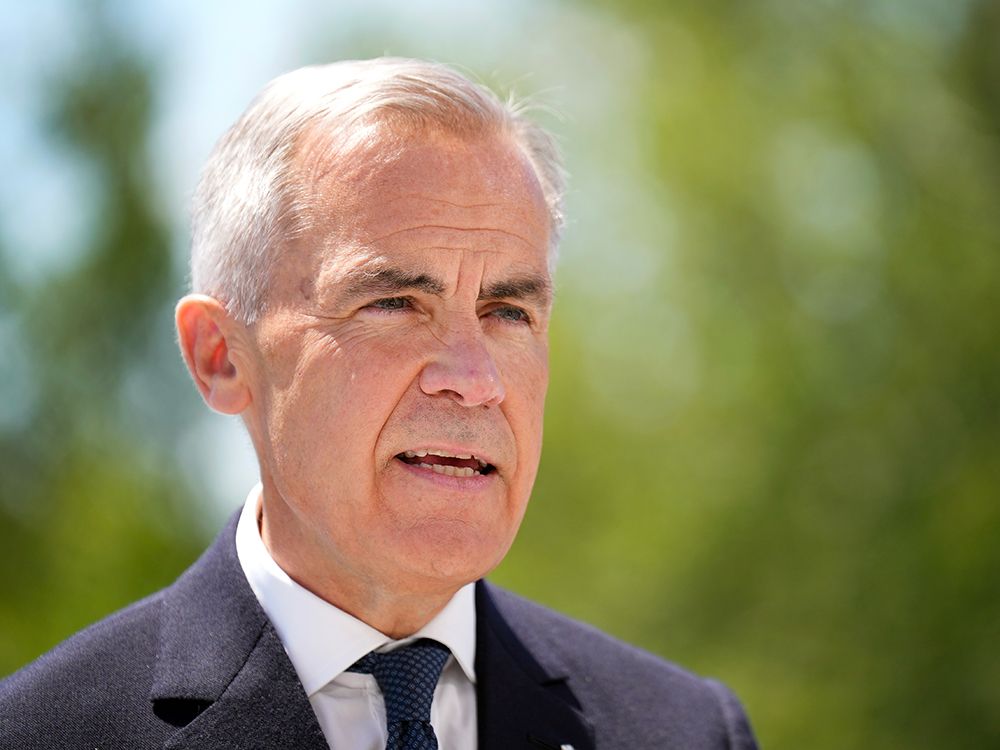
Prime Minister Mark Carney speaks to reporters while meeting with Canada's premiers in Huntsville, Ont., on Tuesday, July 22, 2025.

Mark Carney told the premiers in Huntsville, Ont., on Tuesday that the federal government’s new major projects office will be open by Labour Day, representing a shift in attitude towards building big things, the prime minister said, “from ‘why?’ to ‘how?’”

The statement expressed a confidence that, as with deceased baseball players in the movie Field of Dreams, “if you build it (the office), they (the projects) will come.”

But will they? Is there pent-up demand on the part of the owners of globally mobile capital to invest in Canadian infrastructure?

This country still has a reputation as a difficult place to build things in a timely and predictable fashion, said Elan Harper, director of Canadian business tax for Andersen Consulting and a former policy head for the leader of the Opposition, Pierre Poilievre.

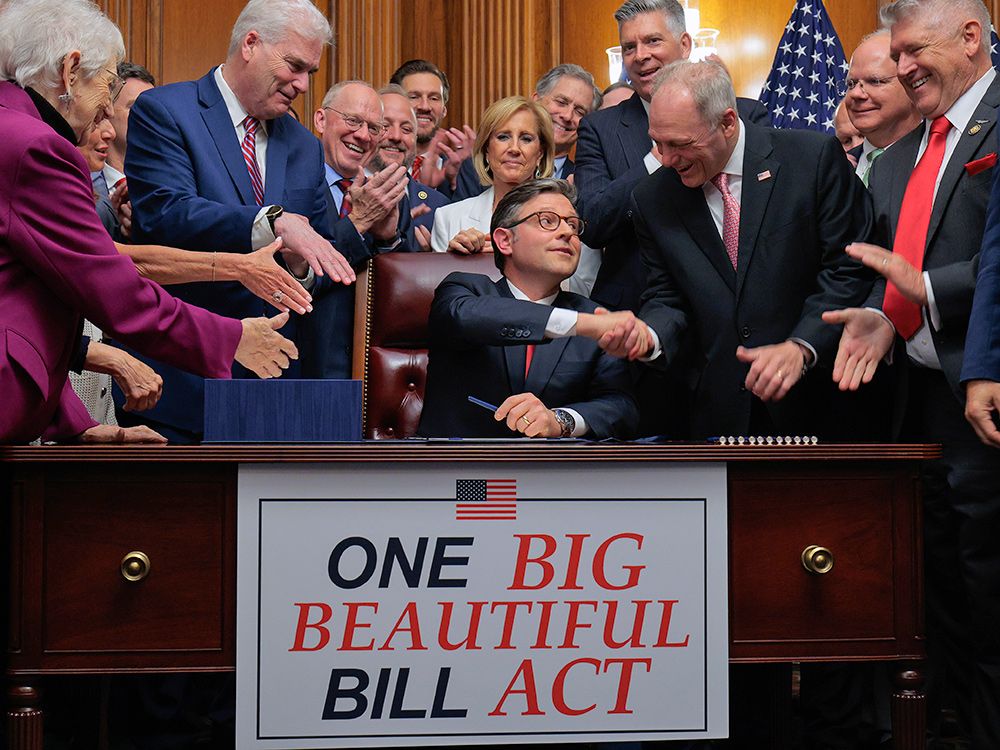
In addition, President Donald Trump is using the carrot of big corporate tax cuts in his “big, beautiful bill” (BBB) and the stick of tariffs to persuade investors to look south.

“The BBB provides the certainty of a very competitive corporate tax regime for the foreseeable future. If Canada wants to attract capital, we need to ensure we are just as attractive from a tax perspective,” said Harper.

The overarching assumption, at least on Bay Street, is that some form of baseline U.S. tariff will remain.

Former finance minister John Manley said he thinks that will hurt investment flows and that the traditional “investment thesis” — that Canada is a country of highly skilled people, rich in natural resources, governed by the rule of law, with unfettered access to the U.S. market — may have to be rewritten.

“Without the latter part, we might have to look at other things, like becoming a lower-cost jurisdiction by adjusting business income tax or even personal income tax,” he said.

Despite recent cuts, Canada’s combined federal and provincial personal income tax remains the fifth highest of 38 high-income countries at 53.53 per cent. The combined corporate rate at 26.14 per cent is higher than the OECD average, while being marginally lower than the G7 average.

It certainly doesn’t feel like a reservoir of investment is set to burst across the country.

The mood across the country remains decidedly mixed, according to the Bank of Canada’s second-quarter business outlook, released on Monday.

It suggested the uncertainty over Trump’s trade policies is curbing business investment (and consumer spending) in Canada, even though most see the economy avoiding a recession. Firms are holding off new investment plans, in the face of weaker orders and lower advanced bookings.

The better news is that the worst-case scenarios on higher tariff-related costs are now seen as less likely.

In its recent economic analysis, RBC said it doesn’t anticipate a material change in the Canadian economic outlook, as long as any tariffs are only applied to the 10 per cent of goods not covered by the U.S.-Mexico-Canada trade agreement. The bank sees higher economic growth next year on the back of government spending that Carney hopes will “catalyze” private-sector investment in building projects.

Manley said the prime minister has the right plan, in streamlining project approvals and reducing the friction of doing business. The tricky bit is the execution.

The former finance, foreign and industry minister said Ottawa taking the lead in reducing internal trade barriers is long overdue but will encounter resistance. “Every one of those barriers has a constituency. Everyone is in favour of going to heaven, but no one wants to die to get there,” he said.

But he said he has seen a “sea change” in attitudes in Ottawa in the past six months.

“Canada is investable again, he said. “Over the years, they were hostile to business. I’m not exaggerating when I say that in the past, the best a CEO could hope for was a meeting with (a minister’s) staff, who didn’t take notes. Now, they are seeing ministers who are taking notes. That’s a total change.”

The statistics appear to bear that out. Senior Liberals talk about “life during wartime” to hint at the scale and pace of the issues coming at them.

“It’s tremendously exciting, but it’s like building the plane and flying it at the same time,” said one staff member.

In June, Industry Minister Mélanie Joly alone held 50 meetings with industry stakeholders, while Natural Resources Minister Tim Hodgson hosted 43.

The staff member said Joly is giving out her cell phone number to everyone she meets. “It’s a staffer’s nightmare,” he said.

Carney himself met representatives of most of the big oil companies, and the auto and the steel producers.

The meetings with the latter were clearly more about keeping the lights on than expansion. The Trump tariffs are beginning to bite, as automaker Stellantis revealed in its latest quarterly earnings report, where it said the tariffs chopped US$350 million off revenues.

During the recent federal election campaign, Carney promised to build an all-in-Canada network for auto-manufacturing components “from raw materials to finished vehicles.”

But Manley said it is not a question of building a domestic car industry, “it’s a question of whether we can keep what we’ve got standing long enough to get through this crisis.”

The “one economy” agenda still has great traction in a country that feels itself to be on a war footing, even among many Conservatives: a rare moment of national consensus.

The most vocal opposition has emerged from economic nationalists like former Blackberry founder and chair of the Council of Canadian Innovators Jim Balsillie, who argues that Carney and the policy makers in Ottawa have proven incapable of designing a 21st century strategy for the country’s strategic industries.

In conversation and in print, Balsillie has argued that Carney’s solutions are “outdated, conventional economic theories, rooted in the 1970s.” He argues that policy makers don’t grasp the importance of regaining ownership of AI technology. “(Carney) has proposed that Canada host data centres, without a word on Canadian ownership and control of the data and the value-added applications,” he wrote.

Productivity today is not increased by the worker’s output but from revenue per worker, and that comes from ideas that generate revenue, he said.

“Mr. Carney’s economic proposals resemble the excess confidence of our self-satisfied, outdated policy class who failed to see the global economic shifts happening around them.”

The prime minister has talked about incentivizing builders, innovators and entrepreneurs, which is in essence what Balsillie is calling for: more domestic innovation.

Yet, as Carney noted in Huntsville, the question is no longer “why?” but “how?”

National Post

jivison@criffel.ca