LP_468x60
on-the-record-468x60-white

The International Criminal Court in The Hague.

THE HAGUE — The International Criminal Court (ICC) has come under fire for its politically motivated prosecutions of Israel’s prime minister and former defence minister, but the court’s own actions expose it as an unserious institution that’s wholly incapable of fulfilling its role of prosecuting the most heinous of international crimes.

The court’s biggest problem is its consistent inaction. In July and August, the court only has one event relating to ongoing cases on its agenda. In total, only six active cases are currently being heard. Not only is it inactive, it also faces serious difficulties in apprehending those it indicts, which can partially explain its inactivity.

A further issue is the alleged sexual misconduct of the court’s former lead prosecutor, Kharim Khan, who issued the arrest warrant for Israeli Prime Minister Benjamin Netanyahu. Khan was suspended from the ICC in June over sexual misconduct allegations levelled by his former assistant. On Friday, the court’s 125 member states voted to permanently remove Khan as chief prosecutor.

The scandal has severely degraded the court’s credibility, since Khan had a substantial say in the issuance of arrest warrants. If the character and judgment of its lead prosecutor cannot be trusted, then neither can the court itself.

Two weeks ago, the U.S. State Department charged that the ICC poses an “intolerable threat” to America and its allies, and called on other nations to reject the court’s authority. Although the United States is not a signatory to the Rome Statute, in 2020, the ICC launched an investigation into alleged war crimes committed by U.S. forces in Afghanistan, thereby asserting its right to usurp American sovereignty.

The ICC has only issued 61 arrest warrants in its history, and only 22 have appeared before the court. How is it that an institution that’s supposed to be holding those who commit the most serious crimes accountable is looking into so-called American crimes, but has only issued 61 arrest warrants since its founding?

Should Canada, because of its peacekeeping past, believe that it will not one day become a target of the ICC? Surely not. Canadian heroes have fought alongside Americans in many places, including Afghanistan. Canada also supplies its allies in times of war.

There is less room between Canada and the ICC than there is between the U.S. and the ICC, since Canada is a signatory to the Rome Statute, and the court still sees fit to investigate Americans and issue arrest warrants for our allies. It would surely not be in Canada’s interests to have an international court attempting to arrest government ministers or other Canadian citizens.

The International Criminal Court says that it exists to hold those who commit the most serious crimes accountable. However, the numerous issues with the ICC show that the court itself needs accountability. While relations between Canada and the United States have been strained as of late, perhaps our neighbours to the south have a point about international institutions like the ICC that have little respect for the sovereignty of the countries that empower it.

National Post


Things might get a bit tense now between Prime Minister Mark Carney and Ontario Premier Doug Ford after Carney rejected Ford's plan to expand Toronto's island airport.

Doug Ford has rarely had a bad word to say about Mark Carney.

The Ontario premier has called the prime minister a “smart, shrewd businessman” and a “very sharp guy.”

He’s said he’s an “honest man” who “just wants the best for his country,” and, after Carney stayed overnight at the Ford cottage last summer, the premier practically gushed about how this fancy Bay Street guy with all of his important degrees never mentioned any of it.

“(He’s) the most humble person you’d ever want to meet,” Ford said.

But the next late-night chat in front of a Muskoka fireplace could be decidedly more awkward after Carney effectively shelved one of Ford’s signature policy ideas, the expansion of Toronto’s island airport.

Federal Minister of Transport Steven MacKinnon put out a statement on Friday night saying that Ottawa would not pursue the planned $5-billion expansion of Billy Bishop Airport “at this stage,” citing significant public opposition that was revealed during a consultation process.

While Ford’s transportation minister, Prabmeet Sarkaria, has since said the province views this as a temporary setback, there is no disputing that Carney has taken an issue on which the premier has expended major political capital — seizing the airport and surrounding lands so that he could push through the expansion over municipal opposition — and made all of that pointless.

What will Ford say about his friend the next time he is asked? And will his response include anywhere near as much praise?

While Carney and Ford might seem like odd allies given the premier’s general disdain for provincial Liberals past and present, the two were co-operative almost as soon as Carney took office. After they met in an Etobicoke diner that seemed hand-picked to appeal to Ford’s everyman persona, the premier said he and Carney shared many of the same political views.

They also had a mutual problem in the trade threats coming from Donald Trump in the United States, and no premier was more eager than Ford to rattle sabres in the direction of Washington, so they both ended up saying a lot of the same things about the importance of investing at home while also finding new markets elsewhere.

The two also had a mutual rival that was more unexpected: Pierre Poilievre and the federal Conservatives. The Cold War between the federal and provincial Conservatives was out in the open by the time that Ford won re-election early last year and Carney did the same a couple of months later, but the enmity between the two blue parties has only continued.

As a series of floor-crossings early this year brought the potential for a Carney majority into focus, Ford cheered it on. As federal Conservatives were accusing the Liberals of seizing power “undemocratically” and disenfranchising Canadian voters, Ford said he welcomed the “certainty” that a majority government would bring, ahead of a series of byelections that ultimately confirmed that majority.

The premier, meanwhile, has rarely missed a chance to trumpet a “Team Canada” approach to dealing with Trump’s trade threats and he went so far as to champion a new oil pipeline from Alberta to Ontario. That project, though nowhere close to happening, bolstered the argument that Canada’s most populous province sees Alberta, with its new separatist streak, as a key member of Confederation.

Against all that, it wouldn’t be surprising if Ford felt a little betrayed by the Billy Bishop decision. Carney met Alberta Premier Danielle Smith’s demand for a planned pipeline through British Columbia, and he conceded to B.C. Premier David Eby’s demand that such a pipeline not be routed to the northern coast, but he has now rejected Ford’s airport plan out of hand. The prime minister might have called the expansion proposal “a very interesting vision” in March, but it turned out that he was speaking more like a parent who is trying to avoid telling their child “no.” ( Can you get your ears pierced? Hmm, that’s an interesting idea. We’ll see. )

It’s not like Carney has proven to be a stickler for public consultation, having introduced a bill that would allow the federal government to fast-track certain major projects through the usual environmental review and public feedback stages.

Ford might have thought that he would get a sympathetic hearing from his friend on the airport expansion, given that it fits some of the same criteria of the federal plan to build things faster.

But it turned out that the public feedback that Ottawa solicited on Billy Bishop was just the political cover that they needed to kill it — and to make life easier for the downtown Toronto Liberal MPs whose constituents were most opposed to turning the island airport into a much larger transit hub.

That the airport will no longer be a live issue for the federal byelection that was just called for a downtown Toronto riding is probably just a happy coincidence, too.

Carney can at least tell Ford, the next time that sees him, that on the airport thing, he was just listening to the people. It’s a message with which the premier is quite familiar.


Things might get a bit tense now between Prime Minister Mark Carney and Ontario Premier Doug Ford after Carney rejected Ford's plan to expand Toronto's island airport.

Doug Ford has rarely had a bad word to say about Mark Carney.

The Ontario premier has called the prime minister a “smart, shrewd businessman” and a “very sharp guy.”

He’s said he’s an “honest man” who “just wants the best for his country,” and, after Carney stayed overnight at the Ford cottage last summer, the premier practically gushed about how this fancy Bay Street guy with all of his important degrees never mentioned any of it.

“(He’s) the most humble person you’d ever want to meet,” Ford said.

But the next late-night chat in front of a Muskoka fireplace could be decidedly more awkward after Carney effectively shelved one of Ford’s signature policy ideas, the expansion of Toronto’s island airport.

Federal Minister of Transport Steven MacKinnon put out a statement on Friday night saying that Ottawa would not pursue the planned $5-billion expansion of Billy Bishop Airport “at this stage,” citing significant public opposition that was revealed during a consultation process.

While Ford’s transportation minister, Prabmeet Sarkaria, has since said the province views this as a temporary setback, there is no disputing that Carney has taken an issue on which the premier has expended major political capital — seizing the airport and surrounding lands so that he could push through the expansion over municipal opposition — and made all of that pointless.

What will Ford say about his friend the next time he is asked? And will his response include anywhere near as much praise?

While Carney and Ford might seem like odd allies given the premier’s general disdain for provincial Liberals past and present, the two were co-operative almost as soon as Carney took office. After they met in an Etobicoke diner that seemed hand-picked to appeal to Ford’s everyman persona, the premier said he and Carney shared many of the same political views.

They also had a mutual problem in the trade threats coming from Donald Trump in the United States, and no premier was more eager than Ford to rattle sabres in the direction of Washington, so they both ended up saying a lot of the same things about the importance of investing at home while also finding new markets elsewhere.

The two also had a mutual rival that was more unexpected: Pierre Poilievre and the federal Conservatives. The Cold War between the federal and provincial Conservatives was out in the open by the time that Ford won re-election early last year and Carney did the same a couple of months later, but the enmity between the two blue parties has only continued.

As a series of floor-crossings early this year brought the potential for a Carney majority into focus, Ford cheered it on. As federal Conservatives were accusing the Liberals of seizing power “undemocratically” and disenfranchising Canadian voters, Ford said he welcomed the “certainty” that a majority government would bring, ahead of a series of byelections that ultimately confirmed that majority.

The premier, meanwhile, has rarely missed a chance to trumpet a “Team Canada” approach to dealing with Trump’s trade threats and he went so far as to champion a new oil pipeline from Alberta to Ontario. That project, though nowhere close to happening, bolstered the argument that Canada’s most populous province sees Alberta, with its new separatist streak, as a key member of Confederation.

Against all that, it wouldn’t be surprising if Ford felt a little betrayed by the Billy Bishop decision. Carney met Alberta Premier Danielle Smith’s demand for a planned pipeline through British Columbia, and he conceded to B.C. Premier David Eby’s demand that such a pipeline not be routed to the northern coast, but he has now rejected Ford’s airport plan out of hand. The prime minister might have called the expansion proposal “a very interesting vision” in March, but it turned out that he was speaking more like a parent who is trying to avoid telling their child “no.” ( Can you get your ears pierced? Hmm, that’s an interesting idea. We’ll see. )

It’s not like Carney has proven to be a stickler for public consultation, having introduced a bill that would allow the federal government to fast-track certain major projects through the usual environmental review and public feedback stages.

Ford might have thought that he would get a sympathetic hearing from his friend on the airport expansion, given that it fits some of the same criteria of the federal plan to build things faster.

But it turned out that the public feedback that Ottawa solicited on Billy Bishop was just the political cover that they needed to kill it — and to make life easier for the downtown Toronto Liberal MPs whose constituents were most opposed to turning the island airport into a much larger transit hub.

That the airport will no longer be a live issue for the federal byelection that was just called for a downtown Toronto riding is probably just a happy coincidence, too.

Carney can at least tell Ford, the next time that sees him, that on the airport thing, he was just listening to the people. It’s a message with which the premier is quite familiar.


A woman walks by a staked child's dress on Highway 5 near the former Kamloops Indian Residential School on June 5, 2021.

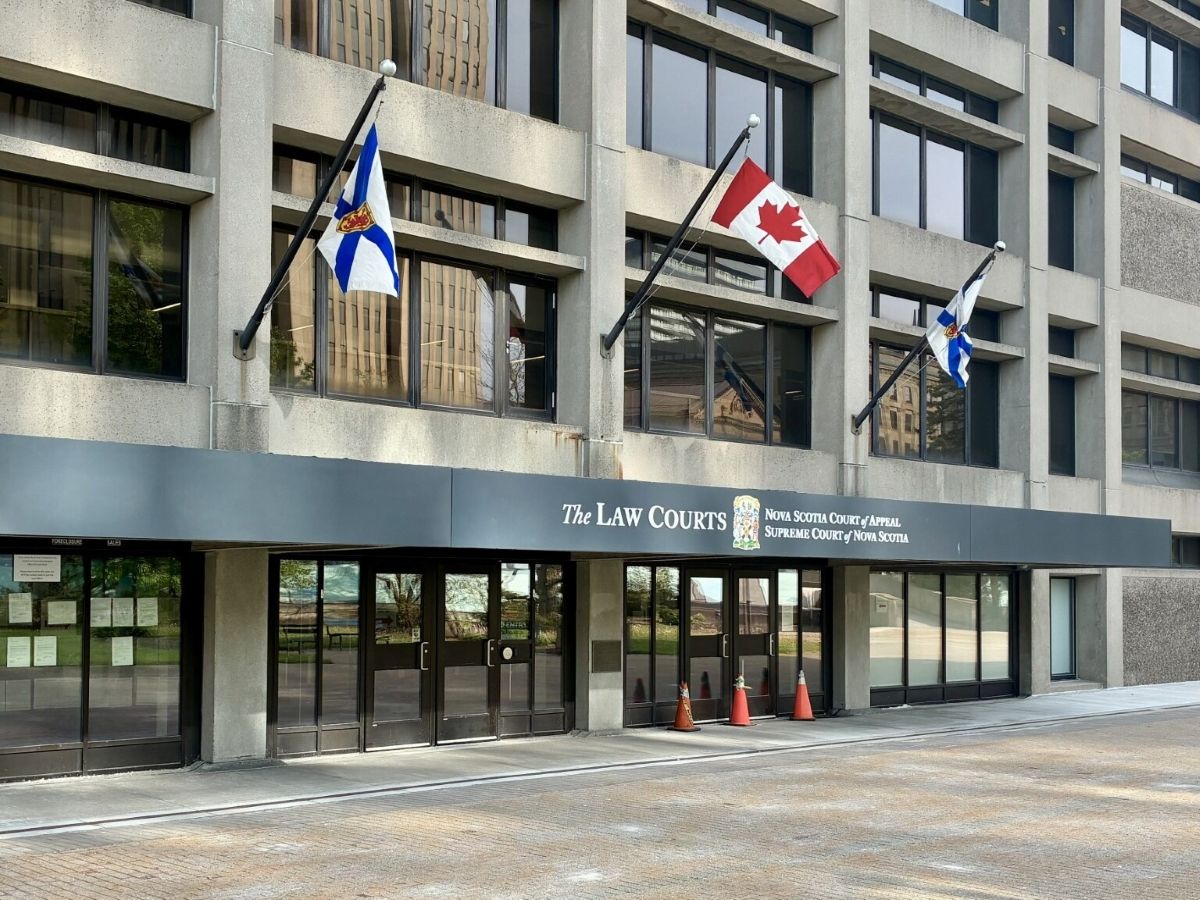
In 2024, a mandatory course for B.C. lawyers referred to the “discovery of an unmarked burial site containing the bodies of 215 children on the former Kamloops Indian Residential School grounds” which “(confirmed) what survivors have been saying all along.” When one lawyer proposed a correction, as no graves were ever found, the B.C. Law Society publicly disparaged him. He sued for defamation — but now, the trial has been called off.

Instead, criminal defence lawyer Jim Heller settled his case with the law society, a development that was made public in a Glacier Media report on Monday . The terms are confidential. We won’t know what each side agreed to do to shelve the litigation, or who the court would have sided with in the end. Much like the supposed “graves” that the local First Nation refuses to excavate at the Kamloops residential school, the public won’t get any closure on this one.

“I feel like I’m escaping the looking glass,” Heller told me over the phone on Thursday. “I’m escaping Wonderland a little bit.”

Heller’s saga began when he spoke up about the wording in the Indigenous competency course mandated for all lawyers by the B.C. Law Society. As things stood back then, all members of the profession had to read through materials endorsed by their professional overseers to maintain the ability to practice — only, the course materials were objectively false . The thousands of professionals gatekeeping everything from real estate deals to criminal sentencing — professionals from which the next generation of B.C.’s judges would be drawn — were being told to internalize the unproven claim that the bodies of children were found at the Kamloops residential school grounds.

Attempts to contact those responsible for the course to spur a correction went ignored in the summer of 2024. Nevertheless, there was a democratic fix available. Heller and colleague Burnaby lawyer Mark Berry advanced a motion at the law society’s annual general meeting that fall, proposing the use of the words “potentially unmarked burial site” to more carefully reflect reality; they also moved to have the reference to 215 bodies of children removed, along with the assertion that the “discovery” confirmed what survivors had been saying.

In response, a group called the B.C. First Nations Justice Council released a statement calling Heller’s proposal a “Racist Resolution” that contains “alarming Residential School denialism.”

“It is unconscionable that efforts be made to revise this history and sanitize the genocidal atrocities committed against Indigenous people in B.C. and Canada,” it said.

The very next day, the B.C. Law Society published a news release about the B.C. First Nations Justice Council statement, adding its own commentary to the mix: “The resolution submitted by Mr. Heller and Mr. Berry only highlights the need for the (Indigenous course) and confirms much work remains to be done to increase knowledge and understanding, continue our efforts of advancing meaningful reconciliation with Indigenous people, and eliminate racism in our profession.”

The motion ultimately failed : while it had garnered support from 1,499 members of the law society, another 1,683 opposed it, with 590 abstentions.

That October, Heller began asking the law society to remove the statement about his motion from the website. He took it to be an accusation of racism. The law society didn’t budge, however, so he embarked on his lawsuit in February 2025.

Interestingly, Heller says that his Indigenous clients have been made aware of his efforts to correct the training materials, and the vast majority have been supportive: “We have good, good relationships and they understand the principles behind it.”

There were some interesting twists in the litigation. During the summer of 2025, the B.C. Law Society began filing documents in court to support its defence. Heller referred to these documents in an affidavit afterward — only to have it taken out of public view entirely. A judge sealed that affidavit in August 2025 to protect the privacy of a former law society employee who had personal and family experience with “colonialism, colonial harm, and the effect of Residential Schools.”

“I reject the notion that because a person chooses to share certain information about themselves or their families in a public context, that they have somehow waived their right to privacy over any related information, including information that may be shared in a personal, non-public context,” wrote the judge in his decision to seal the affidavit. “Here, it is apparent the information … was not intended for the public sphere.”

Evidently, an Indigenous employee of the law society had said something relevant to the matter at hand, but it wasn’t up to the public to know.

It was around this time that the B.C. Law Society began to retreat . In August 2025, it removed its disavowal of Heller from its website and changed the mandatory Indigenous course materials. The course currently speaks of “200 targets of interest at the Kamloops site that are probable burials.”

This was followed by an odd non-apology by the law society in May 2026, stating that, “To the degree it was understood by some to have defamed Mr. Heller, the Law Society wishes to confirm that was not its intention.”

Taken in context with the settlement, it’s a win for Heller. The B.C. Law Society, once staunch in standing by the falsities it had published, quietly retracted them right around the same time that litigation was heating up. There was smoke, but the fire of a public win was doused before it could ever shed light on the moral panic that gripped Canada in 2021.

And who knows; perhaps the courts can’t be trusted to provide that anymore: it’s B.C. judges who keep allowing homeless people to claim property rights over public spaces like it’s the age of settlement; it’s B.C. judges who have begun blowing up the province’s land title system over historic grievances. Judges nationwide are provided training that predisposes them to siding with Indigenous causes. The cold reality is that the courts have political biases, and that testing them is a gamble.

But in other ways, old professional principles still work. Heller, a defence lawyer, took particular issue with the graves panic that hit Canada in 2021 because of how starkly it contrasted with the workings of a criminal trial. To prove someone’s guilt requires extensive evidence — and, in mounting a proper defence, the “devil might be in the details.” When it came to the graves and the accusations of an ongoing genocide, the country never got that treatment.

“My issue is just we’ve got to be truthful with our history with each other,” Heller said.

“We all deserve the presumption of innocence.”

National Post


A woman walks by a staked child's dress on Highway 5 near the former Kamloops Indian Residential School on June 5, 2021.

In 2024, a mandatory course for B.C. lawyers referred to the “discovery of an unmarked burial site containing the bodies of 215 children on the former Kamloops Indian Residential School grounds” which “(confirmed) what survivors have been saying all along.” When one lawyer proposed a correction, as no graves were ever found, the B.C. Law Society publicly disparaged him. He sued for defamation — but now, the trial has been called off.

Instead, criminal defence lawyer Jim Heller settled his case with the law society, a development that was made public in a Glacier Media report on Monday . The terms are confidential. We won’t know what each side agreed to do to shelve the litigation, or who the court would have sided with in the end. Much like the supposed “graves” that the local First Nation refuses to excavate at the Kamloops residential school, the public won’t get any closure on this one.

“I feel like I’m escaping the looking glass,” Heller told me over the phone on Thursday. “I’m escaping Wonderland a little bit.”

Heller’s saga began when he spoke up about the wording in the Indigenous competency course mandated for all lawyers by the B.C. Law Society. As things stood back then, all members of the profession had to read through materials endorsed by their professional overseers to maintain the ability to practice — only, the course materials were objectively false . The thousands of professionals gatekeeping everything from real estate deals to criminal sentencing — professionals from which the next generation of B.C.’s judges would be drawn — were being told to internalize the unproven claim that the bodies of children were found at the Kamloops residential school grounds.

Attempts to contact those responsible for the course to spur a correction went ignored in the summer of 2024. Nevertheless, there was a democratic fix available. Heller and colleague Burnaby lawyer Mark Berry advanced a motion at the law society’s annual general meeting that fall, proposing the use of the words “potentially unmarked burial site” to more carefully reflect reality; they also moved to have the reference to 215 bodies of children removed, along with the assertion that the “discovery” confirmed what survivors had been saying.

In response, a group called the B.C. First Nations Justice Council released a statement calling Heller’s proposal a “Racist Resolution” that contains “alarming Residential School denialism.”

“It is unconscionable that efforts be made to revise this history and sanitize the genocidal atrocities committed against Indigenous people in B.C. and Canada,” it said.

The very next day, the B.C. Law Society published a news release about the B.C. First Nations Justice Council statement, adding its own commentary to the mix: “The resolution submitted by Mr. Heller and Mr. Berry only highlights the need for the (Indigenous course) and confirms much work remains to be done to increase knowledge and understanding, continue our efforts of advancing meaningful reconciliation with Indigenous people, and eliminate racism in our profession.”

The motion ultimately failed : while it had garnered support from 1,499 members of the law society, another 1,683 opposed it, with 590 abstentions.

That October, Heller began asking the law society to remove the statement about his motion from the website. He took it to be an accusation of racism. The law society didn’t budge, however, so he embarked on his lawsuit in February 2025.

Interestingly, Heller says that his Indigenous clients have been made aware of his efforts to correct the training materials, and the vast majority have been supportive: “We have good, good relationships and they understand the principles behind it.”

There were some interesting twists in the litigation. During the summer of 2025, the B.C. Law Society began filing documents in court to support its defence. Heller referred to these documents in an affidavit afterward — only to have it taken out of public view entirely. A judge sealed that affidavit in August 2025 to protect the privacy of a former law society employee who had personal and family experience with “colonialism, colonial harm, and the effect of Residential Schools.”

“I reject the notion that because a person chooses to share certain information about themselves or their families in a public context, that they have somehow waived their right to privacy over any related information, including information that may be shared in a personal, non-public context,” wrote the judge in his decision to seal the affidavit. “Here, it is apparent the information … was not intended for the public sphere.”

Evidently, an Indigenous employee of the law society had said something relevant to the matter at hand, but it wasn’t up to the public to know.

It was around this time that the B.C. Law Society began to retreat . In August 2025, it removed its disavowal of Heller from its website and changed the mandatory Indigenous course materials. The course currently speaks of “200 targets of interest at the Kamloops site that are probable burials.”

This was followed by an odd non-apology by the law society in May 2026, stating that, “To the degree it was understood by some to have defamed Mr. Heller, the Law Society wishes to confirm that was not its intention.”

Taken in context with the settlement, it’s a win for Heller. The B.C. Law Society, once staunch in standing by the falsities it had published, quietly retracted them right around the same time that litigation was heating up. There was smoke, but the fire of a public win was doused before it could ever shed light on the moral panic that gripped Canada in 2021.

And who knows; perhaps the courts can’t be trusted to provide that anymore: it’s B.C. judges who keep allowing homeless people to claim property rights over public spaces like it’s the age of settlement; it’s B.C. judges who have begun blowing up the province’s land title system over historic grievances. Judges nationwide are provided training that predisposes them to siding with Indigenous causes. The cold reality is that the courts have political biases, and that testing them is a gamble.

But in other ways, old professional principles still work. Heller, a defence lawyer, took particular issue with the graves panic that hit Canada in 2021 because of how starkly it contrasted with the workings of a criminal trial. To prove someone’s guilt requires extensive evidence — and, in mounting a proper defence, the “devil might be in the details.” When it came to the graves and the accusations of an ongoing genocide, the country never got that treatment.

“My issue is just we’ve got to be truthful with our history with each other,” Heller said.

“We all deserve the presumption of innocence.”

National Post


Avi Lewis speaks to reporters in foyer of the House of Commons in June. But the New Democratic Party leader doesn't seem interested in winning a seat in the building.

There has been minor hubbub this week down at the Laurentian Tennis and Raquet Club — not a real place — over a new Abacus Data poll suggesting a generational divide among Canadians when it comes to their most basic views on democracy. Among poll respondents aged 60-plus, 78 per cent felt “democracy is always preferable to any other kind of government.” Among 18-to-29-year-olds, it was just 43 per cent. In that same younger cohort, fully 13 per cent agreed that “for someone like me, it doesn’t matter what kind of government we have.”

Those certainly aren’t encouraging numbers. But I don’t think they’re necessarily evidence of some failure of civics education, as former cabinet minister Jason Kenney and several commentators suggested. I thought Conservative Senator Leo Housakos hit much closer to the mark , arguing the findings should be “a red flag to all of us who play a role in public institutions that we need to be better.”

Indeed, these results really shouldn’t be surprising. Your average Canadian aged 60-and-over has simply had it much better than their kids and grandkids. Governments talk a reasonably big game about fixing things as basic as housing affordability, but progress has been maddeningly slow and piecemeal.

Younger Canadians should be hacked off. And they are not wrong to perceive that it often doesn’t make a huge difference who’s in charge in Ottawa or their provincial capital, or even what democratic system (or otherwise) they operate under. Problems either get solved or they don’t.

That doesn’t explain why federal NDP Leader Avi Lewis doesn’t seem super-interested in running for a seat in the House of Commons, however. He’s not going to solve anyone’s problems without one.

Of six forthcoming byelections, one is in an existing NDP riding — Rosemont—La Petite-Patrie, the party’s last redoubt in Quebec, which Alexandre Boulerice has vacated in order to run provincially. Another is Beaches—East York, where the Liberals have been dominant for more than a decade. But the NDP has held it in the past, and if there’s a riding where Lewis’s name-recognition and resumé might make a dent, that could be one. He hasn’t many of those to choose from.

Instead, reportedly, former Toronto city councillor Mike Layton — son of late NDP leader Jack Layton — is eyeing the party’s nomination in Beaches—East York. Name recognition could take Layton much further in a centre-left Toronto riding than Lewis, I suspect. Jack Layton is still fresh in the minds of most core New Democrats, and he knew how to expand the party’s appeal.

But Mike Layton isn’t the party leader. He could have run for the leadership, and didn’t. One can understand Lewis’s hesitation about strong-arming a sitting Dipper out of a safe seat in British Columbia. But not running at all is a very odd look from a leader who clearly fancies himself quite an orator and who, by rights, should be haranguing Prime Minister Mark Carney every opportunity he gets on the floor of the House.

Is that not the job? I sure thought that was the job, even if Abacus suggests kids aren’t so sure. Most everyone else seems to think so, federally at least. Before Carney did it, John Turner was the last Liberal leader to win the party leadership (and the Prime Minister’s Office) without a seat in the House. They both won seats in the ensuing general elections, as a matter of correctly perceived necessity.

On the Conservative side of the aisle, Pierre Poilievre certainly saw the imperative to get himself back in the House of Commons after losing his Ottawa-area riding last year. And quite rightly. Question period is rarely an edifying spectacle — donot take children there! — but Parliament is where politicians like Poilievre and Lewis, if they’re worth their fight-for-the-little-guy bona fides, should be making their case against this elbows-akimbo Liberal government.

For all its travails and dramatic decline in the polls, the federal NDP has gotten one thing right in recent years: It doesn’t generally kick out a leader after a single election loss (unless that leader is Tom Mulcair). None of Stéphane Dion, Michael Ignatieff, Andrew Scheer or Erin O’Toole got a second chance with the Liberals and Conservatives, respectively. Poilievre has bucked that minor trend (so far) on the Conservative side of the aisle — and that’s a party whose supporters actually expect and want to win elections.

If Jagmeet Singh could hang on to the NDP leadership as long as he did, even as he steered the party near oblivion , Lewis surely needn’t fear being defenestrated should he contest Beaches—East York and lose a reasonably competitive byelection fight. He’d be on the news, quite apart from anything else. Certainly, Lewis can’t hope to do any better than Singh did without a seat in the Commons. And if he doesn’t think he can win one, or that it’s even worth trying ASAP, perhaps the party didn’t make the wisest choice.

National Post
cselley@postmedia.com


Avi Lewis speaks to reporters in foyer of the House of Commons in June. But the New Democratic Party leader doesn't seem interested in winning a seat in the building.

There has been minor hubbub this week down at the Laurentian Tennis and Raquet Club — not a real place — over a new Abacus Data poll suggesting a generational divide among Canadians when it comes to their most basic views on democracy. Among poll respondents aged 60-plus, 78 per cent felt “democracy is always preferable to any other kind of government.” Among 18-to-29-year-olds, it was just 43 per cent. In that same younger cohort, fully 13 per cent agreed that “for someone like me, it doesn’t matter what kind of government we have.”

Those certainly aren’t encouraging numbers. But I don’t think they’re necessarily evidence of some failure of civics education, as former cabinet minister Jason Kenney and several commentators suggested. I thought Conservative Senator Leo Housakos hit much closer to the mark , arguing the findings should be “a red flag to all of us who play a role in public institutions that we need to be better.”

Indeed, these results really shouldn’t be surprising. Your average Canadian aged 60-and-over has simply had it much better than their kids and grandkids. Governments talk a reasonably big game about fixing things as basic as housing affordability, but progress has been maddeningly slow and piecemeal.

Younger Canadians should be hacked off. And they are not wrong to perceive that it often doesn’t make a huge difference who’s in charge in Ottawa or their provincial capital, or even what democratic system (or otherwise) they operate under. Problems either get solved or they don’t.

That doesn’t explain why federal NDP Leader Avi Lewis doesn’t seem super-interested in running for a seat in the House of Commons, however. He’s not going to solve anyone’s problems without one.

Of six forthcoming byelections, one is in an existing NDP riding — Rosemont—La Petite-Patrie, the party’s last redoubt in Quebec, which Alexandre Boulerice has vacated in order to run provincially. Another is Beaches—East York, where the Liberals have been dominant for more than a decade. But the NDP has held it in the past, and if there’s a riding where Lewis’s name-recognition and resumé might make a dent, that could be one. He hasn’t many of those to choose from.

Instead, reportedly, former Toronto city councillor Mike Layton — son of late NDP leader Jack Layton — is eyeing the party’s nomination in Beaches—East York. Name recognition could take Layton much further in a centre-left Toronto riding than Lewis, I suspect. Jack Layton is still fresh in the minds of most core New Democrats, and he knew how to expand the party’s appeal.

But Mike Layton isn’t the party leader. He could have run for the leadership, and didn’t. One can understand Lewis’s hesitation about strong-arming a sitting Dipper out of a safe seat in British Columbia. But not running at all is a very odd look from a leader who clearly fancies himself quite an orator and who, by rights, should be haranguing Prime Minister Mark Carney every opportunity he gets on the floor of the House.

Is that not the job? I sure thought that was the job, even if Abacus suggests kids aren’t so sure. Most everyone else seems to think so, federally at least. Before Carney did it, John Turner was the last Liberal leader to win the party leadership (and the Prime Minister’s Office) without a seat in the House. They both won seats in the ensuing general elections, as a matter of correctly perceived necessity.

On the Conservative side of the aisle, Pierre Poilievre certainly saw the imperative to get himself back in the House of Commons after losing his Ottawa-area riding last year. And quite rightly. Question period is rarely an edifying spectacle — donot take children there! — but Parliament is where politicians like Poilievre and Lewis, if they’re worth their fight-for-the-little-guy bona fides, should be making their case against this elbows-akimbo Liberal government.

For all its travails and dramatic decline in the polls, the federal NDP has gotten one thing right in recent years: It doesn’t generally kick out a leader after a single election loss (unless that leader is Tom Mulcair). None of Stéphane Dion, Michael Ignatieff, Andrew Scheer or Erin O’Toole got a second chance with the Liberals and Conservatives, respectively. Poilievre has bucked that minor trend (so far) on the Conservative side of the aisle — and that’s a party whose supporters actually expect and want to win elections.

If Jagmeet Singh could hang on to the NDP leadership as long as he did, even as he steered the party near oblivion , Lewis surely needn’t fear being defenestrated should he contest Beaches—East York and lose a reasonably competitive byelection fight. He’d be on the news, quite apart from anything else. Certainly, Lewis can’t hope to do any better than Singh did without a seat in the Commons. And if he doesn’t think he can win one, or that it’s even worth trying ASAP, perhaps the party didn’t make the wisest choice.

National Post
cselley@postmedia.com


An undated photo taken in the Haida Gwaii archipelago, formerly known as the Queen Charlotte Islands. Both the B.C. NDP government and the federal Liberals secretly negotiated with the Haida to give the First Nation title to about a million hectares of land, water and seabed, writes Geoffrey Moyse.

In a recent op-ed in the National Post, Josh Dehaas of the Canadian Constitution Foundation wrote : “Last September, many Canadians were shocked to learn through a Haida Nation news release that British Columbia and Canada had gone behind closed doors in judges’ chambers and signed an agreement that recognized Aboriginal title over all of Haida Gwaii. Without having to prove their title in court, the Haida gained constitutionally protected rights over the entire archipelago.”

His basic point was that governments have been negotiating Aboriginal title and then seeking court declarations of such title over vast parts of British Columbia — areas that would almost assuredly never pass the test of being subject to Aboriginal title if litigated in the courts.

The legal subterfuge to which Dehaas alluded — a process of concurrent bilateral negotiations between the Haida and the provincial and federal governments — goes back more than a few years.

Both the B.C. NDP government and the federal Liberals secretly negotiated with the Haida independent but largely mirror agreements, with the goal of legally recognizing Aboriginal title over the entirety of the Haida Gwaii archipelago (formerly called the Queen Charlotte Islands), including both Crown and private lands, rather than continuing to insist that the title claim be proven in the courts.

The Haida refused to negotiate a treaty (which would have involved proper tripartite negotiations with B.C. and the federal government), and instead negotiated and finalized in July 2024 a bilateral agreement with the B.C. government called the “ Rising Tide Agreement .”

At the same time however, they also negotiated a very similar agreement with Ottawa for the same territorial Aboriginal title recognition. This was finalized with the federal government in November of 2024 and is called the “ Big Tide (Low Water) Agreement.

On Sept. 5, 2025, the B.C. Supreme Court was asked by the Haida and the federal and provincial governments to recognize the “negotiated” agreements and issue a Consent Order declaring Aboriginal title recognized and affirmed by Section 35 of the Constitution to the entirety of the Haida archipelago, including all private fee simple lands.

This Aboriginal title consent declaration covers about a million hectares of land, water and seabed. By comparison, the Cowichan case in Richmond, B.C., found Aboriginal title to about 324 hectares of land.

The Consent Order regarding Aboriginal title to Haida Gwaii was not a court declaration borne of a lengthy Aboriginal title trial ultimately decided by the courts as in the Cowichan case, but rather a court deferring to what it was told those three parties had “agreed to” for a title outcome on Haida Gwaii.

To repeat what Josh Dehaas rightly said in his op-ed:

“Without having to prove their title in court, the Haida gained constitutionally protected rights over the entire archipelago.”

Since the federal government, British Columbia and the Haida agreed to the Consent Order, there are no other parties to that litigation who would be in the position to appeal the declaration by the B.C. Supreme Court. As soon as the declaration was issued by the court, Aboriginal title under Section 35 crystallized as a constitutional right that can never be extinguished except by way of a future constitutional amendment either removing Section 35 from Canada’s Constitution or removing the concept of “Aboriginal title” from Section 35.

There is little chance that the Haida, had they proceeded with a court case to prove the extent of their Aboriginal title on Haida Gwaii, would have obtained a judgment that confirmed they had met the test for Aboriginal land title set out by the Supreme Court of Canada in the 1997 Delgamuukw and 2014 Tsilhqot’in decisions.

Dehaas also asks if this process is about to repeat with the Tahltan First Nation in northwestern B.C. over a territory that is roughly the size of Portugal. The only way it won’t is for the British Columbia public at large to shout “Stop this now,” and to loudly demand that their elected representatives actually listen to them on this issue, instead of carrying on with secret Aboriginal title negotiations to rapidly divest the public of vast areas of the Crown land base of British Columbia, without any testing of the legal validity of their assumptions.

Special to National Post

Geoffrey S. Moyse, KC, is a retired senior lawyer who served as legal counsel to the Province of B.C., advising six successive governments on Aboriginal law over more than 30 years. He is principal at Moyse Law and an adviser to the Public Land Use Society.


An undated photo taken in the Haida Gwaii archipelago, formerly known as the Queen Charlotte Islands. Both the B.C. NDP government and the federal Liberals secretly negotiated with the Haida to give the First Nation title to about a million hectares of land, water and seabed, writes Geoffrey Moyse.

In a recent op-ed in the National Post, Josh Dehaas of the Canadian Constitution Foundation wrote : “Last September, many Canadians were shocked to learn through a Haida Nation news release that British Columbia and Canada had gone behind closed doors in judges’ chambers and signed an agreement that recognized Aboriginal title over all of Haida Gwaii. Without having to prove their title in court, the Haida gained constitutionally protected rights over the entire archipelago.”

His basic point was that governments have been negotiating Aboriginal title and then seeking court declarations of such title over vast parts of British Columbia — areas that would almost assuredly never pass the test of being subject to Aboriginal title if litigated in the courts.

The legal subterfuge to which Dehaas alluded — a process of concurrent bilateral negotiations between the Haida and the provincial and federal governments — goes back more than a few years.

Both the B.C. NDP government and the federal Liberals secretly negotiated with the Haida independent but largely mirror agreements, with the goal of legally recognizing Aboriginal title over the entirety of the Haida Gwaii archipelago (formerly called the Queen Charlotte Islands), including both Crown and private lands, rather than continuing to insist that the title claim be proven in the courts.

The Haida refused to negotiate a treaty (which would have involved proper tripartite negotiations with B.C. and the federal government), and instead negotiated and finalized in July 2024 a bilateral agreement with the B.C. government called the “ Rising Tide Agreement .”

At the same time however, they also negotiated a very similar agreement with Ottawa for the same territorial Aboriginal title recognition. This was finalized with the federal government in November of 2024 and is called the “ Big Tide (Low Water) Agreement.

On Sept. 5, 2025, the B.C. Supreme Court was asked by the Haida and the federal and provincial governments to recognize the “negotiated” agreements and issue a Consent Order declaring Aboriginal title recognized and affirmed by Section 35 of the Constitution to the entirety of the Haida archipelago, including all private fee simple lands.

This Aboriginal title consent declaration covers about a million hectares of land, water and seabed. By comparison, the Cowichan case in Richmond, B.C., found Aboriginal title to about 324 hectares of land.

The Consent Order regarding Aboriginal title to Haida Gwaii was not a court declaration borne of a lengthy Aboriginal title trial ultimately decided by the courts as in the Cowichan case, but rather a court deferring to what it was told those three parties had “agreed to” for a title outcome on Haida Gwaii.

To repeat what Josh Dehaas rightly said in his op-ed:

“Without having to prove their title in court, the Haida gained constitutionally protected rights over the entire archipelago.”

Since the federal government, British Columbia and the Haida agreed to the Consent Order, there are no other parties to that litigation who would be in the position to appeal the declaration by the B.C. Supreme Court. As soon as the declaration was issued by the court, Aboriginal title under Section 35 crystallized as a constitutional right that can never be extinguished except by way of a future constitutional amendment either removing Section 35 from Canada’s Constitution or removing the concept of “Aboriginal title” from Section 35.

There is little chance that the Haida, had they proceeded with a court case to prove the extent of their Aboriginal title on Haida Gwaii, would have obtained a judgment that confirmed they had met the test for Aboriginal land title set out by the Supreme Court of Canada in the 1997 Delgamuukw and 2014 Tsilhqot’in decisions.

Dehaas also asks if this process is about to repeat with the Tahltan First Nation in northwestern B.C. over a territory that is roughly the size of Portugal. The only way it won’t is for the British Columbia public at large to shout “Stop this now,” and to loudly demand that their elected representatives actually listen to them on this issue, instead of carrying on with secret Aboriginal title negotiations to rapidly divest the public of vast areas of the Crown land base of British Columbia, without any testing of the legal validity of their assumptions.

Special to National Post

Geoffrey S. Moyse, KC, is a retired senior lawyer who served as legal counsel to the Province of B.C., advising six successive governments on Aboriginal law over more than 30 years. He is principal at Moyse Law and an adviser to the Public Land Use Society.


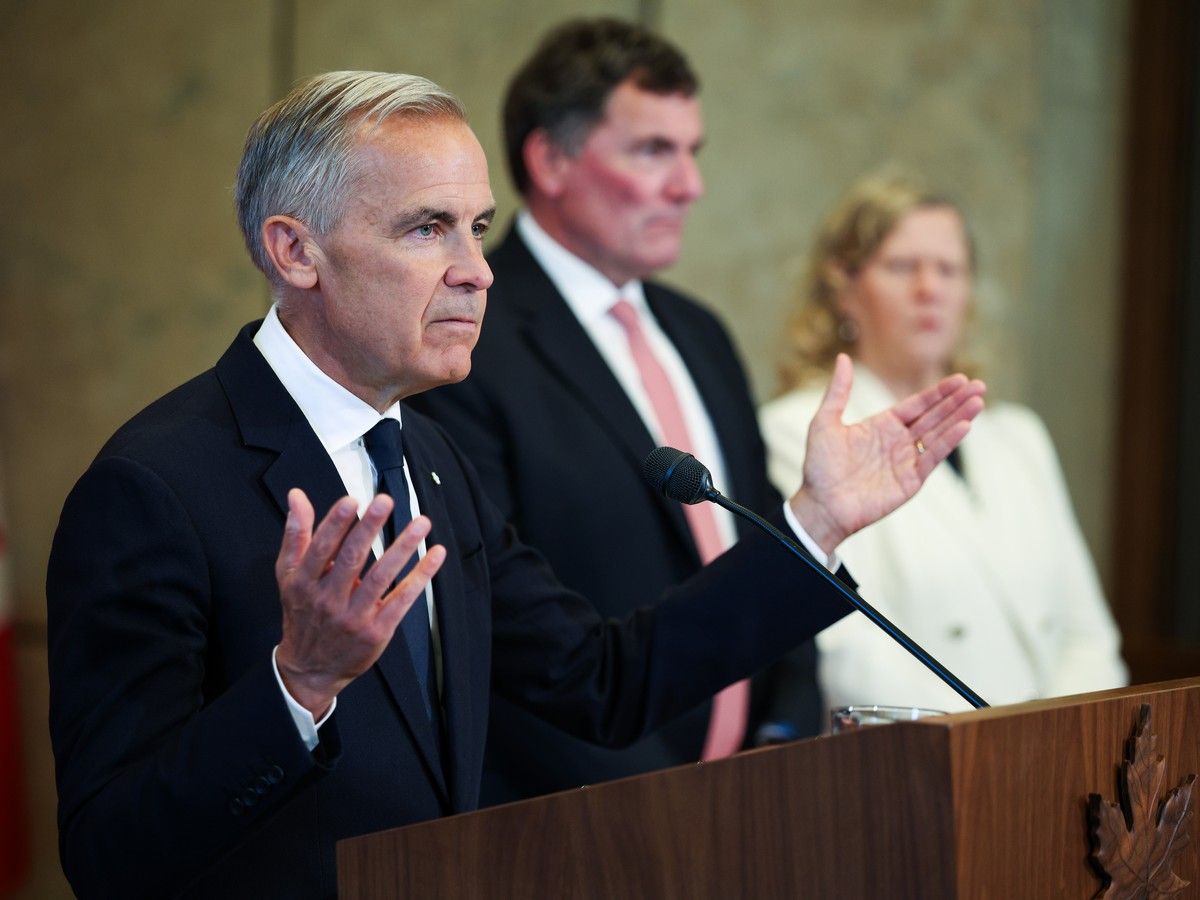
Prime Minister Mark Carney poses for a photo following ceremonies marking the National Day for Truth and Reconciliation on Parliament Hill on Sept. 30, 2025.

Could it be just a year ago that Justin Trudeau announced his resignation as prime minister?

Mark Carney won the leadership on an accelerated schedule and began dismantling the Trudeau policy agenda even more quickly. The new prime minister boasted about the cancellation of the consumer carbon tax with the old prime minister sitting in the front row. Don’t let the door hit you on the way out.

It was as if the Liberal party had, vis-à-vis Trudeau, adopted Katy Perry’s

Roar

as its theme song for 2025: “You held me down, but I got up/ Get ready ’cause I’ve had enough/ … ‘Cause I am a champion and you’re gonna hear me roar.”

The champion, after breaking up with Trudeau, roared to its fourth consecutive election victory. Trudeau was invited to the throne speech and, trying to keep the old flame flickering, greeted King Charles III in the Senate chamber wearing garish sneakers. The King and Carney instead wore their prominent Order of Canada medallions.

Canada’s sovereign announced plans to put Trudeau’s agenda in the rear-view mirror. Out went the capital gains tax increase, in came a middle-class tax cut. No talk of “phasing out” the oilsands, but instead a promise to build, build, build, which in Canada means natural resource infrastructure.

The government was soon smiling on the very LNG projects about which Trudeau said there was “no business case.” It signed — in Alberta! — an agreement to agree at some point to build a pipeline. As an added bonus, Trudeau’s designated mascot for environmental extremism, Steven Guilbeault, resigned from cabinet. Don’t let that door hit you either.

Trudeau’s economic and environmental policies have been cast aside, so much so that the Conservative opposition has understandably accused Carney of stealing its policies. A key question for 2026 will be whether Trudeau’s Indigenous policy will be next to go.

Trudeau’s premiership began with the release of the Truth and Reconciliation Commission (TRC) report in 2015. He embraced even its most extravagant claims, fuelled as he was by two powerful factors — conventional liberal self-loathing for Canada’s history and his guilt over his father’s assimilationist views.

Trudeau never believed that Canada was truly a

“genocidal” nation

, but he did feel guilty that his father’s long premiership looked the other way on residential schools. As Chris Selley noted in these pages, “If Canada committed genocide, and if it were ever to be litigated, former prime minister Jean Chrétien’s never-ending-adulation post-retirement tour would surely grind to a halt: If the guy who was

minister of Indian Affairs

during a key period in the residential school system’s history and was co-author of the infamous, assimilationist ‘white paper’ isn’t in trouble, then who?”

Carney’s paternal legacy on the question is

altogether different

. He was born in the Northwest Territories because his father had made great sacrifices to educate Indigenous children in the remote north. He has not repeated the casual slanders-by-association that Trudeau and the TRC propagated.

Will Carney will chart a new course, better for Indigenous Canadians and better for Canada?

A promising sign came last month on the 10th anniversary of the TRC report. Carney issued a largely

pro forma
statement of support

, but there were not the high-profile rituals of abasement and reproach favoured by his predecessor. Most interesting, in detailing the latest billions of federal monies poured into reconciliation projects, the statement began by noting the “doubling (of) the Indigenous Loan Guarantee Program and building projects with greater Indigenous equity ownership.”

It’s a small thing, but highlighting investment and partnership, rather than expanded bureaucracy and dependency, is a welcome shift. Not a small thing was Carney’s decision to announce priority resource projects without engaging in years-long consultation with government-approved Indigenous leaders.

The Assembly of First Nations howled about that at its December meeting, but Carney knows that plenty of local Indigenous communities are eager for resource developments, while it remains in the bureaucratic interest of national Indigenous leadership to block them. Money generated by resource development goes directly to Indigenous entrepreneurs and workers and local bands; the spigot of TRC-driven settlements is controlled by an entrenched establishment whose self-interest depends upon a path of ongoing recrimination, not authentic reconciliation.

Carney’s decision not to give Indigenous officialdom a pre-emptive veto over Indigenous prosperity is a welcome break from 10 years of Trudeau stagnation. At this early stage, it is a possible indication of what may come; the test will be when actual resource proposals are advanced.

Carney was able to move as quickly as he did in casting aside the Trudeau-Guilbeault eco-agenda because of the Trump disruption. The B.C. courts have provided another disruption that will make it easier for him to adjust his predecessor’s course. Calling into question the property ownership of B.C. businesses and homeowners has already reset the political calculus, and not only on the West Coast.

The AFN’s foolish call last month for the “hate speech” criminalization of “denialism” regarding residential schools and unmarked graves is another example of being increasingly out of touch with ordinary Canadians of goodwill. Can it possibly be a crime to deny something that is not true, namely that mass graves of Indigenous children have been found in Canada? The protest against “denialism” is just evidence that, after 10 years, TRC-inspired claims are no longer the only opinions permitted in polite company.

Trudeau and the TRC were fabulous for Indigenous gatekeepers, who got to negotiate massive government transfers to their communities, even as their work set back the cause of genuine economic progress for Indigenous Canadians. Even more than the Trudeauvian policies he has already jettisoned, Carney should want to change that.

National Post