LP_468x60
on-the-record-468x60-white

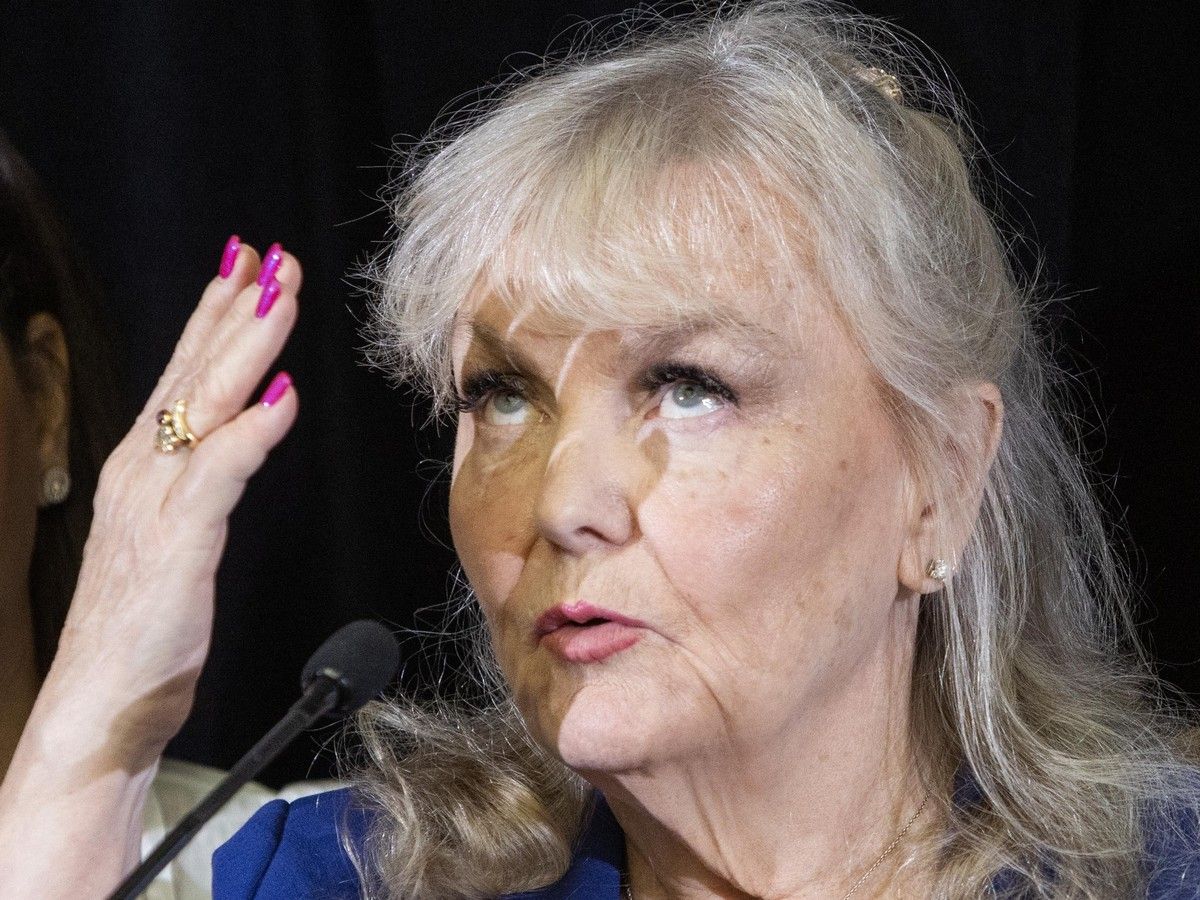
Laura Loomer puts on a helmet during a visit of a DTEK electricity substation to meet energy workers and to observe the impact of Russian attacks on Ukraine's power infrastructure in the Kyiv region, Ukraine, in July 2026.

Prominent MAGA influencer Laura Loomer — who maintains a close relationship with U.S. President Donald Trump — is currently visiting Ukraine to witness, with her own eyes, how Russian propagandists bamboozled her about the country. Previously a staunch critic of Kyiv, she is now praising Ukrainian resilience in a stunning reversal that should be studied by conservatives everywhere.

Loomer has been a darling of the MAGA movement since the late 2010s , garnering millions of followers through provocative stunts and commentary. Her unwavering public loyalty to Trump earned her the president’s appreciation and made her a central figure in his second administration, allowing her to influence high-level government staffing decisions.

For years, Loomer promoted Kremlin-friendly narratives and portrayed Ukraine as an ungrateful, Nazi-infested cesspool undeserving of American support. Yet, over the past few months, she gradually realized that she had been duped by Moscow and decided to do some on-the-ground reporting to verify the truth herself.

“I was lied to for years,” posted Loomer to her widely-followed X account last week, shortly after arriving in Ukraine. She declared that Russia is “very good at information warfare,” and that she, having been wrong, now “had a responsibility to correct the record.”

Among her first appointments was a trip to the Kyiv Pechersk Lavra — a revered thousand-year-old monastery that Russia bombed last month . In a professionally edited video , she showcased the holy site’s interior and argued that Russian President Vladimir Putin is not, in fact, the champion of Christian values that he presents himself to be.

“I just don’t think that you should be allowed to say that you’re protecting Christianity if you’re trying to drone strike Jesus Christ,” she said, noting that the wooden monastery could have easily burnt down. In other social media posts, she criticized Putin for killing Ukrainian priests and for using Muslim soldiers — predominantly from the Caucasus region — to slaughter and displace local Christians.

Loomer, who is Jewish , also visited Chief Rabbi of Ukraine Moshe Azman at his Chabad synagogue for a kosher dinner, where he explained that Jews live freely as an integral part of Ukrainian society. She learned, to her surprise, that Ukraine has stronger antisemitism laws than the United States. “I admit, I fell for Russian propaganda,” she confessed in a post about the experience, condemning Putin’s lies about the need to “de-Nazify” Ukraine.

Most astonishing of all, she interviewed Ukrainian President Volodymyr Zelenskyy at the presidential palace last Friday. Although the exchange was generally cordial, she pulled no punches, criticized Ukraine’s failures at strategic communications and bluntly pressed Zelenskyy to explain how helping Kyiv puts America first.

The president argued that a revived Russian empire could, together with China, pose a serious threat to American security, and that Ukraine’s cutting-edge drone technology — built through years of real-world battle experience — is an asset to Washington. Loomer agreed. She emphasized that Ukraine currently produces 8 million drones per year while the United States produces only 300,000, a gap which she believed could be closed through cooperation.

The interview was widely discussed in the media and approvingly shared by Trump, who met Zelenskyy in Washington this Tuesday for pro-Ukrainian Senator Lindsey Graham’s funeral.

Loomer, meanwhile, has continued her tour with gusto. In an interview with one of Ukraine’s leading journalists, Marichka Padalko, she said that she was “very ashamed” of some of her past comments and that Ukrainians had been “very kind” to her.

“I doubt I would have been welcomed the same way in Moscow. If I had criticized the Russian government, security service agents would probably have tracked me down right at the hotel,” said the MAGA star, who has since advocated for tightening sanctions against Russia and sending more patriot missiles to Kyiv.

For many of Ukraine’s supporters, particularly those on the political left, Loomer’s sudden emergence as an enthusiastic ally has been discombobulating. How did this happen? Is she being authentic?

In a phone interview over the weekend, I asked Loomer about her political transformation. It was almost midnight and she was returning to Kyiv after visiting Kharkiv and Dnipro, two major cities near the front line. She had passed many bombed-out gas stations earlier that day.

Loomer explained that she originally fell into Russia’s orbit after she, like many other MAGA influencers in the late 2010s, was banned from mainstream American social media platforms. She migrated to using Telegram — a messaging and social media app where Russian media is widely shared — which functioned as a “digital gulag” for censored conservatives.

She told me that, in this echo chamber, she began to regularly consume content published by RT (formerly Russia Today), Moscow’s state-controlled broadcaster , which warped her foreign policy views. After Trump lost the presidential election to Joe Biden, RT asked Loomer to write several unpaid columns in 2021, skillfully manipulating her anger at being deplatformed. They then used this relationship to gradually weave more propaganda into her worldview, she said.

When Russia launched its full-scale invasion of Ukraine, Loomer staunchly opposed American intervention. According to her, it was not just that Moscow had groomed her, but there were simply no trusted voices in her bubble that could address her concerns and misconceptions.

Genuinely believing that Ukraine is full of Nazis, she did not understand the logic of investing billions of dollars into the country’s defence. “We were, you know, kind of broke as a country. We’re $40 trillion in debt. And so, from a foreign policy perspective, right off the bat, I was fully opposed to it,” she told me.

Her mind began to change, though, after Trump was re-elected and a faction of conservative influencers — most notably Tucker Carlson and Candace Owens — turned against the president and began spewing “toxic” anti-American and antisemitic rhetoric.

Loomer was disturbed by how these podcasters cheered on American adversaries — especially Iran and Russia — while demonizing the United States and Israel. Worse yet, media outlets owned by enemy states had a tendency to amplify their content . She came to believe, with good reason , that Republicans were being targeted by sophisticated foreign influence campaigns sowing sedition and discord.

The response of these influencers to the Iran war further opened her eyes , as did the fact that many of them attended the St. Petersburg International Economic Forum in Russia last month. If these people could invent “crazy lies” about so many things, she wondered, what had they fabricated about Ukraine?

Loomer’s curiosity was further piqued when one of her editors, Andrew Moore, visited Kyiv last month and debunked many Kremlin narratives. Her content became explicitly pro-Ukrainian, with a particular focus on Putin’s persecution of Christians.

She told me that when she decided to visit Ukraine, she informed only her fiancé, fearing Russia’s public threats against her. The day before her arrival in Kyiv, the city was hit with 40 ballistic missiles. She was told her overnight train, like all others in Ukraine, could be delayed by drone attacks . Upon experiencing her first air siren , she was stunned by how casually Ukrainians reacted, calling it a “testament to their resilience.”

Now that she has seen the country with her own eyes, she wants to warn Republicans of how “propagandized” they’ve become by Russian media, which she sees as “a massive threat to national security.” If extremists on the left and right are converging to destroy the West, she stands opposed — despite the personal risks.

National Post


Laura Loomer puts on a helmet during a visit of a DTEK electricity substation to meet energy workers and to observe the impact of Russian attacks on Ukraine's power infrastructure in the Kyiv region, Ukraine, in July 2026.

Prominent MAGA influencer Laura Loomer — who maintains a close relationship with U.S. President Donald Trump — is currently visiting Ukraine to witness, with her own eyes, how Russian propagandists bamboozled her about the country. Previously a staunch critic of Kyiv, she is now praising Ukrainian resilience in a stunning reversal that should be studied by conservatives everywhere.

Loomer has been a darling of the MAGA movement since the late 2010s , garnering millions of followers through provocative stunts and commentary. Her unwavering public loyalty to Trump earned her the president’s appreciation and made her a central figure in his second administration, allowing her to influence high-level government staffing decisions.

For years, Loomer promoted Kremlin-friendly narratives and portrayed Ukraine as an ungrateful, Nazi-infested cesspool undeserving of American support. Yet, over the past few months, she gradually realized that she had been duped by Moscow and decided to do some on-the-ground reporting to verify the truth herself.

“I was lied to for years,” posted Loomer to her widely-followed X account last week, shortly after arriving in Ukraine. She declared that Russia is “very good at information warfare,” and that she, having been wrong, now “had a responsibility to correct the record.”

Among her first appointments was a trip to the Kyiv Pechersk Lavra — a revered thousand-year-old monastery that Russia bombed last month . In a professionally edited video , she showcased the holy site’s interior and argued that Russian President Vladimir Putin is not, in fact, the champion of Christian values that he presents himself to be.

“I just don’t think that you should be allowed to say that you’re protecting Christianity if you’re trying to drone strike Jesus Christ,” she said, noting that the wooden monastery could have easily burnt down. In other social media posts, she criticized Putin for killing Ukrainian priests and for using Muslim soldiers — predominantly from the Caucasus region — to slaughter and displace local Christians.

Loomer, who is Jewish , also visited Chief Rabbi of Ukraine Moshe Azman at his Chabad synagogue for a kosher dinner, where he explained that Jews live freely as an integral part of Ukrainian society. She learned, to her surprise, that Ukraine has stronger antisemitism laws than the United States. “I admit, I fell for Russian propaganda,” she confessed in a post about the experience, condemning Putin’s lies about the need to “de-Nazify” Ukraine.

Most astonishing of all, she interviewed Ukrainian President Volodymyr Zelenskyy at the presidential palace last Friday. Although the exchange was generally cordial, she pulled no punches, criticized Ukraine’s failures at strategic communications and bluntly pressed Zelenskyy to explain how helping Kyiv puts America first.

The president argued that a revived Russian empire could, together with China, pose a serious threat to American security, and that Ukraine’s cutting-edge drone technology — built through years of real-world battle experience — is an asset to Washington. Loomer agreed. She emphasized that Ukraine currently produces 8 million drones per year while the United States produces only 300,000, a gap which she believed could be closed through cooperation.

The interview was widely discussed in the media and approvingly shared by Trump, who met Zelenskyy in Washington this Tuesday for pro-Ukrainian Senator Lindsey Graham’s funeral.

Loomer, meanwhile, has continued her tour with gusto. In an interview with one of Ukraine’s leading journalists, Marichka Padalko, she said that she was “very ashamed” of some of her past comments and that Ukrainians had been “very kind” to her.

“I doubt I would have been welcomed the same way in Moscow. If I had criticized the Russian government, security service agents would probably have tracked me down right at the hotel,” said the MAGA star, who has since advocated for tightening sanctions against Russia and sending more patriot missiles to Kyiv.

For many of Ukraine’s supporters, particularly those on the political left, Loomer’s sudden emergence as an enthusiastic ally has been discombobulating. How did this happen? Is she being authentic?

In a phone interview over the weekend, I asked Loomer about her political transformation. It was almost midnight and she was returning to Kyiv after visiting Kharkiv and Dnipro, two major cities near the front line. She had passed many bombed-out gas stations earlier that day.

Loomer explained that she originally fell into Russia’s orbit after she, like many other MAGA influencers in the late 2010s, was banned from mainstream American social media platforms. She migrated to using Telegram — a messaging and social media app where Russian media is widely shared — which functioned as a “digital gulag” for censored conservatives.

She told me that, in this echo chamber, she began to regularly consume content published by RT (formerly Russia Today), Moscow’s state-controlled broadcaster , which warped her foreign policy views. After Trump lost the presidential election to Joe Biden, RT asked Loomer to write several unpaid columns in 2021, skillfully manipulating her anger at being deplatformed. They then used this relationship to gradually weave more propaganda into her worldview, she said.

When Russia launched its full-scale invasion of Ukraine, Loomer staunchly opposed American intervention. According to her, it was not just that Moscow had groomed her, but there were simply no trusted voices in her bubble that could address her concerns and misconceptions.

Genuinely believing that Ukraine is full of Nazis, she did not understand the logic of investing billions of dollars into the country’s defence. “We were, you know, kind of broke as a country. We’re $40 trillion in debt. And so, from a foreign policy perspective, right off the bat, I was fully opposed to it,” she told me.

Her mind began to change, though, after Trump was re-elected and a faction of conservative influencers — most notably Tucker Carlson and Candace Owens — turned against the president and began spewing “toxic” anti-American and antisemitic rhetoric.

Loomer was disturbed by how these podcasters cheered on American adversaries — especially Iran and Russia — while demonizing the United States and Israel. Worse yet, media outlets owned by enemy states had a tendency to amplify their content . She came to believe, with good reason , that Republicans were being targeted by sophisticated foreign influence campaigns sowing sedition and discord.

The response of these influencers to the Iran war further opened her eyes , as did the fact that many of them attended the St. Petersburg International Economic Forum in Russia last month. If these people could invent “crazy lies” about so many things, she wondered, what had they fabricated about Ukraine?

Loomer’s curiosity was further piqued when one of her editors, Andrew Moore, visited Kyiv last month and debunked many Kremlin narratives. Her content became explicitly pro-Ukrainian, with a particular focus on Putin’s persecution of Christians.

She told me that when she decided to visit Ukraine, she informed only her fiancé, fearing Russia’s public threats against her. The day before her arrival in Kyiv, the city was hit with 40 ballistic missiles. She was told her overnight train, like all others in Ukraine, could be delayed by drone attacks . Upon experiencing her first air siren , she was stunned by how casually Ukrainians reacted, calling it a “testament to their resilience.”

Now that she has seen the country with her own eyes, she wants to warn Republicans of how “propagandized” they’ve become by Russian media, which she sees as “a massive threat to national security.” If extremists on the left and right are converging to destroy the West, she stands opposed — despite the personal risks.

National Post


President Donald Trump (R) meets with Volodymyr Zelenskyy, President of Ukraine (L) for bilateral talks at Bestepe Presidential Compound during the NATO Summit on July 8, 2026 in Ankara, Turkey.

President Volodymyr Zelenskyy headed into his Tuesday meeting with President Donald Trump coming off a significant victory. Not on the battlefield, though that seems to be moderately turning in Ukraine’s favour, but in MAGA’s online world, to which Trump pays great attention.

I did not realize, as I was writing my column on Ukraine last week , that Laura Loomer was sympathetically interviewing Zelenskyy in Kyiv. Loomer, who spews all sorts of online invective, is close to Trump.

After years of parroting Russian propaganda, Loomer visited Ukraine last week and reversed her position on the war. She previously had Vice-President JD Vance’s position — he who is proudest of cutting off aid to Ukraine — though expressed in incendiary language, all the better to be a MAGA influencer and get privileged access to Trump. Apparently she spoke to him twice during the trip, and several times since her return.

Given that Trump has not appointed ambassadors to Kyiv (or Moscow), and his special envoys refuse to set foot in Ukraine (while eight times paying court to President Vladimir Putin), it is as close as he might get to an on-the-ground briefing from someone he trusts. Reports are that he is warming up to Zelenskyy, for whom he had previously reserved special contempt.

MAGA has maintained a cold fury against Zelenskyy ever since he refused Trump’s request in his first term to engage in some friendly lawfare against alleged Biden family corruption in Ukraine. That attempt to use presidential power for partisan benefit led to Trump’s first impeachment.

Using official power for personal benefit is, nevertheless, the way things are done in Trumpworld and so fevered questions have been asked. Did Ukraine pay Loomer to visit? She denies it.

Why would Zelenskyy sit down with such an appalling person, who trafficks in the most rank online bile? There is only one answer. Loomer’s influence is significant. In April 2025, she met with Trump in the Oval Office to sow suspicion about the fealty of several staffers on the National Security Council. Trump fired them within 24 hours.

Perhaps Loomer’s about-face on Ukraine was the result of doing some belated research and discovering in fact that one country brazenly invaded another. Or perhaps she was bought.

Her ethics, such as they are, do not merit much attention. Another question is more relevant. Would Ukraine have been wrong to buy her as a conduit to the Trump administration? Or more boldly, would Ukraine be wrong if it attempted to buy the Trump family?

For that matter, would Canada?

The easy answer is yes. Bribery is immoral. But so is not telling the truth, and both Zelenskyy and Prime Minister Mark Carney routinely say positive things about Trump that they cannot possibly believe are true.

Carney was justly criticized last week for not speaking honestly about Trump’s hostage-taking of the Gordie Howe International Bridge. He did not want to acknowledge that Canada was bullied by gangster tactics .

What though if Carney had embraced a bit of gangsterism?

The owners of the rival bridge across the Detroit River, the Maroun family of Michigan, donated US$1 million (C$1.4 million) to MAGA Inc. in January. Not long after, the Trump administration decided not to honour the original agreement, kidnapped the opening and demanded that Canada pay ransom. Carney was not about to boast about being a victim of extortion.

What if instead, Canada offered a $5 million donation to the Trump presidential library project? Or to invest in son-in-law Jared Kushner’s investment fund, as Saudi Arabia and the other Gulf states have done? Or to funnel cash into the Trump family crypto business? Or simply to cut a certified cheque to Donald Trump Jr.? It is not unreasonable to think the problem would have been solved and, ethical questions aside, Canadian taxpayers would have saved a great deal of money.

Speaking of the Gulf states, Zelenskyy must have marvelled that last September, by executive order, Trump granted to Qatar the equivalent of a NATO Article 5 guarantee: “The United States shall regard any armed attack on the territory, sovereignty, or critical infrastructure of the State of Qatar as a threat to the peace and security of the United States.”

In case of such attack, “the United States shall take all lawful and appropriate measures — including diplomatic, economic, and, if necessary, military.”

The proximate cause for the defence pact was an Israeli operation in Doha, attempting the assassination of a Hamas negotiator. Remarkably, in light of an Israeli action against Hamas, Trump granted NATO-like status to Qatar, a key Hamas patron.

Perhaps it had something to do with Qatar giving Trump — his library, to be specific — a new Air Force One, valued at US$400 million? That was a bargain for the Qatari royal family, which had been trying to unload the jet for five years and found no takers. They gave it to Trump in May and got a military defence pledge in September. It was the deal of the century.

Neither Canada nor Ukraine aspire to Qatari techniques of diplomatic bribery. But the Trump administration encourages allies — if the Qataris could be considered such — to think that way.

National Post


President Donald Trump (R) meets with Volodymyr Zelenskyy, President of Ukraine (L) for bilateral talks at Bestepe Presidential Compound during the NATO Summit on July 8, 2026 in Ankara, Turkey.

President Volodymyr Zelenskyy headed into his Tuesday meeting with President Donald Trump coming off a significant victory. Not on the battlefield, though that seems to be moderately turning in Ukraine’s favour, but in MAGA’s online world, to which Trump pays great attention.

I did not realize, as I was writing my column on Ukraine last week , that Laura Loomer was sympathetically interviewing Zelenskyy in Kyiv. Loomer, who spews all sorts of online invective, is close to Trump.

After years of parroting Russian propaganda, Loomer visited Ukraine last week and reversed her position on the war. She previously had Vice-President JD Vance’s position — he who is proudest of cutting off aid to Ukraine — though expressed in incendiary language, all the better to be a MAGA influencer and get privileged access to Trump. Apparently she spoke to him twice during the trip, and several times since her return.

Given that Trump has not appointed ambassadors to Kyiv (or Moscow), and his special envoys refuse to set foot in Ukraine (while eight times paying court to President Vladimir Putin), it is as close as he might get to an on-the-ground briefing from someone he trusts. Reports are that he is warming up to Zelenskyy, for whom he had previously reserved special contempt.

MAGA has maintained a cold fury against Zelenskyy ever since he refused Trump’s request in his first term to engage in some friendly lawfare against alleged Biden family corruption in Ukraine. That attempt to use presidential power for partisan benefit led to Trump’s first impeachment.

Using official power for personal benefit is, nevertheless, the way things are done in Trumpworld and so fevered questions have been asked. Did Ukraine pay Loomer to visit? She denies it.

Why would Zelenskyy sit down with such an appalling person, who trafficks in the most rank online bile? There is only one answer. Loomer’s influence is significant. In April 2025, she met with Trump in the Oval Office to sow suspicion about the fealty of several staffers on the National Security Council. Trump fired them within 24 hours.

Perhaps Loomer’s about-face on Ukraine was the result of doing some belated research and discovering in fact that one country brazenly invaded another. Or perhaps she was bought.

Her ethics, such as they are, do not merit much attention. Another question is more relevant. Would Ukraine have been wrong to buy her as a conduit to the Trump administration? Or more boldly, would Ukraine be wrong if it attempted to buy the Trump family?

For that matter, would Canada?

The easy answer is yes. Bribery is immoral. But so is not telling the truth, and both Zelenskyy and Prime Minister Mark Carney routinely say positive things about Trump that they cannot possibly believe are true.

Carney was justly criticized last week for not speaking honestly about Trump’s hostage-taking of the Gordie Howe International Bridge. He did not want to acknowledge that Canada was bullied by gangster tactics .

What though if Carney had embraced a bit of gangsterism?

The owners of the rival bridge across the Detroit River, the Maroun family of Michigan, donated US$1 million (C$1.4 million) to MAGA Inc. in January. Not long after, the Trump administration decided not to honour the original agreement, kidnapped the opening and demanded that Canada pay ransom. Carney was not about to boast about being a victim of extortion.

What if instead, Canada offered a $5 million donation to the Trump presidential library project? Or to invest in son-in-law Jared Kushner’s investment fund, as Saudi Arabia and the other Gulf states have done? Or to funnel cash into the Trump family crypto business? Or simply to cut a certified cheque to Donald Trump Jr.? It is not unreasonable to think the problem would have been solved and, ethical questions aside, Canadian taxpayers would have saved a great deal of money.

Speaking of the Gulf states, Zelenskyy must have marvelled that last September, by executive order, Trump granted to Qatar the equivalent of a NATO Article 5 guarantee: “The United States shall regard any armed attack on the territory, sovereignty, or critical infrastructure of the State of Qatar as a threat to the peace and security of the United States.”

In case of such attack, “the United States shall take all lawful and appropriate measures — including diplomatic, economic, and, if necessary, military.”

The proximate cause for the defence pact was an Israeli operation in Doha, attempting the assassination of a Hamas negotiator. Remarkably, in light of an Israeli action against Hamas, Trump granted NATO-like status to Qatar, a key Hamas patron.

Perhaps it had something to do with Qatar giving Trump — his library, to be specific — a new Air Force One, valued at US$400 million? That was a bargain for the Qatari royal family, which had been trying to unload the jet for five years and found no takers. They gave it to Trump in May and got a military defence pledge in September. It was the deal of the century.

Neither Canada nor Ukraine aspire to Qatari techniques of diplomatic bribery. But the Trump administration encourages allies — if the Qataris could be considered such — to think that way.

National Post


The U.S. Capitol building in Washington, D.C., in September 2025.

There’s an old saying that you should never interrupt an enemy when he’s making a mistake. It should go without saying that you should also not watch your enemy make a mistake and take it as an opportunity to make even worse decisions. Yet, as the U.S. Republican Party continues its slide into authoritarian populism and cult-of-personality boosterism around President Donald Trump, that’s what the Democratic Party is doing. Rather than embrace a chance to be the reasonable choice, it’s instead morphing into a vehicle for revolutionary socialism and bigotry.

Nationally, even after disgraced Democratic candidate Graham Platner tucked his tail and withdrew from the Maine Senate race, progressive candidates are racking up victories in Democratic primaries with platforms that promise a much larger, more expensive and wildly intrusive government, as well as policies hostile to the world’s only majority Jewish state.

As NewsNation summarized last week, “the Democratic Socialists of America (DSA) is drawing new scrutiny after more than 35 DSA-backed candidates won primaries heading into the November midterms, forcing what analysts call an identity crisis inside the Democratic Party.” The DSA’s recently adopted platform , NewsNation added, calls for government expropriation of private corporations, state-owned housing, racial reparations, “universal healthcare at no cost to individuals,” the abolition of the Senate, and “a free Palestine with Jerusalem as its capital” after the end of “all military and economic aid to Israel.”

Those plans require government officials to seize a much larger share of Americans’ wealth than is now the case so they can enforce policies and target enemies. With their “influence on the rise” DSA candidates “are eager to tax the rich and enact anti-Israel policies,” notes The New York Times.

The radical candidates are winning for a reason — they’ve tapped into an ideological shift among Democratic voters. According to June YouGov/Economist polling , 58 per cent of Democrats have a favourable opinion of socialism. Sixty-two per cent would vote for a “Democratic Socialist” candidate.

Likewise, 58 per cent of Democrats in AP-NORC polling consider the U.S. “too supportive” of Israel, which 52 per cent of them say has committed genocide in its defensive war against Hamas. As CNN observes , “an ascendant faction of the left … sees opposition to Israel as a Democratic litmus test.” Many Jewish Democrats, CNN added, experience this as questions about their loyalty that have crossed the line into explicit antisemitism. “They point to references to Jewish or Israeli interests nefariously controlling politics with money or suggesting that Jews aren’t fully loyal to America or to Democratic values.”

The looming problem posed for this wave of radicals capturing Democratic nominations, and for the party they’re rapidly transforming, is that they’re veering far from the beliefs of the rest of the country. In that same YouGov/Economist poll, only 30 per cent of independents and 11 percent of Republicans had favorable opinions of socialism. Just 24 per cent of independents and 3 per cent of Republicans would be willing to vote for candidates espousing such views.

On Israel, AP-NORC found, “Republicans have shifted in the opposite direction, with a majority now saying U.S. support for Israel is about right.” Just 13 per cent of GOP voters and 31 per cent of Americans overall buy the argument that Israel has engaged in genocide.

Progressive candidates are successfully capturing one of America’s political parties, but they have yet to enjoy the same victories over the hearts and minds of the public beyond the Democratic faithful.

Mainstream moderate Democrats see an opportunity slipping away as their party slides into hate and economic authoritarianism.

Writing in The Wall Street Journal, former Chicago mayor and one-time chief of staff to then-President Bill Clinton Rahm Emanuel warned last week that “the DSA and others are saddling the Democratic Party with nominees whose wildly unpopular positions will protect Republicans from having to pay the price of Donald Trump’s corruption and economic incompetence.”

Emanuel cautioned that the once strong Democratic lead going into this year’s midterm elections has narrowed and threatens to evaporate as its party’s candidates outside left-wing strongholds get tainted with the radicalism of hard-core progressives. The Trump administration may be shambolic, but Democrats are throwing away any advantage by presenting themselves as a crazier alternative.

“In November, a continued focus on defunding, decriminalizing and decolonizing will highlight cultural issues that alienate many Democrats, not to mention a huge swath of independents (who make up a record-high 45 per cent of the electorate) and disenchanted Republicans,” Emanuel continued.

CNN’s Senior Data Reporter, Harry Enten, agrees that what flies in New York City’s “ commie corridor ” and similar left-wing strongholds won’t win races in more moderate parts of the country. He recently pointed to polling showing that Democrats stand alone in warming to socialism. “Socialism has become increasingly popular among Democrats, but it is a much tougher sell in the rest of the electorate.”

Enten cautioned, “there is a reason why Republicans nationwide are licking their chops, and why there are at least some Democrats who are a little bit worried. Because what is true in New York City in a Democratic primary ain’t necessarily true nationwide with the general electorate.”

What’s remarkable here is that Democrats should have an opportunity to exploit the last decade’s transformation of the Republican Party from a generally conservative and market-oriented political party into a personal vehicle for one man and the populist movement that he leads. Many Americans remain wary of the new GOP and the figure who dominates it. President Trump currently has an average 58 per cent disapproval rating and 39.1 per cent approval. That could herald a mass rejection by the voters of the Republican Party just as they turned away from similarly unpopular Joe Biden and his Democrats.

But to exploit the moment, Democrats would have to be willing to work with American voters where they are, as supporters of capitalism and a relatively limited government who are largely uninterested in vilifying a small minority and the one country on the planet where Jews constitute a majority.

Instead, Democrats are undergoing their own radical transformation. They’re embracing socialism and hate. That leaves little for Americans to choose from, unpersuaded as they are by such political lunacy.

National Post


The U.S. Capitol building in Washington, D.C., in September 2025.

There’s an old saying that you should never interrupt an enemy when he’s making a mistake. It should go without saying that you should also not watch your enemy make a mistake and take it as an opportunity to make even worse decisions. Yet, as the U.S. Republican Party continues its slide into authoritarian populism and cult-of-personality boosterism around President Donald Trump, that’s what the Democratic Party is doing. Rather than embrace a chance to be the reasonable choice, it’s instead morphing into a vehicle for revolutionary socialism and bigotry.

Nationally, even after disgraced Democratic candidate Graham Platner tucked his tail and withdrew from the Maine Senate race, progressive candidates are racking up victories in Democratic primaries with platforms that promise a much larger, more expensive and wildly intrusive government, as well as policies hostile to the world’s only majority Jewish state.

As NewsNation summarized last week, “the Democratic Socialists of America (DSA) is drawing new scrutiny after more than 35 DSA-backed candidates won primaries heading into the November midterms, forcing what analysts call an identity crisis inside the Democratic Party.” The DSA’s recently adopted platform , NewsNation added, calls for government expropriation of private corporations, state-owned housing, racial reparations, “universal healthcare at no cost to individuals,” the abolition of the Senate, and “a free Palestine with Jerusalem as its capital” after the end of “all military and economic aid to Israel.”

Those plans require government officials to seize a much larger share of Americans’ wealth than is now the case so they can enforce policies and target enemies. With their “influence on the rise” DSA candidates “are eager to tax the rich and enact anti-Israel policies,” notes The New York Times.

The radical candidates are winning for a reason — they’ve tapped into an ideological shift among Democratic voters. According to June YouGov/Economist polling , 58 per cent of Democrats have a favourable opinion of socialism. Sixty-two per cent would vote for a “Democratic Socialist” candidate.

Likewise, 58 per cent of Democrats in AP-NORC polling consider the U.S. “too supportive” of Israel, which 52 per cent of them say has committed genocide in its defensive war against Hamas. As CNN observes , “an ascendant faction of the left … sees opposition to Israel as a Democratic litmus test.” Many Jewish Democrats, CNN added, experience this as questions about their loyalty that have crossed the line into explicit antisemitism. “They point to references to Jewish or Israeli interests nefariously controlling politics with money or suggesting that Jews aren’t fully loyal to America or to Democratic values.”

The looming problem posed for this wave of radicals capturing Democratic nominations, and for the party they’re rapidly transforming, is that they’re veering far from the beliefs of the rest of the country. In that same YouGov/Economist poll, only 30 per cent of independents and 11 percent of Republicans had favorable opinions of socialism. Just 24 per cent of independents and 3 per cent of Republicans would be willing to vote for candidates espousing such views.

On Israel, AP-NORC found, “Republicans have shifted in the opposite direction, with a majority now saying U.S. support for Israel is about right.” Just 13 per cent of GOP voters and 31 per cent of Americans overall buy the argument that Israel has engaged in genocide.

Progressive candidates are successfully capturing one of America’s political parties, but they have yet to enjoy the same victories over the hearts and minds of the public beyond the Democratic faithful.

Mainstream moderate Democrats see an opportunity slipping away as their party slides into hate and economic authoritarianism.

Writing in The Wall Street Journal, former Chicago mayor and one-time chief of staff to then-President Bill Clinton Rahm Emanuel warned last week that “the DSA and others are saddling the Democratic Party with nominees whose wildly unpopular positions will protect Republicans from having to pay the price of Donald Trump’s corruption and economic incompetence.”

Emanuel cautioned that the once strong Democratic lead going into this year’s midterm elections has narrowed and threatens to evaporate as its party’s candidates outside left-wing strongholds get tainted with the radicalism of hard-core progressives. The Trump administration may be shambolic, but Democrats are throwing away any advantage by presenting themselves as a crazier alternative.

“In November, a continued focus on defunding, decriminalizing and decolonizing will highlight cultural issues that alienate many Democrats, not to mention a huge swath of independents (who make up a record-high 45 per cent of the electorate) and disenchanted Republicans,” Emanuel continued.

CNN’s Senior Data Reporter, Harry Enten, agrees that what flies in New York City’s “ commie corridor ” and similar left-wing strongholds won’t win races in more moderate parts of the country. He recently pointed to polling showing that Democrats stand alone in warming to socialism. “Socialism has become increasingly popular among Democrats, but it is a much tougher sell in the rest of the electorate.”

Enten cautioned, “there is a reason why Republicans nationwide are licking their chops, and why there are at least some Democrats who are a little bit worried. Because what is true in New York City in a Democratic primary ain’t necessarily true nationwide with the general electorate.”

What’s remarkable here is that Democrats should have an opportunity to exploit the last decade’s transformation of the Republican Party from a generally conservative and market-oriented political party into a personal vehicle for one man and the populist movement that he leads. Many Americans remain wary of the new GOP and the figure who dominates it. President Trump currently has an average 58 per cent disapproval rating and 39.1 per cent approval. That could herald a mass rejection by the voters of the Republican Party just as they turned away from similarly unpopular Joe Biden and his Democrats.

But to exploit the moment, Democrats would have to be willing to work with American voters where they are, as supporters of capitalism and a relatively limited government who are largely uninterested in vilifying a small minority and the one country on the planet where Jews constitute a majority.

Instead, Democrats are undergoing their own radical transformation. They’re embracing socialism and hate. That leaves little for Americans to choose from, unpersuaded as they are by such political lunacy.

National Post


Andy Burnham delivers his inaugural speech as UK's new Prime Minister on on July 20, 2026 in London, England.

As of last week, a British 10-year-old will have lived through seven prime ministers. Each arrived promising a fresh start only to leave the country worse off — economically and socially — than when they took office. It is under that cloud of false starts and disappointments that Andy Burnham, formerly mayor of Greater Manchester, arrived at Downing Street last Monday as the man pledging to turn things around.

Burnham is self-consciously unorthodox. Eschewing the lecterns that have traditionally marked the coming and going of prime ministers, he opted for two short, stabby microphones trained on his midriff. His first speech to the country was foreshadowed by another, to the Labour Party, in which he blamed “four decades of neoliberalism” for the lacklustre state of modern Britain, a country that taxes and spends more than at any time in 50 years.

That doctrine, introduced by Margaret Thatcher in the 1980s, damaged working-class communities and has finally run its course, or so says Burnham. Britain, he continued, could now expect to undergo “the most significant change moment in our politics for 40 years.”

Both his addresses were notably light on the detail of how this change might materialize.

“We will take power out of here and carry it into every postcode in the land so that they can do more,” he said. There is something about the cod-poetic register of “every postcode in the land,” and the bathetic vagueness of “so they can do more,” that gets to the core of Brand Burnham, which prizes affability over policy and, it seems, optimism over reality. If Burnham knew what precisely he meant by “do more,” he kept his Tarot cards rather close to his chest.

He promised to reindustrialize Britain using public procurement. He promised to provide more mental health support to young people, bring down the welfare bill and end rough sleeping. The shopping list included every warm and fuzzy offering one could think of, making the absence of raindrops on roses and whiskers on kittens all the more inexplicable.

That’s not to say Burnham doesn’t have a lot going for him. As things stand, his principal advantage is that he is not his predecessor, Sir Keir Starmer, whose wooden affect and government-by-U-turn made him one of the most unpopular British leaders in the 21st century. Burnham possesses some charm, wrapped though it is in a cartoonish attachment to all things Manchester: chips and gravy, the Smiths, Oasis, addressing everyone as “lad” and so on.

So fond is Burnham of Manchester that he has created another seat of government, the so-called No. 10 North, for official business to be conducted nearer to those post-industrial towns that feel left behind by “neoliberalism.” The weekly procession of ministers, their staff and security details up and down the country at taxpayer expense might not be the communications coup Burnham has in mind.

Yet this does not seem to bother him. Burnham has a formidable, almost Trumpian belief in himself and his vision. “I draw my strength from people,” he recently told the grassroots of the Labour Party, “I hear things, pick up straws in the wind.” This would pass muster as an excerpt from Benito Mussolini’s table conversation, yet it came from Britain’s Oasis-loving prime minister.

It is this faith uncoupled from much to support it that makes Burnham’s tenure all the more unpredictable. For all his stubborn obtuseness, one felt that, at core, Starmer lacked full confidence in himself and his convictions. While Starmer floundered and eventually left the stage, Burnham may attempt to follow his as yet foggy ideals through to the bitter end.

National Post


Andy Burnham delivers his inaugural speech as UK's new Prime Minister on on July 20, 2026 in London, England.

As of last week, a British 10-year-old will have lived through seven prime ministers. Each arrived promising a fresh start only to leave the country worse off — economically and socially — than when they took office. It is under that cloud of false starts and disappointments that Andy Burnham, formerly mayor of Greater Manchester, arrived at Downing Street last Monday as the man pledging to turn things around.

Burnham is self-consciously unorthodox. Eschewing the lecterns that have traditionally marked the coming and going of prime ministers, he opted for two short, stabby microphones trained on his midriff. His first speech to the country was foreshadowed by another, to the Labour Party, in which he blamed “four decades of neoliberalism” for the lacklustre state of modern Britain, a country that taxes and spends more than at any time in 50 years.

That doctrine, introduced by Margaret Thatcher in the 1980s, damaged working-class communities and has finally run its course, or so says Burnham. Britain, he continued, could now expect to undergo “the most significant change moment in our politics for 40 years.”

Both his addresses were notably light on the detail of how this change might materialize.

“We will take power out of here and carry it into every postcode in the land so that they can do more,” he said. There is something about the cod-poetic register of “every postcode in the land,” and the bathetic vagueness of “so they can do more,” that gets to the core of Brand Burnham, which prizes affability over policy and, it seems, optimism over reality. If Burnham knew what precisely he meant by “do more,” he kept his Tarot cards rather close to his chest.

He promised to reindustrialize Britain using public procurement. He promised to provide more mental health support to young people, bring down the welfare bill and end rough sleeping. The shopping list included every warm and fuzzy offering one could think of, making the absence of raindrops on roses and whiskers on kittens all the more inexplicable.

That’s not to say Burnham doesn’t have a lot going for him. As things stand, his principal advantage is that he is not his predecessor, Sir Keir Starmer, whose wooden affect and government-by-U-turn made him one of the most unpopular British leaders in the 21st century. Burnham possesses some charm, wrapped though it is in a cartoonish attachment to all things Manchester: chips and gravy, the Smiths, Oasis, addressing everyone as “lad” and so on.

So fond is Burnham of Manchester that he has created another seat of government, the so-called No. 10 North, for official business to be conducted nearer to those post-industrial towns that feel left behind by “neoliberalism.” The weekly procession of ministers, their staff and security details up and down the country at taxpayer expense might not be the communications coup Burnham has in mind.

Yet this does not seem to bother him. Burnham has a formidable, almost Trumpian belief in himself and his vision. “I draw my strength from people,” he recently told the grassroots of the Labour Party, “I hear things, pick up straws in the wind.” This would pass muster as an excerpt from Benito Mussolini’s table conversation, yet it came from Britain’s Oasis-loving prime minister.

It is this faith uncoupled from much to support it that makes Burnham’s tenure all the more unpredictable. For all his stubborn obtuseness, one felt that, at core, Starmer lacked full confidence in himself and his convictions. While Starmer floundered and eventually left the stage, Burnham may attempt to follow his as yet foggy ideals through to the bitter end.

National Post


Members of the Canadian women's hockey team celebrate following a dominant run to the gold medal at the 2006 Winter Games in Turin, Italy.

Canada is on the road to becoming just one more soccer country. Even if we don’t want that, the federal government seems intent on driving Canadian sports in that direction anyway.

A recent survey from Abacus Data contained exciting news for those who think kicking a ball around denotes modernity and sophistication. Following Canada’s World Cup run, 56 per cent of adults now have some interest in the sport, up from 48 per cent two months ago.

Soccer is also the favourite sport of 12 per cent of Canadians, second to hockey which is at 32 per cent. However, among 18 to 29 year olds, soccer is the most popular sport by a small margin of two percent, and the favourite of 28 per cent of those not born in Canada, as hockey languishes at 13 per cent.

Already, Canada Soccer is bragging that soccer is the “ sport of the future ”; a new pastime for a new Canada and new Canadians, and many are nodding their heads.

“Canada’s World Cup run includes a lot of new Canadians who don’t have a long connection to hockey, and demonstrates to us and the world how successful is Canadian multiculturalism, how historic ideas of what Canadians look like need to be updated,” wrote journalist Stephen Maher on X.

Surely, Canadians should be very proud of the national team’s performance in the World Cup. They thrilled audiences on home soil, earning our first World Cup win and first place in the round of 16, as people in Canada packed the streets to celebrate.

Still, it would be terrible if the rise of Canadian soccer comes as a package deal with the decline of hockey, as if basic competence in the one sport means forgetting the sport that Canadians excel in and can truly call their own. This is neither an inevitable nor admirable trade, but governments and institutions can ram that rotten deal through if they wish.

Officially, hockey is Canada’s national winter sport, but had been the national game for generations before it became a Parliamentary statue in 1994. Whether on ponds, backyards, or summer streets, Canadians across the country still play the game, imagining themselves as players for the Montreal Canadiens or Toronto Maple Leafs.

But, youth participation in hockey is well below its peak in the late 2000s, as the cost of equipment and travel are simply too steep for many families. Soccer is a natural alternative for parents seeking to keep their children in sports, as it only requires a ball, an unfrozen surface and objects to serve as a net.

Last week, Prime Minister Mark Carney announced the “ largest-ever ” investment into sport promising upgrades for stadiums, fields, and parks, with the goal of helping more Canadians move from local playgrounds to the national soccer team. It also includes a pledge to fund a Canada Soccer National Training Centre.

Having the national government fund sports is perfectly normal, but it is outrageous if none of this $1 billion investment ends up going towards hockey. A dollar spent on an indoor soccer field is a dollar not spent on maintaining a rink in a small town that otherwise cannot afford repairs.

If the government’s policy is dictated by the fact that soccer is a cheaper sport to play, hockey will lose via accounting, and the federal government will call soccer’s subsidized growth “organic.” They will justify it by saying that soccer is accessible, diverse, and universal, and that the growth of the game here signals some kind of civic maturity. Regarding soccer, the Canadian Museum of Immigration at Pier 21 has proudly stated that, “migrants in Canada use their connections with the game to build communities and to make and remake a space that is home.”

It is apparently a net positive that Canada’s sporting culture will blend in with the rest of the world, rather than preferring Canada retain the character that makes it stand out.

Any country’s sporting destiny can be manufactured. It may surprise many to learn that France’s status as soccer superpower is a relatively recent phenomenon, as are its rabid fanbase. In fact, France’s history of sports was marked by a lack of soccer hegemony, with cycling and rugby enjoying more prestige prior to the past few decades.

Between 1958 and the 1980s, France’s soccer was in protracted decline, with the national team failing to qualify for the World Cup in 1962, 1970, and 1974, during a period when its resources for professional players were weak. In response , the French state financed a massive revival , expanding soccer facilities and creating a legion of state-paid trainers and technicians to identify and cultivate talent for France’s football federation.

By the end of the 1990s, soccer was France’s most popular and defining sport , and the most popular game both in the field and in the national imagination — none of this was organic.

The cult of progress dictates that fault must be found with what already exists, and that its replacement is at-least a moral upgrade. However, what many called the “future” is so often an excuse for neglect. Canada can be a competitive soccer power, but our national game should always be ice hockey which has gripped the Canadian imagination for longer than soccer has animated the French.

If soccer is the “ beautiful game, ” hockey is the greatest game. It is also a genuine thrill to play, combining great speed, physicality and a culture of honour and accountability. You have to learn to be tough and to get up when hurt, all of which help to inculcate excellent character in youth and adults alike.

Despite the disappointing finish at the 2026 Winter Olympics, Canada is still the world’s premier hockey nation, but we can only remain so if the country remains committed to it being our national winter sport.

The glorious past of hockey, and the ice it is played upon in winter lets Canadians recognize each other and their forebears in a way that soccer could never. So goes that, and so goes a pastime that connects today’s youth players to those at Montreal’s Victoria Skating Rink in 1877. If any sport has earned the lion’s share of a $1 billion investment, it is not soccer.

Revitalizing Canada’s winter pastime, which creates common ground and connection between a logging town on Vancouver Island to the ramparts of Quebec City, should be a national priority, as is maintaining our international supremacy in the sport, so shaken at the present time.

This is Canada, and we Canadians play hockey. There are many who evidently prefer that we didn’t. When they rear their ugly heads, what they deserve is a stiff, verbal check into the boards, every single time.

National Post


Members of the Canadian women's hockey team celebrate following a dominant run to the gold medal at the 2006 Winter Games in Turin, Italy.

Canada is on the road to becoming just one more soccer country. Even if we don’t want that, the federal government seems intent on driving Canadian sports in that direction anyway.

A recent survey from Abacus Data contained exciting news for those who think kicking a ball around denotes modernity and sophistication. Following Canada’s World Cup run, 56 per cent of adults now have some interest in the sport, up from 48 per cent two months ago.

Soccer is also the favourite sport of 12 per cent of Canadians, second to hockey which is at 32 per cent. However, among 18 to 29 year olds, soccer is the most popular sport by a small margin of two percent, and the favourite of 28 per cent of those not born in Canada, as hockey languishes at 13 per cent.

Already, Canada Soccer is bragging that soccer is the “ sport of the future ”; a new pastime for a new Canada and new Canadians, and many are nodding their heads.

“Canada’s World Cup run includes a lot of new Canadians who don’t have a long connection to hockey, and demonstrates to us and the world how successful is Canadian multiculturalism, how historic ideas of what Canadians look like need to be updated,” wrote journalist Stephen Maher on X.

Surely, Canadians should be very proud of the national team’s performance in the World Cup. They thrilled audiences on home soil, earning our first World Cup win and first place in the round of 16, as people in Canada packed the streets to celebrate.

Still, it would be terrible if the rise of Canadian soccer comes as a package deal with the decline of hockey, as if basic competence in the one sport means forgetting the sport that Canadians excel in and can truly call their own. This is neither an inevitable nor admirable trade, but governments and institutions can ram that rotten deal through if they wish.

Officially, hockey is Canada’s national winter sport, but had been the national game for generations before it became a Parliamentary statue in 1994. Whether on ponds, backyards, or summer streets, Canadians across the country still play the game, imagining themselves as players for the Montreal Canadiens or Toronto Maple Leafs.

But, youth participation in hockey is well below its peak in the late 2000s, as the cost of equipment and travel are simply too steep for many families. Soccer is a natural alternative for parents seeking to keep their children in sports, as it only requires a ball, an unfrozen surface and objects to serve as a net.

Last week, Prime Minister Mark Carney announced the “ largest-ever ” investment into sport promising upgrades for stadiums, fields, and parks, with the goal of helping more Canadians move from local playgrounds to the national soccer team. It also includes a pledge to fund a Canada Soccer National Training Centre.

Having the national government fund sports is perfectly normal, but it is outrageous if none of this $1 billion investment ends up going towards hockey. A dollar spent on an indoor soccer field is a dollar not spent on maintaining a rink in a small town that otherwise cannot afford repairs.

If the government’s policy is dictated by the fact that soccer is a cheaper sport to play, hockey will lose via accounting, and the federal government will call soccer’s subsidized growth “organic.” They will justify it by saying that soccer is accessible, diverse, and universal, and that the growth of the game here signals some kind of civic maturity. Regarding soccer, the Canadian Museum of Immigration at Pier 21 has proudly stated that, “migrants in Canada use their connections with the game to build communities and to make and remake a space that is home.”

It is apparently a net positive that Canada’s sporting culture will blend in with the rest of the world, rather than preferring Canada retain the character that makes it stand out.

Any country’s sporting destiny can be manufactured. It may surprise many to learn that France’s status as soccer superpower is a relatively recent phenomenon, as are its rabid fanbase. In fact, France’s history of sports was marked by a lack of soccer hegemony, with cycling and rugby enjoying more prestige prior to the past few decades.

Between 1958 and the 1980s, France’s soccer was in protracted decline, with the national team failing to qualify for the World Cup in 1962, 1970, and 1974, during a period when its resources for professional players were weak. In response , the French state financed a massive revival , expanding soccer facilities and creating a legion of state-paid trainers and technicians to identify and cultivate talent for France’s football federation.

By the end of the 1990s, soccer was France’s most popular and defining sport , and the most popular game both in the field and in the national imagination — none of this was organic.

The cult of progress dictates that fault must be found with what already exists, and that its replacement is at-least a moral upgrade. However, what many called the “future” is so often an excuse for neglect. Canada can be a competitive soccer power, but our national game should always be ice hockey which has gripped the Canadian imagination for longer than soccer has animated the French.

If soccer is the “ beautiful game, ” hockey is the greatest game. It is also a genuine thrill to play, combining great speed, physicality and a culture of honour and accountability. You have to learn to be tough and to get up when hurt, all of which help to inculcate excellent character in youth and adults alike.

Despite the disappointing finish at the 2026 Winter Olympics, Canada is still the world’s premier hockey nation, but we can only remain so if the country remains committed to it being our national winter sport.

The glorious past of hockey, and the ice it is played upon in winter lets Canadians recognize each other and their forebears in a way that soccer could never. So goes that, and so goes a pastime that connects today’s youth players to those at Montreal’s Victoria Skating Rink in 1877. If any sport has earned the lion’s share of a $1 billion investment, it is not soccer.

Revitalizing Canada’s winter pastime, which creates common ground and connection between a logging town on Vancouver Island to the ramparts of Quebec City, should be a national priority, as is maintaining our international supremacy in the sport, so shaken at the present time.

This is Canada, and we Canadians play hockey. There are many who evidently prefer that we didn’t. When they rear their ugly heads, what they deserve is a stiff, verbal check into the boards, every single time.

National Post