LP_468x60
on-the-record-468x60-white

Segregated seating at the LIT Convention, Laval, QC, July 26, 2026.

On July 26, an Islamic convention called “ LIT ” was held at the Embassy Plaza in the Montreal suburb of Laval. What was said there raises serious concerns about how some Muslim communities integrate into Canadian society.

The conference’s website states that the target audience of “Montreal’s largest Islamic convention” was youth aged 15 to 30, and its purpose was to “unify the Muslims.” Yet based on recordings of the talks reviewed by National Post, the purpose of unifying Muslim youth appears to include encouraging them to detach themselves from Canadian society and its “immoral” western law-based paradigm, in favour of a community-based Islamic one.

Attendees were urged by one speaker to build a “circular economy” by supporting Muslim-owned businesses, where Canadian currency might be replaced with gold and where their wealth may be used to exert political influence.

LIT’s title sponsor was the Qibla Foundation, which recently received a grant of over $20,000 from the federal government. According to attendees and photos of the conference circulated on social media, the main event hall was segregated, with women on one side and men on the other, separated by a curtain.

 Segregated seating at the LIT Convention, Laval, QC, July 26, 2026. Postmedia/Used with permission

The one-day conference featured 11 speakers. Of particular note were speeches made by Navaid Aziz, Yasir Nadeem and Daood Butt.

Aziz’s bioat the Islamic Information Society of Calgary, where he serves as director of religious and social services, says he’s “focused on the education and integration of Muslim youth.” But his speech on July 26 raises serious questions, from my perspective, as to whether that includes integrating them into Canadian society.

Aziz began by telling attendees that he’s happy to now see Halal food everywhere, but finds Quebec’s new laïcité laws “very, very disheartening,” and suggested that, despite their numbers, Quebec Muslims “are still unable to protect” themselves.

In an effort to explain why Muslim youth need to live for Allah and not just material things, Aziz told a story about a Jew, a Muslim and a well in Medina. The well, he said , was owned by a Jewish man who “knew that he had a monopoly, that he could charge whatever he wanted because there was no competition for him.”

Long story short, the Muslim tricks the Jew into selling half the well and is then able to give Muslims the water for free on specific days, foiling the Jew’s plans to make money. The Muslim, in contrast, is presented as trying to make the world a better place.

Aziz told the youth that it’s great to have political aspirations, but that “there’s a ceiling that Muslims will reach in the political sphere,” and “eventually you will have to compromise on your beliefs.”

Because of this political ceiling, Aziz suggested that Muslims should amass wealth in order to influence politics, explaining that this is something that the “Zionist lobby does this amazingly well.

“They have no problem in lining the pockets of the politicians. They don’t need the politicians to believe in their causes. They just need to line their pockets so the politicians will… advocate for them. And that’s what I need you to think about.”

Aziz then argued that to create wealth, Muslims must build a “circular economy,” where they buy from their own community. Aziz said that he is trying to develop an infrastructure solution where Muslims can avoid using fiat currency, and instead back their wealth in gold. That solution is called Phi Wallet .

Aziz told them that for every dollar that Jews spend, 92 to 97 cents stays within the Jewish community.

 ShariaPortfolio document which was made available to attendees at the LIT convention in Laval, QC, on July, 26, 2026. Postmedia

I emailed Aziz for a comment about his remarks. His responded by saying that he “did not suggest that Muslims should limit themselves to an insular economy supporting only Muslim-owned businesses,” and claiming that, “At a time of rising Islamophobia, Canadian Muslims, like all Canadians, should consider buying Canadian first, and should also support businesses owned by disenfranchised communities.”

Aziz did not, however, promote buying Canadian products in his speech as I heard it.

 Barakah.com promotional material available at LIT convention in Laval, QC, on July 26, 2026.

In regards to the story about the well, and whether it could be interpreted as antisemitic, Aziz said: “Within the Muslim scholastic tradition, we are taught that selfishness and generosity are found in every faith community; that there are Muslims who fall short, just as there are Jewish and Christian figures held up as models of ethical behaviour, and vice versa.”

He further denied suggesting that youth amass wealth to buy politicians, and claimed that the Israel lobby’s attempts to do so are “well established.”

In regards to the claim that 92 to 97 cents of every dollar Jews spend stays within their community, when asked for a source to back up this claim, Aziz provided two,neither of which supported his figures in my reading.

In his response, Aziz also took a shot at Quebec, saying: “I would also note the irony in raising concerns about integration in the context of Quebec, a province that has repeatedly sought to separate from Canada and has a documented record of discriminating against minorities.”

In his speech, Daood Butt — director of community outreach and education at the Islamic Community Centre in Milton, Ont. — told the audience that their friends “will either help them in life or encourage them to go down a path that is wrong and bad for them, and there will be a point in time where our friends need to stop us from committing haram (sins)” and help them turn to Allah instead.

Butt warned the audience that the habits and lifestyles of their closest friends would eventually become their own. This is why, he explained, “Your friends should be people who, when you look at them, they remind you of Allah.”

Butt also told the youth that some things are just haram (forbidden): “Sometimes you find a brother who says, ‘This is my girlfriend.’ OK, that’s weird, right? But we live in a society where yes, young brothers and sisters are going to school, going to university, and they have friends, and those friends get a lot closer to them, and they become boyfriend and girlfriend, and that we know in Islam is not permissible, right?’”

Asked whether he would advise Muslim youth not to have Christian, Jews or atheist friends, Butt told National Post that, “ I urge Canadians and especially young people to reflect on their friends, and whether their friends, both Muslim and non-Muslim, help them improve as ethical beings or are bad company that take them away from being the highest versions of themselves.”

Asked about dating being haram for Muslim youth, which is likely not the case for many of their peers, Butt replied, “I encourage youth, and adults as well, to respect the institution of marriage and its sanctity.”

In his speech, Yasir Nadeem al Wajidi, founder and president of a private K-12 Islamic school in Illinois, argued that rules in western societies come from human legislators instead of Allah, and that Muslim youth have been “brainwashed” by the western paradigm.

Wajidi also bemoaned the fact that if youth were struggling to change the framework in a country to an Islamic one, they would be seen as terrorists rather than political activists.

Speaking about the LGBT community, Wajidi said that he often gets questions, such as: “What’s wrong if we join them in their protest? What’s wrong if we join them on Pride day? They joined us.”

Wajidi referred to the desire of some Muslims to stand with the LGBT community as a “confusion,” explaining, “The reason why some individuals start thinking this way (is) because they have already been brainwashed by this western paradigm, and they are trying to compare it with the Islamic paradigm, which they have no idea what it is.”

Wajidi told the youth that “we should not go and join them,” and should instead “de-secularize.” This remark seems particularly insensitive given that it was made the day after an Islamist attacked a Pride event in Berlin.

I sent Wajidi a request for comment on his remarks, but did not receive a response by deadline.

Muslim youth attending this convention were advised that western man-made laws are immoral and were encouraged to operate in economic and social spheres that would seem to me to minimize their interactions with the rest of Canadian society in order to amass wealth to exert political influence. Britain is already dealing with the effects of having in some cases almost completely separate Muslim communities, many of which detest the West. We don’t need this in Canada, too.

National Post


Interesting times (for civil liberties) corner: last week the Guardian and the news site TechCrunch broke news of a groundbreaking legal case concerning a U.S. citizen’s use of GrapheneOS, an operating system for Android smartphones that allows the user to set a “duress” password. This is a second, secret numerical password that, if entered by a user, will irreversibly eradicate all the contents of the device. Such a failsafe is obviously legal under normal circumstances — but Samuel Tunick, a U.S. citizen, gave the self-destructive password to U.S. border guards who demanded to examine his phone when he was re-entering the country from the Dominican Republic on Jan. 24, 2025.

Tunick, an Atlanta-area musician associated with a local anarchist movement called “Stop Cop City,” has now been charged with “destruction of property to prevent (lawful) seizure” under a little-used provision of the U.S. Code. This is thought to be the first-ever legal test of the use of a duress password in such a setting. It is reasonably clear that the whole incident involved some — well, let’s call it adventurous opportunism by American authorities. Tunick seems to have been on an informal FBI terrorist watch list because of his involvement with “Stop Cop City,” a loose group of super-NIMBYs and police abolitionists who tried to block the creation of a sprawling new training facility in a forested area on the outskirts of Atlanta.

“Stop Cop City,” which managed to create only short delays in the construction of Cop City, really did use illegal and destructive tactics from the eco-terror playbook, and in 2023 a member was killed in an apparent shootout with Georgia state troopers. But when Tunick was detained for questioning and search at the airport, after a hint from the FBI, he was told that the authorities were concerned about child pornography. He demanded to talk to a lawyer, was refused, and only then handed over the phone and gave the officers the duress password. Phone go kablooie.

Was this legal? The law on what agents of the United States can do to citizens re-entering the country is in a state of disarray and conflict at the moment: the view of the government is basically that the Fourth Amendment doesn’t apply at the border, but different district courts are still trying to define the applicable doctrine. Tunick’s lawyer is trying to impeach the whole search and have Tunick’s use of a duress password thrown out of the record altogether, as if it didn’t happen.

So the legal contest may never get around to the specific and novel question of whether it’s legal to give border authorities a duress password. This is not a destruction-of-evidence case, remember; it’s being litigated as destruction of property to prevent seizure by the state. There’s no evidence at all, not even a bona fide suggestion or indication, that Tunick ever had anything illegal per se on the Android phone. And, after all, he handed over the phone, complete with the false password and the installed OS; it was the border agents’ own physical use of the phone, arguably, that compromised the information they were hoping to fish for.

National Post
Twitter.com/colbycosh


Interesting times (for civil liberties) corner: last week the Guardian and the news site TechCrunch broke news of a groundbreaking legal case concerning a U.S. citizen’s use of GrapheneOS, an operating system for Android smartphones that allows the user to set a “duress” password. This is a second, secret numerical password that, if entered by a user, will irreversibly eradicate all the contents of the device. Such a failsafe is obviously legal under normal circumstances — but Samuel Tunick, a U.S. citizen, gave the self-destructive password to U.S. border guards who demanded to examine his phone when he was re-entering the country from the Dominican Republic on Jan. 24, 2025.

Tunick, an Atlanta-area musician associated with a local anarchist movement called “Stop Cop City,” has now been charged with “destruction of property to prevent (lawful) seizure” under a little-used provision of the U.S. Code. This is thought to be the first-ever legal test of the use of a duress password in such a setting. It is reasonably clear that the whole incident involved some — well, let’s call it adventurous opportunism by American authorities. Tunick seems to have been on an informal FBI terrorist watch list because of his involvement with “Stop Cop City,” a loose group of super-NIMBYs and police abolitionists who tried to block the creation of a sprawling new training facility in a forested area on the outskirts of Atlanta.

“Stop Cop City,” which managed to create only short delays in the construction of Cop City, really did use illegal and destructive tactics from the eco-terror playbook, and in 2023 a member was killed in an apparent shootout with Georgia state troopers. But when Tunick was detained for questioning and search at the airport, after a hint from the FBI, he was told that the authorities were concerned about child pornography. He demanded to talk to a lawyer, was refused, and only then handed over the phone and gave the officers the duress password. Phone go kablooie.

Was this legal? The law on what agents of the United States can do to citizens re-entering the country is in a state of disarray and conflict at the moment: the view of the government is basically that the Fourth Amendment doesn’t apply at the border, but different district courts are still trying to define the applicable doctrine. Tunick’s lawyer is trying to impeach the whole search and have Tunick’s use of a duress password thrown out of the record altogether, as if it didn’t happen.

So the legal contest may never get around to the specific and novel question of whether it’s legal to give border authorities a duress password. This is not a destruction-of-evidence case, remember; it’s being litigated as destruction of property to prevent seizure by the state. There’s no evidence at all, not even a bona fide suggestion or indication, that Tunick ever had anything illegal per se on the Android phone. And, after all, he handed over the phone, complete with the false password and the installed OS; it was the border agents’ own physical use of the phone, arguably, that compromised the information they were hoping to fish for.

National Post
Twitter.com/colbycosh


Spectators watch Toronto Maple Leafs versus London Majors during Intercounty Baseball League action in Christie Pits park in Toronto on Sept. 26, 2021.

Between the 1980s and the early 2000s, Christie Pits Park in Toronto was not a place you would want to be after it got dark out. At night, the sprawling grounds near Bloor and Bathurst were a notorious gathering place for the city’s drug dealers and consumers. Vandalism and muggings were rampant, as was gang warfare. Torontonians knew not to be caught dead in the park after the sun set unless you were looking for trouble.

In the mid-2000s, local residents decided enough was enough and started to clean up the park. Ever since I moved to the neighbourhood in the early 2010s, Christie Pits has been a bastion of peace in the heart of the city — the kind of place you could count on for a fun, safe and cheap time, any time.

The park’s baseball fields have been renovated with help from the Toronto Blue Jays, the playground is clean and welcoming, the pool is packed. In the winter, the skating rink hosts free parent-child shinny, and in the summer the Toronto Maple Leafs baseball team attracts a few hundred mostly young people to its weekend games in what used to be known as the Intercounty Baseball League and is now known as the Canadian Baseball League. The local community regularly comes together for pizza nights at the brick oven in the very heart of the park; rarely does a summer weekend go by without a cultural festival of some sort.

Christie Pits has been an idyllic place to raise children for as long as my family has lived near it. My kids learned how to swim at the pool, how to skate at the rink, and how to build friendships on the climbing structures. But that is changing again, in a way that hearkens back to the Pits of old.

It started in 2024 on the Canada Day long weekend, when an annual fireworks display, organized and patrolled by local residents, was infiltrated by youths from outside the neighbourhood who decided it was a good idea to light their own pyrotechnics and aim them at people in the park. The scene was pure chaos : kids running around launching fireworks aimlessly as families tried to get their young ones to safety while sparks exploded all around them like tracers.

Police eventually converged on the scene and closed the park. Ever since, Christie Pits has been shuttered on Canada Day as dusk settles, with police cars ringing the perimeter and Christie Street closed to traffic. The best you can do these days is sit at the very top of the park and gaze southward as light shows ascend above the tree line from the city’s official celebration spots.

There have been other signs of deterioration at Christie Pits in recent years: increased vandalism, especially around the skate park, more drunk and high people roaming around at night, public washrooms closed for long periods of time, protests that turn violent, anti-Israel posters glued on every available surface. And then last Saturday evening, two people were stabbed in the park and sent to hospital. Once again, police cars patrolled the neighbourhood, and officers closed the park.

The sense that Christie Pits is not a safe place after dark is once again creeping in. And it’s not just the park itself — the surrounding area is also beginning to feel far less open and welcoming. This summer, there has been violence and crime at two annual festivals held nearby. In early June, the Do West Fest, just a few blocks south of Christie Pits, was shut down early due to overcrowding and more than 40 incidents of theft; the next month, Salsa on St. Clair, a few blocks north, was abruptly cut short when a shooting match erupted in the crowd, leading to two deaths and five injuries. Even the famed Taste of Little Italy festival a short walk away on College Street felt overcrowded and unsafe this year, as if a spark could ignite at any moment.

These days, I’d rather my kids play at a smaller park with significantly fewer amenities hidden in the belly of the neighbourhood, rather than roam Christie Pits and the adjoining streets leading to the subway entrance. If I have to walk the dog late at night, I avoid even the outermost perimeter of the park. It’s just not worth the risk.

On the other hand, keeping Christie Pits Park from falling back into disrepute is absolutely worth the risk. This year marks the 93rd anniversary of the Christie Pits Riot , when a Swastika was unfurled on the park’s steep slope during a baseball game involving a Jewish team. A fight ensued between local Jews and Italians on one side and people shouting “Heil Hitler” on the other. The Toronto Daily Star described the scene: “Heads were opened, eyes blackened and bodies thumped and battered as literally dozens of persons, young or old, many of them non-combatant spectators, were injured more or less seriously by a variety of ugly weapons in the hands of wild-eyed and irresponsible young hoodlums….”

The park has put its sordid past behind it — or at least many of us thought it had. A metal plaque at Christie Pits Park’s southeast entrance is a constant reminder to visitors of the riot, and Torontonians of a certain age have not forgotten the park’s dark days in the decades leading to the Millennium. As Christie Pits teeters again, it’s time to clean things up before they get out of hand, and ensure the park remains one of Toronto’s natural jewels.

National Post


Spectators watch Toronto Maple Leafs versus London Majors during Intercounty Baseball League action in Christie Pits park in Toronto on Sept. 26, 2021.

Between the 1980s and the early 2000s, Christie Pits Park in Toronto was not a place you would want to be after it got dark out. At night, the sprawling grounds near Bloor and Bathurst were a notorious gathering place for the city’s drug dealers and consumers. Vandalism and muggings were rampant, as was gang warfare. Torontonians knew not to be caught dead in the park after the sun set unless you were looking for trouble.

In the mid-2000s, local residents decided enough was enough and started to clean up the park. Ever since I moved to the neighbourhood in the early 2010s, Christie Pits has been a bastion of peace in the heart of the city — the kind of place you could count on for a fun, safe and cheap time, any time.

The park’s baseball fields have been renovated with help from the Toronto Blue Jays, the playground is clean and welcoming, the pool is packed. In the winter, the skating rink hosts free parent-child shinny, and in the summer the Toronto Maple Leafs baseball team attracts a few hundred mostly young people to its weekend games in what used to be known as the Intercounty Baseball League and is now known as the Canadian Baseball League. The local community regularly comes together for pizza nights at the brick oven in the very heart of the park; rarely does a summer weekend go by without a cultural festival of some sort.

Christie Pits has been an idyllic place to raise children for as long as my family has lived near it. My kids learned how to swim at the pool, how to skate at the rink, and how to build friendships on the climbing structures. But that is changing again, in a way that hearkens back to the Pits of old.

It started in 2024 on the Canada Day long weekend, when an annual fireworks display, organized and patrolled by local residents, was infiltrated by youths from outside the neighbourhood who decided it was a good idea to light their own pyrotechnics and aim them at people in the park. The scene was pure chaos : kids running around launching fireworks aimlessly as families tried to get their young ones to safety while sparks exploded all around them like tracers.

Police eventually converged on the scene and closed the park. Ever since, Christie Pits has been shuttered on Canada Day as dusk settles, with police cars ringing the perimeter and Christie Street closed to traffic. The best you can do these days is sit at the very top of the park and gaze southward as light shows ascend above the tree line from the city’s official celebration spots.

There have been other signs of deterioration at Christie Pits in recent years: increased vandalism, especially around the skate park, more drunk and high people roaming around at night, public washrooms closed for long periods of time, protests that turn violent, anti-Israel posters glued on every available surface. And then last Saturday evening, two people were stabbed in the park and sent to hospital. Once again, police cars patrolled the neighbourhood, and officers closed the park.

The sense that Christie Pits is not a safe place after dark is once again creeping in. And it’s not just the park itself — the surrounding area is also beginning to feel far less open and welcoming. This summer, there has been violence and crime at two annual festivals held nearby. In early June, the Do West Fest, just a few blocks south of Christie Pits, was shut down early due to overcrowding and more than 40 incidents of theft; the next month, Salsa on St. Clair, a few blocks north, was abruptly cut short when a shooting match erupted in the crowd, leading to two deaths and five injuries. Even the famed Taste of Little Italy festival a short walk away on College Street felt overcrowded and unsafe this year, as if a spark could ignite at any moment.

These days, I’d rather my kids play at a smaller park with significantly fewer amenities hidden in the belly of the neighbourhood, rather than roam Christie Pits and the adjoining streets leading to the subway entrance. If I have to walk the dog late at night, I avoid even the outermost perimeter of the park. It’s just not worth the risk.

On the other hand, keeping Christie Pits Park from falling back into disrepute is absolutely worth the risk. This year marks the 93rd anniversary of the Christie Pits Riot , when a Swastika was unfurled on the park’s steep slope during a baseball game involving a Jewish team. A fight ensued between local Jews and Italians on one side and people shouting “Heil Hitler” on the other. The Toronto Daily Star described the scene: “Heads were opened, eyes blackened and bodies thumped and battered as literally dozens of persons, young or old, many of them non-combatant spectators, were injured more or less seriously by a variety of ugly weapons in the hands of wild-eyed and irresponsible young hoodlums….”

The park has put its sordid past behind it — or at least many of us thought it had. A metal plaque at Christie Pits Park’s southeast entrance is a constant reminder to visitors of the riot, and Torontonians of a certain age have not forgotten the park’s dark days in the decades leading to the Millennium. As Christie Pits teeters again, it’s time to clean things up before they get out of hand, and ensure the park remains one of Toronto’s natural jewels.

National Post


The U.S. and Canada flags flutter next to the Blue Water Bridge border crossing in Point Edward, Ontario, on October 24, 2025.

It’s curious that Donald Trump would be so fixated on Canadian trade practices if he, as he stated this week, doesn’t care about updating the current trade agreement and that he’d “ rather be independent .”

It’s also interesting that the U.S. president is so bothered by Canada’s dairy protectionism, when he himself is such a defender of tariffs as smart and sound economic policy. The U.S. certainly maintains all sorts of agricultural protectionism policies, notably the tariffs and cartel system that protect the U.S. sugar industry.

Regardless, though, new tariffs are looming. We can analyze the president’s internal contradictions or try to parse his true motivations, but none of that changes the reality of this further erosion of the Canada-U.S. trading relationship.

Mind you, this isn’t the first trading partner we’ve alienated or the first trade deal we’ve imperiled over supply management. In this case, the U.S. has a valid complaint over not just the broad protectionist aspects of our system, but also differences in how Canada treats American and European dairy imports.

Unfortunately, Trump’s obstinance, hypocrisy and belligerence have not left Canadians in a mood for further compromises. Weakness just seems to further embolden him, anyway. So it’s less likely now that we’ll budge on supply management.

Which is too bad, because at the end of the day, Canadians would be better off without it.

Supply management is one of three examples of trade “discrimination” that Trump has cited in order to justify new 50 per cent tariffs on a variety of Canadian goods.

Under our system, the number of producers and the amount of production is set through quotas, while prices are set by marketing boards. All of this is shielded by massive tariffs (upwards of 300 per cent, in some cases) meant to keep imports out.

Under both the Canada-United States-Mexico Agreement (CUSMA) and the Canada-European Union Comprehensive Economic and Trade Agreement (CETA), small amounts of foreign dairy products are allowed into Canada either tariff-free or at reduced tariff rates.

The difference in the two agreements concerns how those products come into Canada in the first place. Under our trade agreement with the U.S., it’s Canadian dairy processors and distributors who hold the import licences. Conversely, under CETA, it’s Canadian retailers who hold those licences and can import directly from European producers.

There’s much more incentive for retailers to maximize those import allotments, as opposed to those in the dairy industry, which is why the U.S. has cried foul over this discrepancy. And it’s not just Trump, by the way — under the Biden administration, two complaints were filed over this.

In fairness to Canada, this doesn’t technically violate CUSMA. If the Americans want provisions similar to those contained within CETA, that would be something for the negotiating table – assuming there’s a desire to be at the table.

With the U.S. instead opting for escalation, there’s a hardening on the Canadian side. Political leaders have vowed to protect supply management, and Canadians are increasingly on board.

A new Angus Reid poll found that 42 per cent of Canadians would prefer the government stand firm on supply management, with just 28 per cent support for using it as a bargaining chip and only 16 per cent calling for an end to the policy.

For all the talk about protecting Canadian producers and jobs, however, we’re very narrowly focused on one small part of the broader agricultural sector.

The rest of the industry, on the other hand, is very much threatened by tariffs on Canadian exports and backward steps on open and free trade. The proposed new U.S. tariffs on Canadian dairy products are essentially a moot point, since our dairy industry is not really interested in exports. It’s a different story elsewhere, though.

Beef producers, for example, export billions of dollars worth of product to the U.S. each year. The world’s largest two-way trade in beef and live cattle involves our two countries.

Or, take lentils as another example. In recent years, Canada has become a world leader in lentil exports with more than 90 per cent of what’s produced here being exported abroad.

It’s easy to see how damaging it would be to lose that market access. We saw already how devastating it was when China slapped tariffs on Canadian canola exports. None of these other agriculture sectors needs or wants supply management-style cartel systems.

But there’s also the matter of how all of this impacts Canadian consumers. At a time when food inflation and food insecurity have become pressing concerns, it’s all the more perplexing for us to cling to a policy that — by design — keeps dairy, egg and poultry prices inflated.

A recent analysis from the Montreal Economic Institute confirms what previous studies have concluded: supply management harms Canadian consumers. This latest report pegs the cost to the average Canadian at $244 annually.

There could potentially be some cracks forming in the Canadian political consensus around our status quo. Former Alberta Premier Jason Kenney this week called on conservatives to end “slavish devotion to the supply management cartel,” arguing that it “violates our free market principles, inflates food prices for struggling families, and undermines our global trade interests.”

It’s still an uphill battle, though, especially with the Trump factor. There is likely value in removing the excuses and pretences Trump can use to justify his tariffs, but there’s little appetite at the moment for giving him a win.

However, ending supply management doesn’t have to mean capitulation to the Americans. If we’re concerned about how the U.S. heavily subsidizes agriculture producers, we can treat that as dumping (as the U.S. does with Canadian softwood lumber).

If we’re concerned about food safety and certain U.S. agricultural practices, we can maintain specific safety standards for any products entering Canada. That doesn’t require all of the other baggage of supply management.

Even though he doesn’t seem genuinely interested in free trade, Trump has a point about supply management. His clumsy intervention has regrettably made it a bigger challenge to finally reform this system, but changes are long overdue.

National Post

Rob Breakenridge is a Calgary-based podcaster and writer. He can be found at robbreakenridge.ca and reached at rob.breakenridge@gmail.com

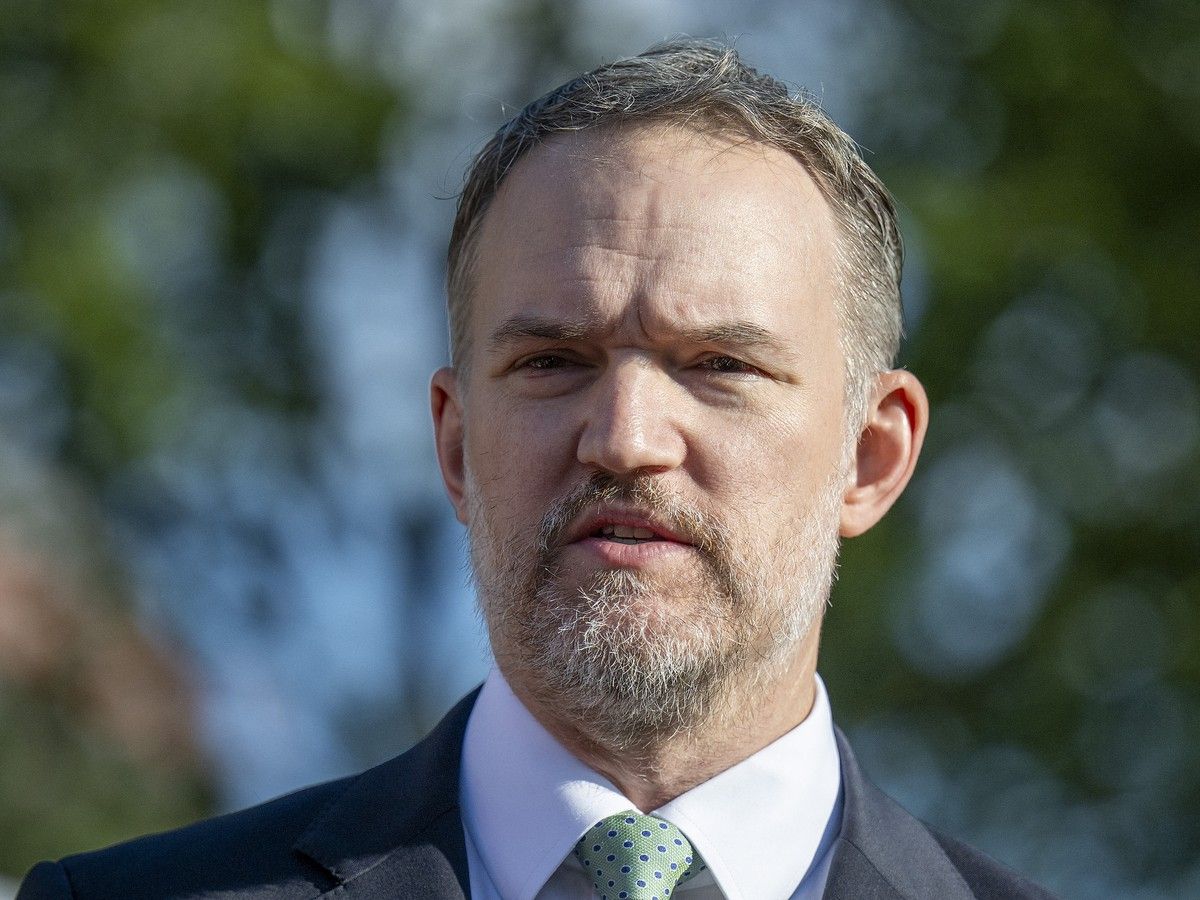
The U.S. and Canada flags flutter next to the Blue Water Bridge border crossing in Point Edward, Ontario, on October 24, 2025.

It’s curious that Donald Trump would be so fixated on Canadian trade practices if he, as he stated this week, doesn’t care about updating the current trade agreement and that he’d “ rather be independent .”

It’s also interesting that the U.S. president is so bothered by Canada’s dairy protectionism, when he himself is such a defender of tariffs as smart and sound economic policy. The U.S. certainly maintains all sorts of agricultural protectionism policies, notably the tariffs and cartel system that protect the U.S. sugar industry.

Regardless, though, new tariffs are looming. We can analyze the president’s internal contradictions or try to parse his true motivations, but none of that changes the reality of this further erosion of the Canada-U.S. trading relationship.

Mind you, this isn’t the first trading partner we’ve alienated or the first trade deal we’ve imperiled over supply management. In this case, the U.S. has a valid complaint over not just the broad protectionist aspects of our system, but also differences in how Canada treats American and European dairy imports.

Unfortunately, Trump’s obstinance, hypocrisy and belligerence have not left Canadians in a mood for further compromises. Weakness just seems to further embolden him, anyway. So it’s less likely now that we’ll budge on supply management.

Which is too bad, because at the end of the day, Canadians would be better off without it.

Supply management is one of three examples of trade “discrimination” that Trump has cited in order to justify new 50 per cent tariffs on a variety of Canadian goods.

Under our system, the number of producers and the amount of production is set through quotas, while prices are set by marketing boards. All of this is shielded by massive tariffs (upwards of 300 per cent, in some cases) meant to keep imports out.

Under both the Canada-United States-Mexico Agreement (CUSMA) and the Canada-European Union Comprehensive Economic and Trade Agreement (CETA), small amounts of foreign dairy products are allowed into Canada either tariff-free or at reduced tariff rates.

The difference in the two agreements concerns how those products come into Canada in the first place. Under our trade agreement with the U.S., it’s Canadian dairy processors and distributors who hold the import licences. Conversely, under CETA, it’s Canadian retailers who hold those licences and can import directly from European producers.

There’s much more incentive for retailers to maximize those import allotments, as opposed to those in the dairy industry, which is why the U.S. has cried foul over this discrepancy. And it’s not just Trump, by the way — under the Biden administration, two complaints were filed over this.

In fairness to Canada, this doesn’t technically violate CUSMA. If the Americans want provisions similar to those contained within CETA, that would be something for the negotiating table – assuming there’s a desire to be at the table.

With the U.S. instead opting for escalation, there’s a hardening on the Canadian side. Political leaders have vowed to protect supply management, and Canadians are increasingly on board.

A new Angus Reid poll found that 42 per cent of Canadians would prefer the government stand firm on supply management, with just 28 per cent support for using it as a bargaining chip and only 16 per cent calling for an end to the policy.

For all the talk about protecting Canadian producers and jobs, however, we’re very narrowly focused on one small part of the broader agricultural sector.

The rest of the industry, on the other hand, is very much threatened by tariffs on Canadian exports and backward steps on open and free trade. The proposed new U.S. tariffs on Canadian dairy products are essentially a moot point, since our dairy industry is not really interested in exports. It’s a different story elsewhere, though.

Beef producers, for example, export billions of dollars worth of product to the U.S. each year. The world’s largest two-way trade in beef and live cattle involves our two countries.

Or, take lentils as another example. In recent years, Canada has become a world leader in lentil exports with more than 90 per cent of what’s produced here being exported abroad.

It’s easy to see how damaging it would be to lose that market access. We saw already how devastating it was when China slapped tariffs on Canadian canola exports. None of these other agriculture sectors needs or wants supply management-style cartel systems.

But there’s also the matter of how all of this impacts Canadian consumers. At a time when food inflation and food insecurity have become pressing concerns, it’s all the more perplexing for us to cling to a policy that — by design — keeps dairy, egg and poultry prices inflated.

A recent analysis from the Montreal Economic Institute confirms what previous studies have concluded: supply management harms Canadian consumers. This latest report pegs the cost to the average Canadian at $244 annually.

There could potentially be some cracks forming in the Canadian political consensus around our status quo. Former Alberta Premier Jason Kenney this week called on conservatives to end “slavish devotion to the supply management cartel,” arguing that it “violates our free market principles, inflates food prices for struggling families, and undermines our global trade interests.”

It’s still an uphill battle, though, especially with the Trump factor. There is likely value in removing the excuses and pretences Trump can use to justify his tariffs, but there’s little appetite at the moment for giving him a win.

However, ending supply management doesn’t have to mean capitulation to the Americans. If we’re concerned about how the U.S. heavily subsidizes agriculture producers, we can treat that as dumping (as the U.S. does with Canadian softwood lumber).

If we’re concerned about food safety and certain U.S. agricultural practices, we can maintain specific safety standards for any products entering Canada. That doesn’t require all of the other baggage of supply management.

Even though he doesn’t seem genuinely interested in free trade, Trump has a point about supply management. His clumsy intervention has regrettably made it a bigger challenge to finally reform this system, but changes are long overdue.

National Post

Rob Breakenridge is a Calgary-based podcaster and writer. He can be found at robbreakenridge.ca and reached at rob.breakenridge@gmail.com


The U.S. Capitol is seen past American flags on the National Mall, June 6, 2025.

Americans will go to the polls in just over three months to decide the mid-term fate of the Trump administration. By any normal measure, Republicans should be dreading the date. It’s usual for incumbent parties to lose ground, but the incessant turmoil of the current regime carries the risk of alienation across all sorts of voter demographics.

That the race remains so unsettled so close to the decision date says something, though what that something might be is as perplexing as so many other aspects of a unique and inscrutable presidency.

A variety of surveys suggest Democrats enjoy an overall lead, though the extent of the gap depends a lot on variables : registered voters versus independents, age groups, ethnic groups, regional preferences and a host of others. Turnout should be key, and there are dark clouds on that front for Republicans: a report by an organization linked to conservative billionaire Charles Koch found a “scary” lack of enthusiasm among the party’s base of support.

Yet no one is betting the farm on the chances Democrats will gain control of the House of Representatives, and the chances of erasing the slim GOP advantage in the Senate are even thinner. The Democrats’ national advantage is offset by a determined Republican gerrymandering drive , reconfiguring electoral districts to ensure almost certain conservative majorities now and into the future. While Democrats have responded with their own attempts to create what are in effect one-party districts, most calculations suggest the incumbents came out marginally ahead.

On a practical basis, Democrats should already be planning their victory parade. The president is unpopular, with a disapproval score nudging 60 per cent. There are disputes within MAGA, big splits over policies and a leakage of one-time Trumpians who have strayed from the camp .

The cost of a gallon of gas averages US$4.09, compared to US$3.09 in January 2024. That’s an extra US$23 to fill your F-150 pickup; or US$36 for the extended-range tank. The cost of pretty much everything else is up as well, thanks to inflation, for which Americans can thank the high cost of the Trump tariff regime. “Nearly 90 per cent of the tariffs’ economic burden fell on U.S. firms and consumers,” according to the Federal Reserve Bank of New York. The Wall Street Journal has called the ill-judged tariff regime a presidential “ obsession .”

“How else to explain his imposition of yet another round of border taxes three months before the November election despite their political unpopularity and economic harm?” it asks. Yet the president has made clear he loves his tariffs and isn’t about to change.

Interest rates in the U.S. are pushing up mortgage rates and the cost of consumer loans. The benchmark Canadian rate is 2.25 per cent , compared to a U.S. Fed target range of 3.5-3.75 per cent. On a $100,000 mortgage that’s about $65 more a month, or $770 a year, a U.S. homeowner would pay compared to a Canadian. Larger mortgages, of course, would cost that much more again. The White House waged a determined effort to pressure the Federal Reserve to lower rates against its better judgment, going so far as to launch a personal mission against its former chairman Jerome Powell, to no effect. Powell retired on his own speed, and replacement Kevin Warsh has so far made no change .

The war on Iran is deeply unpopular, as Americans once against are confronted with images of their sons and daughters being brought home in body bags. There is no sign of the conflict abating; if anything it’s expanding. Houthi tribes have entered the conflict, both Kuwait and Bahrain are reported to have launched attacks on military targets in Iran for the first time, while U.S. support for Israel’s campaigns against Hamas in Gaza and Hezbollah in Lebanon has set off a virulent debate over Washington’s traditional backing for the Jewish state. Despite repeated pledges of peace deals in the works, the U.S. is pondering a plan to train Lebanese forces to take on a greater role — a tactic that failed miserably in both Vietnam and Afghanistan — while a continued surge of troops, weapons and medical teams has poured into the region.

Apart from contributing to the spike in oil prices, Defence Secretary Pete Hegseth put the price of the Iran conflict at US$37.5 billion so far, though Moody’s Analytics calculates the extended cost to consumers and taxpayers at US$132 billion, and Republicans in Congress pushed through a record US$1.15-trillion budget for the Pentagon. Much of the money will come from increased borrowing despite a national debt that has ballooned to US$37.8 trillion, or US$109,000 for every American.

Apart from all the boring figures — which don’t feel so tedious when they’re siphoning ever-increasing amounts from your pocket — there’s the reputational damage to the U.S. of the past two years. Denmark, Greenland, Italy and Canada must be among the least-threatening places on the planet, yet Donald Trump has managed to deeply sour relations with each of them.

Denmark, whose entire population wouldn’t fill all the boroughs in New York City, was prepared to blow up runways in Greenland if the U.S. went so far as to invade. Italy, whose prime minister was once a lonely European cheerleader for Trump, notably ignored him at the NATO summit earlier this month. And the recent launch of the Gordie Howe bridge was a farce worthy of a sketch on late-night U.S. television: American officials were disinvited and the event was held exclusively on the Canadian side. It’s not that Michigan lacks fine folks who would normally be welcome to visit, but how else to respond when you build a bridge, pay the costs, give half of it to the U.S. and are met by insults and a demand for more?

Isolationism has been a continual, and significant, streak through U.S. history. Americans have shown a limited interest in events beyond their own borders, unless the matter is forced on them. But few people enjoy being disliked, and the combination of financial pain, international adventurism and the erosion of America’s stature in so many capitals has become a distinct reality for voters to ponder.

Do Americans think this is good for their country? Have they grasped the extent of the changes taking place? I guess we’ll find out in just a few months’ time.

National Post


The U.S. Capitol is seen past American flags on the National Mall, June 6, 2025.

Americans will go to the polls in just over three months to decide the mid-term fate of the Trump administration. By any normal measure, Republicans should be dreading the date. It’s usual for incumbent parties to lose ground, but the incessant turmoil of the current regime carries the risk of alienation across all sorts of voter demographics.

That the race remains so unsettled so close to the decision date says something, though what that something might be is as perplexing as so many other aspects of a unique and inscrutable presidency.

A variety of surveys suggest Democrats enjoy an overall lead, though the extent of the gap depends a lot on variables : registered voters versus independents, age groups, ethnic groups, regional preferences and a host of others. Turnout should be key, and there are dark clouds on that front for Republicans: a report by an organization linked to conservative billionaire Charles Koch found a “scary” lack of enthusiasm among the party’s base of support.

Yet no one is betting the farm on the chances Democrats will gain control of the House of Representatives, and the chances of erasing the slim GOP advantage in the Senate are even thinner. The Democrats’ national advantage is offset by a determined Republican gerrymandering drive , reconfiguring electoral districts to ensure almost certain conservative majorities now and into the future. While Democrats have responded with their own attempts to create what are in effect one-party districts, most calculations suggest the incumbents came out marginally ahead.

On a practical basis, Democrats should already be planning their victory parade. The president is unpopular, with a disapproval score nudging 60 per cent. There are disputes within MAGA, big splits over policies and a leakage of one-time Trumpians who have strayed from the camp .

The cost of a gallon of gas averages US$4.09, compared to US$3.09 in January 2024. That’s an extra US$23 to fill your F-150 pickup; or US$36 for the extended-range tank. The cost of pretty much everything else is up as well, thanks to inflation, for which Americans can thank the high cost of the Trump tariff regime. “Nearly 90 per cent of the tariffs’ economic burden fell on U.S. firms and consumers,” according to the Federal Reserve Bank of New York. The Wall Street Journal has called the ill-judged tariff regime a presidential “ obsession .”

“How else to explain his imposition of yet another round of border taxes three months before the November election despite their political unpopularity and economic harm?” it asks. Yet the president has made clear he loves his tariffs and isn’t about to change.

Interest rates in the U.S. are pushing up mortgage rates and the cost of consumer loans. The benchmark Canadian rate is 2.25 per cent , compared to a U.S. Fed target range of 3.5-3.75 per cent. On a $100,000 mortgage that’s about $65 more a month, or $770 a year, a U.S. homeowner would pay compared to a Canadian. Larger mortgages, of course, would cost that much more again. The White House waged a determined effort to pressure the Federal Reserve to lower rates against its better judgment, going so far as to launch a personal mission against its former chairman Jerome Powell, to no effect. Powell retired on his own speed, and replacement Kevin Warsh has so far made no change .

The war on Iran is deeply unpopular, as Americans once against are confronted with images of their sons and daughters being brought home in body bags. There is no sign of the conflict abating; if anything it’s expanding. Houthi tribes have entered the conflict, both Kuwait and Bahrain are reported to have launched attacks on military targets in Iran for the first time, while U.S. support for Israel’s campaigns against Hamas in Gaza and Hezbollah in Lebanon has set off a virulent debate over Washington’s traditional backing for the Jewish state. Despite repeated pledges of peace deals in the works, the U.S. is pondering a plan to train Lebanese forces to take on a greater role — a tactic that failed miserably in both Vietnam and Afghanistan — while a continued surge of troops, weapons and medical teams has poured into the region.

Apart from contributing to the spike in oil prices, Defence Secretary Pete Hegseth put the price of the Iran conflict at US$37.5 billion so far, though Moody’s Analytics calculates the extended cost to consumers and taxpayers at US$132 billion, and Republicans in Congress pushed through a record US$1.15-trillion budget for the Pentagon. Much of the money will come from increased borrowing despite a national debt that has ballooned to US$37.8 trillion, or US$109,000 for every American.

Apart from all the boring figures — which don’t feel so tedious when they’re siphoning ever-increasing amounts from your pocket — there’s the reputational damage to the U.S. of the past two years. Denmark, Greenland, Italy and Canada must be among the least-threatening places on the planet, yet Donald Trump has managed to deeply sour relations with each of them.

Denmark, whose entire population wouldn’t fill all the boroughs in New York City, was prepared to blow up runways in Greenland if the U.S. went so far as to invade. Italy, whose prime minister was once a lonely European cheerleader for Trump, notably ignored him at the NATO summit earlier this month. And the recent launch of the Gordie Howe bridge was a farce worthy of a sketch on late-night U.S. television: American officials were disinvited and the event was held exclusively on the Canadian side. It’s not that Michigan lacks fine folks who would normally be welcome to visit, but how else to respond when you build a bridge, pay the costs, give half of it to the U.S. and are met by insults and a demand for more?

Isolationism has been a continual, and significant, streak through U.S. history. Americans have shown a limited interest in events beyond their own borders, unless the matter is forced on them. But few people enjoy being disliked, and the combination of financial pain, international adventurism and the erosion of America’s stature in so many capitals has become a distinct reality for voters to ponder.

Do Americans think this is good for their country? Have they grasped the extent of the changes taking place? I guess we’ll find out in just a few months’ time.

National Post


No opposing voices were included in the CBC's story, aside from a perfunctory quote from the provincial government, nor was there any mention of high-quality Canadian studies suggesting that consumption sites are ineffective. Pictured, the CBC logo on a building in Vancouver in 2013.

The CBC published an investigative story on July 5, suggesting that the closure of Ontario’s supervised consumption sites has been exacerbating the province’s overdose crisis. A broader look at the data , though, suggests that post-closure outcomes have actually been inconclusive or positive, and that the broadcaster is using cherry-picked figures to push activist propaganda.

The story focused on overdose calls to paramedics in the first five months of 2026 and found that, on a year-over-year basis, such calls increased by 52 per cent in Ottawa, 115 per cent in Toronto, 199 per cent in Hamilton and 20 per cent in Thunder Bay.

Although CBC cautioned that the “data doesn’t show what’s behind the increases,” the angle of the story was clear: around 80 per cent of the report was dedicated to discussing supervised consumption sites, and five harm reduction advocates were quoted arguing, to varying degrees, that closing these sites fuels overdose calls and deaths.

No opposing voices were included, aside from a perfunctory quote from the provincial government, nor was there any mention of high-quality Canadian studies suggesting that consumption sites are ineffective. Any casual reader would’ve thus concluded that there is an urgent need to reopen these sites, which is unfortunate because the CBC’s framing is biased and the figures presented fail to account for context.

Ontario began closing its supervised consumption sites at the end of March 2025: nine sites shut down that spring, a 10th was shuttered a few months later and then the province defunded its eight remaining sites this June. Most of the closed sites either have been, or soon will be, replaced by recovery-oriented addiction treatment centres known as “ HART Hubs .”

Did the first wave of closures worsen Ontario’s addiction crisis? The data here is inconclusive.

The Toronto Overdose Information System shows that suspected opioid-related paramedic calls had been declining for about six months before these closures, but then steadily increased afterwards — a development which some harm-reduction activists find vindicating. Yet this data has often been taken out of context.

While Toronto’s call volumes have been elevated in recent months, they still fit within the normal range established over the past few years and match what was normal throughout most of 2023 and 2024, when consumption sites were still widely operating. The recent surge is also not unprecedented, as a similar increase was observed in late 2022 and early 2023, around the zenith of the harm-reduction movement.

It appears that harm-reduction activists — and the CBC reporting on their claims — are cherry-picking data from early 2025, when overdose calls were unusually low, and using that as a baseline to misleadingly suggest that Toronto’s post-closure call volumes have been skyrocketing to unusually high levels.

As for Ottawa, the CBC sent me the figures it based its claim of an increase in overdoses, which were originally sourced from the Ottawa Paramedic Service, and some issues were immediately apparent.

The Ottawa data also lacks wider context as it covers only 2025 onward. However, it suggests that Ottawa’s overdose calls surged after March 2025 (following the first round of consumption site closures), peaked last September and then declined in late 2025 before rising again this April and May.

These fluctuations suggest a more complicated story than what the CBC’s reporting suggests. What happened in Ottawa last September? Why did overdose calls decrease in late 2025? What confounding variables are at play here? These questions are not addressed by the CBC.

To get more insight, I separately gathered overdose call data from the Ottawa Police Service (which uses a different system than the paramedics) and Ottawa Public Health’s data on opioid-related emergency room visits. I charted these figures from 2021 onward, with some gaps in recent months where data was unavailable.

These sources show that overdose calls and opioid-related ER visits were very high throughout 2023 and most of 2024, and then declined to abnormally low levels in early 2025. Overdoses and ER visits subsequently surged after the first wave of consumption site closures, peaking in September, but then collapsed to levels far below 2023 and 2024 norms, largely reversing the post-closure increase.

These findings refute the theory that closing supervised consumption sites caused a persistent rise in Ottawa’s overdoses. Even if the September spike was caused by these closures — which is not a given — it would appear that this harm was short-lived.

In Thunder Bay, quarterly statistics published by the district’s health unit show that opioid-related overdose calls and opioid-related emergency room visits remained stable after the closure of the city’s sole consumption site. So there appears to be no significant overdose surge in that city, contrary to what the CBC’s report implied.

Hamilton is an outlier , though. According to the city’s public health data , overdose reversal calls rose to unprecedented levels after the first wave of consumption site closures and have remained at volumes far above the post-pandemic norm. While this does not, by itself, establish causality, it is concerning and warrants further investigation.

But what about fatal overdoses? It turns out that those did not increase at all.

Toronto’s opioid overdose deaths remained very low (in post-pandemic terms) in the year following the closure of most of the city’s consumption sites. Ottawa’s fatal opioid overdose rates also remained stable — and so did Hamilton’s suspected drug-related deaths ( of all types ). Thunder Bay’s overdose deaths decreased by 31 per cent between 2024 and 2025 .

The CBC omitted this city-level data and only mentioned, in one brief sentence buried at the very end of the story, that province-wide opioid deaths had decreased by 41 per cent since the consumption sites were shut down. This is clearly misleading, considering how much of the report is devoted to quoting harm-reduction activists who claim that consumption sites save lives.

In an email to National Post, CBC spokesman Chuck Thompson wrote that fatal overdoses were outside the scope of the story and that gathering consistent, up-to-date data on such deaths was not possible for all four cities.

This is unconvincing. Even incomplete data would have provided much-needed context and would have been more substantial than the activist anecdotes that padded the CBC’s “investigation.”

On a more fundamental level, none of this data can, by itself, convincingly demonstrate the utility (or lack thereof) of overdose prevention sites, because correlation does not equal causation. You cannot, for example, just assume that closing consumption sites caused Hamilton’s surge in overdose calls or Thunder Bay’s collapse in overdose deaths — other possible causes must first be ruled out.

One way to do this is to compare jurisdictions that have overdose prevention sites (known as a “treatment group”) to similar ones that do not (known as a “control” group).

This is precisely what Dimitra Panagiotoglou, an epidemiologist based at McGill University, did in two separate peer-reviewed studies published in 2022. She found that, in both British Columbia and Ontario , consumption sites had no apparent effect on hospitalizations or overdose mortality rates.

Just this spring, another peer-reviewed study published in the academic journal Addiction found similar results in Alberta. The study tracked patient outcomes at two consumption sites operating in demographically similar cities: Red Deer and Lethbridge. After the Red Deer site closed, its patients saw, in comparison to the Lethbridge patients, no statistically significant increase in deaths, emergency room visits or “opioid-related emergency medical services (EMS) events.”

As noted in a recent report by the Foundation for Drug Policy Solutions, however, harm reduction activists often ignore such higher-quality research and rely on methodologically weaker studies to support their view.

This dynamic is evidently playing out right now regarding Ontario’s closures.

Thompson said that, “CBC News did not selectively include evidence supporting supervised consumption sites while omitting opposing research.” Yet it is a demonstrable fact that opposing research and voices were not included in the report. If the CBC conducted “extensive research,” as Thompson claimed, then that just makes this absence all the more conspicuous.

I further asked Thompson whether the failure to include opposing experts was consistent with the CBC’s journalistic standards, which ostensibly require balance and impartiality . He did not answer the question directly, and merely recited the credentials of the quoted harm-reduction activists and mentioned that the province was contacted for comment.

This story is consistent with previous CBC reporting on drug policy.

Last autumn, the broadcaster produced a documentary in defence of Canada’s failed “safer supply” experiment. As with the July 5 story, the documentary exclusively featured harm-reduction advocates while marginalizing opposing addiction experts, in what amounted to a swipe against conservative critics of progressive drug activism.

Similarly, in late 2023, the CBC interviewed two Vancouver-area families who testified that their daughters had developed crippling addictions due to diverted safer supply opioids, but the CBC failed to broadcast any negative references to safer supply.

The CBC has repeatedly demonstrated that it cannot be trusted to produce balanced journalism on the national addiction crisis. Its “investigative” work amounts to little more than politicized cheer-leading for radical harm-reduction activists.

National Post

Adam Zivo is Executive Director of the Centre For Responsible Drug Policy.