


LP_468x60
on-the-record-468x60-white

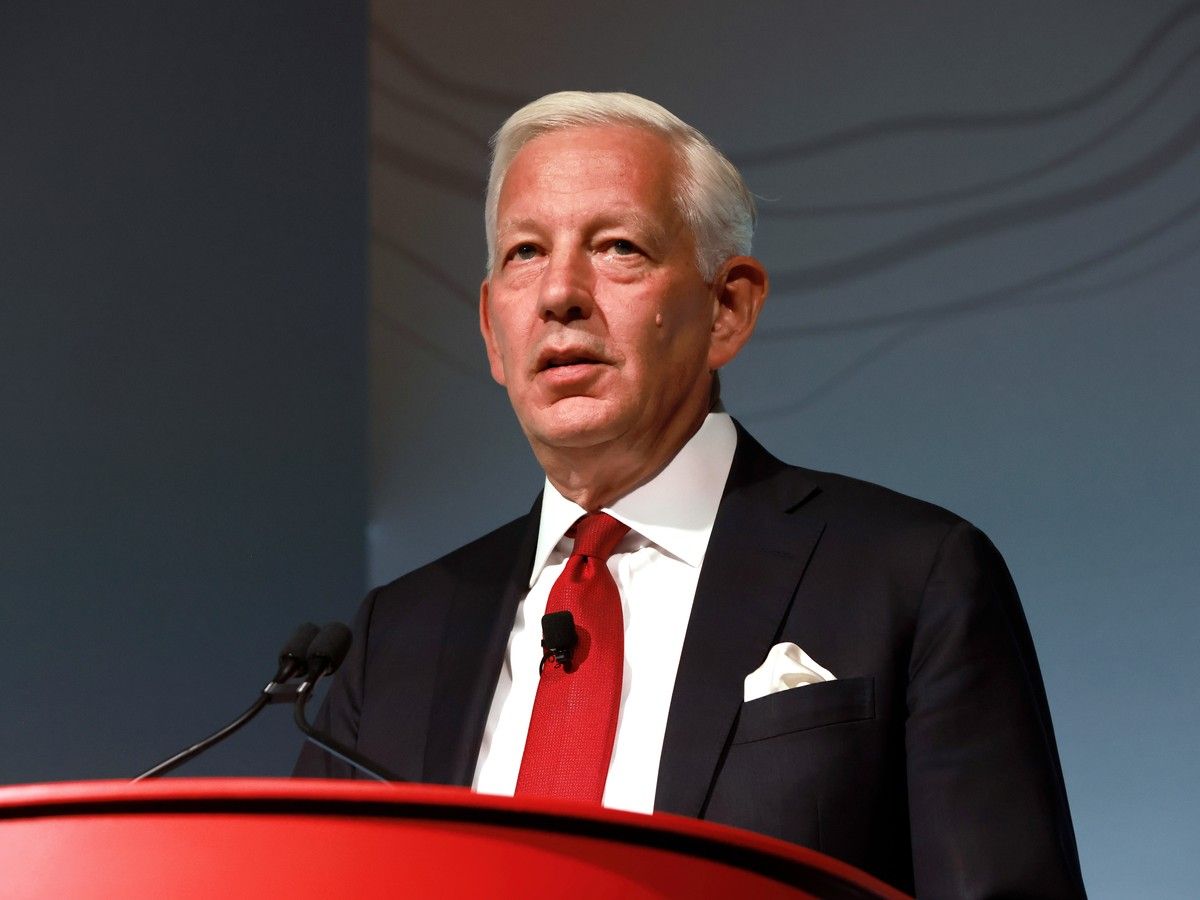
Ontario Premier Doug Ford.

Doug Ford has spent much of the past few months being mad.

He was mad at the opposition MPPs who harangued him about his government’s brief ownership of a private jet, even though he agreed to sell the “gravy plane” just as soon as it became clear that nickname was going to stick.

He’s more recently been mad at his own MPPs who ran up Toronto hotel bills, purportedly for late-night work, even though they lived within normal commuting distance of Queen’s Park (and didn’t work late all that often). That one cost Willowdale MPP Stan Cho his cabinet post.

He’s been mad at Mark Carney — or at least disappointed by him — after the prime minister backed away from supporting the Ontario premier’s plan for a huge expansion of Toronto’s island airport.

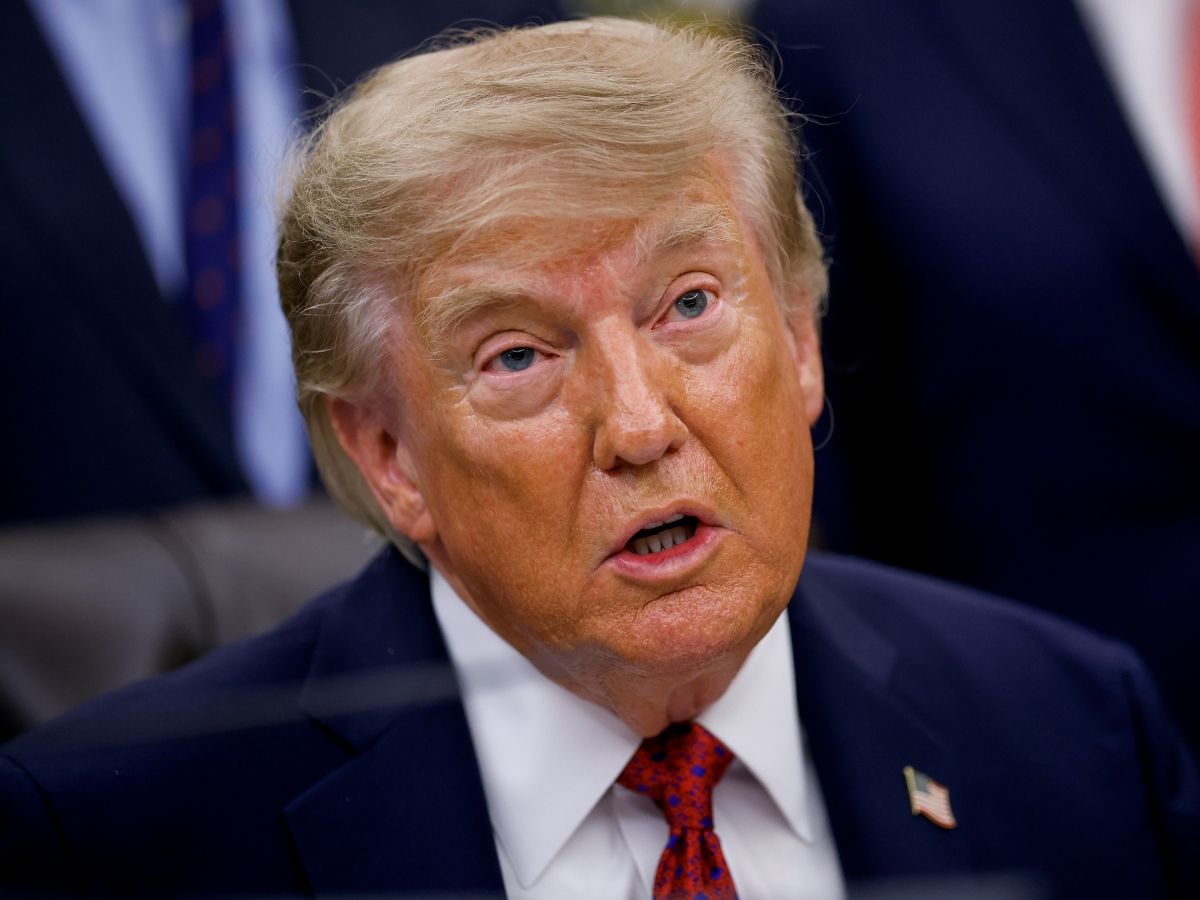
He’s been mad at Donald Trump for a host of reasons, most of them quite valid.

And through all of that he’s been mad at a media that asks him about softening poll numbers and spending controversies instead of talking up his government’s accomplishments. On that last note, he’s insisted that things are much better in Ford Nation than the press gallery would have you believe. He says he doesn’t trust the public polls, and that his internal numbers suggest he would easily win a fourth consecutive majority.

Now he has a chance to prove it. Sort of.

Ontario announced three byelections on Wednesday, to be held on Sept. 3. All three of them are in the Greater Toronto Area, and two of them — York-Simcoe and Hamilton East-Stoney Creek — are ridings that were held by the Progressive Conservatives. Even allowing for the fact that byelections are usually challenging for the governing party, Ford’s PC candidates will be running against Liberals who won’t have their next permanent leader in place until late November, and Marit Stiles’ NDP, who are still trailing the leaderless Liberals in some polls.

The opportunity is there, in other words, for the PCs to defend their seats and prove that the Ford brand remains durable.

But the opposite is also true: There’s also an opportunity for the Liberals and NDP to land electoral blows on the premier and ensure that his bad-news spring turns into a bad-news summer.

As an indication of how much the PCs would like to avoid that outcome, they followed up the morning’s byelection announcement by trotting out Peter Bethlenfalvy, finance minister and president of the Treasury Board, to declare that eight provincial agencies would undergo reviews on “efficiency, governance and productivity.” It was both vague on details — there were no savings targets announced, or even a suggestion as to whether significant savings are expected — but also a big, flashing indicator that the Ford government would like to once again be known as a government that is concerned about wasteful spending.

As opposed, that is, to one that almost flushed $30 million on a private jet while also giving its MPPs licence to bill taxpayers for Toronto hotels instead of just driving home after a late night of work like everyone else in the province. Those dual controversies, if the polls that Ford doesn’t believe are to be believed, have dented his support somewhat. An Abacus Data survey published this week still had the PCs with an eight-point lead over the Liberals, but down from a healthy 12-point lead they enjoyed not long ago.

The spending reviews announced Wednesday won’t do much to change that, as they will barely have begun by the time the byelections are held. Bethlenfalvy said the agencies like Metrolinx and the LCBO will be asked to identify areas where efficiencies might be found as a first part of the process. The minister didn’t say that job reductions were a goal, but he did say that “everything’s on the table” as the agencies are reviewed. “I don’t want to candy-coat it,” he said, which sure sounded like an expectation that some job losses would be involved.

But that it was Bethlenflavy making the announcement instead of Ford seemed telling in itself. Instead of answering questions about hotel spending and poll results, the Premier spent the morning visiting flood-damaged areas in Niagara, and was then scheduled to gaze happily at a Toronto transit project on Wednesday afternoon alongside the prime minister.

Ford wasn’t expected to take questions from the media while with Carney, though. That’s likely an indication of the weeks to come, as the byelections play out. The best way to ensure that poor results don’t reflect on the premier is to keep him out of the fray entirely. Let the byelections happen, but otherwise be seen with getting on with the job of governing the province.

It’s a reasonable enough strategy. It just doesn’t suggest someone as comfortable with his brand at the moment as the premier so often insists.

sstinson@postmedia.com


A woman stands next to Iranian-made Zolfaghar missiles displayed in Azadi Square in Tehran on July 24.

Iran’s decision to escalate the war last week appears counterintuitive. As Omani mediators sought to preserve a diplomatic opening through a renewed truce and continued negotiations over the Strait of Hormuz, Tehran instead launched a direct ballistic missile attack on U.S. bases in Jordan, while expanding pressure across other fronts. The move sharply increased the risk of a broader regional conflict.

Reports soon emerged that Washington was preparing strikes against Iranian energy infrastructure before Saudi Arabia, Qatar and the United Arab Emirates reportedly intervened to preserve the diplomatic track. Why did Tehran choose escalation at the very moment when an off-ramp appeared within reach? The answer lies in the Islamic Republic’s internal balance of power.

Three distinct centres of power currently compete over how Iran should prosecute the war and negotiate its eventual settlement. They differ on methods and acceptable levels of risk. Yet they remain broadly aligned on the strategic objectives they seek to achieve.

The first , and currently the most influential, is the faction that’s likely led by Ahmad Vahidi, commander-in-chief of the Islamic Revolutionary Guard Corps (IRGC). This camp represents the dominant force in shaping Iran’s wartime decisions. It views military pressure as the prerequisite for any meaningful outcome and insists that, if negotiations occur at all, they must proceed from a position of strength.

For Vahidi, the Strait of Hormuz is Iran’s principal source of strategic leverage. Maintaining coercive control over the Strait strengthens its hand in future negotiations over its nuclear program. Losing that leverage would weaken Tehran’s bargaining position long after the current war ends.

The second faction is represented by President Masoud Pezeshkian, Foreign Minister Abbas Araghchi and Parliamentary Speaker Mohammad Bagher Ghalibaf. This camp’s priority is to contain the economic damage that war and sanctions are inflicting on the regime.

They are equally concerned about the domestic front. A population that has repeatedly demonstrated its desire for political change is a strategic challenge no less consequential than the military confrontation abroad. They are prepared to negotiate limited compromises over the administration of the Strait of Hormuz.

The third faction, centred on the Paydari Front and figures such as Saeed Jalili, rejects negotiations with Washington altogether. Although smaller than the other two camps, it continues to exert ideological pressure against compromise and enjoys influence through key state institutions, such as Islamic Republic of Iran Broadcasting .

This group’s strategy is to move beyond a defensive posture and seize the initiative . Rather than confining the conflict to Iranian territory, it seeks to widen the theatre across the region and beyond, raising the costs for Iran’s adversaries and restoring deterrence on more favourable terms.

The other factions have adjusted to the strategic environment created by military escalation. That pattern became evident immediately after Iran’s attacks on American bases in Jordan, when Araghchi launched an intensive diplomatic effort, speaking with his counterparts in Cyprus and Bulgaria before contacting British Foreign Secretary Ed Miliband.

Those conversations reportedly sought to discourage additional support for American military operations and warn against further expansion of the conflict. In this instance, military escalation and diplomacy served as sequential instruments of the same strategy.

For years, officials and analysts in Tehran have discussed U.S. President Donald Trump’s strategic posture through the language of the “ madman theory ” — the deliberate cultivation of unpredictability to gain bargaining leverage. Recent Iranian behaviour indicates that the regime is attempting to appropriate the same logic. Rather than reacting to American unpredictability, Tehran is attempting to manufacture uncertainty of its own.

Immediately after Trump reportedly signalled his intention to strike Iran’s energy infrastructure, Nour News, a media outlet closely associated with Iran’s Supreme National Security Council, published a list of energy facilities across the Persian Gulf that the IRGC could target in retaliation. The message was unmistakable: any attack on Iran’s energy sector would be met with a region-wide response.

In effect, the IRGC’s conduct throughout the latest round of hostilities suggests a deliberate willingness to escalate, in order to demonstrate resolve and shape America’s calculations. This is classic brinkmanship, as defined by Thomas Schelling : the deliberate manipulation of escalating risk to convince an opponent that continued confrontation may lead to consequences that neither side can fully control. Iran’s recent conduct closely fits this model.

This strategy places Washington in an increasingly difficult position. Every attempt to increase military pressure carries the risk of provoking another round of Iranian escalation rather than compelling restraint. The result is a strategic dilemma in which measured responses risk appearing indecisive while stronger responses threaten a wider war. Trump’s reported decision to suspend planned strikes against Iranian energy infrastructure, even if only temporarily, illustrates the precarious balance he is trying to achieve.

This locks the conflict into a dangerous strategic dynamic. Temporary pauses in escalation, even when tactically prudent, should not be mistaken for a durable solution. They merely postpone the next crisis while allowing each side to prepare for it.

The core issues are not resolved yet. The next round of hostilities is likely to begin with a higher level of intensity than the last. Each cycle of brinkmanship raises the threshold of deterrence, requiring ever greater demonstrations of resolve to preserve credibility. This means that every future confrontation will begin where the previous one ended.

National Post

Avideh Motmaen-Far is the president of the Council of Iranian Canadians. Masoud Zamani is director of Nexara Intelligence.


Ontario Premier Doug Ford and Prime Minister Mark Carney.

I’m just guessing here, but it seems possible the ad campaign was the start of the problem.

Until Doug Ford’s Ontario government launched a two-week U.S. ad blitz challenging the Trump administration’s trade practices, Ford and Prime Minister Mark Carney were getting along swimmingly.

Since their breakfast get-together at a Toronto-area diner in mid-March, things between the two were all handshakes and smiles. The polished egghead PM and the folksy high school graduate premier had found a sweet spot across the political divide that usually separates their two parties.

Then the difficulties started. Ford’s October ad , featuring clips of a tariff-critical Ronald Reagan, unsettled Carney’s delicate trade talks with Washington, predictably annoying the preternaturally sensitive occupant of the White House.

Nothing on either front has been the same since. Carney’s “negotiations,” if you can call them that, consist of U.S. representatives issuing demands, threats and a varying range of insults while Canada’s respondents roll their eyes and look for a soother large enough to fit the jaws of an oversized, uncontrollable baby in mid-tantrum.

At that point in the Ford relationship, Carney had little leeway for complaint. He’d happily glommed onto the whole “elbows up” ploy when it suited his agenda, and Ford is nothing if not up-elbowed to a fault. The Ontario leader refuses to cave to U.S. entreaties to return American alcohol to store shelves, urges tit-for-tat retaliation for every U.S. tariff hike and projects all the penitent fervour of a former Trumpist admirer who’s come to see the light.

Ford is also no diplomat, arguing that, since bullies only respond to strength, Ottawa should include oil, gas, electricity, fertilizer and anything else the U.S. needs and Canada supplies as weapons against U.S. assaults.

“We are an energy powerhouse, and we could dismantle the U.S. if we wanted to,” he proclaimed at a gathering of premiers. “They need to feel the pain, rather than us constantly feeling the pain.”

Without naming names, he questioned Ottawa’s tactics of jollying along the Americans, agreeing to moderate concessions while focusing on the bigger picture of continental trade talks.

“I’m losing patience … we can’t keep rolling over,” Ford said . “We always seem to be on our back heels. We need to be on the offence, not constantly on the defence with President Trump.”

That couldn’t have sat well with Carney, who can get snippy at the slightest hint of criticism from a questioning journalist, much less a high-profile premier.

Ford nonetheless remains all-in on Carney’s push for big projects with big investments. He’s got a bundle of his own: a tunnel under the country’s busiest highway, a 3,300 km oil pipeline from Alberta to Ontario, a long-sought all-season road to Ontario’s far-north, mineral-rich “Ring of Fire” that the premier claims will create 700,000 jobs and add $22 billion to the province’s economy.

If Carney disapproved of any of those schemes, he kept his views to himself, but trouble began when Ford announced a surprise plan to expand Toronto’s downtown Billy Bishop airport to allow commercial jets to land just a few minutes offshore of Toronto’s business towers.

Toronto’s mayor was firmly opposed, as were most of the residents of the forest of condominiums erected along the shoreline. Ford was brooking no opposition, however, announcing the province would seize whatever land it needed and exclude the city from any further part in the official body that governs the airport.

At first, Carney seemed open to the plan, calling it “a very interesting vision,” with “big possibilities.” But with public opposition mounting and upcoming by-elections to win, Transportation Minister Steve MacKinnon declared a week ago that Ottawa would have nothing to do with the project, effectively killing its chances.

That was more than Ford could stomach. A few days after he asserted that Carney “did an excellent job getting this (bridge) deal done,” reports began appearing that Ontario’s government was no longer as enthused as it used to be about a federal plan for the $90 billion Alto high-speed rail project joining Toronto to Quebec.

“Too many questions (about the rail plan) remain unanswered. Too many voices have been ignored,” a group of Ford caucus members publicly complained.

Where the bromance goes from here is unclear. Carney was notably absent from the grand opening of the Gordie Howe bridge linking Windsor to Michigan, visiting a national park in Newfoundland instead. The prime minister has attracted considerable fire for his varying versions of the last-minute deal Ottawa accepted to finally get the bridge operating, and was no doubt happy to avoid another grilling. Ford, who did attend the ceremony, noted pointedly that “Canadians and Americans are better off when we work together instead of standing apart.”

Good relations between Ottawa and the country’s most populous province are always to be desired, but are also fraught with a cauldron of political considerations. In those first brotherly days, both Carney and Ford were riding high: a popular new prime minister and a premier celebrating a third majority victory.

Stuff’s gotten more complicated since then. Ford has made a series of clumsy mistakes, his bull-in-the-airport-shop being just the latest, and his government now trails the leaderless Liberals in opinion polls.

Carney has exhibited a less-than-stellar grasp of public communications. The rollout of a B.C. affordable housing plan was grosslymishandled , he still hasn’t found an explanation of the bridge deal coherent to the unwashed, and his newly-appointed principal secretary is best known in Indigenous communities for authoring a searing 2016 indictment of aboriginal life that still resonates poorly among its leaders.

Both have time to repair things. Ontario’s next election isn’t until 2030; Carney has three-plus years until his. Ontario Liberals will choose a new leader in November; a more competent opponent than he’s faced thus far could force some renewed caution on Ford, perhaps even convincing Carney that the fact that a project costs a lot and involves a lot of construction doesn’t necessarily make it a good idea.

Carney seems yet to have allowed for the intensity of the scrutiny his job involves and the advisability of clarity in his remarks.

Both recognize that until the U.S. either hobbles its president or picks a new one, containing the damage he can do to Canada remains their greatest challenge. Good relations would go further than the alternative in making a success of that.

National Post


When the Carney Liberals lecture Canadians on history it is with a smugness and self-righteousness that is as loathsome as it is tiresome.

Saturday’s Emancipation Day — created by the Liberals in 2021 — proved such an occasion for pontificating and sermonizing by our prime minister and senior ministers.

In a statement over the weekend, Prime Minister Mark Carney was at pains to point out that “slavery existed here” and that while the 1834 Slavery Abolition Act marked a turning point, “freedom was not granted in a single day.”

He went on: “Today, we honour those whose courage helped make our country freer, fairer, and stronger.”

But the vital component missing from the prime minister’s statement was context.

The 1834 act that abolished slavery across the British Empire wasn’t the first turning point in Canada aimed at giving Black people their freedom.

More than 40 years earlier, John Graves Simcoe, the lieutenant-governor of Upper Canada, passed the 1793 Act to Prevent the further Introduction of Slaves and to limit the Term of Contracts for Servitude, the first anti-slavery legislation in the British Empire. While the law did not ban slavery, it prohibited the importation of enslaved people into Upper Canada.

It added that no person is “to be subjected to the condition of a Slave, or to a bounden involuntary service for life, into any part of the Province.”

The act also paved the way for the “Underground Railroad.” A University of Toronto article on the subject estimates that 30,000 to 40,000 African Americans fled to Canada and freedom between 1793 and 1865.

This is in contrast to the estimated 4,000 to 8,000 African and Indigenous people who were enslaved during 200 years of Canadian history.

So if the prime minister wants to honour those who made this country freer, fairer and stronger, he should start by celebrating Simcoe’s abolitionist legacy.

Meanwhile, in a Saturday tweet , Foreign Minister Anita Anand said that on Emancipation Day, “I join Canadians in reflecting on the dark legacy of slavery.”

That same day, Identity and Culture and Minister Marc Miller said in a statement , “On this Emancipation Day, I invite Canadians to deepen their understanding of the history of slavery in Canada and the long-term effects of anti-Black racism.”

How sweet and humble of Anand and Miller to invite us to deepen our understanding and to pause in reflection. The implication here, of course, is that these two Liberal ministers have already done that emotional legwork and it’s only the proletariat who need educating.

Unfortunately, Carney and his ministers are merely reflections of these times when our penance must be on full display, our sackcloth and ashes be in full view and, like good Pharisees, we must stand proudly on street corners in order to show our sincerity.

There’s nothing wrong with condemning slavery; that it is evil goes without saying. But there is everything wrong in insinuating that the “peculiar institution” so prevalent in America — it is estimated that there were more than 10 million slaves in more than 200 years of American history — was in any way comparable to Canada.

But that is the effect of the Liberal announcements when they leave out that slavery was not widespread in Canada, that we led the way in abolishing the practice and that we were a refuge for tens of thousands of slaves.

If we are to “reflect on the dark legacy of slavery,” then we should also consider the fierce abolitionists who fought to end it.

In his Emancipation Day statement , Opposition Leader Pierre Poilievre was happy to denounce slavery — “that immoral practice across Britain’s vast and mighty empire.”

But he added, “We as Canadians have a special place in this story because it was 40 years prior, in the young colony of Upper Canada, that a reformist lieutenant-governor by the name of John Graves Simcoe passed the first law limiting slavery in any of Britain’s territories.

“In Simcoe’s time, British North America was already home to communities of Black Loyalists, many of whom were once enslaved. In the coming decades, these colonies would play an important role as the end point of the Underground Railroad: providing freedom and refuge for tens of thousands who were unjustly held in bondage.”

More than 200 years after Simcoe led the way in ending slavery, the Liberals are intent on using selective history to take Canadians on a guilt trip.

However, it wasn’t guilt but gratitude that was expressed by those slaves who made their way to freedom in Upper Canada.

“I left Mississippi about 14 years ago,” said Mrs. Christopher Hamilton, a freed slave living in what is now London, Ont., in an interview that was published in 1856. “I was raised a house servant, and was well used, but I saw and heard a great deal of the cruelty of slavery. I saw more than I wanted to — I never want to see so much again…. I had rather live in Canada, one potato a day, than to live in the South with all the wealth they have got.”

On Emancipation Day, Canadians can rightly reflect on the fact that this country laid the groundwork for abolishing the evils of the slave trade.

National Post


Padre Rory MacDonald (at the podium) speaks to the crowd and leads a prayer on Remembrance Day on Tuesday, Nov. 11, 2025, in Cornwall, Ont.

Here we go again.

As it did in 2023, the federal government is seeking to restrict prayers by military chaplains, instead encouraging them to offer “spiritual reflections” — essentially life lessons or other inspirational bon mots.

To jog memories: A 2023 Canadian Armed Forces (CAF) directive updating a 2013 military policy told chaplains to avoid using religious symbols at public events, to filter religious expression through “Gender Based Analysis” to avoid asking anyone to remove a hat or headwear during their presentations, and, most infamously, to replace prayer with nebulous, sanitized alternatives called “spiritual reflections.” This new document , taking the form of Military Personnel Instructions, clarifies that such reflections “do not use religious specific language” but rather “reflect upon lessons learned, beliefs, values, and experiences to inspire gratitude, remembrance, hope, and integrity.”

The federal government is once again presenting this change as a more inclusive measure while achieving the exact opposite. As my colleagues said in 2023, prayers across different faith lines are not interchangeable. A spiritual reflection that applies to all ultimately applies to none. Trying to appease everyone actually makes no one happy.

So would more religious prayers actually be a preferable option? We believe the research says yes. Working with the Angus Reid Institute, we have polled Canadians several times on the subject of religious tolerance. The religiously committed, privately faithful, and spiritually uncertain, by and large, view most faiths positively. While a Hindu prayer might not suit the needs of a Catholic, there is a broad endurance by those who are believers or consider themselves agnostic for other people living out their faith lives. It is only atheists, representing just a third of Canadians, who hold a negative perception of all other religions.

What the government calls inclusion, in this case, is an effort to achieve neutrality that instead turns into secular uniformity, which is not the same thing.

CAF leadership in 2023 argued that this change was necessary to comply with a 2015 Supreme Court ruling that enforced “state neutrality” which said “it must neither favour nor hinder any particular belief, and the same holds true for non-belief.” Yet the policy the CAF has adopted plainly favours non-belief.

The CAF defends its policy by assuring that it “does not limit a chaplain’s personal beliefs or ability to provide spiritual or religious care,” which is a false statement. If chaplains are prohibited from praying in contexts where prayer has historically been expected, their ability to exercise their ministry has, in fact, been narrowed.

This same new policy states that “the spiritual and moral health and well-being of CAF members are essential.” How do those faithful members of the CAF feel today, I wonder, when finding out how their command structure feels towards their choice of faith?

A better approach would be one that is rooted in the pluralistic thinking that emerged from thousands of years of thought and hard-won experience by western states. A wider array of prayers, offering value and meaning to more members of the CAF and the broader community, is of greater value than a one-size-fits-all Valedictorian speech.

This new policy is not the best use of the talents of our military chaplains and it doesn’t align with the job they were hired to do. Chaplains are not generic wellness coaches or motivational speakers. They are representatives of particular faith traditions invited into military life because service members seek spiritual care rooted in those traditions. Asking chaplains to set aside the very language of their faith in public settings misunderstands both the vocation of chaplaincy and the needs of those they serve.

CAF members are best supported when chaplains come to work as their whole selves, and when their leaders focus on the real issues. This is critical at a time when the CAF is facing decaying equipment, ammunition shortages, recruitment woes and an increasingly unsteady world.

It is our prayer that this policy will be revisited to ensure broader faith representation in public events. Because if there is anything the CAF needs now, it’s exactly that.

National Post

Brian Dijkema is the president of Cardus.


ullet holes mark the front doors and windows of Jewish Temple Emanu-El in Toronto, Tuesday March 3, 2026.

When does hate become terrorism? Answer: when it is orchestrated, repeatedly, to sow fear, cause chaos, and undermine society. One hateful act can be the work of a vengeful madman; a series of hateful acts, against the same community, conducted in a similar manner, constitute terrorism.

That is what Jews in Canada face today. Since October 7, 2023, B’nai Brith Canada has documented nearly 5,800 total incidents in 2023 and a record 6,800 incidents throughout 2025. By today’s stats, that’s one hate crime for every 487 Jewish residents. Jews are 22 times more likely to be the victim of a hate crime than non-Jewish Canadians

Take that in for a moment.

Jewish businesses, places of worship and schools have been shot at and vandalized. Jewish seniors’ homes, some of whom house Holocaust survivors, have been picketed by protesters chanting “So not negotiate with Israel, except with the gun” and “Go back to Europe.” Many Jews no longer feel safe in their neighbourhoods or even walking down Main Street.

And the apparent terrorists are getting bolder. Last week, two Jewish-owned businesses were attacked: two locations of Kiva’s Bagel Bar in Toronto were sprayed with gunfire , while Nöam restaurant in Montreal was burned to the ground . Diners at Kiva’s will look over their shoulder; patrons of Nöam can no longer eat there. Their daily lives are now singed with terror — which is exactly what the perpetrators of antisemitic crime want.

The violence demands a proportional response from lawmakers and law enforcement. But so far, Canada hasn’t had one.

Instead, the federal government treats antisemitism as hate-motivated crime, addressing it through legislative changes like the Combatting Hate Act , community security funding and the listing of specific violent groups as terrorist entities. After the Senate Committee on Human Rights issued a report recommending that the federal government create a task force on antisemitism, Ottawa instead launched the Advisory Council on Rights, Equality and Inclusion — an umbrella group for all faiths, despite the fact that 71 per cent of faith-based hate crimes are directed against Jews.

As I have written previously , this response is wholly inadequate. Terrorism is not mere hate. Its scope and scale are much greater. And in Canada’s case, it is international.

In May 2026, U.S. federal prosecutors in New York charged 32-year-old Iraqi national Mohammad Baqer Saad Dawood Al-Saadi, linked to Kata’ib Hezbollah and Iran’s Islamic Revolutionary Guard Corps, with terrorism offences for attacks in Europe and Canada, including a March shooting at the American consulate in Toronto and a synagogue.

On July 27, the same week as the attacks on Kiva’s and Nöam, a gunman again fired bullets at the U.S. consulate. The Conservatives are now demanding that the federal government list Kata’ib Hezbollah as a terrorist entity.

That is the least Ottawa should do. To truly address this issue, it needs to go much further.

Prime Minister Mark Carney must declare antisemitic terrorism a national emergency. He should stop lumping it in with other forms of hatred and send the message that terrorism will not be tolerated, full stop.

The RCMP must create a dedicated national task force to deal with antisemitic terrorism. It should coordinate its efforts with foreign law enforcement to investigate and combat states and extremists working to destabilize Canada.

After the attack on Nöam, Illinois Congressman Paul Schneider, co-chair of the U.S. Congressional Jewish Congress, expressed his disgust and outrage at “yet another heinous attack on Jewish-owned business.” Yet in Montreal, police transferred the case to the arson squad, not even the hate crimes unit, because a person was seen leaving the building before the fire broke out.

These are not matters for local law enforcement. These acts are terrorism, and a community is being terrorized. All Canadians need to demand that our leaders step up and protect not just the Jewish community — but law and order itself.

National Post


U.K. Conservative Leader Kemi Badenoch

British politics has become a farce, with Andy Burnham now the United Kingdom’s seventh prime minister in a decade. And no one knows what he really stands for or if he’ll even outlast the last six, as Daniel Hannan, head of the Institute of Economic Affairs and independent member of the House of Lords, tells Brian Lilley. They discuss the reason why so many prime ministers keep falling, and what the new Labour leader’s chances look like. They also get into the fates of Kemi Badenoch’s Conservative and Nigel Farage’s Reform parties, and why Hannan thinks they both need to take an important lesson from Canada’s Conservative party to beat Labour and start cleaning things up in Britain. (Recorded July 23, 2026.)


A police car blocks the street as supporters of the Rolling Thunder Convoy turn out in large numbers for a demonstration in downtown Ottawa, Canada on April 29, 2022.

Man bites dog dep’t: Last Thursday the National Magazine of the Canadian Bar Association published an op-ed praising the Ontario Court of Appeal for an act of rock-solid common sense . A couple of weeks ago, the court overturned some Superior Court acquittals for Freedom Convoy organizer Pat King, who had been successfully convicted on mischief and other charges related to the 2022 trucker protests that besieged parts of Ottawa. But the judge trying King, the Hon. Charles Hackland, had declined to convict King on three charges related to the Criminal Code offence of “intimidation,” which can carry a sentence of up to five years’ imprisonment.

The crime of intimidation, according to the letter of the Code (Section 423.1), is anything from a list of actions that is done “wrongfully and without lawful authority” in order to compel someone else’s action or inaction. The list explicitly includes “block(ing) or obstruct(ing) a highway,” which was the very essence of the Freedom Convoy’s Ottawa protest. The record of the protest shows pretty unambiguously that one of King’s goals was to create obstructive chaos for Ottawa residents of all kinds — preventing them from getting about or even using airports — as a means of creating wider political pressure on the establishment. However sympathetic you are to the goals or ideology of the convoy, which was otherwise nonviolent and nondestructive, the legal analysis is bound to seem cut-and-dried to the layman.

But Justice Hackland, not deterred by the relative simplicity of Section 423.1, let King off the hook on the intimidation charges . The protesters did not necessarily intend to intimidate anyone, Hackland ruled; they simply hoped to “pressure, inconvenience, and annoy … downtown residents and workers, as a way of pressuring the government to alter its COVID-19 policies.” Even though blocking a road is included per se on the Criminal Code’s list of “intimidating actions,” the judge read the Criminal Code as though the offence of “intimidation” required the added use of threats or violence.

He also observed several times that “otherwise lawful protests” are deserving of special protection under the Charter of Rights, failing to explain how this could be consistent with convicting King on other charges, and expressed concerns about giving an “unduly broad” interpretation to the apparent strict meaning of the Code. (His ruling included no actual Charter analysis at all, mind you; he thought the mere mention of the Charter was enough.)

It wouldn’t do for your National Post to overlook the Court of Appeal’s firm and unanimous response , which includes dozens of quotes from past Canadian caselaw to the effect that, hey, you can’t do something illegal just because you’re a protester protesting. The appeal panel pats Hackland on the head for a “well-intentioned effort to interpret the law to accommodate political protest,” and then administers a loud caning. It is settled law, they insist, that “mass obstruction of public highways is not a form of peaceful protest.” Hackland, in practically reading “blocking highways” altogether out of the text of s. 423.1, was engaged in “impermissible legislating” (!) and in contrived invocation of the Charter. “Blockading a highway is an inherently aggressive and potentially violent form of conduct, designed to intimidate and impede the movement of third parties.” Period.

My convoy-sympathetic readers may feel ambivalent about this sudden discovery of a backbone by the Ontario Court of Appeal. They will say, with some justice, that it took a successful and clever right-wing protest for a court to suddenly find that the Criminal Code applies to protesters while in the act of protesting, and that the Charter is not a license for infinite anarchy. Readers sympathetic to King will note that the appeal court went beyond merely giving the bleeding-heart trial judge a vigorous hiding: they entered an immediate conviction against King on the intimidation charges, rather than ordering a full re-trial, and sent King back to Superior Court for re-sentencing, with a recommendation that the rule of law be properly asserted against him.

Well, the rule of law needs all the help it can get. I would (intimidatingly?) re-route the reader back to the CBA National Magazine op-ed by Jody Berkes , who is, of all things, a Toronto-area criminal defence lawyer. As Berkes observes, frontline cops are ultimately bound to enforce the law in the way that appellate courts tell them to, and their operating principles already resemble Justice Hackland’s. “Protesters intimidate, harass and exclude others, while claiming their Charter right to ‘free expression and peaceful assembly’ prevents police from laying charges. To date, various police forces have tacitly agreed, limiting charges to actual physical violence or threats. Lax enforcement has emboldened protesters, leading to groups marching in residential neighbourhoods, chanting hateful rhetoric.” I can’t find any falsehood in there — can you?

National Post


The Prime Minister of Canada’s seat in the House of Commons in West Block on Parliament Hill in Ottawa July 27, 2026.

Canadian conservatism is not Trumpism. It never has been, and never will be.

Canadian conservatism has always been its own political tradition. It was born and thrived in Canada long before U.S. President Donald Trump entered politics, and it will remain a force within Canada long after he is gone. It is rooted in parliamentary democracy, responsible government, the rule of law, fiscal responsibility, individual freedom balanced by personal responsibility, strong national defence and an unwavering belief that Canada is worth protecting.

In the last few years, some Canadians have assumed that to be a conservative in Canada is to admire Trump or to see his movement as the model for our own. That assumption is wrong. It misunderstands our history, our institutions and the very principles that define Canadian conservatism.

As a Conservative member of Parliament, I firmly reject Trump and Trumpism — not despite being a Conservative, but because I am one.

Trumpism is something different. It is an American political movement created by the current president whose object is loyalty to one personality, contempt for institutions, deliberate division, attacks on allies and disregard for Canada’s sovereignty and economic interests. It would be a mistake for Canadians to embrace it as a political identity.

Canadian conservatives have an obligation to reject any political movement that asks us to put another country’s interests ahead of our own. We must also reject the suggestion that Canada is somehow responsible for Trump’s actions.

That obligation has become especially important now. When an American president threatens Canadian jobs with tariffs, questions our sovereignty, or treats Canada as an economic rival instead of a trusted ally, our response should be clear. We must condemn these actions and the man responsible for them.

Canadian conservatives should be proud of our movement and its history. We are heirs to a tradition shaped by Confederation, parliamentary democracy, constitutional government and the belief that freedom flourishes best when accompanied by responsibility. We believe in strong communities, respect for institutions, fiscal discipline, public safety, economic opportunity and national unity. Those are enduring Canadian conservative values.

We also believe it is our responsibility to criticize this Liberal government for its failings over the last 11 years. And yes, sometimes we are angry. Many Canadians are angry that they are barely getting by month after month after month. Groceries are unaffordable. So is housing. Taxes are high and government services are low.

Expressing anger is not Trumpism. Demanding accountability is not Trumpism. Speaking directly about the failures of government is not Trumpism. It is the legitimate work of democratic opposition, and it is what our leader, Pierre Poilievre, is doing.

Conservatives should not allow our opponents to label every forceful criticism, every challenge to the political establishment or every expression of public frustration as Trumpism.

Unfortunately, some Canadians, and too many people in the media, now associate the word “conservative” with the loudest voices in American politics. That has shifted too much of our political conversation away from the substance of public policy and toward labels. Canadians deserve a serious debate about the Liberal government’s decisions and their consequences, not an attempt to discredit legitimate criticism by equating it with Trumpism.

This is why Canadian conservatives must have the confidence to say, without hesitation, that our movement is different. We should never be afraid to criticize any foreign leader, Republican or Democrat, when Canadian interests are threatened. Nor should we ever feel compelled to import another country’s political battles into our own.

To Canadians who have stopped voting Conservative because they believe our movement has become synonymous with Trumpism, I offer this assurance: it has not, and it will not. You can believe in balanced budgets, lower taxes, personal responsibility, strong national defence, safe communities and economic freedom without embracing an American political movement that is incompatible with Canada’s conservative traditions.

Canadian conservatism is a proud tradition in its own right. It belongs to Canada. It reflects our history, our institutions and our national character. It asks us to put our country first, not another country’s politics, not another country’s leaders and not another country’s divisions. And as long as I have the privilege of serving in Parliament, I will proudly defend that distinction and put Canada first, always.

National Post

Kyle Seeback is a four-term Member of Parliament from Ontario and the Conservative Party of Canada’s labour critic.


Iranian pilgrims walk toward Karbala to participate in the Arbaeen pilgrimage after crossing through the Iraq-Iran border at Zurbatiyah, south of Baghdad on July 29, 2026.

The latest U.S.-Iran standoff has laid bare the outdated lens through which Washington continues to see the Middle East. For nearly a quarter-century, American policy in the region has been locked into the assumptions forged in the post-9/11 era.

After the September 11, 2001 attacks — when al-Qaida under Osama bin Laden killed almost 3,000 Americans — President George W. Bush launched the “War on Terror.” That campaign marked a decisive break from traditional military thinking. Instead of preparing primarily for clashes with rival states, the U.S. redirected its attention toward loosely organized terrorist networks like al-Qaida and later ISIS.

“Our enemy is a radical network of terrorists and every government that supports them,” Bush told Congress just days after the 9/11 attacks. He went on to say that U.S. military action would begin with al-Qaida but continue “until every terrorist group of global reach has been found, stopped and defeated.”

That diagnosis shaped American strategy for a generation. For nearly 25 years, counterterrorism focused on dismantling decentralized extremist groups. Today, that framework no longer captures the realities of the Middle East. Instead, the region is increasingly defined by the return of sovereign states as the primary actors shaping its security and balance of power.

For decades, Iran extended its influence through proxies — Hamas, Hezbollah, the Houthis — allowing Tehran to pressure the U.S. and Israel while limiting the risk of direct retaliation. Containing those groups came to be treated as the practical equivalent of containing Iran itself. This is no longer the case.

Iran has not discarded its proxies, yet they are no longer its sole tool. Senior Iranian officials have openly linked any ceasefire with the U.S. to events in Lebanon. In doing so, Tehran has inverted a long-standing logic. For years Hezbollah functioned as Iran’s forward deterrent, a heavily armed buffer meant to raise the price of striking the Islamic Republic. Now Iran is seeking diplomatic cover to protect Hezbollah.

Rather than relying chiefly on surrogates, the Islamic Republic is increasingly prepared to use force directly. Early Wednesday, Iran launched a surprise attack on U.S. forces in Jordan which was successfully intercepted. After that strike, the naval arm of Iran’s Islamic Revolutionary Guard Corps announced it detained three “offending” oil tankers in the Strait of Hormuz. This escalation follows the announcement that two U.S. soldiers in Jordan were killed last week while nearly 100 American service members have been wounded in Iranian strikes on bases across the region.

Iran is not alone. Across the Middle East, governments are investing in military capabilities designed for long-term strategic competition. Turkey has expanded its defence industry as an instrument of statecraft, while Saudi Arabia continues to strengthen its domestic military capabilities under Vision 2030.

Egypt provides another example. The construction of “The Octagon,” one of the world’s largest military headquarters, underscores the enduring centrality of the armed forces in Egyptian strategy. Israel has reached similar conclusions under different pressures. After nearly two years of intense regional fighting, Prime Minister Benjamin Netanyahu has argued that Israel must evolve into a more self-sufficient “super-Sparta.” At the same time, debates over manpower shortages and ultra-Orthodox draft exemptions have moved to the centre of the country’s national security conversation.

The pattern is difficult to ignore. Across the region, governments are preparing for a security environment in which states — not proxies — are increasingly shaping the balance of power.

Nor is this shift confined to the Middle East. Earlier this week, Ukraine claimed responsibility for striking vessels carrying Iranian military-linked cargo to Russia in the Caspian Sea, underscoring how interstate competition is increasingly shaping conflicts well beyond the region.

Terrorism has not vanished. Hezbollah, Hamas, ISIS and other extremist groups remain serious threats. But counterterrorism can no longer serve as the central organizing principle of American strategy in the region when formal states are asserting themselves through force. American strategy must once again begin with sovereign states, because they are now the principal drivers of regional competition.

Washington has started to adjust — lifting some sanctions, deepening military partnerships and pursuing new regional arrangements. Isolated steps, however, do not add up to a coherent strategy. The framework through which these policies are made must be completely rethought.

The question is no longer simply whether the United States can deter Iran’s proxies. It is whether Washington is prepared for a Middle East in which states, not proxies, once again determine the regional balance of power.

National Post

Bradley Martin is the executive director of the Near East Center for Strategic Studies. Liram Koblentz-Stenzler is the head of the Global Extremism and Antisemitism Desk at the International Institute for Counter-Terrorism (ICT) at Reichman University, Herzliya, and a visiting scholar at Brandeis University.