LP_468x60
on-the-record-468x60-white

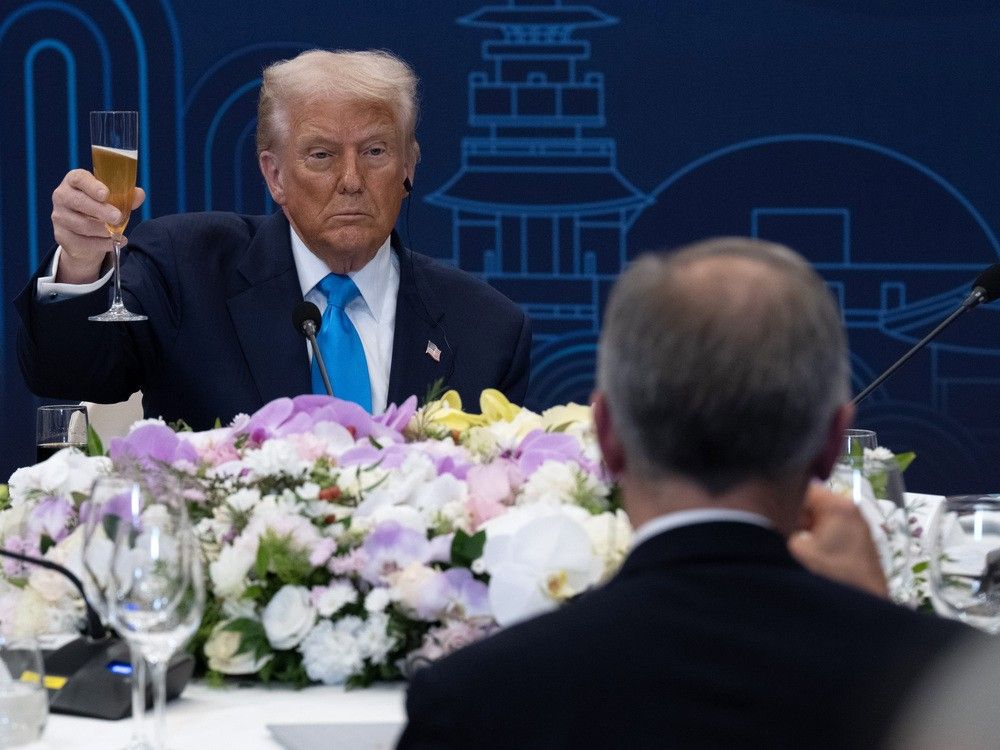
United States President Donald Trump looks towards Canadian Prime Minister Mark Carney as they raise their glasses during a toast at a working dinner in Gyeongju, South Korea on Wednesday, Oct 29, 2025.

OTTAWA — U.S. President Donald Trump said that Prime Minister Mark Carney has “apologized” for the Ontario government’s anti-tariff television ad featuring Ronald Reagan that reportedly derailed trade talks between both countries.

Speaking to reporters on Air Force One on Friday as he was heading back to the U.S., Trump was asked if he was going to resume negotiations with Canada and said “no.” The president however sung Carney’s praises, saying that they have a “very good relationship.”

“I like him a lot but what they did was wrong,” said Trump of Ontario’s commercial.

“(Carney) was very nice and he apologized for what they did with the commercial because it was a false commercial. It was the exact opposite: Ronald Reagan loved tariffs, and they tried to make it look the other way. And he did apologize and I appreciate it,” he said.

In fact,

Reagan has a long record of hating tariffs

, and Ontario merely used excerpts from one of his speeches to create an advertisement that has since been pulled from the air.

Some critics took issue with the advertisement for its lack of context around that 1987 speech, in which Reagan explained why he had recently imposed new duties on Japan. But overall, Ontario’s ad does not misrepresent the former president’s views on tariffs.

National Post has contacted the Prime Minister’s Office to ask about his apology to Trump but has not yet received a response. A spokesperson for the minister responsible for U.S.-Canada Trade, Dominic LeBlanc, declined to comment on Friday afternoon.

Carney is expected to hold a media availability in South Korea on Saturday.

Trump and Carney crossed paths at a dinner on Wednesday ahead of the Asia-Pacific Economic Co-Operation (APEC) Summit. It was the first time that both leaders met in person following the breakdown of trade talks over Ontario’s anti-tariff television ad on Oct. 23.

Ontario Premier Doug Ford ultimately pulled the ad from the air on Monday, but it did nothing to mollify Trump who announced an additional 10 per cent tariff on Canada “over and above what they are paying now.” He has not said when it would come into effect.

Carney, who has been on a nine-day trip to Asia to diversify trade relationships, simply replied that

Canada was prepared to resume negotiations

with the U.S. anytime.

Ford said this week that

Carney and his chief of staff had viewed the ad

before it first aired and said he achieved his goal, which was to inform the American people about tariffs.

“As we say, mission accomplished… They’re talking about it in the U.S. and they weren’t talking about it before I put the ad on. So I’m glad Ronald Reagan was a free trader.”

Carney has not confirmed or denied Ford’s suggestion that he viewed the ad ahead of time, and is likely to be pressed on the issue when he addresses the press on Saturday.

National Post

calevesque@postmedia.com

Our website is the place for the latest breaking news, exclusive scoops, longreads and provocative commentary. Please bookmark nationalpost.com and sign up for our daily newsletter, Posted, here.


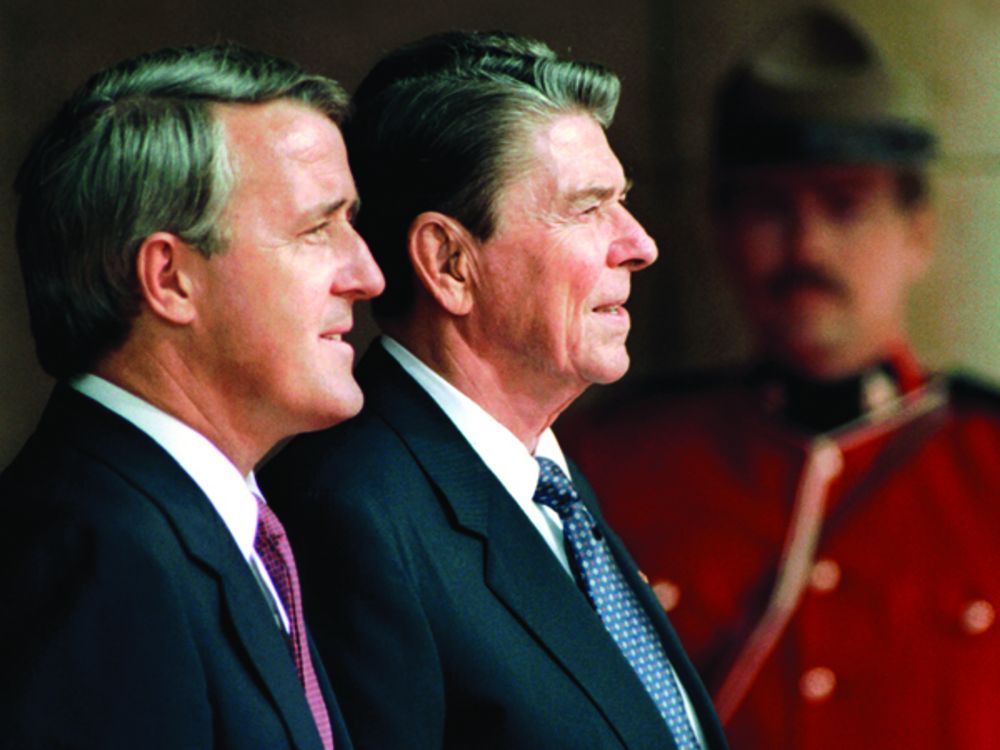
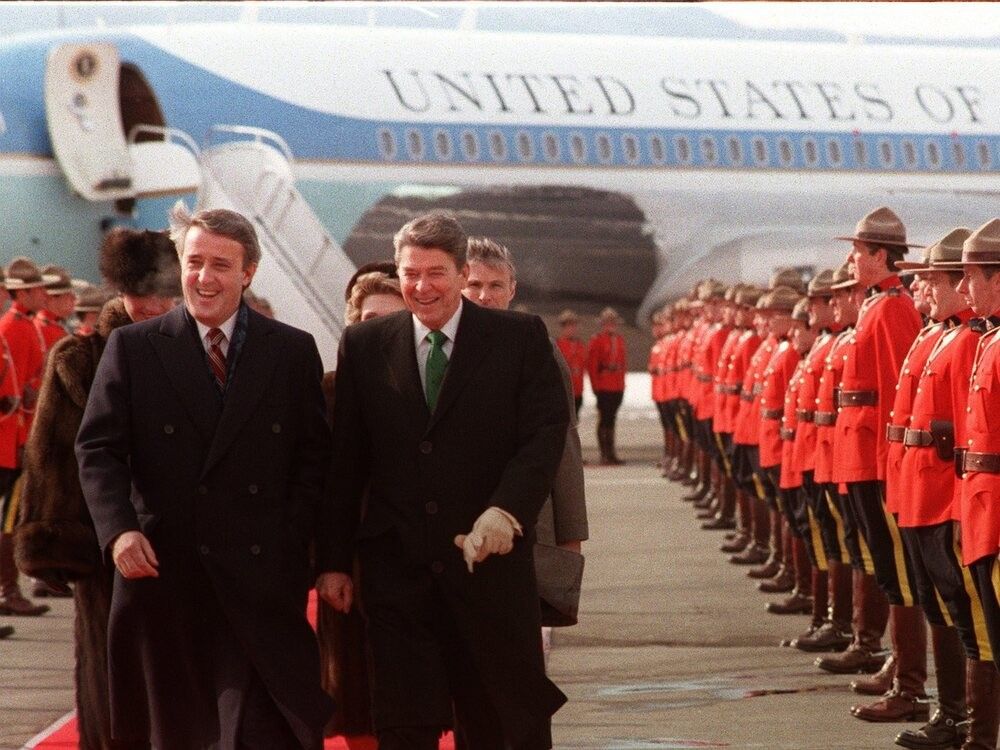
Prime Minister Brian Mulroney and President Ronald Reagan walk past a line of Royal Canadian Mounted Police  March 17, 1985 at the Quebec City airport.

WASHINGTON, D.C. — President Donald Trump halted Canada-U.S. trade talks last week in an angry response to a TV ad run by Ontario Premier Doug Ford’s government featuring Ronald Reagan’s 1987 comments criticizing tariffs. “Ronald Reagan loved tariffs,” Trump said, labelling the ad “fraudulent.”

For insights into Reagan’s trade views and Trump’s response, National Post turned to Doug Irwin, a professor of economics at Dartmouth College and former staffer on Reagan’s Council of Economic Advisers. Irwin has written extensively about trade and recently published a New York Times op-ed about Trump’s response to the ad and Reagan’s legacy.

Q:

How would you describe Ronald Reagan’s core political principles regarding free trade — what you’ve described as the three Ps?

A:

The first P is for Principle. Ronald Reagan was an economics major at Eureka College. He lived through the Great Depression. He was very opposed to tariffs and often mentioned the Smoot-Hawley Tariff of 1930 in his radio addresses and speeches. That was the infamous tariff hike that the U.S. undertook just as the world was sinking into the depression, and Reagan associated it with the depression. So he had this innate sense that tariffs and protectionism were bad for the economy, and he also believed in economic liberty, so freedom of trade was part of that package. That was the core belief.

But as a politician living in the real world, there are a lot of exceptions and compromises one has to make in negotiations with other domestic parties, interest groups, and other countries. That’s where I refer to the other two Ps: Pragmatism and the Politics aspect of trade policy, which influenced what he was actually able to accomplish as president.

Q:

How do you compare those to the principles emphasized by President Trump?

A:

I wrote this book called “Clashing Over Commerce: A History of U.S. Trade Policy,” where I talk about the three Rs of trade policy: Revenue, Restriction, and Reciprocity. It’s a look at U.S. history through the lens of trade policy. What have tariffs been used for in the past in the U.S. context? Revenue, a way of raising revenue for the federal government. It’s a tax, and taxes raise revenue.

Restriction is the idea that we want to restrict imports and keep them out to create space for domestic industries and protect them from foreign competition, so they will grow.

And three, Reciprocity, has two ideas that fold into that. One is that we’re willing to reduce our trade barriers if other countries reduce theirs. That’s free trade agreements, such as the one we had with Canada. But there’s also a harder turn to reciprocity, which is retaliation, where we might want to raise our tariffs against a country to punish them for their unfair trade practices or other aspects of our bilateral relationship.

As for Trump, I don’t think there is a one principle, one core belief, one basis around which trade policy is set, unlike Reagan. The way Trump sort of described the benefits of his tariffs, his America First tariffs, was by pointing to all three Rs. Trump likes the fact that they raise revenue. He likes the fact that they restrict imports to, in his view, reduce the deficit and help out domestic manufacturing. And he likes them as a tool of reciprocity, as a way of bludgeoning or getting other countries to give in to his will.

What’s interesting about this is that with those three Rs, there are contradictions across them. You can’t prioritize all three at the same time, and Trump has never really identified what his one reason or most important reason is for imposing tariffs.

He is always shifting between these three, so no matter what the outcome is, he can declare victory. If he really wants reciprocity, wanting another country to buckle to his pressure, let’s say they don’t — China hasn’t. Well, then, Trump says at least we’ve gotten the other two Rs, revenue and restriction. And if he wants revenue and imposes tariffs but then negotiates them away, then the revenue is gone. So then he says we won because it’s reciprocal — it’s a better relationship.

He’s always shuffling between these three, and no matter what happens, he can say “we’re winning!”

Q:

How do you feel about Doug Ford using Ronald Reagan’s words like he did for the TV ad? Did it faithfully represent Reagan’s stance on tariffs and free trade? Are you worried about Reagan’s legacy being caught up in Trump’s tariff war?

A:

Yes, I think it did accurately represent Reagan’s views, and yes, I worry about Reagan’s legacy being expropriated or distorted by supporters of President Trump who want to enlist Reagan in support of what Trump is doing. Reagan was against trade wars. He used tariffs now and then for strategic purposes, and yes, he was a politician, so he didn’t always get free trade. He had to negotiate or sometimes impose import limits. But his heart and the thrust of what he wanted the administration to be doing was reducing trade barriers and opening markets.

Q:

What is the significance of Trump’s hostile reaction to the Reagan ad, both for Canada-U.S. relations and for debates over the Republican Party’s economic philosophy?

A:

I think Doug Ford’s decision to run that ad was a very ill-advised move. If you take a shot at Trump, he’s going to take a shot back. We had reached this uneasy truce between the US and Canada on trade relations, so why provoke something? That was sort of an unnecessary provocation against someone who is going to respond in kind, and that is what we saw the president do: He stopped the talks and said he was going to impose higher tariffs. He has not, to my knowledge, issued an executive order implementing those tariffs yet.

The president’s response was interesting because he said Reagan loved tariffs. Many Republicans still remember Reagan fondly or think of him fondly. He was a very popular president and ended his term with an approval rating of about 68 per cent, according to the last New York Times poll taken before he left office. He was remembered as being a strong supporter of free trade. And Reagan won reelection by a landslide.

All these things — being popular and winning by a landslide — have been elusive for Trump. I think there’s insecurity about his standing vis-à-vis Reagan. So he tried to enlist Reagan as buying into his agenda by saying Reagan loved tariffs. I think Trump is trying to wrap himself in the cloak of the good vibes that Reagan still has with the American people.

Q:

The Reagan Foundation objected to the use of Reagan’s words in the TV ad and claimed it misrepresented his view. Was that a real challenge to the ad or just a reflection of modern-day partisanship?

A:

I don’t think it’s a real challenge to the ad because if you look at the ad and you look at President Reagan’s speech, there’s nothing really that’s distorting Reagan’s position. I think the Reagan Foundation issued that statement simply to insulate itself from any attack from President Trump. It should have just remained silent. But it might have been pushed to admit that the ad is an accurate representation of Reagan’s views, which would have drawn the ire of President Trump. So they issued that vague statement that would appease the president.

Q:

President Trump has prioritized America First policies, including trade protectionism and immigration restrictions. How would Reagan’s beliefs on free markets and immigration align or conflict with this stance?

A:

Reagan was also very much in favor of immigration. I’m sure he would have wanted some sort of immigration reform and didn’t want uncontrolled borders. But he was pro-immigration; he thought it added not just to the economy, but to the economic freedom that people want when they come to the U.S.

He had that very famous quote: “You can go to live in France, but you cannot become a Frenchman. You can go to live in Germany or Turkey or Japan, but you cannot become a German, a Turk, or a Japanese. But anyone, from any corner of the Earth, can come to live in America and become an American.”

I think that’s the way he viewed the U.S.: We’re welcoming all sorts of different people, citizens of society, and that you’re not judged by the color of your skin or other things. Do you love freedom, and will you contribute to the country? That’s what mattered to him, so he was much more open than President Trump has been.

Q:

Can you clarify how Reagan’s approach to trade with Canada shaped the pattern of North American economic integration compared to Trump’s approach?

A:

Hugely! It was the Canadian decision to initiate the negotiations to have the U.S.-Canada free trade agreement. That’s not something the US could propose to Canada because of fears that it might provoke questions among Canadians about the U.S.’s intentions. But when Prime Minister Brian Mulroney said that Canada would be open to something like a free trade agreement, it was President Reagan who immediately recognized this as a historic opportunity and went with it. And, despite some negotiating difficulties, they did reach that agreement in the late 1980s.

Even before Reagan was elected in 1979, he had been talking about establishing free trade in the Americas from, as he put it, Tierra del Fuego to the Arctic Circle. So he had already broached this idea of reducing the barriers to a free flow of goods within the Western Hemisphere.

Canada was the first to pick up on that. Obviously, we know the US-Canada free trade agreement morphed into NAFTA, and President Trump, when campaigning for his first term in office, belittled NAFTA as the worst trade agreement ever. There was a moment in 2017 when Trump announced that he was pulling out of NAFTA, and he was persuaded by his agriculture secretary and some of his other aides not to do that and to renegotiate it instead. I think that tells you where his heart was — it wasn’t in support of this.

That’s why, in his second term, even though he had USMCA, his own agreement, he was willing to impose tariffs on Mexico and Canada for fentanyl flows and migrant flows and all sorts of excuses in a way that I think President Reagan just wouldn’t want to jeopardize that economic relationship.

Q:

How do you imagine the renegotiation of the Canada-U.S.-Mexico Agreement will go next year, given what we’ve seen from Trump’s second term so far? Do you imagine that the president plans to renegotiate it or rip it up?

A:

It’s hard to know, but he might use the threat of ripping it up because, again, he likes negotiating leverage to whatever end he seeks.

In his first term, Trump was constrained and held back from ripping up NAFTA, and he was pushed into renegotiating it. The chief U.S. negotiator was Robert Lighthizer, who, regardless of what one thinks of his trade policy views, deserves respect for being an expert trade lawyer and a very savvy negotiator. He’s also someone who operates within the confines of U.S. trade law.

Today, on the other hand, we have an administration with fewer establishment types that can constrain what the president wants to achieve. So there may be some more outrageous demands that will not be resisted by his aides. Those demands could enter into the negotiations, and then the chance of a mishap or blowup is much higher.

Q:

Is it fair to say that conservatism in the US has changed so much in the last 40 years that Ronald Reagan is more of a symbol or symbolic figure than he is a policy guide?

A:

Yes, Donald Trump has fundamentally changed the Republican Party. I’ve heard people say — and I suspect this is true — that Ronald Reagan couldn’t get a presidential nomination from the Republican Party today. On social media, I’ve seen young Republicans who have no real memory of Reagan being utterly dismissive of his achievements and see his policy positions as being much too moderate. So this is a very different Republican Party from what we saw in the 1980s and 1990s, and even from someone like Mitt Romney or John McCain from just a decade ago.

Q:

Doug Ford has professed his admiration for Reagan. Many op-eds and articles are being written about Reagan’s influence, including yours. What do you make of this fascination with Reagan today, especially north of the border?

A:

I can understand the fascination. Reagan was a true friend of Canada. He got along with Brian Mulroney very well. In fact, uh, Mulroney spoke at his funeral — that shows you how important that relationship was and how Reagan wanted close ties between our two countries. I think there’s a yearning for those days in some sense. Reagan may have elevated the importance of the US-Canadian relationship more than Barack Obama, George W. Bush, or Joe Biden. So I think people on both sides who think of each other’s country fondly would think back to Reagan in that sense.

In terms of the U.S., it gets back to what we were talking about before — that the Republican party has changed, and what did it change from? It changed from the party of Ronald Reagan. George H.W. Bush, George W. Bush, John McCain, Mitt Romney, and all the subsequent Republican nominees except for Donald Trump who would pay homage to Reagan and his accomplishments and his achievements. Reagan set a very high standard in terms of how he comported himself personally. His stance on principles and his achievements in office earned respect. Now, he’s not getting that respect from people in the new Republican Party.

Q:

Do you think that will be true after Trump leaves office? Has the Republican Party been forever changed? How do you see the future of the conservative movement in balancing Reagan’s legacy with the energy of Trump’s supporters?

A:

After his first term, a lot of people would say Trump wasn’t a terribly popular president. He got the nomination because he divided a big pool of Republicans running for president in 2016. So that was a bit of a fluke, and then things reverted to “normal.”

I don’t think you can say that anymore after he won again. He has solidified his hold on the Republican Party. All the previous nominees or all the previous candidates, such as Marco Rubio, Ted Cruz, Nikki Haley, John Kasich, and others, they’ve been marginalized or have become Trumpified. I think there is a quiet minority that still hews to the old Reagan-Bush line, but they have clearly lost a lot of power and visibility in the party and may be gone forever.

Q:

You mentioned that young people today are dismissive of Reagan’s legacy. How much do you believe Reagan still has something to say to today’s youth or to gen Z?

A:

A lot. He has a lot of lessons that are important for today and can be an inspiring force. But I think no person or entity has taken up that mantle. Speaking out in a way that Reagan did — no one has that appeal or that visibility. So, for younger Americans, Reagan is a historical figure. Unless you have a figure who speaks a message similar to Reagan’s articulately and compellingly, that view is going to be lost.

Q:

What message to Reagan convey to young people in the 80s?

A:

The main message was hope. If you look at America in the 1970s, it was a very difficult decade. We had the political scandal of Watergate. We had high inflation, we had lost in Vietnam, and the Soviet Union seemed to be on the march. Reagan came in and said we have a lot of strength in this country and we can conquer some of our problems, such as high inflation and stagnant growth.

We went through a very serious recession in the early 1980s, but we began to pull out of it, got better relationships, including with the Soviet Union, so many things began working better. That’s why his presidency ended up being very popular.

I think there is a similar discontent in the U.S. today — a frustration with politics and the economy. If we could have a new political figure who was not vindictive and blamed others and lashed out, but had a hopeful, positive, peaceful message saying our better days are ahead of us, that could be a very inspiring message. But I don’t see anyone on the political horizon who’s embraced that message.

Q:

What would your advice be to Prime Minister Mark Carney and his team in their dealings with the White House?

A:

First of all, there’s not much you can do with the Trump people, because they are going to come at you fully. Striking an adversarial tone rather than a cooperative one would not be very productive, particularly because you want to salvage what you can and not damage the bilateral economic relationship too much.

Prime Minister Carney said it very well when he said Canada can’t control U.S. trade policy. Recognizing that means you unfortunately have to be willing to accommodate certain things with the hope that another administration can lead to a better path.

Prime Minister Carney said it very well when he said Canada can’t control U.S. trade policy. Recognizing that means you unfortunately have to be willing to accommodate certain things with the hope that another administration can lead to a better path. But there’s a lot of goodwill in the United States for Canada that you don’t see reflected in the administration. Canada’s been very effective in working with state governors, state legislatures, members of Congress in both the House and the Senate to remind Americans of the importance of this relationship. This connection is vital not only for the U.S. economy and jobs — whether through aluminum or purchases of U.S. goods — but also for the security partnership, which could be harmed as a result of the trade fallout.

So working around the administration to build that goodwill is very important because it can act as a constraint on how far the U.S. administration can go.

National Post

Our website is the place for the latest breaking news, exclusive scoops, longreads and provocative commentary. Please bookmark nationalpost.com and sign up for our newsletters here.



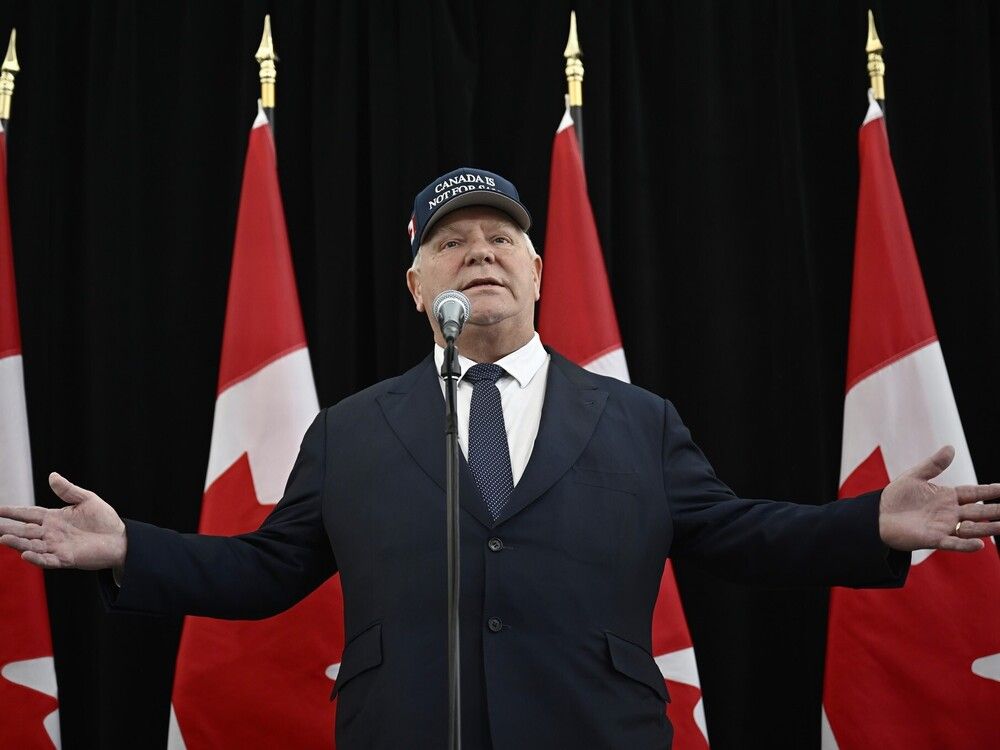
Ontario Premier Doug Ford, wearing a

It’s been barely a week since Ontario Premier Doug Ford angered U.S. President Donald Trump with a television ad that played up former Republican president Ronald Reagan’s dislike and distrust of tariffs between nations. Trump called the ad “fake” and said all trade talks were “hereby terminated.”

Now Ford has returned to the public sphere with yet another impassioned plea for better trade relations. This time, however, rather than invoking football’s the Gipper, Ford is playing the baseball card.

The medium this time is an op-ed in Friday’s Washington Post. And the message: “Canada and the Toronto Blue Jays are global heavyweights.”

Ford begins with a softball. “Canada and the United States are neighbours, allies and best friends,” he writes. “We have stood shoulder to shoulder on the battlefield, defending shared values of freedom and democracy. Free trade between our two countries has ushered in decades of unprecedented wealth and prosperity, creating millions of jobs on both sides of the border.”

Then the change-up. “U.S. tariffs on Canada’s economy have tested this long-standing partnership.”

Ford notes that Canadian patriotism is “surging,” its citizens choosing Canadian products at the grocery store and cheering on the home team in the arena.

“In February, Canadians united to cheer Team Canada to a hard-fought win over Team USA in the 4 Nations Face-Off hockey tournament,” he writes. “Now, the country is united again to cheer on Canada’s Team — this time the Blue Jays, all the way to a World Series title.”

He reminds readers that the Jays, perennial underdogs, have clawed their way into the World Series, besting the New York Yankees and the Seattle Mariners for the American League title, and now leading last year’s champions, the Los Angeles Dodgers, three games to two in the best-of-seven match.

“Americans are underestimating the Jays,” he writes. Dipping into that baseball mainstay, statistics, he notes that the Jays play for the fourth largest metropolitan area in North America, “and a proud nation of more than 41 million people.”

Ford then trots out Canada’s all-star lineup, boasting of the country’s energy resources, including oil, gas and “Ontario’s growing fleet of nuclear power plants and the first small modular nuclear reactors in the G-7.”

He notes our nation’s vast deposits of critical minerals and other natural resources, listing off “uranium, potash, high-grade nickel, steel, aluminum and some of the best lumber in the world for building homes.”

Ford ends by rounding the bases. “We’re America’s No. 1 customer,” he writes, “buying more America-made cars than any other country on earth. In 2023, Ontario on its own was the largest trading partner for 17 states and second largest for another 11.”

Ford predicts the Jays will stand proud on the world stage, just like Canada, “when they bring it home and win the World Series,” adding: “Let’s go Blue Jays!”

The Jays play Game 6 of the World Series against the Dodgers Friday night at Rogers Centre in Toronto.

Our website is the place for the latest breaking news, exclusive scoops, longreads and provocative commentary. Please bookmark nationalpost.com and sign up for our newsletters here.


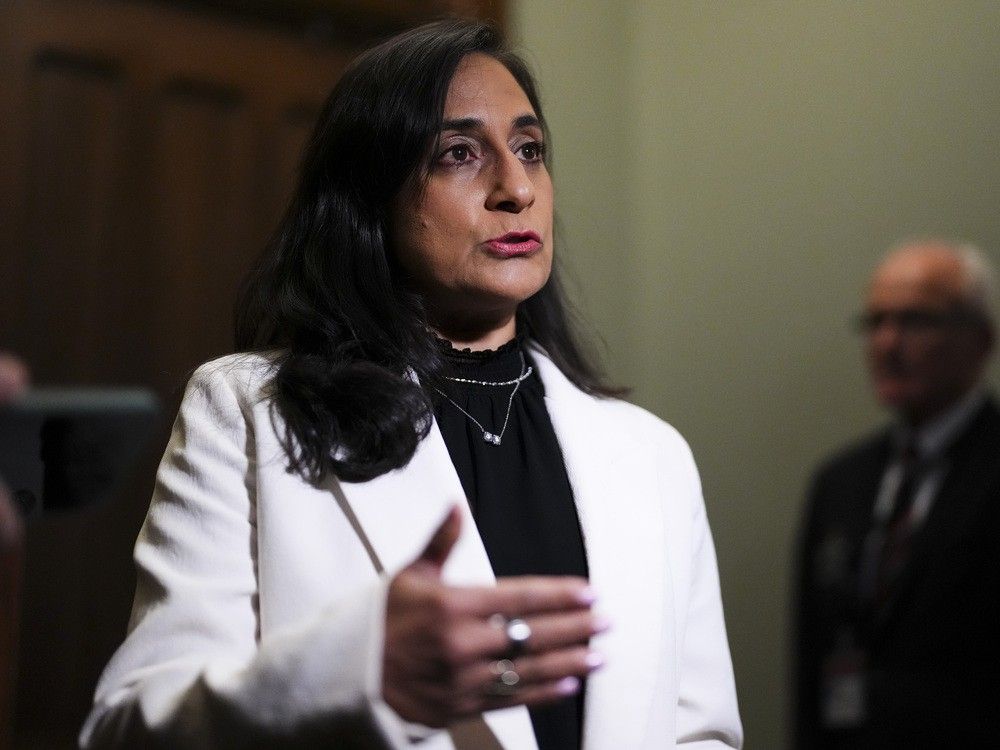
Global Affairs Minister Anita Anand said Ottawa would accelerate payment of the final $10 million of $70-million in aid the federal government earlier promised to shore up the Ukrainian natural-gas system.

TORONTO — Russian attacks on Ukraine’s natural-gas system are a deliberate bid to create a “humanitarian crisis,” Ukraine’s energy minister charged Friday as Canada pledged to speed up support for the nation’s battered heating and lighting grid.

Moscow has consistently attacked civilian energy infrastructure since its full-scale invasion of Ukraine three years ago, noted Svitlana Grynchuk, the energy minister. But earlier this year it started hitting natural-gas production and other parts of the gas system, crucial to civilian homes.

“It’s not about military targets,” Grynchuk said at a news conference with Canadian cabinet ministers during a G7 ministerial conference in Toronto. “They attack directly the civilian infrastructure and they know very well what they want. They want to put Ukraine in the dark, they want to freeze Ukrainians and they want to create a humanitarian crisis.”

Global Affairs Minister Anita Anand said Ottawa would accelerate payment of the final $10 million of $70-million in aid the federal government earlier promised to shore up the Ukrainian natural-gas system. About $50 million already handed over is paying for new gas compressors in Kharkiv, the major eastern Ukrainian city that is close to the war’s front lines. Compressors help to maintain pressure in gas pipelines and speed its flow.

Just between March and September, Russia has carried out 3,000 strikes against Ukraine’s critical infrastructure, disabling 60 per cent of its domestic gas production and 70 per cent of the gas supply relied on by homes, said Anand.

“Now, winter again approaches and once again Russia is weaponizing the cold, unleashing a vicious and unjustifiable campaign,” she said. “No heat, no water, no light, only cold air slicing through walls, freezing homes, hearts and hope.”

“We will not stand by and allow Putin to have Ukrainians freeze in the dark this winter.”

Grynchuk said other countries at the G7 energy and environment ministers’ meeting have also offered aid to shore up the Ukrainian battered energy system. Despite U.S. President Donald Trump’s vacillating stance on the conflict, Chris Wright, his energy secretary, is a strong “friend of Ukrainian energy,” she said.

In fact, Wright raised the issue himself at a later news conference, referring to “withering, destructive attacks” on the Ukrainian grid.

“All the G7 nations talked about how we can deliver emergency replacement parts, emergency energy … to get them through the winter.”

Wright also suggested that Europe could wean itself off oil from Russia, starving Moscow of funds to prosecute the war, if it looked to the U.S. and other suppliers of oil and gas instead.

Meanwhile, Ukraine has out of dire necessity developed an unusual expertise – fixing wrecked power equipment in rapid-fire fashion, said Grynchuk.

“I would say our energy workers, our engineers now have maybe the best experience in the world how to repair quickly, how to rebuild quickly and efficiently. And how, sometimes, from nothing to provide electricity.”

The besieged country is also lending its scientific know-how to a new Canadian project to more cleanly process a critical mineral, Energy Minister Tim Hodgson announced Friday.

He unveiled a government-backed plan by Canada’s Focus Graphite to collaborate with Ukrainian engineers to purify flake graphite — crucial for lithium-ion battery anodes, fuel cells, aerospace components and other advanced technology — without using chemicals.

Hodgson said Canada is investing $14 million in the project, supporting Focus Graphite’s collaboration with Ukraine’s Thermal and Material Engineering Center, to purify graphite from Quebec mines in an electrical process.

“It is truly inspiring that even amid the severe challenges of war, the resilient people of Ukraine continue to unite and drive sustainable progress,” said the minister.

National Post

Our website is the place for the latest breaking news, exclusive scoops, longreads and provocative commentary. Please bookmark nationalpost.com and sign up for our daily newsletter, Posted, here.


When the Toronto Blue Jay secured a spot in the World Series, Trish Logan of Brantford, Ont. decided to dress up the ghosts to represent fans who may have passed since the team's last World Series win 32 years ago. Fans attending tonight's World Series game in person are cautioned to wear a family friendly costume.

Folks lucky enough to have a ticket to tonight’s World Series game at the Rogers Centre in Toronto are welcome to wear a Halloween costume.

However, the

Blue Jays

reserve the right to deny admission or remove anyone wearing garments that are considered inappropriate or could detract from other fans enjoying the game.

Your costume must be fun for the whole family. The Jays aren’t specific about this prohibition, but say on their MLB site that “c

ostumes, clothing and accessories must be family-friendly.” 

The Jays are explicit that any costume, whether or not it’s Halloween, “

may not be obstructive” to the views

of other fans.

Your costume can’t be “disparaging” either – as much as you may wish to boo the LA Dodgers.

Mascot costumes and apparel are not permitted.

Also no commerce or politics. The Jays say that “costumes, clothing and accessories may not contain messages, graphics or other content that may be distracting, commercial, political, or intended to draw attention to international, political or other similar events, causes or conflicts.”


And, most of all, nothing offensive. Cultural

appropriation

is cited widely as falling into the offensive category. For example,

Parents.com

refers to

tribal markings, headdresses, and turbans. The BBC in an article about how “

offensive outfits became the real horror of Halloween”

points to Justin Trudeau in blackface


The Rogers Centre is explicit in prohibiting items that could be considered dangerous, such as

weapons, even replicas

or toy versions.

Fans are, of course, encouraged to wear team gear.

The Jays’ X account has provided a game day checklist for fans ahead of tonight’s game, saying that attendees should plan their route to the ballpark, arrive early and have their mobile tickets open at the gates.

The Jays are a game away from creating a new chapter in baseball history. A Game 6 win will mean winning the World Series and taking home the Commissioner’s Trophy.


And a big payday bonus. This money comes from an MLB pool. According to

MLB.com

e

ach postseason team receives a share of the money earned from playoff gate receipts. The World Series champion receives the highest percentage of the pool, followed by the World Series runner-up, and so on.

For some of the

Jay’s higher-paid players

, like Vladamir Guerrero (who is making

$28.5 million this season)

, the bonus expected to be $477,000 will seem like a drop in the bucket. But for new major leaguers like newly minted star pitcher, Trey Yesavage, who is only making just $57,000 this season, it will mean a lot more.

And if they don’t win tonight, fans will put away their Halloween costumes and return for the seventh and final game, hoping the hometown team prevails.

Our website is the place for the latest breaking news, exclusive scoops, longreads and provocative commentary. Please bookmark nationalpost.com and sign up for our daily newsletter, Posted, here.


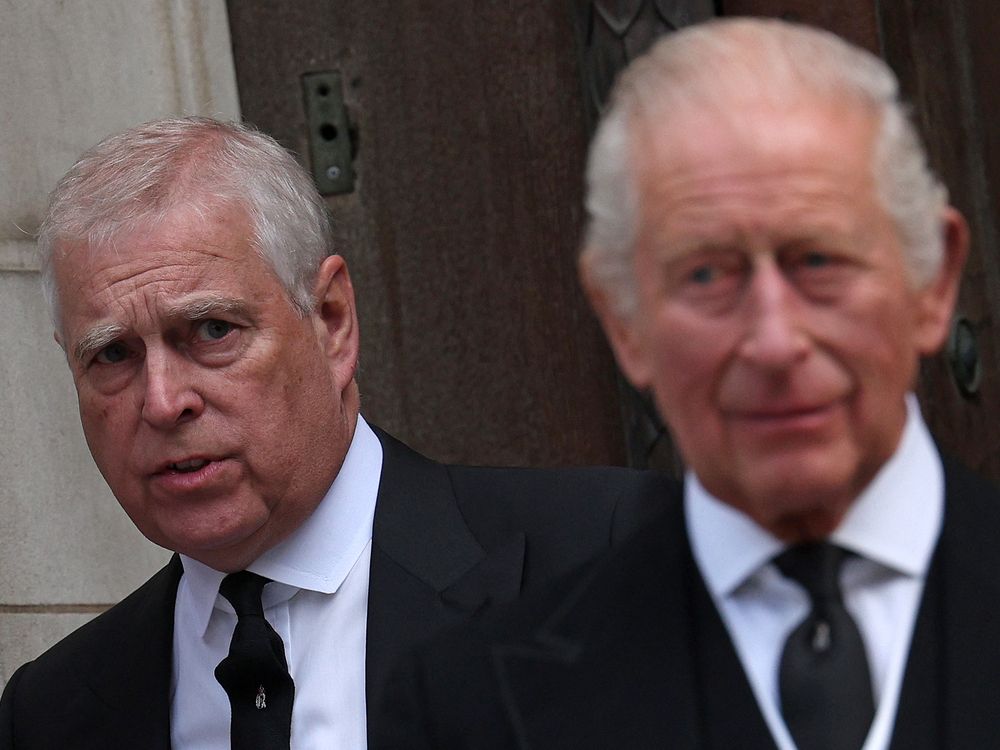
Prince Andrew, Duke of York (left) and King Charles III leave following a funeral service for the late Katharine, Duchess of Kent, at Westminster Cathedral in London on Sept. 16, 2025.

Andrew, son of Queen Elizabeth II and brother to King Charles III, is being stripped of his royal titles and will no longer be called Prince Andrew or His Royal Highness.

He will henceforth be known as Andrew Mountbatten Windsor, and will move out of his home at the Royal Lodge in Windsor, Buckingham Palace announced Thursday. Here’s what to know.

Does Andrew keep his place in line for the throne?

Despite everything, Andrew remains eighth in line to the throne, after Prince William, his three children, Prince Harry, and his two children.

According to the British Parliament, an individual can only be removed from the line of succession by legislation, which would require the consent of 14 countries that still have Charles as their king. That includes Canada.

Andrew’s daughters, Princess Beatrice and Princess Eugenie (they keep their titles) follow him in the line of succession, along with their children.

Does he keep any Canadian honours?

He lost most of those

several years ago

. In 2019, after a disastrous interview with the BBC about sex abuse allegations, it was reported that Andrew would no longer be honorary chair of Lakefield College School in Ontario, which he briefly attended in 1977.

This was at the same time that the SickKids Foundation in Toronto announced that he would no longer serve as its honorary patron, and the

Rideau Hall Foundation

said it would not renew its partnership with his charity Pitch@Palace. The

Canadian Canoe Museum

also stepped away from its relationship with him at that time.

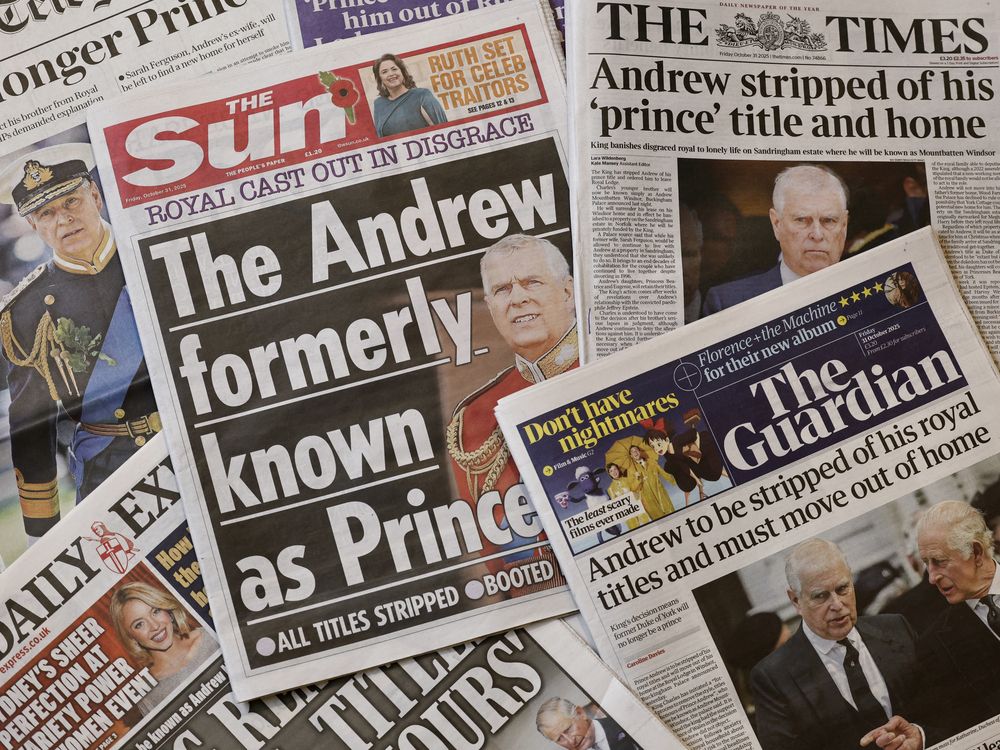
 The front pages of most of Britain’s national newspapers are pictured in a spread created in London on Oct. 31, 2025.

In 2022, Andrew was stripped of his

honorary military roles

, including colonel-in-chief of The Royal Highland Fusiliers Of Canada and colonel-in-chief of the Princess Louise Fusiliers of Canada.

He retains a Canadian forces decoration, awarded in 2002 in recognition of his years of service, as well as a Commemorative Medal for the Centennial of Saskatchewan, awarded in 2005.

Does he still have a place to live?

While he is being evicted from the Royal Lodge in Windsor — where he had been

living rent-free

under a 75-year lease — Andrew will remain housed somewhere in Sandringham Estate, an 8,100-hectare property owned by the royal family.

Details have not been revealed, but it’s understood the King (not taxpayers)

will pay for

his lodging.

The BBC reports that Sarah Ferguson, Andrew’s ex-wife, will also move out of the Royal Lodge, where she lived in a separate wing. She will make her own living arrangements.

Will he still receive money from the royal family?

It’s uncertain. According to

the Guardian

newspaper, Andrew received a salary of 249,000 pounds per year as a working royal until at least 2010, and a pension of 20,000 pounds a year for his service in the British navy.

Over the past four decades, Andrew has received nearly 13 million pounds in public money for his service as a member of the royal family, the Guardian reported.

What honours are being removed?

The titles being stripped are: Prince, Duke of York, Earl of Inverness, and Baron Killyleagh. Andrew will no longer have the right to be called “His Royal Highness.” The honours of Order of the Garter and Knight Grand Cross of the Victorian Order will also be removed.

To remove the titles, the King will send Royal warrants to David Lammy, the Lord Chancellor, to officially remove them.

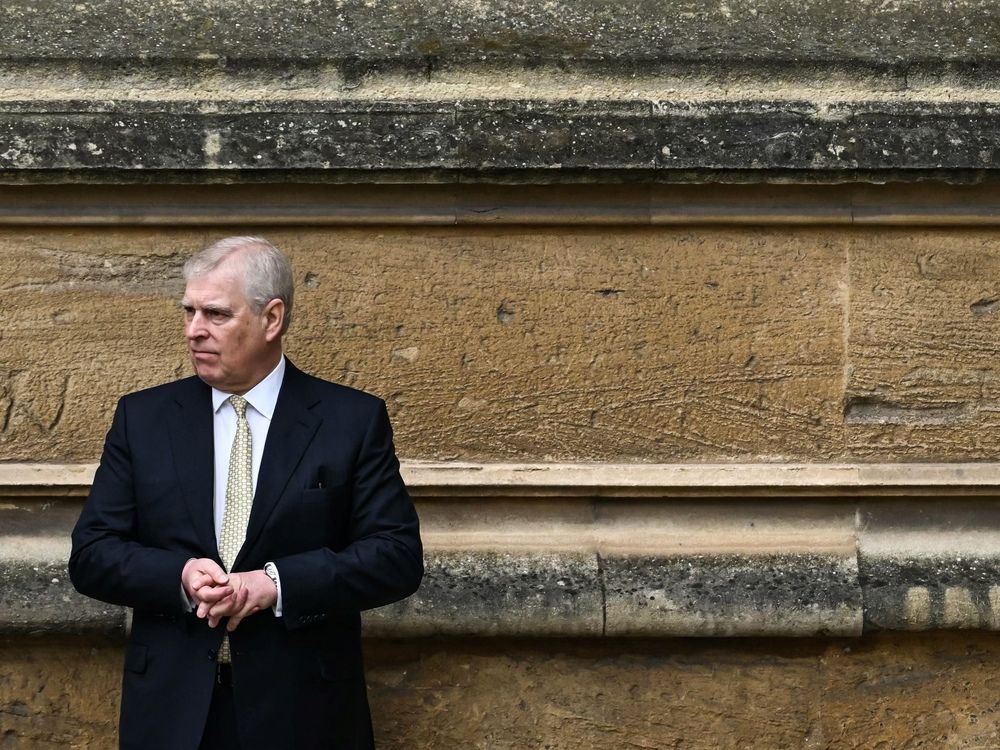
 Britain’s Prince Andrew, Duke of York arrives at St. George’s Chapel, Windsor Castle, to attend the Easter Mattins Service, on March 31, 2024.

Have other royals lost their titles?

Prince Harry and his wife, Meghan, announced in 2020 that they were voluntarily stepping back as working members of the Royal Family, but they retained their titles of Duke and Duchess of Sussex.

Harry’s mother, Diana, relinquished her title of Royal Highness as part of her divorce from Charles in 1996.

And King Edward VIII abdicated the British throne in 1936 to marry Wallis Simpson, but was later named Duke of Windsor and kept the style of His Royal Highness throughout his life.

Where does the name Mountbatten Windsor come from?

Despite the storied history of the British monarchy, Andrew’s last name is a recent creation. His father was Philip Mountbatten and his mother, the Queen, was Elizabeth Windsor.

However, even those have been changed relatively recently. In 1917, Prince Philip’s parents anglicized their name from Battenberg to Mountbatten because of anti-German sentiment. At about the same time, Britain’s George V, adopted the name Windsor (after the castle) and dropped the more Germanic Saxe-Coburg and Gotha. Windsor is now the official name of the royal family.


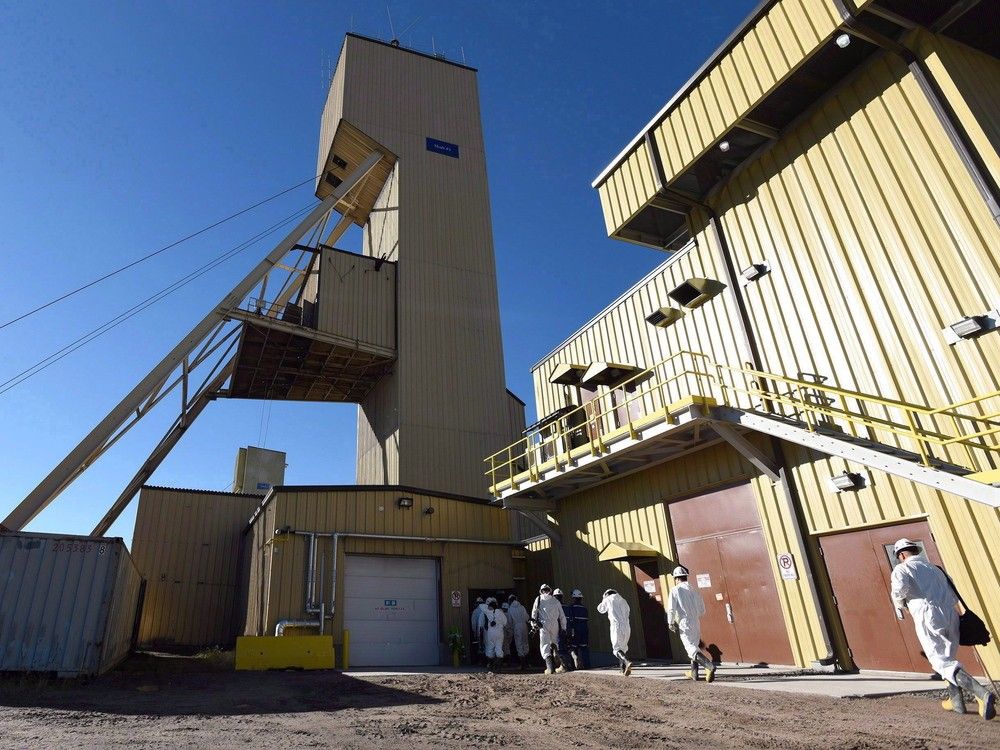
Media enter the head frame during a Cameco media tour of the uranium mine in Cigar Lake, Sask.

WASHINGTON, D.C. — With global electricity demand expected to rise 25 per cent by 2030, nuclear energy will play an essential role in meeting the world’s power needs. Canada’s rich uranium reserves give it a position of strength in bolstering global energy security — and possibly in securing a place at the forefront of a nuclear renaissance.


Given this year’s trade tensions between the United States and Canada, recent decisions, such as embracing U.S.-origin Small Modular Reactors (SMRs) and the newly announced Cameco, Brookfield, Westinghouse $80 billion U.S. reactor deal, raise important questions. Is Canada pursuing nuclear sovereignty or ceding control to foreign interests?


“We’re talking about tens to hundreds of billions of dollars of spending,” says Chris Keefer, president of Canadians for Nuclear Energy and host of the weekly energy podcast, Decouple. “Do we want that spent within the Canadian economy with the accompanying economic multipliers, or do we want to say, ‘We have a national inferiority complex, so we’ll just run with what the Americans are doing, use their technologies, and not think strategically about national benefit?”

Canada’s uranium is a strategic asset, but recent industry choices suggest growing dependence on U.S. technology, enrichment, and markets — potentially limiting Ottawa’s control and future industrial benefits. SMRs require enriched uranium that Canada cannot supply, and the Cameco deal positions Westinghouse reactors under U.S. systems, raising questions about whether Canada is becoming a passive supplier rather than a nuclear leader — or, as Prime Minister Mark Carney puts it, an “energy superpower.”

Canada’s great uranium advantage 

Canada has some of the world’s best uranium mining and supplies roughly a quarter of global uranium output. This, according to Jack Spencer, senior research fellow for Energy and Environmental Policy at the Washington-based Heritage Foundation and author of the new book, “Nuclear Revolution,” gives Ottawa economic leverage.

On top of that, uranium prices have risen almost 30 per cent from this year’s lows, with demand pushing upward thanks to the advent of AI data centres and the West’s bid to wean itself from Russian and Kazakh uranium supply amid the Russia-Ukraine war.

“We have the potential AI boom coming and we, for the first time, have electricity use projections pointing upwards,” said Spencer. “So we have this increase in demand and, at the same time, an attempt to decrease supply from Russia while simultaneously having a fairly rigid production on the uranium field side.”

This should, according to Jessica Kennedy, a regulatory lawyer with Bennett Jones, put Canada’s uranium at the top of the list as the West seeks uranium from “politically aligned partners,” giving it geopolitical leverage.

A good deal?

On Tuesday, news dropped of an $80 billion Cameco-Brookfield-Westingthouse deal with the U.S. government to fund Westinghouse AP1000 reactor deployment in the United States. The deal is to be backed by Japanese financing, thanks to the $550 billion Technology Prosperity Deal forged with President Donald Trump in July — for which Tokyo saw its tariff rate lowered to 15 per cent. 

“Cameco will do very well … it’s going to gain value with this Japanese investment,” said Keefer. “But it’s a little bit like borrowing Peter to pay Paul,” he added, referring to how Japan is making large investments to avoid punitive tariffs.

Canada’s industrial benefits, meanwhile, are indirect and financial, creating few jobs and not expanding energy infrastructure domestically.

“I don’t see Canada as really being a massive beneficiary here,” added Keefer.

Some experts believe the deal offers Canada a strategic advantage in the long term.

“I think it’s great from a Canadian perspective,” said Heather Exner-Pirot, a senior fellow and director of Energy, Natural Resources and Environment at the Macdonald-Laurier Institute.
“People might not like that we’re doing deals with the United States right now, but we are absolutely tying American nuclear power to the Canadian supply chain, and that is good for Canada.” 

“It gives you leverage going into the long-term nuclear reactors,” she added.

But the deal ties Canadian nuclear companies more closely to U.S. market demands and energy policy, which some fear makes them vulnerable to U.S. policy fluctuations — and we’ve seen a fair few of those this year alone.

At the same time, Canada is also adopting some U.S. nuclear technology.

Toying with tech

Canada is investing billions in U.S. Small Modular Reactor (SMR) projects in Ontario, Saskatchewan, and Alberta. SMRs require enriched uranium, and since Canada does not enrich uranium – it only mines and converts it – it will need foreign suppliers for fuelling these reactors. 

By contrast, Canada’s 17 homegrown CANDU reactors use unenriched uranium, requiring no foreign supply.

Some experts say leaning in on SMRs is smart as they’re smaller than conventional reactors and modular, making them easier to ship and build in remote locations.

Kennedy noted that SMRs are the hot ticket in nuclear energy at the moment as “they’re perceived as being more versatile in their uses and ability to locate where they’re needed.”

Others would prefer that Canada stick with its unique CANDU technology and only use unenriched uranium.

“I think it would be incredibly foolish for (Canada) to basically bury CANDU reactor technology and take on US-origin reactor technology, both at the small level of the SMRs, which (Canada has) already done, and at the larger level,” Keefer said. 

“It would make (Canada) dependent on the largess of the US and how much of the supply chain they want us to have.”

Red tape

As Canada expands its nuclear portfolio, it must contend with a complex regulatory environment at home. Deploying SMRs requires navigating overlapping federal-provincial reviews, Indigenous consultations, and a separate licensing regime under the Canadian Nuclear Safety Commission.

Kennedy says that both mining and reactor approvals take years due to the multi-layered regulations. 

Another challenge looms: Without a domestic enrichment industry, Canada will depend on imports to fuel the SMRs.

That’s a weakness, according to Jay Hu, executive chairman and CEO of U.S.-based LIS Technologies, which specializes in uranium enrichment. 

“Canada lacks the ability to process the whole fuel cycle,” he said. 

“If Canada would actually focus on building up enrichment … the U.S. would be the biggest buyer,” Lu added, noting how the U.S. still gets a fair bit of enriched uranium from Russia and Europe and would prefer a closer source.

So far, the economics have not driven towards enrichment in Canada, but Kennedy believes that could change as demand for SMRs expands. Government backing for enrichment could emerge, she said, as leaders recognize the job creation and energy security benefits. 

Kennedy also drew an analogy to oil refining, warning that relying on U.S. and foreign-enriched uranium might lead to controversy at home: “They’re generating all that upside in the U.S., and it limits our ability to be completely independent from their refining capacity.”

Geopolitical hot potato

Thanks to Russia’s invasion of Ukraine, the global dynamics around nuclear energy and fuel have shifted. To wean itself off of Russian or Kazakh uranium, the United States needs to source plenty of uranium, expand its nuclear reactor fleet, and rebuild its ability to enrich uranium, the infrastructure for which has been stagnating for decades.

Russia and China, meanwhile, are ramping up their nuclear and enrichment capabilities, for both domestic consumption and export. 

As for Canada, it’s at a nuclear crossroads, and the decisions made now will define how independent and globally influential it will be in the nuclear space for decades to come.

The country’s high-quality uranium reserves offer a natural advantage, but experts warn that recent industry deals for obtaining U.S.-origin reactors and involvement in the tripartite Cameco deal could undermine Canada’s nuclear sovereignty.

Our website is the place for the latest breaking news, exclusive scoops, longreads and provocative commentary. Please bookmark nationalpost.com and sign up for our newsletters here.

U.S. President Ronald Reagan and Prime Minister Brian Mulroney stand at attention for the playing of the Star Spangled Banner at Reagan's arrival at the G7 Summit in Toronto in June 1988.

There is arguably one problem with Ontario Premier Doug Ford’s TV ads using the words of Republican icon Ronald Reagan against Donald Trump: It didn’t quote the Gipper enough.

Reagan offered enough quotes about the dangers of tariffs and protectionism to fill an hour or more on Fox News. Some of them are even more devastating to Trump’s cause than those chosen by Ford.

For example: “Protectionism has no future; It’s a dead and discredited idea.” Reagan said that in a speech in 1988.

Here’s another: “(The Canada-U.S. Free Trade Agreement) will send a number of messages. First and foremost, it is a resounding ‘no’ to those who would stand pat, to the naysayers, and to the fearful who advocate protectionist barriers. It is a resounding vote of confidence in our own abilities to meet world competition with an unleashed ingenuity, which is prized on both sides of the 49th parallel.”

Ford pulled the ads from American television stations after a few days after Trump said he’d raise tariffs on Canada another 10 per cent.

But the 40th president’s historical record is so extensive in this area, that if the nine other premiers wanted Reagan to star in their own ads, there’s enough to go around for everyone.

Here are some more:

Speaking to Canada’s Parliament, March 11, 1981:

This relationship has grown to include some of the strongest economic links among the nations of this Earth… Our joint trade… is greater than the gross national product of some 150 countries… Not only is the vast bulk of this trade conducted between private traders in two free economic systems, but more than half crosses our borders duty-free. Our seaways, highways, airways, and rails are the arteries of a massive, interconnecting trade network which has been critically important to both of us. Thus, while America counts many friends across the globe, surely we have no better friend than Canada…

Sustained prosperity in an era of reduced inflation will also serve worldwide to help all of us resist protectionist impulses. We want open markets. We want to promote lower costs globally. We want to increase living standards throughout the world.

Remarks at the official ceremony welcoming him to Ottawa, April 5, 1987:

No two countries in the world… have as great a range of trade and investment exchanges at all levels — from an individual’s vacation trip to a mammoth contract for electric power — as the United States and Canada. No two countries trade more with each other. No two countries invest in each other’s industry or engage in leisure activities in our neighbour’s playgrounds to the extent that we do. And the citizens of both our countries — as businessmen, farmers, workers, and consumers — have benefited accordingly.

Speech to Canada’s Parliament, April 6, 1987:

Prime Minister Mulroney’s proposal would establish the largest free trade area in the world, benefiting not only our two countries but setting an example of cooperation to all nations that now wrestle against the siren temptation of protectionism. To those who would hunker down behind barriers to fight a destructive and self-defeating round of trade battles, Canada and the United States will show the positive way. We will overcome the impulse of economic isolationism with a brotherly embrace, an embrace, it is not too much to hope, that may someday extend throughout the Americas and ultimately encompass all free nations.

Statement upon signing the Canada-U.S. Free Trade Agreement, Jan. 2, 1988:

This comprehensive agreement will benefit many sectors of the U.S. economy. Canadian and American tariffs will be phased out completely, saving consumers hundreds of millions of dollars while also improving our export opportunities. It will secure access to Canada’s market for American manufacturing, agriculture, financial services, and high technology; improve national security through energy sharing; and provide important investment opportunities.

Radio address on free trade with Canada, Jan. 9, 1988:

We will be an example to all the world of what free people can accomplish and demonstrate, that the path to economic growth, job creation, and security is through negotiation and cooperation, not protectionism.

Welcoming Prime Minister Brian Mulroney to the White House, April 27, 1988:

We shall show by deed and dedication…that the lowering of tariffs and trade barriers is the way to a more prosperous world. Protectionism is out, and trade expansion is in.

Toasting Prime Minister Brian Mulroney at a State Dinner at the White House, April 27, 1988:

The (Canada-U.S. Free Trade Agreement) will become one of the most important achievements of my tenure in Washington… We are unshackling our trading relationship in a broad-based effort to make our two countries more prosperous at home while making ourselves more competitive abroad. We’re players in a world economy, and our free trade agreement will help make us the world-class competitors we must be.

Speech to the American Coalition for Trade Expansion with Canada, June 16, 1988:

Protectionism has no future; it’s a dead and discredited idea. In a global economy, there can be no surer way of impoverishing ourselves than to try to make America go it alone, by cutting us off from trade and investment with the other countries of the world. The protectionists make me think of the story of that Sunday school teacher who asks her class, “Who wants to go to heaven?” And all of the children raise their hands except for one little boy in the back of the room. The teacher, astounded, says, “Charlie, don’t you want to go to heaven?” And he says, “Yep, but not with this bunch.”

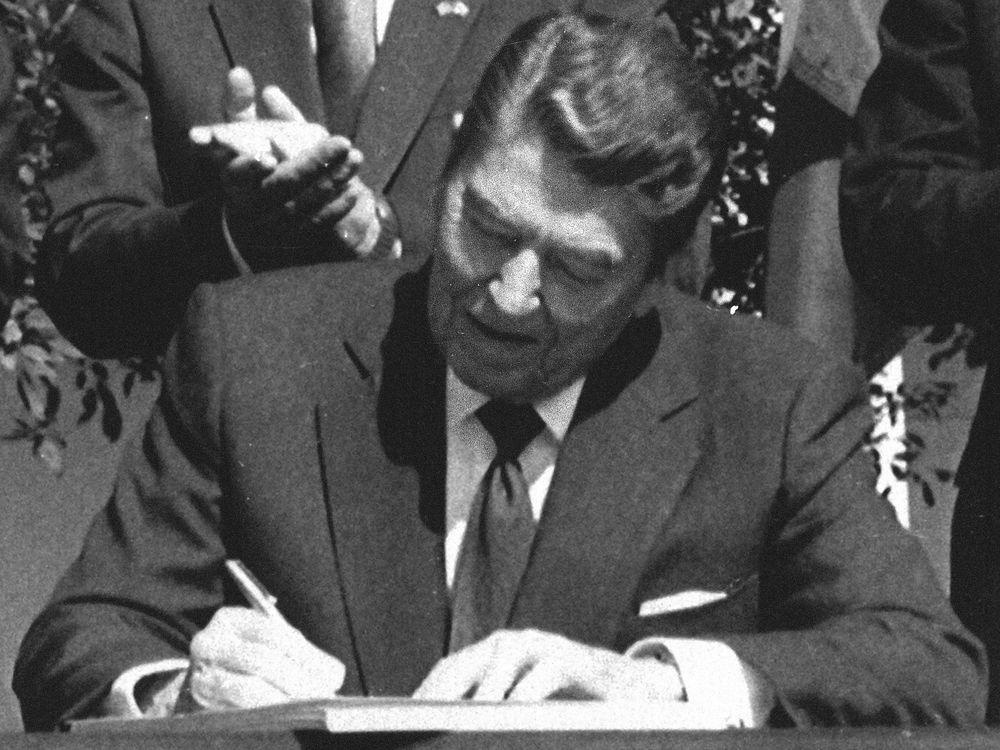
 U.S. President Ronald Reagan signs legislation implementing the U.S.-Canada free trade agreement during a ceremony at the White House, Sept. 28, 1988.

Signing the Canada U.S. Free Trade Agreement Implementation Act, The White House, Sept. 28, 1988:

This agreement brings down the tariff walls between our two nations and, in so doing, creates the world’s largest free-trade area. Businesses and consumers in both our countries will have unprecedented freedom to choose among a staggering array of goods and services. It’ll mean lower prices for consumers, jobs galore for workers, and new markets for producers… It means a stronger and freer marketplace for the United States and Canada. There’ll be a rich flow of agriculture and energy resources from one country to the other in a way that will profit both. We also deal with the service sectors of our economies, providing for the first time an explicit assurance that in such areas as accounting, tourism, insurance, and engineering our peoples will be free to choose their suppliers.

Public historian Arthur Milnes of Kingston served as the memoirs’ assistant to the Rt. Hon. Brian Mulroney, and was a speechwriter to then prime minister Stephen J. Harper.

Our website is the place for the latest breaking news, exclusive scoops, longreads and provocative commentary. Please bookmark nationalpost.com and sign up for our newsletters here.

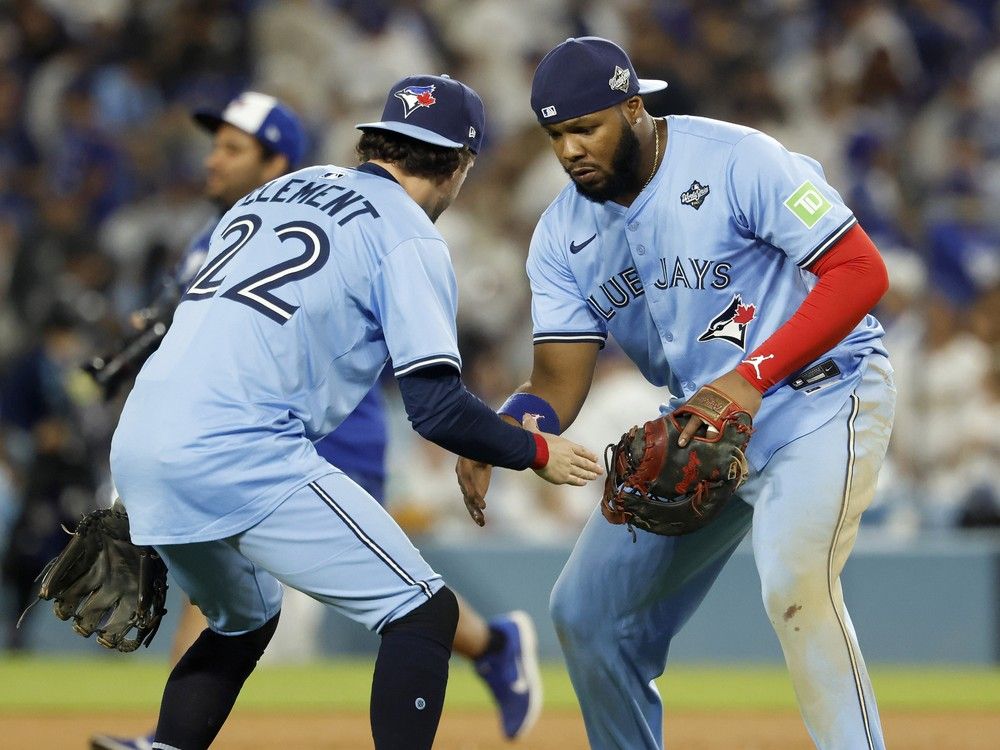
Vladimir Guerrero Jr., right, and Ernie Clement celebrate the Toronto Blue Jays 6-1 win over the Los Angeles Dodgers in Game 5 of the World Series on Wednesday night. The series is far from over, but some may be wondering if the Blue Jays will be invited to the White House if they win it all.

You likely won’t find a Toronto Blue Jays fan anywhere in Canada ready to count their chickens before they hatch when it comes to the team’s chance to win this year’s World Series.

But if the Blue Birds can finish off the Los Angeles Dodgers in Game 6 on Friday night — or in Saturday’s winner-take-all Game 7, if necessary — they’ll claim the organization’s first World Series title in 32 years.

Long after a victory parade through downtown Toronto and throughout the off-season, a question may linger in the minds of many fans: Will Canada’s only Major League Baseball team visit the White House like so many sports organizations before them?

Moreover, given the current tensions between Canada and the U.S., will President Donald Trump even extend one.

Here’s what we know.

What has Donald Trump said about the World Series?

After learning of Ontario’s anti-tariff ad campaign last week — one that aired to U.S. audiences during the first two games of the World Series before being pulled by Premier Doug Ford — Trump called off trade negotiations with Canada. He then promised to increase the tariff on unspecified Canadian goods by an additional 10 percent.

The president’s Truth Social and X accounts have been devoid of any World Series mentions, and he doesn’t appear to have made any comments since the series began, other than lamenting the advertisements that used the voice of former president Ronald Reagan from a 1987 radio address.

The White House issued

an official presidential message

ahead of Game 2 on Saturday in Toronto, celebrating the importance of the American tradition and the “two exceptional teams” that have made it this far.

“As the Los Angeles Dodgers and Toronto Blue Jays compete for the Commissioner’s Trophy, they remind us why baseball brings friends and neighbors together,” it reads.

“Melania and I send our best wishes to the players, coaches, and fans for a fun and safe series. May the best team win, and may God bless our national pastime and the United States of America.”

Trump, who has attended sporting events such as the Super Bowl and UFC fights since his inauguration, was not present for any of the three games played at Dodger Stadium in Los Angeles this week.

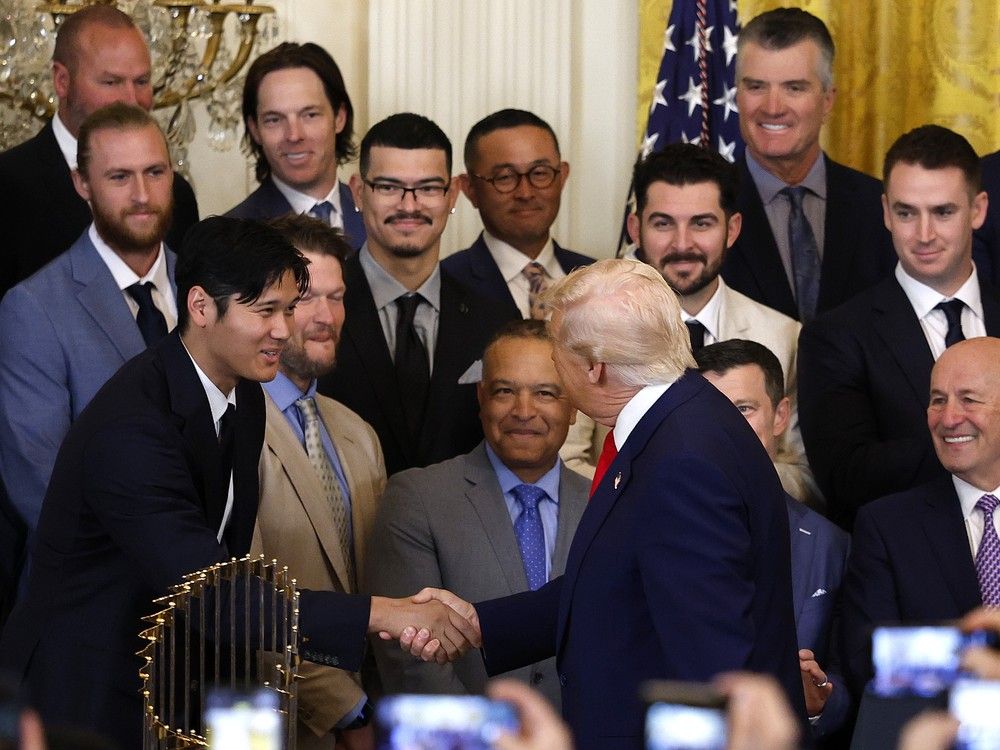
 U.S. President Donald Trump shakes hands with the Los Angeles Dodgers’ Shohei Ohtani during the team’s visit to the White House in April.

Have Canadian teams visited the White House in the past?

The 1992 Toronto Blue Jays were, in fact, the first and last North American professional sports team from Canada to visit the White House.

The team was invited the day after defeating the Atlanta Braves in six games that October and made their trip to Washington in mid-December, as recounted in an article by Mark Davis from

We Are, We Can, We Will: The 1992 World Champion Toronto Blue Jays.

“Our free trade agreement with Canada did not mean that the United States would trade away the world’s championship,” joked then-president George H.W. Bush about the North American Free Trade Agreement to be signed by himself, then-Canadian prime minister Brian Mulroney and Carlos Salinas de Gortari, Mexico’s president at the time, the following day.

“By winning Canada’s first World Series … you did it with class … and class, of course, has marked the entire Blue Jays history. In 16 years, you’ve gone from the doghouse to the penthouse.”

When the Jays won the 1993 World Series, an invite was reportedly extended to the club on behalf of new president Bill Clinton, according to

Sports Illustrated

, but the team never attended.

Sports Illustrated

also reported that the Montreal Canadiens, winners of the 1993 Stanley Cup — the last Canadian team to win an NHL championship — were invited but also chose not to go.

It was almost another quarter-century before a Canadian team won a major professional championship, when Toronto F.C. claimed the 2017 MLS Cup, but there’s no record of them having been invited or attending.

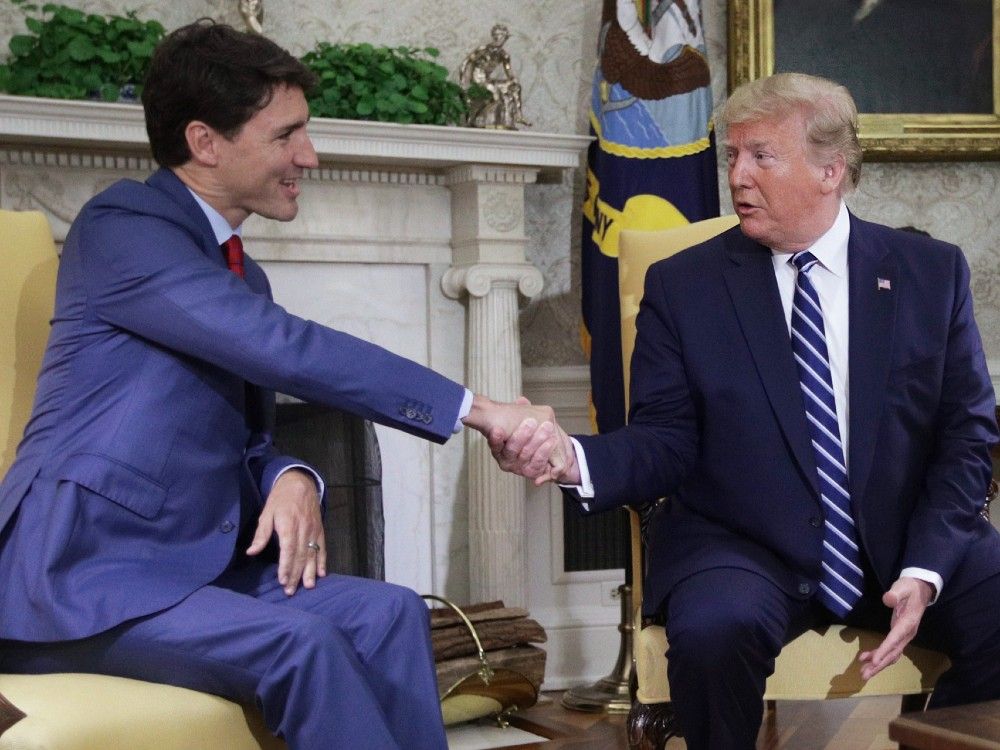
After the Toronto Raptors won the 2019 NBA Finals, Trump, while seated next to Justin Trudeau following discussions in Washington regarding the new Canada-U.S.-Mexico Agreement (CUSMA), said an invite to the champs was under consideration.

“So we’ll think about that, if they’d like to do it, we’ll think about that,” he said, as reported by

CBC

.

 Prime Minister Justin Trudeau meets with U.S. President Donald Trump in the Oval Office of the White House, June 20, 2019.

Then-Raptors guard Danny Green doubted that his team would accept an invite.

“I try to respect everybody in every field that they do, regardless of how crazy things are. But he makes it really hard. He makes it very, very tough to respect how he goes about things and does things,” he said on

Yahoo! Sports’ Inside the Green Room.

“To put it politely, I think it’s a hard no.”

The invite did come, according to

NPR

, but Green and the Raps never went to 1600 Pennsylvania Avenue.

National Post has contacted the White House to inquire whether the World Series winner will be invited.

Our website is the place for the latest breaking news, exclusive scoops, longreads and provocative commentary. Please bookmark nationalpost.com and sign up for our daily newsletter, Posted, here.


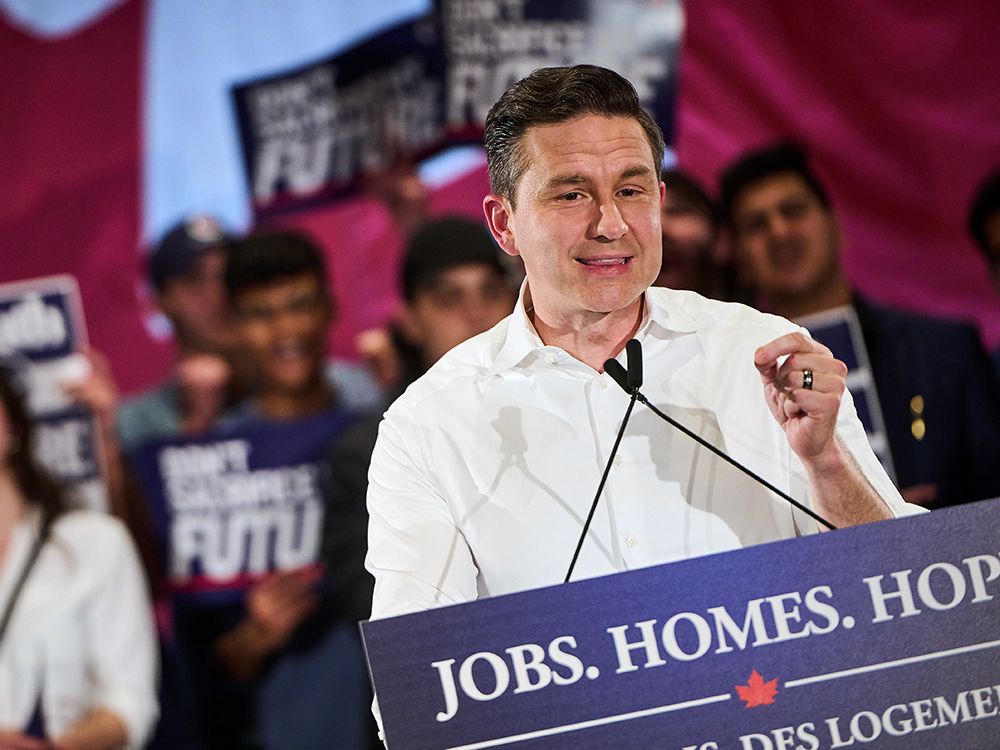
Conservative Leader Pierre Poilievre speaks at an event in Toronto, on Thursday, Oct. 30, 2025.

OTTAWA — Conservative Leader Pierre Poilievre said the sacrifices made by the current generation have not been seen since the Second World War, in a speech on Thursday evening, made in rebuttal to Prime Minister Mark Carney’s upcoming budget.

Poilievre addressed a room of young conservatives and other supporters gathered in Toronto. The event was organized

in response to Carney’s speech

last week where he cautioned Canadians that they should prepare for “sacrifices” as his government put the finishing touches on a budget that attempts to both respond to the ongoing Canada-U.S. trade war and rein in government spending.

The Conservative leader, whose party has enjoyed a healthy support among those aged 40 and younger, responded to Carney’s words by pointing to the challenges faced by the country’s youngest generation, who have struggled to afford housing and land a job.

“Gone were the grand promises, replaced with grim warnings,” Poilievre said of the prime minister’s speech to Thursday’s crowd, which included members from local university conservative campus clubs.

“He said that things are going to get worse and the change will take a very long time, after he had promised to move at unimaginable speeds.”

Such has been the line of attack Poilievre’s Conservatives have mounted in the House of Commons, pointing out how Carney has yet to secure a trade deal with U.S. President Donald Trump — a fact the Tories hope to exploit, given Carney’s emphasis on his resume during the April election as a two-time central bank governor, which he argued made him best suited for the current moment.

“(Carney) said young people are going to have to make more sacrifices. More sacrifices,” Poilievre said, as a chorus of boos echoed in the room.

“Mr. Carney, the young people in this room and across this country have already sacrificed enough. They have worked hard. They’ve done everything right, and they deserve a bright future,” the Conservative leader said to cheers.

While Carney and his finance minister, François-Philippe Champagne, have compared the current period to the rebuilding efforts that took place after the Second World War, evoking the memory of C.D. Howe, the businessman-turned-Liberal cabinet minister credited for transforming a post-war workforce into a more industrialized one, Poilievre used that time in history to make a different point.

He said the young people of today have “sacrificed more than any generation since the Second World War.”

“There is no doubt in my mind that all of you are working harder and longer for less than your parents and probably your grandparents,” Poilievre said, adding that, “it hasn’t been since the heroes that won us our freedom in the (1940s) that we have seen a generation work so hard and so long for so little.”

The Conservative leader, who stood behind a podium emblazoned with the words “jobs,” “home,” and “hope,” laid the struggles they faced today at the feet of the Liberals, whom he accused of overspending as well as mishandling the immigration system to the point of allowing too many new entrants to Canada without sufficient housing.

Poilievre’s speech was not unlike a campaign-style event, a stage he might find himself in, in a matter of weeks, should opposition parties decide to vote against the Liberals’ upcoming budget, set to be tabled on Nov.4.

The Liberals have warned they lack the votes needed to pass Carney’s first spending plan, with Poilievre demanding the Liberals table what he calls an “affordable budget”, which he defines as containing a litany of tax cuts and capping the federal deficit at $42 billion, despite the Parliamentary Budget Officer, an independent watchdog of Parliament, predicting it could soar to $70 billion.

That includes Carney’s promise to spend billions more on defence and infrastructure.

The Liberals would only need to find a handful of MPs either willing to vote for their budget or abstain to prevent Canadians from having to go to the polls for a second time this year.

Poilievre is due to face his own leadership review in January.

Our website is the place for the latest breaking news, exclusive scoops, longreads and provocative commentary. Please bookmark nationalpost.com and sign up for our politics newsletter, First Reading, here.