LP_468x60
on-the-record-468x60-white

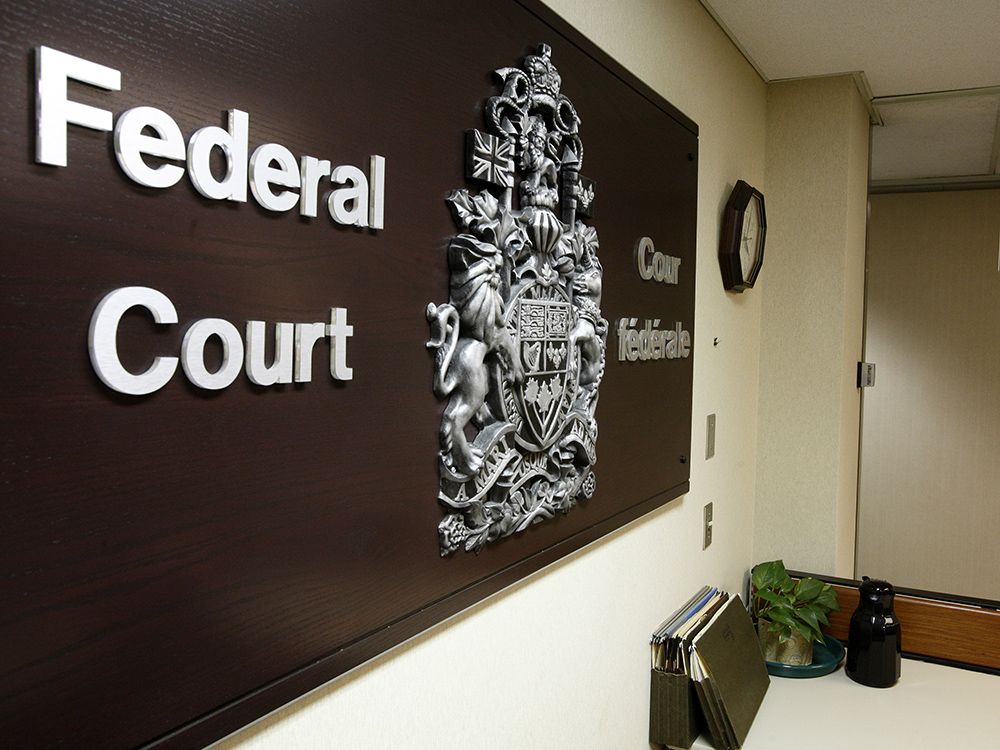
A Toronto lawyer will appear in Federal Court on Thursday seeking an order to compel the CBSA to provide information about his client, who is in U.S. Immigration and Customs Enforcement custody.

A Canadian refugee claimant who is in ICE custody after accidentally entering the U.S. is prohibited from re-entering the country, the Canada Border Services Agency says.

Mahin Shahriar, a 27-year-old Bangladeshi national and Canadian refugee claimant had been living in Canada since 2019, but says he inadvertently crossed the Canada-U.S. border in May and has been in ICE custody in Buffalo, N.Y. ever since.

The CBSA now says he is permanently barred from re-entering Canada without legal authorization.  

Shahriar’s lawyer, Washim Ahmed, a partner with OWS Law in Mississauga

,

says he is taking his client’s case before the Federal Court on Thursday. He is pursuing a judicial review application of the Canada Border Services Agency’s handling of his client’s refugee claim.

He told NP he is concerned his client will be returned to Bangladesh, where he could face imprisonment and possibly torture. In an Oct. 17 email to NP he wrote that his firm “

is in the process of obtaining certified court documents confirming these charges. These records … indicate that Mahin faces a serious … risk of imprisonment and torture if returned.”

Shahriar faces obstruction of justice charges for helping his mother and younger sister flee Bangladesh, Ahmed says. After his parents’ marriage broke down, he explains, Shahriar, his mother and sister fled to Canada.

Meanwhile, he says ICE may not have Mahin’s full case details, but they “are aware that he was a former refugee claimant in Canada and that his mother holds protected-person status here … ICE has explicitly confirmed that it would return him to Canada if CBSA authorizes the transfer — but CBSA has so far declined to do so.”

The CBSA has not provided its decision in Shahriar’s case, Ahmed says. “

Their refusal to provide reasons appears calculated to prevent us from seeking
appropriate legal
recourse.”

Ahmed says he will be seeking court orders compelling the CBSA to provide its decision, as well as cooperate with U.S. Immigration and Customs Enforcement to facilitate Shahriar’s return to Canada, he told the National Post in a second email on Tuesday, Oct. 21. He will also be asking the court to compel the CBSA to disclose all of its communication with ICE.

So, Shahriar “is in limbo,” Ahmed adds.

 A person is not allowed to apply in Canada and the U.S simultaneously, Ahmed explains.

“However, since Canada has not agreed to accept him, ICE intends to deport him to his country of citizenship, Bangladesh.” 

Shariar’s refugee claim has been complicated by him falling victim to a fraudulent immigration consultant, says Ahmed. His claim was rejected because of that. Before his ICE detention, Ahmed says he was preparing a Humanitarian and Compassionate application for permanent residence and intended to include evidence of the fraud that tainted the refugee claim.

The Post reached out to the CBSA for comment and the first emailed response, received on Oct. 17 from

CBSA spokesperson Rebecca Purdy

, states that information about Shahriar’s case could not be provided because of federal privacy law.

Instead, Purdys aid that the “CBSA is not responsible for a person’s decision to leave Canada and does not intervene on behalf of foreign nationals who are later subject to immigration enforcement after having entered another country.”

A more detailed CBSA response was emailed to the Post on Oct. 19 from

Luke Reimer, senior communications office

r with the CBSA.

Reimer stated that Shahriar’s refugee claim was heard by the Refugee Protection Division and later its Refugee Appeal Division of Immigration and Refugee Board of Canada (IRB). They “found him not to be in need of protection. His request for leave to pursue a judicial review of this decision was dismissed by the Federal Court.”

The latter comment seems to contradict Ahmed’s position.

Further, Reimer wrote, “The CBSA had already initiated removal proceedings when Mr. Shahriar left Canada of his own accord. Having done so, Mr. Shahriar waived the right to any further recourse that could stay his removal, as he was now already outside Canada.

“With evidence that Mr. Shahriar was no longer in Canada, the CBSA administratively enforced his removal order …  Canada has no obligation to accept Mr. Shahriar’s return, and he is permanently barred from re-entering Canada without an authorization to return.”

Reimer did not state whether these same arguments will be made during the Federal Court hearing on Thursday.

The Post contacted the ICE office in Buffalo for detailed comment, but none was forthcoming. Instead, an email was sent last week stating “we cannot share any details with you about another person” without proper legal documentation.

Our website is the place for the latest breaking news, exclusive scoops, longreads and provocative commentary. Please bookmark nationalpost.com and sign up for our daily newsletter, Posted, here.


Finnair planes are seen grounded at Helsinki airport on Nov. 16, 2009, during a pilots' strike.

Finnair, the government-owned national airline of Finland, has grounded 10 per cent of its fleet this month over an issue with seat covers.

“Finnair is replacing approximately 1,700 seat covers in eight A321 aircraft, and six of the planes will be back in service within a week,” the airline announced in a press release on Thursday. “All eight aircraft are expected to be back in operation by the end of the month.”

The planes, Airbus models capable of carrying between 185 and 239 passengers, were pulled out of service on Oct. 13 after the airline was informed by the manufacturer of the plane’s seat covers that the impact of washing on their fire protection rating had not been verified in the required manner.

The airline says the seat covers were manufactured by a long-standing Finnair partner, based on specifications provided by the original seat manufacturer, and have been washed every two years in accordance with the information received from that manufacturer.

The grounding of the eight aircraft has resulted in the cancellation of about 70 flights since Oct. 13, affecting some 11,000 customers.

“We are deeply sorry for the inconvenience and disruption this has caused to our customers,” said Pekka Korhonen, senior vice president of technical operations at Finnair.

“The safe operation of our flights is the foundation of everything we do. Once we received information that the impact of washing on the fire protection of the seat covers had not been verified in the required manner, it was clear that the aircraft had to remain on the ground until the issue was resolved.”

The new covers are being sourced from multiple suppliers. In the meantime, the airline has leased two aircraft and crew to operate as part of its network. Finnair has said it will contact affected customers directly if there are any changes to their flights.

Finnair has a

fleet of 80 aircraft

, most of them Airbus models, though not all were affected by the seat cover issue.

Founded in 1923 as Aero O/Y, Finnair regularly receives accolades for its

safety record

and customer service. Last month it was awarded the highest star rating, a Five Star Global Official Airline Rating, from the Airline Passenger Experience Association. It was one of 23 airlines to receive the rating, a

list that included

Air Canada.

In its latest monthly data, it noted that 83.1 per cent of all Finnair flights arrived on schedule in September.

Our website is the place for the latest breaking news, exclusive scoops, longreads and provocative commentary. Please bookmark nationalpost.com and sign up for our newsletters here.



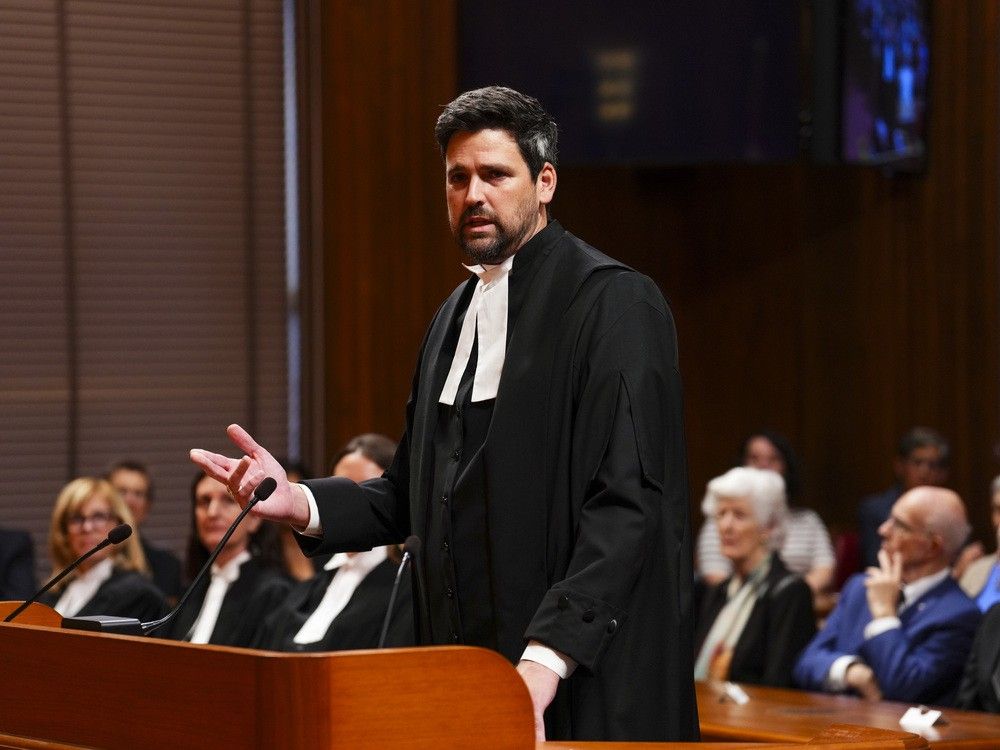
Justice Minister Sean Fraser

OTTAWA — The Liberal government tabled its long-awaited bail reform bill Thursday that it promises will make it more difficult for violent and repeat offenders to be released before trial in the hopes of increasing trust in the oft-maligned bail system.
 

The new bill C-14 also promises tougher sentencing laws for serious and violent crimes, such as consecutive sentences for repeat violent offenders, offences against first responders, organized retail theft and crimes interfering with essential infrastructures (such as copper theft).
 

On bail, the government proposes to impose a “reverse onus” — when the accused must convince a judge that they should be released pending trial — on additional charges linked to auto theft, breaking and entering homes, human trafficking and smuggling, certain forms of assault and violent extortion.
 

The reverse onus would also apply to any person charged with a violent crime within the last 10 years, as opposed to the current five.
 

The bill also proposes to clarify the “principle of restraint” that guarantees release at the earliest opportunity does not mandate release on bail if an accused’s detention is “justified” for public safety considerations.
 

Federal Conservatives have called on the government to repeal the 2019 Justin Trudeau-era law that wrote the principle of restraint into law.
 

During a background technical briefing, Justice Canada officials explained that the 2019 simply codified an existing principle in common law. The new bill is a “calibration” of the controversial principle to make it clear that it does not mandate release, they said.
 

During the spring federal election, the Liberals campaigned on amending the Criminal Code to make it tougher for certain accused to access pre-trial release.
 

Several high-profile incidents involving individuals out on bail have led to political backlash, including from Ontario Premier Doug Ford, whom Carney met with last week.
 

Opposition Conservative Leader Pierre Poilievre has seized on crime as a central issue and blamed the Liberal government for adopting a relaxed approach when it came to bail and sentencing.
 

More to come.

National Post, with files from Stephanie Taylor.
 

Cnardi@postmedia.com
 

Our website is the place for the latest breaking news, exclusive scoops, longreads and provocative commentary. Please bookmark nationalpost.com and sign up for our politics newsletter, First Reading, here.


Erika Kirk joins U.S. President Donald Trump onstage during the memorial service for political activist Charlie Kirk at State Farm Stadium on September 21, 2025 in Glendale, Arizona.

WASHINGTON, D.C. — Following the murder of Charlie Kirk, the Heritage Foundation’s Liana Graham, a research assistant for domestic policy, was inspired by headlines she saw in the Canadian press about Kirk’s assassination to

write an op-ed arguing that Canadian censorship

and silencing of dissent lead to a dehumanizing culture that invites political violence.

In turn, the National Post reached out to Graham, a dual citizen of both Canada and the United States, to discuss what she sees as the political and media forces impacting censorship and free expression in Canada.

This interview has been condensed for length and clarity.

Q:

How would you compare the state of free speech and civil debate in Canada with the U.S., particularly after Charlie Kirk’s murder?

A:

The state of free speech in the United States, politically and legally, is much more protected than it is in Canada, and that has to do with the constitutional framework in the United States, where there’s a very strong First Amendment.

In Canada, because of Section One of our Charter, we have more of a doctrine of how we view rights, which doesn’t really see them as absolute. I think that the Canadian view of the role of government is much more willing to accept government getting involved in civil society and in the affairs of common people to order society in a pleasant and tolerant way.

(In Canada), I’d say … the political system trickles down into the culture. So I think that Canadians are much more willing to accept legislation that curbs our freedom to express what we believe in, because generally speaking, we have a population of people who have a view of government that sees it as having more of a managerial role as opposed to an American perspective, which sees it as being a protector, as enforcing rights.

I think Canadians are more hesitant to share views that one might see as controversial, which is why I think we have garnered this reputation of being polite, because we’re not going to bring up things that could potentially offend or harm people in conversation.

Q:

In your op-ed, you argued that Canadian media framed the killing of Kirk as more acceptable because of Kirk’s controversial views. How do you think that framing shaped public perception?

A:

I think it shaped public perception by implicitly providing some sort of justification for the killing of Charlie Kirk. You saw that CBC article. Only hours after Charlie Kirk died, it recounted all of (his) controversial opinions, all of his most controversial takes. I think that shaped public opinion by immediately painting a picture of who Charlie Kirk was, which changed people’s opinions on whether or not he deserved it, which I think is obviously extremely inhumane.

I saw plenty of friends … posting things like, “Well, I’m not going to feel sorry for an individual who held X, Y, and Z positions.”

You even see that from people who work in government. You have Nahanni Fontaine in Manitoba (describing Kirk as “racist, xenophobic, transphobic, Islamophobic” and saying she has “absolutely no empathy” for him) in a post that went viral.

It’s remarkable to think that there was an elected government official publicly speaking in such atrocious language.

I take issue with the way the Canadian media immediately painted Kirk as some sort of controversial figure, somebody who tested the boundaries of what’s allowed to be said in public. (The coverage) peddled the idea that Charlie Kirk did not just engage in free speech, but that he questioned people’s right to exist or their rights in general — and the implicit argument that’s being made there is that if you are going out there (engaging in public debates), you are advocating for somebody’s rights to be taken away.

I think that framing (Kirk) as someone who questioned people’s rights is also framing him as a controversial figure. The implicit argument being made is that, in some way or another, it was inevitable and that this kind of thing was bound to happen.

Q:

Is there a case for explaining what his views were or what his controversial takes were to help a reader understand the circumstances around his assassination?

A:

I think there is a case to provide context, of course, for the opinions that he held, because it’s very clear to me that the assassination was political. To be sure, I do agree with that. However, I will say that the way the Canadian media framed it was not an objective, neutral framing, the way you’re suggesting.

Those were objective, factual statements about who Charlie Kirk was. He was a debater. Sometimes people did not like what he had to say.

But by implying that his positions were hateful, you’re moving from a descriptive statement about what he did to making a prescriptive statement about what he ought to have said. And you are employing a value judgment in the recounting of Charlie Kirk’s ideological position.

Q:

What other examples illustrate how you think liberal censorship operates within Canadian political and media institutions?

A:

There are so many. I would say that number one, on a political level, we have bills like Bill C-63, the Online Harms Act (

which was never passed by the previous Liberal government and has seen calls for it to be revived

). We have attempts from the Liberal government to curb hate speech. In describing the difference between American and Canadian jurisprudence, I’ve heard Canadians say things like “hate speech is not free speech.” And I think Canadians should be extremely concerned by laws like that try to tell people, “You’re not allowed to say this. You’re not allowed to say that” on account of it being hateful towards a specific group.

We should be very wary of, for one, vague laws, and secondly, laws that carry maximum sentences of life in prison.

So that’s at the federal level, but we also see it provincially. I’ve been very critical of buffer bubble zone laws that we’ve been seeing in Canada. We also see them in the United Kingdom. They’re known as buffer zone laws.

There are laws in place in Manitoba and Ontario, for example, that prohibit one’s ability to protest outside of abortion clinics. Not only are you not allowed to protest, you’re not allowed to give out information relating to an abortion. You are not even allowed to demonstrate any sign of disapproval, be it praying, be it sighing in exasperation.

Those laws are also in places that are Conservative, so I don’t think it’s just a Liberal issue. I think that this is something that Canadians have, by and large, begun to accept because we set a precedent for it in the way that we choose to govern, and I think that that has a trickle-down effect culturally in the way Canadians feel they’re comfortable or not comfortable in engaging with controversial topics.

We see examples of this on the university campus, where you hear stories of students who do not feel comfortable voicing their opinions. There was a paper recently about the ideological homogeneity in academic institutions in Canada that found that most professors in Canada disproportionately leaned left.

So, not only do we have this sort of monolithic ideological perspective coming from the federal government and from provincial governments, but also through our educational institutions. I think the resulting culture that we have is one in which people do not feel comfortable voicing their opinions. One of the ugly consequences of that is quite counterintuitive to the intention behind such laws. It doesn’t actually work in converting anybody’s opinion or converting their heart, so to speak. It only really works to change people’s behaviour, but if people do not have a healthy outlet through which they feel they can engage with other ideas, and that should be the university campus or the public square — if they’re not encountering any opposition, where are they going to air out these ideas? Where are they going to find consolation? They’re going to go to their encrypted chats. They’re going to go to their friend groups. They’re going to effectively resort to an echo chamber because they’re not allowed to say these things in the public square, where they’re going to feel disagreement.

If they go to an echo chamber, what happens in an echo chamber or when nobody ever disagrees with you? Your ideas are never challenged and thereby strengthened. That is a recipe for radicalization.

If you intend to make a better society, one in which people are more tolerant of other opinions, and not embracing hateful ideas, I actually think the best solution is a public square, where people are free to express what they believe. If you create this precedent that people have to resort to their echo chambers because they’re scared of saying something for fear, that the government’s going to knock on their door because they liked the wrong post, you are going to create the cultural conditions that create radicalization.

Q:

You wrote: “The bullet that took Kirk’s life is the physical embodiment of the coercive spirit that animates the Canadian political class.” Do you see a moral line between Canada’s censorship culture and the coercive mindset that can justify violence?

A:

I think they exist on the spectrum and that the kind of censorship that the Canadian government embraces is a kind of coercion, and violence is the utmost manifestation of that. Obviously, taking somebody’s life is far, far worse. It is horrible. It is a violation of their right to life. My point with that phrase is to say that in terms of the spirit of what’s happening, it’s really a difference of degree. It’s not really a categorical difference because what the government is doing in promoting legislation like that and potentially passing it is using force to prevent other people from speaking. It’s using force to crack down on wrongful speech, wrongful thoughts. That is precisely what Charlie Kirk’s killer did. Obviously, he did it in a way that is like the worst possible manifestation of that spirit. But there are ways that it can manifest in lesser fashions. I think it manifests in censorship in the same way. Again, it’s a type of force that the government uses to prevent somebody else from speaking.

The government enforces the law through force, and Charlie Kirk’s killer did the very same thing. He coerced him by ultimately taking his life.

It’s the worst possible manifestation of that — I don’t think they’re equivalent. But I do think they exist on a spectrum and that the type of censorship that we see in Canada is of a very much lesser degree, but that fundamentally the same sort of thing is happening there.

Q:

Can you point to historical examples where speech regulation or censorship to protect vulnerable populations proceeded or correlated with violence?

A:

The point I am making is that what the government defines as protecting vulnerable populations can be subject to change on the basis of the ideological positions of those who govern.

For example, in Nazi Germany, speech was heavily policed on the basis of protecting people from “degeneracy.” The Soviets policed speech that promoted “bourgeois” values to “protect” the proletariat from “corrosive” influences.

My parents grew up in Romania, and they grew up in a society where the party only allowed people to watch propaganda, eliminating all traces of a pre-communist Romania — all done for the so-called good of the people.

Q:

How can a society strike a real balance or genuine balance between free expression and protection against hate or harm?

A:

I think that the best way to mitigate against hate and harm is to actually provide for a free public square. And I’m also just a believer that truth is so powerful that truth wins out. When you give people the ability and the freedom to reason about what they believe in, to combat their ideas, the best antidote to a bad idea is another idea.

If you want a society in which people genuinely have respect for one another, and in which people not only do not say hateful things, but genuinely do not really believe hateful things — and where the majority of people respect human dignity and the other person with whom they’re engaging — I think the way to create that is through a free public square because you’re giving people the opportunity to speak what they believe in, and they have to face up against other people’s opinions.

In the public square, the ideas that people hold are refined. They’re tested, and people, witnessing this, because they have a rational capacity, get to judge for themselves based on the evidence which one is true, which one wins out.

I would prefer to live in a society where people genuinely have respect for one another, not a society in which people are pretending to like one another because they’re afraid of what the government’s going to do to them if they say the wrong thing.

Q:

Which Canadian laws or proposals most concern you, and how do you personally define censorship? Is it just through state action, cultural pressure, or both?

A:

I’m concerned about the Online Harms Act, and I think that it’s probably the most concerning bill at the moment. I realize it’s not currently being spoken about, but the thing about the Online Harms Act is that it didn’t get debated on the Parliament floor. It didn’t die through a reasoned debate in Parliament. It died because Parliament was prorogued, and there’s nothing really telling me that a bill like that won’t be proposed again. We do have the justice minister saying that it’s not off the books yet.

I’m incredibly concerned by censorship of that nature, and I think all Canadians should be concerned.

That naturally leads into your follow-up question: What is censorship?

I think that government censorship is when you use coercion to force out those ideas. So at the very heart of censorship is coercion. That’s why I would not call cultural pressures censorship, because I don’t see them as inherently coercive. You can choose to associate with an idea that everybody thinks is stupid. You just have to accept the fact that people think that, but there’s no one forcing you to accept the opposite idea. I think censorship involves using force to prevent other people from saying something that you do not like. Whether you have a good reason for not liking it is irrelevant to me.

When the government uses force to police what people can say and think, that is what I consider coercive and censorship.

Q:

What specific reforms or social changes would help Canada reject liberal censorship while expanding open discourse?

A:

If you’re digging a hole, the first step is to stop digging. So, number one, we need to stop promoting censorship laws. We should debate and defeat bills like the Online Harms Act and any other type of legislation that seeks to police what people can say or think. And I also think we need to promote diversity — the good kind of diversity. In academic institutions, we need to promote diversity amongst the student body in terms of what they believe. Ideologically, we need to promote diversity among the faculty. Obviously, students should be encouraged to view education as something that builds them morally, and they should not be afraid of saying something that they think their professor or their classmates would disagree with.

We need some sort of reform in the universities in Canada through which young individuals are raised intellectually in a culture where they’re constantly engaging with ideas that they’re not familiar with and learning to reason through them.

Q:

What do you see as the next major battlegrounds for free speech in Canada? Is it academic freedom, campus speech codes, online moderation, or other regulatory bills? How should Canadians prepare and respond?

A: All of the above. I do think, though, given the kind of bills that are being spoken about right now in Parliament, online regulation is something that seems to be at the forefront of Liberal attempts to promote censorship.

I think Canadians should particularly guard themselves against that, and the best way for Canadians to respond is to speak up. We should pressure politicians who are entertaining laws like this by speaking up. We should be writing articles. Peaceful protests are a good idea. Anything to communicate to the Canadian public that we’re not okay with this and to shift the Overton window such that Canadians feel more comfortable speaking up when their politicians are doing things against their interests, which is something that happens quite often in Canada.

I do not think we have the culture of speaking up and debating and pushing back against that to the extent that it exists in the United States. So I think that the response is a grassroots one, and it’s one that focuses on a cultural renewal of the Canadian public. Those cultural pressures will shift the Overton window politically also, so that Canadian politicians will stop promoting things that Canadians no longer agree with.

Cultural change is a prerequisite to political change. And if we want to shift the Overton window, we have to begin there. We have to begin with the culture, and that starts with speaking up and making friends … and maintaining good relations with those with whom you do not necessarily agree. It begins on a micro scale — at the grassroots.

National Post

Our website is the place for the latest breaking news, exclusive scoops, longreads and provocative commentary. Please bookmark nationalpost.com and sign up for our newsletters here.


An artist's rendering of a GE-Hitachi BWRX-300 small modular nuclear reactor.

Small modular reactors offer a way to create simpler and cheaper nuclear energy, according to the federal government, and are part of Canada’s plan to achieve a low-carbon future.

Prime Minister Mark Carney and Ontario Premier Doug Ford met at an energy facility in Bowmanville, Ont., to make an announcement about investing in the future Canada’s clean energy. Carney said his government would pledge $2 billion to build the new technology through the Canada Growth Fund.

“The trade war is causing massive economic uncertainty, holding back investment and costing jobs here in Ontario. This is not a transition. It is a rupture. To confront the challenges, to emerge stronger, Canadians must chart a new course,” said Carney. “We must take control of our future, bet big on ourselves, and play to win.”

Ford said the province would

invest $1 billion into the SMRs

through the Building Ontario Fund.

In May, the Ontario government

announced

that the province would build the first SMR in the country in Clarington, Ont., east of Bowmanville. Four reactors will be located at the

Darlington nuclear site

and will help generate electricity in Ontario.

The successful construction of SMRs in Canada would put the country at the forefront of the emerging technology, making it a leader on the global stage.

According to the Nuclear Energy Agency

, there were 127 SMR designs from around the world as of July. There are two commercial SMRs that are considered to be operational in the world right now,

Siemens Energy said

. One is in China and one is in Russia.

What is a small modular reactor (SMR)?

Small modular reactors are nuclear reactors that are considerably smaller in size and power output than traditional nuclear power reactors, with enhanced safety features,

according to the Canadian Nuclear Safety Commission

.

Like traditional reactors, they use fission to create heat that generates energy. SMRs can be as small as a three-storey building to as big as an entire city block.

They are intended to generate up to 300 megawatt electric (MWe) per facility, the

Canada Energy Regulator says

. That amount of electricity could power roughly 300,000 homes. That’s about one-third of the capacity of a traditional nuclear power reactors,

according to the International Atomic Energy Agency (IAEA)

. Larger nuclear plants generate

more than 1,000 MWe

, the European Commission says.

They can also produce heat.

Parts of SMRs can be built off-site and then shipped to a location to be installed, “making them more affordable to build than large power reactors, which are often custom designed for a particular location, sometimes leading to construction delays,” IAEA says. “SMRs offer savings in cost and construction time, and they can be deployed incrementally to match increasing energy demand.”

They are a source of “safe, clean, affordable energy, opening opportunities for a resilient, low carbon future.”

What happened when three premiers met to discuss SMRs in 2019?

In 2019, premiers of three provinces — Ontario Premier Ford, former New Brunswick premier Blaine Higgs and Saskatchewan Premier Scott Moe —

met to discuss SMRs

.

They signed a memorandum and agreed to work together to “explore new, cutting-edge technology in nuclear power generation to provide carbon-free, affordable, reliable, and safe energy,” according to

a news release

. They committed to  “collaborate on the development and deployment of innovative, versatile and scalable” SMRs in Canada.

As part of its announcement in May, the Ontario government said, along with Ontario Power Generation, it was collaborating with companies in

Alberta

Saskatchewan

and

New Brunswick

to deploy SMRs in their jurisdictions.

New Brunswick recently released its energy plan, saying it intends to have SMRs at the Point Lepreau Nuclear Generation Station by 2035.

As part of

Canada’s SMR action plan

, the federal government said it’s working with provinces and territories, Indigenous Peoples and communities, power utilities, industry, innovators, laboratories, academia, and civil society.

What do critics say?

Although they are being “touted as being the ‘solution’ to climate change,” critics of SMRs at the Canadian Environmental Law Association

said

, the technology “provides too little, too late, with too many risks.”

“Instead of investing in SMRS, Canada should support renewable generation technologies which are socially acceptable, cost effective and scalable now,” said the association.

When the plans for SMRs in Ontario were announced in 2020, the association called them

a “dirty, dangerous distraction

from the investments we need in climate action.” They would “create new longer-lived forms of radioactive waste before Canada has even found a long-term and socially acceptable means of managing its existing stockpiles of radioactive waste,” the group said.

How much do SMRs cost?

While the costs vary, SMRs come with a hefty price tag.

According to the Ontario government, the first SMR in Ontario will cost $6.1 billion, along with costs associated with the reactors that could be up to $1.6 billion. Costs are expected to decline as each unit is built.

Canada Infrastructure Bank

committed $970 million

for the Darlington site. “The Darlington SMR will be one of the first ever developed and is expected to spearhead similar projects in Saskatchewan, New Brunswick and Alberta, with interest also growing in the U.S. and Europe,” the bank said in a statement.

“The project will also support Canadian efforts to become a global SMR technology hub in a market estimated to be $150 billion per year by 2040.”

Moltex Energy says it estimates the cost of the first SMR in New Brunswick to be $1.8 billion, but expects it to be reduced as technology advances, the

Telegraph-Journal reported

.

What has Carney said about SMRs?

The Darlington site was included as one of the first project to be reviewed by the Carney government’s Major Projects Office. It’s part of Carney’s

nation-building plan

, announced last month.

The Darlington New Nuclear Project “will make Canada the first G7 country to have an operational small modular reactor (SMR), accelerating the commercialization of a key technology that could support Canadian and global clean energy needs while driving $500 million annually into Ontario’s nuclear supply chain,” the statement said.

“Once complete, Darlington’s first of four planned SMR units will provide reliable, affordable, clean power to 300,000 homes, while sustaining 3,700 jobs annually, including 18,000 during construction, over the next 65 years. The project has the potential to position Canada as a global leader in the deployment of SMR technology for use across the country and worldwide.”

Why are SMRs considered safer than traditional nuclear power reactors?

There are have been a handful of notable disasters when it comes to traditional nuclear power reactors, which rely on people to monitor and shut down systems in case of emergency.

In Ukraine, there was a steam explosion and fire in one of the reactors at the Chernobyl Nuclear Power Plant in 1986. Two people died initially, “plus a further 28 from radiation poisoning within three months, and had significant health and environmental consequences,”

said the World Nuclear Association

. In 2011, a tsunami following an earthquake in Japan knocked out the power at the

Fukushima Daiichi plant

, leading to a meltdown of three reactors. Radioactive material was released into the environment in the following days. More than 100,000 people were evacuated from their homes.

Despite the risks, nuclear power is

considered a “safe means of generating electricity”

and radiological effects on people from the release of radioactive material “can be avoided,” the World Nuclear Association says.

Unlike traditional nuclear power reactors, SMRs have passive safety systems, like lower core power and larger amount of coolants, the European Commission says. “These altogether increase significantly the time allowed for operators to react in case of incidents or accidents.”

It also means that in many cases, no human intervention or external forces are required to shut systems down, “because passive systems rely on physical phenomena, such as natural circulation, convection, gravity and self-pressurization,” according to the IAEA. These safety margins lower the chances of “unsafe releases of radioactivity to the environment and the public.”

The commission adds: “These passive safety systems also allow elimination of a range of components, valves, safety grade pumps, pipes and cables limiting de facto the risk of their failure.”

Our website is the place for the latest breaking news, exclusive scoops, longreads and provocative commentary. Please bookmark nationalpost.com and sign up for our daily newsletter, Posted, here.


Confusion arose after contestants and a camera operator misheard an announcer at a beauty pageant in Thailand, leading to an awkward moment.

An awkward-to-watch moment unfolded at an international beauty pageant in Thailand last weekend when a contestant from Panama misheard the announcer and inadvertently stole the spotlight from a Paraguayan woman.

And it appears even the camera operator was confused as he initially zoomed in on the contestant from Canada.

The embarrassing mishap played out at the Miss Grand International in Bangkok on Saturday as announcer Matthew Deane was about halfway through calling out the 22 finalists.

“Next in is Miss Grand Paraguay,” he called out, the video shows at one hour and eight minutes.

One of the cameras immediately focuses on Canadian Layanna Robinson, who initially gasps before glancing around to see Panamanian Isamar Herrera confidently walk forward to join the other waiting finalists.

Before she can do so, and after a few uncomfortable seconds of silence, Deane is forced to dash her hopes.

“I beg your pardon. I announced Miss Grand Paraguay,” he said as the camera shifted to Cecilia Romero as she began her walk down the runway, passing Herrera on the way back.

“There is a lot of noise in this hall packed full with fans from all over the world,” Deane added.

Many

viewers on TikTok

commented on the confusion and said it appeared even Robinson at first thought Deane had said “Miss Grand Canada.”

“Is it me or did the Canadian woman think it was her,” asked Leslie Ayala.

“At least the one from Canada waited before going through the pain,” added Bayardo Montecinos.

Herrera’s name, nor Robinson’s, was called by Deane as the pageant continued. Romero would also go on to finish outside the Top 5.

Speaking to

Daily Mail

after the mix-up, Herrera said these things happen. “It was a mistake and this is a competition. You have to know how to lose and recognize the triumph of others,” she said.

The Philippines’ Emma Tiglao would go on to claim the crown, marking the second straight year a representative from the country has won, following Christine Juliane Opiaza in 2024.

National Post has contacted Robinson for more comment.

Our website is the place for the latest breaking news, exclusive scoops, longreads and provocative commentary. Please bookmark nationalpost.com and sign up for our daily newsletter, Posted, here.


Stolen Lululemon leggings seized by police in Mount Pearl, Newfoundland.

A Lululemon heist has led to the discovery of $10,000 worth of stolen leggings in a Newfoundland home and police are warning it’s part of a larger trend of rising organized retail crime.

The Royal Newfoundland Constabulary (RNC) have charged a 30-year-old woman and a 35-year-old man with theft over $5,000. They tracked them down to a home in Mount Pearl, just outside St. John’s, after a Tuesday morning theft from the popular sporting gear store in the Avalon Mall.

Inside the home, a police search turned up 90 pairs of activewear pants, three pellet guns, a high-velocity paintball gun, two crossbows, and ammunition.

“The General Investigation Unit believes organized retail theft is occurring on the Northeast Avalon using social media marketplaces to sell large volumes of stolen merchandise from retailers. This year alone, the RNC received two dozen reports of theft just from Lululemon,” said a news release from the force.

“The RNC is asking the public to pause and reconsider purchasing high-quality products being sold by a third party. Doing so helps to reduce demand and prevent profits from flowing to organized crime networks.”

The force anticipates more charges “and investigators believe other people are involved,” said the release.

“Any time you’re buying goods online that are not from the original retail website or legitimate marketplace, be careful,” said Rui Rodrigues, the Retail Council of Canada’s executive advisor for loss prevention and risk management.

“If the price is too good to be true, there’s a greater chance that those goods are not coming from legitimate means.”

Organized retail crime is on the rise across Canada, Rodrigues said.

“Post-COVID, we’ve seen a significant increase of organized retail crime activity, and with the growth of online marketplaces post-COVID and the ways that people transact and like to receive their goods, it’s certainly made it easier for organized criminals to hide behind a website or behind a delivery system,” he said.

“So, the old days of somebody being in a parking lot selling stolen goods out of a van — not really necessary.”

Retailers have seen examples of organized criminals setting up websites advertising goods for sale, Rodrigues said.

“When people go to purchase them online, they send somebody out to steal those goods and then they ship them out.”

Canada has seen an increase in “last mile couriers,” he said.

“So, the criminal doesn’t have to meet with the end user that they’re selling the goods to.”

He wasn’t surprised by the volume of stolen Lululemon gear police tracked down in Newfoundland this week.

“This is across the country, whether it’s apparel, grocery, electronics. Some folks will always ask, is there a favourite product? There really isn’t. Certainly, we see increases in the bigger locations (where) it’s easier for criminals to get a greater volume of goods.”

Canadian retailers see “booster groups” of organized criminals coming in from Eastern Europe and South America, as well as local thieving organizations, Rodrigues said.

“There’s been a shift as well where a lot of times these larger volume thefts were being shipped offshore, whereas now with all the outlets to sell goods, we see a lot more being sold on Canadian soil.”

On top of that, with the increase of “marginalized unhoused individuals” dealing with mental health problems, drug addiction, and alcoholism, “we’ve also seen organized criminals prey upon these individuals to have them go steal on their behalf and they are taking those goods back and reselling them.”

Last year, a shoplifting crackdown in Vancouver tracked down nearly $700,000 worth of stolen goods, he said.

Several people were arrested and homes were forfeited in that probe, Rodrigues said. “It does show the connection to organized crime in a bigger scale,” he said, noting drugs and weapons were also seized.

“So, it’s not a simple issue of shoplifting anymore. It continues to grow in complexity.”

 Weapons seized by police investigating the theft of $10,000 worth of Lululemon leggings in Mount Pearl, Newfoundland.

Retailers are also seeing an increase in “violent and aggressive behaviour” from thieves, Rodrigues said.

“The consequences to their actions are very little,” he said.

“Our justice system releases people same day and they go back and re-offend really quickly.”

Retailers have seen “many incidents of folks drawing weapons — bear spray, machetes, we’ve had guns, knives, poker sticks. It’s gotten a little bit ridiculous,” Rodrigues said.

Retailers have seen a 300 per cent jump in violence over the last four years, he said.

“This year we’ve seen an increase in daylight robberies where individuals — typically three or four males dressed up all in black and masks — are doing smash-and-grabs at, typically, the jewelry locations. But brazen daylight, just running in and smashing everything and they’ve got weapons.”

Some have been caught on surveillance videos, Rodrigues said. “We have examples where, when somebody tries to detain someone when they leave (a store with stolen merchandise) and they pull a machete out of a bag and swing it at them,” he said.

“It’s just not what you expect to see during a retail theft.”

Rodrigues cheered harsher penalties announced last week for organized retail theft by Prime Minister Mark Carney.

“We’ve been advocating for that for quite some time,” Rodrigues said. “So, we’re happy to hear the prime minister put some words to retail crime and start to make some changes. And it’s a good first step … so that criminals are held accountable for their criminality, and we stop treating shoplifting like a victimless crime.”

A Retail Council survey found shoplifters in Canada stole $9.1 billion worth of goods in 2024, he said.

“Of interest to that is we did a similar survey in 2018 and, at that point, the value was $5 billion,” Rodrigues said.

“So, over a five-year period, it’s almost doubled.”

Lululemon is among high-end retailers often targeted for theft, Rodrigues said.

“It’s the stuff that easy to transact online in the black market that has a higher value,” he said.

“People love the product and if they can get it at a deal – it’s supply and demand, they’re going to look for those deals.”

Investigators can use GPS trackers hidden inside goods to track down shoplifters, Rodrigues said.

Police can also gather information from retailers about known criminals and figure out “when they hit,” so they can employ undercover officers to watch the thefts take place, he said.

“Rather than arrest someone immediately coming out, they will surveil that person back to see where the goods go so that they can get warrants. Because if they can get the final destination, they can get a judge to sign on a warrant to actually do a search of the property which is more meaningful … especially if we know it’s a repeat offender.”

Anyone with information about stolen property or suspicious sales in Newfloundland is asked to contact the RNC at 709-729-8000.

Our website is the place for the latest breaking news, exclusive scoops, longreads and provocative commentary. Please bookmark nationalpost.com and sign up for our daily newsletter, Posted, here.


Deputy Whip of the NDP, Heather McPherson, speaks to reporters in the Foyer of the House of Commons on Parliament Hill in Ottawa, on Monday, March 18, 2024.

OTTAWA — A schism opened between two of the top contenders in the NDP leadership race on Wednesday night, as Avi Lewis jabbed rival Heather McPherson over her use of a term he says has right-wing roots.

Lewis said in a media scrum that he wasn’t a fan of McPherson’s repeated use of the term “purity test” to frame the party’s recent struggles in growing its appeal.

“I don’t believe in using language that the right uses to slam the left. I don’t believe in using that against each other on the left,” said Lewis.

Lewis was speaking to reporters after the first candidates’ forum of the NDP leadership campaign, hosted in Ottawa by the Canadian Labour Congress.

McPherson said on Wednesday evening that she wasn’t going to drop “purity test” from her campaign lexicon.

“There has been a problem where we’ve made politics small, we’ve excluded people from our party … and every single part of me wants to make that bigger party so that people see themselves there. And that means everybody,” said McPherson.

McPherson had previously said at her

late September campaign launch

that the party needed to be less exclusionary as it embarked on a rebuild.

“We need to stop shrinking into some sort of purity test, we need to stop pushing people away and we need to invite people in,” said McPherson.

But McPherson’s utterance of the words “purity test” quickly had a few listeners reading between the lines, including fellow NDP MP Leah Gazan.

Gazan would soon voice her discomfort with McPherson’s framing of the race on social media.

“When I hear a leadership candidate suggest that you have to pass a ‘purity test’ to fit into the NDP, I am appalled and deeply disappointed. That framing is frequently used to dismiss calls for justice from marginalized communities — especially Black, Indigenous, racialized, 2SLGBTQ+, disabled, and immigrant workers — who now make up a major part of the labour movement and the working class,” wrote Gazan

in a post on X

.

Gazan, who is of mixed Indigenous, Chinese and Jewish ancestry, said that McPherson’s use of the term was a not too subtle call to put “white, male and able-bodied workers” back at the forefront of the party.

Lewis and McPherson also face a challenge from Rob Ashton, a career longshoreman and union leader, from British Columbia. Ashton

told National Post on Wednesday

that he’d be open to lifting the federal moratorium on coastal tanker traffic, if he saw clear support for shipping heavy oil through British Columbia’s northern coast.

The first official NDP leadership debate will take place next month in Montreal.

National Post

rmohamed@postmedia.com

Our website is the place for the latest breaking news, exclusive scoops, longreads and provocative commentary. Please bookmark nationalpost.com and sign up for our daily newsletter, Posted, here.


Savannah Kulla, 29, has been identified as the woman who was fatally shot in Brampton on Tuesday.

A woman who was fatally shot in a parking lot in Brampton, Ont., on Tuesday has been identified by her family as Savannah Kulla, aged 29. Meanwhile, the suspect in the murder, Anthony Deschepper, died early Wednesday after an interaction with police officers at a gas station in Niagara Falls.

The situation began Tuesday at shortly before 2 p.m. when

Peel Police responded

to reports of a shooting in a plaza parking lot in the area of Airport Road and Queen Street in Brampton. Officers located a female victim suffering from apparent gunshot wounds. She was pronounced dead at the scene.

The suspect, 38-year-old Anthony Deschepper, was believed to have fled the area. His one-year-old daughter was believed to be in the back seat of his vehicle, and an Amber Alert was sent out at about 5 p.m., but she was later located by police in good health.

Deschepper was described as a white male, 5’9” tall, 175 lbs, with a thin build, short brown hair, hazel eyes, and clean shaven.

Media reports

from CTV News

and others are that relatives have confirmed that Kulla was a mother of four young children: three boys and a one-year-old girl.

Then on Wednesday, Niagara Regional Police Service (NRPS) said they were on the scene of an

officer-involved shooting

in Niagara Falls, Ont.

NRPS and Peel Police had been searching for the murder suspect on Tuesday night and into Wednesday morning. At about 2:30 a.m., they located a vehicle containing the suspect at a gas station near Thorold Stone Road and Montrose Road in Niagara Falls.

Following an interaction with officers, a male was pronounced deceased at the scene. He was confirmed as Deschepper. No officers were injured in this incident.

Due to the officer-involved shooting, the Ontario Special Investigations Unit (SIU) has invoked their mandate, and no further information can be provided with regards to the circumstances around the shooting.

CTV reports that bouquets of flowers have begun to accumulate near the scene of Kulla’s death. Peel police have described the incident as an intimate partner-related homicide.

Deschepper was also involved in

a 2023 incident

in which

a man fired a gun in Brampton. No injuries were reported in the shooting but police said the suspect fled the scene before officers arrived. He was arrested several weeks later.

Our website is the place for the latest breaking news, exclusive scoops, longreads and provocative commentary. Please bookmark nationalpost.com and sign up for our newsletters here.

Rob Ashton, president of the International Longshore and Warehouse Union speaks with a Canada Post worker at a picket line, outside a facility in Toronto on Wednesday, Oct. 1, 2025.

OTTAWA — NDP leadership candidate Rob Ashton says that he’d be open to lifting the federal moratorium on coastal tanker traffic as prime minister, if he saw clear support for shipping heavy oil through British Columbia’s northern coast.

“If a province says we’re going to block all tankers, B.C., but there’s a project that everybody wants, let’s find a safe way to move those tankers up,” Ashton told the National Post in an interview on Wednesday.

“If, say, from Alberta to B.C., you have community support. You have indigenous support, whether it’s oil being trucked in by rail, truck, or pipelines … And then you get to the water and you can’t move it away, then there has to be a discussion about how do we make this safer,” he added.

“I’m definitely open to that conversation,” said Ashton.

Ashton, a career longshoreman with 30 years of experience working on B.C.’s docks, said that technical measures could be taken to reduce the risk of oil spills and other incidents.

“(Maybe it’s) more tugs to assist the vessels going up, maybe another pilot on board. There are safe ways to do projects,” said Ashton.

The North Coast tanker ban,

issued in late 2015

to fulfill a Liberal campaign promise, has become a focal point

in a growing impasse

between B.C.’s NDP Premier David Eby and Alberta Premier Danielle Smith over the prospect of a new West Coast pipeline.

Eby

said earlier this month

that a reversal of the tanker ban would be a “direct economic threat” to B.C.’s economy, endangering billions in investment tied to the support of coastal First Nations.

Smith has, in turn, called Eby names like “un-Canadian” and “parochial” for his knee-jerk opposition to a northern B.C. pipeline.

Ashton said on Wednesday that, while he and Eby have the same partisan stripes, they don’t see fully eye-to-eye on this particular issue.

“David (Eby) has good ideas in some places (and) I don’t think it’s my place to say (he’s) right or wrong … because I’m looking at the national stage, and it’s a whole different type of conversation,” said Ashton.

Eby’s office didn’t immediately respond to an inquiry about Ashton’s comments on the tanker ban.

Ashton said in a podcast interview earlier this month that he’d let the NDP’s membership determine the party’s position on building new pipelines.

He’s

one of three early contenders

to emerge in the race to be the next NDP leader, who will be named at the party’s next convention in Winnipeg, on March 29, 2026. The other two are Edmonton MP Heather McPherson and Vancouver-based filmmaker Avi Lewis.

Pipelines will be a delicate issue for at least two of the three candidates.

McPherson was the only NDP MP to support the expansion of the Trans Mountain pipeline to

B.C.’s Lower Mainland in 2019

, but

has panned Smith’s pitch

for a new North Coast pipeline, saying it’s for Alberta and the rest of the country to pivot to a renewables-focused “futures economy.”

She hasn’t said definitively that she’d oppose any new pipeline proposal, but has pointed to the lack of a private sector proponent for the new pipeline as evidence that the world is moving away from fossil fuels.

Lewis says he’s against the construction of

any new coastal pipelines

and has vowed to

aggressively decarbonize Canada’s economy

.

The three will come face-to-face in Ottawa on Wednesday night at the campaign’s first candidates’ forum.

National Post

rmohamed@postmedia.com

Our website is the place for the latest breaking news, exclusive scoops, longreads and provocative commentary. Please bookmark nationalpost.com and sign up for our daily newsletter, Posted, here.