


LP_468x60
on-the-record-468x60-white

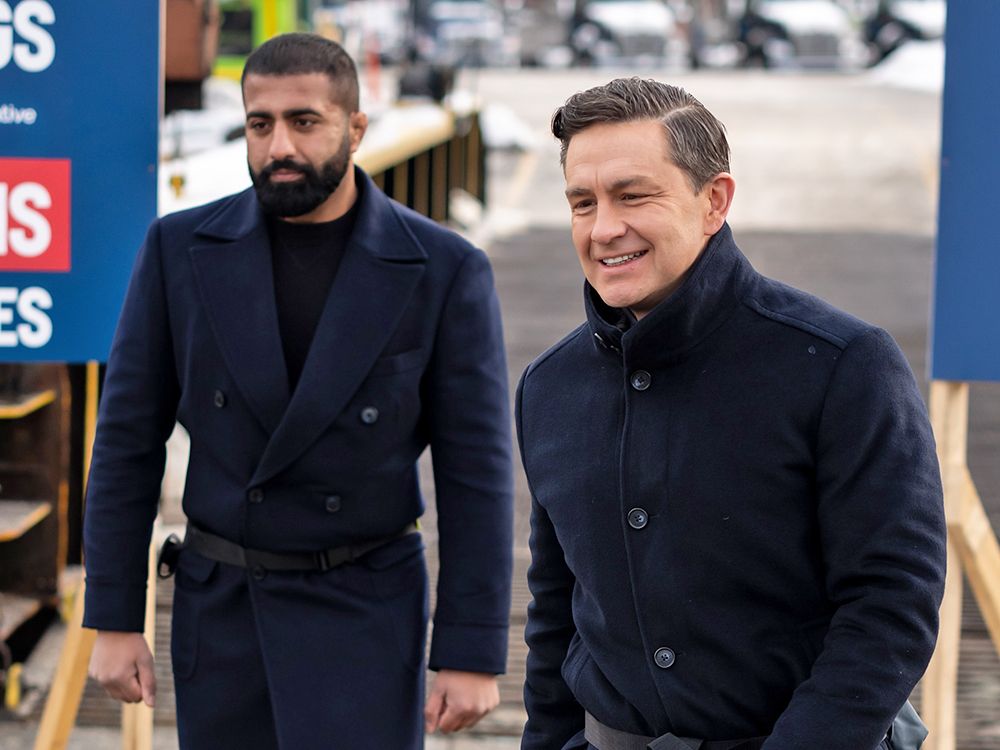
Conservative Leader Pierre Poilievre and candidate Jessy Sahota arrive for a news conference in Vancouver, B.C., Wednesday, Feb. 5, 2025.

DELTA, B.C. — First-time Conservative candidate Jessy Sahota hopes to punch his ticket to the notoriously quarrelsome House of Commons in next Monday’s election, but he could easily have ended up in a much different arena of combat.

Sahota, a standout amateur heavyweight wrestler, was in Orlando, Fla., for a tryout with NXT, the developmental brand of pro wrestling juggernaut WWE, in March 2020, just as COVID-19 triggered global lockdowns.

“We’d just made it to NXT’s performance centre when management told us we had to leave because they needed the space for the main roster,” recalls Sahota’s equally brawny brother Paul, who’d tagged along for the tryout.

The brothers were soon on a one-way flight back home to Canada, putting an abrupt end to their dreams of squared circle superstardom.

Jessy, now 32, says

the twist of fate

was probably for the best.

“A few of the guys I used to wrestle with have tried to get into things like WWE and (mixed martial arts)… It’s a tough life and there’s not much money in it unless you get to be one of the top guys,” he says.

Now a constable with the Delta police, Sahota says he reached out to his local Conservative riding association after liking a lot of what he heard from leader Pierre Poilievre on crime and affordability.

“I asked them how I could help and it turns out the best way was by running for the nomination,” said Sahota.

Sahota is one of eight South Asian candidates running for the Conservatives in British Columbia’s Lower Mainland, all members of the Sikh community.

A few of these candidates are, like Sahota, in their 20s and 30s.

Gurtaj Sandhu, a volunteer on Sahota’s campaign, said that young Sikhs are gravitating toward the Conservative party for many of the same reasons

as other young Canadians

.

“I think a lot of us are worried about finding good jobs and whether we can afford to live on our own,” says Sandhu as he door-knocks in an idyllic subdivision not too far from Delta’s waterfront.

While none of the 14 Conservative MPs who held seats in B.C. at the start of the campaign were from the Sikh community, the party is clearly looking to change this.

Poilievre himself was in the Lower Mainland for the

Sikh festival of Vaisakhi

on Saturday, his visit coinciding with a critical stretch of advance voting.

The Conservatives have also reportedly

ramped up spending on

Punjabi-language ads, targeted to the Lower Mainland and Greater Toronto Area, in recent weeks.

Sikhs make up about 8.5 per cent of Metro Vancouver’s population, according to

the most recent census

, taken in 2021.

The community was thrust into the middle of a diplomatic crisis between Canada and India in 2023, after Surrey, B.C.,

resident Hardeep Singh Nijjar

was fatally gunned down outside of a local temple.

But the Conservatives’ bridge-building with the Sikh community has been overshadowed somewhat by nomination controversies, with some critics accusing the party of tokenism in its recruitment of Sikh candidates.

The nomination of 25-year-old blueberry farmer Sukhman Gill in the nominally safe riding of Abbotsford—South Langley has been an especially

large headache for the party

.

Gill, a total newcomer to politics, won the Conservative nomination after ex-B.C. finance minister Mike de Jong

was rejected by the party’s internal vetting team

.

De Jong has kept the focus on the party’s decision by continuing to run as an independent, racking up the endorsements of several prominent local leaders, including Ed Fast, who held part of the riding as a Conservative MP from 2006 to 2025.

Fast called Gill’s nomination “far from open and fair” in a statement

endorsing de Jong to be his successor

.
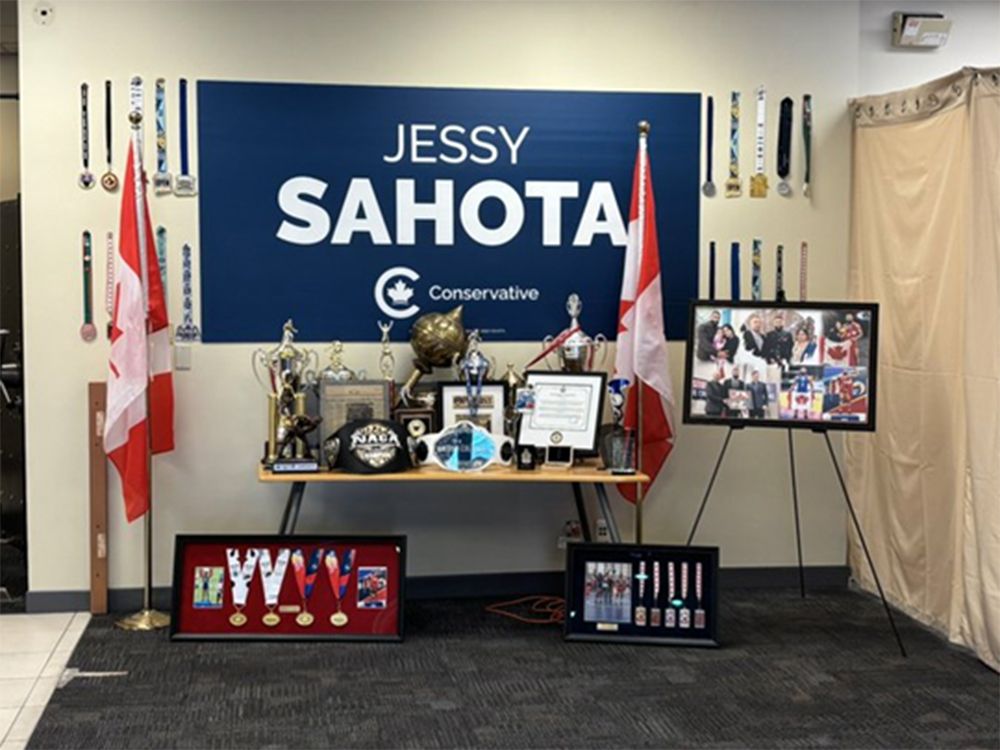
 A wall of accolades on display in Conservative candidate Jessy Sahota’s campaign office in Delta, B.C.

Gill’s campaign didn’t immediately respond to a request to comment on this story.

Ujjal Dosanjh, who’s held Lower Mainland seats at the provincial and federal level, said that this sort of perceived favouritism can hurt the cause of Sikhs, and other minorities, looking to enter politics.

“You do risk a sort of cultural backlash when voters pick up a ballot and see a bunch of ethnic names that they don’t recognize,” said Dosanjh.

“It can give the impression that ethnic groups themselves are somehow co-opting politics and tilting the rules in their favour.”

Dosanjh added that, no matter the ethnicity, candidates should put in the work to build up name recognition in their communities before putting their name on the ballot.

“You never want people to see your name on the ballot and think ‘who is this guy and what has he done to deserve to represent us in government?’” said Dosanjh.

Dosanjh himself worked for several years in Vancouver, as a lawyer and newspaper editor, before entering politics in his 40s.

He stressed he was a fan of Sahota’s, who he called “impressive.”

Vancouver-based strategist Kareem Allam says he agrees that the Conservative outreach efforts have been too ham-fisted.

“What we’re seeing from the Conservatives is the sort of ‘ethnic sandbox’ approach of yesteryear,” said Allam, a partner Richardson Strategy Group.

“Sikhs are a much more heterogenous group than they were, say 20 or 30 years ago. They’re not going to automatically put an ‘x’ by the Punjabi name on the ballot.”

National Post

rmohamed@postmedia.com

Get more deep-dive National Post political coverage and analysis in your inbox with the Political Hack newsletter, where Ottawa bureau chief Stuart Thomson and political analyst Tasha Kheiriddin get at what’s really going on behind the scenes on Parliament Hill every Wednesday and Friday, exclusively for subscribers. Sign up here.

Our website is the place for the latest breaking news, exclusive scoops, longreads and provocative commentary. Please bookmark nationalpost.com and sign up for our daily newsletter, Posted, here.
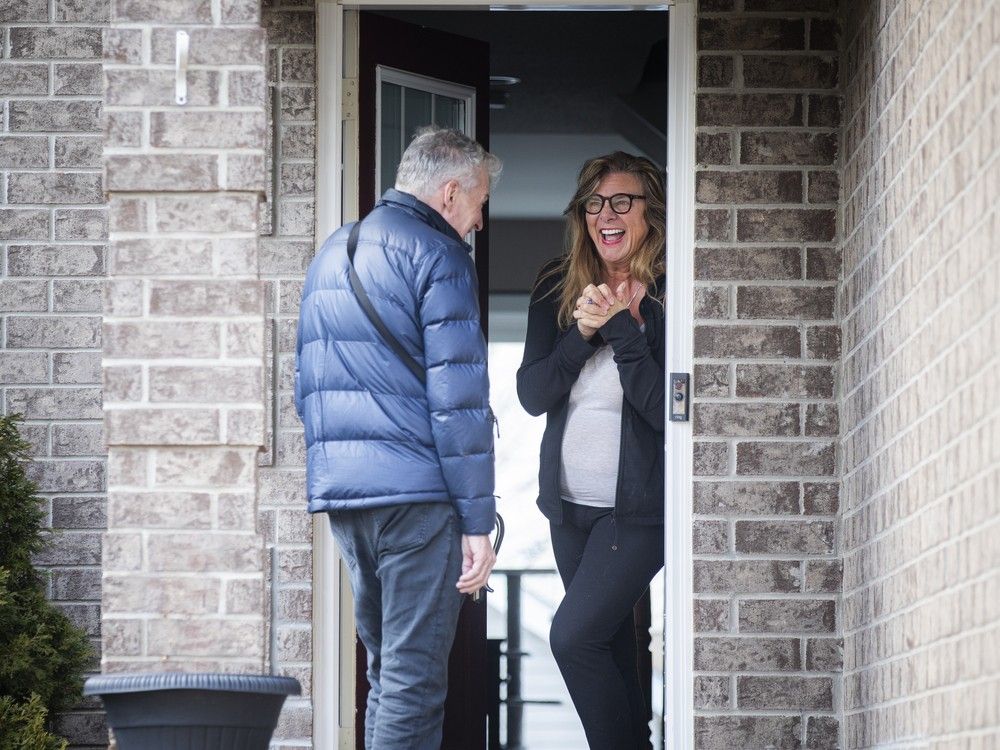

Longtime Liberal supporter Nancy Mundt chats with Liberal candidate Bruce Fanjoy on her front step.

OTTAWA — While Liberal Leader Mark Carney may be Conservative Leader Pierre Poilievre’s main rival this election, Bruce Fanjoy could be considered his second.

Fanjoy is the local Liberal candidate trying to challenge Poilievre for his own seat in the Ottawa-area riding of Carleton, a contest the Conservative leader has won seven straight times since first becoming elected to the House of Commons in 2004.

For voters in this largely rural riding, Poilievre’s name will not only be on the ballot as their local representative, but for the first time as Conservative party leader and possible next prime minister.

Although some may assume that boosts Poilievre’s chances in the riding he has held since he was 25, Fanjoy sees Poilievre’s status as a potential prime minister as an opportunity.

“Carleton, because of circumstance, has a remarkable opportunity to make a statement on the type of politics and direction that we want Canada to go in,” he told National Post in a recent interview.

“Although it’s technically just one of 343 ridings in the election, this one carries extra significance.”

That significance has not gone unnoticed by Liberals themselves. In the first week of the federal election, more than 500 volunteers signed up to help, Fanjoy says.

While most came from in and around the riding, he says others travelled from Montreal, Toronto and in the case of one woman who holds dual citizenship, New York City.

Last Friday morning, which happened to be Good Friday, nearly 30 volunteers descended on a home in Manotick, a suburb in the riding, sipping coffee and gathering around tables, waiting to be assigned to their latest door-knocking rounds.

Seated in a back room, Fanjoy credits the buzz he’s seeing around his campaign at least in part to the fact he’s trying to take on Poilievre.

He estimates having knocked on more than 15,000 doors over the past two years. Before entering politics, he had a career in business. The party acclaimed him as the official candidate in June 2024.

During a recent canvas, Fanjoy jokes that Poilievre had become his “personal trainer” in terms of steps taken, also a nod to the complexities of campaigning in a rural riding.

From early on his in political career, Poilievre himself

established a reputation

as an avid door-knocker with a knack for connecting with constituents.

 In the riding of Carleton, incumbent Conservative MP Pierre Poilievre was literally sprinting around Stittsville to get out the vote on the eve of the election, October 21, 2019.

As he grew older, some predicted the young member of Parliament had the talent to one day become prime minister. With less than a week until election day, Poilievre will soon find out whether Canadians trust him with the role.

Successive public opinion polls place the Conservatives either tied with or trailing the Liberals. While Carney is pitching himself based on his experience as a former two-time central banker, Poilievre is trying to convince Canadians he is the opportunity for change after nearly a decade of Liberal rule.

In terms of Poilievre’s riding, polling aggregator

338canada.com

suggests the Conservative leader will likely hold his seat. However, it suggests support for the Liberals has grown since the 2021 federal election, a trend seen across countless other ridings.

When Fanjoy characterizes Poilievre, he criticizes him for stoking “divisiveness” and often compares him to U.S. President Donald Trump.

It is a well-used line of attack from Liberals and other Poilievre critics and could prove fatal should he fail to show Canadians he represents a sunnier style of conservatism, with many voters seeing red over Trump’s trade war with Canada and his comments about wanting to annex the country.

Like other Liberals, Fanjoy describes a marked shift once Carney was elected Liberal leader back in March.

He suggests Carney’s win also serves as a good sign for his local race, pointing to how the riding was among the top 10 highest in terms of votes for the new Liberal leader.

Another race Fanjoy surprisingly points to is the 2022 Conservative leadership race, which Poilievre won in a whopping first-ballot victory, capturing nearly 70 per cent of the vote.

He notes that while Poilievre handily won his riding, some still voted for former Quebec premier Jean Charest, who ran as a moderate, and

finished a distant second,

which he takes to mean there are some progressive conservatives who dislike Poilievre.

“Canada has never had a party leader as right wing as Pierre Poilievre.”

That, he hopes, may be enough to sway some voters change their mind.

“I respect conservatives. I’m not running against conservatives,” Fanjoy says. “I’m running for Canada against Pierre Poilievre.”

Fanjoy made a deliberate choice to try to appeal to those who do not consider themselves traditional Liberals by having a volunteer design his last name on campaign literature and buttons to appear in a pattern of brightly coloured letters.

“We wanted people, regardless of who they were, who they’ve supported in the past, that they could see themselves getting behind my campaign,” he says during a recent canvas.

As Fanjoy walks, the challenge before him is on full display, not only on the lawns and boulevards around the riding displaying Poilievre’s signs.

One man he reminds about early voting politely tells him that after Trudeau, “I’ll never vote Liberal again.”

When Fanjoy appears at another door, a woman named Marie-France reminds him how the last time he appeared, she told him that so long as Trudeau was prime minister, she could never vote for him.

“Well,” he begins.

She then interrupts. “Things have changed,” she says, which Fanjoy repeats, with a laugh.

Afterwards, she shares that as a lifelong Liberal, she cannot recall the last time the party’s local candidate came around as frequently as Fanjoy.

Still, she hesitates about his chances.

“I doubt whether Mr. Fanjoy is going to make it, personally. I don’t know. I think he’s going to continue,  Mr. Poilievre, is going to continue to win this election.”

National Post

staylor@postmedia.com

Get more deep-dive National Post political coverage and analysis in your inbox with the Political Hack newsletter, where Ottawa bureau chief Stuart Thomson and political analyst Tasha Kheiriddin get at what’s really going on behind the scenes on Parliament Hill every Wednesday and Friday, exclusively for subscribers. Sign up here.


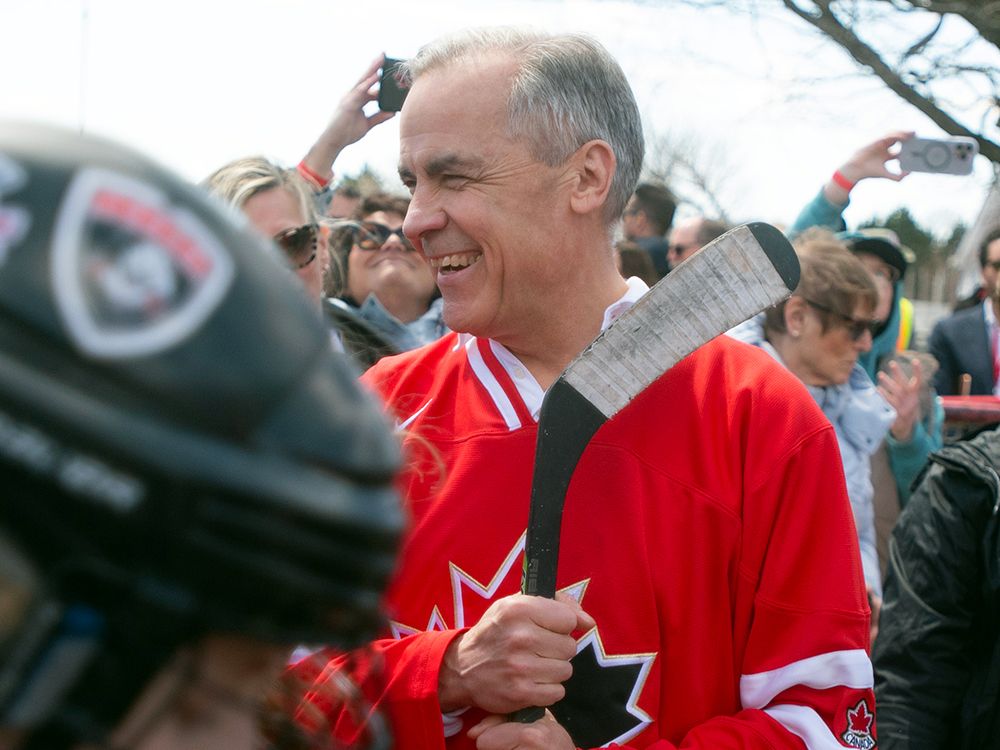
Liberal Leader Mark Carney gets ready to play road hockey with local kids at a campaign event in Truro on Monday, April 21, 2025.

TRURO, N.S. – Mark Carney may be a political novice but he is quickly learning the value of staged photo ops.

The new Liberal leader is clearly not in the same league as his predecessor Justin Trudeau when it comes to apparently spontaneous, meticulously planned shots, like the time the former prime minister jogged past teenagers on their way to a prom.

Early in the campaign, Carney was in danger of losing a digit when he

tried his hand at woodworking

at a trades school in Vaughan, Ont.

But the new man is comfortable with anything to do with kids or hockey or, preferably, both.

On Saturday he painted Easter eggs with a group of youngsters in Newcastle, Ont., emblazoning his egg with that kiddie favourite: “Time to Build.”

On Monday, he donned a Team Canada jersey at a farm in Truro, N.S. to play ball hockey with a group of local children, who, fortunately, kept their elbows down.

These campaign stops are, at face value, ludicrous. But they allow the leader to prove he is a good sport and is not the desiccated technocrat his opponents claim. On Monday, a goal against a bunch of under-10s was celebrated with a display of Carney riding the stick, Tiger Williams-style. He had one eye on the cameras at all times.

“He’s a much better politician than I thought he’d be,” said one woman in the crowd.

The sneaking suspicion is that this tolerance for the performative side of politics will expire in about a week.

It helps that there has been a weightlessness to the Liberal campaign in the past two days, as if their internal polling is showing the election is in the bag.

As noisy protesters standing on the road outside the farm chanted “WEF puppet” (referring the World Economic Forum) Carney put his finger to his ear and jokingly told his audience, “Sorry, I’m listening for the order coming in.”

The Liberals’ worries of the debates and the platform launch appear to be behind them. The

$225 billion in new spending unveiled in the Liberal platform

proved to be a tempting target for Conservative Leader Pierre Poilievre, but his attack has been blunted by the fact the Conservatives have yet to release their own platform. (Poilievre said it’s coming Tuesday.)

“We have a fully costed plan. Pierre Poilievre doesn’t have a plan and he is hiding $140 billion in cuts,” Carney said when asked about the new spending in Prince Edward Island on Monday morning.

The Liberals claim that Poilievre’s pledge to match every dollar spent with a dollar in cuts means he will have to meet his $140 billion in new measures by taking a hacksaw to existing dental care, pharmacare and child-care programs. In reality, most of the Conservative measures are tax cuts, not traditional spending, but there’s no doubt that

Poilievre’s $14 billion-a-year income-tax cut

reduces his room for manoeuvre.

The ambiguity has taken the sting out of Poilievre’s attack.

Back in rural Nova Scotia, the feeling is that the Liberals could take the Cumberland—Colchester riding that was won by Conservative Stephen Ellis by 12 points in 2021.

The fact that Carney is here in the final days of the campaign means that the Liberals believe it is in play.

It should be fertile terrain for Poilievre. But this is Robert Stanfield country; the former Progressive Conservative leader was from Truro.

It has never embraced western conservatism, rejecting the Reform Party when it became the official opposition in 1997. And by the accounts of the people at the rally, their conservative neighbours are not embracing the current Tory leader.

Bill Casey was elected in the riding seven times, first as a Progressive Conservative, then as a Conservative, and, after being expelled from the party for voting against the 2007 budget, as an Independent. He left politics for six years, but in 2015 he ran and won as a Liberal.

Casey was at the event on Monday and said that many high-profile Conservatives he knows in the riding are not voting for Poilievre and may not vote at all.

The area is highly dependent on agriculture, and trade and tourism with the United States, and Casey said Carney’s plan to build Canada and protect jobs is resonating across the riding.

The Liberal candidate is local businesswoman Alana Hirtle, and if she emerges the winner early in the proceedings next Monday it is going to be a long night for the Conservatives.

National Post

jivison@criffel.ca

Get more deep-dive National Post political coverage and analysis in your inbox with the Political Hack newsletter, where Ottawa bureau chief Stuart Thomson and political analyst Tasha Kheiriddin get at what’s really going on behind the scenes on Parliament Hill every Wednesday and Friday, exclusively for subscribers. Sign up here.


Elections Canada is expecting to tally a “record turnout” from this past weekend’s advance voting, an official says.

OTTAWA — With millions of Canadians having already cast a ballot in advance polls, political parties are now crisscrossing the country with a final pitch to those yet to vote.

Liberal Leader Mark Carney made stops in Price Edward Island, Nova Scotia and New Brunswick on Monday and is expected to make his way across the country in the next few days calling for a “strong” Liberal mandate on April 28.

“We’re in the most serious crisis of our lifetimes, and we need a government that has a strong mandate, a clear mandate,” he told reporters in Charlottetown.

Carney said Canada’s next prime minister will be sitting down with U.S. President Donald Trump to negotiate a new economic and security relationship immediately after the election, and insisted he is the best placed to deal with him.

“It’s a choice to go with a plan, to go with someone who knows how to negotiate, to go with someone who knows how to manage a crisis,” he said. “Do we send someone who has the backing of the Canadian people? That’s the choice in the election.”

Conservative Leader Pierre Poilievre, for his part, is planning to spend the next few days in the rich-vote Greater Toronto Area to hammer the need for a change in government.

“Einstein said the definition of insanity is doing the same thing over and over again and expecting a different result,” he said in Ajax on Monday. “You won’t get a different result unless you do something different. We need to elect a new Conservative government.”

Millions of Canadians already made their choice over the Easter long weekend.

Elections Canada said more than two million voters voted in advance polls on Friday alone. The agency will be releasing updated numbers Tuesday, but spokesperson Richard Théoret is expecting the agency will observe a “record turnout” from the weekend’s vote.

Philippe J. Fournier, creator of the polling aggregator website 338Canada, said that while big turnouts in advanced polling might typically signify a desire for change, it is less clear in this election whether Carney or Poilievre would best represent that sentiment.

“Clearly, many Canadians see Mr. Carney as a change — rightly or wrongly,” he said.

Fournier said most polling numbers that came out Monday are putting the Liberals six to eight points ahead of the Conservatives, with an even wider gap between both parties in Ontario.

That means, he said, that Liberals are almost guaranteed to form government.

Whether Liberals can aspire to form a majority government, he added, will depend on if they can win enough seats in Ontario, British Columbia and Quebec. The battlegrounds in those provinces are where parties will want to squeeze out the thinnest of wins.

In recent days, Bloc Québécois Leader Yves-François Blanchet has been pitching to Quebecers the necessity of holding the Liberals to a minority — something he took credit for in the 2019 and 2021 elections — with the Bloc holding the balance of power.

Blanchet said Carney gave him his personal number after the debates and said he was “reasonably optimistic” that he would be able to collaborate with Carney in government.

Blanchet is expected to travel across the province in the final stretch of the campaign and is fighting to keep the party’s seats in the Quebec City area, where the Bloc is competing with the Conservatives, and in the Montreal suburbs, where the Liberals are their competition.

“To get to the magic number of 172, the Liberals need Quebec. So, if the Bloc continues to rise … the Liberals’ majority could be compromised,” said Fournier.

For his part, NDP Leader Jagmeet Singh spent the long weekend campaigning in British Columbia — more specifically in the Lower Mainland and Vancouver Island — where he and half of his caucus are at risk of losing their seats to the Conservatives or the Liberals.

At a campaign event in Nanaimo, Singh attempted to show that only the orange team is able to beat the blue team. “Who beats Conservatives on Vancouver Island?” he asked.

“The NDP!” chanted the crowd.

Singh echoed Blanchet’s argument that voters can vote NDP while having a Liberal government.

“In this election, we want folks to know something that we’ve always known for a long time now: that Canada works best when one party doesn’t hold all the power.”

The NDP leader is expected to make stops across the country in the next few days, visiting mostly incumbent seats in an attempt to give them a boost before election day.

But he might have to end up going back west to save his caucus — and even his own seat.

“He has to spend a lot of time there to save the furniture,” said Fournier.

National Post

calevesque@postmedia.com

Get more deep-dive National Post political coverage and analysis in your inbox with the Political Hack newsletter, where Ottawa bureau chief Stuart Thomson and political analyst Tasha Kheiriddin get at what’s really going on behind the scenes on Parliament Hill every Wednesday and Friday, exclusively for subscribers. Sign up here.

Our website is the place for the latest breaking news, exclusive scoops, longreads and provocative commentary. Please bookmark nationalpost.com and sign up for our newsletters here.


Joe Tay.

OTTAWA — The Chinese government is suspected of repressing the campaign of Toronto-area Conservative candidate Joe Tay, pushing a mock “wanted” poster of him online and boosting disparaging stories about the Hong Kong democracy activist while suppressing searches of his name on social media.

On Monday, Canada’s federal elections monitoring task force offered a sobering warning: the People’s Republic of China (PRC) appeared to be behind a transnational repression operation to undermine Tay, a Conservative candidate and vocal critic of the Chinese regime.

“(Transnational repression) is a particularly egregious form of foreign interference because it is used to suppress free speech and democratic rights,” Security and Intelligence Threats to Elections (SITE) task force spokesperson Laurie-Anne Kempton said on Monday.

SITE members told reporters that efforts online to intimidate Tay peaked around December, when he was one of six people targeted by a HK$1 million bounty by Hong Kong police for information leading to his arrest as a critic of the PRC.

They said posts — including mock “wanted” posters — began appearing on various China-based social media platforms promoting the bounty against Tay and disparaging the democracy and civil rights activist.

“Since the bounty and arrest warrant were placed on Mr. Tay, members of the SITE task force have noticed a persistent information campaign on social media platforms where Chinese speaking users in Canada are very active,” Kempton said.

But the threatening online activity against Tay increased with the launch of the federal election, particularly in late March when he was announced as the Conservative candidate for Don Valley North, Kempton said.

Though the transnational repression operation bears all the hallmarks of traditional PRC-backed foreign interference tactics, task force members said they were still working on confirming who was behind it.

Kempton said confirming ties between a state and suspicious online activity can take “significant time and analysis”.

“The material that we’re seeing now is mostly linked to the bounty that was placed on Mr. Tay in December of 2024. We know who issued that bounty and what’s behind it,” added SITE member and Global Affairs Canada (GAC) executive Larisa Galadza in a thinly veiled reference to the PRC.

Kempton also told reporters the task force did not believe China’s efforts prevented voters in the riding or across the country from having a free and fair election.

“These activities are happening on a small scale. They have not reached the tipping point of threatening the integrity of our election, either at the national or the riding level,” Kempton said. “The threat actors have not succeeded.”

Tay was also the centre of attention early in the campaign after comments by Toronto Liberal candidate Paul Chiang in which he joked to an audience that they could earn bounty money if they turned in Tay to the Chinese consulate resurfaced.

Chiang eventually dropped out as a candidate

.

Kempton told reporters SITE detected repressive activity against Tay on the biggest Chinese-based social media platforms such as WeChat, TikTok, RedNote and Douyin (TikTok’s sister app in China) as well as on Facebook.

To date, SITE members said intelligence only definitively tied the PRC to a Facebook account called “Today Review” but investigations into other accounts and platforms are ongoing.

The task force said the first part of the repression campaign was “inauthentic and coordinated” amplification of information relating to the bounty and arrest warrant against Tay.

For example, posts featuring a mock wanted poster of Tay appeared “en masse” online around the time the Conservative Party announced that Tay would be its candidate in Don Valley North.

Task force members, which includes GAC, CSIS, CSE, the RCMP and the Privy Council Office, said they also discovered that Joe Tay’s name was being suppressed in searches on Chinese-based platforms like WeChat, RedNote and Douyin.

They said that when Canadian users searched Joe Tay’s Chinese name on certain platforms, the only results that would appear related to the bounty or arrest warrant. The Canadian government has already said Hong Kong’s bounties were a form of transnational repression against Tay and other dissidents.

On many of those platforms, the task force also found that positive comments or posts about Tay on those platforms were hidden from users, while disparaging or negative content was promoted.

In a short statement, Tay said his campaign had been aware of the mock “wanted” posters and other online threats against him for a while now.

“It is critical that all political parties and leaders take a clear stand against this foreign interference,” he wrote.

SITE officials noted Monday that the suspicious anti-Tay content had not generated high levels of engagement (such as comments, shares or “likes”), but was spreading to an increasing number of platforms.

“The transnational repression and its effect on the democratic process is not about a single act, but rather about the accumulated impact of many acts designed to discredit a candidate, silence criticism and dissent and manipulate the information that informs voters,” Kempton said.

“There is a profound psychological impact on victims who experience (transnational repression). They might experience fear, anxiety and stress due to continuous surveillance and harassment,” she added.

National Post

cnardi@postmedia.com

Get more deep-dive National Post political coverage and analysis in your inbox with the Political Hack newsletter, where Ottawa bureau chief Stuart Thomson and political analyst Tasha Kheiriddin get at what’s really going on behind the scenes on Parliament Hill every Wednesday and Friday, exclusively for subscribers. Sign up here.


People walk outside Santa Maria Maggiore basilica on April 21, 2025, the location where Pope Francis requested that he be buried. He would be the first
pope to be buried there since 1669.

At 9:47 a.m. on Monday, the Vatican announced the death of Pope Francis.

But what happens now?

The death of the pope sets in motion the Sede vacante or interregnum, the series of rites that ends with the election of a new pope.

The interregnum begins when the camerlengo, personal representative of the Sacred College of Cardinals, certifies the death of the pope. The office of camerlengo, held currently by Cardinal Kevin Joseph Farrell, will also temporary run the administration of the Catholic Church in place of the pope.

The novendiales, or nine days of mourning, begins on the day of the pope’s death. There will be a period for visitors to view the pope’s body. In 2005, when Pope John Paul II died, millions came to pay their respects.

The funeral of the pope traditionally happens four to six days after death. The funeral is typically elaborate, featuring dignitaries from around the world, and tens or even hundreds of thousands of viewers. However, Pope Francis instructed that his funeral be simple. The most notable change he requested is that he wished to be buried in a wooden, zinc-lined coffin in Santa Maria Maggiore basilica,  rather than in St. Peter’s Basilica where most popes are buried.

The most recent pope to be buried in Santa Maria Maggiore is Pope Clement IX, who died in 1669.

After the mourning period, the election for the new pope begins 15 to 20 days after the death of the pope. The election is known as the conclave, and is comprised of 120 cardinals. The cardinals then hold a mass in the Sistine Chapel where they are sworn to secrecy regarding the details of the conclave proceedings. Cardinals are sealed off for the conclave in the Domus Santae Marthae or “St. Martha’s House” for the period of the election.

The cardinals will cast their votes, through a secret ballot, inside the Sistine Chapel. The first day of the conclave will have one ballot while every day after that holds four, two in the morning and another two in the afternoon.

The cardinals write the name of a candidate on their ballot papers. Candidates must be a male and a baptized Catholic, and he needs a two-thirds majority of the cardinals in the conclave to become the next pope. The ballots are collected by three scrutineers, and the names voted are tallied and announced.

The ballots are burned in a stove and combined with chemicals to form either a black smoke, meaning no decision has been made, or white smoke, which indicates that a new pope has been elected. This smoke is visible to the public gathered in St. Peter’s Square via a chimney. Additionally, the bells of St. Peter’s Basilica are rung alongside the white smoke to help those gathered know the results.

When a pope is elected, the cardinals asks for his acceptance of the election as pope and his papal name. The conclave is disbanded by the new pope.

The new pope is introduced to the world from a balcony overlooking St. Peter’s Square as a cardinal announces “Habemus papem” or “We have a pope!”

The Pope then speaks his first words as the leader of the Catholic Church.

Our website is the place for the latest breaking news, exclusive scoops, longreads and provocative commentary. Please bookmark nationalpost.com and sign up for our daily newsletter, Posted, here.

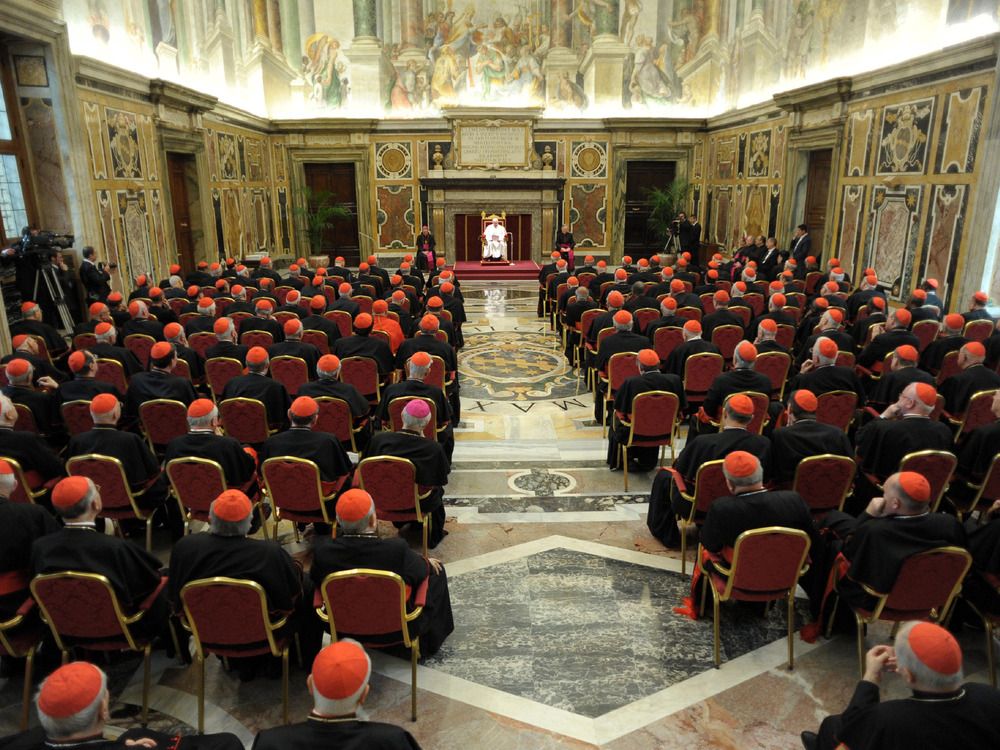
Pope Francis I meets with the full College of Cardinals in the Clementine Hall of the Apostolic Palace on March 15, 2013.

At 88 years of age, Pope Francis I was the second-oldest Pope to hold the title in the last 600 years.

Only Leo XIII

, who died aged 93 in 1903, outlived him. His death triggers the election of the 267th Pope, a

process known as a conclave

.

What is the process for choosing a Pope?

In the days after the Pope dies, eligible cardinals make their way to Rome to vote by secret ballot in the conclave, which has been held in the Sistine Chapel since 1878.

Cardinals can vote up to the age of 80. There are not supposed to be more than 120 so-called Cardinal-electors, according to a ruling by Pope Paul VI in 1975, but it has not been strictly followed. Last December, Pope Francis

created 21 new Cardinals

, and there are now about 140 of voting age.

Paper ballots are handed out, and each Cardinal writes the name of his chosen candidate below the words “Eligo in Summun Pontificem” (Latin for “I elect as supreme pontiff”). Unlike politicians, Cardinals cannot vote for themselves.

 This handout picture released by the Vatican Press Office on March 13, 2013, shows Argentina’s Jorge Bergoglio, elected Pope Francis I, appearing on St. Peter’s Basilica’s balcony after being elected the 266th Pope on March 13, 2013.

What do the Cardinals consider when voting?

During the conclave, Cardinals offer sermons on the state of the world and the church, which indicates what qualities the next Pope should have, says Megan Armstrong, a professor at McMaster University who specializes in early modern Catholicism.

“Whoever’s chosen pope, what we see is they’ve been paying attention to what’s going on in the Church itself and the state of the world at the time,” she said.

“They’re weighing in what direction the church should be.”

Armstrong said the college of cardinals is split between progressives and conservatives.

Francis, with his relatively liberal views of same-sex marriage and divorce, was seen as being in favour of a “listening church,” responsive to the concerns of the people. His predecessor, Pope Benedict XVI, was seen as more traditional.

“We’re dealing with a very interesting moment. We’ll see the temperature of the Church by who’s chosen,” Armstrong said.

How long does it take?

There’s no limit. After the votes are counted, if no one has a two-thirds majority, the ballots are

mixed with chemicals

— potassium perchlorate, anthracene and sulphur (which used to be called brimstone) — and burned to create black smoke, which tells those outside the Vatican that no Pope has been chosen.

In that case, the process repeats. Up to four votes a day can be held for up to four days in a row. The fifth day is then reserved for prayer and discussion, and then voting resumes.

If a two-thirds majority is reached, the ballots are burned with potassium chlorate, lactose and rosin. The resultant white smoke signals “Habemus papam,” Latin for “We have a Pope.”

One of the longest conclaves in history was held from May 1, 1314, to Aug. 7, 1316, resulting in the

election of Pope John XXII

. In contrast, Pope Francis was elected after just four ballots stretching over two days in 2013.

 White smoke rises from the chimney of the Sistine Chapel meaning that cardinals elected a new Pope on March 13, 2013.

What are the qualifications for becoming Pope?

There are only two rules, but they disqualify a lot of people. You must be Roman Catholic and you must be male. But since 1379, every Pope has also come from the College of Cardinals, the same small group that votes at the conclave.

How many Cardinals are Canadian?

Canada has five Cardinals

, four of voting age: Frank Leo, Michael Czerny, Gerald Cyprien LaCroix and Thomas Christopher Collins, as well as Marc Ouellet,

who turned 80 last year.

Did Francis have to die before a new Pope was chosen?

No. He could have chosen to resign. In fact, in 2022 he revealed that, shortly after he was elected Pope, he wrote

a letter of resignation

to be invoked if he became medically incapacitated. Pope Paul VI did something similar in 1965, but it was never invoked.

Has any other Pope ever resigned?

Yes. In fact, Pope Francis was elected after his predecessor, Benedict XVI, stepped down in 2013. He became the first Pope to do so since Gregory XII in 1415. He retained the title of Pope Emeritus until his death in 2022.

The 2019 film

The Two Popes

tells a fictionalized version of this transfer of power. It stars Jonathan Pryce as the future Pope Francis, and Anthony Hopkins as Pope Benedict XVI. You can watch it on Netflix.

 From left, Jonathan Pryce and Anthony Hopkins in The Two Popes.

Is there another recent movie about Popes?

Yes. Conclave, starring Ralph Fiennes, Stanley Tucci, Isabella Rossellini and John Lithgow, imagines the death of a Pope and the election of a new one. Based on the 2016 novel by Robert Harris, it is full of politics, scheming and some wild plot twists. It’s available on Amazon Prime and AppleTV.

 From left, Ralph Fiennes and Stanley Tucci in Conclave.

How similar is that movie to the real thing?

The basics of the conclave are factual, but

the twist ending (which we won’t spoil here) is made up. And

Slate magazine

points out that the appearance of a previously unknown Cardinal, as happens in the movie, couldn’t take place.

In the movie, Cardinal Benitez (Carlos Diehz) was secretly named Cardinal of Kabul, Afghanistan, by the Pope before he died. And while such secret Cardinals do exist in reality (often to keep them safe in troubled parts of the world), they need to be publicly named by the Pope to take full status, including voting rights.

National Post, with additional reporting by Simona Milutinovic

Our website is the place for the latest breaking news, exclusive scoops, longreads and provocative commentary. Please bookmark nationalpost.com and sign up for our newsletters here.


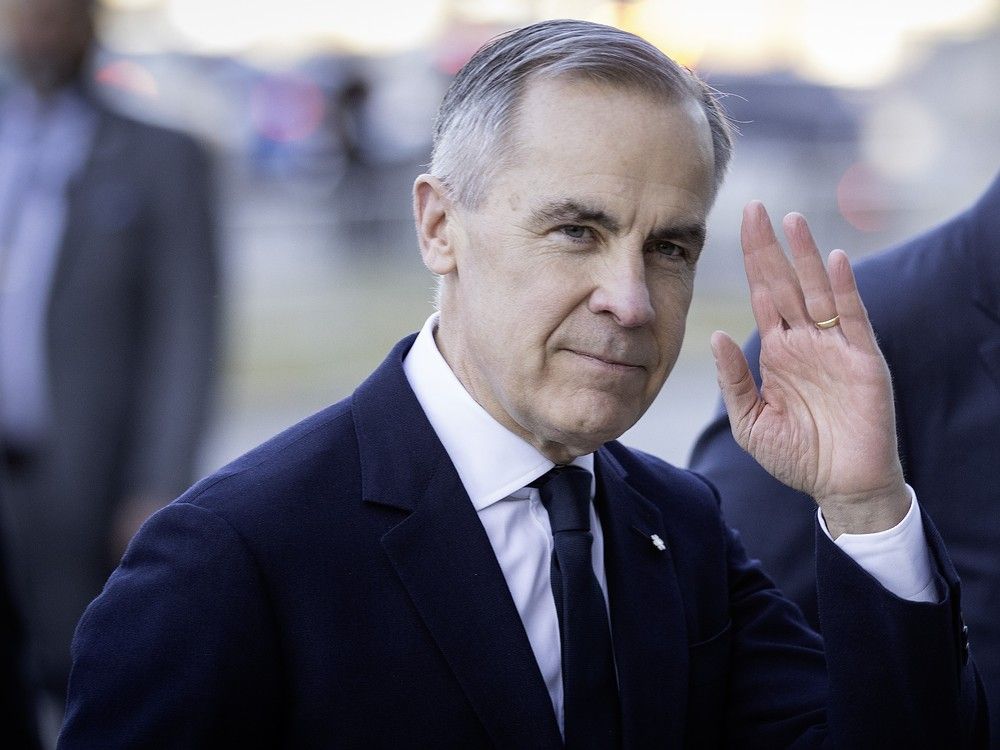
Liberal leader Mark Carney waves to the crowd as he arrives for the English Federal Leaders' Debate in Montreal on Thursday April 17, 2025.

Releasing a detailed, costed platform is quite rightly seen as a basic obligation of a political campaign.

You don’t necessarily need one to win

, but if everyone has one other than you

people certainly have a right to ask why you don’t

. Every party claims to have a plan; surely they should at least be able to put it down on paper and have some basic idea of how much it will cost.

All that said, the Liberals may well be worse off for releasing their platform over the weekend. Seeing Liberal Leader Mark Carney’s vision on paper, all in one place, is somehow more jarring than hearing it piecemeal. Even

straight-up headlines like

“Liberal platform promises $130 billion in new measures over four years, adding $225 billion to federal debt” (per the CBC),  will likely not have landed well with Canadians looking to move on definitively from a decade of Trudeaunomics.

When he’s at his best temperamentally, Carney is unflappable and doesn’t easily take offence. That was largely on display during both leaders’ debates last week (where Conservative Leader Pierre Poilievre was also at his calmest). Carney had a couple of unfortunate arrogance eruptions earlier in the campaign, including reacting with incredulity that a reporter might suggest there could be conflicts of interest hidden somewhere in

Brookfield Asset Management’s “over $1 trillion (U.S.) of assets under management

” — Carney having been chair of the company until mid-January.

But generally he has presented himself — with remarkable success, according to polls at least — as a calm, intelligent, technocratic alternative to nine years of Justin Trudeau’s vacuous, thespian melodrama. When he talks about separating capital and operating spending, distinguishing “investing” from “spending,” you can almost believe it’s something more than accounting trick … until you see the costing and, well, either way it’s still debt.

Carney promises to adjust spending as a percentage more toward capital projects and away from program spending, which few would oppose in principle, the latter having ballooned in recent years. And with “buy Canadian” being all the rage, I suspect most of us have nodded along with Carney (and other politicians) when he says we should use those capital projects to boost Canadian industry and create Canadian jobs.

But then you see it on paper: “We will prioritize Canadian contractors in our defence procurement (and) Crown corporations with major capital acquisitions, like Via Rail, will also be encouraged to meet this standard.”

Canadian military procurement isn’t a mess because Canadian shipyards can’t build ships; it’s a mess because military procurement hasn’t really been about military procurement for decades. Rather, it’s about having something to promise Canadian industry during each election cycle. But if we were suddenly dead serious about having a proper military

in order to have a proper military,

 surely we would prioritize getting what we need over where it comes from. There are plenty of options other than the United States.

The bit about Via Rail is one of my favourite little details in the platform, and a fine example of how thoroughly Trudeau-esque this document is. Via’s biggest forthcoming capital acquisitions include

new long-distance train sets

for the company’s heavily subsidized cruise-ship-on-rails division. In 2023 taxpayers shelled out $1,015 per passenger on The Canadian, the route between Toronto and Vancouver, and it’s still a very expensive way to travel. It’s crying out for privatization.

But much bigger than that, should it come to pass, will be the Liberals’ back-of-a-napkin plan for high-frequency rail between Toronto and Quebec City,

or maybe it’s high-speed rail, or maybe it’s a bit of both

. Just tell them what you want to hear and they’ll say it for you. Indeed, out of nowhere, the Liberal platform extends the project westward from Toronto to Windsor! And it says that’ll just be the “start” of high-speed rail plans.

Listen to Carney talk about government efficiency and you might think, well, if anyone knows a thing or two about that, it certainly ought to be him. But then you see the promise of finding a whopping $30 billion in savings across government, which is the sort of thing every party platform always promises, only it rarely pans out. And then you remember Carney has never actually led or been part of any government, and suddenly the promise looks just as suspect as always, if not more.

You look at Carney’s vague carbon-tax plan — big emitters will pay, and somehow consumers won’t — and you remember that Carney certainly supported the consumer carbon tax that he axed out of political expediency as one of his first order of prime ministerial business. You see the promise to “revoke gun licences for individuals convicted of violent offences,” which is already in the Criminal Code, and you realize that Carney is flying just as blind-and-happy as the Liberals always do on guns. You see the platform’s proposal to “allow for consecutive sentencing for serious and violent offences,” which Poilievre has been assailed for supporting, and you realize they’re the same beet-red hypocrites as ever.

Search the platform for your own personal annoyances about Trudeau-era Liberal governance, and you’re unlikely to come up empty.

National Post

cselley@postmedia.com

Get more deep-dive National Post political coverage and analysis in your inbox with the Political Hack newsletter, where Ottawa bureau chief Stuart Thomson and political analyst Tasha

Kheiriddin

get at what’s really going on behind the scenes on Parliament Hill every Wednesday and Friday, exclusively for subscribers. Sign up here.


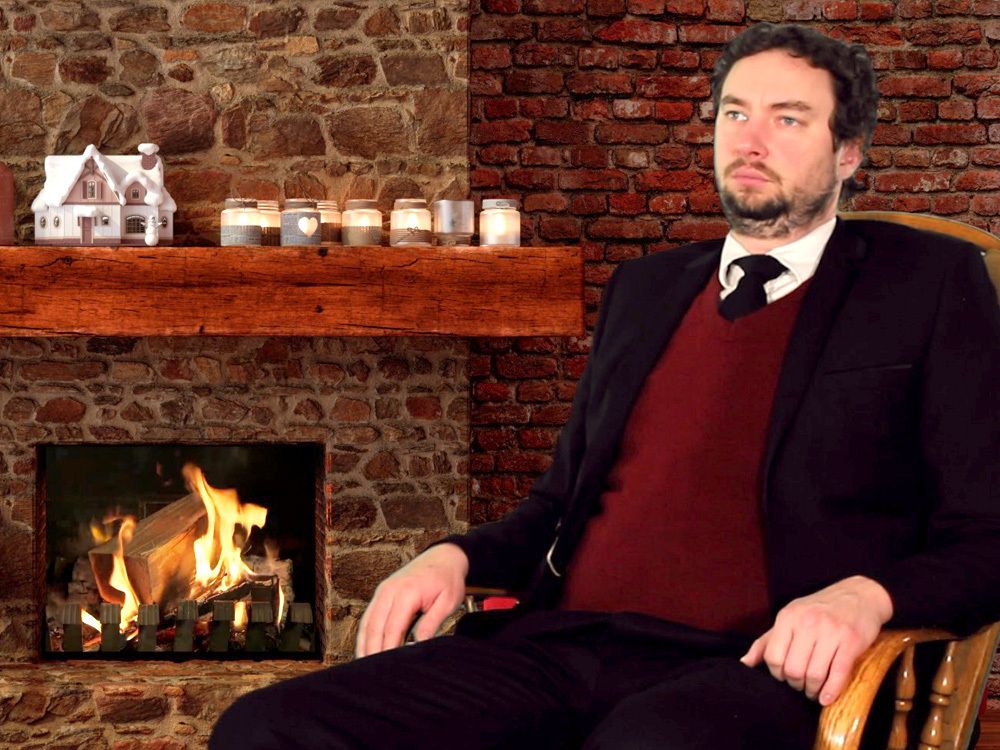
Tristin Hopper sitting in front of a fire.

Canada has long been held up as a shining example in a number of areas, whether it’s democratic principles, human rights, universal healthcare, and others.

But is there a chance that we’re getting things wrong? A new book from a National Post writer takes a look at that exact question.

Tristin Hopper joins Dave Breakenridge to discuss the inspiration for the book, where Canada is getting things wrong, and how these issues overlap with the federal election.

 Book cover of Tristin Hopper’s new book: Don’t Be Canada. Supplied by Sutherland House Books.

Background reading:

The weird moments you missed from the French leaders’ debate

Subscribe to 10/3 on your favourite podcast app

Our website is the place for the latest breaking news, exclusive scoops, longreads and provocative commentary. Please bookmark nationalpost.com and sign up for our daily newsletter, Posted, here.

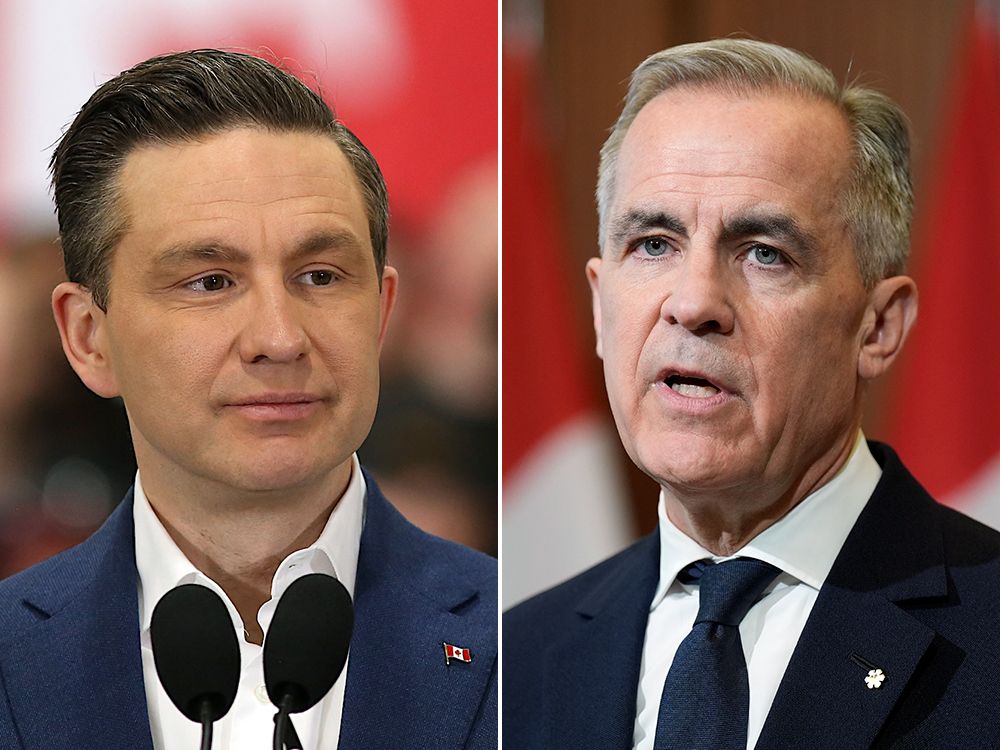
Conservative Leader Pierre Poilievre, left, and Liberal Party Leader Mark Carney.

A survey taken earlier this month suggests that the Liberals are drawing significant support from the ideological centre, have eroded the NDP’s base and is even encroaching on traditionally Conservative territory — a trend that could shape the outcome of the 2025 federal election.

The poll conducted by Leger for the Association for Canadian Studies found that the Liberals had secured about two thirds of voters who identify as left or left-of-centre. The NDP had 20 per cent support from those on the left and only eight per cent from those who identify as left of centre. The Liberals were also leading the Conservatives by 10 percentage points among those who place themselves in the ideological centre.

The survey found that 28 per cent of respondents identify as left or left of centre, 25 per cent in the centre and 23 per cent as right or right of centre. Another 25 per cent said they don’t know or prefer not to answer.

“The ideological spread has been fairly consistent over time,” said Jack Jedwab, president of the Association for Canadian Studies and the Metropolis Institute. “From an electoral standpoint, the seven in ten Canadians who identify somewhere in the centre (left of centre, centre or right of centre) remain critical — they’re the ones most likely to reconsider their vote.”

The poll suggests the Liberals have found traction among voters across the spectrum. Notably, they’ve secured support from 23 per cent of those identifying as right of centre and nine per cent of those on the right.

The Conservatives, led by Pierre Poilievre, dominate among right-leaning voters (82 per cent support from those on the right and 71 per cent from those who are right of centre), but they face hurdles in expanding beyond that base. “To make essential gains, the Conservatives must strengthen their support in the centre and regain right of centre voters drifting to the Liberals,” Jedwab said.

The survey found that 46 per cent of voters in the centre support the Liberals, compared to 35 per cent for the Conservatives.

The Conservatives “need to convince centrist voters that Carney lacks leadership strength,” he said.

“There’s a widespread sense that the stakes in this election are high,” Jedwab said. “Voters are focused on which leader is best positioned to address national challenges, including Canada’s relationship with the United States.”

The four major leaders were asked about how they would handle U.S. President Donald Trump and the trade war in the French and English debates last week. It remains to be seen if Poilievre was able to gain support from the centre and left of centre during the debates.

For the NDP, the outlook is more challenging. The Liberals’ surge has captured the NDP’s traditional base, and the party has struggled to make its core issues central to the national conversation.

“Progressive voters aren’t seeing their priorities — like social justice and equity — reflected in the current campaign,” Jedwab said. “The NDP hasn’t been able to insert those issues effectively.”

Regional dynamics may further shape party fortunes. British Columbians are the most likely to identify on the left or left of centre (39 per cent), while people living in Alberta, Manitoba and Saskatchewan are more likely lean to the right or right of centre (33 per cent). While 28 per cent of people in Alberta said they lean to the left, only 18 per cent in B.C. said they lean to the right.

Still, Angus Reid polling released on April 14 projects a virtual two-way tie in B.C., with the Liberals and Conservatives at 42 per cent each, the NDP at 11 per cent and the Greens at just three per cent. In Metro Vancouver, the Liberals under leader Mark Carney hold the lead with 49 per cent of voter intention, though both the Conservatives and NDP have chipped away at that lead according to the Angus Reid poll.

Both Poilievre and NDP Leader Jagmeet Singh addressed Canadians’ cost-of-living concerns at campaign events in B.C. on Sunday. Singh was in Victoria and Poilievre visited Surrey.

Election day is April 28.

The Leger survey of 1,631 Canadians was conducted online by Leger on April 5 and 6. A margin of error cannot be associated with a non-probability sample in a panel survey for comparison purposes. A probability sample of 1,631 respondents would have a margin of error of plus or minus 2.5 per cent, 19 times out of 20.

National Post, with additional reporting from The Canadian Press