LP_468x60
on-the-record-468x60-white

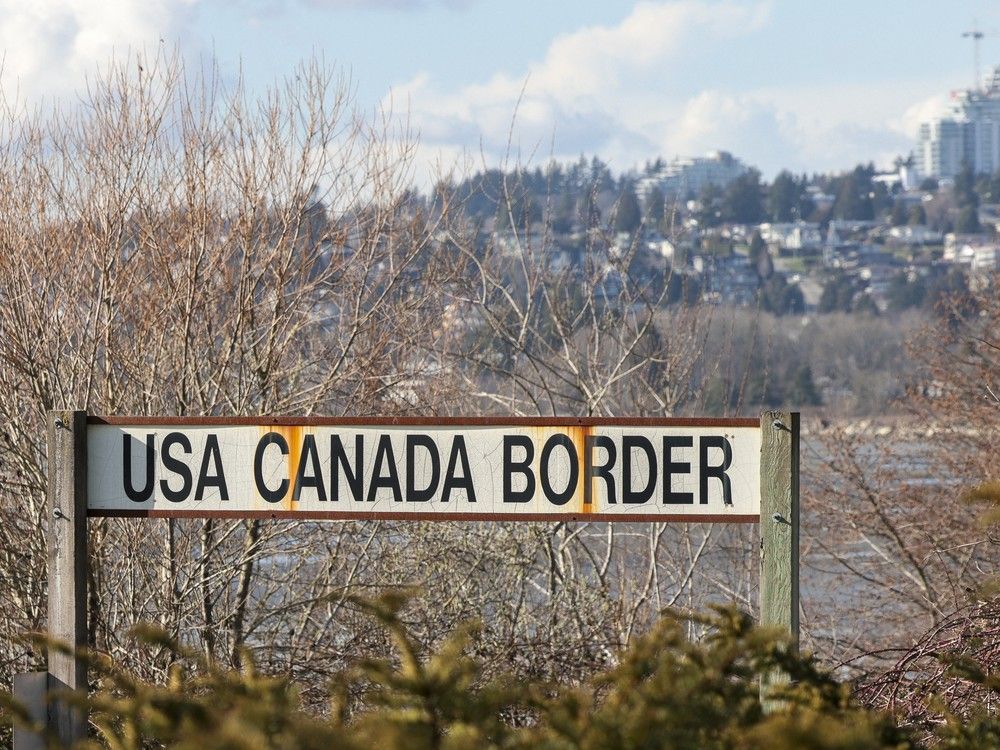
54 per cent of Canadians surveyed said that they no longer feel welcome in the United States.

More than half of Canadians no longer feel welcome or safe travelling to the United States, according to a new poll.

The Leger survey conducted for the Association for Canadian Studies (ACS) ahead of Prime Minister Mark Carney’s first in-person

meeting with U.S. President Donald Trump

at the White House on Tuesday, found that a majority (52 per cent) of respondents agree that “it is no longer safe for all Canadians travelling to the United States.” Slightly more (54 per cent) don’t feel welcome anymore. Less than a third of Canadians (29 per cent) said they disagree that it is no longer safe and 27 per cent said they still feel welcome. In both cases, 19 per cent said they don’t know.

Between an ongoing trade war, Trump’s repeated calls to make Canada the 51st state and increased security at the southern border, tensions have been increasing between the neighbouring countries. Jack Jedwab, president and CEO of the ACS, said these tensions are causing Canadians to worry.

“If Canadians have serious concerns about this, it has ramifications for our ongoing travel and interaction with Americans and with the United States,” he said. “It’s something that needs to be addressed and it’s something that Mr. Carney needs to help Mr. Trump understand.”

Jedwab said he doesn’t think Canadians’ concerns are being seen as a priority by the American leadership, and that the president should be paying more attention.

“There are economic ramifications arising from Canadians not feeling secure when travelling to the United States and not feeling welcome in the country that we generally see as the home of our main allies,” he said.

Respondents aged 55 and over were most likely (59 per cent) to agree that it is no longer safe to travel to the U.S., as well as those in Atlantic Canada (55 per cent) and British Columbia (57 per cent). Canadians aged 18 to 54 were less likely to agree, as well as Albertans (47 per cent in both cases). Canadians in Atlantic Canada were also the most likely (64 per cent) to feel like they are not welcome in the United States, followed by Quebecers (58 per cent). Sixty per cent of those aged 55 and older felt the same.

Canadian visits to the United States have been decreasing. As of March 2025, Canadians had booked 70 per cent fewer flights to American destinations for April to September, when compared to March 2024, according to a market analysis by

OAG, a global air travel data provider.

Jedwab said recent stories of people’s experiences crossing the border are creating the level of anxiety that is reflected in the survey.

“Some of the level of concern is arising from recent stories we’re hearing about Canadians.… (They’re) reporting that they’re being checked in ways that they have not been checked before,” he said.

According to the

U.S. Travel Association

, the United States receives the most international visitors from Canada, with 20.4 million visits in 2024. It creates 140,000 American jobs and generates $20.5 billion.

The poll also asked Canadians to respond to Trump’s claim that the Canada-U.S. border is an artificial boundary. Trump said in an interview with NBC’s Meet the Press that aired Sunday that the border is an “artificial line” that prevents the two territories from forming a “beautiful country.”

Just under half of Canadians don’t believe the border between the two countries is artificial, while almost a third don’t know what to think.

Forty-seven per cent of respondents disagreed that “the line/boundary between Canada and the United States was drawn artificially,” but 23 per cent agreed with Trump and 30 per cent said they don’t know.

For respondents between the ages of 18 and 24, 39 per cent said, “I don’t know.” Less than a third (32 per cent) said the border is not artificial, while 29 per cent said that it is.

“The most surprising part was that younger people were less sure about (the line/boundary being artificial), so they may be sort of more vulnerable to that type of rhetoric,” he said.

Leger conducted the online survey of 1,626 respondents across Canada between May 1 and 3. A margin of error cannot be associated with a non-probability sample in a panel survey for comparison purposes. A probability sample of 1,626 respondents would have a margin of error of plus or minus 2.5 per cent, 19 times out of 20.

Our website is the place for the latest breaking news, exclusive scoops, longreads and provocative commentary. Please bookmark nationalpost.com and sign up for our daily newsletter, Posted, here.



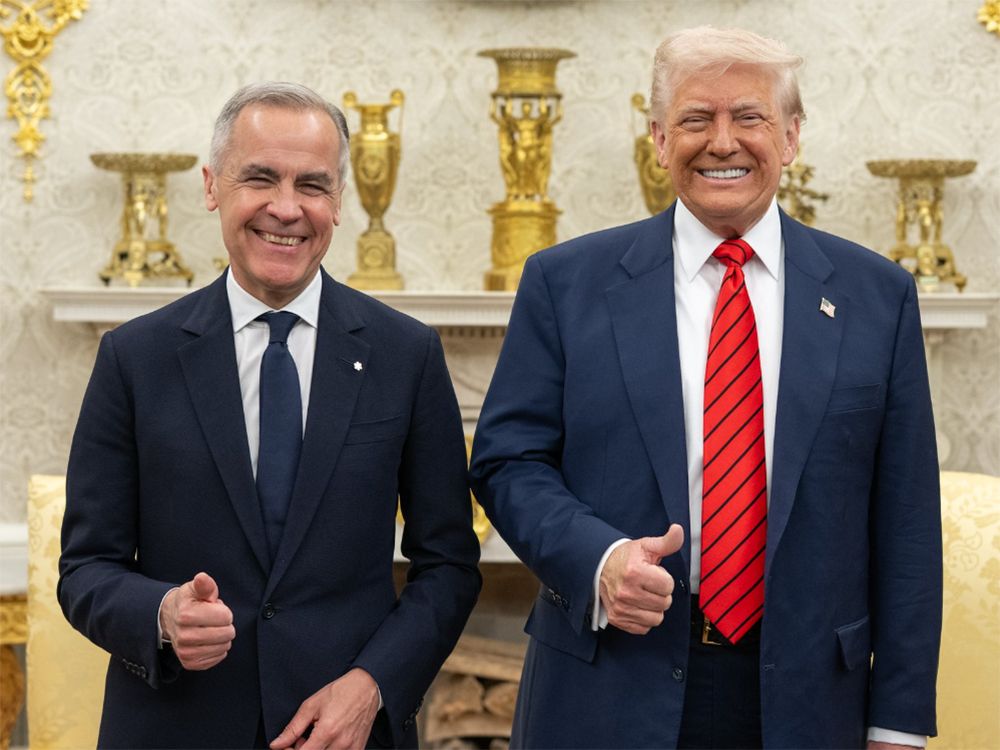
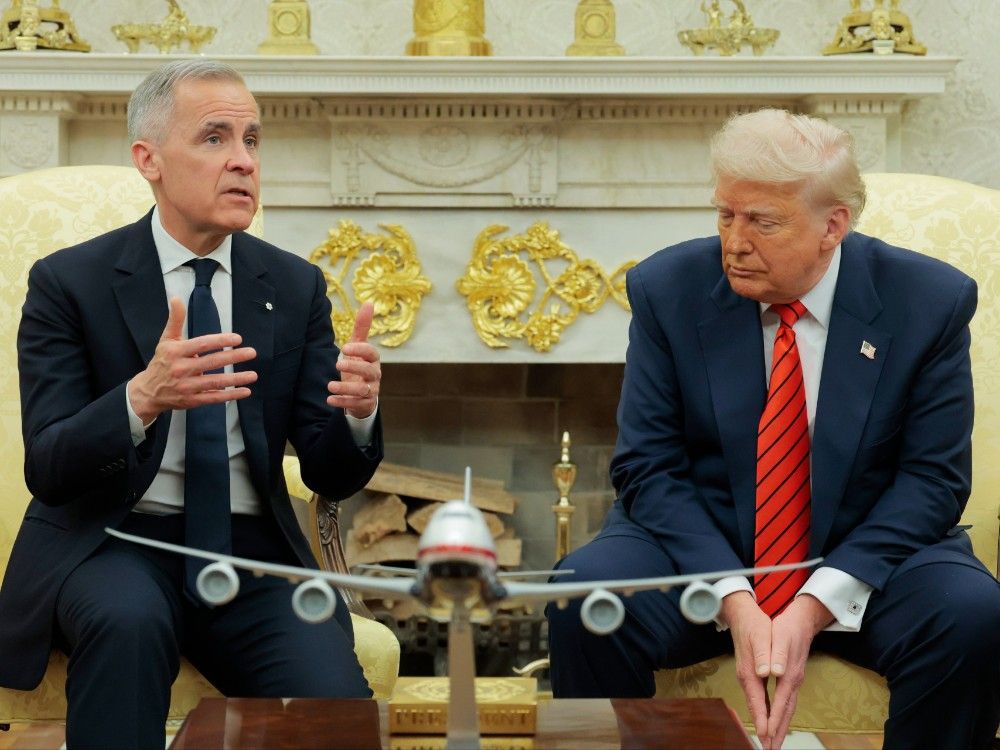
Prime Minister Mark Carney speaks to reporters alongside U.S. President Donald Trump in the Oval Office on May 6, 2025, in Washington, DC.

Prime Minister

Mark Carney

met U.S. President

Donald Trump

in person for the first time at the Oval Office on Tuesday. Carney arrived at about 11:55 a.m. and was greeted by Trump with a handshake, after which they both raised a fist to the cameras.

The meeting lasted for about 30 minutes, after which they moved to a private working luncheon with their teams in the Cabinet Room. Here’s some of what was said in front of the press.

Trump introduces Carney to the press

A few days ago, he won a very big election in Canada, and I think I was probably the greatest thing that happened to him. His party was losing by a lot, and he ended up winning. So I really want to congratulate him, probably one of the greatest comebacks in the history of politics, maybe even greater than mine.

Trump on the Canadian election

I think Canada chose a very talented person, a very good person. Because we spoke before the election quite a few times. And it’s an honour to have you at the White House and the Oval Office…. But I just want to congratulate you. You ran a really great race. I watched the debate and I thought you were excellent. And I think we have a lot of things in common. We have some tough points to go over and that’ll be fine.

Carney’s response

Thank you for your hospitality, and above all for your leadership. You’re a transformational president, focus on the economy with a relentless focus on the American worker, securing your borders, ending the scourge of fentanyl and other opioids, and securing the world…. The history of Canada and the U.S. is we’re stronger when we work together, and there’s many opportunities to work together and I look forward to addressing some of those issues that we have but also finding those areas of mutual co-operation so we can move forward.

Trump on Carney’s victory in the election

I have a lot of respect for this man, and I watched him come up essentially through the ranks when he wasn’t given much of a chance. And he did. He ran a really great campaign. He did a really great debate. I think that debate was very helpful.

Trump on Canada

We’re going to be friends with Canada. Regardless of anything, we’re going to be friends with Canada. Canada is a very special place to me. I know so many people that live in Canada. My parents had relatives that lived in Canada, my mother in particular. And no, I love Canada, I have a lot of respect for the Canadians. Wayne Gretzky, I mean, how good — the Great One.

Trump on Canada as the 51st state

I still believe that. But, you know, takes two to tango, right? But, no, I do. I mean, I believe it would be a massive tax cut for the Canadian citizens. You get free military, get tremendous medical cares and other things. There would be a lot of advantages, but it would be a massive tax cut, and it’s also a beautiful — you know, as a real estate developer, you know, I’m a real estate developer at heart, when you get rid of that artificially drawn line — somebody drew that line many years ago, like a ruler, just a straight line right across the top of the country. When you look at that beautiful formation, when it’s together, I’m a very artistic person. But when I looked at that, I said, that’s the way it was meant to be. I do feel it’s much better for Canada. But we’re not going to be discussing that unless someone wants to discuss it.

Carney weighs in

As you know from real estate, there are some places that are never for sale. We’re sitting in one right now. Buckingham Palace that you visited as well. And having met with the owners of Canada over the course of the campaign, last several months, it’s not for sale. Won’t be for sale, ever.

Trump’s response

Time will tell. It’s only time. But I say never say never. I’ve had many, many things that were not doable, and they ended up being doable and only doable in a very friendly way. But if it’s to everybody’s benefit, you know, Canada loves us and we love Canada, that’s, I think the No. 1 thing that’s important, but we’ll see. Over time, we’ll see what happens.

Trump on trade deals

We don’t have to sign deals. They have to sign deals with us. They want a piece of our market. We don’t want a piece of their market. We don’t care about their market…. Think of us as a super luxury store, a store that has the goods. You’re going to come and you’re going to pay a price, and we’re going to give you a very good price. We’re going to make very good deals, and in some cases, we’ll adjust, but that’s where it is. And we’ve been ripped off by everybody for 50 years, and we’re just not going to do that anymore. We can’t do that, and we can’t let any country do that to us. We’re just not going to do it anymore.

Trump on the USMCA

I won’t say this about Mark, but I didn’t like his predecessor. I didn’t like a person that worked — she was terrible, actually, she was a terrible person, and she really hurt that deal very badly, because she tried to take advantage of the deal, and she didn’t get away with it. You know who I’m talking about (Chrystia Freeland)…. We do have a negotiation coming up over the next year or so, to adjust it or terminate it.

Carney’s response

I’ll say a word on USMCA, if I may, Mr. President. It is a basis for a broader negotiation. Some things about it are going to have to change. And part of the way you’ve conducted these tariffs has taken advantage of existing aspects of USMCA. So it’s going to have to change. There’s other elements that are coming, and that’s part of what we’re going to discuss.

Trump on trade with Canada

We don’t much business with Canada, from our standpoint. They do a lot of business with us.

Trump’s on whether Carney could say something to change his mind on tariffs

No. Just the way it is.

On whether he would respect Canada’s refusal to be the 51st state

Sure I would. But this is not necessarily a one-day deal. This is over a period of time they have to make that decision.

Carney’s response to both those questions

Respectfully, Canadians view on this is not going to change, on the 51st state. Secondly, we are the largest client of the United States in the totality of all the goods. So we are the largest client of the United States. We have a tremendous auto sector between the two of us, and the changes that have been made have been helpful. You know, 50 per cent of a car that comes from Canada is American. That’s not like anywhere else in the world. And to your question about is there one thing? No, this is a bigger discussion. There are much bigger forces involved. And this will take some time and some discussions, and that’s why we’re here.

Trump’s reply

This is a very friendly conversation, but we want to make our own cars. We don’t really want cars from Canada, and we put tariffs on cars from Canada, and at a certain point it won’t make economic sense for Canada to build those cars. And we don’t want steel from Canada because we’re making our own steel.

Trump’s final word

We protect Canada militarily, and we always will. That’s not a money thing, but we always will. But, you know, it’s not fair. But why are we subsidizing Canada $200 billion a year, or whatever the number might be, it’s a very substantial number. And it’s hard for the American taxpayer to say gee whiz we love doing that. Thank you very much.

Our website is the place for the latest breaking news, exclusive scoops, longreads and provocative commentary. Please bookmark nationalpost.com and sign up for our daily newsletter, Posted, here.


Prime Minister Mark Carney and U.S. President Donald Trump at the White House on Tuesday, May 6, 2025.

Prime Minister

Mark Carney

met U.S. President

Donald Trump

at the White House on Tuesday for the first time since his election. Both made a point to make nice,

praising each other as “transformational” leaders

and pledging a friendship that will survive despite Trump’s unchanged desire to make Canada an American state.

“As you know, from real estate, there are some places that are not for sale. We’re sitting in one right now,” Carney said. Canada “is not for sale, won’t be for sale, ever, but the opportunity is in the partnership.”

“Never say never,” Trump said. Then both men agreeably moved on. Trump did most of the talking, while Carney emphasized what they agree on, ignored the rest, especially the automotive industry, sat alert and patient as Trump rambled about diverse matters, and declined to rise to his insults of other politicians, notably his minister of transport and internal trade, ​Chrystia Freeland.

To sketch this fireside chat, National Post asked three political experts to parse their words and demeanour with an eye to describing this important new relationship. Rob Goodman is associate professor of politics at Toronto Metropolitan University, author of Words on Fire: Eloquence and Its Conditions, about the current state of political rhetoric, and former speech writer for U.S. House Majority Leader Steny Hoyer and Senator Chris Dodd. Robert Danisch is professor in communication arts at the University of Waterloo, studies political rhetoric in democratic societies. Jeni Armstrong teaches political communication at Carleton University and was lead speech writer to former prime minister Justin Trudeau from 2015 to 2018. They spoke with National Post reporter Joseph Brean.

Bad Start I

Just before the scheduled start time, Trump posted on social media that America subsidizes Canada by $200-billion a year and other provocations, such as” “we don’t need ANYTHING they have, other than their friendship, which hopefully we will maintain. They, on the other hand, need EVERYTHING from us!”

“I don’t think it’s surprising. This is a president who comes out of reality TV,” Goodman said. “Establishing conflict and dramatic stakes is how he uses his techniques.”

Bad Start II

Carney is late. This threatens to look bad, sloppy, rude. Who’s late to the White House?

Bad Start III

CBC News reports the delay is actually on the White House side, and Carney is on site, waiting at the gate in his vehicle.

The Handshake

Trump appears at the door to greet Carney. They shake hands, pat each other’s shoulder. There was no yanking of the arm, as Trump has often done, famously to Justin Trudeau. Both give a fist up to the cameras, Trump first, then Carney in response. Dansich saw this as Carney showing a genuine affinity to Trump, what social psychologists call mirroring body language.

The Wink

The mood is so genial in the Oval Office that Carney winks at someone off camera before things begin. He has a habit of doing this at important moments, including his inauguration.

The Pleasantries

Trump congratulates Carney on “probably one of the greatest comebacks in the history of politics, maybe even greater than mine.”

“These comments about positive stuff, it’s in the context of aggression and attacks on sovereignty, but the affect is much more outwardly conciliatory,” Goodman said. He thinks Trump uses a “backslapping clubbiness” and a false “bonhomie” that is familiar from the New York real estate world. He was even a little funny, Armstrong said, and made Carney laugh with his claim to be “probably the greatest thing that ever happened to him.”

“I have a lot of respect for this man. I watched him come up through the ranks when he wasn’t given much of a chance,” Trump said.

Danisch said there are two ways to interpret that. The generous one is that Trump is saying he knows the Goldman Sachs guys and Carney was never going to rise among them. The ungenerous is that he doesn’t really know Carney at all and he chose a cliché.

Carney congratulates Trump on being a “transformational” president and says he has been elected to similarly transform Canada.

“Carney was quite shrewd to point to that so that right wing media can interpret it as respectful and positive and left wing can interpret it as horribly negative. That seemed practised and intentional,” Danisch said. Armstrong, likewise, said “transformational” was “a great word to use because, like the word ‘consequential,’ it’s kind of value neutral. It’s a word you can use to describe someone or something without necessarily weighing in on whether you think it’s good or bad.”

Carney emphasizes military spending, border security and fentanyl.

“He knows that this is a Trump preoccupation so he might as well take the initiative on it,” Goodman said. He compared it to dealing with an elderly relative. “You kind of have to humour their perception of the world to avoid blowing things up, but you have to be assertive and stand up for yourself. Getting that balance right is hard.”

“I did find it a bit strange that the president referred to the prime minister by his first name when talking about the conflict in Ukraine (‘Mark wants it ended’) but hey, I’ll take it if it means this is decent working relationship,” Armstrong said.

The 51st State

“I’m not surprised that this topic came up, but I guess I’m relieved to see that it entered the chat via a question from a reporter as opposed to Trump saying it unprompted,” Armstrong said. In any case, Trump’s annexation pitch has softened. He says he still wants it, but it “takes two to tango,” and then expanded on why Canadians should agree to this “wonderful marriage.”

In reply, Carney “was as forceful and direct as possible,” Goodman said. “Having one’s national sovereignty challenged and demeaned in the way Trump has, I think those are really emotional issues, and I think it’s both natural and expected that, on the spot, that’s the sort of thing that could provoke anger, or emotional pushback. I don’t think that’s Mark Carney’s style.” Trump is sensitive to pushback, he said, as much as he presents as a tough guy, so Carney’s confident dismissal was well judged not to derail the meeting, “as satisfying as that might be,” Goodman said.

Armstrong said she liked this response, with its “appeal to Trump’s expertise as a real estate guy,” the comparison to the White House and Buckingham Palace as other placed that are not for sale, the “masterful” reference to Canadians as “owners” of the country, “and finally, the pivot away from the 51st state nonsense to what is practically achievable, with a hint of a Taylor Swift reference (‘won’t be for sale ever’).”

Trump was conciliatory, but added “never say never.”

“I thought that was a good line. It allowed Trump to save some face. It allowed Trump to reiterate the point that this is not going to be a violent invasion, it is a deal, in his mind,” Danisch said. “I think they both got out of that exchange what they needed to.”

The Wayne Gretzky Mention

Trump said he has a lot of respect for Canada, and the first thing that came to his mind, after a mention of his parents’ relatives who lived there, was Wayne Gretzky. Danisch said this was an effort to demonstrate his knowledge of Canada, but it came across like saying he has friends in Canada. “These are clichés that Americans trot out to demonstrate some familiarity with Canada,” Danisch said. “I think it’s to try to ingratiate one’s self, I don’t think people generally realize it doesn’t do it.”

It did not help that Trump seemed to say Alex Ovechkin was Canadian too, because he is not only not Canadian, but Russian.

The Chrystia Freeland Insult

In saying that USCMA is still a good deal, Trump takes a shot at former deputy prime minister Freeland, who negotiated it, calling her a “terrible person,” but drawing no reaction. It was a little like when someone tells a rude joke in a polite context. “It’s not just the rudeness but it’s the way that is degrades you as someone who is part of that interaction,” Goodman said. People who violate social norms want others to join them. “It validates them. That’s the social psychology of Trump’s instincts for interpersonal dominance. He wants your hands to be dirty as well.”

Later, when Trump asked if Carney had heard of Gavin “Newscum” Newsom, Carney nodded once with a wry smile and sucked his cheek as if to indicate he’s not saying anything. This was “studied neutrality,” Danisch said.

The Auto Trade, Subsidy, and a Good Ending

Carney seemed to ignore Trump’s long-winded discourse on the automotive industry. “I think Trump made clear that it’s on the mind of his administration, and making progress there is an interest. If that’s the substantive thing that comes put of this, that’s pretty well done by Carney,” Danisch said. But it went on so long, and then Trump started talking about his belief that the U.S. “subsidizes” Canada by $200 billion a year “or whatever the number might be.”

Carney folded his hands, and was clearly getting ready to speak, when Trump abruptly ended the whole event. “Trump always needs to have the last word and he took it and he repeated his position,” Danisch said. “Carney seems uninterested in the media spectacle of the whole thing, and that really benefited him, to sit there like the adult in the room and let Trump be the star.”

Our website is the place for the latest breaking news, exclusive scoops, longreads and provocative commentary. Please bookmark nationalpost.com and sign up for our daily newsletter, Posted, here.

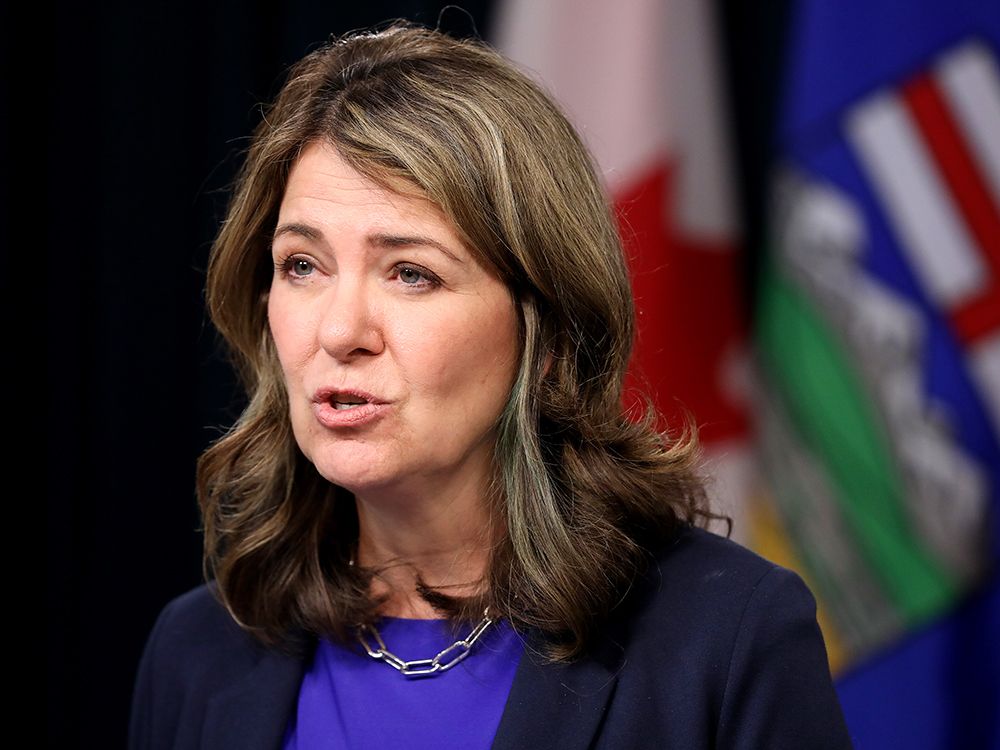
Premier Danielle Smith speaks to reporters at the Alberta Legislature, in Edmonton Tuesday May 6, 2025.

OTTAWA — Alberta Premier Danielle Smith says that her United Conservative Party supports national unity, but adds that she won’t stop members of her caucus from expressing different views on Alberta separation.

Smith told reporters on Tuesday that she wasn’t bothered by UCP MLA Jason Stephan

publicly calling for a referendum

on Alberta separation one day earlier.

“We all have different ideas about how we get respect from Ottawa … I’m not going to be demonizing anybody who may have a different view than me,” Smith said when asked whether she’d had a chance to talk to Stephan about his remarks.

Stephan declined to say how he’d vote in a referendum on Albertan independence.

The central Alberta MLA

wrote in an op-ed last week

that it was time for “Alberta to explore other options” outside of confederation, after the Liberals won their fourth straight federal election.

Stephan didn’t immediately respond to a request to be interviewed for this article.

Smith stressed

the party’s founding agreement

was clear on the matter of Alberta’s place within the confederation.

“Loyalty to a united Canada… is one of the founding statements of our party, so I would say I and my caucus are supportive of that,” said Smith.

“We are supportive of trying to find a way to exercise our constitutional sovereignty within a united Canada.”

Smith said that she hopes to beat back separatism with her words, rather than heavy-handed actions, in the weeks and months to come.

“All I can do is try to convince people that my view is right… and I’m hopeful to convince all Albertans,” said Smith.

Smith added that this was a conversation that needed to take place among Albertans, and not

interlopers like Ontario Premier Doug Ford

.

“I don’t tell (Ford) how he should run his province, and I would hope that he doesn’t tell me how I should run mine,” said Smith.

Ford

slammed Smith just hours earlier

for opening the door to a referendum at a time when Canada faced an existential crisis from south of the border.

She stressed that she and Ford have a “respectful relationship.”

Smith said in a Monday address to Albertans that a question on Albertan independence will be added to the referendum ballot in 2026, if it gets enough signatures.

Speaking from Washington, D.C., Prime Minister Mark Carney was evasive when asked about the possibility of an Alberta referendum.

“As an Albertan, I firmly believe that… Canada is stronger when we work together,” said Carney.

“You can always ask a question but I know (how) I would respond.”

National Post

rmohamed@postmedia.com

Get more deep-dive National Post political coverage and analysis in your inbox with the Political Hack newsletter, where Ottawa bureau chief Stuart Thomson and political analyst Tasha Kheiriddin get at what’s really going on behind the scenes on Parliament Hill every Wednesday and Friday, exclusively for subscribers. Sign up here.

Our website is the place for the latest breaking news, exclusive scoops, longreads and provocative commentary. Please bookmark nationalpost.com and sign up for our politics newsletter, First Reading, here.


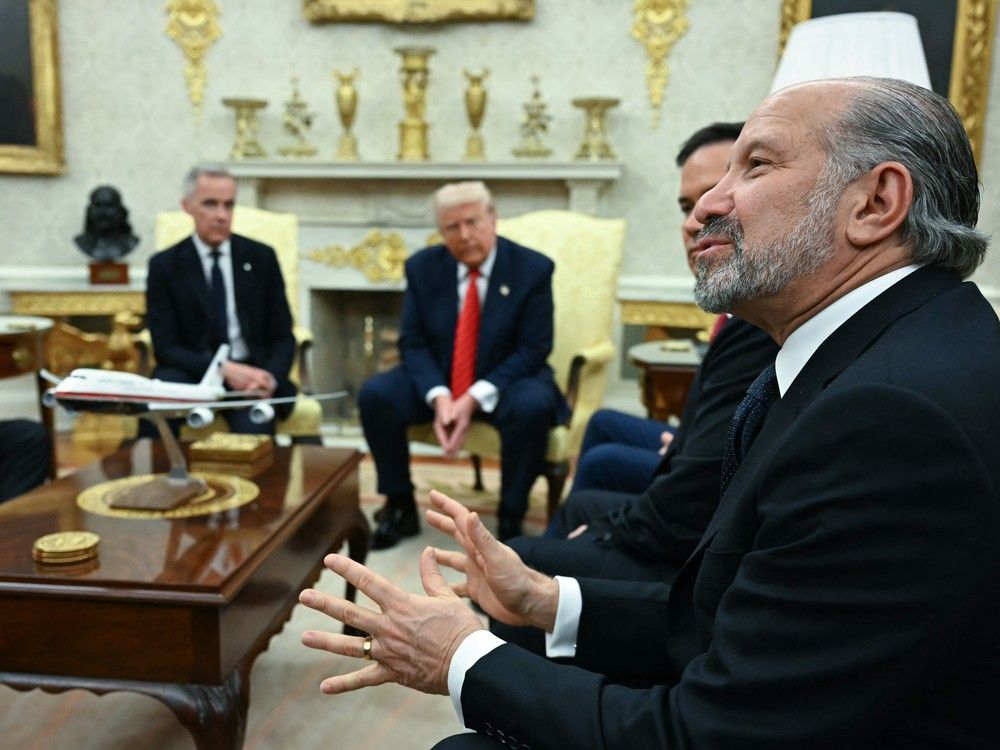
U.S. Secretary of Commerce Howard Lutnick speaks as President Donald Trump and Prime Minister Mark Carney look on in the Oval Office on May 6, 2025. (Photo by Jim WATSON / AFP)

Howard Lutnick made headlines this week, ahead of Prime Minister Mark Carney’s meeting with President Donald Trump in the Oval Office, by calling Canada “a socialist regime”
that feeds off of America.

He
has said, as a result, that
he is skeptical a trade deal can be made with America’s northern neighbour.

Who is Howard Lutnick?

Lutnick, 63, is an American

billionaire businessman

, philanthropist, and politician who is serving as the 41st United States

Secretary of Commerce

. He assumed office in February 2025 under President Donald Trump.

His

estimated net worth

is between $2 billion and $4 billion, stemming largely from his ownership stake in Cantor Fitzgerald. He is a

graduate

of Haverford College and is married with four children.

Lutnick is best known for his lengthy tenure as chairman and CEO of

Cantor Fitzgerald

, a major Wall Street financial services firm. He survived the Sept. 11, 2001 terrorist attacks, which claimed the lives of 658 Cantor Fitzgerald employees, including his brother. He then became

widely recognized

for leading the firm’s recovery and his charitable work supporting the families of victims through the Cantor Fitzgerald Relief Fund.

In government, Lutnick has been a

vocal advocate

for aggressive trade policies, including broad tariffs, and oversees major economic initiatives such as semiconductor manufacturing and broadband expansion.

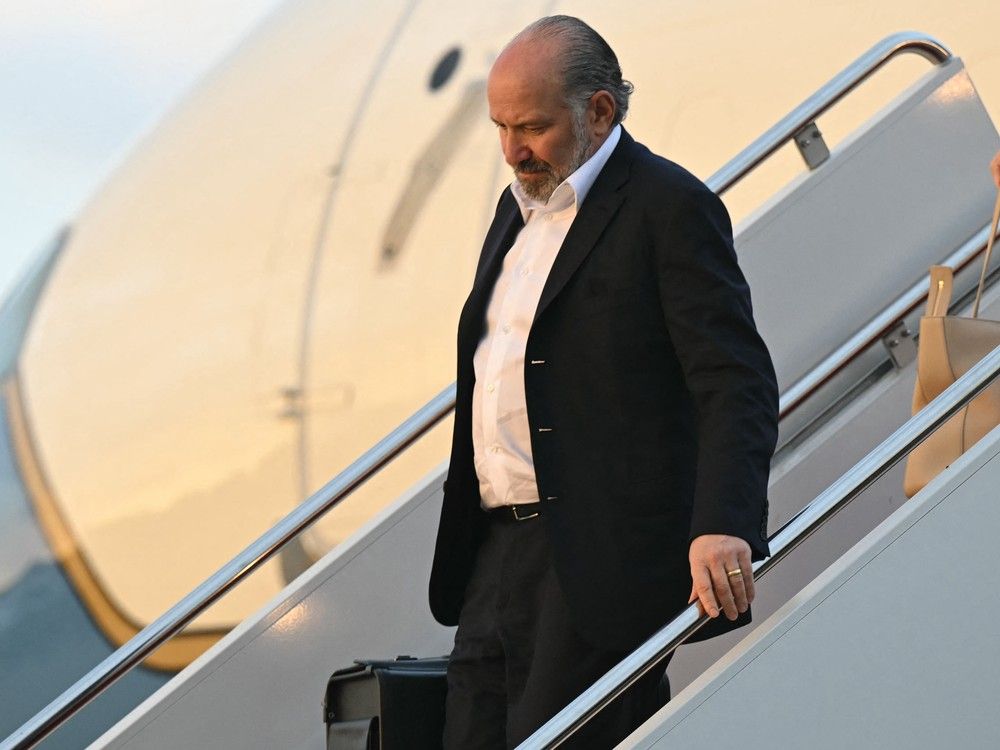
 U.S. Secretary of Commerce Howard Lutnick disembarks from Air Force One on May 4, 2025.

What does he do as secretary of commerce?

He oversees the Department of Commerce

, which employs about 50,000 people and manages a wide range of activities, including collecting economic data (like the census), issuing weather reports, and running agencies such as the National Oceanic and Atmospheric Administration.

A key element of his role is to implement and manage U.S. trade policy, especially President Trump’s aggressive tariff agenda, negotiating trade deals, and enforcing trade restrictions with both allies and adversaries.

He also advocates for American industries in international trade negotiations.

He has been overseeing federal investments in

technology and infrastructure

, such as funding new semiconductor (computer chip) factories, expanding broadband access, and advancing domestic mining and manufacturing.

He shapes U.S. policy on artificial intelligence, semiconductors, and technology exports, including restricting certain technologies from being transferred abroad and advising on cryptocurrency regulation.

What is Lutnick’s view of Trump’s tariffs?

Lutnick is a strong public supporter of tariffs as a tool to protect American industry and reset the global trade balance. He has repeatedly

defended President Trump’s aggressive tariff policies

, arguing that they are necessary to revive U.S. manufacturing and address what he describes as decades of unfair treatment by other countries.

He has stated that the new tariffs are

“here to stay”

and not open to negotiation, emphasizing that this marks a major shift in U.S. trade policy.

And he

insists

“the rest of the world has been ripping us off for all these many years” and that the U.S. must now “protect ourselves.” Lutnick has also said that companies unhappy with tariffs should consider moving their production to the United States.

However, while he is a vocal advocate for tariffs in public,

behind the scenes, Lutnick has reportedly sometimes urged a more moderate approach

, including proposing delays or targeted relief for certain industries when market turmoil or business concerns arise.

Lutnick believes America’s

manufacturing

,

auto

, agriculture and

tech

industries will benefit most from tariffs.

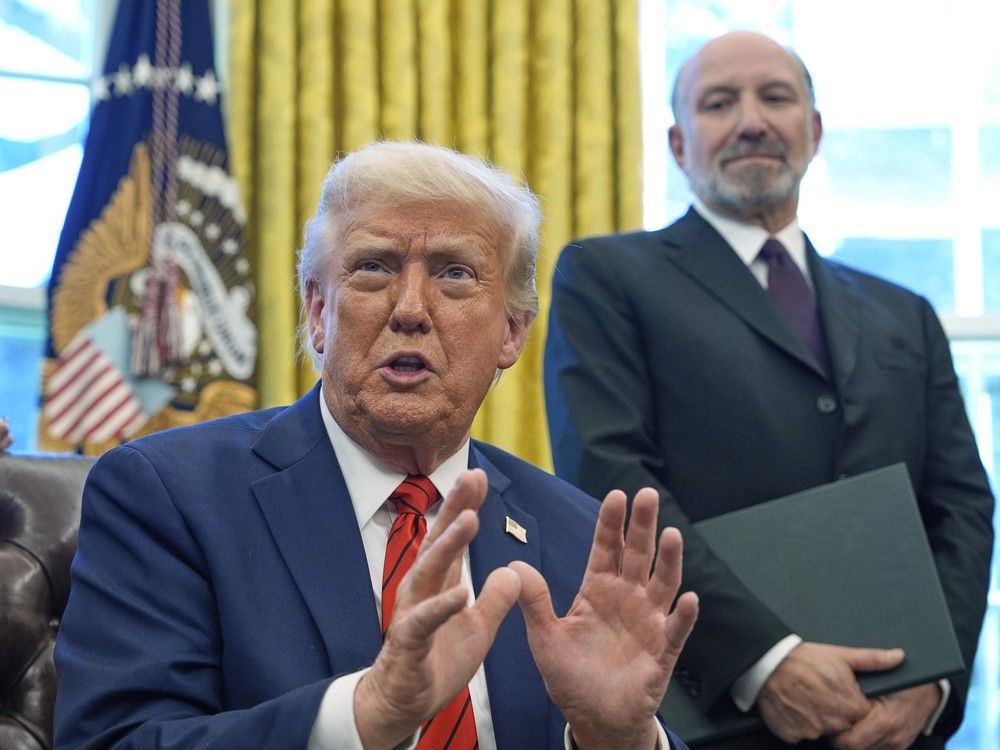
 President Donald Trump speaks in the Oval Office, on April 17, as Commerce Secretary Howard Lutnick looks on.

What is Lutnick’s position on Canada?

Lutnick takes a skeptical and confrontational stance toward Canada regarding trade. He has repeatedly referred to Canada as a “socialist regime” that is economically dependent on the United States and benefits disproportionately from the relationship. He questions

why the U.S. manufactures cars and produces films in Canada

, suggesting that these practices should be reconsidered to favour American industry.

He has been critical of Canada’s retaliatory tariffs in response to U.S. steel and aluminum tariffs,

blasting them as “tone deaf.”

Although he has occasionally hinted at the possibility of compromise or scaling back tariffs, his

overall position remains

that the U.S. must be treated with more respect and that the current trade dynamic is unbalanced.

How has Canada responded to Lutnick’s comments?

Canada has responded to Lutnick’s comments on tariffs and the broader U.S. tariff policy by taking a firm, measured approach.

Mark Carney has publicly rejected

Lutnick’s and Trump’s aggressive stance, declaring that America’s threats to “weaken us so that America can claim ownership” will “never … ever occur,” while also acknowledging that the relationship has fundamentally shifted.

However, despite the tensions, Carney has also struck a conciliatory note, emphasizing a desire for continued partnership even amid disagreements.

Canadian officials described recent meetings with Lutnick as “constructive,” but made clear they

do not expect immediate changes to the U.S. administration’s “punishing tariffs.”

Canada continues to seek dialogue while maintaining its countermeasures, as seen in the Oval Office meeting.

Our website is the place for the latest breaking news, exclusive scoops, longreads and provocative commentary. Please bookmark nationalpost.com and sign up for our daily newsletter, Posted, here.


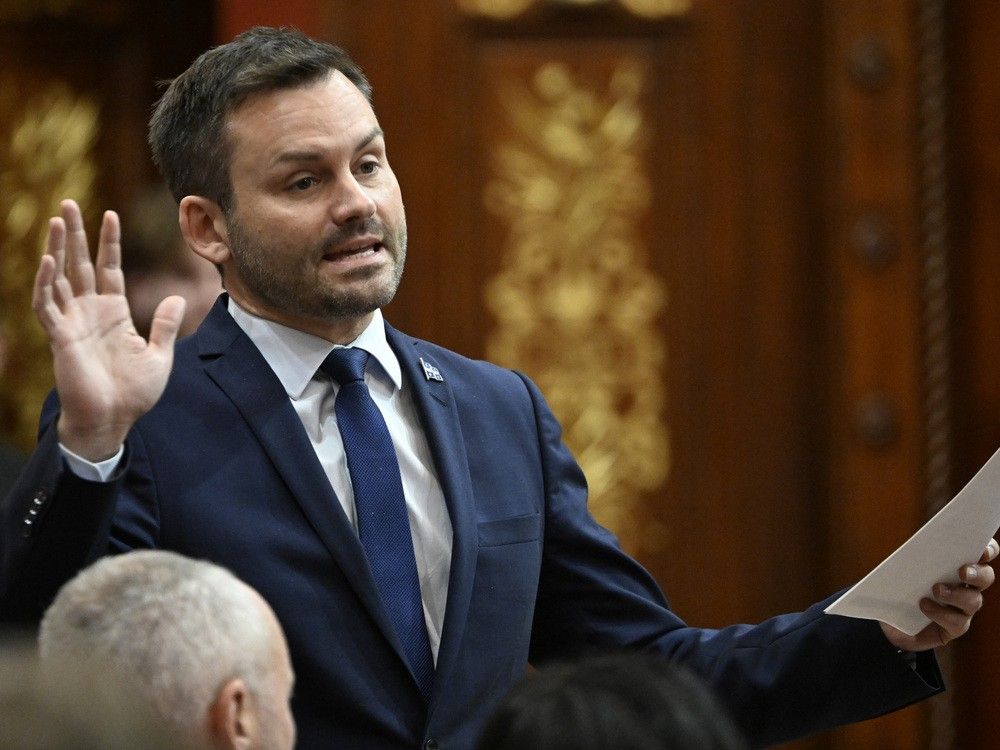
Parti Quebecois Leader Paul St-Pierre Plamondon during question period Tuesday, November 19, 2024 at the legislature in Quebec City.

OTTAWA — Alberta Premier Danielle Smith has an ally in Quebec and his name is Paul St-Pierre Plamondon, the Parti Québécois leader.

A day after Smith threatened the federal government of including a referendum question on separation in 2026 if her province didn’t have the Accord, she thinks it deserves with Ottawa, St-Pierre Plamondon said Smith made a “striking gesture” for the “autonomy and defence of her own province.”

“It doesn’t matter what referendum they hold, because obviously it’s under construction. But I totally agree with provinces that stand up, that are loyal to their own Parliament, that are capable of showing a strong hand. And that’s the key word, strong hand,” said St-Pierre Plamondon, who is often called PSPP in Quebec.

In a in a

livestreamed address Monday

, Premier Smith called on Prime Minister Mark Carney to negotiate a new deal between Ottawa and Alberta guaranteeing more pipelines and changes to equalization.

“We hope this will result in a binding agreement that Albertans can have confidence in. Call it an ‘Alberta accord’,” said Smith who then called Alberta’s separation “the elephant in the room.”

“The vast majority of (separatists) are not fringe voices… They are loyal Albertans,” she said. “They’re … our friends and neighbours who’ve just had enough of having their livelihoods and prosperity attacked by a hostile federal government.”

At a press conference at Quebec’s National Assembly, St-Pierre Plamondon said it was a “good thing” if other provinces are able to “stand up to the federal government”.

He added that “other provinces are showing” that Canada has issues that affect all provinces in terms of “abuse of power”.

St-Pierre Plamondon then went on the offensive against the province’s journalists for not covering

the rebound in support of Quebec secession

.

A recent Postmedia-Leger poll

revealed that support for Quebec independence, which had fallen below 30 per cent in recent month, sits back at nearly 40 per cent.

Even though Canada is engaged in a tariff war with its closest ally, support for Quebec independence has reached 36 per cent according to new data.

“The most recent and most precise information is the independence of Quebec at 40 per cent, it is the increase in independence in Alberta,” he said.

Léger also polled Canadians from all provinces about their opinion about their province’s independence. The result was that 29 per cent of Albertans supported Alberta sovereignty while an overwhelming majority of the 2,309 respondents (71 per cent) were opposed.

National Post
atrepanier@postmedia.com

Get more deep-dive National Post political coverage and analysis in your inbox with the Political Hack newsletter, where Ottawa bureau chief Stuart Thomson and political analyst Tasha Kheiriddin get at what’s really going on behind the scenes on Parliament Hill every Wednesday and Friday, exclusively for subscribers. Sign up here.

Our website is the place for the latest breaking news, exclusive scoops, longreads and provocative commentary. Please bookmark nationalpost.com and sign up for our newsletters here.


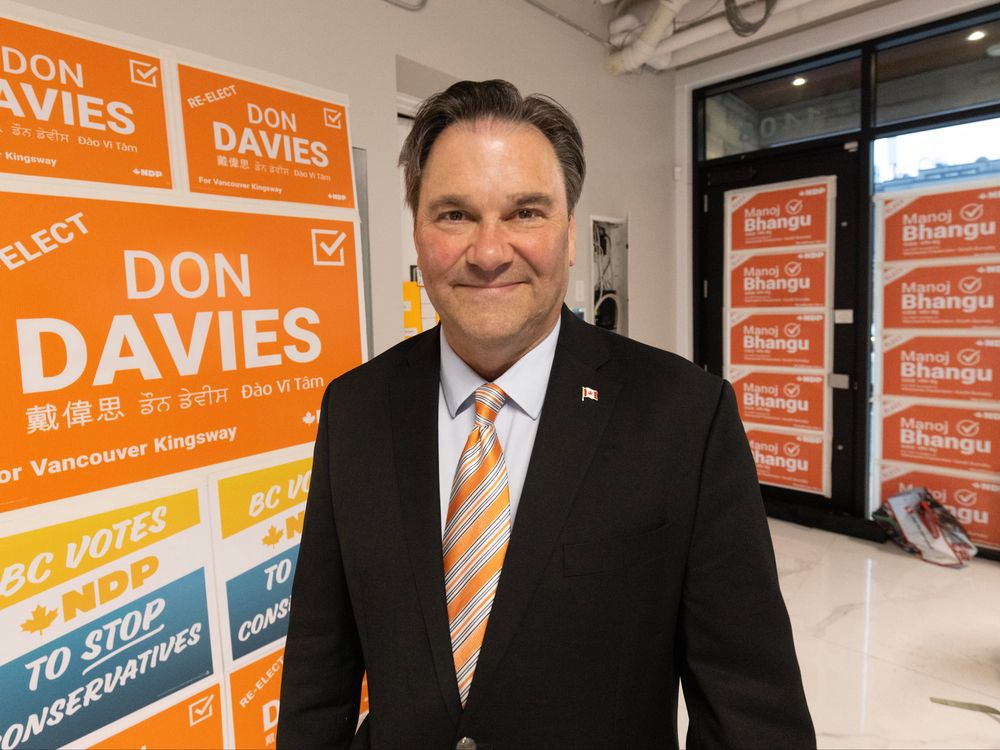
Don Davies at an NDP office in Vancouver, B.C, April 28, 2025.

The New Democratic Party of Canada has chosen Don Davies as its new interim leader, after Jagmeet Singh announced his resignation as head of the party. Singh lost his own Burnaby Central seat in British Columbia in the April 28 federal election.

Who is Don Davies?

Don Davies was born in Edmonton in 1963 and earned a Bachelor of Arts in political science and a Bachelor of Laws at the University of Alberta. He worked as a researcher at the Legislative Assembly of Alberta and an assistant in policy and communications for Ray Martin during his time as NDP leader of the official opposition of Alberta.

Davies later moved to Vancouver and was first elected to the House of Commons in 2008 in the riding of Vancouver Kingsway. He has won six straight elections in that riding, although the latest, in this year’s election, was his narrowest victory when he beat Liberal candidate Amy Gill by just over 300 votes.

What Parliamentary groups does he belong to?

Davies has a

long list of membership

in Parliamentary associations and inter-Parliamentary groups. He is currently a vice-chair of the Canada-China Legislative Association, which provides a forum for the discussion of challenges facing the two countries and the Asia-Pacific region. He is also a member of the executive of the Canada-Europe Parliamentary Association, a similar group that fosters the exchange of information and ideas between Canadian parliamentarians and those from Europe.

Davies has also been also a member of the National Security and Intelligence Committee of Parliamentarians since 2020, his term ending when the latest election was called. He was also named the NDP’s

critic for finance

in April, ahead of the election.

How was he chosen as interim leader?

In a statement, the NDP said its Federal Council had made the decision in consultation with its reduced caucus.

“While the recent election results were not what we hoped for, our commitment to building a better Canada has never been stronger,” party president Mary Shortall said in a statement.

She added: “With a renewed sense of purpose, we will hold the government to account and keep fighting for the issues we heard about on doorsteps across the country – public health care, affordable homes, good jobs, and making the ultra-rich finally pay their fair share.”

What’s next for Davies?

The NDP fared poorly in the election, dropping to 7 seats from 24, and falling short of the 12-seat threshold required to retain

official party status

. So Davies will not have access to the budgets and staff positions available to the official parties in the House of Commons.

Add to this the fact that Alberta’s New Democratic Party has

voted overwhelmingly

to cut traditional membership ties with the federal NDP. Delegates in Edmonton voted on Saturday to allow provincial members to opt out of joining the federal NDP, a move its leader, Naheed Nenshi, campaigned on last year.

And Charlie Angus, a former NDP MP who did not run in the latest election,

told the Canadian Press

that the party lost touch with its core supporters by focusing too much on Singh.

“I think it’d be really dangerous to tell ourselves that we were simply the victims of strategic voting, and it was the times and there was nothing we could do,” he said. “We stopped being the New Democratic Party of Canada some time ago and we became a leader-driven movement.”

When will a permanent leader be chosen?

No date has been set for when the party will choose its permanent leader.

NDP MPs Leah Gazan (Winnipeg Centre) and Jenny Kwan (Vancouver East)

told National Post

they did not rule out running for permanent party leadership to help “rebuild the movement,” but said they were focused on meeting with caucus mates and party members first.

Other’s who have signalled they might consider a run for NDP leadership include former MP

Ruth Ellen Brosseau

, outgoing Montreal Mayor

Valérie Plante

and NDP MP Heather McPherson. Quebec MP and party stalwart Alexandre Boulerice had been considered by many as a leading contender for interim leadership.

— With files from Canadian Press

Our website is the place for the latest breaking news, exclusive scoops, longreads and provocative commentary. Please bookmark nationalpost.com and sign up for our politics newsletter, First Reading, here.


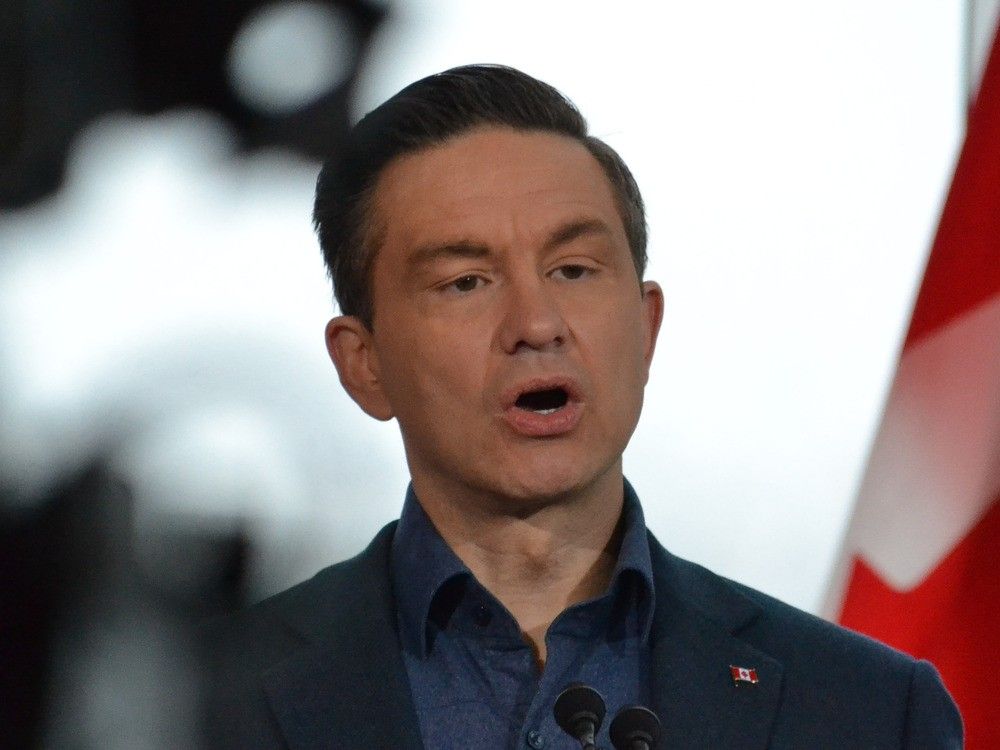
Conservative Party Leader Pierre Poilievre speaks during a stop in Saint John during the federal election campaign.

OTTAWA — Conservative Leader Pierre Poilievre defended his campaign messaging and said his mission is now to find ways to sell it to more people after his party’s stinging defeat in last week’s election.

In a brief address to reporters before a caucus meeting in Ottawa Tuesday, Poilievre said the election result last week was “disappointing” but argued that his messaging — which focused on affordability, housing, justice and crime — was on the mark.

“You have to acknowledge that it was the generally right message. Not perfect, but the right message, because the Liberals stole multiple elements of that message,” he told reporters with a chuckle.

“We have to broaden our team. We need to find ways to get our message through to a larger audience of people. We also need to show our capacity to include more people and share a message of opportunity,” he said.

It was the first public address by the Conservative leader since the Liberals handed him two stinging losses in one shot, defeating the opposition party nationally and Poilievre in his long-time Ottawa-area riding of Carleton.

But Poilievre appeared to reject the notion of cutting out any campaign advisors, including campaign manager Jenni Byrne.

On Tuesday morning, National Post reported

that Conservative MPs and insiders blamed the election loss mostly on operational and internal decisions spearheaded by Byrne.

“Excluding is never the way to broader a team,” he said. “We are going to broaden our team and get our message through.”

He noted that Byrne “did a lot of hard work” while noting the additional 2.3 million votes and 25 seats the Conservatives won last Monday.

“We have to go further, so we’re going to be enlarging our team and that’s one of the things we’ll be talking about today in our caucus,” he argued, saying his party would be looking for an additional million supporters by next election.

“We have to spend a lot of the summer listening carefully to people in the community’s coffee shops and town halls and other events,” he added.

Conservative caucus members are meeting all day Tuesday in Ottawa for the first time since the end of the campaign on April 28 to discuss steps forward. That will likely include discussions about an interim leader while Poilievre waits for an opportunity to run for a new seat in Parliament.

Conservative House leader Andrew Scheer said the caucus was going to have discussions on Tuesday and in the weeks and months to come to analyze the results the election, but already said he was confident that Poilievre would be making some “adjustments.”

Scheer also defended Byrne work, saying she did a “great job” and managed a “fantastic team” that was able to grow the party’s seat count in many areas of the country.

“There’s a lot of reasons to be encouraged and a lot of aspects to be proud of,” he said as he was entering the caucus meeting. “Obviously, we didn’t win, so we have to take a look at why and what we need to do to go forward.”

More to come

National Post

cnardi@postmedia.com

calevesque@postmedia.com

Get more deep-dive National Post political coverage and analysis in your inbox with the Political Hack newsletter, where Ottawa bureau chief Stuart Thomson and political analyst Tasha Kheiriddin get at what’s really going on behind the scenes on Parliament Hill every Wednesday and Friday, exclusively for subscribers. Sign up here.

Our website is the place for the latest breaking news, exclusive scoops, longreads and provocative commentary. Please bookmark nationalpost.com and sign up for our politics newsletter, First Reading, here.


A sign for the US-Canada border is pictured at the Peace Arch border crossing in Blaine, Washington, on March 5, 2025.

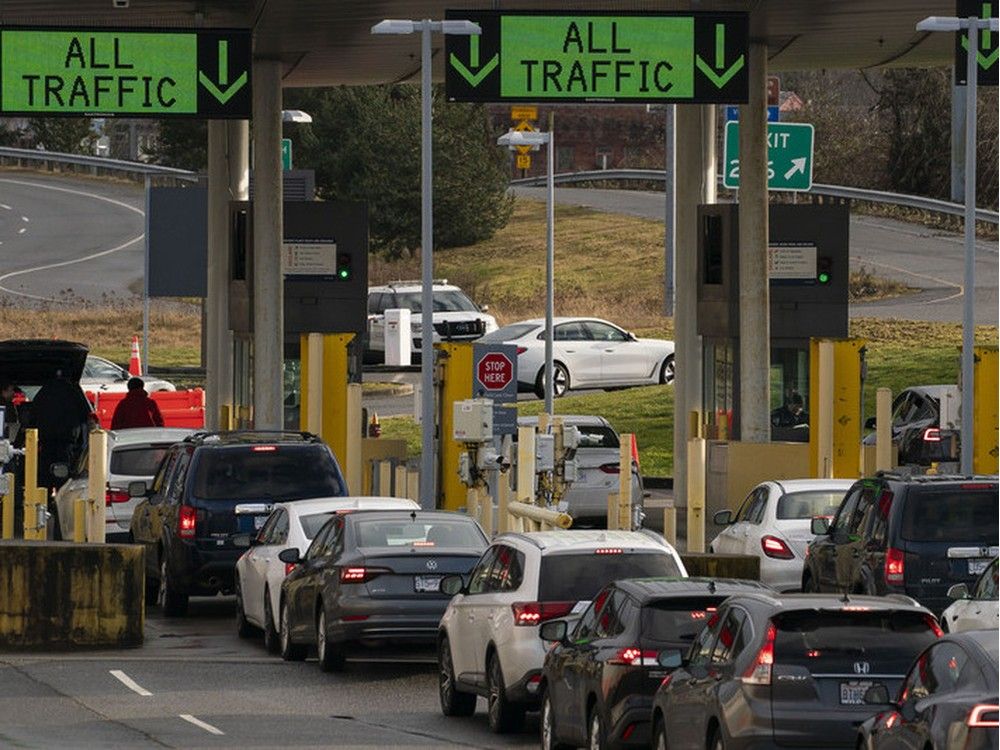
Some travellers who were returning to Canada from the United States over the weekend said that an additional checkpoint was set up at the a B.C.-U.S. border crossing.

Drivers trying to cross back to Canada at B.C.’s Peace Arch said their vehicles were searched as they were pulled aside by U.S. Border and Customs Protection agents, delaying their trip,

Global News reported

. The Peace Arch crossing is located in Surrey, B.C. on the Canadian side. The American side is located in Blaine, Washington.

 Vehicles enter the United States from Canada at the Peace Arch border crossing on February 1, 2025 in Blaine, Washington.

One B.C. resident, who only wanted to be identified by her first name, Leslie, told Global News she thought she made a mistake when she first saw the checkpoint on Friday morning. She had crossed the border for groceries and to get lunch with her husband. When they approached the crossing with their vehicle to return home, they were forced to stop “a couple hundred metres south” of the Canadian border due to the traffic building up.

“I don’t want to call it a blockade but… they were stopping people and I held up our Nexus cards and the U.S. customs agent waved us through but as I passed, because our windows are down, he said, ‘Let’s stop and check the next one,’” she said.

The searches on other vehicles made her “very, very uncomfortable.”

The X account for DriveBC, a mobile app by the BC Ministry of Transportation and Transit, showed that there were major delays for travellers going from the U.S. to Canada at the Peace Arch crossing on May 1.

In a post on X, it said the delays were due to “ongoing (Customs and Border Protection) operations). A photo from a traffic camera showed a lineup of cars waiting to get into Canada.

In response to a question on X about what was occurring at the border on May 1,

DriveBC responded

: “Unclear exactly what’s going on. US Customs has been conducting an operation throughout the afternoon.”

“These inspections are a vital tool in apprehending wanted individuals, as well as in seizing a variety of contraband, which ultimately makes our community safer,” according to a statement from the U.S. Customs and Border Protection to Global News.

National Post has reached out to the agency for comment.

According to immigration lawyer Rosanna Berardi, putting up such a checkpoint is completely legal.

“U.S. Customs and Border Protection legally operates interior checkpoints up to 100 miles inside the United States from any land or coastal border, including near the U.S.-Canada border. This authority is based on federal regulations established in 1953 and upheld by the Supreme Court in

United States v. Martinez-Fuerte (1976

), which allows brief stops and questioning of travellers without individualized suspicion,” she said in an emailed statement to National Post on Tuesday.

“At these checkpoints, CBP officers may ask about immigration status and refer travellers for secondary inspection if necessary, but more invasive searches require probable cause or consent. Checkpoints are a longstanding law enforcement and national security tool, with dozens active along both the northern and southern borders at any time.”

She advised that Canadians should make sure they have extra time when travelling. She added that they should carry valid travel documents like passports or NEXUS cards, and answer questions clearly and respectfully.

“These practices help ensure smooth processing at checkpoints, which have been part of border enforcement for decades,” she said.

Canadians travelling to U.S. hits lowest rate since COVID amid Trump trade war: new data

The checkpoint was reportedly taken down by Sunday. However, it may have added to already heightened tensions between Canada and the U.S. amid new travel policies, people being detained at the border and others being turned away.

In February,

it was announced

that all foreign nationals staying in the U.S. for more than 30 days would have to register online and get fingerprinted, per U.S. Citizenship and Immigration Services. Canadians were

later exempt from having to be fingerprinted

, but still have to register.

Travellers have also been detained at the border. At the Ambassador Bridge crossing, at least 213 people have been detained between January and mid-March, Democratic Rep. Rashida

Tlaib said at a press conference in April

. She said that in 90 per cent of the cases, the driver had mistakenly arrived at the crossing.

The Ambassador Bridge crossing connects Detroit, Michigan to Windsor, Ontario. It is the

busiest international crossing

in North America.

One woman ended up getting detained

after taking a wrong turn while trying to go to Costco

, it was reported in April. In another case,

a man delivering McDonald’s was detained

, and later deported, in January.

In another incident,

a French scientist was denied entry into the United States

after immigrations officers reportedly found messages criticizing President Donald Trump on his phone.

Our website is the place for the latest breaking news, exclusive scoops, longreads and provocative commentary. Please bookmark nationalpost.com and sign up for our daily newsletter, Posted, here.

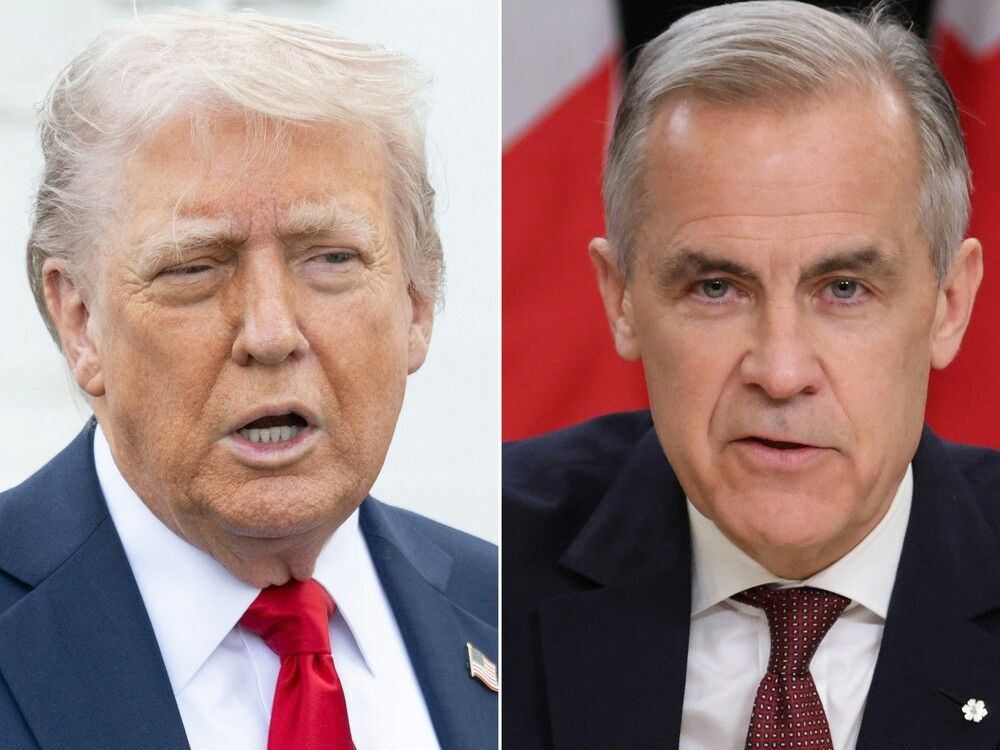
U.S. President Donald Trump, left, and Prime Minister Mark Carney, right, in a combination photo.

Prime Minister

Mark Carney

will get his first chance to confront U.S. President

Donald Trump

 in a face-to-face meeting at the Oval Office on Tuesday. Carney will

arrive at the White House at 11:30 a.m.

and he will

meet with Trump in the Oval Office at 11:45 a.m.

National Post will have live video and coverage of their first in-person meeting since the federal election.

At 12:15 p.m. they will have a private working luncheon

in the Cabinet Room. Carney will

leave the White House at 1:20 p.m

. Follow National Post’s live coverage, below, to find out how the meeting unfolds. Can’t see the live blog?

View it at nationalpost.com

.

View the live blog above.

Carney has said he expects “difficult” but “constructive” conversations with Trump, who has repeatedly threatened to make Canada the “51st state.” Trump said in an interview with NBC’s Meet the Press that aired Sunday that the border is an “artificial line” that prevents the two territories from forming a “beautiful country.”

Trump told reporters on Monday that he wasn’t quite sure why Carney was visiting.

“I’m not sure what he wants to see me about,” Trump said. “But I guess he wants to make a deal.”

U.S. Commerce Secretary Howard Lutnick further stoked doubts about their interest in repairing the relationship with Canada in a Monday interview on Fox Business Network’s Kudlow show.

Asked if the U.S. could make a deal with Canada, Lutnick called the country a “socialist regime” that has been “basically feeding off America.” Lutnick said Tuesday’s meeting would be “fascinating.”

National Post, with additional reporting from The Associated Press

Our website is the place for the latest breaking news, exclusive scoops, longreads and provocative commentary. Please bookmark nationalpost.com and sign up for our politics newsletter, First Reading, here.